Insulation Market
Insulation Market Size and Share Forecast Outlook 2025 to 2035
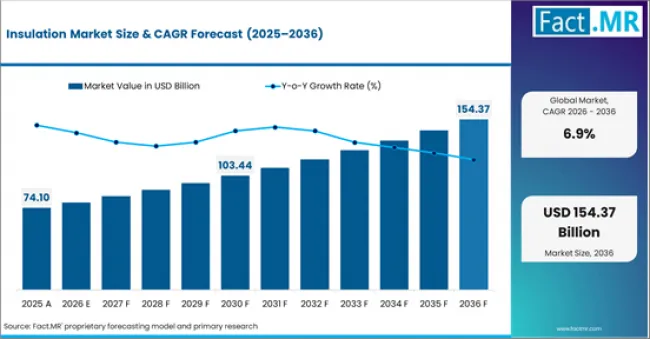
Insulation market is projected to grow from USD 74.1 billion in 2025 to USD 144.7 billion by 2035, at a CAGR of 6.9%. EPS will dominate with a 28.0% market share, while infrastructure will lead the end-use segment with a 34.0% share.
Insulation Market Forecast and Outlook 2025 to 2035
The global insulation market is projected to reach USD 144.7 billion by 2035, recording an absolute increase of USD 70.6 billion over the forecast period. The market is valued at USD 74.1 billion in 2025 and is set to rise at a CAGR of 6.9% during the assessment period.
The overall market size is expected to grow by approximately 2.0 times during the same period, supported by increasing demand for energy-efficient building solutions across residential and commercial construction projects worldwide, driving need for thermal management materials and rising investments in green building certifications with proven energy savings across diverse construction and industrial applications globally.
Quick Stats for Insulation Market
- Insulation Market Value (2025): USD 74.1 billion
- Insulation Market Forecast Value (2035): USD 144.7 billion
- Insulation Market Forecast CAGR: 6.9%
- Leading Product Type in Insulation Market: EPS (28.0%)
- Key Growth Regions in Insulation Market: Asia Pacific, North America, and Europe
- Top Players in Insulation Market: Owens Corning, GAF Materials Corporation, Huntsman International LLC, Johns Manville, Cellofoam North America, Rockwool International, DuPont, Atlas Roofing, Saint-Gobain, Kingspan Group

Building owners and industrial facilities face mounting pressure to reduce energy consumption and meet stringent building codes while addressing climate control requirements and operational cost optimization, with modern insulation products providing documented performance benefits including superior thermal resistance, reduced heating and cooling expenses, and environmental sustainability compared to conventional construction practices alone.
Rising awareness about carbon footprint reduction and expanding retrofit programs for existing building stock create substantial opportunities for insulation manufacturers and construction material suppliers. However, raw material price volatility and installation cost considerations may pose obstacles to widespread adoption across cost-sensitive construction markets.
The EPS segment dominates market activity, driven by extensive utilization in construction applications and versatile performance characteristics addressing thermal insulation needs across diverse building types worldwide. End users increasingly recognize the cost-effectiveness of EPS products, with typical applications providing reliable insulation performance and lightweight handling properties at competitive price points through established construction material distribution networks.
The glass wool segment demonstrates steady growth potential, supported by rising adoption in residential construction and excellent acoustic insulation properties integrating thermal performance for comprehensive building comfort solutions. Infrastructure emerges as the dominant end-use category, reflecting critical construction activity in residential and commercial building sectors driving thermal insulation demand. Transportation represents a fast-growing application segment, driven by automotive thermal management requirements and expanding cold chain logistics infrastructure enabling temperature-controlled transportation systems.
Regional dynamics show Asia Pacific maintaining the fastest growth trajectory, supported by rapid urbanization and massive infrastructure development programs across emerging economies. China demonstrates the strongest country-level growth driven by extensive construction activity and cold chain expansion initiatives, while North America emphasizes energy code compliance and building retrofit programs.
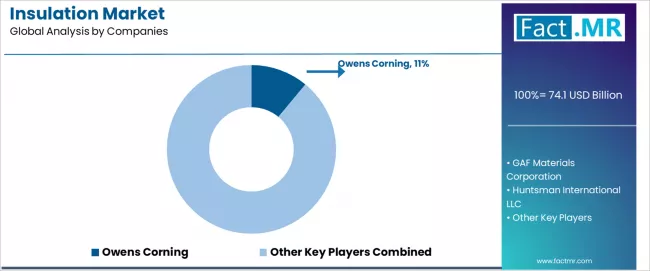
India leads emerging market expansion through comprehensive residential and commercial construction growth supported by government green building incentives. The competitive landscape features moderate concentration with Owens Corning maintaining market leadership position, while specialized players including GAF Materials Corporation, Huntsman International LLC, Johns Manville, and Cellofoam North America compete through product innovation and regional distribution networks across diverse construction and industrial applications.
Insulation Market Year-over-Year Forecast 2025 to 2035
Between 2025 and 2029, the insulation market is projected to expand from USD 74.1 billion to USD 98.1 billion, resulting in a value increase of USD 24.0 billion, which represents 34.0% of the total forecast growth for the period. This phase of development will be shaped by rising demand for energy-efficient construction materials addressing building code requirements and sustainability mandates, product innovation in high-performance insulation systems with enhanced thermal resistance and fire safety characteristics, as well as expanding integration with green building certification programs and net-zero energy building initiatives. Companies are establishing competitive positions through investment in manufacturing capacity expansion, advanced material technologies, and strategic market presence across construction material distributors, contractor networks, and direct-to-builder sales channels.
From 2029 to 2035, the market is forecast to grow from USD 98.1 billion to USD 144.7 billion, adding another USD 46.6 billion, which constitutes 66.0% of the overall expansion. This period is expected to be characterized by the expansion of specialized applications, including aerogel-based super-insulation and vacuum insulation panels for space-constrained installations tailored for specific high-performance requirements, strategic collaborations between insulation manufacturers and construction technology providers, and an enhanced focus on circular economy principles and recycled content integration. The growing emphasis on building decarbonization and rising adoption of passive house standards will drive demand for premium insulation solutions across renovation projects, new construction developments, and industrial facility upgrades serving diverse end-use sectors requiring superior thermal management performance.
Insulation Market Key Takeaways
| Metric | Value |
|---|---|
| Market Value (2025) | USD 74.1 billion |
| Market Forecast Value (2035) | USD 144.7 billion |
| Forecast CAGR (2025-2035) | 6.9% |
Why is the Insulation Market Growing?
The insulation market grows by enabling building owners and industrial operators to achieve significant energy savings and thermal comfort while addressing regulatory compliance requirements and operational cost reduction without exclusive reliance on mechanical heating and cooling systems. Building owners and facility managers face mounting pressure to reduce energy consumption and meet increasingly stringent building energy codes while managing occupant comfort expectations, utility cost pressures, and climate control challenges, with modern insulation materials typically providing superior thermal resistance, moisture management capabilities, and fire safety characteristics compared to inadequate or aging insulation systems alone, making effective thermal insulation essential for comprehensive energy efficiency strategies. The construction industry's need for proven energy-saving solutions and building owner demand for reduced operational expenses create strong market opportunities for insulation products that can provide measurable utility cost savings, improve building performance ratings, and deliver environmental benefits without compromising structural integrity or architectural design flexibility.
Building code enforcement and green building certification programs supporting insulation adoption drive market growth in residential construction, commercial real estate development, and industrial facility construction, where thermal performance has direct impact on energy consumption and carbon footprint reduction. The increasing global focus on climate change mitigation and building sector decarbonization creates expanding regulatory requirements for enhanced insulation standards in new construction and retrofit applications. Rising energy costs enable faster payback periods for insulation investments and improved economic justification for premium insulation solutions. However, installation complexity and upfront cost considerations may limit adoption rates among price-sensitive developers and building owners with constrained capital budgets in competitive construction markets.
Segmental Analysis
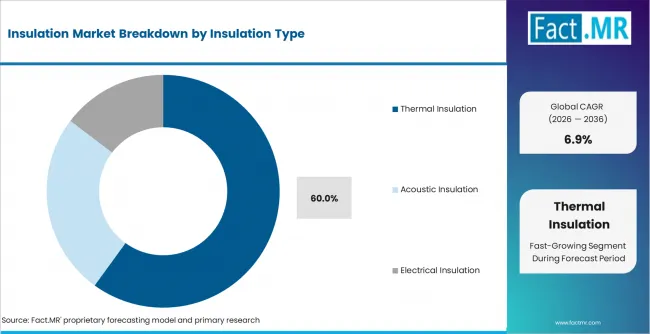
The market is segmented by product, end-use, and region. By product, the market is divided into EPS, glass wool, mineral wool, XPS, and others. Based on end-use, the market is categorized into infrastructure, transportation, industrial, HVAC & OEM, and others. Regionally, the market is divided into Asia Pacific, Europe, North America, Latin America, and Middle East & Africa.
By Product, Which Segment Accounts for the Dominant Market Share?

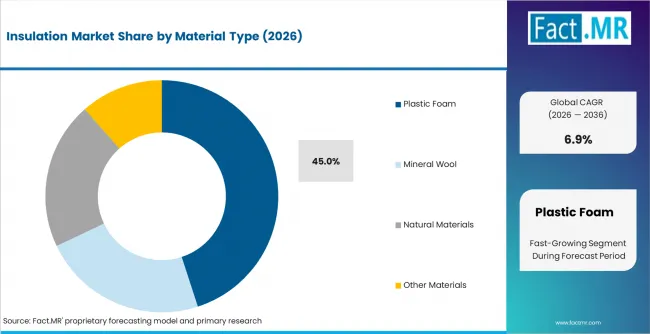
The EPS segment represents the dominant force in the insulation market, capturing approximately 28.0% of total market share in 2025. This established product category encompasses solutions featuring expanded polystyrene foam technology and versatile application characteristics, including advanced formulations with enhanced flame retardancy and improved compressive strength that enable superior thermal performance and cost-effectiveness across residential construction, commercial building insulation, and cold storage facility applications worldwide.
The EPS segment's market leadership stems from its excellent thermal insulation properties at a projected 7.9% CAGR, with solutions capable of providing lightweight installation, moisture resistance, and dimensional stability while maintaining competitive pricing and ease of handling characteristics across diverse construction project requirements.
Within the EPS product category, construction board applications represent the primary use case, addressing wall insulation, roof deck insulation, and foundation insulation needs where rigid foam boards provide consistent thermal performance and structural compatibility. These applications benefit from standardized product dimensions and established installation practices that facilitate contractor adoption and quality assurance.
Geofoam applications within EPS demonstrate growing adoption for civil engineering projects including roadway embankments and bridge approaches where ultra-lightweight fill materials reduce settlement concerns and construction timelines compared to conventional soil filling methods.
The glass wool segment maintains a substantial market share at approximately 22.0% with a 6.7% CAGR, serving residential and commercial construction projects that require flexible insulation materials with excellent acoustic absorption properties alongside thermal performance.
These solutions offer cost-effective options for cavity wall insulation, attic insulation, and metal building applications while providing sufficient fire resistance to support building safety requirements. The glass wool segment demonstrates steady growth potential, driven by established market presence and comprehensive product availability through construction material distribution channels.
Within the glass wool category, batt and roll products account for substantial volume through residential construction applications where pre-cut dimensions enable efficient installation between wall studs, floor joists, and ceiling rafters. Blown-in glass wool serves retrofit applications and irregular cavity spaces where loose-fill installation provides complete thermal coverage.
The mineral wool segment accounts for approximately 16.0% market share with a 6.5% CAGR, driven by superior fire resistance properties and high-temperature performance capabilities. Industrial applications and commercial construction projects utilize mineral wool for fire-rated assemblies, mechanical insulation, and acoustical ceiling systems.
XPS represents approximately 10.0% of the market with a 6.0% CAGR, serving below-grade applications, roofing systems, and cold storage facilities requiring closed-cell foam insulation with superior moisture resistance and high compressive strength characteristics. The others category at 24.0% includes specialized products such as polyurethane foam, PIR, aerogel, and natural fiber insulation serving niche applications.
Key product advantages driving the EPS segment include:
- Advanced thermal resistance mechanisms with clinically demonstrated R-value performance providing effective energy savings across climate zones and building types
- Established cost-effectiveness allowing widespread adoption and competitive positioning without premium pricing barriers limiting market penetration
- Enhanced versatility features enabling diverse application methods from board stock to molded shapes while maintaining performance consistency
- Superior moisture resistance providing protection against water absorption and dimensional changes across humid environments and below-grade applications
By End-Use, Which Segment Accounts for the Largest Market Share?

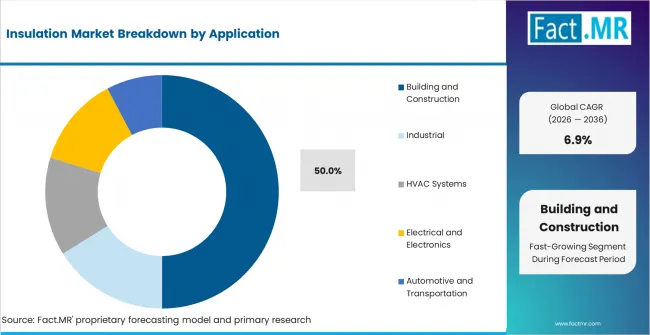
Infrastructure dominates the insulation end-use landscape with approximately 34.0% market share in 2025, reflecting the critical role of building construction in supporting thermal comfort, energy efficiency, and occupant wellness across residential and commercial building stock worldwide.
The infrastructure segment's market leadership at a 6.9% CAGR is reinforced by continuous construction activity, building code requirements mandating minimum insulation levels, and the substantial existing building inventory requiring thermal performance upgrades through renovation and retrofit programs.
Within this segment, residential infrastructure accounts for substantial market volume through new home construction, multifamily developments, and single-family housing projects where wall insulation, attic insulation, and foundation insulation represent essential building components. Building codes increasingly mandate enhanced insulation performance supporting energy efficiency objectives and occupant comfort standards.
Non-residential and commercial infrastructure demonstrates strong demand through office buildings, retail centers, healthcare facilities, and educational institutions where comprehensive building envelope insulation supports operational cost reduction and green building certification requirements including LEED and BREEAM standards.
The transportation segment represents a fast-growing end-use category at approximately 18.0% market share demonstrating robust expansion at 7.3% CAGR, driven by automotive thermal management requirements, cold chain logistics growth, and aerospace insulation applications. This segment benefits from expanding temperature-controlled transportation infrastructure and electric vehicle thermal management challenges requiring advanced insulation solutions.
Within the transportation category, automotive applications account for growing volume through passenger vehicle insulation, commercial truck refrigeration, and electric vehicle battery thermal management where lightweight insulation materials support fuel efficiency and range optimization objectives.
Marine and aerospace applications serve specialized transportation segments requiring fire-resistant, lightweight insulation solutions meeting stringent safety standards and extreme operating environment performance requirements.
The industrial segment maintains approximately 15.0% market share at 6.5% CAGR through process equipment insulation, pipe insulation, and storage tank insulation serving chemical processing, oil and gas, and manufacturing facilities. HVAC & OEM applications account for approximately 14.0% at 6.2% CAGR, serving heating and cooling equipment, ductwork insulation, and original equipment manufacturer applications.
Key market dynamics supporting end-use growth include:
- Infrastructure expansion driven by urbanization trends and building code modernization, requiring comprehensive insulation specifications and quality installation practices
- Transportation sector evolution trends require specialized thermal management solutions for emerging vehicle technologies and cold chain requirements
- Integration of building automation systems enabling optimized thermal management and energy consumption monitoring across insulated building envelopes
- Growing emphasis on life-cycle cost analysis driving long-term insulation investment decisions without short-term capital cost optimization limitations
What are the Drivers, Restraints, and Key Trends of the Insulation Market?
The market is driven by three concrete demand factors tied to energy efficiency and regulatory compliance. First, rising energy costs and increasing building energy consumption create compelling economic justification for insulation investments, with thermal insulation representing a critical energy conservation measure for reducing heating and cooling expenses, requiring widespread specification in new construction and retrofit projects. Second, growing regulatory requirements and building energy codes mandate minimum insulation performance levels, with numerous jurisdictions demonstrating significant enforcement of thermal resistance standards and building envelope requirements through permitting and inspection processes by 2030. Third, increasing climate awareness and carbon reduction commitments enable greater emphasis on building sector decarbonization that improves environmental performance while supporting corporate sustainability objectives and government climate action plans without compromising building functionality or occupant comfort.
Market restraints include raw material price volatility and supply chain disruptions that can challenge cost predictability and margin stability, particularly for petroleum-derived foam products and imported materials where global commodity markets and transportation costs prove decisive for pricing competitiveness. Installation quality variations and contractor skill gaps pose another significant obstacle, as insulation performance depends on proper installation techniques including air sealing, vapor barrier placement, and thermal bridge elimination, potentially affecting realized energy savings and building performance outcomes. Competition from alternative building technologies including structural insulated panels and high-performance window systems creates additional pressure for market share retention, demanding continuous product innovation and value proposition communication.
Key trends indicate accelerated sustainable material adoption in developed markets, particularly North America and Europe, where building owners demonstrate increasing willingness to specify recycled content insulation, bio-based materials, and products with environmental product declarations supporting green building certification objectives. Building envelope integration trends toward continuous insulation systems, advanced air barrier technologies, and thermal bridge mitigation strategies enable comprehensive energy performance that optimizes whole-building energy consumption. However, the market thesis could face disruption if significant advances in building heating and cooling technologies or major shifts in building design approaches reduce the economic importance of thermal insulation in achieving energy efficiency targets.
Analysis of the Insulation Market by Key Countries

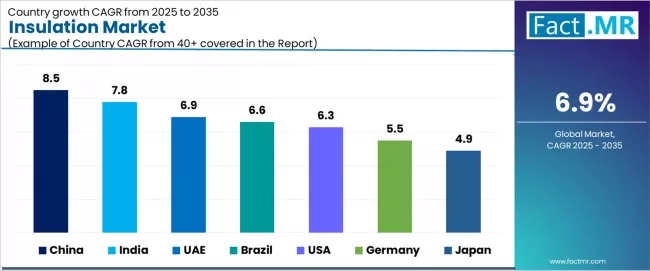
| Country | CAGR (2025-2035) |
|---|---|
| China | 8.5% |
| India | 7.8% |
| UAE | 6.9% |
| Brazil | 6.6% |
| USA | 6.3% |
| Germany | 5.5% |
| Japan | 4.9% |
The global insulation market is expanding steadily, with China leading at an 8.5% CAGR through 2035, driven by strongest construction pipeline, rapid urbanization, and large-scale cold-chain expansion supporting construction industrialization. India follows at 7.8%, supported by fast-growing residential and commercial projects, green building incentives, and rising energy efficiency adoption. UAE records 6.9%, reflecting extreme climate conditions and mandatory energy efficiency requirements.
Brazil advances at 6.6%, leveraging expanding industrial sector and rising commercial construction. USA posts 6.3%, focusing on high retrofit demand and strict energy codes, while Germany grows at 5.5%, emphasizing strict building energy codes and large retrofit programs. Japan demonstrates 4.9% growth, anchored by mature market dynamics with consistent adoption due to aging buildings and tightening energy standards.
How is China Leading Global Market Expansion?
China demonstrates the strongest growth potential in the insulation market with a CAGR of 8.5% through 2035. The country's leadership position stems from massive infrastructure investment programs, rapid urbanization driving residential and commercial construction, and expanding cold chain logistics infrastructure requiring comprehensive thermal insulation systems.
Growth is concentrated in major urban development regions and industrial corridors, including Beijing-Tianjin-Hebei, Yangtze River Delta, and Pearl River Delta, where high-rise residential towers, commercial complexes, and logistics facilities are driving unprecedented insulation material consumption.
Distribution systems through building material suppliers, construction contractors, and direct manufacturer relationships expand material availability across developers and construction companies. The country's comprehensive prefabrication initiatives provide strong momentum for factory-installed insulation systems, including extensive utilization across modular construction projects and industrialized building components serving rapid urban development requirements.
Key market factors:
- Construction activity concentrated in tier-1 and tier-2 cities with extensive residential and commercial development projects
- Cold chain infrastructure growth through temperature-controlled warehouses and refrigerated transportation supporting food safety initiatives
- Comprehensive building energy code implementation ecosystem, including mandatory energy performance standards for new construction
- Manufacturing capacity expansion featuring domestic insulation producers offering competitive pricing and localized product specifications
Why is India Emerging as a High-Growth Market?
In major development regions including Maharashtra, Karnataka, Tamil Nadu, Gujarat, and National Capital Region, the adoption of insulation products is accelerating across residential construction projects and commercial real estate developments, driven by government green building programs and increasing awareness about energy efficiency benefits. The market demonstrates strong growth momentum with a CAGR of 7.8% through 2035, linked to comprehensive urbanization trends and increasing middle-class housing demand supporting construction sector expansion.
Indian builders and developers are implementing thermal insulation systems integrated with modern construction practices to enhance building performance while meeting growing expectations in occupant comfort and energy cost reduction. The country's expanding green building certification adoption creates ongoing opportunities for insulation manufacturers establishing operations that support both affordable housing segments and premium commercial developments.
Key development areas:
- Residential construction leading insulation adoption with emphasis on multi-story apartment buildings and gated community developments
- Green building certification growth providing opportunities for premium insulation specifications in commercial projects
- Government incentive programs supporting energy-efficient construction and sustainable building materials adoption
- Growing awareness among developers and homebuyers about long-term energy savings and thermal comfort benefits
What drives UAE’s Market Leadership?
UAE’s market expansion is driven by extreme climate conditions requiring superior thermal insulation performance and comprehensive energy efficiency regulations mandating minimum building envelope standards. The country demonstrates strong growth potential with a CAGR of 6.9% through 2035, supported by ambitious green building mandates and extensive commercial and hospitality construction activity.
UAE building owners face implementation challenges related to extreme heat conditions and humidity control requirements, requiring insulation solutions that demonstrate exceptional moisture resistance and long-term thermal performance stability.
However, mandatory energy efficiency codes and government sustainability initiatives create robust baseline demand for insulation products, particularly in major cities including Dubai, Abu Dhabi, and Sharjah where high-rise construction and luxury developments drive primary material consumption patterns.
Market characteristics:
- Commercial and hospitality sectors showing robust demand with substantial investment in premium construction projects
- Regional concentration in Dubai and Abu Dhabi with extensive development activity and strict building code enforcement
- Future projections indicate continued emphasis on green building certifications including Estidama and LEED standards
- Growing emphasis on district cooling systems and energy-efficient building design supporting comprehensive insulation specifications
How does Brazil Demonstrate Industrial Growth Leadership?
Brazil's insulation market demonstrates significant growth opportunities focused on expanding industrial sector and rising commercial construction activity, with documented integration of energy-efficient building practices achieving substantial momentum through corporate sustainability programs and regulatory compliance requirements across major metropolitan areas.
The country maintains solid growth momentum with a CAGR of 6.6% through 2035, driven by industrial facility development emphasizing process efficiency and commercial real estate projects implementing modern building standards. Major development regions, including São Paulo, Rio de Janeiro, Minas Gerais, and Rio Grande do Sul, showcase growing insulation adoption where industrial plants, logistics centers, and commercial buildings integrate thermal management systems for operational cost reduction and environmental compliance.
Key market characteristics:
- Industrial sector driving demand for process insulation and facility thermal management solutions
- Commercial construction expansion enabling adoption of modern building envelope systems and energy-efficient designs
- Manufacturing partnerships supporting domestic production capabilities and competitive market pricing
- Emphasis on cold storage infrastructure and temperature-controlled logistics supporting agricultural export sector
What Positions USA for Retrofit Market Leadership?

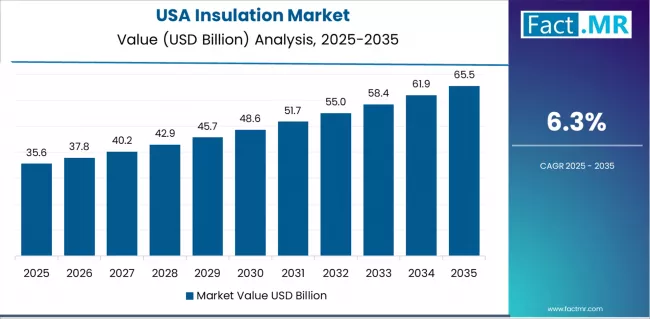
In major metropolitan areas including New York, Los Angeles, Chicago, Houston, and Phoenix, building owners are implementing insulation upgrades through comprehensive retrofit programs and renovation projects, with documented energy savings showing substantial utility cost reduction through professionally installed thermal insulation systems. The market shows strong growth potential with a CAGR of 6.3% through 2035, linked to aging building stock requiring energy performance improvements, strict energy codes driving new construction standards, and HVAC system integration requirements in major regions.
Building owners are adopting enhanced insulation specifications with technical oversight to improve energy efficiency while maintaining standards demanded by building performance certification programs and utility rebate initiatives. The country's extensive residential and commercial building inventory creates ongoing opportunities for insulation manufacturers serving both new construction markets and substantial retrofit demand.
Market development factors:
- Retrofit sector leading market growth with emphasis on residential attic upgrades and commercial building envelope improvements
- Energy code evolution providing drivers for enhanced insulation specifications in new construction projects
- Strategic partnerships between utilities and insulation contractors expanding energy efficiency program participation
- Emphasis on building performance verification and energy auditing supporting informed insulation investment decisions
How Does Germany Demonstrate Regulatory Leadership?
The market in Germany leads in building energy regulations based on stringent code requirements and comprehensive passive house standards driving superior thermal performance in residential and commercial construction. The country shows steady potential with a CAGR of 5.5% through 2035, driven by strict building energy codes including GEG regulations and extensive retrofit programs targeting existing building stock in major regions, including North Rhine-Westphalia, Bavaria, Baden-Württemberg, and Hesse.
German building owners are adopting premium insulation systems through comprehensive renovation projects and new construction developments for energy efficiency optimization, particularly in environmentally conscious communities and historic building renovations demanding specialized insulation approaches. Distribution channels through building material merchants and specialized insulation contractors expand coverage across construction markets and renovation specialists requiring technical expertise.
Leading market segments:
- Building renovation sector dominating market activity implementing comprehensive thermal envelope improvements
- Passive house construction demonstrating premium insulation specifications exceeding minimum code requirements
- Strategic government programs including KfW financing supporting energy-efficient building improvements and retrofit investments
- Focus on sustainable insulation materials including wood fiber products and recycled content formulations addressing environmental objectives
What Characterizes Japan's Market Maturity?

In major urban centers including Tokyo, Osaka, Nagoya, and Fukuoka, the adoption of insulation solutions is evolving across aging building renovations and new construction projects, driven by tightening energy standards and growing awareness about thermal comfort benefits. The market demonstrates steady growth potential with a CAGR of 4.9% through 2035, linked to mature market dynamics with consistent adoption driven by building code updates and aging infrastructure requiring performance upgrades.
Japanese building owners are implementing quality-focused insulation products and utilizing advanced installation techniques to enhance energy performance while meeting expectations for superior workmanship and long-term durability standards. The country's emphasis on building quality creates ongoing demand for premium insulation materials that demonstrate proven performance characteristics and manufacturer reliability.
Key development areas:
- Building renovation sector leading adoption with emphasis on earthquake-resistant building upgrades incorporating improved insulation
- Energy efficiency standards evolution providing gradual drivers for enhanced thermal performance specifications
- Premium product positioning featuring advanced materials and superior quality control addressing discerning consumer preferences
- Integration of moisture management systems and ventilation technologies supporting comprehensive building envelope optimization
Europe Market Split by Country

The insulation market in Europe is projected to grow from USD 17.8 billion in 2025 to USD 30.2 billion by 2035, registering a CAGR of 5.8% over the forecast period. Germany is expected to maintain its leadership position with a 30.5% market share in 2025, adjusting to 30.0% by 2035, supported by its stringent building energy regulations, extensive retrofit programs, and comprehensive passive house standards serving major European markets.
France follows with a 22.0% share in 2025, projected to reach 22.5% by 2035, driven by national energy renovation programs and building thermal regulation requirements supporting insulation market growth. UK holds an 18.5% share in 2025, expected to maintain 18.8% by 2035 through ongoing building code updates and energy efficiency initiatives.
Italy commands a 14.0% share, while Spain accounts for 11.0% in 2025. The rest of Europe region is anticipated to gain momentum, expanding its collective share from 4.0% to 4.2% by 2035, attributed to increasing insulation adoption in Nordic countries implementing near-zero energy building standards and Eastern European markets modernizing building construction practices and energy efficiency regulations.
Competitive Landscape of the Insulation Market

The insulation market features approximately 20-30 meaningful players with moderate concentration, where the top three companies control roughly 20-30% of global market share through established manufacturing capabilities, distribution networks, and product portfolio breadth. Competition centers on thermal performance characteristics, fire safety certifications, and cost competitiveness rather than brand loyalty alone.
Market leaders include Owens Corning, Saint-Gobain, and Rockwool International, which maintain competitive advantages through comprehensive product portfolios spanning multiple insulation categories, global manufacturing footprints, and deep expertise in building science and thermal engineering, creating high credibility among architects, contractors, and building owners. These companies leverage technical service capabilities and extensive distribution relationships to defend market positions while expanding into high-performance insulation segments including aerogel products and vacuum insulation panels.
Challengers encompass established building material manufacturers including GAF Materials Corporation, Johns Manville, and Kingspan Group, which compete through vertical integration, regional market leadership, and specialized product focus in roofing insulation, industrial insulation, and commercial building applications. Material specialists, including Huntsman International LLC, DuPont, and Cellofoam North America, focus on specific insulation technologies or end-use markets, offering differentiated capabilities in polyurethane foam systems, high-performance polymers, and engineered foam products.
Regional producers and private label manufacturers create competitive pressure through local market presence and competitive pricing strategies, particularly in high-growth markets including China and India, where proximity to construction markets provides advantages in logistics costs and customer service responsiveness.
Market dynamics favor companies that combine manufacturing scale with technical service capabilities and distribution reach that address complete value chain requirements from product specification through installation support. Strategic emphasis on sustainable manufacturing, recycled content integration, and fire safety innovations enables differentiation in increasingly competitive building material markets across developed and emerging regions.
Global Insulation Market - Stakeholder Contribution Framework
Insulation represents a critical building material category that enables property owners and facility operators to achieve significant energy savings and thermal comfort while addressing regulatory compliance requirements and operational cost optimization without exclusive dependence on mechanical heating and cooling systems, typically providing superior thermal resistance, moisture management, and fire safety characteristics compared to inadequate building envelopes alone while ensuring occupant comfort and comprehensive energy efficiency.
With the market projected to grow from USD 74.1 billion in 2025 to USD 144.7 billion by 2035 at a 6.9% CAGR, these solutions offer compelling advantages for infrastructure applications, energy efficiency programs, and diverse construction sectors requiring proven thermal management solutions. Scaling market penetration and quality adoption requires coordinated action across building codes, industry standards, manufacturers, contractors, and building owner education.
How Could Governments Spur Local Development and Adoption?
- Building Code Enhancement: Include stringent minimum insulation requirements in national energy codes, providing technical guidance for climate-appropriate thermal resistance values and supporting compliance verification through inspector training and certification programs.
- Tax Policy & Investment Support: Implement tax credits for energy efficiency improvements, provide incentives for manufacturers investing in sustainable insulation production, and establish favorable treatment for building retrofit projects incorporating enhanced insulation systems.
- Regulatory Framework Development: Create streamlined permitting processes for energy efficiency upgrades, establish clear fire safety standards and testing protocols for insulation materials, and develop harmonized building energy performance requirements across jurisdictions.
- Retrofit Program Support: Fund public building insulation upgrades demonstrating energy savings potential, invest in workforce training for insulation contractors, and establish quality assurance programs ensuring proper installation practices.
- Research & Innovation Support: Establish public-private partnerships for advanced insulation technology research, support academic-industry collaborations investigating next-generation materials, and create regulatory pathways for novel insulation technologies including aerogels and bio-based materials.
How Could Industry Bodies Support Market Development?
- Technical Standards & Protocols: Define standardized testing methodologies for thermal performance, fire safety, and moisture resistance, establish universal installation guidelines ensuring quality outcomes, and create certification programs validating contractor competency.
- Market Education & Best Practices: Lead messaging demonstrating insulation benefits including energy cost savings, carbon reduction, and improved comfort compared to inadequate building envelopes.
- Quality Assurance Standards: Develop guidelines for manufacturing consistency, product labeling accuracy, and third-party verification ensuring consumer confidence across product claims.
- Professional Development: Run training programs for architects, contractors, and building inspectors on optimizing insulation specifications, installation techniques, and quality verification in diverse construction applications.
How Could Manufacturers and Technology Players Strengthen the Ecosystem?
- Advanced Product Development: Develop next-generation insulation materials with enhanced thermal performance, improved fire resistance, and sustainable attributes that improve building energy efficiency while reducing environmental impact.
- Technical Service Programs: Provide comprehensive design assistance, thermal modeling support, and installation training that supports specifier confidence and proper product application aligned with performance objectives.
- Building Owner Education: Offer detailed information about energy savings potential, payback period calculations, and performance specifications that help building owners make informed investment decisions.
- Distribution Networks: Build comprehensive supplier relationships, contractor partnerships, and logistics infrastructure ensuring insulation maintains reliable availability across construction markets.
How Could Contractors and Builders Navigate the Market?
- Quality Installation Excellence: Incorporate proper insulation techniques into construction practices, with particular focus on air sealing integration, thermal bridge elimination, and moisture management for comprehensive building envelope performance.
- Technical Competency Development: Establish workforce training programs, quality control protocols, and installation verification systems ensuring specification compliance and performance achievement.
- Energy Performance Integration: Implement building performance testing including blower door testing and thermal imaging verification ensuring insulation systems deliver intended energy savings.
- Value Communication: Develop client education approaches explaining long-term energy cost savings and comfort improvements justifying insulation investment decisions.
How Could Investors and Financial Enablers Unlock Value?
- Manufacturing Capacity Financing: Provide growth capital for established companies like Owens Corning and regional producers to expand production facilities supporting market demand growth.
- Technology Investment: Back companies developing advanced insulation materials, sustainable manufacturing processes, and innovative application systems that enhance performance and market differentiation.
- Market Expansion Funding: Finance distribution infrastructure for manufacturers establishing operations in high-growth regions including China and India, supporting localization initiatives addressing regional requirements.
- Sustainability Initiatives: Support companies implementing circular economy principles, recycled content integration, and carbon footprint reduction strategies enhancing industry sustainability performance.
Key Players in the Insulation Market
- Owens Corning
- GAF Materials Corporation
- Huntsman International LLC
- Johns Manville
- Cellofoam North America
- Rockwool International
- DuPont
- Atlas Roofing
- Saint-Gobain
- Kingspan Group
Scope of the Report
| Items | Values |
|---|---|
| Quantitative Units | USD 74.1 Billion |
| Product | EPS, Glass Wool, Mineral Wool, XPS, CMS Fibers, Calcium Silicate, Aerogel, Cellulose, PIR, Phenolic Foam, Polyurethane |
| End-Use | Infrastructure (Residential, Non-residential & Commercial), Industrial, HVAC & OEM, Transportation (Automotive, Marine, Aerospace), Appliances, Furniture, Packaging |
| Regions Covered | Asia Pacific, Europe, North America, Latin America, Middle East & Africa |
| Country Covered | China, India, Germany, and 40+ countries |
| Key Companies Profiled | Owens Corning, GAF Materials Corporation, Huntsman International LLC, Johns Manville, Cellofoam North America, Rockwool International, DuPont, Atlas Roofing, Saint-Gobain, Kingspan Group |
| Additional Attributes | Dollar sales by product and end-use categories, regional adoption trends across Asia Pacific, Europe, and North America, competitive landscape with insulation manufacturers and building material companies, product specifications and performance requirements, integration with building envelope systems and energy efficiency programs, innovations in sustainable materials and fire safety technologies, and development of specialized applications with enhanced thermal resistance and installation efficiency capabilities. |
Insulation Market by Segments
-
Product :
- EPS
- Glass Wool
- Mineral Wool
- XPS
- CMS Fibers
- Calcium Silicate
- Aerogel
- Cellulose
- PIR (Polysio)
- Phenolic Foam
- Polyurethane
-
End-Use :
- Infrastructure
- Residential Infrastructure
- Non-residential & Commercial Infrastructures
- Industrial
- HVAC & OEM
- Transportation
- Automotive
- Marine
- Aerospace
- Appliances
- Furniture
- Packaging
- Infrastructure
-
Region :
- Asia Pacific
- China
- Japan
- India
- Australia
- Thailand
- Rest of Asia Pacific
- Europe
- Germany
- UK
- France
- Italy
- Spain
- Denmark
- Sweden
- Norway
- Rest of Europe
- North America
- USA
- Canada
- Mexico
- Latin America
- Brazil
- Argentina
- Rest of Latin America
- Middle East & Africa
- South Africa
- Saudi Arabia
- UAE
- Kuwait
- Rest of Middle East & Africa
- Asia Pacific
Table of Content
- Executive Summary
- Global Market Outlook
- Demand to side Trends
- Supply to side Trends
- Technology Roadmap Analysis
- Analysis and Recommendations
- Market Overview
- Market Coverage / Taxonomy
- Market Definition / Scope / Limitations
- Market Background
- Market Dynamics
- Drivers
- Restraints
- Opportunity
- Trends
- Scenario Forecast
- Demand in Optimistic Scenario
- Demand in Likely Scenario
- Demand in Conservative Scenario
- Opportunity Map Analysis
- Product Life Cycle Analysis
- Supply Chain Analysis
- Investment Feasibility Matrix
- Value Chain Analysis
- PESTLE and Porter’s Analysis
- Regulatory Landscape
- Regional Parent Market Outlook
- Production and Consumption Statistics
- Import and Export Statistics
- Market Dynamics
- Global Market Analysis 2020 to 2024 and Forecast, 2025 to 2035
- Historical Market Size Value (USD Million) Analysis, 2020 to 2024
- Current and Future Market Size Value (USD Million) Projections, 2025 to 2035
- Y to o to Y Growth Trend Analysis
- Absolute $ Opportunity Analysis
- Global Market Pricing Analysis 2020 to 2024 and Forecast 2025 to 2035
- Global Market Analysis 2020 to 2024 and Forecast 2025 to 2035, By Product
- Introduction / Key Findings
- Historical Market Size Value (USD Million) Analysis By Product, 2020 to 2024
- Current and Future Market Size Value (USD Million) Analysis and Forecast By Product, 2025 to 2035
- EPS
- Glass Wool
- Mineral Wool
- XPS
- CMS Fibers
- Calcium Silicate
- Aerogel
- Cellulose
- PIR (Polysio)
- Phenolic Foam
- Polyurethane
- Y to o to Y Growth Trend Analysis By Product, 2020 to 2024
- Absolute $ Opportunity Analysis By Product, 2025 to 2035
- Global Market Analysis 2020 to 2024 and Forecast 2025 to 2035, By End-Use
- Introduction / Key Findings
- Historical Market Size Value (USD Million) Analysis By End-Use, 2020 to 2024
- Current and Future Market Size Value (USD Million) Analysis and Forecast By End-Use, 2025 to 2035
- Infrastructure
- Industrial
- HVAC & OEM
- Transportation
- Appliances
- Furniture
- Packaging
- Y to o to Y Growth Trend Analysis By End-Use, 2020 to 2024
- Absolute $ Opportunity Analysis By End-Use, 2025 to 2035
- Global Market Analysis 2020 to 2024 and Forecast 2025 to 2035, By Region
- Introduction
- Historical Market Size Value (USD Million) Analysis By Region, 2020 to 2024
- Current Market Size Value (USD Million) Analysis and Forecast By Region, 2025 to 2035
- North America
- Latin America
- Western Europe
- Eastern Europe
- East Asia
- South Asia and Pacific
- Middle East & Africa
- Market Attractiveness Analysis By Region
- North America Market Analysis 2020 to 2024 and Forecast 2025 to 2035, By Country
- Historical Market Size Value (USD Million) Trend Analysis By Market Taxonomy, 2020 to 2024
- Market Size Value (USD Million) Forecast By Market Taxonomy, 2025 to 2035
- By Country
- USA
- Canada
- Mexico
- By Product
- By End-Use
- By Country
- Market Attractiveness Analysis
- By Country
- By Product
- By End-Use
- Key Takeaways
- Latin America Market Analysis 2020 to 2024 and Forecast 2025 to 2035, By Country
- Historical Market Size Value (USD Million) Trend Analysis By Market Taxonomy, 2020 to 2024
- Market Size Value (USD Million) Forecast By Market Taxonomy, 2025 to 2035
- By Country
- Brazil
- Chile
- Rest of Latin America
- By Product
- By End-Use
- By Country
- Market Attractiveness Analysis
- By Country
- By Product
- By End-Use
- Key Takeaways
- Western Europe Market Analysis 2020 to 2024 and Forecast 2025 to 2035, By Country
- Historical Market Size Value (USD Million) Trend Analysis By Market Taxonomy, 2020 to 2024
- Market Size Value (USD Million) Forecast By Market Taxonomy, 2025 to 2035
- By Country
- Germany
- UK
- Italy
- Spain
- France
- Nordic
- BENELUX
- Rest of Western Europe
- By Product
- By End-Use
- By Country
- Market Attractiveness Analysis
- By Country
- By Product
- By End-Use
- Key Takeaways
- Eastern Europe Market Analysis 2020 to 2024 and Forecast 2025 to 2035, By Country
- Historical Market Size Value (USD Million) Trend Analysis By Market Taxonomy, 2020 to 2024
- Market Size Value (USD Million) Forecast By Market Taxonomy, 2025 to 2035
- By Country
- Russia
- Poland
- Hungary
- Balkan & Baltic
- Rest of Eastern Europe
- By Product
- By End-Use
- By Country
- Market Attractiveness Analysis
- By Country
- By Product
- By End-Use
- Key Takeaways
- East Asia Market Analysis 2020 to 2024 and Forecast 2025 to 2035, By Country
- Historical Market Size Value (USD Million) Trend Analysis By Market Taxonomy, 2020 to 2024
- Market Size Value (USD Million) Forecast By Market Taxonomy, 2025 to 2035
- By Country
- China
- Japan
- South Korea
- By Product
- By End-Use
- By Country
- Market Attractiveness Analysis
- By Country
- By Product
- By End-Use
- Key Takeaways
- South Asia and Pacific Market Analysis 2020 to 2024 and Forecast 2025 to 2035, By Country
- Historical Market Size Value (USD Million) Trend Analysis By Market Taxonomy, 2020 to 2024
- Market Size Value (USD Million) Forecast By Market Taxonomy, 2025 to 2035
- By Country
- India
- ASEAN
- Australia & New Zealand
- Rest of South Asia and Pacific
- By Product
- By End-Use
- By Country
- Market Attractiveness Analysis
- By Country
- By Product
- By End-Use
- Key Takeaways
- Middle East & Africa Market Analysis 2020 to 2024 and Forecast 2025 to 2035, By Country
- Historical Market Size Value (USD Million) Trend Analysis By Market Taxonomy, 2020 to 2024
- Market Size Value (USD Million) Forecast By Market Taxonomy, 2025 to 2035
- By Country
- Kingdom of Saudi Arabia
- Other GCC Countries
- Turkiye
- South Africa
- Other African Union
- Rest of Middle East & Africa
- By Product
- By End-Use
- By Country
- Market Attractiveness Analysis
- By Country
- By Product
- By End-Use
- Key Takeaways
- Key Countries Market Analysis
- USA
- Pricing Analysis
- Market Share Analysis, 2024
- By Product
- By End-Use
- Canada
- Pricing Analysis
- Market Share Analysis, 2024
- By Product
- By End-Use
- Mexico
- Pricing Analysis
- Market Share Analysis, 2024
- By Product
- By End-Use
- Brazil
- Pricing Analysis
- Market Share Analysis, 2024
- By Product
- By End-Use
- Chile
- Pricing Analysis
- Market Share Analysis, 2024
- By Product
- By End-Use
- Germany
- Pricing Analysis
- Market Share Analysis, 2024
- By Product
- By End-Use
- UK
- Pricing Analysis
- Market Share Analysis, 2024
- By Product
- By End-Use
- Italy
- Pricing Analysis
- Market Share Analysis, 2024
- By Product
- By End-Use
- Spain
- Pricing Analysis
- Market Share Analysis, 2024
- By Product
- By End-Use
- France
- Pricing Analysis
- Market Share Analysis, 2024
- By Product
- By End-Use
- India
- Pricing Analysis
- Market Share Analysis, 2024
- By Product
- By End-Use
- ASEAN
- Pricing Analysis
- Market Share Analysis, 2024
- By Product
- By End-Use
- Australia & New Zealand
- Pricing Analysis
- Market Share Analysis, 2024
- By Product
- By End-Use
- China
- Pricing Analysis
- Market Share Analysis, 2024
- By Product
- By End-Use
- Japan
- Pricing Analysis
- Market Share Analysis, 2024
- By Product
- By End-Use
- South Korea
- Pricing Analysis
- Market Share Analysis, 2024
- By Product
- By End-Use
- Russia
- Pricing Analysis
- Market Share Analysis, 2024
- By Product
- By End-Use
- Poland
- Pricing Analysis
- Market Share Analysis, 2024
- By Product
- By End-Use
- Hungary
- Pricing Analysis
- Market Share Analysis, 2024
- By Product
- By End-Use
- Kingdom of Saudi Arabia
- Pricing Analysis
- Market Share Analysis, 2024
- By Product
- By End-Use
- Turkiye
- Pricing Analysis
- Market Share Analysis, 2024
- By Product
- By End-Use
- South Africa
- Pricing Analysis
- Market Share Analysis, 2024
- By Product
- By End-Use
- USA
- Market Structure Analysis
- Competition Dashboard
- Competition Benchmarking
- Market Share Analysis of Top Players
- By Regional
- By Product
- By End-Use
- Competition Analysis
- Competition Deep Dive
- Owens Corning
- Overview
- Product Portfolio
- Profitability by Market Segments (Product/Age /Sales Channel/Region)
- Sales Footprint
- Strategy Overview
- Marketing Strategy
- Product Strategy
- Channel Strategy
- GAF Materials Corporation
- Huntsman International LLC
- Johns Manville
- Cellofoam North America
- Rockwool International
- DuPont
- Atlas Roofing
- Saint-Gobain
- Kingspan Group
- Owens Corning
- Competition Deep Dive
- Assumptions & Acronyms Used
- Research Methodology
List Of Table
- Table 1: Global Market Value (USD Million) Forecast by Region, 2020 to 2035
- Table 2: Global Market Value (USD Million) Forecast by Product, 2020 to 2035
- Table 3: Global Market Value (USD Million) Forecast by End-Use, 2020 to 2035
- Table 4: North America Market Value (USD Million) Forecast by Country, 2020 to 2035
- Table 5: North America Market Value (USD Million) Forecast by Product, 2020 to 2035
- Table 6: North America Market Value (USD Million) Forecast by End-Use, 2020 to 2035
- Table 7: Latin America Market Value (USD Million) Forecast by Country, 2020 to 2035
- Table 8: Latin America Market Value (USD Million) Forecast by Product, 2020 to 2035
- Table 9: Latin America Market Value (USD Million) Forecast by End-Use, 2020 to 2035
- Table 10: Western Europe Market Value (USD Million) Forecast by Country, 2020 to 2035
- Table 11: Western Europe Market Value (USD Million) Forecast by Product, 2020 to 2035
- Table 12: Western Europe Market Value (USD Million) Forecast by End-Use, 2020 to 2035
- Table 13: Eastern Europe Market Value (USD Million) Forecast by Country, 2020 to 2035
- Table 14: Eastern Europe Market Value (USD Million) Forecast by Product, 2020 to 2035
- Table 15: Eastern Europe Market Value (USD Million) Forecast by End-Use, 2020 to 2035
- Table 16: East Asia Market Value (USD Million) Forecast by Country, 2020 to 2035
- Table 17: East Asia Market Value (USD Million) Forecast by Product, 2020 to 2035
- Table 18: East Asia Market Value (USD Million) Forecast by End-Use, 2020 to 2035
- Table 19: South Asia and Pacific Market Value (USD Million) Forecast by Country, 2020 to 2035
- Table 20: South Asia and Pacific Market Value (USD Million) Forecast by Product, 2020 to 2035
- Table 21: South Asia and Pacific Market Value (USD Million) Forecast by End-Use, 2020 to 2035
- Table 22: Middle East & Africa Market Value (USD Million) Forecast by Country, 2020 to 2035
- Table 23: Middle East & Africa Market Value (USD Million) Forecast by Product, 2020 to 2035
- Table 24: Middle East & Africa Market Value (USD Million) Forecast by End-Use, 2020 to 2035
List Of Figures
- Figure 1: Global Market Pricing Analysis
- Figure 2: Global Market Value (USD Million) Forecast 2020 to 2035
- Figure 3: Global Market Value Share and BPS Analysis by Product, 2025 and 2035
- Figure 4: Global Market Y to o to Y Growth Comparison by Product, 2025 to 2035
- Figure 5: Global Market Attractiveness Analysis by Product
- Figure 6: Global Market Value Share and BPS Analysis by End-Use, 2025 and 2035
- Figure 7: Global Market Y to o to Y Growth Comparison by End-Use, 2025 to 2035
- Figure 8: Global Market Attractiveness Analysis by End-Use
- Figure 9: Global Market Value (USD Million) Share and BPS Analysis by Region, 2025 and 2035
- Figure 10: Global Market Y to o to Y Growth Comparison by Region, 2025 to 2035
- Figure 11: Global Market Attractiveness Analysis by Region
- Figure 12: North America Market Incremental Dollar Opportunity, 2025 to 2035
- Figure 13: Latin America Market Incremental Dollar Opportunity, 2025 to 2035
- Figure 14: Western Europe Market Incremental Dollar Opportunity, 2025 to 2035
- Figure 15: Eastern Europe Market Incremental Dollar Opportunity, 2025 to 2035
- Figure 16: East Asia Market Incremental Dollar Opportunity, 2025 to 2035
- Figure 17: South Asia and Pacific Market Incremental Dollar Opportunity, 2025 to 2035
- Figure 18: Middle East & Africa Market Incremental Dollar Opportunity, 2025 to 2035
- Figure 19: North America Market Value Share and BPS Analysis by Country, 2025 and 2035
- Figure 20: North America Market Value Share and BPS Analysis by Product, 2025 and 2035
- Figure 21: North America Market Y to o to Y Growth Comparison by Product, 2025 to 2035
- Figure 22: North America Market Attractiveness Analysis by Product
- Figure 23: North America Market Value Share and BPS Analysis by End-Use, 2025 and 2035
- Figure 24: North America Market Y to o to Y Growth Comparison by End-Use, 2025 to 2035
- Figure 25: North America Market Attractiveness Analysis by End-Use
- Figure 26: Latin America Market Value Share and BPS Analysis by Country, 2025 and 2035
- Figure 27: Latin America Market Value Share and BPS Analysis by Product, 2025 and 2035
- Figure 28: Latin America Market Y to o to Y Growth Comparison by Product, 2025 to 2035
- Figure 29: Latin America Market Attractiveness Analysis by Product
- Figure 30: Latin America Market Value Share and BPS Analysis by End-Use, 2025 and 2035
- Figure 31: Latin America Market Y to o to Y Growth Comparison by End-Use, 2025 to 2035
- Figure 32: Latin America Market Attractiveness Analysis by End-Use
- Figure 33: Western Europe Market Value Share and BPS Analysis by Country, 2025 and 2035
- Figure 34: Western Europe Market Value Share and BPS Analysis by Product, 2025 and 2035
- Figure 35: Western Europe Market Y to o to Y Growth Comparison by Product, 2025 to 2035
- Figure 36: Western Europe Market Attractiveness Analysis by Product
- Figure 37: Western Europe Market Value Share and BPS Analysis by End-Use, 2025 and 2035
- Figure 38: Western Europe Market Y to o to Y Growth Comparison by End-Use, 2025 to 2035
- Figure 39: Western Europe Market Attractiveness Analysis by End-Use
- Figure 40: Eastern Europe Market Value Share and BPS Analysis by Country, 2025 and 2035
- Figure 41: Eastern Europe Market Value Share and BPS Analysis by Product, 2025 and 2035
- Figure 42: Eastern Europe Market Y to o to Y Growth Comparison by Product, 2025 to 2035
- Figure 43: Eastern Europe Market Attractiveness Analysis by Product
- Figure 44: Eastern Europe Market Value Share and BPS Analysis by End-Use, 2025 and 2035
- Figure 45: Eastern Europe Market Y to o to Y Growth Comparison by End-Use, 2025 to 2035
- Figure 46: Eastern Europe Market Attractiveness Analysis by End-Use
- Figure 47: East Asia Market Value Share and BPS Analysis by Country, 2025 and 2035
- Figure 48: East Asia Market Value Share and BPS Analysis by Product, 2025 and 2035
- Figure 49: East Asia Market Y to o to Y Growth Comparison by Product, 2025 to 2035
- Figure 50: East Asia Market Attractiveness Analysis by Product
- Figure 51: East Asia Market Value Share and BPS Analysis by End-Use, 2025 and 2035
- Figure 52: East Asia Market Y to o to Y Growth Comparison by End-Use, 2025 to 2035
- Figure 53: East Asia Market Attractiveness Analysis by End-Use
- Figure 54: South Asia and Pacific Market Value Share and BPS Analysis by Country, 2025 and 2035
- Figure 55: South Asia and Pacific Market Value Share and BPS Analysis by Product, 2025 and 2035
- Figure 56: South Asia and Pacific Market Y to o to Y Growth Comparison by Product, 2025 to 2035
- Figure 57: South Asia and Pacific Market Attractiveness Analysis by Product
- Figure 58: South Asia and Pacific Market Value Share and BPS Analysis by End-Use, 2025 and 2035
- Figure 59: South Asia and Pacific Market Y to o to Y Growth Comparison by End-Use, 2025 to 2035
- Figure 60: South Asia and Pacific Market Attractiveness Analysis by End-Use
- Figure 61: Middle East & Africa Market Value Share and BPS Analysis by Country, 2025 and 2035
- Figure 62: Middle East & Africa Market Value Share and BPS Analysis by Product, 2025 and 2035
- Figure 63: Middle East & Africa Market Y to o to Y Growth Comparison by Product, 2025 to 2035
- Figure 64: Middle East & Africa Market Attractiveness Analysis by Product
- Figure 65: Middle East & Africa Market Value Share and BPS Analysis by End-Use, 2025 and 2035
- Figure 66: Middle East & Africa Market Y to o to Y Growth Comparison by End-Use, 2025 to 2035
- Figure 67: Middle East & Africa Market Attractiveness Analysis by End-Use
- Figure 68: Global Market - Tier Structure Analysis
- Figure 69: Global Market - Company Share Analysis
- FAQs -
How big is the insulation market in 2025?
The global insulation market is estimated to be valued at USD 74.1 billion in 2025.
What will be the size of insulation market in 2035?
The market size for the insulation market is projected to reach USD 144.7 billion by 2035.
How much will be the insulation market growth between 2025 and 2035?
The insulation market is expected to grow at a 6.9% CAGR between 2025 and 2035.
What are the key product types in the insulation market?
The key product types in insulation market are eps, glass wool, mineral wool, xps, cms fibers, calcium silicate, aerogel, cellulose, pir (polysio), phenolic foam and polyurethane.
Which end-use segment to contribute significant share in the insulation market in 2025?
In terms of end-use, infrastructure segment to command 34.0% share in the insulation market in 2025.