Livestock Shampoo Market Size, Share, Growth and Forecast (2026 - 2036)
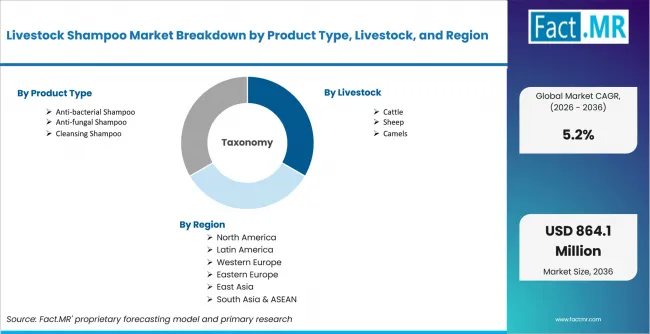
The Livestock Shampoo Market is segmented by Product Type (Cleansing Shampoo, Anti-itching Shampoo, Anti-dandruff Shampoo, Anti-flea & Tick Shampoo, Anti-bacterial Shampoo, Anti-fungal Shampoo), by Livestock (Sheep, Cattle, Horses, Camels, Goats, Buffalos, Other Livestock), by Technology (Anti-Parasitic, Waterless), by User Type (Individuals, Livestock Farms), and by Sales Channel (Online Sales, Offline Sales) and Region. Forecast for 2026 to 2036.
Livestock Shampoo Market Size, Market Forecast and Outlook by Fact.MR
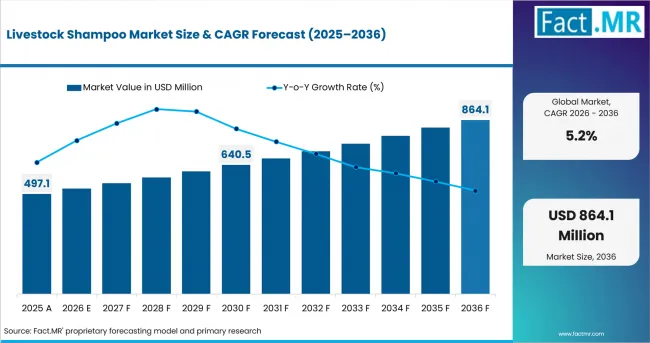
- The livestock shampoo market was valued at USD 497.1 million in 2025.
- Demand is set to rise from USD 520.5 million in 2026 to USD 864.1 million by 2036.
- The market is forecast to record 5.2% CAGR from 2026 to 2036 as animal hygiene routines and farm grooming practices gain wider use.
| Metric | Details |
|---|---|
| Industry Size 2026 | USD 520.5 million |
| Industry Value 2036 | USD 864.1 million |
| CAGR 2026 to 2036 | 5.2% |
Summary of Livestock Shampoo Market
- Demand Drivers in the Market
- Animal Hygiene: Farms use livestock shampoo to remove dirt and support cleaner coats.
- Skin Comfort: Livestock owners need mild products that reduce irritation during repeated washing.
- Show Preparation: Cattle and horse handlers use grooming shampoos before exhibitions and sales events.
- Key Segments Analyzed
- By Product Type: Anti-bacterial shampoo is expected to hold 11.0% share in 2026 because livestock skin is exposed to mud and bacteria.
- By Livestock: Cattle are likely to account for 31.0% share in 2026 as dairy and beef operations create regular grooming and washing needs.
- By Technology: Anti-parasitic shampoos are projected to hold 63.0% share in 2026 since farms need support against ticks and skin irritation.
- By User Type: Livestock farms are anticipated to capture 66.0% share in 2026 as herd-level care creates repeat product purchase.
- By Sales Channel: Offline sales are expected to hold 61.0% share in 2026 because animal care shops and farm supply stores support product selection.
- By Geography: The United States is expected to register 5.4% CAGR through 2036 as animal welfare awareness and livestock grooming practices support demand.
- Analyst Opinion at Fact.MR
- Shambhu Nath Jha, Principal Consultant at Fact.MR, states, “Livestock shampoo demand is moving from occasional cleaning to regular coat and skin care. Farms and show handlers need products that clean well without discomfort. Suppliers that combine mild formulations with species-specific positioning will gain stronger repeat demand.”
- Strategic Implications
- Mild Formulation: Producers need shampoos that clean well without harsh skin effects.
- Species Positioning: Brands should create cattle and goat-specific product guidance.
- Channel Access: Suppliers need farm retail and e-commerce reach to serve farms and individual users.
Livestock shampoo demand is shifting from basic cleaning to animal skin and coat care. Farm owners need products that remove dirt without irritating the animal’s skin. Grooming providers need shampoos for show preparation and daily care. The U.S. Department of Agriculture reported 86.2 million cattle and calves in the United States as of January 1, 2026. [1] Large livestock populations create a steady base for hygiene and grooming products.
The United States is expected to register 5.4% CAGR through 2036 as animal welfare awareness and livestock grooming practices support demand. Brazil is projected to record 5.2% CAGR from 2026 to 2036 as cattle and dairy operations need practical hygiene products. China is likely to post 5.0% CAGR because livestock production and farm hygiene awareness support product use. Germany is forecast to advance at 4.9% CAGR since livestock care standards and specialty retail access guide demand. Australia-New Zealand is poised to record 4.8% CAGR as cattle and show animal grooming support steady use.
Segmental Analysis
Livestock Shampoo Market Analysis by Product Type
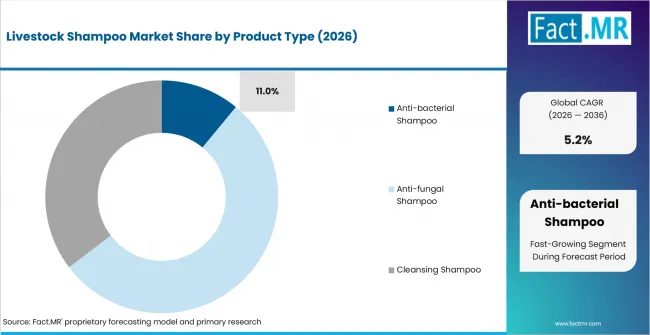
Anti-bacterial shampoo is expected to hold 11.0% share in 2026 because livestock skin is exposed to mud and bacteria during farm work. Cleansing shampoo supports routine washing and coat care. Anti-itching and anti-dandruff products serve animals with dry skin or irritation. Anti-flea and tick shampoos support farms in warmer or humid areas. Anti-fungal shampoos serve ringworm and related coat concerns under veterinary guidance.
- Anti-bacterial Care: Anti-bacterial shampoos support coat cleaning when livestock face mud and microbial exposure.
- Cleansing Routine: Cleansing shampoos serve regular washing for show animals and farm herds.
- Skin Relief: Anti-itching and anti-fungal products support animals with irritation or visible skin concerns.
Livestock Shampoo Market Analysis by Livestock
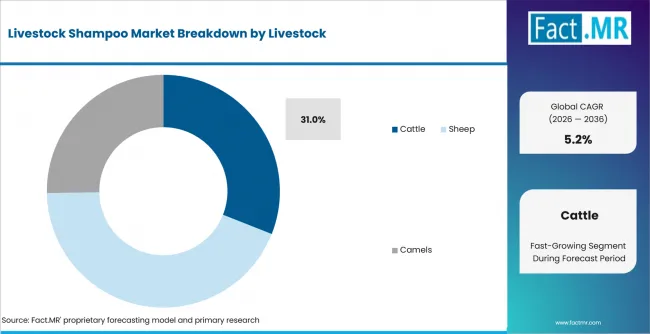
Cattle create the main livestock base because beef and dairy farms need routine coat cleaning and show preparation. Horses add demand through grooming and coat shine needs. Sheep and goats need products suited for wool or sensitive skin. Cattle are likely to account for 31.0% share in 2026 because dairy and beef operations create repeat washing needs.
- Cattle Demand: Cattle shampoos support dairy herds and show animals that need clean coats and skin comfort.
- Horse Grooming: Horse shampoos support coat shine and deep cleaning before events or stable care.
- Small Ruminants: Sheep and goat shampoos need mild formulas that clean wool and reduce skin irritation.
Livestock Shampoo Market Analysis by Technology
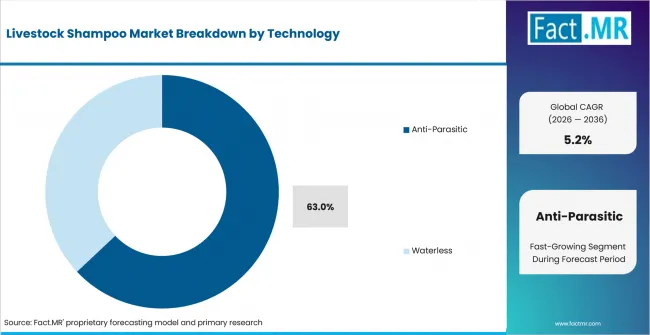
Anti-parasitic shampoos lead because external pests can affect coat condition and animal comfort. Waterless technology supports quick cleaning when full bathing is difficult. Anti-parasitic shampoos are projected to hold 63.0% share in 2026 since farms need support against fleas and irritation. Waterless products can gain in colder regions or during travel because they reduce rinse needs. Zoetis published its 2025 Annual Report in 2026, reflecting the scale of animal health products and veterinary support. [2] Technology selection depends on farm environment and animal handling conditions.
- Parasite Support: Anti-parasitic shampoos help farms manage visible coat pests and skin irritation.
- Waterless Ease: Waterless products help handlers clean animals during travel or low-water access.
- Handling Comfort: Technology choice affects washing time and animal stress during grooming.
Livestock Shampoo Market Analysis by User Type
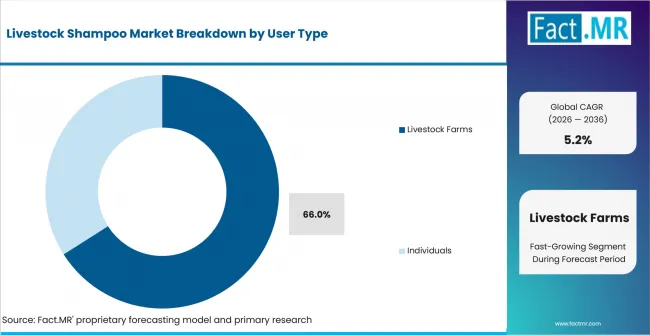
Livestock farms form the larger user base because herd-level hygiene creates repeat demand. Individuals include show animal handlers and hobby farm owners. Farm use is anticipated to capture 66.0% share in 2026 as dairy and horse operations need periodic washing. Large farms often buy from farm supply stores or distributors because stock availability matters. Individual users can support premium shampoos for show preparation and specific animal needs. Vetoquinol reported farm animal products sales of €149 million in FY 2025, equal to 28% of its total sales. [3] User type affects pack size and product claims.
- Farm Use: Livestock farms need repeat packs for herd cleaning and seasonal grooming.
- Individual Care: Show handlers and hobby farmers buy products for specific animals and events.
- Pack Choice: Farms need larger packs while individuals often choose smaller bottles.
Livestock Shampoo Market Analysis by Sales Channel
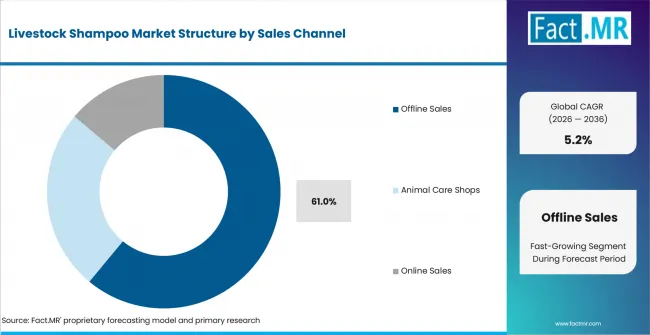
Offline sales lead because livestock shampoo is often bought through animal care shops and commercial stores. Online channels support repeat orders and access to specialty brands. Offline sales are expected to hold 61.0% share in 2026 because farm retailers help users select products by animal type and skin condition. E-commerce platforms can gain as smallholders compare formulations and reviews. Company websites support brand education and direct orders. Australian government guidance, updated in 2025, notes nationally consistent farm animal welfare standards and recommended care practices. [4] Channel choice depends on trust and product availability.
- Farm Retail: Offline channels help farms access shampoo with product advice and immediate stock.
- Online Repeat: Online sales support repeat purchase and access to specialty livestock grooming brands.
- Brand Websites: Company websites help suppliers explain species-specific use and product safety.
Livestock Shampoo Market Drivers, Restraints, and Opportunities
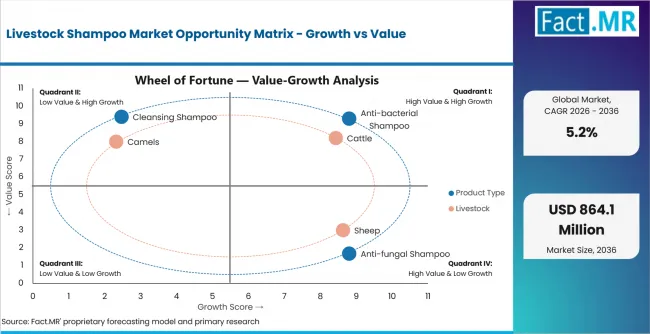
Animal hygiene and welfare awareness are the main drivers for livestock shampoo demand. Farms need products that clean coats and support skin comfort. Show animal handlers need shampoos that improve appearance before fairs and auctions. Retailers need products that match species-specific care needs. Merck reported USD 6.4 billion in Animal Health sales for full-year 2025, with livestock products contributing to segment performance. [5]
Product safety and formulation limits can restrain demand. Livestock shampoos must be mild enough for repeated use. Products must suit animals that may enter food chains. Harsh fragrances or poorly tested ingredients can irritate skin. Smaller farms may use basic washing methods when grooming budgets are limited. Producers need clear use instructions and species-specific claims.
Opportunities in the Livestock Shampoo Market
- Natural Formulas: Brands can develop botanical livestock shampoos for sensitive skin and show animals.
- Waterless Products: Suppliers can target cold regions and transport situations with rinse-free formats.
- Farm Packs: Manufacturers can offer larger pack sizes for dairy and sheep operations.
Regional Analysis
Based on regional analysis, the livestock shampoo market is segmented into North America, Latin America, Western Europe, Eastern Europe, East Asia, South Asia and Pacific, and Middle East and Africa.
.webp)
| Country | CAGR 2026 to 2036 |
|---|---|
| United States | 5.4% |
| Brazil | 5.2% |
| China | 5.0% |
| Germany | 4.9% |
| Australia-New Zealand | 4.8% |
North America Livestock Shampoo Market Analysis
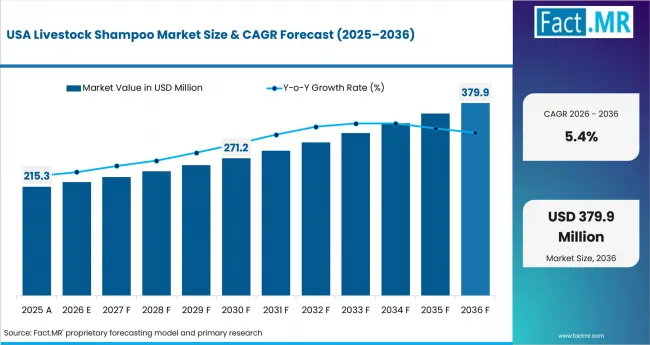
North America demand comes from cattle and show animal grooming. The United States leads regional demand because livestock care products are widely sold through farm supply stores and online channels. Product safety and animal comfort stay important.
- United States: The United States is expected to register 5.4% CAGR from 2026 to 2036 as animal welfare awareness and grooming practices support demand. Large cattle and dairy farms create repeat use for cleansing and anti-parasitic shampoos. Show cattle and horse grooming add demand for products that improve coat appearance. Farm supply stores will remain important because handlers often need quick product access. Online sales can grow through specialty brands and repeat orders.
Latin America Livestock Shampoo Market Analysis
Latin America demand is supported by cattle ranching and tropical conditions that can affect animal coat health. Brazil supports regional demand because cattle and dairy farms need practical grooming and hygiene products.
- Brazil: Brazil is projected to record 5.2% CAGR through 2036 as cattle and dairy farms create demand for practical grooming products. Warm and humid conditions can raise the need for shampoos that support coat cleanliness and skin comfort. Ranchers need products that rinse easily and suit repeat use. Offline retail will matter because local farm stores guide product selection. Larger cattle operations can favor bigger pack sizes and cost-controlled products.
East Asia Livestock Shampoo Market Analysis
East Asia demand comes from livestock production and animal care awareness. China leads regional demand through livestock scale and growing interest in animal hygiene. Retail expansion supports wider access to grooming products.
- China: China is likely to post 5.0% CAGR by 2036 because livestock production and farm hygiene awareness support product use. Cattle and sheep farms need practical shampoos for routine cleaning and skin comfort. Commercial farms can use livestock shampoos before transport or inspection. Online platforms help smaller farm owners compare animal care brands. Offline farm retailers remain important in rural areas because handlers need product advice.
Western Europe Livestock Shampoo Market Analysis
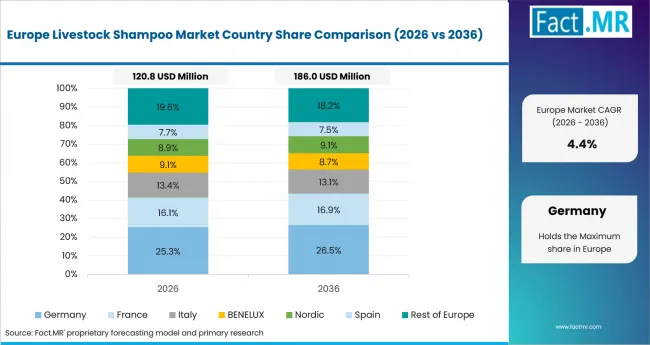
Western Europe demand is supported by animal welfare standards and show animal grooming. Germany leads regional demand through horse care and farm supply channels. Product labels and ingredient claims influence acceptance.
- Germany: Germany is forecast to advance at 4.9% CAGR over the study period as cattle and horse owners use grooming products for cleaning and coat care. Farm hygiene and animal welfare standards support livestock shampoo demand. Show animal preparation supports premium shampoos with coat-conditioning claims. Farm supply stores and online channels both serve demand.
South Asia and Pacific Livestock Shampoo Market Analysis
South Asia and Pacific demand is driven by sheep and show animal grooming. Australia-New Zealand has a strong livestock base and formal care guidance. Farm retailers and rural supply chains support product access.
- Australia-New Zealand: Australia-New Zealand is poised to record 4.8% CAGR through 2036 as sheep and show animal grooming support steady use. Sheep and cattle handlers need shampoos suited for wool and coat cleaning. Rural supply stores stay important because farms need practical product access.
Competitive Aligners for Market Suppliers
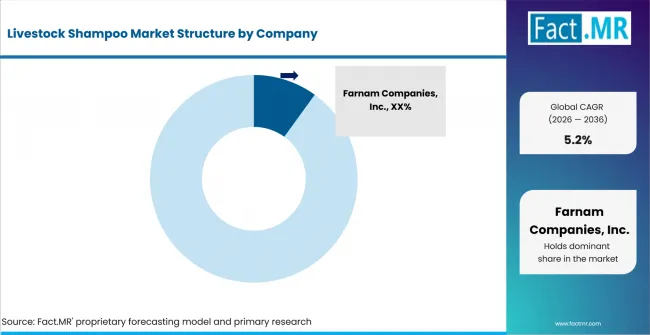
The livestock shampoo market is led by companies that understand daily farm cleaning and event grooming. Farnam Companies, Inc. serves regular coat care needs. Innovacyn, Inc./Vetericyn and Santa Cruz Animal Health support animal care users that want gentle products with clear use guidance.
Farms will prefer shampoos that clean sweat and dirt without causing skin irritation. Show handlers will need products that improve coat appearance before fairs and livestock events. Species-specific labeling will help brands build trust with cattle and horse owners.
Straight Arrow Products, Inc. and Sullivan Supply Inc. fit premium grooming demand because show preparation needs repeatable results. Competition will come from formula safety and shelf access. Brands with steady retail supply and practical handling instructions will stand out in farm stores by 2036.
Key Companies in Livestock Shampoo Market
- Farnam Companies, Inc.
- Innovacyn, Inc./Vetericyn
- Santa Cruz Animal Health
- Straight Arrow Products, Inc.
- Sullivan Supply Inc.
Bibliography
- [1] U.S. Department of Agriculture, National Agricultural Statistics Service. (2026, January 30). United States cattle inventory down slightly. U.S. Department of Agriculture.
- [2] Zoetis Inc. (2026, February 12). 2025 Annual Report. Zoetis Inc.
- [3] Vetoquinol S.A. (2026). Annual sales 2025. Vetoquinol S.A.
- [4] Australian Government Department of Agriculture, Fisheries and Forestry. (2025, August 5). Australian Animal Welfare Standards and Guidelines. Australian Government Department of Agriculture, Fisheries and Forestry.
- [5] Merck & Co., Inc. (2026, February 3). Merck & Co., Inc., Rahway, N.J., USA announces fourth-quarter and full-year 2025 financial results. Merck & Co., Inc.
This Report Addresses
- Strategic intelligence on livestock shampoo demand across farm hygiene and show animal grooming.
- Forecast mapping from USD 520.5 million in 2026 to USD 864.1 million by 2036.
- Segment analysis by product type, livestock, technology, user type, and sales channel.
- Regional outlook covering the United States, Brazil, China, Germany, and Australia-New Zealand.
- Competitive analysis of Farnam Companies, Inc., Innovacyn, Inc./Vetericyn, Santa Cruz Animal Health, Straight Arrow Products, Inc., Sullivan Supply Inc.
- Product assessment covering anti-bacterial shampoos, anti-parasitic technology, cattle care, and offline retail channels.
- Primary interviews, supplier checks, and official source review support validation.
Livestock Shampoo Market Definition
The livestock shampoo market covers grooming and hygiene products formulated for farm animals such as cattle. These shampoos are used to clean coats and manage visible dirt before shows or routine care. The market is defined by livestock-specific grooming use other than general pet grooming use.
Livestock Shampoo Market Inclusions
The scope includes cleansing and anti-fungal shampoos made for livestock. Anti-parasitic and waterless technologies are included. Online and offline sales are covered when products are sold for farm animals or show animal grooming.
Livestock Shampoo Market Exclusions
The scope excludes dog and companion animal shampoos unless sold for livestock use. Veterinary medicines are outside scope unless sold as grooming shampoos. Topical sprays and disinfectants are excluded when shampooing is not the core use. General farm cleaning chemicals are excluded because they do not support animal coat and skin care.
Livestock Shampoo Market Research Methodology
- Primary Research
- Primary research includes interviews with livestock grooming suppliers and farm animal care retailers. Veterinary product distributors were reviewed separately.
- Desk Research
- Desk research reviews animal welfare guidance and official animal health disclosures. Product pages and livestock population data support segment validation.
- Market-Sizing and Forecasting
- Forecasting combines product type demand and livestock use patterns. Technology and sales channel patterns support the forecast approach.
- Data Validation and Update Cycle
- Forecasts are validated through supplier checks and farm retailer interviews. Regional assumptions are reviewed against livestock population and grooming channel access.
Scope of the Report

| Attribute | Details |
|---|---|
| Quantitative Units | USD 520.5 million in 2026 to USD 864.1 million by 2036 at 5.2% CAGR |
| Market Definition | Livestock-specific shampoos used for animal coat cleaning, skin comfort, odor reduction, and grooming |
| Product Type | Cleansing Shampoo, Anti-itching Shampoo, Anti-dandruff Shampoo, Anti-flea & Tick Shampoo, Anti-bacterial Shampoo, Anti-fungal Shampoo |
| Livestock | Sheep, Cattle, Horses, Camels, Goats, Buffalos/ Other Livestock |
| Technology | Anti-Parasitic, Waterless |
| User Type | Individuals, Livestock Farms |
| Sales Channel | Online Sales, Offline Sales |
| Regions Covered | North America, Latin America, Western Europe, Eastern Europe, East Asia, South Asia and Pacific, Middle East and Africa |
| Countries Covered | United States, Brazil, China, Germany, Australia-New Zealand |
| Key Companies Profiled | Farnam Companies, Inc., Innovacyn, Inc./Vetericyn, Santa Cruz Animal Health, Straight Arrow Products, Inc., Sullivan Supply Inc. |
| Forecast Period | 2026 to 2036 |
| Approach | Hybrid top-down and bottom-up approach using product type demand, livestock use, technology, user type, and sales channel validation |
Livestock Shampoo Market Analysis by Segments
-
By Product Type:
- Cleansing Shampoo
- Anti-itching Shampoo
- Anti-dandruff Shampoo
- Anti-flea & Tick Shampoo
- Anti-bacterial Shampoo
- Anti-fungal Shampoo
-
By Livestock:
- Sheep
- Cattle
- Horses
- Camels
- Goats
- Buffalos
- Other Livestock
-
By Technology:
- Anti-Parasitic
- Waterless
-
By User Type:
- Individuals
- Livestock Farms
-
By Sales Channel:
- Online Sales
- Company, Brand Websites
- e-Commerce Platforms
- Offline Sales
- Animal Care Shops
- Supermarkets/Hypermarkets
- Commercial Stores
- Wholesalers & Retailers
-
Region:
- North America
- United States
- Canada
- Europe
- Germany
- United Kingdom
- France
- Italy
- Spain
- Asia Pacific
- China
- Japan
- South Korea
- Taiwan
- Singapore
- Latin America
- Brazil
- Mexico
- Argentina
- Middle East & Africa
- GCC Countries
- South Africa
- Israel
- North America
- Frequently Asked Questions -
What is the Livestock Shampoo Market size in 2026?
The livestock shampoo market is estimated to reach USD 520.5 million in 2026.
What will the Livestock Shampoo Market be worth by 2036?
The livestock shampoo market is projected to reach USD 864.1 million by 2036 as animal hygiene routines gain wider use.
What CAGR is projected for the Livestock Shampoo Market?
The livestock shampoo market is forecast to record 5.2% CAGR from 2026 to 2036.
Which product type leads the Livestock Shampoo Market?
Anti-bacterial shampoo leads with 11.0% share in 2026 because livestock skin is exposed to mud and microbial contact.
Which country expands faster in the Livestock Shampoo Market?
The United States is expected to register 5.4% CAGR through 2036 as livestock grooming practices support demand.
How does Brazil perform in the Livestock Shampoo Market?
Brazil is projected to record 5.2% CAGR through 2036 as cattle and dairy operations need practical hygiene products.
What is the main driver in the Livestock Shampoo Market?
The main driver is animal hygiene because farms need products that clean coats and support skin comfort.
What is the main restraint in the Livestock Shampoo Market?
The main restraint is formulation sensitivity because harsh ingredients can irritate livestock skin.
Why are anti-bacterial shampoos important in this market?
Anti-bacterial shampoos are important because livestock are exposed to mud and microbial contact.
Why are offline channels important in the Livestock Shampoo Market?
Offline channels are important because farm stores help handlers choose products by animal type and skin need.
Table of Content
- Executive Summary
- Global Market Outlook
- Demand to side Trends
- Supply to side Trends
- Technology Roadmap Analysis
- Analysis and Recommendations
- Market Overview
- Market Coverage / Taxonomy
- Market Definition / Scope / Limitations
- Research Methodology
- Chapter Orientation
- Analytical Lens and Working Hypotheses
- Market Structure, Signals, and Trend Drivers
- Benchmarking and Cross-market Comparability
- Market Sizing, Forecasting, and Opportunity Mapping
- Research Design and Evidence Framework
- Desk Research Programme (Secondary Evidence)
- Company Annual and Sustainability Reports
- Peer-reviewed Journals and Academic Literature
- Corporate Websites, Product Literature, and Technical Notes
- Earnings Decks and Investor Briefings
- Statutory Filings and Regulatory Disclosures
- Technical White Papers and Standards Notes
- Trade Journals, Industry Magazines, and Analyst Briefs
- Conference Proceedings, Webinars, and Seminar Materials
- Government Statistics Portals and Public Data Releases
- Press Releases and Reputable Media Coverage
- Specialist Newsletters and Curated Briefings
- Sector Databases and Reference Repositories
- Fact.MR Internal Proprietary Databases and Historical Market Datasets
- Subscription Datasets and Paid Sources
- Social Channels, Communities, and Digital Listening Inputs
- Additional Desk Sources
- Expert Input and Fieldwork (Primary Evidence)
- Primary Modes
- Qualitative Interviews and Expert Elicitation
- Quantitative Surveys and Structured Data Capture
- Blended Approach
- Why Primary Evidence is Used
- Field Techniques
- Interviews
- Surveys
- Focus Groups
- Observational and In-context Research
- Social and Community Interactions
- Stakeholder Universe Engaged
- C-suite Leaders
- Board Members
- Presidents and Vice Presidents
- R&D and Innovation Heads
- Technical Specialists
- Domain Subject-matter Experts
- Scientists
- Physicians and Other Healthcare Professionals
- Governance, Ethics, and Data Stewardship
- Research Ethics
- Restraints
- Opportunity
- Trends
- Scenario Forecast
- Demand in Optimistic Scenario
- Demand in Likely Scenario
- Demand in Conservative Scenario
- Opportunity Map Analysis
- Product Life Cycle Analysis
- Supply Chain Analysis
- Investment Feasibility Matrix
- Value Chain Analysis
- PESTLE and Porter’s Analysis
- Regulatory Landscape
- Regional Parent Market Outlook
- Production and Consumption Statistics
- Import and Export Statistics
- Primary Modes
- Global Market Analysis 2021 to 2025 and Forecast, 2026 to 2036
- Historical Market Size Value (USD Million) Analysis, 2021 to 2025
- Current and Future Market Size Value (USD Million) Projections, 2026 to 2036
- Y to o to Y Growth Trend Analysis
- Absolute $ Opportunity Analysis
- Global Market Pricing Analysis 2021 to 2025 and Forecast 2026 to 2036
- Global Market Analysis 2021 to 2025 and Forecast 2026 to 2036, By Product Type
- Introduction / Key Findings
- Historical Market Size Value (USD Million) Analysis By Product Type , 2021 to 2025
- Current and Future Market Size Value (USD Million) Analysis and Forecast By Product Type , 2026 to 2036
- Anti-bacterial Shampoo
- Anti-fungal Shampoo
- Cleansing Shampoo
- Anti-bacterial Shampoo
- Y to o to Y Growth Trend Analysis By Product Type , 2021 to 2025
- Absolute $ Opportunity Analysis By Product Type , 2026 to 2036
- Global Market Analysis 2021 to 2025 and Forecast 2026 to 2036, By Livestock
- Introduction / Key Findings
- Historical Market Size Value (USD Million) Analysis By Livestock, 2021 to 2025
- Current and Future Market Size Value (USD Million) Analysis and Forecast By Livestock, 2026 to 2036
- Cattle
- Sheep
- Camels
- Cattle
- Y to o to Y Growth Trend Analysis By Livestock, 2021 to 2025
- Absolute $ Opportunity Analysis By Livestock, 2026 to 2036
- Global Market Analysis 2021 to 2025 and Forecast 2026 to 2036, By Technology
- Introduction / Key Findings
- Historical Market Size Value (USD Million) Analysis By Technology, 2021 to 2025
- Current and Future Market Size Value (USD Million) Analysis and Forecast By Technology, 2026 to 2036
- Anti-Parasitic
- Waterless
- Anti-Parasitic
- Y to o to Y Growth Trend Analysis By Technology, 2021 to 2025
- Absolute $ Opportunity Analysis By Technology, 2026 to 2036
- Global Market Analysis 2021 to 2025 and Forecast 2026 to 2036, By User Type
- Introduction / Key Findings
- Historical Market Size Value (USD Million) Analysis By User Type, 2021 to 2025
- Current and Future Market Size Value (USD Million) Analysis and Forecast By User Type, 2026 to 2036
- Livestock Farms
- Individuals
- Livestock Farms
- Y to o to Y Growth Trend Analysis By User Type, 2021 to 2025
- Absolute $ Opportunity Analysis By User Type, 2026 to 2036
- Global Market Analysis 2021 to 2025 and Forecast 2026 to 2036, By Sales Channel
- Introduction / Key Findings
- Historical Market Size Value (USD Million) Analysis By Sales Channel, 2021 to 2025
- Current and Future Market Size Value (USD Million) Analysis and Forecast By Sales Channel, 2026 to 2036
- Offline Sales
- Animal Care Shops
- Online Sales
- Offline Sales
- Y to o to Y Growth Trend Analysis By Sales Channel, 2021 to 2025
- Absolute $ Opportunity Analysis By Sales Channel, 2026 to 2036
- Global Market Analysis 2021 to 2025 and Forecast 2026 to 2036, By Region
- Introduction
- Historical Market Size Value (USD Million) Analysis By Region, 2021 to 2025
- Current Market Size Value (USD Million) Analysis and Forecast By Region, 2026 to 2036
- North America
- Latin America
- Western Europe
- Eastern Europe
- East Asia
- South Asia and Pacific
- Middle East & Africa
- Market Attractiveness Analysis By Region
- North America Market Analysis 2021 to 2025 and Forecast 2026 to 2036, By Country
- Historical Market Size Value (USD Million) Trend Analysis By Market Taxonomy, 2021 to 2025
- Market Size Value (USD Million) Forecast By Market Taxonomy, 2026 to 2036
- By Country
- USA
- Canada
- Mexico
- By Product Type
- By Livestock
- By Technology
- By User Type
- By Sales Channel
- By Country
- Market Attractiveness Analysis
- By Country
- By Product Type
- By Livestock
- By Technology
- By User Type
- By Sales Channel
- Key Takeaways
- Latin America Market Analysis 2021 to 2025 and Forecast 2026 to 2036, By Country
- Historical Market Size Value (USD Million) Trend Analysis By Market Taxonomy, 2021 to 2025
- Market Size Value (USD Million) Forecast By Market Taxonomy, 2026 to 2036
- By Country
- Brazil
- Chile
- Rest of Latin America
- By Product Type
- By Livestock
- By Technology
- By User Type
- By Sales Channel
- By Country
- Market Attractiveness Analysis
- By Country
- By Product Type
- By Livestock
- By Technology
- By User Type
- By Sales Channel
- Key Takeaways
- Western Europe Market Analysis 2021 to 2025 and Forecast 2026 to 2036, By Country
- Historical Market Size Value (USD Million) Trend Analysis By Market Taxonomy, 2021 to 2025
- Market Size Value (USD Million) Forecast By Market Taxonomy, 2026 to 2036
- By Country
- Germany
- UK
- Italy
- Spain
- France
- Nordic
- BENELUX
- Rest of Western Europe
- By Product Type
- By Livestock
- By Technology
- By User Type
- By Sales Channel
- By Country
- Market Attractiveness Analysis
- By Country
- By Product Type
- By Livestock
- By Technology
- By User Type
- By Sales Channel
- Key Takeaways
- Eastern Europe Market Analysis 2021 to 2025 and Forecast 2026 to 2036, By Country
- Historical Market Size Value (USD Million) Trend Analysis By Market Taxonomy, 2021 to 2025
- Market Size Value (USD Million) Forecast By Market Taxonomy, 2026 to 2036
- By Country
- Russia
- Poland
- Hungary
- Balkan & Baltic
- Rest of Eastern Europe
- By Product Type
- By Livestock
- By Technology
- By User Type
- By Sales Channel
- By Country
- Market Attractiveness Analysis
- By Country
- By Product Type
- By Livestock
- By Technology
- By User Type
- By Sales Channel
- Key Takeaways
- East Asia Market Analysis 2021 to 2025 and Forecast 2026 to 2036, By Country
- Historical Market Size Value (USD Million) Trend Analysis By Market Taxonomy, 2021 to 2025
- Market Size Value (USD Million) Forecast By Market Taxonomy, 2026 to 2036
- By Country
- China
- Japan
- South Korea
- By Product Type
- By Livestock
- By Technology
- By User Type
- By Sales Channel
- By Country
- Market Attractiveness Analysis
- By Country
- By Product Type
- By Livestock
- By Technology
- By User Type
- By Sales Channel
- Key Takeaways
- South Asia and Pacific Market Analysis 2021 to 2025 and Forecast 2026 to 2036, By Country
- Historical Market Size Value (USD Million) Trend Analysis By Market Taxonomy, 2021 to 2025
- Market Size Value (USD Million) Forecast By Market Taxonomy, 2026 to 2036
- By Country
- India
- ASEAN
- Australia & New Zealand
- Rest of South Asia and Pacific
- By Product Type
- By Livestock
- By Technology
- By User Type
- By Sales Channel
- By Country
- Market Attractiveness Analysis
- By Country
- By Product Type
- By Livestock
- By Technology
- By User Type
- By Sales Channel
- Key Takeaways
- Middle East & Africa Market Analysis 2021 to 2025 and Forecast 2026 to 2036, By Country
- Historical Market Size Value (USD Million) Trend Analysis By Market Taxonomy, 2021 to 2025
- Market Size Value (USD Million) Forecast By Market Taxonomy, 2026 to 2036
- By Country
- Kingdom of Saudi Arabia
- Other GCC Countries
- Turkiye
- South Africa
- Other African Union
- Rest of Middle East & Africa
- By Product Type
- By Livestock
- By Technology
- By User Type
- By Sales Channel
- By Country
- Market Attractiveness Analysis
- By Country
- By Product Type
- By Livestock
- By Technology
- By User Type
- By Sales Channel
- Key Takeaways
- Key Countries Market Analysis
- USA
- Pricing Analysis
- Market Share Analysis, 2025
- By Product Type
- By Livestock
- By Technology
- By User Type
- By Sales Channel
- Canada
- Pricing Analysis
- Market Share Analysis, 2025
- By Product Type
- By Livestock
- By Technology
- By User Type
- By Sales Channel
- Mexico
- Pricing Analysis
- Market Share Analysis, 2025
- By Product Type
- By Livestock
- By Technology
- By User Type
- By Sales Channel
- Brazil
- Pricing Analysis
- Market Share Analysis, 2025
- By Product Type
- By Livestock
- By Technology
- By User Type
- By Sales Channel
- Chile
- Pricing Analysis
- Market Share Analysis, 2025
- By Product Type
- By Livestock
- By Technology
- By User Type
- By Sales Channel
- Germany
- Pricing Analysis
- Market Share Analysis, 2025
- By Product Type
- By Livestock
- By Technology
- By User Type
- By Sales Channel
- UK
- Pricing Analysis
- Market Share Analysis, 2025
- By Product Type
- By Livestock
- By Technology
- By User Type
- By Sales Channel
- Italy
- Pricing Analysis
- Market Share Analysis, 2025
- By Product Type
- By Livestock
- By Technology
- By User Type
- By Sales Channel
- Spain
- Pricing Analysis
- Market Share Analysis, 2025
- By Product Type
- By Livestock
- By Technology
- By User Type
- By Sales Channel
- France
- Pricing Analysis
- Market Share Analysis, 2025
- By Product Type
- By Livestock
- By Technology
- By User Type
- By Sales Channel
- India
- Pricing Analysis
- Market Share Analysis, 2025
- By Product Type
- By Livestock
- By Technology
- By User Type
- By Sales Channel
- ASEAN
- Pricing Analysis
- Market Share Analysis, 2025
- By Product Type
- By Livestock
- By Technology
- By User Type
- By Sales Channel
- Australia & New Zealand
- Pricing Analysis
- Market Share Analysis, 2025
- By Product Type
- By Livestock
- By Technology
- By User Type
- By Sales Channel
- China
- Pricing Analysis
- Market Share Analysis, 2025
- By Product Type
- By Livestock
- By Technology
- By User Type
- By Sales Channel
- Japan
- Pricing Analysis
- Market Share Analysis, 2025
- By Product Type
- By Livestock
- By Technology
- By User Type
- By Sales Channel
- South Korea
- Pricing Analysis
- Market Share Analysis, 2025
- By Product Type
- By Livestock
- By Technology
- By User Type
- By Sales Channel
- Russia
- Pricing Analysis
- Market Share Analysis, 2025
- By Product Type
- By Livestock
- By Technology
- By User Type
- By Sales Channel
- Poland
- Pricing Analysis
- Market Share Analysis, 2025
- By Product Type
- By Livestock
- By Technology
- By User Type
- By Sales Channel
- Hungary
- Pricing Analysis
- Market Share Analysis, 2025
- By Product Type
- By Livestock
- By Technology
- By User Type
- By Sales Channel
- Kingdom of Saudi Arabia
- Pricing Analysis
- Market Share Analysis, 2025
- By Product Type
- By Livestock
- By Technology
- By User Type
- By Sales Channel
- Turkiye
- Pricing Analysis
- Market Share Analysis, 2025
- By Product Type
- By Livestock
- By Technology
- By User Type
- By Sales Channel
- South Africa
- Pricing Analysis
- Market Share Analysis, 2025
- By Product Type
- By Livestock
- By Technology
- By User Type
- By Sales Channel
- USA
- Market Structure Analysis
- Competition Dashboard
- Competition Benchmarking
- Market Share Analysis of Top Players
- By Regional
- By Product Type
- By Livestock
- By Technology
- By User Type
- By Sales Channel
- Competition Analysis
- Competition Deep Dive
- Farnam Companies, Inc.
- Overview
- Product Portfolio
- Profitability by Market Segments (Product/Age /Sales Channel/Region)
- Sales Footprint
- Strategy Overview
- Marketing Strategy
- Product Strategy
- Channel Strategy
- Innovacyn, Inc./Vetericyn
- Santa Cruz Animal Health
- Straight Arrow Products, Inc.
- Sullivan Supply Inc
- Farnam Companies, Inc.
- Competition Deep Dive
- Desk Research Programme (Secondary Evidence)
- Assumptions & Acronyms Used
List Of Table
- Table 1: Global Market Value (USD Million) Forecast by Region, 2021 to 2036
- Table 2: Global Market Value (USD Million) Forecast by Product Type, 2021 to 2036
- Table 3: Global Market Value (USD Million) Forecast by Livestock, 2021 to 2036
- Table 4: Global Market Value (USD Million) Forecast by Technology, 2021 to 2036
- Table 5: Global Market Value (USD Million) Forecast by User Type, 2021 to 2036
- Table 6: Global Market Value (USD Million) Forecast by Sales Channel, 2021 to 2036
- Table 7: North America Market Value (USD Million) Forecast by Country, 2021 to 2036
- Table 8: North America Market Value (USD Million) Forecast by Product Type, 2021 to 2036
- Table 9: North America Market Value (USD Million) Forecast by Livestock, 2021 to 2036
- Table 10: North America Market Value (USD Million) Forecast by Technology, 2021 to 2036
- Table 11: North America Market Value (USD Million) Forecast by User Type, 2021 to 2036
- Table 12: North America Market Value (USD Million) Forecast by Sales Channel, 2021 to 2036
- Table 13: Latin America Market Value (USD Million) Forecast by Country, 2021 to 2036
- Table 14: Latin America Market Value (USD Million) Forecast by Product Type, 2021 to 2036
- Table 15: Latin America Market Value (USD Million) Forecast by Livestock, 2021 to 2036
- Table 16: Latin America Market Value (USD Million) Forecast by Technology, 2021 to 2036
- Table 17: Latin America Market Value (USD Million) Forecast by User Type, 2021 to 2036
- Table 18: Latin America Market Value (USD Million) Forecast by Sales Channel, 2021 to 2036
- Table 19: Western Europe Market Value (USD Million) Forecast by Country, 2021 to 2036
- Table 20: Western Europe Market Value (USD Million) Forecast by Product Type, 2021 to 2036
- Table 21: Western Europe Market Value (USD Million) Forecast by Livestock, 2021 to 2036
- Table 22: Western Europe Market Value (USD Million) Forecast by Technology, 2021 to 2036
- Table 23: Western Europe Market Value (USD Million) Forecast by User Type, 2021 to 2036
- Table 24: Western Europe Market Value (USD Million) Forecast by Sales Channel, 2021 to 2036
- Table 25: Eastern Europe Market Value (USD Million) Forecast by Country, 2021 to 2036
- Table 26: Eastern Europe Market Value (USD Million) Forecast by Product Type, 2021 to 2036
- Table 27: Eastern Europe Market Value (USD Million) Forecast by Livestock, 2021 to 2036
- Table 28: Eastern Europe Market Value (USD Million) Forecast by Technology, 2021 to 2036
- Table 29: Eastern Europe Market Value (USD Million) Forecast by User Type, 2021 to 2036
- Table 30: Eastern Europe Market Value (USD Million) Forecast by Sales Channel, 2021 to 2036
- Table 31: East Asia Market Value (USD Million) Forecast by Country, 2021 to 2036
- Table 32: East Asia Market Value (USD Million) Forecast by Product Type, 2021 to 2036
- Table 33: East Asia Market Value (USD Million) Forecast by Livestock, 2021 to 2036
- Table 34: East Asia Market Value (USD Million) Forecast by Technology, 2021 to 2036
- Table 35: East Asia Market Value (USD Million) Forecast by User Type, 2021 to 2036
- Table 36: East Asia Market Value (USD Million) Forecast by Sales Channel, 2021 to 2036
- Table 37: South Asia and Pacific Market Value (USD Million) Forecast by Country, 2021 to 2036
- Table 38: South Asia and Pacific Market Value (USD Million) Forecast by Product Type, 2021 to 2036
- Table 39: South Asia and Pacific Market Value (USD Million) Forecast by Livestock, 2021 to 2036
- Table 40: South Asia and Pacific Market Value (USD Million) Forecast by Technology, 2021 to 2036
- Table 41: South Asia and Pacific Market Value (USD Million) Forecast by User Type, 2021 to 2036
- Table 42: South Asia and Pacific Market Value (USD Million) Forecast by Sales Channel, 2021 to 2036
- Table 43: Middle East & Africa Market Value (USD Million) Forecast by Country, 2021 to 2036
- Table 44: Middle East & Africa Market Value (USD Million) Forecast by Product Type, 2021 to 2036
- Table 45: Middle East & Africa Market Value (USD Million) Forecast by Livestock, 2021 to 2036
- Table 46: Middle East & Africa Market Value (USD Million) Forecast by Technology, 2021 to 2036
- Table 47: Middle East & Africa Market Value (USD Million) Forecast by User Type, 2021 to 2036
- Table 48: Middle East & Africa Market Value (USD Million) Forecast by Sales Channel, 2021 to 2036
List Of Figures
- Figure 1: Global Market Pricing Analysis
- Figure 2: Global Market Value (USD Million) Forecast 2021-2036
- Figure 3: Global Market Value Share and BPS Analysis by Product Type, 2026 and 2036
- Figure 4: Global Market Y-o-Y Growth Comparison by Product Type, 2026 to 2036
- Figure 5: Global Market Attractiveness Analysis by Product Type
- Figure 6: Global Market Value Share and BPS Analysis by Livestock, 2026 and 2036
- Figure 7: Global Market Y-o-Y Growth Comparison by Livestock, 2026 to 2036
- Figure 8: Global Market Attractiveness Analysis by Livestock
- Figure 9: Global Market Value Share and BPS Analysis by Technology, 2026 and 2036
- Figure 10: Global Market Y-o-Y Growth Comparison by Technology, 2026 to 2036
- Figure 11: Global Market Attractiveness Analysis by Technology
- Figure 12: Global Market Value Share and BPS Analysis by User Type, 2026 and 2036
- Figure 13: Global Market Y-o-Y Growth Comparison by User Type, 2026 to 2036
- Figure 14: Global Market Attractiveness Analysis by User Type
- Figure 15: Global Market Value Share and BPS Analysis by Sales Channel, 2026 and 2036
- Figure 16: Global Market Y-o-Y Growth Comparison by Sales Channel, 2026 to 2036
- Figure 17: Global Market Attractiveness Analysis by Sales Channel
- Figure 18: Global Market Value (USD Million) Share and BPS Analysis by Region, 2026 and 2036
- Figure 19: Global Market Y-o-Y Growth Comparison by Region, 2026 to 2036
- Figure 20: Global Market Attractiveness Analysis by Region
- Figure 21: North America Market Incremental Dollar Opportunity, 2026 to 2036
- Figure 22: Latin America Market Incremental Dollar Opportunity, 2026 to 2036
- Figure 23: Western Europe Market Incremental Dollar Opportunity, 2026 to 2036
- Figure 24: Eastern Europe Market Incremental Dollar Opportunity, 2026 to 2036
- Figure 25: East Asia Market Incremental Dollar Opportunity, 2026 to 2036
- Figure 26: South Asia and Pacific Market Incremental Dollar Opportunity, 2026 to 2036
- Figure 27: Middle East & Africa Market Incremental Dollar Opportunity, 2026 to 2036
- Figure 28: North America Market Value Share and BPS Analysis by Country, 2026 and 2036
- Figure 29: North America Market Value Share and BPS Analysis by Product Type, 2026 and 2036
- Figure 30: North America Market Y-o-Y Growth Comparison by Product Type, 2026 to 2036
- Figure 31: North America Market Attractiveness Analysis by Product Type
- Figure 32: North America Market Value Share and BPS Analysis by Livestock, 2026 and 2036
- Figure 33: North America Market Y-o-Y Growth Comparison by Livestock, 2026 to 2036
- Figure 34: North America Market Attractiveness Analysis by Livestock
- Figure 35: North America Market Value Share and BPS Analysis by Technology, 2026 and 2036
- Figure 36: North America Market Y-o-Y Growth Comparison by Technology, 2026 to 2036
- Figure 37: North America Market Attractiveness Analysis by Technology
- Figure 38: North America Market Value Share and BPS Analysis by User Type, 2026 and 2036
- Figure 39: North America Market Y-o-Y Growth Comparison by User Type, 2026 to 2036
- Figure 40: North America Market Attractiveness Analysis by User Type
- Figure 41: North America Market Value Share and BPS Analysis by Sales Channel, 2026 and 2036
- Figure 42: North America Market Y-o-Y Growth Comparison by Sales Channel, 2026 to 2036
- Figure 43: North America Market Attractiveness Analysis by Sales Channel
- Figure 44: Latin America Market Value Share and BPS Analysis by Country, 2026 and 2036
- Figure 45: Latin America Market Value Share and BPS Analysis by Product Type, 2026 and 2036
- Figure 46: Latin America Market Y-o-Y Growth Comparison by Product Type, 2026 to 2036
- Figure 47: Latin America Market Attractiveness Analysis by Product Type
- Figure 48: Latin America Market Value Share and BPS Analysis by Livestock, 2026 and 2036
- Figure 49: Latin America Market Y-o-Y Growth Comparison by Livestock, 2026 to 2036
- Figure 50: Latin America Market Attractiveness Analysis by Livestock
- Figure 51: Latin America Market Value Share and BPS Analysis by Technology, 2026 and 2036
- Figure 52: Latin America Market Y-o-Y Growth Comparison by Technology, 2026 to 2036
- Figure 53: Latin America Market Attractiveness Analysis by Technology
- Figure 54: Latin America Market Value Share and BPS Analysis by User Type, 2026 and 2036
- Figure 55: Latin America Market Y-o-Y Growth Comparison by User Type, 2026 to 2036
- Figure 56: Latin America Market Attractiveness Analysis by User Type
- Figure 57: Latin America Market Value Share and BPS Analysis by Sales Channel, 2026 and 2036
- Figure 58: Latin America Market Y-o-Y Growth Comparison by Sales Channel, 2026 to 2036
- Figure 59: Latin America Market Attractiveness Analysis by Sales Channel
- Figure 60: Western Europe Market Value Share and BPS Analysis by Country, 2026 and 2036
- Figure 61: Western Europe Market Value Share and BPS Analysis by Product Type, 2026 and 2036
- Figure 62: Western Europe Market Y-o-Y Growth Comparison by Product Type, 2026 to 2036
- Figure 63: Western Europe Market Attractiveness Analysis by Product Type
- Figure 64: Western Europe Market Value Share and BPS Analysis by Livestock, 2026 and 2036
- Figure 65: Western Europe Market Y-o-Y Growth Comparison by Livestock, 2026 to 2036
- Figure 66: Western Europe Market Attractiveness Analysis by Livestock
- Figure 67: Western Europe Market Value Share and BPS Analysis by Technology, 2026 and 2036
- Figure 68: Western Europe Market Y-o-Y Growth Comparison by Technology, 2026 to 2036
- Figure 69: Western Europe Market Attractiveness Analysis by Technology
- Figure 70: Western Europe Market Value Share and BPS Analysis by User Type, 2026 and 2036
- Figure 71: Western Europe Market Y-o-Y Growth Comparison by User Type, 2026 to 2036
- Figure 72: Western Europe Market Attractiveness Analysis by User Type
- Figure 73: Western Europe Market Value Share and BPS Analysis by Sales Channel, 2026 and 2036
- Figure 74: Western Europe Market Y-o-Y Growth Comparison by Sales Channel, 2026 to 2036
- Figure 75: Western Europe Market Attractiveness Analysis by Sales Channel
- Figure 76: Eastern Europe Market Value Share and BPS Analysis by Country, 2026 and 2036
- Figure 77: Eastern Europe Market Value Share and BPS Analysis by Product Type, 2026 and 2036
- Figure 78: Eastern Europe Market Y-o-Y Growth Comparison by Product Type, 2026 to 2036
- Figure 79: Eastern Europe Market Attractiveness Analysis by Product Type
- Figure 80: Eastern Europe Market Value Share and BPS Analysis by Livestock, 2026 and 2036
- Figure 81: Eastern Europe Market Y-o-Y Growth Comparison by Livestock, 2026 to 2036
- Figure 82: Eastern Europe Market Attractiveness Analysis by Livestock
- Figure 83: Eastern Europe Market Value Share and BPS Analysis by Technology, 2026 and 2036
- Figure 84: Eastern Europe Market Y-o-Y Growth Comparison by Technology, 2026 to 2036
- Figure 85: Eastern Europe Market Attractiveness Analysis by Technology
- Figure 86: Eastern Europe Market Value Share and BPS Analysis by User Type, 2026 and 2036
- Figure 87: Eastern Europe Market Y-o-Y Growth Comparison by User Type, 2026 to 2036
- Figure 88: Eastern Europe Market Attractiveness Analysis by User Type
- Figure 89: Eastern Europe Market Value Share and BPS Analysis by Sales Channel, 2026 and 2036
- Figure 90: Eastern Europe Market Y-o-Y Growth Comparison by Sales Channel, 2026 to 2036
- Figure 91: Eastern Europe Market Attractiveness Analysis by Sales Channel
- Figure 92: East Asia Market Value Share and BPS Analysis by Country, 2026 and 2036
- Figure 93: East Asia Market Value Share and BPS Analysis by Product Type, 2026 and 2036
- Figure 94: East Asia Market Y-o-Y Growth Comparison by Product Type, 2026 to 2036
- Figure 95: East Asia Market Attractiveness Analysis by Product Type
- Figure 96: East Asia Market Value Share and BPS Analysis by Livestock, 2026 and 2036
- Figure 97: East Asia Market Y-o-Y Growth Comparison by Livestock, 2026 to 2036
- Figure 98: East Asia Market Attractiveness Analysis by Livestock
- Figure 99: East Asia Market Value Share and BPS Analysis by Technology, 2026 and 2036
- Figure 100: East Asia Market Y-o-Y Growth Comparison by Technology, 2026 to 2036
- Figure 101: East Asia Market Attractiveness Analysis by Technology
- Figure 102: East Asia Market Value Share and BPS Analysis by User Type, 2026 and 2036
- Figure 103: East Asia Market Y-o-Y Growth Comparison by User Type, 2026 to 2036
- Figure 104: East Asia Market Attractiveness Analysis by User Type
- Figure 105: East Asia Market Value Share and BPS Analysis by Sales Channel, 2026 and 2036
- Figure 106: East Asia Market Y-o-Y Growth Comparison by Sales Channel, 2026 to 2036
- Figure 107: East Asia Market Attractiveness Analysis by Sales Channel
- Figure 108: South Asia and Pacific Market Value Share and BPS Analysis by Country, 2026 and 2036
- Figure 109: South Asia and Pacific Market Value Share and BPS Analysis by Product Type, 2026 and 2036
- Figure 110: South Asia and Pacific Market Y-o-Y Growth Comparison by Product Type, 2026 to 2036
- Figure 111: South Asia and Pacific Market Attractiveness Analysis by Product Type
- Figure 112: South Asia and Pacific Market Value Share and BPS Analysis by Livestock, 2026 and 2036
- Figure 113: South Asia and Pacific Market Y-o-Y Growth Comparison by Livestock, 2026 to 2036
- Figure 114: South Asia and Pacific Market Attractiveness Analysis by Livestock
- Figure 115: South Asia and Pacific Market Value Share and BPS Analysis by Technology, 2026 and 2036
- Figure 116: South Asia and Pacific Market Y-o-Y Growth Comparison by Technology, 2026 to 2036
- Figure 117: South Asia and Pacific Market Attractiveness Analysis by Technology
- Figure 118: South Asia and Pacific Market Value Share and BPS Analysis by User Type, 2026 and 2036
- Figure 119: South Asia and Pacific Market Y-o-Y Growth Comparison by User Type, 2026 to 2036
- Figure 120: South Asia and Pacific Market Attractiveness Analysis by User Type
- Figure 121: South Asia and Pacific Market Value Share and BPS Analysis by Sales Channel, 2026 and 2036
- Figure 122: South Asia and Pacific Market Y-o-Y Growth Comparison by Sales Channel, 2026 to 2036
- Figure 123: South Asia and Pacific Market Attractiveness Analysis by Sales Channel
- Figure 124: Middle East & Africa Market Value Share and BPS Analysis by Country, 2026 and 2036
- Figure 125: Middle East & Africa Market Value Share and BPS Analysis by Product Type, 2026 and 2036
- Figure 126: Middle East & Africa Market Y-o-Y Growth Comparison by Product Type, 2026 to 2036
- Figure 127: Middle East & Africa Market Attractiveness Analysis by Product Type
- Figure 128: Middle East & Africa Market Value Share and BPS Analysis by Livestock, 2026 and 2036
- Figure 129: Middle East & Africa Market Y-o-Y Growth Comparison by Livestock, 2026 to 2036
- Figure 130: Middle East & Africa Market Attractiveness Analysis by Livestock
- Figure 131: Middle East & Africa Market Value Share and BPS Analysis by Technology, 2026 and 2036
- Figure 132: Middle East & Africa Market Y-o-Y Growth Comparison by Technology, 2026 to 2036
- Figure 133: Middle East & Africa Market Attractiveness Analysis by Technology
- Figure 134: Middle East & Africa Market Value Share and BPS Analysis by User Type, 2026 and 2036
- Figure 135: Middle East & Africa Market Y-o-Y Growth Comparison by User Type, 2026 to 2036
- Figure 136: Middle East & Africa Market Attractiveness Analysis by User Type
- Figure 137: Middle East & Africa Market Value Share and BPS Analysis by Sales Channel, 2026 and 2036
- Figure 138: Middle East & Africa Market Y-o-Y Growth Comparison by Sales Channel, 2026 to 2036
- Figure 139: Middle East & Africa Market Attractiveness Analysis by Sales Channel
- Figure 140: Global Market - Tier Structure Analysis
- Figure 141: Global Market - Company Share Analysis