Low-Shedding Synthetic Textile Fibres and Yarns Market

Low-Shedding Synthetic Textile Fibres and Yarns Market Size and Share Forecast Outlook 2026 to 2036

Low-shedding synthetic textile fibres and yarns market is projected to grow from USD 1.0 billion in 2026 to USD 2.3 billion by 2036, at a CAGR of 8.2%. Apparel (activewear) will dominate with a 35.0% market share, while yarn/filament supply will lead the packaging format segment with a 40.0% share.

Low-Shedding Synthetic Textile Fibres and Yarns Market Forecast and Outlook 2026 to 2036

The global low-shedding synthetic textile fibres and yarns market is valued at USD 1.02 billion in 2026 and is projected to reach USD 2.25 billion by 2036, expanding at a CAGR of 8.2% over the decade. In 2026, the apparel (activewear) application segment is estimated to hold a 35% share, while yarn/filament supply constitutes 40% by product type and modified PET/nylon leads material adoption with a 50% share.

Key Takeaways from the Low-Shedding Synthetic Textile Fibres and Yarns Market Report

  • Market Value (2026): USD 1.02 Billion
  • Market Forecast Value (2036): USD 2.25 Billion
  • Forecast CAGR (2026-2036): 8.2%
  • Leading Application Segment: Apparel (activewear) (35%)
  • Leading Product Type/Format: Yarn/filament supply (40%)
  • Leading Material: Modified PET/Nylon (50%)
  • Leading Technology: Plasma/Surface-engineering to Reduce Fibrillation (45%)
  • Key Growth Regions: North America, Latin America, Europe, Asia Pacific, MEA
  • Key Players: Toray Industries Inc., Covestro AG (fibers partners), Huvis, JBF Industries Limited, Indorama Corporation, Hyosung Group, The Hengli Group
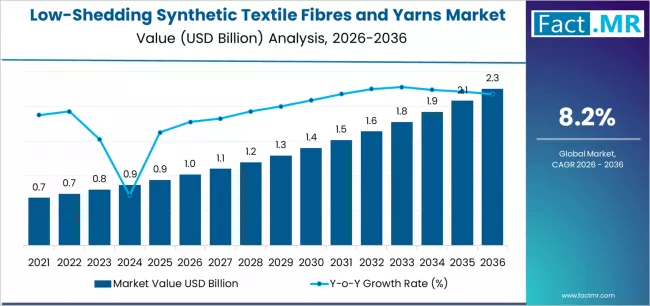
Low Shedding Synthetic Textile Fibres And Yarns Market Market Value Analysis

Escalating regulatory and consumer focus on microplastic pollution from synthetic textiles is the primary force propelling market growth. Legislative pressures, particularly in Europe targeting microfibre release, and voluntary industry accords are compelling fibre producers and apparel brands to seek material solutions that mitigate shedding at the source.

This shift represents a fundamental re-engineering of synthetic textiles, moving beyond end-of-pipe filtration to address the root cause of fibre fragmentation during wear and washing. Concurrently, consumer demand for durable, high-performance apparel that aligns with sustainability values is driving brands to specify low-shedding materials.

Advancements in polymer science and fibre engineering are critical to market expansion. Innovations such as plasma and chemical surface treatments to reduce fibrillation, along with controlled polymer morphology and specialized additive masterbatches, are enabling the production of synthetic fibres that retain their strength and integrity through repeated stress. These technological enhancements allow for the creation of textiles that deliver the performance benefits of synthetics such as moisture-wicking, lightness, and durability while significantly reducing their environmental footprint during use.

Low-Shedding Synthetic Textile Fibres and Yarns Market

Metric Value
Estimated Value in (2026E) USD 1.02 Billion
Forecast Value in (2036F) USD 2.25 Billion
Forecast CAGR (2026 to 2036) 8.2%

Category

Category Segments
End-use/Application Apparel (activewear), Technical textiles, Fast fashion & downstream, Knitwear & exports, Others
Product Type/Format Yarn/filament supply, Knitting yarns, Staple & continuous filament, Yarn for circular knitting, Others
Material Modified PET / Nylon, High-tenacity Nylon, Modified PET blends, rPET low-shed blends, Others
Technology Plasma / surface-engineering to reduce fibrillation, Additive masterbatches (anti-fray), Controlled polymer morphology, Fiber finishing lines, Others
Region North America, Europe, Asia Pacific, Latin America, MEA

Segmental Analysis

Why does Apparel (activewear) drive the leading Application Segment?
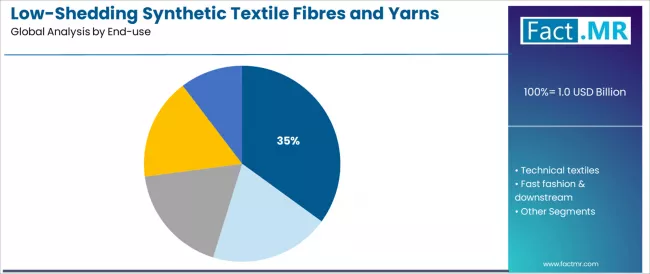
Low Shedding Synthetic Textile Fibres And Yarns Market Analysis By End Use

Apparel (activewear) will command a 35% share, as this segment faces the most intense scrutiny regarding microfibre shedding due to the high-frequency washing of synthetic garments like polyester and nylon sportswear. Consumers of activewear are also among the most environmentally conscious, creating a powerful demand-pull for brands to adopt low-shedding technologies. For brands, integrating these fibres is a critical tool for risk mitigation against future regulations, protecting brand reputation, and appealing to a values-driven customer base without compromising on performance attributes like stretch, breathability, and durability.

  • The growth of athleisure wear, which blurs the line between athletic and casual clothing, has exponentially increased the volume of synthetic textiles in daily wear and subsequent wash cycles, amplifying the need for shed-resistant solutions.
  • Leading sportswear brands are publicly committing to material innovation goals, directly funding R&D and creating guaranteed offtake for advanced low-shedding fibres from suppliers.

What establishes Yarn/filament supply as the dominant Product Type?
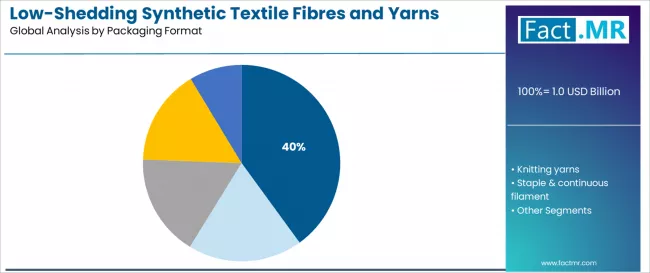
Low Shedding Synthetic Textile Fibres And Yarns Market Analysis By Packaging Format

Yarn/filament supply holds a 40% share as it represents the primary upstream point of intervention for mitigating shedding. By engineering the low-shedding properties directly into the continuous filament or spun yarn, the benefits are intrinsic to every subsequent manufacturing stage such as knitting, weaving, and finishing. This approach ensures consistency and performance that cannot be replicated by applying topical treatments to finished fabrics alone. It gives apparel manufacturers a reliable, "drop-in" solution that integrates seamlessly into existing supply chains.

  • Innovation at the yarn stage allows for precise control over fibre cross-section, filament cohesion, and polymer blend, which are all critical factors in determining a textile's propensity to shed microfibres during abrasion.
  • This format is essential for scaling the technology, as it leverages the massive existing production infrastructure of global fibre producers.

What solidifies Modified PET/Nylon as the preferred Material choice?
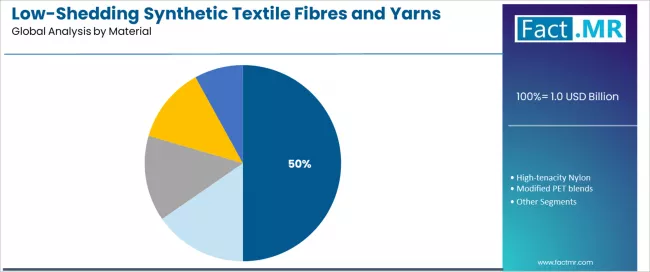
Low Shedding Synthetic Textile Fibres And Yarns Market Analysis By Material

Modified PET / Nylon leads with a 50% share, as polyethylene terephthalate (PET) and Nylon (polyamide) are the workhorse polymers of the synthetic textile industry, dominant in apparel, activewear, and technical textiles. The focus is not on replacing these materials but on fundamentally modifying their structure and chemistry to enhance their integrity. Modified polymers with altered molecular weight distribution, crystallinity, or copolymer additives exhibit significantly reduced fibrillation, the process where tiny fibres break off from the main filament.

  • The use of recycled PET (rPET) in low-shed blends is a key growth area, combining the circular economy benefit of recycled content with the enhanced environmental performance of reduced shedding.
  • Material science is focused on creating fibres that maintain their strength and elasticity while becoming more resistant to the mechanical and chemical stresses of washing, which are the primary causes of fibre loss.

What are the Drivers, Restraints, and Key Trends in the Low-Shedding Synthetic Textile Fibres and Yarns Market?

The market is decisively driven by eco-design regulations in key regions like the EU, which will set standards for textile durability and microplastic release, making low-shedding fibres a compliance necessity. Heightened consumer awareness, fueled by media coverage of microplastic pollution, is creating a tangible market preference for garments marketed as shed-resistant or ocean-safe.

A primary restraint is the higher cost of these engineered fibres compared to conventional synthetics, which must be absorbed by brands or passed to consumers. There is also a technical challenge in balancing low-shedding performance with other critical textile properties like dye affinity, softness, and moisture management.

The market is trending towards multi-technology integration, combining surface engineering, polymer modification, and specialized finishing in a single fibre system to achieve maximum effect. Industry-wide standardization of testing methods for quantifying fibre shedding is emerging as a critical enabler, allowing for credible comparison and verification of product claims across the supply chain.

Analysis of the Market by Key Countries
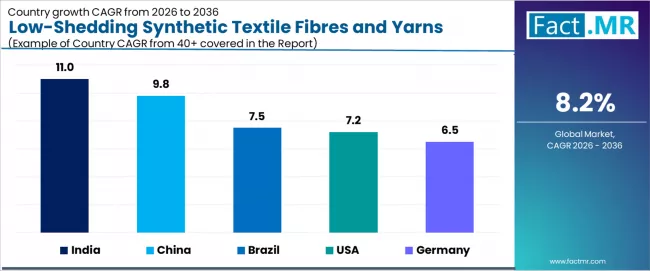
Low Shedding Synthetic Textile Fibres And Yarns Market Cagr Analysis By Country

Country CAGR (2026-2036)
USA 7.20%
Germany 6.50%
China 9.80%
India 11.00%
Brazil 7.50%

What underpins adoption in the USA's market?
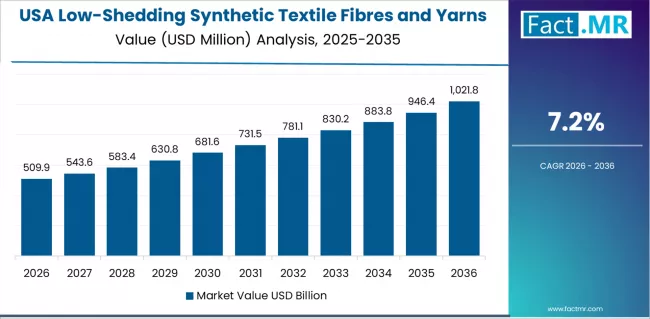
Low Shedding Synthetic Textile Fibres And Yarns Market Country Value Analysis

Leadership drives growth in the USA at a 7.20% CAGR from influential sportswear and outdoor apparel brands, strong consumer environmentalism, and state-level legislative initiatives on microplastics. The market sees innovation focused on high-performance, branded low-shedding fibres for premium activewear, with significant investment in polymer R&D and consumer education campaigns.

How does Germany's regulatory framework shape its market?

Germany's 6.50% CAGR reflects its role as an EU regulatory frontrunner. The push for stringent product-specific requirements under the EU Strategy for Sustainable and Circular Textiles is creating a compliance-driven market. German and European chemical and fibre companies are leading in developing advanced surface engineering and plasma treatment technologies to meet these future standards.

What factors propel China's expansion as a production hub?

China's 9.80% CAGR is fueled by its dominance in global synthetic fibre production and the need to future-proof its massive export-oriented textile industry against international regulations. Domestic policy support for green manufacturing and investments from giants like Hengli are accelerating the scaling of cost-competitive modified PET and nylon technologies for both domestic use and global supply.

Why does India exhibit the highest growth trajectory?

India leads with an 11.00% CAGR, driven by its enormous and fast-growing domestic textile market and a strong export-oriented knitwear sector. The demand is for affordable low-shedding solutions that can be integrated into high-volume fast fashion and downstream apparel production. Innovation is geared towards modified PET blends and efficient finishing lines that deliver performance at accessible price points for the mass market.

How does Brazil's market develop?

Brazil's 7.50% CAGR is supported by a strong knitwear manufacturing base for export and growing domestic apparel consumption. The market leverages local polymer production to develop low-shed blends, particularly those incorporating rPET, catering to both international brand sustainability requirements and local environmental awareness.

Competitive Landscape
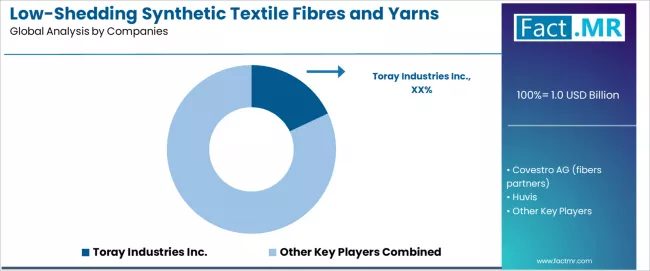
Low Shedding Synthetic Textile Fibres And Yarns Market Analysis By Company

The competitive environment is defined by deep vertical integration and specialization in advanced polymer science. Global chemical and fibre giants like Toray, Indorama, and Hyosung compete through their integrated capabilities from polymer production to filament spinning, investing heavily in proprietary modification technologies and additive systems.

Specialized chemical companies such as Covestro partner with fibre producers to develop next-generation polymer formulations. Competition hinges on securing long-term supply agreements with major global apparel brands, achieving verifiable and certified reductions in fibre release through standardized testing, and scaling production to bring down the cost premium of advanced fibres.

Key Players Profiled in the Low-Shedding Synthetic Textile Fibres and Yarns Market

  • Toray Industries Inc.
  • Covestro AG (fibers partners)
  • Huvis
  • JBF Industries Limited
  • Indorama Corporation
  • Hyosung Group
  • The Hengli Group

Scope of the Report

Items Values
Quantitative Units (2026) USD 1.02 Billion
End-use/Application Apparel (activewear), Technical textiles, Fast fashion & downstream, Knitwear & exports, Others
Product Type/Format Yarn/filament supply, Knitting yarns, Staple & continuous filament, Yarn for circular knitting, Others
Material Modified PET / Nylon, High-tenacity Nylon, Modified PET blends, rPET low-shed blends, Others
Technology Plasma / surface-engineering to reduce fibrillation, Additive masterbatches (anti-fray), Controlled polymer morphology, Fiber finishing lines, Others
Regions Covered North America, Europe, Asia Pacific, Latin America, Middle East & Africa
Key Companies Profiled Toray Industries Inc., Covestro AG (fibers partners), Huvis, JBF Industries Limited, Indorama Corporation, Hyosung Group, The Hengli Group
Additional Attributes Analysis of fibre shedding test methods (e.g., ISO, AATCC), cost-benefit analysis for brands, regulatory timeline mapping, supply chain analysis from polymer to garment.

Low-Shedding Synthetic Textile Fibres and Yarns Market by Segments

  • By End-use/Application :

    • Apparel (activewear)
    • Technical Textiles
    • Fast Fashion & Downstream
    • Knitwear & Exports
    • Others
  • By Product Type/Format :

    • Yarn/Filament Supply
    • Knitting Yarns
    • Staple & Continuous Filament
    • Yarn for Circular Knitting
    • Others
  • By Material :

    • Modified PET/Nylon
    • High-tenacity Nylon
    • Modified PET blends
    • rPET low-shed blends
    • Others
  • By Technology :

    • Plasma/Surface-engineering to Reduce Fibrillation
    • Additive masterbatches (anti-fray)
    • Controlled polymer morphology
    • Fiber finishing lines
    • Others
  • By Region :

    • North America

      • USA
      • Canada
      • Mexico
    • Europe

      • Germany
      • UK
      • France
      • Italy
      • Spain
      • Nordic Countries
      • BENELUX
      • Rest of Europe
    • Asia Pacific

      • China
      • India
      • Japan
      • South Korea
      • Australia
      • Rest of Asia Pacific
    • Latin America

      • Brazil
      • Argentina
      • Rest of Latin America
    • Middle East & Africa

      • Saudi Arabia
      • UAE
      • South Africa
      • Rest of MEA

Table of Content

  1. Executive Summary
    • Global Market Outlook
    • Demand to side Trends
    • Supply to side Trends
    • Technology Roadmap Analysis
    • Analysis and Recommendations
  2. Market Overview
    • Market Coverage / Taxonomy
    • Market Definition / Scope / Limitations
  3. Market Background
    • Market Dynamics
      • Drivers
      • Restraints
      • Opportunity
      • Trends
    • Scenario Forecast
      • Demand in Optimistic Scenario
      • Demand in Likely Scenario
      • Demand in Conservative Scenario
    • Opportunity Map Analysis
    • Product Life Cycle Analysis
    • Supply Chain Analysis
    • Investment Feasibility Matrix
    • Value Chain Analysis
    • PESTLE and Porter’s Analysis
    • Regulatory Landscape
    • Regional Parent Market Outlook
    • Production and Consumption Statistics
    • Import and Export Statistics
  4. Global Market Analysis 2021 to 2025 and Forecast, 2026 to 2036
    • Historical Market Size Value (USD Million) Analysis, 2021 to 2025
    • Current and Future Market Size Value (USD Million) Projections, 2026 to 2036
      • Y to o to Y Growth Trend Analysis
      • Absolute $ Opportunity Analysis
  5. Global Market Pricing Analysis 2021 to 2025 and Forecast 2026 to 2036
  6. Global Market Analysis 2021 to 2025 and Forecast 2026 to 2036, By End-use
    • Introduction / Key Findings
    • Historical Market Size Value (USD Million) Analysis By End-use, 2021 to 2025
    • Current and Future Market Size Value (USD Million) Analysis and Forecast By End-use, 2026 to 2036
      • Apparel (activewear)
      • Technical textiles
      • Fast fashion & downstream
      • Knitwear & exports
      • Others
    • Y to o to Y Growth Trend Analysis By End-use, 2021 to 2025
    • Absolute $ Opportunity Analysis By End-use, 2026 to 2036
  7. Global Market Analysis 2021 to 2025 and Forecast 2026 to 2036, By Packaging Format
    • Introduction / Key Findings
    • Historical Market Size Value (USD Million) Analysis By Packaging Format, 2021 to 2025
    • Current and Future Market Size Value (USD Million) Analysis and Forecast By Packaging Format, 2026 to 2036
      • Yarn/filament supply
      • Knitting yarns
      • Staple & continuous filament
      • Yarn for circular knitting
      • Others
    • Y to o to Y Growth Trend Analysis By Packaging Format, 2021 to 2025
    • Absolute $ Opportunity Analysis By Packaging Format, 2026 to 2036
  8. Global Market Analysis 2021 to 2025 and Forecast 2026 to 2036, By Material
    • Introduction / Key Findings
    • Historical Market Size Value (USD Million) Analysis By Material, 2021 to 2025
    • Current and Future Market Size Value (USD Million) Analysis and Forecast By Material, 2026 to 2036
      • Modified PET / Nylon
      • High-tenacity Nylon
      • Modified PET blends
      • rPET low-shed blends
      • Others
    • Y to o to Y Growth Trend Analysis By Material, 2021 to 2025
    • Absolute $ Opportunity Analysis By Material, 2026 to 2036
  9. Global Market Analysis 2021 to 2025 and Forecast 2026 to 2036, By Technology
    • Introduction / Key Findings
    • Historical Market Size Value (USD Million) Analysis By Technology, 2021 to 2025
    • Current and Future Market Size Value (USD Million) Analysis and Forecast By Technology, 2026 to 2036
      • Plasma / surface-engineering to reduce fibrillation
      • Additive masterbatches (anti-fray)
      • Controlled polymer morphology
      • Fiber finishing lines
      • Others
    • Y to o to Y Growth Trend Analysis By Technology, 2021 to 2025
    • Absolute $ Opportunity Analysis By Technology, 2026 to 2036
  10. Global Market Analysis 2021 to 2025 and Forecast 2026 to 2036, By Region
    • Introduction
    • Historical Market Size Value (USD Million) Analysis By Region, 2021 to 2025
    • Current Market Size Value (USD Million) Analysis and Forecast By Region, 2026 to 2036
      • North America
      • Latin America
      • Western Europe
      • Eastern Europe
      • East Asia
      • South Asia and Pacific
      • Middle East & Africa
    • Market Attractiveness Analysis By Region
  11. North America Market Analysis 2021 to 2025 and Forecast 2026 to 2036, By Country
    • Historical Market Size Value (USD Million) Trend Analysis By Market Taxonomy, 2021 to 2025
    • Market Size Value (USD Million) Forecast By Market Taxonomy, 2026 to 2036
      • By Country
        • USA
        • Canada
        • Mexico
      • By End-use
      • By Packaging Format
      • By Material
      • By Technology
    • Market Attractiveness Analysis
      • By Country
      • By End-use
      • By Packaging Format
      • By Material
      • By Technology
    • Key Takeaways
  12. Latin America Market Analysis 2021 to 2025 and Forecast 2026 to 2036, By Country
    • Historical Market Size Value (USD Million) Trend Analysis By Market Taxonomy, 2021 to 2025
    • Market Size Value (USD Million) Forecast By Market Taxonomy, 2026 to 2036
      • By Country
        • Brazil
        • Chile
        • Rest of Latin America
      • By End-use
      • By Packaging Format
      • By Material
      • By Technology
    • Market Attractiveness Analysis
      • By Country
      • By End-use
      • By Packaging Format
      • By Material
      • By Technology
    • Key Takeaways
  13. Western Europe Market Analysis 2021 to 2025 and Forecast 2026 to 2036, By Country
    • Historical Market Size Value (USD Million) Trend Analysis By Market Taxonomy, 2021 to 2025
    • Market Size Value (USD Million) Forecast By Market Taxonomy, 2026 to 2036
      • By Country
        • Germany
        • UK
        • Italy
        • Spain
        • France
        • Nordic
        • BENELUX
        • Rest of Western Europe
      • By End-use
      • By Packaging Format
      • By Material
      • By Technology
    • Market Attractiveness Analysis
      • By Country
      • By End-use
      • By Packaging Format
      • By Material
      • By Technology
    • Key Takeaways
  14. Eastern Europe Market Analysis 2021 to 2025 and Forecast 2026 to 2036, By Country
    • Historical Market Size Value (USD Million) Trend Analysis By Market Taxonomy, 2021 to 2025
    • Market Size Value (USD Million) Forecast By Market Taxonomy, 2026 to 2036
      • By Country
        • Russia
        • Poland
        • Hungary
        • Balkan & Baltic
        • Rest of Eastern Europe
      • By End-use
      • By Packaging Format
      • By Material
      • By Technology
    • Market Attractiveness Analysis
      • By Country
      • By End-use
      • By Packaging Format
      • By Material
      • By Technology
    • Key Takeaways
  15. East Asia Market Analysis 2021 to 2025 and Forecast 2026 to 2036, By Country
    • Historical Market Size Value (USD Million) Trend Analysis By Market Taxonomy, 2021 to 2025
    • Market Size Value (USD Million) Forecast By Market Taxonomy, 2026 to 2036
      • By Country
        • China
        • Japan
        • South Korea
      • By End-use
      • By Packaging Format
      • By Material
      • By Technology
    • Market Attractiveness Analysis
      • By Country
      • By End-use
      • By Packaging Format
      • By Material
      • By Technology
    • Key Takeaways
  16. South Asia and Pacific Market Analysis 2021 to 2025 and Forecast 2026 to 2036, By Country
    • Historical Market Size Value (USD Million) Trend Analysis By Market Taxonomy, 2021 to 2025
    • Market Size Value (USD Million) Forecast By Market Taxonomy, 2026 to 2036
      • By Country
        • India
        • ASEAN
        • Australia & New Zealand
        • Rest of South Asia and Pacific
      • By End-use
      • By Packaging Format
      • By Material
      • By Technology
    • Market Attractiveness Analysis
      • By Country
      • By End-use
      • By Packaging Format
      • By Material
      • By Technology
    • Key Takeaways
  17. Middle East & Africa Market Analysis 2021 to 2025 and Forecast 2026 to 2036, By Country
    • Historical Market Size Value (USD Million) Trend Analysis By Market Taxonomy, 2021 to 2025
    • Market Size Value (USD Million) Forecast By Market Taxonomy, 2026 to 2036
      • By Country
        • Kingdom of Saudi Arabia
        • Other GCC Countries
        • Turkiye
        • South Africa
        • Other African Union
        • Rest of Middle East & Africa
      • By End-use
      • By Packaging Format
      • By Material
      • By Technology
    • Market Attractiveness Analysis
      • By Country
      • By End-use
      • By Packaging Format
      • By Material
      • By Technology
    • Key Takeaways
  18. Key Countries Market Analysis
    • USA
      • Pricing Analysis
      • Market Share Analysis, 2025
        • By End-use
        • By Packaging Format
        • By Material
        • By Technology
    • Canada
      • Pricing Analysis
      • Market Share Analysis, 2025
        • By End-use
        • By Packaging Format
        • By Material
        • By Technology
    • Mexico
      • Pricing Analysis
      • Market Share Analysis, 2025
        • By End-use
        • By Packaging Format
        • By Material
        • By Technology
    • Brazil
      • Pricing Analysis
      • Market Share Analysis, 2025
        • By End-use
        • By Packaging Format
        • By Material
        • By Technology
    • Chile
      • Pricing Analysis
      • Market Share Analysis, 2025
        • By End-use
        • By Packaging Format
        • By Material
        • By Technology
    • Germany
      • Pricing Analysis
      • Market Share Analysis, 2025
        • By End-use
        • By Packaging Format
        • By Material
        • By Technology
    • UK
      • Pricing Analysis
      • Market Share Analysis, 2025
        • By End-use
        • By Packaging Format
        • By Material
        • By Technology
    • Italy
      • Pricing Analysis
      • Market Share Analysis, 2025
        • By End-use
        • By Packaging Format
        • By Material
        • By Technology
    • Spain
      • Pricing Analysis
      • Market Share Analysis, 2025
        • By End-use
        • By Packaging Format
        • By Material
        • By Technology
    • France
      • Pricing Analysis
      • Market Share Analysis, 2025
        • By End-use
        • By Packaging Format
        • By Material
        • By Technology
    • India
      • Pricing Analysis
      • Market Share Analysis, 2025
        • By End-use
        • By Packaging Format
        • By Material
        • By Technology
    • ASEAN
      • Pricing Analysis
      • Market Share Analysis, 2025
        • By End-use
        • By Packaging Format
        • By Material
        • By Technology
    • Australia & New Zealand
      • Pricing Analysis
      • Market Share Analysis, 2025
        • By End-use
        • By Packaging Format
        • By Material
        • By Technology
    • China
      • Pricing Analysis
      • Market Share Analysis, 2025
        • By End-use
        • By Packaging Format
        • By Material
        • By Technology
    • Japan
      • Pricing Analysis
      • Market Share Analysis, 2025
        • By End-use
        • By Packaging Format
        • By Material
        • By Technology
    • South Korea
      • Pricing Analysis
      • Market Share Analysis, 2025
        • By End-use
        • By Packaging Format
        • By Material
        • By Technology
    • Russia
      • Pricing Analysis
      • Market Share Analysis, 2025
        • By End-use
        • By Packaging Format
        • By Material
        • By Technology
    • Poland
      • Pricing Analysis
      • Market Share Analysis, 2025
        • By End-use
        • By Packaging Format
        • By Material
        • By Technology
    • Hungary
      • Pricing Analysis
      • Market Share Analysis, 2025
        • By End-use
        • By Packaging Format
        • By Material
        • By Technology
    • Kingdom of Saudi Arabia
      • Pricing Analysis
      • Market Share Analysis, 2025
        • By End-use
        • By Packaging Format
        • By Material
        • By Technology
    • Turkiye
      • Pricing Analysis
      • Market Share Analysis, 2025
        • By End-use
        • By Packaging Format
        • By Material
        • By Technology
    • South Africa
      • Pricing Analysis
      • Market Share Analysis, 2025
        • By End-use
        • By Packaging Format
        • By Material
        • By Technology
  19. Market Structure Analysis
    • Competition Dashboard
    • Competition Benchmarking
    • Market Share Analysis of Top Players
      • By Regional
      • By End-use
      • By Packaging Format
      • By Material
      • By Technology
  20. Competition Analysis
    • Competition Deep Dive
      • Toray Industries Inc.
        • Overview
        • Product Portfolio
        • Profitability by Market Segments (Product/Age /Sales Channel/Region)
        • Sales Footprint
        • Strategy Overview
          • Marketing Strategy
          • Product Strategy
          • Channel Strategy
      • Covestro AG (fibers partners)
      • Huvis
      • JBF Industries Limited
      • Indorama Corporation
      • Hyosung Group
      • The Hengli Group
  21. Assumptions & Acronyms Used
  22. Research Methodology

List Of Table

  • Table 1: Global Market Value (USD Million) Forecast by Region, 2021 to 2036
  • Table 2: Global Market Value (USD Million) Forecast by End-use, 2021 to 2036
  • Table 3: Global Market Value (USD Million) Forecast by Packaging Format, 2021 to 2036
  • Table 4: Global Market Value (USD Million) Forecast by Material, 2021 to 2036
  • Table 5: Global Market Value (USD Million) Forecast by Technology, 2021 to 2036
  • Table 6: North America Market Value (USD Million) Forecast by Country, 2021 to 2036
  • Table 7: North America Market Value (USD Million) Forecast by End-use, 2021 to 2036
  • Table 8: North America Market Value (USD Million) Forecast by Packaging Format, 2021 to 2036
  • Table 9: North America Market Value (USD Million) Forecast by Material, 2021 to 2036
  • Table 10: North America Market Value (USD Million) Forecast by Technology, 2021 to 2036
  • Table 11: Latin America Market Value (USD Million) Forecast by Country, 2021 to 2036
  • Table 12: Latin America Market Value (USD Million) Forecast by End-use, 2021 to 2036
  • Table 13: Latin America Market Value (USD Million) Forecast by Packaging Format, 2021 to 2036
  • Table 14: Latin America Market Value (USD Million) Forecast by Material, 2021 to 2036
  • Table 15: Latin America Market Value (USD Million) Forecast by Technology, 2021 to 2036
  • Table 16: Western Europe Market Value (USD Million) Forecast by Country, 2021 to 2036
  • Table 17: Western Europe Market Value (USD Million) Forecast by End-use, 2021 to 2036
  • Table 18: Western Europe Market Value (USD Million) Forecast by Packaging Format, 2021 to 2036
  • Table 19: Western Europe Market Value (USD Million) Forecast by Material, 2021 to 2036
  • Table 20: Western Europe Market Value (USD Million) Forecast by Technology, 2021 to 2036
  • Table 21: Eastern Europe Market Value (USD Million) Forecast by Country, 2021 to 2036
  • Table 22: Eastern Europe Market Value (USD Million) Forecast by End-use, 2021 to 2036
  • Table 23: Eastern Europe Market Value (USD Million) Forecast by Packaging Format, 2021 to 2036
  • Table 24: Eastern Europe Market Value (USD Million) Forecast by Material, 2021 to 2036
  • Table 25: Eastern Europe Market Value (USD Million) Forecast by Technology, 2021 to 2036
  • Table 26: East Asia Market Value (USD Million) Forecast by Country, 2021 to 2036
  • Table 27: East Asia Market Value (USD Million) Forecast by End-use, 2021 to 2036
  • Table 28: East Asia Market Value (USD Million) Forecast by Packaging Format, 2021 to 2036
  • Table 29: East Asia Market Value (USD Million) Forecast by Material, 2021 to 2036
  • Table 30: East Asia Market Value (USD Million) Forecast by Technology, 2021 to 2036
  • Table 31: South Asia and Pacific Market Value (USD Million) Forecast by Country, 2021 to 2036
  • Table 32: South Asia and Pacific Market Value (USD Million) Forecast by End-use, 2021 to 2036
  • Table 33: South Asia and Pacific Market Value (USD Million) Forecast by Packaging Format, 2021 to 2036
  • Table 34: South Asia and Pacific Market Value (USD Million) Forecast by Material, 2021 to 2036
  • Table 35: South Asia and Pacific Market Value (USD Million) Forecast by Technology, 2021 to 2036
  • Table 36: Middle East & Africa Market Value (USD Million) Forecast by Country, 2021 to 2036
  • Table 37: Middle East & Africa Market Value (USD Million) Forecast by End-use, 2021 to 2036
  • Table 38: Middle East & Africa Market Value (USD Million) Forecast by Packaging Format, 2021 to 2036
  • Table 39: Middle East & Africa Market Value (USD Million) Forecast by Material, 2021 to 2036
  • Table 40: Middle East & Africa Market Value (USD Million) Forecast by Technology, 2021 to 2036

List Of Figures

  • Figure 1: Global Market Pricing Analysis
  • Figure 2: Global Market Value (USD Million) Forecast 2021 to 2036
  • Figure 3: Global Market Value Share and BPS Analysis by End-use, 2026 and 2036
  • Figure 4: Global Market Y to o to Y Growth Comparison by End-use, 2026 to 2036
  • Figure 5: Global Market Attractiveness Analysis by End-use
  • Figure 6: Global Market Value Share and BPS Analysis by Packaging Format, 2026 and 2036
  • Figure 7: Global Market Y to o to Y Growth Comparison by Packaging Format, 2026 to 2036
  • Figure 8: Global Market Attractiveness Analysis by Packaging Format
  • Figure 9: Global Market Value Share and BPS Analysis by Material, 2026 and 2036
  • Figure 10: Global Market Y to o to Y Growth Comparison by Material, 2026 to 2036
  • Figure 11: Global Market Attractiveness Analysis by Material
  • Figure 12: Global Market Value Share and BPS Analysis by Technology, 2026 and 2036
  • Figure 13: Global Market Y to o to Y Growth Comparison by Technology, 2026 to 2036
  • Figure 14: Global Market Attractiveness Analysis by Technology
  • Figure 15: Global Market Value (USD Million) Share and BPS Analysis by Region, 2026 and 2036
  • Figure 16: Global Market Y to o to Y Growth Comparison by Region, 2026 to 2036
  • Figure 17: Global Market Attractiveness Analysis by Region
  • Figure 18: North America Market Incremental Dollar Opportunity, 2026 to 2036
  • Figure 19: Latin America Market Incremental Dollar Opportunity, 2026 to 2036
  • Figure 20: Western Europe Market Incremental Dollar Opportunity, 2026 to 2036
  • Figure 21: Eastern Europe Market Incremental Dollar Opportunity, 2026 to 2036
  • Figure 22: East Asia Market Incremental Dollar Opportunity, 2026 to 2036
  • Figure 23: South Asia and Pacific Market Incremental Dollar Opportunity, 2026 to 2036
  • Figure 24: Middle East & Africa Market Incremental Dollar Opportunity, 2026 to 2036
  • Figure 25: North America Market Value Share and BPS Analysis by Country, 2026 and 2036
  • Figure 26: North America Market Value Share and BPS Analysis by End-use, 2026 and 2036
  • Figure 27: North America Market Y to o to Y Growth Comparison by End-use, 2026 to 2036
  • Figure 28: North America Market Attractiveness Analysis by End-use
  • Figure 29: North America Market Value Share and BPS Analysis by Packaging Format, 2026 and 2036
  • Figure 30: North America Market Y to o to Y Growth Comparison by Packaging Format, 2026 to 2036
  • Figure 31: North America Market Attractiveness Analysis by Packaging Format
  • Figure 32: North America Market Value Share and BPS Analysis by Material, 2026 and 2036
  • Figure 33: North America Market Y to o to Y Growth Comparison by Material, 2026 to 2036
  • Figure 34: North America Market Attractiveness Analysis by Material
  • Figure 35: North America Market Value Share and BPS Analysis by Technology, 2026 and 2036
  • Figure 36: North America Market Y to o to Y Growth Comparison by Technology, 2026 to 2036
  • Figure 37: North America Market Attractiveness Analysis by Technology
  • Figure 38: Latin America Market Value Share and BPS Analysis by Country, 2026 and 2036
  • Figure 39: Latin America Market Value Share and BPS Analysis by End-use, 2026 and 2036
  • Figure 40: Latin America Market Y to o to Y Growth Comparison by End-use, 2026 to 2036
  • Figure 41: Latin America Market Attractiveness Analysis by End-use
  • Figure 42: Latin America Market Value Share and BPS Analysis by Packaging Format, 2026 and 2036
  • Figure 43: Latin America Market Y to o to Y Growth Comparison by Packaging Format, 2026 to 2036
  • Figure 44: Latin America Market Attractiveness Analysis by Packaging Format
  • Figure 45: Latin America Market Value Share and BPS Analysis by Material, 2026 and 2036
  • Figure 46: Latin America Market Y to o to Y Growth Comparison by Material, 2026 to 2036
  • Figure 47: Latin America Market Attractiveness Analysis by Material
  • Figure 48: Latin America Market Value Share and BPS Analysis by Technology, 2026 and 2036
  • Figure 49: Latin America Market Y to o to Y Growth Comparison by Technology, 2026 to 2036
  • Figure 50: Latin America Market Attractiveness Analysis by Technology
  • Figure 51: Western Europe Market Value Share and BPS Analysis by Country, 2026 and 2036
  • Figure 52: Western Europe Market Value Share and BPS Analysis by End-use, 2026 and 2036
  • Figure 53: Western Europe Market Y to o to Y Growth Comparison by End-use, 2026 to 2036
  • Figure 54: Western Europe Market Attractiveness Analysis by End-use
  • Figure 55: Western Europe Market Value Share and BPS Analysis by Packaging Format, 2026 and 2036
  • Figure 56: Western Europe Market Y to o to Y Growth Comparison by Packaging Format, 2026 to 2036
  • Figure 57: Western Europe Market Attractiveness Analysis by Packaging Format
  • Figure 58: Western Europe Market Value Share and BPS Analysis by Material, 2026 and 2036
  • Figure 59: Western Europe Market Y to o to Y Growth Comparison by Material, 2026 to 2036
  • Figure 60: Western Europe Market Attractiveness Analysis by Material
  • Figure 61: Western Europe Market Value Share and BPS Analysis by Technology, 2026 and 2036
  • Figure 62: Western Europe Market Y to o to Y Growth Comparison by Technology, 2026 to 2036
  • Figure 63: Western Europe Market Attractiveness Analysis by Technology
  • Figure 64: Eastern Europe Market Value Share and BPS Analysis by Country, 2026 and 2036
  • Figure 65: Eastern Europe Market Value Share and BPS Analysis by End-use, 2026 and 2036
  • Figure 66: Eastern Europe Market Y to o to Y Growth Comparison by End-use, 2026 to 2036
  • Figure 67: Eastern Europe Market Attractiveness Analysis by End-use
  • Figure 68: Eastern Europe Market Value Share and BPS Analysis by Packaging Format, 2026 and 2036
  • Figure 69: Eastern Europe Market Y to o to Y Growth Comparison by Packaging Format, 2026 to 2036
  • Figure 70: Eastern Europe Market Attractiveness Analysis by Packaging Format
  • Figure 71: Eastern Europe Market Value Share and BPS Analysis by Material, 2026 and 2036
  • Figure 72: Eastern Europe Market Y to o to Y Growth Comparison by Material, 2026 to 2036
  • Figure 73: Eastern Europe Market Attractiveness Analysis by Material
  • Figure 74: Eastern Europe Market Value Share and BPS Analysis by Technology, 2026 and 2036
  • Figure 75: Eastern Europe Market Y to o to Y Growth Comparison by Technology, 2026 to 2036
  • Figure 76: Eastern Europe Market Attractiveness Analysis by Technology
  • Figure 77: East Asia Market Value Share and BPS Analysis by Country, 2026 and 2036
  • Figure 78: East Asia Market Value Share and BPS Analysis by End-use, 2026 and 2036
  • Figure 79: East Asia Market Y to o to Y Growth Comparison by End-use, 2026 to 2036
  • Figure 80: East Asia Market Attractiveness Analysis by End-use
  • Figure 81: East Asia Market Value Share and BPS Analysis by Packaging Format, 2026 and 2036
  • Figure 82: East Asia Market Y to o to Y Growth Comparison by Packaging Format, 2026 to 2036
  • Figure 83: East Asia Market Attractiveness Analysis by Packaging Format
  • Figure 84: East Asia Market Value Share and BPS Analysis by Material, 2026 and 2036
  • Figure 85: East Asia Market Y to o to Y Growth Comparison by Material, 2026 to 2036
  • Figure 86: East Asia Market Attractiveness Analysis by Material
  • Figure 87: East Asia Market Value Share and BPS Analysis by Technology, 2026 and 2036
  • Figure 88: East Asia Market Y to o to Y Growth Comparison by Technology, 2026 to 2036
  • Figure 89: East Asia Market Attractiveness Analysis by Technology
  • Figure 90: South Asia and Pacific Market Value Share and BPS Analysis by Country, 2026 and 2036
  • Figure 91: South Asia and Pacific Market Value Share and BPS Analysis by End-use, 2026 and 2036
  • Figure 92: South Asia and Pacific Market Y to o to Y Growth Comparison by End-use, 2026 to 2036
  • Figure 93: South Asia and Pacific Market Attractiveness Analysis by End-use
  • Figure 94: South Asia and Pacific Market Value Share and BPS Analysis by Packaging Format, 2026 and 2036
  • Figure 95: South Asia and Pacific Market Y to o to Y Growth Comparison by Packaging Format, 2026 to 2036
  • Figure 96: South Asia and Pacific Market Attractiveness Analysis by Packaging Format
  • Figure 97: South Asia and Pacific Market Value Share and BPS Analysis by Material, 2026 and 2036
  • Figure 98: South Asia and Pacific Market Y to o to Y Growth Comparison by Material, 2026 to 2036
  • Figure 99: South Asia and Pacific Market Attractiveness Analysis by Material
  • Figure 100: South Asia and Pacific Market Value Share and BPS Analysis by Technology, 2026 and 2036
  • Figure 101: South Asia and Pacific Market Y to o to Y Growth Comparison by Technology, 2026 to 2036
  • Figure 102: South Asia and Pacific Market Attractiveness Analysis by Technology
  • Figure 103: Middle East & Africa Market Value Share and BPS Analysis by Country, 2026 and 2036
  • Figure 104: Middle East & Africa Market Value Share and BPS Analysis by End-use, 2026 and 2036
  • Figure 105: Middle East & Africa Market Y to o to Y Growth Comparison by End-use, 2026 to 2036
  • Figure 106: Middle East & Africa Market Attractiveness Analysis by End-use
  • Figure 107: Middle East & Africa Market Value Share and BPS Analysis by Packaging Format, 2026 and 2036
  • Figure 108: Middle East & Africa Market Y to o to Y Growth Comparison by Packaging Format, 2026 to 2036
  • Figure 109: Middle East & Africa Market Attractiveness Analysis by Packaging Format
  • Figure 110: Middle East & Africa Market Value Share and BPS Analysis by Material, 2026 and 2036
  • Figure 111: Middle East & Africa Market Y to o to Y Growth Comparison by Material, 2026 to 2036
  • Figure 112: Middle East & Africa Market Attractiveness Analysis by Material
  • Figure 113: Middle East & Africa Market Value Share and BPS Analysis by Technology, 2026 and 2036
  • Figure 114: Middle East & Africa Market Y to o to Y Growth Comparison by Technology, 2026 to 2036
  • Figure 115: Middle East & Africa Market Attractiveness Analysis by Technology
  • Figure 116: Global Market - Tier Structure Analysis
  • Figure 117: Global Market - Company Share Analysis

- FAQs -

How big is the low-shedding synthetic textile fibres and yarns market in 2026?

The global low-shedding synthetic textile fibres and yarns market is estimated to be valued at USD 1.0 billion in 2026.

What will be the size of low-shedding synthetic textile fibres and yarns market in 2036?

The market size for the low-shedding synthetic textile fibres and yarns market is projected to reach USD 2.3 billion by 2036.

How much will be the low-shedding synthetic textile fibres and yarns market growth between 2026 and 2036?

The low-shedding synthetic textile fibres and yarns market is expected to grow at a 8.2% CAGR between 2026 and 2036.

What are the key product types in the low-shedding synthetic textile fibres and yarns market?

The key product types in low-shedding synthetic textile fibres and yarns market are apparel (activewear), technical textiles, fast fashion & downstream, knitwear & exports and others.

Which packaging format segment to contribute significant share in the low-shedding synthetic textile fibres and yarns market in 2026?

In terms of packaging format, yarn/filament supply segment to command 40.0% share in the low-shedding synthetic textile fibres and yarns market in 2026.

Low-Shedding Synthetic Textile Fibres and Yarns Market