- Base Value(2026): 8.7 Bn
- Estimated Value(2026): 8.7 Bn
- Forecast Value (2036): 13.2 Bn
- CAGR (2026 - 2036): 4.3%
Synthetic Lubricants Market Forecast and Outlook 2026 to 2036
The global synthetic lubricants market is valued at USD 8.7 billion in 2026 and is set to reach USD 13.2 billion by 2036, recording an absolute increase of USD 4.5 billion over the forecast period. This translates into a total growth of 51.7%, with the market forecast to expand at a CAGR of 4.3% between 2026 and 2036.
Demand for synthetic lubricants is expected to grow 1.5X, supported by increasing demand for high-performance lubricants, growing automotive production, and rising requirements for energy-efficient solutions across industrial, automotive, and aerospace applications.
Key Takeaways from the Synthetic Lubricants Market
- Synthetic Lubricants Market Value (2026): USD 8.7 billion
- Synthetic Lubricants Market Forecast Value (2036): USD 13.2 billion
- Synthetic Lubricants Market Forecast CAGR: 4.3%
- Leading Base Oil Type in Synthetic Lubricants Market: Polyalphaolefin (38.7%)
- Key Growth Regions in Synthetic Lubricants Market: Asia Pacific, North America, Europe
- Key Players in Synthetic Lubricants Market: Exxon Mobil Corporation, Shell plc, Chevron Corporation, BP plc, TotalEnergies SE
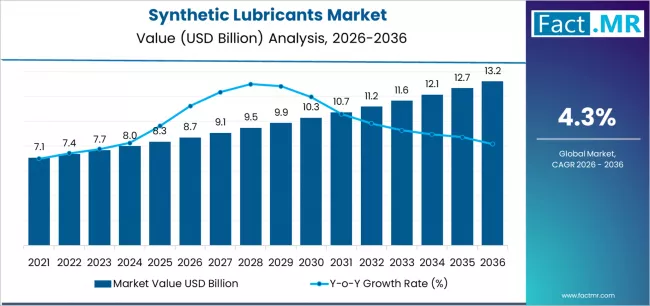
Synthetic Lubricants Market Market Value Analysis | Source: Fact.MR
Between 2026 and 2030, the synthetic lubricants market is projected to expand from USD 8.7 billion to USD 10.6 billion, resulting in a value increase of USD 1.9 billion, which represents 42.2% of the total forecast growth for the decade. This phase will be shaped by increasing automotive electrification trends, rising demand for high-performance industrial lubricants, and growing availability of advanced synthetic base oil technologies across manufacturing facilities and transportation applications.
Between 2030 and 2036, the market will grow from USD 10.6 billion to USD 13.2 billion, adding another USD 2.6 billion, which constitutes 57.8% of the overall ten-year expansion. This period will experience the advancement of bio-based synthetic formulations, the development of energy-optimized lubricant technologies for extended drain intervals, and the expansion of integrated lubrication management systems across diverse industrial and automotive applications. Emphasis on operational efficiency and equipment longevity will drive demand for advanced synthetic lubricant varieties with enhanced performance characteristics, improved thermal stability profiles, and superior equipment protection capabilities.
Synthetic Lubricants Market
| Metric | Value |
|---|---|
| Estimated Value in (2026E) | USD 8.7 billion |
| Forecast Value in (2036F) | USD 13.2 billion |
| Forecast CAGR (2026 to 2036) | 4.3% |
Source: Fact.MR analysis. Updated Dec 13, 2025
Category
| Category | Segments |
|---|---|
| Base Oil Type | Polyalphaolefin, Ester-Based, Other Synthetic Base Oil Configurations |
| Application | Engine Oils, Hydraulic Fluids, Gear Oils, Others |
| End Use Industry | Automotive, Industrial, Aerospace, Others |
| Distribution Channel | Direct Sales, Distributor Sales |
| Region | North America, Europe, Asia Pacific, Latin America, Middle East and Africa |
Source: Fact.MR analysis. Updated Dec 13, 2025
Segmental Analysis
Which Base Oil Type Dominates the Synthetic Lubricants Market?
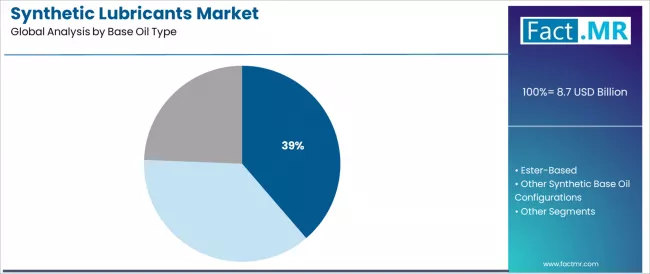
Synthetic Lubricants Market Analysis By Base Oil Type | Source: Fact.MR
Polyalphaolefin lubricants will account for 38.7% of the market in 2026, maintaining their position as the leading base oil type. Users prefer polyalphaolefin systems for their stability, performance consistency, and suitability across diverse industrial lubrication requirements. Their proven reliability and cost-effectiveness support equipment protection needs in automotive and industrial settings, reinforcing their role as the most versatile synthetic base oil type.
- Industrial users continue adopting polyalphaolefins as part of broader efficiency and technology-driven optimization efforts.
- With operators prioritizing reliability and performance uniformity, polyalphaolefin systems remain central to modern lubrication strategies.
Which End-Use Industry Captures the Largest Market Share?
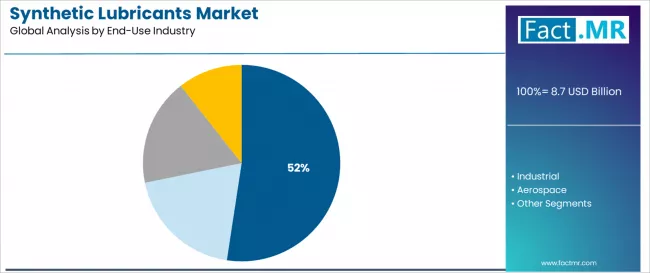
Synthetic Lubricants Market Analysis By End Use Industry | Source: Fact.MR
Automotive applications are expected to represent 52.4% of the market in 2026, reflecting their role as the primary consumer of synthetic lubricants. Fleet operators and vehicle users favor these applications for consistent engine protection, operational efficiency, and broad compatibility across vehicle types. Advances in engine technology and established automotive standards continue to support stable demand, reinforcing the segment’s position within performance-oriented lubrication practices.
- Automotive users align lubricant choices with vehicle-specific requirements and maintenance plans.
- As fleets prioritize efficient lubrication methods, automotive applications will remain the core driver of market expansion and operational optimization.
What are the Drivers, Restraints, and Key Trends of the Synthetic Lubricants Market?
Drivers: The market is expanding as users adopt high-performance lubricants for improved stability, efficiency, and system protection across automotive and industrial applications. Demand continues to increase as equipment operators shift toward advanced lubrication solutions that support consistent performance in varied operating environments.
Restraints: Growth is moderated by competition from conventional lubricants, user price sensitivity, and raw material cost fluctuations. These factors influence purchasing decisions and can limit wider adoption of synthetic formulations in cost-constrained operations.
Key Trends: Smart equipment integration is strengthening demand for synthetic lubricants that support connected monitoring and condition-based maintenance. Users are adopting these systems to achieve greater operational consistency and real-time performance insight. Manufacturers are also incorporating sensors, usage analytics, and continuous monitoring capabilities to enhance equipment precision and enable proactive maintenance strategies across industrial facilities.
Analysis of the Synthetic Lubricants Market by Key Countries
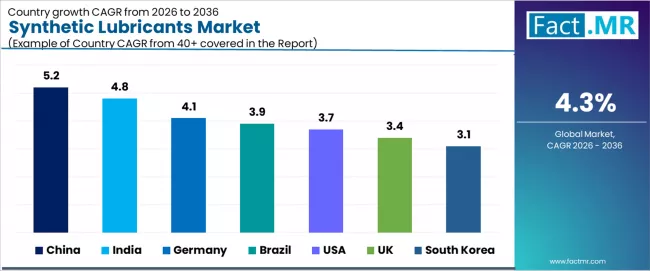
Synthetic Lubricants Market Cagr Analysis By Country | Source: Fact.MR
| Country | CAGR (2026-2036) |
|---|---|
| China | 5.2% |
| India | 4.8% |
| Germany | 4.1% |
| Brazil | 3.9% |
| USA | 3.7% |
| UK | 3.4% |
| South Korea | 3.1% |
Source: Fact.MR analysis. Updated Dec 13, 2025
How will China Lead in the Global Synthetic Lubricants Market?
Revenue from synthetic lubricant consumption and sales in China is projected to exhibit exceptional growth with a CAGR of 5.2% through 2036, driven by the country's rapidly expanding automotive sector, favorable government policies toward industrial modernization, and initiatives promoting advanced lubrication technologies across major manufacturing regions.
China's position as a global automotive manufacturing hub and increasing focus on operational efficiency systems are creating substantial demand for high-quality synthetic lubricants in both domestic and export markets. Major lubricant manufacturers and industrial distributors are establishing comprehensive lubrication capabilities to serve growing demand and emerging automotive opportunities.
- Established automotive culture and expanding efficiency consciousness are driving demand for synthetic lubricants across manufacturing facilities, automotive developments, and comprehensive production control systems throughout Chinese automotive markets.
- Strong industrial infrastructure and technology adoption initiatives are supporting the rapid adoption of premium synthetic lubricants among efficiency-focused manufacturers seeking to meet evolving performance standards and operational requirements.
Why does India Demonstrate Strong Market Potential?
The synthetic lubricants market in India is expanding at a CAGR of 4.8%, supported by rising automotive investment, growing efficiency consciousness, and expanding equipment distributor capabilities.
The country's developing automotive infrastructure and increasing investment in manufacturing technologies are driving demand for synthetic lubricants across both traditional and modern industrial applications. International lubricant companies and domestic distributors are establishing comprehensive operational networks to address growing market demand for high-performance lubrication devices and efficient automotive solutions.
- Rising automotive development and expanding manufacturing capabilities are creating opportunities for synthetic lubricant adoption across automotive projects, modern industrial developments, and distributor companies throughout major Indian automotive regions.
- Growing efficiency awareness initiatives and manufacturing technology advancement are driving the adoption of specialized lubrication products and services among industrial users seeking to enhance their operational efficiency and meet increasing automotive demand.
Why does Germany Demonstrate Considerable Expansion Prospects?
The synthetic lubricants market in Germany is projected to grow at a CAGR of 4.1% through 2036, supported by the country's mature automotive standards, established industrial automation regulations, and leadership in precision lubrication technology.
Germany's sophisticated automotive standards and strong support for advanced lubrication systems are creating steady demand for both traditional and innovative synthetic lubricant varieties. Leading lubricant manufacturers and specialty distributors are establishing comprehensive operational strategies to serve both domestic markets and growing export opportunities.
- Advanced automotive technology capabilities and established precision-focused markets are driving demand for premium synthetic lubricants across automotive facilities, manufacturing operations, and comprehensive automation companies seeking superior performance profiles and engineering innovation.
- Strong automotive excellence culture and regulatory leadership are supporting the adoption of innovative lubrication technology among users prioritizing operational reliability and automotive precision in manufacturing applications.
Why does Brazil Show Significant Growth?
The synthetic lubricants market in Brazil is projected to grow at a CAGR of 3.9% through 2036, driven by the country's emphasis on automotive development, manufacturing modernization growth, and growing automotive distributor capabilities.
Brazilian automotive users and manufacturing facilities consistently seek efficiency-focused lubricants that enhance operational performance and support modernization excellence for both traditional and modern automotive applications. The country's position as a Latin American automotive leader continues to drive innovation in specialized lubrication applications and industrial automotive standards.
- Expanding automotive culture and growing manufacturing markets are driving demand for commercial synthetic lubricants across automotive consumers, automation providers, and efficiency-focused distributors seeking superior lubrication control and distinctive operational profiles.
- Increasing focus on manufacturing efficiency and automotive modernization systems is supporting the adoption of specialty synthetic lubricant varieties among users and distributors seeking authentic Brazilian automotive-focused products in regional markets with established manufacturing expertise.
What Factors Underpin USA’s Synthetic Lubricants Market Growth?
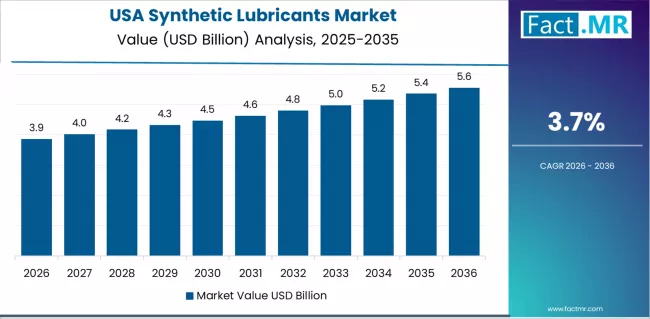
Synthetic Lubricants Market Country Value Analysis | Source: Fact.MR
The synthetic lubricants market in the USA is projected to grow at a CAGR of 3.7% through 2036, supported by the country's emphasis on automotive technology advancement, operational efficiency optimization, and advanced lubrication system integration requiring efficient lubrication solutions.
American automotive users and automation-focused facilities prioritize performance reliability and operational precision, making specialized synthetic lubricants essential components for both traditional and modern automotive applications. The country's comprehensive automotive technology leadership and advancing efficiency patterns support continued market expansion.
- Advanced automotive technology capabilities and growing precision operational management are driving demand for synthetic lubricants across specialty applications, modern automotive formats, and technology-integrated automation programs serving domestic markets with increasing operational requirements.
- Strong focus on operational optimization and performance excellence is encouraging users and distributors to adopt lubrication solutions that support efficiency objectives and meet American quality standards for automotive applications.
How will Growth of the Synthetic Lubricants Market Shape Up in the UK?
The synthetic lubricants market in the UK is projected to grow at a CAGR of 3.4% through 2036, supported by established automotive standards, mature automotive markets, and emphasis on operational efficiency across automotive and industrial sectors.
Automotive users and automation professionals prioritize quality performance and operational consistency, creating steady demand for premium lubrication solutions. The country's comprehensive market maturity and established automotive practices support continued development in specialized applications.
- Established automotive markets and mature automation industry are driving demand for quality synthetic lubricants across automotive operations, manufacturing facilities, and professional automation companies throughout British automotive regions.
- Strong emphasis on quality standards and operational efficiency is supporting the adoption of premium lubrication varieties among users seeking proven performance and established automotive credentials in automation applications.
Why does South Korea Show Strong Growth?
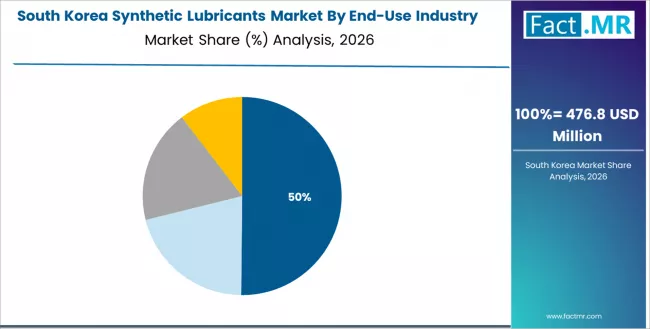
Synthetic Lubricants Market South Korea Market Share Analysis By End Use Industry | Source: Fact.MR
The synthetic lubricants market in South Korea is projected to grow at a CAGR of 3.1% through 2036, supported by the country's emphasis on precision automotive, operational excellence, and advanced technology integration requiring efficient lubrication solutions.
South Korean automotive users and automation-focused facilities prioritize technical performance and automotive precision, making specialized synthetic lubricants essential components for both traditional and modern automotive applications. The country's comprehensive automotive leadership and advancing precision patterns support continued market expansion.
- Advanced precision automotive technology capabilities and growing technical automotive applications are driving demand for synthetic lubricants across specialty automotive applications, modern precision formats, and technology-integrated production programs serving domestic markets with increasing quality requirements.
- Strong focus on technical precision and operational excellence is encouraging users and distributors to adopt lubrication solutions that support automotive objectives and meet South Korean precision standards for automotive applications.
Competitive Landscape of the Synthetic Lubricants Market
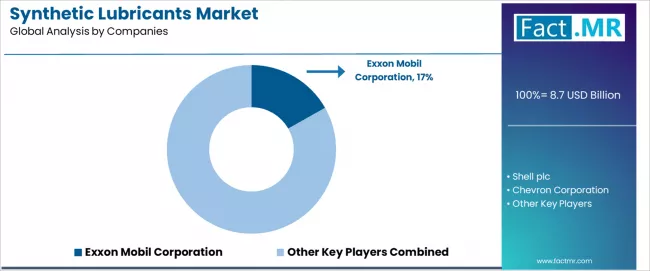
Synthetic Lubricants Market Analysis By Company | Source: Fact.MR
The synthetic lubricants market is characterized by competition among established oil and gas companies, specialized lubricant manufacturers, and integrated chemical solution providers. Companies are investing in advanced base oil technologies, specialized additive systems, product innovation capabilities, and comprehensive distribution networks to deliver consistent, high-quality, and reliable synthetic lubrication systems. Innovation in formulation optimization, base oil technology advancement, and performance-focused product development is central to strengthening market position and customer satisfaction.
Players such as Exxon Mobil Corporation provide a strong focus on synthetic lubricant innovation and comprehensive automotive solutions, offering industrial and automotive systems with emphasis on performance excellence and engineering heritage. Shell plc provides integrated lubrication automation with a focus on automotive market applications and precision control networks.
Chevron Corporation delivers comprehensive synthetic technology solutions with a focus on commercial positioning and operational efficiency. BP plc specializes in comprehensive lubrication systems with an emphasis on automotive applications. TotalEnergies SE focuses on comprehensive synthetic lubricant equipment with advanced design and premium positioning capabilities.
Key Players in the Synthetic Lubricants Market
- Exxon Mobil Corporation
- Shell plc
- Chevron Corporation
- BP plc
- TotalEnergies SE
- Valvoline Incorporated
- Castrol Limited
- Mobil 1
- Fuchs Petrolub SE
- The Lubrizol Corporation
- Motul SA
- Red Line Synthetic Oil Corporation
- AMSOIL Incorporated
- Royal Purple LLC
Segmentation
Scope of the Report
| Items | Values |
|---|---|
| Quantitative Units (2026) | USD 8.7 Billion |
| Base Oil Type | Polyalphaolefin, Ester-Based, Other Synthetic Base Oil Configurations |
| Application | Engine Oils, Hydraulic Fluids, Gear Oils, Others |
| End-Use Industry | Automotive, Industrial, Aerospace, Others |
| Distribution Channel | Direct Sales, Distributor Sales |
| Regions Covered | North America, Europe, Asia Pacific, Latin America, MEA, Other Regions |
| Countries Covered | China, India, Germany, Brazil, USA, UK, South Korea, and 40+ countries |
| Key Companies Profiled | Exxon Mobil Corporation, Shell plc, Chevron Corporation, BP plc, TotalEnergies SE, and other leading synthetic lubricant companies |
| Additional Attributes | Dollar sales by base oil type, application, end-use industry, distribution channel, and region; regional demand trends, competitive landscape, technological advancements in lubrication engineering, synthetic optimization initiatives, base oil enhancement programs, and premium product development strategies |
Source: Fact.MR analysis. Updated Dec 13, 2025
Synthetic Lubricants Market by Segments
-
Base Oil Type :
- Polyalphaolefin
- Ester-Based
- Other Synthetic Base Oil Configurations
-
Application :
- Engine Oils
- Hydraulic Fluids
- Gear Oils
- Others
-
End-Use Industry :
- Automotive
- Industrial
- Aerospace
- Others
-
Distribution Channel :
- Direct Sales
- Distributor Sales
-
Region :
-
North America
- USA
- Canada
- Mexico
-
Europe
- Germany
- UK
- France
- Italy
- Spain
- Nordic Countries
- BENELUX
- Rest of Europe
-
Asia Pacific
- China
- India
- Japan
- South Korea
- Australia
- Rest of Asia Pacific
-
Latin America
- Brazil
- Argentina
- Rest of Latin America
-
MEA
- Saudi Arabia
- UAE
- South Africa
- Rest of MEA
-
Frequently Asked Questions
How big is the synthetic lubricants market in 2026?
What will be the size of synthetic lubricants market in 2036?
How much will be the synthetic lubricants market growth between 2026 and 2036?
What are the key product types in the synthetic lubricants market?
Which end-use industry segment to contribute significant share in the synthetic lubricants market in 2026?
Who worked on this report


Preview the report firsthand - request a free sample
Free SampleGet the brochure for pricing and purchase details
Download PDF