Low-VOC Degreasers for Metalworking Market

Low-VOC Degreasers for Metalworking Market Size and Share Forecast Outlook 2026 to 2036

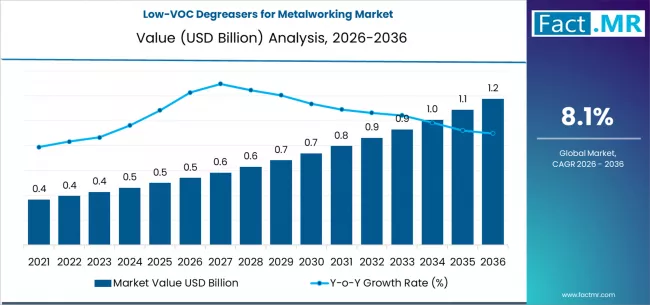
Low-voc degreasers for metalworking market is projected to grow from USD 0.5 billion in 2026 to USD 1.2 billion by 2036, at a CAGR of 8.1%. Water-Based Degreasers will dominate with a 34.0% market share, while parts cleaning & pre-treatment will lead the application segment with a 38.0% share.

Low-VOC Degreasers for Metalworking Market Forecast and Outlook 2026 to 2036

The global market for low-VOC degreasers in metalworking is projected to reach USD 1.18 billion by 2036. The market is valued at USD 0.54 billion in 2026 and is set to rise at a CAGR of 8.1% during the assessment period.

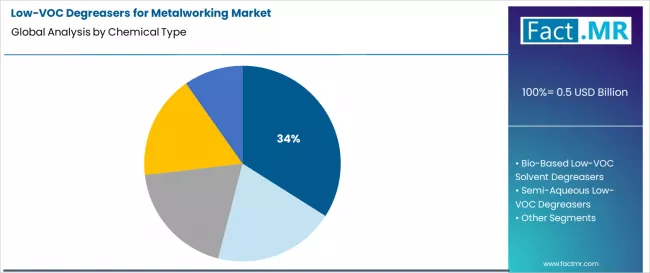
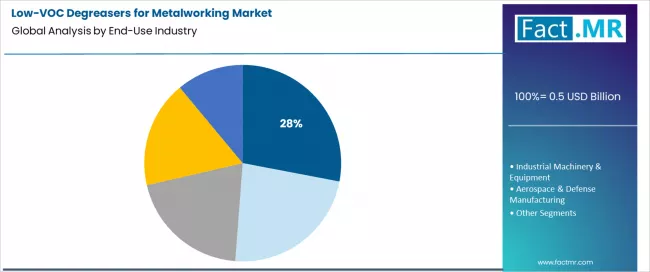
By chemical type, water-based degreasers hold a leading 34% share. The application for parts cleaning and pre-treatment represents the dominant segment at 38%. The automotive and auto components industry constitutes the foremost end-use sector, accounting for a 28% share.

Key Takeaways from the Low-VOC Degreasers for Metalworking Market

  • Market Value for 2026: USD 0.54 Billion
  • Market Value for 2036: USD 1.18 Billion
  • Forecast CAGR (2026-2036): 8.1%
  • Leading Chemical Type Share (2026): Water-Based Degreasers (34%)
  • Leading Application Share (2026): Parts Cleaning & Pre-Treatment (38%)
  • Leading End-Use Industry Share (2026): Automotive & Auto Components (28%)
  • Key Players in the Market: Ecolab Inc., BASF SE, 3M Company, Henkel AG & Co. KGaA, ZEP Inc.
Low Voc Degreasers For Metalworking Market Market Value Analysis

Growth is propelled by increasingly stringent workplace safety regulations and environmental mandates limiting VOC emissions from industrial operations. Metalworking facilities are transitioning from traditional solvent-based degreasers to high-performance, low-emission alternatives to ensure regulatory compliance and protect worker health.

Low-VOC degreasers are essential for removing oils, coolants, and particulate soils from metal components without contributing to smog formation or indoor air quality issues. Their formulation balances effective cleaning power with reduced environmental and occupational hazards, supporting sustainable manufacturing practices across critical industries.

Low-VOC Degreasers for Metalworking Market

Metric Value
Market Value (2026) USD 0.54 Billion
Market Forecast Value (2036) USD 1.18 Billion
Forecast CAGR (2026-2036) 8.1%

Category

Category Segments
Chemical Type Water-Based Degreasers, Bio-Based Low-VOC Solvent Degreasers, Semi-Aqueous Low-VOC Degreasers, Hydrocarbon & Exempt Solvent Systems, Other Specialty Low-VOC Degreasers
Application Parts Cleaning & Pre-Treatment, Machining & Fabrication Maintenance, Surface Prep Before Coating / Plating, Repair, Workshop & MRO Processes, Foundry & Casting Operations
End-Use Industry Automotive & Auto Components, Industrial Machinery & Equipment, Aerospace & Defense Manufacturing, Metal Fabrication & Welding Shops, Other Manufacturing Sectors
Region North America, Latin America, Western Europe, Eastern Europe, East Asia, South Asia & Pacific, MEA

Segmental Analysis

By Chemical Type, Which Formulation Dominates Due to Regulatory and Safety Preferences?
Low Voc Degreasers For Metalworking Market Analysis By Chemical Type

Water-based degreasers lead the segment with a 34% share. Their dominance is attributed to their inherently low VOC content, non-flammability, and reduced worker exposure risks compared to solvent-based systems.

Advances in surfactant and additive technology have significantly improved their ability to remove stubborn greases and oils, making them a safe and effective choice for a wide range of metalworking applications, particularly in enclosed or poorly ventilated spaces where air quality is a primary concern.

By Application, Where is Cleaning Critical for Downstream Process Integrity?

Low Voc Degreasers For Metalworking Market Analysis By Application

Parts cleaning and pre-treatment represents the largest application segment at 38%. This step is fundamental in manufacturing, ensuring that components are free of contaminants before assembly, painting, plating, or welding.

The quality of this cleaning directly affects product reliability, coating adhesion, and corrosion resistance. The shift to low-VOC degreasers in this critical stage is driven by the need to maintain high-quality standards while eliminating the regulatory and safety liabilities associated with high-VOC solvents.

By End-Use Industry, Which Sector Combines High Volume with Strict Compliance Needs?
Low Voc Degreasers For Metalworking Market Analysis By End Use Industry

The automotive and auto components industry leads the end-use sector with a 28% share. This industry involves massive volumes of metal parts requiring degreasing at various stages of production and in aftermarket maintenance.

It faces simultaneous pressures from stringent environmental regulations like VOC emission caps and rigorous quality standards. This combination makes the automotive sector a primary driver for the development and adoption of reliable, high-performance low-VOC cleaning solutions.

What are the Drivers, Restraints, and Key Trends of the Low-VOC Degreasers for Metalworking Market?

The fundamental market driver is the global enforcement of occupational exposure limits (OELs) and indoor air quality standards, alongside environmental regulations like the US EPA's National Volatile Organic Compound Emission Standards and the EU's Industrial Emissions Directive. These rules create a compliance imperative. Furthermore, corporate sustainability initiatives and the desire to reduce hazardous material inventories are pushing manufacturers toward greener chemistries.

A primary restraint is the perceived performance gap for certain heavy-duty cleaning tasks, where traditional chlorinated or aggressive solvents are seen as more reliable. Water-based and semi-aqueous systems may require heated wash lines or longer contact times, potentially impacting production cycle times. The higher upfront cost of some advanced low-VOC formulations can also be a barrier, despite lower long-term costs related to ventilation, disposal, and compliance.

Key trends include the development of multifunctional, water-based formulations with added corrosion inhibitors for in-process protection. There is growing innovation in quick-drying, exempt solvent blends that meet regulatory VOC definitions while maintaining strong solvency. The market is moving toward ultrasonic and spray-under-immersion cleaning systems optimized for low-VOC chemistries. Additionally, biodegradable and readily recyclable formulations are gaining traction as part of broader circular economy goals in manufacturing.

Analysis of the Low-VOC Degreasers for Metalworking Market by Key Countries
Low Voc Degreasers For Metalworking Market Cagr Analysis By Country

Country CAGR (2026-2036)
China 17.00%
USA 16.00%
Germany 14.00%
Australia 13.50%
Canada 13.00%

How do China's Industrial Upgrades and Blue Sky Policies Drive Adoption?

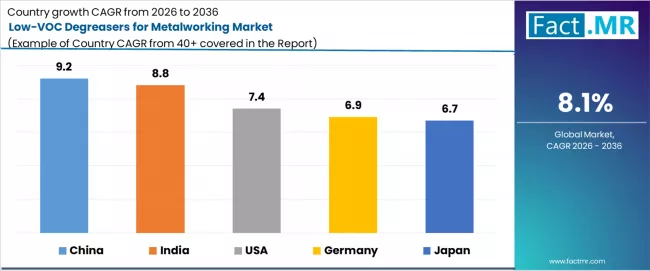
China's leading CAGR of 9.20% is fueled by its comprehensive environmental campaigns targeting industrial VOC emissions and workplace safety. As the "world's factory," its vast metalworking sector is undergoing mandatory upgrades to cleaner production technologies.

Government incentives and strict enforcement are accelerating the replacement of high-VOC solvents with compliant, water-based, and bio-based degreasing systems across thousands of manufacturing facilities.

What is the Impact of India's Manufacturing Growth and Evolving Safety Norms?

India's 8.80% growth is underpinned by the rapid expansion of its automotive, machinery, and fabrication sectors. Concurrently, enforcement of factory safety and environmental guidelines is strengthening. The growth of organized manufacturing and increasing awareness of worker health are driving demand for safer, modern cleaning chemicals, positioning India as a high-growth market for low-VOC degreasers.

How does the USA's Regulatory Framework and Liability Awareness Shape the Market?
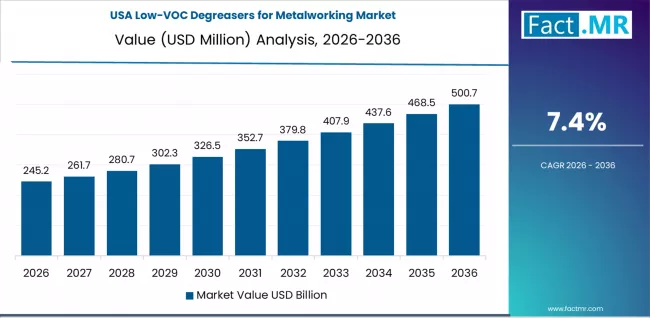
Low Voc Degreasers For Metalworking Market Country Value Analysis

The USA's 7.40% growth is supported by well-established OSHA standards for air contaminants and strict state-level VOC regulations (e.g., in California). High awareness of potential liability from worker exposure and a mature industrial hygiene culture compel facilities to proactively adopt low-VOC solutions. The market is characterized by demand for technologically advanced, high-efficiency products that integrate seamlessly into automated lines.

Why is Germany a Market for Precision and High-Performance Formulations?

Germany's 6.90% CAGR reflects its stringent enforcement of EU chemical safety and workplace directives. German engineering and manufacturing sectors, particularly automotive and machinery, demand degreasers that deliver exceptional cleaning performance for precision components while fully complying with the strictest VOC and toxicity regulations. This creates a market for premium, technically validated low-VOC products.

What Role does Japan's Focus on Precision Manufacturing and Clean Rooms Play?

Japan's 6.70% growth is anchored in its leadership in precision manufacturing, electronics, and automotive sectors. These industries often require cleanroom-compatible or ultra-clean processes where VOC emissions are strictly controlled. The need for highly effective, low-residue, and low-emission degreasers for sensitive applications sustains a specialized and innovation-driven market.

Competitive Landscape of the Low-VOC Degreasers for Metalworking Market
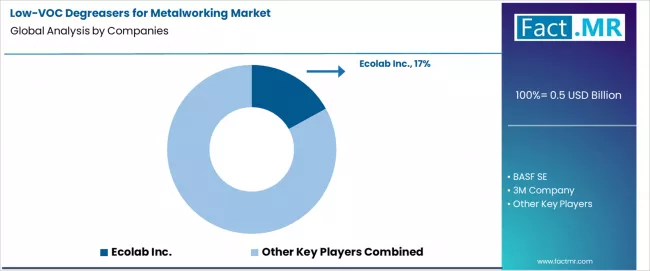
Low Voc Degreasers For Metalworking Market Analysis By Company

The competitive landscape involves global specialty chemical companies and industrial maintenance product suppliers. Leaders like Ecolab and BASF leverage their deep formulation expertise and vast distribution networks to offer comprehensive low-VOC product lines and on-site chemical management services.

Competition centers on proving cleaning efficacy parity with traditional solvents, providing strong technical data sheets and safety documentation, and offering value-added services like waste stream management and employee training for safe handling and use of new products.

Key Players in the Low-VOC Degreasers for Metalworking Market

  • Ecolab Inc.
  • BASF SE
  • 3M Company
  • Henkel AG & Co. KGaA
  • ZEP Inc.

Scope of Report

Items Values
Quantitative Units USD Billion
Chemical Type Water-Based, Bio-Based Solvent, Semi-Aqueous, Exempt Solvent, Other
Application Parts Cleaning, Machining Maintenance, Surface Prep, MRO, Foundry
End-Use Industry Automotive, Industrial Machinery, Aerospace, Metal Fabrication, Other
Key Countries China, India, USA, Germany, Japan
Key Companies Ecolab Inc., BASF SE, 3M Company, Henkel AG & Co. KGaA, ZEP Inc.
Additional Analysis Analysis of VOC content testing standards; corrosion performance on various alloys; compatibility with different cleaning equipment (spray, immersion, ultrasonic); waste treatment and disposal considerations for spent solutions; total cost of ownership comparison with solvent-based systems.

Market by Segments

  • Chemical Type :

    • Water-Based Degreasers
    • Bio-Based Low-VOC Solvent Degreasers
    • Semi-Aqueous Low-VOC Degreasers
    • Hydrocarbon & Exempt Solvent Systems
    • Other Specialty Low-VOC Degreasers
  • Application :

    • Parts Cleaning & Pre-Treatment
    • Machining & Fabrication Maintenance
    • Surface Prep Before Coating/Plating
    • Repair, Workshop & MRO Processes
    • Foundry & Casting Operations
  • End-Use Industry :

    • Automotive & Auto Components
    • Industrial Machinery & Equipment
    • Aerospace & Defense Manufacturing
    • Metal Fabrication & Welding Shops
    • Other Manufacturing Sectors
  • Region :

    • North America

      • USA
      • Canada
    • Latin America

      • Brazil
      • Mexico
      • Argentina
      • Rest of Latin America
    • Western Europe

      • Germany
      • UK
      • France
      • Spain
      • Italy
      • BENELUX
      • Rest of Western Europe
    • Eastern Europe

      • Russia
      • Poland
      • Czech Republic
      • Rest of Eastern Europe
    • East Asia

      • China
      • Japan
      • South Korea
      • Rest of East Asia
    • South Asia & Pacific

      • India
      • ASEAN
      • Australia
      • Rest of South Asia & Pacific
    • MEA
      • Saudi Arabia
      • UAE
      • Turkiye
      • Rest of MEA

Table of Content

  1. Executive Summary
    • Global Market Outlook
    • Demand to side Trends
    • Supply to side Trends
    • Technology Roadmap Analysis
    • Analysis and Recommendations
  2. Market Overview
    • Market Coverage / Taxonomy
    • Market Definition / Scope / Limitations
  3. Market Background
    • Market Dynamics
      • Drivers
      • Restraints
      • Opportunity
      • Trends
    • Scenario Forecast
      • Demand in Optimistic Scenario
      • Demand in Likely Scenario
      • Demand in Conservative Scenario
    • Opportunity Map Analysis
    • Product Life Cycle Analysis
    • Supply Chain Analysis
    • Investment Feasibility Matrix
    • Value Chain Analysis
    • PESTLE and Porter’s Analysis
    • Regulatory Landscape
    • Regional Parent Market Outlook
    • Production and Consumption Statistics
    • Import and Export Statistics
  4. Global Market Analysis 2021 to 2025 and Forecast, 2026 to 2036
    • Historical Market Size Value (USD Million) Analysis, 2021 to 2025
    • Current and Future Market Size Value (USD Million) Projections, 2026 to 2036
      • Y to o to Y Growth Trend Analysis
      • Absolute $ Opportunity Analysis
  5. Global Market Pricing Analysis 2021 to 2025 and Forecast 2026 to 2036
  6. Global Market Analysis 2021 to 2025 and Forecast 2026 to 2036, By Chemical Type
    • Introduction / Key Findings
    • Historical Market Size Value (USD Million) Analysis By Chemical Type, 2021 to 2025
    • Current and Future Market Size Value (USD Million) Analysis and Forecast By Chemical Type, 2026 to 2036
      • Water-Based Degreasers
      • Bio-Based Low-VOC Solvent Degreasers
      • Semi-Aqueous Low-VOC Degreasers
      • Hydrocarbon & Exempt Solvent Systems
      • Other Specialty Low-VOC Degreasers
    • Y to o to Y Growth Trend Analysis By Chemical Type, 2021 to 2025
    • Absolute $ Opportunity Analysis By Chemical Type, 2026 to 2036
  7. Global Market Analysis 2021 to 2025 and Forecast 2026 to 2036, By Application
    • Introduction / Key Findings
    • Historical Market Size Value (USD Million) Analysis By Application, 2021 to 2025
    • Current and Future Market Size Value (USD Million) Analysis and Forecast By Application, 2026 to 2036
      • Parts Cleaning & Pre-Treatment
      • Machining & Fabrication Maintenance
      • Surface Prep Before Coating / Plating
      • Repair, Workshop & MRO Processes
      • Foundry & Casting Operations
    • Y to o to Y Growth Trend Analysis By Application, 2021 to 2025
    • Absolute $ Opportunity Analysis By Application, 2026 to 2036
  8. Global Market Analysis 2021 to 2025 and Forecast 2026 to 2036, By End-Use Industry
    • Introduction / Key Findings
    • Historical Market Size Value (USD Million) Analysis By End-Use Industry, 2021 to 2025
    • Current and Future Market Size Value (USD Million) Analysis and Forecast By End-Use Industry, 2026 to 2036
      • Automotive & Auto Components
      • Industrial Machinery & Equipment
      • Aerospace & Defense Manufacturing
      • Metal Fabrication & Welding Shops
      • Other Manufacturing Sectors
    • Y to o to Y Growth Trend Analysis By End-Use Industry, 2021 to 2025
    • Absolute $ Opportunity Analysis By End-Use Industry, 2026 to 2036
  9. Global Market Analysis 2021 to 2025 and Forecast 2026 to 2036, By Region
    • Introduction
    • Historical Market Size Value (USD Million) Analysis By Region, 2021 to 2025
    • Current Market Size Value (USD Million) Analysis and Forecast By Region, 2026 to 2036
      • North America
      • Latin America
      • Western Europe
      • Eastern Europe
      • East Asia
      • South Asia and Pacific
      • Middle East & Africa
    • Market Attractiveness Analysis By Region
  10. North America Market Analysis 2021 to 2025 and Forecast 2026 to 2036, By Country
    • Historical Market Size Value (USD Million) Trend Analysis By Market Taxonomy, 2021 to 2025
    • Market Size Value (USD Million) Forecast By Market Taxonomy, 2026 to 2036
      • By Country
        • USA
        • Canada
        • Mexico
      • By Chemical Type
      • By Application
      • By End-Use Industry
    • Market Attractiveness Analysis
      • By Country
      • By Chemical Type
      • By Application
      • By End-Use Industry
    • Key Takeaways
  11. Latin America Market Analysis 2021 to 2025 and Forecast 2026 to 2036, By Country
    • Historical Market Size Value (USD Million) Trend Analysis By Market Taxonomy, 2021 to 2025
    • Market Size Value (USD Million) Forecast By Market Taxonomy, 2026 to 2036
      • By Country
        • Brazil
        • Chile
        • Rest of Latin America
      • By Chemical Type
      • By Application
      • By End-Use Industry
    • Market Attractiveness Analysis
      • By Country
      • By Chemical Type
      • By Application
      • By End-Use Industry
    • Key Takeaways
  12. Western Europe Market Analysis 2021 to 2025 and Forecast 2026 to 2036, By Country
    • Historical Market Size Value (USD Million) Trend Analysis By Market Taxonomy, 2021 to 2025
    • Market Size Value (USD Million) Forecast By Market Taxonomy, 2026 to 2036
      • By Country
        • Germany
        • UK
        • Italy
        • Spain
        • France
        • Nordic
        • BENELUX
        • Rest of Western Europe
      • By Chemical Type
      • By Application
      • By End-Use Industry
    • Market Attractiveness Analysis
      • By Country
      • By Chemical Type
      • By Application
      • By End-Use Industry
    • Key Takeaways
  13. Eastern Europe Market Analysis 2021 to 2025 and Forecast 2026 to 2036, By Country
    • Historical Market Size Value (USD Million) Trend Analysis By Market Taxonomy, 2021 to 2025
    • Market Size Value (USD Million) Forecast By Market Taxonomy, 2026 to 2036
      • By Country
        • Russia
        • Poland
        • Hungary
        • Balkan & Baltic
        • Rest of Eastern Europe
      • By Chemical Type
      • By Application
      • By End-Use Industry
    • Market Attractiveness Analysis
      • By Country
      • By Chemical Type
      • By Application
      • By End-Use Industry
    • Key Takeaways
  14. East Asia Market Analysis 2021 to 2025 and Forecast 2026 to 2036, By Country
    • Historical Market Size Value (USD Million) Trend Analysis By Market Taxonomy, 2021 to 2025
    • Market Size Value (USD Million) Forecast By Market Taxonomy, 2026 to 2036
      • By Country
        • China
        • Japan
        • South Korea
      • By Chemical Type
      • By Application
      • By End-Use Industry
    • Market Attractiveness Analysis
      • By Country
      • By Chemical Type
      • By Application
      • By End-Use Industry
    • Key Takeaways
  15. South Asia and Pacific Market Analysis 2021 to 2025 and Forecast 2026 to 2036, By Country
    • Historical Market Size Value (USD Million) Trend Analysis By Market Taxonomy, 2021 to 2025
    • Market Size Value (USD Million) Forecast By Market Taxonomy, 2026 to 2036
      • By Country
        • India
        • ASEAN
        • Australia & New Zealand
        • Rest of South Asia and Pacific
      • By Chemical Type
      • By Application
      • By End-Use Industry
    • Market Attractiveness Analysis
      • By Country
      • By Chemical Type
      • By Application
      • By End-Use Industry
    • Key Takeaways
  16. Middle East & Africa Market Analysis 2021 to 2025 and Forecast 2026 to 2036, By Country
    • Historical Market Size Value (USD Million) Trend Analysis By Market Taxonomy, 2021 to 2025
    • Market Size Value (USD Million) Forecast By Market Taxonomy, 2026 to 2036
      • By Country
        • Kingdom of Saudi Arabia
        • Other GCC Countries
        • Turkiye
        • South Africa
        • Other African Union
        • Rest of Middle East & Africa
      • By Chemical Type
      • By Application
      • By End-Use Industry
    • Market Attractiveness Analysis
      • By Country
      • By Chemical Type
      • By Application
      • By End-Use Industry
    • Key Takeaways
  17. Key Countries Market Analysis
    • USA
      • Pricing Analysis
      • Market Share Analysis, 2025
        • By Chemical Type
        • By Application
        • By End-Use Industry
    • Canada
      • Pricing Analysis
      • Market Share Analysis, 2025
        • By Chemical Type
        • By Application
        • By End-Use Industry
    • Mexico
      • Pricing Analysis
      • Market Share Analysis, 2025
        • By Chemical Type
        • By Application
        • By End-Use Industry
    • Brazil
      • Pricing Analysis
      • Market Share Analysis, 2025
        • By Chemical Type
        • By Application
        • By End-Use Industry
    • Chile
      • Pricing Analysis
      • Market Share Analysis, 2025
        • By Chemical Type
        • By Application
        • By End-Use Industry
    • Germany
      • Pricing Analysis
      • Market Share Analysis, 2025
        • By Chemical Type
        • By Application
        • By End-Use Industry
    • UK
      • Pricing Analysis
      • Market Share Analysis, 2025
        • By Chemical Type
        • By Application
        • By End-Use Industry
    • Italy
      • Pricing Analysis
      • Market Share Analysis, 2025
        • By Chemical Type
        • By Application
        • By End-Use Industry
    • Spain
      • Pricing Analysis
      • Market Share Analysis, 2025
        • By Chemical Type
        • By Application
        • By End-Use Industry
    • France
      • Pricing Analysis
      • Market Share Analysis, 2025
        • By Chemical Type
        • By Application
        • By End-Use Industry
    • India
      • Pricing Analysis
      • Market Share Analysis, 2025
        • By Chemical Type
        • By Application
        • By End-Use Industry
    • ASEAN
      • Pricing Analysis
      • Market Share Analysis, 2025
        • By Chemical Type
        • By Application
        • By End-Use Industry
    • Australia & New Zealand
      • Pricing Analysis
      • Market Share Analysis, 2025
        • By Chemical Type
        • By Application
        • By End-Use Industry
    • China
      • Pricing Analysis
      • Market Share Analysis, 2025
        • By Chemical Type
        • By Application
        • By End-Use Industry
    • Japan
      • Pricing Analysis
      • Market Share Analysis, 2025
        • By Chemical Type
        • By Application
        • By End-Use Industry
    • South Korea
      • Pricing Analysis
      • Market Share Analysis, 2025
        • By Chemical Type
        • By Application
        • By End-Use Industry
    • Russia
      • Pricing Analysis
      • Market Share Analysis, 2025
        • By Chemical Type
        • By Application
        • By End-Use Industry
    • Poland
      • Pricing Analysis
      • Market Share Analysis, 2025
        • By Chemical Type
        • By Application
        • By End-Use Industry
    • Hungary
      • Pricing Analysis
      • Market Share Analysis, 2025
        • By Chemical Type
        • By Application
        • By End-Use Industry
    • Kingdom of Saudi Arabia
      • Pricing Analysis
      • Market Share Analysis, 2025
        • By Chemical Type
        • By Application
        • By End-Use Industry
    • Turkiye
      • Pricing Analysis
      • Market Share Analysis, 2025
        • By Chemical Type
        • By Application
        • By End-Use Industry
    • South Africa
      • Pricing Analysis
      • Market Share Analysis, 2025
        • By Chemical Type
        • By Application
        • By End-Use Industry
  18. Market Structure Analysis
    • Competition Dashboard
    • Competition Benchmarking
    • Market Share Analysis of Top Players
      • By Regional
      • By Chemical Type
      • By Application
      • By End-Use Industry
  19. Competition Analysis
    • Competition Deep Dive
      • Ecolab Inc.
        • Overview
        • Product Portfolio
        • Profitability by Market Segments (Product/Age /Sales Channel/Region)
        • Sales Footprint
        • Strategy Overview
          • Marketing Strategy
          • Product Strategy
          • Channel Strategy
      • BASF SE
      • 3M Company
      • Henkel AG & Co. KGaA
      • ZEP Inc.
  20. Assumptions & Acronyms Used
  21. Research Methodology

List Of Table

  • Table 1: Global Market Value (USD Million) Forecast by Region, 2021 to 2036
  • Table 2: Global Market Value (USD Million) Forecast by Chemical Type, 2021 to 2036
  • Table 3: Global Market Value (USD Million) Forecast by Application, 2021 to 2036
  • Table 4: Global Market Value (USD Million) Forecast by End-Use Industry, 2021 to 2036
  • Table 5: North America Market Value (USD Million) Forecast by Country, 2021 to 2036
  • Table 6: North America Market Value (USD Million) Forecast by Chemical Type, 2021 to 2036
  • Table 7: North America Market Value (USD Million) Forecast by Application, 2021 to 2036
  • Table 8: North America Market Value (USD Million) Forecast by End-Use Industry, 2021 to 2036
  • Table 9: Latin America Market Value (USD Million) Forecast by Country, 2021 to 2036
  • Table 10: Latin America Market Value (USD Million) Forecast by Chemical Type, 2021 to 2036
  • Table 11: Latin America Market Value (USD Million) Forecast by Application, 2021 to 2036
  • Table 12: Latin America Market Value (USD Million) Forecast by End-Use Industry, 2021 to 2036
  • Table 13: Western Europe Market Value (USD Million) Forecast by Country, 2021 to 2036
  • Table 14: Western Europe Market Value (USD Million) Forecast by Chemical Type, 2021 to 2036
  • Table 15: Western Europe Market Value (USD Million) Forecast by Application, 2021 to 2036
  • Table 16: Western Europe Market Value (USD Million) Forecast by End-Use Industry, 2021 to 2036
  • Table 17: Eastern Europe Market Value (USD Million) Forecast by Country, 2021 to 2036
  • Table 18: Eastern Europe Market Value (USD Million) Forecast by Chemical Type, 2021 to 2036
  • Table 19: Eastern Europe Market Value (USD Million) Forecast by Application, 2021 to 2036
  • Table 20: Eastern Europe Market Value (USD Million) Forecast by End-Use Industry, 2021 to 2036
  • Table 21: East Asia Market Value (USD Million) Forecast by Country, 2021 to 2036
  • Table 22: East Asia Market Value (USD Million) Forecast by Chemical Type, 2021 to 2036
  • Table 23: East Asia Market Value (USD Million) Forecast by Application, 2021 to 2036
  • Table 24: East Asia Market Value (USD Million) Forecast by End-Use Industry, 2021 to 2036
  • Table 25: South Asia and Pacific Market Value (USD Million) Forecast by Country, 2021 to 2036
  • Table 26: South Asia and Pacific Market Value (USD Million) Forecast by Chemical Type, 2021 to 2036
  • Table 27: South Asia and Pacific Market Value (USD Million) Forecast by Application, 2021 to 2036
  • Table 28: South Asia and Pacific Market Value (USD Million) Forecast by End-Use Industry, 2021 to 2036
  • Table 29: Middle East & Africa Market Value (USD Million) Forecast by Country, 2021 to 2036
  • Table 30: Middle East & Africa Market Value (USD Million) Forecast by Chemical Type, 2021 to 2036
  • Table 31: Middle East & Africa Market Value (USD Million) Forecast by Application, 2021 to 2036
  • Table 32: Middle East & Africa Market Value (USD Million) Forecast by End-Use Industry, 2021 to 2036

List Of Figures

  • Figure 1: Global Market Pricing Analysis
  • Figure 2: Global Market Value (USD Million) Forecast 2021 to 2036
  • Figure 3: Global Market Value Share and BPS Analysis by Chemical Type, 2026 and 2036
  • Figure 4: Global Market Y to o to Y Growth Comparison by Chemical Type, 2026 to 2036
  • Figure 5: Global Market Attractiveness Analysis by Chemical Type
  • Figure 6: Global Market Value Share and BPS Analysis by Application, 2026 and 2036
  • Figure 7: Global Market Y to o to Y Growth Comparison by Application, 2026 to 2036
  • Figure 8: Global Market Attractiveness Analysis by Application
  • Figure 9: Global Market Value Share and BPS Analysis by End-Use Industry, 2026 and 2036
  • Figure 10: Global Market Y to o to Y Growth Comparison by End-Use Industry, 2026 to 2036
  • Figure 11: Global Market Attractiveness Analysis by End-Use Industry
  • Figure 12: Global Market Value (USD Million) Share and BPS Analysis by Region, 2026 and 2036
  • Figure 13: Global Market Y to o to Y Growth Comparison by Region, 2026 to 2036
  • Figure 14: Global Market Attractiveness Analysis by Region
  • Figure 15: North America Market Incremental Dollar Opportunity, 2026 to 2036
  • Figure 16: Latin America Market Incremental Dollar Opportunity, 2026 to 2036
  • Figure 17: Western Europe Market Incremental Dollar Opportunity, 2026 to 2036
  • Figure 18: Eastern Europe Market Incremental Dollar Opportunity, 2026 to 2036
  • Figure 19: East Asia Market Incremental Dollar Opportunity, 2026 to 2036
  • Figure 20: South Asia and Pacific Market Incremental Dollar Opportunity, 2026 to 2036
  • Figure 21: Middle East & Africa Market Incremental Dollar Opportunity, 2026 to 2036
  • Figure 22: North America Market Value Share and BPS Analysis by Country, 2026 and 2036
  • Figure 23: North America Market Value Share and BPS Analysis by Chemical Type, 2026 and 2036
  • Figure 24: North America Market Y to o to Y Growth Comparison by Chemical Type, 2026 to 2036
  • Figure 25: North America Market Attractiveness Analysis by Chemical Type
  • Figure 26: North America Market Value Share and BPS Analysis by Application, 2026 and 2036
  • Figure 27: North America Market Y to o to Y Growth Comparison by Application, 2026 to 2036
  • Figure 28: North America Market Attractiveness Analysis by Application
  • Figure 29: North America Market Value Share and BPS Analysis by End-Use Industry, 2026 and 2036
  • Figure 30: North America Market Y to o to Y Growth Comparison by End-Use Industry, 2026 to 2036
  • Figure 31: North America Market Attractiveness Analysis by End-Use Industry
  • Figure 32: Latin America Market Value Share and BPS Analysis by Country, 2026 and 2036
  • Figure 33: Latin America Market Value Share and BPS Analysis by Chemical Type, 2026 and 2036
  • Figure 34: Latin America Market Y to o to Y Growth Comparison by Chemical Type, 2026 to 2036
  • Figure 35: Latin America Market Attractiveness Analysis by Chemical Type
  • Figure 36: Latin America Market Value Share and BPS Analysis by Application, 2026 and 2036
  • Figure 37: Latin America Market Y to o to Y Growth Comparison by Application, 2026 to 2036
  • Figure 38: Latin America Market Attractiveness Analysis by Application
  • Figure 39: Latin America Market Value Share and BPS Analysis by End-Use Industry, 2026 and 2036
  • Figure 40: Latin America Market Y to o to Y Growth Comparison by End-Use Industry, 2026 to 2036
  • Figure 41: Latin America Market Attractiveness Analysis by End-Use Industry
  • Figure 42: Western Europe Market Value Share and BPS Analysis by Country, 2026 and 2036
  • Figure 43: Western Europe Market Value Share and BPS Analysis by Chemical Type, 2026 and 2036
  • Figure 44: Western Europe Market Y to o to Y Growth Comparison by Chemical Type, 2026 to 2036
  • Figure 45: Western Europe Market Attractiveness Analysis by Chemical Type
  • Figure 46: Western Europe Market Value Share and BPS Analysis by Application, 2026 and 2036
  • Figure 47: Western Europe Market Y to o to Y Growth Comparison by Application, 2026 to 2036
  • Figure 48: Western Europe Market Attractiveness Analysis by Application
  • Figure 49: Western Europe Market Value Share and BPS Analysis by End-Use Industry, 2026 and 2036
  • Figure 50: Western Europe Market Y to o to Y Growth Comparison by End-Use Industry, 2026 to 2036
  • Figure 51: Western Europe Market Attractiveness Analysis by End-Use Industry
  • Figure 52: Eastern Europe Market Value Share and BPS Analysis by Country, 2026 and 2036
  • Figure 53: Eastern Europe Market Value Share and BPS Analysis by Chemical Type, 2026 and 2036
  • Figure 54: Eastern Europe Market Y to o to Y Growth Comparison by Chemical Type, 2026 to 2036
  • Figure 55: Eastern Europe Market Attractiveness Analysis by Chemical Type
  • Figure 56: Eastern Europe Market Value Share and BPS Analysis by Application, 2026 and 2036
  • Figure 57: Eastern Europe Market Y to o to Y Growth Comparison by Application, 2026 to 2036
  • Figure 58: Eastern Europe Market Attractiveness Analysis by Application
  • Figure 59: Eastern Europe Market Value Share and BPS Analysis by End-Use Industry, 2026 and 2036
  • Figure 60: Eastern Europe Market Y to o to Y Growth Comparison by End-Use Industry, 2026 to 2036
  • Figure 61: Eastern Europe Market Attractiveness Analysis by End-Use Industry
  • Figure 62: East Asia Market Value Share and BPS Analysis by Country, 2026 and 2036
  • Figure 63: East Asia Market Value Share and BPS Analysis by Chemical Type, 2026 and 2036
  • Figure 64: East Asia Market Y to o to Y Growth Comparison by Chemical Type, 2026 to 2036
  • Figure 65: East Asia Market Attractiveness Analysis by Chemical Type
  • Figure 66: East Asia Market Value Share and BPS Analysis by Application, 2026 and 2036
  • Figure 67: East Asia Market Y to o to Y Growth Comparison by Application, 2026 to 2036
  • Figure 68: East Asia Market Attractiveness Analysis by Application
  • Figure 69: East Asia Market Value Share and BPS Analysis by End-Use Industry, 2026 and 2036
  • Figure 70: East Asia Market Y to o to Y Growth Comparison by End-Use Industry, 2026 to 2036
  • Figure 71: East Asia Market Attractiveness Analysis by End-Use Industry
  • Figure 72: South Asia and Pacific Market Value Share and BPS Analysis by Country, 2026 and 2036
  • Figure 73: South Asia and Pacific Market Value Share and BPS Analysis by Chemical Type, 2026 and 2036
  • Figure 74: South Asia and Pacific Market Y to o to Y Growth Comparison by Chemical Type, 2026 to 2036
  • Figure 75: South Asia and Pacific Market Attractiveness Analysis by Chemical Type
  • Figure 76: South Asia and Pacific Market Value Share and BPS Analysis by Application, 2026 and 2036
  • Figure 77: South Asia and Pacific Market Y to o to Y Growth Comparison by Application, 2026 to 2036
  • Figure 78: South Asia and Pacific Market Attractiveness Analysis by Application
  • Figure 79: South Asia and Pacific Market Value Share and BPS Analysis by End-Use Industry, 2026 and 2036
  • Figure 80: South Asia and Pacific Market Y to o to Y Growth Comparison by End-Use Industry, 2026 to 2036
  • Figure 81: South Asia and Pacific Market Attractiveness Analysis by End-Use Industry
  • Figure 82: Middle East & Africa Market Value Share and BPS Analysis by Country, 2026 and 2036
  • Figure 83: Middle East & Africa Market Value Share and BPS Analysis by Chemical Type, 2026 and 2036
  • Figure 84: Middle East & Africa Market Y to o to Y Growth Comparison by Chemical Type, 2026 to 2036
  • Figure 85: Middle East & Africa Market Attractiveness Analysis by Chemical Type
  • Figure 86: Middle East & Africa Market Value Share and BPS Analysis by Application, 2026 and 2036
  • Figure 87: Middle East & Africa Market Y to o to Y Growth Comparison by Application, 2026 to 2036
  • Figure 88: Middle East & Africa Market Attractiveness Analysis by Application
  • Figure 89: Middle East & Africa Market Value Share and BPS Analysis by End-Use Industry, 2026 and 2036
  • Figure 90: Middle East & Africa Market Y to o to Y Growth Comparison by End-Use Industry, 2026 to 2036
  • Figure 91: Middle East & Africa Market Attractiveness Analysis by End-Use Industry
  • Figure 92: Global Market - Tier Structure Analysis
  • Figure 93: Global Market - Company Share Analysis

- FAQs -

How big is the low-voc degreasers for metalworking market in 2026?

The global low-voc degreasers for metalworking market is estimated to be valued at USD 0.5 billion in 2026.

What will be the size of low-voc degreasers for metalworking market in 2036?

The market size for the low-voc degreasers for metalworking market is projected to reach USD 1.2 billion by 2036.

How much will be the low-voc degreasers for metalworking market growth between 2026 and 2036?

The low-voc degreasers for metalworking market is expected to grow at a 8.1% CAGR between 2026 and 2036.

What are the key product types in the low-voc degreasers for metalworking market?

The key product types in low-voc degreasers for metalworking market are water-based degreasers, bio-based low-voc solvent degreasers, semi-aqueous low-voc degreasers, hydrocarbon & exempt solvent systems and other specialty low-voc degreasers.

Which application segment to contribute significant share in the low-voc degreasers for metalworking market in 2026?

In terms of application, parts cleaning & pre-treatment segment to command 38.0% share in the low-voc degreasers for metalworking market in 2026.

Low-VOC Degreasers for Metalworking Market