Formaldehyde-Free Crosslinkers for Wood and Textiles Market

Formaldehyde-Free Crosslinkers for Wood and Textiles Market Size and Share Forecast Outlook 2026 to 2036

Formaldehyde-free crosslinkers for wood and textiles market is projected to grow from USD 0.5 billion in 2026 to USD 1.3 billion by 2036, at a CAGR of 9.5%. Polycarboxylic Acid (PCA) Crosslinkers will dominate with a 30.0% market share, while wood panels & engineered wood will lead the application substrate segment with a 34.0% share.

Formaldehyde-Free Crosslinkers for Wood and Textiles Market Forecast and Outlook 2026 to 2036

The global market for formaldehyde-free crosslinkers is experiencing robust expansion, fueled by stringent regulatory actions and a decisive shift toward healthier, sustainable materials in manufacturing. Projected to grow from USD 0.52 billion in 2026 to USD 1.29 billion by 2036, the market is set to advance at a 9.5% CAGR.

Key Takeaways from the Formaldehyde-Free Crosslinkers for Wood and Textiles Market

  • Market Value for 2026: USD 0.52 Billion
  • Market Value for 2036: USD 1.29 Billion
  • Forecast CAGR (2026-2036): 9.5%
  • Leading Chemistry Type Share (2026): Polycarboxylic Acid (PCA) Crosslinkers (30%)
  • Leading Application Substrate Share (2026): Wood Panels & Engineered Wood (34%)
  • Leading End-Use Industry Share (2026): Furniture & Wood Products (32%)
  • Key Players in the Market: BASF SE, Dow Inc., Huntsman Corporation, Wacker Chemie, Archroma
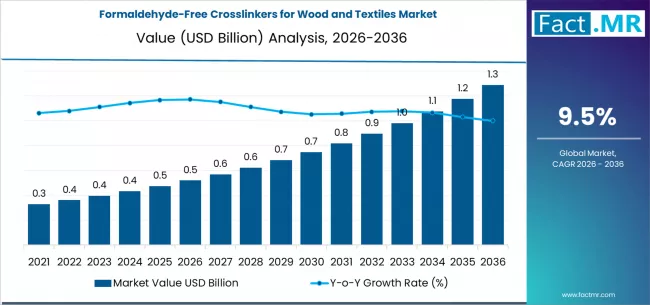
Formaldehyde Free Crosslinkers For Wood And Textiles Market Market Value Analysis

Polycarboxylic acid (PCA)-based crosslinkers represent the leading chemistry, securing a 30% market share. Wood panels and engineered wood products constitute the primary application substrate, accounting for 34% of demand. The furniture and wood products industry stands as the largest end-use sector, with a 32% share, driven by consumer demand for safer indoor environments.

This significant growth is directly linked to the global regulatory phase-out of formaldehyde-based resins, such as urea-formaldehyde, due to their classification as a human carcinogen and associated VOC emissions. Formaldehyde-free alternatives provide essential bonding, dimensional stability, and durable finish properties without emitting harmful gases. Their adoption is critical for manufacturers to comply with standards like CARB Phase 2, meet green building certifications, and respond to consumer preferences for non-toxic products in homes, clothing, and workplaces.

Innovation focuses on developing crosslinkers that offer comparable or superior performance in terms of cure speed, bond strength, and resistance to moisture and washing. The evolution of these advanced chemistries is fundamental to enabling sustainable manufacturing across the value chain, from composite wood production to durable textile finishes.

Metric

Metric Value
Market Value (2026) USD 0.52 Billion
Market Forecast Value (2036) USD 1.29 Billion
Forecast CAGR (2026-2036) 9.5%

Category

Category Segments
Chemistry Type Polycarboxylic Acid (PCA) Crosslinkers, Polyurethane (PU) Crosslinkers, Silane-Based Crosslinkers, Bio-Based & Natural Crosslinkers, Other Formaldehyde-Free Crosslinkers
Application Substrate Wood Panels & Engineered Wood, Textile Fabrics (Apparel, Home, Tech), Paper & Fiber Composites, Nonwoven & Hygiene Materials, Specialty Industrial Materials
End-Use Industry Furniture & Wood Products, Textile & Apparel Manufacturing, Construction & Interior Materials, Hygiene & Medical Textiles, Automotive & Industrial Materials
Region North America, Latin America, Western Europe, Eastern Europe, East Asia, South Asia & Pacific, MEA

Segmental Analysis

By Chemistry Type, Which Alternative Has Emerged as the Leading Solution for Wood?
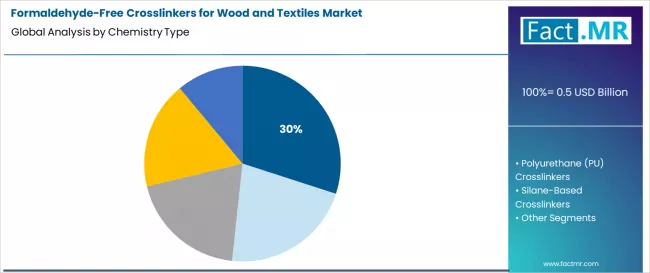
Formaldehyde Free Crosslinkers For Wood And Textiles Market Analysis By Chemistry Type

Polycarboxylic acid (PCA) crosslinkers lead the market with a 30% share. Their dominance in the wood composites sector is well-established, as they effectively substitute formaldehyde-based resins in particleboard, MDF, and plywood production. PCA crosslinkers form ester bonds with cellulose, providing strong, water-resistant bonds.

Their adoption has been accelerated by their compatibility with existing manufacturing equipment and their ability to meet stringent formaldehyde emission standards, making them the technical and commercial benchmark for sustainable wood bonding.

By Application Substrate, Where is Regulatory Pressure Most Intense?
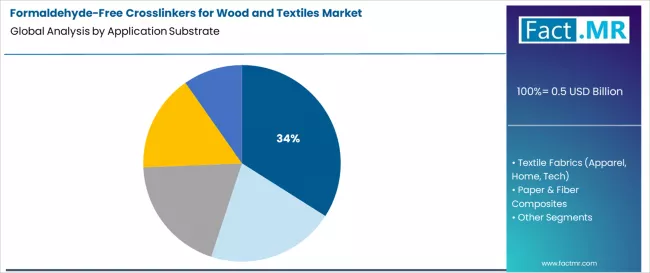
Formaldehyde Free Crosslinkers For Wood And Textiles Market Analysis By Application Substrate

Wood panels and engineered wood represent the largest substrate segment, holding a 34% share. This sector faces the most direct and long-standing regulatory pressure due to the pervasive use of formaldehyde-based adhesives and the significant indoor air quality concerns associated with products like furniture and flooring.

The transition to formaldehyde-free binders is not merely a preference but a compliance requirement in major markets, driving foundational and high-volume demand for alternatives like PCA and polyurethane crosslinkers.

By End-Use Industry, Which Sector Connects Directly to Consumer Health Concerns?
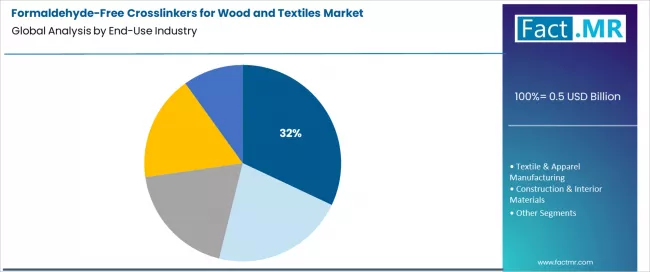
Formaldehyde Free Crosslinkers For Wood And Textiles Market Analysis By End Use Industry

The furniture and wood products industry is the leading end-use sector, accounting for a 32% share. Furniture is a primary source of indoor formaldehyde emissions, directly impacting consumer health. Heightened consumer awareness, coupled with retailer specifications for low-emitting products, compels manufacturers to reformulate.

This sector's demand is characterized by the need for crosslinkers that enable the production of compliant, durable, and cost-competitive finished goods for both residential and commercial markets.

What are the Drivers, Restraints, and Key Trends of the Formaldehyde-Free Crosslinkers Market?

The primary market driver is the global expansion and tightening of regulations limiting formaldehyde emissions from composite wood and textiles, exemplified by the U.S. EPA’s Formaldehyde Standards and the EU’s REACH restrictions. Green building certification programs like LEED and BREEAM further incentivize the use of low-emitting materials. Simultaneously, consumer demand for non-toxic, "green" products and corporate sustainability commitments from major retailers and brands are creating a powerful market pull for verified, safer alternatives.

A significant market restraint is the higher raw material cost of many formaldehyde-free alternatives compared to traditional urea-formaldehyde resins. Some alternatives may also require adjustments to manufacturing parameters, such as higher press temperatures or longer cure times, impacting production efficiency. Achieving the same level of performance, particularly in wet strength for wood or durable-press properties in textiles, can remain a technical challenge, slowing adoption in the most demanding applications.

Key trends include the development of hybrid crosslinking systems that combine, for example, PCA with silane chemistry to enhance performance and reduce costs. There is accelerating innovation in bio-based crosslinkers derived from sugars, citric acid, or soy, aiming for fully renewable and biodegradable solutions. The market is also moving toward multifunctional agents that provide crosslinking along with additional properties like flame retardancy or antimicrobial effects, adding value for end-users.

Analysis of the Formaldehyde-Free Crosslinkers Market by Key Countries

Country CAGR (2026-2036)
India 10.30%
China 10.00%
USA 8.40%
Germany 7.90%
South Korea 7.60%

How do India’s Construction Boom and Regulatory Development Drive Demand?

A massive housing and infrastructure boom, coupled with the introduction of stricter indoor air quality guidelines, propels India’s leading CAGR of 10.30%. The growing middle class's awareness of health hazards is increasing demand for safer furniture and building materials.

As domestic manufacturing of engineered wood and textiles scales up to meet this demand, the adoption of compliant, formaldehyde-free binding technologies becomes essential, creating a rapidly expanding market for crosslinker suppliers.

What is the Impact of China’s Manufacturing Upgrades and Export Requirements?

China’s 10.00% growth is tied to its dual role as the world's factory and its own environmental protection campaigns. Chinese manufacturers must comply with international standards to export furniture and textiles to regulated markets like North America and Europe.

Domestically, the government's push for higher environmental standards in manufacturing is driving upgrades. This creates immense, dual-sourced demand for high-performance formaldehyde-free crosslinkers across its vast wood panel and textile industries.

How does the USA’s Regulatory Leadership and Consumer Awareness Shape the Market?
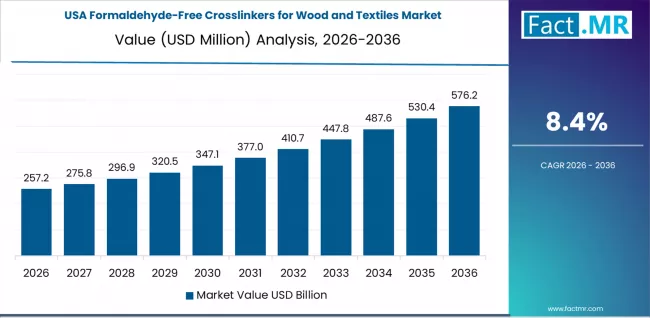
Formaldehyde Free Crosslinkers For Wood And Textiles Market Country Value Analysis

The USA’s 8.40% CAGR is underpinned by its pioneering role in regulating formaldehyde emissions, including CARB, TSCA and Title VI, and exceptionally high consumer awareness. Compliance is mandatory for domestic production and imports, creating a level playing field that favors compliant technologies.

The strong presence of innovative chemical companies and a sophisticated supply chain for green buildings further accelerates the development and adoption of next-generation crosslinkers.

Why is Germany a Hub for High-Performance and Sustainable Material Innovation?

Germany’s 7.90% growth reflects its stringent enforcement of EU regulations and its leadership in high-quality manufacturing. German chemical companies are at the forefront of developing advanced polyurethane and silane-based crosslinkers that offer superior performance for technical textiles and high-end wood composites. The market prioritizes solutions that deliver not only compliance but also enhanced functionality and alignment with circular economy goals.

What Role does South Korea’s Advanced Industries and Eco-Labeling Play?

South Korea’s 7.60% growth is anchored in its advanced automotive, electronics, and technical textile industries, which require high-performance, low-emission materials. Strict national eco-labeling (Korean Eco-Label) and chemical management acts drive demand for certified alternatives.

South Korea’s focus on cutting-edge material science fosters innovation in specialized crosslinkers for niche applications in displays, automotive interiors, and high-tech nonwovens.

Competitive Landscape of the Formaldehyde-Free Crosslinkers Market
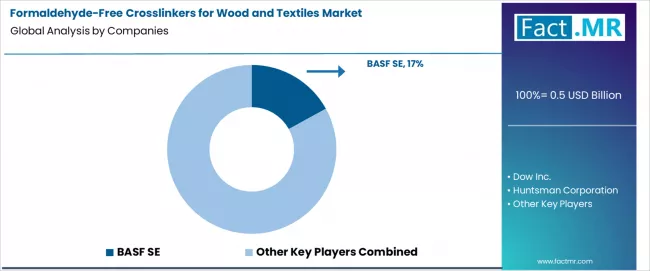
Formaldehyde Free Crosslinkers For Wood And Textiles Market Analysis By Company

Large, diversified chemical corporations with strong positions in polymer and specialty chemical segments characterize the competitive landscape. Leaders like BASF and Dow compete based on their broad technology portfolios, global production scale, and deep R&D capabilities in polymer chemistry.

Competition centers on providing cost-effective, drop-in solutions that minimize disruption for manufacturers, securing key certifications for products, and offering extensive technical support for formulation and process optimization. A key differentiator is the ability to supply integrated systems of crosslinkers and complementary additives tailored to specific customer processes and performance requirements.

Key Players in the Formaldehyde-Free Crosslinkers for Wood and Textiles Market

  • BASF SE
  • Dow Inc.
  • Huntsman Corporation
  • Wacker Chemie
  • Archroma

Scope of Report

Items Values
Quantitative Units USD Billion
Chemistry Type Polycarboxylic Acid (PCA), Polyurethane (PU), Silane-Based, Bio-Based/Natural, Other Formaldehyde-Free
Application Substrate Wood Panels, Textile Fabrics, Paper Composites, Nonwovens, Specialty Materials
End-Use Industry Furniture/Wood Products, Textile/Apparel, Construction, Hygiene/Medical, Automotive/Industrial
Key Countries India, China, USA, Germany, South Korea
Key Companies BASF SE, Dow Inc., Huntsman Corporation, Wacker Chemie, Archroma
Additional Analysis Analysis of crosslinking mechanisms (esterification, urethane formation, siloxane bonding); cure kinetics and catalyst systems; impact on substrate recyclability and biodegradability; emission profiling (VOCs, aldehydes) of cured products; total cost of ownership analysis versus formaldehyde-based systems.

Market by Segments

  • Chemistry Type :

    • Polycarboxylic Acid (PCA) Crosslinkers
    • Polyurethane (PU) Crosslinkers
    • Silane-Based Crosslinkers
    • Bio-Based & Natural Crosslinkers
    • Other Formaldehyde-Free Crosslinkers
  • Application Substrate :

    • Wood Panels & Engineered Wood
    • Textile Fabrics (Apparel, Home, Tech)
    • Paper & Fiber Composites
    • Nonwoven & Hygiene Materials
    • Specialty Industrial Materials
  • End-Use Industry :

    • Furniture & Wood Products
    • Textile & Apparel Manufacturing
    • Construction & Interior Materials
    • Hygiene & Medical Textiles
    • Automotive & Industrial Materials
  • Region :

    • North America

      • USA
      • Canada
    • Latin America

      • Brazil
      • Mexico
      • Argentina
      • Rest of Latin America
    • Western Europe

      • Germany
      • UK
      • France
      • Spain
      • Italy
      • BENELUX
      • Rest of Western Europe
    • Eastern Europe

      • Russia
      • Poland
      • Czech Republic
      • Rest of Eastern Europe
    • East Asia

      • China
      • Japan
      • South Korea
      • Rest of East Asia
    • South Asia & Pacific

      • India
      • ASEAN
      • Australia
      • Rest of South Asia & Pacific
    • MEA

      • Saudi Arabia
      • UAE
      • Turkiye
      • Rest of MEA

Table of Content

  1. Executive Summary
    • Global Market Outlook
    • Demand to side Trends
    • Supply to side Trends
    • Technology Roadmap Analysis
    • Analysis and Recommendations
  2. Market Overview
    • Market Coverage / Taxonomy
    • Market Definition / Scope / Limitations
  3. Market Background
    • Market Dynamics
      • Drivers
      • Restraints
      • Opportunity
      • Trends
    • Scenario Forecast
      • Demand in Optimistic Scenario
      • Demand in Likely Scenario
      • Demand in Conservative Scenario
    • Opportunity Map Analysis
    • Product Life Cycle Analysis
    • Supply Chain Analysis
    • Investment Feasibility Matrix
    • Value Chain Analysis
    • PESTLE and Porter’s Analysis
    • Regulatory Landscape
    • Regional Parent Market Outlook
    • Production and Consumption Statistics
    • Import and Export Statistics
  4. Global Market Analysis 2021 to 2025 and Forecast, 2026 to 2036
    • Historical Market Size Value (USD Million) Analysis, 2021 to 2025
    • Current and Future Market Size Value (USD Million) Projections, 2026 to 2036
      • Y to o to Y Growth Trend Analysis
      • Absolute $ Opportunity Analysis
  5. Global Market Pricing Analysis 2021 to 2025 and Forecast 2026 to 2036
  6. Global Market Analysis 2021 to 2025 and Forecast 2026 to 2036, By Chemistry Type
    • Introduction / Key Findings
    • Historical Market Size Value (USD Million) Analysis By Chemistry Type, 2021 to 2025
    • Current and Future Market Size Value (USD Million) Analysis and Forecast By Chemistry Type, 2026 to 2036
      • Polycarboxylic Acid (PCA) Crosslinkers
      • Polyurethane (PU) Crosslinkers
      • Silane-Based Crosslinkers
      • Bio-Based & Natural Crosslinkers
      • Other Formaldehyde-Free Crosslinkers
    • Y to o to Y Growth Trend Analysis By Chemistry Type, 2021 to 2025
    • Absolute $ Opportunity Analysis By Chemistry Type, 2026 to 2036
  7. Global Market Analysis 2021 to 2025 and Forecast 2026 to 2036, By Application Substrate
    • Introduction / Key Findings
    • Historical Market Size Value (USD Million) Analysis By Application Substrate, 2021 to 2025
    • Current and Future Market Size Value (USD Million) Analysis and Forecast By Application Substrate, 2026 to 2036
      • Wood Panels & Engineered Wood
      • Textile Fabrics (Apparel, Home, Tech)
      • Paper & Fiber Composites
      • Nonwoven & Hygiene Materials
      • Specialty Industrial Materials
    • Y to o to Y Growth Trend Analysis By Application Substrate, 2021 to 2025
    • Absolute $ Opportunity Analysis By Application Substrate, 2026 to 2036
  8. Global Market Analysis 2021 to 2025 and Forecast 2026 to 2036, By End-Use Industry
    • Introduction / Key Findings
    • Historical Market Size Value (USD Million) Analysis By End-Use Industry, 2021 to 2025
    • Current and Future Market Size Value (USD Million) Analysis and Forecast By End-Use Industry, 2026 to 2036
      • Furniture & Wood Products
      • Textile & Apparel Manufacturing
      • Construction & Interior Materials
      • Hygiene & Medical Textiles
      • Automotive & Industrial Materials
    • Y to o to Y Growth Trend Analysis By End-Use Industry, 2021 to 2025
    • Absolute $ Opportunity Analysis By End-Use Industry, 2026 to 2036
  9. Global Market Analysis 2021 to 2025 and Forecast 2026 to 2036, By Region
    • Introduction
    • Historical Market Size Value (USD Million) Analysis By Region, 2021 to 2025
    • Current Market Size Value (USD Million) Analysis and Forecast By Region, 2026 to 2036
      • North America
      • Latin America
      • Western Europe
      • Eastern Europe
      • East Asia
      • South Asia and Pacific
      • Middle East & Africa
    • Market Attractiveness Analysis By Region
  10. North America Market Analysis 2021 to 2025 and Forecast 2026 to 2036, By Country
    • Historical Market Size Value (USD Million) Trend Analysis By Market Taxonomy, 2021 to 2025
    • Market Size Value (USD Million) Forecast By Market Taxonomy, 2026 to 2036
      • By Country
        • USA
        • Canada
        • Mexico
      • By Chemistry Type
      • By Application Substrate
      • By End-Use Industry
    • Market Attractiveness Analysis
      • By Country
      • By Chemistry Type
      • By Application Substrate
      • By End-Use Industry
    • Key Takeaways
  11. Latin America Market Analysis 2021 to 2025 and Forecast 2026 to 2036, By Country
    • Historical Market Size Value (USD Million) Trend Analysis By Market Taxonomy, 2021 to 2025
    • Market Size Value (USD Million) Forecast By Market Taxonomy, 2026 to 2036
      • By Country
        • Brazil
        • Chile
        • Rest of Latin America
      • By Chemistry Type
      • By Application Substrate
      • By End-Use Industry
    • Market Attractiveness Analysis
      • By Country
      • By Chemistry Type
      • By Application Substrate
      • By End-Use Industry
    • Key Takeaways
  12. Western Europe Market Analysis 2021 to 2025 and Forecast 2026 to 2036, By Country
    • Historical Market Size Value (USD Million) Trend Analysis By Market Taxonomy, 2021 to 2025
    • Market Size Value (USD Million) Forecast By Market Taxonomy, 2026 to 2036
      • By Country
        • Germany
        • UK
        • Italy
        • Spain
        • France
        • Nordic
        • BENELUX
        • Rest of Western Europe
      • By Chemistry Type
      • By Application Substrate
      • By End-Use Industry
    • Market Attractiveness Analysis
      • By Country
      • By Chemistry Type
      • By Application Substrate
      • By End-Use Industry
    • Key Takeaways
  13. Eastern Europe Market Analysis 2021 to 2025 and Forecast 2026 to 2036, By Country
    • Historical Market Size Value (USD Million) Trend Analysis By Market Taxonomy, 2021 to 2025
    • Market Size Value (USD Million) Forecast By Market Taxonomy, 2026 to 2036
      • By Country
        • Russia
        • Poland
        • Hungary
        • Balkan & Baltic
        • Rest of Eastern Europe
      • By Chemistry Type
      • By Application Substrate
      • By End-Use Industry
    • Market Attractiveness Analysis
      • By Country
      • By Chemistry Type
      • By Application Substrate
      • By End-Use Industry
    • Key Takeaways
  14. East Asia Market Analysis 2021 to 2025 and Forecast 2026 to 2036, By Country
    • Historical Market Size Value (USD Million) Trend Analysis By Market Taxonomy, 2021 to 2025
    • Market Size Value (USD Million) Forecast By Market Taxonomy, 2026 to 2036
      • By Country
        • China
        • Japan
        • South Korea
      • By Chemistry Type
      • By Application Substrate
      • By End-Use Industry
    • Market Attractiveness Analysis
      • By Country
      • By Chemistry Type
      • By Application Substrate
      • By End-Use Industry
    • Key Takeaways
  15. South Asia and Pacific Market Analysis 2021 to 2025 and Forecast 2026 to 2036, By Country
    • Historical Market Size Value (USD Million) Trend Analysis By Market Taxonomy, 2021 to 2025
    • Market Size Value (USD Million) Forecast By Market Taxonomy, 2026 to 2036
      • By Country
        • India
        • ASEAN
        • Australia & New Zealand
        • Rest of South Asia and Pacific
      • By Chemistry Type
      • By Application Substrate
      • By End-Use Industry
    • Market Attractiveness Analysis
      • By Country
      • By Chemistry Type
      • By Application Substrate
      • By End-Use Industry
    • Key Takeaways
  16. Middle East & Africa Market Analysis 2021 to 2025 and Forecast 2026 to 2036, By Country
    • Historical Market Size Value (USD Million) Trend Analysis By Market Taxonomy, 2021 to 2025
    • Market Size Value (USD Million) Forecast By Market Taxonomy, 2026 to 2036
      • By Country
        • Kingdom of Saudi Arabia
        • Other GCC Countries
        • Turkiye
        • South Africa
        • Other African Union
        • Rest of Middle East & Africa
      • By Chemistry Type
      • By Application Substrate
      • By End-Use Industry
    • Market Attractiveness Analysis
      • By Country
      • By Chemistry Type
      • By Application Substrate
      • By End-Use Industry
    • Key Takeaways
  17. Key Countries Market Analysis
    • USA
      • Pricing Analysis
      • Market Share Analysis, 2025
        • By Chemistry Type
        • By Application Substrate
        • By End-Use Industry
    • Canada
      • Pricing Analysis
      • Market Share Analysis, 2025
        • By Chemistry Type
        • By Application Substrate
        • By End-Use Industry
    • Mexico
      • Pricing Analysis
      • Market Share Analysis, 2025
        • By Chemistry Type
        • By Application Substrate
        • By End-Use Industry
    • Brazil
      • Pricing Analysis
      • Market Share Analysis, 2025
        • By Chemistry Type
        • By Application Substrate
        • By End-Use Industry
    • Chile
      • Pricing Analysis
      • Market Share Analysis, 2025
        • By Chemistry Type
        • By Application Substrate
        • By End-Use Industry
    • Germany
      • Pricing Analysis
      • Market Share Analysis, 2025
        • By Chemistry Type
        • By Application Substrate
        • By End-Use Industry
    • UK
      • Pricing Analysis
      • Market Share Analysis, 2025
        • By Chemistry Type
        • By Application Substrate
        • By End-Use Industry
    • Italy
      • Pricing Analysis
      • Market Share Analysis, 2025
        • By Chemistry Type
        • By Application Substrate
        • By End-Use Industry
    • Spain
      • Pricing Analysis
      • Market Share Analysis, 2025
        • By Chemistry Type
        • By Application Substrate
        • By End-Use Industry
    • France
      • Pricing Analysis
      • Market Share Analysis, 2025
        • By Chemistry Type
        • By Application Substrate
        • By End-Use Industry
    • India
      • Pricing Analysis
      • Market Share Analysis, 2025
        • By Chemistry Type
        • By Application Substrate
        • By End-Use Industry
    • ASEAN
      • Pricing Analysis
      • Market Share Analysis, 2025
        • By Chemistry Type
        • By Application Substrate
        • By End-Use Industry
    • Australia & New Zealand
      • Pricing Analysis
      • Market Share Analysis, 2025
        • By Chemistry Type
        • By Application Substrate
        • By End-Use Industry
    • China
      • Pricing Analysis
      • Market Share Analysis, 2025
        • By Chemistry Type
        • By Application Substrate
        • By End-Use Industry
    • Japan
      • Pricing Analysis
      • Market Share Analysis, 2025
        • By Chemistry Type
        • By Application Substrate
        • By End-Use Industry
    • South Korea
      • Pricing Analysis
      • Market Share Analysis, 2025
        • By Chemistry Type
        • By Application Substrate
        • By End-Use Industry
    • Russia
      • Pricing Analysis
      • Market Share Analysis, 2025
        • By Chemistry Type
        • By Application Substrate
        • By End-Use Industry
    • Poland
      • Pricing Analysis
      • Market Share Analysis, 2025
        • By Chemistry Type
        • By Application Substrate
        • By End-Use Industry
    • Hungary
      • Pricing Analysis
      • Market Share Analysis, 2025
        • By Chemistry Type
        • By Application Substrate
        • By End-Use Industry
    • Kingdom of Saudi Arabia
      • Pricing Analysis
      • Market Share Analysis, 2025
        • By Chemistry Type
        • By Application Substrate
        • By End-Use Industry
    • Turkiye
      • Pricing Analysis
      • Market Share Analysis, 2025
        • By Chemistry Type
        • By Application Substrate
        • By End-Use Industry
    • South Africa
      • Pricing Analysis
      • Market Share Analysis, 2025
        • By Chemistry Type
        • By Application Substrate
        • By End-Use Industry
  18. Market Structure Analysis
    • Competition Dashboard
    • Competition Benchmarking
    • Market Share Analysis of Top Players
      • By Regional
      • By Chemistry Type
      • By Application Substrate
      • By End-Use Industry
  19. Competition Analysis
    • Competition Deep Dive
      • BASF SE
        • Overview
        • Product Portfolio
        • Profitability by Market Segments (Product/Age /Sales Channel/Region)
        • Sales Footprint
        • Strategy Overview
          • Marketing Strategy
          • Product Strategy
          • Channel Strategy
      • Dow Inc.
      • Huntsman Corporation
      • Wacker Chemie
      • Archroma
  20. Assumptions & Acronyms Used
  21. Research Methodology

List Of Table

  • Table 1: Global Market Value (USD Million) Forecast by Region, 2021 to 2036
  • Table 2: Global Market Value (USD Million) Forecast by Chemistry Type, 2021 to 2036
  • Table 3: Global Market Value (USD Million) Forecast by Application Substrate, 2021 to 2036
  • Table 4: Global Market Value (USD Million) Forecast by End-Use Industry, 2021 to 2036
  • Table 5: North America Market Value (USD Million) Forecast by Country, 2021 to 2036
  • Table 6: North America Market Value (USD Million) Forecast by Chemistry Type, 2021 to 2036
  • Table 7: North America Market Value (USD Million) Forecast by Application Substrate, 2021 to 2036
  • Table 8: North America Market Value (USD Million) Forecast by End-Use Industry, 2021 to 2036
  • Table 9: Latin America Market Value (USD Million) Forecast by Country, 2021 to 2036
  • Table 10: Latin America Market Value (USD Million) Forecast by Chemistry Type, 2021 to 2036
  • Table 11: Latin America Market Value (USD Million) Forecast by Application Substrate, 2021 to 2036
  • Table 12: Latin America Market Value (USD Million) Forecast by End-Use Industry, 2021 to 2036
  • Table 13: Western Europe Market Value (USD Million) Forecast by Country, 2021 to 2036
  • Table 14: Western Europe Market Value (USD Million) Forecast by Chemistry Type, 2021 to 2036
  • Table 15: Western Europe Market Value (USD Million) Forecast by Application Substrate, 2021 to 2036
  • Table 16: Western Europe Market Value (USD Million) Forecast by End-Use Industry, 2021 to 2036
  • Table 17: Eastern Europe Market Value (USD Million) Forecast by Country, 2021 to 2036
  • Table 18: Eastern Europe Market Value (USD Million) Forecast by Chemistry Type, 2021 to 2036
  • Table 19: Eastern Europe Market Value (USD Million) Forecast by Application Substrate, 2021 to 2036
  • Table 20: Eastern Europe Market Value (USD Million) Forecast by End-Use Industry, 2021 to 2036
  • Table 21: East Asia Market Value (USD Million) Forecast by Country, 2021 to 2036
  • Table 22: East Asia Market Value (USD Million) Forecast by Chemistry Type, 2021 to 2036
  • Table 23: East Asia Market Value (USD Million) Forecast by Application Substrate, 2021 to 2036
  • Table 24: East Asia Market Value (USD Million) Forecast by End-Use Industry, 2021 to 2036
  • Table 25: South Asia and Pacific Market Value (USD Million) Forecast by Country, 2021 to 2036
  • Table 26: South Asia and Pacific Market Value (USD Million) Forecast by Chemistry Type, 2021 to 2036
  • Table 27: South Asia and Pacific Market Value (USD Million) Forecast by Application Substrate, 2021 to 2036
  • Table 28: South Asia and Pacific Market Value (USD Million) Forecast by End-Use Industry, 2021 to 2036
  • Table 29: Middle East & Africa Market Value (USD Million) Forecast by Country, 2021 to 2036
  • Table 30: Middle East & Africa Market Value (USD Million) Forecast by Chemistry Type, 2021 to 2036
  • Table 31: Middle East & Africa Market Value (USD Million) Forecast by Application Substrate, 2021 to 2036
  • Table 32: Middle East & Africa Market Value (USD Million) Forecast by End-Use Industry, 2021 to 2036

List Of Figures

  • Figure 1: Global Market Pricing Analysis
  • Figure 2: Global Market Value (USD Million) Forecast 2021 to 2036
  • Figure 3: Global Market Value Share and BPS Analysis by Chemistry Type, 2026 and 2036
  • Figure 4: Global Market Y to o to Y Growth Comparison by Chemistry Type, 2026 to 2036
  • Figure 5: Global Market Attractiveness Analysis by Chemistry Type
  • Figure 6: Global Market Value Share and BPS Analysis by Application Substrate, 2026 and 2036
  • Figure 7: Global Market Y to o to Y Growth Comparison by Application Substrate, 2026 to 2036
  • Figure 8: Global Market Attractiveness Analysis by Application Substrate
  • Figure 9: Global Market Value Share and BPS Analysis by End-Use Industry, 2026 and 2036
  • Figure 10: Global Market Y to o to Y Growth Comparison by End-Use Industry, 2026 to 2036
  • Figure 11: Global Market Attractiveness Analysis by End-Use Industry
  • Figure 12: Global Market Value (USD Million) Share and BPS Analysis by Region, 2026 and 2036
  • Figure 13: Global Market Y to o to Y Growth Comparison by Region, 2026 to 2036
  • Figure 14: Global Market Attractiveness Analysis by Region
  • Figure 15: North America Market Incremental Dollar Opportunity, 2026 to 2036
  • Figure 16: Latin America Market Incremental Dollar Opportunity, 2026 to 2036
  • Figure 17: Western Europe Market Incremental Dollar Opportunity, 2026 to 2036
  • Figure 18: Eastern Europe Market Incremental Dollar Opportunity, 2026 to 2036
  • Figure 19: East Asia Market Incremental Dollar Opportunity, 2026 to 2036
  • Figure 20: South Asia and Pacific Market Incremental Dollar Opportunity, 2026 to 2036
  • Figure 21: Middle East & Africa Market Incremental Dollar Opportunity, 2026 to 2036
  • Figure 22: North America Market Value Share and BPS Analysis by Country, 2026 and 2036
  • Figure 23: North America Market Value Share and BPS Analysis by Chemistry Type, 2026 and 2036
  • Figure 24: North America Market Y to o to Y Growth Comparison by Chemistry Type, 2026 to 2036
  • Figure 25: North America Market Attractiveness Analysis by Chemistry Type
  • Figure 26: North America Market Value Share and BPS Analysis by Application Substrate, 2026 and 2036
  • Figure 27: North America Market Y to o to Y Growth Comparison by Application Substrate, 2026 to 2036
  • Figure 28: North America Market Attractiveness Analysis by Application Substrate
  • Figure 29: North America Market Value Share and BPS Analysis by End-Use Industry, 2026 and 2036
  • Figure 30: North America Market Y to o to Y Growth Comparison by End-Use Industry, 2026 to 2036
  • Figure 31: North America Market Attractiveness Analysis by End-Use Industry
  • Figure 32: Latin America Market Value Share and BPS Analysis by Country, 2026 and 2036
  • Figure 33: Latin America Market Value Share and BPS Analysis by Chemistry Type, 2026 and 2036
  • Figure 34: Latin America Market Y to o to Y Growth Comparison by Chemistry Type, 2026 to 2036
  • Figure 35: Latin America Market Attractiveness Analysis by Chemistry Type
  • Figure 36: Latin America Market Value Share and BPS Analysis by Application Substrate, 2026 and 2036
  • Figure 37: Latin America Market Y to o to Y Growth Comparison by Application Substrate, 2026 to 2036
  • Figure 38: Latin America Market Attractiveness Analysis by Application Substrate
  • Figure 39: Latin America Market Value Share and BPS Analysis by End-Use Industry, 2026 and 2036
  • Figure 40: Latin America Market Y to o to Y Growth Comparison by End-Use Industry, 2026 to 2036
  • Figure 41: Latin America Market Attractiveness Analysis by End-Use Industry
  • Figure 42: Western Europe Market Value Share and BPS Analysis by Country, 2026 and 2036
  • Figure 43: Western Europe Market Value Share and BPS Analysis by Chemistry Type, 2026 and 2036
  • Figure 44: Western Europe Market Y to o to Y Growth Comparison by Chemistry Type, 2026 to 2036
  • Figure 45: Western Europe Market Attractiveness Analysis by Chemistry Type
  • Figure 46: Western Europe Market Value Share and BPS Analysis by Application Substrate, 2026 and 2036
  • Figure 47: Western Europe Market Y to o to Y Growth Comparison by Application Substrate, 2026 to 2036
  • Figure 48: Western Europe Market Attractiveness Analysis by Application Substrate
  • Figure 49: Western Europe Market Value Share and BPS Analysis by End-Use Industry, 2026 and 2036
  • Figure 50: Western Europe Market Y to o to Y Growth Comparison by End-Use Industry, 2026 to 2036
  • Figure 51: Western Europe Market Attractiveness Analysis by End-Use Industry
  • Figure 52: Eastern Europe Market Value Share and BPS Analysis by Country, 2026 and 2036
  • Figure 53: Eastern Europe Market Value Share and BPS Analysis by Chemistry Type, 2026 and 2036
  • Figure 54: Eastern Europe Market Y to o to Y Growth Comparison by Chemistry Type, 2026 to 2036
  • Figure 55: Eastern Europe Market Attractiveness Analysis by Chemistry Type
  • Figure 56: Eastern Europe Market Value Share and BPS Analysis by Application Substrate, 2026 and 2036
  • Figure 57: Eastern Europe Market Y to o to Y Growth Comparison by Application Substrate, 2026 to 2036
  • Figure 58: Eastern Europe Market Attractiveness Analysis by Application Substrate
  • Figure 59: Eastern Europe Market Value Share and BPS Analysis by End-Use Industry, 2026 and 2036
  • Figure 60: Eastern Europe Market Y to o to Y Growth Comparison by End-Use Industry, 2026 to 2036
  • Figure 61: Eastern Europe Market Attractiveness Analysis by End-Use Industry
  • Figure 62: East Asia Market Value Share and BPS Analysis by Country, 2026 and 2036
  • Figure 63: East Asia Market Value Share and BPS Analysis by Chemistry Type, 2026 and 2036
  • Figure 64: East Asia Market Y to o to Y Growth Comparison by Chemistry Type, 2026 to 2036
  • Figure 65: East Asia Market Attractiveness Analysis by Chemistry Type
  • Figure 66: East Asia Market Value Share and BPS Analysis by Application Substrate, 2026 and 2036
  • Figure 67: East Asia Market Y to o to Y Growth Comparison by Application Substrate, 2026 to 2036
  • Figure 68: East Asia Market Attractiveness Analysis by Application Substrate
  • Figure 69: East Asia Market Value Share and BPS Analysis by End-Use Industry, 2026 and 2036
  • Figure 70: East Asia Market Y to o to Y Growth Comparison by End-Use Industry, 2026 to 2036
  • Figure 71: East Asia Market Attractiveness Analysis by End-Use Industry
  • Figure 72: South Asia and Pacific Market Value Share and BPS Analysis by Country, 2026 and 2036
  • Figure 73: South Asia and Pacific Market Value Share and BPS Analysis by Chemistry Type, 2026 and 2036
  • Figure 74: South Asia and Pacific Market Y to o to Y Growth Comparison by Chemistry Type, 2026 to 2036
  • Figure 75: South Asia and Pacific Market Attractiveness Analysis by Chemistry Type
  • Figure 76: South Asia and Pacific Market Value Share and BPS Analysis by Application Substrate, 2026 and 2036
  • Figure 77: South Asia and Pacific Market Y to o to Y Growth Comparison by Application Substrate, 2026 to 2036
  • Figure 78: South Asia and Pacific Market Attractiveness Analysis by Application Substrate
  • Figure 79: South Asia and Pacific Market Value Share and BPS Analysis by End-Use Industry, 2026 and 2036
  • Figure 80: South Asia and Pacific Market Y to o to Y Growth Comparison by End-Use Industry, 2026 to 2036
  • Figure 81: South Asia and Pacific Market Attractiveness Analysis by End-Use Industry
  • Figure 82: Middle East & Africa Market Value Share and BPS Analysis by Country, 2026 and 2036
  • Figure 83: Middle East & Africa Market Value Share and BPS Analysis by Chemistry Type, 2026 and 2036
  • Figure 84: Middle East & Africa Market Y to o to Y Growth Comparison by Chemistry Type, 2026 to 2036
  • Figure 85: Middle East & Africa Market Attractiveness Analysis by Chemistry Type
  • Figure 86: Middle East & Africa Market Value Share and BPS Analysis by Application Substrate, 2026 and 2036
  • Figure 87: Middle East & Africa Market Y to o to Y Growth Comparison by Application Substrate, 2026 to 2036
  • Figure 88: Middle East & Africa Market Attractiveness Analysis by Application Substrate
  • Figure 89: Middle East & Africa Market Value Share and BPS Analysis by End-Use Industry, 2026 and 2036
  • Figure 90: Middle East & Africa Market Y to o to Y Growth Comparison by End-Use Industry, 2026 to 2036
  • Figure 91: Middle East & Africa Market Attractiveness Analysis by End-Use Industry
  • Figure 92: Global Market - Tier Structure Analysis
  • Figure 93: Global Market - Company Share Analysis

- FAQs -

How big is the formaldehyde-free crosslinkers for wood and textiles market in 2026?

The global formaldehyde-free crosslinkers for wood and textiles market is estimated to be valued at USD 0.5 billion in 2026.

What will be the size of formaldehyde-free crosslinkers for wood and textiles market in 2036?

The market size for the formaldehyde-free crosslinkers for wood and textiles market is projected to reach USD 1.3 billion by 2036.

How much will be the formaldehyde-free crosslinkers for wood and textiles market growth between 2026 and 2036?

The formaldehyde-free crosslinkers for wood and textiles market is expected to grow at a 9.5% CAGR between 2026 and 2036.

What are the key product types in the formaldehyde-free crosslinkers for wood and textiles market?

The key product types in formaldehyde-free crosslinkers for wood and textiles market are polycarboxylic acid (pca) crosslinkers, polyurethane (pu) crosslinkers, silane-based crosslinkers, bio-based & natural crosslinkers and other formaldehyde-free crosslinkers.

Which application substrate segment to contribute significant share in the formaldehyde-free crosslinkers for wood and textiles market in 2026?

In terms of application substrate, wood panels & engineered wood segment to command 34.0% share in the formaldehyde-free crosslinkers for wood and textiles market in 2026.

Formaldehyde-Free Crosslinkers for Wood and Textiles Market