- Base Value(2025): 35.50 Bn
- Estimated Value(2026): 37.81 Bn
- Forecast Value (2036): 70.97 Bn
- CAGR (2026 - 2036): 6.5%
Magnetic Materials Market Market Size, Market Forecast and Outlook By Fact.MR
The magnetic materials market was valued at USD 35.50 billion in 2025, projected to reach USD 37.81 billion in 2026, and is forecast to expand to USD 70.97 billion by 2036 at a 6.5% CAGR. Electric vehicle traction motor production, wind turbine generator assembly, and consumer electronics miniaturization are accelerating procurement of high-performance permanent magnets and soft magnetic cores. Automotive OEMs finalizing next-generation EV drivetrain platforms now mandate NdFeB magnet grades with specific coercivity thresholds that lock in material specifications years before volume production begins.
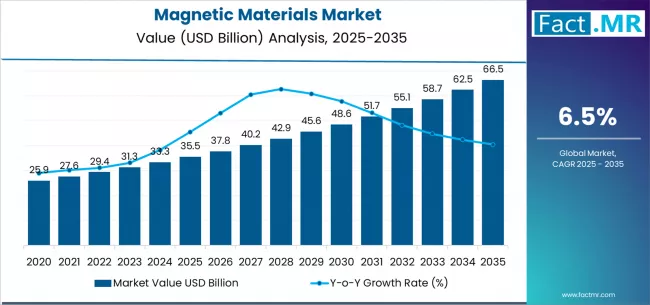
Magnetic Materials Market Market Value Analysis | Source: Fact.MR
Summary of Magnetic Materials Market
- Market Overview
- The magnetic materials market is valued at USD 35.50 billion in 2025 and is projected to reach USD 70.97 billion by 2036.
- The industry is expected to grow at a 6.5% CAGR from 2026 to 2036, creating an incremental opportunity of USD 33.16 billion.
- The market is a technology-critical materials category where rare earth supply chains, magnet grade specifications, and electrification mandates define competitive positioning across automotive, energy, and electronics sectors.
- Demand and Growth Drivers
- Demand is rising as electric vehicle traction motor production scales globally, with automotive OEMs mandating NdFeB magnet grades with specific coercivity and thermal stability thresholds for next-generation drivetrain platforms.
- Wind turbine generator assembly and power electronics conversion are expanding soft magnetic core consumption as countries accelerate renewable energy installation targets.
- Growth is further supported by consumer electronics miniaturization and 5G infrastructure deployment, which require high-performance magnetic components in increasingly compact form factors.
- Among key countries, China leads at 7.6% CAGR, followed by India at 7.2%, the USA at 6.5%, Japan at 5.9%, Germany at 5.6%, South Korea at 5.3%, and Brazil at 4.8%.
- Product and Segment View
- The market includes permanent magnets (NdFeB, SmCo, Ferrite, Alnico), soft magnetic materials (Finemet, Soft Ferrite, Permalloy), and semi-hard magnetic alloys used in motors, generators, sensors, and power conversion equipment.
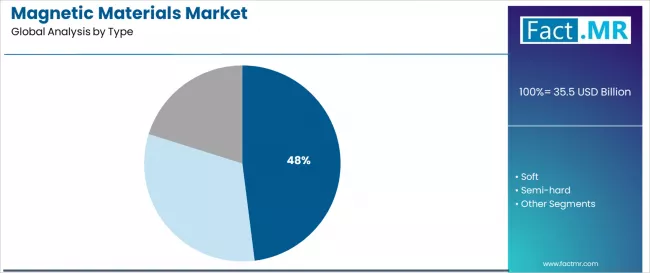
- Hard/Permanent magnets lead by type with 48.0% share in 2026, reflecting the irreplaceable role of NdFeB and SmCo grades in EV motors and wind turbine generators.
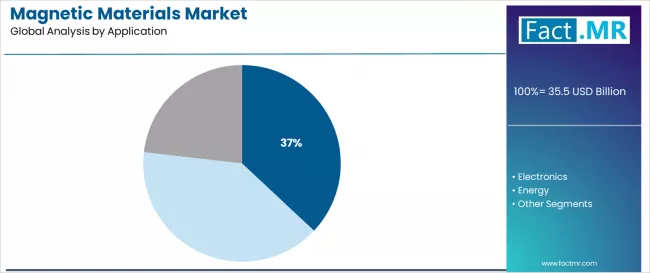
- Automotive & Transportation leads by application with 37.0% share in 2026, driven by EV traction motor and powertrain component magnet procurement.
- The scope includes all forms of magnetic materials for industrial, automotive, electronics, and energy end uses, while excluding magnetic recording media, magnetic fluids, and raw rare earth ores.
- Geography and Competitive Outlook
- China and India are the fastest-growing markets due to EV manufacturing scale-up and renewable energy installation targets, while Japan and Germany serve as precision magnet engineering and automotive electrification hubs.
- Rare earth supply concentration in China and rising processing costs for heavy rare earth elements create persistent supply chain risks that shape global procurement strategies.
- Competition is shaped by rare earth access, magnet grade engineering, and sintering technology, with key players including Proterial Ltd. (formerly Hitachi Metals), TDK Corporation, Shin-Etsu Chemical Co. Ltd., and Daido Steel Co. Ltd.
Magnetic Materials Market Key Takeaways
| Metric | Details |
|---|---|
| Industry Size (2026) | USD 37.81 billion |
| Industry Value (2036) | USD 70.97 billion |
| CAGR (2026 to 2036) | 6.5% |
Source: Fact.MR analysis. Updated Apr 6, 2026
The market is positioned to add USD 33.16 billion in absolute value between 2026 and 2036. Growth is structurally anchored by the global electrification transition: every EV motor, every wind turbine generator, and every power electronics converter requires magnetic materials, and no commercially viable substitute exists for high-energy-density permanent magnets in these applications. Rare earth supply concentration in China, coupled with rising processing costs for heavy rare earth elements like dysprosium and terbium, exerts persistent pricing pressure on NdFeB magnet producers. Soft magnetic material demand is simultaneously expanding as power conversion efficiency standards tighten across industrial and data center applications.
China sets the pace with a 7.6% CAGR, reflecting its dominant position in both rare earth processing and EV manufacturing. India follows at 7.2%, supported by motor manufacturing capacity expansion and renewable energy installation targets. The USA tracks at 6.5%, sustained by defense magnet procurement and domestic EV assembly growth. Japan maintains a 5.9% rate, driven by precision magnet manufacturing for robotics and consumer electronics. Germany registers a 5.6% pace, anchored by automotive electrification timelines and industrial automation. South Korea advances at 5.3% on display, electronics, and EV component demand. Brazil records a 4.8% pace, linked to wind farm generator installations and industrial motor consumption.
Why is the Magnetic Materials Market Growing?
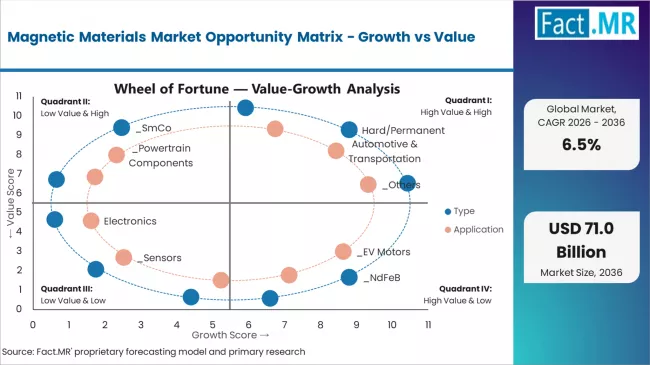
Magnetic Materials Market Opportunity Matrix Growth Vs Value | Source: Fact.MR
The magnetic materials market expansion is being supported by the exponential increase in electrification technology deployment and the corresponding need for sophisticated magnetic materials in automotive and energy applications across global manufacturing operations. Contemporary industrial manufacturers are increasingly focused on advanced permanent magnet technologies that can improve motor efficiency, enhance energy conversion, and optimize electromagnetic performance protocols while meeting stringent regulatory requirements.
The proven efficacy of high-performance magnetic materials in various industrial applications makes them an essential component of comprehensive electrification strategies and clean energy transition programs. The growing emphasis on electric vehicle production and renewable energy infrastructure integration is driving demand for advanced magnetic materials that meet stringent performance specifications and operational requirements for automotive and power generation applications.
Industrial manufacturers' preference for reliable, high-performance permanent magnets that can ensure consistent electromagnetic properties is creating opportunities for innovative material compositions and customized magnetic solutions. The rising influence of environmental standards and supply chain security concerns is also contributing to increased adoption of premium-grade magnetic materials across different technology categories and manufacturing systems requiring advanced material technology.
Opportunity Pathways - Magnetic Materials Market
The magnetic materials market represents a transformative growth opportunity, expanding from USD 35.5 billion in 2025 to USD 66.5 billion by 2035 at a 6.5% CAGR. As industrial manufacturers prioritize electrification acceleration, energy efficiency optimization, and performance excellence in complex automotive and renewable energy environments, magnetic materials have evolved from a component material to an essential technology enabler supporting precise motor control, comprehensive energy conversion strategies, and multi-application integration operations across electric vehicle platforms and wind power applications.
The convergence of electric vehicle adoption acceleration, increasing renewable energy infrastructure penetration, advanced motor technology integration, and stringent efficiency mandates creates momentum in demand. High-performance permanent magnets offering superior magnetic strength, cost-effective material solutions balancing functionality with economics, and specialized formulations for automotive applications will capture market premiums, while geographic expansion into high-growth Asian manufacturing markets and emerging electrification ecosystems will drive volume leadership. Industrial manufacturer emphasis on performance innovation and supply reliability provides structural support.
- Pathway A - Hard/Permanent Magnet Segment Dominance: Leading with 48.0% market share, permanent magnet applications drive primary demand through complex electrification workflows requiring comprehensive magnetic materials for motor performance optimization. Advanced NdFeB formulations enabling improved energy efficiency, reduced motor size, and enhanced temperature stability command premium pricing from automotive manufacturers requiring stringent performance specifications and reliability standards. Expected revenue pool: USD 17.0-31.9 billion.
- Pathway B - Automotive & Transportation Application Leadership: Dominating with 37.0% market share through optimal balance of electrification necessity and motor performance requirements, automotive applications serve most magnetic material requirements while meeting diverse vehicle platform demands. This application type addresses both electric traction motor and powertrain component expectations, making it the preferred category for automotive manufacturers and transportation equipment operators seeking comprehensive motor capabilities. Opportunity: USD 13.1-24.6 billion.
- Pathway C - Asian Market Acceleration: China (7.6% CAGR) and India (7.2% CAGR) lead global growth through electric vehicle production expansion, electronics manufacturing infrastructure development, and industrial electrification capability advancement. Strategic partnerships with local automotive manufacturers, material localization expertise, and supply network optimization enable the expansion of magnetic materials in major manufacturing and technology hubs. Geographic expansion upside: USD 14.2-26.6 billion.
- Pathway D - NdFeB Material Segment: NdFeB compositions with 28.0% of hard/permanent segment serve critical high-strength magnet applications requiring superior magnetic performance for diverse motor platforms. Optimized material formulations supporting multiple temperature ranges, automotive system requirements, and proven electromagnetic effectiveness maintain significant volumes from automotive manufacturers and industrial equipment producers. Revenue potential: USD 9.9-18.6 billion.
- Pathway E - Advanced Material Technologies & Performance Enhancement: Companies investing in high-temperature magnet grades, corrosion-resistant coatings, and advanced sintering processes gain competitive advantages through consistent magnetic property delivery and application success. Advanced capabilities enabling customized material specifications and rapid automotive protocol development capture premium technology partnerships. Technology premium: USD 7.8-14.6 billion.
- Pathway F - Supply Chain Optimization & Rare-Earth Security: Integrated rare-earth sourcing networks, strategic recycling program integration, and reliable material availability systems create competitive differentiation in automotive markets requiring consistent magnet supply. Companies offering guaranteed material quality, technical support services, and processing expertise support gain preferred supplier status with quality-focused automotive manufacturers. Supply network value: USD 6.4-12.0 billion.
- Pathway G - Emerging Applications & Market Development: Beyond traditional automotive applications, magnetic materials in industrial automation, medical devices, and advanced robotics represent growth opportunities. Companies developing new material grades, supporting innovation initiatives, and expanding into adjacent technology markets capture incremental demand while diversifying revenue streams. Emerging opportunity: USD 4.9-9.2 billion.
Segmental Analysis
The market is segmented by type, application, and region. By type, the market is divided into hard/permanent magnets (NdFeB, SmCo, ferrite, alnico), soft magnets (finemet, soft ferrite, permalloy, others), and semi-hard magnets (2:17 SmCo, 1:5 SmCo, metal alloys, others).
By application, the market is categorized into automotive & transportation (EV motors, powertrain components, sensors, others), electronics (data storage, smartphones & consumer devices, industrial electronics, others), and energy (wind turbine generators, power conversion, renewable infrastructure). Regionally, the market is divided into Asia Pacific, North America, Europe, Latin America, and Middle East & Africa.
Why are Hard/Permanent Magnets the Preferred Type Category?
Magnetic Materials Market Analysis By Type | Source: Fact.MR
Hard/permanent magnets account for 48.0% of the magnetic materials market in 2025, reaffirming its position as the category's dominant material type specification. Industrial manufacturers increasingly recognize the optimal balance of magnetic strength and operational stability offered by permanent magnet materials for electric motor applications, particularly in automotive traction systems and renewable energy generation environments.
This material category addresses both high-performance motor requirements and long-term reliability demands while providing consistent electromagnetic properties across diverse industrial operations. This segment forms the foundation of most electrification protocols for automotive manufacturing and renewable energy production, as it represents the most magnetically powerful and commercially established material category in the magnetic materials industry.
Application validation standards and extensive field deployment continue to strengthen confidence in permanent magnet materials among automotive engineers and energy system designers. With increasing recognition of magnetic performance impact on motor efficiency and energy conversion requirements, permanent magnetic materials align with both current electrification practices and automotive industry evolution goals, making them the central growth driver of comprehensive electric vehicle strategies across multiple technology platforms.
NdFeB represents 28.0% of hard/permanent applications, reflecting the superior magnetic strength and cost-performance balance in high-volume manufacturing. SmCo accounts for 12.0% of the segment, driven by high-temperature stability requirements and specialized aerospace applications. Ferrite operations represent 6.0% of permanent magnet materials, while alnico categories account for 2.0%, encompassing specialized applications including sensors and vintage audio equipment requiring specific magnetic characteristics.
Which is the Leading Application Category for Magnetic Materials?
Magnetic Materials Market Analysis By Application | Source: Fact.MR
Automotive & transportation applications are projected to represent 37.0% of magnetic materials demand in 2025, underscoring its role as the primary application category driving market adoption and permanent magnet technology deployment. Industrial manufacturers recognize that automotive electrification requirements, including diverse traction motor specifications, varied powertrain system demands, and comprehensive sensor integration protocols, provide the largest addressable market that traditional industrial applications cannot match in volume scale and growth trajectory.
Magnetic materials utilized in automotive applications offer enhanced motor efficiency and broad vehicle platform compatibility essential for serving electric vehicle production and transportation electrification requirements. The segment is supported by the accelerating nature of global electric vehicle adoption, requiring materials capable of supporting traction motor performance, powertrain efficiency optimization, and electromagnetic sensor integration, and the increasing recognition that advanced magnetic materials can improve vehicle efficiency and operational performance.
Automotive manufacturers are increasingly adopting permanent magnet motor architectures that mandate high-performance material integration for optimal torque density and regulatory compliance. As understanding of electric propulsion capabilities advances and automotive standards become more sophisticated, magnetically-enabled motor systems will continue to play a crucial role in comprehensive vehicle electrification strategies.
EV motors represent 19.0% of automotive applications, with powertrain components accounting for 8.0% of automotive uses, sensors representing 6.0%, and other automotive systems comprising 4.0%. This application distribution reflects the diverse magnetic material requirements across different vehicle systems and electric propulsion architectures requiring specialized material performance.
What drives the Electronics Application Segment’s Prominence?
The electronics application is projected to account for 30.0% of the magnetic materials market in 2025, establishing its position as a significant application segment. Industrial manufacturers increasingly recognize that electronics requirements, encompassing data storage systems, consumer device production, and industrial equipment manufacturing, represent highly specialized applications requiring precise magnetic properties due to miniaturization demands and performance specifications.
This application type addresses both high-density data storage and compact device integration requirements while delivering critical electromagnetic functionality across varied electronics platforms. The segment is supported by the continuing nature of electronics industry growth in both consumer and industrial sectors, driven by smartphone proliferation, data center expansion, and industrial automation requiring advanced magnetic components.
Electronics manufacturers are increasingly focusing on miniaturized magnetic materials that enhance device performance and data storage density while maintaining electromagnetic reliability standards. As electronics capabilities expand and performance requirements grow, magnetic material applications will continue to serve a crucial role in ensuring device functionality and data integrity within the global electronics market.
Data storage represents 12.0% of electronics applications, reflecting the critical role of magnetic materials in hard disk drives and storage systems. Smartphones & consumer devices account for 9.0% of the segment, driven by miniaturized component requirements and performance optimization priorities. Industrial electronics represents 7.0% of applications, addressing automation and control system needs, while other electronics account for 2.0%, encompassing specialized applications including sensors and communication devices requiring targeted magnetic material properties.
What are the Drivers, Restraints, and Key Trends of the Magnetic Materials Market?
The magnetic materials market is advancing rapidly due to increasing recognition of electrification technology importance and growing demand for high-performance magnetic solutions across the automotive and energy sectors.
The market faces challenges, including rare-earth element supply constraints in geopolitically sensitive regions, price volatility concerns in permanent magnet raw materials, and processing complexity in advanced material manufacturing. Innovation in material compositions and recycling technologies continues to influence product development and market expansion patterns.
Proliferation of Electric Vehicle Production and Traction Motor Integration
The growing adoption of electric propulsion systems is enabling the development of more efficient automotive applications and motor architectures that can meet stringent performance and efficiency requirements.
Automotive manufacturers demand comprehensive permanent magnet integration for traction motors, including high-temperature stability and optimized torque density formulations that are particularly important for achieving enhanced vehicle range requirements in passenger vehicle applications.
Advanced permanent magnet technologies provide access to superior motor efficiency that can optimize vehicle performance strategies and enhance energy conversion while maintaining cost-effectiveness for diverse automotive manufacturing environments.
Integration of Renewable Energy Infrastructure and Wind Power Generation
Modern energy organizations are incorporating advanced technologies such as direct-drive generator systems, permanent magnet motor architectures, and high-efficiency power conversion platforms to enhance wind turbine utility and electricity generation reliability.
These systems improve energy conversion efficiency, enable larger turbine installations, and provide better integration between wind farms and electrical grid infrastructure throughout the power generation experience.
Advanced permanent magnet capabilities also enable customized generator designs and enhanced operational reliability in offshore installations or variable wind conditions, supporting proactive maintenance management and improved renewable energy economics.
Analysis of the Magnetic Materials Market by Key Countries
.webp "Top Country Growth Comparison Magnetic Materials Market Cagr (2026 2036)")
Top Country Growth Comparison Magnetic Materials Market Cagr (2026 2036) | Source: Fact.MR
| Country | CAGR (2026 to 2036) |
|---|---|
| China | 7.6% |
| India | 7.2% |
| USA | 6.5% |
| Japan | 5.9% |
| Germany | 5.6% |
| South Korea | 5.3% |
| Brazil | 4.8% |
Source: Fact.MR analysis. Updated Apr 6, 2026
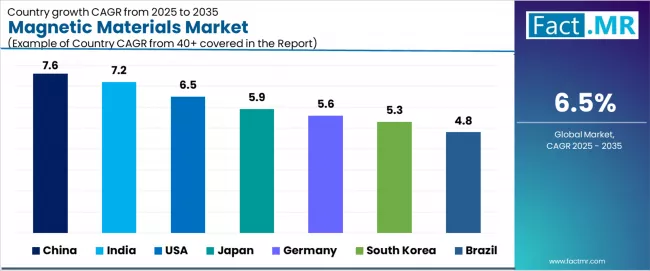
Magnetic Materials Market Cagr Analysis By Country | Source: Fact.MR
The magnetic materials market is experiencing exceptional growth globally, with China leading at a 7.6% CAGR through 2036, driven by massive electric vehicle production scale, dominant electronics manufacturing capacity, and comprehensive electrification infrastructure development across major industrial centers. India follows at 7.2%, supported by government incentive programs, expanding electronics production, and domestic manufacturing capability advancement.
USA records 6.5% growth, benefiting from clean energy investment and electric vehicle market expansion. Japan demonstrates 5.9% growth, emphasizing advanced magnet innovation and precision manufacturing excellence. Germany shows 5.6% growth with renewable energy deployment and automotive electrification leadership. South Korea records 5.3% growth, representing semiconductor industry integration and battery technology advancement, while Brazil shows 4.8% growth, representing industrial modernization and electrification expansion.
How does China Demonstrate Exceptional Market Potential with Large EV Production Base?
The market for magnetic materials in China is projected to exhibit exceptional growth with a CAGR of 7.6% through 2036, driven by the world's largest electric vehicle production capacity and increasing recognition of permanent magnet technologies as essential components for automotive electrification and industrial motor applications. The country's massive manufacturing ecosystem and growing emphasis on clean energy infrastructure are creating significant opportunities for magnetic material deployment across both automotive traction motors and renewable energy generation segments.
Major international material suppliers and domestic manufacturers are establishing comprehensive production facilities to serve the expanding population of electric vehicle manufacturers and electronics producers requiring advanced magnetic materials across automotive plants, wind farms, and consumer electronics factories throughout China's diverse industrial regions.
The Chinese government's strategic emphasis on electric vehicle adoption and new energy infrastructure development is driving substantial investments in permanent magnet production capabilities and rare-earth processing capacity. This policy support, combined with the country's dominant position in rare-earth element extraction and growing automotive manufacturing scale, creates a favorable environment for magnetic materials market development. Chinese manufacturers are increasingly focusing on domestic material production to improve supply security, with advanced permanent magnets representing a key component in this industrial capability building.
- Government initiatives supporting electric vehicle adoption and renewable energy deployment are driving demand for high-performance magnetic materials across automotive and energy segments
- Manufacturing capacity expansion and material processing technology advancement are supporting appropriate utilization of permanent magnets among automotive manufacturers and electronics producers nationwide
- Automotive producers and electronics manufacturers are increasingly recognizing magnetic performance importance in motor efficiency, creating new technology demand capabilities
- Rising material investment and growing awareness of energy efficiency benefits are accelerating permanent magnet adoption across industrial categories
What makes India Demonstrate Market Leadership with PLI Incentives and Electronics Ramp-up?
The market for magnetic materials in India is expanding at a CAGR of 7.2%, supported by government production-linked incentive programs, rapidly expanding electronics manufacturing capacity, and advancing domestic industrial capability integration across the country's developing manufacturing corridors.
The country's ambitious electronics production targets and increasing automotive electrification are driving demand for permanent magnet solutions in both consumer device manufacturing and emerging electric vehicle applications. International material suppliers and domestic producers are establishing manufacturing capacity to serve the growing demand for magnetic materials while supporting the country's position as an emerging electronics and automotive manufacturing hub. India's industrial sector continues to benefit from favorable government policies, developing manufacturing infrastructure, and growing emphasis on technology localization.
The country's focus on expanding electronics production capabilities is driving investments in critical material supply including permanent magnets and soft magnetic materials. This development is particularly important for magnetic materials applications, as manufacturers seek reliable domestic sources for motor components to enhance manufacturing capabilities and reduce dependence on international material imports.
- Rising awareness about electric vehicle benefits and improving domestic manufacturing capabilities are creating opportunities for advanced magnetic material solutions
- Growing electronics production and automotive component manufacturing are supporting increased deployment of permanent magnets across industrial categories
- Expanding manufacturing capacity and emerging quality standards are driving innovative applications of magnetic materials in automotive and electronics applications
- Material processing capability advancement is enabling delivery of sophisticated magnetic components, supporting market growth and reducing international material sourcing requirements
Why does USA Maintain Clean-Energy Investment and EV Transition Leadership?
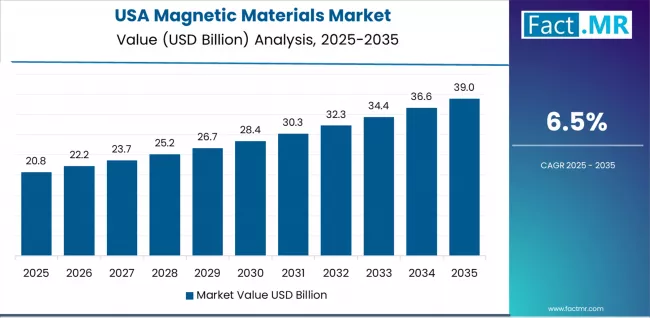
Magnetic Materials Market Country Value Analysis | Source: Fact.MR
The market for magnetic materials in USA is projected to exhibit strong growth with a CAGR of 6.5% through 2036, driven by substantial clean energy infrastructure investment and accelerating electric vehicle market transition. The country's position as a leading technology innovator and growing automotive electrification commitment are creating significant opportunities for permanent magnet integration across both electric vehicle production and renewable energy generation applications.
American automotive manufacturers are leveraging advanced motor technologies to serve the growing demand for high-performance electric vehicles while supporting the country's position as a major automotive and energy technology market. The market benefits from strong research infrastructure supporting material innovation, enabling optimized permanent magnet development and comprehensive automotive integration. This development is particularly important for magnetic materials applications, as manufacturers seek advanced material solutions that maximize motor efficiency while ensuring supply chain resilience in transportation and energy production environments.
Strategic Market Considerations:
- Electric vehicle production and wind energy installations leading growth with focus on motor efficiency and renewable generation applications
- Clean energy policy and automotive efficiency standards are driving diverse permanent magnet portfolios from standard motor grades to high-temperature specialty materials
- Material innovation excellence and automotive engineering expertise supporting competitive positioning in North American technology markets
- Supply chain security concerns and domestic processing initiatives beginning to influence material specifications and sourcing strategies
How does Japan Maintain High-Tech Magnet Innovation Leadership?
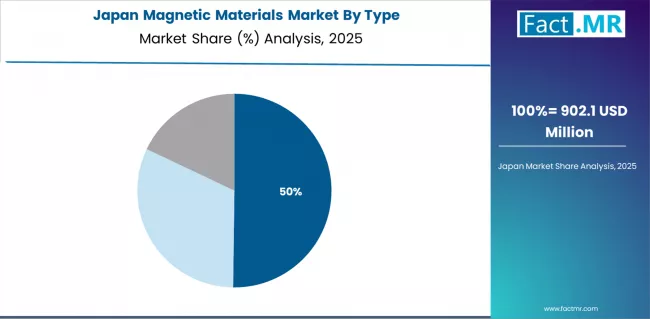
Magnetic Materials Market Japan Market Share Analysis By Type | Source: Fact.MR
Japan's advanced manufacturing market demonstrates sophisticated permanent magnet development with documented effectiveness in automotive motor platforms and electronics applications through integration with cutting-edge material science and precision manufacturing protocols. The country leverages materials innovation leadership and comprehensive research infrastructure to maintain a 5.9% CAGR through 2036.
Advanced material research centers, including major university facilities and corporate laboratories in leading technology hubs, showcase advanced magnet implementations where sophisticated material compositions integrate with comprehensive manufacturing processes and ongoing innovation initiatives to optimize magnetic properties and application performance.
Japanese manufacturers prioritize material quality and long-term reliability in permanent magnet production, creating demand for premium magnetic materials with advanced characteristics, including high-temperature stability and integration with precision manufacturing standards. The market benefits from established material innovation infrastructure and commitment to research excellence that drives continuous material advancement.
Strategic Market Considerations:
- Automotive and electronics segments leading growth with focus on material precision and advanced property optimization applications
- Stringent quality requirements are driving sophisticated material portfolios from conventional permanent magnets to specialized high-performance compositions
- Material science excellence and manufacturing precision supporting competitive positioning in Asian technology markets
- Performance standards and research collaboration emphasizing advanced material approaches and continuous quality improvement
What drives Germany’s Market Growth with Wind Energy Build-out and Automotive Innovation?
Germany's expanding magnetic materials market demonstrates accelerating permanent magnet adoption with a 5.6% CAGR through 2036, driven by substantial wind energy infrastructure deployment, automotive industry electrification, and advanced motor technology integration across major manufacturing regions.
The country's leadership in renewable energy production and premium automotive manufacturing is creating substantial demand for high-performance magnetic materials across diverse wind turbine and electric vehicle platforms. German manufacturers and energy operators are increasingly prioritizing advanced permanent magnets that incorporate superior magnetic properties for optimal motor efficiency and generator performance enhancement.
Market dynamics focus on high-quality permanent magnets that balance advanced magnetic capabilities with reliability considerations important to German engineering standards and long-term equipment performance requirements. Growing domestic material technology expertise creates opportunities for integrated material development programs and advanced manufacturing process deployment.
Strategic Market Considerations:
- Wind energy and automotive electrification segments leading growth with focus on motor efficiency and comprehensive power generation applications
- Diverse application requirements are driving varied material portfolios from standard permanent magnets to specialized automotive-grade compositions
- Engineering excellence supported by automotive industry expertise and renewable energy technology capabilities
- Manufacturer preferences emphasizing proven magnetic performance and comprehensive technical validation in automotive and energy applications
How does South Korea Demonstrate Battery and Semiconductor-Driven Magnet Demand?
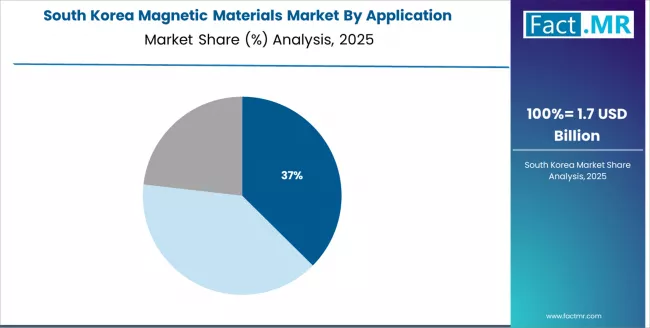
Magnetic Materials Market South Korea Market Share Analysis By Application | Source: Fact.MR
South Korea's expanding magnetic materials market demonstrates accelerating permanent magnet adoption with a 5.3% CAGR through 2036, driven by advanced battery manufacturing capacity, semiconductor industry integration, and comprehensive electronics production capabilities across major technology manufacturing regions.
The country's emphasis on battery technology development and semiconductor manufacturing excellence is creating substantial demand for specialized magnetic materials across diverse electronics platforms and automotive battery systems. Korean manufacturers and technology companies are increasingly prioritizing advanced magnetic components that incorporate precision characteristics for optimal device performance and manufacturing efficiency.
Market dynamics focus on high-quality magnetic materials that balance advanced performance capabilities with miniaturization requirements important to Korean technology standards and electronics manufacturing protocols. Growing domestic material expertise creates opportunities for integrated technology development programs and advanced material specification deployment.
Strategic Market Considerations:
- Electronics and battery segments demonstrating focused growth with emphasis on component precision and comprehensive device integration applications
- High-performance requirements driving premium material specifications with advanced magnetic characteristics and miniaturization optimization
- Technology excellence supported by semiconductor industry expertise and battery manufacturing capabilities
- Manufacturer preferences emphasizing proven reliability and comprehensive quality validation in electronics and automotive applications
What drives Market Growth with Expanding Electrification and Industrial Modernization in Brazil?
Brazil's expanding magnetic materials market demonstrates accelerating permanent magnet adoption with a 4.8% CAGR through 2036, driven by industrial equipment modernization, emerging electric vehicle interest, and expanding electronics manufacturing capacity across major industrial regions.
The country's growing industrial sophistication and increasing technology adoption are creating opportunities for magnetic material integration across both industrial motor applications and emerging automotive electrification platforms. Brazilian manufacturers are leveraging industrial development to serve the growing demand for efficient motor technologies while supporting the country's position as a major Latin American industrial economy.
Market dynamics focus on cost-effective magnetic materials that balance performance capabilities with economic considerations important to Brazilian industrial development and manufacturing cost structures. Growing domestic industrial capability creates opportunities for material technology adoption and motor efficiency enhancement programs.
Strategic Market Considerations:
- Industrial modernization and emerging electrification leading growth with focus on motor efficiency and equipment upgrade applications
- Economic considerations are driving diverse material portfolios from standard ferrite magnets to permanent magnet motor upgrade platforms
- Industrial development and manufacturing growth supporting competitive positioning in Latin American technology markets
- Equipment efficiency requirements beginning to influence material specifications and permanent magnet adoption timelines
Europe Market Split by Country
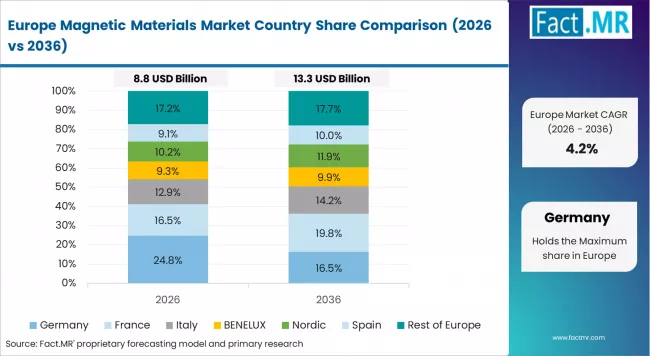
Magnetic Materials Market Europe Country Market Share Analysis, 2026 & 2036 | Source: Fact.MR
The magnetic materials market in Europe is projected to grow from USD 7.8 billion in 2026 to USD 14.6 billion by 2036, registering a CAGR of 6.5% over the forecast period. Germany is expected to maintain its leadership position with a 32.4% market share in 2026, rising to 33.1% by 2036, supported by its dominant automotive industry infrastructure, comprehensive wind energy deployment programs, and advanced material technology capabilities throughout major manufacturing centers and renewable energy installations.
France follows with a 19.7% share in 2026, projected to reach 20.2% by 2036, driven by nuclear energy infrastructure integration, automotive manufacturing presence, and expanding renewable energy deployment serving both domestic and European markets. UK holds a 16.8% share in 2026, expected to increase to 17.1% by 2036, supported by offshore wind energy leadership and automotive component manufacturing.
Italy commands a 14.3% share in 2026, projected to reach 13.9% by 2036, while Spain accounts for 10.6% in 2026, expected to reach 10.2% by 2036. The Rest of Europe region, including Nordic countries with substantial wind energy deployment, Eastern European industrial manufacturing, and smaller Western European technology centers, is anticipated to hold 6.2% in 2026, declining slightly to 5.5% by 2036, attributed to market consolidation toward larger core markets with established automotive manufacturing infrastructure and renewable energy material expertise.
Competitive Landscape of the Magnetic Materials Market
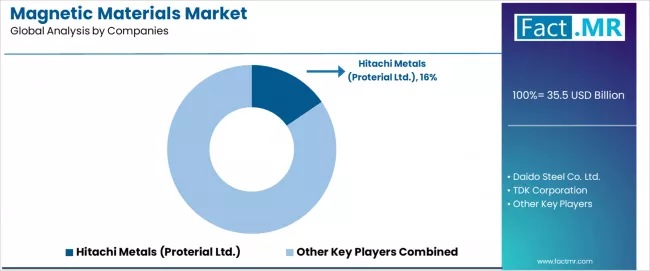
Magnetic Materials Market Analysis By Company | Source: Fact.MR
The magnetic materials market is characterized by intense competition among established permanent magnet manufacturers, specialized rare-earth processing companies, and comprehensive material technology organizations focused on delivering high-performance, reliable, and cost-effective magnetic solutions.
Companies are investing in material innovation programs, advanced processing technology acquisition, strategic automotive manufacturer partnerships, and comprehensive technical support initiatives to deliver effective, efficient, and reliable magnetic materials that meet stringent automotive specifications and energy sector requirements. Material composition optimization, supply chain integration, and magnetic property consistency strategies are central to strengthening product portfolios and market presence.
Hitachi Metals (Proterial Ltd.) leads the market with a 15.5% market share, offering comprehensive magnetic material solutions with a focus on automotive integration expertise and advanced permanent magnet capabilities for electric vehicle applications. Daido Steel Co. Ltd. provides specialized magnetic material platforms with emphasis on high-temperature magnets and comprehensive steel industry capabilities across Japanese manufacturing markets.
TDK Corporation focuses on electronics magnetic components and soft magnetic material solutions serving consumer device manufacturers. Shin-Etsu Chemical Co. Ltd. delivers rare-earth magnet production excellence with strong material processing capabilities and chemical industry integration.
Molycorp Magnequench operates with a focus on rare-earth magnet production and powder metallurgy expertise in North American and international markets. Lynas Corporation Ltd. provides rare-earth element supply and material processing capabilities supporting permanent magnet production. Arnold Magnetic Technologies specializes in precision magnetic solutions and custom magnet development with emphasis on specialized industrial applications.
Electron Energy Corporation delivers high-performance permanent magnets emphasizing automotive and aerospace applications. Tengam Engineering Inc. and VAC (Vacuumschmelze) focus on specialized magnetic material production and soft magnetic solutions, emphasizing material quality and comprehensive application engineering through dedicated material technology strategies.
Key Players in the Magnetic Materials Market
- Hitachi Metals (Proterial Ltd.)
- Daido Steel Co. Ltd.
- TDK Corporation
- Shin-Etsu Chemical Co. Ltd.
- Molycorp Magnequench
- Lynas Corporation Ltd.
- Arnold Magnetic Technologies
- Electron Energy Corporation
- Tengam Engineering Inc.
- VAC (Vacuumschmelze)
Bibliography
- 1. United States Geological Survey. (2025, January). Mineral Commodity Summaries 2025: Rare Earths. USGS.
- 2. International Energy Agency. (2024). Global EV Outlook 2024: Scaling Up and Securing Supply Chains. IEA.
- 3. European Commission. (2024). Critical Raw Materials Act: Implementation Guidelines for Permanent Magnet Supply Chains. European Commission.
- 4. Proterial Ltd. (2024). Annual Report 2024: Magnetic Materials Division. Proterial.
- 5. TDK Corporation. (2024). Investor Presentation: Magnetic Materials and Energy Solutions. TDK.
- 6. China Rare Earth Industry Association. (2024). China Rare Earth Statistical Yearbook 2024. CREIA.
This bibliography is provided for reader reference. The full Fact.MR report contains the complete reference list with primary research documentation.
This Report Addresses
- Market sizing and quantitative forecast metrics detailing the precise procurement expenditure dedicated to magnetic materials across automotive, electronics, and energy applications through 2036.
- Segmentation analysis mapping the consumption velocity of specific magnet types and evaluating the material grade qualification cycles governing procurement decisions.
- Regional deployment intelligence comparing China's dominant rare earth processing and magnet manufacturing ecosystem against the diversification strategies pursued by the USA, Japan, and Europe.
- Regulatory compliance assessment analyzing critical raw materials legislation, rare earth export controls, and domestic magnet manufacturing incentive programmes that reshape global supply chains.
- Competitive posture evaluation tracking rare earth sourcing partnerships, sintering technology investments, and grain boundary diffusion capabilities among leading permanent magnet producers.
- Capital project strategic guidance defining the exact magnet grade specifications, thermal stability thresholds, and supply security requirements for EV traction motor and wind turbine generator programmes.
- Supply chain vulnerability analysis identifying the specific rare earth processing bottlenecks and heavy rare earth element supply constraints that affect NdFeB magnet cost structures.
- Custom data delivery formats encompassing interactive dashboards, raw Excel datasets, and comprehensive PDF narrative reports.
Magnetic Materials Market Market Definition
Magnetic materials are substances that generate a magnetic field or respond to applied magnetic fields, processed into permanent magnets, soft magnetic cores, and semi-hard magnetic components for use in electric motors, generators, transformers, sensors, and electronic devices. The category includes rare earth magnets (NdFeB, SmCo), ferrite magnets, alnico magnets, amorphous and nanocrystalline soft magnetic alloys, and specialty semi-hard alloys. Primary buyers include automotive OEMs, wind turbine manufacturers, electronics assemblers, industrial motor producers, and defense contractors.
Magnetic Materials Market Market Inclusions
Market scope includes global and regional market sizes for all classes of magnetic materials (permanent, soft, and semi-hard) across automotive, electronics, energy, and industrial applications. The report covers the forecast period from 2026 to 2036 with segment breakdowns by material type and application, along with country-level analysis across major producing and consuming regions.
Magnetic Materials Market Market Exclusions
The scope excludes magnetic recording media, magnetic fluids, raw rare earth ores prior to processing into magnetic grades, and electromagnetic shielding materials not classified as magnetic cores. Finished electric motors, generators, and electronic assemblies are outside the analytical boundary.
Magnetic Materials Market Market Research Methodology
- Primary Research: Analysts engaged with magnet procurement directors at automotive OEMs, wind turbine component manufacturers, and electronics assembly leads to map the material grade specifications and qualification timelines governing purchasing decisions.
- Desk Research: Data collection aggregated rare earth production and trade statistics from national mining registries, magnet industry capacity disclosures, and published EV and renewable energy deployment roadmaps from government agencies.
- Market-Sizing and Forecasting: Baseline values derive from a bottom-up aggregation of magnet production volumes and soft magnetic core consumption data, applying region-specific electrification and industrialization growth curves to project future demand velocity.
- Data Validation and Update Cycle: Projections are tested against publicly reported magnetic material expenditure data from automotive industry supply chain disclosures, trade association production surveys, and national rare earth industry statistical reports.
Segmentation
Scope of the Report
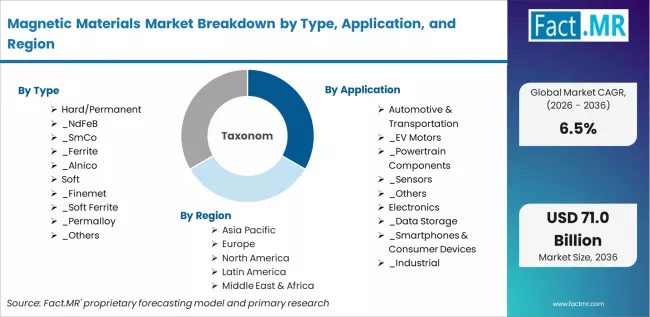
Magnetic Materials Market Breakdown By Type, Application, And Region | Source: Fact.MR
| Metric | Value |
|---|---|
| Quantitative Units | USD 37.81 billion to USD 70.97 billion, at a CAGR of 6.5% |
| Market Definition | Magnetic materials are substances that generate a magnetic field or respond to applied magnetic fields, processed into permanent magnets, soft magnetic cores, and semi-hard magnetic components for use in electric motors, generators, transformers, sensors, and electronic devices. The category includes rare earth magnets (NdFeB, SmCo), ferrite magnets, alnico magnets, amorphous and nanocrystalline soft magnetic alloys, and specialty semi-hard alloys. |
| Type Segmentation | Hard/Permanent (NdFeB, SmCo, Ferrite, Alnico), Soft (Finemet, Soft Ferrite, Permalloy, Others), Semi-hard (2:17 SmCo, 1:5 SmCo, Metal Alloys, Others) |
| Application Segmentation | Automotive & Transportation, Electronics, Energy |
| Regions/Areas Covered | China, India, USA, Japan, Germany, South Korea, Brazil |
| Key Companies Profiled | Hitachi Metals (Proterial Ltd.), Daido Steel Co. Ltd., TDK Corporation, Shin-Etsu Chemical Co. Ltd., Molycorp Magnequench, Lynas Corporation Ltd., Arnold Magnetic Technologies |
| Forecast Period | 2026 to 2036 |
Source: Fact.MR analysis. Updated Apr 6, 2026
Magnetic Materials Market by Segments
-
Type :
- Hard/Permanent
- NdFeB
- SmCo
- Ferrite
- Alnico
- Soft
- Finemet
- Soft Ferrite
- Permalloy
- Others
- Semi-hard
- 2:17 SmCo
- 1:5 SmCo
- Metal Alloys
- Others
- Hard/Permanent
-
Application :
- Automotive & Transportation
- EV Motors
- Powertrain Components
- Sensors
- Others
- Electronics
- Data Storage
- Smartphones & Consumer Devices
- Industrial Electronics
- Others
- Energy
- Wind Turbine Generators
- Power Conversion
- Renewable Infrastructure
- Automotive & Transportation
-
Region :
- Asia Pacific
- China
- India
- Japan
- South Korea
- ASEAN
- Australia & New Zealand
- Rest of Asia Pacific
- North America
- United States
- Canada
- Mexico
- Europe
- Germany
- France
- United Kingdom
- Italy
- Spain
- Nordic
- BENELUX
- Rest of Europe
- Latin America
- Brazil
- Argentina
- Chile
- Rest of Latin America
- Middle East & Africa
- Kingdom of Saudi Arabia
- Other GCC Countries
- Turkey
- South Africa
- Other African Countries
- Rest of Middle East & Africa
- Asia Pacific
Frequently Asked Questions
How large is the demand for magnetic materials in the global market in 2026?
What will be the market size of magnetic materials in the global market by 2036?
What is the expected demand growth for magnetic materials in the global market between 2026 and 2036?
Which material type is poised to lead global sales by 2026?
How significant is the role of Automotive & Transportation in driving magnetic materials demand in 2026?
What is driving demand in China?
What is the China growth outlook in this report?
What is India's growth outlook in this report?
Who worked on this report


Preview the report firsthand - request a free sample
Free SampleGet the brochure for pricing and purchase details
Download PDF