Med-Style Plant-Based Deli Slice Ingredients Market (2026 - 2036)
Med-Style Plant-Based Deli Slice Ingredients Market Size and Share Forecast Outlook 2026 to 2036
Core Findings
Med-Style Plant-Based Deli Slice Ingredients Market Forecast and Outlook 2026 to 2036
The med-style plant-based deli slice ingredients market records USD 9.9 billion in 2026 and reaches USD 37.0 billion by 2036 at a 14.1% CAGR.
Med-Style Plant-Based Deli Slice Ingredients Market Key Takeaways
- Med-Style Plant-Based Deli Slice Ingredients Market Value (2026): USD 9.9 billion
- Med-Style Plant-Based Deli Slice Ingredients Market Forecast Value (2036): USD 37.0 billion
- Med-Style Plant-Based Deli Slice Ingredients Market Forecast CAGR (2026-2036): 14.1%
- Leading Product Type in Med-Style Plant-Based Deli Slice Ingredients Market: Plant-based protein isolates
- Key Growth Regions in Med-Style Plant-Based Deli Slice Ingredients Market: Asia Pacific, Europe, North America, Latin America, Middle East & Africa
- Top Players in Med-Style Plant-Based Deli Slice Ingredients Market: Kerry Group, Givaudan, Symrise, Ingredion, DuPont, Roquette, Cargill, Tate & Lyle
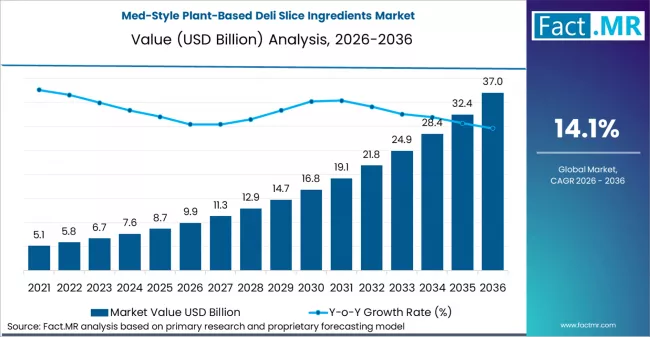
The scale now visible follows earlier expansion steps at USD 5.1 billion, USD 6.7 billion, USD 8.7 billion, and USD 8.7 billion before the current level was established. These ingredients sit at the center of private label and foodservice ranges where slice performance matters more than novelty.
Product teams fix protein blend, fat system, and slicing behavior early because packaging yield, shelf life, and visual uniformity depend on stable references. Once a slice base is approved, any alteration forces changes across cutting, stacking, and labeling operations. Buyers evaluate firmness, edge integrity, and flavor carry through chilled storage and repeated handling. Business planning focuses on scale and repeatability. Volumes spread across retail and catering accounts. Production favors long runs. Supplier positions remain stable. Capacity expands only after contracts confirm sustained demand.
Med-Style Plant-Based Deli Slice Ingredients Market
| Metric | Value |
|---|---|
| Market Value (2026) | USD 9.9 billion |
| Forecast Value (2036) | USD 37.0 billion |
| Forecast CAGR (2026–2036) | 14.1% |
Category
| Category | Segments |
|---|---|
| Product Type | Plant-based protein isolates; Texturized vegetable proteins; Flavor and seasoning systems; Binder and functional ingredient blends |
| Formulation Type | Allergen-free deli slice bases; High-protein deli slice formulations; Low-sodium deli slice systems; Clean-label mediterranean flavor platforms |
| End Use | Retail packaged food products; Foodservice and hospitality; Institutional food programs; Direct to consumer meal kits |
| Region | North America; Europe; Asia Pacific; Latin America; Middle East & Africa |
Segmental Analysis
Why Do Plant-Based Protein Isolates Serve as The Primary Structural Input for Deli Slice Development?
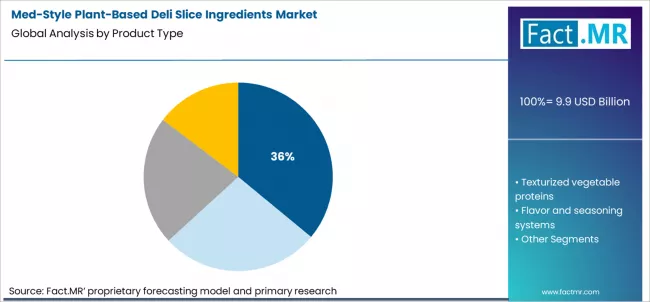
Product architecture in the med-style plant-based deli slice ingredients market continues to rely on plant-based protein isolates, which hold a 36.00% share by product type. These materials provide a controllable protein matrix that supports slicing, stacking, and portioning without structural collapse. Formulation teams use isolates to set texture, moisture binding, and bite resistance targets before adding fibers or seasoning systems. Pilot line trials often begin with isolate driven bases and move toward more complex builds later. Supply planning also benefits from standardized specifications and predictable functional behavior. Texturized proteins, flavor systems, and binder blends contribute to differentiation. The structural role of isolates keeps them at the center of most development and scale up programs.
Why Have Allergen-Free Bases Become the Leading Formulation Platform for This Category?
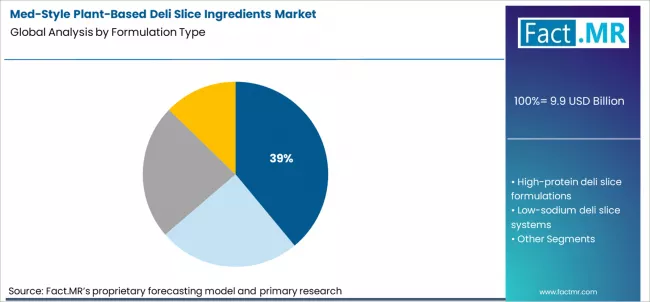
Within formulation types, allergen-free deli slice bases account for 39.00% of usage in the med-style plant-based deli slice ingredients market. Product teams treat this platform as a way to simplify portfolio management across retail and foodservice channels. Recipes built on allergen-free bases reduce the need for separate production runs and labeling systems. Quality and compliance workflows also become easier to manage under this structure. Menu developers and private label programs favor these bases for broad placement across schools, hospitals, and general retail. High-protein, low-sodium, and clean-label platforms appear across ranges. Most volume continues to flow through allergen-free structures that support wide distribution without category segmentation.
What are the Drivers, Restraints, and Key Trends of the Med-Style Plant-Based Deli Slice Ingredients Market?
- Drivers: Growing consumer preference for plant-based alternatives that deliver familiar Mediterranean flavors and clean label ingredients is increasing demand for deli slice base systems across retail and foodservice segments.
- Restraint: Difficulty in replicating authentic texture and meltability while keeping fat and additive levels low limits product acceptance among traditional deli consumers and formulators.
- Trend 1: Wider use of blended plant proteins and specialty binders to improve slice cohesion, mouthfeel, and overall sensory quality.
- Trend 2: Expansion of savory Mediterranean spice and herb profiles that align with regional taste expectations in ready-to-eat and heat-and-serve options.
Analysis of the Med-Style Plant-Based Deli Slice Ingredients Market by Key Country
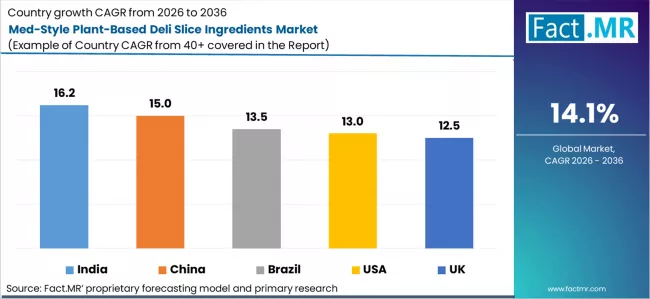
| Country | CAGR (2026-2036) |
|---|---|
| USA | 13.0% |
| UK | 12.5% |
| China | 15.0% |
| India | 16.2% |
| Brazil | 13.5% |
The report covers an in-depth analysis of 40+ countries; top-performing countries are highlighted below.
How Are Retail Ready Meal Counters in USA Shaping Use of Med-Style Plant-Based Deli Slice Ingredients?
In USA, this market expands at about 13% per year through 2036. Plant based deli formats gain shelf space through prepared food counters and packaged sandwich lines rather than through specialty vegan ranges alone. Product teams focus on slice integrity, moisture control, and cold case stability. Formulation work centers on texture and clean cutting performance. Distribution remains tied to large retail programs and foodservice supply agreements. Import volumes follow confirmed listings with national chains. Procurement decisions depend on range resets and private label expansion plans. Trial usage appears during new product introductions. Repeat demand depends on rotation speed at counters. Volume growth follows store rollout schedules rather than seasonal promotion cycles or short term trend driven launches.
Why Do Private Label Sandwich Programs in UK Influence Use of Med-Style Plant-Based Deli Slice Ingredients?
In UK, category growth holds near 12.5% per year through 2036. Most volume enters through private label sandwich, wrap, and chilled meal programs rather than branded meat alternative lines. Product developers prioritize slice consistency, flavor neutrality, and visual appeal in cross section displays. Retail buying teams control adoption speed through range architecture decisions. Import volumes reflect confirmed contract awards rather than speculative trials. Supplier discussions focus on batch consistency and supply security. Inventory movement follows central kitchen production plans. Volume increases when chains expand plant based options across core ranges. Demand remains concentrated among a small group of large retailers. Progress depends more on menu and range planning cycles than on consumer marketing activity or influencer driven interest.
What Is Driving Faster Adoption of Med-Style Plant-Based Deli Slice Ingredients in China?
China shows growth near 15% per year through 2036. Central kitchen expansion and ready meal platforms shape how these ingredients are used. Product formats favor pre sliced components designed for assembly line sandwich and bowl production. Registration timing sets the commercial calendar. Import volumes rise ahead of planned menu launches and platform campaigns. Supplier choice depends on delivery reliability and documentation readiness. Inventory builds occur in steps aligned with production ramp ups. Brand owners focus on placement inside health focused ready meal categories. Pricing discussions follow volume commitments. Repeat orders depend on throughput stability and waste control. Market development remains tied to foodservice and platform driven meal programs rather than to retail deli counters or consumer facing packaged cold cut alternatives.
How Are Organized Foodservice Chains in India Changing Use of Med-Style Plant-Based Deli Slice Ingredients?
In India, this market advances at roughly 16.2% per year through 2036. Growth of cloud kitchens, café chains, and packaged sandwich brands explains most new demand. Product teams concentrate on cost control, slice yield, and heat tolerance during assembly. Distribution serves both quick service operators and packaged food producers. Import volumes increase when new chain contracts are signed rather than during routine restocking. Supplier selection favors groups able to support steady bulk delivery. Pricing sensitivity remains high. Volume planning follows contract award schedules. Trial usage appears during menu testing phases. Repeat demand depends on operational reliability and acceptance by foodservice buyers. Scale builds through chain expansion rather than through premium retail positioning or niche health store placement.
What Sets the Commercial Pattern for Med-Style Plant-Based Deli Slice Ingredients in Brazil?
Brazil records expansion close to 13.5% per year through 2036. Incremental menu upgrades and private label line extensions define how these ingredients enter production. Sourcing decisions reflect cost management and cold chain constraints. Import volumes follow approved menu and range changes. Trial volumes appear during pilot manufacturing runs. Repeat orders depend on performance inside finished sandwiches and ready meals rather than on marketing support. Product teams treat plant based deli slices as functional components rather than flagship products. Distribution remains concentrated among packaged food manufacturers and foodservice suppliers. Planning cycles follow factory scheduling and annual portfolio reviews. Market development remains gradual and tied to practical production needs rather than to rapid shifts in consumer preference or media driven dietary trends.
How Do Process Fit and Texture Targets Determine Supplier Positions in the Med Style Plant Based Deli Slice Ingredients Market?
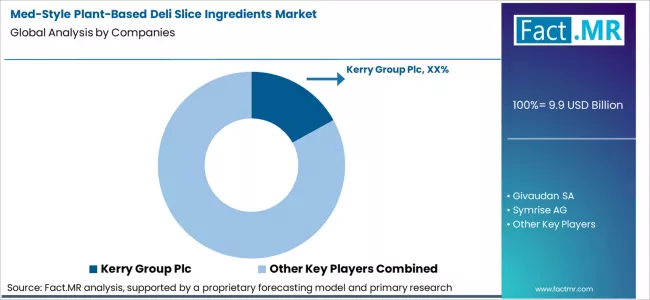
Line trials, not price sheets, decide access to slicing programs. Producers set protein matrices, bind systems, and thermal profiles before any supplier is shortlisted. Kerry, Givaudan, and Symrise often enter during this stage through system design work that fixes seasoning and structure across several SKUs. Ingredion, Roquette, Cargill, Tate & Lyle, and DuPont compete where starches, fibers, and proteins must meet yield and slice integrity limits. Buyers screen suppliers using shear stability, purge control, and batch repeatability under commercial equipment. Once a system is approved, volumes follow plant utilization plans. Changes usually occur after equipment changes or texture resets driven by portfolio updates.
Key Players in the Med-Style Plant-Based Deli Slice Ingredients Market
- Kerry Group Plc
- Givaudan SA
- Symrise AG
- Ingredion Incorporated
- DuPont de Nemours Inc.
- Roquette Frères
- Cargill Incorporated
- Tate & Lyle PLC
Scope of the Report
| Items | Values |
|---|---|
| Quantitative Units (2026) | USD billion |
| Product Type | Plant-based protein isolates, texturized vegetable proteins, flavor and seasoning systems, binder and functional ingredient blends |
| Formulation Type | Allergen-free deli slice bases, high-protein deli slice formulations, low-sodium deli slice systems, clean-label Mediterranean flavor platforms |
| End Use | Retail packaged food products, foodservice and hospitality, institutional food programs, direct to consumer meal kits |
| Regions Covered | Asia Pacific, Europe, North America, Latin America, Middle East & Africa |
| Countries Covered | United States, Canada, Mexico, Germany, United Kingdom, France, Italy, Spain, Nordics, BENELUX, China, Japan, South Korea, India, Australia & New Zealand, ASEAN, Brazil, Chile, Saudi Arabia, Turkey, South Africa, and other regional markets |
| Key Companies Profiled | Kerry Group, Givaudan, Symrise, Ingredion, DuPont, Roquette, Cargill, Tate & Lyle |
| Additional Attributes | Dollar sales by product type, formulation type, and end use; slicing yield, edge integrity, moisture retention, and cold-case stability; long-run production planning, capacity linked to contract volumes, and batch-to-batch consistency |
Med-Style Plant-Based Deli Slice Ingredients Market Segmentation
-
Product Type :
- Plant-based protein isolates
- Texturized vegetable proteins
- Flavor and seasoning systems
- Binder and functional ingredient blends
-
Formulation Type :
- Allergen-free deli slice bases
- High-protein deli slice formulations
- Low-sodium deli slice systems
- Clean-label Mediterranean flavor platforms
-
End Use :
- Retail packaged food products
- Foodservice and hospitality
- Institutional food programs
- Direct to consumer meal kits
-
Region :
- Asia Pacific
- China
- Japan
- South Korea
- India
- Australia & New Zealand
- ASEAN
- Rest of Asia Pacific
- Europe
- Germany
- United Kingdom
- France
- Italy
- Spain
- Nordic
- BENELUX
- Rest of Europe
- North America
- United States
- Canada
- Mexico
- Latin America
- Brazil
- Chile
- Rest of Latin America
- Middle East & Africa
- Kingdom of Saudi Arabia
- Other GCC Countries
- Turkey
- South Africa
- Other African Union
- Rest of Middle East & Africa
- Asia Pacific
References
- European Food Safety Authority Panel on Nutrition, Novel Foods and Food Allergens (NDA). (2023). Scientific opinion on the safety of plant protein sources used in food products and food supplements. EFSA Journal, 21(7).
- European Commission. (2024). Guidance on the application of Regulation (EU) No 1169/2011 for plant-based and vegetarian food products. European Commission.
- International Organization for Standardization. (2023). ISO 20483:2023 - Cereals and pulses - Determination of nitrogen content and calculation of crude protein - Kjeldahl method. ISO. (Keep, but as supporting method only)
- European Commission. (2024). Guidance on the application of Regulation (EU) No 1333/2008 on food additives in plant-based and vegetarian food products. European Commission.
- European Food Safety Authority Panel on Food Additives and Flavourings (FAF). (2023). Safety assessment and technical guidance for the use of protein isolates and functional plant ingredients in processed foods. EFSA Journal, 21(9).
Table of Content
- Executive Summary
- Global Market Outlook
- Demand to side Trends
- Supply to side Trends
- Technology Roadmap Analysis
- Analysis and Recommendations
- Market Overview
- Market Coverage / Taxonomy
- Market Definition / Scope / Limitations
- Market Background
- Market Dynamics
- Drivers
- Restraints
- Opportunity
- Trends
- Scenario Forecast
- Demand in Optimistic Scenario
- Demand in Likely Scenario
- Demand in Conservative Scenario
- Opportunity Map Analysis
- Product Life Cycle Analysis
- Supply Chain Analysis
- Investment Feasibility Matrix
- Value Chain Analysis
- PESTLE and Porter’s Analysis
- Regulatory Landscape
- Regional Parent Market Outlook
- Production and Consumption Statistics
- Import and Export Statistics
- Market Dynamics
- Global Market Analysis 2021 to 2025 and Forecast, 2026 to 2036
- Historical Market Size Value (USD Million) Analysis, 2021 to 2025
- Current and Future Market Size Value (USD Million) Projections, 2026 to 2036
- Y to o to Y Growth Trend Analysis
- Absolute $ Opportunity Analysis
- Global Market Pricing Analysis 2021 to 2025 and Forecast 2026 to 2036
- Global Market Analysis 2021 to 2025 and Forecast 2026 to 2036, By Product Type
- Introduction / Key Findings
- Historical Market Size Value (USD Million) Analysis By Product Type, 2021 to 2025
- Current and Future Market Size Value (USD Million) Analysis and Forecast By Product Type, 2026 to 2036
- Plant-based protein isolates
- Texturized vegetable proteins
- Flavor and seasoning systems
- Binder and functional ingredient blends
- Plant-based protein isolates
- Y to o to Y Growth Trend Analysis By Product Type, 2021 to 2025
- Absolute $ Opportunity Analysis By Product Type, 2026 to 2036
- Global Market Analysis 2021 to 2025 and Forecast 2026 to 2036, By Formulation Type
- Introduction / Key Findings
- Historical Market Size Value (USD Million) Analysis By Formulation Type, 2021 to 2025
- Current and Future Market Size Value (USD Million) Analysis and Forecast By Formulation Type, 2026 to 2036
- Allergen-free deli slice bases
- High-protein deli slice formulations
- Low-sodium deli slice systems
- Clean-label mediterranean flavor platforms
- Allergen-free deli slice bases
- Y to o to Y Growth Trend Analysis By Formulation Type, 2021 to 2025
- Absolute $ Opportunity Analysis By Formulation Type, 2026 to 2036
- Global Market Analysis 2021 to 2025 and Forecast 2026 to 2036, By End Use
- Introduction / Key Findings
- Historical Market Size Value (USD Million) Analysis By End Use, 2021 to 2025
- Current and Future Market Size Value (USD Million) Analysis and Forecast By End Use, 2026 to 2036
- Retail packaged food products
- Foodservice and hospitality
- Institutional food programs
- Direct to consumer meal kits
- Retail packaged food products
- Y to o to Y Growth Trend Analysis By End Use, 2021 to 2025
- Absolute $ Opportunity Analysis By End Use, 2026 to 2036
- Global Market Analysis 2021 to 2025 and Forecast 2026 to 2036, By Region
- Introduction
- Historical Market Size Value (USD Million) Analysis By Region, 2021 to 2025
- Current Market Size Value (USD Million) Analysis and Forecast By Region, 2026 to 2036
- North America
- Latin America
- Western Europe
- Eastern Europe
- East Asia
- South Asia and Pacific
- Middle East & Africa
- Market Attractiveness Analysis By Region
- North America Market Analysis 2021 to 2025 and Forecast 2026 to 2036, By Country
- Historical Market Size Value (USD Million) Trend Analysis By Market Taxonomy, 2021 to 2025
- Market Size Value (USD Million) Forecast By Market Taxonomy, 2026 to 2036
- By Country
- USA
- Canada
- Mexico
- By Product Type
- By Formulation Type
- By End Use
- By Country
- Market Attractiveness Analysis
- By Country
- By Product Type
- By Formulation Type
- By End Use
- Key Takeaways
- Latin America Market Analysis 2021 to 2025 and Forecast 2026 to 2036, By Country
- Historical Market Size Value (USD Million) Trend Analysis By Market Taxonomy, 2021 to 2025
- Market Size Value (USD Million) Forecast By Market Taxonomy, 2026 to 2036
- By Country
- Brazil
- Chile
- Rest of Latin America
- By Product Type
- By Formulation Type
- By End Use
- By Country
- Market Attractiveness Analysis
- By Country
- By Product Type
- By Formulation Type
- By End Use
- Key Takeaways
- Western Europe Market Analysis 2021 to 2025 and Forecast 2026 to 2036, By Country
- Historical Market Size Value (USD Million) Trend Analysis By Market Taxonomy, 2021 to 2025
- Market Size Value (USD Million) Forecast By Market Taxonomy, 2026 to 2036
- By Country
- Germany
- UK
- Italy
- Spain
- France
- Nordic
- BENELUX
- Rest of Western Europe
- By Product Type
- By Formulation Type
- By End Use
- By Country
- Market Attractiveness Analysis
- By Country
- By Product Type
- By Formulation Type
- By End Use
- Key Takeaways
- Eastern Europe Market Analysis 2021 to 2025 and Forecast 2026 to 2036, By Country
- Historical Market Size Value (USD Million) Trend Analysis By Market Taxonomy, 2021 to 2025
- Market Size Value (USD Million) Forecast By Market Taxonomy, 2026 to 2036
- By Country
- Russia
- Poland
- Hungary
- Balkan & Baltic
- Rest of Eastern Europe
- By Product Type
- By Formulation Type
- By End Use
- By Country
- Market Attractiveness Analysis
- By Country
- By Product Type
- By Formulation Type
- By End Use
- Key Takeaways
- East Asia Market Analysis 2021 to 2025 and Forecast 2026 to 2036, By Country
- Historical Market Size Value (USD Million) Trend Analysis By Market Taxonomy, 2021 to 2025
- Market Size Value (USD Million) Forecast By Market Taxonomy, 2026 to 2036
- By Country
- China
- Japan
- South Korea
- By Product Type
- By Formulation Type
- By End Use
- By Country
- Market Attractiveness Analysis
- By Country
- By Product Type
- By Formulation Type
- By End Use
- Key Takeaways
- South Asia and Pacific Market Analysis 2021 to 2025 and Forecast 2026 to 2036, By Country
- Historical Market Size Value (USD Million) Trend Analysis By Market Taxonomy, 2021 to 2025
- Market Size Value (USD Million) Forecast By Market Taxonomy, 2026 to 2036
- By Country
- India
- ASEAN
- Australia & New Zealand
- Rest of South Asia and Pacific
- By Product Type
- By Formulation Type
- By End Use
- By Country
- Market Attractiveness Analysis
- By Country
- By Product Type
- By Formulation Type
- By End Use
- Key Takeaways
- Middle East & Africa Market Analysis 2021 to 2025 and Forecast 2026 to 2036, By Country
- Historical Market Size Value (USD Million) Trend Analysis By Market Taxonomy, 2021 to 2025
- Market Size Value (USD Million) Forecast By Market Taxonomy, 2026 to 2036
- By Country
- Kingdom of Saudi Arabia
- Other GCC Countries
- Turkiye
- South Africa
- Other African Union
- Rest of Middle East & Africa
- By Product Type
- By Formulation Type
- By End Use
- By Country
- Market Attractiveness Analysis
- By Country
- By Product Type
- By Formulation Type
- By End Use
- Key Takeaways
- Key Countries Market Analysis
- USA
- Pricing Analysis
- Market Share Analysis, 2025
- By Product Type
- By Formulation Type
- By End Use
- Canada
- Pricing Analysis
- Market Share Analysis, 2025
- By Product Type
- By Formulation Type
- By End Use
- Mexico
- Pricing Analysis
- Market Share Analysis, 2025
- By Product Type
- By Formulation Type
- By End Use
- Brazil
- Pricing Analysis
- Market Share Analysis, 2025
- By Product Type
- By Formulation Type
- By End Use
- Chile
- Pricing Analysis
- Market Share Analysis, 2025
- By Product Type
- By Formulation Type
- By End Use
- Germany
- Pricing Analysis
- Market Share Analysis, 2025
- By Product Type
- By Formulation Type
- By End Use
- UK
- Pricing Analysis
- Market Share Analysis, 2025
- By Product Type
- By Formulation Type
- By End Use
- Italy
- Pricing Analysis
- Market Share Analysis, 2025
- By Product Type
- By Formulation Type
- By End Use
- Spain
- Pricing Analysis
- Market Share Analysis, 2025
- By Product Type
- By Formulation Type
- By End Use
- France
- Pricing Analysis
- Market Share Analysis, 2025
- By Product Type
- By Formulation Type
- By End Use
- India
- Pricing Analysis
- Market Share Analysis, 2025
- By Product Type
- By Formulation Type
- By End Use
- ASEAN
- Pricing Analysis
- Market Share Analysis, 2025
- By Product Type
- By Formulation Type
- By End Use
- Australia & New Zealand
- Pricing Analysis
- Market Share Analysis, 2025
- By Product Type
- By Formulation Type
- By End Use
- China
- Pricing Analysis
- Market Share Analysis, 2025
- By Product Type
- By Formulation Type
- By End Use
- Japan
- Pricing Analysis
- Market Share Analysis, 2025
- By Product Type
- By Formulation Type
- By End Use
- South Korea
- Pricing Analysis
- Market Share Analysis, 2025
- By Product Type
- By Formulation Type
- By End Use
- Russia
- Pricing Analysis
- Market Share Analysis, 2025
- By Product Type
- By Formulation Type
- By End Use
- Poland
- Pricing Analysis
- Market Share Analysis, 2025
- By Product Type
- By Formulation Type
- By End Use
- Hungary
- Pricing Analysis
- Market Share Analysis, 2025
- By Product Type
- By Formulation Type
- By End Use
- Kingdom of Saudi Arabia
- Pricing Analysis
- Market Share Analysis, 2025
- By Product Type
- By Formulation Type
- By End Use
- Turkiye
- Pricing Analysis
- Market Share Analysis, 2025
- By Product Type
- By Formulation Type
- By End Use
- South Africa
- Pricing Analysis
- Market Share Analysis, 2025
- By Product Type
- By Formulation Type
- By End Use
- USA
- Market Structure Analysis
- Competition Dashboard
- Competition Benchmarking
- Market Share Analysis of Top Players
- By Regional
- By Product Type
- By Formulation Type
- By End Use
- Competition Analysis
- Competition Deep Dive
- Kerry Group Plc
- Overview
- Product Portfolio
- Profitability by Market Segments (Product/Age /Sales Channel/Region)
- Sales Footprint
- Strategy Overview
- Marketing Strategy
- Product Strategy
- Channel Strategy
- Givaudan SA
- Symrise AG
- Ingredion Incorporated
- DuPont de Nemours Inc.
- Roquette Frères
- Cargill Incorporated
- Tate & Lyle PLC
- Kerry Group Plc
- Competition Deep Dive
- Assumptions & Acronyms Used
- Research Methodology
List Of Table
- Table 1: Global Market Value (USD Million) Forecast by Region, 2021 to 2036
- Table 2: Global Market Value (USD Million) Forecast by Product Type, 2021 to 2036
- Table 3: Global Market Value (USD Million) Forecast by Formulation Type, 2021 to 2036
- Table 4: Global Market Value (USD Million) Forecast by End Use, 2021 to 2036
- Table 5: North America Market Value (USD Million) Forecast by Country, 2021 to 2036
- Table 6: North America Market Value (USD Million) Forecast by Product Type, 2021 to 2036
- Table 7: North America Market Value (USD Million) Forecast by Formulation Type, 2021 to 2036
- Table 8: North America Market Value (USD Million) Forecast by End Use, 2021 to 2036
- Table 9: Latin America Market Value (USD Million) Forecast by Country, 2021 to 2036
- Table 10: Latin America Market Value (USD Million) Forecast by Product Type, 2021 to 2036
- Table 11: Latin America Market Value (USD Million) Forecast by Formulation Type, 2021 to 2036
- Table 12: Latin America Market Value (USD Million) Forecast by End Use, 2021 to 2036
- Table 13: Western Europe Market Value (USD Million) Forecast by Country, 2021 to 2036
- Table 14: Western Europe Market Value (USD Million) Forecast by Product Type, 2021 to 2036
- Table 15: Western Europe Market Value (USD Million) Forecast by Formulation Type, 2021 to 2036
- Table 16: Western Europe Market Value (USD Million) Forecast by End Use, 2021 to 2036
- Table 17: Eastern Europe Market Value (USD Million) Forecast by Country, 2021 to 2036
- Table 18: Eastern Europe Market Value (USD Million) Forecast by Product Type, 2021 to 2036
- Table 19: Eastern Europe Market Value (USD Million) Forecast by Formulation Type, 2021 to 2036
- Table 20: Eastern Europe Market Value (USD Million) Forecast by End Use, 2021 to 2036
- Table 21: East Asia Market Value (USD Million) Forecast by Country, 2021 to 2036
- Table 22: East Asia Market Value (USD Million) Forecast by Product Type, 2021 to 2036
- Table 23: East Asia Market Value (USD Million) Forecast by Formulation Type, 2021 to 2036
- Table 24: East Asia Market Value (USD Million) Forecast by End Use, 2021 to 2036
- Table 25: South Asia and Pacific Market Value (USD Million) Forecast by Country, 2021 to 2036
- Table 26: South Asia and Pacific Market Value (USD Million) Forecast by Product Type, 2021 to 2036
- Table 27: South Asia and Pacific Market Value (USD Million) Forecast by Formulation Type, 2021 to 2036
- Table 28: South Asia and Pacific Market Value (USD Million) Forecast by End Use, 2021 to 2036
- Table 29: Middle East & Africa Market Value (USD Million) Forecast by Country, 2021 to 2036
- Table 30: Middle East & Africa Market Value (USD Million) Forecast by Product Type, 2021 to 2036
- Table 31: Middle East & Africa Market Value (USD Million) Forecast by Formulation Type, 2021 to 2036
- Table 32: Middle East & Africa Market Value (USD Million) Forecast by End Use, 2021 to 2036
List Of Figures
- Figure 1: Global Market Pricing Analysis
- Figure 2: Global Market Value (USD Million) Forecast 2021 to 2036
- Figure 3: Global Market Value Share and BPS Analysis by Product Type, 2026 and 2036
- Figure 4: Global Market Y to o to Y Growth Comparison by Product Type, 2026 to 2036
- Figure 5: Global Market Attractiveness Analysis by Product Type
- Figure 6: Global Market Value Share and BPS Analysis by Formulation Type, 2026 and 2036
- Figure 7: Global Market Y to o to Y Growth Comparison by Formulation Type, 2026 to 2036
- Figure 8: Global Market Attractiveness Analysis by Formulation Type
- Figure 9: Global Market Value Share and BPS Analysis by End Use, 2026 and 2036
- Figure 10: Global Market Y to o to Y Growth Comparison by End Use, 2026 to 2036
- Figure 11: Global Market Attractiveness Analysis by End Use
- Figure 12: Global Market Value (USD Million) Share and BPS Analysis by Region, 2026 and 2036
- Figure 13: Global Market Y to o to Y Growth Comparison by Region, 2026 to 2036
- Figure 14: Global Market Attractiveness Analysis by Region
- Figure 15: North America Market Incremental Dollar Opportunity, 2026 to 2036
- Figure 16: Latin America Market Incremental Dollar Opportunity, 2026 to 2036
- Figure 17: Western Europe Market Incremental Dollar Opportunity, 2026 to 2036
- Figure 18: Eastern Europe Market Incremental Dollar Opportunity, 2026 to 2036
- Figure 19: East Asia Market Incremental Dollar Opportunity, 2026 to 2036
- Figure 20: South Asia and Pacific Market Incremental Dollar Opportunity, 2026 to 2036
- Figure 21: Middle East & Africa Market Incremental Dollar Opportunity, 2026 to 2036
- Figure 22: North America Market Value Share and BPS Analysis by Country, 2026 and 2036
- Figure 23: North America Market Value Share and BPS Analysis by Product Type, 2026 and 2036
- Figure 24: North America Market Y to o to Y Growth Comparison by Product Type, 2026 to 2036
- Figure 25: North America Market Attractiveness Analysis by Product Type
- Figure 26: North America Market Value Share and BPS Analysis by Formulation Type, 2026 and 2036
- Figure 27: North America Market Y to o to Y Growth Comparison by Formulation Type, 2026 to 2036
- Figure 28: North America Market Attractiveness Analysis by Formulation Type
- Figure 29: North America Market Value Share and BPS Analysis by End Use, 2026 and 2036
- Figure 30: North America Market Y to o to Y Growth Comparison by End Use, 2026 to 2036
- Figure 31: North America Market Attractiveness Analysis by End Use
- Figure 32: Latin America Market Value Share and BPS Analysis by Country, 2026 and 2036
- Figure 33: Latin America Market Value Share and BPS Analysis by Product Type, 2026 and 2036
- Figure 34: Latin America Market Y to o to Y Growth Comparison by Product Type, 2026 to 2036
- Figure 35: Latin America Market Attractiveness Analysis by Product Type
- Figure 36: Latin America Market Value Share and BPS Analysis by Formulation Type, 2026 and 2036
- Figure 37: Latin America Market Y to o to Y Growth Comparison by Formulation Type, 2026 to 2036
- Figure 38: Latin America Market Attractiveness Analysis by Formulation Type
- Figure 39: Latin America Market Value Share and BPS Analysis by End Use, 2026 and 2036
- Figure 40: Latin America Market Y to o to Y Growth Comparison by End Use, 2026 to 2036
- Figure 41: Latin America Market Attractiveness Analysis by End Use
- Figure 42: Western Europe Market Value Share and BPS Analysis by Country, 2026 and 2036
- Figure 43: Western Europe Market Value Share and BPS Analysis by Product Type, 2026 and 2036
- Figure 44: Western Europe Market Y to o to Y Growth Comparison by Product Type, 2026 to 2036
- Figure 45: Western Europe Market Attractiveness Analysis by Product Type
- Figure 46: Western Europe Market Value Share and BPS Analysis by Formulation Type, 2026 and 2036
- Figure 47: Western Europe Market Y to o to Y Growth Comparison by Formulation Type, 2026 to 2036
- Figure 48: Western Europe Market Attractiveness Analysis by Formulation Type
- Figure 49: Western Europe Market Value Share and BPS Analysis by End Use, 2026 and 2036
- Figure 50: Western Europe Market Y to o to Y Growth Comparison by End Use, 2026 to 2036
- Figure 51: Western Europe Market Attractiveness Analysis by End Use
- Figure 52: Eastern Europe Market Value Share and BPS Analysis by Country, 2026 and 2036
- Figure 53: Eastern Europe Market Value Share and BPS Analysis by Product Type, 2026 and 2036
- Figure 54: Eastern Europe Market Y to o to Y Growth Comparison by Product Type, 2026 to 2036
- Figure 55: Eastern Europe Market Attractiveness Analysis by Product Type
- Figure 56: Eastern Europe Market Value Share and BPS Analysis by Formulation Type, 2026 and 2036
- Figure 57: Eastern Europe Market Y to o to Y Growth Comparison by Formulation Type, 2026 to 2036
- Figure 58: Eastern Europe Market Attractiveness Analysis by Formulation Type
- Figure 59: Eastern Europe Market Value Share and BPS Analysis by End Use, 2026 and 2036
- Figure 60: Eastern Europe Market Y to o to Y Growth Comparison by End Use, 2026 to 2036
- Figure 61: Eastern Europe Market Attractiveness Analysis by End Use
- Figure 62: East Asia Market Value Share and BPS Analysis by Country, 2026 and 2036
- Figure 63: East Asia Market Value Share and BPS Analysis by Product Type, 2026 and 2036
- Figure 64: East Asia Market Y to o to Y Growth Comparison by Product Type, 2026 to 2036
- Figure 65: East Asia Market Attractiveness Analysis by Product Type
- Figure 66: East Asia Market Value Share and BPS Analysis by Formulation Type, 2026 and 2036
- Figure 67: East Asia Market Y to o to Y Growth Comparison by Formulation Type, 2026 to 2036
- Figure 68: East Asia Market Attractiveness Analysis by Formulation Type
- Figure 69: East Asia Market Value Share and BPS Analysis by End Use, 2026 and 2036
- Figure 70: East Asia Market Y to o to Y Growth Comparison by End Use, 2026 to 2036
- Figure 71: East Asia Market Attractiveness Analysis by End Use
- Figure 72: South Asia and Pacific Market Value Share and BPS Analysis by Country, 2026 and 2036
- Figure 73: South Asia and Pacific Market Value Share and BPS Analysis by Product Type, 2026 and 2036
- Figure 74: South Asia and Pacific Market Y to o to Y Growth Comparison by Product Type, 2026 to 2036
- Figure 75: South Asia and Pacific Market Attractiveness Analysis by Product Type
- Figure 76: South Asia and Pacific Market Value Share and BPS Analysis by Formulation Type, 2026 and 2036
- Figure 77: South Asia and Pacific Market Y to o to Y Growth Comparison by Formulation Type, 2026 to 2036
- Figure 78: South Asia and Pacific Market Attractiveness Analysis by Formulation Type
- Figure 79: South Asia and Pacific Market Value Share and BPS Analysis by End Use, 2026 and 2036
- Figure 80: South Asia and Pacific Market Y to o to Y Growth Comparison by End Use, 2026 to 2036
- Figure 81: South Asia and Pacific Market Attractiveness Analysis by End Use
- Figure 82: Middle East & Africa Market Value Share and BPS Analysis by Country, 2026 and 2036
- Figure 83: Middle East & Africa Market Value Share and BPS Analysis by Product Type, 2026 and 2036
- Figure 84: Middle East & Africa Market Y to o to Y Growth Comparison by Product Type, 2026 to 2036
- Figure 85: Middle East & Africa Market Attractiveness Analysis by Product Type
- Figure 86: Middle East & Africa Market Value Share and BPS Analysis by Formulation Type, 2026 and 2036
- Figure 87: Middle East & Africa Market Y to o to Y Growth Comparison by Formulation Type, 2026 to 2036
- Figure 88: Middle East & Africa Market Attractiveness Analysis by Formulation Type
- Figure 89: Middle East & Africa Market Value Share and BPS Analysis by End Use, 2026 and 2036
- Figure 90: Middle East & Africa Market Y to o to Y Growth Comparison by End Use, 2026 to 2036
- Figure 91: Middle East & Africa Market Attractiveness Analysis by End Use
- Figure 92: Global Market - Tier Structure Analysis
- Figure 93: Global Market - Company Share Analysis
- FAQs -
How big is the med-style plant-based deli slice ingredients market in 2026?
The global med-style plant-based deli slice ingredients market is estimated to be valued at USD 9.9 billion in 2026.
What will be the size of med-style plant-based deli slice ingredients market in 2036?
The market size for the med-style plant-based deli slice ingredients market is projected to reach USD 37.0 billion by 2036.
How much will be the med-style plant-based deli slice ingredients market growth between 2026 and 2036?
The med-style plant-based deli slice ingredients market is expected to grow at a 14.1% CAGR between 2026 and 2036.
What are the key product types in the med-style plant-based deli slice ingredients market?
The key product types in med-style plant-based deli slice ingredients market are plant-based protein isolates, texturized vegetable proteins, flavor and seasoning systems and binder and functional ingredient blends.
Which formulation type segment to contribute significant share in the med-style plant-based deli slice ingredients market in 2026?
In terms of formulation type, allergen-free deli slice bases segment to command 39.0% share in the med-style plant-based deli slice ingredients market in 2026.