Mediterranean Microbiome Skin Axis Ingredient Systems Market (2026 - 2036)
Mediterranean Microbiome Skin Axis Ingredient Systems Market Size and Share Forecast Outlook 2026 to 2036
Core Findings
Mediterranean Microbiome Skin Axis Ingredient Systems Market Forecast and Outlook 2026 to 2036
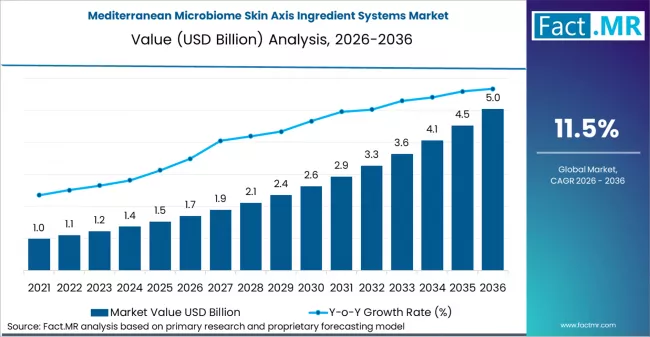
The mediterranean microbiome skin axis ingredient systems market shows USD 1.7 billion in 2026 and builds toward USD 5.0 billion by 2036 at an 11.5% CAGR.
Mediterranean Microbiome Skin Axis Ingredient Systems Market Key Takeaways
- Mediterranean Microbiome Skin Axis Ingredient Systems Market Value (2026): USD 1.7 billion
- Mediterranean Microbiome Skin Axis Ingredient Systems Market Forecast Value (2036): USD 5.0 billion
- Mediterranean Microbiome Skin Axis Ingredient Systems Market Forecast CAGR (2026-2036): 11.5%
- Leading Product Type in Mediterranean Microbiome Skin Axis Ingredient Systems Market: Prebiotic and probiotic skin nutrition ingredients
- Key Growth Regions in Mediterranean Microbiome Skin Axis Ingredient Systems Market: Asia Pacific, Europe, North America, Latin America
- Top Players in Mediterranean Microbiome Skin Axis Ingredient Systems Market: Givaudan, Symrise, Chr. Hansen, DuPont, Kerry Group, Lallemand, Institut Rosell Lallemand, Probi
This category grows because brands want stories that connect daily supplements to visible skin routines. These systems are sold as concepts, not as parts. Once a brand adopts a “skin axis” platform, marketing, education, and range design start revolving around that idea.
The same base system then appears in capsules, powders, and drink formats under different labels. What matters commercially is not constant change, but consistency of message and user experience. Products stay in shelves longer because replacing the system means rebuilding the entire range narrative.
Buying decisions follow category planning, not raw material comparison. Fewer systems get selected, then pushed across many SKUs. Suppliers that win one position often gain several more inside the same portfolio. Range expansion, not ingredient churn, drives volume. Growth comes from brands copying each other’s platform logic across regions and price tiers.
Mediterranean Microbiome Skin Axis Ingredient Systems Market
| Metric | Value |
|---|---|
| Market Value (2026) | USD 1.7 billion |
| Forecast Value (2036) | USD 5.0 billion |
| Forecast CAGR (2026-2036) | 11.5% |
Category
| Category | Segments |
|---|---|
| Product Type | Prebiotic and probiotic skin nutrition ingredients; Postbiotic bioactive complexes; Synbiotic Mediterranean ingredient systems; Other microbiome-focused formulations |
| End Use | Dietary supplements and nutricosmetics; Functional skin health beverages; Beauty and wellness formulations; Clinical and therapeutic skin nutrition products |
| Region | North America; Europe; Asia Pacific; Latin America; Middle East & Africa |
Segmental Analysis
Why have prebiotic and probiotic ingredients become the default building blocks for microbiome focused skin formulas?
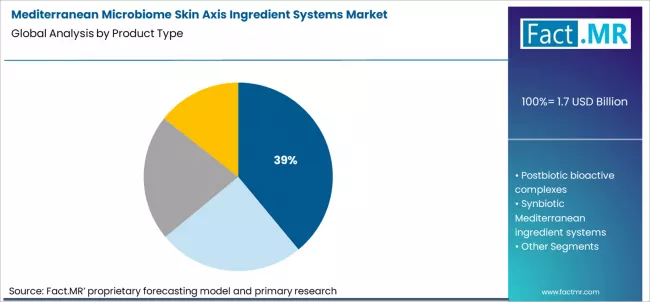
Development priorities in the mediterranean microbiome skin axis ingredient systems market continue to favor prebiotic and probiotic skin nutrition ingredients, which account for 39% of product type demand. This outcome reflects how research teams prefer to work with mechanisms that can be explained through established microbiome balance concepts rather than with less transparent bioactive systems. These ingredients allow formulation work to focus on strain selection, dosage ranges, and stability within known boundaries. Regulatory review and documentation processes also tend to be more predictable in this category. Product pipelines often start with a core prebiotic or probiotic system before adding postbiotic or synbiotic elements. More complex combinations appear later, yet they rarely replace this base as the main volume driver.
What keeps dietary supplements and nutricosmetics at the center of commercial use for these systems?
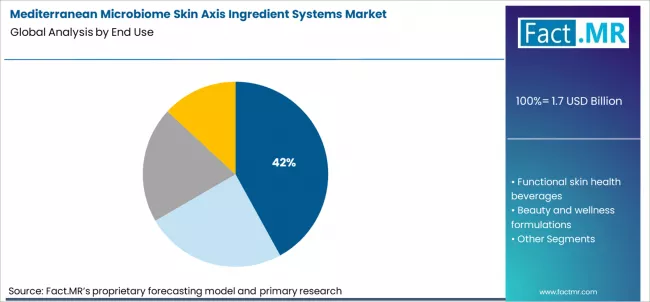
Use patterns show dietary supplements and nutricosmetics representing 42% of end use demand in the mediterranean microbiome skin axis ingredient systems market. This structure follows how consumers are introduced to microbiome concepts through daily intake routines rather than through occasional treatment formats. Brands organize portfolios around continuous use products, which supports repeat purchasing and predictable production scheduling. Retail placement also reinforces this approach because supplement categories are designed for regular replenishment rather than episodic consumption. Functional beverages and beauty formulations attract attention, and clinical nutrition serves specific needs, yet neither shapes overall volume flow. The main channel remains supplements because they fit long term skin support positioning and routine based usage habits.
What is Changing How Buyers Evaluate Mediterranean Microbiome Skin Axis Ingredient Systems?
- Commercial Driver: Brand owners are increasingly selecting ingredient systems that allow one formulation to serve both digestive balance and visible skin support, reducing SKU complexity while expanding claim coverage within permitted boundaries.
- Structural Limitation: Unclear cost-to-benefit comparison between multi-strain systems and simpler formulations, combined with conservative regulatory review of combined claims, slows portfolio-level adoption.
- Formulation Shift: Movement toward modular systems where probiotics, fibers, and plant actives can be adjusted without redesigning the full product.
- Go-to-Market Shift: Greater use of starter programs and short-course regimens to demonstrate perceived benefits before long-term subscription positioning.
Country
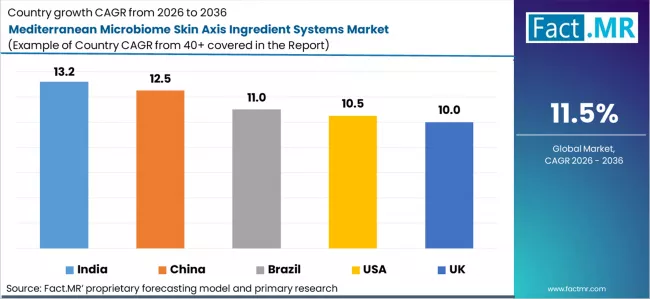
| Country | CAGR (2026-2036) |
|---|---|
| USA | 10.5% |
| UK | 10.0% |
| China | 12.5% |
| India | 13.2% |
| Brazil | 11.0% |
The report covers an in-depth analysis of 30+ countries; top-performing countries are highlighted below.
How Are Skin Microbiome Programs in USA Structuring Use of Mediterranean Microbiome Skin Axis Systems?
Skin support platforms in USA define how microbiome skin axis systems enter ingestible beauty portfolios. The segment follows a growth path close to 10.5% per year through 2036. Product teams screen inputs using strain composition data and stability results. Contract manufacturers integrate these systems into capsules powders and liquid formats. Distribution runs through specialty nutrition chains and controlled online platforms. Claims review passes through internal compliance checks. Supply agreements specify batch uniformity and traceability files. Importers maintain origin records covering botanical and culture sources. Demand aligns with launch calendars. Procurement volumes reflect shelf placement decisions. Reorder timing follows sell through reports reviewed during category performance meetings.
Why Do Regimen Based Product Architectures in UK Influence Use of Microbiome Skin Axis Systems?
Regimen design inside UK shapes how microbiome skin axis systems appear across beauty from within ranges. The segment advances at a pace near 10.0% per year through 2036. Development teams evaluate inputs using viability counts and compatibility screens. Regulatory review focuses on labeling language and ingredient status. Contract packers blend these systems into gummies capsules and powders. Pharmacy chains and specialist wellness stores define listing access. Buyers require steady supply backed by lot documentation. Import procedures include culture origin files. Inventory plans follow promotion schedules. Portfolio reviews set near term volume changes. Long term supply contracts connect to category plans approved during management review cycles.
What Is Driving Platform Led Expansion of Microbiome Skin Axis Systems in China?
Platform based beauty nutrition sales in China shape adoption of microbiome skin axis systems. The segment moves on a track close to 12.5% annual expansion through 2036. Registration files require detailed composition and safety data. Local manufacturers incorporate these systems into sachets tablets and liquid concentrates. Platform operators request proof of origin and quality testing. Importers maintain traceability covering culture and botanical sources. Production schedules align with campaign calendars. Inventory buffers rise ahead of peak promotion periods. Brand owners favor suppliers with stable delivery records. Pricing talks follow volume commitments. Market access depends on listing approvals and compliance checks completed during scheduled audits.
How Are Premium Skin Health Portfolios in India Increasing Use of Microbiome Skin Axis Systems?
Portfolio upgrades in India expand use of microbiome skin axis systems across skin clarity and barrier support products. The segment progresses at a rate near 13.2% per year through 2036. Development teams test compatibility with local flavor systems and dosage formats. Regulatory review centers on ingredient approval status and claim wording. Contract manufacturers handle blending and filling under audited conditions. Distribution focuses on online platforms and specialty nutrition outlets. Import documentation covers culture origin and processing steps. Brands request consistent active levels across shipments. Launch calendars set near term procurement volumes. Marketing budgets shape reorder timing. Suppliers holding local inventory gain preference during expansion cycles.
What Frames Commercial Rollout of Microbiome Skin Axis Systems in Brazil?
Category planning in Brazil defines the route for microbiome skin axis systems into ingestible skin support products. The segment records growth close to 11.0% per year through 2036. Formulators evaluate inputs using viability data and sensory profiles. Regulatory checks focus on ingredient registration and permitted claims. Contract packers produce capsules and drinkable formats for brand owners. Distribution runs through pharmacy chains and wellness retailers. Import files include origin certificates and quality test reports. Currency movement affects pricing discussions. Inventory plans follow retail promotion calendars. Brand owners prefer partners offering predictable lead times. New launches drive trial orders. Repeat volumes depend on sales performance reviews held during seasonal range planning.
How Do Development and Validation Pathways Shape Competition in the Mediterranean Microbiome Skin Axis Ingredient Systems Market?
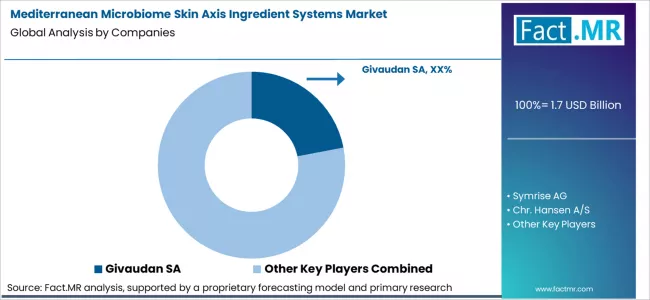
Project entry in the mediterranean microbiome skin axis ingredient systems market is controlled by clinical substantiation and strain documentation rather than by commercial terms. Research teams define endpoints, stability windows, and delivery formats before any supplier is considered. Chr. Hansen, DuPont, Lallemand, Institut Rosell Lallemand, and Probi usually participate at this stage because they maintain established strain libraries and regulatory files.
Givaudan, Symrise, and Kerry integrate these systems into broader formulation platforms for finished brands. Buyers assess suppliers through study design quality, shelf life behavior, and batch traceability. Once a system is approved, volumes follow product lifecycle plans. Competitive changes arise mainly when claims frameworks or regulatory interpretations are revised.
Key Players in the Mediterranean Microbiome Skin Axis Ingredient Systems Market
- Givaudan SA
- Symrise AG
- Chr. Hansen A/S
- DuPont de Nemours Inc.
- Kerry Group Plc
- Institut Rosell-Lallemand Inc.
- Lallemand Inc.
- Probi AB
References
- European Food Safety Authority. (2024). Guidance on the characterization of microorganisms used as food and feed ingredients. European Food Safety Authority.
- European Food Safety Authority. (2024). Guidance on the characterization of botanicals and botanical preparations for use in food supplements. European Food Safety Authority.
- European Commission. (2024). Guidance document on the implementation of Regulation (EC) No 1924/2006 on nutrition and health claims made on foods. European Commission.
- International Organization for Standardization. (2023). ISO 19344:2023 - Enumeration of viable probiotic microorganisms in food products by plate count method. ISO.
Scope of the Report
| Items | Values |
|---|---|
| Quantitative Units (2026) | USD billion |
| Product Type | Prebiotic and probiotic skin nutrition ingredients, postbiotic bioactive complexes, synbiotic Mediterranean ingredient systems, other microbiome-focused formulations |
| End Use | Dietary supplements and nutricosmetics, functional skin health beverages, beauty and wellness formulations, clinical and therapeutic skin nutrition products |
| Regions Covered | Asia Pacific, Europe, North America, Latin America, Middle East & Africa |
| Countries Covered | United States, Canada, Mexico, Germany, United Kingdom, France, Italy, Spain, Nordics, BENELUX, China, Japan, South Korea, India, Australia & New Zealand, ASEAN, Brazil, Chile, Saudi Arabia, Turkey, South Africa, and other regional markets |
| Key Companies Profiled | Givaudan, Symrise, Chr. Hansen, DuPont, Kerry Group, Institut Rosell-Lallemand, Lallemand, Probi |
| Additional Attributes | Dollar sales by product type and end use; strain viability, stability windows, and documentation depth; platform adoption, batch traceability, and multi-SKU portfolio rollout dynamics |
Mediterranean Microbiome Skin Axis Ingredient Systems Market Segmentation
-
Product Type :
- Prebiotic and probiotic skin nutrition ingredients
- Postbiotic bioactive complexes
- Synbiotic Mediterranean ingredient systems
- Other microbiome-focused formulations
-
End Use :
- Dietary supplements and nutricosmetics
- Functional skin health beverages
- Beauty and wellness formulations
- Clinical and therapeutic skin nutrition products
-
Region :
- Asia Pacific
- China
- Japan
- South Korea
- India
- Australia & New Zealand
- ASEAN
- Rest of Asia Pacific
- Europe
- Germany
- United Kingdom
- France
- Italy
- Spain
- Nordic
- BENELUX
- Rest of Europe
- North America
- United States
- Canada
- Mexico
- Latin America
- Brazil
- Chile
- Rest of Latin America
- Middle East & Africa
- Kingdom of Saudi Arabia
- Other GCC Countries
- Turkey
- South Africa
- Other African Union
- Rest of Middle East & Africa
- Asia Pacific
Table of Content
- Executive Summary
- Global Market Outlook
- Demand to side Trends
- Supply to side Trends
- Technology Roadmap Analysis
- Analysis and Recommendations
- Market Overview
- Market Coverage / Taxonomy
- Market Definition / Scope / Limitations
- Market Background
- Market Dynamics
- Drivers
- Restraints
- Opportunity
- Trends
- Scenario Forecast
- Demand in Optimistic Scenario
- Demand in Likely Scenario
- Demand in Conservative Scenario
- Opportunity Map Analysis
- Product Life Cycle Analysis
- Supply Chain Analysis
- Investment Feasibility Matrix
- Value Chain Analysis
- PESTLE and Porter’s Analysis
- Regulatory Landscape
- Regional Parent Market Outlook
- Production and Consumption Statistics
- Import and Export Statistics
- Market Dynamics
- Global Market Analysis 2021 to 2025 and Forecast, 2026 to 2036
- Historical Market Size Value (USD Million) Analysis, 2021 to 2025
- Current and Future Market Size Value (USD Million) Projections, 2026 to 2036
- Y to o to Y Growth Trend Analysis
- Absolute $ Opportunity Analysis
- Global Market Pricing Analysis 2021 to 2025 and Forecast 2026 to 2036
- Global Market Analysis 2021 to 2025 and Forecast 2026 to 2036, By Product Type
- Introduction / Key Findings
- Historical Market Size Value (USD Million) Analysis By Product Type, 2021 to 2025
- Current and Future Market Size Value (USD Million) Analysis and Forecast By Product Type, 2026 to 2036
- Prebiotic and probiotic skin nutrition ingredients
- Postbiotic bioactive complexes
- Synbiotic Mediterranean ingredient systems
- Other microbiome-focused formulations
- Prebiotic and probiotic skin nutrition ingredients
- Y to o to Y Growth Trend Analysis By Product Type, 2021 to 2025
- Absolute $ Opportunity Analysis By Product Type, 2026 to 2036
- Global Market Analysis 2021 to 2025 and Forecast 2026 to 2036, By End Use
- Introduction / Key Findings
- Historical Market Size Value (USD Million) Analysis By End Use, 2021 to 2025
- Current and Future Market Size Value (USD Million) Analysis and Forecast By End Use, 2026 to 2036
- Dietary supplements and nutricosmetics
- Functional skin health beverages
- Beauty and wellness formulations
- Clinical and therapeutic skin nutrition products
- Dietary supplements and nutricosmetics
- Y to o to Y Growth Trend Analysis By End Use, 2021 to 2025
- Absolute $ Opportunity Analysis By End Use, 2026 to 2036
- Global Market Analysis 2021 to 2025 and Forecast 2026 to 2036, By Region
- Introduction
- Historical Market Size Value (USD Million) Analysis By Region, 2021 to 2025
- Current Market Size Value (USD Million) Analysis and Forecast By Region, 2026 to 2036
- North America
- Latin America
- Western Europe
- Eastern Europe
- East Asia
- South Asia and Pacific
- Middle East & Africa
- Market Attractiveness Analysis By Region
- North America Market Analysis 2021 to 2025 and Forecast 2026 to 2036, By Country
- Historical Market Size Value (USD Million) Trend Analysis By Market Taxonomy, 2021 to 2025
- Market Size Value (USD Million) Forecast By Market Taxonomy, 2026 to 2036
- By Country
- USA
- Canada
- Mexico
- By Product Type
- By End Use
- By Country
- Market Attractiveness Analysis
- By Country
- By Product Type
- By End Use
- Key Takeaways
- Latin America Market Analysis 2021 to 2025 and Forecast 2026 to 2036, By Country
- Historical Market Size Value (USD Million) Trend Analysis By Market Taxonomy, 2021 to 2025
- Market Size Value (USD Million) Forecast By Market Taxonomy, 2026 to 2036
- By Country
- Brazil
- Chile
- Rest of Latin America
- By Product Type
- By End Use
- By Country
- Market Attractiveness Analysis
- By Country
- By Product Type
- By End Use
- Key Takeaways
- Western Europe Market Analysis 2021 to 2025 and Forecast 2026 to 2036, By Country
- Historical Market Size Value (USD Million) Trend Analysis By Market Taxonomy, 2021 to 2025
- Market Size Value (USD Million) Forecast By Market Taxonomy, 2026 to 2036
- By Country
- Germany
- UK
- Italy
- Spain
- France
- Nordic
- BENELUX
- Rest of Western Europe
- By Product Type
- By End Use
- By Country
- Market Attractiveness Analysis
- By Country
- By Product Type
- By End Use
- Key Takeaways
- Eastern Europe Market Analysis 2021 to 2025 and Forecast 2026 to 2036, By Country
- Historical Market Size Value (USD Million) Trend Analysis By Market Taxonomy, 2021 to 2025
- Market Size Value (USD Million) Forecast By Market Taxonomy, 2026 to 2036
- By Country
- Russia
- Poland
- Hungary
- Balkan & Baltic
- Rest of Eastern Europe
- By Product Type
- By End Use
- By Country
- Market Attractiveness Analysis
- By Country
- By Product Type
- By End Use
- Key Takeaways
- East Asia Market Analysis 2021 to 2025 and Forecast 2026 to 2036, By Country
- Historical Market Size Value (USD Million) Trend Analysis By Market Taxonomy, 2021 to 2025
- Market Size Value (USD Million) Forecast By Market Taxonomy, 2026 to 2036
- By Country
- China
- Japan
- South Korea
- By Product Type
- By End Use
- By Country
- Market Attractiveness Analysis
- By Country
- By Product Type
- By End Use
- Key Takeaways
- South Asia and Pacific Market Analysis 2021 to 2025 and Forecast 2026 to 2036, By Country
- Historical Market Size Value (USD Million) Trend Analysis By Market Taxonomy, 2021 to 2025
- Market Size Value (USD Million) Forecast By Market Taxonomy, 2026 to 2036
- By Country
- India
- ASEAN
- Australia & New Zealand
- Rest of South Asia and Pacific
- By Product Type
- By End Use
- By Country
- Market Attractiveness Analysis
- By Country
- By Product Type
- By End Use
- Key Takeaways
- Middle East & Africa Market Analysis 2021 to 2025 and Forecast 2026 to 2036, By Country
- Historical Market Size Value (USD Million) Trend Analysis By Market Taxonomy, 2021 to 2025
- Market Size Value (USD Million) Forecast By Market Taxonomy, 2026 to 2036
- By Country
- Kingdom of Saudi Arabia
- Other GCC Countries
- Turkiye
- South Africa
- Other African Union
- Rest of Middle East & Africa
- By Product Type
- By End Use
- By Country
- Market Attractiveness Analysis
- By Country
- By Product Type
- By End Use
- Key Takeaways
- Key Countries Market Analysis
- USA
- Pricing Analysis
- Market Share Analysis, 2025
- By Product Type
- By End Use
- Canada
- Pricing Analysis
- Market Share Analysis, 2025
- By Product Type
- By End Use
- Mexico
- Pricing Analysis
- Market Share Analysis, 2025
- By Product Type
- By End Use
- Brazil
- Pricing Analysis
- Market Share Analysis, 2025
- By Product Type
- By End Use
- Chile
- Pricing Analysis
- Market Share Analysis, 2025
- By Product Type
- By End Use
- Germany
- Pricing Analysis
- Market Share Analysis, 2025
- By Product Type
- By End Use
- UK
- Pricing Analysis
- Market Share Analysis, 2025
- By Product Type
- By End Use
- Italy
- Pricing Analysis
- Market Share Analysis, 2025
- By Product Type
- By End Use
- Spain
- Pricing Analysis
- Market Share Analysis, 2025
- By Product Type
- By End Use
- France
- Pricing Analysis
- Market Share Analysis, 2025
- By Product Type
- By End Use
- India
- Pricing Analysis
- Market Share Analysis, 2025
- By Product Type
- By End Use
- ASEAN
- Pricing Analysis
- Market Share Analysis, 2025
- By Product Type
- By End Use
- Australia & New Zealand
- Pricing Analysis
- Market Share Analysis, 2025
- By Product Type
- By End Use
- China
- Pricing Analysis
- Market Share Analysis, 2025
- By Product Type
- By End Use
- Japan
- Pricing Analysis
- Market Share Analysis, 2025
- By Product Type
- By End Use
- South Korea
- Pricing Analysis
- Market Share Analysis, 2025
- By Product Type
- By End Use
- Russia
- Pricing Analysis
- Market Share Analysis, 2025
- By Product Type
- By End Use
- Poland
- Pricing Analysis
- Market Share Analysis, 2025
- By Product Type
- By End Use
- Hungary
- Pricing Analysis
- Market Share Analysis, 2025
- By Product Type
- By End Use
- Kingdom of Saudi Arabia
- Pricing Analysis
- Market Share Analysis, 2025
- By Product Type
- By End Use
- Turkiye
- Pricing Analysis
- Market Share Analysis, 2025
- By Product Type
- By End Use
- South Africa
- Pricing Analysis
- Market Share Analysis, 2025
- By Product Type
- By End Use
- USA
- Market Structure Analysis
- Competition Dashboard
- Competition Benchmarking
- Market Share Analysis of Top Players
- By Regional
- By Product Type
- By End Use
- Competition Analysis
- Competition Deep Dive
- Givaudan SA
- Overview
- Product Portfolio
- Profitability by Market Segments (Product/Age /Sales Channel/Region)
- Sales Footprint
- Strategy Overview
- Marketing Strategy
- Product Strategy
- Channel Strategy
- Symrise AG
- Chr. Hansen A/S
- DuPont de Nemours Inc.
- Kerry Group Plc
- Institut Rosell-Lallemand Inc.
- Lallemand Inc.
- Probi AB
- Givaudan SA
- Competition Deep Dive
- Assumptions & Acronyms Used
- Research Methodology
List Of Table
- Table 1: Global Market Value (USD Million) Forecast by Region, 2021 to 2036
- Table 2: Global Market Value (USD Million) Forecast by Product Type, 2021 to 2036
- Table 3: Global Market Value (USD Million) Forecast by End Use, 2021 to 2036
- Table 4: North America Market Value (USD Million) Forecast by Country, 2021 to 2036
- Table 5: North America Market Value (USD Million) Forecast by Product Type, 2021 to 2036
- Table 6: North America Market Value (USD Million) Forecast by End Use, 2021 to 2036
- Table 7: Latin America Market Value (USD Million) Forecast by Country, 2021 to 2036
- Table 8: Latin America Market Value (USD Million) Forecast by Product Type, 2021 to 2036
- Table 9: Latin America Market Value (USD Million) Forecast by End Use, 2021 to 2036
- Table 10: Western Europe Market Value (USD Million) Forecast by Country, 2021 to 2036
- Table 11: Western Europe Market Value (USD Million) Forecast by Product Type, 2021 to 2036
- Table 12: Western Europe Market Value (USD Million) Forecast by End Use, 2021 to 2036
- Table 13: Eastern Europe Market Value (USD Million) Forecast by Country, 2021 to 2036
- Table 14: Eastern Europe Market Value (USD Million) Forecast by Product Type, 2021 to 2036
- Table 15: Eastern Europe Market Value (USD Million) Forecast by End Use, 2021 to 2036
- Table 16: East Asia Market Value (USD Million) Forecast by Country, 2021 to 2036
- Table 17: East Asia Market Value (USD Million) Forecast by Product Type, 2021 to 2036
- Table 18: East Asia Market Value (USD Million) Forecast by End Use, 2021 to 2036
- Table 19: South Asia and Pacific Market Value (USD Million) Forecast by Country, 2021 to 2036
- Table 20: South Asia and Pacific Market Value (USD Million) Forecast by Product Type, 2021 to 2036
- Table 21: South Asia and Pacific Market Value (USD Million) Forecast by End Use, 2021 to 2036
- Table 22: Middle East & Africa Market Value (USD Million) Forecast by Country, 2021 to 2036
- Table 23: Middle East & Africa Market Value (USD Million) Forecast by Product Type, 2021 to 2036
- Table 24: Middle East & Africa Market Value (USD Million) Forecast by End Use, 2021 to 2036
List Of Figures
- Figure 1: Global Market Pricing Analysis
- Figure 2: Global Market Value (USD Million) Forecast 2021 to 2036
- Figure 3: Global Market Value Share and BPS Analysis by Product Type, 2026 and 2036
- Figure 4: Global Market Y to o to Y Growth Comparison by Product Type, 2026 to 2036
- Figure 5: Global Market Attractiveness Analysis by Product Type
- Figure 6: Global Market Value Share and BPS Analysis by End Use, 2026 and 2036
- Figure 7: Global Market Y to o to Y Growth Comparison by End Use, 2026 to 2036
- Figure 8: Global Market Attractiveness Analysis by End Use
- Figure 9: Global Market Value (USD Million) Share and BPS Analysis by Region, 2026 and 2036
- Figure 10: Global Market Y to o to Y Growth Comparison by Region, 2026 to 2036
- Figure 11: Global Market Attractiveness Analysis by Region
- Figure 12: North America Market Incremental Dollar Opportunity, 2026 to 2036
- Figure 13: Latin America Market Incremental Dollar Opportunity, 2026 to 2036
- Figure 14: Western Europe Market Incremental Dollar Opportunity, 2026 to 2036
- Figure 15: Eastern Europe Market Incremental Dollar Opportunity, 2026 to 2036
- Figure 16: East Asia Market Incremental Dollar Opportunity, 2026 to 2036
- Figure 17: South Asia and Pacific Market Incremental Dollar Opportunity, 2026 to 2036
- Figure 18: Middle East & Africa Market Incremental Dollar Opportunity, 2026 to 2036
- Figure 19: North America Market Value Share and BPS Analysis by Country, 2026 and 2036
- Figure 20: North America Market Value Share and BPS Analysis by Product Type, 2026 and 2036
- Figure 21: North America Market Y to o to Y Growth Comparison by Product Type, 2026 to 2036
- Figure 22: North America Market Attractiveness Analysis by Product Type
- Figure 23: North America Market Value Share and BPS Analysis by End Use, 2026 and 2036
- Figure 24: North America Market Y to o to Y Growth Comparison by End Use, 2026 to 2036
- Figure 25: North America Market Attractiveness Analysis by End Use
- Figure 26: Latin America Market Value Share and BPS Analysis by Country, 2026 and 2036
- Figure 27: Latin America Market Value Share and BPS Analysis by Product Type, 2026 and 2036
- Figure 28: Latin America Market Y to o to Y Growth Comparison by Product Type, 2026 to 2036
- Figure 29: Latin America Market Attractiveness Analysis by Product Type
- Figure 30: Latin America Market Value Share and BPS Analysis by End Use, 2026 and 2036
- Figure 31: Latin America Market Y to o to Y Growth Comparison by End Use, 2026 to 2036
- Figure 32: Latin America Market Attractiveness Analysis by End Use
- Figure 33: Western Europe Market Value Share and BPS Analysis by Country, 2026 and 2036
- Figure 34: Western Europe Market Value Share and BPS Analysis by Product Type, 2026 and 2036
- Figure 35: Western Europe Market Y to o to Y Growth Comparison by Product Type, 2026 to 2036
- Figure 36: Western Europe Market Attractiveness Analysis by Product Type
- Figure 37: Western Europe Market Value Share and BPS Analysis by End Use, 2026 and 2036
- Figure 38: Western Europe Market Y to o to Y Growth Comparison by End Use, 2026 to 2036
- Figure 39: Western Europe Market Attractiveness Analysis by End Use
- Figure 40: Eastern Europe Market Value Share and BPS Analysis by Country, 2026 and 2036
- Figure 41: Eastern Europe Market Value Share and BPS Analysis by Product Type, 2026 and 2036
- Figure 42: Eastern Europe Market Y to o to Y Growth Comparison by Product Type, 2026 to 2036
- Figure 43: Eastern Europe Market Attractiveness Analysis by Product Type
- Figure 44: Eastern Europe Market Value Share and BPS Analysis by End Use, 2026 and 2036
- Figure 45: Eastern Europe Market Y to o to Y Growth Comparison by End Use, 2026 to 2036
- Figure 46: Eastern Europe Market Attractiveness Analysis by End Use
- Figure 47: East Asia Market Value Share and BPS Analysis by Country, 2026 and 2036
- Figure 48: East Asia Market Value Share and BPS Analysis by Product Type, 2026 and 2036
- Figure 49: East Asia Market Y to o to Y Growth Comparison by Product Type, 2026 to 2036
- Figure 50: East Asia Market Attractiveness Analysis by Product Type
- Figure 51: East Asia Market Value Share and BPS Analysis by End Use, 2026 and 2036
- Figure 52: East Asia Market Y to o to Y Growth Comparison by End Use, 2026 to 2036
- Figure 53: East Asia Market Attractiveness Analysis by End Use
- Figure 54: South Asia and Pacific Market Value Share and BPS Analysis by Country, 2026 and 2036
- Figure 55: South Asia and Pacific Market Value Share and BPS Analysis by Product Type, 2026 and 2036
- Figure 56: South Asia and Pacific Market Y to o to Y Growth Comparison by Product Type, 2026 to 2036
- Figure 57: South Asia and Pacific Market Attractiveness Analysis by Product Type
- Figure 58: South Asia and Pacific Market Value Share and BPS Analysis by End Use, 2026 and 2036
- Figure 59: South Asia and Pacific Market Y to o to Y Growth Comparison by End Use, 2026 to 2036
- Figure 60: South Asia and Pacific Market Attractiveness Analysis by End Use
- Figure 61: Middle East & Africa Market Value Share and BPS Analysis by Country, 2026 and 2036
- Figure 62: Middle East & Africa Market Value Share and BPS Analysis by Product Type, 2026 and 2036
- Figure 63: Middle East & Africa Market Y to o to Y Growth Comparison by Product Type, 2026 to 2036
- Figure 64: Middle East & Africa Market Attractiveness Analysis by Product Type
- Figure 65: Middle East & Africa Market Value Share and BPS Analysis by End Use, 2026 and 2036
- Figure 66: Middle East & Africa Market Y to o to Y Growth Comparison by End Use, 2026 to 2036
- Figure 67: Middle East & Africa Market Attractiveness Analysis by End Use
- Figure 68: Global Market - Tier Structure Analysis
- Figure 69: Global Market - Company Share Analysis
- Frequently Asked Questions -
How big is the mediterranean microbiome skin axis ingredient systems market in 2026?
The global mediterranean microbiome skin axis ingredient systems market is estimated to be valued at USD 1.7 billion in 2026.
What will be the size of mediterranean microbiome skin axis ingredient systems market in 2036?
The market size for the mediterranean microbiome skin axis ingredient systems market is projected to reach USD 5.0 billion by 2036.
How much will be the mediterranean microbiome skin axis ingredient systems market growth between 2026 and 2036?
The mediterranean microbiome skin axis ingredient systems market is expected to grow at a 11.5% CAGR between 2026 and 2036.
What are the key product types in the mediterranean microbiome skin axis ingredient systems market?
The key product types in mediterranean microbiome skin axis ingredient systems market are prebiotic and probiotic skin nutrition ingredients, postbiotic bioactive complexes, synbiotic mediterranean ingredient systems and other microbiome-focused formulations.
Which end use segment to contribute significant share in the mediterranean microbiome skin axis ingredient systems market in 2026?
In terms of end use, dietary supplements and nutricosmetics segment to command 42.0% share in the mediterranean microbiome skin axis ingredient systems market in 2026.