Pharmaceutical Contract Packaging Market Size, Share, Growth and Forecast (2026 - 2036)
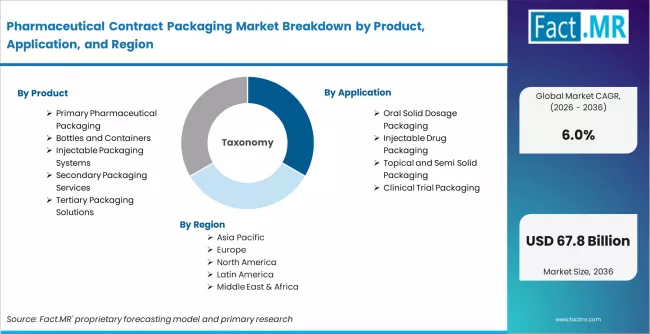
Pharmaceutical Contract Packaging Market is segmented by Product (Primary Pharmaceutical Packaging, Bottles and Containers, Injectable Packaging Systems, Secondary Packaging Services, Tertiary Packaging Solutions), Application (Oral Solid Dosage Packaging, Injectable Drug Packaging, Topical and Semi Solid Packaging, Clinical Trial Packaging), End Use (Pharmaceutical Companies, Biopharmaceutical Companies, Contract Manufacturing Organizations), and Region, with forecasts covering the period from 2026 to 2036.
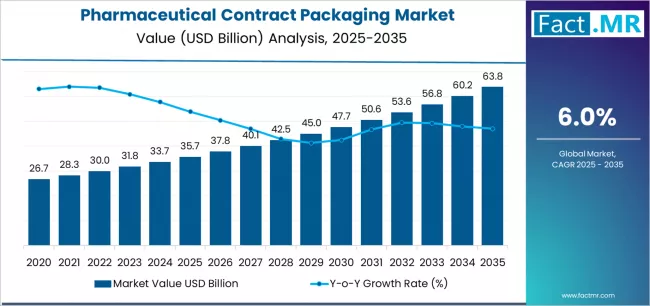
According to Fact.MR estimates, the global pharmaceutical contract packaging Marketwas valued at USD 35.7 billion in 2025. The market is projected to reach USD 37.8 billion in 2026 and is expected to grow to USD 67.8 billion by 2036, expanding at a CAGR of 6.0%. Primary Pharmaceutical Packaging is anticipated to account for 46.0% of the product segment in 2026, while Oral Solid Dosage Packaging is expected to remain the leading application with around 50.0% share.
Pharmaceutical Contract Packaging Market Analysis and Forecast by Fact.MR
- The global pharmaceutical contract packaging market is estimated to be around USD 37.8 billion in 2026 and has been forecast to expand at a CAGR of 6.0% to end up at USD 67.8 billion by 2036.
- The market covers outsourced packaging services spanning primary packaging (blisters, bottles, vials, syringes), secondary packaging (cartoning, labeling, serialization), and tertiary logistics packaging (cold chain, palletization).
- Demand is shaped by the growing preference among pharmaceutical and biopharmaceutical companies to outsource non-core packaging operations, tightening serialization and track-and-trace mandates, increasing complexity of biologic drug packaging, and expanding clinical trial packaging requirements.
- Growth in sterile fill-finish outsourcing and cold chain packaging for biologic drugs is creating new revenue streams for contract packagers.
- The transition from traditional packaging to smart packaging with integrated tamper evidence and digital verification is adding a technology-driven dimension to contract packaging services.
Summary of Pharmaceutical Contract Packaging Market
- Market Snapshot
- In 2025, the global Pharmaceutical Contract Packaging Market was valued at approximately USD 35.7 billion.
- The market is estimated to reach USD 37.8 billion in 2026 and is projected to attain USD 67.8 billion by 2036.
- The pharmaceutical contract packaging market is likely to expand at a CAGR of 6.0% during the forecast period.
- The market is anticipated to create an absolute dollar opportunity of USD 29.9 billion between 2026 and 2036.
- Primary pharmaceutical packaging accounts for 46% of the product segment share in 2026.
- China (7.4%) and India (7.1%) are the key growth markets during the forecast period.
- Demand and Growth Drivers
- Growing outsourcing preference among pharmaceutical companies for non-core packaging operations is shifting volumes from in-house to contract packaging providers.
- Tightening serialization, track-and-trace, and anti-counterfeiting regulations across major markets are increasing compliance complexity and pushing drug makers toward specialized contract packagers.
- Rising biologic drug approvals are creating demand for sterile fill-finish packaging, cold chain handling, and specialized vial and syringe packaging services.
- Expanding clinical trial activity is increasing demand for blinded study packs, randomization kits, and small-batch clinical packaging services.
- Growth in generic drug production across emerging markets is creating cost-driven demand for high-volume blister and bottle packaging outsourcing.
- Product and Segment View
- Primary pharmaceutical packaging accounts for 46% of the product segment in 2026, led by blister packaging solutions, bottle and container systems, and injectable packaging for vials, ampoules, and pre-filled syringes.
- Pharmaceutical companies account for 62% of end use share in 2026, with large-scale drug manufacturers, generic producers, and branded firms outsourcing packaging to reduce capital expenditure and improve compliance.
- Oral solid dosage packaging represents 50% of the application segment in 2026, driven by sustained global demand for tablet and capsule packaging across unit-dose and multi-dose formats.
- Key segmentation includes:
- Product: Primary Pharmaceutical Packaging, Bottles and Containers, Injectable Packaging Systems, Secondary Packaging Services, Tertiary Packaging Solutions
- Application: Oral Solid Dosage Packaging, Injectable Drug Packaging, Topical and Semi-Solid Packaging, Clinical Trial Packaging
- End Use: Pharmaceutical Companies, Biopharmaceutical Companies, Contract Manufacturing Organizations
- These systems enable:
- Outsourced blister, bottle, and unit-dose packaging for oral solid dosage drugs with serialization and tamper-evident compliance
- Sterile fill-finish packaging for injectable biologics, vaccines, and lyophilized products in validated cleanroom environments
- Clinical trial packaging including blinding, randomization, labeling, and multi-site distribution kitting
- Geography and Competitive Outlook
- North America maintains the largest outsourced packaging spend, with the USA benefiting from serialization mandate compliance, biologic drug packaging growth, and established contract packager networks.
- Europe shows steady growth, with Germany and the UK supported by pharmaceutical manufacturing hubs, EU Falsified Medicines Directive compliance, and strong biopharmaceutical packaging demand.
- Asia Pacific is the fastest growing region, with China and India expanding pharmaceutical manufacturing capacity, generic drug production, and packaging outsourcing infrastructure.
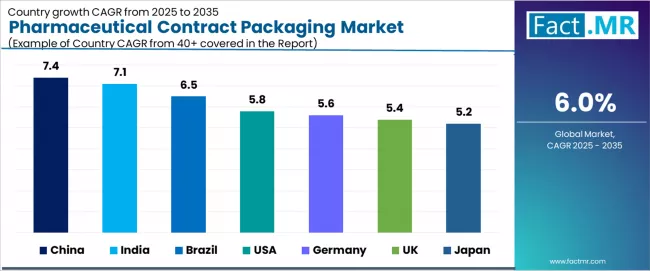
- China (7.4%) and India (7.1%) are the fastest growing markets, followed by Brazil, USA, Germany, UK, and Japan.
- Key companies include Amcor plc, NIPRO Corporation, West Pharmaceutical Services Inc., PCI Pharma Services, CCL Industries Inc., Aphena Pharma Solutions, Daito Pharmaceutical Co. Ltd., Reed-Lane, Wasdell Packaging Group, and Tjoapack.
- Analyst Opinion
- Shambhu Nath Jha, Principal Consultant at Fact.MR, says 'The pharmaceutical contract packaging market is moving beyond commodity blister and bottle services into higher-value territories. Sterile fill-finish for biologics, cold chain packaging for cell and gene therapies, and serialization-compliant secondary packaging are where margin and growth are concentrating. Contract packagers that invest in cleanroom infrastructure, cold chain capability, and digital track-and-trace systems will capture disproportionate share of the incremental opportunity over the next decade. The convergence of fill-finish manufacturing with packaging services is also creating new competitive dynamics, with full-service CDMOs challenging traditional contract packagers for high-value biologic packaging contracts.'
Key Growth Drivers, Constraints, and Opportunities
Key Factors Driving Growth
- Growing pharmaceutical outsourcing preference is shifting packaging volumes from in-house operations to specialized contract service providers with compliance-ready infrastructure. This trend is particularly strong among mid-size pharmaceutical companies that lack the scale to justify dedicated packaging lines for multiple dosage forms and market-specific serialization requirements.
- Tightening serialization and anti-counterfeiting mandates across the USA, EU, and emerging markets are increasing demand for contract packagers with track-and-trace capabilities. The implementation timeline for DSCSA in the United States and ongoing FMD enforcement in Europe continue to create regulatory-driven packaging outsourcing demand.
- Rising biologic drug approvals and cold chain therapy launches are creating demand for sterile fill-finish and temperature-controlled packaging services.
Key Market Constraints
- Capital intensity of cleanroom and cold chain infrastructure limits the ability of smaller contract packagers to serve biologic and sterile packaging demand.
- Regulatory complexity and validation requirements for pharmaceutical packaging create long qualification timelines that slow customer onboarding.
- Pricing pressure from generic drug manufacturers seeking low-cost packaging outsourcing compresses margins in the oral solid dosage segment.
Key Opportunity Areas
- Sterile fill-finish outsourcing for biologics, vaccines, and cell therapies is creating a high-margin growth channel for contract packagers with validated cleanroom capacity. The capital intensity of cleanroom and aseptic infrastructure makes outsourcing economically compelling for the majority of biopharmaceutical companies.
- Expansion of clinical trial packaging services, including randomization, blinding, and multi-site kitting, is creating recurring demand tied to pharmaceutical R&D spending.
- Growth in serialization and digital packaging services is enabling contract packagers to capture higher-value service tiers.
Segment-wise Analysis of the Pharmaceutical Contract Packaging Market
- Primary pharmaceutical packaging holds 46% of the product segment in 2026, led by blister packs, bottles, vials, and pre-filled syringe packaging outsourced by drug manufacturers.
- Pharmaceutical companies account for 62% of end use share in 2026, reflecting the outsourcing decisions of large-scale drug manufacturers, generic producers, and branded firms.
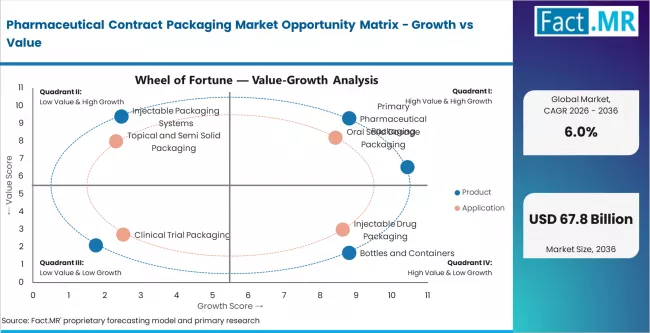
- Injectable packaging systems are the fastest-growing product sub-segment, driven by biologic drug approvals and sterile fill-finish outsourcing growth.
The pharmaceutical contract packaging market is segmented by product type, application, end use, formulation, and region. By product, coverage includes primary packaging, bottles and containers, injectable packaging systems, secondary packaging services, and tertiary solutions. Primary packaging leads by value, while injectable and sterile packaging are expected to grow fastest.
Which Product Segment Dominates the Pharmaceutical Contract Packaging Market?
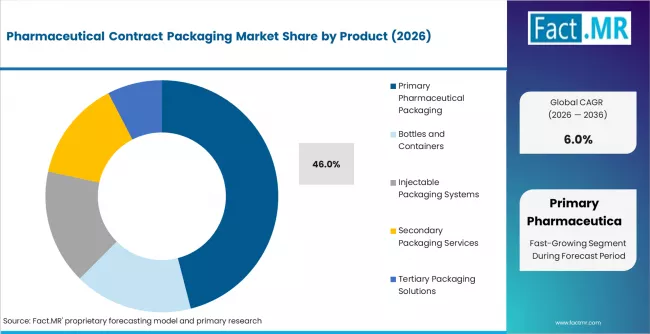
Primary pharmaceutical packaging is expected to account for 46% of the product segment in 2026. Blister packaging solutions, including aluminum-aluminum and PVC-PVDC formats, form the largest category within primary packaging. These formats are widely used for oral solid dosage products across both branded and generic portfolios. Bottles and containers for tablets and capsules, along with injectable packaging systems including vials, ampoules, and pre-filled syringes, complete the primary packaging portfolio. The growing volume of biologic drug approvals is driving demand for specialized primary packaging, particularly in sterile vial and syringe formats that require validated cleanroom environments.
Secondary packaging services, including cartoning, labeling, serialization, and tamper-evident packaging, represent a growing share as regulatory compliance demands increase across major markets. Serialization mandates under DSCSA in the United States and the Falsified Medicines Directive in Europe are creating sustained demand for secondary packaging services with track-and-trace capabilities. Tertiary packaging solutions, including cold chain shipping boxes, palletization services, and temperature-controlled logistics packs, are gaining importance as biologic and temperature-sensitive drug volumes expand across both clinical and commercial supply chains.
Which Application Segment Dominates the Pharmaceutical Contract Packaging Market?
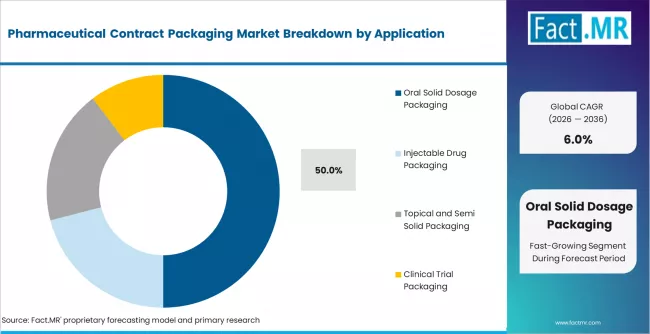
Oral solid dosage packaging is expected to account for 50% of the application segment in 2026. Tablet and capsule packaging in unit-dose and multi-dose formats generates the highest packaging volumes, sustained by the large global base of oral pharmaceutical products across both generic and branded portfolios. Unit-dose packaging is particularly important for hospital and institutional settings, while multi-dose formats serve retail pharmacy and patient-direct distribution channels.
Injectable drug packaging is the second-largest and fastest-growing application, with sterile fill-finish for biologic drugs, lyophilized products, and vaccine vials driving demand growth. The increasing complexity of injectable packaging, including requirements for controlled atmospheres, specialized closures, and cold chain validation, is raising the barriers to entry and pushing more drug manufacturers toward outsourcing. Clinical trial packaging, including randomization kits and blinded study packs, and topical packaging for creams, ointments, and gel-based products represent smaller but specialized application channels with recurring demand tied to pharmaceutical R&D activity.
Which End Use Segment Dominates the Pharmaceutical Contract Packaging Market?
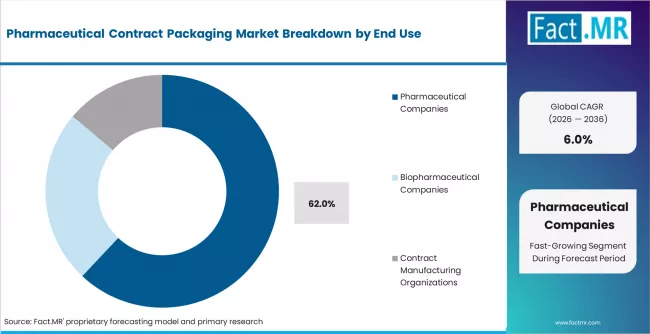
Pharmaceutical companies account for 62% of end use share in 2026. Large-scale drug manufacturers, generic drug producers, and branded pharmaceutical firms outsource packaging to reduce capital investment, improve regulatory compliance, and gain operational flexibility across product launches and geographic expansions. The trend toward outsourcing is particularly strong among mid-size pharmaceutical companies that lack the scale to justify in-house packaging infrastructure for multiple dosage form categories.
Biopharmaceutical companies represent the fastest-growing end use segment, with biologic drug manufacturers, vaccine producers, and cell and gene therapy firms requiring specialized packaging capabilities including sterile fill-finish, cold chain handling, and validated containment systems. Contract manufacturing organizations also contribute to end use demand through integrated fill-finish and packaging service offerings that combine drug product manufacturing with primary and secondary packaging in a single outsourced relationship.
Which Product Trend is Shaping the Next Phase of Growth in the Pharmaceutical Contract Packaging Market?
Injectable packaging systems, particularly sterile fill-finish services for biologics and vaccines, are emerging as the fastest-growing product category in the pharmaceutical contract packaging market. The rising volume of biologic drug approvals, including monoclonal antibodies, cell therapies, and mRNA-based products, is creating demand for validated cleanroom packaging, pre-filled syringe assembly, and cold chain vial packaging that most drug manufacturers prefer to outsource rather than build in-house. The capital intensity of sterile infrastructure and the regulatory burden of maintaining validated cleanroom environments make contract packaging an economically attractive option for drug manufacturers of all sizes.
This trend reflects a structural shift in pharmaceutical manufacturing. As the drug pipeline moves from small-molecule oral products toward complex biologics and injectables, the packaging requirements become more capital-intensive and regulation-heavy. Contract packagers that invest in sterile infrastructure, cold chain validation, and flexible batch sizing are positioned to capture the largest share of incremental growth. The convergence of sterile manufacturing with packaging services is also creating opportunities for contract packagers to offer integrated fill-finish-and-pack solutions that reduce handoff complexity and improve supply chain efficiency for biopharmaceutical sponsors.
Regional Outlook Across Key Markets
.webp)
- China leads growth at 7.4%, supported by expanding pharmaceutical manufacturing capacity, generic drug production growth, and increasing packaging outsourcing adoption.
- India follows at 7.1%, driven by large-scale generic drug production, cost-competitive packaging infrastructure, and growing export-oriented packaging demand.
- Brazil at 6.5% reflects expanding pharmaceutical manufacturing and packaging outsourcing adoption.
- The USA at 5.8% maintains strong demand through serialization compliance, biologic packaging growth, and the largest contract packager network globally.
CAGR Table
| Country | CAGR (%) |
|---|---|
| China | 7.4% |
| India | 7.1% |
| Brazil | 6.5% |
| USA | 5.8% |
| Germany | 5.6% |
| UK | 5.4% |
| Japan | 5.2% |
Source: Fact MR (FMR) analysis, based on proprietary forecasting model and primary research.
Market Outlook for Pharmaceutical Contract Packaging in China
The China pharmaceutical contract packaging market is projected to grow at a CAGR of 7.4% through 2036. Demand is supported by expanding pharmaceutical manufacturing capacity, growing generic drug production volumes, and increasing outsourcing of packaging operations by domestic and multinational drug manufacturers. The growth of biologic drug manufacturing in China is also creating demand for specialized contract packaging services including sterile fill-finish and cold chain packaging.
- Pharmaceutical manufacturing expansion drives packaging outsourcing.
- Generic drug production creates high-volume packaging demand.
- Multinational drug makers are increasing local contract packaging use.
Pharmaceutical Contract Packaging Demand Trends in India
The India pharmaceutical contract packaging market is projected to grow at a CAGR of 7.1% through 2036. Demand is driven by large-scale generic drug manufacturing, cost-competitive packaging infrastructure, and growing export-oriented packaging requirements for regulated markets including the US, EU, and Japan. India's position as the world's largest generic drug producer by volume creates sustained high-volume demand for contract packaging services.
- Generic drug production sustains high-volume packaging demand.
- Cost-competitive infrastructure attracts outsourcing from global firms.
- Export packaging compliance requirements support service upgrades.
Brazil Pharmaceutical Contract Packaging Market Growth Outlook
The Brazil pharmaceutical contract packaging market is projected to grow at a CAGR of 6.5% through 2036. Demand is supported by expanding domestic pharmaceutical manufacturing and growing regulatory compliance requirements.
- Domestic manufacturing expansion supports packaging outsourcing.
- Regulatory compliance is pushing firms toward specialized packagers.
- Local drug producers are increasing outsourcing adoption.
United States Pharmaceutical Contract Packaging Market Assessment
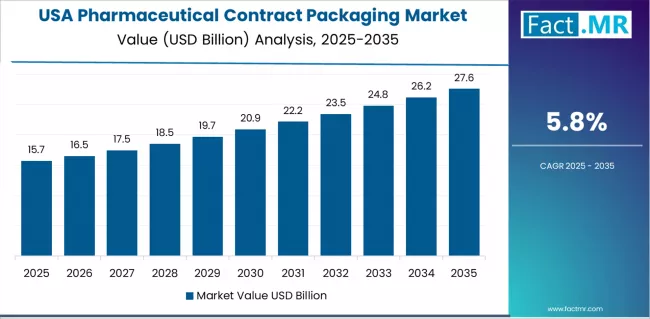
The U.S. pharmaceutical contract packaging market is projected to grow at a CAGR of 5.8% through 2036. Demand is sustained by DSCSA serialization compliance, biologic drug packaging growth, and clinical trial packaging demand.
- Serialization compliance sustains contract packager demand.
- Biologic drug packaging is the primary growth channel.
- Clinical trial packaging creates recurring outsourcing revenue.
Germany Pharmaceutical Contract Packaging Demand Analysis
The Germany pharmaceutical contract packaging market is projected to grow at a CAGR of 5.6% through 2036. Demand is supported by EU Falsified Medicines Directive compliance and strong pharmaceutical manufacturing base.
- FMD compliance drives serialization-ready packaging demand.
- Pharmaceutical manufacturing base supports outsourcing volumes.
- Biopharmaceutical packaging requirements are expanding.
Competitive Benchmarking and Company Positioning
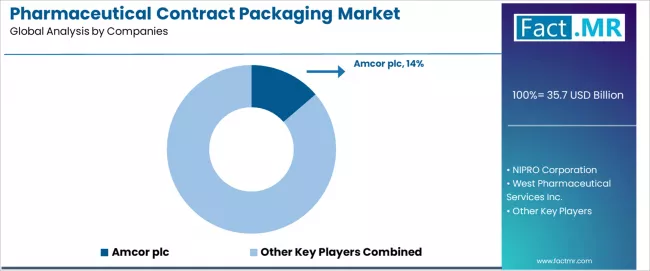
Pharmaceutical Contract Packaging Market Analysis By Company
- PCI Pharma Services, Wasdell Packaging Group, and Tjoapack hold strong positions as dedicated pharmaceutical contract packaging specialists, with validated infrastructure and deep regulatory compliance expertise.
- Amcor plc, West Pharmaceutical Services, NIPRO Corporation, and CCL Industries compete through materials and packaging component supply combined with service capabilities.
- Aphena Pharma Solutions, Reed-Lane, and Daito Pharmaceutical Co. Ltd. participate through focused contract packaging services in specific geographies and dosage form categories.
The competitive environment includes dedicated contract packaging service providers, packaging material suppliers with service capabilities, and CDMOs that offer integrated fill-finish and packaging. PCI Pharma Services and Wasdell lead through full-service commercial and clinical packaging platforms.
Competition is shaped by capability specialization. Contract packagers with sterile fill-finish capacity command premium positioning, while those focused on oral solid dosage compete more on volume efficiency.
Key Companies in the Pharmaceutical Contract Packaging Market
- PCI Pharma Services, Wasdell Packaging Group, and Tjoapack lead as dedicated contract packaging specialists with validated commercial and clinical packaging infrastructure across multiple geographies.
- Amcor plc, West Pharmaceutical Services Inc., NIPRO Corporation, CCL Industries Inc., Aphena Pharma Solutions, Reed-Lane, and Daito Pharmaceutical Co. Ltd. compete through packaging materials, primary container systems, and focused contract packaging services.
Recent Industry Developments
- PCI Pharma Services, Capacity Expansion, Sterile Packaging Infrastructure (2025)
- PCI Pharma Services expanded its sterile fill-finish and cold chain packaging capacity at multiple sites to address growing biologic drug packaging demand.
- Wasdell Packaging Group, Facility Investment, European Packaging Expansion (2025)
- Wasdell Packaging Group invested in expanded packaging facilities in Europe to increase commercial and clinical trial packaging throughput.
- West Pharmaceutical Services Inc., Product Launch, Injectable Packaging Systems (2026)
- West Pharmaceutical Services introduced updated injectable containment and delivery systems supporting contract packaging applications for biologic and vaccine products.
Leading Companies Shaping the Pharmaceutical Contract Packaging Market
- Amcor plc
- NIPRO Corporation
- West Pharmaceutical Services Inc.
- PCI Pharma Services
- CCL Industries Inc.
- Aphena Pharma Solutions
- Daito Pharmaceutical Co. Ltd.
- Reed-Lane
- Wasdell Packaging Group
- Tjoapack
Sources and Research References
- PCI Pharma Services. Capacity expansion announcements and contract packaging service portfolio updates.
- Wasdell Packaging Group. Facility investment disclosures and European packaging operations updates.
- West Pharmaceutical Services Inc. Injectable containment and delivery system product launches.
- U.S. Food and Drug Administration (FDA). Drug Supply Chain Security Act (DSCSA) guidance.
- European Medicines Agency (EMA). Falsified Medicines Directive implementation updates.
- Primary interviews with contract packagers, pharmaceutical procurement teams, and clinical supply managers.
This bibliography is provided for reader reference and is not exhaustive. The full report contains the complete reference list and detailed citations.
Key Questions This Report Addresses
- What is the current and future size of the Pharmaceutical Contract Packaging Market?
- How fast is the market expected to grow between 2026 and 2036?
- Which product type is likely to lead the market by 2026?
- Which application segment is expected to account for the highest demand?
- What factors are driving demand?
- How is biologic drug packaging growth influencing the market?
- Why are China and India the fastest growing markets?
- Who are the key companies?
- How does Fact.MR estimate the forecast?
Pharmaceutical Contract Packaging Market Definition
The pharmaceutical contract packaging market covers outsourced packaging services for pharmaceutical, biopharmaceutical, and clinical trial products. It includes primary packaging (blisters, bottles, vials, syringes), secondary packaging (cartoning, labeling, serialization), and tertiary packaging (cold chain shipping, palletization) provided by third-party service providers to drug manufacturers and sponsors. The market encompasses services for both commercial drug products and investigational products in clinical trials, spanning oral solid dosage, injectable, topical, and specialty dosage form categories.
Pharmaceutical Contract Packaging Market Inclusions
- The scope covers global and regional market size and forecasts for 2026 to 2036 across product type, application, end use, formulation, and region.
- It includes demand analysis based on pharmaceutical outsourcing trends, serialization mandates, biologic drug packaging requirements, and clinical trial packaging activity.
- The report covers pricing analysis, competitive benchmarking, and the regulatory environment including serialization compliance across major markets.
Pharmaceutical Contract Packaging Market Exclusions
- The scope excludes in-house pharmaceutical packaging operations conducted by drug manufacturers on their own production lines.
- It excludes packaging machinery and equipment sales that are not bundled with contract packaging services.
- The report excludes consumer health, nutraceutical, and dietary supplement packaging services not classified under pharmaceutical regulatory frameworks.
Pharmaceutical Contract Packaging Market Research Methodology
- The methodology combines secondary research, primary interviews, and forecast modelling.
- It draws on 130+ secondary sources and benchmarks 65+ company service portfolios.
- Market sizing covers 30+ countries through a demand-side model, supported by top-down validation.
- Key inputs include pharmaceutical outsourcing rates, drug approval volumes, serialization compliance timelines, and biologic packaging growth.
- Primary validation includes 25+ interviews across contract packagers, pharmaceutical procurement teams, and clinical supply managers.
Scope of Analysis

| Parameter | Details |
|---|---|
| Quantitative Units | USD 37.8 billion to USD 67.8 billion, at a CAGR of 6.0% |
| Market Definition | The Pharmaceutical Contract Packaging Market covers outsourced packaging services for pharmaceutical, biopharmaceutical, and clinical trial products across primary, secondary, and tertiary packaging categories. |
| Regions Covered | North America, Latin America, Europe, East Asia, South Asia and Pacific, Middle East and Africa |
| Countries Covered | China, India, Brazil, USA, Germany, UK, Japan, 30 plus countries |
| Key Companies | Amcor plc, NIPRO Corporation, West Pharmaceutical Services Inc., PCI Pharma Services, CCL Industries Inc., Aphena Pharma Solutions, Daito Pharmaceutical Co. Ltd., Reed-Lane, Wasdell Packaging Group, Tjoapack |
| Forecast Period | 2026 to 2036 |
| Approach | Hybrid demand-side and top-down methodology built on pharmaceutical outsourcing rates, drug approval volumes, serialization compliance timelines, biologic packaging growth, and primary interviews. |
Pharmaceutical Contract Packaging Market Segmentation
-
Pharmaceutical Contract Packaging MarketSegmented by Product:
- Primary Pharmaceutical Packaging
- Blister Packaging Solutions
- Aluminum Aluminum Blisters
- PVC PVDC Blister Packs
- Blister Packaging Solutions
- Bottles and Containers
- HDPE and PET Bottles
- Tablet Bottles
- Capsule Containers
- HDPE and PET Bottles
- Injectable Packaging Systems
- Vials and Ampoules
- Pre Filled Syringes
- Sterile Injectable Vials
- Vials and Ampoules
- Secondary Packaging Services
- Cartoning Solutions
- Labeling and Serialization
- Tamper Evident Packaging
- Cartoning Solutions
- Tertiary Packaging Solutions
- Cold Chain Shipping Boxes
- Palletization Services
- Temperature Controlled Logistics Packs
- Cold Chain Shipping Boxes
- Primary Pharmaceutical Packaging
-
Pharmaceutical Contract Packaging MarketSegmented by Application:
- Oral Solid Dosage Packaging
- Tablet and Capsule Packaging
- Unit Dose Packaging
- Multi Dose Packaging
- Tablet and Capsule Packaging
- Injectable Drug Packaging
- Sterile Fill Finish Packaging
- Biologic Drug Vials
- Lyophilized Product Packaging
- Sterile Fill Finish Packaging
- Topical and Semi Solid Packaging
- Cream and Ointment Tubes
- Dermal Product Packaging
- Gel Based Packaging
- Cream and Ointment Tubes
- Clinical Trial Packaging
- Sample and Kit Packaging
- Randomization Kits
- Blinded Study Packs
- Sample and Kit Packaging
- Oral Solid Dosage Packaging
-
Pharmaceutical Contract Packaging MarketSegmented by End Use:
- Pharmaceutical Companies
- Large Scale Drug Manufacturers
- Generic Drug Producers
- Branded Pharmaceutical Firms
- Large Scale Drug Manufacturers
- Biopharmaceutical Companies
- Biologic Drug Manufacturers
- Vaccine Manufacturers
- Cell and Gene Therapy Firms
- Biologic Drug Manufacturers
- Contract Manufacturing Organizations
- Outsourced Packaging Providers
- Full Service CDMO Packaging Units
- Fill Finish Service Providers
- Outsourced Packaging Providers
- Pharmaceutical Companies
-
Pharmaceutical Contract Packaging MarketSegmented by Technology:
- Automated Packaging Systems
- High Speed Blister Machines
- Robotic Packaging Lines
- Vision Inspection Systems
- High Speed Blister Machines
- Serialization and Track and Trace
- Anti Counterfeit Technologies
- Barcode and QR Systems
- RFID Enabled Packaging
- Anti Counterfeit Technologies
- Aseptic Packaging Technology
- Sterile Fill Finish Systems
- Isolator Based Packaging
- Clean Room Packaging Lines
- Sterile Fill Finish Systems
- Cold Chain Packaging Technology
- Temperature Controlled Systems
- Insulated Packaging Solutions
- Validated Transport Systems
- Temperature Controlled Systems
- Automated Packaging Systems
-
Pharmaceutical Contract Packaging MarketSegmented by Formulation:
- Solid Dosage Packaging
- Tablets and Capsules
- Immediate Release Formulations
- Extended Release Formulations
- Tablets and Capsules
- Liquid Dosage Packaging
- Injectable Solutions
- Sterile Vials and Ampoules
- Biologic Formulations
- Injectable Solutions
- Semi Solid Dosage Packaging
- Topical Drug Packaging
- Creams and Ointments
- Dermal Gels
- Topical Drug Packaging
- Advanced Therapy Packaging
- Cell and Gene Therapy Products
- Cryogenic Vial Systems
- Specialty Biologic Kits
- Cell and Gene Therapy Products
- Solid Dosage Packaging
-
Pharmaceutical Contract Packaging MarketSegmented by Distribution Channel:
- Direct Contracts
- Pharma Manufacturer Agreements
- Long Term Packaging Deals
- Bulk Supply Contracts
- Pharma Manufacturer Agreements
- Contract Packaging Organizations
- Third Party Packaging Providers
- CDMO Integrated Services
- Regional Packaging Vendors
- Third Party Packaging Providers
- Specialty Distributors
- Packaging Material Suppliers
- Serialization Solution Providers
- Cold Chain Logistics Partners
- Packaging Material Suppliers
- Direct Contracts
-
Pharmaceutical Contract Packaging Marketby Region:
- North America
- USA
- Canada
- Mexico
- Latin America
- Brazil
- Chile
- Rest of Latin America
- Western Europe
- Germany
- UK
- Italy
- Spain
- France
- Nordic
- BENELUX
- Rest of Western Europe
- Eastern Europe
- Russia
- Poland
- Hungary
- Balkan & Baltic
- Rest of Eastern Europe
- East Asia
- China
- Japan
- South Korea
- South Asia and Pacific
- India
- ASEAN
- Australia & New Zealand
- Rest of South Asia and Pacific
- Middle East & Africa
- Kingdom of Saudi Arabia
- Other GCC Countries
- Turkiye
- South Africa
- Other African Union
- Rest of Middle East & Africa
- North America
- Frequently Asked Questions -
How big is the pharmaceutical contract packaging market in 2025?
The global pharmaceutical contract packaging market is estimated to be valued at USD 35.7 billion in 2025.
What will be the size of the pharmaceutical contract packaging market in 2036?
The market size for the pharmaceutical contract packaging market is projected to reach USD 67.8 billion by 2036.
How much will the pharmaceutical contract packaging market grow between 2026 and 2036?
The pharmaceutical contract packaging market is expected to grow at a 6.0% CAGR between 2026 and 2036.
What are the key product types in the pharmaceutical contract packaging market?
The key product types in the pharmaceutical contract packaging market are primary pharmaceutical packaging, bottles and containers, injectable packaging systems, secondary packaging services, and tertiary packaging solutions.
Which product segment will contribute significant share in the pharmaceutical contract packaging market in 2026?
In terms of product, Primary pharmaceutical packaging is expected to account for 46% share in the pharmaceutical contract packaging market in 2026.
Which countries are the fastest growing markets?
China (7.4%) and India (7.1%) are among the fastest-growing markets in the pharmaceutical contract packaging market.
Table of Content
- Executive Summary
- Global Market Outlook
- Demand to side Trends
- Supply to side Trends
- Technology Roadmap Analysis
- Analysis and Recommendations
- Market Overview
- Market Coverage / Taxonomy
- Market Definition / Scope / Limitations
- Research Methodology
- Chapter Orientation
- Analytical Lens and Working Hypotheses
- Market Structure, Signals, and Trend Drivers
- Benchmarking and Cross-market Comparability
- Market Sizing, Forecasting, and Opportunity Mapping
- Research Design and Evidence Framework
- Desk Research Programme (Secondary Evidence)
- Company Annual and Sustainability Reports
- Peer-reviewed Journals and Academic Literature
- Corporate Websites, Product Literature, and Technical Notes
- Earnings Decks and Investor Briefings
- Statutory Filings and Regulatory Disclosures
- Technical White Papers and Standards Notes
- Trade Journals, Industry Magazines, and Analyst Briefs
- Conference Proceedings, Webinars, and Seminar Materials
- Government Statistics Portals and Public Data Releases
- Press Releases and Reputable Media Coverage
- Specialist Newsletters and Curated Briefings
- Sector Databases and Reference Repositories
- Fact.MR Internal Proprietary Databases and Historical Market Datasets
- Subscription Datasets and Paid Sources
- Social Channels, Communities, and Digital Listening Inputs
- Additional Desk Sources
- Expert Input and Fieldwork (Primary Evidence)
- Primary Modes
- Qualitative Interviews and Expert Elicitation
- Quantitative Surveys and Structured Data Capture
- Blended Approach
- Why Primary Evidence is Used
- Field Techniques
- Interviews
- Surveys
- Focus Groups
- Observational and In-context Research
- Social and Community Interactions
- Stakeholder Universe Engaged
- C-suite Leaders
- Board Members
- Presidents and Vice Presidents
- R&D and Innovation Heads
- Technical Specialists
- Domain Subject-matter Experts
- Scientists
- Physicians and Other Healthcare Professionals
- Governance, Ethics, and Data Stewardship
- Research Ethics
- Data Integrity and Handling
- Primary Modes
- Tooling, Models, and Reference Databases
- Desk Research Programme (Secondary Evidence)
- Data Engineering and Model Build
- Data Acquisition and Ingestion
- Cleaning, Normalisation, and Verification
- Synthesis, Triangulation, and Analysis
- Quality Assurance and Audit Trail
- Market Background
- Market Dynamics
- Drivers
- Restraints
- Opportunity
- Trends
- Scenario Forecast
- Demand in Optimistic Scenario
- Demand in Likely Scenario
- Demand in Conservative Scenario
- Opportunity Map Analysis
- Product Life Cycle Analysis
- Supply Chain Analysis
- Investment Feasibility Matrix
- Value Chain Analysis
- PESTLE and Porter’s Analysis
- Regulatory Landscape
- Regional Parent Market Outlook
- Production and Consumption Statistics
- Import and Export Statistics
- Market Dynamics
- Global Market Analysis 2021 to 2025 and Forecast, 2026 to 2036
- Historical Market Size Value (USD Million) Analysis, 2021 to 2025
- Current and Future Market Size Value (USD Million) Projections, 2026 to 2036
- Y to o to Y Growth Trend Analysis
- Absolute $ Opportunity Analysis
- Global Market Pricing Analysis 2021 to 2025 and Forecast 2026 to 2036
- Global Market Analysis 2021 to 2025 and Forecast 2026 to 2036, By Product
- Introduction / Key Findings
- Historical Market Size Value (USD Million) Analysis By Product, 2021 to 2025
- Current and Future Market Size Value (USD Million) Analysis and Forecast By Product, 2026 to 2036
- Primary Pharmaceutical Packaging
- Blister Packaging Solutions
- Aluminum Aluminum Blisters
- PVC PVDC Blister Packs
- Bottles and Containers
- HDPE and PET Bottles
- Tablet Bottles
- Capsule Containers
- Injectable Packaging Systems
- Vials and Ampoules
- Pre Filled Syringes
- Sterile Injectable Vials
- Secondary Packaging Services
- Cartoning Solutions
- Labeling and Serialization
- Tamper Evident Packaging
- Tertiary Packaging Solutions
- Cold Chain Shipping Boxes
- Palletization Services
- Temperature Controlled Logistics Packs
- Primary Pharmaceutical Packaging
- Y to o to Y Growth Trend Analysis By Product, 2021 to 2025
- Absolute $ Opportunity Analysis By Product, 2026 to 2036
- Global Market Analysis 2021 to 2025 and Forecast 2026 to 2036, By Application
- Introduction / Key Findings
- Historical Market Size Value (USD Million) Analysis By Application, 2021 to 2025
- Current and Future Market Size Value (USD Million) Analysis and Forecast By Application, 2026 to 2036
- Oral Solid Dosage Packaging
- Tablet and Capsule Packaging
- Value (USD Million) Dose Packaging
- Multi Dose Packaging
- Injectable Drug Packaging
- Sterile Fill Finish Packaging
- Biologic Drug Vials
- Lyophilized Product Packaging
- Topical and Semi Solid Packaging
- Cream and Ointment Tubes
- Dermal Product Packaging
- Gel Based Packaging
- Clinical Trial Packaging
- Sample and Kit Packaging
- Randomization Kits
- Blinded Study Packs
- Oral Solid Dosage Packaging
- Y to o to Y Growth Trend Analysis By Application, 2021 to 2025
- Absolute $ Opportunity Analysis By Application, 2026 to 2036
- Global Market Analysis 2021 to 2025 and Forecast 2026 to 2036, By End Use
- Introduction / Key Findings
- Historical Market Size Value (USD Million) Analysis By End Use, 2021 to 2025
- Current and Future Market Size Value (USD Million) Analysis and Forecast By End Use, 2026 to 2036
- Pharmaceutical Companies
- Large Scale Drug Manufacturers
- Generic Drug Producers
- Branded Pharmaceutical Firms
- Biopharmaceutical Companies
- Biologic Drug Manufacturers
- Vaccine Manufacturers
- Cell and Gene Therapy Firms
- Contract Manufacturing Organizations
- Outsourced Packaging Providers
- Full Service CDMO Packaging Value (USD Million)s
- Fill Finish Service Providers
- Pharmaceutical Companies
- Y to o to Y Growth Trend Analysis By End Use, 2021 to 2025
- Absolute $ Opportunity Analysis By End Use, 2026 to 2036
- Global Market Analysis 2021 to 2025 and Forecast 2026 to 2036, By Technology
- Introduction / Key Findings
- Historical Market Size Value (USD Million) Analysis By Technology, 2021 to 2025
- Current and Future Market Size Value (USD Million) Analysis and Forecast By Technology, 2026 to 2036
- Automated Packaging Systems
- High Speed Blister Machines
- Robotic Packaging Lines
- Vision Inspection Systems
- Serialization and Track and Trace
- Anti Counterfeit Technologies
- Barcode and QR Systems
- RFID Enabled Packaging
- Aseptic Packaging Technology
- Sterile Fill Finish Systems
- Isolator Based Packaging
- Clean Room Packaging Lines
- Cold Chain Packaging Technology
- Temperature Controlled Systems
- Insulated Packaging Solutions
- Validated Transport Systems
- Automated Packaging Systems
- Y to o to Y Growth Trend Analysis By Technology, 2021 to 2025
- Absolute $ Opportunity Analysis By Technology, 2026 to 2036
- Global Market Analysis 2021 to 2025 and Forecast 2026 to 2036, By Formulation
- Introduction / Key Findings
- Historical Market Size Value (USD Million) Analysis By Formulation, 2021 to 2025
- Current and Future Market Size Value (USD Million) Analysis and Forecast By Formulation, 2026 to 2036
- Solid Dosage Packaging
- Tablets and Capsules
- Immediate Release Formulations
- Extended Release Formulations
- Liquid Dosage Packaging
- Injectable Solutions
- Sterile Vials and Ampoules
- Biologic Formulations
- Semi Solid Dosage Packaging
- Topical Drug Packaging
- Creams and Ointments
- Dermal Gels
- Advanced Therapy Packaging
- Cell and Gene Therapy Products
- Cryogenic Vial Systems
- Specialty Biologic Kits
- Solid Dosage Packaging
- Y to o to Y Growth Trend Analysis By Formulation, 2021 to 2025
- Absolute $ Opportunity Analysis By Formulation, 2026 to 2036
- Global Market Analysis 2021 to 2025 and Forecast 2026 to 2036, By Distribution Channel
- Introduction / Key Findings
- Historical Market Size Value (USD Million) Analysis By Distribution Channel, 2021 to 2025
- Current and Future Market Size Value (USD Million) Analysis and Forecast By Distribution Channel, 2026 to 2036
- Direct Contracts
- Pharma Manufacturer Agreements
- Long Term Packaging Deals
- Bulk Supply Contracts
- Contract Packaging Organizations
- Third Party Packaging Providers
- CDMO Integrated Services
- Regional Packaging Vendors
- Specialty Distributors
- Packaging Material Suppliers
- Serialization Solution Providers
- Cold Chain Logistics Partners
- Direct Contracts
- Y to o to Y Growth Trend Analysis By Distribution Channel, 2021 to 2025
- Absolute $ Opportunity Analysis By Distribution Channel, 2026 to 2036
- Global Market Analysis 2021 to 2025 and Forecast 2026 to 2036, By Region
- Introduction
- Historical Market Size Value (USD Million) Analysis By Region, 2021 to 2025
- Current Market Size Value (USD Million) Analysis and Forecast By Region, 2026 to 2036
- North America
- Latin America
- Western Europe
- Eastern Europe
- East Asia
- South Asia and Pacific
- Middle East & Africa
- Market Attractiveness Analysis By Region
- North America Market Analysis 2021 to 2025 and Forecast 2026 to 2036, By Country
- Historical Market Size Value (USD Million) Trend Analysis By Market Taxonomy, 2021 to 2025
- Market Size Value (USD Million) Forecast By Market Taxonomy, 2026 to 2036
- By Country
- USA
- Canada
- Mexico
- By Product
- By Application
- By End Use
- By Technology
- By Formulation
- By Distribution Channel
- By Country
- Market Attractiveness Analysis
- By Country
- By Product
- By Application
- By End Use
- By Technology
- By Formulation
- By Distribution Channel
- Key Takeaways
- Latin America Market Analysis 2021 to 2025 and Forecast 2026 to 2036, By Country
- Historical Market Size Value (USD Million) Trend Analysis By Market Taxonomy, 2021 to 2025
- Market Size Value (USD Million) Forecast By Market Taxonomy, 2026 to 2036
- By Country
- Brazil
- Chile
- Rest of Latin America
- By Product
- By Application
- By End Use
- By Technology
- By Formulation
- By Distribution Channel
- By Country
- Market Attractiveness Analysis
- By Country
- By Product
- By Application
- By End Use
- By Technology
- By Formulation
- By Distribution Channel
- Key Takeaways
- Western Europe Market Analysis 2021 to 2025 and Forecast 2026 to 2036, By Country
- Historical Market Size Value (USD Million) Trend Analysis By Market Taxonomy, 2021 to 2025
- Market Size Value (USD Million) Forecast By Market Taxonomy, 2026 to 2036
- By Country
- Germany
- UK
- Italy
- Spain
- France
- Nordic
- BENELUX
- Rest of Western Europe
- By Product
- By Application
- By End Use
- By Technology
- By Formulation
- By Distribution Channel
- By Country
- Market Attractiveness Analysis
- By Country
- By Product
- By Application
- By End Use
- By Technology
- By Formulation
- By Distribution Channel
- Key Takeaways
- Eastern Europe Market Analysis 2021 to 2025 and Forecast 2026 to 2036, By Country
- Historical Market Size Value (USD Million) Trend Analysis By Market Taxonomy, 2021 to 2025
- Market Size Value (USD Million) Forecast By Market Taxonomy, 2026 to 2036
- By Country
- Russia
- Poland
- Hungary
- Balkan & Baltic
- Rest of Eastern Europe
- By Product
- By Application
- By End Use
- By Technology
- By Formulation
- By Distribution Channel
- By Country
- Market Attractiveness Analysis
- By Country
- By Product
- By Application
- By End Use
- By Technology
- By Formulation
- By Distribution Channel
- Key Takeaways
- East Asia Market Analysis 2021 to 2025 and Forecast 2026 to 2036, By Country
- Historical Market Size Value (USD Million) Trend Analysis By Market Taxonomy, 2021 to 2025
- Market Size Value (USD Million) Forecast By Market Taxonomy, 2026 to 2036
- By Country
- China
- Japan
- South Korea
- By Product
- By Application
- By End Use
- By Technology
- By Formulation
- By Distribution Channel
- By Country
- Market Attractiveness Analysis
- By Country
- By Product
- By Application
- By End Use
- By Technology
- By Formulation
- By Distribution Channel
- Key Takeaways
- South Asia and Pacific Market Analysis 2021 to 2025 and Forecast 2026 to 2036, By Country
- Historical Market Size Value (USD Million) Trend Analysis By Market Taxonomy, 2021 to 2025
- Market Size Value (USD Million) Forecast By Market Taxonomy, 2026 to 2036
- By Country
- India
- ASEAN
- Australia & New Zealand
- Rest of South Asia and Pacific
- By Product
- By Application
- By End Use
- By Technology
- By Formulation
- By Distribution Channel
- By Country
- Market Attractiveness Analysis
- By Country
- By Product
- By Application
- By End Use
- By Technology
- By Formulation
- By Distribution Channel
- Key Takeaways
- Middle East & Africa Market Analysis 2021 to 2025 and Forecast 2026 to 2036, By Country
- Historical Market Size Value (USD Million) Trend Analysis By Market Taxonomy, 2021 to 2025
- Market Size Value (USD Million) Forecast By Market Taxonomy, 2026 to 2036
- By Country
- Kingdom of Saudi Arabia
- Other GCC Countries
- Turkiye
- South Africa
- Other African Union
- Rest of Middle East & Africa
- By Product
- By Application
- By End Use
- By Technology
- By Formulation
- By Distribution Channel
- By Country
- Market Attractiveness Analysis
- By Country
- By Product
- By Application
- By End Use
- By Technology
- By Formulation
- By Distribution Channel
- Key Takeaways
- Key Countries Market Analysis
- USA
- Pricing Analysis
- Market Share Analysis, 2025
- By Product
- By Application
- By End Use
- By Technology
- By Formulation
- By Distribution Channel
- Canada
- Pricing Analysis
- Market Share Analysis, 2025
- By Product
- By Application
- By End Use
- By Technology
- By Formulation
- By Distribution Channel
- Mexico
- Pricing Analysis
- Market Share Analysis, 2025
- By Product
- By Application
- By End Use
- By Technology
- By Formulation
- By Distribution Channel
- Brazil
- Pricing Analysis
- Market Share Analysis, 2025
- By Product
- By Application
- By End Use
- By Technology
- By Formulation
- By Distribution Channel
- Chile
- Pricing Analysis
- Market Share Analysis, 2025
- By Product
- By Application
- By End Use
- By Technology
- By Formulation
- By Distribution Channel
- Germany
- Pricing Analysis
- Market Share Analysis, 2025
- By Product
- By Application
- By End Use
- By Technology
- By Formulation
- By Distribution Channel
- UK
- Pricing Analysis
- Market Share Analysis, 2025
- By Product
- By Application
- By End Use
- By Technology
- By Formulation
- By Distribution Channel
- Italy
- Pricing Analysis
- Market Share Analysis, 2025
- By Product
- By Application
- By End Use
- By Technology
- By Formulation
- By Distribution Channel
- Spain
- Pricing Analysis
- Market Share Analysis, 2025
- By Product
- By Application
- By End Use
- By Technology
- By Formulation
- By Distribution Channel
- France
- Pricing Analysis
- Market Share Analysis, 2025
- By Product
- By Application
- By End Use
- By Technology
- By Formulation
- By Distribution Channel
- India
- Pricing Analysis
- Market Share Analysis, 2025
- By Product
- By Application
- By End Use
- By Technology
- By Formulation
- By Distribution Channel
- ASEAN
- Pricing Analysis
- Market Share Analysis, 2025
- By Product
- By Application
- By End Use
- By Technology
- By Formulation
- By Distribution Channel
- Australia & New Zealand
- Pricing Analysis
- Market Share Analysis, 2025
- By Product
- By Application
- By End Use
- By Technology
- By Formulation
- By Distribution Channel
- China
- Pricing Analysis
- Market Share Analysis, 2025
- By Product
- By Application
- By End Use
- By Technology
- By Formulation
- By Distribution Channel
- Japan
- Pricing Analysis
- Market Share Analysis, 2025
- By Product
- By Application
- By End Use
- By Technology
- By Formulation
- By Distribution Channel
- South Korea
- Pricing Analysis
- Market Share Analysis, 2025
- By Product
- By Application
- By End Use
- By Technology
- By Formulation
- By Distribution Channel
- Russia
- Pricing Analysis
- Market Share Analysis, 2025
- By Product
- By Application
- By End Use
- By Technology
- By Formulation
- By Distribution Channel
- Poland
- Pricing Analysis
- Market Share Analysis, 2025
- By Product
- By Application
- By End Use
- By Technology
- By Formulation
- By Distribution Channel
- Hungary
- Pricing Analysis
- Market Share Analysis, 2025
- By Product
- By Application
- By End Use
- By Technology
- By Formulation
- By Distribution Channel
- Kingdom of Saudi Arabia
- Pricing Analysis
- Market Share Analysis, 2025
- By Product
- By Application
- By End Use
- By Technology
- By Formulation
- By Distribution Channel
- Turkiye
- Pricing Analysis
- Market Share Analysis, 2025
- By Product
- By Application
- By End Use
- By Technology
- By Formulation
- By Distribution Channel
- South Africa
- Pricing Analysis
- Market Share Analysis, 2025
- By Product
- By Application
- By End Use
- By Technology
- By Formulation
- By Distribution Channel
- USA
- Market Structure Analysis
- Competition Dashboard
- Competition Benchmarking
- Market Share Analysis of Top Players
- By Regional
- By Product
- By Application
- By End Use
- By Technology
- By Formulation
- By Distribution Channel
- Competition Analysis
- Competition Deep Dive
- Amcor plc
- Overview
- Product Portfolio
- Profitability by Market Segments (Product/Age /Sales Channel/Region)
- Sales Footprint
- Strategy Overview
- Marketing Strategy
- Product Strategy
- Channel Strategy
- NIPRO Corporation
- West Pharmaceutical Services Inc.
- PCI Pharma Services
- CCL Industries Inc.
- Aphena Pharma Solutions
- Daito Pharmaceutical Co. Ltd.
- Reed-Lane
- Wasdell Packaging Group
- Tjoapack
- Amcor plc
- Competition Deep Dive
- Assumptions & Acronyms Used
List Of Table
- Table 1: Global Market Value (USD Million) Forecast by Region, 2021 to 2036
- Table 2: Global Market Value (USD Million) Forecast by Product, 2021 to 2036
- Table 3: Global Market Value (USD Million) Forecast by Application, 2021 to 2036
- Table 4: Global Market Value (USD Million) Forecast by End Use, 2021 to 2036
- Table 5: Global Market Value (USD Million) Forecast by Technology, 2021 to 2036
- Table 6: Global Market Value (USD Million) Forecast by Formulation, 2021 to 2036
- Table 7: Global Market Value (USD Million) Forecast by Distribution Channel, 2021 to 2036
- Table 8: North America Market Value (USD Million) Forecast by Country, 2021 to 2036
- Table 9: North America Market Value (USD Million) Forecast by Product, 2021 to 2036
- Table 10: North America Market Value (USD Million) Forecast by Application, 2021 to 2036
- Table 11: North America Market Value (USD Million) Forecast by End Use, 2021 to 2036
- Table 12: North America Market Value (USD Million) Forecast by Technology, 2021 to 2036
- Table 13: North America Market Value (USD Million) Forecast by Formulation, 2021 to 2036
- Table 14: North America Market Value (USD Million) Forecast by Distribution Channel, 2021 to 2036
- Table 15: Latin America Market Value (USD Million) Forecast by Country, 2021 to 2036
- Table 16: Latin America Market Value (USD Million) Forecast by Product, 2021 to 2036
- Table 17: Latin America Market Value (USD Million) Forecast by Application, 2021 to 2036
- Table 18: Latin America Market Value (USD Million) Forecast by End Use, 2021 to 2036
- Table 19: Latin America Market Value (USD Million) Forecast by Technology, 2021 to 2036
- Table 20: Latin America Market Value (USD Million) Forecast by Formulation, 2021 to 2036
- Table 21: Latin America Market Value (USD Million) Forecast by Distribution Channel, 2021 to 2036
- Table 22: Western Europe Market Value (USD Million) Forecast by Country, 2021 to 2036
- Table 23: Western Europe Market Value (USD Million) Forecast by Product, 2021 to 2036
- Table 24: Western Europe Market Value (USD Million) Forecast by Application, 2021 to 2036
- Table 25: Western Europe Market Value (USD Million) Forecast by End Use, 2021 to 2036
- Table 26: Western Europe Market Value (USD Million) Forecast by Technology, 2021 to 2036
- Table 27: Western Europe Market Value (USD Million) Forecast by Formulation, 2021 to 2036
- Table 28: Western Europe Market Value (USD Million) Forecast by Distribution Channel, 2021 to 2036
- Table 29: Eastern Europe Market Value (USD Million) Forecast by Country, 2021 to 2036
- Table 30: Eastern Europe Market Value (USD Million) Forecast by Product, 2021 to 2036
- Table 31: Eastern Europe Market Value (USD Million) Forecast by Application, 2021 to 2036
- Table 32: Eastern Europe Market Value (USD Million) Forecast by End Use, 2021 to 2036
- Table 33: Eastern Europe Market Value (USD Million) Forecast by Technology, 2021 to 2036
- Table 34: Eastern Europe Market Value (USD Million) Forecast by Formulation, 2021 to 2036
- Table 35: Eastern Europe Market Value (USD Million) Forecast by Distribution Channel, 2021 to 2036
- Table 36: East Asia Market Value (USD Million) Forecast by Country, 2021 to 2036
- Table 37: East Asia Market Value (USD Million) Forecast by Product, 2021 to 2036
- Table 38: East Asia Market Value (USD Million) Forecast by Application, 2021 to 2036
- Table 39: East Asia Market Value (USD Million) Forecast by End Use, 2021 to 2036
- Table 40: East Asia Market Value (USD Million) Forecast by Technology, 2021 to 2036
- Table 41: East Asia Market Value (USD Million) Forecast by Formulation, 2021 to 2036
- Table 42: East Asia Market Value (USD Million) Forecast by Distribution Channel, 2021 to 2036
- Table 43: South Asia and Pacific Market Value (USD Million) Forecast by Country, 2021 to 2036
- Table 44: South Asia and Pacific Market Value (USD Million) Forecast by Product, 2021 to 2036
- Table 45: South Asia and Pacific Market Value (USD Million) Forecast by Application, 2021 to 2036
- Table 46: South Asia and Pacific Market Value (USD Million) Forecast by End Use, 2021 to 2036
- Table 47: South Asia and Pacific Market Value (USD Million) Forecast by Technology, 2021 to 2036
- Table 48: South Asia and Pacific Market Value (USD Million) Forecast by Formulation, 2021 to 2036
- Table 49: South Asia and Pacific Market Value (USD Million) Forecast by Distribution Channel, 2021 to 2036
- Table 50: Middle East & Africa Market Value (USD Million) Forecast by Country, 2021 to 2036
- Table 51: Middle East & Africa Market Value (USD Million) Forecast by Product, 2021 to 2036
- Table 52: Middle East & Africa Market Value (USD Million) Forecast by Application, 2021 to 2036
- Table 53: Middle East & Africa Market Value (USD Million) Forecast by End Use, 2021 to 2036
- Table 54: Middle East & Africa Market Value (USD Million) Forecast by Technology, 2021 to 2036
- Table 55: Middle East & Africa Market Value (USD Million) Forecast by Formulation, 2021 to 2036
- Table 56: Middle East & Africa Market Value (USD Million) Forecast by Distribution Channel, 2021 to 2036
List Of Figures
- Figure 1: Global Market Pricing Analysis
- Figure 2: Global Market Value (USD Million) Forecast 2021-2036
- Figure 3: Global Market Value Share and BPS Analysis by Product, 2026 and 2036
- Figure 4: Global Market Y-o-Y Growth Comparison by Product, 2026-2036
- Figure 5: Global Market Attractiveness Analysis by Product
- Figure 6: Global Market Value Share and BPS Analysis by Application, 2026 and 2036
- Figure 7: Global Market Y-o-Y Growth Comparison by Application, 2026-2036
- Figure 8: Global Market Attractiveness Analysis by Application
- Figure 9: Global Market Value Share and BPS Analysis by End Use, 2026 and 2036
- Figure 10: Global Market Y-o-Y Growth Comparison by End Use, 2026-2036
- Figure 11: Global Market Attractiveness Analysis by End Use
- Figure 12: Global Market Value Share and BPS Analysis by Technology, 2026 and 2036
- Figure 13: Global Market Y-o-Y Growth Comparison by Technology, 2026-2036
- Figure 14: Global Market Attractiveness Analysis by Technology
- Figure 15: Global Market Value Share and BPS Analysis by Formulation, 2026 and 2036
- Figure 16: Global Market Y-o-Y Growth Comparison by Formulation, 2026-2036
- Figure 17: Global Market Attractiveness Analysis by Formulation
- Figure 18: Global Market Value Share and BPS Analysis by Distribution Channel, 2026 and 2036
- Figure 19: Global Market Y-o-Y Growth Comparison by Distribution Channel, 2026-2036
- Figure 20: Global Market Attractiveness Analysis by Distribution Channel
- Figure 21: Global Market Value (USD Million) Share and BPS Analysis by Region, 2026 and 2036
- Figure 22: Global Market Y-o-Y Growth Comparison by Region, 2026-2036
- Figure 23: Global Market Attractiveness Analysis by Region
- Figure 24: North America Market Incremental Dollar Opportunity, 2026-2036
- Figure 25: Latin America Market Incremental Dollar Opportunity, 2026-2036
- Figure 26: Western Europe Market Incremental Dollar Opportunity, 2026-2036
- Figure 27: Eastern Europe Market Incremental Dollar Opportunity, 2026-2036
- Figure 28: East Asia Market Incremental Dollar Opportunity, 2026-2036
- Figure 29: South Asia and Pacific Market Incremental Dollar Opportunity, 2026-2036
- Figure 30: Middle East & Africa Market Incremental Dollar Opportunity, 2026-2036
- Figure 31: North America Market Value Share and BPS Analysis by Country, 2026 and 2036
- Figure 32: North America Market Value Share and BPS Analysis by Product, 2026 and 2036
- Figure 33: North America Market Y-o-Y Growth Comparison by Product, 2026-2036
- Figure 34: North America Market Attractiveness Analysis by Product
- Figure 35: North America Market Value Share and BPS Analysis by Application, 2026 and 2036
- Figure 36: North America Market Y-o-Y Growth Comparison by Application, 2026-2036
- Figure 37: North America Market Attractiveness Analysis by Application
- Figure 38: North America Market Value Share and BPS Analysis by End Use, 2026 and 2036
- Figure 39: North America Market Y-o-Y Growth Comparison by End Use, 2026-2036
- Figure 40: North America Market Attractiveness Analysis by End Use
- Figure 41: North America Market Value Share and BPS Analysis by Technology, 2026 and 2036
- Figure 42: North America Market Y-o-Y Growth Comparison by Technology, 2026-2036
- Figure 43: North America Market Attractiveness Analysis by Technology
- Figure 44: North America Market Value Share and BPS Analysis by Formulation, 2026 and 2036
- Figure 45: North America Market Y-o-Y Growth Comparison by Formulation, 2026-2036
- Figure 46: North America Market Attractiveness Analysis by Formulation
- Figure 47: North America Market Value Share and BPS Analysis by Distribution Channel, 2026 and 2036
- Figure 48: North America Market Y-o-Y Growth Comparison by Distribution Channel, 2026-2036
- Figure 49: North America Market Attractiveness Analysis by Distribution Channel
- Figure 50: Latin America Market Value Share and BPS Analysis by Country, 2026 and 2036
- Figure 51: Latin America Market Value Share and BPS Analysis by Product, 2026 and 2036
- Figure 52: Latin America Market Y-o-Y Growth Comparison by Product, 2026-2036
- Figure 53: Latin America Market Attractiveness Analysis by Product
- Figure 54: Latin America Market Value Share and BPS Analysis by Application, 2026 and 2036
- Figure 55: Latin America Market Y-o-Y Growth Comparison by Application, 2026-2036
- Figure 56: Latin America Market Attractiveness Analysis by Application
- Figure 57: Latin America Market Value Share and BPS Analysis by End Use, 2026 and 2036
- Figure 58: Latin America Market Y-o-Y Growth Comparison by End Use, 2026-2036
- Figure 59: Latin America Market Attractiveness Analysis by End Use
- Figure 60: Latin America Market Value Share and BPS Analysis by Technology, 2026 and 2036
- Figure 61: Latin America Market Y-o-Y Growth Comparison by Technology, 2026-2036
- Figure 62: Latin America Market Attractiveness Analysis by Technology
- Figure 63: Latin America Market Value Share and BPS Analysis by Formulation, 2026 and 2036
- Figure 64: Latin America Market Y-o-Y Growth Comparison by Formulation, 2026-2036
- Figure 65: Latin America Market Attractiveness Analysis by Formulation
- Figure 66: Latin America Market Value Share and BPS Analysis by Distribution Channel, 2026 and 2036
- Figure 67: Latin America Market Y-o-Y Growth Comparison by Distribution Channel, 2026-2036
- Figure 68: Latin America Market Attractiveness Analysis by Distribution Channel
- Figure 69: Western Europe Market Value Share and BPS Analysis by Country, 2026 and 2036
- Figure 70: Western Europe Market Value Share and BPS Analysis by Product, 2026 and 2036
- Figure 71: Western Europe Market Y-o-Y Growth Comparison by Product, 2026-2036
- Figure 72: Western Europe Market Attractiveness Analysis by Product
- Figure 73: Western Europe Market Value Share and BPS Analysis by Application, 2026 and 2036
- Figure 74: Western Europe Market Y-o-Y Growth Comparison by Application, 2026-2036
- Figure 75: Western Europe Market Attractiveness Analysis by Application
- Figure 76: Western Europe Market Value Share and BPS Analysis by End Use, 2026 and 2036
- Figure 77: Western Europe Market Y-o-Y Growth Comparison by End Use, 2026-2036
- Figure 78: Western Europe Market Attractiveness Analysis by End Use
- Figure 79: Western Europe Market Value Share and BPS Analysis by Technology, 2026 and 2036
- Figure 80: Western Europe Market Y-o-Y Growth Comparison by Technology, 2026-2036
- Figure 81: Western Europe Market Attractiveness Analysis by Technology
- Figure 82: Western Europe Market Value Share and BPS Analysis by Formulation, 2026 and 2036
- Figure 83: Western Europe Market Y-o-Y Growth Comparison by Formulation, 2026-2036
- Figure 84: Western Europe Market Attractiveness Analysis by Formulation
- Figure 85: Western Europe Market Value Share and BPS Analysis by Distribution Channel, 2026 and 2036
- Figure 86: Western Europe Market Y-o-Y Growth Comparison by Distribution Channel, 2026-2036
- Figure 87: Western Europe Market Attractiveness Analysis by Distribution Channel
- Figure 88: Eastern Europe Market Value Share and BPS Analysis by Country, 2026 and 2036
- Figure 89: Eastern Europe Market Value Share and BPS Analysis by Product, 2026 and 2036
- Figure 90: Eastern Europe Market Y-o-Y Growth Comparison by Product, 2026-2036
- Figure 91: Eastern Europe Market Attractiveness Analysis by Product
- Figure 92: Eastern Europe Market Value Share and BPS Analysis by Application, 2026 and 2036
- Figure 93: Eastern Europe Market Y-o-Y Growth Comparison by Application, 2026-2036
- Figure 94: Eastern Europe Market Attractiveness Analysis by Application
- Figure 95: Eastern Europe Market Value Share and BPS Analysis by End Use, 2026 and 2036
- Figure 96: Eastern Europe Market Y-o-Y Growth Comparison by End Use, 2026-2036
- Figure 97: Eastern Europe Market Attractiveness Analysis by End Use
- Figure 98: Eastern Europe Market Value Share and BPS Analysis by Technology, 2026 and 2036
- Figure 99: Eastern Europe Market Y-o-Y Growth Comparison by Technology, 2026-2036
- Figure 100: Eastern Europe Market Attractiveness Analysis by Technology
- Figure 101: Eastern Europe Market Value Share and BPS Analysis by Formulation, 2026 and 2036
- Figure 102: Eastern Europe Market Y-o-Y Growth Comparison by Formulation, 2026-2036
- Figure 103: Eastern Europe Market Attractiveness Analysis by Formulation
- Figure 104: Eastern Europe Market Value Share and BPS Analysis by Distribution Channel, 2026 and 2036
- Figure 105: Eastern Europe Market Y-o-Y Growth Comparison by Distribution Channel, 2026-2036
- Figure 106: Eastern Europe Market Attractiveness Analysis by Distribution Channel
- Figure 107: East Asia Market Value Share and BPS Analysis by Country, 2026 and 2036
- Figure 108: East Asia Market Value Share and BPS Analysis by Product, 2026 and 2036
- Figure 109: East Asia Market Y-o-Y Growth Comparison by Product, 2026-2036
- Figure 110: East Asia Market Attractiveness Analysis by Product
- Figure 111: East Asia Market Value Share and BPS Analysis by Application, 2026 and 2036
- Figure 112: East Asia Market Y-o-Y Growth Comparison by Application, 2026-2036
- Figure 113: East Asia Market Attractiveness Analysis by Application
- Figure 114: East Asia Market Value Share and BPS Analysis by End Use, 2026 and 2036
- Figure 115: East Asia Market Y-o-Y Growth Comparison by End Use, 2026-2036
- Figure 116: East Asia Market Attractiveness Analysis by End Use
- Figure 117: East Asia Market Value Share and BPS Analysis by Technology, 2026 and 2036
- Figure 118: East Asia Market Y-o-Y Growth Comparison by Technology, 2026-2036
- Figure 119: East Asia Market Attractiveness Analysis by Technology
- Figure 120: East Asia Market Value Share and BPS Analysis by Formulation, 2026 and 2036
- Figure 121: East Asia Market Y-o-Y Growth Comparison by Formulation, 2026-2036
- Figure 122: East Asia Market Attractiveness Analysis by Formulation
- Figure 123: East Asia Market Value Share and BPS Analysis by Distribution Channel, 2026 and 2036
- Figure 124: East Asia Market Y-o-Y Growth Comparison by Distribution Channel, 2026-2036
- Figure 125: East Asia Market Attractiveness Analysis by Distribution Channel
- Figure 126: South Asia and Pacific Market Value Share and BPS Analysis by Country, 2026 and 2036
- Figure 127: South Asia and Pacific Market Value Share and BPS Analysis by Product, 2026 and 2036
- Figure 128: South Asia and Pacific Market Y-o-Y Growth Comparison by Product, 2026-2036
- Figure 129: South Asia and Pacific Market Attractiveness Analysis by Product
- Figure 130: South Asia and Pacific Market Value Share and BPS Analysis by Application, 2026 and 2036
- Figure 131: South Asia and Pacific Market Y-o-Y Growth Comparison by Application, 2026-2036
- Figure 132: South Asia and Pacific Market Attractiveness Analysis by Application
- Figure 133: South Asia and Pacific Market Value Share and BPS Analysis by End Use, 2026 and 2036
- Figure 134: South Asia and Pacific Market Y-o-Y Growth Comparison by End Use, 2026-2036
- Figure 135: South Asia and Pacific Market Attractiveness Analysis by End Use
- Figure 136: South Asia and Pacific Market Value Share and BPS Analysis by Technology, 2026 and 2036
- Figure 137: South Asia and Pacific Market Y-o-Y Growth Comparison by Technology, 2026-2036
- Figure 138: South Asia and Pacific Market Attractiveness Analysis by Technology
- Figure 139: South Asia and Pacific Market Value Share and BPS Analysis by Formulation, 2026 and 2036
- Figure 140: South Asia and Pacific Market Y-o-Y Growth Comparison by Formulation, 2026-2036
- Figure 141: South Asia and Pacific Market Attractiveness Analysis by Formulation
- Figure 142: South Asia and Pacific Market Value Share and BPS Analysis by Distribution Channel, 2026 and 2036
- Figure 143: South Asia and Pacific Market Y-o-Y Growth Comparison by Distribution Channel, 2026-2036
- Figure 144: South Asia and Pacific Market Attractiveness Analysis by Distribution Channel
- Figure 145: Middle East & Africa Market Value Share and BPS Analysis by Country, 2026 and 2036
- Figure 146: Middle East & Africa Market Value Share and BPS Analysis by Product, 2026 and 2036
- Figure 147: Middle East & Africa Market Y-o-Y Growth Comparison by Product, 2026-2036
- Figure 148: Middle East & Africa Market Attractiveness Analysis by Product
- Figure 149: Middle East & Africa Market Value Share and BPS Analysis by Application, 2026 and 2036
- Figure 150: Middle East & Africa Market Y-o-Y Growth Comparison by Application, 2026-2036
- Figure 151: Middle East & Africa Market Attractiveness Analysis by Application
- Figure 152: Middle East & Africa Market Value Share and BPS Analysis by End Use, 2026 and 2036
- Figure 153: Middle East & Africa Market Y-o-Y Growth Comparison by End Use, 2026-2036
- Figure 154: Middle East & Africa Market Attractiveness Analysis by End Use
- Figure 155: Middle East & Africa Market Value Share and BPS Analysis by Technology, 2026 and 2036
- Figure 156: Middle East & Africa Market Y-o-Y Growth Comparison by Technology, 2026-2036
- Figure 157: Middle East & Africa Market Attractiveness Analysis by Technology
- Figure 158: Middle East & Africa Market Value Share and BPS Analysis by Formulation, 2026 and 2036
- Figure 159: Middle East & Africa Market Y-o-Y Growth Comparison by Formulation, 2026-2036
- Figure 160: Middle East & Africa Market Attractiveness Analysis by Formulation
- Figure 161: Middle East & Africa Market Value Share and BPS Analysis by Distribution Channel, 2026 and 2036
- Figure 162: Middle East & Africa Market Y-o-Y Growth Comparison by Distribution Channel, 2026-2036
- Figure 163: Middle East & Africa Market Attractiveness Analysis by Distribution Channel
- Figure 164: Global Market - Tier Structure Analysis
- Figure 165: Global Market - Company Share Analysis