Active Pharmaceutical Ingredient CDMO Market
Active Pharmaceutical Ingredient CDMO Market Size and Share Forecast Outlook 2025 to 2035
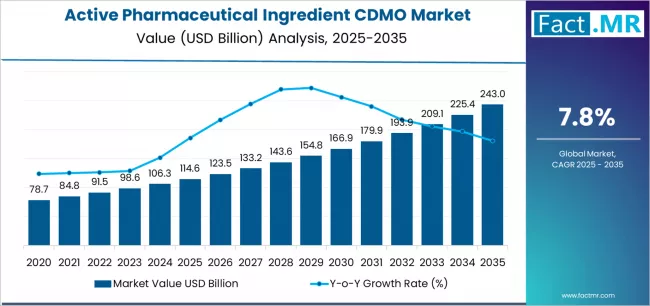
Active pharmaceutical ingredient CDMO market is projected to grow from USD 114.6 billion in 2025 to USD 243.0 billion by 2035, at a CAGR of 7.8%. Traditional API will dominate with a 44.5% market share, while synthetic will lead the synthesis segment with a 57.8% share.
Active Pharmaceutical Ingredient CDMO Market Forecast and Outlook 2025 to 2035
The global active pharmaceutical ingredient CDMO market is projected to reach USD 243.0 billion by 2035, recording an absolute increase of USD 128.4 billion over the forecast period. The market is valued at USD 114.6 billion in 2025 and is set to rise at a CAGR of 7.8% during the assessment period.
The scope for active pharmaceutical ingredient CDMO is expected to grow by approximately 2.1 times during the same period, supported by increasing pharmaceutical outsourcing trends among innovative drug developers worldwide, driving demand for specialized manufacturing capabilities and increasing investments in advanced synthesis technologies with regulatory compliance across biologics production and complex molecule development applications globally.
Quick Stats for Active Pharmaceutical Ingredient CDMO Market
- Active Pharmaceutical Ingredient CDMO Market Value (2025): USD 114.6 billion
- Active Pharmaceutical Ingredient CDMO Market Forecast Value (2035): USD 243.0 billion
- Active Pharmaceutical Ingredient CDMO Market Forecast CAGR: 7.8%
- Leading Product Type in Active Pharmaceutical Ingredient CDMO Market: Traditional API (44.5%)
- Key Growth Regions in Active Pharmaceutical Ingredient CDMO Market: Asia Pacific, North America, and Europe
- Top Players in Active Pharmaceutical Ingredient CDMO Market: Thermo Fisher Scientific Inc., Cambrex Corporation, Recipharm AB, CordenPharma International, Samsung Biologics, Lonza, Catalent Inc., Siegfried Holding AG, Piramal Pharma Solutions, Boehringer Ingelheim International GmbH

Pharmaceutical companies face mounting pressure to accelerate drug development timelines while managing capital-intensive manufacturing operations and navigating stringent regulatory requirements, with modern API CDMO services providing documented operational benefits including reduced time-to-market, enhanced manufacturing flexibility, and access to specialized expertise compared to in-house production approaches alone.
Rising demand for complex therapeutics and expanding biotechnology innovation platforms enabling specialized API manufacturing partnerships create substantial opportunities for CDMO providers and pharmaceutical partners. However, supply chain vulnerabilities and capacity constraints across specialized manufacturing facilities may pose obstacles to seamless production continuity.
The traditional API segment dominates market activity, driven by extensive pharmaceutical demand for small molecule APIs and established synthetic manufacturing capabilities across diverse therapeutic applications worldwide. Pharmaceutical companies increasingly recognize the operational benefits of traditional API outsourcing, with typical service offerings providing cost-effective production scale-up and quality assurance at competitive price points through established CDMO distribution networks.
The synthetic segment demonstrates robust market presence, supported by comprehensive chemical synthesis expertise and validated manufacturing processes enabling efficient API production across pharmaceutical development pipelines. Commercial workflow applications emerge as the dominant category, reflecting pharmaceutical industry focus on market-ready production volumes and regulatory-compliant manufacturing operations in commercial drug supply chains. USA represents significant market presence, driven by extensive pharmaceutical R&D activities and established CDMO infrastructure across biopharmaceutical innovation hubs.
Regional dynamics show USA maintaining strong market position, supported by high pharmaceutical outsourcing adoption rates and established CDMO capabilities across drug development categories. Asia Pacific demonstrates accelerating growth trajectory driven by increasing manufacturing capacity expansion and competitive operational cost structures attracting global pharmaceutical partnerships, while Europe emphasizes quality manufacturing standards and regulatory excellence for API production requirements. China leads regional growth through extensive biotechnology investment and government-supported pharmaceutical manufacturing expansion, followed by India supported by skilled workforce availability and cost-competitive CDMO service offerings.
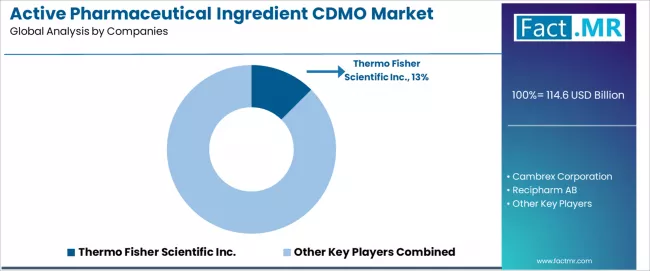
The competitive landscape features moderate concentration with Thermo Fisher Scientific Inc. maintaining market leadership position, while specialized players including Cambrex Corporation, Recipharm AB, and CordenPharma International compete through targeted therapeutic expertise and comprehensive development capabilities across diverse pharmaceutical applications.
Active Pharmaceutical Ingredient CDMO Market Year-over-Year Forecast 2025 to 2035
Between 2025 and 2029, the Active Pharmaceutical Ingredient CDMO market is projected to expand from USD 114.6 billion to USD 154.5 billion, resulting in a value increase of USD 39.9 billion, which represents 31.1% of the total forecast growth for the period. This phase of development will be shaped by rising demand for biologics manufacturing and complex molecule synthesis addressing precision medicine requirements, capacity expansion initiatives in emerging pharmaceutical manufacturing hubs with competitive operational advantages, as well as expanding partnerships between pharmaceutical innovators and specialized CDMO providers across therapeutic development programs. Companies are establishing competitive positions through investment in advanced manufacturing technologies, regulatory compliance infrastructure, and strategic capacity expansion across synthetic API production, biologics development, and commercial-scale manufacturing distribution models.
From 2029 to 2035, the market is forecast to grow from USD 154.5 billion to USD 243.0 billion, adding another USD 88.5 billion, which constitutes 68.9% of the overall expansion. This period is expected to be characterized by the expansion of specialized manufacturing applications, including cell and gene therapy API production and advanced biologics development capabilities tailored for innovative therapeutic modalities, strategic collaborations between CDMO providers and biotechnology companies developing novel drug candidates, and an enhanced focus on sustainable manufacturing practices and environmental compliance standards. The growing emphasis on pharmaceutical supply chain resilience and rising demand for integrated development services spanning clinical through commercial production will drive adoption of comprehensive CDMO partnerships across pharmaceutical development portfolios.
Active Pharmaceutical Ingredient CDMO Market Key Takeaways
| Metric | Value |
|---|---|
| Market Value (2025) | USD 114.6 billion |
| Market Forecast Value (2035) | USD 243.0 billion |
| Forecast CAGR (2025-2035) | 7.8% |
Why is the Active Pharmaceutical Ingredient CDMO Market Growing?
The Active Pharmaceutical Ingredient CDMO market grows by enabling pharmaceutical and biotechnology companies to access specialized manufacturing expertise while managing capital investment requirements and accelerating drug development timelines without building extensive in-house production infrastructure.
Pharmaceutical companies face mounting pressure to bring innovative therapies to market rapidly while maintaining stringent quality standards and navigating complex regulatory frameworks, with modern CDMO partnerships typically providing comprehensive development support including process optimization for manufacturing scale-up, regulatory documentation for global market submissions, and quality assurance systems for commercial production compared to internal manufacturing approaches alone, making strategic outsourcing essential for efficient pharmaceutical development.
The pharmaceutical industry's need for flexible manufacturing capacity and specialized technical capabilities creates demand for CDMO solutions that can provide process development expertise, deliver regulatory-compliant production, and support diverse therapeutic modalities without compromising product quality or development timelines.
Healthcare innovation acceleration and increasing therapeutic complexity drive CDMO adoption in pharmaceutical development environments, biotechnology startups, and established drug manufacturers, where manufacturing expertise has direct impact on commercial success and patient access to innovative medicines.
The expanding pipeline of complex biologics and novel therapeutic modalities globally, including cell therapies, gene therapies, and antibody-drug conjugates, create growing demand for specialized manufacturing capabilities. Rising pharmaceutical outsourcing trends enable companies to focus internal resources on core drug discovery while leveraging external manufacturing expertise for efficient production operations.
Supply chain coordination challenges and capacity constraints at specialized manufacturing facilities may limit seamless production continuity and optimal resource allocation among pharmaceutical development programs with different technical requirements.
Segmental Analysis
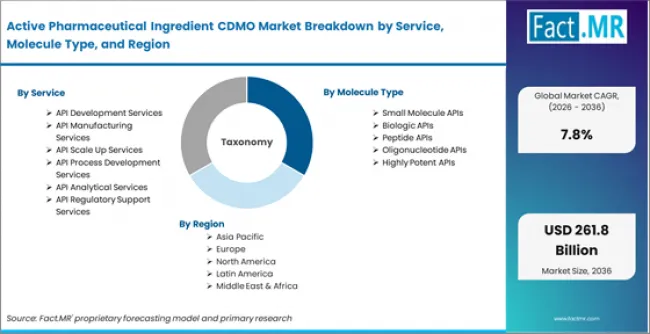
The market is segmented by product, synthesis, drug, application, workflow, and region. By product, the market is divided into traditional API, highly potent API (HP-API), and biologics. Based on synthesis, the market is categorized into synthetic and biotech. By drug, the market includes innovative and generics.
Based on application, the market is divided into oncology, hormonal, glaucoma, cardiovascular disease, diabetes, and others. By workflow, the market includes clinical and commercial. Regionally, the market is divided into Asia Pacific, Europe, North America, Latin America, and Middle East & Africa.
By Product, Which Segment Accounts for the Dominant Market Share?

The traditional API segment represents the dominant force in the Active Pharmaceutical Ingredient CDMO market, capturing 44.5% of the total market share in 2025. This established product category encompasses solutions featuring well-characterized small molecule manufacturing processes and validated synthetic chemistry capabilities, including advanced purification technologies and crystallization optimization methods that enable superior product quality and manufacturing efficiency across pharmaceutical development and commercial production applications worldwide.
The traditional API segment's market leadership stems from its extensive therapeutic application breadth, with manufacturing solutions capable of supporting diverse drug classes including cardiovascular medications, anti-infectives, central nervous system drugs, and metabolic disease treatments while maintaining rigorous quality standards and regulatory compliance across global pharmaceutical markets.
The HP-API segment maintains meaningful market presence, serving pharmaceutical companies developing potent oncology agents and specialized therapeutics requiring advanced containment systems and controlled manufacturing environments for safe production operations.
These solutions offer specialized handling capabilities for highly active pharmaceutical compounds while providing sufficient safety controls to protect manufacturing personnel and maintain environmental compliance. The HP-API segment demonstrates growth potential, driven by expanding oncology drug pipelines and increasing targeted therapy development requiring specialized manufacturing infrastructure.
Within the product category, biologics demonstrate accelerating adoption, driven by biotechnology innovation and growing therapeutic applications for monoclonal antibodies, recombinant proteins, and advanced biologics requiring mammalian cell culture manufacturing platforms. This sub-segment benefits from precision medicine trends and increasing regulatory approvals for biological therapeutics.
Key operational advantages driving the traditional API segment include:
- Established manufacturing infrastructure with validated synthetic processes delivering consistent product quality and regulatory compliance across pharmaceutical applications
- Comprehensive chemistry expertise allowing efficient process development and manufacturing optimization without extensive technology transfer complexity
- Scalable production capabilities enabling flexible manufacturing volumes from clinical trial supplies through commercial production requirements while maintaining cost efficiency
- Proven regulatory track record providing pharmaceutical companies confidence in manufacturing quality and compliance standards across global markets
By Synthesis, Which Segment Accounts for the Largest Market Share?

Synthetic production dominates the API CDMO synthesis landscape with a 57.8% market share in 2025, reflecting the critical role of chemical synthesis technologies in supporting small molecule pharmaceutical manufacturing across therapeutic development programs worldwide.
The synthetic segment's market leadership is reinforced by pharmaceutical industry reliance on established synthetic chemistry platforms, validated reaction processes, and compatible integration with existing drug development workflows that characterize mainstream pharmaceutical manufacturing protocols.
Within this segment, synthetic organic chemistry represents the primary manufacturing approach, driven by versatile reaction capabilities, extensive process knowledge, and proven scalability supporting efficient API production. This sub-segment benefits from established manufacturing infrastructure and comprehensive regulatory experience across pharmaceutical development applications.
The biotech segment represents a growing synthesis category, demonstrating expansion through specialized requirements for biological API production, including fermentation processes and cell culture manufacturing systems supporting recombinant protein therapeutics and biological drug substances.
Key market dynamics supporting synthesis segment growth include:
- Synthetic chemistry expansion driven by small molecule pharmaceutical demand and continuous process improvement, requiring advanced reaction technologies and purification optimization
- Biotech manufacturing growth trends require specialized bioreactor systems and downstream processing capabilities for biological API production
- Integration of continuous manufacturing technologies enabling enhanced process control and improved manufacturing efficiency across API production operations
- Growing emphasis on green chemistry principles and sustainable manufacturing practices driving process innovation without compromising production economics
By Drug, Which Segment Accounts for a Significant Market Share?

Innovative drugs represent a leading segment in the API CDMO market with a 53.2% market share in 2025, reflecting the pharmaceutical industry's focus on novel therapeutic development and specialized manufacturing requirements for proprietary drug candidates.
The innovative drug segment demonstrates consistent demand driven by pharmaceutical companies seeking manufacturing partners with advanced technical capabilities, regulatory expertise, and flexible production capacity supporting clinical development through commercial launch.
The generics segment emerges as an important category with substantial market presence, driven by global demand for affordable pharmaceutical treatments and established manufacturing processes supporting cost-effective API production. Generic pharmaceutical manufacturers require CDMO partnerships capable of delivering quality-equivalent API materials at competitive pricing while maintaining regulatory compliance across diverse markets.
Within drug applications, innovative therapeutic development demonstrates strong growth momentum as pharmaceutical companies pursue novel mechanisms of action and specialized patient populations requiring customized manufacturing approaches. Generic drug production addresses expanding market access requirements and healthcare affordability priorities supporting broad patient treatment availability.
Key drug segment dynamics include:
- Innovative drug requirements accelerating across novel therapeutic modalities with emphasis on specialized manufacturing capabilities and regulatory expertise
- Generic drug applications driving demand for cost-efficient production processes and established quality systems supporting global pharmaceutical distribution
- Biosimilar development creating specialized manufacturing requirements for biological therapeutics replicating reference product characteristics
- Specialty pharmaceutical growth emphasizing targeted therapies and precision medicine applications requiring flexible manufacturing approaches
By Application, Which Segment Accounts for the Dominant Market Share?

Oncology represents the leading application segment in the API CDMO market with a 36.5% market share in 2025, reflecting the critical role of cancer therapeutics in pharmaceutical development priorities and specialized manufacturing requirements for cytotoxic compounds and targeted oncology agents. The oncology segment demonstrates robust demand driven by pharmaceutical innovation in cancer treatment modalities and increasing clinical development activity across diverse tumor types and therapeutic mechanisms.
The cardiovascular disease segment maintains substantial market presence, serving pharmaceutical companies developing treatments for hypertension, heart failure, and lipid disorders requiring established manufacturing processes and broad commercial production capabilities. Cardiovascular APIs represent significant pharmaceutical market volumes supporting consistent CDMO demand.
Within application categories, diabetes demonstrates growing importance as pharmaceutical companies develop novel therapeutic approaches including insulin analogs and glucagon-like peptide-1 agonists requiring specialized manufacturing capabilities. Hormonal applications address endocrine disorders and hormone replacement therapies supporting women's health and metabolic disease management.
Key application dynamics include:
- Oncology requirements accelerating across targeted therapy development with emphasis on potent compound handling and specialized containment systems
- Cardiovascular applications driving demand for high-volume manufacturing capacity and cost-efficient production processes supporting global pharmaceutical distribution
- Diabetes therapeutic development prioritizing advanced formulation technologies and specialized manufacturing expertise for peptide therapeutics
- Hormonal application growth emphasizing precision manufacturing and quality control systems supporting sensitive compound production
By Workflow, Which Segment Accounts for the Dominant Market Share?

Commercial production dominates the API CDMO workflow landscape with a 62.1% market share in 2025, reflecting the pharmaceutical industry's primary focus on market-ready manufacturing capacity and validated production systems supporting global drug supply requirements.
The commercial workflow segment's market leadership is reinforced by pharmaceutical company priorities for reliable manufacturing partners, consistent product quality, and scalable production capabilities meeting commercial demand forecasts and regulatory compliance obligations.
Within this segment, routine commercial manufacturing represents the core workflow activity, driven by established pharmaceutical products requiring consistent supply continuity and quality assurance systems. This sub-segment benefits from long-term manufacturing relationships and optimized production processes supporting cost-efficient operations.
The clinical workflow segment represents an important category demonstrating steady growth through specialized requirements for development-stage API production, including phase-appropriate manufacturing scales and flexible campaign scheduling supporting clinical trial programs.
Key market dynamics supporting workflow segment growth include:
- Commercial manufacturing expansion driven by pharmaceutical market growth and global supply chain requirements, requiring validated production systems and regulatory compliance infrastructure
- Clinical development workflows require specialized capabilities for small-batch production and rapid process development supporting accelerated drug development timelines
- Integration of technology transfer processes enabling smooth progression from clinical through commercial manufacturing operations
- Growing emphasis on supply chain resilience and manufacturing redundancy driving multi-site production strategies without compromising quality consistency
What are the Drivers, Restraints, and Key Trends of the Active Pharmaceutical Ingredient CDMO Market?
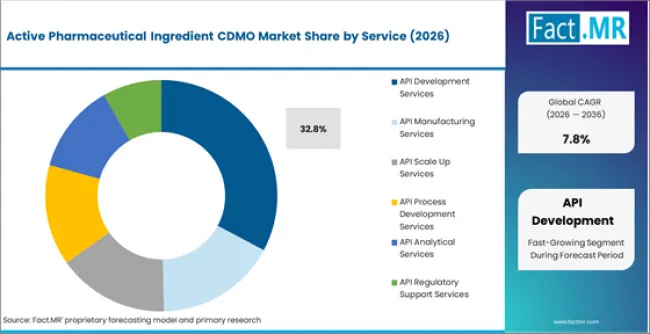
The market is driven by three concrete demand factors tied to pharmaceutical industry dynamics. First, increasing pharmaceutical outsourcing trends and strategic focus on core competencies create expanding CDMO partnerships, with manufacturing outsourcing representing a critical approach to capital efficiency and operational flexibility in competitive pharmaceutical development environments, requiring widespread CDMO capacity availability. Second, growing therapeutic complexity and specialized manufacturing requirements drive demand for expert CDMO capabilities, with biologics, gene therapies, and complex small molecules demonstrating significant manufacturing challenges requiring specialized expertise and advanced production systems by 2030. Third, accelerating drug development timelines and regulatory pressures enable pharmaceutical companies to leverage external manufacturing expertise that improves market access speed while reducing infrastructure investment and operational risk concerns.
Market restraints include supply chain coordination challenges and capacity constraints at specialized manufacturing facilities that can impact production continuity and project timelines, particularly during periods of high pharmaceutical demand or manufacturing disruptions affecting global API supply networks. Regulatory compliance complexity and evolving quality standards across global pharmaceutical markets pose another significant obstacle, as API CDMO operations require continuous adaptation to changing regulatory expectations, potentially affecting operational efficiency and increasing compliance costs. Intellectual property protection concerns and technology transfer risks create additional barriers for pharmaceutical companies considering outsourcing arrangements, demanding comprehensive confidentiality agreements and robust quality oversight frameworks.
Key trends indicate accelerated continuous manufacturing adoption in developed markets, particularly North America and Europe, where pharmaceutical companies demonstrate willingness to invest in advanced production technologies offering improved process control, reduced manufacturing footprints, and enhanced sustainability profiles. Integrated service expansion trends toward end-to-end development and manufacturing partnerships combining process development, analytical services, and commercial production enable comprehensive outsourcing solutions that optimize pharmaceutical development efficiency and reduce vendor management complexity. However, the market thesis could face disruption if significant advances in automated manufacturing systems or major shifts in pharmaceutical insourcing strategies reduce reliance on traditional CDMO partnership models.
Analysis of the Active Pharmaceutical Ingredient CDMO Market by Key Countries

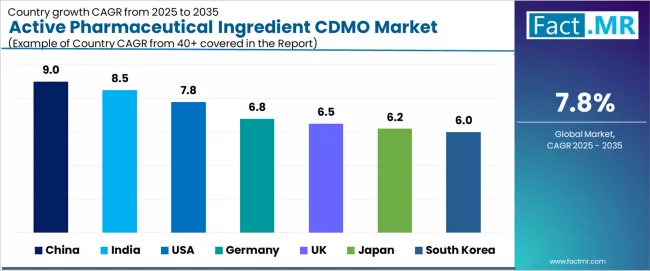
| Country | CAGR (2025 to 2035) |
|---|---|
| China | 9.0% |
| India | 8.5% |
| USA | 7.8% |
| Germany | 6.8% |
| UK | 6.5% |
| Japan | 6.2% |
| South Korea | 6.0% |
The global Active Pharmaceutical Ingredient CDMO market is expanding rapidly, with China leading at a 9.0% CAGR through 2035, driven by rapid biotechnology investment, government support for pharmaceutical manufacturing, and large clinical trial volumes supporting development-stage API production. India follows at 8.5%, supported by low operational costs, skilled technical workforce, and expanding domestic CDMO market serving global pharmaceutical companies. USA records 7.8%, reflecting an established landscape with largest R&D expenditure and strong infrastructure supporting CAR-T and gene therapy outsourcing.
Germany advances at 6.8%, leveraging biopharma R&D leadership and supportive regulatory environment. UK posts 6.5%, focusing on ATMP infrastructure growth and advanced therapy development capabilities, while Japan grows steadily at 6.2%, emphasizing accelerated regenerative medicine approvals and partnerships with global CDMO networks. South Korea demonstrates 6.0% growth, anchored by growing biotech sector and government-backed cell and gene therapy initiatives.
How is China Leading Global Market Expansion?
China demonstrates the strongest growth potential in the Active Pharmaceutical Ingredient CDMO market with a CAGR of 9.0% through 2035. The country's leadership position stems from comprehensive government support for pharmaceutical manufacturing expansion, competitive operational cost structures, and rapidly developing biotechnology capabilities driving adoption of specialized API production services.
Growth is concentrated in major pharmaceutical manufacturing hubs and biotech innovation centers, including Shanghai, Beijing, Suzhou, and Guangzhou, where pharmaceutical companies are increasingly establishing CDMO partnerships for clinical and commercial API production beyond conventional pharmaceutical manufacturing approaches.
Distribution of manufacturing capacity through domestic CDMO providers, international partnerships, and integrated pharmaceutical development organizations expands service accessibility across multinational pharmaceutical companies and emerging biotech ventures.
The country's growing integration of advanced manufacturing technologies with established chemical synthesis expertise provides strong momentum for pharmaceutical-grade API solutions, including comprehensive adoption across therapeutic development programs seeking cost-competitive production alternatives.
Key market factors:
- Pharmaceutical manufacturing infrastructure concentrated in established production zones and specialized biotech parks with growing technical capabilities
- Clinical trial expansion through accelerated regulatory approval processes and large patient populations enabling efficient development programs
- Comprehensive government support ecosystem, including manufacturing incentives with proven pharmaceutical industry development policies
- Local CDMO development featuring companies offering competitive pricing and increasing quality standards approaching international pharmaceutical manufacturing benchmarks
Why is India Emerging as a High-Growth Market?
In major pharmaceutical manufacturing centers including Hyderabad, Ahmedabad, Mumbai, and Bangalore, the adoption of API CDMO services is accelerating across pharmaceutical companies, driven by established chemical synthesis expertise and expanding capabilities in complex molecule production. The market demonstrates strong growth momentum with a CAGR of 8.5% through 2035, linked to comprehensive cost advantages and increasing quality certifications meeting international pharmaceutical standards.
Pharmaceutical companies are implementing specialized manufacturing processes and developing advanced technical capabilities to serve global pharmaceutical partners while meeting growing demand for generic API production and innovative therapeutic manufacturing. The country's expanding technical workforce creates ongoing demand for specialized CDMO services, while increasing regulatory compliance capabilities drive adoption of pharmaceutical-grade manufacturing systems.
Key development areas:
- Skilled technical workforce leading API manufacturing operations with emphasis on chemistry expertise and process optimization capabilities
- Manufacturing capacity expansion through both established pharmaceutical companies and specialized CDMO providers
- Quality system enhancement enabling international regulatory approvals and pharmaceutical customer confidence
- Growing capabilities for complex synthesis and biologics manufacturing alongside traditional generic API production strengths
What drives USA’s Market Resilience?

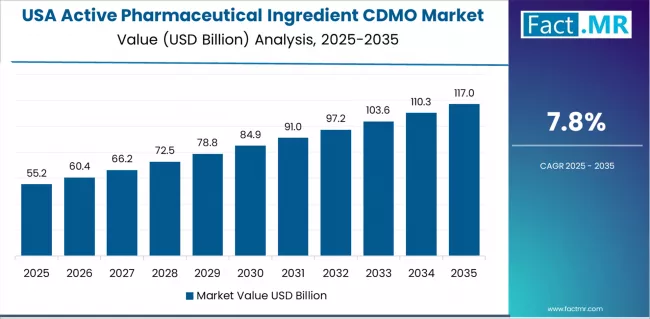
USA’s market expansion is driven by diverse pharmaceutical development activities, including innovative therapeutic development in biotechnology hubs and established pharmaceutical manufacturing across mainstream segments. The country demonstrates steady growth potential with a CAGR of 7.8% through 2035, supported by continuous innovation from specialized CDMO providers and comprehensive technical capabilities spanning small molecules through advanced biologics.
American pharmaceutical companies face competitive pressures related to accelerated development timelines and manufacturing flexibility requirements, requiring CDMO partners to demonstrate superior technical expertise and regulatory compliance.
Established pharmaceutical outsourcing practices and extensive development pipelines create stable baseline demand for API CDMO services, particularly among biotechnology companies actively developing novel therapeutic modalities where specialized manufacturing expertise drives primary sourcing decisions.
Market characteristics:
- Biotechnology companies and pharmaceutical innovators showing robust demand with substantial development expenditure across therapeutic categories
- Regional manufacturing presence varying between East Coast pharmaceutical clusters and West Coast biotechnology centers emphasizing different therapeutic focuses
- Future projections indicate continued emphasis on specialized manufacturing capabilities including cell and gene therapy API production
- Growing focus on supply chain resilience and domestic manufacturing capacity supporting pharmaceutical security priorities
How does Germany Demonstrate Manufacturing Excellence Leadership?
The market in Germany leads in pharmaceutical-grade API manufacturing based on rigorous quality standards and comprehensive regulatory compliance frameworks for enhanced pharmaceutical reliability. The country shows strong potential with a CAGR of 6.8% through 2035, driven by established pharmaceutical industry presence and advanced manufacturing capabilities in major regions, including Bavaria, North Rhine-Westphalia, Baden-Württemberg, and Hesse.
German pharmaceutical companies are adopting specialized CDMO partnerships through integrated development approaches and quality-focused manufacturing protocols for comprehensive therapeutic development, particularly in biopharma-intensive markets and scientifically demanding production environments requiring rigorous manufacturing credentials. Manufacturing infrastructure through established pharmaceutical facilities and specialized CDMO providers expands capacity across innovative drug development programs and quality-conscious pharmaceutical partnerships.
Leading market segments:
- Pharmaceutical-grade manufacturing adoption in major pharmaceutical clusters implementing comprehensive regulatory compliance requirements
- Biopharma partnerships with research institutions achieving high technical validation standards
- Strategic collaborations between CDMO providers and pharmaceutical innovators expanding development capabilities
- Focus on advanced manufacturing technologies and sustainability initiatives addressing environmental compliance requirements
What positions UK for Advanced Therapy Leadership?
In London, Cambridge, Oxford, and other major research centers, pharmaceutical companies are implementing API CDMO partnerships through specialized development collaborations and advanced therapy manufacturing capabilities, with documented programs showing substantial innovation in cell and gene therapy production through scientifically guided manufacturing protocols. The market shows steady growth potential with a CAGR of 6.5% through 2035, linked to ongoing ATMP infrastructure development, specialized manufacturing capabilities, and emerging regulatory frameworks supporting advanced therapeutic modalities.
Companies are adopting specialized CDMO services with technical expertise to enhance manufacturing capabilities while maintaining standards demanded by innovative therapeutic development pathways. The country's established pharmaceutical research infrastructure creates ongoing opportunities for specialized manufacturing partnerships that differentiate through technical innovation and regulatory expertise.
Market development factors:
- Advanced therapy developers leading adoption of specialized CDMO services across UK
- ATMP manufacturing infrastructure providing growth opportunities in regenerative medicine applications
- Strategic partnerships between biotechnology companies and specialized manufacturers expanding production capabilities
- Emphasis on regulatory pathway development and manufacturing process validation supporting commercial therapeutic launches
How does Japan Show Quality Manufacturing Leadership?
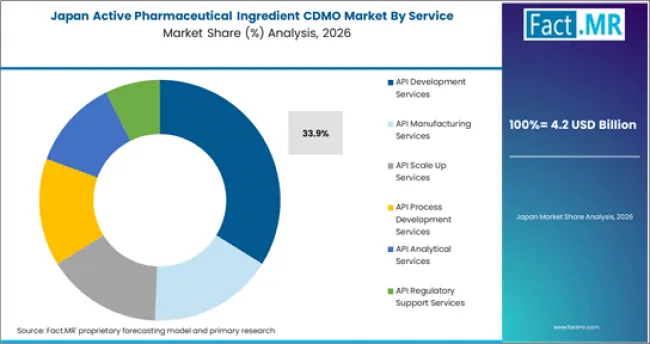
Japan's API CDMO market demonstrates sophisticated pharmaceutical standards focused on manufacturing precision and regulatory excellence optimization, with documented integration of advanced quality systems achieving substantial improvement in process consistency and product purity across pharmaceutical manufacturing applications.
The country maintains steady growth momentum with a CAGR of 6.2% through 2035, driven by mature pharmaceutical industry emphasizing manufacturing quality and continuous improvement methodologies that align with Japanese quality standards applied to pharmaceutical production operations.
Major pharmaceutical regions, including Tokyo, Osaka, Kobe, and Nagoya, showcase established CDMO relationships where pharmaceutical-grade manufacturing integrates seamlessly with domestic pharmaceutical companies and international development partnerships.
Key market characteristics:
- Quality-focused pharmaceutical companies driving demand for premium manufacturing services with emphasis on process validation and consistency
- Manufacturing partnerships enabling superior product quality with comprehensive documentation systems
- Technology collaboration between Japanese pharmaceutical companies and international CDMO providers expanding technical capabilities
- Emphasis on regulatory compliance and process analytics supporting pharmaceutical manufacturing excellence
What Characterizes South Korea's Market Development?
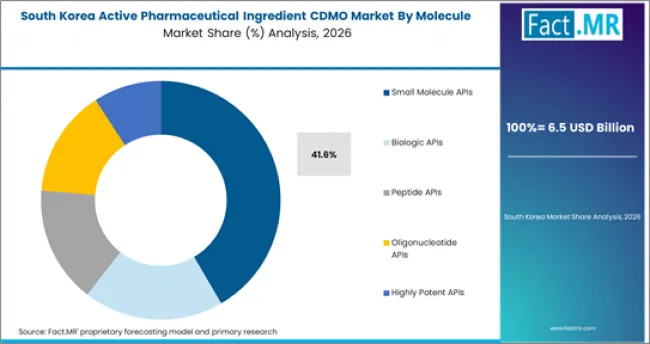
In major pharmaceutical and biotechnology centers including Seoul, Incheon, and Daejeon, the adoption of API CDMO services is expanding across pharmaceutical companies, driven by government support for biotechnology development and growing capabilities in biological therapeutics manufacturing. The market demonstrates solid growth potential with a CAGR of 6.0% through 2035, linked to comprehensive biotech sector expansion and increasing focus on cell and gene therapy manufacturing capabilities.
South Korean pharmaceutical companies are implementing modern manufacturing partnerships and developing specialized production facilities to support domestic innovation programs while meeting international pharmaceutical development requirements. The country's expanding biotechnology investment creates ongoing demand for specialized CDMO capabilities, while increasing international partnerships drive adoption of global pharmaceutical manufacturing standards.
Key development areas:
- Biotechnology companies leading CDMO service adoption with emphasis on biological therapeutics and advanced therapy production
- Manufacturing infrastructure development through government support programs and pharmaceutical industry investment
- Technical capability enhancement enabling complex biologics production and specialized therapeutic manufacturing
- Integration of Korean pharmaceutical innovation with international CDMO expertise supporting global development programs
Europe Market Split by Country

The active pharmaceutical ingredient CDMO market in Europe is projected to grow significantly over the forecast period, with multiple countries contributing to regional expansion. Germany is expected to maintain its leadership position with strong market presence, supported by its extensive pharmaceutical manufacturing infrastructure, comprehensive regulatory expertise, and established CDMO capabilities serving major European and global pharmaceutical markets. UK follows with substantial market share, driven by comprehensive advanced therapy manufacturing capabilities and specialized biotechnology partnerships in major research centers implementing innovative therapeutic development protocols.
France holds meaningful market presence through ongoing pharmaceutical manufacturing operations and specialized chemical synthesis capabilities. Italy commands market share through established pharmaceutical production facilities, while Spain accounts for growing presence through expanding manufacturing capacity.
The rest of Europe region is anticipated to gain momentum, attributed to increasing API CDMO adoption in Nordic countries and emerging Central European pharmaceutical manufacturing operations implementing modern pharmaceutical production practices.
How does Quality Define API CDMO Adoption in Japan?

The Japanese API CDMO market demonstrates a mature and quality-focused landscape, characterized by sophisticated integration of precision manufacturing technologies with rigorous regulatory compliance frameworks across pharmaceutical production applications, established pharmaceutical partnerships, and comprehensive quality assurance protocols.
Japan's emphasis on manufacturing excellence and continuous process improvement drives demand for pharmaceutical-grade API CDMO solutions that support stringent quality requirements and comprehensive validation standards in pharmaceutical development operations.
The market benefits from strong partnerships between international CDMO providers and domestic pharmaceutical companies, including established manufacturing relationships and technology transfer programs, creating comprehensive service ecosystems that prioritize manufacturing consistency and regulatory compliance objectives.
Metropolitan pharmaceutical centers showcase advanced CDMO implementations where specialized manufacturing capabilities achieve performance improvements through integrated quality systems and comprehensive process analytics programs.
What drives Biotechnology Innovation in South Korea's Market?

The South Korean API CDMO market is characterized by strong government support for biotechnology development, with companies including domestic CDMO providers and international partnerships maintaining significant positions through comprehensive service portfolios and specialized biological manufacturing capabilities for cell therapy, gene therapy, and biologics production applications.
The market is demonstrating a growing emphasis on advanced therapeutic manufacturing and specialized production infrastructure, as Korean biotechnology companies increasingly demand expert CDMO services that combine technical innovation with regulatory compliance capabilities deployed across domestic development programs and international pharmaceutical partnerships.
Local CDMO innovations and specialized facility developments are gaining market share through strategic emphasis on biological therapeutics manufacturing, offering specialized capabilities including viral vector production and cell processing services for comprehensive biotechnology support.
The competitive landscape shows increasing collaboration between CDMO providers and pharmaceutical innovators, creating integrated development models that combine scientific expertise with manufacturing capabilities and government funding support.
Competitive Landscape of the Active Pharmaceutical Ingredient CDMO Market

The active pharmaceutical ingredient CDMO market features approximately 20-25 meaningful players with moderate concentration, with Thermo Fisher Scientific Inc. controlling 12.5% of the global market share through established manufacturing infrastructure, comprehensive service capabilities, and multi-therapeutic expertise. Competition centers on technical capabilities, regulatory compliance excellence, and integrated service offerings rather than price competition alone.
Market leaders include Thermo Fisher Scientific Inc., Lonza, and Catalent Inc., which maintain competitive advantages through comprehensive manufacturing platforms, global production networks, and deep expertise in pharmaceutical development services, creating high confidence among pharmaceutical customers seeking reliable production partners. These companies leverage extensive regulatory experience and ongoing capacity expansion initiatives to defend market positions while expanding into adjacent capabilities including advanced biologics manufacturing and specialized therapeutic production applications.
Challengers encompass specialized CDMO providers including Cambrex Corporation, Recipharm AB, and CordenPharma International, which compete through targeted therapeutic focus and strong technical capabilities in specific manufacturing technologies. Biological manufacturing specialists, including Samsung Biologics and Boehringer Ingelheim International GmbH, focus on biopharmaceutical production, offering differentiated capabilities in cell culture manufacturing, monoclonal antibody production, and biological drug substance development.
Emerging regional players and specialized manufacturing providers create competitive pressure through innovative service models and competitive pricing strategies, particularly in high-growth markets including China and India, where operational cost advantages provide benefits in pharmaceutical development programs.
Market dynamics favor companies that combine technical expertise with comprehensive quality systems and regulatory compliance capabilities that address complete pharmaceutical development requirements from clinical trials through commercial manufacturing and global market distribution. Strategic emphasis on continuous manufacturing technologies, sustainable production practices, and integrated development services enables differentiation in increasingly competitive pharmaceutical outsourcing segments across developed and emerging markets.
Global Active Pharmaceutical Ingredient CDMO Market - Stakeholder Contribution Framework
Active Pharmaceutical Ingredient CDMO services represent a critical pharmaceutical industry enabler that allows drug developers to access specialized manufacturing expertise while managing capital requirements and accelerating therapeutic development timelines without building extensive in-house production infrastructure, typically providing comprehensive manufacturing support including process optimization for scale-up operations, regulatory documentation for global submissions, and quality systems for commercial production compared to internal manufacturing approaches alone while ensuring improved development efficiency and pharmaceutical market access outcomes.
With the market projected to grow from USD 114.6 billion in 2025 to USD 243.0 billion by 2035 at an 7.8% CAGR, these solutions offer compelling advantages for pharmaceutical outsourcing applications, specialized therapeutic manufacturing, and diverse development programs seeking expert production capabilities. Scaling market penetration and pharmaceutical industry acceptance requires coordinated action across regulatory frameworks, quality standards, CDMO providers, pharmaceutical companies, and industry collaboration initiatives.
How Could Governments Spur Local Development and Adoption?
- Pharmaceutical Manufacturing Support: Include API production capabilities in national pharmaceutical strategies, providing targeted support for manufacturing infrastructure development and supporting research institutions through technology grants and workforce development funding.
- Tax Policy & Investment Support: Implement favorable tax treatment for pharmaceutical manufacturing investments, provide incentives for companies investing in advanced production technologies and quality systems, and establish beneficial regulatory frameworks that encourage domestic CDMO capacity expansion over offshore alternatives.
- Regulatory Framework Development: Create streamlined approval processes for new manufacturing facilities across pharmaceutical applications, establish clear quality standards and regulatory expectations for CDMO operations, and develop international harmonization initiatives that facilitate regulatory acceptance across markets.
- Industry Collaboration Support: Fund public-private partnerships for pharmaceutical manufacturing innovation, invest in workforce development programs bridging academic training with industrial requirements, and establish regulatory environments encouraging technology adoption in pharmaceutical production.
- Supply Chain Resilience: Establish strategic pharmaceutical manufacturing capacity, support supply chain diversification initiatives reducing geographic concentration risks, and create emergency manufacturing capabilities for critical pharmaceutical supplies.
How Could Industry Bodies Support Market Development?
- Quality Standards & Best Practices: Define standardized quality metrics for API CDMO operations across manufacturing processes, establish universal testing protocols and validation requirements, and create industry benchmarks that pharmaceutical companies rely on for vendor selection.
- Market Education & Professional Development: Lead messaging demonstrating CDMO partnership benefits, emphasizing quality assurance capabilities, regulatory compliance expertise, and operational efficiency advantages compared to in-house manufacturing approaches.
- Technical Training Standards: Develop guidelines for workforce competency, manufacturing excellence, quality system implementation, and regulatory compliance, ensuring consistent capabilities across CDMO operations.
- Collaboration Platforms: Run industry forums connecting pharmaceutical companies with CDMO providers, facilitate knowledge sharing on manufacturing technologies and regulatory developments, and promote best practices in technology transfer and process validation.
How Could CDMO Providers and Technology Companies Strengthen the Ecosystem?
- Advanced Manufacturing Development: Develop next-generation production technologies with enhanced process control, improved sustainability profiles, and application-specific capabilities that enhance manufacturing efficiency while reducing environmental impact and operational costs.
- Quality System Excellence: Provide comprehensive validation documentation, robust quality assurance programs, and regulatory compliance infrastructure that supports pharmaceutical customer confidence and global market access.
- Technical Capability Expansion: Offer specialized expertise in emerging therapeutic modalities, including cell therapies, gene therapies, and advanced biologics requiring sophisticated manufacturing approaches.
- Innovation Investment: Build comprehensive R&D capabilities, collaborative development programs, and pilot-scale manufacturing systems that enable pharmaceutical customers to advance innovative therapeutics through development stages.
How Could Pharmaceutical Companies and Investors Navigate the Market?
- Strategic Partnership Development: Establish long-term CDMO relationships supporting multiple development programs, with particular focus on technical capability alignment, quality system compatibility, and capacity planning for development pipelines.
- Risk Management Excellence: Implement comprehensive vendor qualification programs, supply chain diversification strategies, and contingency planning frameworks protecting pharmaceutical development programs from manufacturing disruptions.
- Collaborative Development Models: Integrate CDMO partners early in development processes, enabling optimized manufacturing approaches and efficient technology transfer supporting accelerated market access.
- Investment Strategies: Provide growth capital for established CDMO leaders expanding specialized capabilities and emerging providers developing innovative manufacturing technologies supporting pharmaceutical industry requirements.
How Could Investors and Financial Enablers Unlock Value?
- Capacity Expansion Financing: Provide growth capital for CDMO providers expanding manufacturing infrastructure and specialized production capabilities supporting pharmaceutical industry demand.
- Technology Investment: Back companies developing advanced manufacturing systems, continuous production technologies, and automation capabilities enhancing pharmaceutical manufacturing efficiency and quality.
- Market Expansion Funding: Finance CDMO providers establishing operations in high-growth regions and supporting geographic diversification strategies addressing pharmaceutical supply chain resilience.
- Innovation Support: Fund development of novel manufacturing approaches, sustainable production technologies, and integrated service platforms enhancing pharmaceutical development efficiency and market competitiveness.
Key Players in the Active Pharmaceutical Ingredient CDMO Market
- Thermo Fisher Scientific Inc.
- Cambrex Corporation
- Recipharm AB
- CordenPharma International
- Samsung Biologics
- Lonza
- Catalent Inc.
- Siegfried Holding AG
- Piramal Pharma Solutions
- Boehringer Ingelheim International GmbH
Scope of the Report
| Items | Values |
|---|---|
| Quantitative Units | USD 114.6 Billion |
| Product | Traditional API, Highly Potent API (HP-API), Biologics |
| Synthesis | Synthetic, Biotech |
| Drug | Innovative, Generics |
| Application | Oncology, Hormonal, Glaucoma, Cardiovascular Disease, Diabetes, Others |
| Workflow | Clinical, Commercial |
| Regions Covered | Asia Pacific, Europe, North America, Latin America, Middle East & Africa |
| Country Covered | China, India, USA, Germany, UK, Japan, South Korea, and 40+ countries |
| Key Companies Profiled | Thermo Fisher Scientific Inc., Cambrex Corporation, Recipharm AB, CordenPharma International, Samsung Biologics, Lonza, Catalent Inc., Siegfried Holding AG, Piramal Pharma Solutions, Boehringer Ingelheim International GmbH |
| Additional Attributes | Dollar sales by product and synthesis categories, regional adoption trends across Asia Pacific, Europe, and North America, competitive landscape with CDMO providers and pharmaceutical service companies, manufacturing specifications and regulatory requirements, integration with pharmaceutical development programs and commercial production systems, innovations in continuous manufacturing and advanced production technologies, and development of specialized capabilities with quality systems and regulatory compliance excellence. |
Active Pharmaceutical Ingredient CDMO Market by Segments
-
Product :
- Traditional Active Pharmaceutical Ingredient (Traditional API)
- Highly Potent Active Pharmaceutical Ingredient (HP-API)
- Biologics
-
Synthesis :
- Synthetic
- Biotech
-
Drug :
- Innovative
- Generics
-
Application :
- Oncology
- Hormonal
- Glaucoma
- Cardiovascular Disease
- Diabetes
- Others
-
Workflow :
- Clinical
- Commercial
-
Region :
- Asia Pacific
- China
- Japan
- South Korea
- India
- Australia
- Rest of Asia Pacific
- Europe
- Germany
- UK
- France
- Italy
- Spain
- Rest of Europe
- North America
- USA
- Canada
- Mexico
- Latin America
- Brazil
- Argentina
- Rest of Latin America
- Middle East & Africa
- South Africa
- Saudi Arabia
- UAE
- Rest of Middle East & Africa
- Asia Pacific
Table of Content
- Executive Summary
- Global Market Outlook
- Demand to side Trends
- Supply to side Trends
- Technology Roadmap Analysis
- Analysis and Recommendations
- Market Overview
- Market Coverage / Taxonomy
- Market Definition / Scope / Limitations
- Market Background
- Market Dynamics
- Drivers
- Restraints
- Opportunity
- Trends
- Scenario Forecast
- Demand in Optimistic Scenario
- Demand in Likely Scenario
- Demand in Conservative Scenario
- Opportunity Map Analysis
- Product Life Cycle Analysis
- Supply Chain Analysis
- Investment Feasibility Matrix
- Value Chain Analysis
- PESTLE and Porter’s Analysis
- Regulatory Landscape
- Regional Parent Market Outlook
- Production and Consumption Statistics
- Import and Export Statistics
- Market Dynamics
- Global Market Analysis 2020 to 2024 and Forecast, 2025 to 2035
- Historical Market Size Value (USD Million) Analysis, 2020 to 2024
- Current and Future Market Size Value (USD Million) Projections, 2025 to 2035
- Y to o to Y Growth Trend Analysis
- Absolute $ Opportunity Analysis
- Global Market Pricing Analysis 2020 to 2024 and Forecast 2025 to 2035
- Global Market Analysis 2020 to 2024 and Forecast 2025 to 2035, By Product
- Introduction / Key Findings
- Historical Market Size Value (USD Million) Analysis By Product, 2020 to 2024
- Current and Future Market Size Value (USD Million) Analysis and Forecast By Product, 2025 to 2035
- Traditional API
- HP-API
- Biologics
- Y to o to Y Growth Trend Analysis By Product, 2020 to 2024
- Absolute $ Opportunity Analysis By Product, 2025 to 2035
- Global Market Analysis 2020 to 2024 and Forecast 2025 to 2035, By Synthesis
- Introduction / Key Findings
- Historical Market Size Value (USD Million) Analysis By Synthesis, 2020 to 2024
- Current and Future Market Size Value (USD Million) Analysis and Forecast By Synthesis, 2025 to 2035
- Synthetic
- Biotech
- Y to o to Y Growth Trend Analysis By Synthesis, 2020 to 2024
- Absolute $ Opportunity Analysis By Synthesis, 2025 to 2035
- Global Market Analysis 2020 to 2024 and Forecast 2025 to 2035, By Drug
- Introduction / Key Findings
- Historical Market Size Value (USD Million) Analysis By Drug, 2020 to 2024
- Current and Future Market Size Value (USD Million) Analysis and Forecast By Drug, 2025 to 2035
- Innovative
- Generics
- Y to o to Y Growth Trend Analysis By Drug, 2020 to 2024
- Absolute $ Opportunity Analysis By Drug, 2025 to 2035
- Global Market Analysis 2020 to 2024 and Forecast 2025 to 2035, By Application
- Introduction / Key Findings
- Historical Market Size Value (USD Million) Analysis By Application, 2020 to 2024
- Current and Future Market Size Value (USD Million) Analysis and Forecast By Application, 2025 to 2035
- Oncology
- Hormonal
- Glaucoma
- Cardiovascular Disease
- Diabetes
- Others
- Y to o to Y Growth Trend Analysis By Application, 2020 to 2024
- Absolute $ Opportunity Analysis By Application, 2025 to 2035
- Global Market Analysis 2020 to 2024 and Forecast 2025 to 2035, By Workflow
- Introduction / Key Findings
- Historical Market Size Value (USD Million) Analysis By Workflow, 2020 to 2024
- Current and Future Market Size Value (USD Million) Analysis and Forecast By Workflow, 2025 to 2035
- Commercial
- Clinical
- Y to o to Y Growth Trend Analysis By Workflow, 2020 to 2024
- Absolute $ Opportunity Analysis By Workflow, 2025 to 2035
- Global Market Analysis 2020 to 2024 and Forecast 2025 to 2035, By Region
- Introduction
- Historical Market Size Value (USD Million) Analysis By Region, 2020 to 2024
- Current Market Size Value (USD Million) Analysis and Forecast By Region, 2025 to 2035
- North America
- Latin America
- Western Europe
- Eastern Europe
- East Asia
- South Asia and Pacific
- Middle East & Africa
- Market Attractiveness Analysis By Region
- North America Market Analysis 2020 to 2024 and Forecast 2025 to 2035, By Country
- Historical Market Size Value (USD Million) Trend Analysis By Market Taxonomy, 2020 to 2024
- Market Size Value (USD Million) Forecast By Market Taxonomy, 2025 to 2035
- By Country
- USA
- Canada
- Mexico
- By Product
- By Synthesis
- By Drug
- By Application
- By Workflow
- By Country
- Market Attractiveness Analysis
- By Country
- By Product
- By Synthesis
- By Drug
- By Application
- By Workflow
- Key Takeaways
- Latin America Market Analysis 2020 to 2024 and Forecast 2025 to 2035, By Country
- Historical Market Size Value (USD Million) Trend Analysis By Market Taxonomy, 2020 to 2024
- Market Size Value (USD Million) Forecast By Market Taxonomy, 2025 to 2035
- By Country
- Brazil
- Chile
- Rest of Latin America
- By Product
- By Synthesis
- By Drug
- By Application
- By Workflow
- By Country
- Market Attractiveness Analysis
- By Country
- By Product
- By Synthesis
- By Drug
- By Application
- By Workflow
- Key Takeaways
- Western Europe Market Analysis 2020 to 2024 and Forecast 2025 to 2035, By Country
- Historical Market Size Value (USD Million) Trend Analysis By Market Taxonomy, 2020 to 2024
- Market Size Value (USD Million) Forecast By Market Taxonomy, 2025 to 2035
- By Country
- Germany
- UK
- Italy
- Spain
- France
- Nordic
- BENELUX
- Rest of Western Europe
- By Product
- By Synthesis
- By Drug
- By Application
- By Workflow
- By Country
- Market Attractiveness Analysis
- By Country
- By Product
- By Synthesis
- By Drug
- By Application
- By Workflow
- Key Takeaways
- Eastern Europe Market Analysis 2020 to 2024 and Forecast 2025 to 2035, By Country
- Historical Market Size Value (USD Million) Trend Analysis By Market Taxonomy, 2020 to 2024
- Market Size Value (USD Million) Forecast By Market Taxonomy, 2025 to 2035
- By Country
- Russia
- Poland
- Hungary
- Balkan & Baltic
- Rest of Eastern Europe
- By Product
- By Synthesis
- By Drug
- By Application
- By Workflow
- By Country
- Market Attractiveness Analysis
- By Country
- By Product
- By Synthesis
- By Drug
- By Application
- By Workflow
- Key Takeaways
- East Asia Market Analysis 2020 to 2024 and Forecast 2025 to 2035, By Country
- Historical Market Size Value (USD Million) Trend Analysis By Market Taxonomy, 2020 to 2024
- Market Size Value (USD Million) Forecast By Market Taxonomy, 2025 to 2035
- By Country
- China
- Japan
- South Korea
- By Product
- By Synthesis
- By Drug
- By Application
- By Workflow
- By Country
- Market Attractiveness Analysis
- By Country
- By Product
- By Synthesis
- By Drug
- By Application
- By Workflow
- Key Takeaways
- South Asia and Pacific Market Analysis 2020 to 2024 and Forecast 2025 to 2035, By Country
- Historical Market Size Value (USD Million) Trend Analysis By Market Taxonomy, 2020 to 2024
- Market Size Value (USD Million) Forecast By Market Taxonomy, 2025 to 2035
- By Country
- India
- ASEAN
- Australia & New Zealand
- Rest of South Asia and Pacific
- By Product
- By Synthesis
- By Drug
- By Application
- By Workflow
- By Country
- Market Attractiveness Analysis
- By Country
- By Product
- By Synthesis
- By Drug
- By Application
- By Workflow
- Key Takeaways
- Middle East & Africa Market Analysis 2020 to 2024 and Forecast 2025 to 2035, By Country
- Historical Market Size Value (USD Million) Trend Analysis By Market Taxonomy, 2020 to 2024
- Market Size Value (USD Million) Forecast By Market Taxonomy, 2025 to 2035
- By Country
- Kingdom of Saudi Arabia
- Other GCC Countries
- Turkiye
- South Africa
- Other African Union
- Rest of Middle East & Africa
- By Product
- By Synthesis
- By Drug
- By Application
- By Workflow
- By Country
- Market Attractiveness Analysis
- By Country
- By Product
- By Synthesis
- By Drug
- By Application
- By Workflow
- Key Takeaways
- Key Countries Market Analysis
- USA
- Pricing Analysis
- Market Share Analysis, 2024
- By Product
- By Synthesis
- By Drug
- By Application
- By Workflow
- Canada
- Pricing Analysis
- Market Share Analysis, 2024
- By Product
- By Synthesis
- By Drug
- By Application
- By Workflow
- Mexico
- Pricing Analysis
- Market Share Analysis, 2024
- By Product
- By Synthesis
- By Drug
- By Application
- By Workflow
- Brazil
- Pricing Analysis
- Market Share Analysis, 2024
- By Product
- By Synthesis
- By Drug
- By Application
- By Workflow
- Chile
- Pricing Analysis
- Market Share Analysis, 2024
- By Product
- By Synthesis
- By Drug
- By Application
- By Workflow
- Germany
- Pricing Analysis
- Market Share Analysis, 2024
- By Product
- By Synthesis
- By Drug
- By Application
- By Workflow
- UK
- Pricing Analysis
- Market Share Analysis, 2024
- By Product
- By Synthesis
- By Drug
- By Application
- By Workflow
- Italy
- Pricing Analysis
- Market Share Analysis, 2024
- By Product
- By Synthesis
- By Drug
- By Application
- By Workflow
- Spain
- Pricing Analysis
- Market Share Analysis, 2024
- By Product
- By Synthesis
- By Drug
- By Application
- By Workflow
- France
- Pricing Analysis
- Market Share Analysis, 2024
- By Product
- By Synthesis
- By Drug
- By Application
- By Workflow
- India
- Pricing Analysis
- Market Share Analysis, 2024
- By Product
- By Synthesis
- By Drug
- By Application
- By Workflow
- ASEAN
- Pricing Analysis
- Market Share Analysis, 2024
- By Product
- By Synthesis
- By Drug
- By Application
- By Workflow
- Australia & New Zealand
- Pricing Analysis
- Market Share Analysis, 2024
- By Product
- By Synthesis
- By Drug
- By Application
- By Workflow
- China
- Pricing Analysis
- Market Share Analysis, 2024
- By Product
- By Synthesis
- By Drug
- By Application
- By Workflow
- Japan
- Pricing Analysis
- Market Share Analysis, 2024
- By Product
- By Synthesis
- By Drug
- By Application
- By Workflow
- South Korea
- Pricing Analysis
- Market Share Analysis, 2024
- By Product
- By Synthesis
- By Drug
- By Application
- By Workflow
- Russia
- Pricing Analysis
- Market Share Analysis, 2024
- By Product
- By Synthesis
- By Drug
- By Application
- By Workflow
- Poland
- Pricing Analysis
- Market Share Analysis, 2024
- By Product
- By Synthesis
- By Drug
- By Application
- By Workflow
- Hungary
- Pricing Analysis
- Market Share Analysis, 2024
- By Product
- By Synthesis
- By Drug
- By Application
- By Workflow
- Kingdom of Saudi Arabia
- Pricing Analysis
- Market Share Analysis, 2024
- By Product
- By Synthesis
- By Drug
- By Application
- By Workflow
- Turkiye
- Pricing Analysis
- Market Share Analysis, 2024
- By Product
- By Synthesis
- By Drug
- By Application
- By Workflow
- South Africa
- Pricing Analysis
- Market Share Analysis, 2024
- By Product
- By Synthesis
- By Drug
- By Application
- By Workflow
- USA
- Market Structure Analysis
- Competition Dashboard
- Competition Benchmarking
- Market Share Analysis of Top Players
- By Regional
- By Product
- By Synthesis
- By Drug
- By Application
- By Workflow
- Competition Analysis
- Competition Deep Dive
- Thermo Fisher Scientific Inc.
- Overview
- Product Portfolio
- Profitability by Market Segments (Product/Age /Sales Channel/Region)
- Sales Footprint
- Strategy Overview
- Marketing Strategy
- Product Strategy
- Channel Strategy
- Cambrex Corporation
- Recipharm AB
- CordenPharma International
- Samsung Biologics
- Lonza
- Catalent Inc.
- Siegfried Holding AG
- Piramal Pharma Solutions
- Boehringer Ingelheim International GmbH
- Thermo Fisher Scientific Inc.
- Competition Deep Dive
- Assumptions & Acronyms Used
- Research Methodology
List Of Table
- Table 1: Global Market Value (USD Million) Forecast by Region, 2020 to 2035
- Table 2: Global Market Value (USD Million) Forecast by Product, 2020 to 2035
- Table 3: Global Market Value (USD Million) Forecast by Synthesis, 2020 to 2035
- Table 4: Global Market Value (USD Million) Forecast by Drug, 2020 to 2035
- Table 5: Global Market Value (USD Million) Forecast by Application, 2020 to 2035
- Table 6: Global Market Value (USD Million) Forecast by Workflow, 2020 to 2035
- Table 7: North America Market Value (USD Million) Forecast by Country, 2020 to 2035
- Table 8: North America Market Value (USD Million) Forecast by Product, 2020 to 2035
- Table 9: North America Market Value (USD Million) Forecast by Synthesis, 2020 to 2035
- Table 10: North America Market Value (USD Million) Forecast by Drug, 2020 to 2035
- Table 11: North America Market Value (USD Million) Forecast by Application, 2020 to 2035
- Table 12: North America Market Value (USD Million) Forecast by Workflow, 2020 to 2035
- Table 13: Latin America Market Value (USD Million) Forecast by Country, 2020 to 2035
- Table 14: Latin America Market Value (USD Million) Forecast by Product, 2020 to 2035
- Table 15: Latin America Market Value (USD Million) Forecast by Synthesis, 2020 to 2035
- Table 16: Latin America Market Value (USD Million) Forecast by Drug, 2020 to 2035
- Table 17: Latin America Market Value (USD Million) Forecast by Application, 2020 to 2035
- Table 18: Latin America Market Value (USD Million) Forecast by Workflow, 2020 to 2035
- Table 19: Western Europe Market Value (USD Million) Forecast by Country, 2020 to 2035
- Table 20: Western Europe Market Value (USD Million) Forecast by Product, 2020 to 2035
- Table 21: Western Europe Market Value (USD Million) Forecast by Synthesis, 2020 to 2035
- Table 22: Western Europe Market Value (USD Million) Forecast by Drug, 2020 to 2035
- Table 23: Western Europe Market Value (USD Million) Forecast by Application, 2020 to 2035
- Table 24: Western Europe Market Value (USD Million) Forecast by Workflow, 2020 to 2035
- Table 25: Eastern Europe Market Value (USD Million) Forecast by Country, 2020 to 2035
- Table 26: Eastern Europe Market Value (USD Million) Forecast by Product, 2020 to 2035
- Table 27: Eastern Europe Market Value (USD Million) Forecast by Synthesis, 2020 to 2035
- Table 28: Eastern Europe Market Value (USD Million) Forecast by Drug, 2020 to 2035
- Table 29: Eastern Europe Market Value (USD Million) Forecast by Application, 2020 to 2035
- Table 30: Eastern Europe Market Value (USD Million) Forecast by Workflow, 2020 to 2035
- Table 31: East Asia Market Value (USD Million) Forecast by Country, 2020 to 2035
- Table 32: East Asia Market Value (USD Million) Forecast by Product, 2020 to 2035
- Table 33: East Asia Market Value (USD Million) Forecast by Synthesis, 2020 to 2035
- Table 34: East Asia Market Value (USD Million) Forecast by Drug, 2020 to 2035
- Table 35: East Asia Market Value (USD Million) Forecast by Application, 2020 to 2035
- Table 36: East Asia Market Value (USD Million) Forecast by Workflow, 2020 to 2035
- Table 37: South Asia and Pacific Market Value (USD Million) Forecast by Country, 2020 to 2035
- Table 38: South Asia and Pacific Market Value (USD Million) Forecast by Product, 2020 to 2035
- Table 39: South Asia and Pacific Market Value (USD Million) Forecast by Synthesis, 2020 to 2035
- Table 40: South Asia and Pacific Market Value (USD Million) Forecast by Drug, 2020 to 2035
- Table 41: South Asia and Pacific Market Value (USD Million) Forecast by Application, 2020 to 2035
- Table 42: South Asia and Pacific Market Value (USD Million) Forecast by Workflow, 2020 to 2035
- Table 43: Middle East & Africa Market Value (USD Million) Forecast by Country, 2020 to 2035
- Table 44: Middle East & Africa Market Value (USD Million) Forecast by Product, 2020 to 2035
- Table 45: Middle East & Africa Market Value (USD Million) Forecast by Synthesis, 2020 to 2035
- Table 46: Middle East & Africa Market Value (USD Million) Forecast by Drug, 2020 to 2035
- Table 47: Middle East & Africa Market Value (USD Million) Forecast by Application, 2020 to 2035
- Table 48: Middle East & Africa Market Value (USD Million) Forecast by Workflow, 2020 to 2035
List Of Figures
- Figure 1: Global Market Pricing Analysis
- Figure 2: Global Market Value (USD Million) Forecast 2020 to 2035
- Figure 3: Global Market Value Share and BPS Analysis by Product, 2025 and 2035
- Figure 4: Global Market Y to o to Y Growth Comparison by Product, 2025 to 2035
- Figure 5: Global Market Attractiveness Analysis by Product
- Figure 6: Global Market Value Share and BPS Analysis by Synthesis, 2025 and 2035
- Figure 7: Global Market Y to o to Y Growth Comparison by Synthesis, 2025 to 2035
- Figure 8: Global Market Attractiveness Analysis by Synthesis
- Figure 9: Global Market Value Share and BPS Analysis by Drug, 2025 and 2035
- Figure 10: Global Market Y to o to Y Growth Comparison by Drug, 2025 to 2035
- Figure 11: Global Market Attractiveness Analysis by Drug
- Figure 12: Global Market Value Share and BPS Analysis by Application, 2025 and 2035
- Figure 13: Global Market Y to o to Y Growth Comparison by Application, 2025 to 2035
- Figure 14: Global Market Attractiveness Analysis by Application
- Figure 15: Global Market Value Share and BPS Analysis by Workflow, 2025 and 2035
- Figure 16: Global Market Y to o to Y Growth Comparison by Workflow, 2025 to 2035
- Figure 17: Global Market Attractiveness Analysis by Workflow
- Figure 18: Global Market Value (USD Million) Share and BPS Analysis by Region, 2025 and 2035
- Figure 19: Global Market Y to o to Y Growth Comparison by Region, 2025 to 2035
- Figure 20: Global Market Attractiveness Analysis by Region
- Figure 21: North America Market Incremental Dollar Opportunity, 2025 to 2035
- Figure 22: Latin America Market Incremental Dollar Opportunity, 2025 to 2035
- Figure 23: Western Europe Market Incremental Dollar Opportunity, 2025 to 2035
- Figure 24: Eastern Europe Market Incremental Dollar Opportunity, 2025 to 2035
- Figure 25: East Asia Market Incremental Dollar Opportunity, 2025 to 2035
- Figure 26: South Asia and Pacific Market Incremental Dollar Opportunity, 2025 to 2035
- Figure 27: Middle East & Africa Market Incremental Dollar Opportunity, 2025 to 2035
- Figure 28: North America Market Value Share and BPS Analysis by Country, 2025 and 2035
- Figure 29: North America Market Value Share and BPS Analysis by Product, 2025 and 2035
- Figure 30: North America Market Y to o to Y Growth Comparison by Product, 2025 to 2035
- Figure 31: North America Market Attractiveness Analysis by Product
- Figure 32: North America Market Value Share and BPS Analysis by Synthesis, 2025 and 2035
- Figure 33: North America Market Y to o to Y Growth Comparison by Synthesis, 2025 to 2035
- Figure 34: North America Market Attractiveness Analysis by Synthesis
- Figure 35: North America Market Value Share and BPS Analysis by Drug, 2025 and 2035
- Figure 36: North America Market Y to o to Y Growth Comparison by Drug, 2025 to 2035
- Figure 37: North America Market Attractiveness Analysis by Drug
- Figure 38: North America Market Value Share and BPS Analysis by Application, 2025 and 2035
- Figure 39: North America Market Y to o to Y Growth Comparison by Application, 2025 to 2035
- Figure 40: North America Market Attractiveness Analysis by Application
- Figure 41: North America Market Value Share and BPS Analysis by Workflow, 2025 and 2035
- Figure 42: North America Market Y to o to Y Growth Comparison by Workflow, 2025 to 2035
- Figure 43: North America Market Attractiveness Analysis by Workflow
- Figure 44: Latin America Market Value Share and BPS Analysis by Country, 2025 and 2035
- Figure 45: Latin America Market Value Share and BPS Analysis by Product, 2025 and 2035
- Figure 46: Latin America Market Y to o to Y Growth Comparison by Product, 2025 to 2035
- Figure 47: Latin America Market Attractiveness Analysis by Product
- Figure 48: Latin America Market Value Share and BPS Analysis by Synthesis, 2025 and 2035
- Figure 49: Latin America Market Y to o to Y Growth Comparison by Synthesis, 2025 to 2035
- Figure 50: Latin America Market Attractiveness Analysis by Synthesis
- Figure 51: Latin America Market Value Share and BPS Analysis by Drug, 2025 and 2035
- Figure 52: Latin America Market Y to o to Y Growth Comparison by Drug, 2025 to 2035
- Figure 53: Latin America Market Attractiveness Analysis by Drug
- Figure 54: Latin America Market Value Share and BPS Analysis by Application, 2025 and 2035
- Figure 55: Latin America Market Y to o to Y Growth Comparison by Application, 2025 to 2035
- Figure 56: Latin America Market Attractiveness Analysis by Application
- Figure 57: Latin America Market Value Share and BPS Analysis by Workflow, 2025 and 2035
- Figure 58: Latin America Market Y to o to Y Growth Comparison by Workflow, 2025 to 2035
- Figure 59: Latin America Market Attractiveness Analysis by Workflow
- Figure 60: Western Europe Market Value Share and BPS Analysis by Country, 2025 and 2035
- Figure 61: Western Europe Market Value Share and BPS Analysis by Product, 2025 and 2035
- Figure 62: Western Europe Market Y to o to Y Growth Comparison by Product, 2025 to 2035
- Figure 63: Western Europe Market Attractiveness Analysis by Product
- Figure 64: Western Europe Market Value Share and BPS Analysis by Synthesis, 2025 and 2035
- Figure 65: Western Europe Market Y to o to Y Growth Comparison by Synthesis, 2025 to 2035
- Figure 66: Western Europe Market Attractiveness Analysis by Synthesis
- Figure 67: Western Europe Market Value Share and BPS Analysis by Drug, 2025 and 2035
- Figure 68: Western Europe Market Y to o to Y Growth Comparison by Drug, 2025 to 2035
- Figure 69: Western Europe Market Attractiveness Analysis by Drug
- Figure 70: Western Europe Market Value Share and BPS Analysis by Application, 2025 and 2035
- Figure 71: Western Europe Market Y to o to Y Growth Comparison by Application, 2025 to 2035
- Figure 72: Western Europe Market Attractiveness Analysis by Application
- Figure 73: Western Europe Market Value Share and BPS Analysis by Workflow, 2025 and 2035
- Figure 74: Western Europe Market Y to o to Y Growth Comparison by Workflow, 2025 to 2035
- Figure 75: Western Europe Market Attractiveness Analysis by Workflow
- Figure 76: Eastern Europe Market Value Share and BPS Analysis by Country, 2025 and 2035
- Figure 77: Eastern Europe Market Value Share and BPS Analysis by Product, 2025 and 2035
- Figure 78: Eastern Europe Market Y to o to Y Growth Comparison by Product, 2025 to 2035
- Figure 79: Eastern Europe Market Attractiveness Analysis by Product
- Figure 80: Eastern Europe Market Value Share and BPS Analysis by Synthesis, 2025 and 2035
- Figure 81: Eastern Europe Market Y to o to Y Growth Comparison by Synthesis, 2025 to 2035
- Figure 82: Eastern Europe Market Attractiveness Analysis by Synthesis
- Figure 83: Eastern Europe Market Value Share and BPS Analysis by Drug, 2025 and 2035
- Figure 84: Eastern Europe Market Y to o to Y Growth Comparison by Drug, 2025 to 2035
- Figure 85: Eastern Europe Market Attractiveness Analysis by Drug
- Figure 86: Eastern Europe Market Value Share and BPS Analysis by Application, 2025 and 2035
- Figure 87: Eastern Europe Market Y to o to Y Growth Comparison by Application, 2025 to 2035
- Figure 88: Eastern Europe Market Attractiveness Analysis by Application
- Figure 89: Eastern Europe Market Value Share and BPS Analysis by Workflow, 2025 and 2035
- Figure 90: Eastern Europe Market Y to o to Y Growth Comparison by Workflow, 2025 to 2035
- Figure 91: Eastern Europe Market Attractiveness Analysis by Workflow
- Figure 92: East Asia Market Value Share and BPS Analysis by Country, 2025 and 2035
- Figure 93: East Asia Market Value Share and BPS Analysis by Product, 2025 and 2035
- Figure 94: East Asia Market Y to o to Y Growth Comparison by Product, 2025 to 2035
- Figure 95: East Asia Market Attractiveness Analysis by Product
- Figure 96: East Asia Market Value Share and BPS Analysis by Synthesis, 2025 and 2035
- Figure 97: East Asia Market Y to o to Y Growth Comparison by Synthesis, 2025 to 2035
- Figure 98: East Asia Market Attractiveness Analysis by Synthesis
- Figure 99: East Asia Market Value Share and BPS Analysis by Drug, 2025 and 2035
- Figure 100: East Asia Market Y to o to Y Growth Comparison by Drug, 2025 to 2035
- Figure 101: East Asia Market Attractiveness Analysis by Drug
- Figure 102: East Asia Market Value Share and BPS Analysis by Application, 2025 and 2035
- Figure 103: East Asia Market Y to o to Y Growth Comparison by Application, 2025 to 2035
- Figure 104: East Asia Market Attractiveness Analysis by Application
- Figure 105: East Asia Market Value Share and BPS Analysis by Workflow, 2025 and 2035
- Figure 106: East Asia Market Y to o to Y Growth Comparison by Workflow, 2025 to 2035
- Figure 107: East Asia Market Attractiveness Analysis by Workflow
- Figure 108: South Asia and Pacific Market Value Share and BPS Analysis by Country, 2025 and 2035
- Figure 109: South Asia and Pacific Market Value Share and BPS Analysis by Product, 2025 and 2035
- Figure 110: South Asia and Pacific Market Y to o to Y Growth Comparison by Product, 2025 to 2035
- Figure 111: South Asia and Pacific Market Attractiveness Analysis by Product
- Figure 112: South Asia and Pacific Market Value Share and BPS Analysis by Synthesis, 2025 and 2035
- Figure 113: South Asia and Pacific Market Y to o to Y Growth Comparison by Synthesis, 2025 to 2035
- Figure 114: South Asia and Pacific Market Attractiveness Analysis by Synthesis
- Figure 115: South Asia and Pacific Market Value Share and BPS Analysis by Drug, 2025 and 2035
- Figure 116: South Asia and Pacific Market Y to o to Y Growth Comparison by Drug, 2025 to 2035
- Figure 117: South Asia and Pacific Market Attractiveness Analysis by Drug
- Figure 118: South Asia and Pacific Market Value Share and BPS Analysis by Application, 2025 and 2035
- Figure 119: South Asia and Pacific Market Y to o to Y Growth Comparison by Application, 2025 to 2035
- Figure 120: South Asia and Pacific Market Attractiveness Analysis by Application
- Figure 121: South Asia and Pacific Market Value Share and BPS Analysis by Workflow, 2025 and 2035
- Figure 122: South Asia and Pacific Market Y to o to Y Growth Comparison by Workflow, 2025 to 2035
- Figure 123: South Asia and Pacific Market Attractiveness Analysis by Workflow
- Figure 124: Middle East & Africa Market Value Share and BPS Analysis by Country, 2025 and 2035
- Figure 125: Middle East & Africa Market Value Share and BPS Analysis by Product, 2025 and 2035
- Figure 126: Middle East & Africa Market Y to o to Y Growth Comparison by Product, 2025 to 2035
- Figure 127: Middle East & Africa Market Attractiveness Analysis by Product
- Figure 128: Middle East & Africa Market Value Share and BPS Analysis by Synthesis, 2025 and 2035
- Figure 129: Middle East & Africa Market Y to o to Y Growth Comparison by Synthesis, 2025 to 2035
- Figure 130: Middle East & Africa Market Attractiveness Analysis by Synthesis
- Figure 131: Middle East & Africa Market Value Share and BPS Analysis by Drug, 2025 and 2035
- Figure 132: Middle East & Africa Market Y to o to Y Growth Comparison by Drug, 2025 to 2035
- Figure 133: Middle East & Africa Market Attractiveness Analysis by Drug
- Figure 134: Middle East & Africa Market Value Share and BPS Analysis by Application, 2025 and 2035
- Figure 135: Middle East & Africa Market Y to o to Y Growth Comparison by Application, 2025 to 2035
- Figure 136: Middle East & Africa Market Attractiveness Analysis by Application
- Figure 137: Middle East & Africa Market Value Share and BPS Analysis by Workflow, 2025 and 2035
- Figure 138: Middle East & Africa Market Y to o to Y Growth Comparison by Workflow, 2025 to 2035
- Figure 139: Middle East & Africa Market Attractiveness Analysis by Workflow
- Figure 140: Global Market - Tier Structure Analysis
- Figure 141: Global Market - Company Share Analysis
- FAQs -
How big is the active pharmaceutical ingredient CDMO market in 2025?
The global active pharmaceutical ingredient CDMO market is estimated to be valued at USD 114.6 billion in 2025.
What will be the size of active pharmaceutical ingredient CDMO market in 2035?
The market size for the active pharmaceutical ingredient CDMO market is projected to reach USD 243.0 billion by 2035.
How much will be the active pharmaceutical ingredient CDMO market growth between 2025 and 2035?
The active pharmaceutical ingredient CDMO market is expected to grow at a 7.8% CAGR between 2025 and 2035.
What are the key product types in the active pharmaceutical ingredient CDMO market?
The key product types in active pharmaceutical ingredient CDMO market are traditional api, hp-api and biologics.
Which synthesis segment to contribute significant share in the active pharmaceutical ingredient CDMO market in 2025?
In terms of synthesis, synthetic segment to command 57.8% share in the active pharmaceutical ingredient CDMO market in 2025.