Photothermal Therapy Patch Market
Photothermal Therapy Patch Market Analysis, By Therapy Type (Standalone Photothermal Therapy, Chemo-Photothermal Combination, and others), By Material Composition, By Patch Architecture, By Application, By End User, and By Region- Market Insights 2025 to 2035
Chemo-Photothermal Combination Segment Is Projected To Grow At A CAGR Of 8.8%, Whereas Another Segment Immuno-Photothermal Therapy Is Likely To Grow At 8.4%. In Terms Of Countries China Is Projected To Grow At 8.6%, Followed By USA At 8.3% And Germany To Grow At 7.4%
Photothermal Therapy Patch Market Outlook 2025 to 2035
The global photothermal therapy patch market is expected to reach USD 522.3 million by 2035, up from USD 258.2 million in 2025. During the forecast period 2025 to 2035, the industry is projected to expand at a CAGR of 7.3%.
The increased investment in R&D to optimize nanomaterials, including conjugated polymers, has increased patch performance. The integration of technology with smart wearables and real-time temperature control has contributed to the development of precision therapy and has been funded by med-tech innovators and academic institutions. Efforts in commercialization are also being strengthened by strategic alliances between device and Biopharma developers.
The speed at which nanotechnology, flexible electronics, and non-invasive cancer treatment modalities have achieved innovation has increased the topicality of photothermal therapy patches in healthcare. It has shifted the market trend to clinically validated solutions rather than experimental designs that combine photothermal and chemo-photothermal designs. Increased use in hospitals and ambulatory, coupled with the increased focus on patient comfort and adaptability to home-care, has boosted the uptake of a new category of minimally invasive oncology procedures.
Quick Stats for Photothermal Therapy Patch Market
- Industry Value (2025): USD 258.2 Million
- Projected Value (2035): USD 522.3 Million
- Forecast CAGR (2025 to 2035): 7.3%
- Leading Segment (2025): Chemo-Photothermal Combination (39.4% Market Share)
- Fastest Growing Country (2025-2035): China (8.6% CAGR)
- Top Key Players: Lumenis, Fotona, Sciton, Alma Lasers, Candela, Cutera, Solta Medical, El.En., Iridex, and Jeisys Medical
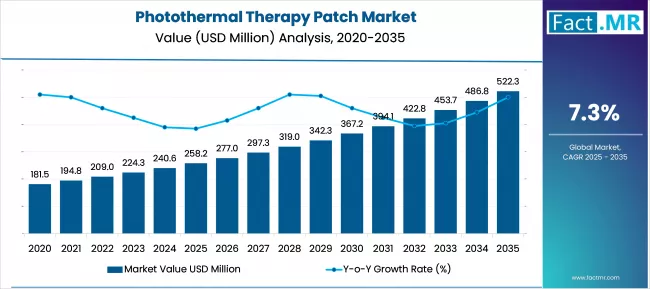
The increase in prevalence of superficial cancer, chronic wounding, and pain-related disorders still encourages market growth, especially in North America and East Asia. Hospitals are also highlighting the use of device-assisted treatments that reduce the total drug load and recovery duration that encourage broader use in the dermatology and oncology treatment.
The main obstacles that have been persistent are the lack of reimbursement system, cumbersome device certification and approval, and the high cost of material synthesis. Photothermal conversion and temperature regulation safety thresholds standardization is an important issue that needs to be done to increase clinical acceptability and guarantee future market expansion.
What are the drivers of the photothermal therapy patch market?
Photothermal Therapy Patch Market is an emerging market which is growing fast because of the development of nanomaterials, wearable medical devices, and thermal therapies which are precision-based. Potential applications Photothermal and nitric oxide-based multifunctional patches are being integrated to allow the targeted ablation of cancer cells, wound regeneration, and targeted thermal delivery to improve patient outcomes. The major nations that are undergoing this change include the United States, China, Japan, Germany and the United Kingdom with a lot of investment in biomedical nanotechnology and clinical device validation systems.
There has been increased efficiency and safety of therapeutics due to accelerated development of biocompatible materials, such as gold nanorods, MXenes, and silver nanoparticle composites. The increasing demand towards non-invasive and portable system of treatment is in line with the global trend of decentralization of healthcare models, in which home-based and outpatient treatment systems save on the cost of hospitalization. Photothermal patches with smart technologies, comprising real-time thermal sensing, AI-enabled feedback mechanisms, are emerging as one of the enablers of precision medicine, in particular in the fields of oncology, dermatology, and chronic wound care.
The various medical regulatory agencies in the U.S, Europe and Asia are encouraging clinical trials and expedited approvals of photothermal technology that meets the medical safety and energy exposure requirements. This is improving the implementation of certified, reusable and energy efficient devices in the clinical and consumer markets. Technology transfer is also being boosted by strategic alliances between research facilities, med-tech start-ups and drug companies that have seen research help in laboratory innovation being transferred to commercial scale production.
What are the regional trends of the photothermal therapy patch market?
Photothermal Therapy Patch Market exhibits some unique regional growth trends which are determined by developments in the healthcare delivery systems, government investment as well as studies in the field of nanotechnology. Asia Pacific is the epicenter of innovation, which is backed by strong medical research and development, well-regulated clinical environment, and increasing spending in healthcare. The vigorous government support of biocompatible materials and modern photothermal systems in Japan has seen the process of commercialization accelerate, and South Korea is still incorporating wearable therapeutic systems into cosmetic and dermatological care.
In India, production of low-cost photothermal solutions is being supported by increasing biotech startups and the continuous government investment towards health infrastructure. The region is enjoying increased middle-class population which requires non-invasive and cheap treatments and have growing hospital facilities that have the capacity to support smart treatment technologies.
There is a long-term growth in Europe which is in line with its regulatory focus on safety and patient-centric care. Germany, France and the U.K. make the advancement of certified photothermal systems into clinical oncology and dermatology networks. Multifunctional and reusable photothermal patches are being adopted through the efforts of EU programs in the field of advanced material science and clinical innovation.
In North America, the U.S. and Canada have been on top with massive R and D initiatives, sound medical device regulatory systems and solid venture capital funding into nanomedicine. The continuous commercialization is being accelerated by high oncology center adoption, dermatology clinic adoption, and home-care adoption. These areas also put the world on the path to the global growth of the photothermal therapy patch market by 2035 as these areas are the ones that would be the foundation on which a personalized, outcome-oriented care system is founded.
What are the challenges and restraining factors of the photothermal therapy patch market?
The Photothermal Therapy Patch Market is characterized by various technological, clinical, as well as regulatory challenges that help to restrain the popularization of it nowadays. Photothermal materials like gold nanorods, MXenes and silver nanoparticles are stable and high-efficiency materials that have complex synthesis protocols, need cleanroom facilities, and are sensitive to instrumentation, which makes them expensive to manufacture. Furthermore, the combination of drug-loading, photothermal conversion and temperature-sensing devices in one patch design requires state of the art skills and precision of the process, limiting scalability and cost-competitiveness in large scale manufacturing.
Also an important impediment is regulatory compliance. Photothermal systems have long approval times, especially on biocompatibility, heat levels, and material breakdown with regard to clinical validation and safety testing. Strict certification requirements of combination medical devices in the U.S. Europe, and Japan have increased commercialization periods. Smaller and new producers are usually struggling to comply with such regulatory requirements and fail to enter the market quickly in spite of high research results.
The second major limitation is the lack of awareness of the potential of photothermal therapy outside of the oncology field, both within the work of the general population and clinicians. This is partly due to the absence of standardized operating procedures, unequal clinical findings, and low reimbursement rates that make it hard to transition to mainstream medical practice. This constrains hospital buying and takes away adoption in low- and middle-income areas.
The volatility of the supply chain, lack of high-grade nanomaterials and unskilled people to operate the energy delivery calibration also contribute to the cost burden. With competition growing, the issue of affordability, reproducibility, and clinical reliability balancing will be the factor of the industry scaling. The trend of commercial development in the market can follow the same path as the economies with focus on research in the foreseeable future unless more comprehensive reimbursement is included and the global standard in the approval frameworks is harmonized.
Country-Wise Insights
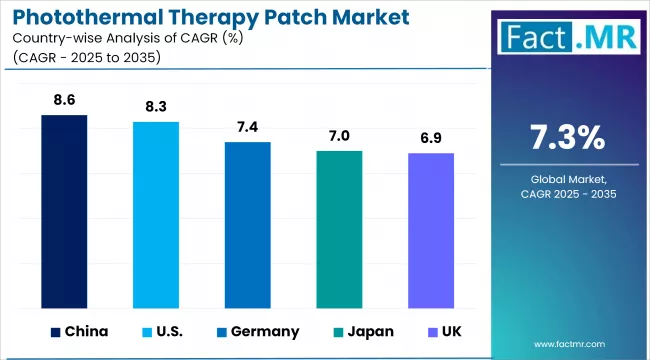
Advanced nanomaterial research and clinical integration propel Photothermal Therapy Patch adoption in China
China remains a dominant force in the photothermal therapy patch industry across the world; this is owing to state-supported efforts in advancing nanotechnology and biomedical convergence. National research programs and collaborations between educational institutions and medical equipment manufacturer have enhanced multifunctional photothermal system commercialisation. These are gold nanorod and MXene-based patches that have an improved photothermal conversion and biocompatibility.
Photothermal patches used in minimally invasive procedures are increasingly used in hospitals and clinical research centers, and local biotech companies are enjoying an ecosystem of great manufacturing and material supply chains. The increased cases of chronic wounds and cancer surge enhance the need to seek non-invasive therapeutic measures which minimize the hospital burnt and patient recovery period.
The swift acceptance of new medical equipment innovations and the localization of production strategies will continue to dominate the market in the years ahead in China. Effective execution of industrial policy with the healthcare modernization and the existing development of energy consuming infrared equipment will support the leading position of China as the main growth center concerning photothermal therapy tools.
Rising oncology applications and regulatory support accelerate Photothermal Therapy Patch demand across the United States
The United States functions as the main innovation center for the photothermal therapy patch market because of its strong oncology research base and rising funding for wearable medical devices. The FDA provides regulatory guidelines about combination medical devices and biocompatibility standards, which enables medical devices to reach the market faster. U.S.-based manufacturers use automation technology together with AI-assisted thermal monitoring and smart material engineering to improve both product safety and performance. The development of hospital facilities together with patient knowledge has led to earlier clinical adoption of oncology, dermatology, medical treatments.
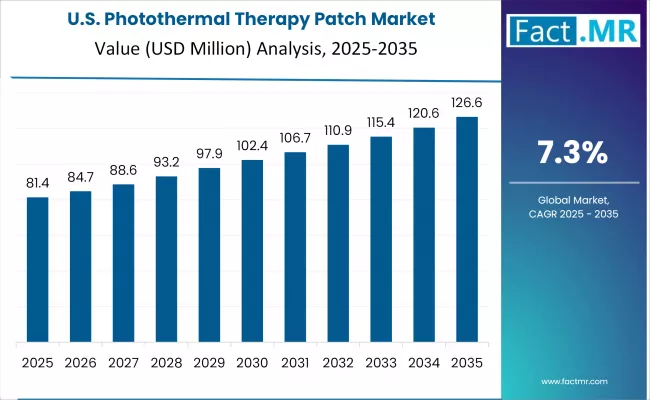
Academic researchers will work with healthcare providers and technology companies to establish the main direction for future development. As the U.S. prioritizes minimally invasive, outpatient treatments, photothermal therapy patches will see expanded use across chronic disease management, cosmetic therapy, and regenerative medicine—cementing the nation’s role as a global leader in next-generation therapeutic innovations.
Category-Wise Analysis
Chemo-Photothermal Combination Therapy Drives Precision Treatment Advancements
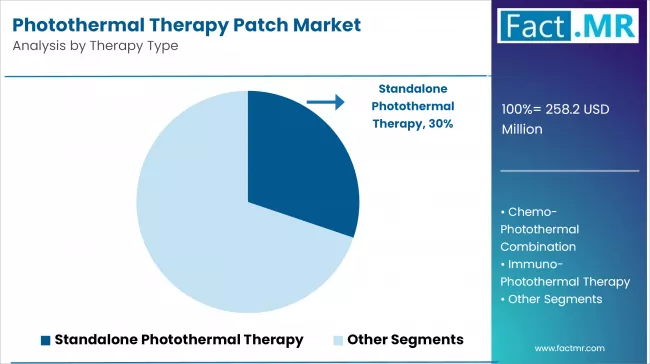
The market growth has been predominantly driven by Chemo-photothermal combination therapy because this treatment method provides both targeted tumor destruction and controlled drug delivery. Scientists in China, the United States, and Japan have conducted successful research and clinical trials, which lead to increased use of combination patches.
The new technologies boost both heat transformation and drug delivery capabilities. This results in better treatment accuracy. Hospitals are moving away from traditional invasive procedures to adopt photothermal combination methods that decrease hospital stays while boosting patient recovery success.
The clinical use of portable infrared delivery systems will increase because of growing investments in smart microneedle platforms and AI-assisted dosage control systems during the next ten years. The subsegment maintains its leading position because it delivers safety and efficiency and patient convenience, which makes it the core element for future therapeutic methods.
Oncology Applications Lead demand in the photothermal therapy patch landscape
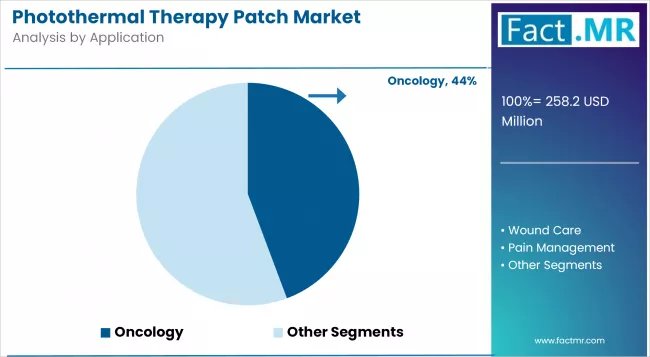
Oncology remains the main force which drives photothermal therapy patch market expansion because it provides non-invasive cancer treatments that reduce body-wide treatment effects. The application with the largest revenue contribution continues to benefit from precise localized heating which enables tumor ablation and prevents recurrence while helping tissue healing.
The United States together with China and Germany direct their main attention toward clinical validation of oncology patches which combine thermal targeting with drug delivery systems. The implementation of minimally invasive treatments at advanced cancer centers has grown because hospitals have become more integrated and patients want less invasive medical procedures. The technology functions with wearable thermal monitoring equipment and real-time imaging devices to improve treatment accuracy and control.
The field of oncology will maintain its top position in the coming years because biocompatible materials and infrared energy management technology will continue to improve. The healthcare systems worldwide focus on early cancer detection and customized treatments which will enable oncology applications to drive photothermal patch development until 2035 while proving their clinical value and expanding market reach.
Competitive Analysis
Key players in the photothermal therapy patch market are Lumenis, Fotona, Sciton, Alma Lasers, Candela, Cutera, Solta Medical, El.En., Iridex, Jeisys Medical, Lutronic, Venus Concept, InMode, Quanta System, amd BTL Aesthetics
The Photothermal Therapy Patch Market faces growing competition because various companies work to enhance their nanomaterial engineering capabilities and develop better heat control systems and drug delivery solutions. The industry now depends on unique formulations which combine efficient photothermal materials like gold nanorods and MXenes and silver nanoparticles with flexible biocompatible substrates. The systems allow precise temperature management through micro-sensing feedback which helps doctors deliver targeted therapy while keeping patient tissues safe from overheating.
The future competitiveness of clinical validation will be determined by its combination with real-time monitoring systems and AI-based energy calibration systems. The market shows early commercial success for companies that base their investments on simulation modeling and iterative research and development and fast prototyping of microneedle and hydrogel patch designs for oncology and wound care. Research institutes together with biotechnology startups and medical device manufacturers establish strategic partnerships which speed up the process of taking proof-of-concept developments to regulatory-approved commercial products.
Established market players are seeking regulatory partnerships and intellectual property rights around multifunctional patch designs combining photothermal, chemo, and antimicrobial functions. The upcoming competition will focus on scalability because it needs manufacturers to create affordable production methods which match their material development capabilities and connect smart wearables for remote monitoring. The market will reward photothermal therapy patch developers who create patient-centric platforms with consistent outcomes and clinical compliance across all regions.
Recent Development
- Nanjing Tech University scientists developed a reusable non-invasive photothermal patch from silver nanoparticle-polymer composite materials at Nanjing Tech University during 2025. The system operates with affordable infrared lamps which replace lasers to remove E. coli biofilms and glioma cancer cells thus creating an accessible therapeutic solution.
- In 2024, Sichuan University scientists created microneedle patch which combines photothermal treatment with nitric oxide gas delivery to remove melanoma leftovers. The new technology demonstrated excellent biocompatibility together with high performance results during maxillofacial skin repair tests.
Fact.MR has provided detailed information about the price points of key manufacturers of Photothermal Therapy Patch Market positioned across regions, sales growth, production capacity, and speculative technological expansion, in the recently published report.
Methodology and Industry Tracking Approach
The 2025 photothermal therapy patch market report by Fact.MR is based on insights collected from 1,200 stakeholders across 12 countries, with a minimum of 75 respondents per country. Among the participants, 65% were end users including biopolymer converters, specialty chemical formulators, and FMCG sustainability teams while the remaining 35% included sourcing managers, R&D directors, environmental compliance leads, and bioeconomy consultants.
Data collection was conducted between July 2024 and June 2025, focusing on parameters such as monomer purity, conversion yield, cost per ton, end-use compatibility, feedstock availability, and regulatory alignment. A regionally weighted calibration model ensured balanced representation across North America, Europe, and Asia-Pacific.
The study triangulated over 95 validated sources, including patent databases, sustainability disclosures, process modeling datasets, and annual reports from monomer and biopolymer producers.
Fact.MR applied rigorous analytical tools such as multi-variable regression and scenario modeling to ensure data robustness. With continuous monitoring of the glass adhesives space since 2018, this report offers a comprehensive roadmap for firms seeking competitive advantage, innovation, and sustainable growth within the sector.
Segmentation of Photothermal Therapy Patch Market
-
By Therapy Type :
- Standalone Photothermal Therapy
- Chemo-Photothermal Combination
- Immuno-Photothermal Therapy
- Antimicrobial Photothermal Therapy
-
By Material Composition :
- Gold Nanostructures
- Carbon-Based Nanomaterials
- MXenes and Transition Metal Carbides
- Conjugated Polymers
- Semiconductor Nanomaterials
-
By Patch Architecture :
- Adhesive Film Patches
- Hydrogel-Based Patches
- Microneedle Array Patches
- Layered Composite Patches
-
By Application :
- Oncology
- Wound Care
- Pain Management
- Dermatology
-
By End-user :
- Hospitals and Specialty Clinics
- Ambulatory Surgical Centers
- Home Care Settings
- Research Institutions
-
By Region :
- North America
- Latin America
- Western Europe
- Eastern Europe
- East Asia
- South Asia & Pacific
- Middle East & Africa
Table of Content
- Executive Summary
- Global Market Outlook
- Demand-side Trends
- Supply-side Trends
- Technology Roadmap Analysis
- Analysis and Recommendations
- Market Overview
- Market Coverage / Taxonomy
- Market Definition / Scope / Limitations
- Market Background
- Market Dynamics
- Drivers
- Restraints
- Opportunity
- Trends
- Scenario Forecast
- Demand in Optimistic Scenario
- Demand in Likely Scenario
- Demand in Conservative Scenario
- Opportunity Map Analysis
- Product Life Cycle Analysis
- Investment Feasibility Matrix
- Value Chain Analysis
- PESTLE and Porter’s Analysis
- Regulatory Landscape
- Regional Parent Market Outlook
- Production and Consumption Statistics
- Import and Export Statistics
- Market Dynamics
- Global Market Analysis 2020-2024 and Forecast, 2025-2035
- Historical Market Size Value (USD Million) Analysis, 2020-2024
- Current and Future Market Size Value (USD Million) Projections, 2025-2035
- Y-o-Y Growth Trend Analysis
- Absolute $ Opportunity Analysis
- Global Market Pricing Analysis 2020-2024 and Forecast 2025-2035
- Global Market Analysis 2020-2024 and Forecast 2025-2035, By Therapy Type
- Introduction / Key Findings
- Historical Market Size Value (USD Million) Analysis By Therapy Type, 2020-2024
- Current and Future Market Size Value (USD Million) Analysis and Forecast By Therapy Type, 2025-2035
- Standalone Photothermal Therapy
- Chemo-Photothermal Combination
- Immuno-Photothermal Therapy
- Antimicrobial Photothermal Therapy
- Y-o-Y Growth Trend Analysis By Therapy Type, 2020-2024
- Absolute $ Opportunity Analysis By Therapy Type, 2025-2035
- Global Market Analysis 2020-2024 and Forecast 2025-2035, By Material Composition
- Introduction / Key Findings
- Historical Market Size Value (USD Million) Analysis By Material Composition, 2020-2024
- Current and Future Market Size Value (USD Million) Analysis and Forecast By Material Composition, 2025-2035
- Gold Nanostructures
- Carbon-Based Nanomaterials
- MXenes and Transition Metal Carbides
- Conjugated Polymers
- Semiconductor Nanomaterials
- Y-o-Y Growth Trend Analysis By Material Composition, 2020-2024
- Absolute $ Opportunity Analysis By Material Composition, 2025-2035
- Global Market Analysis 2020-2024 and Forecast 2025-2035, By Patch Architecture
- Introduction / Key Findings
- Historical Market Size Value (USD Million) Analysis By Patch Architecture, 2020-2024
- Current and Future Market Size Value (USD Million) Analysis and Forecast By Patch Architecture, 2025-2035
- Adhesive Film Patches
- Hydrogel-Based Patches
- Microneedle Array Patches
- Layered Composite Patches
- Y-o-Y Growth Trend Analysis By Patch Architecture, 2020-2024
- Absolute $ Opportunity Analysis By Patch Architecture, 2025-2035
- Global Market Analysis 2020-2024 and Forecast 2025-2035, By Application
- Introduction / Key Findings
- Historical Market Size Value (USD Million) Analysis By Application, 2020-2024
- Current and Future Market Size Value (USD Million) Analysis and Forecast By Application, 2025-2035
- Oncology
- Wound Care
- Pain Management
- Dermatology
- Y-o-Y Growth Trend Analysis By Application, 2020-2024
- Absolute $ Opportunity Analysis By Application, 2025-2035
- Global Market Analysis 2020-2024 and Forecast 2025-2035, By End User
- Introduction / Key Findings
- Historical Market Size Value (USD Million) Analysis By End User, 2020-2024
- Current and Future Market Size Value (USD Million) Analysis and Forecast By End User, 2025-2035
- Hospitals and Specialty Clinics
- Ambulatory Surgical Centers
- Home Care Settings
- Research Institutions
- Y-o-Y Growth Trend Analysis By End User, 2020-2024
- Absolute $ Opportunity Analysis By End User, 2025-2035
- Global Market Analysis 2020-2024 and Forecast 2025-2035, By Region
- Introduction
- Historical Market Size Value (USD Million) Analysis By Region, 2020-2024
- Current Market Size Value (USD Million) Analysis and Forecast By Region, 2025-2035
- North America
- Latin America
- Western Europe
- Eastern Europe
- East Asia
- South Asia and Pacific
- Middle East & Africa
- Market Attractiveness Analysis By Region
- North America Market Analysis 2020-2024 and Forecast 2025-2035, By Country
- Historical Market Size Value (USD Million) Trend Analysis By Market Taxonomy, 2020-2024
- Market Size Value (USD Million) Forecast By Market Taxonomy, 2025-2035
- By Country
- U.S.
- Canada
- Mexico
- By Therapy Type
- By Material Composition
- By Patch Architecture
- By Application
- By End User
- By Country
- Market Attractiveness Analysis
- By Country
- By Therapy Type
- By Material Composition
- By Patch Architecture
- By Application
- By End User
- Key Takeaways
- Latin America Market Analysis 2020-2024 and Forecast 2025-2035, By Country
- Historical Market Size Value (USD Million) Trend Analysis By Market Taxonomy, 2020-2024
- Market Size Value (USD Million) Forecast By Market Taxonomy, 2025-2035
- By Country
- Brazil
- Chile
- Rest of Latin America
- By Therapy Type
- By Material Composition
- By Patch Architecture
- By Application
- By End User
- By Country
- Market Attractiveness Analysis
- By Country
- By Therapy Type
- By Material Composition
- By Patch Architecture
- By Application
- By End User
- Key Takeaways
- Western Europe Market Analysis 2020-2024 and Forecast 2025-2035, By Country
- Historical Market Size Value (USD Million) Trend Analysis By Market Taxonomy, 2020-2024
- Market Size Value (USD Million) Forecast By Market Taxonomy, 2025-2035
- By Country
- Germany
- U.K.
- Italy
- Spain
- France
- Nordic
- BENELUX
- Rest of Western Europe
- By Therapy Type
- By Material Composition
- By Patch Architecture
- By Application
- By End User
- By Country
- Market Attractiveness Analysis
- By Country
- By Therapy Type
- By Material Composition
- By Patch Architecture
- By Application
- By End User
- Key Takeaways
- Eastern Europe Market Analysis 2020-2024 and Forecast 2025-2035, By Country
- Historical Market Size Value (USD Million) Trend Analysis By Market Taxonomy, 2020-2024
- Market Size Value (USD Million) Forecast By Market Taxonomy, 2025-2035
- By Country
- Russia
- Poland
- Hungary
- Balkan & Baltic
- Rest of Eastern Europe
- By Therapy Type
- By Material Composition
- By Patch Architecture
- By Application
- By End User
- By Country
- Market Attractiveness Analysis
- By Country
- By Therapy Type
- By Material Composition
- By Patch Architecture
- By Application
- By End User
- Key Takeaways
- East Asia Market Analysis 2020-2024 and Forecast 2025-2035, By Country
- Historical Market Size Value (USD Million) Trend Analysis By Market Taxonomy, 2020-2024
- Market Size Value (USD Million) Forecast By Market Taxonomy, 2025-2035
- By Country
- China
- Japan
- South Korea
- By Therapy Type
- By Material Composition
- By Patch Architecture
- By Application
- By End User
- By Country
- Market Attractiveness Analysis
- By Country
- By Therapy Type
- By Material Composition
- By Patch Architecture
- By Application
- By End User
- Key Takeaways
- South Asia and Pacific Market Analysis 2020-2024 and Forecast 2025-2035, By Country
- Historical Market Size Value (USD Million) Trend Analysis By Market Taxonomy, 2020-2024
- Market Size Value (USD Million) Forecast By Market Taxonomy, 2025-2035
- By Country
- India
- ASEAN
- Australia & New Zealand
- Rest of South Asia and Pacific
- By Therapy Type
- By Material Composition
- By Patch Architecture
- By Application
- By End User
- By Country
- Market Attractiveness Analysis
- By Country
- By Therapy Type
- By Material Composition
- By Patch Architecture
- By Application
- By End User
- Key Takeaways
- Middle East & Africa Market Analysis 2020-2024 and Forecast 2025-2035, By Country
- Historical Market Size Value (USD Million) Trend Analysis By Market Taxonomy, 2020-2024
- Market Size Value (USD Million) Forecast By Market Taxonomy, 2025-2035
- By Country
- Kingdom of Saudi Arabia
- Other GCC Countries
- Turkiye
- South Africa
- Other African Union
- Rest of Middle East & Africa
- By Therapy Type
- By Material Composition
- By Patch Architecture
- By Application
- By End User
- By Country
- Market Attractiveness Analysis
- By Country
- By Therapy Type
- By Material Composition
- By Patch Architecture
- By Application
- By End User
- Key Takeaways
- Key Countries Market Analysis
- U.S.
- Pricing Analysis
- Market Share Analysis, 2024
- By Therapy Type
- By Material Composition
- By Patch Architecture
- By Application
- By End User
- Canada
- Pricing Analysis
- Market Share Analysis, 2024
- By Therapy Type
- By Material Composition
- By Patch Architecture
- By Application
- By End User
- Mexico
- Pricing Analysis
- Market Share Analysis, 2024
- By Therapy Type
- By Material Composition
- By Patch Architecture
- By Application
- By End User
- Brazil
- Pricing Analysis
- Market Share Analysis, 2024
- By Therapy Type
- By Material Composition
- By Patch Architecture
- By Application
- By End User
- Chile
- Pricing Analysis
- Market Share Analysis, 2024
- By Therapy Type
- By Material Composition
- By Patch Architecture
- By Application
- By End User
- Germany
- Pricing Analysis
- Market Share Analysis, 2024
- By Therapy Type
- By Material Composition
- By Patch Architecture
- By Application
- By End User
- U.K.
- Pricing Analysis
- Market Share Analysis, 2024
- By Therapy Type
- By Material Composition
- By Patch Architecture
- By Application
- By End User
- Italy
- Pricing Analysis
- Market Share Analysis, 2024
- By Therapy Type
- By Material Composition
- By Patch Architecture
- By Application
- By End User
- Spain
- Pricing Analysis
- Market Share Analysis, 2024
- By Therapy Type
- By Material Composition
- By Patch Architecture
- By Application
- By End User
- France
- Pricing Analysis
- Market Share Analysis, 2024
- By Therapy Type
- By Material Composition
- By Patch Architecture
- By Application
- By End User
- India
- Pricing Analysis
- Market Share Analysis, 2024
- By Therapy Type
- By Material Composition
- By Patch Architecture
- By Application
- By End User
- ASEAN
- Pricing Analysis
- Market Share Analysis, 2024
- By Therapy Type
- By Material Composition
- By Patch Architecture
- By Application
- By End User
- Australia & New Zealand
- Pricing Analysis
- Market Share Analysis, 2024
- By Therapy Type
- By Material Composition
- By Patch Architecture
- By Application
- By End User
- China
- Pricing Analysis
- Market Share Analysis, 2024
- By Therapy Type
- By Material Composition
- By Patch Architecture
- By Application
- By End User
- Japan
- Pricing Analysis
- Market Share Analysis, 2024
- By Therapy Type
- By Material Composition
- By Patch Architecture
- By Application
- By End User
- South Korea
- Pricing Analysis
- Market Share Analysis, 2024
- By Therapy Type
- By Material Composition
- By Patch Architecture
- By Application
- By End User
- Russia
- Pricing Analysis
- Market Share Analysis, 2024
- By Therapy Type
- By Material Composition
- By Patch Architecture
- By Application
- By End User
- Poland
- Pricing Analysis
- Market Share Analysis, 2024
- By Therapy Type
- By Material Composition
- By Patch Architecture
- By Application
- By End User
- Hungary
- Pricing Analysis
- Market Share Analysis, 2024
- By Therapy Type
- By Material Composition
- By Patch Architecture
- By Application
- By End User
- Kingdom of Saudi Arabia
- Pricing Analysis
- Market Share Analysis, 2024
- By Therapy Type
- By Material Composition
- By Patch Architecture
- By Application
- By End User
- Turkiye
- Pricing Analysis
- Market Share Analysis, 2024
- By Therapy Type
- By Material Composition
- By Patch Architecture
- By Application
- By End User
- South Africa
- Pricing Analysis
- Market Share Analysis, 2024
- By Therapy Type
- By Material Composition
- By Patch Architecture
- By Application
- By End User
- U.S.
- Market Structure Analysis
- Competition Dashboard
- Competition Benchmarking
- Market Share Analysis of Top Players
- By Regional
- By Therapy Type
- By Material Composition
- By Patch Architecture
- By Application
- By End User
- Competition Analysis
- Competition Deep Dive
- Lumenis
- Overview
- Product Portfolio
- Profitability by Market Segments (Product/Age /Sales Channel/Region)
- Sales Footprint
- Strategy Overview
- Fotona
- Sciton
- Alma Lasers
- Candela
- Cutera
- Solta Medical
- El.En.
- Iridex
- Jeisys Medical
- Lutronic
- Venus Concept
- InMode
- Quanta System
- BTL Aesthetics
- Lumenis
- Competition Deep Dive
- Assumptions & Acronyms Used
- Research Methodology
List Of Table
- Table 1: Global Market Value (USD Million) Forecast by Region, 2020 to 2035
- Table 2: Global Market Value (USD Million) Forecast by Therapy Type, 2020 to 2035
- Table 3: Global Market Value (USD Million) Forecast by Material Composition, 2020 to 2035
- Table 4: Global Market Value (USD Million) Forecast by Patch Architecture, 2020 to 2035
- Table 5: Global Market Value (USD Million) Forecast by Application, 2020 to 2035
- Table 6: Global Market Value (USD Million) Forecast by End User, 2020 to 2035
- Table 7: North America Market Value (USD Million) Forecast by Country, 2020 to 2035
- Table 8: North America Market Value (USD Million) Forecast by Therapy Type, 2020 to 2035
- Table 9: North America Market Value (USD Million) Forecast by Material Composition, 2020 to 2035
- Table 10: North America Market Value (USD Million) Forecast by Patch Architecture, 2020 to 2035
- Table 11: North America Market Value (USD Million) Forecast by Application, 2020 to 2035
- Table 12: North America Market Value (USD Million) Forecast by End User, 2020 to 2035
- Table 13: Latin America Market Value (USD Million) Forecast by Country, 2020 to 2035
- Table 14: Latin America Market Value (USD Million) Forecast by Therapy Type, 2020 to 2035
- Table 15: Latin America Market Value (USD Million) Forecast by Material Composition, 2020 to 2035
- Table 16: Latin America Market Value (USD Million) Forecast by Patch Architecture, 2020 to 2035
- Table 17: Latin America Market Value (USD Million) Forecast by Application, 2020 to 2035
- Table 18: Latin America Market Value (USD Million) Forecast by End User, 2020 to 2035
- Table 19: Western Europe Market Value (USD Million) Forecast by Country, 2020 to 2035
- Table 20: Western Europe Market Value (USD Million) Forecast by Therapy Type, 2020 to 2035
- Table 21: Western Europe Market Value (USD Million) Forecast by Material Composition, 2020 to 2035
- Table 22: Western Europe Market Value (USD Million) Forecast by Patch Architecture, 2020 to 2035
- Table 23: Western Europe Market Value (USD Million) Forecast by Application, 2020 to 2035
- Table 24: Western Europe Market Value (USD Million) Forecast by End User, 2020 to 2035
- Table 25: Eastern Europe Market Value (USD Million) Forecast by Country, 2020 to 2035
- Table 26: Eastern Europe Market Value (USD Million) Forecast by Therapy Type, 2020 to 2035
- Table 27: Eastern Europe Market Value (USD Million) Forecast by Material Composition, 2020 to 2035
- Table 28: Eastern Europe Market Value (USD Million) Forecast by Patch Architecture, 2020 to 2035
- Table 29: Eastern Europe Market Value (USD Million) Forecast by Application, 2020 to 2035
- Table 30: Eastern Europe Market Value (USD Million) Forecast by End User, 2020 to 2035
- Table 31: East Asia Market Value (USD Million) Forecast by Country, 2020 to 2035
- Table 32: East Asia Market Value (USD Million) Forecast by Therapy Type, 2020 to 2035
- Table 33: East Asia Market Value (USD Million) Forecast by Material Composition, 2020 to 2035
- Table 34: East Asia Market Value (USD Million) Forecast by Patch Architecture, 2020 to 2035
- Table 35: East Asia Market Value (USD Million) Forecast by Application, 2020 to 2035
- Table 36: East Asia Market Value (USD Million) Forecast by End User, 2020 to 2035
- Table 37: South Asia and Pacific Market Value (USD Million) Forecast by Country, 2020 to 2035
- Table 38: South Asia and Pacific Market Value (USD Million) Forecast by Therapy Type, 2020 to 2035
- Table 39: South Asia and Pacific Market Value (USD Million) Forecast by Material Composition, 2020 to 2035
- Table 40: South Asia and Pacific Market Value (USD Million) Forecast by Patch Architecture, 2020 to 2035
- Table 41: South Asia and Pacific Market Value (USD Million) Forecast by Application, 2020 to 2035
- Table 42: South Asia and Pacific Market Value (USD Million) Forecast by End User, 2020 to 2035
- Table 43: Middle East & Africa Market Value (USD Million) Forecast by Country, 2020 to 2035
- Table 44: Middle East & Africa Market Value (USD Million) Forecast by Therapy Type, 2020 to 2035
- Table 45: Middle East & Africa Market Value (USD Million) Forecast by Material Composition, 2020 to 2035
- Table 46: Middle East & Africa Market Value (USD Million) Forecast by Patch Architecture, 2020 to 2035
- Table 47: Middle East & Africa Market Value (USD Million) Forecast by Application, 2020 to 2035
- Table 48: Middle East & Africa Market Value (USD Million) Forecast by End User, 2020 to 2035
List Of Figures
- Figure 1: Global Market Pricing Analysis
- Figure 2: Global Market Value (USD Million) Forecast 2020 to 2035
- Figure 3: Global Market Value Share and BPS Analysis by Therapy Type, 2025 and 2035
- Figure 4: Global Market Y-o-Y Growth Comparison by Therapy Type, 2025 to 2035
- Figure 5: Global Market Attractiveness Analysis by Therapy Type
- Figure 6: Global Market Value Share and BPS Analysis by Material Composition, 2025 and 2035
- Figure 7: Global Market Y-o-Y Growth Comparison by Material Composition, 2025 to 2035
- Figure 8: Global Market Attractiveness Analysis by Material Composition
- Figure 9: Global Market Value Share and BPS Analysis by Patch Architecture, 2025 and 2035
- Figure 10: Global Market Y-o-Y Growth Comparison by Patch Architecture, 2025 to 2035
- Figure 11: Global Market Attractiveness Analysis by Patch Architecture
- Figure 12: Global Market Value Share and BPS Analysis by Application, 2025 and 2035
- Figure 13: Global Market Y-o-Y Growth Comparison by Application, 2025 to 2035
- Figure 14: Global Market Attractiveness Analysis by Application
- Figure 15: Global Market Value Share and BPS Analysis by End User, 2025 and 2035
- Figure 16: Global Market Y-o-Y Growth Comparison by End User, 2025 to 2035
- Figure 17: Global Market Attractiveness Analysis by End User
- Figure 18: Global Market Value (USD Million) Share and BPS Analysis by Region, 2025 and 2035
- Figure 19: Global Market Y-o-Y Growth Comparison by Region, 2025 to 2035
- Figure 20: Global Market Attractiveness Analysis by Region
- Figure 21: North America Market Incremental $ Opportunity, 2025 to 2035
- Figure 22: Latin America Market Incremental $ Opportunity, 2025 to 2035
- Figure 23: Western Europe Market Incremental $ Opportunity, 2025 to 2035
- Figure 24: Eastern Europe Market Incremental $ Opportunity, 2025 to 2035
- Figure 25: East Asia Market Incremental $ Opportunity, 2025 to 2035
- Figure 26: South Asia and Pacific Market Incremental $ Opportunity, 2025 to 2035
- Figure 27: Middle East & Africa Market Incremental $ Opportunity, 2025 to 2035
- Figure 28: North America Market Value Share and BPS Analysis by Country, 2025 and 2035
- Figure 29: North America Market Value Share and BPS Analysis by Therapy Type, 2025 and 2035
- Figure 30: North America Market Y-o-Y Growth Comparison by Therapy Type, 2025 to 2035
- Figure 31: North America Market Attractiveness Analysis by Therapy Type
- Figure 32: North America Market Value Share and BPS Analysis by Material Composition, 2025 and 2035
- Figure 33: North America Market Y-o-Y Growth Comparison by Material Composition, 2025 to 2035
- Figure 34: North America Market Attractiveness Analysis by Material Composition
- Figure 35: North America Market Value Share and BPS Analysis by Patch Architecture, 2025 and 2035
- Figure 36: North America Market Y-o-Y Growth Comparison by Patch Architecture, 2025 to 2035
- Figure 37: North America Market Attractiveness Analysis by Patch Architecture
- Figure 38: North America Market Value Share and BPS Analysis by Application, 2025 and 2035
- Figure 39: North America Market Y-o-Y Growth Comparison by Application, 2025 to 2035
- Figure 40: North America Market Attractiveness Analysis by Application
- Figure 41: North America Market Value Share and BPS Analysis by End User, 2025 and 2035
- Figure 42: North America Market Y-o-Y Growth Comparison by End User, 2025 to 2035
- Figure 43: North America Market Attractiveness Analysis by End User
- Figure 44: Latin America Market Value Share and BPS Analysis by Country, 2025 and 2035
- Figure 45: Latin America Market Value Share and BPS Analysis by Therapy Type, 2025 and 2035
- Figure 46: Latin America Market Y-o-Y Growth Comparison by Therapy Type, 2025 to 2035
- Figure 47: Latin America Market Attractiveness Analysis by Therapy Type
- Figure 48: Latin America Market Value Share and BPS Analysis by Material Composition, 2025 and 2035
- Figure 49: Latin America Market Y-o-Y Growth Comparison by Material Composition, 2025 to 2035
- Figure 50: Latin America Market Attractiveness Analysis by Material Composition
- Figure 51: Latin America Market Value Share and BPS Analysis by Patch Architecture, 2025 and 2035
- Figure 52: Latin America Market Y-o-Y Growth Comparison by Patch Architecture, 2025 to 2035
- Figure 53: Latin America Market Attractiveness Analysis by Patch Architecture
- Figure 54: Latin America Market Value Share and BPS Analysis by Application, 2025 and 2035
- Figure 55: Latin America Market Y-o-Y Growth Comparison by Application, 2025 to 2035
- Figure 56: Latin America Market Attractiveness Analysis by Application
- Figure 57: Latin America Market Value Share and BPS Analysis by End User, 2025 and 2035
- Figure 58: Latin America Market Y-o-Y Growth Comparison by End User, 2025 to 2035
- Figure 59: Latin America Market Attractiveness Analysis by End User
- Figure 60: Western Europe Market Value Share and BPS Analysis by Country, 2025 and 2035
- Figure 61: Western Europe Market Value Share and BPS Analysis by Therapy Type, 2025 and 2035
- Figure 62: Western Europe Market Y-o-Y Growth Comparison by Therapy Type, 2025 to 2035
- Figure 63: Western Europe Market Attractiveness Analysis by Therapy Type
- Figure 64: Western Europe Market Value Share and BPS Analysis by Material Composition, 2025 and 2035
- Figure 65: Western Europe Market Y-o-Y Growth Comparison by Material Composition, 2025 to 2035
- Figure 66: Western Europe Market Attractiveness Analysis by Material Composition
- Figure 67: Western Europe Market Value Share and BPS Analysis by Patch Architecture, 2025 and 2035
- Figure 68: Western Europe Market Y-o-Y Growth Comparison by Patch Architecture, 2025 to 2035
- Figure 69: Western Europe Market Attractiveness Analysis by Patch Architecture
- Figure 70: Western Europe Market Value Share and BPS Analysis by Application, 2025 and 2035
- Figure 71: Western Europe Market Y-o-Y Growth Comparison by Application, 2025 to 2035
- Figure 72: Western Europe Market Attractiveness Analysis by Application
- Figure 73: Western Europe Market Value Share and BPS Analysis by End User, 2025 and 2035
- Figure 74: Western Europe Market Y-o-Y Growth Comparison by End User, 2025 to 2035
- Figure 75: Western Europe Market Attractiveness Analysis by End User
- Figure 76: Eastern Europe Market Value Share and BPS Analysis by Country, 2025 and 2035
- Figure 77: Eastern Europe Market Value Share and BPS Analysis by Therapy Type, 2025 and 2035
- Figure 78: Eastern Europe Market Y-o-Y Growth Comparison by Therapy Type, 2025 to 2035
- Figure 79: Eastern Europe Market Attractiveness Analysis by Therapy Type
- Figure 80: Eastern Europe Market Value Share and BPS Analysis by Material Composition, 2025 and 2035
- Figure 81: Eastern Europe Market Y-o-Y Growth Comparison by Material Composition, 2025 to 2035
- Figure 82: Eastern Europe Market Attractiveness Analysis by Material Composition
- Figure 83: Eastern Europe Market Value Share and BPS Analysis by Patch Architecture, 2025 and 2035
- Figure 84: Eastern Europe Market Y-o-Y Growth Comparison by Patch Architecture, 2025 to 2035
- Figure 85: Eastern Europe Market Attractiveness Analysis by Patch Architecture
- Figure 86: Eastern Europe Market Value Share and BPS Analysis by Application, 2025 and 2035
- Figure 87: Eastern Europe Market Y-o-Y Growth Comparison by Application, 2025 to 2035
- Figure 88: Eastern Europe Market Attractiveness Analysis by Application
- Figure 89: Eastern Europe Market Value Share and BPS Analysis by End User, 2025 and 2035
- Figure 90: Eastern Europe Market Y-o-Y Growth Comparison by End User, 2025 to 2035
- Figure 91: Eastern Europe Market Attractiveness Analysis by End User
- Figure 92: East Asia Market Value Share and BPS Analysis by Country, 2025 and 2035
- Figure 93: East Asia Market Value Share and BPS Analysis by Therapy Type, 2025 and 2035
- Figure 94: East Asia Market Y-o-Y Growth Comparison by Therapy Type, 2025 to 2035
- Figure 95: East Asia Market Attractiveness Analysis by Therapy Type
- Figure 96: East Asia Market Value Share and BPS Analysis by Material Composition, 2025 and 2035
- Figure 97: East Asia Market Y-o-Y Growth Comparison by Material Composition, 2025 to 2035
- Figure 98: East Asia Market Attractiveness Analysis by Material Composition
- Figure 99: East Asia Market Value Share and BPS Analysis by Patch Architecture, 2025 and 2035
- Figure 100: East Asia Market Y-o-Y Growth Comparison by Patch Architecture, 2025 to 2035
- Figure 101: East Asia Market Attractiveness Analysis by Patch Architecture
- Figure 102: East Asia Market Value Share and BPS Analysis by Application, 2025 and 2035
- Figure 103: East Asia Market Y-o-Y Growth Comparison by Application, 2025 to 2035
- Figure 104: East Asia Market Attractiveness Analysis by Application
- Figure 105: East Asia Market Value Share and BPS Analysis by End User, 2025 and 2035
- Figure 106: East Asia Market Y-o-Y Growth Comparison by End User, 2025 to 2035
- Figure 107: East Asia Market Attractiveness Analysis by End User
- Figure 108: South Asia and Pacific Market Value Share and BPS Analysis by Country, 2025 and 2035
- Figure 109: South Asia and Pacific Market Value Share and BPS Analysis by Therapy Type, 2025 and 2035
- Figure 110: South Asia and Pacific Market Y-o-Y Growth Comparison by Therapy Type, 2025 to 2035
- Figure 111: South Asia and Pacific Market Attractiveness Analysis by Therapy Type
- Figure 112: South Asia and Pacific Market Value Share and BPS Analysis by Material Composition, 2025 and 2035
- Figure 113: South Asia and Pacific Market Y-o-Y Growth Comparison by Material Composition, 2025 to 2035
- Figure 114: South Asia and Pacific Market Attractiveness Analysis by Material Composition
- Figure 115: South Asia and Pacific Market Value Share and BPS Analysis by Patch Architecture, 2025 and 2035
- Figure 116: South Asia and Pacific Market Y-o-Y Growth Comparison by Patch Architecture, 2025 to 2035
- Figure 117: South Asia and Pacific Market Attractiveness Analysis by Patch Architecture
- Figure 118: South Asia and Pacific Market Value Share and BPS Analysis by Application, 2025 and 2035
- Figure 119: South Asia and Pacific Market Y-o-Y Growth Comparison by Application, 2025 to 2035
- Figure 120: South Asia and Pacific Market Attractiveness Analysis by Application
- Figure 121: South Asia and Pacific Market Value Share and BPS Analysis by End User, 2025 and 2035
- Figure 122: South Asia and Pacific Market Y-o-Y Growth Comparison by End User, 2025 to 2035
- Figure 123: South Asia and Pacific Market Attractiveness Analysis by End User
- Figure 124: Middle East & Africa Market Value Share and BPS Analysis by Country, 2025 and 2035
- Figure 125: Middle East & Africa Market Value Share and BPS Analysis by Therapy Type, 2025 and 2035
- Figure 126: Middle East & Africa Market Y-o-Y Growth Comparison by Therapy Type, 2025 to 2035
- Figure 127: Middle East & Africa Market Attractiveness Analysis by Therapy Type
- Figure 128: Middle East & Africa Market Value Share and BPS Analysis by Material Composition, 2025 and 2035
- Figure 129: Middle East & Africa Market Y-o-Y Growth Comparison by Material Composition, 2025 to 2035
- Figure 130: Middle East & Africa Market Attractiveness Analysis by Material Composition
- Figure 131: Middle East & Africa Market Value Share and BPS Analysis by Patch Architecture, 2025 and 2035
- Figure 132: Middle East & Africa Market Y-o-Y Growth Comparison by Patch Architecture, 2025 to 2035
- Figure 133: Middle East & Africa Market Attractiveness Analysis by Patch Architecture
- Figure 134: Middle East & Africa Market Value Share and BPS Analysis by Application, 2025 and 2035
- Figure 135: Middle East & Africa Market Y-o-Y Growth Comparison by Application, 2025 to 2035
- Figure 136: Middle East & Africa Market Attractiveness Analysis by Application
- Figure 137: Middle East & Africa Market Value Share and BPS Analysis by End User, 2025 and 2035
- Figure 138: Middle East & Africa Market Y-o-Y Growth Comparison by End User, 2025 to 2035
- Figure 139: Middle East & Africa Market Attractiveness Analysis by End User
- Figure 140: Global Market - Tier Structure Analysis
- Figure 141: Global Market - Company Share Analysis
- FAQs -
What was the Global Photothermal Therapy Patch Market Size Reported by Fact.MR for 2025?
The global photothermal therapy patch market was valued at USD 258.2 million in 2025.
Who are the Major Players Operating in the Photothermal Therapy Patch Market?
Prominent players in the market are Lumenis, Fotona, Sciton, Alma Lasers, Candela, Cutera, Solta Medical, El.En., Iridex, Jeisys Medical, among others
What is the Estimated Valuation of the Photothermal Therapy Patch Market in 2035?
The market is expected to reach a valuation of USD 522.3 million in 2035.
What Value CAGR did the Photothermal Therapy Patch Market Exhibit Over the Last Five Years?
The historic growth rate of the photothermal therapy patch market was 6.4% from 2020-2024.