Slurry-to-Precision Fertilizer Conversion Chemistry Market
Slurry-to-Precision Fertilizer Conversion Chemistry Market Size and Share Forecast Outlook 2026 to 2036
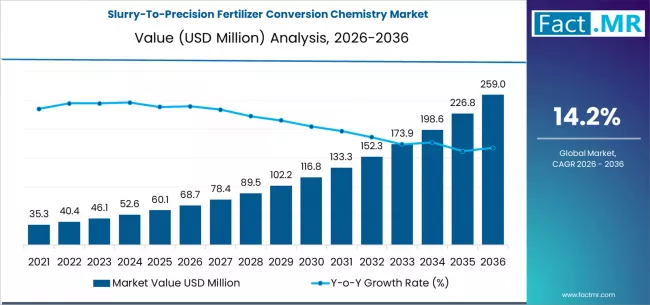
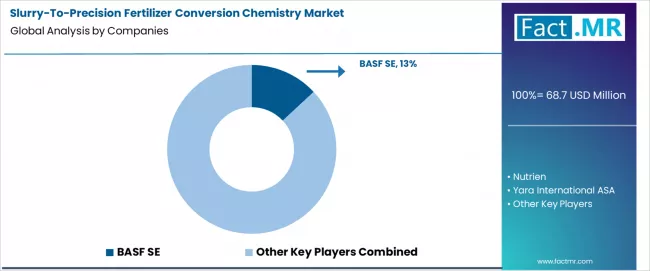
Slurry-to-precision fertilizer conversion chemistry market is projected to grow from USD 68.7 million in 2026 to USD 259.0 million by 2036, at a CAGR of 14.2%. Cereals will dominate with a 45.8% market share, while granular will lead the form segment with a 47.9% share.
Slurry-To-Precision Fertilizer Conversion Chemistry Market Forecast and Outlook 2026 to 2036
Projected to rise from USD 68.65 million in 2026 to USD 259.00 million by 2036, the global slurry-to-precision fertilizer conversion chemistry market is advancing at a significant CAGR of 14.2%.
This growth marks a fundamental evolution in nutrient management, transitioning livestock slurry from a waste product requiring disposal into a engineered, high-value input for precision agriculture. The market's expansion is fueled by the urgent global need to reconcile intensive livestock production with stringent environmental protection and sustainable farming practices.
Key Takeaways from the Slurry-To-Precision Fertilizer Conversion Chemistry Market
- Market Value for 2026: USD 68.65 Million
- Market Value for 2036: USD 259.00 Million
- Forecast CAGR (2026-2036): 14.2%
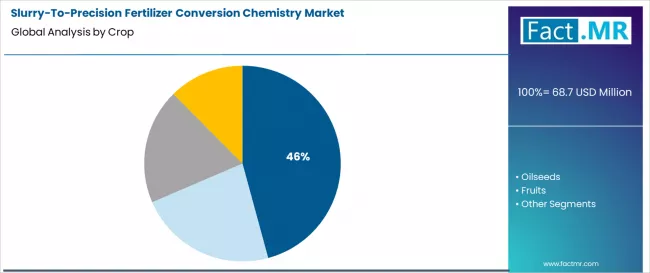
- Leading Crop Type Segment (2026): Cereals (46%)
- Leading Form Segment (2026): Granular (48%)
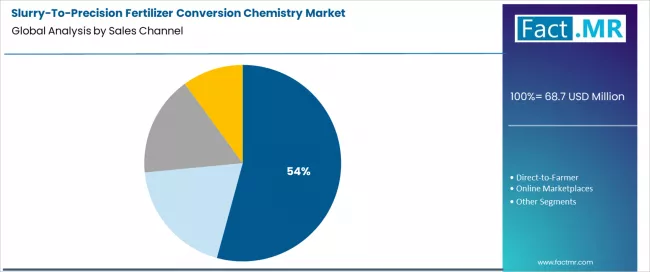
- Leading Sales Channel Segment (2026): Ag-Retailers (54%)
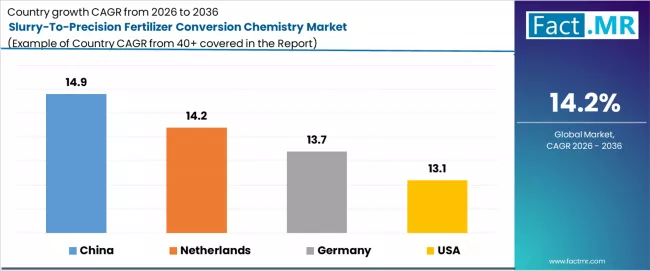
- Key Growth Countries: Netherlands (14.2% CAGR), China (14.9% CAGR), Germany (13.7% CAGR), USA (13.1% CAGR)
- Key Players in the Market: BASF SE, Nutrien, Yara International ASA, Veolia Environnement S.A., Suez, Kemira Oyj.

Conventional slurry application, often limited by season, odor, and nutrient runoff risks, is being redefined through advanced chemical conversion processes. These technologies stabilize nutrients, eliminate pathogens, and tailor the final product's nutrient ratio to match specific crop requirements. This shift addresses critical pressures: tightening regulatory caps on nitrogen and phosphorus emissions, rising costs of synthetic fertilizers, and growing farmer demand for reliable, sustainable soil health solutions.
The conversion process relies on specialized chemistries that transform raw slurry through precipitation, stripping, stabilization, and encapsulation. The resulting products range from enhanced organic liquids to granular fertilizers with controlled nutrient release profiles. This market sits at the intersection of circular economy principles and digital farming, offering a pathway to reduce agriculture's environmental footprint while improving farm economics and closing nutrient loops within regional food systems.
Metric
| Metric | Value |
|---|---|
| Market Value (2026) | USD 68.65 Million |
| Market Forecast Value (2036) | USD 259.00 Million |
| Forecast CAGR (2026-2036) | 14.2% |
Category
| Category | Segments |
|---|---|
| Crop Type | Cereals, Oilseeds, Fruits, Vegetables |
| Form | Granular, Liquid, Powder, Suspension |
| Sales Channel | Ag-Retailers, Direct-to-Farmer, Online Marketplaces, Cooperatives |
| Region | North America, Latin America, Western Europe, Eastern Europe, East Asia, South Asia & Pacific, Middle East & Africa |
Segmental Analysis
By Crop Type, Which Segment Demands the Largest Volume?

Cereals command a 46% market share. The vast scale of global cereal cultivation, including corn, wheat, and barley, creates immense demand for efficient nitrogen and phosphorus sources.
Converted slurry fertilizers, especially those formulated for gradual nutrient release, align perfectly with the long growing seasons and high nutrient uptake patterns of cereal crops. Their use helps reduce the carbon footprint of grain production while managing nutrient budgets on large-scale farms, making them a strategically important input.
By Form, Which Type Aligns Best with Mainstream Farming Practices?

Granular form holds the largest share at 48%. Its dominance is due to excellent handling, storage, and compatibility with existing broadacre spreading equipment. Granulation technology allows for the precise blending of converted nutrients with other minerals like potassium or sulfur, creating compound fertilizers tailored to specific soil tests. The dry, stable nature of granules also facilitates longer storage periods and transportation over greater distances compared to liquid organic fertilizers, expanding market reach.
By Sales Channel, How do Most Farmers Access These Products?

Ag-retailers are the leading channel, comprising 54% of the market. Farmers rely on local retailers for agronomic advice, soil testing services, and a trusted supply of inputs. For converted slurry fertilizers to gain acceptance, inclusion in the product portfolios of these established retailers is critical.
Retailers act as crucial intermediaries, educating farmers on the benefits and application protocols of these newer products and providing a local point of purchase and technical support.
What are the Drivers, Restraints, and Key Trends of the Slurry-To-Precision Fertilizer Conversion Chemistry Market?
The primary market driver is the escalating regulatory pressure on nutrient pollution. Policies like the EU’s Nitrates Directive and regional watershed management rules in North America and China are mandating advanced manure treatment. The volatility and high cost of synthetic fertilizer commodities further enhance the economic appeal of reliable, locally-sourced nutrient alternatives. Growing consumer and supply chain demand for sustainably produced food also pushes growers to adopt circular nutrient solutions.
A key market restraint is the significant capital investment required for on-farm or centralized conversion processing facilities. The technical complexity of the chemistry can also be a barrier for some livestock producers. Market education remains a challenge, as farmers must be convinced of the consistent quality, efficacy, and economic value of converted products compared to familiar synthetic options. Logistics for collecting and processing slurry from dispersed farms can also impact feasibility.
Key trends include the modularization of conversion units, allowing scalable solutions for individual large farms or cooperative hubs. There is a strong focus on digital integration, where conversion systems are linked to farm management software to produce custom nutrient blends based on historical yield maps and soil sensor data. The development of specialty products, such as high-value organic fertilizers for horticulture and vineyards from converted slurry, is creating premium market niches and improving overall profitability.
Analysis of the Slurry-To-Precision Fertilizer Conversion Chemistry Market by Key Countries

| Country | CAGR (2026-2036) |
|---|---|
| China | 14.9% |
| Netherlands | 14.2% |
| Germany | 13.7% |
| USA | 13.1% |
How is China's Policy Drive and Scale Influencing Rapid Growth?
A national Zero Growth in Synthetic Fertilizer policy and urgent mandates to treat the immense volumes of manure from its concentrated animal feeding operations propels China’s leading CAGR of 14.9%.
The government is actively investing in and subsidizing large-scale, regional slurry processing plants to curb water pollution and produce alternative fertilizers. This top-down push, combined with the vast scale of Chinese agriculture, creates a uniquely powerful and fast-growing market for conversion technologies and chemistries.
Why do the Netherlands' Extreme Regulations Create a Focused Market?
The Netherlands' 14.2% growth occurs within the EU's most stringent nitrogen and phosphorus application framework. Dutch farmers face legally binding nutrient quotas, making efficient reuse non-negotiable.
This environment drives innovation in high-efficiency conversion chemistry to extract maximum, storable nutrient value from every ton of slurry. The market is characterized by a demand for sophisticated, integrated systems that produce compliant, exportable fertilizer products from a tightly constrained nutrient base.
What is Germany's Role in Engineering and High-Value Agriculture?
Germany’s 13.7% CAGR reflects its engineering prowess and the high value placed on precision in its agricultural sector. German technology providers are leaders in developing advanced precipitation and stripping chemistries for nutrient recovery.
A strong market for organic produce and the presence of high-value crops like hops and specialty vegetables drive demand for premium, converted slurry-based fertilizers that meet stringent quality standards for organic or sustainable farming certifications.
How is the USA's Market Structure Shaping Adoption?

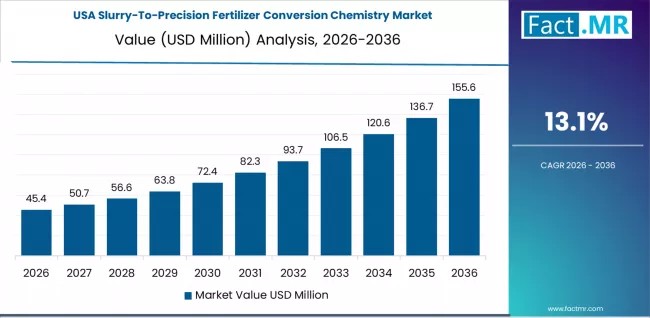
The USA’s 13.1% growth is shaped by its large-scale, economically-driven agriculture. Adoption is concentrated in regions with dense livestock populations and existing environmental pressures, such as the Chesapeake Bay watershed or the Midwest.
The business case in USA is built on reducing synthetic fertilizer costs, managing manure liabilities, and potentially accessing carbon or ecosystem service markets. Large cooperatives and vertically integrated livestock companies are often the early adopters, leveraging scale to justify investment in conversion technology.
Competitive Landscape of the Slurry-To-Precision Fertilizer Conversion Chemistry Market

The competitive environment features a convergence of global fertilizer companies, specialty chemical manufacturers, and environmental engineering firms. Competition is intensifying around proprietary chemical formulations for nutrient sequestration and product shaping, as well as the design of efficient and cost-effective process technology.
Strategic partnerships are common, with chemical companies partnering with equipment manufacturers to offer integrated solutions. Success depends on demonstrating clear agronomic efficacy, a positive return on investment for farmers and processors, and robust environmental performance data to meet regulatory and sustainability benchmarks.
Key Players in the Slurry-To-Precision Fertilizer Conversion Chemistry Market
- BASF SE
- Nutrien
- Yara International ASA
- Veolia Environnement S.A.
- Suez
- Kemira Oyj.
Scope of Report
| Items | Values |
|---|---|
| Quantitative Units | USD Million |
| Crop Type | Cereals, Oilseeds, Fruits, Vegetables |
| Form | Granular, Liquid, Powder, Suspension |
| Sales Channel | Ag-Retailers, Direct-to-Farmer, Online Marketplaces, Cooperatives |
| Key Countries | Netherlands, Germany, USA, China |
| Key Companies | BASF SE, Nutrien, Yara International ASA, Veolia Environnement S.A., Suez, Kemira Oyj. |
| Additional Analysis | Agronomic efficiency trials of converted products vs. synthetics; lifecycle assessment of conversion processes; analysis of nutrient bioavailability and release kinetics; economic models for on-farm vs. centralized processing; review of policy frameworks driving adoption; technology benchmarking of chemical precipitation, stripping, and encapsulation methods. |
Market by Segments
-
Crop Type :
- Cereals
- Oilseeds
- Fruits
- Vegetables
-
Form :
- Granular
- Liquid
- Powder
- Suspension
-
Sales Channel :
- Ag-Retailers
- Direct-to-Farmer
- Online Marketplaces
- Cooperatives
-
Region :
- North America
- USA
- Canada
- Latin America
- Brazil
- Mexico
- Argentina
- Rest of Latin America
- Western Europe
- Germany
- UK
- France
- Spain
- Italy
- Netherlands
- BENELUX
- Rest of Western Europe
- Eastern Europe
- Russia
- Poland
- Czech Republic
- Rest of Eastern Europe
- East Asia
- China
- Japan
- South Korea
- Rest of East Asia
- South Asia & Pacific
- India
- ASEAN
- Australia
- Rest of South Asia & Pacific
- MEA
- Saudi Arabia
- UAE
- Turkiye
- Rest of MEA
- North America
Table of Content
- Executive Summary
- Global Market Outlook
- Demand to side Trends
- Supply to side Trends
- Technology Roadmap Analysis
- Analysis and Recommendations
- Market Overview
- Market Coverage / Taxonomy
- Market Definition / Scope / Limitations
- Market Background
- Market Dynamics
- Drivers
- Restraints
- Opportunity
- Trends
- Scenario Forecast
- Demand in Optimistic Scenario
- Demand in Likely Scenario
- Demand in Conservative Scenario
- Opportunity Map Analysis
- Product Life Cycle Analysis
- Supply Chain Analysis
- Investment Feasibility Matrix
- Value Chain Analysis
- PESTLE and Porter’s Analysis
- Regulatory Landscape
- Regional Parent Market Outlook
- Production and Consumption Statistics
- Import and Export Statistics
- Market Dynamics
- Global Market Analysis 2021 to 2025 and Forecast, 2026 to 2036
- Historical Market Size Value (USD Million) Analysis, 2021 to 2025
- Current and Future Market Size Value (USD Million) Projections, 2026 to 2036
- Y to o to Y Growth Trend Analysis
- Absolute $ Opportunity Analysis
- Global Market Pricing Analysis 2021 to 2025 and Forecast 2026 to 2036
- Global Market Analysis 2021 to 2025 and Forecast 2026 to 2036, By Crop
- Introduction / Key Findings
- Historical Market Size Value (USD Million) Analysis By Crop, 2021 to 2025
- Current and Future Market Size Value (USD Million) Analysis and Forecast By Crop, 2026 to 2036
- Cereals
- Oilseeds
- Fruits
- Vegetables
- Cereals
- Y to o to Y Growth Trend Analysis By Crop, 2021 to 2025
- Absolute $ Opportunity Analysis By Crop, 2026 to 2036
- Global Market Analysis 2021 to 2025 and Forecast 2026 to 2036, By Form
- Introduction / Key Findings
- Historical Market Size Value (USD Million) Analysis By Form, 2021 to 2025
- Current and Future Market Size Value (USD Million) Analysis and Forecast By Form, 2026 to 2036
- Granular
- Liquid
- Powder
- Suspension
- Granular
- Y to o to Y Growth Trend Analysis By Form, 2021 to 2025
- Absolute $ Opportunity Analysis By Form, 2026 to 2036
- Global Market Analysis 2021 to 2025 and Forecast 2026 to 2036, By Sales Channel
- Introduction / Key Findings
- Historical Market Size Value (USD Million) Analysis By Sales Channel, 2021 to 2025
- Current and Future Market Size Value (USD Million) Analysis and Forecast By Sales Channel, 2026 to 2036
- Ag-Retailers
- Direct-to-Farmer
- Online Marketplaces
- Cooperatives
- Ag-Retailers
- Y to o to Y Growth Trend Analysis By Sales Channel, 2021 to 2025
- Absolute $ Opportunity Analysis By Sales Channel, 2026 to 2036
- Global Market Analysis 2021 to 2025 and Forecast 2026 to 2036, By Region
- Introduction
- Historical Market Size Value (USD Million) Analysis By Region, 2021 to 2025
- Current Market Size Value (USD Million) Analysis and Forecast By Region, 2026 to 2036
- North America
- Latin America
- Western Europe
- Eastern Europe
- East Asia
- South Asia and Pacific
- Middle East & Africa
- Market Attractiveness Analysis By Region
- North America Market Analysis 2021 to 2025 and Forecast 2026 to 2036, By Country
- Historical Market Size Value (USD Million) Trend Analysis By Market Taxonomy, 2021 to 2025
- Market Size Value (USD Million) Forecast By Market Taxonomy, 2026 to 2036
- By Country
- USA
- Canada
- Mexico
- By Crop
- By Form
- By Sales Channel
- By Country
- Market Attractiveness Analysis
- By Country
- By Crop
- By Form
- By Sales Channel
- Key Takeaways
- Latin America Market Analysis 2021 to 2025 and Forecast 2026 to 2036, By Country
- Historical Market Size Value (USD Million) Trend Analysis By Market Taxonomy, 2021 to 2025
- Market Size Value (USD Million) Forecast By Market Taxonomy, 2026 to 2036
- By Country
- Brazil
- Chile
- Rest of Latin America
- By Crop
- By Form
- By Sales Channel
- By Country
- Market Attractiveness Analysis
- By Country
- By Crop
- By Form
- By Sales Channel
- Key Takeaways
- Western Europe Market Analysis 2021 to 2025 and Forecast 2026 to 2036, By Country
- Historical Market Size Value (USD Million) Trend Analysis By Market Taxonomy, 2021 to 2025
- Market Size Value (USD Million) Forecast By Market Taxonomy, 2026 to 2036
- By Country
- Germany
- UK
- Italy
- Spain
- France
- Nordic
- BENELUX
- Rest of Western Europe
- By Crop
- By Form
- By Sales Channel
- By Country
- Market Attractiveness Analysis
- By Country
- By Crop
- By Form
- By Sales Channel
- Key Takeaways
- Eastern Europe Market Analysis 2021 to 2025 and Forecast 2026 to 2036, By Country
- Historical Market Size Value (USD Million) Trend Analysis By Market Taxonomy, 2021 to 2025
- Market Size Value (USD Million) Forecast By Market Taxonomy, 2026 to 2036
- By Country
- Russia
- Poland
- Hungary
- Balkan & Baltic
- Rest of Eastern Europe
- By Crop
- By Form
- By Sales Channel
- By Country
- Market Attractiveness Analysis
- By Country
- By Crop
- By Form
- By Sales Channel
- Key Takeaways
- East Asia Market Analysis 2021 to 2025 and Forecast 2026 to 2036, By Country
- Historical Market Size Value (USD Million) Trend Analysis By Market Taxonomy, 2021 to 2025
- Market Size Value (USD Million) Forecast By Market Taxonomy, 2026 to 2036
- By Country
- China
- Japan
- South Korea
- By Crop
- By Form
- By Sales Channel
- By Country
- Market Attractiveness Analysis
- By Country
- By Crop
- By Form
- By Sales Channel
- Key Takeaways
- South Asia and Pacific Market Analysis 2021 to 2025 and Forecast 2026 to 2036, By Country
- Historical Market Size Value (USD Million) Trend Analysis By Market Taxonomy, 2021 to 2025
- Market Size Value (USD Million) Forecast By Market Taxonomy, 2026 to 2036
- By Country
- India
- ASEAN
- Australia & New Zealand
- Rest of South Asia and Pacific
- By Crop
- By Form
- By Sales Channel
- By Country
- Market Attractiveness Analysis
- By Country
- By Crop
- By Form
- By Sales Channel
- Key Takeaways
- Middle East & Africa Market Analysis 2021 to 2025 and Forecast 2026 to 2036, By Country
- Historical Market Size Value (USD Million) Trend Analysis By Market Taxonomy, 2021 to 2025
- Market Size Value (USD Million) Forecast By Market Taxonomy, 2026 to 2036
- By Country
- Kingdom of Saudi Arabia
- Other GCC Countries
- Turkiye
- South Africa
- Other African Union
- Rest of Middle East & Africa
- By Crop
- By Form
- By Sales Channel
- By Country
- Market Attractiveness Analysis
- By Country
- By Crop
- By Form
- By Sales Channel
- Key Takeaways
- Key Countries Market Analysis
- USA
- Pricing Analysis
- Market Share Analysis, 2025
- By Crop
- By Form
- By Sales Channel
- Canada
- Pricing Analysis
- Market Share Analysis, 2025
- By Crop
- By Form
- By Sales Channel
- Mexico
- Pricing Analysis
- Market Share Analysis, 2025
- By Crop
- By Form
- By Sales Channel
- Brazil
- Pricing Analysis
- Market Share Analysis, 2025
- By Crop
- By Form
- By Sales Channel
- Chile
- Pricing Analysis
- Market Share Analysis, 2025
- By Crop
- By Form
- By Sales Channel
- Germany
- Pricing Analysis
- Market Share Analysis, 2025
- By Crop
- By Form
- By Sales Channel
- UK
- Pricing Analysis
- Market Share Analysis, 2025
- By Crop
- By Form
- By Sales Channel
- Italy
- Pricing Analysis
- Market Share Analysis, 2025
- By Crop
- By Form
- By Sales Channel
- Spain
- Pricing Analysis
- Market Share Analysis, 2025
- By Crop
- By Form
- By Sales Channel
- France
- Pricing Analysis
- Market Share Analysis, 2025
- By Crop
- By Form
- By Sales Channel
- India
- Pricing Analysis
- Market Share Analysis, 2025
- By Crop
- By Form
- By Sales Channel
- ASEAN
- Pricing Analysis
- Market Share Analysis, 2025
- By Crop
- By Form
- By Sales Channel
- Australia & New Zealand
- Pricing Analysis
- Market Share Analysis, 2025
- By Crop
- By Form
- By Sales Channel
- China
- Pricing Analysis
- Market Share Analysis, 2025
- By Crop
- By Form
- By Sales Channel
- Japan
- Pricing Analysis
- Market Share Analysis, 2025
- By Crop
- By Form
- By Sales Channel
- South Korea
- Pricing Analysis
- Market Share Analysis, 2025
- By Crop
- By Form
- By Sales Channel
- Russia
- Pricing Analysis
- Market Share Analysis, 2025
- By Crop
- By Form
- By Sales Channel
- Poland
- Pricing Analysis
- Market Share Analysis, 2025
- By Crop
- By Form
- By Sales Channel
- Hungary
- Pricing Analysis
- Market Share Analysis, 2025
- By Crop
- By Form
- By Sales Channel
- Kingdom of Saudi Arabia
- Pricing Analysis
- Market Share Analysis, 2025
- By Crop
- By Form
- By Sales Channel
- Turkiye
- Pricing Analysis
- Market Share Analysis, 2025
- By Crop
- By Form
- By Sales Channel
- South Africa
- Pricing Analysis
- Market Share Analysis, 2025
- By Crop
- By Form
- By Sales Channel
- USA
- Market Structure Analysis
- Competition Dashboard
- Competition Benchmarking
- Market Share Analysis of Top Players
- By Regional
- By Crop
- By Form
- By Sales Channel
- Competition Analysis
- Competition Deep Dive
- BASF SE
- Overview
- Product Portfolio
- Profitability by Market Segments (Product/Age /Sales Channel/Region)
- Sales Footprint
- Strategy Overview
- Marketing Strategy
- Product Strategy
- Channel Strategy
- Nutrien
- Yara International ASA
- Veolia Environnement S.A.
- Suez
- Kemira Oyj.
- BASF SE
- Competition Deep Dive
- Assumptions & Acronyms Used
- Research Methodology
List Of Table
- Table 1: Global Market Value (USD Million) Forecast by Region, 2021 to 2036
- Table 2: Global Market Value (USD Million) Forecast by Crop, 2021 to 2036
- Table 3: Global Market Value (USD Million) Forecast by Form, 2021 to 2036
- Table 4: Global Market Value (USD Million) Forecast by Sales Channel, 2021 to 2036
- Table 5: North America Market Value (USD Million) Forecast by Country, 2021 to 2036
- Table 6: North America Market Value (USD Million) Forecast by Crop, 2021 to 2036
- Table 7: North America Market Value (USD Million) Forecast by Form, 2021 to 2036
- Table 8: North America Market Value (USD Million) Forecast by Sales Channel, 2021 to 2036
- Table 9: Latin America Market Value (USD Million) Forecast by Country, 2021 to 2036
- Table 10: Latin America Market Value (USD Million) Forecast by Crop, 2021 to 2036
- Table 11: Latin America Market Value (USD Million) Forecast by Form, 2021 to 2036
- Table 12: Latin America Market Value (USD Million) Forecast by Sales Channel, 2021 to 2036
- Table 13: Western Europe Market Value (USD Million) Forecast by Country, 2021 to 2036
- Table 14: Western Europe Market Value (USD Million) Forecast by Crop, 2021 to 2036
- Table 15: Western Europe Market Value (USD Million) Forecast by Form, 2021 to 2036
- Table 16: Western Europe Market Value (USD Million) Forecast by Sales Channel, 2021 to 2036
- Table 17: Eastern Europe Market Value (USD Million) Forecast by Country, 2021 to 2036
- Table 18: Eastern Europe Market Value (USD Million) Forecast by Crop, 2021 to 2036
- Table 19: Eastern Europe Market Value (USD Million) Forecast by Form, 2021 to 2036
- Table 20: Eastern Europe Market Value (USD Million) Forecast by Sales Channel, 2021 to 2036
- Table 21: East Asia Market Value (USD Million) Forecast by Country, 2021 to 2036
- Table 22: East Asia Market Value (USD Million) Forecast by Crop, 2021 to 2036
- Table 23: East Asia Market Value (USD Million) Forecast by Form, 2021 to 2036
- Table 24: East Asia Market Value (USD Million) Forecast by Sales Channel, 2021 to 2036
- Table 25: South Asia and Pacific Market Value (USD Million) Forecast by Country, 2021 to 2036
- Table 26: South Asia and Pacific Market Value (USD Million) Forecast by Crop, 2021 to 2036
- Table 27: South Asia and Pacific Market Value (USD Million) Forecast by Form, 2021 to 2036
- Table 28: South Asia and Pacific Market Value (USD Million) Forecast by Sales Channel, 2021 to 2036
- Table 29: Middle East & Africa Market Value (USD Million) Forecast by Country, 2021 to 2036
- Table 30: Middle East & Africa Market Value (USD Million) Forecast by Crop, 2021 to 2036
- Table 31: Middle East & Africa Market Value (USD Million) Forecast by Form, 2021 to 2036
- Table 32: Middle East & Africa Market Value (USD Million) Forecast by Sales Channel, 2021 to 2036
List Of Figures
- Figure 1: Global Market Pricing Analysis
- Figure 2: Global Market Value (USD Million) Forecast 2021 to 2036
- Figure 3: Global Market Value Share and BPS Analysis by Crop, 2026 and 2036
- Figure 4: Global Market Y to o to Y Growth Comparison by Crop, 2026 to 2036
- Figure 5: Global Market Attractiveness Analysis by Crop
- Figure 6: Global Market Value Share and BPS Analysis by Form, 2026 and 2036
- Figure 7: Global Market Y to o to Y Growth Comparison by Form, 2026 to 2036
- Figure 8: Global Market Attractiveness Analysis by Form
- Figure 9: Global Market Value Share and BPS Analysis by Sales Channel, 2026 and 2036
- Figure 10: Global Market Y to o to Y Growth Comparison by Sales Channel, 2026 to 2036
- Figure 11: Global Market Attractiveness Analysis by Sales Channel
- Figure 12: Global Market Value (USD Million) Share and BPS Analysis by Region, 2026 and 2036
- Figure 13: Global Market Y to o to Y Growth Comparison by Region, 2026 to 2036
- Figure 14: Global Market Attractiveness Analysis by Region
- Figure 15: North America Market Incremental Dollar Opportunity, 2026 to 2036
- Figure 16: Latin America Market Incremental Dollar Opportunity, 2026 to 2036
- Figure 17: Western Europe Market Incremental Dollar Opportunity, 2026 to 2036
- Figure 18: Eastern Europe Market Incremental Dollar Opportunity, 2026 to 2036
- Figure 19: East Asia Market Incremental Dollar Opportunity, 2026 to 2036
- Figure 20: South Asia and Pacific Market Incremental Dollar Opportunity, 2026 to 2036
- Figure 21: Middle East & Africa Market Incremental Dollar Opportunity, 2026 to 2036
- Figure 22: North America Market Value Share and BPS Analysis by Country, 2026 and 2036
- Figure 23: North America Market Value Share and BPS Analysis by Crop, 2026 and 2036
- Figure 24: North America Market Y to o to Y Growth Comparison by Crop, 2026 to 2036
- Figure 25: North America Market Attractiveness Analysis by Crop
- Figure 26: North America Market Value Share and BPS Analysis by Form, 2026 and 2036
- Figure 27: North America Market Y to o to Y Growth Comparison by Form, 2026 to 2036
- Figure 28: North America Market Attractiveness Analysis by Form
- Figure 29: North America Market Value Share and BPS Analysis by Sales Channel, 2026 and 2036
- Figure 30: North America Market Y to o to Y Growth Comparison by Sales Channel, 2026 to 2036
- Figure 31: North America Market Attractiveness Analysis by Sales Channel
- Figure 32: Latin America Market Value Share and BPS Analysis by Country, 2026 and 2036
- Figure 33: Latin America Market Value Share and BPS Analysis by Crop, 2026 and 2036
- Figure 34: Latin America Market Y to o to Y Growth Comparison by Crop, 2026 to 2036
- Figure 35: Latin America Market Attractiveness Analysis by Crop
- Figure 36: Latin America Market Value Share and BPS Analysis by Form, 2026 and 2036
- Figure 37: Latin America Market Y to o to Y Growth Comparison by Form, 2026 to 2036
- Figure 38: Latin America Market Attractiveness Analysis by Form
- Figure 39: Latin America Market Value Share and BPS Analysis by Sales Channel, 2026 and 2036
- Figure 40: Latin America Market Y to o to Y Growth Comparison by Sales Channel, 2026 to 2036
- Figure 41: Latin America Market Attractiveness Analysis by Sales Channel
- Figure 42: Western Europe Market Value Share and BPS Analysis by Country, 2026 and 2036
- Figure 43: Western Europe Market Value Share and BPS Analysis by Crop, 2026 and 2036
- Figure 44: Western Europe Market Y to o to Y Growth Comparison by Crop, 2026 to 2036
- Figure 45: Western Europe Market Attractiveness Analysis by Crop
- Figure 46: Western Europe Market Value Share and BPS Analysis by Form, 2026 and 2036
- Figure 47: Western Europe Market Y to o to Y Growth Comparison by Form, 2026 to 2036
- Figure 48: Western Europe Market Attractiveness Analysis by Form
- Figure 49: Western Europe Market Value Share and BPS Analysis by Sales Channel, 2026 and 2036
- Figure 50: Western Europe Market Y to o to Y Growth Comparison by Sales Channel, 2026 to 2036
- Figure 51: Western Europe Market Attractiveness Analysis by Sales Channel
- Figure 52: Eastern Europe Market Value Share and BPS Analysis by Country, 2026 and 2036
- Figure 53: Eastern Europe Market Value Share and BPS Analysis by Crop, 2026 and 2036
- Figure 54: Eastern Europe Market Y to o to Y Growth Comparison by Crop, 2026 to 2036
- Figure 55: Eastern Europe Market Attractiveness Analysis by Crop
- Figure 56: Eastern Europe Market Value Share and BPS Analysis by Form, 2026 and 2036
- Figure 57: Eastern Europe Market Y to o to Y Growth Comparison by Form, 2026 to 2036
- Figure 58: Eastern Europe Market Attractiveness Analysis by Form
- Figure 59: Eastern Europe Market Value Share and BPS Analysis by Sales Channel, 2026 and 2036
- Figure 60: Eastern Europe Market Y to o to Y Growth Comparison by Sales Channel, 2026 to 2036
- Figure 61: Eastern Europe Market Attractiveness Analysis by Sales Channel
- Figure 62: East Asia Market Value Share and BPS Analysis by Country, 2026 and 2036
- Figure 63: East Asia Market Value Share and BPS Analysis by Crop, 2026 and 2036
- Figure 64: East Asia Market Y to o to Y Growth Comparison by Crop, 2026 to 2036
- Figure 65: East Asia Market Attractiveness Analysis by Crop
- Figure 66: East Asia Market Value Share and BPS Analysis by Form, 2026 and 2036
- Figure 67: East Asia Market Y to o to Y Growth Comparison by Form, 2026 to 2036
- Figure 68: East Asia Market Attractiveness Analysis by Form
- Figure 69: East Asia Market Value Share and BPS Analysis by Sales Channel, 2026 and 2036
- Figure 70: East Asia Market Y to o to Y Growth Comparison by Sales Channel, 2026 to 2036
- Figure 71: East Asia Market Attractiveness Analysis by Sales Channel
- Figure 72: South Asia and Pacific Market Value Share and BPS Analysis by Country, 2026 and 2036
- Figure 73: South Asia and Pacific Market Value Share and BPS Analysis by Crop, 2026 and 2036
- Figure 74: South Asia and Pacific Market Y to o to Y Growth Comparison by Crop, 2026 to 2036
- Figure 75: South Asia and Pacific Market Attractiveness Analysis by Crop
- Figure 76: South Asia and Pacific Market Value Share and BPS Analysis by Form, 2026 and 2036
- Figure 77: South Asia and Pacific Market Y to o to Y Growth Comparison by Form, 2026 to 2036
- Figure 78: South Asia and Pacific Market Attractiveness Analysis by Form
- Figure 79: South Asia and Pacific Market Value Share and BPS Analysis by Sales Channel, 2026 and 2036
- Figure 80: South Asia and Pacific Market Y to o to Y Growth Comparison by Sales Channel, 2026 to 2036
- Figure 81: South Asia and Pacific Market Attractiveness Analysis by Sales Channel
- Figure 82: Middle East & Africa Market Value Share and BPS Analysis by Country, 2026 and 2036
- Figure 83: Middle East & Africa Market Value Share and BPS Analysis by Crop, 2026 and 2036
- Figure 84: Middle East & Africa Market Y to o to Y Growth Comparison by Crop, 2026 to 2036
- Figure 85: Middle East & Africa Market Attractiveness Analysis by Crop
- Figure 86: Middle East & Africa Market Value Share and BPS Analysis by Form, 2026 and 2036
- Figure 87: Middle East & Africa Market Y to o to Y Growth Comparison by Form, 2026 to 2036
- Figure 88: Middle East & Africa Market Attractiveness Analysis by Form
- Figure 89: Middle East & Africa Market Value Share and BPS Analysis by Sales Channel, 2026 and 2036
- Figure 90: Middle East & Africa Market Y to o to Y Growth Comparison by Sales Channel, 2026 to 2036
- Figure 91: Middle East & Africa Market Attractiveness Analysis by Sales Channel
- Figure 92: Global Market - Tier Structure Analysis
- Figure 93: Global Market - Company Share Analysis
- FAQs -
How big is the slurry-to-precision fertilizer conversion chemistry market in 2026?
The global slurry-to-precision fertilizer conversion chemistry market is estimated to be valued at USD 68.7 million in 2026.
What will be the size of slurry-to-precision fertilizer conversion chemistry market in 2036?
The market size for the slurry-to-precision fertilizer conversion chemistry market is projected to reach USD 259.0 million by 2036.
How much will be the slurry-to-precision fertilizer conversion chemistry market growth between 2026 and 2036?
The slurry-to-precision fertilizer conversion chemistry market is expected to grow at a 14.2% CAGR between 2026 and 2036.
What are the key product types in the slurry-to-precision fertilizer conversion chemistry market?
The key product types in slurry-to-precision fertilizer conversion chemistry market are cereals, oilseeds, fruits and vegetables.
Which form segment to contribute significant share in the slurry-to-precision fertilizer conversion chemistry market in 2026?
In terms of form, granular segment to command 47.9% share in the slurry-to-precision fertilizer conversion chemistry market in 2026.