Smart Card Market
Smart Card Market Size and Share Forecast Outlook 2026 to 2036
Smart card market is projected to grow from USD 12.4 billion in 2026 to USD 23.7 billion by 2036, at a CAGR of 6.7%. Contact Smart Cards will dominate with a 56.8% market share, while financial services will lead the application sector segment with a 47.2% share.
Smart Card Market Forecast and Outlook 2026 to 2036
The global smart card market is valued at USD 12.4 billion in 2026 and is set to reach USD 23.7 billion by 2036, recording an absolute increase of USD 11.3 billion over the forecast period. This translates into a total growth of 91.1%, with the market forecast to expand at a compound annual growth rate (CAGR) of 6.7% between 2026 and 2036.
Key Takeaways from the Smart Card Market
- Smart Card Market Value (2026): USD 12.4 billion
- Smart Card Market Forecast Value (2036): USD 23.7 billion
- Smart Card Market Forecast CAGR: 6.7%
- Leading Card Type in Smart Card Market: Contact Smart Cards (56.8%)
- Key Growth Regions in Smart Card Market: North America, Europe, Asia Pacific
- Key Players in Smart Card Market: Gemalto NV, Giesecke+Devrient GmbH, IDEMIA, Oberthur Technologies, CardLogix Corporation
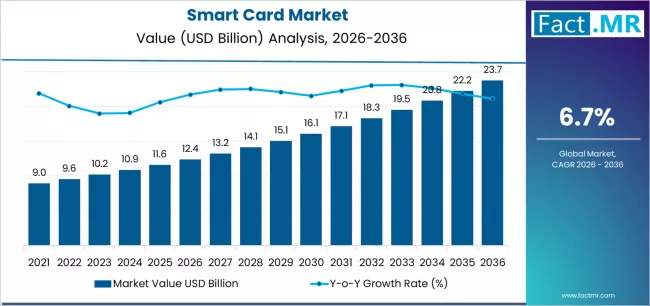
The market will grow 1.9X during the same period, supported by increasing demand for secure payment solutions across retail environments, financial institutions, and e-commerce platforms, growing regulatory focus on data protection capabilities, and rising requirements for enhanced authentication infrastructure across banking, telecommunications, and transportation applications.
The contact smart card segment is set to register 56.8% of the smart card market in 2026. Contact smart cards enable financial operators to deliver secure transaction processing with superior chip-based authentication and real-time verification capabilities across multiple payment environments, providing enhanced fraud protection for retail and banking surveillance applications.
Financial services applications are projected to register 47.2% of the smart card market in 2026. Smart cards in financial environments enable enhanced payment processing, transaction security coordination, and account management processes that are essential for banking facilities, retail establishments, and financial institutions. These systems provide the authentication mechanisms necessary for payment infrastructure to operate reliably in demanding financial applications while maintaining consistent verification performance and real-time processing capabilities.
Smart Card Market Key Takeaways
| Metric | Value |
|---|---|
| Estimated Value in (2026E) | USD 12.4 billion |
| Forecast Value in (2036F) | USD 23.7 billion |
| Forecast CAGR (2026 to 2036) | 6.7% |
Category
| Category | Segments |
|---|---|
| Card Type | Contact Smart Cards; Contactless Smart Cards; Dual-Interface Smart Cards; Hybrid Smart Cards; Other Card Configurations |
| Application Sector | Financial Services; Telecommunications; Government and Healthcare; Transportation; Others |
| Technology Standard | EMV; ISO/IEC 14443; ISO/IEC 7816; Java Card; Other Standard Platforms |
| Deployment Method | Card Issuance; System Integration; Application Development; Other Deployment Services |
| Region | North America; Europe; Asia Pacific; Latin America; Middle East & Africa |
Segmental Analysis
By Card Type, Which Segment Holds the Dominant Market Share?
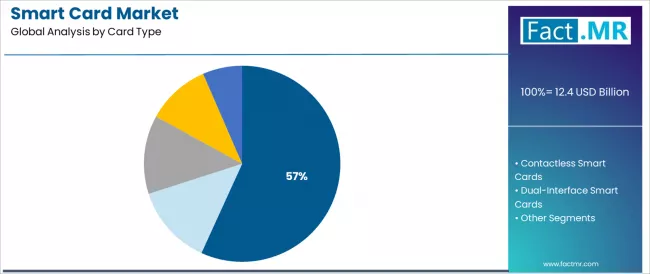
The contact smart card segment is projected to account for 56.8% of the smart card market in 2026, maintaining its position as the leading card technology. Financial institutions and payment operators continue to rely on contact smart cards due to their established chip-based authentication, standardized security protocols, and broad compatibility across payment infrastructures.
These cards deliver consistent transaction security and reliable authentication accuracy, making them suitable for high-volume financial environments. Their long-standing presence and proven operational performance reinforce adoption across banking, government, and enterprise payment systems, where stability, compliance, and security assurance remain primary decision-making factors.
- Strong institutional reliance on standardized chip authentication supports continued dominance
- Proven interoperability and security reliability sustain widespread deployment across payment systems
By Application Sector, Which Segment Registers the Highest Share?
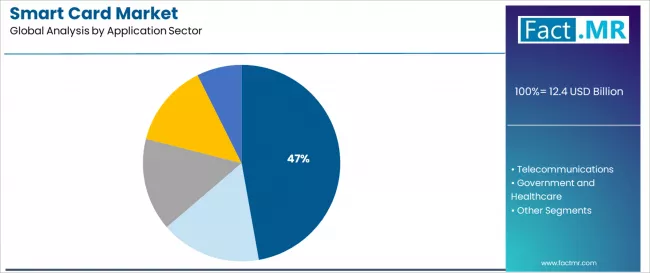
Financial services applications are projected to represent 47.2% of the smart card market in 2026, making them the largest application segment. Banks, payment processors, and financial institutions favor smart cards for secure transaction execution, identity verification, and fraud mitigation across diverse payment channels.
The segment benefits from consistent transaction volumes, regulatory requirements, and mature authentication standards that support secure financial operations. Continuous upgrades in payment infrastructure and card security frameworks further reinforce adoption. As financial institutions prioritize secure, scalable, and compliant payment solutions, financial services remain the primary driver of smart card deployment.
- High transaction volumes and regulatory compliance sustain demand within financial services
- Ongoing payment infrastructure upgrades reinforce long-term smart card adoption
What are the Drivers, Restraints, and Key Trends of the Smart Card Market?
The smart card market is growing steadily due to rising emphasis on payment security, regulatory compliance, and demand for secure chip-based authentication across financial and identification applications. Smart cards support reliable transaction processing and data protection in banking, government services, and access control systems. However, market expansion faces restraints from increasing competition posed by mobile payments and digital wallets, high implementation and infrastructure upgrade costs, and technical integration challenges with legacy payment systems.
A major trend shaping the market is the expansion of contactless payment and mobile integration. Contactless smart cards improve transaction speed, reduce physical contact, and align with consumer preferences for convenience and efficiency. Integration with mobile wallets is further strengthening adoption across retail and transit ecosystems.
Another key trend is the integration of advanced biometric and security technologies. Manufacturers are incorporating fingerprint authentication, real-time identity verification, and intelligent security frameworks to enhance fraud prevention, support digital identity programs, and extend smart card functionality beyond traditional payment use cases.
Analysis of the Smart Card Market by Key Countries
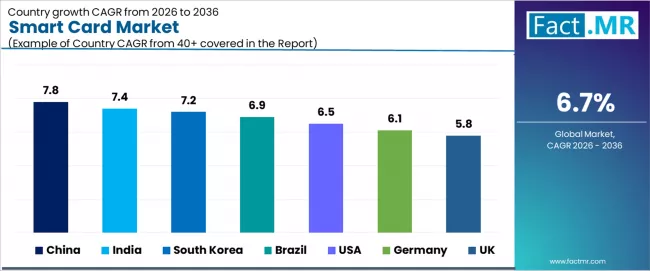
| Country | CAGR (2026-2036) |
|---|---|
| China | 7.8% |
| India | 7.4% |
| Germany | 6.1% |
| Brazil | 6.9% |
| USA | 6.5% |
| UK | 5.8% |
| South Korea | 7.2% |
Why does China Lead Global Market Growth?
The smart card market in China is projected to grow at a CAGR of 7.8% through 2036, driven by rapid expansion of digital payments, financial modernization policies, and widespread adoption of advanced authentication technologies. China’s position as a global technology hub and strong push toward cashless transactions are sustaining high demand across banking, government, and public services. Domestic manufacturers and international suppliers are expanding authentication capabilities and distribution networks to support rising domestic usage and export demand.
- Expanding digital payment ecosystems are sustaining smart card adoption across urban financial systems.
- Infrastructure investment and cashless initiatives support continued demand for advanced authentication cards.
Why Does India Demonstrate Strong Market Potential?
The smart card market in India is expected to grow at a CAGR of 7.4%, supported by financial inclusion programs, expanding digital payment infrastructure, and rising adoption of authentication technologies. Growth in banking access, government-led digitization initiatives, and mobile payment integration is increasing demand for smart cards across public and private sectors. Domestic and international payment solution providers are strengthening operational networks to meet demand for secure, scalable card-based systems.
- Financial inclusion initiatives are expanding smart card usage across institutional and consumer applications.
- Growth in digital payment awareness supports steady adoption of authentication-focused card solutions.
Why Does South Korea Demonstrate Considerable Expansion?
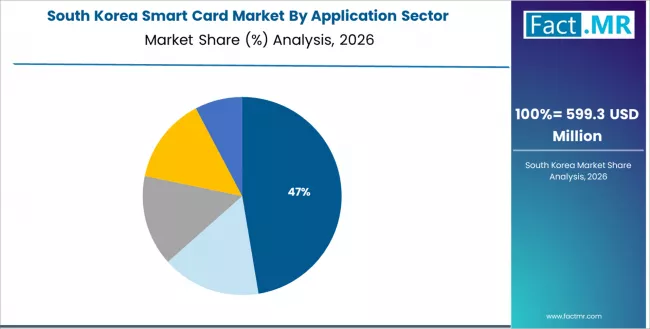
The smart card market in South Korea is projected to grow at a CAGR of 7.2% through 2036, driven by advanced payment infrastructure, strong regulatory frameworks, and leadership in technology adoption. High standards for transaction security and authentication precision support consistent demand across banking, transit, and digital services. Payment manufacturers and distributors continue to align offerings with domestic requirements and regional market opportunities.
- Advanced digital infrastructure sustains demand for high-performance smart card systems.
- Regulatory focus on transaction reliability supports continued adoption of secure card technologies.
Why Does Brazil Show Significant Growth?
The smart card market in Brazil is forecast to grow at a CAGR of 6.9% through 2036, supported by payment system modernization and financial infrastructure development. Expansion of electronic banking, government programs, and commercial payment networks is driving demand for secure card-based solutions. Brazil’s role as a regional financial hub is encouraging adoption of authentication technologies across institutional and retail payment applications.
- Growth in electronic payments is driving smart card adoption across financial institutions.
- Focus on payment efficiency supports demand for standardized authentication card systems.
What Factors Underpin USA’s Smart Card Market Growth?
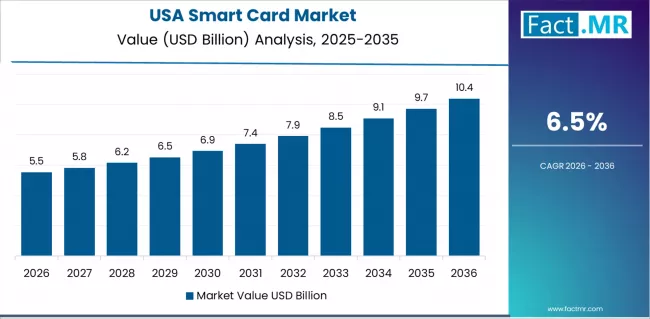
The smart card market in USA is projected to expand at a CAGR of 6.5% through 2036, driven by ongoing investment in payment security, authentication optimization, and advanced financial system integration. Financial institutions prioritize transaction accuracy and reliability, sustaining demand for secure smart card solutions across banking, identification, and access control applications. Technology providers continue to support adoption through system upgrades and integration services.
- Emphasis on secure payment infrastructure supports consistent smart card demand.
- Advanced authentication requirements reinforce adoption across financial and institutional applications.
Why Does Germany Show Steady Growth?
The smart card market in Germany is expected to grow at a CAGR of 6.1% through 2036, supported by established payment standards and emphasis on authentication efficiency. Demand remains steady across banking, telecommunications, and institutional services, where transaction consistency and security are prioritized. Mature financial infrastructure continues to support adoption of premium card solutions.
- Strong quality standards sustain demand for reliable smart card technologies.
- Emphasis on authentication efficiency supports adoption across institutional payment systems.
Why Does the UK Show Strong Growth?
The smart card market in the UK is projected to grow at a CAGR of 5.8% through 2036, driven by focus on payment precision, authentication reliability, and technology integration. Financial institutions continue to invest in secure transaction systems to support digital banking and contactless payments. Suppliers are aligning offerings with domestic compliance and performance requirements.
- Growth in contactless and digital payments supports smart card adoption.
- Emphasis on authentication precision sustains demand across financial applications.
Competitive Landscape of the Smart Card Market
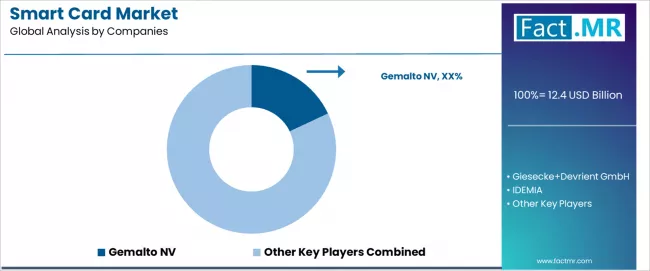
The smart card market is characterized by competition among established payment technology companies, specialized card manufacturers, and integrated authentication solution providers.
Companies are investing in advanced card technologies, specialized payment platforms, product innovation capabilities, and comprehensive distribution networks to deliver consistent, high-quality, and reliable smart card systems. Innovation in chip processing, transaction security, and payment-focused product development is central to strengthening market position and customer satisfaction.
Gemalto NV emphasizes on security innovation and comprehensive authentication solutions, offering institutional and commercial systems with emphasis on performance excellence and payment heritage. Giesecke+Devrient GmbH provides integrated payment automation with a focus on financial market applications and precision authentication networks.
IDEMIA delivers comprehensive security technology solutions with a focus on commercial positioning and authentication efficiency. Oberthur Technologies specializes in comprehensive card technologies with an emphasis on payment applications. CardLogix Corporation focuses on comprehensive smart card equipment with advanced design and premium positioning capabilities.
Key Players in the Smart Card Market
- Gemalto NV
- Giesecke+Devrient GmbH
- IDEMIA
- Oberthur Technologies
- CardLogix Corporation
- Infineon Technologies AG
- NXP Semiconductors
- STMicroelectronics
- Valid S.A.
- Watchdata Co. Ltd.
- CPI Card Group Inc.
- American Banknote Corporation
- Paragon ID SA
- Eastcompeace Technology Co. Ltd.
Scope of the Report
| Items | Values |
|---|---|
| Quantitative Units (2026) | USD 12.4 Billion |
| Card Type | Contact Smart Cards, Contactless Smart Cards, Dual-Interface Smart Cards, Hybrid Smart Cards, Other Card Configurations |
| Application Sector | Financial Services, Telecommunications, Government and Healthcare, Transportation, Others |
| Technology Standard | EMV, ISO/IEC 14443, ISO/IEC 7816, Java Card, Other Standard Platforms |
| Deployment Method | Card Issuance, System Integration, Application Development, Other Deployment Services |
| Regions Covered | North America, Europe, Asia Pacific, Latin America, MEA, Other Regions |
| Countries Covered | China, India, Germany, Brazil, USA, UK, South Korea, and 40+ countries |
| Key Companies Profiled | Gemalto NV, Giesecke+Devrient GmbH, IDEMIA, Oberthur Technologies, CardLogix Corporation, and other leading smart card companies |
| Additional Attributes | Dollar sales by card type, application sector, technology standard, deployment method, and region; regional demand trends, competitive landscape, technological advancements in card engineering, payment performance optimization initiatives, authentication enhancement programs, and premium product development strategies |
Smart Card Market by Segments
-
Card Type :
- Contact Smart Cards
- Contactless Smart Cards
- Dual-Interface Smart Cards
- Hybrid Smart Cards
- Other Card Configurations
-
Application Sector :
- Financial Services
- Telecommunications
- Government and Healthcare
- Transportation
- Others
-
Technology Standard :
- EMV
- ISO/IEC 14443
- ISO/IEC 7816
- Java Card
- Other Standard Platforms
-
Deployment Method :
- Card Issuance
- System Integration
- Application Development
- Other Deployment Services
-
Region :
-
North America
- USA
- Canada
- Mexico
-
Europe
- Germany
- UK
- France
- Italy
- Spain
- Nordic Countries
- BENELUX
- Rest of Europe
-
Asia Pacific
- China
- India
- Japan
- South Korea
- Australia
- Rest of Asia Pacific
-
Latin America
- Brazil
- Argentina
- Rest of Latin America
-
MEA
- Saudi Arabia
- UAE
- South Africa
- Rest of MEA
-
Table of Content
- Executive Summary
- Global Market Outlook
- Demand to side Trends
- Supply to side Trends
- Technology Roadmap Analysis
- Analysis and Recommendations
- Market Overview
- Market Coverage / Taxonomy
- Market Definition / Scope / Limitations
- Market Background
- Market Dynamics
- Drivers
- Restraints
- Opportunity
- Trends
- Scenario Forecast
- Demand in Optimistic Scenario
- Demand in Likely Scenario
- Demand in Conservative Scenario
- Opportunity Map Analysis
- Product Life Cycle Analysis
- Supply Chain Analysis
- Investment Feasibility Matrix
- Value Chain Analysis
- PESTLE and Porter’s Analysis
- Regulatory Landscape
- Regional Parent Market Outlook
- Production and Consumption Statistics
- Import and Export Statistics
- Market Dynamics
- Global Market Analysis 2021 to 2025 and Forecast, 2026 to 2036
- Historical Market Size Value (USD Million) Analysis, 2021 to 2025
- Current and Future Market Size Value (USD Million) Projections, 2026 to 2036
- Y to o to Y Growth Trend Analysis
- Absolute $ Opportunity Analysis
- Global Market Pricing Analysis 2021 to 2025 and Forecast 2026 to 2036
- Global Market Analysis 2021 to 2025 and Forecast 2026 to 2036, By Card Type
- Introduction / Key Findings
- Historical Market Size Value (USD Million) Analysis By Card Type, 2021 to 2025
- Current and Future Market Size Value (USD Million) Analysis and Forecast By Card Type, 2026 to 2036
- Contact Smart Cards
- Contactless Smart Cards
- Dual-Interface Smart Cards
- Hybrid Smart Cards
- Other Card Configurations
- Y to o to Y Growth Trend Analysis By Card Type, 2021 to 2025
- Absolute $ Opportunity Analysis By Card Type, 2026 to 2036
- Global Market Analysis 2021 to 2025 and Forecast 2026 to 2036, By Application Sector
- Introduction / Key Findings
- Historical Market Size Value (USD Million) Analysis By Application Sector, 2021 to 2025
- Current and Future Market Size Value (USD Million) Analysis and Forecast By Application Sector, 2026 to 2036
- Financial Services
- Telecommunications
- Government and Healthcare
- Transportation
- Others
- Y to o to Y Growth Trend Analysis By Application Sector, 2021 to 2025
- Absolute $ Opportunity Analysis By Application Sector, 2026 to 2036
- Global Market Analysis 2021 to 2025 and Forecast 2026 to 2036, By Region
- Introduction
- Historical Market Size Value (USD Million) Analysis By Region, 2021 to 2025
- Current Market Size Value (USD Million) Analysis and Forecast By Region, 2026 to 2036
- North America
- Latin America
- Western Europe
- Eastern Europe
- East Asia
- South Asia and Pacific
- Middle East & Africa
- Market Attractiveness Analysis By Region
- North America Market Analysis 2021 to 2025 and Forecast 2026 to 2036, By Country
- Historical Market Size Value (USD Million) Trend Analysis By Market Taxonomy, 2021 to 2025
- Market Size Value (USD Million) Forecast By Market Taxonomy, 2026 to 2036
- By Country
- USA
- Canada
- Mexico
- By Card Type
- By Application Sector
- By Country
- Market Attractiveness Analysis
- By Country
- By Card Type
- By Application Sector
- Key Takeaways
- Latin America Market Analysis 2021 to 2025 and Forecast 2026 to 2036, By Country
- Historical Market Size Value (USD Million) Trend Analysis By Market Taxonomy, 2021 to 2025
- Market Size Value (USD Million) Forecast By Market Taxonomy, 2026 to 2036
- By Country
- Brazil
- Chile
- Rest of Latin America
- By Card Type
- By Application Sector
- By Country
- Market Attractiveness Analysis
- By Country
- By Card Type
- By Application Sector
- Key Takeaways
- Western Europe Market Analysis 2021 to 2025 and Forecast 2026 to 2036, By Country
- Historical Market Size Value (USD Million) Trend Analysis By Market Taxonomy, 2021 to 2025
- Market Size Value (USD Million) Forecast By Market Taxonomy, 2026 to 2036
- By Country
- Germany
- UK
- Italy
- Spain
- France
- Nordic
- BENELUX
- Rest of Western Europe
- By Card Type
- By Application Sector
- By Country
- Market Attractiveness Analysis
- By Country
- By Card Type
- By Application Sector
- Key Takeaways
- Eastern Europe Market Analysis 2021 to 2025 and Forecast 2026 to 2036, By Country
- Historical Market Size Value (USD Million) Trend Analysis By Market Taxonomy, 2021 to 2025
- Market Size Value (USD Million) Forecast By Market Taxonomy, 2026 to 2036
- By Country
- Russia
- Poland
- Hungary
- Balkan & Baltic
- Rest of Eastern Europe
- By Card Type
- By Application Sector
- By Country
- Market Attractiveness Analysis
- By Country
- By Card Type
- By Application Sector
- Key Takeaways
- East Asia Market Analysis 2021 to 2025 and Forecast 2026 to 2036, By Country
- Historical Market Size Value (USD Million) Trend Analysis By Market Taxonomy, 2021 to 2025
- Market Size Value (USD Million) Forecast By Market Taxonomy, 2026 to 2036
- By Country
- China
- Japan
- South Korea
- By Card Type
- By Application Sector
- By Country
- Market Attractiveness Analysis
- By Country
- By Card Type
- By Application Sector
- Key Takeaways
- South Asia and Pacific Market Analysis 2021 to 2025 and Forecast 2026 to 2036, By Country
- Historical Market Size Value (USD Million) Trend Analysis By Market Taxonomy, 2021 to 2025
- Market Size Value (USD Million) Forecast By Market Taxonomy, 2026 to 2036
- By Country
- India
- ASEAN
- Australia & New Zealand
- Rest of South Asia and Pacific
- By Card Type
- By Application Sector
- By Country
- Market Attractiveness Analysis
- By Country
- By Card Type
- By Application Sector
- Key Takeaways
- Middle East & Africa Market Analysis 2021 to 2025 and Forecast 2026 to 2036, By Country
- Historical Market Size Value (USD Million) Trend Analysis By Market Taxonomy, 2021 to 2025
- Market Size Value (USD Million) Forecast By Market Taxonomy, 2026 to 2036
- By Country
- Kingdom of Saudi Arabia
- Other GCC Countries
- Turkiye
- South Africa
- Other African Union
- Rest of Middle East & Africa
- By Card Type
- By Application Sector
- By Country
- Market Attractiveness Analysis
- By Country
- By Card Type
- By Application Sector
- Key Takeaways
- Key Countries Market Analysis
- USA
- Pricing Analysis
- Market Share Analysis, 2025
- By Card Type
- By Application Sector
- Canada
- Pricing Analysis
- Market Share Analysis, 2025
- By Card Type
- By Application Sector
- Mexico
- Pricing Analysis
- Market Share Analysis, 2025
- By Card Type
- By Application Sector
- Brazil
- Pricing Analysis
- Market Share Analysis, 2025
- By Card Type
- By Application Sector
- Chile
- Pricing Analysis
- Market Share Analysis, 2025
- By Card Type
- By Application Sector
- Germany
- Pricing Analysis
- Market Share Analysis, 2025
- By Card Type
- By Application Sector
- UK
- Pricing Analysis
- Market Share Analysis, 2025
- By Card Type
- By Application Sector
- Italy
- Pricing Analysis
- Market Share Analysis, 2025
- By Card Type
- By Application Sector
- Spain
- Pricing Analysis
- Market Share Analysis, 2025
- By Card Type
- By Application Sector
- France
- Pricing Analysis
- Market Share Analysis, 2025
- By Card Type
- By Application Sector
- India
- Pricing Analysis
- Market Share Analysis, 2025
- By Card Type
- By Application Sector
- ASEAN
- Pricing Analysis
- Market Share Analysis, 2025
- By Card Type
- By Application Sector
- Australia & New Zealand
- Pricing Analysis
- Market Share Analysis, 2025
- By Card Type
- By Application Sector
- China
- Pricing Analysis
- Market Share Analysis, 2025
- By Card Type
- By Application Sector
- Japan
- Pricing Analysis
- Market Share Analysis, 2025
- By Card Type
- By Application Sector
- South Korea
- Pricing Analysis
- Market Share Analysis, 2025
- By Card Type
- By Application Sector
- Russia
- Pricing Analysis
- Market Share Analysis, 2025
- By Card Type
- By Application Sector
- Poland
- Pricing Analysis
- Market Share Analysis, 2025
- By Card Type
- By Application Sector
- Hungary
- Pricing Analysis
- Market Share Analysis, 2025
- By Card Type
- By Application Sector
- Kingdom of Saudi Arabia
- Pricing Analysis
- Market Share Analysis, 2025
- By Card Type
- By Application Sector
- Turkiye
- Pricing Analysis
- Market Share Analysis, 2025
- By Card Type
- By Application Sector
- South Africa
- Pricing Analysis
- Market Share Analysis, 2025
- By Card Type
- By Application Sector
- USA
- Market Structure Analysis
- Competition Dashboard
- Competition Benchmarking
- Market Share Analysis of Top Players
- By Regional
- By Card Type
- By Application Sector
- Competition Analysis
- Competition Deep Dive
- Gemalto NV
- Overview
- Product Portfolio
- Profitability by Market Segments (Product/Age /Sales Channel/Region)
- Sales Footprint
- Strategy Overview
- Marketing Strategy
- Product Strategy
- Channel Strategy
- Giesecke+Devrient GmbH
- IDEMIA
- Oberthur Technologies
- CardLogix Corporation
- Infineon Technologies AG
- NXP Semiconductors
- STMicroelectronics
- Valid S.A.
- Watchdata Co. Ltd.
- CPI Card Group Inc.
- American Banknote Corporation
- Paragon ID SA
- Eastcompeace Technology Co. Ltd.
- Gemalto NV
- Competition Deep Dive
- Assumptions & Acronyms Used
- Research Methodology
List Of Table
- Table 1: Global Market Value (USD Million) Forecast by Region, 2021 to 2036
- Table 2: Global Market Value (USD Million) Forecast by Card Type, 2021 to 2036
- Table 3: Global Market Value (USD Million) Forecast by Application Sector, 2021 to 2036
- Table 4: North America Market Value (USD Million) Forecast by Country, 2021 to 2036
- Table 5: North America Market Value (USD Million) Forecast by Card Type, 2021 to 2036
- Table 6: North America Market Value (USD Million) Forecast by Application Sector, 2021 to 2036
- Table 7: Latin America Market Value (USD Million) Forecast by Country, 2021 to 2036
- Table 8: Latin America Market Value (USD Million) Forecast by Card Type, 2021 to 2036
- Table 9: Latin America Market Value (USD Million) Forecast by Application Sector, 2021 to 2036
- Table 10: Western Europe Market Value (USD Million) Forecast by Country, 2021 to 2036
- Table 11: Western Europe Market Value (USD Million) Forecast by Card Type, 2021 to 2036
- Table 12: Western Europe Market Value (USD Million) Forecast by Application Sector, 2021 to 2036
- Table 13: Eastern Europe Market Value (USD Million) Forecast by Country, 2021 to 2036
- Table 14: Eastern Europe Market Value (USD Million) Forecast by Card Type, 2021 to 2036
- Table 15: Eastern Europe Market Value (USD Million) Forecast by Application Sector, 2021 to 2036
- Table 16: East Asia Market Value (USD Million) Forecast by Country, 2021 to 2036
- Table 17: East Asia Market Value (USD Million) Forecast by Card Type, 2021 to 2036
- Table 18: East Asia Market Value (USD Million) Forecast by Application Sector, 2021 to 2036
- Table 19: South Asia and Pacific Market Value (USD Million) Forecast by Country, 2021 to 2036
- Table 20: South Asia and Pacific Market Value (USD Million) Forecast by Card Type, 2021 to 2036
- Table 21: South Asia and Pacific Market Value (USD Million) Forecast by Application Sector, 2021 to 2036
- Table 22: Middle East & Africa Market Value (USD Million) Forecast by Country, 2021 to 2036
- Table 23: Middle East & Africa Market Value (USD Million) Forecast by Card Type, 2021 to 2036
- Table 24: Middle East & Africa Market Value (USD Million) Forecast by Application Sector, 2021 to 2036
List Of Figures
- Figure 1: Global Market Pricing Analysis
- Figure 2: Global Market Value (USD Million) Forecast 2021 to 2036
- Figure 3: Global Market Value Share and BPS Analysis by Card Type, 2026 and 2036
- Figure 4: Global Market Y to o to Y Growth Comparison by Card Type, 2026 to 2036
- Figure 5: Global Market Attractiveness Analysis by Card Type
- Figure 6: Global Market Value Share and BPS Analysis by Application Sector, 2026 and 2036
- Figure 7: Global Market Y to o to Y Growth Comparison by Application Sector, 2026 to 2036
- Figure 8: Global Market Attractiveness Analysis by Application Sector
- Figure 9: Global Market Value (USD Million) Share and BPS Analysis by Region, 2026 and 2036
- Figure 10: Global Market Y to o to Y Growth Comparison by Region, 2026 to 2036
- Figure 11: Global Market Attractiveness Analysis by Region
- Figure 12: North America Market Incremental Dollar Opportunity, 2026 to 2036
- Figure 13: Latin America Market Incremental Dollar Opportunity, 2026 to 2036
- Figure 14: Western Europe Market Incremental Dollar Opportunity, 2026 to 2036
- Figure 15: Eastern Europe Market Incremental Dollar Opportunity, 2026 to 2036
- Figure 16: East Asia Market Incremental Dollar Opportunity, 2026 to 2036
- Figure 17: South Asia and Pacific Market Incremental Dollar Opportunity, 2026 to 2036
- Figure 18: Middle East & Africa Market Incremental Dollar Opportunity, 2026 to 2036
- Figure 19: North America Market Value Share and BPS Analysis by Country, 2026 and 2036
- Figure 20: North America Market Value Share and BPS Analysis by Card Type, 2026 and 2036
- Figure 21: North America Market Y to o to Y Growth Comparison by Card Type, 2026 to 2036
- Figure 22: North America Market Attractiveness Analysis by Card Type
- Figure 23: North America Market Value Share and BPS Analysis by Application Sector, 2026 and 2036
- Figure 24: North America Market Y to o to Y Growth Comparison by Application Sector, 2026 to 2036
- Figure 25: North America Market Attractiveness Analysis by Application Sector
- Figure 26: Latin America Market Value Share and BPS Analysis by Country, 2026 and 2036
- Figure 27: Latin America Market Value Share and BPS Analysis by Card Type, 2026 and 2036
- Figure 28: Latin America Market Y to o to Y Growth Comparison by Card Type, 2026 to 2036
- Figure 29: Latin America Market Attractiveness Analysis by Card Type
- Figure 30: Latin America Market Value Share and BPS Analysis by Application Sector, 2026 and 2036
- Figure 31: Latin America Market Y to o to Y Growth Comparison by Application Sector, 2026 to 2036
- Figure 32: Latin America Market Attractiveness Analysis by Application Sector
- Figure 33: Western Europe Market Value Share and BPS Analysis by Country, 2026 and 2036
- Figure 34: Western Europe Market Value Share and BPS Analysis by Card Type, 2026 and 2036
- Figure 35: Western Europe Market Y to o to Y Growth Comparison by Card Type, 2026 to 2036
- Figure 36: Western Europe Market Attractiveness Analysis by Card Type
- Figure 37: Western Europe Market Value Share and BPS Analysis by Application Sector, 2026 and 2036
- Figure 38: Western Europe Market Y to o to Y Growth Comparison by Application Sector, 2026 to 2036
- Figure 39: Western Europe Market Attractiveness Analysis by Application Sector
- Figure 40: Eastern Europe Market Value Share and BPS Analysis by Country, 2026 and 2036
- Figure 41: Eastern Europe Market Value Share and BPS Analysis by Card Type, 2026 and 2036
- Figure 42: Eastern Europe Market Y to o to Y Growth Comparison by Card Type, 2026 to 2036
- Figure 43: Eastern Europe Market Attractiveness Analysis by Card Type
- Figure 44: Eastern Europe Market Value Share and BPS Analysis by Application Sector, 2026 and 2036
- Figure 45: Eastern Europe Market Y to o to Y Growth Comparison by Application Sector, 2026 to 2036
- Figure 46: Eastern Europe Market Attractiveness Analysis by Application Sector
- Figure 47: East Asia Market Value Share and BPS Analysis by Country, 2026 and 2036
- Figure 48: East Asia Market Value Share and BPS Analysis by Card Type, 2026 and 2036
- Figure 49: East Asia Market Y to o to Y Growth Comparison by Card Type, 2026 to 2036
- Figure 50: East Asia Market Attractiveness Analysis by Card Type
- Figure 51: East Asia Market Value Share and BPS Analysis by Application Sector, 2026 and 2036
- Figure 52: East Asia Market Y to o to Y Growth Comparison by Application Sector, 2026 to 2036
- Figure 53: East Asia Market Attractiveness Analysis by Application Sector
- Figure 54: South Asia and Pacific Market Value Share and BPS Analysis by Country, 2026 and 2036
- Figure 55: South Asia and Pacific Market Value Share and BPS Analysis by Card Type, 2026 and 2036
- Figure 56: South Asia and Pacific Market Y to o to Y Growth Comparison by Card Type, 2026 to 2036
- Figure 57: South Asia and Pacific Market Attractiveness Analysis by Card Type
- Figure 58: South Asia and Pacific Market Value Share and BPS Analysis by Application Sector, 2026 and 2036
- Figure 59: South Asia and Pacific Market Y to o to Y Growth Comparison by Application Sector, 2026 to 2036
- Figure 60: South Asia and Pacific Market Attractiveness Analysis by Application Sector
- Figure 61: Middle East & Africa Market Value Share and BPS Analysis by Country, 2026 and 2036
- Figure 62: Middle East & Africa Market Value Share and BPS Analysis by Card Type, 2026 and 2036
- Figure 63: Middle East & Africa Market Y to o to Y Growth Comparison by Card Type, 2026 to 2036
- Figure 64: Middle East & Africa Market Attractiveness Analysis by Card Type
- Figure 65: Middle East & Africa Market Value Share and BPS Analysis by Application Sector, 2026 and 2036
- Figure 66: Middle East & Africa Market Y to o to Y Growth Comparison by Application Sector, 2026 to 2036
- Figure 67: Middle East & Africa Market Attractiveness Analysis by Application Sector
- Figure 68: Global Market - Tier Structure Analysis
- Figure 69: Global Market - Company Share Analysis
- FAQs -
How big is the smart card market in 2026?
The global smart card market is estimated to be valued at USD 12.4 billion in 2026.
What will be the size of smart card market in 2036?
The market size for the smart card market is projected to reach USD 23.7 billion by 2036.
How much will be the smart card market growth between 2026 and 2036?
The smart card market is expected to grow at a 6.7% CAGR between 2026 and 2036.
What are the key product types in the smart card market?
The key product types in smart card market are contact smart cards, contactless smart cards, dual-interface smart cards, hybrid smart cards and other card configurations.
Which application sector segment to contribute significant share in the smart card market in 2026?
In terms of application sector, financial services segment to command 47.2% share in the smart card market in 2026.