Stabilizers for Protein Beverages Market
Stabilizers for Protein Beverages Market Size and Share Forecast Outlook 2026 to 2036
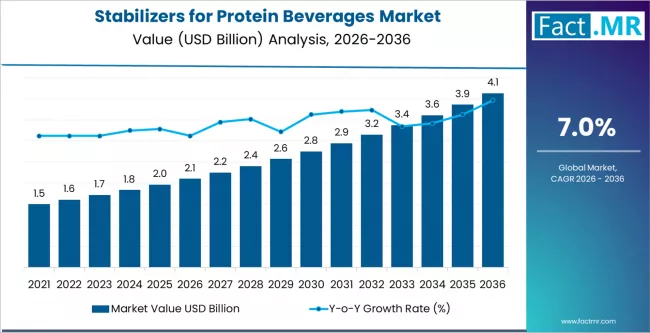
Stabilizers for protein beverages market is projected to grow from USD 2.1 billion in 2026 to USD 4.1 billion by 2036, at a CAGR of 7.0%. Hydrocolloids will dominate with a 46.0% market share, while dairy protein beverages will lead the beverage type segment with a 44.0% share.
Stabilizers for Protein Beverages Market Forecast Outlook 2026 to 2036
The stabilizers for protein beverages market is expected to reach USD 2.1 billion in 2026 and grow to USD 5.2 billion by 2036, with a CAGR of 7%. Demand quality in this market is driven by a commitment to consistency and product performance, where buyers prioritize stability over volume.
Key Takeaways from Stabilizers for Protein Beverages Market
- Stabilizers for Protein Beverages Market Value (2026): USD 2.1 billion
- Stabilizers for Protein Beverages Market Forecast Value (2036): USD 5.2 billion
- Stabilizers for Protein Beverages Market Forecast CAGR (2026 to 2036): 7%
- Leading Segment in Stabilizers for Protein Beverages Market: Ready to Drink Protein Beverages (52%)
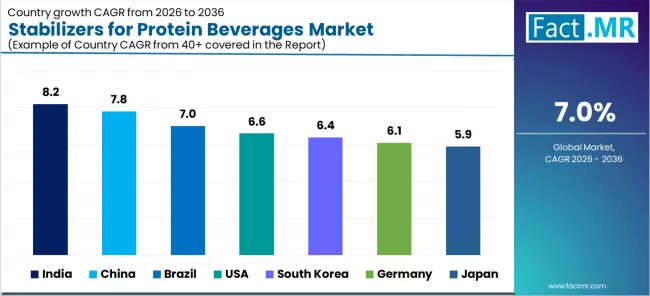
- Key Growth Region in Stabilizers for Protein Beverages Market: India (8.2%)
- Key Players in Stabilizers for Protein Beverages Market: Cargill Incorporated, Ingredion Incorporated, DuPont Nutrition and Biosciences, Tate and Lyle PLC, CP Kelco, Kerry Group plc, Archer Daniels Midland Company (ADM), Ashland Global Holdings, DSM Firmenich, BASF SE, Roquette Freres, Palsgaard, FMC Corporation, Gum Technology Corporation, Hydrosol GmbH

Protein beverage manufacturers rely on stabilizers to ensure long shelf life, maintain texture, and prevent separation, which leads to repeat usage and fosters long-term supplier relationships. High levels of buyer commitment are evident as brands continue to invest in reliable ingredients that meet both functional and sensory requirements. Unlike other sectors with fluctuating demand, this market benefits from a steady demand base driven by the increasing adoption of protein-based products in health-conscious consumer segments. As a result, companies are more focused on maintaining supplier reliability and quality consistency, positioning themselves for long-term business stability rather than short-term sales gains.
Stabilizers for Protein Beverages Market
| Metric | Value |
|---|---|
| Estimated Value in (2026E) | USD 2.1 billion |
| Forecast Value in (2036F) | USD 5.2 billion |
| Forecast CAGR (2026 to 2036) | 7% |
Category
| Category | Segments |
|---|---|
| Stabilizer Type | Hydrocolloids; Emulsifiers; Starches; Gums and Resins; Blended Functional Systems |
| Beverage Type | Dairy Protein Beverages; Plant-Based Protein Beverages; Sports and Performance Nutrition Drinks; Clinical and Medical Nutrition Beverages; Other |
| End-Use Application | Ready to Drink Protein Beverages; Protein Powder Reconstitution Beverages; Clinical and Hospital Nutrition; Functional and Lifestyle Nutrition; Other |
| Region | North America; Europe; Asia Pacific; Latin America; Middle East & Africa |
Segmental Analysis
What Is the Impact of Stabilizer Type on the Stabilizers for Protein Beverages Market?

In the stabilizers for protein beverages market, the type of stabilizer plays a significant role in improving the texture, viscosity, and shelf life of the product. Hydrocolloids lead the market with a 46% share, as they are highly effective in maintaining consistency and preventing separation in protein beverages. These stabilizers help improve mouthfeel, enhance product stability, and ensure a smooth, uniform texture, which is crucial in ready-to-drink protein beverages. As consumer demand for functional and protein-enriched beverages increases, hydrocolloids will continue to be the preferred choice for formulators, driving the market's growth.
How Does End-Use Application Influence the Stabilizers for Protein Beverages Market?

End-use application significantly drives demand for stabilizers in protein beverages, with ready-to-drink protein beverages holding a 52% share. The ready-to-drink segment requires stabilizers that can effectively maintain the product's consistency and taste during production, storage, and consumption. As the popularity of on-the-go, protein-enriched beverages continues to rise, stabilizers that ensure stability and enhance texture will play an essential role. The market for stabilizers will expand further as the demand for functional beverages, including those for athletic performance and general wellness, grows, and the need for high-quality, stable protein beverages becomes more important.
What are the Key Drivers, Constraints, and Emerging Trends in the Stabilizers for Protein Beverages Market?
- Drivers: Demand for stabilizers in protein beverage formulations is influenced by requirements to maintain homogeneous texture, suspend particulate ingredients, and prevent phase separation during storage and distribution. Beverage producers specify stabilizers that deliver consistent mouthfeel and visual appeal across a range of protein sources, including whey, pea, and soy. Growth in ready to drink protein beverages for sports nutrition, weight management, and general wellness supports ongoing procurement of functional stabilizing agents.
- Constraints: Performance of stabilizers can vary widely depending on protein type, pH, and processing conditions, leading to formulation challenges for manufacturers. Some stabilizers interact with proteins in ways that cause undesired viscosity or gelation, requiring trial and adjustment in pilot production. Costs associated with premium or multifunctional stabilizers may constrain use in price competitive beverage segments. Regulatory differences across markets for additives and labeling can also influence supplier selection and formulation strategies.
- Trend 1: Investment in multifunctional stabilizer systems that support texture control while enhancing nutritional delivery and sensory appeal in high protein beverages.
- Trend 2: Increasing use of clean label and naturally derived stabilizers as beverage makers respond to consumer demand for ingredient transparency and simplified formulations.
Analysis of the Stabilizers for Protein Beverages Market by Key Country

| Country | CAGR (2026–2036) |
|---|---|
| China | 7.8% |
| USA | 6.6% |
| India | 8.2% |
| Germany | 6.1% |
| Brazil | 7% |
The report covers an in-depth analysis of 40+ countries; top-performing countries are highlighted below.
What is the Growth Outlook for Stabilizers for Protein Beverages Market in China?
China’s stabilizers for protein beverages market is projected to grow at a CAGR of 7.8% from 2026 to 2036. As China’s demand for protein-enriched beverages continues to rise, especially in the health and wellness sector, the need for stabilizers to improve texture, stability, and taste is increasing. These stabilizers help maintain product consistency and prevent separation in protein drinks, which are gaining popularity due to their health benefits. With China’s growing consumer interest in functional beverages and its expanding middle class, the market for stabilizers for protein beverages is expected to continue its rapid growth.
How is the Stabilizers for Protein Beverages Market Performing in the USA?
The USA’s stabilizers for protein beverages market is expected to grow at a CAGR of 6.6% from 2026 to 2036. As the USA remains a leading market for protein drinks, especially in sports nutrition, health supplements, and functional beverages, the demand for stabilizers is increasing. These stabilizers are essential for maintaining the stability and shelf life of protein beverages, which are a key component of the health-conscious and fitness-focused consumer base. The growing trend of on-the-go, convenient, and nutritious beverages will continue to drive market growth, making the USA a significant player in the stabilizers for protein beverages market.
What is the Market Outlook for Stabilizers for Protein Beverages Market in India?
India’s stabilizers for protein beverages market is forecast to grow at a CAGR of 8.2% from 2026 to 2036. As India’s health and wellness trends continue to gain momentum, the demand for protein-enriched beverages is on the rise. Stabilizers are essential for improving the texture and stability of protein drinks, ensuring that the product remains consistent throughout its shelf life. With a growing population and increasing consumer awareness about fitness and protein intake, India’s market for stabilizers in protein beverages is expected to grow strongly, driven by both domestic demand and the rising trend of functional and convenient food products.
What is the Growth Potential for Stabilizers for Protein Beverages Market in Germany?
Germany’s stabilizers for protein beverages market is projected to grow at a CAGR of 6.1% from 2026 to 2036. As Germany’s food and beverage industry continues to focus on healthier, functional beverages, the demand for stabilizers for protein beverages is increasing. These stabilizers play a crucial role in ensuring the texture, flavor, and shelf life of protein-enriched drinks. Germany’s strong focus on sustainability and clean-label products, coupled with increasing consumer interest in fitness and wellness, will continue to drive the market for stabilizers in protein beverages, supporting steady growth in the coming years.
What is the Demand for Stabilizers for Protein Beverages Market in Brazil?
Brazil’s stabilizers for protein beverages market is set to grow at a CAGR of 7% from 2026 to 2036. As Brazil’s health-conscious consumer base grows, the demand for protein-enriched beverages, including protein shakes and nutritional drinks, is on the rise. Stabilizers are crucial for maintaining the quality and consistency of these beverages, especially as the market for functional foods and beverages expands. With increasing awareness of the benefits of protein in diet and fitness, Brazil’s market for stabilizers for protein beverages is expected to grow steadily, driven by both local and international demand for convenient, high-quality products.
How is Competition Structured in the Stabilizers for Protein Beverages Market?
Competition in the stabilizers for protein beverages market is shaped by the ability to deliver systems that maintain suspension, improve mouthfeel, and resist phase separation. Cargill and Ingredion compete with broad portfolios of starches, fibers, and gum systems designed for dairy and plant based proteins. Tate and Lyle and CP Kelco emphasize hydrocolloid solutions that control viscosity and enhance texture with minimal impact on clarity.
DuPont Nutrition and Biosciences and Kerry Group supply multifunctional ingredients that combine stabilizing performance with clean label positioning. ADM and Roquette Freres focus on carbohydrate derived stabilizers that support nutritional claims while maintaining processing consistency. BASF SE and Ashland Global Holdings offer engineered polymeric systems tailored to high protein formulations. Palsgaard, FMC Corporation, Gum Technology Corporation, and Hydrosol GmbH position their offerings with specialty emulsifiers and texturants that support targeted sensory outcomes. Buyers assess suppliers based on documented stability data, compatibility with high protein loads, and ease of integration into beverage production lines.
Key Players in the Stabilizers for Protein Beverages Market
- Cargill Incorporated
- Ingredion Incorporated
- DuPont Nutrition and Biosciences
- Tate and Lyle PLC
- CP Kelco
- Kerry Group plc
- Archer Daniels Midland Company (ADM)
- Ashland Global Holdings
- DSM Firmenich
- BASF SE
- Roquette Freres
- Palsgaard
- FMC Corporation
- Gum Technology Corporation
- Hydrosol GmbH
Scope of the Report
| Items | Values |
|---|---|
| Quantitative Units (2026) | USD Billion |
| Stabilizer Type | Hydrocolloids, Emulsifiers, Starches, Gums and Resins, Blended Functional Systems |
| Beverage Type | Dairy Protein Beverages, Plant-Based Protein Beverages, Sports and Performance Nutrition Drinks, Clinical and Medical Nutrition Beverages, Other |
| End-Use Application | Ready to Drink Protein Beverages, Protein Powder Reconstitution Beverages, Clinical and Hospital Nutrition, Functional and Lifestyle Nutrition, Other |
| Regions Covered | North America, Europe, Asia Pacific, Latin America, Middle East & Africa |
| Countries Covered | United States, Canada, Mexico, Brazil, Germany, United Kingdom, France, Italy, Spain, China, Japan, South Korea, India, Australia & New Zealand |
| Key Companies Profiled | Cargill Incorporated, Ingredion Incorporated, DuPont Nutrition and Biosciences, Tate and Lyle PLC, CP Kelco, Kerry Group plc, Archer Daniels Midland Company (ADM), Ashland Global Holdings, DSM Firmenich, BASF SE, Roquette Freres, Palsgaard, FMC Corporation, Gum Technology Corporation, Hydrosol GmbH |
| Additional Attributes | Dollar revenue by stabilizer type, beverage type, and end-use application; regional demand trends, competitive landscape, technological advancements in stabilizers for protein beverages, and innovations in beverage formulation and stability |
Stabilizers for Protein Beverages Market Key Segments
-
Stabilizer Type :
- Hydrocolloids
- Emulsifiers
- Starches
- Gums and Resins
- Blended Functional Systems
-
Beverage Type :
- Dairy Protein Beverages
- Plant-Based Protein Beverages
- Sports and Performance Nutrition Drinks
- Clinical and Medical Nutrition Beverages
- Other
-
End-Use Application :
- Ready to Drink Protein Beverages
- Protein Powder Reconstitution Beverages
- Clinical and Hospital Nutrition
- Functional and Lifestyle Nutrition
- Other
-
Region :
-
North America
- U.S.
- Canada
- Mexico
-
Europe
- Germany
- UK
- France
- Italy
- Spain
- Nordic Countries
- BENELUX
- Rest of Europe
-
Asia Pacific
- China
- Japan
- South Korea
- India
- Australia
- Rest of Asia Pacific
-
Latin America
- Brazil
- Argentina
- Rest of Latin America
-
Middle East and Africa
- Kingdom of Saudi Arabia
- United Arab Emirates
- South Africa
- Rest of Middle East and Africa
-
Other Regions
- Oceania
- Central Asia
- Other Markets
-
Bibliographies
- Food and Agriculture Organization of the United Nations. (2023). Protein-based beverages: Processing, stability challenges, and formulation strategies. FAO.
- European Food Safety Authority. (2024). Technological function of stabilizers and emulsifiers in protein-rich liquid foods. EFSA Journal.
- U.S. Food and Drug Administration. (2024). Food additive status and functionality of stabilizers used in beverage applications. FDA.
Table of Content
- Executive Summary
- Global Market Outlook
- Demand to side Trends
- Supply to side Trends
- Technology Roadmap Analysis
- Analysis and Recommendations
- Market Overview
- Market Coverage / Taxonomy
- Market Definition / Scope / Limitations
- Market Background
- Market Dynamics
- Drivers
- Restraints
- Opportunity
- Trends
- Scenario Forecast
- Demand in Optimistic Scenario
- Demand in Likely Scenario
- Demand in Conservative Scenario
- Opportunity Map Analysis
- Product Life Cycle Analysis
- Supply Chain Analysis
- Investment Feasibility Matrix
- Value Chain Analysis
- PESTLE and Porter’s Analysis
- Regulatory Landscape
- Regional Parent Market Outlook
- Production and Consumption Statistics
- Import and Export Statistics
- Market Dynamics
- Global Market Analysis 2021 to 2025 and Forecast, 2026 to 2036
- Historical Market Size Value (USD Million) Analysis, 2021 to 2025
- Current and Future Market Size Value (USD Million) Projections, 2026 to 2036
- Y to o to Y Growth Trend Analysis
- Absolute $ Opportunity Analysis
- Global Market Pricing Analysis 2021 to 2025 and Forecast 2026 to 2036
- Global Market Analysis 2021 to 2025 and Forecast 2026 to 2036, By Stabilizer Type
- Introduction / Key Findings
- Historical Market Size Value (USD Million) Analysis By Stabilizer Type, 2021 to 2025
- Current and Future Market Size Value (USD Million) Analysis and Forecast By Stabilizer Type, 2026 to 2036
- Hydrocolloids
- Emulsifiers
- Starches
- Gums and Resins
- Blended Functional Systems
- Hydrocolloids
- Y to o to Y Growth Trend Analysis By Stabilizer Type, 2021 to 2025
- Absolute $ Opportunity Analysis By Stabilizer Type, 2026 to 2036
- Global Market Analysis 2021 to 2025 and Forecast 2026 to 2036, By Beverage Type
- Introduction / Key Findings
- Historical Market Size Value (USD Million) Analysis By Beverage Type, 2021 to 2025
- Current and Future Market Size Value (USD Million) Analysis and Forecast By Beverage Type, 2026 to 2036
- Dairy Protein Beverages
- Plant Based Protein Beverages
- Sports and Performance Nutrition Drinks
- Clinical and Medical Nutrition Beverages
- Dairy Protein Beverages
- Y to o to Y Growth Trend Analysis By Beverage Type, 2021 to 2025
- Absolute $ Opportunity Analysis By Beverage Type, 2026 to 2036
- Global Market Analysis 2021 to 2025 and Forecast 2026 to 2036, By End-Use Application
- Introduction / Key Findings
- Historical Market Size Value (USD Million) Analysis By End-Use Application, 2021 to 2025
- Current and Future Market Size Value (USD Million) Analysis and Forecast By End-Use Application, 2026 to 2036
- Ready to Drink Protein Beverages
- Protein Powder Reconstitution Beverages
- Clinical and Hospital Nutrition
- Functional and Lifestyle Nutrition
- Ready to Drink Protein Beverages
- Y to o to Y Growth Trend Analysis By End-Use Application, 2021 to 2025
- Absolute $ Opportunity Analysis By End-Use Application, 2026 to 2036
- Global Market Analysis 2021 to 2025 and Forecast 2026 to 2036, By Region
- Introduction
- Historical Market Size Value (USD Million) Analysis By Region, 2021 to 2025
- Current Market Size Value (USD Million) Analysis and Forecast By Region, 2026 to 2036
- North America
- Latin America
- Western Europe
- Eastern Europe
- East Asia
- South Asia and Pacific
- Middle East & Africa
- Market Attractiveness Analysis By Region
- North America Market Analysis 2021 to 2025 and Forecast 2026 to 2036, By Country
- Historical Market Size Value (USD Million) Trend Analysis By Market Taxonomy, 2021 to 2025
- Market Size Value (USD Million) Forecast By Market Taxonomy, 2026 to 2036
- By Country
- USA
- Canada
- Mexico
- By Stabilizer Type
- By Beverage Type
- By End-Use Application
- By Country
- Market Attractiveness Analysis
- By Country
- By Stabilizer Type
- By Beverage Type
- By End-Use Application
- Key Takeaways
- Latin America Market Analysis 2021 to 2025 and Forecast 2026 to 2036, By Country
- Historical Market Size Value (USD Million) Trend Analysis By Market Taxonomy, 2021 to 2025
- Market Size Value (USD Million) Forecast By Market Taxonomy, 2026 to 2036
- By Country
- Brazil
- Chile
- Rest of Latin America
- By Stabilizer Type
- By Beverage Type
- By End-Use Application
- By Country
- Market Attractiveness Analysis
- By Country
- By Stabilizer Type
- By Beverage Type
- By End-Use Application
- Key Takeaways
- Western Europe Market Analysis 2021 to 2025 and Forecast 2026 to 2036, By Country
- Historical Market Size Value (USD Million) Trend Analysis By Market Taxonomy, 2021 to 2025
- Market Size Value (USD Million) Forecast By Market Taxonomy, 2026 to 2036
- By Country
- Germany
- UK
- Italy
- Spain
- France
- Nordic
- BENELUX
- Rest of Western Europe
- By Stabilizer Type
- By Beverage Type
- By End-Use Application
- By Country
- Market Attractiveness Analysis
- By Country
- By Stabilizer Type
- By Beverage Type
- By End-Use Application
- Key Takeaways
- Eastern Europe Market Analysis 2021 to 2025 and Forecast 2026 to 2036, By Country
- Historical Market Size Value (USD Million) Trend Analysis By Market Taxonomy, 2021 to 2025
- Market Size Value (USD Million) Forecast By Market Taxonomy, 2026 to 2036
- By Country
- Russia
- Poland
- Hungary
- Balkan & Baltic
- Rest of Eastern Europe
- By Stabilizer Type
- By Beverage Type
- By End-Use Application
- By Country
- Market Attractiveness Analysis
- By Country
- By Stabilizer Type
- By Beverage Type
- By End-Use Application
- Key Takeaways
- East Asia Market Analysis 2021 to 2025 and Forecast 2026 to 2036, By Country
- Historical Market Size Value (USD Million) Trend Analysis By Market Taxonomy, 2021 to 2025
- Market Size Value (USD Million) Forecast By Market Taxonomy, 2026 to 2036
- By Country
- China
- Japan
- South Korea
- By Stabilizer Type
- By Beverage Type
- By End-Use Application
- By Country
- Market Attractiveness Analysis
- By Country
- By Stabilizer Type
- By Beverage Type
- By End-Use Application
- Key Takeaways
- South Asia and Pacific Market Analysis 2021 to 2025 and Forecast 2026 to 2036, By Country
- Historical Market Size Value (USD Million) Trend Analysis By Market Taxonomy, 2021 to 2025
- Market Size Value (USD Million) Forecast By Market Taxonomy, 2026 to 2036
- By Country
- India
- ASEAN
- Australia & New Zealand
- Rest of South Asia and Pacific
- By Stabilizer Type
- By Beverage Type
- By End-Use Application
- By Country
- Market Attractiveness Analysis
- By Country
- By Stabilizer Type
- By Beverage Type
- By End-Use Application
- Key Takeaways
- Middle East & Africa Market Analysis 2021 to 2025 and Forecast 2026 to 2036, By Country
- Historical Market Size Value (USD Million) Trend Analysis By Market Taxonomy, 2021 to 2025
- Market Size Value (USD Million) Forecast By Market Taxonomy, 2026 to 2036
- By Country
- Kingdom of Saudi Arabia
- Other GCC Countries
- Turkiye
- South Africa
- Other African Union
- Rest of Middle East & Africa
- By Stabilizer Type
- By Beverage Type
- By End-Use Application
- By Country
- Market Attractiveness Analysis
- By Country
- By Stabilizer Type
- By Beverage Type
- By End-Use Application
- Key Takeaways
- Key Countries Market Analysis
- USA
- Pricing Analysis
- Market Share Analysis, 2025
- By Stabilizer Type
- By Beverage Type
- By End-Use Application
- Canada
- Pricing Analysis
- Market Share Analysis, 2025
- By Stabilizer Type
- By Beverage Type
- By End-Use Application
- Mexico
- Pricing Analysis
- Market Share Analysis, 2025
- By Stabilizer Type
- By Beverage Type
- By End-Use Application
- Brazil
- Pricing Analysis
- Market Share Analysis, 2025
- By Stabilizer Type
- By Beverage Type
- By End-Use Application
- Chile
- Pricing Analysis
- Market Share Analysis, 2025
- By Stabilizer Type
- By Beverage Type
- By End-Use Application
- Germany
- Pricing Analysis
- Market Share Analysis, 2025
- By Stabilizer Type
- By Beverage Type
- By End-Use Application
- UK
- Pricing Analysis
- Market Share Analysis, 2025
- By Stabilizer Type
- By Beverage Type
- By End-Use Application
- Italy
- Pricing Analysis
- Market Share Analysis, 2025
- By Stabilizer Type
- By Beverage Type
- By End-Use Application
- Spain
- Pricing Analysis
- Market Share Analysis, 2025
- By Stabilizer Type
- By Beverage Type
- By End-Use Application
- France
- Pricing Analysis
- Market Share Analysis, 2025
- By Stabilizer Type
- By Beverage Type
- By End-Use Application
- India
- Pricing Analysis
- Market Share Analysis, 2025
- By Stabilizer Type
- By Beverage Type
- By End-Use Application
- ASEAN
- Pricing Analysis
- Market Share Analysis, 2025
- By Stabilizer Type
- By Beverage Type
- By End-Use Application
- Australia & New Zealand
- Pricing Analysis
- Market Share Analysis, 2025
- By Stabilizer Type
- By Beverage Type
- By End-Use Application
- China
- Pricing Analysis
- Market Share Analysis, 2025
- By Stabilizer Type
- By Beverage Type
- By End-Use Application
- Japan
- Pricing Analysis
- Market Share Analysis, 2025
- By Stabilizer Type
- By Beverage Type
- By End-Use Application
- South Korea
- Pricing Analysis
- Market Share Analysis, 2025
- By Stabilizer Type
- By Beverage Type
- By End-Use Application
- Russia
- Pricing Analysis
- Market Share Analysis, 2025
- By Stabilizer Type
- By Beverage Type
- By End-Use Application
- Poland
- Pricing Analysis
- Market Share Analysis, 2025
- By Stabilizer Type
- By Beverage Type
- By End-Use Application
- Hungary
- Pricing Analysis
- Market Share Analysis, 2025
- By Stabilizer Type
- By Beverage Type
- By End-Use Application
- Kingdom of Saudi Arabia
- Pricing Analysis
- Market Share Analysis, 2025
- By Stabilizer Type
- By Beverage Type
- By End-Use Application
- Turkiye
- Pricing Analysis
- Market Share Analysis, 2025
- By Stabilizer Type
- By Beverage Type
- By End-Use Application
- South Africa
- Pricing Analysis
- Market Share Analysis, 2025
- By Stabilizer Type
- By Beverage Type
- By End-Use Application
- USA
- Market Structure Analysis
- Competition Dashboard
- Competition Benchmarking
- Market Share Analysis of Top Players
- By Regional
- By Stabilizer Type
- By Beverage Type
- By End-Use Application
- Competition Analysis
- Competition Deep Dive
- Cargill Incorporated
- Overview
- Product Portfolio
- Profitability by Market Segments (Product/Age /Sales Channel/Region)
- Sales Footprint
- Strategy Overview
- Marketing Strategy
- Product Strategy
- Channel Strategy
- Ingredion Incorporated
- DuPont Nutrition and Biosciences
- Tate and Lyle PLC
- CP Kelco
- Kerry Group plc
- Archer Daniels Midland Company (ADM)
- Ashland Global Holdings
- DSM Firmenich
- BASF SE
- Roquette Freres
- Palsgaard
- FMC Corporation
- Gum Technology Corporation
- Hydrosol GmbH
- Cargill Incorporated
- Competition Deep Dive
- Assumptions & Acronyms Used
- Research Methodology
List Of Table
- Table 1: Global Market Value (USD Million) Forecast by Region, 2021 to 2036
- Table 2: Global Market Value (USD Million) Forecast by Stabilizer Type, 2021 to 2036
- Table 3: Global Market Value (USD Million) Forecast by Beverage Type, 2021 to 2036
- Table 4: Global Market Value (USD Million) Forecast by End-Use Application, 2021 to 2036
- Table 5: North America Market Value (USD Million) Forecast by Country, 2021 to 2036
- Table 6: North America Market Value (USD Million) Forecast by Stabilizer Type, 2021 to 2036
- Table 7: North America Market Value (USD Million) Forecast by Beverage Type, 2021 to 2036
- Table 8: North America Market Value (USD Million) Forecast by End-Use Application, 2021 to 2036
- Table 9: Latin America Market Value (USD Million) Forecast by Country, 2021 to 2036
- Table 10: Latin America Market Value (USD Million) Forecast by Stabilizer Type, 2021 to 2036
- Table 11: Latin America Market Value (USD Million) Forecast by Beverage Type, 2021 to 2036
- Table 12: Latin America Market Value (USD Million) Forecast by End-Use Application, 2021 to 2036
- Table 13: Western Europe Market Value (USD Million) Forecast by Country, 2021 to 2036
- Table 14: Western Europe Market Value (USD Million) Forecast by Stabilizer Type, 2021 to 2036
- Table 15: Western Europe Market Value (USD Million) Forecast by Beverage Type, 2021 to 2036
- Table 16: Western Europe Market Value (USD Million) Forecast by End-Use Application, 2021 to 2036
- Table 17: Eastern Europe Market Value (USD Million) Forecast by Country, 2021 to 2036
- Table 18: Eastern Europe Market Value (USD Million) Forecast by Stabilizer Type, 2021 to 2036
- Table 19: Eastern Europe Market Value (USD Million) Forecast by Beverage Type, 2021 to 2036
- Table 20: Eastern Europe Market Value (USD Million) Forecast by End-Use Application, 2021 to 2036
- Table 21: East Asia Market Value (USD Million) Forecast by Country, 2021 to 2036
- Table 22: East Asia Market Value (USD Million) Forecast by Stabilizer Type, 2021 to 2036
- Table 23: East Asia Market Value (USD Million) Forecast by Beverage Type, 2021 to 2036
- Table 24: East Asia Market Value (USD Million) Forecast by End-Use Application, 2021 to 2036
- Table 25: South Asia and Pacific Market Value (USD Million) Forecast by Country, 2021 to 2036
- Table 26: South Asia and Pacific Market Value (USD Million) Forecast by Stabilizer Type, 2021 to 2036
- Table 27: South Asia and Pacific Market Value (USD Million) Forecast by Beverage Type, 2021 to 2036
- Table 28: South Asia and Pacific Market Value (USD Million) Forecast by End-Use Application, 2021 to 2036
- Table 29: Middle East & Africa Market Value (USD Million) Forecast by Country, 2021 to 2036
- Table 30: Middle East & Africa Market Value (USD Million) Forecast by Stabilizer Type, 2021 to 2036
- Table 31: Middle East & Africa Market Value (USD Million) Forecast by Beverage Type, 2021 to 2036
- Table 32: Middle East & Africa Market Value (USD Million) Forecast by End-Use Application, 2021 to 2036
List Of Figures
- Figure 1: Global Market Pricing Analysis
- Figure 2: Global Market Value (USD Million) Forecast 2021 to 2036
- Figure 3: Global Market Value Share and BPS Analysis by Stabilizer Type, 2026 and 2036
- Figure 4: Global Market Y to o to Y Growth Comparison by Stabilizer Type, 2026 to 2036
- Figure 5: Global Market Attractiveness Analysis by Stabilizer Type
- Figure 6: Global Market Value Share and BPS Analysis by Beverage Type, 2026 and 2036
- Figure 7: Global Market Y to o to Y Growth Comparison by Beverage Type, 2026 to 2036
- Figure 8: Global Market Attractiveness Analysis by Beverage Type
- Figure 9: Global Market Value Share and BPS Analysis by End-Use Application, 2026 and 2036
- Figure 10: Global Market Y to o to Y Growth Comparison by End-Use Application, 2026 to 2036
- Figure 11: Global Market Attractiveness Analysis by End-Use Application
- Figure 12: Global Market Value (USD Million) Share and BPS Analysis by Region, 2026 and 2036
- Figure 13: Global Market Y to o to Y Growth Comparison by Region, 2026 to 2036
- Figure 14: Global Market Attractiveness Analysis by Region
- Figure 15: North America Market Incremental Dollar Opportunity, 2026 to 2036
- Figure 16: Latin America Market Incremental Dollar Opportunity, 2026 to 2036
- Figure 17: Western Europe Market Incremental Dollar Opportunity, 2026 to 2036
- Figure 18: Eastern Europe Market Incremental Dollar Opportunity, 2026 to 2036
- Figure 19: East Asia Market Incremental Dollar Opportunity, 2026 to 2036
- Figure 20: South Asia and Pacific Market Incremental Dollar Opportunity, 2026 to 2036
- Figure 21: Middle East & Africa Market Incremental Dollar Opportunity, 2026 to 2036
- Figure 22: North America Market Value Share and BPS Analysis by Country, 2026 and 2036
- Figure 23: North America Market Value Share and BPS Analysis by Stabilizer Type, 2026 and 2036
- Figure 24: North America Market Y to o to Y Growth Comparison by Stabilizer Type, 2026 to 2036
- Figure 25: North America Market Attractiveness Analysis by Stabilizer Type
- Figure 26: North America Market Value Share and BPS Analysis by Beverage Type, 2026 and 2036
- Figure 27: North America Market Y to o to Y Growth Comparison by Beverage Type, 2026 to 2036
- Figure 28: North America Market Attractiveness Analysis by Beverage Type
- Figure 29: North America Market Value Share and BPS Analysis by End-Use Application, 2026 and 2036
- Figure 30: North America Market Y to o to Y Growth Comparison by End-Use Application, 2026 to 2036
- Figure 31: North America Market Attractiveness Analysis by End-Use Application
- Figure 32: Latin America Market Value Share and BPS Analysis by Country, 2026 and 2036
- Figure 33: Latin America Market Value Share and BPS Analysis by Stabilizer Type, 2026 and 2036
- Figure 34: Latin America Market Y to o to Y Growth Comparison by Stabilizer Type, 2026 to 2036
- Figure 35: Latin America Market Attractiveness Analysis by Stabilizer Type
- Figure 36: Latin America Market Value Share and BPS Analysis by Beverage Type, 2026 and 2036
- Figure 37: Latin America Market Y to o to Y Growth Comparison by Beverage Type, 2026 to 2036
- Figure 38: Latin America Market Attractiveness Analysis by Beverage Type
- Figure 39: Latin America Market Value Share and BPS Analysis by End-Use Application, 2026 and 2036
- Figure 40: Latin America Market Y to o to Y Growth Comparison by End-Use Application, 2026 to 2036
- Figure 41: Latin America Market Attractiveness Analysis by End-Use Application
- Figure 42: Western Europe Market Value Share and BPS Analysis by Country, 2026 and 2036
- Figure 43: Western Europe Market Value Share and BPS Analysis by Stabilizer Type, 2026 and 2036
- Figure 44: Western Europe Market Y to o to Y Growth Comparison by Stabilizer Type, 2026 to 2036
- Figure 45: Western Europe Market Attractiveness Analysis by Stabilizer Type
- Figure 46: Western Europe Market Value Share and BPS Analysis by Beverage Type, 2026 and 2036
- Figure 47: Western Europe Market Y to o to Y Growth Comparison by Beverage Type, 2026 to 2036
- Figure 48: Western Europe Market Attractiveness Analysis by Beverage Type
- Figure 49: Western Europe Market Value Share and BPS Analysis by End-Use Application, 2026 and 2036
- Figure 50: Western Europe Market Y to o to Y Growth Comparison by End-Use Application, 2026 to 2036
- Figure 51: Western Europe Market Attractiveness Analysis by End-Use Application
- Figure 52: Eastern Europe Market Value Share and BPS Analysis by Country, 2026 and 2036
- Figure 53: Eastern Europe Market Value Share and BPS Analysis by Stabilizer Type, 2026 and 2036
- Figure 54: Eastern Europe Market Y to o to Y Growth Comparison by Stabilizer Type, 2026 to 2036
- Figure 55: Eastern Europe Market Attractiveness Analysis by Stabilizer Type
- Figure 56: Eastern Europe Market Value Share and BPS Analysis by Beverage Type, 2026 and 2036
- Figure 57: Eastern Europe Market Y to o to Y Growth Comparison by Beverage Type, 2026 to 2036
- Figure 58: Eastern Europe Market Attractiveness Analysis by Beverage Type
- Figure 59: Eastern Europe Market Value Share and BPS Analysis by End-Use Application, 2026 and 2036
- Figure 60: Eastern Europe Market Y to o to Y Growth Comparison by End-Use Application, 2026 to 2036
- Figure 61: Eastern Europe Market Attractiveness Analysis by End-Use Application
- Figure 62: East Asia Market Value Share and BPS Analysis by Country, 2026 and 2036
- Figure 63: East Asia Market Value Share and BPS Analysis by Stabilizer Type, 2026 and 2036
- Figure 64: East Asia Market Y to o to Y Growth Comparison by Stabilizer Type, 2026 to 2036
- Figure 65: East Asia Market Attractiveness Analysis by Stabilizer Type
- Figure 66: East Asia Market Value Share and BPS Analysis by Beverage Type, 2026 and 2036
- Figure 67: East Asia Market Y to o to Y Growth Comparison by Beverage Type, 2026 to 2036
- Figure 68: East Asia Market Attractiveness Analysis by Beverage Type
- Figure 69: East Asia Market Value Share and BPS Analysis by End-Use Application, 2026 and 2036
- Figure 70: East Asia Market Y to o to Y Growth Comparison by End-Use Application, 2026 to 2036
- Figure 71: East Asia Market Attractiveness Analysis by End-Use Application
- Figure 72: South Asia and Pacific Market Value Share and BPS Analysis by Country, 2026 and 2036
- Figure 73: South Asia and Pacific Market Value Share and BPS Analysis by Stabilizer Type, 2026 and 2036
- Figure 74: South Asia and Pacific Market Y to o to Y Growth Comparison by Stabilizer Type, 2026 to 2036
- Figure 75: South Asia and Pacific Market Attractiveness Analysis by Stabilizer Type
- Figure 76: South Asia and Pacific Market Value Share and BPS Analysis by Beverage Type, 2026 and 2036
- Figure 77: South Asia and Pacific Market Y to o to Y Growth Comparison by Beverage Type, 2026 to 2036
- Figure 78: South Asia and Pacific Market Attractiveness Analysis by Beverage Type
- Figure 79: South Asia and Pacific Market Value Share and BPS Analysis by End-Use Application, 2026 and 2036
- Figure 80: South Asia and Pacific Market Y to o to Y Growth Comparison by End-Use Application, 2026 to 2036
- Figure 81: South Asia and Pacific Market Attractiveness Analysis by End-Use Application
- Figure 82: Middle East & Africa Market Value Share and BPS Analysis by Country, 2026 and 2036
- Figure 83: Middle East & Africa Market Value Share and BPS Analysis by Stabilizer Type, 2026 and 2036
- Figure 84: Middle East & Africa Market Y to o to Y Growth Comparison by Stabilizer Type, 2026 to 2036
- Figure 85: Middle East & Africa Market Attractiveness Analysis by Stabilizer Type
- Figure 86: Middle East & Africa Market Value Share and BPS Analysis by Beverage Type, 2026 and 2036
- Figure 87: Middle East & Africa Market Y to o to Y Growth Comparison by Beverage Type, 2026 to 2036
- Figure 88: Middle East & Africa Market Attractiveness Analysis by Beverage Type
- Figure 89: Middle East & Africa Market Value Share and BPS Analysis by End-Use Application, 2026 and 2036
- Figure 90: Middle East & Africa Market Y to o to Y Growth Comparison by End-Use Application, 2026 to 2036
- Figure 91: Middle East & Africa Market Attractiveness Analysis by End-Use Application
- Figure 92: Global Market - Tier Structure Analysis
- Figure 93: Global Market - Company Share Analysis
- FAQs -
How big is the stabilizers for protein beverages market in 2026?
The global stabilizers for protein beverages market is estimated to be valued at USD 2.1 billion in 2026.
What will be the size of stabilizers for protein beverages market in 2036?
The market size for the stabilizers for protein beverages market is projected to reach USD 4.1 billion by 2036.
How much will be the stabilizers for protein beverages market growth between 2026 and 2036?
The stabilizers for protein beverages market is expected to grow at a 7.0% CAGR between 2026 and 2036.
What are the key product types in the stabilizers for protein beverages market?
The key product types in stabilizers for protein beverages market are hydrocolloids, emulsifiers, starches, gums and resins and blended functional systems.
Which beverage type segment to contribute significant share in the stabilizers for protein beverages market in 2026?
In terms of beverage type, dairy protein beverages segment to command 44.0% share in the stabilizers for protein beverages market in 2026.