Sugarcane Composite Tubes Market

Sugarcane Composite Tubes Market Size and Share Forecast Outlook 2026 to 2036

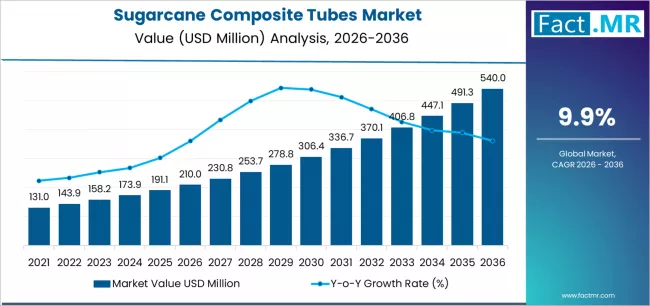
Sugarcane composite tubes market is projected to grow from USD 210.0 million in 2026 to USD 540.0 million by 2036, at a CAGR of 9.9%. Cosmetics will dominate with a 45.0% market share, while bio-composite tubes will lead the packaging format segment with a 48.0% share.

Sugarcane Composite Tubes Market Forecast and Outlook 2026 to 2036

The global sugarcane composite tubes market is valued at USD 210.0 million in 2026. The market is forecast to reach USD 540.0 million by 2036, an increase of USD 330.0 million. This represents total growth of 157.1%, expanding at a compound annual growth rate (CAGR) of 9.9% between 2026 and 2036.

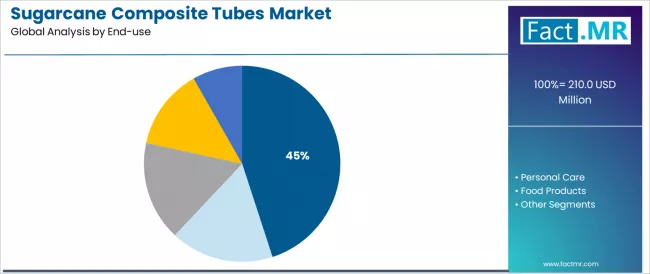
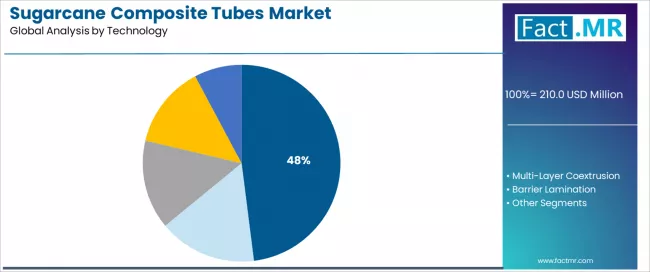
Segmentation data points to a market aligning with clean beauty and sustainable consumption. By end-use, the cosmetics sector commands a leading 45.0% share in 2026. Bio-composite tubes lead the packaging format segment with a 48.0% share. Sugarcane-based polyethylene holds a dominant 50.0% material share, while extrusion blow molding is the primary technology with a 48.0% share. This configuration highlights the industry's rapid adoption of bio-based alternatives to conventional plastic tubes.

Key Takeaways from the Sugarcane Composite Tubes Market Study

  • Market Value (2026): USD 210.0 million
  • Market Forecast Value (2036): USD 540.0 million
  • Market Forecast CAGR: 9.9%
  • Leading End-Use: Cosmetics (45.0%)
  • Key Growth Regions: Asia Pacific, North America, Europe
  • Key Players: Braskem S.A., AptarGroup, Inc., Huhtamaki Oyj, Amcor plc, Uflex Limited, Toppan Inc.

Sugarcane Composite Tubes Market Market Value Analysis

A significant macro trend is the strategic shift by major brands towards carbon-neutral or carbon-negative packaging claims. Sugarcane, as a rapidly renewable resource that captures CO2 during growth, provides a tangible pathway to reduce the carbon footprint of high-volume tube packaging. This allows companies to make credible environmental claims that resonate with eco-conscious consumers and meet corporate sustainability targets, transforming a packaging component into a key brand asset.

Furthermore, advancements in material science are enabling performance parity with fossil-based plastics. Early bio-plastics faced limitations in barrier properties and processing. Current development focuses on hybrid bio-polymers and bio-EVOH that deliver the necessary oxygen and moisture barriers for sensitive formulations in cosmetics and food. This technical evolution ensures that the choice for sustainability does not force a compromise on product protection or shelf life, removing a critical barrier to widespread adoption across demanding applications.

Sugarcane Composite Tubes Market

Metric Value
Estimated Value in (2026E) USD 210.0 million
Forecast Value in (2036F) USD 540.0 million
Forecast CAGR (2026 to 2036) 9.9%

Category

Category Segment
End-Use Cosmetics, Personal Care, Food Products, Household, Others
Packaging Format Bio-Composite Tubes, Flexible Tubes, Barrier Tubes, Stand-Up Tubes, Others
Material Sugarcane PE, Hybrid Bio-Polymers, Bio-EVOH, Bio-HDPE, Others
Technology Extrusion Blow Molding, Multi-Layer Coextrusion, Barrier Lamination, High-speed Extrusion, Others
Region North America, Europe, Asia Pacific, Latin America, MEA

Segment Analysis

How is the Cosmetics Sector Using Bio-Tubes to Redefine Premium Brand Identity?

Sugarcane Composite Tubes Market Analysis By End Use

The cosmetics end-use segment holds a 45.0% market share in 2026. This dominance is driven by the industry's need to align packaging with brand narratives of purity, natural origin, and environmental responsibility. Sugarcane tubes offer a visually and ethically premium alternative to traditional plastics.

Development focuses on achieving a high-quality finish, including clarity and smooth tactility that meets luxury standards. The tube itself becomes a communication tool, allowing brands to prominently feature made from sugarcane messaging. This sector’s adoption validates the material’s premium potential, encouraging its use in other high-value categories where consumer perception directly influences purchasing decisions.

What is driving the Widespread Shift to Bio-Composite Tube Formats?

Sugarcane Composite Tubes Market Analysis By Technology

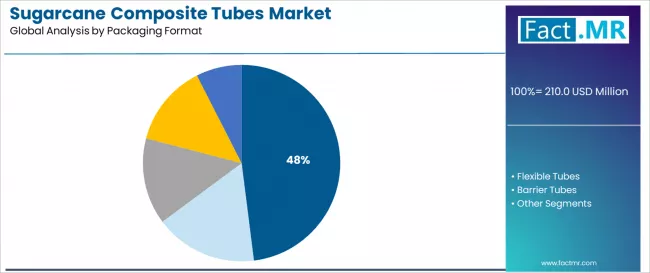
Bio-composite tubes lead the packaging format segment with a 48.0% share. Their appeal lies in offering a direct, drop-in sustainable replacement for the ubiquitous plastic laminate tube. This format maintains all functional benefits, such as good barrier properties, squeezability, and excellent printability for branding, while swapping the core resin for a bio-based alternative.

For converters and fillers, this minimizes machine retooling and operational disruption. The format’s success is a testament to its practicality; it enables a swift portfolio transition for brands under public pressure to reduce plastic use, providing an immediately recognizable sustainable solution to consumers.

Why is Sugarcane PE Becoming the Foundation for Circular Packaging Goals?

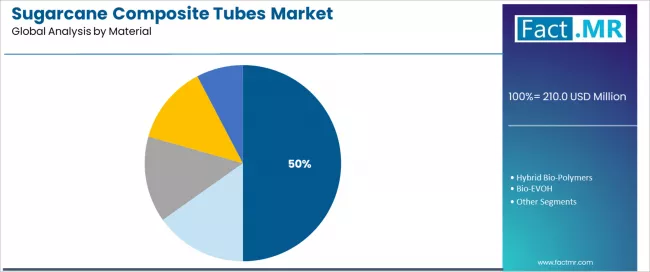
Sugarcane Composite Tubes Market Analysis By Material

Sugarcane PE accounts for a dominant 50.0% material share. Its position is secured because it is a drop-in bio-based replica of conventional polyethylene. It possesses identical chemical and mechanical properties, ensuring full compatibility with existing recycling infrastructure without contaminating the PET or other streams.

This characteristic is crucial for brands pursuing true circularity. The material’s primary selling point is its renewable origin, reducing dependency on fossil fuels and offering a lower carbon footprint. As brands seek to meet ambitious recycled content targets, sugarcane PE provides a renewable virgin material that can later re-enter the recycling loop, supporting a circular economic model.

Is Extrusion Blow Molding Enabling the Mass Production of Sustainable Tubes?

Sugarcane Composite Tubes Market Analysis By Packaging Format

Extrusion blow molding technology commands a 48.0% share. This established, high-volume process is critical for scaling bio-based tube production to meet surging demand. Its continued dominance indicates that leading bio-polymers like sugarcane PE are fully compatible with existing industrial machinery.

Development within this technology focuses on optimizing processing parameters for bio-resins to ensure consistent wall thickness, clarity, and production speed equal to fossil-based plastics. The ability to use this cost-effective and efficient method without major capital investment lowers the barrier to entry for tube manufacturers, accelerating the market's overall transition to sustainable materials.

What are the Drivers, Restraints, and Key Trends of the Sugarcane Composite Tubes Market?

Market growth is propelled by consumer demand for sustainable packaging, corporate net-zero carbon commitments, and regulatory pressures on single-use plastics. The desire for packaging with a compelling, natural origin story is a powerful brand driver. Higher raw material costs compared to conventional plastics and competition for sugarcane feedstock with other industries, like biofuel, serve as key restraints.

Achieving high-performance barriers for sensitive products using purely bio-based materials also remains a technical challenge. Development focuses on creating next-generation bio-barrier materials, such as bio-EVOH, to expand applications into food and high-end cosmetics. Another focus is improving the chemical recycling compatibility of bio-composite structures to ensure they support advanced recycling streams.

Analysis of the Sugarcane Composite Tubes Market by Key Countries
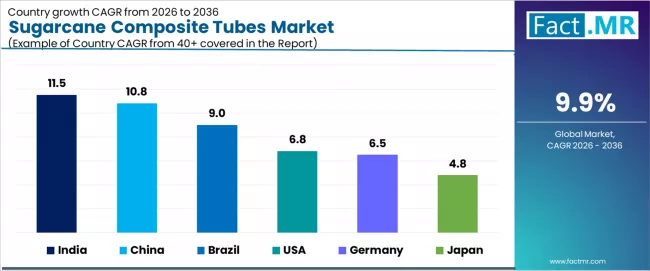
Sugarcane Composite Tubes Market Cagr Analysis By Country

Country CAGR (2026 to 2036)
Brazil 9.0%
USA 6.8%
Germany 6.5%
China 10.8%
India 11.5%
Japan 4.8%

How is Brazil Leveraging its Agricultural Dominance to Lead in Raw Material Production?

Brazil’s market grows at a 9.0% CAGR, uniquely positioned as the world's largest sugarcane producer. This provides a strategic advantage in raw material security and cost for producing bio-polymers like sugarcane PE.

Growth is fueled by domestic consumer brands emphasizing natural ingredients and sustainable sourcing. The local market serves as a live laboratory for innovation, with development focused on creating complete tube solutions from locally sourced resin to finished packaging, reducing the carbon footprint of the entire supply chain.

  • Proximity to feedstock drives investments in integrated biorefineries that produce packaging resins alongside biofuels.
  • Domestic packaging manufacturers are pioneering the use of hybrid bio-polymers tailored for the region’s climate and product needs.

How does USA’s Brand Sustainability Pledges and Clean Beauty Trends Drive Demand?

Sugarcane Composite Tubes Market Country Value Analysis

The USA’s market expands at a 6.8% CAGR, heavily influenced by public sustainability commitments from major beauty and personal care conglomerates. The clean beauty movement, which emphasizes natural ingredients, now extends to demanding sustainable packaging.

Growth is strong in premium skincare, hair care, and niche ethical brands. Development focuses on creating tubes that meet both the aesthetic requirements of the US market and the specific material health criteria of major retailers' chemical transparency programs.

  • The need for certifying bio-based content through standards like USDA BioPreferred is shaping material selection and marketing claims.
  • Partnerships between bio-resin producers and large tube converters are essential to ensure consistent supply for nationwide brand rollouts.

Does Germany’s Market Prioritize Technical Certification and End-of-Life Design?

Germany’s market advances at a 6.5% CAGR, where adoption requires proof of performance and a clear end-of-life pathway within the country's rigorous recycling system. Brands favor bio-tubes that are designed for recyclability in the Yellow Bin system.

Growth is steady in the certified natural cosmetics (BDIH/COSMOS) sector and for brands with strong corporate social responsibility profiles. Technical validation and lifecycle assessment data are prerequisites for commercial acceptance.

  • There is high demand for mono-material bio-tubes or easily separable structures to ensure high-quality recycling output.
  • Collaboration with waste management organizations to test and approve new bio-composite materials for existing streams is a critical step.

Is China’s Growth Powered by Manufacturing Scale and Green Policy Directives?

China’s market is projected to grow at a 10.8% CAGR, driven by its massive manufacturing capacity for consumer goods and top-down policy support for green materials. The scale allows for rapid cost reduction in producing and converting bio-resins.

Growth is evident in mass-market personal care, food condiments, and products for export to markets with strict environmental standards. Development emphasizes achieving cost parity with conventional plastics while meeting the functional demands of high-speed filling lines.

  • Government five-year plans promoting bio-based materials are funneling investment into domestic R&D and production facilities.
  • Large local brands are adopting bio-tubes to differentiate in a competitive market and appeal to younger, environmentally aware consumers.

Can India’s Price-Sensitive Market Embrace Bio-Tubes Through Local Innovation?

India demonstrates the highest growth potential at an 11.5% CAGR. The key is developing affordable bio-composite solutions for its vast personal care and household products market. Growth utilizes the country's own sugarcane industry to explore cost-effective resin production.

Innovation focuses on simplifying tube structures and optimizing material use to reach a price point acceptable for mass-market products like toothpaste and hand cream, without sacrificing performance.

  • The rise of indigenous FMCG brands with sustainability positioning is creating early adopter demand for locally sourced bio-packaging.
  • Development of lower-cost barrier solutions using indigenous materials is critical to penetrate price-sensitive segments.

How does Japan’s Market Balance Premium Quality with Material Innovation?

Sugarcane Composite Tubes Market Japan Market Share Analysis By End Use

Japan’s market grows at a 4.8% CAGR, where the adoption of bio-tubes must satisfy an uncompromising demand for premium quality and precision. Tubes for high-end cosmetics require flawless finish, exacting barrier properties, and superior tactile feel.

Development focuses on advanced biomaterials like bio-EVOH that can meet these stringent requirements. The market favors innovations that also contribute to lightweighting and minimal material use, aligning with Japan’s cultural aversion to waste.

  • There is significant interest in bio-tubes for limited edition and seasonal product lines, where sustainable packaging enhances the premium offering.
  • Research into chemically recyclable bio-composite structures is active, ensuring alignment with Japan’s sophisticated waste management goals.

Competitive Landscape of the Sugarcane Composite Tubes Market
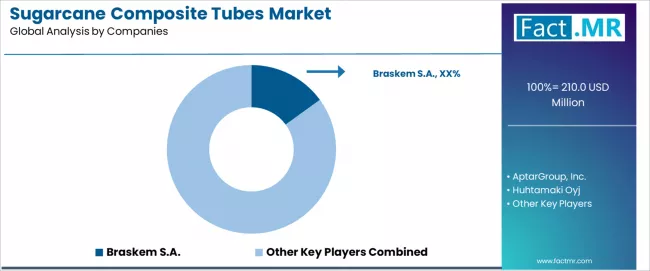
Sugarcane Composite Tubes Market Analysis By Company

The competitive landscape involves integrated biopolymer producers, specialty tube converters, and global packaging corporations. Leaders compete through proprietary resin formulations, secured access to sustainable feedstock, and advancements in multi-layer coextrusion technology for high-barrier bio-tubes.

Success depends on forming strategic partnerships across the value chain, from sugarcane processors to major brand owners, to ensure supply stability and co-develop tailored solutions. A key differentiator is the ability to provide third-party certification for bio-based content and carbon footprint reductions. Companies are also competing on the ability to offer a complete portfolio, from simple monolayer tubes to complex barrier structures, all based on renewable materials.

Key Players in the Sugarcane Composite Tubes Market

  • Braskem S.A.
  • AptarGroup, Inc.
  • Huhtamaki Oyj
  • Amcor plc
  • Uflex Limited
  • Toppan Inc.

Scope of the Report

Items Values
Quantitative Units (2026) USD 210.0 Million
End-Use Sector Cosmetics, Personal Care, Food Products, Household, Others
Packaging Format Bio-Composite Tubes, Flexible Tubes, Barrier Tubes, Stand-Up Tubes, Others
Material Sugarcane PE, Hybrid Bio-Polymers, Bio-EVOH, Bio-HDPE, Others
Technology Extrusion Blow Molding, Multi-Layer Coextrusion, Barrier Lamination, High-speed Extrusion, Others
Regions Covered North America, Europe, Asia Pacific, Latin America, MEA
Key Companies Profiled Braskem S.A., AptarGroup, Inc., Huhtamaki Oyj, Amcor plc, Uflex Limited, Toppan Inc.

Sugarcane Composite Tubes Market by Segments

  • End-Use :

    • Cosmetics
    • Personal Care
    • Food Products
    • Household
    • Others
  • Packaging Format :

    • Bio-Composite Tubes
    • Flexible Tubes
    • Barrier Tubes
    • Stand-Up Tubes
    • Others
  • Material :

    • Sugarcane PE
    • Hybrid Bio-Polymers
    • Bio-EVOH
    • Bio-HDPE
    • Others
  • Technology :

    • Extrusion Blow Molding
    • Multi-Layer Coextrusion
    • Barrier Lamination
    • High-speed Extrusion
    • Others
  • Region :

    • North America
      • USA
      • Canada
      • Mexico
    • Europe
      • Germany
      • UK
      • France
      • Italy
      • Spain
      • Rest of Europe
    • Asia Pacific
      • China
      • India
      • Japan
      • South Korea
      • Australia
      • Rest of Asia Pacific
    • Latin America
      • Brazil
      • Argentina
      • Rest of Latin America
    • MEA
      • Saudi Arabia
      • UAE
      • South Africa
      • Rest of MEA

Table of Content

  1. Executive Summary
    • Global Market Outlook
    • Demand to side Trends
    • Supply to side Trends
    • Technology Roadmap Analysis
    • Analysis and Recommendations
  2. Market Overview
    • Market Coverage / Taxonomy
    • Market Definition / Scope / Limitations
  3. Market Background
    • Market Dynamics
      • Drivers
      • Restraints
      • Opportunity
      • Trends
    • Scenario Forecast
      • Demand in Optimistic Scenario
      • Demand in Likely Scenario
      • Demand in Conservative Scenario
    • Opportunity Map Analysis
    • Product Life Cycle Analysis
    • Supply Chain Analysis
    • Investment Feasibility Matrix
    • Value Chain Analysis
    • PESTLE and Porter’s Analysis
    • Regulatory Landscape
    • Regional Parent Market Outlook
    • Production and Consumption Statistics
    • Import and Export Statistics
  4. Global Market Analysis 2021 to 2025 and Forecast, 2026 to 2036
    • Historical Market Size Value (USD Million) Analysis, 2021 to 2025
    • Current and Future Market Size Value (USD Million) Projections, 2026 to 2036
      • Y to o to Y Growth Trend Analysis
      • Absolute $ Opportunity Analysis
  5. Global Market Pricing Analysis 2021 to 2025 and Forecast 2026 to 2036
  6. Global Market Analysis 2021 to 2025 and Forecast 2026 to 2036, By End-use
    • Introduction / Key Findings
    • Historical Market Size Value (USD Million) Analysis By End-use, 2021 to 2025
    • Current and Future Market Size Value (USD Million) Analysis and Forecast By End-use, 2026 to 2036
      • Cosmetics
      • Personal Care
      • Food Products
      • Household
      • Others
    • Y to o to Y Growth Trend Analysis By End-use, 2021 to 2025
    • Absolute $ Opportunity Analysis By End-use, 2026 to 2036
  7. Global Market Analysis 2021 to 2025 and Forecast 2026 to 2036, By Packaging Format
    • Introduction / Key Findings
    • Historical Market Size Value (USD Million) Analysis By Packaging Format, 2021 to 2025
    • Current and Future Market Size Value (USD Million) Analysis and Forecast By Packaging Format, 2026 to 2036
      • Bio-Composite Tubes
      • Flexible Tubes
      • Barrier Tubes
      • Stand-Up Tubes
      • Others
    • Y to o to Y Growth Trend Analysis By Packaging Format, 2021 to 2025
    • Absolute $ Opportunity Analysis By Packaging Format, 2026 to 2036
  8. Global Market Analysis 2021 to 2025 and Forecast 2026 to 2036, By Material
    • Introduction / Key Findings
    • Historical Market Size Value (USD Million) Analysis By Material, 2021 to 2025
    • Current and Future Market Size Value (USD Million) Analysis and Forecast By Material, 2026 to 2036
      • Sugarcane PE
      • Hybrid Bio-Polymers
      • Bio-EVOH
      • Bio-HDPE
      • Others
    • Y to o to Y Growth Trend Analysis By Material, 2021 to 2025
    • Absolute $ Opportunity Analysis By Material, 2026 to 2036
  9. Global Market Analysis 2021 to 2025 and Forecast 2026 to 2036, By Technology
    • Introduction / Key Findings
    • Historical Market Size Value (USD Million) Analysis By Technology, 2021 to 2025
    • Current and Future Market Size Value (USD Million) Analysis and Forecast By Technology, 2026 to 2036
      • Extrusion Blow Molding
      • Multi-Layer Coextrusion
      • Barrier Lamination
      • High-speed Extrusion
      • Others
    • Y to o to Y Growth Trend Analysis By Technology, 2021 to 2025
    • Absolute $ Opportunity Analysis By Technology, 2026 to 2036
  10. Global Market Analysis 2021 to 2025 and Forecast 2026 to 2036, By Region
    • Introduction
    • Historical Market Size Value (USD Million) Analysis By Region, 2021 to 2025
    • Current Market Size Value (USD Million) Analysis and Forecast By Region, 2026 to 2036
      • North America
      • Latin America
      • Western Europe
      • Eastern Europe
      • East Asia
      • South Asia and Pacific
      • Middle East & Africa
    • Market Attractiveness Analysis By Region
  11. North America Market Analysis 2021 to 2025 and Forecast 2026 to 2036, By Country
    • Historical Market Size Value (USD Million) Trend Analysis By Market Taxonomy, 2021 to 2025
    • Market Size Value (USD Million) Forecast By Market Taxonomy, 2026 to 2036
      • By Country
        • USA
        • Canada
        • Mexico
      • By End-use
      • By Packaging Format
      • By Material
      • By Technology
    • Market Attractiveness Analysis
      • By Country
      • By End-use
      • By Packaging Format
      • By Material
      • By Technology
    • Key Takeaways
  12. Latin America Market Analysis 2021 to 2025 and Forecast 2026 to 2036, By Country
    • Historical Market Size Value (USD Million) Trend Analysis By Market Taxonomy, 2021 to 2025
    • Market Size Value (USD Million) Forecast By Market Taxonomy, 2026 to 2036
      • By Country
        • Brazil
        • Chile
        • Rest of Latin America
      • By End-use
      • By Packaging Format
      • By Material
      • By Technology
    • Market Attractiveness Analysis
      • By Country
      • By End-use
      • By Packaging Format
      • By Material
      • By Technology
    • Key Takeaways
  13. Western Europe Market Analysis 2021 to 2025 and Forecast 2026 to 2036, By Country
    • Historical Market Size Value (USD Million) Trend Analysis By Market Taxonomy, 2021 to 2025
    • Market Size Value (USD Million) Forecast By Market Taxonomy, 2026 to 2036
      • By Country
        • Germany
        • UK
        • Italy
        • Spain
        • France
        • Nordic
        • BENELUX
        • Rest of Western Europe
      • By End-use
      • By Packaging Format
      • By Material
      • By Technology
    • Market Attractiveness Analysis
      • By Country
      • By End-use
      • By Packaging Format
      • By Material
      • By Technology
    • Key Takeaways
  14. Eastern Europe Market Analysis 2021 to 2025 and Forecast 2026 to 2036, By Country
    • Historical Market Size Value (USD Million) Trend Analysis By Market Taxonomy, 2021 to 2025
    • Market Size Value (USD Million) Forecast By Market Taxonomy, 2026 to 2036
      • By Country
        • Russia
        • Poland
        • Hungary
        • Balkan & Baltic
        • Rest of Eastern Europe
      • By End-use
      • By Packaging Format
      • By Material
      • By Technology
    • Market Attractiveness Analysis
      • By Country
      • By End-use
      • By Packaging Format
      • By Material
      • By Technology
    • Key Takeaways
  15. East Asia Market Analysis 2021 to 2025 and Forecast 2026 to 2036, By Country
    • Historical Market Size Value (USD Million) Trend Analysis By Market Taxonomy, 2021 to 2025
    • Market Size Value (USD Million) Forecast By Market Taxonomy, 2026 to 2036
      • By Country
        • China
        • Japan
        • South Korea
      • By End-use
      • By Packaging Format
      • By Material
      • By Technology
    • Market Attractiveness Analysis
      • By Country
      • By End-use
      • By Packaging Format
      • By Material
      • By Technology
    • Key Takeaways
  16. South Asia and Pacific Market Analysis 2021 to 2025 and Forecast 2026 to 2036, By Country
    • Historical Market Size Value (USD Million) Trend Analysis By Market Taxonomy, 2021 to 2025
    • Market Size Value (USD Million) Forecast By Market Taxonomy, 2026 to 2036
      • By Country
        • India
        • ASEAN
        • Australia & New Zealand
        • Rest of South Asia and Pacific
      • By End-use
      • By Packaging Format
      • By Material
      • By Technology
    • Market Attractiveness Analysis
      • By Country
      • By End-use
      • By Packaging Format
      • By Material
      • By Technology
    • Key Takeaways
  17. Middle East & Africa Market Analysis 2021 to 2025 and Forecast 2026 to 2036, By Country
    • Historical Market Size Value (USD Million) Trend Analysis By Market Taxonomy, 2021 to 2025
    • Market Size Value (USD Million) Forecast By Market Taxonomy, 2026 to 2036
      • By Country
        • Kingdom of Saudi Arabia
        • Other GCC Countries
        • Turkiye
        • South Africa
        • Other African Union
        • Rest of Middle East & Africa
      • By End-use
      • By Packaging Format
      • By Material
      • By Technology
    • Market Attractiveness Analysis
      • By Country
      • By End-use
      • By Packaging Format
      • By Material
      • By Technology
    • Key Takeaways
  18. Key Countries Market Analysis
    • USA
      • Pricing Analysis
      • Market Share Analysis, 2025
        • By End-use
        • By Packaging Format
        • By Material
        • By Technology
    • Canada
      • Pricing Analysis
      • Market Share Analysis, 2025
        • By End-use
        • By Packaging Format
        • By Material
        • By Technology
    • Mexico
      • Pricing Analysis
      • Market Share Analysis, 2025
        • By End-use
        • By Packaging Format
        • By Material
        • By Technology
    • Brazil
      • Pricing Analysis
      • Market Share Analysis, 2025
        • By End-use
        • By Packaging Format
        • By Material
        • By Technology
    • Chile
      • Pricing Analysis
      • Market Share Analysis, 2025
        • By End-use
        • By Packaging Format
        • By Material
        • By Technology
    • Germany
      • Pricing Analysis
      • Market Share Analysis, 2025
        • By End-use
        • By Packaging Format
        • By Material
        • By Technology
    • UK
      • Pricing Analysis
      • Market Share Analysis, 2025
        • By End-use
        • By Packaging Format
        • By Material
        • By Technology
    • Italy
      • Pricing Analysis
      • Market Share Analysis, 2025
        • By End-use
        • By Packaging Format
        • By Material
        • By Technology
    • Spain
      • Pricing Analysis
      • Market Share Analysis, 2025
        • By End-use
        • By Packaging Format
        • By Material
        • By Technology
    • France
      • Pricing Analysis
      • Market Share Analysis, 2025
        • By End-use
        • By Packaging Format
        • By Material
        • By Technology
    • India
      • Pricing Analysis
      • Market Share Analysis, 2025
        • By End-use
        • By Packaging Format
        • By Material
        • By Technology
    • ASEAN
      • Pricing Analysis
      • Market Share Analysis, 2025
        • By End-use
        • By Packaging Format
        • By Material
        • By Technology
    • Australia & New Zealand
      • Pricing Analysis
      • Market Share Analysis, 2025
        • By End-use
        • By Packaging Format
        • By Material
        • By Technology
    • China
      • Pricing Analysis
      • Market Share Analysis, 2025
        • By End-use
        • By Packaging Format
        • By Material
        • By Technology
    • Japan
      • Pricing Analysis
      • Market Share Analysis, 2025
        • By End-use
        • By Packaging Format
        • By Material
        • By Technology
    • South Korea
      • Pricing Analysis
      • Market Share Analysis, 2025
        • By End-use
        • By Packaging Format
        • By Material
        • By Technology
    • Russia
      • Pricing Analysis
      • Market Share Analysis, 2025
        • By End-use
        • By Packaging Format
        • By Material
        • By Technology
    • Poland
      • Pricing Analysis
      • Market Share Analysis, 2025
        • By End-use
        • By Packaging Format
        • By Material
        • By Technology
    • Hungary
      • Pricing Analysis
      • Market Share Analysis, 2025
        • By End-use
        • By Packaging Format
        • By Material
        • By Technology
    • Kingdom of Saudi Arabia
      • Pricing Analysis
      • Market Share Analysis, 2025
        • By End-use
        • By Packaging Format
        • By Material
        • By Technology
    • Turkiye
      • Pricing Analysis
      • Market Share Analysis, 2025
        • By End-use
        • By Packaging Format
        • By Material
        • By Technology
    • South Africa
      • Pricing Analysis
      • Market Share Analysis, 2025
        • By End-use
        • By Packaging Format
        • By Material
        • By Technology
  19. Market Structure Analysis
    • Competition Dashboard
    • Competition Benchmarking
    • Market Share Analysis of Top Players
      • By Regional
      • By End-use
      • By Packaging Format
      • By Material
      • By Technology
  20. Competition Analysis
    • Competition Deep Dive
      • Braskem S.A.
        • Overview
        • Product Portfolio
        • Profitability by Market Segments (Product/Age /Sales Channel/Region)
        • Sales Footprint
        • Strategy Overview
          • Marketing Strategy
          • Product Strategy
          • Channel Strategy
      • AptarGroup, Inc.
      • Huhtamaki Oyj
      • Amcor plc
      • Uflex Limited
      • Toppan Inc.
  21. Assumptions & Acronyms Used
  22. Research Methodology

List Of Table

  • Table 1: Global Market Value (USD Million) Forecast by Region, 2021 to 2036
  • Table 2: Global Market Value (USD Million) Forecast by End-use, 2021 to 2036
  • Table 3: Global Market Value (USD Million) Forecast by Packaging Format, 2021 to 2036
  • Table 4: Global Market Value (USD Million) Forecast by Material, 2021 to 2036
  • Table 5: Global Market Value (USD Million) Forecast by Technology, 2021 to 2036
  • Table 6: North America Market Value (USD Million) Forecast by Country, 2021 to 2036
  • Table 7: North America Market Value (USD Million) Forecast by End-use, 2021 to 2036
  • Table 8: North America Market Value (USD Million) Forecast by Packaging Format, 2021 to 2036
  • Table 9: North America Market Value (USD Million) Forecast by Material, 2021 to 2036
  • Table 10: North America Market Value (USD Million) Forecast by Technology, 2021 to 2036
  • Table 11: Latin America Market Value (USD Million) Forecast by Country, 2021 to 2036
  • Table 12: Latin America Market Value (USD Million) Forecast by End-use, 2021 to 2036
  • Table 13: Latin America Market Value (USD Million) Forecast by Packaging Format, 2021 to 2036
  • Table 14: Latin America Market Value (USD Million) Forecast by Material, 2021 to 2036
  • Table 15: Latin America Market Value (USD Million) Forecast by Technology, 2021 to 2036
  • Table 16: Western Europe Market Value (USD Million) Forecast by Country, 2021 to 2036
  • Table 17: Western Europe Market Value (USD Million) Forecast by End-use, 2021 to 2036
  • Table 18: Western Europe Market Value (USD Million) Forecast by Packaging Format, 2021 to 2036
  • Table 19: Western Europe Market Value (USD Million) Forecast by Material, 2021 to 2036
  • Table 20: Western Europe Market Value (USD Million) Forecast by Technology, 2021 to 2036
  • Table 21: Eastern Europe Market Value (USD Million) Forecast by Country, 2021 to 2036
  • Table 22: Eastern Europe Market Value (USD Million) Forecast by End-use, 2021 to 2036
  • Table 23: Eastern Europe Market Value (USD Million) Forecast by Packaging Format, 2021 to 2036
  • Table 24: Eastern Europe Market Value (USD Million) Forecast by Material, 2021 to 2036
  • Table 25: Eastern Europe Market Value (USD Million) Forecast by Technology, 2021 to 2036
  • Table 26: East Asia Market Value (USD Million) Forecast by Country, 2021 to 2036
  • Table 27: East Asia Market Value (USD Million) Forecast by End-use, 2021 to 2036
  • Table 28: East Asia Market Value (USD Million) Forecast by Packaging Format, 2021 to 2036
  • Table 29: East Asia Market Value (USD Million) Forecast by Material, 2021 to 2036
  • Table 30: East Asia Market Value (USD Million) Forecast by Technology, 2021 to 2036
  • Table 31: South Asia and Pacific Market Value (USD Million) Forecast by Country, 2021 to 2036
  • Table 32: South Asia and Pacific Market Value (USD Million) Forecast by End-use, 2021 to 2036
  • Table 33: South Asia and Pacific Market Value (USD Million) Forecast by Packaging Format, 2021 to 2036
  • Table 34: South Asia and Pacific Market Value (USD Million) Forecast by Material, 2021 to 2036
  • Table 35: South Asia and Pacific Market Value (USD Million) Forecast by Technology, 2021 to 2036
  • Table 36: Middle East & Africa Market Value (USD Million) Forecast by Country, 2021 to 2036
  • Table 37: Middle East & Africa Market Value (USD Million) Forecast by End-use, 2021 to 2036
  • Table 38: Middle East & Africa Market Value (USD Million) Forecast by Packaging Format, 2021 to 2036
  • Table 39: Middle East & Africa Market Value (USD Million) Forecast by Material, 2021 to 2036
  • Table 40: Middle East & Africa Market Value (USD Million) Forecast by Technology, 2021 to 2036

List Of Figures

  • Figure 1: Global Market Pricing Analysis
  • Figure 2: Global Market Value (USD Million) Forecast 2021 to 2036
  • Figure 3: Global Market Value Share and BPS Analysis by End-use, 2026 and 2036
  • Figure 4: Global Market Y to o to Y Growth Comparison by End-use, 2026 to 2036
  • Figure 5: Global Market Attractiveness Analysis by End-use
  • Figure 6: Global Market Value Share and BPS Analysis by Packaging Format, 2026 and 2036
  • Figure 7: Global Market Y to o to Y Growth Comparison by Packaging Format, 2026 to 2036
  • Figure 8: Global Market Attractiveness Analysis by Packaging Format
  • Figure 9: Global Market Value Share and BPS Analysis by Material, 2026 and 2036
  • Figure 10: Global Market Y to o to Y Growth Comparison by Material, 2026 to 2036
  • Figure 11: Global Market Attractiveness Analysis by Material
  • Figure 12: Global Market Value Share and BPS Analysis by Technology, 2026 and 2036
  • Figure 13: Global Market Y to o to Y Growth Comparison by Technology, 2026 to 2036
  • Figure 14: Global Market Attractiveness Analysis by Technology
  • Figure 15: Global Market Value (USD Million) Share and BPS Analysis by Region, 2026 and 2036
  • Figure 16: Global Market Y to o to Y Growth Comparison by Region, 2026 to 2036
  • Figure 17: Global Market Attractiveness Analysis by Region
  • Figure 18: North America Market Incremental Dollar Opportunity, 2026 to 2036
  • Figure 19: Latin America Market Incremental Dollar Opportunity, 2026 to 2036
  • Figure 20: Western Europe Market Incremental Dollar Opportunity, 2026 to 2036
  • Figure 21: Eastern Europe Market Incremental Dollar Opportunity, 2026 to 2036
  • Figure 22: East Asia Market Incremental Dollar Opportunity, 2026 to 2036
  • Figure 23: South Asia and Pacific Market Incremental Dollar Opportunity, 2026 to 2036
  • Figure 24: Middle East & Africa Market Incremental Dollar Opportunity, 2026 to 2036
  • Figure 25: North America Market Value Share and BPS Analysis by Country, 2026 and 2036
  • Figure 26: North America Market Value Share and BPS Analysis by End-use, 2026 and 2036
  • Figure 27: North America Market Y to o to Y Growth Comparison by End-use, 2026 to 2036
  • Figure 28: North America Market Attractiveness Analysis by End-use
  • Figure 29: North America Market Value Share and BPS Analysis by Packaging Format, 2026 and 2036
  • Figure 30: North America Market Y to o to Y Growth Comparison by Packaging Format, 2026 to 2036
  • Figure 31: North America Market Attractiveness Analysis by Packaging Format
  • Figure 32: North America Market Value Share and BPS Analysis by Material, 2026 and 2036
  • Figure 33: North America Market Y to o to Y Growth Comparison by Material, 2026 to 2036
  • Figure 34: North America Market Attractiveness Analysis by Material
  • Figure 35: North America Market Value Share and BPS Analysis by Technology, 2026 and 2036
  • Figure 36: North America Market Y to o to Y Growth Comparison by Technology, 2026 to 2036
  • Figure 37: North America Market Attractiveness Analysis by Technology
  • Figure 38: Latin America Market Value Share and BPS Analysis by Country, 2026 and 2036
  • Figure 39: Latin America Market Value Share and BPS Analysis by End-use, 2026 and 2036
  • Figure 40: Latin America Market Y to o to Y Growth Comparison by End-use, 2026 to 2036
  • Figure 41: Latin America Market Attractiveness Analysis by End-use
  • Figure 42: Latin America Market Value Share and BPS Analysis by Packaging Format, 2026 and 2036
  • Figure 43: Latin America Market Y to o to Y Growth Comparison by Packaging Format, 2026 to 2036
  • Figure 44: Latin America Market Attractiveness Analysis by Packaging Format
  • Figure 45: Latin America Market Value Share and BPS Analysis by Material, 2026 and 2036
  • Figure 46: Latin America Market Y to o to Y Growth Comparison by Material, 2026 to 2036
  • Figure 47: Latin America Market Attractiveness Analysis by Material
  • Figure 48: Latin America Market Value Share and BPS Analysis by Technology, 2026 and 2036
  • Figure 49: Latin America Market Y to o to Y Growth Comparison by Technology, 2026 to 2036
  • Figure 50: Latin America Market Attractiveness Analysis by Technology
  • Figure 51: Western Europe Market Value Share and BPS Analysis by Country, 2026 and 2036
  • Figure 52: Western Europe Market Value Share and BPS Analysis by End-use, 2026 and 2036
  • Figure 53: Western Europe Market Y to o to Y Growth Comparison by End-use, 2026 to 2036
  • Figure 54: Western Europe Market Attractiveness Analysis by End-use
  • Figure 55: Western Europe Market Value Share and BPS Analysis by Packaging Format, 2026 and 2036
  • Figure 56: Western Europe Market Y to o to Y Growth Comparison by Packaging Format, 2026 to 2036
  • Figure 57: Western Europe Market Attractiveness Analysis by Packaging Format
  • Figure 58: Western Europe Market Value Share and BPS Analysis by Material, 2026 and 2036
  • Figure 59: Western Europe Market Y to o to Y Growth Comparison by Material, 2026 to 2036
  • Figure 60: Western Europe Market Attractiveness Analysis by Material
  • Figure 61: Western Europe Market Value Share and BPS Analysis by Technology, 2026 and 2036
  • Figure 62: Western Europe Market Y to o to Y Growth Comparison by Technology, 2026 to 2036
  • Figure 63: Western Europe Market Attractiveness Analysis by Technology
  • Figure 64: Eastern Europe Market Value Share and BPS Analysis by Country, 2026 and 2036
  • Figure 65: Eastern Europe Market Value Share and BPS Analysis by End-use, 2026 and 2036
  • Figure 66: Eastern Europe Market Y to o to Y Growth Comparison by End-use, 2026 to 2036
  • Figure 67: Eastern Europe Market Attractiveness Analysis by End-use
  • Figure 68: Eastern Europe Market Value Share and BPS Analysis by Packaging Format, 2026 and 2036
  • Figure 69: Eastern Europe Market Y to o to Y Growth Comparison by Packaging Format, 2026 to 2036
  • Figure 70: Eastern Europe Market Attractiveness Analysis by Packaging Format
  • Figure 71: Eastern Europe Market Value Share and BPS Analysis by Material, 2026 and 2036
  • Figure 72: Eastern Europe Market Y to o to Y Growth Comparison by Material, 2026 to 2036
  • Figure 73: Eastern Europe Market Attractiveness Analysis by Material
  • Figure 74: Eastern Europe Market Value Share and BPS Analysis by Technology, 2026 and 2036
  • Figure 75: Eastern Europe Market Y to o to Y Growth Comparison by Technology, 2026 to 2036
  • Figure 76: Eastern Europe Market Attractiveness Analysis by Technology
  • Figure 77: East Asia Market Value Share and BPS Analysis by Country, 2026 and 2036
  • Figure 78: East Asia Market Value Share and BPS Analysis by End-use, 2026 and 2036
  • Figure 79: East Asia Market Y to o to Y Growth Comparison by End-use, 2026 to 2036
  • Figure 80: East Asia Market Attractiveness Analysis by End-use
  • Figure 81: East Asia Market Value Share and BPS Analysis by Packaging Format, 2026 and 2036
  • Figure 82: East Asia Market Y to o to Y Growth Comparison by Packaging Format, 2026 to 2036
  • Figure 83: East Asia Market Attractiveness Analysis by Packaging Format
  • Figure 84: East Asia Market Value Share and BPS Analysis by Material, 2026 and 2036
  • Figure 85: East Asia Market Y to o to Y Growth Comparison by Material, 2026 to 2036
  • Figure 86: East Asia Market Attractiveness Analysis by Material
  • Figure 87: East Asia Market Value Share and BPS Analysis by Technology, 2026 and 2036
  • Figure 88: East Asia Market Y to o to Y Growth Comparison by Technology, 2026 to 2036
  • Figure 89: East Asia Market Attractiveness Analysis by Technology
  • Figure 90: South Asia and Pacific Market Value Share and BPS Analysis by Country, 2026 and 2036
  • Figure 91: South Asia and Pacific Market Value Share and BPS Analysis by End-use, 2026 and 2036
  • Figure 92: South Asia and Pacific Market Y to o to Y Growth Comparison by End-use, 2026 to 2036
  • Figure 93: South Asia and Pacific Market Attractiveness Analysis by End-use
  • Figure 94: South Asia and Pacific Market Value Share and BPS Analysis by Packaging Format, 2026 and 2036
  • Figure 95: South Asia and Pacific Market Y to o to Y Growth Comparison by Packaging Format, 2026 to 2036
  • Figure 96: South Asia and Pacific Market Attractiveness Analysis by Packaging Format
  • Figure 97: South Asia and Pacific Market Value Share and BPS Analysis by Material, 2026 and 2036
  • Figure 98: South Asia and Pacific Market Y to o to Y Growth Comparison by Material, 2026 to 2036
  • Figure 99: South Asia and Pacific Market Attractiveness Analysis by Material
  • Figure 100: South Asia and Pacific Market Value Share and BPS Analysis by Technology, 2026 and 2036
  • Figure 101: South Asia and Pacific Market Y to o to Y Growth Comparison by Technology, 2026 to 2036
  • Figure 102: South Asia and Pacific Market Attractiveness Analysis by Technology
  • Figure 103: Middle East & Africa Market Value Share and BPS Analysis by Country, 2026 and 2036
  • Figure 104: Middle East & Africa Market Value Share and BPS Analysis by End-use, 2026 and 2036
  • Figure 105: Middle East & Africa Market Y to o to Y Growth Comparison by End-use, 2026 to 2036
  • Figure 106: Middle East & Africa Market Attractiveness Analysis by End-use
  • Figure 107: Middle East & Africa Market Value Share and BPS Analysis by Packaging Format, 2026 and 2036
  • Figure 108: Middle East & Africa Market Y to o to Y Growth Comparison by Packaging Format, 2026 to 2036
  • Figure 109: Middle East & Africa Market Attractiveness Analysis by Packaging Format
  • Figure 110: Middle East & Africa Market Value Share and BPS Analysis by Material, 2026 and 2036
  • Figure 111: Middle East & Africa Market Y to o to Y Growth Comparison by Material, 2026 to 2036
  • Figure 112: Middle East & Africa Market Attractiveness Analysis by Material
  • Figure 113: Middle East & Africa Market Value Share and BPS Analysis by Technology, 2026 and 2036
  • Figure 114: Middle East & Africa Market Y to o to Y Growth Comparison by Technology, 2026 to 2036
  • Figure 115: Middle East & Africa Market Attractiveness Analysis by Technology
  • Figure 116: Global Market - Tier Structure Analysis
  • Figure 117: Global Market - Company Share Analysis

- FAQs -

How big is the sugarcane composite tubes market in 2026?

The global sugarcane composite tubes market is estimated to be valued at USD 210.0 million in 2026.

What will be the size of sugarcane composite tubes market in 2036?

The market size for the sugarcane composite tubes market is projected to reach USD 540.0 million by 2036.

How much will be the sugarcane composite tubes market growth between 2026 and 2036?

The sugarcane composite tubes market is expected to grow at a 9.9% CAGR between 2026 and 2036.

What are the key product types in the sugarcane composite tubes market?

The key product types in sugarcane composite tubes market are cosmetics, personal care, food products, household and others.

Which packaging format segment to contribute significant share in the sugarcane composite tubes market in 2026?

In terms of packaging format, bio-composite tubes segment to command 48.0% share in the sugarcane composite tubes market in 2026.

Sugarcane Composite Tubes Market