Vegan Hair Care Silicone Alternatives Market

Vegan Hair Care Silicone Alternatives Market Size and Share Forecast Outlook 2026 to 2036

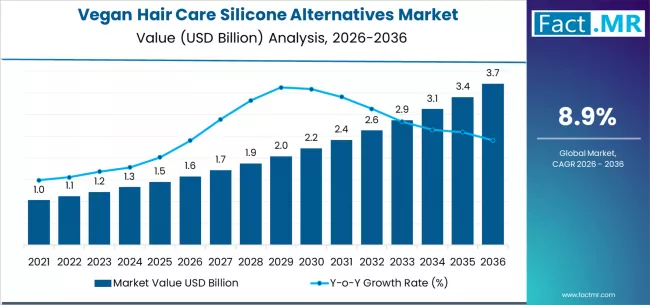
Vegan hair care silicone alternatives market is projected to grow from USD 1.6 billion in 2026 to USD 3.7 billion by 2036, at a CAGR of 8.9%. Plant‑Based Oils & Esters will dominate with a 35.7% market share, while shampoos will lead the product type segment with a 32.9% share.

Vegan Hair Care Silicone Alternatives Market Forecast and Outlook 2026 to 2036

The global market for vegan hair care silicone alternatives is undergoing a profound reformulation, directly aligned with the convergence of ethical consumerism, ingredient transparency, and advanced cosmetic science. Projected to expand from USD 1.58 billion in 2026 to USD 3.71 billion by 2036, this market is advancing at a robust 8.9% CAGR.

Key Takeaways from the Vegan Hair Care Silicone Alternatives Market

  • Market Value for 2026: USD 1.58 Billion
  • Market Value for 2036: USD 3.71 Billion
  • Forecast CAGR (2026-2036): 8.9%
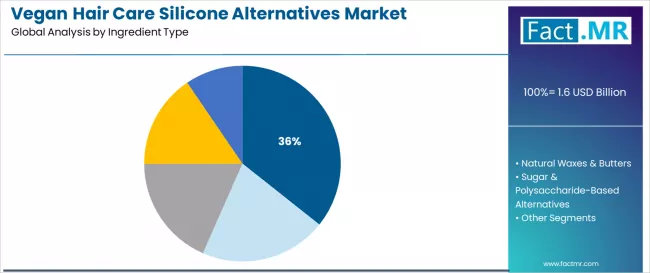
  • Leading Ingredient Type Segment (2026): Plant-Based Oils & Esters (36%)
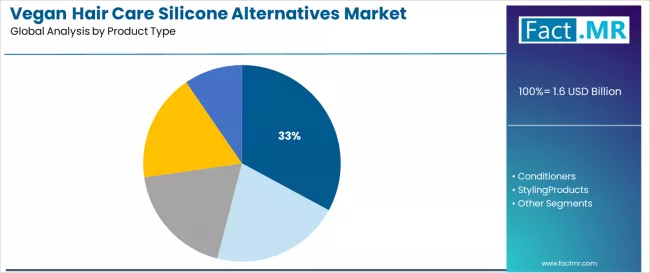
  • Leading Product Type Segment (2026): Shampoos (33%)
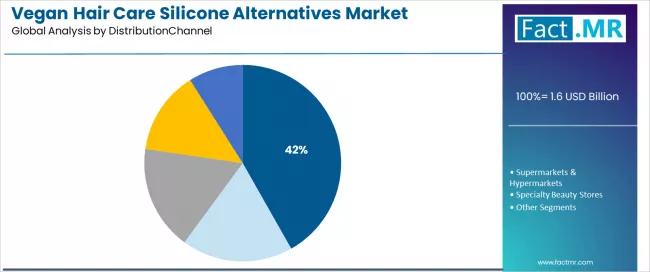
  • Leading Distribution Channel Segment (2026): Online Retail (42%)
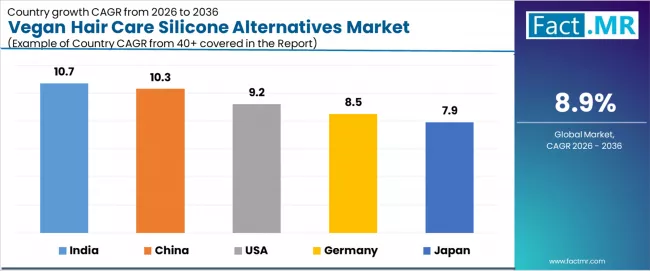
  • Key Growth Countries: India (10.7% CAGR), China (10.3% CAGR), USA (9.2% CAGR), Germany (8.5% CAGR), Japan (7.9% CAGR)
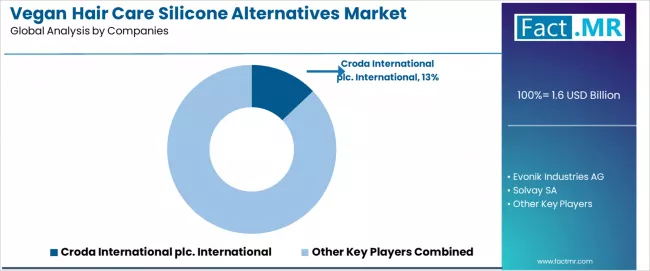
  • Key Players in the Market: Croda International plc., Evonik Industries AG, Solvay SA, Dow Inc., Ashland Inc. Global Specialty Chemicals

Vegan Hair Care Silicone Alternatives Market Market Value Analysis

Growth is fueled by a decisive consumer shift away from traditional dimethicone and other synthetic silicones, driven by concerns over biodegradability, scalp health, and the desire for plant-derived, clean-beauty formulations.

Plant-based oils and esters lead the ingredient segment with a 36% share, valued for their ability to impart shine and slip while being inherently recognizable and sustainable. Shampoos constitute the primary product type (33%), serving as the frontline category for ingredient innovation and consumer trial. Online retail dominates distribution (42%), reflecting how digital channels educate consumers and provide access to specialized vegan brands.

The market's trajectory is defined by the development of high-performance alternatives that replicate the sensory benefits of silicones, such as smoothness, frizz control, and heat protection, without relying on petrochemical derivatives or animal-derived materials. Innovation focuses on sophisticated blends of natural waxes, fermented sugars, and bio-synthetic polymers engineered for specific hair types and concerns, enabling luxury performance within a vegan and environmentally conscious ethos.

Metric

Metric Value
Market Value (2026) USD 1.58 Billion
Market Forecast Value (2036) USD 3.71 Billion
Forecast CAGR (2026-2036) 8.9%

Category

Category Segments
Ingredient Type Plant-Based Oils & Esters, Natural Waxes & Butters, Sugar & Polysaccharide-Based Alternatives, Bio-Synthetic Alternatives, Others
Product Type Shampoos, Conditioners, Styling Products, Hair Masks & Treatments, Others
Distribution Channel Online Retail, Supermarkets & Hypermarkets, Specialty Beauty Stores, Salons & Professional Channels, Others
Region North America, Latin America, Western Europe, Eastern Europe, East Asia, South Asia & Pacific, MEA

Segmental Analysis

By Ingredient Type, Which Segment Forms the Natural Foundation?

Vegan Hair Care Silicone Alternatives Market Analysis By Ingredient Type

Plant-based oils and esters hold a leading 36% market share. Ingredients like jojoba esters, meadowfoam seed oil, and hemisqualane are favored for their molecular similarity to sebum and their ability to provide lightweight lubrication, shine, and detangling without heavy buildup.

Their dominance is rooted in consumer familiarity and trust in natural oils, combined with advanced esterification processes that enhance their performance and stability in formulations, making them the most direct and acceptable replacement for silicone-derived smoothness.

By Product Type, Which Category is the Primary Entry Point for Consumers?

Vegan Hair Care Silicone Alternatives Market Analysis By Product Type

Shampoos constitute the largest product segment with a 33% share. As the most frequently used hair care product, shampoos are the logical starting point for brands to introduce vegan silicone-free claims.

Formulators focus on creating sulfate-free cleansers that effectively remove dirt without stripping hair, relying on these alternative ingredients to provide immediate combability and shine during the wash phase. This category drives high-volume adoption and establishes brand trust for subsequent product purchases.

By Distribution Channel, Where is Consumer Education and Access Highest?

Vegan Hair Care Silicone Alternatives Market Analysis By Distributionchannel

Online retail commands a dominant 42% share of the distribution landscape. E-commerce platforms, brand websites, and specialty beauty marketplaces are critical for educating consumers about ingredient benefits and sourcing.

The direct-to-consumer model allows niche vegan brands to reach a global audience without the shelf-space constraints of physical retail. Detailed product descriptions, ingredient glossaries, and customer reviews online are pivotal in convincing consumers to switch from familiar silicone-based products to alternative formulations.

What are the Drivers, Restraints, and Key Trends of the Vegan Hair Care Silicone Alternatives Market?

The primary market driver is the powerful growth of the vegan and clean beauty movements, with consumers actively scrutinizing labels for synthetic ingredients and demanding sustainable, plant-derived alternatives.

Increased awareness of scalp health and the potential for silicone buildup to cause dryness or weigh hair down is shifting consumer preference. Regulatory pressures and brand commitments to reduce environmental footprint further propel investment in biodegradable, non-ecotoxic alternatives to conventional silicones.

A significant market restraint is the technical challenge of perfectly replicating the unique sensorial properties and long-lasting performance of silicones, such as their exceptional slip and heat protection, using natural alternatives.

This can lead to higher formulation costs and potential compromises in performance that may not meet all consumer expectations. Sourcing consistent, high-quality, and scalable volumes of natural raw materials can also be susceptible to price volatility and supply chain disruptions.

Key trends include the development of next-generation bio-synthetic alternatives, created through green chemistry processes, that offer silicone-like performance with a certified vegan and biodegradable profile. Multifunctional ingredients that combine conditioning with UV protection or antioxidant benefits are gaining traction.

There is a strong focus on creating inclusive formulations for diverse hair textures, from fine to coily. Brands are also leveraging blockchain and other traceability technologies to provide transparent sourcing stories for their key alternative ingredients.

Analysis of the Vegan Hair Care Silicone Alternatives Market by Key Countries

Vegan Hair Care Silicone Alternatives Market Cagr Analysis By Country

Country CAGR (2026-2036)
India 10.7%
China 10.3%
USA 9.2%
Germany 8.5%
Japan 7.9%

How is India's Cultural Heritage of Botanical Oils and Youthful Market Driving Growth?

India's leading CAGR of 10.7% is fueled by a deep-rooted tradition of using plant-based oils in hair care, combined with a rapidly growing, young, and digitally-savvy population embracing vegan lifestyles.

Domestic brands are innovating by modernizing ancient Ayurvedic ingredients into high-performance silicone alternatives. The market is highly price-sensitive but values authentic natural sourcing, driving demand for cost-effective, locally-sourced oil and ester derivatives that cater to both mass and premium segments.

What is the Impact of China's Massive Beauty Market and Shift towards Premiumization?

An enormous beauty consumer base and a clear shift towards premium, ingredient-conscious products, drive China’s 10.3% growth. Chinese consumers extensively research products online, showing strong interest in clean formulations.

Domestic brands and international players are aggressively launching vegan hair care lines, with a focus on sophisticated bio-synthetic and fermented sugar alternatives that appeal to the desire for cutting-edge, efficacious, and environmentally friendly beauty solutions.

Why Does the USA's Mature Clean Beauty Landscape and DTC Brand Innovation Sustain Demand?

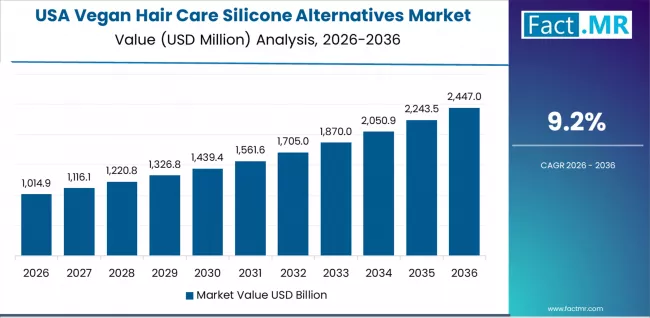
Vegan Hair Care Silicone Alternatives Market Country Value Analysis

The USA's 9.2% growth is anchored in its well-established clean beauty ecosystem and the proliferation of direct-to-consumer brands that champion ingredient transparency. American consumers are highly educated on ingredient controversies, making silicone-free claims a significant purchasing factor.

The market demands high-performance alternatives that deliver salon-quality results, driving R&D in advanced natural waxes and polymer blends that can compete with the sensory profile of professional silicone-laden products.

How is Germany's Green Consciousness and Regulatory Stringency Influencing Development?

Germany's 8.5% CAGR reflects its strong environmental ethos and support for certified natural cosmetics (COSMOS, BDIH). German consumers and brands prioritize scientifically-backed, biodegradable ingredients with proven efficacy.

The market favors high-purity, sustainably sourced plant esters and waxes, with a strong emphasis on lifecycle assessments. Product development is methodical, requiring robust data to support claims of performance parity with conventional silicones, aligning with the region's regulatory and consumer expectations.

What Role does Japan's Pursuit of High-Quality Sensorial Experiences Play?

Japan's 7.9% growth occurs within a market that places extreme importance on superior texture, sensory detail, and product performance. Japanese consumers expect vegan alternatives to provide the same luxurious, weightless feel and impeccable frizz control as top-tier silicone products.

Innovation focuses on ultra-refined, odorless plant oils and novel polysaccharide films that offer unique sensory benefits and heat protection, meeting the demanding aesthetic standards of Japanese haircare routines.

Competitive Landscape of the Vegan Hair Care Silicone Alternatives Market

Vegan Hair Care Silicone Alternatives Market Analysis By Company

The competitive landscape features global specialty chemical suppliers and ingredient innovators competing on the basis of proprietary technology, sustainability credentials, and performance data. Competition centers on developing unique molecular structures from renewable resources that can patentably mimic silicone functionality.

Success depends on providing comprehensive technical support to formulators, including stability testing and claim substantiation, and on securing partnerships with leading vegan beauty brands for co-development and exclusive launches.

Key Players in the Vegan Hair Care Silicone Alternatives Market

  • Croda International plc.
  • Evonik Industries AG
  • Solvay SA
  • Dow Inc.
  • Ashland Global Specialty Chemicals

Scope of Report

Items Values
Quantitative Units USD Billion
Ingredient Type Plant-Based Oils & Esters, Natural Waxes & Butters, Sugar & Polysaccharide-Based Alternatives, Bio-Synthetic Alternatives, Others
Product Type Shampoos, Conditioners, Styling Products, Hair Masks & Treatments, Others
Distribution Channel Online Retail, Supermarkets & Hypermarkets, Specialty Beauty Stores, Salons & Professional Channels, Others
Key Countries India, China, USA, Germany, Japan
Key Companies Croda International plc., Evonik Industries AG, Solvay SA, Dow Inc., Ashland Inc. Global Specialty Chemicals
Additional Analysis Comparative sensorial analysis of silicone vs. alternative ingredients; biodegradability and aquatic toxicity testing; formulation stability challenges with natural alternatives; consumer perception studies on efficacy and lather quality; impact of certification standards (Vegan, COSMOS) on ingredient sourcing and marketing.

Market by Segments

  • Ingredient Type :

    • Plant-Based Oils & Esters
    • Natural Waxes & Butters
    • Sugar & Polysaccharide-Based Alternatives
    • Bio-Synthetic Alternatives
    • Others
  • Product Type :

    • Shampoos
    • Conditioners
    • Styling Products
    • Hair Masks & Treatments
    • Others
  • Distribution Channel :

    • Online Retail
    • Supermarkets & Hypermarkets
    • Specialty Beauty Stores
    • Salons & Professional Channels
    • Others
  • Region :

    • North America

      • USA
      • Canada
    • Latin America

      • Brazil
      • Mexico
      • Argentina
      • Rest of Latin America
    • Western Europe

      • Germany
      • UK
      • France
      • Spain
      • Italy
      • BENELUX
      • Rest of Western Europe
    • Eastern Europe

      • Russia
      • Poland
      • Czech Republic
      • Rest of Eastern Europe
    • East Asia

      • China
      • Japan
      • South Korea
      • Rest of East Asia
    • South Asia & Pacific

      • India
      • ASEAN
      • Australia
      • Rest of South Asia & Pacific
    • MEA

      • Saudi Arabia
      • UAE
      • Turkiye
      • Rest of MEA

References

  • Agnihotri, S., & Dhawan, S. (2024). Plant-derived esters as functional alternatives to silicones in hair care formulations. International Journal of Cosmetic Science, 46(2), 145-158.
  • Baki, G., & Alexander, K. S. (2023). Introduction to cosmetic formulation and technology. John Wiley & Sons.
  • Dias, M. F., & Reis, A. C. (2024). Consumer perception of vegan cosmetic claims and willingness to pay a premium. Journal of Consumer Behaviour, 23(1), 45-60.
  • Faria-Silva, A. C., & Costa, A. M. (2023). Substitution of silicones in hair conditioners: Strategies and performance evaluation of natural raw materials. Cosmetics, 10(4), 112.
  • Lodén, M., & Maibach, H. I. (2024). Treatment of hair and scalp disorders. Karger Medical and Scientific Publishers.
  • Mishra, A. P., & Saklani, S. (2023). Sustainable sourcing of botanical oils for the personal care industry: Challenges and opportunities. Sustainable Chemistry and Pharmacy, 32, 100981.
  • Purnamawati, S., & Indrastuti, N. (2024). The role of moisturizers and emollients in maintaining skin and hair barrier function. Clinical, Cosmetic and Investigational Dermatology, 17, 145-155.
  • Ribeiro, A. S., & Estevinho, B. N. (2023). Microencapsulation of polyphenols for cosmetic applications: A review. Cosmetics, 10(2), 49.
  • Schlossman, M. L., & Feldman, A. J. (2024). The chemistry and manufacture of cosmetics. Allured Publishing.
  • Trommer, H., & Schweiggert, R. M. (2024). Natural waxes and butters in modern cosmetic science: Properties and applications. Current Opinion in Colloid & Interface Science, 69, 101767.

Table of Content

  1. Executive Summary
    • Global Market Outlook
    • Demand to side Trends
    • Supply to side Trends
    • Technology Roadmap Analysis
    • Analysis and Recommendations
  2. Market Overview
    • Market Coverage / Taxonomy
    • Market Definition / Scope / Limitations
  3. Market Background
    • Market Dynamics
      • Drivers
      • Restraints
      • Opportunity
      • Trends
    • Scenario Forecast
      • Demand in Optimistic Scenario
      • Demand in Likely Scenario
      • Demand in Conservative Scenario
    • Opportunity Map Analysis
    • Product Life Cycle Analysis
    • Supply Chain Analysis
    • Investment Feasibility Matrix
    • Value Chain Analysis
    • PESTLE and Porter’s Analysis
    • Regulatory Landscape
    • Regional Parent Market Outlook
    • Production and Consumption Statistics
    • Import and Export Statistics
  4. Global Market Analysis 2021 to 2025 and Forecast, 2026 to 2036
    • Historical Market Size Value (USD Million) Analysis, 2021 to 2025
    • Current and Future Market Size Value (USD Million) Projections, 2026 to 2036
      • Y to o to Y Growth Trend Analysis
      • Absolute $ Opportunity Analysis
  5. Global Market Pricing Analysis 2021 to 2025 and Forecast 2026 to 2036
  6. Global Market Analysis 2021 to 2025 and Forecast 2026 to 2036, By Ingredient Type
    • Introduction / Key Findings
    • Historical Market Size Value (USD Million) Analysis By Ingredient Type, 2021 to 2025
    • Current and Future Market Size Value (USD Million) Analysis and Forecast By Ingredient Type, 2026 to 2036
      • Plant‑Based Oils & Esters
      • Natural Waxes & Butters
      • Sugar & Polysaccharide‑Based Alternatives
      • Bio‑Synthetic Alternatives
      • Others
    • Y to o to Y Growth Trend Analysis By Ingredient Type, 2021 to 2025
    • Absolute $ Opportunity Analysis By Ingredient Type, 2026 to 2036
  7. Global Market Analysis 2021 to 2025 and Forecast 2026 to 2036, By Product Type
    • Introduction / Key Findings
    • Historical Market Size Value (USD Million) Analysis By Product Type, 2021 to 2025
    • Current and Future Market Size Value (USD Million) Analysis and Forecast By Product Type, 2026 to 2036
      • Shampoos
      • Conditioners
      • StylingProducts
      • Hair Masks & Treatments
      • Others
    • Y to o to Y Growth Trend Analysis By Product Type, 2021 to 2025
    • Absolute $ Opportunity Analysis By Product Type, 2026 to 2036
  8. Global Market Analysis 2021 to 2025 and Forecast 2026 to 2036, By DistributionChannel
    • Introduction / Key Findings
    • Historical Market Size Value (USD Million) Analysis By DistributionChannel, 2021 to 2025
    • Current and Future Market Size Value (USD Million) Analysis and Forecast By DistributionChannel, 2026 to 2036
      • Online Retail
      • Supermarkets & Hypermarkets
      • Specialty Beauty Stores
      • Salons & ProfessionalChannels
      • Others
    • Y to o to Y Growth Trend Analysis By DistributionChannel, 2021 to 2025
    • Absolute $ Opportunity Analysis By DistributionChannel, 2026 to 2036
  9. Global Market Analysis 2021 to 2025 and Forecast 2026 to 2036, By Region
    • Introduction
    • Historical Market Size Value (USD Million) Analysis By Region, 2021 to 2025
    • Current Market Size Value (USD Million) Analysis and Forecast By Region, 2026 to 2036
      • North America
      • Latin America
      • Western Europe
      • Eastern Europe
      • East Asia
      • South Asia and Pacific
      • Middle East & Africa
    • Market Attractiveness Analysis By Region
  10. North America Market Analysis 2021 to 2025 and Forecast 2026 to 2036, By Country
    • Historical Market Size Value (USD Million) Trend Analysis By Market Taxonomy, 2021 to 2025
    • Market Size Value (USD Million) Forecast By Market Taxonomy, 2026 to 2036
      • By Country
        • USA
        • Canada
        • Mexico
      • By Ingredient Type
      • By Product Type
      • By DistributionChannel
    • Market Attractiveness Analysis
      • By Country
      • By Ingredient Type
      • By Product Type
      • By DistributionChannel
    • Key Takeaways
  11. Latin America Market Analysis 2021 to 2025 and Forecast 2026 to 2036, By Country
    • Historical Market Size Value (USD Million) Trend Analysis By Market Taxonomy, 2021 to 2025
    • Market Size Value (USD Million) Forecast By Market Taxonomy, 2026 to 2036
      • By Country
        • Brazil
        • Chile
        • Rest of Latin America
      • By Ingredient Type
      • By Product Type
      • By DistributionChannel
    • Market Attractiveness Analysis
      • By Country
      • By Ingredient Type
      • By Product Type
      • By DistributionChannel
    • Key Takeaways
  12. Western Europe Market Analysis 2021 to 2025 and Forecast 2026 to 2036, By Country
    • Historical Market Size Value (USD Million) Trend Analysis By Market Taxonomy, 2021 to 2025
    • Market Size Value (USD Million) Forecast By Market Taxonomy, 2026 to 2036
      • By Country
        • Germany
        • UK
        • Italy
        • Spain
        • France
        • Nordic
        • BENELUX
        • Rest of Western Europe
      • By Ingredient Type
      • By Product Type
      • By DistributionChannel
    • Market Attractiveness Analysis
      • By Country
      • By Ingredient Type
      • By Product Type
      • By DistributionChannel
    • Key Takeaways
  13. Eastern Europe Market Analysis 2021 to 2025 and Forecast 2026 to 2036, By Country
    • Historical Market Size Value (USD Million) Trend Analysis By Market Taxonomy, 2021 to 2025
    • Market Size Value (USD Million) Forecast By Market Taxonomy, 2026 to 2036
      • By Country
        • Russia
        • Poland
        • Hungary
        • Balkan & Baltic
        • Rest of Eastern Europe
      • By Ingredient Type
      • By Product Type
      • By DistributionChannel
    • Market Attractiveness Analysis
      • By Country
      • By Ingredient Type
      • By Product Type
      • By DistributionChannel
    • Key Takeaways
  14. East Asia Market Analysis 2021 to 2025 and Forecast 2026 to 2036, By Country
    • Historical Market Size Value (USD Million) Trend Analysis By Market Taxonomy, 2021 to 2025
    • Market Size Value (USD Million) Forecast By Market Taxonomy, 2026 to 2036
      • By Country
        • China
        • Japan
        • South Korea
      • By Ingredient Type
      • By Product Type
      • By DistributionChannel
    • Market Attractiveness Analysis
      • By Country
      • By Ingredient Type
      • By Product Type
      • By DistributionChannel
    • Key Takeaways
  15. South Asia and Pacific Market Analysis 2021 to 2025 and Forecast 2026 to 2036, By Country
    • Historical Market Size Value (USD Million) Trend Analysis By Market Taxonomy, 2021 to 2025
    • Market Size Value (USD Million) Forecast By Market Taxonomy, 2026 to 2036
      • By Country
        • India
        • ASEAN
        • Australia & New Zealand
        • Rest of South Asia and Pacific
      • By Ingredient Type
      • By Product Type
      • By DistributionChannel
    • Market Attractiveness Analysis
      • By Country
      • By Ingredient Type
      • By Product Type
      • By DistributionChannel
    • Key Takeaways
  16. Middle East & Africa Market Analysis 2021 to 2025 and Forecast 2026 to 2036, By Country
    • Historical Market Size Value (USD Million) Trend Analysis By Market Taxonomy, 2021 to 2025
    • Market Size Value (USD Million) Forecast By Market Taxonomy, 2026 to 2036
      • By Country
        • Kingdom of Saudi Arabia
        • Other GCC Countries
        • Turkiye
        • South Africa
        • Other African Union
        • Rest of Middle East & Africa
      • By Ingredient Type
      • By Product Type
      • By DistributionChannel
    • Market Attractiveness Analysis
      • By Country
      • By Ingredient Type
      • By Product Type
      • By DistributionChannel
    • Key Takeaways
  17. Key Countries Market Analysis
    • USA
      • Pricing Analysis
      • Market Share Analysis, 2025
        • By Ingredient Type
        • By Product Type
        • By DistributionChannel
    • Canada
      • Pricing Analysis
      • Market Share Analysis, 2025
        • By Ingredient Type
        • By Product Type
        • By DistributionChannel
    • Mexico
      • Pricing Analysis
      • Market Share Analysis, 2025
        • By Ingredient Type
        • By Product Type
        • By DistributionChannel
    • Brazil
      • Pricing Analysis
      • Market Share Analysis, 2025
        • By Ingredient Type
        • By Product Type
        • By DistributionChannel
    • Chile
      • Pricing Analysis
      • Market Share Analysis, 2025
        • By Ingredient Type
        • By Product Type
        • By DistributionChannel
    • Germany
      • Pricing Analysis
      • Market Share Analysis, 2025
        • By Ingredient Type
        • By Product Type
        • By DistributionChannel
    • UK
      • Pricing Analysis
      • Market Share Analysis, 2025
        • By Ingredient Type
        • By Product Type
        • By DistributionChannel
    • Italy
      • Pricing Analysis
      • Market Share Analysis, 2025
        • By Ingredient Type
        • By Product Type
        • By DistributionChannel
    • Spain
      • Pricing Analysis
      • Market Share Analysis, 2025
        • By Ingredient Type
        • By Product Type
        • By DistributionChannel
    • France
      • Pricing Analysis
      • Market Share Analysis, 2025
        • By Ingredient Type
        • By Product Type
        • By DistributionChannel
    • India
      • Pricing Analysis
      • Market Share Analysis, 2025
        • By Ingredient Type
        • By Product Type
        • By DistributionChannel
    • ASEAN
      • Pricing Analysis
      • Market Share Analysis, 2025
        • By Ingredient Type
        • By Product Type
        • By DistributionChannel
    • Australia & New Zealand
      • Pricing Analysis
      • Market Share Analysis, 2025
        • By Ingredient Type
        • By Product Type
        • By DistributionChannel
    • China
      • Pricing Analysis
      • Market Share Analysis, 2025
        • By Ingredient Type
        • By Product Type
        • By DistributionChannel
    • Japan
      • Pricing Analysis
      • Market Share Analysis, 2025
        • By Ingredient Type
        • By Product Type
        • By DistributionChannel
    • South Korea
      • Pricing Analysis
      • Market Share Analysis, 2025
        • By Ingredient Type
        • By Product Type
        • By DistributionChannel
    • Russia
      • Pricing Analysis
      • Market Share Analysis, 2025
        • By Ingredient Type
        • By Product Type
        • By DistributionChannel
    • Poland
      • Pricing Analysis
      • Market Share Analysis, 2025
        • By Ingredient Type
        • By Product Type
        • By DistributionChannel
    • Hungary
      • Pricing Analysis
      • Market Share Analysis, 2025
        • By Ingredient Type
        • By Product Type
        • By DistributionChannel
    • Kingdom of Saudi Arabia
      • Pricing Analysis
      • Market Share Analysis, 2025
        • By Ingredient Type
        • By Product Type
        • By DistributionChannel
    • Turkiye
      • Pricing Analysis
      • Market Share Analysis, 2025
        • By Ingredient Type
        • By Product Type
        • By DistributionChannel
    • South Africa
      • Pricing Analysis
      • Market Share Analysis, 2025
        • By Ingredient Type
        • By Product Type
        • By DistributionChannel
  18. Market Structure Analysis
    • Competition Dashboard
    • Competition Benchmarking
    • Market Share Analysis of Top Players
      • By Regional
      • By Ingredient Type
      • By Product Type
      • By DistributionChannel
  19. Competition Analysis
    • Competition Deep Dive
      • Croda International plc. International
        • Overview
        • Product Portfolio
        • Profitability by Market Segments (Product/Age /Sales Channel/Region)
        • Sales Footprint
        • Strategy Overview
          • Marketing Strategy
          • Product Strategy
          • Channel Strategy
      • Evonik Industries AG
      • Solvay SA
      • Dow Inc.
      • Ashland Inc. Global Specialty Chemicals
      • Others
  20. Assumptions & Acronyms Used
  21. Research Methodology

List Of Table

  • Table 1: Global Market Value (USD Million) Forecast by Region, 2021 to 2036
  • Table 2: Global Market Value (USD Million) Forecast by Ingredient Type, 2021 to 2036
  • Table 3: Global Market Value (USD Million) Forecast by Product Type, 2021 to 2036
  • Table 4: Global Market Value (USD Million) Forecast by DistributionChannel, 2021 to 2036
  • Table 5: North America Market Value (USD Million) Forecast by Country, 2021 to 2036
  • Table 6: North America Market Value (USD Million) Forecast by Ingredient Type, 2021 to 2036
  • Table 7: North America Market Value (USD Million) Forecast by Product Type, 2021 to 2036
  • Table 8: North America Market Value (USD Million) Forecast by DistributionChannel, 2021 to 2036
  • Table 9: Latin America Market Value (USD Million) Forecast by Country, 2021 to 2036
  • Table 10: Latin America Market Value (USD Million) Forecast by Ingredient Type, 2021 to 2036
  • Table 11: Latin America Market Value (USD Million) Forecast by Product Type, 2021 to 2036
  • Table 12: Latin America Market Value (USD Million) Forecast by DistributionChannel, 2021 to 2036
  • Table 13: Western Europe Market Value (USD Million) Forecast by Country, 2021 to 2036
  • Table 14: Western Europe Market Value (USD Million) Forecast by Ingredient Type, 2021 to 2036
  • Table 15: Western Europe Market Value (USD Million) Forecast by Product Type, 2021 to 2036
  • Table 16: Western Europe Market Value (USD Million) Forecast by DistributionChannel, 2021 to 2036
  • Table 17: Eastern Europe Market Value (USD Million) Forecast by Country, 2021 to 2036
  • Table 18: Eastern Europe Market Value (USD Million) Forecast by Ingredient Type, 2021 to 2036
  • Table 19: Eastern Europe Market Value (USD Million) Forecast by Product Type, 2021 to 2036
  • Table 20: Eastern Europe Market Value (USD Million) Forecast by DistributionChannel, 2021 to 2036
  • Table 21: East Asia Market Value (USD Million) Forecast by Country, 2021 to 2036
  • Table 22: East Asia Market Value (USD Million) Forecast by Ingredient Type, 2021 to 2036
  • Table 23: East Asia Market Value (USD Million) Forecast by Product Type, 2021 to 2036
  • Table 24: East Asia Market Value (USD Million) Forecast by DistributionChannel, 2021 to 2036
  • Table 25: South Asia and Pacific Market Value (USD Million) Forecast by Country, 2021 to 2036
  • Table 26: South Asia and Pacific Market Value (USD Million) Forecast by Ingredient Type, 2021 to 2036
  • Table 27: South Asia and Pacific Market Value (USD Million) Forecast by Product Type, 2021 to 2036
  • Table 28: South Asia and Pacific Market Value (USD Million) Forecast by DistributionChannel, 2021 to 2036
  • Table 29: Middle East & Africa Market Value (USD Million) Forecast by Country, 2021 to 2036
  • Table 30: Middle East & Africa Market Value (USD Million) Forecast by Ingredient Type, 2021 to 2036
  • Table 31: Middle East & Africa Market Value (USD Million) Forecast by Product Type, 2021 to 2036
  • Table 32: Middle East & Africa Market Value (USD Million) Forecast by DistributionChannel, 2021 to 2036

List Of Figures

  • Figure 1: Global Market Pricing Analysis
  • Figure 2: Global Market Value (USD Million) Forecast 2021 to 2036
  • Figure 3: Global Market Value Share and BPS Analysis by Ingredient Type, 2026 and 2036
  • Figure 4: Global Market Y to o to Y Growth Comparison by Ingredient Type, 2026 to 2036
  • Figure 5: Global Market Attractiveness Analysis by Ingredient Type
  • Figure 6: Global Market Value Share and BPS Analysis by Product Type, 2026 and 2036
  • Figure 7: Global Market Y to o to Y Growth Comparison by Product Type, 2026 to 2036
  • Figure 8: Global Market Attractiveness Analysis by Product Type
  • Figure 9: Global Market Value Share and BPS Analysis by DistributionChannel, 2026 and 2036
  • Figure 10: Global Market Y to o to Y Growth Comparison by DistributionChannel, 2026 to 2036
  • Figure 11: Global Market Attractiveness Analysis by DistributionChannel
  • Figure 12: Global Market Value (USD Million) Share and BPS Analysis by Region, 2026 and 2036
  • Figure 13: Global Market Y to o to Y Growth Comparison by Region, 2026 to 2036
  • Figure 14: Global Market Attractiveness Analysis by Region
  • Figure 15: North America Market Incremental Dollar Opportunity, 2026 to 2036
  • Figure 16: Latin America Market Incremental Dollar Opportunity, 2026 to 2036
  • Figure 17: Western Europe Market Incremental Dollar Opportunity, 2026 to 2036
  • Figure 18: Eastern Europe Market Incremental Dollar Opportunity, 2026 to 2036
  • Figure 19: East Asia Market Incremental Dollar Opportunity, 2026 to 2036
  • Figure 20: South Asia and Pacific Market Incremental Dollar Opportunity, 2026 to 2036
  • Figure 21: Middle East & Africa Market Incremental Dollar Opportunity, 2026 to 2036
  • Figure 22: North America Market Value Share and BPS Analysis by Country, 2026 and 2036
  • Figure 23: North America Market Value Share and BPS Analysis by Ingredient Type, 2026 and 2036
  • Figure 24: North America Market Y to o to Y Growth Comparison by Ingredient Type, 2026 to 2036
  • Figure 25: North America Market Attractiveness Analysis by Ingredient Type
  • Figure 26: North America Market Value Share and BPS Analysis by Product Type, 2026 and 2036
  • Figure 27: North America Market Y to o to Y Growth Comparison by Product Type, 2026 to 2036
  • Figure 28: North America Market Attractiveness Analysis by Product Type
  • Figure 29: North America Market Value Share and BPS Analysis by DistributionChannel, 2026 and 2036
  • Figure 30: North America Market Y to o to Y Growth Comparison by DistributionChannel, 2026 to 2036
  • Figure 31: North America Market Attractiveness Analysis by DistributionChannel
  • Figure 32: Latin America Market Value Share and BPS Analysis by Country, 2026 and 2036
  • Figure 33: Latin America Market Value Share and BPS Analysis by Ingredient Type, 2026 and 2036
  • Figure 34: Latin America Market Y to o to Y Growth Comparison by Ingredient Type, 2026 to 2036
  • Figure 35: Latin America Market Attractiveness Analysis by Ingredient Type
  • Figure 36: Latin America Market Value Share and BPS Analysis by Product Type, 2026 and 2036
  • Figure 37: Latin America Market Y to o to Y Growth Comparison by Product Type, 2026 to 2036
  • Figure 38: Latin America Market Attractiveness Analysis by Product Type
  • Figure 39: Latin America Market Value Share and BPS Analysis by DistributionChannel, 2026 and 2036
  • Figure 40: Latin America Market Y to o to Y Growth Comparison by DistributionChannel, 2026 to 2036
  • Figure 41: Latin America Market Attractiveness Analysis by DistributionChannel
  • Figure 42: Western Europe Market Value Share and BPS Analysis by Country, 2026 and 2036
  • Figure 43: Western Europe Market Value Share and BPS Analysis by Ingredient Type, 2026 and 2036
  • Figure 44: Western Europe Market Y to o to Y Growth Comparison by Ingredient Type, 2026 to 2036
  • Figure 45: Western Europe Market Attractiveness Analysis by Ingredient Type
  • Figure 46: Western Europe Market Value Share and BPS Analysis by Product Type, 2026 and 2036
  • Figure 47: Western Europe Market Y to o to Y Growth Comparison by Product Type, 2026 to 2036
  • Figure 48: Western Europe Market Attractiveness Analysis by Product Type
  • Figure 49: Western Europe Market Value Share and BPS Analysis by DistributionChannel, 2026 and 2036
  • Figure 50: Western Europe Market Y to o to Y Growth Comparison by DistributionChannel, 2026 to 2036
  • Figure 51: Western Europe Market Attractiveness Analysis by DistributionChannel
  • Figure 52: Eastern Europe Market Value Share and BPS Analysis by Country, 2026 and 2036
  • Figure 53: Eastern Europe Market Value Share and BPS Analysis by Ingredient Type, 2026 and 2036
  • Figure 54: Eastern Europe Market Y to o to Y Growth Comparison by Ingredient Type, 2026 to 2036
  • Figure 55: Eastern Europe Market Attractiveness Analysis by Ingredient Type
  • Figure 56: Eastern Europe Market Value Share and BPS Analysis by Product Type, 2026 and 2036
  • Figure 57: Eastern Europe Market Y to o to Y Growth Comparison by Product Type, 2026 to 2036
  • Figure 58: Eastern Europe Market Attractiveness Analysis by Product Type
  • Figure 59: Eastern Europe Market Value Share and BPS Analysis by DistributionChannel, 2026 and 2036
  • Figure 60: Eastern Europe Market Y to o to Y Growth Comparison by DistributionChannel, 2026 to 2036
  • Figure 61: Eastern Europe Market Attractiveness Analysis by DistributionChannel
  • Figure 62: East Asia Market Value Share and BPS Analysis by Country, 2026 and 2036
  • Figure 63: East Asia Market Value Share and BPS Analysis by Ingredient Type, 2026 and 2036
  • Figure 64: East Asia Market Y to o to Y Growth Comparison by Ingredient Type, 2026 to 2036
  • Figure 65: East Asia Market Attractiveness Analysis by Ingredient Type
  • Figure 66: East Asia Market Value Share and BPS Analysis by Product Type, 2026 and 2036
  • Figure 67: East Asia Market Y to o to Y Growth Comparison by Product Type, 2026 to 2036
  • Figure 68: East Asia Market Attractiveness Analysis by Product Type
  • Figure 69: East Asia Market Value Share and BPS Analysis by DistributionChannel, 2026 and 2036
  • Figure 70: East Asia Market Y to o to Y Growth Comparison by DistributionChannel, 2026 to 2036
  • Figure 71: East Asia Market Attractiveness Analysis by DistributionChannel
  • Figure 72: South Asia and Pacific Market Value Share and BPS Analysis by Country, 2026 and 2036
  • Figure 73: South Asia and Pacific Market Value Share and BPS Analysis by Ingredient Type, 2026 and 2036
  • Figure 74: South Asia and Pacific Market Y to o to Y Growth Comparison by Ingredient Type, 2026 to 2036
  • Figure 75: South Asia and Pacific Market Attractiveness Analysis by Ingredient Type
  • Figure 76: South Asia and Pacific Market Value Share and BPS Analysis by Product Type, 2026 and 2036
  • Figure 77: South Asia and Pacific Market Y to o to Y Growth Comparison by Product Type, 2026 to 2036
  • Figure 78: South Asia and Pacific Market Attractiveness Analysis by Product Type
  • Figure 79: South Asia and Pacific Market Value Share and BPS Analysis by DistributionChannel, 2026 and 2036
  • Figure 80: South Asia and Pacific Market Y to o to Y Growth Comparison by DistributionChannel, 2026 to 2036
  • Figure 81: South Asia and Pacific Market Attractiveness Analysis by DistributionChannel
  • Figure 82: Middle East & Africa Market Value Share and BPS Analysis by Country, 2026 and 2036
  • Figure 83: Middle East & Africa Market Value Share and BPS Analysis by Ingredient Type, 2026 and 2036
  • Figure 84: Middle East & Africa Market Y to o to Y Growth Comparison by Ingredient Type, 2026 to 2036
  • Figure 85: Middle East & Africa Market Attractiveness Analysis by Ingredient Type
  • Figure 86: Middle East & Africa Market Value Share and BPS Analysis by Product Type, 2026 and 2036
  • Figure 87: Middle East & Africa Market Y to o to Y Growth Comparison by Product Type, 2026 to 2036
  • Figure 88: Middle East & Africa Market Attractiveness Analysis by Product Type
  • Figure 89: Middle East & Africa Market Value Share and BPS Analysis by DistributionChannel, 2026 and 2036
  • Figure 90: Middle East & Africa Market Y to o to Y Growth Comparison by DistributionChannel, 2026 to 2036
  • Figure 91: Middle East & Africa Market Attractiveness Analysis by DistributionChannel
  • Figure 92: Global Market - Tier Structure Analysis
  • Figure 93: Global Market - Company Share Analysis

- FAQs -

How big is the vegan hair care silicone alternatives market in 2026?

The global vegan hair care silicone alternatives market is estimated to be valued at USD 1.6 billion in 2026.

What will be the size of vegan hair care silicone alternatives market in 2036?

The market size for the vegan hair care silicone alternatives market is projected to reach USD 3.7 billion by 2036.

How much will be the vegan hair care silicone alternatives market growth between 2026 and 2036?

The vegan hair care silicone alternatives market is expected to grow at a 8.9% CAGR between 2026 and 2036.

What are the key product types in the vegan hair care silicone alternatives market?

The key product types in vegan hair care silicone alternatives market are plant‑based oils & esters, natural waxes & butters, sugar & polysaccharide‑based alternatives, bio‑synthetic alternatives and others.

Which product type segment to contribute significant share in the vegan hair care silicone alternatives market in 2026?

In terms of product type, shampoos segment to command 32.9% share in the vegan hair care silicone alternatives market in 2026.
Vegan Hair Care Silicone Alternatives Market