- Base Value(2025): 7.2 Bn
- Estimated Value(2026): 7.6 Bn
- Forecast Value (2036): 12.4 Bn
- CAGR (2026 - 2036): 5.1%
Ulcerative Colitis Therapeutics Market Analysis and Forecast by Fact.MR
- The Ulcerative Colitis Therapeutics Market is projected to register a CAGR of 5.1% during the forecast period to reach USD 12.4 billion by 2036 from USD 7.6 billion in 2026.
- The market growth is driven by factors such as the increasing adoption of biologic therapy for the treatment of moderate-to-severe ulcerative colitis, the increasing prescription of JAK inhibitors as an oral alternative to injectable biologics, and the increasing diagnosis of patients in emerging markets.
- Biologic therapies held the largest share of 48.3% of the ulcerative colitis therapeutics market in 2026, while moderate ulcerative colitis accounted for 37.1% of the ulcerative colitis therapeutics market.
- Companies are investing in subcutaneous biologic formulations, oral targeted therapies, and combination treatment strategies.
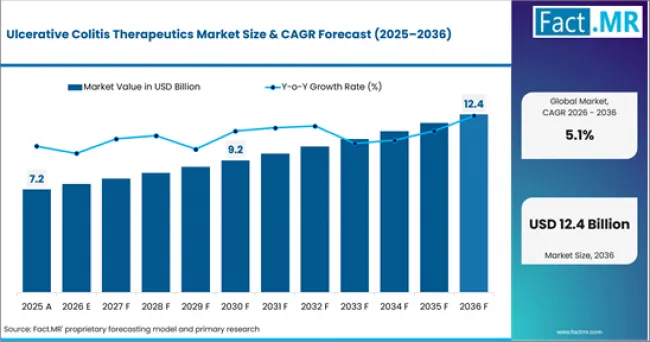
Ulcerative Colitis Therapeutics Market Value Analysis | Source: Fact.MR
Summary of the Ulcerative Colitis Therapeutics Market
- Market Snapshot
- In 2025, the global Ulcerative Colitis Therapeutics Market was valued at approximately USD 7.2 billion.
- The market is estimated to reach USD 7.6 billion in 2026 and is projected to attain USD 12.4 billion by 2036.
- The ulcerative colitis therapeutics market is likely to expand at a CAGR of 5.1% during the forecast period.
- The market is anticipated to create an absolute dollar opportunity of USD 4.8 billion between 2026 and 2036.
- Biologic Therapies accounts for 48.3% of product segment share in 2026.
- South Korea (5.5%) and China (5.4%) are the key growth markets during the forecast period.
- Demand and Growth Drivers
- Growing clinical adoption of biologic therapies including anti-TNF agents, vedolizumab, and ustekinumab is driving treatment intensity escalation for moderate-to-severe ulcerative colitis.
- JAK inhibitor prescribing growth as an oral alternative to injectable biologics is expanding the targeted therapy patient base and improving treatment convenience.
- Increasing ulcerative colitis diagnosis rates through improved endoscopic screening and awareness campaigns are enlarging the identified patient population.
- Treatment algorithm evolution that positions biologics and targeted therapies earlier in the treatment sequence is accelerating per-patient therapeutic spending.
- Subcutaneous biologic formulations that enable self-administration are reducing treatment burden and improving patient adherence compared to intravenous infusion regimens.
- Product and Segment View
- Biologic therapies lead with 48.3% of product share in 2026, reflecting the clinical shift toward targeted biologic intervention for moderate-to-severe ulcerative colitis.
- Oral therapies account for 44.6% of route share, supported by aminosalicylate maintenance therapy and growing JAK inhibitor adoption.
- Key segmentation includes:
- Product: Biologic Therapies, Small Molecule Targeted Therapies, Conventional Therapies (5-ASA, Corticosteroids)
- Disease Severity: Mild, Moderate, Severe Ulcerative Colitis
- Mechanism of Action: Anti-Inflammatory Therapies, Anti-TNF Therapies, JAK Inhibition, Integrin Antagonism
- These therapies address:
- Induction and maintenance of remission in moderate-to-severe ulcerative colitis refractory to conventional treatment
- Oral targeted therapy through JAK inhibitors for patients who prefer non-injectable treatment options
- Mucosal healing and endoscopic remission that reduce long-term surgical intervention risk
- Geography and Competitive Outlook
- South Korea lead at 5.5%, driven by expanding gastroenterology specialist access, growing biologic therapy adoption, and improving diagnostic infrastructure.
- U.S. at 5.3% reflects strong biologic prescribing, JAK inhibitor adoption, and established IBD specialty care networks.
- Germany at 5.2% is supported by EU regulatory access, GKV reimbursement, and advanced gastroenterology center infrastructure.
- Major players include AbbVie, Takeda Pharmaceutical, Pfizer, Bristol-Myers Squibb, and Roche/Genentech.
- Analyst Opinion
- Shambhu Nath Jha, Principal Consultant at Fact.MR, says "The ulcerative colitis therapeutics market is being transformed by the rapid adoption of Skyrizi (risankizumab) and Rinvoq (upadacitinib) as preferred treatment options over established anti-TNF therapies."
Key Growth Drivers, Constraints, and Opportunities
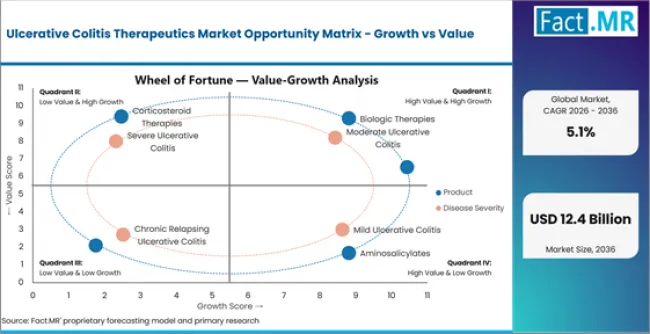
Ulcerative Colitis Therapeutics Market Opportunity Matrix Growth Vs Value | Source: Fact.MR
Key Factors Driving Growth
- IL-23 inhibitor adoption for ulcerative colitis is driving a rapid shift in the market mix toward newer mechanism classes, with Skyrizi accounting for 75% of new patient starts in frontline IBD in 2025.
- The growth in JAK inhibitor prescribing is expanding the patient base for oral targeted therapy, as evidenced by the Q3 2025 label update for Rinvoq, which eliminated the prior anti-TNF failure requirement.
- Growing treatable patient population worldwide as expanded endoscopic screening programs in emerging markets lead to increased UC diagnosis rates.
Key Market Constraints
- The cost of biologic therapy is a major obstacle to treatment access in price-sensitive markets where healthcare systems are not able to afford continuous biologic prescribing for chronic indications.
- The complexity of prescribing JAK inhibitors, including safety monitoring requirements for assessment of cardiovascular and malignancy risk, limits their use in some clinical settings.
- Uncertainty in decision making for clinicians and delays in optimisation of therapy due to complexity of treatment algorithms and multiple competing biologic and small molecule options.
Key Opportunity Areas
- Biologic formulations for UC that can be administered subcutaneously by the patient are reducing treatment burden and opening up new prescribing options outside of hospital infusion centers.
- Combination therapy strategies with biologics and conventional agents are being evaluated to improve remission rates compared to monotherapy approaches.
- Digital therapeutics and remote monitoring for UC symptom monitoring have potential for treatment optimization and earlier escalation upon loss of remission.
Segment-wise Analysis of the Ulcerative Colitis Therapeutics Market
- In 2026, biologic therapies account for 48.3% of products, consistent with the move towards targeted intervention for moderate-to-severe ulcerative colitis.
- Moderate ulcerative colitis is the leading disease severity with a share of 37.1%, the largest patient pool starting biologic or targeted therapy
- 67.2% of the patient demographics share is adult patients, which is consistent with the peak incidence of UC diagnosis occurring in the 20-to-40-year age range.
The market is segmented by product, disease severity, route of administration, mechanism of action, patient demographics, and region. Biologic therapies are leading in clinical effectiveness, while oral small molecule therapies are growing fastest in convenience. Anti-inflammatory therapies account for 39.8% of mechanism share.
Which Product Segment Dominates the Ulcerative Colitis Therapeutics Market?
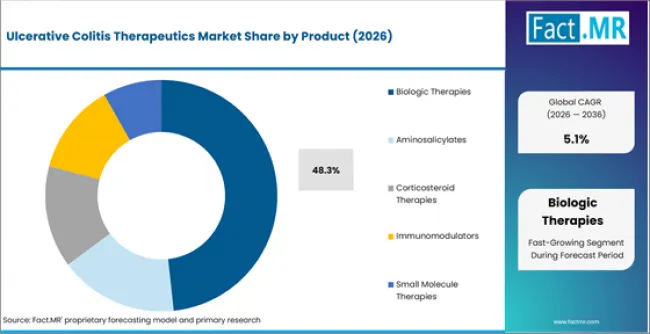
Ulcerative Colitis Therapeutics Market Analysis By Product | Source: Fact.MR
The share of biological therapies will be 48.3 percent in the value of the product segment in 2026. This part of the review will be led by anti-TNF biologics (adalimumab, infliximab), integrin antagonists (vedolizumab) and IL-23 inhibitors (risankizumab) with proven efficacy in induction and maintenance of remission in moderate-to-severe UC.
The fastest growing product category is small molecule targeted therapies, with JAK inhibitors tofacitinib and upadacitinib leading the way. Conventional therapies including 5-aminosalicylates and corticosteroids still have a part in mild to moderate UC and maintenance therapy.
Which Disease Severity Segment Dominates the Ulcerative Colitis Therapeutics Market?
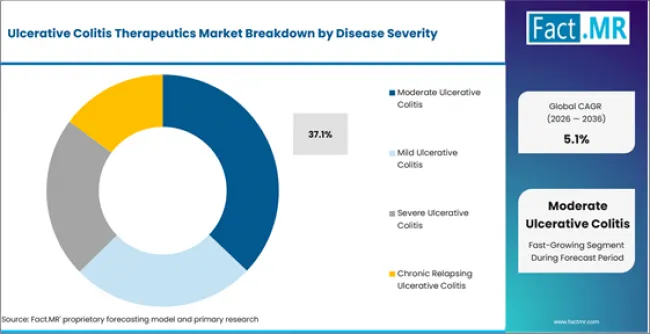
Ulcerative Colitis Therapeutics Market Analysis By Disease Severity | Source: Fact.MR
Moderate ulcerative colitis represents 37.1% of value of disease severity in 2026. This severity tier is characterized by the largest population initiating biologic or targeted therapy, as treatment algorithms evolve from conventional 5-ASA therapies to biologics when moderate disease activity persists.
Severe UC has the highest per-patient treatment cost, due to intensive biologic regimens, risk of potential hospitalization and surgical intervention. Mild UC is primarily treated with oral amino salicylates and topical therapies, which typically lead to lower drug spending per patient.
Which Product Trend is Shaping the Next Phase of Growth in the Ulcerative Colitis Therapeutics Market?
IL-23 inhibitors are emerging as the preferred mechanism class for new UC biologic treatment starts, displacing anti-TNF agents from the frontline position they held for over a decade. Skyrizi captured 75% of frontline new patient starts in inflammatory bowel disease in 2025, with IBD-specific revenues doubling year-over-year to USD 6.4 billion. This shift reflects superior efficacy data, favorable safety profile, and subcutaneous convenience compared to infusion-based anti-TNF regimens.
Concurrently, JAK inhibitors are establishing an oral targeted therapy tier that competes with injectable biologics on patient convenience. The Rinvoq label update in Q3 2025, which removed the prior anti-TNF failure requirement for UC, positions JAK inhibitors as second-line options directly after conventional therapy failure, rather than reserved for biologic-refractory patients. This positioning change is expected to accelerate JAK inhibitor prescribing in UC over the forecast period.
Regional Outlook Across Key Markets
- South Korea lead at 5.5%, driven by expanding gastroenterology access, growing biologic adoption, and improving diagnostic infrastructure.
- U.S. at 5.3% reflects strong biologic prescribing, JAK inhibitor adoption, and established IBD specialty care networks.
- Germany at 5.2% is supported by EU regulatory access, GKV reimbursement, and advanced gastroenterology infrastructure.
.webp "Top Country Growth Comparison Ulcerative Colitis Therapeutics Market Cagr (2026 2036)")
Top Country Growth Comparison Ulcerative Colitis Therapeutics Market Cagr (2026 2036) | Source: Fact.MR
CAGR Table
| Country | CAGR (%) |
|---|---|
| South Korea | 5.5% |
| China | 5.4% |
| U.S. | 5.3% |
| Germany | 5.2% |
| Japan | 5.1% |
Source: Fact.MR analysis. Updated Jun 18, 2026
Source: Fact.MR analysis, based on proprietary forecasting model and primary research.
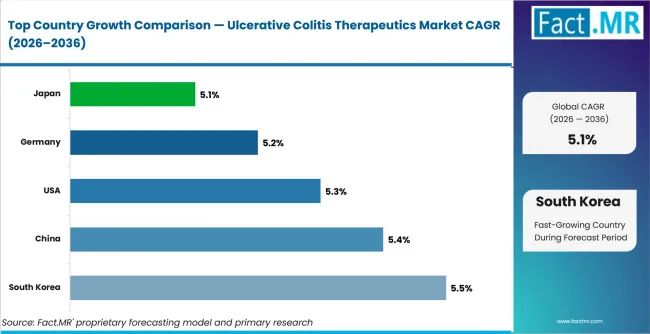
Ulcerative Colitis Therapeutics Market Cagr Analysis By Country | Source: Fact.MR
Ulcerative Colitis Therapeutics Growth Assessment in South Korea
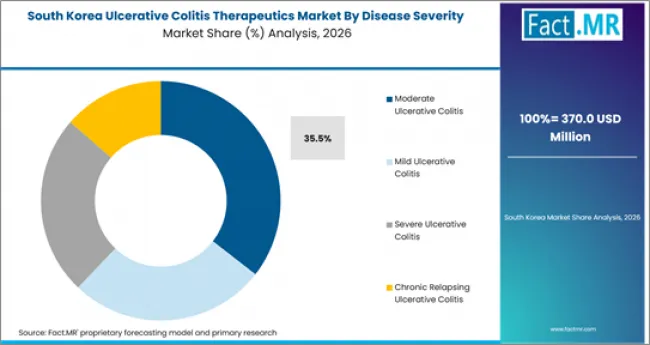
Ulcerative Colitis Therapeutics Market South Korea Market Share Analysis By Disease Severity | Source: Fact.MR
The South Korea Ulcerative Colitis Therapeutics Market is projected to flourish at a CAGR of 5.5% during the forecast period 2026-2036. Biosimilar-friendly regulatory pathways and HIRA reimbursement decisions impact UC biologic prescribing Robust hospital gastroenterology infrastructure supports specialist-led treatment management.
- Decisions on HIRA reimbursement influence biologic drug choice and adherence to treatment algorithms for UC patients.
- Advanced gastroenterology departments in hospitals for endoscopic follow-up and management of biologic therapy
- Local biosimilar manufacturing capacity allows affordable access to anti-TNF therapies for UC treatment.
Ulcerative Colitis Therapeutics Demand Analysis in China
China Ulcerative Colitis Therapeutics Market to Expand at a CAGR of 5.4% through 2036 Development of hospital gastroenterology department and VBP procurement are changing access to UC treatment. Better endoscopic screening is leading to a higher diagnosis rate of UC and an expanded population of patients being treated.
- The adoption of VBP procurement for biologic drugs impacts the pricing and volume of access to treatment of UC therapies in hospital networks.
- Growth of hospital gastroenterology in Tier 2 cities is leading to increased diagnosis of UC and initiation of biologic treatment.
- Support treatment cost reduction: domestic biologic development, including biosimilar anti-TNF agents.
U.S. Ulcerative Colitis Therapeutics Demand Trends
The U.S. Ulcerative Colitis Therapeutics Market is expected to register a CAGR of 5.3% till 2036. UC biologic prescribing influenced by specialty pharmacy networks, FDA regulatory pathways Insurance formulary decisions and step-therapy mandates affect treatment sequencing options such as anti-TNF, IL-23, and JAK inhibitors.
- FDA approval of Rinvoq label expansion in Q3 2025 removed prior anti-TNF failure requirement, broadening JAK inhibitor prescribing access.
- Specialty pharmacy networks are used to coordinate biologic distribution, patient support, and adherence monitoring for UC treatments.
- Insurance step-therapy requirements impact treatment sequencing across competing biologic and small molecule mechanism classes.
Ulcerative Colitis Therapeutics Demand Analysis in Germany
Germany Ulcerative Colitis Therapeutics Market is expected to grow with a CAGR of 5.2% to 2036. UC therapeutic access is shaped by GKV reimbursement decisions and EMA centralized marketing authorizations. University hospital IBD centers perform advanced treatment protocols with long-term patient follow up.
- Uptake of biosimilars in UC treatment is affected by GKV reimbursement and reference pricing.
- University hospital IBD centers offer specialized treatment management including endoscopic surveillance and biologic optimization.
- EMA’s EU-wide regulatory harmonization provides common pathways to access UC therapeutics across European markets.
Ulcerative Colitis Therapeutics Growth Assessment in Japan
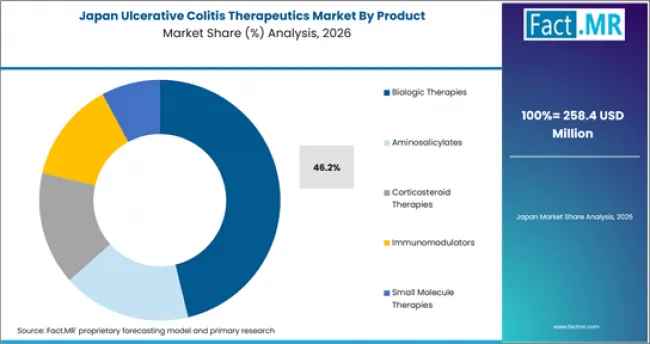
Ulcerative Colitis Therapeutics Market Japan Market Share Analysis By Product | Source: Fact.MR
The Japan Ulcerative Colitis Therapeutics Market is projected to grow at a CAGR of 5.1% through 2036. PMDA approval pathways and NHI pricing revisions influence UC therapeutic launch strategies. Aging demographics and increasing inflammatory bowel disease awareness are expanding the diagnosed patient population.
- PMDA regulatory pathways support timely market access for new UC therapeutics in the Japanese market.
- NHI pricing revisions and periodic price adjustments shape pharmaceutical company product lifecycle strategies.
- Growing IBD awareness and improved diagnostic capabilities are expanding the identified UC patient population requiring treatment.
Competitive Benchmarking and Company Positioning
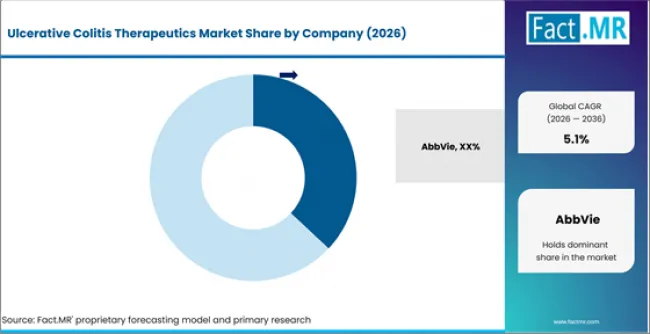
Ulcerative Colitis Therapeutics Market Analysis By Company | Source: Fact.MR
Ulcerative Colitis Therapeutics Market Analysis By Company
- AbbVie holds a strong position through its immunology portfolio, including Humira, Skyrizi, and Rinvoq that together dominate UC biologic prescribing in both the frontline and second-line treatment settings.
- Takeda Pharmaceutical competes with vedolizumab (Entyvio), the leading gut-selective integrin antagonist for UC, with strong clinical evidence and existing gastroenterologist relationships.
- Pfizer's Tofacitinib (Xeljanz) and Bristol-Myers Squibb's ozanimod (Zeposia) are serving the UC market, respectively, providing oral small molecule alternatives to injectable biologic therapies.
AbbVie has a strong competitive position through its multi-product immunology portfolio. Skyrizi’s rapid win of 75% of frontline new patient starts in IBD in 2025 represents the most significant competitive change in UC treatment in over a decade.
Takeda’s Entyvio is in a strong second place due to its gut selective mechanism differentiation and strong clinical evidence. The market is evolving into a multi-mechanism treatment paradigm where physicians will choose among anti-TNF, IL-23, JAK inhibitor and integrin antagonist options depending on the patient-specific factors.
Key Companies in the Ulcerative Colitis Therapeutics Market
- AbbVie, Takeda Pharmaceutical, Pfizer, Bristol-Myers Squibb (BMS), Roche/Genentech, Amgen, Eli Lilly, Merck & Co. (MSD) are the leading companies.
Recent Industry Developments
- AbbVie - RINVOQ Label Update for Ulcerative Colitis and Crohn’s Disease (October 2025)
- In October 2025, AbbVie received U.S. FDA approval for an updated RINVOQ indication statement in inflammatory bowel disease. The update allows use in adults with moderately to severely active ulcerative colitis after at least one approved systemic therapy when TNF blockers are clinically inadvisable.
- Takeda Pharmaceutical - Pediatric Entyvio sBLA Acceptance by FDA (June 2026)
- In June 2026, Takeda announced that the U.S. FDA accepted its supplemental Biologics License Application for intravenous Entyvio in pediatric ulcerative colitis and Crohn’s disease. The filing targets patients two years and older with moderately to severely active disease.
- Pfizer - Velsipity Launch in Japan for Ulcerative Colitis (September 2025)
- In September 2025, Pfizer launched Velsipity in Japan for ulcerative colitis after earlier local approval and reimbursement steps. The launch supported Pfizer’s oral advanced-therapy position in moderate-to-severe ulcerative colitis.
Key Companies in the Ulcerative Colitis Therapeutics Market
- AbbVie
- Takeda Pharmaceutical
- Pfizer
- Bristol-Myers Squibb (BMS)
- Roche/Genentech
- Amgen
- Eli Lilly
- Merck & Co. (MSD)
Sources and Research References
- AbbVie Inc. (2025, October 13). U.S. Food and Drug Administration (FDA) approves updated indication statement for RINVOQ® (upadacitinib) for the treatment of inflammatory bowel disease.
- American Gastroenterological Association. (2024, November 19). Living guideline for pharmacological management of moderate-to-severe ulcerative colitis.
- Takeda Pharmaceutical Company. (2025). Takeda 2025 Annual Integrated Report.
- U.S. Food and Drug Administration. (2025, October 10). NDA 211675/S-028 and NDA 218347/S-005 approval letter.
- U.S. Food and Drug Administration. (2026). Advancing health through innovation: New drug therapy approvals 2025.
This bibliography is provided for reader reference and is not exhaustive. The full report contains the complete reference list and detailed citations.
Key Questions This Report Addresses
- What is the estimated size of the global Ulcerative Colitis Therapeutics Market in 2026, and how is it projected to grow through 2036?
- What incremental revenue opportunity is the market expected to create between 2026 and 2036?
- Which product segment holds the largest share in 2026, and what clinical factors support biologic therapy leadership?
- How is the balance between anti-TNF, IL-23, and JAK inhibitor therapies expected to shift over the forecast period?
- Which disease severity tier is projected to generate the most incremental revenue through 2036?
- Which countries are projected to register the highest CAGR, and what diagnostic and treatment factors accelerate growth?
- How do prescribing patterns in the U.S. compare with China and Europe in terms of biologic adoption and treatment sequencing?
- What safety monitoring requirements and treatment complexity could limit JAK inhibitor adoption growth?
- Who are the leading companies, and how are they differentiating through drug portfolios, clinical evidence, and mechanism-of-action positioning?
- What recent label expansions and clinical milestones in 2025 and 2026 are reshaping UC treatment dynamics?
- Which mechanism of action or formulation trend is driving the next phase of growth?
- How is the shift toward IL-23 inhibitors as frontline therapy changing prescribing patterns and competitive dynamics?
- What role are subcutaneous formulations, oral therapies, and combination strategies playing in reshaping treatment approaches?
- What demand-side drivers sustain growth, and how do they vary between mild-moderate and severe UC patient populations?
Ulcerative Colitis Therapeutics Market Definition
The ulcerative colitis therapeutics market covers biologic, small molecule, and conventional therapies used to induce and maintain remission in patients with mild, moderate, and severe ulcerative colitis, including anti-TNF agents, JAK inhibitors, integrin antagonists, IL-23 inhibitors, and aminosalicylates delivered through oral, subcutaneous, intravenous, and rectal routes.
Ulcerative Colitis Therapeutics Market Inclusions
- Global and regional market size and forecasts for 2026 to 2036 across product, disease severity, route of administration, mechanism of action, patient demographics, and region.
- Demand analysis based on ulcerative colitis prevalence, gastroenterologist density, biologic prescribing rates, and treatment algorithm positioning.
- Competitive landscape including drug portfolios, clinical trial pipelines, and commercial strategies of leading companies.
Ulcerative Colitis Therapeutics Market Exclusions
- Crohn disease therapeutics not indicated specifically for ulcerative colitis treatment.
- Surgical interventions including colectomy and J-pouch procedures without associated pharmaceutical therapy.
- Over-the-counter antidiarrheal and symptomatic relief products not classified as UC-specific therapeutics.
Ulcerative Colitis Therapeutics Market Research Methodology
- Methodology combines secondary research from gastroenterology journals, pharmaceutical prescription databases, and IBD patient registries with primary validation.
- Market sizing covers 30+ countries with inputs including UC prevalence, gastroenterologist density, biologic prescribing, and treatment algorithm adherence.
- Primary validation includes 18+ interviews across gastroenterologists, pharmaceutical companies, payer organizations, and IBD patient advocacy groups.
Segmentation
Scope of Analysis
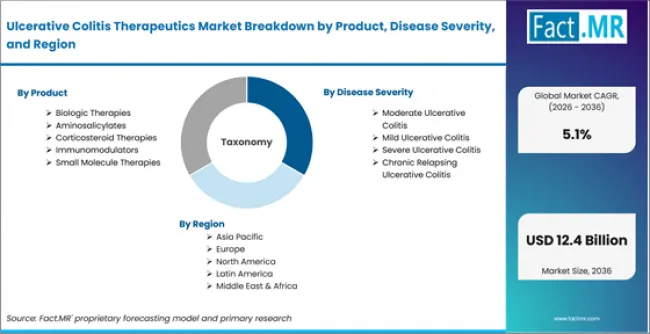
Ulcerative Colitis Therapeutics Market Breakdown By Product, Disease Severity, And Region | Source: Fact.MR
| Parameter | Details |
|---|---|
| Quantitative Units | USD 7.6 billion to USD 12.4 billion, at a CAGR of 5.1% |
| Market Definition | The ulcerative colitis therapeutics market covers biologic, small molecule, and conventional therapies used to induce and maintain remission in patients with mild, moderate, and severe ulcerative colitis, including anti-TNF agents, JAK inhibitors, integrin antagonists, IL-23 inhibitors, and aminosalicylates delivered through oral, subcutaneous, intravenous, and rectal routes. |
| Regions Covered | North America, Latin America, Europe, East Asia, South Asia and Pacific, Middle East and Africa |
| Countries Covered | South Korea, China, U.S., Germany, ANZ, India, UK, Italy, Japan, France, 30 plus countries |
| Key Companies | AbbVie, Takeda Pharmaceutical, Pfizer, Bristol-Myers Squibb (BMS), Roche/Genentech, Amgen, Eli Lilly |
| Forecast Period | 2026 to 2036 |
| Approach | Hybrid demand-side and top-down methodology built on UC prevalence, gastroenterologist density, biologic prescribing rates, and primary interviews |
Source: Fact.MR analysis. Updated Jun 18, 2026
Ulcerative Colitis Therapeutics Market Segmentation
-
Ulcerative Colitis Therapeutics Market Segmented by Product:
- Biologic Therapies
- TNF Inhibitor Therapies
- Moderate To Severe Applications
- Targeted Immunology Products
- Integrin Receptor Antagonists
- Gut Selective Applications
- Advanced Biologic Systems
- TNF Inhibitor Therapies
- Aminosalicylates
- Oral Mesalamine Therapies
- Mild Ulcerative Colitis Applications
- Inflammatory Bowel Treatment Products
- Rectal Mesalamine Systems
- Distal Colitis Applications
- Localized Therapy Products
- Oral Mesalamine Therapies
- Corticosteroid Therapies
- Systemic Corticosteroid Drugs
- Moderate Disease Applications
- Acute Flare Treatment Products
- Topical Corticosteroid Systems
- Localized Inflammation Applications
- Short Term Therapy Products
- Systemic Corticosteroid Drugs
- Immunomodulators
- Thiopurine Based Therapies
- Maintenance Treatment Applications
- Long Term Immunology Products
- Calcineurin Inhibitor Systems
- Severe Disease Applications
- Advanced Immune Control Products
- Thiopurine Based Therapies
- Small Molecule Therapies
- JAK Inhibitor Systems
- Immune Signaling Applications
- Oral Advanced Therapy Products
- Sphingosine Modulator Therapies
- Inflammatory Pathway Applications
- Next Generation Treatment Systems
- JAK Inhibitor Systems
- Biologic Therapies
-
Ulcerative Colitis Therapeutics Market Segmented by Disease Severity:
- Moderate Ulcerative Colitis
- Extensive Colitis Management
- Combination Therapy Applications
- Advanced Medication Products
- Recurrent Flare Management
- Long Term Control Applications
- Immune Regulation Systems
- Extensive Colitis Management
- Mild Ulcerative Colitis
- Early Stage Disease Management
- First Line Therapy Applications
- Outpatient Treatment Products
- Left Sided Colitis Care
- Localized Inflammation Applications
- Maintenance Therapy Systems
- Early Stage Disease Management
- Severe Ulcerative Colitis
- Acute Severe Colitis Treatment
- Hospitalization Applications
- Intensive Care Therapy Products
- Steroid Refractory Disease Management
- Advanced Biologic Applications
- Rescue Therapy Systems
- Acute Severe Colitis Treatment
- Chronic Relapsing Ulcerative Colitis
- Frequent Relapse Management
- Long Duration Applications
- Maintenance Care Products
- Treatment Resistant Disease Care
- Complex Inflammatory Applications
- Specialized Therapeutic Systems
- Frequent Relapse Management
- Moderate Ulcerative Colitis
-
Ulcerative Colitis Therapeutics Market Segmented by Route Of Administration:
- Oral Therapies
- Tablet Based Systems
- Daily Maintenance Applications
- Convenient Treatment Products
- Capsule Formulation Therapies
- Extended Release Applications
- Long Term Care Systems
- Tablet Based Systems
- Injectable Therapies
- Subcutaneous Biologic Systems
- Self Administration Applications
- Homecare Treatment Products
- Intravenous Infusion Therapies
- Hospital Applications
- Advanced Biologic Systems
- Subcutaneous Biologic Systems
- Rectal Therapies
- Enema Based Systems
- Localized Disease Applications
- Targeted Inflammation Products
- Suppository Formulations
- Distal Colitis Applications
- Direct Delivery Systems
- Enema Based Systems
- Oral Therapies
-
Ulcerative Colitis Therapeutics Market Segmented by Mechanism Of Action:
- Anti Inflammatory Therapies
- Cytokine Suppression Systems
- Inflammation Reduction Applications
- Immune Therapy Products
- Leukocyte Migration Inhibitors
- Gut Targeted Applications
- Advanced Biologic Systems
- Cytokine Suppression Systems
- Immune Suppression Therapies
- T Cell Modulation Systems
- Chronic Disease Applications
- Long Term Immunology Products
- JAK Pathway Inhibitors
- Cell Signaling Applications
- Precision Treatment Systems
- T Cell Modulation Systems
- Microbiome Modulation Therapies
- Gut Flora Regulation Systems
- Digestive Health Applications
- Microbiome Therapy Products
- Fecal Microbiota Therapeutics
- Refractory Disease Applications
- Advanced Gastrointestinal Systems
- Gut Flora Regulation Systems
- Anti Inflammatory Therapies
-
Ulcerative Colitis Therapeutics Market Segmented by Patient Demographics:
- Adult Patients
- Working Age Population
- Long Term Disease Applications
- Maintenance Therapy Products
- Elderly Digestive Disorder Patients
- Chronic Care Applications
- Supportive Treatment Systems
- Working Age Population
- Pediatric Patients
- Childhood Colitis Management
- Pediatric Gastroenterology Applications
- Specialized Therapy Products
- Adolescent Disease Care
- Growth Support Applications
- Long Term Monitoring Systems
- Childhood Colitis Management
- Geriatric Patients
- Age Related Digestive Care
- Complex Comorbidity Applications
- Advanced Treatment Products
- Chronic Elder Care Systems
- Extended Therapy Applications
- Supportive Healthcare Systems
- Age Related Digestive Care
- Adult Patients
-
Ulcerative Colitis Therapeutics Market by Region:
- North America
- USA
- Canada
- Mexico
- Latin America
- Brazil
- Chile
- Rest of Latin America
- Western Europe
- Germany
- UK
- Italy
- Spain
- France
- Nordic
- BENELUX
- Rest of Western Europe
- Eastern Europe
- Russia
- Poland
- Hungary
- Balkan & Baltic
- Rest of Eastern Europe
- East Asia
- China
- Japan
- South Korea
- South Asia and Pacific
- India
- ASEAN
- Australia & New Zealand
- Rest of South Asia and Pacific
- Middle East & Africa
- Kingdom of Saudi Arabia
- Other GCC Countries
- Turkiye
- South Africa
- Other African Union
- Rest of Middle East & Africa
- North America
Frequently Asked Questions
How big is the ulcerative colitis therapeutics market in 2026?
What will be the size of the ulcerative colitis therapeutics market in 2036?
How much will the ulcerative colitis therapeutics market grow between 2026 and 2036?
What are the key products in the ulcerative colitis therapeutics market?
Which disease severity segment is expected to contribute a significant share in the ulcerative colitis therapeutics market in 2026?
Who worked on this report


Preview the report firsthand - request a free sample
Free SampleGet the brochure for pricing and purchase details
Download PDF