Wound Gel Market
Wound Gel Market Size and Share Forecast Outlook 2025 to 2035
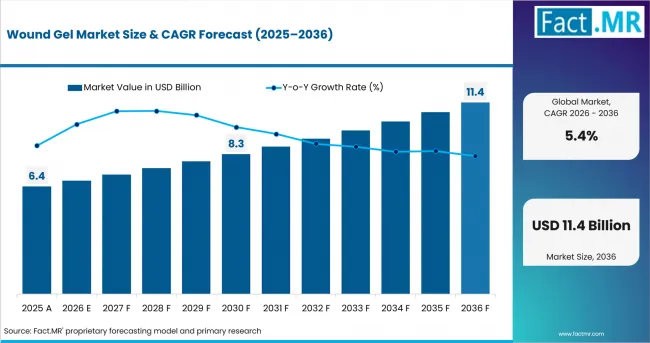
Wound gel market is projected to grow from USD 6.4 billion in 2025 to USD 10.8 billion by 2035, at a CAGR of 5.4%. Dressings will dominate with a 58.7% market share, while silver will lead the antimicrobial properties segment with a 55.0% share.
Wound Gel Market Forecast and Outlook 2025 to 2035
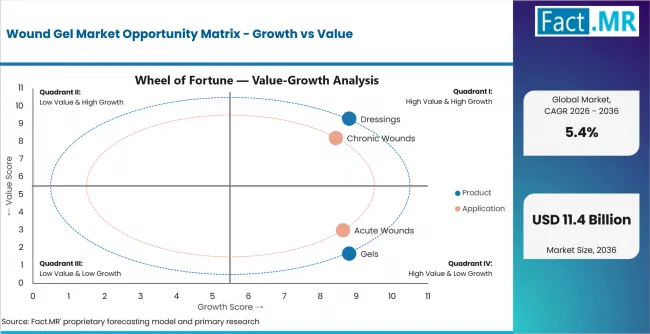
The global wound gel market is projected to reach USD 10.80 billion by 2035, recording an absolute increase of USD 4.44 billion over the forecast period. The market is valued at USD 6.36 billion in 2025 and is set to rise at a CAGR of 5.4% during the assessment period.
The overall market size is expected to grow by approximately 1.7 times during the same period, supported by increasing prevalence of chronic wounds and diabetes-related complications worldwide, driving demand for advanced wound care solutions in hospital and homecare settings, and increasing investments in hydrogel technologies with superior moisture management capabilities across surgical, burn treatment, and pressure ulcer applications globally.
Quick Stats for Wound Gel Market
- Wound Gel Market Value (2025): USD 6.36 billion
- Wound Gel Market Forecast Value (2035): USD 10.80 billion
- Wound Gel Market Forecast CAGR: 5.4%
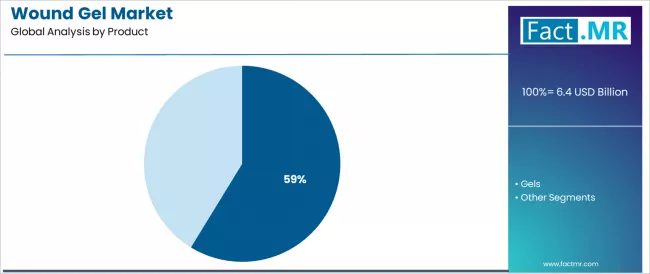
- Leading Product Type in Wound Gel Market: Dressings (58.74%)
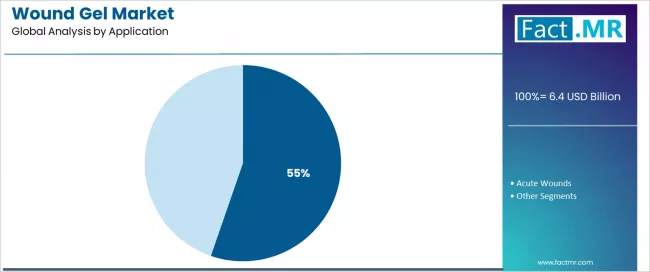
- Leading Application in Wound Gel Market: Chronic Wounds (55.29%)
- Key Growth Regions in Wound Gel Market: Asia Pacific, North America, and Europe
- Top Players in Wound Gel Market: Medline Industries, LP, Coloplast Ltd, Mölnlycke Health Care AB, Solventum, Convatec Inc., Smith+Nephew, B. Braun SE, DermaRite Industries, LLC., Integra LifeSciences Corporation, Axio Biosolutions Private Limited, Sanara MedTech Inc

Healthcare providers face mounting pressure to reduce wound healing times and prevent infection complications while managing treatment costs and improving patient quality of life, with modern wound gel products providing documented therapeutic advantages including optimal moisture balance, enhanced autolytic debridement, and sustained antimicrobial protection compared to conventional dry dressings alone.
Rising demand for patient-centered wound care approaches and expanding homecare services enabling self-application capabilities create substantial opportunities for medical device manufacturers and healthcare distribution partners. However, reimbursement variations and healthcare budget constraints across different markets may pose obstacles to widespread clinical adoption.
The dressings segment dominates market activity with 58.74% market share, driven by extensive clinical applications of hydrogel dressings and gelling fiber dressings requiring conformable wound contact layers across diverse wound types and healing stages worldwide. Healthcare providers increasingly recognize the therapeutic benefits of gel-based dressings, with typical product offerings providing effective moisture donation, exudate management, and pain reduction at accessible price points through established medical supply distribution networks.
The chronic wounds application segment demonstrates the fastest growth trajectory and leading market position with approximately 55.29% market share, supported by rising diabetes prevalence and aging population demographics creating expanding patient populations requiring long-term wound management for diabetic foot ulcers, pressure ulcers, and venous leg ulcers.
Hydrogel dressings emerge as preferred product configurations, reflecting clinical demand for moisture-retentive properties and gentle removal characteristics in both acute and chronic wound environments. Hospitals represent the leading end-use environment, driven by surgical wound care requirements and inpatient chronic wound management protocols supporting comprehensive treatment pathways.
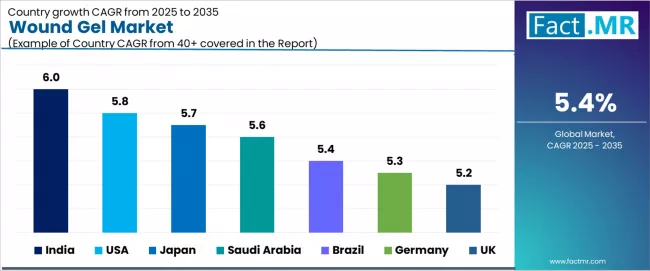
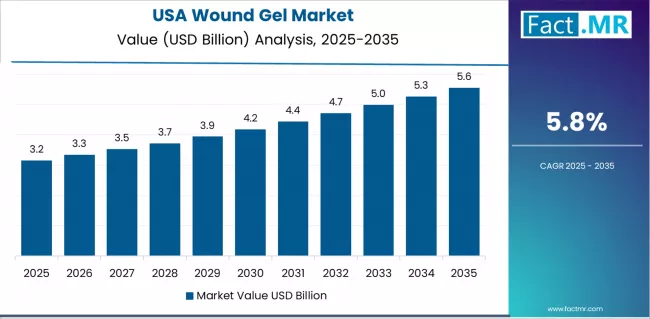
Regional dynamics show North America maintaining market leadership, supported by established advanced wound care infrastructure and comprehensive diabetes management programs across healthcare systems. Asia Pacific demonstrates the fastest growth trajectory driven by expanding healthcare access and increasing chronic disease burden, while Europe emphasizes clinical evidence standards and regulatory compliance for wound care product quality. India leads country-level growth with 6.00% CAGR through innovative hydrogel research initiatives and rising chronic wound prevalence, followed by USA with 5.80% CAGR supported by high surgical procedure volumes and major medical device company presence.
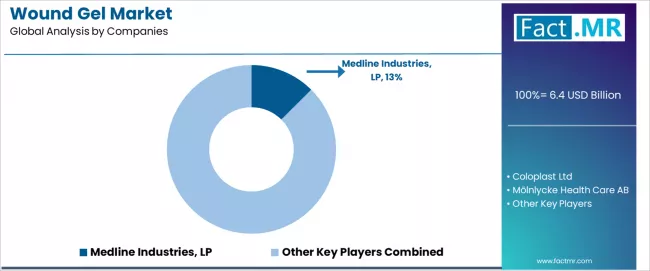
The competitive landscape features moderate concentration with Medline Industries, LP maintaining 12.5% market leadership position, while established wound care companies including Coloplast Ltd, Mölnlycke Health Care AB, Solventum, and Convatec Inc. compete through product innovation, clinical evidence generation, and geographic expansion strategies across hospitals, specialty clinics, and homecare applications.
Wound Gel Market Year-over-Year Forecast 2025 to 2035
Between 2025 and 2029, the wound gel market is projected to expand from USD 6.36 billion to USD 7.90 billion, resulting in a value increase of USD 1.54 billion, which represents 34.7% of the total forecast growth for the period. This phase of development will be shaped by rising demand for advanced hydrogel dressings in diabetic wound management, product innovation in antimicrobial gel formulations with silver and non-silver technologies, as well as expanding integration with negative pressure wound therapy systems and telemedicine wound monitoring platforms. Companies are establishing competitive positions through investment in bioactive gel development, evidence-based clinical studies, and strategic market expansion across hospital wound care centers, specialty clinics, and direct-to-consumer homecare channels.
From 2029 to 2035, the market is forecast to grow from USD 7.90 billion to USD 10.80 billion, adding another USD 2.90 billion, which constitutes 65.3% of the overall expansion. This period is expected to be characterized by the expansion of specialized product applications, including bioengineered gel matrices and smart wound dressings with infection detection capabilities tailored for complex chronic wounds, strategic collaborations between wound care manufacturers and healthcare providers, and an enhanced focus on cost-effectiveness analysis and real-world evidence generation. The growing emphasis on personalized wound care protocols and rising adoption of point-of-care wound assessment technologies will drive demand for advanced gel-based solutions across diverse patient populations.
Wound Gel Market Key Takeaways
| Metric | Value |
|---|---|
| Market Value (2025) | USD 6.36 billion |
| Market Forecast Value (2035) | USD 10.80 billion |
| Forecast CAGR (2025-2035) | 5.4% |
Why is the Wound Gel Market Growing?
The wound gel market grows by enabling healthcare providers across hospitals, specialty clinics, and homecare settings to deliver optimal moisture management and infection prevention while supporting accelerated wound healing without the complications associated with dry wound environments and frequent dressing changes.
Healthcare providers face mounting pressure to improve healing outcomes and reduce treatment costs while managing chronic wound complications, surgical site infections, and burn injuries, with modern wound gel products typically providing targeted therapeutic benefits including sustained moisture donation for dry wounds, exudate absorption for draining wounds, and antimicrobial protection through silver or alternative agents compared to conventional gauze dressings alone, making gel-based wound care essential for comprehensive chronic and acute wound management.
The healthcare industry's need for evidence-based and cost-effective wound treatment solutions creates demand for specialized gel products that can provide consistent healing environments, reduce pain during dressing changes, and support patient self-care without compromising clinical outcomes or safety standards.
Clinical adoption and expanding chronic disease burden drive utilization in diabetic wound clinics, burn centers, and long-term care facilities, where product performance has direct impact on healing rates and quality of life. The growing global prevalence of diabetes mellitus, affecting approximately 537 million adults worldwide, creates expanding patient populations at risk for diabetic foot ulcers requiring specialized wound gel interventions.
Rising elderly populations and associated pressure ulcer risk enable informed product selection and adherence to evidence-based wound care protocols. However, product cost considerations and variable reimbursement policies may limit adoption among healthcare facilities facing budget constraints and payers requiring clear cost-effectiveness demonstration across different wound care approaches.
Segmental Analysis
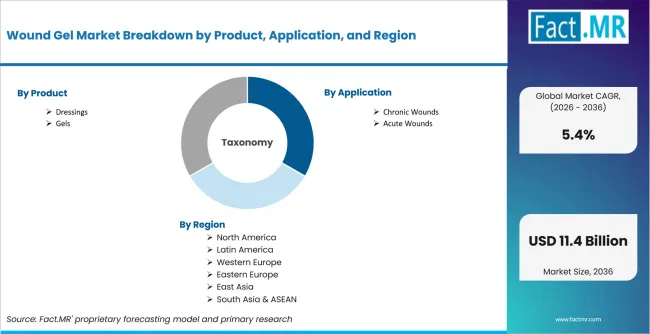
The market is segmented by product, antimicrobial properties, application, mode of purchase, distribution channel, end use, and region. By product, the market is divided into dressings and gels. Based on antimicrobial properties, the market is categorized into silver and non-silver. By application, the market includes chronic wounds and acute wounds. Based on mode of purchase, the market is divided into prescription and non-prescription. By distribution channel, the market includes offline and online. Based on end use, the market is divided into hospitals, specialty clinics, ambulatory surgery centers, homecare settings, long-term care facilities, and others. Regionally, the market is divided into Asia Pacific, Europe, North America, Latin America, and Middle East & Africa.
By Product, Which Segment Accounts for the Dominant Market Share?

The dressings segment represents the dominant force in the wound gel market, capturing approximately 58.74% of total market share in 2025. This established product category encompasses solutions featuring conformable wound contact layers and moisture management technologies, including advanced hydrogel dressings combining water-based polymer matrices with controlled release mechanisms, gelling fiber dressings incorporating sodium carboxymethylcellulose fibers that transform into gel on contact with wound exudate, and specialized composite dressings that enable superior moisture balance and sustained therapeutic delivery across diverse wound types and healing phases worldwide.
The dressings segment's market leadership stems from its versatile clinical applications, with product solutions capable of addressing critical wound management requirements including moisture donation for dry necrotic wounds, exudate absorption for moderately draining wounds, and autolytic debridement facilitation while maintaining excellent conformability and patient comfort standards across acute and chronic wound scenarios.
Within this segment, hydrogel dressings represent the largest sub-category, driven by superior moisture-retentive properties and gentle removal characteristics reducing trauma during dressing changes. This sub-segment benefits from extensive clinical evidence supporting healing outcomes and continuous product innovation in sheet, amorphous, and impregnated gauze formats.
The gelling fiber dressings maintain substantial presence serving highly exuding wounds requiring vertical wicking capabilities and gel formation that locks in exudate and bacteria while maintaining moist wound environment. These solutions offer effective fluid management for providers treating chronic wounds with heavy drainage while providing sufficient absorbency to extend wear time and reduce nursing burden.
Key performance advantages driving the dressings segment include:
- Advanced moisture management capabilities with documented maintenance of optimal wound hydration levels supporting autolytic debridement and granulation tissue formation
- Established conformability characteristics enabling intimate wound contact across irregular wound beds and anatomical contours without gaps or pressure points
- Enhanced patient comfort features providing cooling sensation, pain reduction during wear, and atraumatic removal while maintaining dressing integrity
- Superior versatility allowing application across diverse wound types including diabetic ulcers, pressure injuries, burns, and surgical wounds with consistent therapeutic performance
By Application, Which Segment Accounts for the Largest Market Share?

Chronic wounds applications dominate the wound gel market landscape with approximately 55.29% market share in 2025, reflecting the critical role of advanced moisture management in supporting healing of wounds that fail to proceed through normal healing stages within expected timeframes. The chronic wounds segment's market leadership is reinforced by clinical complexity requiring sustained treatment interventions, high recurrence rates demanding ongoing product utilization, and established clinical guidelines recommending moist wound healing principles that gel-based products effectively deliver.
Within this segment, diabetic foot ulcers represent a significant application category, driven by diabetes prevalence and associated neuropathy and peripheral vascular disease creating high-risk wounds requiring specialized gel-based interventions. This sub-segment benefits from established screening programs and multidisciplinary diabetic foot clinics supporting consistent product adoption.
The pressure ulcers applications maintain substantial market presence through wound staging protocols requiring moisture-appropriate interventions, with Stage 2 through Stage 4 ulcers particularly benefiting from hydrogel-based autolytic debridement and moisture balance. Leg ulcers including venous, arterial, and mixed etiology wounds represent important chronic wound categories requiring sustained gel therapy.
The acute wounds segment demonstrates meaningful presence through surgical incisions, burn injuries across first through third degree classifications, and traumatic lacerations and abrasions requiring moisture management during initial healing phases.
Key market dynamics supporting application growth include:
- Chronic wound expansion driven by aging populations and diabetes epidemic, requiring specialized moisture management and infection prevention capabilities
- Diabetic foot ulcer applications demonstrating highest clinical need with emphasis on preventing amputations through effective early intervention
- Pressure ulcer management protocols prioritizing prevention of Stage 1 progression and treatment of established Stage 2-4 ulcers through optimal moisture balance
- Acute wound applications emphasizing reduced healing times and improved cosmetic outcomes through moist wound healing approaches
By Antimicrobial Properties, Which Segment Accounts for a Significant Market Share?

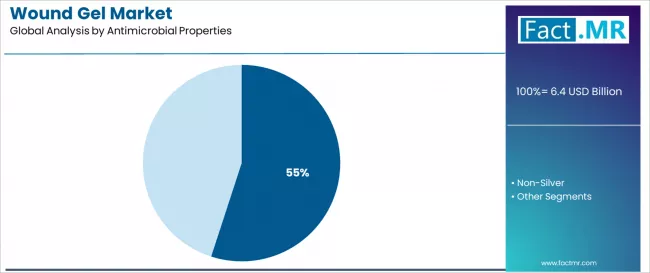
Silver-based antimicrobial wound gels represent a leading technology segment in the wound gel market, reflecting the established clinical role of silver ions in providing broad-spectrum antimicrobial protection against bacteria, fungi, and certain viruses in infected or high-risk wounds. A market share of 55% is projected for this segment.
The silver segment demonstrates consistent demand driven by the need to manage wound bioburden, prevent infection complications, and support healing in contaminated or critically colonized wounds across hospital and community care settings.
The non-silver segment emerges as an important category with substantial growth potential, driven by concerns about silver resistance development, cytotoxicity considerations in certain wound types, and availability of alternative antimicrobial technologies including iodine-based formulations, polyhexamethylene biguanide (PHMB), and honey-based products. Healthcare providers increasingly evaluate antimicrobial selection based on wound-specific characteristics and patient factors.
Within antimicrobial applications, silver formulations demonstrate versatility across ionic silver, nanocrystalline silver, and silver sulfadiazine incorporations providing sustained antimicrobial release. Non-silver alternatives address specific clinical scenarios including silver sensitivities and wounds requiring alternative antimicrobial mechanisms.
Key antimicrobial dynamics include:
- Silver technology requirements accelerating across infected chronic wounds with emphasis on broad-spectrum coverage and sustained antimicrobial action
- Non-silver alternatives driving adoption among clinicians seeking to minimize cytotoxicity concerns or address silver resistance patterns
- Antimicrobial stewardship principles influencing product selection with emphasis on appropriate indication-based utilization
- Combination approaches integrating moisture management with targeted antimicrobial protection optimizing wound healing outcomes
By Mode of Purchase, Which Segment Accounts for the Dominant Market Share?

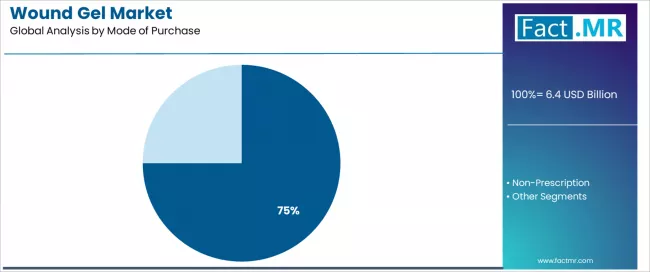
Prescription-based wound gel products dominate the mode of purchase landscape, account for a share of 75.00% share, reflecting the clinical nature of advanced wound care requiring healthcare professional assessment, diagnosis, and treatment planning for appropriate product selection and application protocols. The prescription segment's market leadership is reinforced by reimbursement requirements typically mandating physician orders, complex wound management needs requiring professional expertise, and regulatory classifications designating many advanced wound gels as prescription medical devices.
Within this segment, hospital and specialty clinic prescribing represents significant utilization pathways, driven by chronic wound complexity and surgical wound care protocols requiring clinician-directed treatment algorithms. This sub-segment benefits from established wound care teams and systematic approach to product formulary management.
The non-prescription segment represents meaningful market presence through over-the-counter availability of basic hydrogel products and minor wound care formulations where consumers can self-select for simple acute wounds and minor burns. This segment benefits from retail pharmacy accessibility and growing consumer health awareness.
Key market dynamics supporting mode of purchase segmentation include:
- Prescription channel dominance driven by advanced wound care complexity and reimbursement frameworks, requiring clinical assessment and documentation
- Non-prescription growth trends reflecting consumer empowerment and availability of simplified hydrogel formats for minor wound care
- Integration of telehealth wound assessment enabling remote prescription capabilities and improved access to specialized wound care expertise
- Growing emphasis on patient education and self-care protocols supporting appropriate product utilization across care settings
By Distribution Channel, Which Segment Accounts for a Significant Market Share?

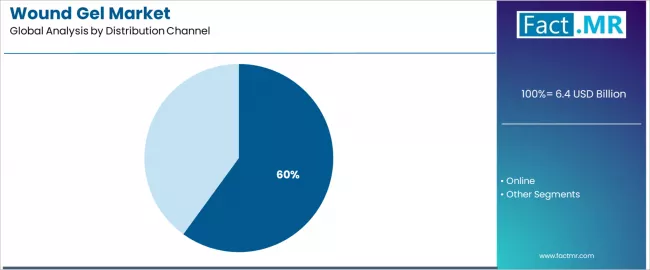
Offline distribution channels dominate the wound gel market, with a market share of 60.0%, reflecting the traditional medical supply chain infrastructure through hospital procurement systems, medical-surgical distributors, retail pharmacies, and durable medical equipment providers. The offline segment's market leadership is reinforced by established purchasing relationships, bulk procurement economics for institutional buyers, and clinical preference for personal product evaluation and supplier relationships that characterize medical device distribution.
The online distribution segment demonstrates growing presence through e-commerce platforms, manufacturer direct-to-consumer websites, and digital health marketplaces enabling convenient homecare product access. Patients managing chronic wounds increasingly utilize online channels for product reorders and accessing broader product selections.
Within distribution channels, hospital and institutional procurement represents the largest offline category, while consumer-directed e-commerce drives online segment growth. Hybrid omnichannel approaches integrate physical and digital touchpoints supporting seamless customer experiences.
Key distribution dynamics include:
- Offline channel strength through established medical supply relationships and institutional purchasing frameworks requiring personal service and technical support
- Online channel expansion enabling patient convenience, broader product access, and subscription-based reordering for chronic wound management
- Integration of digital prescribing and e-commerce fulfillment streamlining product delivery to homecare patients
- Growing emphasis on direct-to-consumer strategies and patient engagement programs supporting brand loyalty and treatment adherence
By End Use, Which Segment Accounts for the Dominant Market Share?

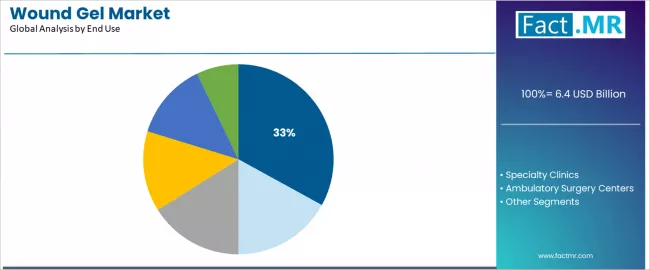
Hospitals dominate the wound gel end-use landscape, capturing a share of 33%. This reflects the concentration of complex surgical wounds, severe burn injuries, and advanced chronic wounds requiring inpatient management and specialist wound care teams. The hospital segment's market leadership is reinforced by high-acuity patient populations, comprehensive wound care protocols, and established formularies supporting evidence-based product selection across diverse clinical departments including surgery, burn units, intensive care, and wound care centers.
Within this segment, surgical wards and intensive care units represent significant wound gel utilization environments, driven by post-operative wound care and critical illness-associated pressure ulcers requiring advanced moisture management. This sub-segment benefits from established nursing protocols and systematic wound assessment programs.
The homecare settings segment represents substantial market presence through chronic wound patients managing conditions in community environments, supported by visiting nurse services and patient self-care protocols. Specialty clinics including diabetic foot clinics and wound care centers demonstrate focused wound gel utilization.
Long-term care facilities maintain important presence serving elderly populations at high risk for pressure ulcers and chronic wounds requiring sustained interventions. Ambulatory surgery centers utilize wound gels for outpatient surgical wound management.
Key market dynamics supporting end-use growth include:
- Hospital utilization expansion driven by surgical volume growth and complex wound care requirements, demanding comprehensive product portfolios
- Homecare settings growth reflecting care transitions and chronic disease management emphasis with patient self-application capabilities
- Specialty clinic development providing focused wound care expertise and protocol-driven product utilization
- Long-term care facilities addressing pressure ulcer prevention and treatment across aging populations with multiple comorbidities
What are the Drivers, Restraints, and Key Trends of the Wound Gel Market?
The market is driven by three concrete demand factors tied to clinical outcomes. First, rising prevalence of chronic wounds associated with diabetes mellitus and aging populations creates expanding patient populations, with wound gel products representing a critical therapeutic solution for maintaining optimal moisture balance, requiring widespread clinical adoption. Second, growing clinical evidence supporting moist wound healing principles drives healthcare provider recommendations and guideline adherence, with numerous studies demonstrating accelerated healing rates and reduced complications through hydrogel utilization by 2030. Third, increasing emphasis on patient-centered care and quality of life improvements enable more comfortable wound management approaches that reduce pain and treatment burden while supporting self-care and reducing healthcare system costs.
Market restraints include product cost considerations and pricing pressures that can challenge adoption in cost-sensitive healthcare environments and resource-limited settings, particularly where advanced wound care products compete with lower-cost traditional dressings despite superior clinical performance. Reimbursement complexity and coverage limitations for wound care products pose another significant obstacle, as healthcare economics depend on favorable payment policies and documentation requirements, potentially affecting utilization patterns and patient access. Limited awareness among certain healthcare provider segments and variable training in advanced wound care principles create additional barriers for optimal product selection, demanding extensive clinical education initiatives and evidence dissemination.
Key trends indicate accelerated bioactive technology integration in developed markets, particularly North America and Europe, where manufacturers demonstrate willingness to invest in growth factor-eluting gels, antimicrobial-releasing matrices, and sensor-embedded dressings. Personalized wound care trends toward molecular diagnostics-guided treatment selection and artificial intelligence-enabled wound assessment enable precision approaches that optimize healing outcomes and resource utilization. However, the market thesis could face disruption if significant advances in regenerative medicine technologies or major shifts toward cell-based therapies reduce reliance on traditional moisture-management wound care approaches.
Analysis of the Wound Gel Market by Key Country

| Country | CAGR (2025-2035) |
|---|---|
| India | 6.00% |
| USA | 5.80% |
| Japan | 5.70% |
| Saudi Arabia | 5.60% |
| Brazil | 5.40% |
| Germany | 5.30% |
| UK | 5.20% |
The global wound gel market is expanding robustly, with India leading at a 6.00% CAGR through 2035, driven by innovative hydrogel research initiatives, rising chronic wound prevalence, and expanding healthcare infrastructure supporting advanced wound care adoption. USA follows at 5.80%, supported by high surgical procedure volumes, major medical device companies presence, and comprehensive diabetes management programs. Japan records 5.70%, reflecting rising surgical activities with advanced wound care technology adoption and aging population healthcare requirements.
Saudi Arabia advances at 5.60%, leveraging road traffic accident treatment needs and government healthcare infrastructure investments. Brazil posts 5.40%, focusing on healthcare system improvements and chronic disease prevalence management, while Germany grows steadily at 5.30%, emphasizing aging population care and increasing chronic wound management. UK demonstrates 5.20% growth, anchored by aging demographics and investments in surgical care capabilities.
How is India Leading Global Market Expansion?
India demonstrates the strongest growth potential in the wound gel market with a CAGR of 6.00% through 2035. The country's leadership position stems from active research initiatives in innovative hydrogel formulations, rapidly increasing chronic wound prevalence associated with diabetes epidemic, and expanding healthcare infrastructure improving access to advanced wound care products. Growth is concentrated in major metropolitan areas and healthcare expansion regions, including Mumbai, Delhi, Bangalore, Chennai, and Hyderabad, where hospitals and specialty clinics are increasingly adopting modern wound gel technologies for diabetic foot ulcer management, surgical wound care, and burn treatment across public and private healthcare facilities. Distribution channels through medical device distributors, hospital procurement systems, and emerging retail pharmacy networks expand product accessibility across diverse patient populations and healthcare settings. The country's growing medical device manufacturing sector and focus on affordable innovation provides strong momentum for wound gel market development, including comprehensive adoption across government hospitals and primary health centers serving rural populations.
Key market factors:
- Diabetes prevalence concentrated in urban centers with rising diabetic foot ulcer incidence requiring specialized wound care interventions
- Research and development initiatives through Indian Institutes of Technology and medical research organizations advancing hydrogel technologies
- Comprehensive healthcare expansion programs including Ayushman Bharat schemes enabling improved access to advanced wound care products
- Domestic manufacturing development featuring companies like Axio Biosolutions Private Limited offering locally-developed wound gel solutions with competitive pricing
Why is USA Emerging as a High-Growth Market?

In major healthcare markets including California, Texas, New York, Florida, and Illinois, the adoption of wound gel solutions is accelerating across hospital systems, outpatient wound care centers, and homecare agencies, driven by high surgical procedure volumes and sophisticated wound care infrastructure. The market demonstrates strong growth momentum with a CAGR of 5.80% through 2035, linked to comprehensive diabetes care programs and increasing focus on value-based care models emphasizing outcomes and cost-effectiveness. American healthcare providers are implementing advanced wound gel technologies and evidence-based protocols to enhance healing rates while meeting quality metrics and reducing readmissions associated with wound complications. The country's concentration of major wound care companies creates ongoing innovation momentum, while favorable reimbursement frameworks for advanced wound care products support clinical adoption.
Key development areas:
- Hospital systems and integrated delivery networks leading wound gel adoption with emphasis on protocol-driven care and outcomes measurement
- Diabetic wound clinics and specialty centers providing comprehensive foot care with systematic wound gel utilization
- Homecare market expansion supporting chronic wound management through visiting nurse services and patient self-care education
- Major manufacturers including Medline Industries, LP driving product innovation and clinical evidence generation supporting market growth
What Drives Japan Market Resilience?

Japan market expansion is driven by diverse healthcare requirements, including surgical wound care in advanced hospital systems and chronic wound management across rapidly aging populations. The country demonstrates strong growth potential with a CAGR of 5.70% through 2035, supported by increasing surgical procedure volumes and sophisticated wound care adoption in major healthcare regions. Japanese healthcare providers face demographic challenges related to aging populations and associated comorbidities, requiring advanced wound care solutions that demonstrate clear clinical efficacy and quality standards. However, established healthcare infrastructure and comprehensive insurance coverage create stable baseline demand for wound gel products, particularly among hospital wound care teams and home nursing services where evidence-based wound management drives product selection decisions and treatment protocols.
Market characteristics:
- Hospital networks and university medical centers showing robust demand with substantial wound care activity across surgical and chronic wound applications
- Regional healthcare variations between advanced urban facilities in Tokyo, Osaka, and Nagoya and comprehensive community hospital networks
- Future projections indicate continued adoption emphasis with focus on high-quality products meeting Japanese regulatory and clinical standards
- Growing emphasis on homecare services and visiting nurse programs supporting chronic wound management in aging-in-place populations
How Does Saudi Arabia Demonstrate Healthcare Modernization Leadership?
The Saudi Arabia market shows strong potential based on comprehensive healthcare infrastructure investments and systematic approach to trauma care and chronic disease management. The country demonstrates solid growth with a CAGR of 5.60% through 2035, driven by road traffic accident treatment requirements and government Vision 2030 healthcare transformation initiatives in major regions, including Riyadh, Jeddah, Dammam, and Makkah. Saudi healthcare facilities are adopting modern wound gel technologies and international best practices for burn treatment, surgical wound care, and diabetic foot management, particularly in specialized medical cities and trauma centers demanding advanced therapeutic capabilities. Distribution channels through government hospital procurement and private healthcare facility networks expand coverage across comprehensive healthcare infrastructure serving Saudi nationals and expatriate populations.
Leading market segments:
- Trauma centers and burn units in major medical cities implementing advanced wound care protocols with specialized gel-based treatments
- Diabetic care programs addressing rising diabetes prevalence with systematic foot screening and wound prevention strategies
- Strategic government healthcare investments expanding specialized care capacity and advanced medical technology adoption
- Focus on international collaboration and knowledge transfer programs supporting clinical excellence in wound care delivery
What Positions Brazil for Healthcare Access Leadership?
In major healthcare regions including São Paulo, Rio de Janeiro, Brasília, and Belo Horizonte, healthcare providers are implementing wound gel solutions through public Unified Health System (SUS) facilities and private hospital networks, with documented improvements in wound healing outcomes through systematic product adoption and clinical protocol implementation. The market shows steady growth potential with a CAGR of 5.40% through 2035, linked to ongoing healthcare infrastructure improvements, increasing chronic disease burden, and growing awareness of advanced wound care approaches in major population centers. Providers are adopting evidence-based wound gel technologies and treatment algorithms to enhance clinical effectiveness while addressing cost considerations through appropriate product selection. The country's expanding private healthcare sector creates ongoing opportunities for premium wound care products that differentiate through clinical performance and comprehensive supplier support.
Market development factors:
- Public healthcare system expansion leading gradual wound gel adoption with emphasis on cost-effective chronic wound management
- Private hospitals and specialty clinics providing growth opportunities for advanced wound care technologies and premium products
- Strategic focus on diabetic foot care programs addressing diabetes epidemic and associated wound complications
- Integration of clinical education programs and healthcare professional training supporting evidence-based wound care practices
How Does Germany Show Clinical Excellence Leadership?
Germany's wound gel market demonstrates sophisticated clinical practices focused on evidence-based wound care protocols and comprehensive quality standards, with documented integration of advanced moisture management technologies achieving improved healing outcomes across diverse wound populations. The country maintains steady growth momentum with a CAGR of 5.30% through 2035, driven by aging population demographics emphasizing chronic wound prevention and management approaches that align with systematic German healthcare delivery frameworks. Major healthcare regions, including Bavaria, North Rhine-Westphalia, Baden-Württemberg, and Hesse, showcase coordinated wound care initiatives where hospital-based wound centers integrate seamlessly with outpatient clinics and homecare services supporting comprehensive patient pathways.
Key market characteristics:
- Aging population care programs driving demand for pressure ulcer prevention and treatment with emphasis on evidence-based product selection
- Hospital wound care centers providing specialized expertise and protocol-driven gel utilization with comprehensive outcomes monitoring
- Collaboration between healthcare providers and medical device companies expanding clinical evidence and real-world performance data
- Emphasis on quality standards and regulatory compliance supporting adoption of clinically-validated wound gel technologies
What Characterizes UK's Market Development?
In major healthcare regions including England, Scotland, Wales, and Northern Ireland, the adoption of wound gel solutions is expanding across National Health Service facilities and private healthcare providers, driven by aging population demographics and strategic investments in surgical care capabilities. The market demonstrates steady growth potential with a CAGR of 5.20% through 2035, linked to comprehensive NHS wound care strategies and increasing focus on community-based chronic wound management in major population centers. UK healthcare providers are implementing standardized wound care protocols and formulary management approaches to optimize clinical outcomes while managing healthcare budgets through evidence-based product selection. The country's emphasis on health technology assessment creates ongoing demand for wound gel products demonstrating clear clinical and economic value propositions.
Key development areas:
- NHS tissue viability services leading wound gel adoption with emphasis on evidence-based practice and cost-effectiveness analysis
- Community nursing programs supporting chronic wound management through homecare visits and patient education initiatives
- Strategic emphasis on pressure ulcer prevention and management addressing quality metrics and patient safety priorities
- Integration of wound care education programs and specialist nurse development supporting clinical expertise advancement
Europe Market Split by Country

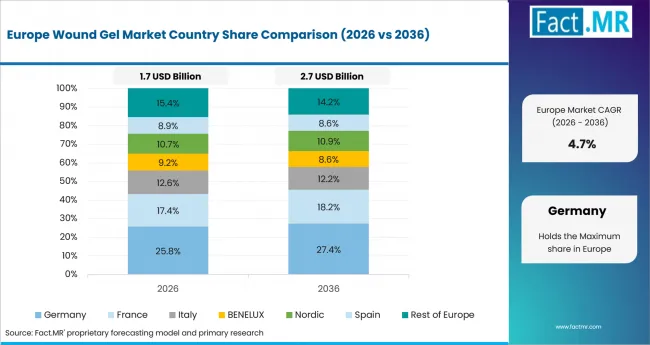
The wound gel market in Europe is projected to grow from USD 1.52 billion in 2025 to USD 2.58 billion by 2035, registering a CAGR of 5.4% over the forecast period. Germany is expected to maintain its leadership position with a 28.7% market share in 2025, adjusting to 28.3% by 2035, supported by its extensive aging population healthcare infrastructure, evidence-based clinical protocols, and comprehensive wound care center networks serving European healthcare systems.
UK follows with a 24.3% share in 2025, projected to reach 24.6% by 2035, driven by comprehensive NHS wound care programs and community nursing service expansion in major healthcare regions implementing systematic chronic wound management strategies. France holds a 21.8% share in 2025, expected to maintain 22.1% by 2035 through ongoing healthcare modernization and advanced wound care technology adoption. Italy commands a 15.4% share, while Spain accounts for 7.2% in 2025. The Rest of Europe region is anticipated to gain momentum, expanding its collective share from 2.6% to 3.0% by 2035, attributed to increasing wound gel adoption in Nordic countries and emerging Eastern European healthcare systems implementing modern wound care practices.
Competitive Landscape of the Wound Gel Market

The wound gel market features approximately 15-20 meaningful players with moderate concentration, where Medline Industries LP captures 12.5% of the global market share through established product portfolios, comprehensive clinical evidence, and extensive distribution networks. Competition centers on product innovation, clinical outcomes, and healthcare provider relationships rather than price competition alone.
Market leaders include Medline Industries, LP, which maintains competitive advantages through comprehensive wound care product portfolio, extensive manufacturing capabilities, and strong healthcare system partnerships across hospitals and long-term care facilities, creating high customer confidence among clinicians seeking reliable wound management solutions. This company leverages vertical integration and direct distribution models to defend market positions while expanding into emerging markets and homecare applications.
Challengers encompass established wound care manufacturers including Coloplast Ltd, Mölnlycke Health Care AB, and Solventum, which compete through specialized product technologies and strong clinical evidence in major healthcare markets through outcomes research and healthcare professional education programs. Medical device specialists, including Convatec Inc., Smith+Nephew, and B. Braun SE, focus on specific wound care segments or product categories, offering differentiated capabilities in advanced dressings, antimicrobial technologies, and specialized chronic wound solutions.
Emerging wound care companies and technology innovators create competitive pressure through novel hydrogel formulations and bioactive technologies, particularly in high-growth markets including India and China, where innovation provides advantages in serving price-sensitive healthcare segments and addressing unmet clinical needs.
Market dynamics favor companies that combine clinical efficacy with operational reliability and customer support capabilities that address complete wound care pathways from assessment through healing. Strategic emphasis on clinical evidence development, healthcare provider education, and health economic value demonstration enables differentiation in increasingly competitive wound care segments across developed and emerging markets.
Global Wound Gel Market — Stakeholder Contribution Framework
Wound gel products represent a critical medical technology that enables healthcare providers across hospitals, specialty clinics, and homecare settings to deliver optimal moisture management and infection prevention while supporting accelerated wound healing, typically providing targeted advantages including sustained moisture donation, controlled exudate absorption, and antimicrobial protection compared to conventional dry dressings alone while ensuring improved patient comfort and clinical outcomes.
With the market projected to grow from USD 6.36 billion in 2025 to USD 10.80 billion by 2035 at a 5.4% CAGR, these solutions offer compelling advantages for chronic wound management, surgical care, and diverse patient populations across global healthcare systems. Scaling market penetration and clinical adoption requires coordinated action across healthcare policies, clinical guidelines, medical device manufacturers, healthcare providers, and patient education initiatives.
How Could Governments Spur Local Development and Adoption?
- Chronic Disease Management Programs: Include wound care in national diabetes and aging strategies, providing targeted support for wound care infrastructure in primary care settings and supporting research institutions through product development grants and clinical validation programs.
- Tax Policy & Investment Support: Implement reduced tax rates for advanced wound care products, provide tax incentives for healthcare facilities adopting evidence-based wound care protocols, and establish favorable import structures that encourage access to innovative technologies.
- Regulatory Framework Development: Create streamlined approval processes for wound gel products across different risk classifications, establish clear performance standards and biocompatibility requirements, and develop international harmonization protocols that facilitate cross-border device registration.
- Healthcare Infrastructure & Coverage: Fund wound care center development in underserved regions, invest in healthcare provider training initiatives supporting advanced wound care competencies, and explore reimbursement models that reward clinical outcomes rather than procedure volumes.
- Innovation & Research Support: Establish public-private partnerships for wound healing research, support academic-industry collaborations investigating novel biomaterials and drug delivery systems, and create regulatory environments that encourage medical device innovation.
How Could Industry Bodies Support Market Development?
- Clinical Standards & Evidence: Define standardized wound assessment protocols and product performance metrics across different wound types, establish universal testing methodologies and biocompatibility standards, and create clinical evidence databases that healthcare providers can reference for treatment decisions.
- Market Education & Best Practices: Lead messaging that demonstrates wound gel benefits, emphasizing moist wound healing principles, appropriate product selection, and realistic healing expectations compared to traditional wound care approaches.
- Quality Assurance Standards: Develop guidelines for manufacturing quality, sterilization validation, shelf-life testing, and label accuracy, ensuring patient safety across production and distribution operations.
- Professional Development: Run certification programs for wound care nurses, clinicians, and product specialists on optimizing wound gel utilization, product selection algorithms, and evidence-based treatment protocols in diverse clinical settings.
How Could Manufacturers and Technology Players Strengthen the Ecosystem?
- Advanced Product Development: Develop next-generation wound gel formulations with enhanced moisture control, optimized antimicrobial delivery, and bioactive characteristics that improve healing while reducing treatment complexity and supporting patient adherence.
- Clinical Evidence Programs: Provide comprehensive clinical trial data, real-world evidence studies, and health economic analyses demonstrating superior outcomes and cost-effectiveness that support formulary inclusion and reimbursement decisions.
- Healthcare Provider Support: Offer comprehensive training programs about wound assessment, product selection, and application techniques that help clinical teams deliver optimal wound care aligned with evidence-based guidelines.
- Research & Innovation Networks: Build comprehensive R&D capabilities, collaborative biomaterial development programs, and clinical testing partnerships that ensure wound gel products maintain high performance standards and address evolving clinical needs.
How Could Healthcare Providers and Clinical Teams Navigate the Market?
- Evidence-Based Protocol Integration: Incorporate validated wound gel protocols into clinical pathways, with particular focus on appropriate indication-based selection, dressing change frequency optimization, and outcomes monitoring for quality improvement.
- Patient Education Excellence: Establish comprehensive patient instruction programs addressing wound self-care, product application techniques, and complication recognition through optimized counseling frameworks and written materials.
- Multidisciplinary Care Models: Implement integrated wound care teams combining physicians, nurses, nutritionists, and therapists providing comprehensive management addressing wound healing, comorbidity optimization, and quality of life.
- Outcomes Measurement Systems: Develop standardized wound assessment documentation, healing rate tracking, and patient-reported outcome collection enabling continuous care improvement and value demonstration.
How Could Investors and Financial Enablers Unlock Value?
- Market Leader Investment: Provide growth capital for established companies like Medline Industries, LP and emerging innovators to fund clinical trials, manufacturing expansion, and geographic market penetration supporting industry leadership.
- Technology Innovation Financing: Back startups developing bioactive gels, smart dressings, and novel antimicrobial technologies that advance wound care capabilities beyond moisture management.
- Market Access Funding: Finance distribution infrastructure development and market education initiatives in high-growth regions including India and China, supporting localization strategies that address regional healthcare requirements.
- Digital Health Integration: Support companies developing wound imaging applications, telehealth platforms, and artificial intelligence diagnostic tools that enhance wound care delivery through technology-enabled clinical decision support.
Key Players in the Wound Gel Market
- Medline Industries, LP
- Coloplast Ltd
- Mölnlycke Health Care AB
- Solventum
- Convatec Inc.
- Smith+Nephew
- B. Braun SE
- DermaRite Industries, LLC.
- Integra LifeSciences Corporation
- Axio Biosolutions Private Limited
- Sanara MedTech Inc
Scope of the Report
| Items | Values |
|---|---|
| Quantitative Units | USD 6.36 Billion |
| Product | Dressings, Gels |
| Antimicrobial Properties | Silver, Non-Silver |
| Application | Chronic Wounds, Acute Wounds |
| Mode of Purchase | Prescription, Non-Prescription |
| Distribution Channel | Offline, Online |
| End Use | Hospitals, Specialty Clinics, Ambulatory Surgery Centers, Homecare Settings, Long-Term Care Facilities, Others |
| Regions Covered | Asia Pacific, Europe, North America, Latin America, Middle East & Africa |
| Country Covered | India, USA, Japan, Saudi Arabia, Brazil, Germany, UK, and 40+ countries |
| Key Companies Profiled | Medline Industries, LP, Coloplast Ltd, Mölnlycke Health Care AB, Solventum, Convatec Inc., Smith+Nephew, B. Braun SE, DermaRite Industries, LLC., Integra LifeSciences Corporation, Axio Biosolutions Private Limited, Sanara MedTech Inc |
| Additional Attributes | Dollar sales by product and application categories, regional adoption trends across Asia Pacific, North America, and Europe, competitive landscape with medical device manufacturers and healthcare distribution companies, product specifications and performance requirements, integration with wound care protocols and clinical pathways, innovations in hydrogel technologies and antimicrobial delivery systems, and development of specialized applications with clinical validation and evidence-based treatment capabilities. |
Wound Gel Market by Segments
-
Product :
- Dressings
- Hydrogel Dressings
- Gelling Fiber Dressings
- Others
- Gels
- Dressings
-
Antimicrobial Properties :
- Silver
- Non-Silver
-
Application :
- Chronic Wounds
- Diabetic Foot Ulcers
- Pressure Ulcers
- Stage 1
- Stage 2
- Stage 3
- Stage 4
- Leg Ulcers
- Acute Wounds
- Surgical Incisions
- Burns
- 1st Degree Burns
- 2nd Degree Burns
- 3rd Degree Burns
- Lacerations & Abrasions
- Chronic Wounds
-
Mode of Purchase :
- Prescription
- Non-Prescription
-
Distribution Channel :
- Offline
- Online
-
End Use :
- Hospital
- Specialty Clinics
- Ambulatory Surgery Centers
- Homecare Settings
- Long-Term Care Facilities
- Others
-
Region :
- Asia Pacific
- China
- Japan
- India
- South Korea
- Australia
- Thailand
- Rest of Asia Pacific
- Europe
- Germany
- UK
- France
- Italy
- Spain
- Denmark
- Sweden
- Norway
- Rest of Europe
- North America
- USA
- Canada
- Mexico
- Latin America
- Brazil
- Argentina
- Rest of Latin America
- Middle East & Africa
- South Africa
- Saudi Arabia
- UAE
- Kuwait
- Rest of Middle East & Africa
- Asia Pacific
Table of Content
- Executive Summary
- Global Market Outlook
- Demand to side Trends
- Supply to side Trends
- Technology Roadmap Analysis
- Analysis and Recommendations
- Market Overview
- Market Coverage / Taxonomy
- Market Definition / Scope / Limitations
- Market Background
- Market Dynamics
- Drivers
- Restraints
- Opportunity
- Trends
- Scenario Forecast
- Demand in Optimistic Scenario
- Demand in Likely Scenario
- Demand in Conservative Scenario
- Opportunity Map Analysis
- Product Life Cycle Analysis
- Supply Chain Analysis
- Investment Feasibility Matrix
- Value Chain Analysis
- PESTLE and Porter’s Analysis
- Regulatory Landscape
- Regional Parent Market Outlook
- Production and Consumption Statistics
- Import and Export Statistics
- Market Dynamics
- Global Market Analysis 2020 to 2024 and Forecast, 2025 to 2035
- Historical Market Size Value (USD Million) Analysis, 2020 to 2024
- Current and Future Market Size Value (USD Million) Projections, 2025 to 2035
- Y to o to Y Growth Trend Analysis
- Absolute $ Opportunity Analysis
- Global Market Pricing Analysis 2020 to 2024 and Forecast 2025 to 2035
- Global Market Analysis 2020 to 2024 and Forecast 2025 to 2035, By Product
- Introduction / Key Findings
- Historical Market Size Value (USD Million) Analysis By Product, 2020 to 2024
- Current and Future Market Size Value (USD Million) Analysis and Forecast By Product, 2025 to 2035
- Dressings
- Gels
- Y to o to Y Growth Trend Analysis By Product, 2020 to 2024
- Absolute $ Opportunity Analysis By Product, 2025 to 2035
- Global Market Analysis 2020 to 2024 and Forecast 2025 to 2035, By Antimicrobial Properties
- Introduction / Key Findings
- Historical Market Size Value (USD Million) Analysis By Antimicrobial Properties, 2020 to 2024
- Current and Future Market Size Value (USD Million) Analysis and Forecast By Antimicrobial Properties, 2025 to 2035
- Silver
- Non-Silver
- Y to o to Y Growth Trend Analysis By Antimicrobial Properties, 2020 to 2024
- Absolute $ Opportunity Analysis By Antimicrobial Properties, 2025 to 2035
- Global Market Analysis 2020 to 2024 and Forecast 2025 to 2035, By Application
- Introduction / Key Findings
- Historical Market Size Value (USD Million) Analysis By Application, 2020 to 2024
- Current and Future Market Size Value (USD Million) Analysis and Forecast By Application, 2025 to 2035
- Chronic Wounds
- Acute Wounds
- Y to o to Y Growth Trend Analysis By Application, 2020 to 2024
- Absolute $ Opportunity Analysis By Application, 2025 to 2035
- Global Market Analysis 2020 to 2024 and Forecast 2025 to 2035, By Mode of Purchase
- Introduction / Key Findings
- Historical Market Size Value (USD Million) Analysis By Mode of Purchase, 2020 to 2024
- Current and Future Market Size Value (USD Million) Analysis and Forecast By Mode of Purchase, 2025 to 2035
- Prescription
- Non-Prescription
- Y to o to Y Growth Trend Analysis By Mode of Purchase, 2020 to 2024
- Absolute $ Opportunity Analysis By Mode of Purchase, 2025 to 2035
- Global Market Analysis 2020 to 2024 and Forecast 2025 to 2035, By Distribution Channel
- Introduction / Key Findings
- Historical Market Size Value (USD Million) Analysis By Distribution Channel, 2020 to 2024
- Current and Future Market Size Value (USD Million) Analysis and Forecast By Distribution Channel, 2025 to 2035
- Offline
- Online
- Y to o to Y Growth Trend Analysis By Distribution Channel, 2020 to 2024
- Absolute $ Opportunity Analysis By Distribution Channel, 2025 to 2035
- Global Market Analysis 2020 to 2024 and Forecast 2025 to 2035, By End Use
- Introduction / Key Findings
- Historical Market Size Value (USD Million) Analysis By End Use, 2020 to 2024
- Current and Future Market Size Value (USD Million) Analysis and Forecast By End Use, 2025 to 2035
- Hospitals
- Specialty Clinics
- Ambulatory Surgery Centers
- Homecare Settings
- Long-Term Care Facilities
- Others
- Y to o to Y Growth Trend Analysis By End Use, 2020 to 2024
- Absolute $ Opportunity Analysis By End Use, 2025 to 2035
- Global Market Analysis 2020 to 2024 and Forecast 2025 to 2035, By Region
- Introduction
- Historical Market Size Value (USD Million) Analysis By Region, 2020 to 2024
- Current Market Size Value (USD Million) Analysis and Forecast By Region, 2025 to 2035
- North America
- Latin America
- Western Europe
- Eastern Europe
- East Asia
- South Asia and Pacific
- Middle East & Africa
- Market Attractiveness Analysis By Region
- North America Market Analysis 2020 to 2024 and Forecast 2025 to 2035, By Country
- Historical Market Size Value (USD Million) Trend Analysis By Market Taxonomy, 2020 to 2024
- Market Size Value (USD Million) Forecast By Market Taxonomy, 2025 to 2035
- By Country
- USA
- Canada
- Mexico
- By Product
- By Antimicrobial Properties
- By Application
- By Mode of Purchase
- By Distribution Channel
- By End Use
- By Country
- Market Attractiveness Analysis
- By Country
- By Product
- By Antimicrobial Properties
- By Application
- By Mode of Purchase
- By Distribution Channel
- By End Use
- Key Takeaways
- Latin America Market Analysis 2020 to 2024 and Forecast 2025 to 2035, By Country
- Historical Market Size Value (USD Million) Trend Analysis By Market Taxonomy, 2020 to 2024
- Market Size Value (USD Million) Forecast By Market Taxonomy, 2025 to 2035
- By Country
- Brazil
- Chile
- Rest of Latin America
- By Product
- By Antimicrobial Properties
- By Application
- By Mode of Purchase
- By Distribution Channel
- By End Use
- By Country
- Market Attractiveness Analysis
- By Country
- By Product
- By Antimicrobial Properties
- By Application
- By Mode of Purchase
- By Distribution Channel
- By End Use
- Key Takeaways
- Western Europe Market Analysis 2020 to 2024 and Forecast 2025 to 2035, By Country
- Historical Market Size Value (USD Million) Trend Analysis By Market Taxonomy, 2020 to 2024
- Market Size Value (USD Million) Forecast By Market Taxonomy, 2025 to 2035
- By Country
- Germany
- UK
- Italy
- Spain
- France
- Nordic
- BENELUX
- Rest of Western Europe
- By Product
- By Antimicrobial Properties
- By Application
- By Mode of Purchase
- By Distribution Channel
- By End Use
- By Country
- Market Attractiveness Analysis
- By Country
- By Product
- By Antimicrobial Properties
- By Application
- By Mode of Purchase
- By Distribution Channel
- By End Use
- Key Takeaways
- Eastern Europe Market Analysis 2020 to 2024 and Forecast 2025 to 2035, By Country
- Historical Market Size Value (USD Million) Trend Analysis By Market Taxonomy, 2020 to 2024
- Market Size Value (USD Million) Forecast By Market Taxonomy, 2025 to 2035
- By Country
- Russia
- Poland
- Hungary
- Balkan & Baltic
- Rest of Eastern Europe
- By Product
- By Antimicrobial Properties
- By Application
- By Mode of Purchase
- By Distribution Channel
- By End Use
- By Country
- Market Attractiveness Analysis
- By Country
- By Product
- By Antimicrobial Properties
- By Application
- By Mode of Purchase
- By Distribution Channel
- By End Use
- Key Takeaways
- East Asia Market Analysis 2020 to 2024 and Forecast 2025 to 2035, By Country
- Historical Market Size Value (USD Million) Trend Analysis By Market Taxonomy, 2020 to 2024
- Market Size Value (USD Million) Forecast By Market Taxonomy, 2025 to 2035
- By Country
- China
- Japan
- South Korea
- By Product
- By Antimicrobial Properties
- By Application
- By Mode of Purchase
- By Distribution Channel
- By End Use
- By Country
- Market Attractiveness Analysis
- By Country
- By Product
- By Antimicrobial Properties
- By Application
- By Mode of Purchase
- By Distribution Channel
- By End Use
- Key Takeaways
- South Asia and Pacific Market Analysis 2020 to 2024 and Forecast 2025 to 2035, By Country
- Historical Market Size Value (USD Million) Trend Analysis By Market Taxonomy, 2020 to 2024
- Market Size Value (USD Million) Forecast By Market Taxonomy, 2025 to 2035
- By Country
- India
- ASEAN
- Australia & New Zealand
- Rest of South Asia and Pacific
- By Product
- By Antimicrobial Properties
- By Application
- By Mode of Purchase
- By Distribution Channel
- By End Use
- By Country
- Market Attractiveness Analysis
- By Country
- By Product
- By Antimicrobial Properties
- By Application
- By Mode of Purchase
- By Distribution Channel
- By End Use
- Key Takeaways
- Middle East & Africa Market Analysis 2020 to 2024 and Forecast 2025 to 2035, By Country
- Historical Market Size Value (USD Million) Trend Analysis By Market Taxonomy, 2020 to 2024
- Market Size Value (USD Million) Forecast By Market Taxonomy, 2025 to 2035
- By Country
- Kingdom of Saudi Arabia
- Other GCC Countries
- Turkiye
- South Africa
- Other African Union
- Rest of Middle East & Africa
- By Product
- By Antimicrobial Properties
- By Application
- By Mode of Purchase
- By Distribution Channel
- By End Use
- By Country
- Market Attractiveness Analysis
- By Country
- By Product
- By Antimicrobial Properties
- By Application
- By Mode of Purchase
- By Distribution Channel
- By End Use
- Key Takeaways
- Key Countries Market Analysis
- USA
- Pricing Analysis
- Market Share Analysis, 2024
- By Product
- By Antimicrobial Properties
- By Application
- By Mode of Purchase
- By Distribution Channel
- By End Use
- Canada
- Pricing Analysis
- Market Share Analysis, 2024
- By Product
- By Antimicrobial Properties
- By Application
- By Mode of Purchase
- By Distribution Channel
- By End Use
- Mexico
- Pricing Analysis
- Market Share Analysis, 2024
- By Product
- By Antimicrobial Properties
- By Application
- By Mode of Purchase
- By Distribution Channel
- By End Use
- Brazil
- Pricing Analysis
- Market Share Analysis, 2024
- By Product
- By Antimicrobial Properties
- By Application
- By Mode of Purchase
- By Distribution Channel
- By End Use
- Chile
- Pricing Analysis
- Market Share Analysis, 2024
- By Product
- By Antimicrobial Properties
- By Application
- By Mode of Purchase
- By Distribution Channel
- By End Use
- Germany
- Pricing Analysis
- Market Share Analysis, 2024
- By Product
- By Antimicrobial Properties
- By Application
- By Mode of Purchase
- By Distribution Channel
- By End Use
- UK
- Pricing Analysis
- Market Share Analysis, 2024
- By Product
- By Antimicrobial Properties
- By Application
- By Mode of Purchase
- By Distribution Channel
- By End Use
- Italy
- Pricing Analysis
- Market Share Analysis, 2024
- By Product
- By Antimicrobial Properties
- By Application
- By Mode of Purchase
- By Distribution Channel
- By End Use
- Spain
- Pricing Analysis
- Market Share Analysis, 2024
- By Product
- By Antimicrobial Properties
- By Application
- By Mode of Purchase
- By Distribution Channel
- By End Use
- France
- Pricing Analysis
- Market Share Analysis, 2024
- By Product
- By Antimicrobial Properties
- By Application
- By Mode of Purchase
- By Distribution Channel
- By End Use
- India
- Pricing Analysis
- Market Share Analysis, 2024
- By Product
- By Antimicrobial Properties
- By Application
- By Mode of Purchase
- By Distribution Channel
- By End Use
- ASEAN
- Pricing Analysis
- Market Share Analysis, 2024
- By Product
- By Antimicrobial Properties
- By Application
- By Mode of Purchase
- By Distribution Channel
- By End Use
- Australia & New Zealand
- Pricing Analysis
- Market Share Analysis, 2024
- By Product
- By Antimicrobial Properties
- By Application
- By Mode of Purchase
- By Distribution Channel
- By End Use
- China
- Pricing Analysis
- Market Share Analysis, 2024
- By Product
- By Antimicrobial Properties
- By Application
- By Mode of Purchase
- By Distribution Channel
- By End Use
- Japan
- Pricing Analysis
- Market Share Analysis, 2024
- By Product
- By Antimicrobial Properties
- By Application
- By Mode of Purchase
- By Distribution Channel
- By End Use
- South Korea
- Pricing Analysis
- Market Share Analysis, 2024
- By Product
- By Antimicrobial Properties
- By Application
- By Mode of Purchase
- By Distribution Channel
- By End Use
- Russia
- Pricing Analysis
- Market Share Analysis, 2024
- By Product
- By Antimicrobial Properties
- By Application
- By Mode of Purchase
- By Distribution Channel
- By End Use
- Poland
- Pricing Analysis
- Market Share Analysis, 2024
- By Product
- By Antimicrobial Properties
- By Application
- By Mode of Purchase
- By Distribution Channel
- By End Use
- Hungary
- Pricing Analysis
- Market Share Analysis, 2024
- By Product
- By Antimicrobial Properties
- By Application
- By Mode of Purchase
- By Distribution Channel
- By End Use
- Kingdom of Saudi Arabia
- Pricing Analysis
- Market Share Analysis, 2024
- By Product
- By Antimicrobial Properties
- By Application
- By Mode of Purchase
- By Distribution Channel
- By End Use
- Turkiye
- Pricing Analysis
- Market Share Analysis, 2024
- By Product
- By Antimicrobial Properties
- By Application
- By Mode of Purchase
- By Distribution Channel
- By End Use
- South Africa
- Pricing Analysis
- Market Share Analysis, 2024
- By Product
- By Antimicrobial Properties
- By Application
- By Mode of Purchase
- By Distribution Channel
- By End Use
- USA
- Market Structure Analysis
- Competition Dashboard
- Competition Benchmarking
- Market Share Analysis of Top Players
- By Regional
- By Product
- By Antimicrobial Properties
- By Application
- By Mode of Purchase
- By Distribution Channel
- By End Use
- Competition Analysis
- Competition Deep Dive
- Medline Industries, LP
- Overview
- Product Portfolio
- Profitability by Market Segments (Product/Age /Sales Channel/Region)
- Sales Footprint
- Strategy Overview
- Marketing Strategy
- Product Strategy
- Channel Strategy
- Coloplast Ltd
- Mölnlycke Health Care AB
- Solventum
- Convatec Inc.
- Smith+Nephew
- B. Braun SE
- DermaRite Industries, LLC.
- Integra LifeSciences Corporation
- Axio Biosolutions Private Limited
- Sanara MedTech Inc
- Medline Industries, LP
- Competition Deep Dive
- Assumptions & Acronyms Used
- Research Methodology
List Of Table
- Table 1: Global Market Value (USD Million) Forecast by Region, 2020 to 2035
- Table 2: Global Market Value (USD Million) Forecast by Product, 2020 to 2035
- Table 3: Global Market Value (USD Million) Forecast by Antimicrobial Properties, 2020 to 2035
- Table 4: Global Market Value (USD Million) Forecast by Application, 2020 to 2035
- Table 5: Global Market Value (USD Million) Forecast by Mode of Purchase, 2020 to 2035
- Table 6: Global Market Value (USD Million) Forecast by Distribution Channel, 2020 to 2035
- Table 7: Global Market Value (USD Million) Forecast by End Use, 2020 to 2035
- Table 8: North America Market Value (USD Million) Forecast by Country, 2020 to 2035
- Table 9: North America Market Value (USD Million) Forecast by Product, 2020 to 2035
- Table 10: North America Market Value (USD Million) Forecast by Antimicrobial Properties, 2020 to 2035
- Table 11: North America Market Value (USD Million) Forecast by Application, 2020 to 2035
- Table 12: North America Market Value (USD Million) Forecast by Mode of Purchase, 2020 to 2035
- Table 13: North America Market Value (USD Million) Forecast by Distribution Channel, 2020 to 2035
- Table 14: North America Market Value (USD Million) Forecast by End Use, 2020 to 2035
- Table 15: Latin America Market Value (USD Million) Forecast by Country, 2020 to 2035
- Table 16: Latin America Market Value (USD Million) Forecast by Product, 2020 to 2035
- Table 17: Latin America Market Value (USD Million) Forecast by Antimicrobial Properties, 2020 to 2035
- Table 18: Latin America Market Value (USD Million) Forecast by Application, 2020 to 2035
- Table 19: Latin America Market Value (USD Million) Forecast by Mode of Purchase, 2020 to 2035
- Table 20: Latin America Market Value (USD Million) Forecast by Distribution Channel, 2020 to 2035
- Table 21: Latin America Market Value (USD Million) Forecast by End Use, 2020 to 2035
- Table 22: Western Europe Market Value (USD Million) Forecast by Country, 2020 to 2035
- Table 23: Western Europe Market Value (USD Million) Forecast by Product, 2020 to 2035
- Table 24: Western Europe Market Value (USD Million) Forecast by Antimicrobial Properties, 2020 to 2035
- Table 25: Western Europe Market Value (USD Million) Forecast by Application, 2020 to 2035
- Table 26: Western Europe Market Value (USD Million) Forecast by Mode of Purchase, 2020 to 2035
- Table 27: Western Europe Market Value (USD Million) Forecast by Distribution Channel, 2020 to 2035
- Table 28: Western Europe Market Value (USD Million) Forecast by End Use, 2020 to 2035
- Table 29: Eastern Europe Market Value (USD Million) Forecast by Country, 2020 to 2035
- Table 30: Eastern Europe Market Value (USD Million) Forecast by Product, 2020 to 2035
- Table 31: Eastern Europe Market Value (USD Million) Forecast by Antimicrobial Properties, 2020 to 2035
- Table 32: Eastern Europe Market Value (USD Million) Forecast by Application, 2020 to 2035
- Table 33: Eastern Europe Market Value (USD Million) Forecast by Mode of Purchase, 2020 to 2035
- Table 34: Eastern Europe Market Value (USD Million) Forecast by Distribution Channel, 2020 to 2035
- Table 35: Eastern Europe Market Value (USD Million) Forecast by End Use, 2020 to 2035
- Table 36: East Asia Market Value (USD Million) Forecast by Country, 2020 to 2035
- Table 37: East Asia Market Value (USD Million) Forecast by Product, 2020 to 2035
- Table 38: East Asia Market Value (USD Million) Forecast by Antimicrobial Properties, 2020 to 2035
- Table 39: East Asia Market Value (USD Million) Forecast by Application, 2020 to 2035
- Table 40: East Asia Market Value (USD Million) Forecast by Mode of Purchase, 2020 to 2035
- Table 41: East Asia Market Value (USD Million) Forecast by Distribution Channel, 2020 to 2035
- Table 42: East Asia Market Value (USD Million) Forecast by End Use, 2020 to 2035
- Table 43: South Asia and Pacific Market Value (USD Million) Forecast by Country, 2020 to 2035
- Table 44: South Asia and Pacific Market Value (USD Million) Forecast by Product, 2020 to 2035
- Table 45: South Asia and Pacific Market Value (USD Million) Forecast by Antimicrobial Properties, 2020 to 2035
- Table 46: South Asia and Pacific Market Value (USD Million) Forecast by Application, 2020 to 2035
- Table 47: South Asia and Pacific Market Value (USD Million) Forecast by Mode of Purchase, 2020 to 2035
- Table 48: South Asia and Pacific Market Value (USD Million) Forecast by Distribution Channel, 2020 to 2035
- Table 49: South Asia and Pacific Market Value (USD Million) Forecast by End Use, 2020 to 2035
- Table 50: Middle East & Africa Market Value (USD Million) Forecast by Country, 2020 to 2035
- Table 51: Middle East & Africa Market Value (USD Million) Forecast by Product, 2020 to 2035
- Table 52: Middle East & Africa Market Value (USD Million) Forecast by Antimicrobial Properties, 2020 to 2035
- Table 53: Middle East & Africa Market Value (USD Million) Forecast by Application, 2020 to 2035
- Table 54: Middle East & Africa Market Value (USD Million) Forecast by Mode of Purchase, 2020 to 2035
- Table 55: Middle East & Africa Market Value (USD Million) Forecast by Distribution Channel, 2020 to 2035
- Table 56: Middle East & Africa Market Value (USD Million) Forecast by End Use, 2020 to 2035
List Of Figures
- Figure 1: Global Market Pricing Analysis
- Figure 2: Global Market Value (USD Million) Forecast 2020 to 2035
- Figure 3: Global Market Value Share and BPS Analysis by Product, 2025 and 2035
- Figure 4: Global Market Y to o to Y Growth Comparison by Product, 2025 to 2035
- Figure 5: Global Market Attractiveness Analysis by Product
- Figure 6: Global Market Value Share and BPS Analysis by Antimicrobial Properties, 2025 and 2035
- Figure 7: Global Market Y to o to Y Growth Comparison by Antimicrobial Properties, 2025 to 2035
- Figure 8: Global Market Attractiveness Analysis by Antimicrobial Properties
- Figure 9: Global Market Value Share and BPS Analysis by Application, 2025 and 2035
- Figure 10: Global Market Y to o to Y Growth Comparison by Application, 2025 to 2035
- Figure 11: Global Market Attractiveness Analysis by Application
- Figure 12: Global Market Value Share and BPS Analysis by Mode of Purchase, 2025 and 2035
- Figure 13: Global Market Y to o to Y Growth Comparison by Mode of Purchase, 2025 to 2035
- Figure 14: Global Market Attractiveness Analysis by Mode of Purchase
- Figure 15: Global Market Value Share and BPS Analysis by Distribution Channel, 2025 and 2035
- Figure 16: Global Market Y to o to Y Growth Comparison by Distribution Channel, 2025 to 2035
- Figure 17: Global Market Attractiveness Analysis by Distribution Channel
- Figure 18: Global Market Value Share and BPS Analysis by End Use, 2025 and 2035
- Figure 19: Global Market Y to o to Y Growth Comparison by End Use, 2025 to 2035
- Figure 20: Global Market Attractiveness Analysis by End Use
- Figure 21: Global Market Value (USD Million) Share and BPS Analysis by Region, 2025 and 2035
- Figure 22: Global Market Y to o to Y Growth Comparison by Region, 2025 to 2035
- Figure 23: Global Market Attractiveness Analysis by Region
- Figure 24: North America Market Incremental Dollar Opportunity, 2025 to 2035
- Figure 25: Latin America Market Incremental Dollar Opportunity, 2025 to 2035
- Figure 26: Western Europe Market Incremental Dollar Opportunity, 2025 to 2035
- Figure 27: Eastern Europe Market Incremental Dollar Opportunity, 2025 to 2035
- Figure 28: East Asia Market Incremental Dollar Opportunity, 2025 to 2035
- Figure 29: South Asia and Pacific Market Incremental Dollar Opportunity, 2025 to 2035
- Figure 30: Middle East & Africa Market Incremental Dollar Opportunity, 2025 to 2035
- Figure 31: North America Market Value Share and BPS Analysis by Country, 2025 and 2035
- Figure 32: North America Market Value Share and BPS Analysis by Product, 2025 and 2035
- Figure 33: North America Market Y to o to Y Growth Comparison by Product, 2025 to 2035
- Figure 34: North America Market Attractiveness Analysis by Product
- Figure 35: North America Market Value Share and BPS Analysis by Antimicrobial Properties, 2025 and 2035
- Figure 36: North America Market Y to o to Y Growth Comparison by Antimicrobial Properties, 2025 to 2035
- Figure 37: North America Market Attractiveness Analysis by Antimicrobial Properties
- Figure 38: North America Market Value Share and BPS Analysis by Application, 2025 and 2035
- Figure 39: North America Market Y to o to Y Growth Comparison by Application, 2025 to 2035
- Figure 40: North America Market Attractiveness Analysis by Application
- Figure 41: North America Market Value Share and BPS Analysis by Mode of Purchase, 2025 and 2035
- Figure 42: North America Market Y to o to Y Growth Comparison by Mode of Purchase, 2025 to 2035
- Figure 43: North America Market Attractiveness Analysis by Mode of Purchase
- Figure 44: North America Market Value Share and BPS Analysis by Distribution Channel, 2025 and 2035
- Figure 45: North America Market Y to o to Y Growth Comparison by Distribution Channel, 2025 to 2035
- Figure 46: North America Market Attractiveness Analysis by Distribution Channel
- Figure 47: North America Market Value Share and BPS Analysis by End Use, 2025 and 2035
- Figure 48: North America Market Y to o to Y Growth Comparison by End Use, 2025 to 2035
- Figure 49: North America Market Attractiveness Analysis by End Use
- Figure 50: Latin America Market Value Share and BPS Analysis by Country, 2025 and 2035
- Figure 51: Latin America Market Value Share and BPS Analysis by Product, 2025 and 2035
- Figure 52: Latin America Market Y to o to Y Growth Comparison by Product, 2025 to 2035
- Figure 53: Latin America Market Attractiveness Analysis by Product
- Figure 54: Latin America Market Value Share and BPS Analysis by Antimicrobial Properties, 2025 and 2035
- Figure 55: Latin America Market Y to o to Y Growth Comparison by Antimicrobial Properties, 2025 to 2035
- Figure 56: Latin America Market Attractiveness Analysis by Antimicrobial Properties
- Figure 57: Latin America Market Value Share and BPS Analysis by Application, 2025 and 2035
- Figure 58: Latin America Market Y to o to Y Growth Comparison by Application, 2025 to 2035
- Figure 59: Latin America Market Attractiveness Analysis by Application
- Figure 60: Latin America Market Value Share and BPS Analysis by Mode of Purchase, 2025 and 2035
- Figure 61: Latin America Market Y to o to Y Growth Comparison by Mode of Purchase, 2025 to 2035
- Figure 62: Latin America Market Attractiveness Analysis by Mode of Purchase
- Figure 63: Latin America Market Value Share and BPS Analysis by Distribution Channel, 2025 and 2035
- Figure 64: Latin America Market Y to o to Y Growth Comparison by Distribution Channel, 2025 to 2035
- Figure 65: Latin America Market Attractiveness Analysis by Distribution Channel
- Figure 66: Latin America Market Value Share and BPS Analysis by End Use, 2025 and 2035
- Figure 67: Latin America Market Y to o to Y Growth Comparison by End Use, 2025 to 2035
- Figure 68: Latin America Market Attractiveness Analysis by End Use
- Figure 69: Western Europe Market Value Share and BPS Analysis by Country, 2025 and 2035
- Figure 70: Western Europe Market Value Share and BPS Analysis by Product, 2025 and 2035
- Figure 71: Western Europe Market Y to o to Y Growth Comparison by Product, 2025 to 2035
- Figure 72: Western Europe Market Attractiveness Analysis by Product
- Figure 73: Western Europe Market Value Share and BPS Analysis by Antimicrobial Properties, 2025 and 2035
- Figure 74: Western Europe Market Y to o to Y Growth Comparison by Antimicrobial Properties, 2025 to 2035
- Figure 75: Western Europe Market Attractiveness Analysis by Antimicrobial Properties
- Figure 76: Western Europe Market Value Share and BPS Analysis by Application, 2025 and 2035
- Figure 77: Western Europe Market Y to o to Y Growth Comparison by Application, 2025 to 2035
- Figure 78: Western Europe Market Attractiveness Analysis by Application
- Figure 79: Western Europe Market Value Share and BPS Analysis by Mode of Purchase, 2025 and 2035
- Figure 80: Western Europe Market Y to o to Y Growth Comparison by Mode of Purchase, 2025 to 2035
- Figure 81: Western Europe Market Attractiveness Analysis by Mode of Purchase
- Figure 82: Western Europe Market Value Share and BPS Analysis by Distribution Channel, 2025 and 2035
- Figure 83: Western Europe Market Y to o to Y Growth Comparison by Distribution Channel, 2025 to 2035
- Figure 84: Western Europe Market Attractiveness Analysis by Distribution Channel
- Figure 85: Western Europe Market Value Share and BPS Analysis by End Use, 2025 and 2035
- Figure 86: Western Europe Market Y to o to Y Growth Comparison by End Use, 2025 to 2035
- Figure 87: Western Europe Market Attractiveness Analysis by End Use
- Figure 88: Eastern Europe Market Value Share and BPS Analysis by Country, 2025 and 2035
- Figure 89: Eastern Europe Market Value Share and BPS Analysis by Product, 2025 and 2035
- Figure 90: Eastern Europe Market Y to o to Y Growth Comparison by Product, 2025 to 2035
- Figure 91: Eastern Europe Market Attractiveness Analysis by Product
- Figure 92: Eastern Europe Market Value Share and BPS Analysis by Antimicrobial Properties, 2025 and 2035
- Figure 93: Eastern Europe Market Y to o to Y Growth Comparison by Antimicrobial Properties, 2025 to 2035
- Figure 94: Eastern Europe Market Attractiveness Analysis by Antimicrobial Properties
- Figure 95: Eastern Europe Market Value Share and BPS Analysis by Application, 2025 and 2035
- Figure 96: Eastern Europe Market Y to o to Y Growth Comparison by Application, 2025 to 2035
- Figure 97: Eastern Europe Market Attractiveness Analysis by Application
- Figure 98: Eastern Europe Market Value Share and BPS Analysis by Mode of Purchase, 2025 and 2035
- Figure 99: Eastern Europe Market Y to o to Y Growth Comparison by Mode of Purchase, 2025 to 2035
- Figure 100: Eastern Europe Market Attractiveness Analysis by Mode of Purchase
- Figure 101: Eastern Europe Market Value Share and BPS Analysis by Distribution Channel, 2025 and 2035
- Figure 102: Eastern Europe Market Y to o to Y Growth Comparison by Distribution Channel, 2025 to 2035
- Figure 103: Eastern Europe Market Attractiveness Analysis by Distribution Channel
- Figure 104: Eastern Europe Market Value Share and BPS Analysis by End Use, 2025 and 2035
- Figure 105: Eastern Europe Market Y to o to Y Growth Comparison by End Use, 2025 to 2035
- Figure 106: Eastern Europe Market Attractiveness Analysis by End Use
- Figure 107: East Asia Market Value Share and BPS Analysis by Country, 2025 and 2035
- Figure 108: East Asia Market Value Share and BPS Analysis by Product, 2025 and 2035
- Figure 109: East Asia Market Y to o to Y Growth Comparison by Product, 2025 to 2035
- Figure 110: East Asia Market Attractiveness Analysis by Product
- Figure 111: East Asia Market Value Share and BPS Analysis by Antimicrobial Properties, 2025 and 2035
- Figure 112: East Asia Market Y to o to Y Growth Comparison by Antimicrobial Properties, 2025 to 2035
- Figure 113: East Asia Market Attractiveness Analysis by Antimicrobial Properties
- Figure 114: East Asia Market Value Share and BPS Analysis by Application, 2025 and 2035
- Figure 115: East Asia Market Y to o to Y Growth Comparison by Application, 2025 to 2035
- Figure 116: East Asia Market Attractiveness Analysis by Application
- Figure 117: East Asia Market Value Share and BPS Analysis by Mode of Purchase, 2025 and 2035
- Figure 118: East Asia Market Y to o to Y Growth Comparison by Mode of Purchase, 2025 to 2035
- Figure 119: East Asia Market Attractiveness Analysis by Mode of Purchase
- Figure 120: East Asia Market Value Share and BPS Analysis by Distribution Channel, 2025 and 2035
- Figure 121: East Asia Market Y to o to Y Growth Comparison by Distribution Channel, 2025 to 2035
- Figure 122: East Asia Market Attractiveness Analysis by Distribution Channel
- Figure 123: East Asia Market Value Share and BPS Analysis by End Use, 2025 and 2035
- Figure 124: East Asia Market Y to o to Y Growth Comparison by End Use, 2025 to 2035
- Figure 125: East Asia Market Attractiveness Analysis by End Use
- Figure 126: South Asia and Pacific Market Value Share and BPS Analysis by Country, 2025 and 2035
- Figure 127: South Asia and Pacific Market Value Share and BPS Analysis by Product, 2025 and 2035
- Figure 128: South Asia and Pacific Market Y to o to Y Growth Comparison by Product, 2025 to 2035
- Figure 129: South Asia and Pacific Market Attractiveness Analysis by Product
- Figure 130: South Asia and Pacific Market Value Share and BPS Analysis by Antimicrobial Properties, 2025 and 2035
- Figure 131: South Asia and Pacific Market Y to o to Y Growth Comparison by Antimicrobial Properties, 2025 to 2035
- Figure 132: South Asia and Pacific Market Attractiveness Analysis by Antimicrobial Properties
- Figure 133: South Asia and Pacific Market Value Share and BPS Analysis by Application, 2025 and 2035
- Figure 134: South Asia and Pacific Market Y to o to Y Growth Comparison by Application, 2025 to 2035
- Figure 135: South Asia and Pacific Market Attractiveness Analysis by Application
- Figure 136: South Asia and Pacific Market Value Share and BPS Analysis by Mode of Purchase, 2025 and 2035
- Figure 137: South Asia and Pacific Market Y to o to Y Growth Comparison by Mode of Purchase, 2025 to 2035
- Figure 138: South Asia and Pacific Market Attractiveness Analysis by Mode of Purchase
- Figure 139: South Asia and Pacific Market Value Share and BPS Analysis by Distribution Channel, 2025 and 2035
- Figure 140: South Asia and Pacific Market Y to o to Y Growth Comparison by Distribution Channel, 2025 to 2035
- Figure 141: South Asia and Pacific Market Attractiveness Analysis by Distribution Channel
- Figure 142: South Asia and Pacific Market Value Share and BPS Analysis by End Use, 2025 and 2035
- Figure 143: South Asia and Pacific Market Y to o to Y Growth Comparison by End Use, 2025 to 2035
- Figure 144: South Asia and Pacific Market Attractiveness Analysis by End Use
- Figure 145: Middle East & Africa Market Value Share and BPS Analysis by Country, 2025 and 2035
- Figure 146: Middle East & Africa Market Value Share and BPS Analysis by Product, 2025 and 2035
- Figure 147: Middle East & Africa Market Y to o to Y Growth Comparison by Product, 2025 to 2035
- Figure 148: Middle East & Africa Market Attractiveness Analysis by Product
- Figure 149: Middle East & Africa Market Value Share and BPS Analysis by Antimicrobial Properties, 2025 and 2035
- Figure 150: Middle East & Africa Market Y to o to Y Growth Comparison by Antimicrobial Properties, 2025 to 2035
- Figure 151: Middle East & Africa Market Attractiveness Analysis by Antimicrobial Properties
- Figure 152: Middle East & Africa Market Value Share and BPS Analysis by Application, 2025 and 2035
- Figure 153: Middle East & Africa Market Y to o to Y Growth Comparison by Application, 2025 to 2035
- Figure 154: Middle East & Africa Market Attractiveness Analysis by Application
- Figure 155: Middle East & Africa Market Value Share and BPS Analysis by Mode of Purchase, 2025 and 2035
- Figure 156: Middle East & Africa Market Y to o to Y Growth Comparison by Mode of Purchase, 2025 to 2035
- Figure 157: Middle East & Africa Market Attractiveness Analysis by Mode of Purchase
- Figure 158: Middle East & Africa Market Value Share and BPS Analysis by Distribution Channel, 2025 and 2035
- Figure 159: Middle East & Africa Market Y to o to Y Growth Comparison by Distribution Channel, 2025 to 2035
- Figure 160: Middle East & Africa Market Attractiveness Analysis by Distribution Channel
- Figure 161: Middle East & Africa Market Value Share and BPS Analysis by End Use, 2025 and 2035
- Figure 162: Middle East & Africa Market Y to o to Y Growth Comparison by End Use, 2025 to 2035
- Figure 163: Middle East & Africa Market Attractiveness Analysis by End Use
- Figure 164: Global Market - Tier Structure Analysis
- Figure 165: Global Market - Company Share Analysis
- FAQs -
How big is the wound gel market in 2025?
The global wound gel market is estimated to be valued at USD 6.4 billion in 2025.
What will be the size of wound gel market in 2035?
The market size for the wound gel market is projected to reach USD 10.8 billion by 2035.
How much will be the wound gel market growth between 2025 and 2035?
The wound gel market is expected to grow at a 5.4% CAGR between 2025 and 2035.
What are the key product types in the wound gel market?
The key product types in wound gel market are dressings and gels.
Which antimicrobial properties segment to contribute significant share in the wound gel market in 2025?
In terms of antimicrobial properties, silver segment to command 55.0% share in the wound gel market in 2025.