- Base Value(2025): 2122 Mn
- Forecast Value (2035): 4097 Mn
- CAGR (2035): 7.5%
Bioactive Wound Dressing Market Outlook 2025 to 2035
Global bioactive wound dressing market is expected to reach USD 4,097 million by 2035, up from USD 2,122 million in 2025. During the forecast period 2025 to 2035, the industry is projected to expand at a CAGR of 5.6%.
The increasing cases of chronic wounds like diabetic foot ulcers and pressure sores, aging population, and rise in the cases of diabetes drive the bioactive wound dressing market. In biomaterials and tissue engineering, there is technology that has resulted in new dressings that help improve tissue regeneration and healing.
Additionally, there are increasing awareness efforts among medical practitioners, enabling government programs, and emphasis on alternative forms of treatment and minimization of hospitalization and treatment expenses are further enhancing the uptake of bioactive wound dressings in various countries.
Quick Stats for Bioactive Wound Dressing Market
- Industry Value (2025): USD 2,122.0 Million
- Projected Value (2035): USD 4,096.9 Million
- Forecast CAGR (2025 to 2035): 6.8%
- Leading Segment (2025): Antimicrobial dressings (41.3% Market Share)
- Fastest Growing Country (2025-2035): U.K. (6.2% CAGR)
- Top Key Players: 3M, B.Braun SE, Coloplast AS, Covalon Technologies Ltd., DermaRite Industries LLC, and ETS Wound Care LLC
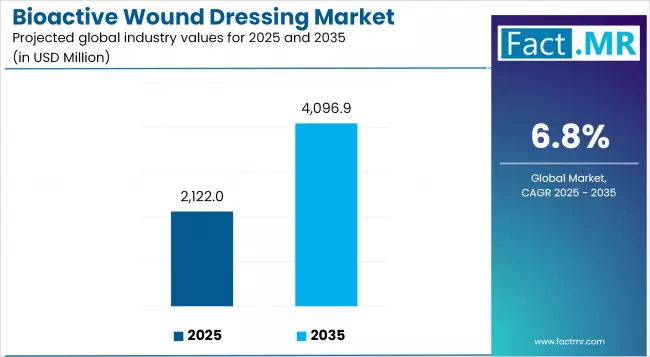
Bioactive Wound Dressing Market Industry Value Analysis | Source: Fact.MR
What are the drivers of the bioactive wound dressing market?
The increasing number of chronic wounds including diabetic foot ulcers, pressure ulcers, and venous leg ulcers are one of the major drivers of bioactive wound dressing market. With the aging of the global population and the increase in the rate of diabetes, there is a growing trend in the demand of the advanced wound care solutions which ensure faster healing with minimal risk of infection. This has driven healthcare professionals to embrace the use of bioactive dressings as opposed to the traditional ones.
Biomaterials and tissue engineering have greatly enhanced the creation of novel bioactive wound dressings due to the technological modifications. Combination of growth factors, antimicrobial agents and collagen, alginate and chitosan improves the regeneration and wound healing. Such innovations enhance clinical outcomes, as well as increase the market potential of next-generation wound care products.
Market development is also being driven by the increasing enlightenments on the advantages of bioactive wound dressings among healthcare providers and the patients. Government drives and health promotions that focus on the advanced wound management practices are pushing hospitals and clinics into investing in these products.
In addition, the increasing emphasis on the minimization of hospitalization and the treatment expenses also contributes to the increased acceptance of bioactive dressings in the developed and emerging markets.
What are the regional trends of the bioactive wound dressing market?
The bioactive wound dressing market is dominated by North America which has superior healthcare facilities, awareness on the management of chronic wounds, and high presence of major players in the market. The increase in diabetes and obesity-related wounds is also an indicator that enhances regional development.
The European market has a large market share, which has been contributed by the government towards the advancement of wound care and provision of innovative medical products. The growth of geriatrics and a heavy emphasis on research and development make the market grow in the area.
The Asia-Pacific region is developing at a high rate because of the enhancement of healthcare centers, increased spending on healthcare, and increased knowledge on the use of advanced wound care solutions. The rising cases of chronic illnesses and the widening medical tourism are also factors that contribute to growth of the market.
The Latin America and Middle East & Africa reporting steady growth due to the enhancement of access to healthcare and increased investments in the medical infrastructure. The market in these regions is growing due to the gradual adoption of advanced wound care technologies and the increasing knowledge levels of the patients.
What are the challenges and restraining factors of the bioactive wound dressing market?
The high cost of advanced wound care products is one of the significant threats to the bioactive wound dressing market. These products are expensive to many patients particularly in the developing world and hence may not be widely adopted. The same cost barrier applies to healthcare providers who have a tight budget constraint.
The untrained nature of professionals who have been trained on the use of bioactive dressing is another challenge. The poor understanding of the methods of application and wound evaluation may result in poor treatment results, which will diminish the trust in such innovative solutions.
The major market limitation is that new bioactive wound care products are highly regulated to ensure that they pass the approvals process. The stemming consequence of lengthy evaluation processes and compliance requirements is that it slows the launch of products and raises the cost of development, making it difficult to innovate and slow down the rate of market expansion.
Country-Wise Insights
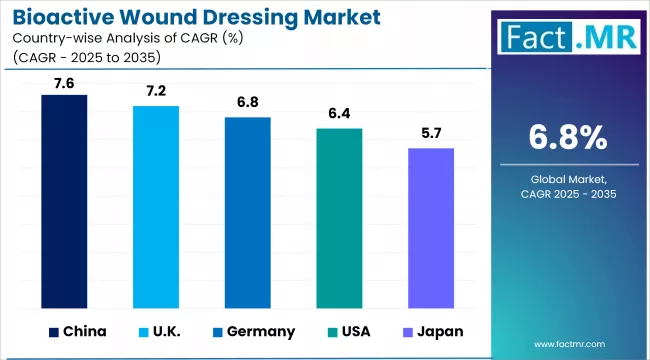
Bioactive Wound Dressing Market Cagr Analysis By Country | Source: Fact.MR
Advanced healthcare infrastructure and growing prevalence of chronic wounds drive the U.S. bioactive wound dressing market
The U.S. market of bioactive wound dressings is showing a high growth with the rising rate of chronic wounding cases like diabetic foot ulcers, pressure ulcers, and surgical wounds cases. The high level of the healthcare system development, in combination with the increased healthcare spending, facilitates the implementation of the newest wound care solutions beneficial to the healing process and prevention of infections.
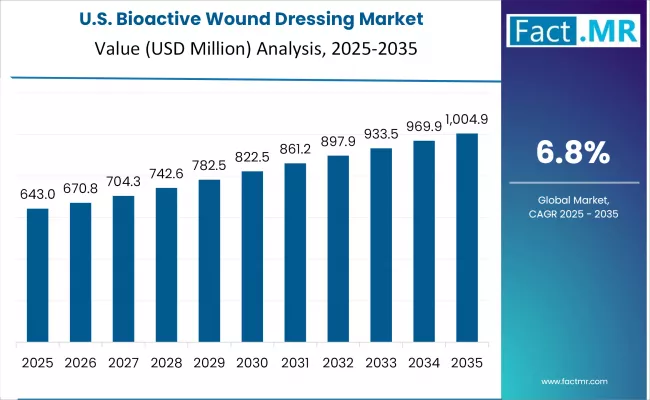
Bioactive Wound Dressing Market Country Value Analysis | Source: Fact.MR
Major manufacturers are putting funds in research and development in order to come up with next generation dressings with antimicrobial agents, growth factors and nanotechnology-based materials to achieve better therapeutic results.
As the aging population continues to increase and the number of diabetic and obese individuals keeps growing, the issue of efficient wound management is becoming of particular interest in order to minimize the number of hospital admissions and healthcare expenses. Biotech firms in the U.S and medical equipment manufacturers are joining research centers to develop novel bioactive dressings that will speed up the healing and repair of tissues and reduce scarring.
Strong healthcare system and increasing focus on advanced wound care drive the German bioactive wound dressing market
German bioactive wound dressing market is in a stable growth that is attributed to increase in chronic wounds as a result of diabetes, ageing and vascular disorders. As Germany has a well-developed healthcare and the willingness to innovate in medical care, bioactive dressings that facilitate quicker healing and lower the risks of infection are becoming more and more popular among hospitals and clinics. The top manufacturers and research centers in the country are set to come up with high performance dressing materials using biomaterials like collagen, alginate and hydrocolloids.
The cultural focus on high-quality healthcare coupled with the presence of stringent regulatory policies and rising awareness among the healthcare practitioners is driving the demand towards advanced wound care solutions in Germany. Besides, partnerships between domestic and foreign medical device firms are giving rise to antimicrobial and smart bioactive dressing.
Rising chronic wound cases and healthcare innovation drive the U.K. bioactive wound dressing market
There is significant market growth in the bioactive wound dressing products in the U.K. as a result of growing cases of chronic wounds like diabetic ulcers, pressure ulcers and post operative wounds. The need of effective and advanced wound care solutions has increased with the increasing level of ageing population and the increasing rate of diabetes. Modern wound management practices are being actively promoted by the National Health Service (NHS), whereby the use of bioactive dressing to hasten healing and minimizing chances of infection are being encouraged.
The U.K is also nurturing good relationships between universities, biotechnology companies and medical equipment manufacturers to invent new bioactive wound dressing which involves natural polymers, growth factors and antimicrobial agents.
Category-Wise Analysis
Antimicrobial dressings segment holds strong demand with infection-prevention and healing benefits in bioactive wound dressings
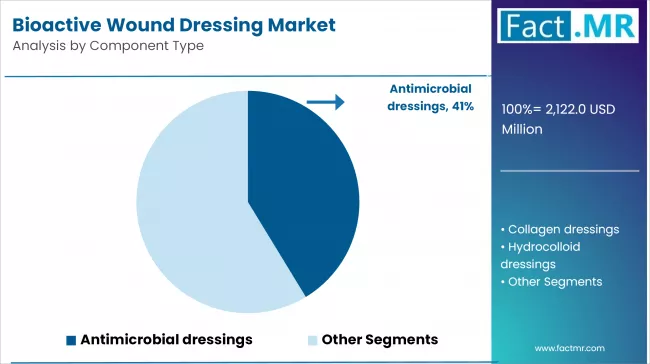
Bioactive Wound Dressing Market Analysis By Component Type | Source: Fact.MR
Antimicrobial dressings lead the bioactive wound dressing market because they provide protection against infections while supporting the recovery process of wounds. The wound surface gets protected from bacteria through antimicrobial dressings which use silver and iodine and honey to stop bacterial growth. The choice to use these dressings depends on the wound type because they work best for chronic and acute wounds. Some medical professionals prefer to use these dressings for chronic and acute wounds.
The worldwide market for antimicrobial bioactive dressings has grown because of the high rates of chronic wounds and surgical site infections and diabetic ulcers. The multifunctional capabilities of antimicrobial bioactive dressings make them suitable for various wound types while their extended wear duration with minimal dressing changes leads to enhanced patient comfort and improved healthcare operational efficiency.
Hospitals segment leads the market with high adoption of advanced bioactive wound care solutions
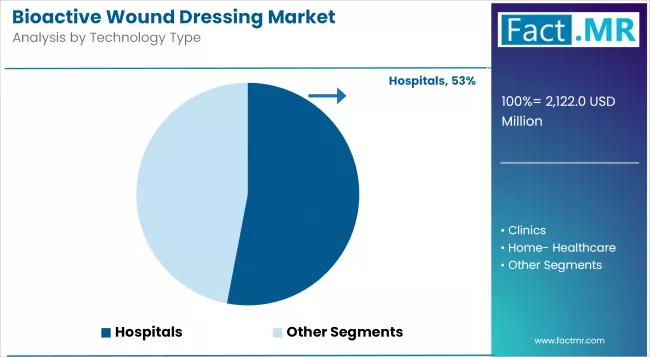
Bioactive Wound Dressing Market Analysis By Technology Type | Source: Fact.MR
The hospitals segment leads the bioactive wound dressing market because more patients need specialized care for their chronic and surgical wounds. Hospitals function as main treatment facilities for wounds because medical staff choose bioactive dressings to speed up healing processes and stop infection spread. Hospitals use these dressings because their advanced wound care units and medical staff expertise enables their application.
Hospitals have started using modern wound management systems because they need better patient recovery results and shorter treatment times due to the rising number of diabetes patients and obesity cases and injury-related traumas. Bioactive wound dressings gain market traction through public and private hospitals because of reimbursement policies and their focus on infection control and cost reduction which establishes these hospitals as the main market users.
Surgical and traumatic wounds segment drive growth with rising post-operative and injury-related cases in bioactive wound dressings
The bioactive wound dressing market shows its strongest position through surgical and traumatic wounds because medical procedures and trauma incidents keep increasing worldwide. The treatment of these wounds needs sophisticated dressings which defend against infections while helping tissue healing and scar formation reduction. Bioactive wound dressings with natural polymers and antimicrobial agents and growth-promoting compounds have gained popularity because they deliver improved healing results at faster rates.
Hospitals and surgical centers use bioactive dressings to improve post-surgical wound care which helps prevent both delayed healing and wound infection complications. The need to shorten patient recovery periods and stop hospital infections drives up the need for bioactive wound dressings which surgeons and trauma specialists need to treat wounds.
Competitive Analysis
The market of bioactive wound dressing is extremely competitive, and major competitors are constantly competing to produce high-technology, efficient and easy to wear wound care products. Business enterprises are targeting to increase the bioactivity, antimicrobial effects and the moisture-holding systems of their products to improve recovery and reduce chances of infections. Combination of new biomaterials, nanotechnology and controlled-release systems are leading to differentiation and performance improvement in a wide range of wound care uses, such as chronic wounds, burns and surgical wounds.
There is increased strategic collaboration, mergers and partnerships between manufacturers and biotechnology companies, research establishments and healthcare providers to increase their market share and product portfolios. The next generation dressings based on growth factors, stem cell technology, and real-time wound sensors are being introduced due to heavy investments in research and development.
Key players in the bioactive wound dressing market are 3M, B.Braun SE, Coloplast AS, Covalon Technologies Ltd., DermaRite Industries LLC, ETS Wound Care LLC, and others.
Recent Developments
- In May 2025, Summit Products Group Launches to Transform Surgical and Regenerative Wound Care. The company is announcing its formal launch — as well as a strategic partnership with NovaBone Products, a leading developer of regenerative medicine biomaterials.
Fact.MR has provided detailed information about the price points of key manufacturers of Bioactive Wound Dressing Market positioned across regions, sales growth, production capacity, and speculative technological expansion, in the recently published report.
Methodology and Industry Tracking Approach
The Report on the Global Bioactive Wound Dressing Market 2025 is created according to a deep survey of over 9,500 workers of the healthcare and medical equipment industry, the hospital administrators, wound care specialists, product managers, biomedical engineers, regulatory, and researchers working in the area of wound management innovation. The sample will consist of major stakeholders of hospitals, clinics, home healthcare services, research institutions, and bioactive dressing manufacturing companies that have direct involvement in the development, adoption, and assessment of advanced wound care technologies.
The study will involve a horizontal survey design through structured questionnaires to be used in the study period between October 2024 and September 2025. The study methodology will be devoted to the evaluation of the adoption rates, clinical efficacy, cost-efficiency, and patient outcomes of bioactive wound dressings on different types of wounds such as chronic wounds, surgical and traumatic wounds. It also examines biomaterials, antimicrobial, and smart wound care technology developments as well as regulatory frameworks, market penetration, and the preparedness of the healthcare infrastructure. The methodology also addresses the way in which developments in bioactive dressings lead to better healing, prevention of infections, and in general, the improvement of wound management practices across the globe.
With Fact.MR monitoring consumer behavior, product efficacy, industry trends, and market opportunities since 2018, this report is becoming an authoritative source of information that stakeholders can rely on.
Segmentation
Segmentation of Bioactive Wound Dressing Market
-
By Type :
- Antimicrobial dressings
- Collagen dressings
- Hydrocolloid dressings
-
By End User :
- Hospitals
- Clinics
- Home- Healthcare
-
By Application :
- Surgical & Traumatic Wounds
- Burns
- Diabetic Foot Ulcers
- Pressure Ulcers
- Donor-Site & Other Chronic Wounds
-
By Region :
- North America
- Latin America
- Western Europe
- Eastern Europe
- East Asia
- South Asia & Pacific
- Middle East & Africa
Frequently Asked Questions
What was the bioactive wound dressing market size reported by Fact.MR for 2025?
Who are the major players operating in the bioactive wound dressing market?
What is the estimated valuation of the bioactive wound dressing market in 2035?
What value CAGR did the bioactive wound dressing market exhibit over the last five years?
Who worked on this report


Preview the report firsthand - request a free sample
Free SampleGet the brochure for pricing and purchase details
Download PDF