Foodservice Reusable Cup & Takeaway Container Systems Market
Foodservice Reusable Cup & Takeaway Container Systems Market Size and Share Forecast Outlook 2026 to 2036
Foodservice reusable cup & takeaway container systems market is projected to grow from USD 0.4 billion in 2026 to USD 1.1 billion by 2036, at a CAGR of 9.9%. Cafes & QSR chains will dominate with a 40.0% market share, while reusable cups & bowls will lead the packaging format segment with a 50.0% share.
Foodservice Reusable Cup & Take-Away Container Systems Market Forecast and Outlook 2026 to 2036
The global foodservice reusable cup & take-away container systems market is valued at USD 0.42 billion in 2026 and is projected to reach USD 1.08 billion by 2036, expanding at a compound annual growth rate (CAGR) of 9.9% over the decade. In 2026, the cafes & QSR chains application segment is estimated to hold a 40% share, while Reusable cups & bowls constitute 50% by packaging format and Stainless, PP, silicone leads material adoption with a 50% share.
Key Takeaways from the Foodservice Reusable Cup & Take-Away Container Systems Market Report
- Market Value (2026): USD 0.42 Billion
- Market Forecast Value (2036): USD 1.08 Billion
- Forecast CAGR (2026-2036): 9.9%
- Leading Application Segment: Cafes & QSR chains (40%)
- Leading Packaging Format: Reusable cups & bowls (50%)
- Leading Material: Stainless, PP, silicone (50%)
- Leading Technology: Washing stations + deposit-return tech (50%)
- Key Growth Regions: North America, Latin America, Europe, Asia Pacific, MEA
- Key Players: Huhtamaki (reuse lines), Stora Enso, Tupperware (manufacturing), Toppan, KeepCup, Duni, Other local manufacturers and converters
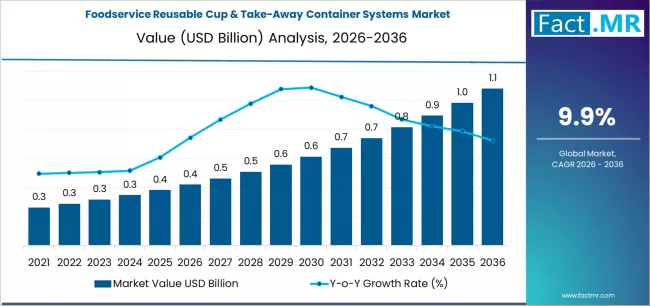
Mounting regulatory bans on single-use plastics for foodservice and escalating consumer demand for waste-free dining options are the primary forces propelling market growth. Legislative frameworks, particularly in Europe under the Single-Use Plastics Directive (SUPD) and PPWR, are mandating reusable alternatives for dine-in and, increasingly, takeaway. This regulatory push, combined with corporate sustainability pledges from global foodservice brands, is driving systemic investment in reusable infrastructure. The shift represents a fundamental re-engineering of the foodservice customer journey, moving from a disposable to a circular model centered on return logistics and container longevity.
Advancements in system efficiency and user experience are critical to market expansion. Innovation in digital tracking through app-linked systems and RFID, coupled with scalable network solutions like centralized washing hubs and smart drop-off stations, is lowering operational barriers. Concurrently, material science is focused on developing durable, lightweight, and consumer-preferred materials like advanced polymers and silicone hybrids that withstand hundreds of wash cycles, ensuring both functional performance and aesthetic appeal for brands.
Foodservice Reusable Cup & Take-Away Container Systems Market
| Metric | Value |
|---|---|
| Estimated Value in (2026E) | USD 0.42 Billion |
| Forecast Value in (2036F) | USD 1.08 Billion |
| Forecast CAGR (2026 to 2036) | 9.9% |
Category
| Category | Segments |
|---|---|
| End-use/Application | Cafes & QSR chains, Events & catering, Food delivery platforms, Local QSR & vendors, Cafes, bars, Others |
| Packaging Format/Type | Reusable cups & bowls, Reusable trays/bowls, Stackable containers, Collapsible reusable formats, Others |
| Material | Stainless, PP, silicone, PP heavy-duty, Stainless & polymer hybrids, Silicone & PP mixes, Others |
| Technology | Washing stations + deposit-return tech, High-throughput washing, App-linked reuse tracking, Low-cost cleaning, Others |
| Region | North America, Europe, Asia Pacific, Latin America, MEA |
Segmental Analysis
Why do Cafes & QSR chains account for the leading Application Segment?
Cafes & QSR chains will command a 40% share, as they are the primary targets of single-use plastic bans and face intense consumer pressure to demonstrate environmental stewardship. For these high-volume, fast-turnover outlets, reusable systems offer a direct path to regulatory compliance, significant waste disposal cost reduction, and a powerful marketing tool to attract eco-conscious customers. The frequent, habitual nature of purchases like coffee and fast food creates the perfect use-case for establishing and normalizing return behaviors.
- Major global chains are launching pilot programs and forming coalitions to standardize cup formats, aiming to create shared pooling systems that reduce individual operational complexity and cost.
- Integration with existing loyalty apps to track returns and offer incentives is becoming a standard strategy to drive high participant return rates, which is critical for system viability.
What establishes Reusable cups & bowls as the dominant Packaging Format?
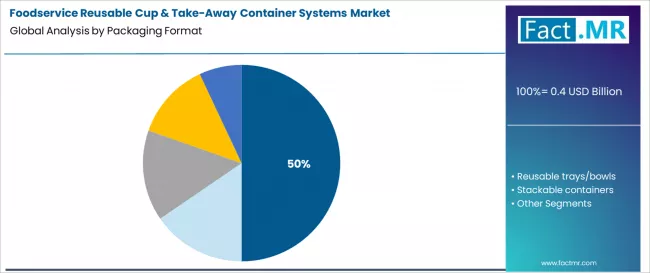
Reusable cups & bowls hold a 50% share due to their application in the highest-volume, most regulated foodservice categories: hot and cold beverages and ready-to-eat meals. Their design prioritizes stackability for efficient storage and transport, durability for repeated washing, and ergonomics for consumer handling. This format is the frontline soldier in the battle against single-use plastic cups and food containers, benefiting from the most advanced deposit-return and tracking technologies.
- Innovation focuses on lightweight yet robust designs, often with modular lids and collapsible features for consumer convenience post-use, enhancing the likelihood of return.
- The format is central to urban reuse ecosystems, where partnerships between brands, municipalities, and third-party logistics providers create dense networks of drop-off points.
What solidifies Stainless, PP & Silicone as the preferred Material choice?
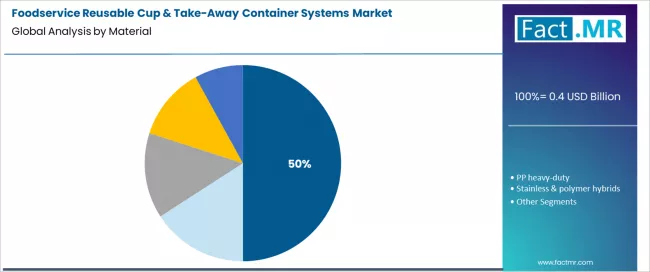
Stainless, PP & silicone leads with a 50% share, representing a blend of durability, consumer safety, and functional performance. Polypropylene (PP) offers an excellent balance of cost, lightweight, and dishwasher safety for high-cycle systems. Stainless steel provides premium feel, temperature retention, and extreme durability for certain applications. Silicone adds flexibility, collapsibility, and high-heat resistance for lids and collapsible bowls, creating versatile hybrid solutions.
- Material selection is increasingly driven by lifecycle analysis (LCA), with a focus on polymers that can be easily recycled at end-of-life after hundreds of uses, ensuring a closed-loop narrative.
- Advanced coatings and material treatments are being applied to enhance scratch resistance, prevent odor retention, and maintain aesthetic quality through prolonged use, directly impacting consumer acceptance.
What are the Drivers, Restraints, and Key Trends in the Foodservice Reusable Cup & Take-Away Container Systems Market?
The market is decisively driven by stringent and widening legislative bans on single-use plastic foodware, which create a non-negotiable demand for compliant alternatives. This is amplified by corporate net-zero commitments from global foodservice brands and a growing consumer segment that actively prefers and patronizes businesses offering reusable options, viewing disposables as environmentally irresponsible.
A primary restraint is the significant capital and operational cost of establishing the reverse logistics and washing infrastructure required for a hygienic, efficient system. Changing deeply ingrained consumer habits of convenience and dispose-after-use also presents a major behavioral challenge, requiring continuous education and incentive structures. The market is trending towards digital-enabled pooling networks, where apps manage user accounts, track container locations, and facilitate convenient drop-off. Furthermore, hyper-local system design is emerging, with solutions tailored for specific high-density environments like university campuses, business districts, and event venues to achieve the return-rate density needed for economic viability.
Analysis of the Market by Key Countries
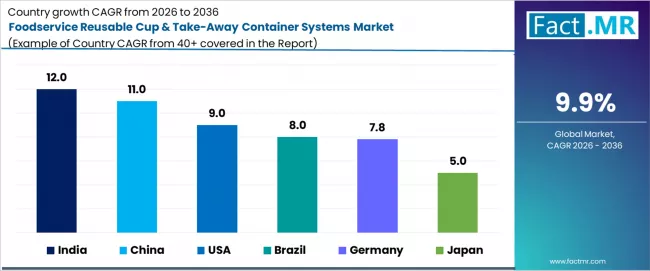
| Country | CAGR (2026-2036) |
|---|---|
| USA | 9.00% |
| Germany | 7.80% |
| China | 11.00% |
| India | 12.00% |
| Brazil | 8.00% |
| Japan | 5.00% |
What underpins Rapid Adoption in the USA's Market?
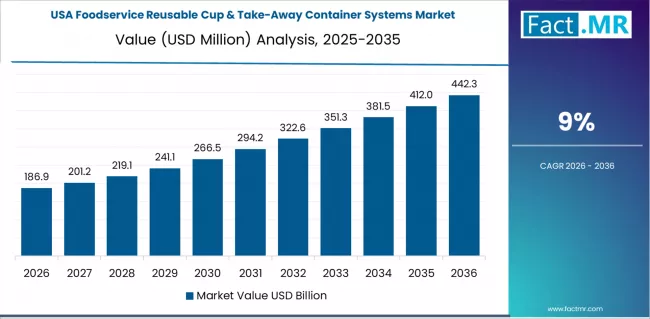
Growth in the USA at a 9.00% CAGR is driven by a patchwork of state and municipal bans on single-use plastics, including in California, New York, and Washington, creating a direct market for reusable systems. Innovation is focused on venture-backed, tech-driven reuse platforms that partner with multiple foodservice brands to create shared infrastructure in urban centers, leveraging app-based tracking and subscription models.
How does Germany's Regulatory Framework shape its systematic market?
Germany's 7.80% CAGR reflects its strict transposition of the EU's SUPD, mandating reusable options for dine-in beverages and takeaway food. High-efficiency, industrial-scale washing service providers and a strong cultural acceptance of deposit-return systems (Pfand), which is being extended to food packaging characterize the market. Precision in logistics and hygiene standards is paramount.
What factors propel China's rapid expansion?
China's 11.00% CAGR is fueled by national and municipal waste-sorting regulations that penalize single-use waste, alongside the colossal scale of its food delivery market. Growth is driven by investments from delivery platforms such as Meituan, in piloting reusable container systems with partner restaurants, utilizing their existing logistics networks for collection, and by government support for urban pilot projects.
Why does India exhibit the highest growth trajectory?
India leads with a 12.00% CAGR, driven by the national ban on identified single-use plastics which directly targets foodservice items. The explosive growth of food delivery and quick-commerce, combined with low labor costs for manual collection and washing in the initial phase, allows for rapid, low-tech system deployment. Innovation is focused on extremely durable, low-cost containers suited for the local cuisine and delivery conditions.
How does Brazil leverage its market dynamics?
Brazil's 8.00% CAGR is supported by municipal bans in major cities like São Paulo and Rio de Janeiro. The vibrant street food and casual dining culture presents both a challenge and an opportunity. Growth is driven by systems tailored for local Quick Service Restaurants (QSRs) and vendors, often using simpler deposit schemes and focusing on highly durable, easily identifiable containers.
What Characterizes Japan's Mature Market Approach?
Japan's mature market grows at a measured 5.00% CAGR, prioritizing premium quality, exceptional cleanliness, and niche applications. High consumer willingness to pay supports the use of high-quality materials like stainless steel in dedicated cafe systems. Innovation centers on space-saving, aesthetically pleasing designs for dense urban environments and sophisticated washing technology that guarantees hygiene standards beyond regulatory requirements.
Competitive Landscape
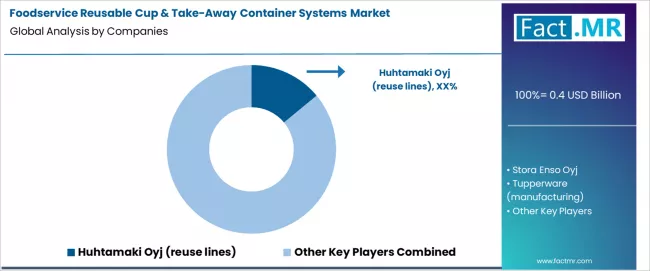
The competitive environment features a mix of traditional packaging giants diversifying into reuse and agile, specialist start-ups. Global players like Huhtamaki and Stora Enso leverage their material science and manufacturing expertise to produce durable, designed-for-reuse containers and partner with system operators.
Specialized reuse platform companies and operators compete on the efficiency and scale of their digital networks, washing logistics, and ability to form multi-brand partnerships. Competition increasingly hinges on the ability to provide a seamless, convenient user experience, demonstrate verifiable waste reduction and carbon savings data to corporate clients, and achieve unit economics that make reuse cheaper than single-use alternatives when factoring in avoided fees and brand value.
Key Players Profiled in the Foodservice Reusable Cup & Take-Away Container Systems Market
- Huhtamaki Oyj (reuse lines)
- Stora Enso Oyj
- Tupperware (manufacturing)
- Toppan Holdings Inc.
- KeepCup
- Duni Group
- Other local manufacturers and converters
Scope of the Report
| Items | Values |
|---|---|
| Quantitative Units (2026) | USD 0.42 Billion |
| End-use/Application | Cafes & QSR chains, Events & catering, Food delivery platforms, Local QSR & vendors, Cafes, bars, Others |
| Packaging Format/Type | Reusable cups & bowls, Reusable trays/bowls, Stackable containers, Collapsible reusable formats, Others |
| Material | Stainless, PP, silicone, PP heavy-duty, Stainless & polymer hybrids, Silicone & PP mixes, Others |
| Technology | Washing stations + deposit-return tech, High-throughput washing, App-linked reuse tracking, Low-cost cleaning, Others |
| Regions Covered | North America, Europe, Asia Pacific, Latin America, Middle East & Africa |
| Key Companies Profiled | Huhtamaki (reuse lines), Stora Enso, Tupperware (manufacturing), Toppan, KeepCup, Duni, Other local manufacturers and converters |
| Additional Attributes | Operational cost analysis of washing networks, consumer behavior and return rate analytics, regulatory impact mapping, partnership model analysis between brands and system operators. |
Foodservice Reusable Cup & Take-Away Container Systems Market by Segments
-
By End-use/Application :
- Cafes & QSR chains
- Events & catering
- Food delivery platforms
- Local QSR & vendors
- Cafes, bars
- Others
-
By Packaging Format/Type :
- Reusable cups & bowls
- Reusable trays/bowls
- Stackable containers
- Collapsible reusable formats
- Others
-
By Material :
- Stainless, PP, silicone
- PP heavy-duty
- Stainless & polymer hybrids
- Silicone & PP mixes
- Others
-
By Technology :
- Washing stations + deposit-return tech
- High-throughput washing
- App-linked reuse tracking
- Low-cost cleaning
- Others
-
By Region :
-
North America
- USA
- Canada
- Mexico
-
Europe
- Germany
- UK
- France
- Italy
- Spain
- Nordic Countries
- BENELUX
- Rest of Europe
-
Asia Pacific
- China
- India
- Japan
- South Korea
- Australia
- Rest of Asia Pacific
-
Latin America
- Brazil
- Argentina
- Rest of Latin America
-
Middle East & Africa
- Saudi Arabia
- UAE
- South Africa
- Rest of MEA
-
Table of Content
- Executive Summary
- Global Market Outlook
- Demand to side Trends
- Supply to side Trends
- Technology Roadmap Analysis
- Analysis and Recommendations
- Market Overview
- Market Coverage / Taxonomy
- Market Definition / Scope / Limitations
- Market Background
- Market Dynamics
- Drivers
- Restraints
- Opportunity
- Trends
- Scenario Forecast
- Demand in Optimistic Scenario
- Demand in Likely Scenario
- Demand in Conservative Scenario
- Opportunity Map Analysis
- Product Life Cycle Analysis
- Supply Chain Analysis
- Investment Feasibility Matrix
- Value Chain Analysis
- PESTLE and Porter’s Analysis
- Regulatory Landscape
- Regional Parent Market Outlook
- Production and Consumption Statistics
- Import and Export Statistics
- Market Dynamics
- Global Market Analysis 2021 to 2025 and Forecast, 2026 to 2036
- Historical Market Size Value (USD Million) Analysis, 2021 to 2025
- Current and Future Market Size Value (USD Million) Projections, 2026 to 2036
- Y to o to Y Growth Trend Analysis
- Absolute $ Opportunity Analysis
- Global Market Pricing Analysis 2021 to 2025 and Forecast 2026 to 2036
- Global Market Analysis 2021 to 2025 and Forecast 2026 to 2036, By End-use
- Introduction / Key Findings
- Historical Market Size Value (USD Million) Analysis By End-use, 2021 to 2025
- Current and Future Market Size Value (USD Million) Analysis and Forecast By End-use, 2026 to 2036
- Cafes & QSR chains
- Events & catering
- Food delivery platforms
- Local QSR & vendors
- Cafes, bars
- Others
- Y to o to Y Growth Trend Analysis By End-use, 2021 to 2025
- Absolute $ Opportunity Analysis By End-use, 2026 to 2036
- Global Market Analysis 2021 to 2025 and Forecast 2026 to 2036, By Packaging Format
- Introduction / Key Findings
- Historical Market Size Value (USD Million) Analysis By Packaging Format, 2021 to 2025
- Current and Future Market Size Value (USD Million) Analysis and Forecast By Packaging Format, 2026 to 2036
- Reusable cups & bowls
- Reusable trays/bowls
- Stackable containers
- Collapsible reusable formats
- Others
- Y to o to Y Growth Trend Analysis By Packaging Format, 2021 to 2025
- Absolute $ Opportunity Analysis By Packaging Format, 2026 to 2036
- Global Market Analysis 2021 to 2025 and Forecast 2026 to 2036, By Material
- Introduction / Key Findings
- Historical Market Size Value (USD Million) Analysis By Material, 2021 to 2025
- Current and Future Market Size Value (USD Million) Analysis and Forecast By Material, 2026 to 2036
- Stainless, PP, silicone
- PP heavy-duty
- Stainless & polymer hybrids
- Silicone & PP mixes
- Others
- Y to o to Y Growth Trend Analysis By Material, 2021 to 2025
- Absolute $ Opportunity Analysis By Material, 2026 to 2036
- Global Market Analysis 2021 to 2025 and Forecast 2026 to 2036, By Technology
- Introduction / Key Findings
- Historical Market Size Value (USD Million) Analysis By Technology, 2021 to 2025
- Current and Future Market Size Value (USD Million) Analysis and Forecast By Technology, 2026 to 2036
- Washing stations + deposit-return tech
- High-throughput washing
- App-linked reuse tracking
- Low-cost cleaning
- Others
- Y to o to Y Growth Trend Analysis By Technology, 2021 to 2025
- Absolute $ Opportunity Analysis By Technology, 2026 to 2036
- Global Market Analysis 2021 to 2025 and Forecast 2026 to 2036, By Region
- Introduction
- Historical Market Size Value (USD Million) Analysis By Region, 2021 to 2025
- Current Market Size Value (USD Million) Analysis and Forecast By Region, 2026 to 2036
- North America
- Latin America
- Western Europe
- Eastern Europe
- East Asia
- South Asia and Pacific
- Middle East & Africa
- Market Attractiveness Analysis By Region
- North America Market Analysis 2021 to 2025 and Forecast 2026 to 2036, By Country
- Historical Market Size Value (USD Million) Trend Analysis By Market Taxonomy, 2021 to 2025
- Market Size Value (USD Million) Forecast By Market Taxonomy, 2026 to 2036
- By Country
- USA
- Canada
- Mexico
- By End-use
- By Packaging Format
- By Material
- By Technology
- By Country
- Market Attractiveness Analysis
- By Country
- By End-use
- By Packaging Format
- By Material
- By Technology
- Key Takeaways
- Latin America Market Analysis 2021 to 2025 and Forecast 2026 to 2036, By Country
- Historical Market Size Value (USD Million) Trend Analysis By Market Taxonomy, 2021 to 2025
- Market Size Value (USD Million) Forecast By Market Taxonomy, 2026 to 2036
- By Country
- Brazil
- Chile
- Rest of Latin America
- By End-use
- By Packaging Format
- By Material
- By Technology
- By Country
- Market Attractiveness Analysis
- By Country
- By End-use
- By Packaging Format
- By Material
- By Technology
- Key Takeaways
- Western Europe Market Analysis 2021 to 2025 and Forecast 2026 to 2036, By Country
- Historical Market Size Value (USD Million) Trend Analysis By Market Taxonomy, 2021 to 2025
- Market Size Value (USD Million) Forecast By Market Taxonomy, 2026 to 2036
- By Country
- Germany
- UK
- Italy
- Spain
- France
- Nordic
- BENELUX
- Rest of Western Europe
- By End-use
- By Packaging Format
- By Material
- By Technology
- By Country
- Market Attractiveness Analysis
- By Country
- By End-use
- By Packaging Format
- By Material
- By Technology
- Key Takeaways
- Eastern Europe Market Analysis 2021 to 2025 and Forecast 2026 to 2036, By Country
- Historical Market Size Value (USD Million) Trend Analysis By Market Taxonomy, 2021 to 2025
- Market Size Value (USD Million) Forecast By Market Taxonomy, 2026 to 2036
- By Country
- Russia
- Poland
- Hungary
- Balkan & Baltic
- Rest of Eastern Europe
- By End-use
- By Packaging Format
- By Material
- By Technology
- By Country
- Market Attractiveness Analysis
- By Country
- By End-use
- By Packaging Format
- By Material
- By Technology
- Key Takeaways
- East Asia Market Analysis 2021 to 2025 and Forecast 2026 to 2036, By Country
- Historical Market Size Value (USD Million) Trend Analysis By Market Taxonomy, 2021 to 2025
- Market Size Value (USD Million) Forecast By Market Taxonomy, 2026 to 2036
- By Country
- China
- Japan
- South Korea
- By End-use
- By Packaging Format
- By Material
- By Technology
- By Country
- Market Attractiveness Analysis
- By Country
- By End-use
- By Packaging Format
- By Material
- By Technology
- Key Takeaways
- South Asia and Pacific Market Analysis 2021 to 2025 and Forecast 2026 to 2036, By Country
- Historical Market Size Value (USD Million) Trend Analysis By Market Taxonomy, 2021 to 2025
- Market Size Value (USD Million) Forecast By Market Taxonomy, 2026 to 2036
- By Country
- India
- ASEAN
- Australia & New Zealand
- Rest of South Asia and Pacific
- By End-use
- By Packaging Format
- By Material
- By Technology
- By Country
- Market Attractiveness Analysis
- By Country
- By End-use
- By Packaging Format
- By Material
- By Technology
- Key Takeaways
- Middle East & Africa Market Analysis 2021 to 2025 and Forecast 2026 to 2036, By Country
- Historical Market Size Value (USD Million) Trend Analysis By Market Taxonomy, 2021 to 2025
- Market Size Value (USD Million) Forecast By Market Taxonomy, 2026 to 2036
- By Country
- Kingdom of Saudi Arabia
- Other GCC Countries
- Turkiye
- South Africa
- Other African Union
- Rest of Middle East & Africa
- By End-use
- By Packaging Format
- By Material
- By Technology
- By Country
- Market Attractiveness Analysis
- By Country
- By End-use
- By Packaging Format
- By Material
- By Technology
- Key Takeaways
- Key Countries Market Analysis
- USA
- Pricing Analysis
- Market Share Analysis, 2025
- By End-use
- By Packaging Format
- By Material
- By Technology
- Canada
- Pricing Analysis
- Market Share Analysis, 2025
- By End-use
- By Packaging Format
- By Material
- By Technology
- Mexico
- Pricing Analysis
- Market Share Analysis, 2025
- By End-use
- By Packaging Format
- By Material
- By Technology
- Brazil
- Pricing Analysis
- Market Share Analysis, 2025
- By End-use
- By Packaging Format
- By Material
- By Technology
- Chile
- Pricing Analysis
- Market Share Analysis, 2025
- By End-use
- By Packaging Format
- By Material
- By Technology
- Germany
- Pricing Analysis
- Market Share Analysis, 2025
- By End-use
- By Packaging Format
- By Material
- By Technology
- UK
- Pricing Analysis
- Market Share Analysis, 2025
- By End-use
- By Packaging Format
- By Material
- By Technology
- Italy
- Pricing Analysis
- Market Share Analysis, 2025
- By End-use
- By Packaging Format
- By Material
- By Technology
- Spain
- Pricing Analysis
- Market Share Analysis, 2025
- By End-use
- By Packaging Format
- By Material
- By Technology
- France
- Pricing Analysis
- Market Share Analysis, 2025
- By End-use
- By Packaging Format
- By Material
- By Technology
- India
- Pricing Analysis
- Market Share Analysis, 2025
- By End-use
- By Packaging Format
- By Material
- By Technology
- ASEAN
- Pricing Analysis
- Market Share Analysis, 2025
- By End-use
- By Packaging Format
- By Material
- By Technology
- Australia & New Zealand
- Pricing Analysis
- Market Share Analysis, 2025
- By End-use
- By Packaging Format
- By Material
- By Technology
- China
- Pricing Analysis
- Market Share Analysis, 2025
- By End-use
- By Packaging Format
- By Material
- By Technology
- Japan
- Pricing Analysis
- Market Share Analysis, 2025
- By End-use
- By Packaging Format
- By Material
- By Technology
- South Korea
- Pricing Analysis
- Market Share Analysis, 2025
- By End-use
- By Packaging Format
- By Material
- By Technology
- Russia
- Pricing Analysis
- Market Share Analysis, 2025
- By End-use
- By Packaging Format
- By Material
- By Technology
- Poland
- Pricing Analysis
- Market Share Analysis, 2025
- By End-use
- By Packaging Format
- By Material
- By Technology
- Hungary
- Pricing Analysis
- Market Share Analysis, 2025
- By End-use
- By Packaging Format
- By Material
- By Technology
- Kingdom of Saudi Arabia
- Pricing Analysis
- Market Share Analysis, 2025
- By End-use
- By Packaging Format
- By Material
- By Technology
- Turkiye
- Pricing Analysis
- Market Share Analysis, 2025
- By End-use
- By Packaging Format
- By Material
- By Technology
- South Africa
- Pricing Analysis
- Market Share Analysis, 2025
- By End-use
- By Packaging Format
- By Material
- By Technology
- USA
- Market Structure Analysis
- Competition Dashboard
- Competition Benchmarking
- Market Share Analysis of Top Players
- By Regional
- By End-use
- By Packaging Format
- By Material
- By Technology
- Competition Analysis
- Competition Deep Dive
- Huhtamaki Oyj (reuse lines)
- Overview
- Product Portfolio
- Profitability by Market Segments (Product/Age /Sales Channel/Region)
- Sales Footprint
- Strategy Overview
- Marketing Strategy
- Product Strategy
- Channel Strategy
- Stora Enso Oyj
- Tupperware (manufacturing)
- Toppan Holdings Inc.
- KeepCup
- Duni Group
- Other local manufacturers and converters
- Huhtamaki Oyj (reuse lines)
- Competition Deep Dive
- Assumptions & Acronyms Used
- Research Methodology
List Of Table
- Table 1: Global Market Value (USD Million) Forecast by Region, 2021 to 2036
- Table 2: Global Market Value (USD Million) Forecast by End-use, 2021 to 2036
- Table 3: Global Market Value (USD Million) Forecast by Packaging Format, 2021 to 2036
- Table 4: Global Market Value (USD Million) Forecast by Material, 2021 to 2036
- Table 5: Global Market Value (USD Million) Forecast by Technology, 2021 to 2036
- Table 6: North America Market Value (USD Million) Forecast by Country, 2021 to 2036
- Table 7: North America Market Value (USD Million) Forecast by End-use, 2021 to 2036
- Table 8: North America Market Value (USD Million) Forecast by Packaging Format, 2021 to 2036
- Table 9: North America Market Value (USD Million) Forecast by Material, 2021 to 2036
- Table 10: North America Market Value (USD Million) Forecast by Technology, 2021 to 2036
- Table 11: Latin America Market Value (USD Million) Forecast by Country, 2021 to 2036
- Table 12: Latin America Market Value (USD Million) Forecast by End-use, 2021 to 2036
- Table 13: Latin America Market Value (USD Million) Forecast by Packaging Format, 2021 to 2036
- Table 14: Latin America Market Value (USD Million) Forecast by Material, 2021 to 2036
- Table 15: Latin America Market Value (USD Million) Forecast by Technology, 2021 to 2036
- Table 16: Western Europe Market Value (USD Million) Forecast by Country, 2021 to 2036
- Table 17: Western Europe Market Value (USD Million) Forecast by End-use, 2021 to 2036
- Table 18: Western Europe Market Value (USD Million) Forecast by Packaging Format, 2021 to 2036
- Table 19: Western Europe Market Value (USD Million) Forecast by Material, 2021 to 2036
- Table 20: Western Europe Market Value (USD Million) Forecast by Technology, 2021 to 2036
- Table 21: Eastern Europe Market Value (USD Million) Forecast by Country, 2021 to 2036
- Table 22: Eastern Europe Market Value (USD Million) Forecast by End-use, 2021 to 2036
- Table 23: Eastern Europe Market Value (USD Million) Forecast by Packaging Format, 2021 to 2036
- Table 24: Eastern Europe Market Value (USD Million) Forecast by Material, 2021 to 2036
- Table 25: Eastern Europe Market Value (USD Million) Forecast by Technology, 2021 to 2036
- Table 26: East Asia Market Value (USD Million) Forecast by Country, 2021 to 2036
- Table 27: East Asia Market Value (USD Million) Forecast by End-use, 2021 to 2036
- Table 28: East Asia Market Value (USD Million) Forecast by Packaging Format, 2021 to 2036
- Table 29: East Asia Market Value (USD Million) Forecast by Material, 2021 to 2036
- Table 30: East Asia Market Value (USD Million) Forecast by Technology, 2021 to 2036
- Table 31: South Asia and Pacific Market Value (USD Million) Forecast by Country, 2021 to 2036
- Table 32: South Asia and Pacific Market Value (USD Million) Forecast by End-use, 2021 to 2036
- Table 33: South Asia and Pacific Market Value (USD Million) Forecast by Packaging Format, 2021 to 2036
- Table 34: South Asia and Pacific Market Value (USD Million) Forecast by Material, 2021 to 2036
- Table 35: South Asia and Pacific Market Value (USD Million) Forecast by Technology, 2021 to 2036
- Table 36: Middle East & Africa Market Value (USD Million) Forecast by Country, 2021 to 2036
- Table 37: Middle East & Africa Market Value (USD Million) Forecast by End-use, 2021 to 2036
- Table 38: Middle East & Africa Market Value (USD Million) Forecast by Packaging Format, 2021 to 2036
- Table 39: Middle East & Africa Market Value (USD Million) Forecast by Material, 2021 to 2036
- Table 40: Middle East & Africa Market Value (USD Million) Forecast by Technology, 2021 to 2036
List Of Figures
- Figure 1: Global Market Pricing Analysis
- Figure 2: Global Market Value (USD Million) Forecast 2021 to 2036
- Figure 3: Global Market Value Share and BPS Analysis by End-use, 2026 and 2036
- Figure 4: Global Market Y to o to Y Growth Comparison by End-use, 2026 to 2036
- Figure 5: Global Market Attractiveness Analysis by End-use
- Figure 6: Global Market Value Share and BPS Analysis by Packaging Format, 2026 and 2036
- Figure 7: Global Market Y to o to Y Growth Comparison by Packaging Format, 2026 to 2036
- Figure 8: Global Market Attractiveness Analysis by Packaging Format
- Figure 9: Global Market Value Share and BPS Analysis by Material, 2026 and 2036
- Figure 10: Global Market Y to o to Y Growth Comparison by Material, 2026 to 2036
- Figure 11: Global Market Attractiveness Analysis by Material
- Figure 12: Global Market Value Share and BPS Analysis by Technology, 2026 and 2036
- Figure 13: Global Market Y to o to Y Growth Comparison by Technology, 2026 to 2036
- Figure 14: Global Market Attractiveness Analysis by Technology
- Figure 15: Global Market Value (USD Million) Share and BPS Analysis by Region, 2026 and 2036
- Figure 16: Global Market Y to o to Y Growth Comparison by Region, 2026 to 2036
- Figure 17: Global Market Attractiveness Analysis by Region
- Figure 18: North America Market Incremental Dollar Opportunity, 2026 to 2036
- Figure 19: Latin America Market Incremental Dollar Opportunity, 2026 to 2036
- Figure 20: Western Europe Market Incremental Dollar Opportunity, 2026 to 2036
- Figure 21: Eastern Europe Market Incremental Dollar Opportunity, 2026 to 2036
- Figure 22: East Asia Market Incremental Dollar Opportunity, 2026 to 2036
- Figure 23: South Asia and Pacific Market Incremental Dollar Opportunity, 2026 to 2036
- Figure 24: Middle East & Africa Market Incremental Dollar Opportunity, 2026 to 2036
- Figure 25: North America Market Value Share and BPS Analysis by Country, 2026 and 2036
- Figure 26: North America Market Value Share and BPS Analysis by End-use, 2026 and 2036
- Figure 27: North America Market Y to o to Y Growth Comparison by End-use, 2026 to 2036
- Figure 28: North America Market Attractiveness Analysis by End-use
- Figure 29: North America Market Value Share and BPS Analysis by Packaging Format, 2026 and 2036
- Figure 30: North America Market Y to o to Y Growth Comparison by Packaging Format, 2026 to 2036
- Figure 31: North America Market Attractiveness Analysis by Packaging Format
- Figure 32: North America Market Value Share and BPS Analysis by Material, 2026 and 2036
- Figure 33: North America Market Y to o to Y Growth Comparison by Material, 2026 to 2036
- Figure 34: North America Market Attractiveness Analysis by Material
- Figure 35: North America Market Value Share and BPS Analysis by Technology, 2026 and 2036
- Figure 36: North America Market Y to o to Y Growth Comparison by Technology, 2026 to 2036
- Figure 37: North America Market Attractiveness Analysis by Technology
- Figure 38: Latin America Market Value Share and BPS Analysis by Country, 2026 and 2036
- Figure 39: Latin America Market Value Share and BPS Analysis by End-use, 2026 and 2036
- Figure 40: Latin America Market Y to o to Y Growth Comparison by End-use, 2026 to 2036
- Figure 41: Latin America Market Attractiveness Analysis by End-use
- Figure 42: Latin America Market Value Share and BPS Analysis by Packaging Format, 2026 and 2036
- Figure 43: Latin America Market Y to o to Y Growth Comparison by Packaging Format, 2026 to 2036
- Figure 44: Latin America Market Attractiveness Analysis by Packaging Format
- Figure 45: Latin America Market Value Share and BPS Analysis by Material, 2026 and 2036
- Figure 46: Latin America Market Y to o to Y Growth Comparison by Material, 2026 to 2036
- Figure 47: Latin America Market Attractiveness Analysis by Material
- Figure 48: Latin America Market Value Share and BPS Analysis by Technology, 2026 and 2036
- Figure 49: Latin America Market Y to o to Y Growth Comparison by Technology, 2026 to 2036
- Figure 50: Latin America Market Attractiveness Analysis by Technology
- Figure 51: Western Europe Market Value Share and BPS Analysis by Country, 2026 and 2036
- Figure 52: Western Europe Market Value Share and BPS Analysis by End-use, 2026 and 2036
- Figure 53: Western Europe Market Y to o to Y Growth Comparison by End-use, 2026 to 2036
- Figure 54: Western Europe Market Attractiveness Analysis by End-use
- Figure 55: Western Europe Market Value Share and BPS Analysis by Packaging Format, 2026 and 2036
- Figure 56: Western Europe Market Y to o to Y Growth Comparison by Packaging Format, 2026 to 2036
- Figure 57: Western Europe Market Attractiveness Analysis by Packaging Format
- Figure 58: Western Europe Market Value Share and BPS Analysis by Material, 2026 and 2036
- Figure 59: Western Europe Market Y to o to Y Growth Comparison by Material, 2026 to 2036
- Figure 60: Western Europe Market Attractiveness Analysis by Material
- Figure 61: Western Europe Market Value Share and BPS Analysis by Technology, 2026 and 2036
- Figure 62: Western Europe Market Y to o to Y Growth Comparison by Technology, 2026 to 2036
- Figure 63: Western Europe Market Attractiveness Analysis by Technology
- Figure 64: Eastern Europe Market Value Share and BPS Analysis by Country, 2026 and 2036
- Figure 65: Eastern Europe Market Value Share and BPS Analysis by End-use, 2026 and 2036
- Figure 66: Eastern Europe Market Y to o to Y Growth Comparison by End-use, 2026 to 2036
- Figure 67: Eastern Europe Market Attractiveness Analysis by End-use
- Figure 68: Eastern Europe Market Value Share and BPS Analysis by Packaging Format, 2026 and 2036
- Figure 69: Eastern Europe Market Y to o to Y Growth Comparison by Packaging Format, 2026 to 2036
- Figure 70: Eastern Europe Market Attractiveness Analysis by Packaging Format
- Figure 71: Eastern Europe Market Value Share and BPS Analysis by Material, 2026 and 2036
- Figure 72: Eastern Europe Market Y to o to Y Growth Comparison by Material, 2026 to 2036
- Figure 73: Eastern Europe Market Attractiveness Analysis by Material
- Figure 74: Eastern Europe Market Value Share and BPS Analysis by Technology, 2026 and 2036
- Figure 75: Eastern Europe Market Y to o to Y Growth Comparison by Technology, 2026 to 2036
- Figure 76: Eastern Europe Market Attractiveness Analysis by Technology
- Figure 77: East Asia Market Value Share and BPS Analysis by Country, 2026 and 2036
- Figure 78: East Asia Market Value Share and BPS Analysis by End-use, 2026 and 2036
- Figure 79: East Asia Market Y to o to Y Growth Comparison by End-use, 2026 to 2036
- Figure 80: East Asia Market Attractiveness Analysis by End-use
- Figure 81: East Asia Market Value Share and BPS Analysis by Packaging Format, 2026 and 2036
- Figure 82: East Asia Market Y to o to Y Growth Comparison by Packaging Format, 2026 to 2036
- Figure 83: East Asia Market Attractiveness Analysis by Packaging Format
- Figure 84: East Asia Market Value Share and BPS Analysis by Material, 2026 and 2036
- Figure 85: East Asia Market Y to o to Y Growth Comparison by Material, 2026 to 2036
- Figure 86: East Asia Market Attractiveness Analysis by Material
- Figure 87: East Asia Market Value Share and BPS Analysis by Technology, 2026 and 2036
- Figure 88: East Asia Market Y to o to Y Growth Comparison by Technology, 2026 to 2036
- Figure 89: East Asia Market Attractiveness Analysis by Technology
- Figure 90: South Asia and Pacific Market Value Share and BPS Analysis by Country, 2026 and 2036
- Figure 91: South Asia and Pacific Market Value Share and BPS Analysis by End-use, 2026 and 2036
- Figure 92: South Asia and Pacific Market Y to o to Y Growth Comparison by End-use, 2026 to 2036
- Figure 93: South Asia and Pacific Market Attractiveness Analysis by End-use
- Figure 94: South Asia and Pacific Market Value Share and BPS Analysis by Packaging Format, 2026 and 2036
- Figure 95: South Asia and Pacific Market Y to o to Y Growth Comparison by Packaging Format, 2026 to 2036
- Figure 96: South Asia and Pacific Market Attractiveness Analysis by Packaging Format
- Figure 97: South Asia and Pacific Market Value Share and BPS Analysis by Material, 2026 and 2036
- Figure 98: South Asia and Pacific Market Y to o to Y Growth Comparison by Material, 2026 to 2036
- Figure 99: South Asia and Pacific Market Attractiveness Analysis by Material
- Figure 100: South Asia and Pacific Market Value Share and BPS Analysis by Technology, 2026 and 2036
- Figure 101: South Asia and Pacific Market Y to o to Y Growth Comparison by Technology, 2026 to 2036
- Figure 102: South Asia and Pacific Market Attractiveness Analysis by Technology
- Figure 103: Middle East & Africa Market Value Share and BPS Analysis by Country, 2026 and 2036
- Figure 104: Middle East & Africa Market Value Share and BPS Analysis by End-use, 2026 and 2036
- Figure 105: Middle East & Africa Market Y to o to Y Growth Comparison by End-use, 2026 to 2036
- Figure 106: Middle East & Africa Market Attractiveness Analysis by End-use
- Figure 107: Middle East & Africa Market Value Share and BPS Analysis by Packaging Format, 2026 and 2036
- Figure 108: Middle East & Africa Market Y to o to Y Growth Comparison by Packaging Format, 2026 to 2036
- Figure 109: Middle East & Africa Market Attractiveness Analysis by Packaging Format
- Figure 110: Middle East & Africa Market Value Share and BPS Analysis by Material, 2026 and 2036
- Figure 111: Middle East & Africa Market Y to o to Y Growth Comparison by Material, 2026 to 2036
- Figure 112: Middle East & Africa Market Attractiveness Analysis by Material
- Figure 113: Middle East & Africa Market Value Share and BPS Analysis by Technology, 2026 and 2036
- Figure 114: Middle East & Africa Market Y to o to Y Growth Comparison by Technology, 2026 to 2036
- Figure 115: Middle East & Africa Market Attractiveness Analysis by Technology
- Figure 116: Global Market - Tier Structure Analysis
- Figure 117: Global Market - Company Share Analysis
- FAQs -
How big is the foodservice reusable cup & takeaway container systems market in 2026?
The global foodservice reusable cup & takeaway container systems market is estimated to be valued at USD 0.4 billion in 2026.
What will be the size of foodservice reusable cup & takeaway container systems market in 2036?
The market size for the foodservice reusable cup & takeaway container systems market is projected to reach USD 1.1 billion by 2036.
How much will be the foodservice reusable cup & takeaway container systems market growth between 2026 and 2036?
The foodservice reusable cup & takeaway container systems market is expected to grow at a 9.9% CAGR between 2026 and 2036.
What are the key product types in the foodservice reusable cup & takeaway container systems market?
The key product types in foodservice reusable cup & takeaway container systems market are cafes & qsr chains, events & catering, food delivery platforms, local qsr & vendors, cafes, bars and others.
Which packaging format segment to contribute significant share in the foodservice reusable cup & takeaway container systems market in 2026?
In terms of packaging format, reusable cups & bowls segment to command 50.0% share in the foodservice reusable cup & takeaway container systems market in 2026.