Tractor Market (2026 - 2036)

The global Tractor Market is segmented by Mobility (Wheeled Tractors, Track Crawler Tractors, and others, Horsepower, Application, Powertrain Type, Drive Type, End Use, and Region with forecasts covering the period from 2026 to 2036.

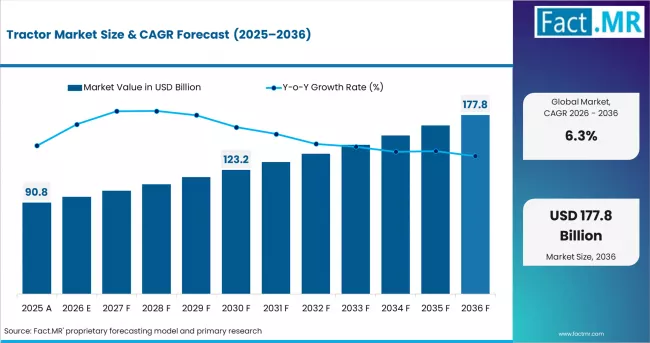
According to Fact.MR estimates, the Tractor market stood at USD 85.0 billion in 2025. The market is projected to reach USD 96.5 billion in 2026 and climb to USD 177.8 billion by 2036, progressing at a CAGR of 6.3%. Less than 60 HP tractors are anticipated to account for nearly 54% share of the horsepower segment, while two-wheel drive (2WD) tractors are expected to remain the leading drive type segment with around 83% share, driven by increasing farm mechanization, rising global food demand, and adoption of modern agricultural technologies across both developing and developed regions.

Tractor Market Forecast and Outlook By Fact.MR

In 2026, the global Tractor Market is estimated to reach USD 96.5 billion and is projected to expand further to USD 177.8 billion by 2036, exhibiting a CAGR of 6.3% during the forecast period. Absolute dollar growth over the period is expected to be approximately USD 81.3 billion.

Growth in the market is primarily driven by increasing farm mechanization, rising global food demand, and adoption of modern agricultural technologies across both developing and developed regions.

Additionally, growing labor shortages in agriculture, expansion of precision farming practices, and increasing use of tractors in non-agricultural applications such as construction, landscaping, and haulage are expected to further accelerate market growth.
Tractor Market Market Value Analysis

Summary of Tractor Market

  • Market Snapshot
    • Global tractor market revenue is estimated at USD 96.5 billion in 2026 and is forecast to reach USD 177.8 billion by 2036
    • At a 6.3% CAGR from 2026 to 2036, the market is set to expand 1.8x in value, adding USD 81.3 billion in absolute opportunity
    • Growth is driven by increasing agricultural mechanization, rising food demand, and technological advancements in farming equipment
    • Tractors are becoming essential for improving farm productivity, reducing labor dependency, and enabling multi-functional agricultural and industrial operations
  • Demand and Growth Drivers
    • Rising adoption of modern farming techniques and mechanization is significantly increasing tractor demand globally.
    • Growing awareness among farmers regarding the benefits of tractors in improving yield and efficiency is accelerating adoption.
    • Expansion of agricultural activities in countries such as India, China, and Brazil is supporting steady market growth.
    • Increasing need to improve agricultural productivity to meet rising food demand is reinforcing investment in farm equipment.
    • Government support and financing options are further enabling farmers to adopt mechanized solutions.
  • Product and Segment View
    • Two-wheel drive (2WD) tractors are projected to hold 82.6% of market share by 2036, emerging as the dominant segment due to cost-effectiveness and suitability for small and mid-sized farms.
    • Agricultural applications remain the primary demand driver, with tractors extensively used for plowing, tilling, and hauling operations.
    • Increasing adoption of advanced tractors with precision farming capabilities and automation features is shaping future product trends.
    • Demand is segmented across horsepower ranges and applications, reflecting diverse usage across farm sizes and geographies.
  • Geography and Competitive Outlook
    • Growth led by Asia Pacific, supported by increasing farm mechanization, rising agricultural productivity, and strong government support
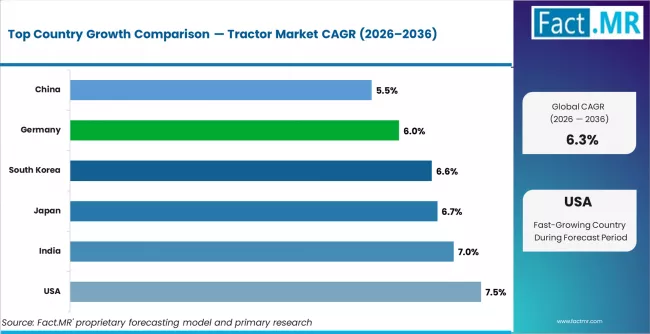
    • Key country growth rates:
      • India -7.0% CAGR
      • China -5.5% CAGR
      • Japan -6.7% CAGR
      • Germany -6.0% CAGR
      • United States -7.5% CAGR
    • Market expansion closely linked to factors such as mechanization rates, farm income levels, availability of financing, and adoption of advanced farming technologies
    • Competitive landscape includes major global OEMs focusing on product innovation, precision farming technologies, fuel efficiency, and expansion of dealer and service networks

Tractor Market -At a Glance

Attribute Details
Market Value 2026 USD 96.5 billion
Market Value 2036 USD 177.8 billion
Absolute Dollar Opportunity 2026 to 2036 USD 81.3 billion
Total Growth 2026 to 2036 84.2%
CAGR 2026 to 2036 6.3%
Growth Multiple 1.8x
Key Demand Theme Rising agricultural mechanization and adoption of modern farming technologies
Key Growth Region East Asia
Segmentation by Mobility Wheeled Tractors, Compact Tractors, Utility Tractors, Row Crop Tractors, Orchard Vineyard Tractors, Track Crawler Tractors, Agricultural Track Tractors, Heavy Duty Industrial Track Tractors
Segmentation by Horsepower Less than 60 HP, 60 to 120 HP, 120 to 200 HP, 200 to 400 HP, Above 400 HP
Segmentation by Application Agricultural Applications, Non Agricultural Applications
Segmentation by Powertrain Type Internal Combustion Engine Diesel, Electric, Hybrid, Alternative Fuels
Segmentation by Drive Type Two Wheel Drive, Four Wheel Drive
Segmentation by End Use Individual Farmers, Commercial Farms and Agribusinesses, Rental and Leasing Companies, Government and Municipal Bodies, Industrial and Construction Operators
Segmentation by Autonomy Conventional, Semi-Autonomous, Fully Autonomous
Segmentation by Region North America, Latin America, Western Europe, Eastern Europe, East Asia, South Asia and Pacific, Middle East and Africa

According to Fact.MR analysis the growth of the tractor market is not just about volume expansion on a global scale it is more about increasing mechanization intensity and rising demand across key agricultural regions particularly in developing economies

Among the major countries, India is anticipated to register a CAGR of 7.0% driven by strong rural demand and increasing farm mechanization. China is expected to reach a CAGR of 5.5% supported by steady demand.

Japan is projected to witness a CAGR of 6.7% driven by replacement demand. South Korea is anticipated to expand at a CAGR of 6.6% supported by increasing mechanization. At the same time mature markets such as the United States with a CAGR of 7.5% and Germany with a CAGR of 6.0% are primarily driven by replacement demand and efficiency improvements

Which Horsepower Segment is Gaining the Highest Adoption in the Tractor Market?

Less than 60 HP Tractors Leading Due to High Demand in Small and Mid-Sized Farming
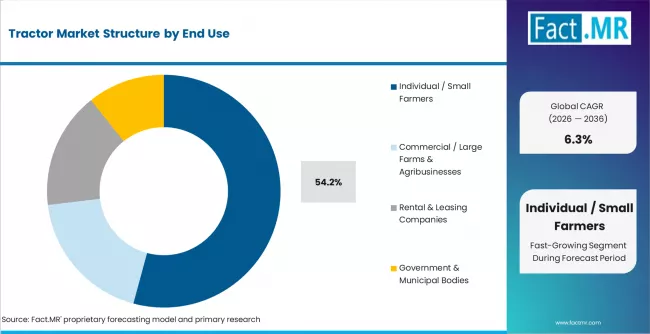
Tractor Market Analysis By End Use

Less than 60 HP tractors account for the largest share of 54.2% within the global tractor market, primarily driven by their strong suitability for small and medium-sized farms. These tractors offer an optimal balance between affordability, fuel efficiency, and versatility, making them highly preferred across developing regions where farm sizes are relatively smaller and fragmented.

These tractors are widely used for core agricultural activities such as plowing, tilling, hauling, and spraying, along with applications in horticulture and orchard farming. Their compact size and ease of maneuverability make them particularly effective in narrow fields and varied terrains. In addition, lower initial investment and maintenance costs further enhance their adoption among price-sensitive farmers. Government subsidies and financing support in emerging economies also play a crucial role in boosting demand for this segment.

From a regional perspective, countries across Asia and parts of Latin America continue to drive strong demand for sub-60 HP tractors, supported by increasing mechanization and labor shortages in agriculture. Owing to their cost-effectiveness, multi-utility usage, and alignment with small-scale farming needs, the less than 60 HP segment continues to dominate the tractor market and expected to witness sustained growth over the forecast period.

Which Powertrain Type Dominates the Tractor Market?

Internal Combustion Engine (Diesel) Dominating Due to High Power Output and Field Reliability
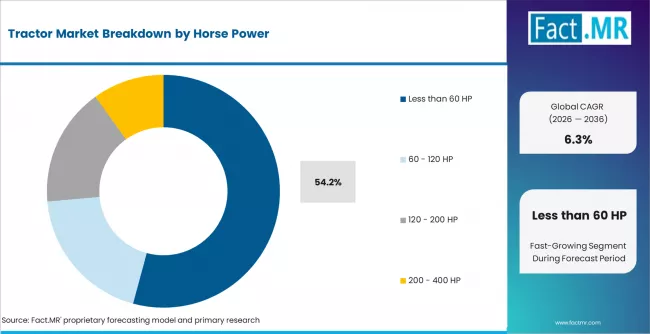
Tractor Market Analysis By Horse Power

Although alternative powertrains such as electric and hybrid tractors are gradually entering the market, their adoption remains limited due to higher upfront costs and infrastructure constraints. Overall, diesel tractors continue to lead the market, supported by proven performance, operational efficiency, and strong ecosystem support.

The Cost-Performance Balance: Why Tractors Are Maintaining Demand Momentum

The global tractor market is witnessing a phase of steady transition where pricing remains relatively stable despite input cost pressures. As the market moves into 2026 tractor pricing reflects a value driven stability where durability performance and versatility continue to justify investment decisions

Ongoing industry trends are shaping this dynamic:

  • Increase Rising input costs and use of advanced components are increasing overall tractor costs while improving durability and lifespan
  • Dependence on key components and supply chains can affect production timelines and pricing
  • End users are prioritizing tractors that offer higher productivity lower downtime and better utilization
  • Replacement Demand Growth Increasing replacement cycles are supporting consistent demand across key markets

How to differentiate beyond price?

Latest Fact.MR insights on the tractor market highlight that differentiation is shifting beyond pricing toward performance durability and application specific design. With multiple players offering similar core products the competitive edge is increasingly driven by product quality compatibility and lifecycle performance

The 2026 analysis reveals that customers are focusing more on productivity uptime and replacement frequency making reliability and durability critical in purchasing decisions. Moreover offering customized solutions faster delivery and strong aftermarket support can significantly improve customer retention

Fact.MR also notes that companies offering integrated solutions and bundled service offerings rather than standalone products tend to achieve stronger customer loyalty and better pricing power as buyers increasingly evaluate long term operational efficiency over upfront costs

How to improve margins in a commoditizing market?

Fact.MR analysis further reveals that while demand for tractors remains strong increasing competition in standard segments has led to gradual commoditization. As a result margin expansion is becoming less dependent on volume and more focused on specialization and value added offerings

Manufacturers are increasingly shifting toward higher value tractors with improved efficiency and advanced features which command better pricing and margins. Additionally offering customized solutions and application specific configurations can enhance profitability

Fact.MR also highlights that companies providing bundled solutions aftermarket services and replacement support can improve margins compared to standalone product sales as customers place greater emphasis on operational efficiency and equipment uptime

Fact.MR also notes that customers are increasingly willing to invest in tractors that improve productivity reduce downtime and extend equipment life. Consequently companies that move beyond standalone product sales to offering integrated solutions service support and lifecycle value are better positioned to maintain margins in a competitive market

Where Do Stronger Margins Prevail in the Tractor Market?

Premiumization and Value-Added Services Become Major Profits Sources

Margin concentration in the tractors industry still exists predominantly in terms of premium tractors and high-horsepower tractors. High-tech tractors that provides better product differentiation and reduced price sensitivity. While regular utility tractors are still making up a considerable part of the sales volume, profitability restricted by commoditization, fierce competition, and price inflexibility.

High-horsepower and premium tractors featuring advanced hydraulics, telematics, GPS technology, and precision farming systems have higher average prices and better gross margins, especially in developed countries, where consumers tend to pay more attention to performance and total cost of ownership rather than initial cost.

Other important profit-generators besides sales include aftermarket service, financing deals, maintenance contracts, and customized solutions, which help generate additional income from customers and make it possible to increase margins above those earned on equipment sales alone.

Therefore, companies are now concentrating their efforts on offering products with higher profit potential such as premiums and services.

How are Trade and Export Trends Supporting Market Growth?

Strong Export Activity and Expanding Global Distribution Driving Demand
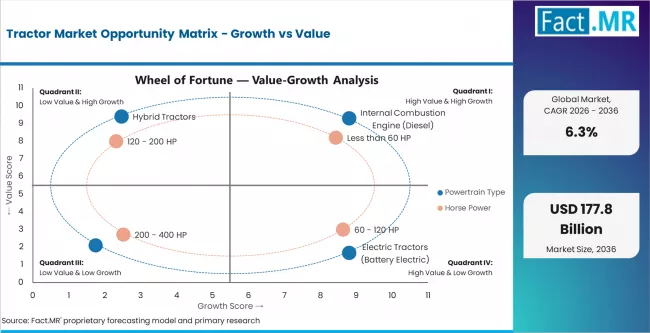
Tractor Market Opportunity Matrix Growth Vs Value

The global tractor market is witnessing steady expansion, supported by rising agricultural mechanization and increasing cross-border trade activities. Strengthening logistics networks and global supply chain integration are enabling efficient movement of tractors across regions, further accelerating market growth.

In 2024, global tractor trade stood at USD 71.7 billion, reflecting a decline of 18.9% compared to 2023 (USD 88.4 billion). However, despite this short-term correction, trade has grown at a CAGR of 4.97% over the past five years, indicating strong and resilient underlying demand.

Tractors ranked 51st among globally traded products, accounting for 0.31% of total world trade, highlighting their consistent role in global trade flows and agricultural productivity.

Export Analysis Fact.MR Insights
Total Export Value USD 50 Billion (70% of total trade)
YoY Growth Moderate decline in 2024, long-term growth remains positive
Share in Total Trade 70%
Export Composition Majority Complete Built Units (CBUs / OEM Tractors)
Components & Parts Share 30% (engines, transmissions, hydraulics)
Key Export Hubs Mexico, Germany, China
Key Demand Driver Rising mechanization demand in importing economies
Market Impact Strengthens OEM production scale and global distribution networks
Import Analysis Fact.MR Insights
Total Import Value USD 21 Billion (30% of total trade)
YoY Growth Short-term decline, supported by stable replacement and fleet expansion demand
Share in Total Trade 30%
Import Composition Mix of Complete Equipment and High-value Components
Components & Parts Share 35% (aftermarket demand, maintenance parts)
Key Import Markets United States, Canada, France
Key Demand Driver High agricultural productivity needs and limited domestic manufacturing
Market Impact Drives aftermarket growth and supports equipment availability in demand-heavy regions

Source: The Observatory of Economic Complexity (OEC)

How is Pricing Influencing the Tractors Market?

Cost Pressures and Product Mix Driving Price Trends

Pricing in the tractor market is shaped by both cost and demand factors with differences across export import and domestic pricing levels driven by raw material costs technology and competition

Export prices remain relatively strong with average levels around USD 36 thousand per unit supported by demand for higher horsepower and advanced tractors while showing stable trends with some fluctuations due to product mix

In contrast import prices are lower at around USD 17 thousand per unit reflecting a higher share of cost efficient and lower horsepower tractors in developing markets

The gap between export and import prices is mainly driven by product segmentation regional demand differences and supply chain costs with premium tractors priced higher and economical models dominating imports

Overall pricing trends highlight that product mix and application needs play a key role in determining price levels with increasing focus on value and performance

Why are Global Tractor Registrations Increasing?

Rising Mechanization and Policy Support Driving Growth in Global Tractor Registrations?

Global tractor registrations are witnessing a net upward trend, primarily driven by strong volume expansion in high-growth agricultural economies such as India, China, and Brazil. These markets continue to offset the cyclical slowdown observed in developed regions, resulting in overall stability with a growth bias at the global level.

Government-backed mechanization programs, favorable financing schemes, and increasing rural income levels are accelerating tractor adoption, particularly among small and mid-sized farmers. Emerging markets are leading this shift, where tractors are increasingly becoming essential for improving farm productivity and reducing dependency on manual labor.

At the same time, developed markets such as the United States and parts of Europe are experiencing short-term corrections due to high base effects, inflationary pressures, and delayed replacement cycles. However, long-term fundamentals remain intact, supported by precision farming adoption and technological upgrades.

Key Country-Level Registration Snapshot, 2025

Key Country Registrations 2025 YoY Growth
India 1,195,287 18.60%
China 370,000 5.70%
United States 195,857 -9.90%
Brazil 52,000 10.60%
Germany 25,711 -12.20%
Others 127,051 -0.38%

Additionally, the expanding use of tractors beyond traditional farming—such as haulage, construction support, and utility applications—is further strengthening global registration volumes. This multi-purpose utility is enhancing the value proposition of tractors across both rural and semi-urban economies.

How Is Electrification Influencing the Tractor Industry?

Cost and Infrastructural Factors Hinder Widespread Implementation

The impact of electrification is becoming more significant in the tractor industry as companies align with stringent emission standards and sustainable development targets, although widespread adoption is hindered by various factors. Electric tractors are priced roughly 30–50% more than traditional diesel variants, making them less accessible in an industry where cost sensitivity is high among consumers. Range issues associated with batteries continue to limit usability, especially in agriculture when tractors must run continuously for 8–12 hours during planting season. Charging stations are also not readily available in rural areas where agricultural activities take place, which poses another challenge. Electrification is likely to stay confined to small-size tractors, urban uses, and specialized farming tasks for now, whereas diesel-powered tractors are set to dominate the agricultural sector in the coming future.

What is the right product & portfolio strategy?

Balancing Utility Tractors and High-Power Machines Driving Market Positioning

To build an effective portfolio strategy in the tractor market, manufacturers need to balance high-volume utility tractors with advanced high-horsepower and application-specific machines. Lower horsepower tractors continue to contribute a significant share of demand, while higher horsepower tractors are gaining traction in large-scale farming and commercial applications.

From an end-user perspective, small and mid-sized farms dominate volume demand, whereas large farms and agribusinesses drive demand for high-performance tractors. In addition, non-agricultural applications such as construction support, haulage, and landscaping are further expanding usage.

While lower horsepower tractors remain essential for market penetration, particularly in emerging economies where fragmented landholdings and affordability drive purchasing decisions, the segment remains highly competitive and offers limited pricing flexibility. In contrast, higher horsepower and premium tractor categories provide stronger profitability potential due to higher average selling prices, lower competitive saturation, and increasing adoption among commercial farming operators.

As a result, manufacturers are increasingly balancing mass-market utility tractors with premium and specialized offerings to optimize both market share and long-term profitability, while continuing to integrate advanced technologies such as precision farming capabilities, improved hydraulics, and smart connectivity across their portfolios.

What is the Optimal Go-to-Market Model?

Hybrid Distribution Model Combining Dealer Networks and Direct OEM Engagement Driving Growth

The go-to-market approach in the tractor market is evolving from traditional dealer-led sales toward a more integrated and customer-centric model. While dealerships continue to account for a major share of tractor sales, especially in rural and price-sensitive regions, manufacturers are increasingly strengthening direct engagement with large farmers, fleet operators, and institutional buyers.

Strong dealer networks remain critical for market penetration, financing support, and after-sales service. At the same time, direct partnerships with agribusinesses and government programs are improving demand visibility and long-term sales stability.

Additionally, bundled offerings including financing, maintenance packages, and implement compatibility are becoming more common, enhancing value for customers. As a result, a hybrid model combining dealer strength with direct engagement is emerging as the most effective strategy.

When do Localized and Global Market Strategies Apply?

Regional Cost Dynamics and Customer Expectations Driving Strategic Market Approaches

Market strategy approaches within the tractor industry have varied greatly due to pricing sensitivity, regulatory issues, regional agricultural economics, and consumer behavior. Hence, a single market strategy approach has become inadequate hence forcing manufacturers to balance their localized operations with globally oriented market strategy in view of their geographical location.

Price sensitive and volume-oriented markets including India, South East Asia, and certain African countries require manufacturers to maintain localized manufacturing and procurement systems alongside efficient supply chain management that keeps costs low. These markets prefer affordability and easy maintainability to technology incorporation as well as productivity.

However, markets that consist of consumers with higher purchasing power and demand technologically advanced products such as North America and Western Europe have been found to be suitable for global premium platforms. In such markets, consumers have been shown to demand more productivity and efficiency through precision farming.

Hence, companies adopting hybrid regional strategies are seen to localize manufacturing and adopt value engineering to emerge competitive and profitable in price sensitive markets while using global premium platforms in developed regions.

How are Manufacturers Exposed to Cost Volatility?

Fluctuations in Steel, Components, and Fuel Systems Impacting Profitability

Tractor manufacturers face significant exposure to input cost fluctuations, particularly in steel, engines, transmission systems, and electronic components. Raw materials account for a substantial portion of total production costs, making margins sensitive to price changes.

In highly competitive and price-sensitive markets, especially in lower horsepower segments, passing on cost increases remains challenging. Additionally, dependency on key components and supply chain disruptions can impact production timelines and overall costs.

Manufacturers with localized sourcing, scale advantages, and efficient supply chain management are better positioned to manage these risks. Increasing focus on cost optimization, modular design, and supplier partnerships is helping companies maintain profitability.

What is the Long-Term Strategic Positioning?

Shift Toward Smart, Efficient, and Application-Driven Tractor Solutions

The future of the tractor market is shifting toward integrated, technology-driven solutions rather than standalone equipment. While demand will continue to grow steadily, value creation will increasingly come from precision agriculture, automation, and connectivity.

Manufacturers are focusing on developing tractors with GPS guidance, telematics, and precision farming capabilities to improve productivity and reduce operational costs. Compatibility with a wide range of implements and multi-functional usage is becoming a key differentiator.

Companies that prioritize efficiency, durability, and advanced features while maintaining cost competitiveness will be better positioned to capture long-term value. The market is gradually moving toward higher productivity, reduced labor dependency, and smarter farming practices.

When Should the Manufacturing Companies Invest in Electric and Autonomous Tractors?

Expected Phased Investment Given Practical Limitations in Adopting These Emerging Technologies

Even though there have been developments in the field, the current focus on the development of electric and autonomous tractors as future growth drivers does not seem to be sufficient enough to warrant large scale investments from leading players since very few markets are yet fully commercially viable for such innovations.

Electric tractors suffer from practical limitations of battery life and charging facilities, as well as less applicability to the field since they may require continuous working time from the tractor, something that may prove too much for the electric tractor to handle. On the other hand, autonomous tractors have yet to find mass-market appeal due to high technology costs and regulatory challenges.

In the coming years, adoption will likely concentrate within the sphere of developed nations and niche segments, where the lack of manpower and presence of large-scale farming make the investments more justified through automation. However, in many emerging nations, ordinary diesel tractors are likely to be more in demand than innovative models due to their cost-effective nature.

Consequently, a phased approach towards investments into these tractors appears reasonable now.

Structural Factors Influencing Demand and Supply Dynamics

  • Affordability of Small Farms vs Technological Advancement
    While the demand for mechanization increases globally, its adoption depends heavily on economic considerations in many markets dominated by small farms. Despite the rising popularity of advanced tractors equipped with various technologies, including automation, telematics, and precision farming abilities, the adoption rate for smaller and even medium-sized farms has remained low, with affordability still prevailing over other aspects. The decision to purchase a tractor for farmers is mostly dictated by finance considerations, such as availability of funding and cost of the investment, as well as the payback period.
  • Diesel-Powered Tractors vs the Limits of Electrification
    Electrification is gradually becoming a long-term trend among tractor producers. Nevertheless, diesel-powered vehicles will continue dominating the market since diesel engines provide reliable operation and produce more torque and are suited for agricultural uses. Electric tractors are not that common due to limitations on battery performance, the lack of recharging infrastructure in rural farming areas, and high costs of production. Diesel tractors offer longer hours of work, as well as easier fuel accessibility. Therefore, while manufacturers will start investing more into electric models for the future, diesel tractors will maintain dominance in the tractor market in the medium term.
  • Manufacturer-Dealer Relationship and Direct Sales
    Despite the importance of dealers in the tractor market due to their ability to connect with customers on a regional basis, finance tractor purchases, and provide quality aftersales services, too much reliance on dealers may deprive the manufacturer from a clear picture of customer demands. Dealership dependence is associated with the inability to control prices and customer relations fully. Therefore, manufacturers will attempt to balance dealership-based sales with direct sales approaches. For institutional customers, large farms, businesses, and governments, direct sales will be preferred.
  • Geographic Variations in Tractor Adoption Patterns
  • Adoption of tractor technology differs significantly across countries. This phenomenon is caused by differences in farm size structure, labor market, development of mechanization, as well as financial access to products. While in emerging markets tractor purchases are often determined by initial mechanization, labor shortage, and the presence of subsidies, in developed countries tractor purchases happen due to replacement reasons, where they help with improvements of productivity and application of new technology.

Regional Analysis

The report on the global tractor market covers key regions including South Asia and Pacific, Middle East and Africa, North America, Latin America, Western Europe, and Eastern Europe. It provides a detailed geographic segmentation where market dynamics vary based on farm size distribution, mechanization levels, crop patterns, and rural infrastructure development.

The report further offers a comprehensive assessment of regional market attractiveness over the forecast period, evaluated through parameters such as growth potential, tractor demand, production capabilities, distribution networks, and adoption of advanced technologies such as precision farming and automation.

Regional demand trends are influenced by factors such as government support for farm mechanization, availability of financing, labor shortages in agriculture, and the shift toward high-efficiency farming practices. These factors collectively shape the overall growth trajectory of the global tractor market.

Top Country Growth Comparison Tractor Market Cagr (2026 2036)

CAGR Table

Country CAGR (%)
U.S. 7.5%
Germany 6.0%
China 5.5%
Japan 6.7%
S. Korea 6.6%
India 7.0%

Tractor Market Cagr Analysis By Country

North America

Tractor Market Country Value Analysis

North America is projected to remain a strong and stable market, supported by high mechanization and large-scale farming practices.

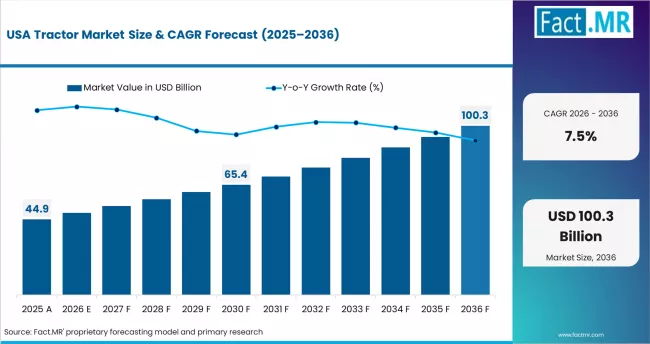
  • United States: Growth is projected at a CAGR of 7.5%, driven by demand for advanced and high horsepower tractors
  • Canada: Market is expected to grow at a CAGR of 6.4%, supported by agricultural and utility applications

South Asia & Pacific

South Asia and Pacific is emerging as a high-growth region in the tractor market, supported by increasing farm mechanization, rising food demand, and government support for agricultural productivity.

  • India: Growth projected at a CAGR of 7.0%, driven by small farm holdings, subsidy programs, and increasing adoption of tractors for multi-purpose agricultural use

Western Europe
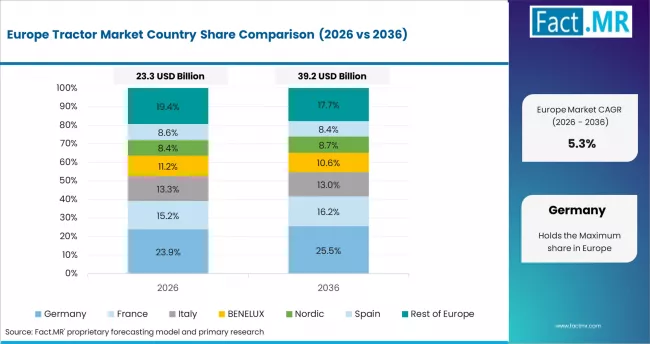
Tractor Market Europe Country Market Share Analysis, 2026 & 2036

Western Europe is expected to witness steady growth, supported by advanced agricultural practices and replacement demand.

  • Germany: Growth is projected at a CAGR of 6.0%, driven by demand for efficient and technologically advanced tractors
  • Italy: Market is anticipated to grow at a CAGR of 7.1%, supported by agricultural activities and equipment replacement
  • France: Growth is projected at a CAGR of 10.9%, reflecting strong agricultural demand and modernization
  • United Kingdom: Market is expected to grow at a CAGR of 7.2%, supported by stable farming demand and replacement cycles

East Asia
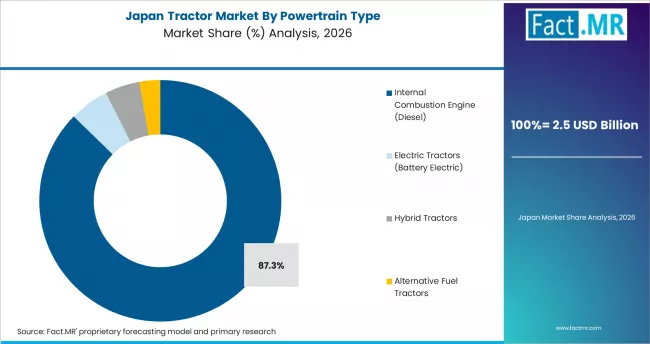
Tractor Market Japan Market Share Analysis By Powertrain Type

East Asia is anticipated to witness steady expansion, supported by technological advancements and increasing focus on efficient farming.

  • China: Growth is projectedat a CAGR of 5.5%, driven by agricultural modernization
  • Japan: Market is expected to grow at a CAGR of 6.7%, supported by precision farming adoption

Latin America

Latin America is expected to witness strong growth, supported by expanding agricultural activities and export-driven farming.

  • Brazil: Growth is projected at a CAGR of 7.5%, driven by large-scale farming and export demand
  • Chile: Market is expected to grow at a CAGR of 4.6%, supported by agricultural efficiency improvements

Fact.MR’s analysis of the Tractor Market across South Asia and Pacific, Middle East and Africa, North America, Latin America, We

The report on the global tractor market covers key regions including South Asia and Pacific, Middle East and Africa, North America, Latin America, Western Europe, and Eastern Europe. It provides a detailed geographic segmentation where market dynamics vary based on farm size distribution, mechanization levels, crop patterns, and rural infrastructure development.

The report further offers a comprehensive assessment of regional market attractiveness over the forecast period, evaluated through parameters such as growth potential, tractor demand, production capabilities, distribution networks, and adoption of advanced technologies such as precision farming and automation.

Regional demand trends are influenced by factors such as government support for farm mechanization, availability of financing, labor shortages in agriculture, and the shift toward high-efficiency farming practices. These factors collectively shape the overall growth trajectory of the global tractor market.

Competitive Landscape
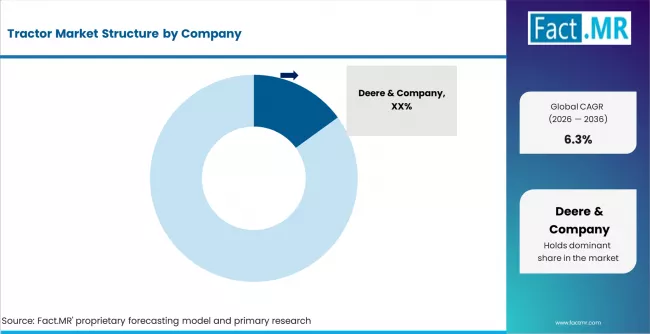
Tractor Market Analysis By Company

How Are Key Players Competing in the Tractor Market?

The tractor market is driven by leading players such as Deere and Company, CNH Industrial, AGCO Corporation, Kubota Corporation, Mahindra and Mahindra, CLAAS Group, Yanmar Holdings, and other global and regional manufacturers.

These players are focused on improving product efficiency, durability, and versatility, while expanding their global dealer networks and aftersales service capabilities. Strong distribution reach and localized manufacturing remain critical for capturing market share, particularly in emerging economies.

Product innovation in the tractor market is centered on enhancing fuel efficiency, power output, and integration of advanced technologies such as GPS guidance, telematics, and semi-autonomous features. Manufacturers are increasingly developing tractors with precision farming capabilities and improved implement compatibility to enhance productivity and operational efficiency.

Companies are also strengthening their presence across key regions through capacity expansion, partnerships, and localization strategies to cater to diverse agricultural requirements. Collaboration with dealers, financing institutions, and government programs is further supporting market penetration and customer accessibility.

Key product features include high reliability, multi-purpose usage, fuel efficiency, ease of operation, and compatibility with a wide range of implements. Competitive differentiation in the tractor market is driven by brand strength, technology integration, service network, and product performance, rather than pricing alone.

Key Players of the Tractors

  • Action Construction Equipment Ltd
  • AGCO Corporation
  • Antonio Carraro
  • BCS America
  • Captain Tractors Pvt Ltd
  • CLAAS KGaA mbH
  • CNH Industrial N.V.
  • Deere and Company
  • Deutz Fahr
  • Doosan Bobcat
  • Eicher Tractors
  • Escorts Kubota Limited
  • Force Motors Ltd
  • ISEKI and Co Ltd
  • JCB
  • Kioti Daedong Corporation
  • Kubota Corporation
  • LS Tractor USA
  • Mahindra and Mahindra
  • Massey Ferguson
  • Minsk Tractor Works
  • Monarch Tractor
  • SDF
  • Sonalika
  • TYM Corporation
  • VST Tillers Tractors Ltd
  • Yanmar
  • Other Prominent Players

Recent Industry Developments

  • Mahindra and Mahindra -Alternative Fuel Tractor Showcase (2025)
  • Mahindra introduced a range of alternative fuel-based tractors and advanced technologies at Agrovision 2025, highlighting its focus on sustainable farming solutions and next-generation powertrain innovation. This move reflects the growing shift toward cleaner and more efficient agricultural machinery. [1]
  • Deere and Company -Autonomous Tractor Expansion (2025)
  • Deere expanded its portfolio of autonomous tractors, strengthening its position in precision agriculture and smart farming solutions. The development emphasizes increasing adoption of automation to improve efficiency, reduce labor dependency, and enhance productivity. [2]
  • CNH Industrial -India Manufacturing and Export Expansion (2025)
  • CNH Industrial resumed tractor exports from India to the United States backed by significant investment, reinforcing its global supply chain and export capabilities. This development highlights India’s growing role as a manufacturing hub for global markets. [3]
  • Kubota Corporation -Smart Agriculture Technology Integration (2025)
  • Kubota advanced its smart farming capabilities by integrating automation and autonomous features into its tractor platforms. This supports improved operational efficiency, precision farming, and enhanced user control. [4]
  • Escorts Kubota -Premium Tractor Portfolio Expansion (2025)
  • Escorts Kubota expanded its tractor lineup with new and upgraded models, focusing on performance enhancement and premium segment growth. This move strengthens its competitive positioning in both domestic and export markets. [5]

Research Methodology

Secondary research forms the foundation of this study, with data collected from credible sources such as Food and Agriculture Organization, World Bank, OECD, and industry publications related to agricultural machinery and farm mechanization. These sources provide key insights into global farming trends, mechanization rates, crop production patterns, and rural infrastructure development.

To strengthen the analysis, primary research has been conducted through interactions with key industry stakeholders, including tractor manufacturers, component suppliers, dealers, distributors, agribusiness companies, and large-scale farmers. These discussions provide real-time insights into demand trends, pricing dynamics, product preferences, and evolving customer requirements across different regions.

Market sizing has been carried out using a bottom-up approach, capturing demand across major segments such as horsepower categories, applications, powertrain types, and end-use industries. Historical trends have been analyzed to develop future projections, supported by evaluation of mechanization growth, labor availability, government policies, and technological advancements in precision farming.

Data triangulation has been applied throughout the study to ensure accuracy and consistency, aligning inputs from primary interviews, secondary sources, and macroeconomic indicators. This approach enables a comprehensive and reliable assessment of the global tractor market.

Analyst Opinion

Outputs were cross-verified through triangulation with supply chain data, expert interviews, and recalibration based on key factors such as raw material costs including steel, tractor production volumes, mechanization rates, and agricultural demand trends.

Tractors are becoming increasingly essential for improving farm productivity, operational efficiency, and cost optimization across agricultural and allied activities. Modern tractors, equipped with advanced hydraulics, power take-off systems, and precision farming technologies, enable multiple farming operations using a single machine, reducing dependency on labor and additional equipment.

With growing emphasis on yield improvement, time efficiency, and reduction in operational costs, tractors are playing a critical role in modern agriculture. As farmers and agribusinesses focus on maximizing output and minimizing resource usage, multi-purpose and technologically advanced tractors are emerging as key enablers in both agricultural and non-agricultural applications.

Strategic Insights

  • Technology Development and Performance Enhancement:
    Leading players are focusing on improving engine efficiency, fuel economy, precision farming capabilities, and integration of telematics and automation to enhance tractor performance and productivity across different applications
  • Regional Demand and Mechanization Growth:
    Asia Pacific, North America, and Europe remain key regions for tractor demand, supported by increasing farm mechanization, government support, and adoption of advanced agricultural practices
  • Supply Chain Optimization:
    Manufacturers are strengthening supply chains for engines, transmission systems, and critical components to ensure cost efficiency, consistent production, and timely delivery across global markets

Bibliographies

  • Mahindra and Mahindra
    • Mahindra showcases range of alternate fuel tractors and technologies at Agrovision 2025
  • Deere and Company
    • Deere expands autonomous tractor capabilities and smart farming solutions
  • CNH Industrial
    • CNH Industrial resumes tractor exports from India with major investment
  • Kubota Corporation
    • Kubota integrates automation and smart agriculture technologies into tractor platforms
  • Escorts Kubota
    • Escorts Kubota expands tractor portfolio with new and upgraded models

Tractors Market Definition

The tractor market comprises a wide range of agricultural and utility vehicles designed to deliver high torque at low speeds for performing various farming and haulage operations. Tractors serve as the primary power source for multiple farm implements, enabling activities such as plowing, tilling, sowing, harvesting, and material transportation.

Modern tractors are equipped with advanced features including improved engine efficiency, hydraulic systems, power take-off mechanisms, and transmission technologies, allowing enhanced performance and operational flexibility. Integration of precision farming technologies such as GPS guidance, telematics, and automated controls is further improving productivity and reducing labor dependency.

The market includes different types of tractors such as utility tractors, row crop tractors, orchard tractors, and high-horsepower tractors, catering to diverse agricultural requirements. In addition to farming, tractors are also widely used in construction support, landscaping, and industrial applications, expanding their functional scope.

Tractors Market Inclusions

The report covers global and regional market size estimates and forecasts for the Tractors Market from 2025 to 2036, including:

  • Segment analysis by Mobility (Wheeled Tractors, Compact Tractors, Utility Tractors, Row Crop Tractors, Orchard Vineyard Tractors, Track Crawler Tractors, Agricultural Track Tractors, Heavy Duty Industrial Track Tractors), Horsepower (Less than 60 HP, 60 to 120 HP, 120 to 200 HP, 200 to 400 HP, Above 400 HP), Application (Agricultural Applications including land preparation, sowing, crop care, harvesting and haulage, and Non Agricultural Applications including construction, landscaping, forestry, industrial handling and municipal use), Powertrain Type (Internal Combustion Engine Diesel, Electric, Hybrid, Alternative Fuels including CNG LNG Biofuel and Hydrogen), Drive Type (Two Wheel Drive and Four Wheel Drive), End Use (Individual farmers, commercial farms and agribusinesses, rental and leasing companies, government and municipal bodies, industrial and construction operators), and Autonomy (Conventional, Semi Autonomous, Fully Autonomous)
  • Regional performance comparison across North America, Latin America, Europe, Asia Pacific, and Middle East and Africa, highlighting variations driven by farm size, mechanization rates, and government support
  • Pricing trend analysis, input cost structure including steel, engines, transmission systems, and electronic components, along with supply chain and production dynamics
  • Technology and product outlook, including advancements in precision farming, GPS guidance, telematics, autonomous tractors, and fuel-efficient powertrains
  • Demand analysis driven by increasing farm mechanization, labor shortages, rising food demand, infrastructure support in rural areas, and expansion of non-agricultural tractor applications

Tractors Market Exclusions

The scope excludes:

  • Standalone agricultural implements such as plows, harvesters, seeders, and sprayers without tractors
  • Construction and industrial equipment not classified under tractor category
  • Basic farming tools and manual equipment
  • Tractor spare parts and consumables not directly part of complete tractor units
  • Pure software solutions not integrated with tractor hardware or operations
  • Services such as farming operations, land management, and contracting activities

Tractors Market Key Segments

  • By Type:

    • Wheeled Tractors
      • Compact Tractors
      • Utility Tractors
      • Row Crop Tractors
      • Orchard / Vineyard Tractors
    • Track (Crawler) Tractors
      • Agricultural Track Tractors
      • Heavy-Duty / Industrial Track Tractors
  • By Horse Power:

    • Less than 60 HP
    • 60 - 120 HP
    • 120 - 200 HP
    • 200 - 400 HP
  • By Drive Type:

    • 2-wheel Drive (2WD)
    • 4-wheel Drive (4WD)
  • By Powertrain Type:

    • Internal Combustion Engine (Diesel)

    • Electric Tractors (Battery Electric)
    • Hybrid Tractors
    • Alternative Fuel Tractors
      • CNG / LNG
      • Biofuel-based
      • Hydrogen-powered
  • By Autonomy:

    • Conventional (Manual Operation)
    • Semi-Autonomous (GPS / Assisted)
    • Fully Autonomous (Driverless)
  • By End User:

    • Individual / Small Farmers
    • Commercial / Large Farms & Agribusinesses
    • Rental & Leasing Companies
    • Government & Municipal Bodies
    • Industrial / Construction Operators
  • By Application:
    • Agricultural Applications
      • Land Preparation (Plowing, Tilling)
      • Sowing & Planting
      • Crop Care (Spraying, Fertilizing)
      • Harvesting Support
      • Haulage within Farm
    • Non-Agricultural Applications
      • Construction & Infrastructure
      • Landscaping & Turf Management
      • Forestry Operations
      • Industrial & Material Handling
      • Municipal Applications
  • By Region:

    • North America
      • U.S.
      • Canada
      • Mexico
    • Latin America
      • Brazil
      • Chile
      • Rest of LATAM
    • East Asia
      • China
      • Japan
      • S. Korea
    • South Asia & Pacific
      • India
      • ASEAN
      • ANZ
      • Rest of SAP
    • Western Europe
      • Germany
      • Italy
      • France
      • U.K.
      • Spain
      • BENELUX
      • Nordic
      • Rest of W. Europe
    • Eastern Europe
      • Russia
      • Hungary
      • Poland
      • Balkan & Baltics
      • Rest of E. Europe
    • Middle East & Africa
      • KSA
      • Other GCC
      • Turkiye
      • South Africa
      • Other African Union
      • Rest of MEA

Table of Content

  1. Table Tractor Market - Executive Summary
    • Summary of Market Statistics
    • Key Trends (Sales and Brand Positioning)
    • Brand Landscape Overview
    • Customer Decision Drivers
    • Brand Opportunities and White Spaces
    • Strategic Insights for Brand Builders, OEMs and Investors
  2. Market Overview and Introduction
    • Definition of Tractor
    • Scope of Analysis and Geographic Coverage
    • Horsepower Classification Criteria
    • Technology and Feature Overview
    • Market Assumptions and Limitations
    • Research Methodology, Approach and Sources
      • Research Design and Data Collection Framework
      • Bottom-Up Market Sizing Approach
      • Top-Down Market Sizing Approach
      • OEM Revenue Benchmarking Method
      • Data Triangulation Framework
      • Key Modeling Assumptions
  3. Market Background and Foundation Data
    • Tractor Production and Supply Analysis
      • Global Tractor Production Statistics (Total and of top tractor manufacturers)
      • Tractor Production by Country
      • Manufacturing Capacity and Supply Landscape
      • OEM Production Strategy
    • Fleet and Replacement Demand of Tractor
      • Global Tractor Fleet Size (in Key Countries)
      • Fleet Age Distribution
      • Replacement Cycle Analysis
      • Replacement Demand Estimation
    • Trade and Supply Flow Analysis of Tractor
      • Global Tractor Trade Overview
      • Major Exporting Countries
      • Major Importing Countries
      • Trade Price Benchmarking
      • Regional Supply Flow Mapping
      • Policy and Government Incentives
      • Farm Mechanization Subsidies
      • Agricultural Equipment Financing Programs
      • Government Support for Small Farms
      • Electrification Incentives for Agricultural Equipment
    • Global Tractor Electrification Outlook
      • Electric Tractor Sales Analysis (in Key Countries, 2021-2026)
      • Electric Tractor Y-o-Y Sales Growth Analysis (2021-2036)
      • Electric Tractor Fleet Analysis (2021-2025)
      • Electric Tractor Fleet Y-o-Y Growth Analysis
    • Industry Value and Supply Chain Analysis
      • Value Added at Each Node of Supply Chain
      • Gross Profitability Margins (at Every Level)
      • List of Key Participants
        • Component Suppliers
        • Tractor Manufactures
        • Distributors/Retailers
    • Forecast and Macro-economic Factors – Relevance and Impact
    • Market Dynamics
  4. Competitive Brand Landscape
    • Leading Tractor Brands and Market Presence
    • Brand Market Share Analysis
    • Brand Portfolio Comparison Across Key Manufacturers
    • Regional Brand Strength and Competitive Positioning
    • Emerging Brands and New Entrants
    • Competitive Benchmarking
      • Brand Awareness
      • Brand Trust and Reputation
      • Perceived Product Quality
      • Price Premium and Value Perception
      • Dealer and Service Network Strength
    • Brand Value Drivers in the Tractor Market
      • Key Drivers of Brand Equity in Agricultural Equipment
      • Brand Strength vs Market Share Relationship
      • Price Premium and Brand Value
      • Customer Loyalty and Lifetime Value
      • Dealer Relationships and Brand Strength
    • Emerging Opportunities and Brand White Spaces
      • Sustainability and Environmental Positioning
      • Electrified Tractor Ecosystem
      • Digital Farming and Smart Equipment Platforms
      • Lifestyle Farming and Small Acreage Equipment
      • Equipment-as-a-Service and Subscription Models
  5. Customer Segmentation and Profiles
  6. (based on survey data from March’25-Feb’26 with 233 Respondent)
    • Overview of Key Customer Segments
    • Professional Farmers and Agricultural Producers Preferences
    • Landscaping and Turf Management Contractors
    • Municipal and Utility Equipment Buyers
    • Lifestyle Farmers and Hobby Farm Owners
    • Residential Estate and Land Owners
    • Behavioral and Attitudinal Segmentation
      • Value-Oriented Buyers
      • Reliability-Focused Operators
      • Technology-Adoption Leaders
      • Brand-Loyal Customers
  7. Customer Purchase Decision Drivers
  8. (based on survey data from March’25-Feb’26 with 233 Respondent)
    • Tractor Purchase Decision Framework
    • Functional Purchase Drivers
      • Reliability and Durability
      • Performance and Horsepower
      • Attachment Compatibility
    • Ease of Operation
    • Brand-Driven Decision Drivers
      • Brand Reputation and Trust
      • Dealer Relationship and Local Support
      • Resale Value and Brand Equity
      • Brand Heritage and Market Credibility
  9. Customer Journey and Brand Experience
  10. (based on survey data from March’25-Feb’26 with 233 Respondent)
    • Overview of the Tractor Buying Journey
    • Impact Awareness and Brand Discovery
    • Research and Evaluation Phase
    • Dealer Interaction and Product Demonstration
    • Purchase and Financing Experience
    • Ownership Experience
    • After-Sales Brand Experience
      • Dealer Service and Maintenance
      • Spare Parts Availability
      • Warranty and Support Programs
      • Customer Loyalty and Advocacy
  11. Distribution and Dealer Network Influence
    • Role of Dealers in Brand Perception
    • Dealer Network Strength by Brand
    • Dealer Experience and Customer Trust
    • Sales Support and Demonstration Capabilities
    • Financing and Equipment Leasing Solutions
  12. Market Dynamics and Trends in Tractor Market
    • Global Tractor Market Demand Drivers
      • Macro-economic Growth Drivers
      • Demand-Side Drivers
      • Supply-Side Drivers
    • Industry Challenges and Market Restraints
    • Innovation and Technology Trends
      • Evolution of Tractor Technology
      • Smart and Connected Tractor
      • Precision Agriculture Integration
      • Electrification of Tractor
      • Autonomous and Semi-Autonomous Equipment
  13. Global Tractor Demand (Units) Analysis and Forecast
    • Historical Market Volume (Units) Analysis, 2021-2025
    • Current and Future Market Volume (Units) Projections, 2026-2036
    • Y-o-Y Volume Growth Trend Analysis
  14. Global Tractor - Pricing Analysis
    • Average Selling Price Range of Tractor
    • Key Factors Influencing Pricing
    • Price Benchmarking by Horsepower Segment
      • Less than 60 HP
      • 60 - 120 HP
      • 120 - 200 HP
      • 200 - 400 HP
      • Above 400 HP
    • Manufacturer Price Benchmarking
      • Premium OEMs
      • Mid-Tier OEMs
      • Value / Economy OEMs
    • Key Country-wise Pricing Analysis
    • Price Structure and Cost Composition
      • Key Cost Components (Engine, Hydraulics, Materials)
      • Manufacturing and Assembly Costs
      • Distribution and Dealer Margin Structure
    • Configuration and Attachment Pricing Impact
      • Autonomy (Hydrostatic vs Gear)
      • Drive Type (2WD vs 4WD)
      • Loader and Backhoe Attachments
    • Historical Price Trends and Market Dynamics
    • Future Pricing Outlook
    • Global Average Pricing Analysis Benchmark
    • Factors Influencing Pricing
  15. Global Tractor Market Analysis and Forecast, By Horsepower
    • Introduction / Key Findings
    • Historical Market Size (USD Mn) & Volume (Units) Analysis By Horsepower, 2021-2025
    • Current and Future Market Size (USD Mn) & Volume (Units) Analysis Forecast By Horsepower, 2026- 2036
      • Less than 60 HP
      • 60 - 120 HP
      • 120 - 200 HP
      • 200 - 400 HP
      • Above 400 HP
    • Market Attractiveness Analysis By Horsepower
  16. Global Tractor Market Analysis and Forecast, By Drive Type
    • Introduction / Key Findings
    • Historical Market Size (USD Mn) & Volume (Units) Analysis By Drive Type, 2021-2025
    • Current and Future Market Size (USD Mn) & Volume (Units) Analysis Forecast By Drive Type, 2026- 2036
      • Two-Wheel Drive (2WD)
      • Four-Wheel Drive (4WD / AWD)
    • Market Attractiveness Analysis By Drive Type
  17. Global Tractor Market Analysis and Forecast, By Autonomy
    • Introduction / Key Findings
    • Historical Market Size (USD Mn) & Volume (Units) Analysis By Autonomy, 2021-2025
    • Current and Future Market Size (USD Mn) & Volume (Units) Analysis Forecast By Autonomy, 2026- 2036
      • Conventional (Manual Operation)
      • Semi-Autonomous (GPS / Assisted)
      • Fully Autonomous (Driverless)
    • Market Attractiveness Analysis By Autonomy
  18. Global Tractor Market Analysis and Forecast, By Fuel Type
    • Introduction / Key Findings
    • Historical Market Size (USD Mn) & Volume (Units) Analysis By Fuel Type, 2021-2025
    • Current and Future Market Size (USD Mn) & Volume (Units) Analysis Forecast By Fuel Type, 2026- 2036
      • Internal Combustion Engine (Dies
      • Electric Tractors (Battery Electric)
      • Hybrid Tractors
      • Alternative Fuel Tractors
        • CNG / LNG
        • Biofuel-based
        • Hydrogen-powered
    • Market Attractiveness Analysis By Fuel Type
  19. Global Tractor Market Analysis and Forecast, By Mobility
    • Introduction / Key Findings
    • Historical Market Size (USD Mn) & Volume (Units) Analysis By Mobility, 2021-2025
    • Current and Future Market Size (USD Mn) & Volume (Units) Analysis Forecast By Mobility, 2026- 2036
      • Wheeled Tractors
        • Compact Tractors
        • Utility Tractors
        • Row Crop Tractors
        • Orchard / Vineyard Tractors
      • Track (Crawler) Tractors
        • Agricultural Track Tractors
        • Heavy-Duty / Industrial Track Tractors
    • Market Attractiveness Analysis By Mobility
  20. Global Tractor Market Analysis and Forecast, By End-User
    • Introduction / Key Findings
    • Historical Market Size (USD Mn) & Volume (Units) Analysis By End-User, 2021-2025
    • Current and Future Market Size (USD Mn) & Volume (Units) Analysis Forecast By End-User, 2026- 2036
      • Individual / Small Farmers
      • Commercial / Large Farms & Agribusinesses
      • Rental & Leasing Companies
      • Government & Municipal Bodies
      • Industrial / Construction Operators
    • Market Attractiveness Analysis By End-User
  21. Global Tractor Market Analysis and Forecast, By Application
    • Introduction / Key Findings
    • Historical Market Size (USD Mn) & Volume (Units) Analysis By Application, 2021-2025
    • Current and Future Market Size (USD Mn) & Volume (Units) Analysis Forecast By Application, 2026- 2036
      • Agricultural Applications
        • Land Preparation (Plowing, Tilling)
        • Sowing & Planting
        • Crop Care (Spraying, Fertilizing)
        • Harvesting Support
        • Haulage within Farm
      • Non-Agricultural Applications
        • Construction & Infrastructure
        • Landscaping & Turf Management
        • Forestry Operations
        • Industrial & Material Handling
        • Municipal Applications
    • Market Attractiveness Analysis By Application
  22. Global Tractor Market Cross Sectional Analysis and Forecast, By Horsepower X Application
    • Introduction / Key Findings
    • Historical Market Size (USD Mn) & Volume (Units) Cross Sectional Analysis By Horsepower X Application, 2021-2025
    • Current and Future Market Size (USD Mn) & Volume (Units) Cross Sectional Analysis Forecast By Horsepower X Application, 2026- 2036
  23. Global Tractor Market Analysis and Forecast, by Region
    • Introduction / Key Findings
    • Historical Market Size (USD Mn) & Volume (Units) Analysis By Region, 2021-2025
    • Current Market Size (USD Mn) & Volume (Units) Analysis Forecast By Region, 2026- 2036
      • North America
      • Latin America
      • East Asia
      • South Asia & Pacific
      • Western Europe
      • Eastern Europe
      • Middle East & Africa
    • Market Attractiveness Analysis By Region
  24. North America Tractor Market Analysis and Forecast
    • Introduction / Key Findings
    • Pricing Analysis
    • Historical Market Size (USD Mn) & Volume (Units) Trend Analysis by Market Taxonomy, 2021-2025
    • Market Size (USD Mn) & Volume (Units) Forecast by Market Taxonomy, 2026- 2036
      • By Country
        • U.S.
        • Canada
        • Mexico
      • By Mobility
      • By Horse Power
      • By Application
      • By Powertrain Type
      • By Drive Type
      • By End Use
      • By Autonomy
    • Market Attractiveness Analysis
  25. Latin America Tractor Market Analysis and Forecast
    • Introduction / Key Findings
    • Pricing Analysis
    • Historical Market Size (USD Mn) & Volume (Units) Trend Analysis by Market Taxonomy, 2021-2025
    • Market Size (USD Mn) & Volume (Units) Forecast by Market Taxonomy, 2026- 2036
      • By Country
        • Brazil
        • Chile
        • Rest of Latin America
      • By Mobility
      • By Horse Power
      • By Application
      • By Powertrain Type
      • By Drive Type
      • By End Use
      • By Autonomy
    • Market Attractiveness Analysis
  26. East Asia Tractor Market Analysis and Forecast
    • Introduction / Key Findings
    • Pricing Analysis
    • Historical Market Size (USD Mn) & Volume (Units) Trend Analysis by Market Taxonomy, 2021-2025
    • Market Size (USD Mn) & Volume (Units) Forecast by Market Taxonomy, 2026- 2036
      • By Country
        • China
        • Japan
        • South Korea
      • By Mobility
      • By Horse Power
      • By Application
      • By Powertrain Type
      • By Drive Type
      • By End Use
      • By Autonomy
    • Market Attractiveness Analysis
  27. South Asia & Pacific Tractor Market Analysis and Forecast
    • Introduction / Key Findings
    • Pricing Analysis
    • Historical Market Size (USD Mn) & Volume (Units) Trend Analysis by Market Taxonomy, 2021-2025
    • Market Size (USD Mn) & Volume (Units) Forecast by Market Taxonomy, 2026- 2036
      • By Country
        • India
        • ASEAN
        • ANZ
        • Rest of SAP
      • By Mobility
      • By Horse Power
      • By Application
      • By Powertrain Type
      • By Drive Type
      • By End Use
      • By Autonomy
    • Market Attractiveness Analysis
  28. Western Europe Tractor Market Analysis and Forecast
    • Introduction / Key Findings
    • Pricing Analysis
    • Historical Market Size (USD Mn) & Volume (Units) Trend Analysis by Market Taxonomy, 2021-2025
    • Market Size (USD Mn) & Volume (Units) Forecast by Market Taxonomy, 2026- 2036
      • By Country
        • Germany
        • Italy
        • France
        • Spain
        • U.K.
        • BENELUX
        • NORDIC
        • Rest of W. Europe
      • By Mobility
      • By Horse Power
      • By Application
      • By Powertrain Type
      • By Drive Type
      • By End Use
      • By Autonomy
    • Market Attractiveness Analysis
  29. Eastern Europe Tractor Market Analysis and Forecast
    • Introduction / Key Findings
    • Pricing Analysis
    • Historical Market Size (USD Mn) & Volume (Units) Trend Analysis by Market Taxonomy, 2021-2025
    • Market Size (USD Mn) & Volume (Units) Forecast by Market Taxonomy, 2026- 2036
      • By Country
        • Russia
        • Hungary
        • Poland
        • Balkan & Baltics
        • Rest of E. Europe
      • By Mobility
      • By Horse Power
      • By Application
      • By Powertrain Type
      • By Drive Type
      • By End Use
      • By Autonomy
    • Market Attractiveness Analysis
  30. Middle East & Africa Tractor Market Analysis and Forecast
    • Introduction / Key Findings
    • Pricing Analysis
    • Historical Market Size (USD Mn) & Volume (Units) Trend Analysis by Market Taxonomy, 2021-2025
    • Market Size (USD Mn) & Volume (Units) Forecast by Market Taxonomy, 2026- 2036
      • By Country
        • KSA
        • North Africa
        • Turkiye
        • South Africa
        • Rest of MEA
      • By Mobility
      • By Horse Power
      • By Application
      • By Powertrain Type
      • By Drive Type
      • By End Use
      • By Autonomy
    • Market Attractiveness Analysis
  31. Country-level Tractor Market Analysis and Forecast
    • Introduction / Key Findings
      • Market Value Proportion Analysis, By Key Countries
      • Global Vs. Country Growth Comparison
    • US Tractor Market Analysis
      • By Taxonomy
      • By Mobility
      • By Horse Power
      • By Application
      • By Powertrain Type
      • By Drive Type
      • By End Use
      • By Autonomy
  32. *Same Analysis will be Provided for all Below Countries
    • Canada Tractor Market Analysis
    • Brazil Tractor Market Analysis
    • Mexico Tractor Market Analysis
    • Argentina Tractor Market Analysis
    • Germany Tractor Market Analysis
    • France Tractor Market Analysis
    • Italy Tractor Market Analysis
    • Spain Tractor Market Analysis
    • Peru Tractor Market Analysis
    • NORDIC Tractor Market Analysis
    • BENELUX Tractor Market Analysis
    • U.K. Tractor Market Analysis
    • China Tractor Market Analysis
    • Japan Tractor Market Analysis
    • South Korea Tractor Market Analysis
    • India Tractor Market Analysis
    • ASEAN Countries Tractor Market Analysis
    • GCC Countries Tractor Market Analysis
    • Turkiye Tractor Market Analysis
    • South Africa Tractor Market Analysis
  33. Tractor Market Structure Analysis
    • Market Analysis by Tier of Companies
    • Market Concentration of Players
    • Market Share Analysis of Top Players
    • Market Space for New Brands and Dollar Opportunity
    • Market Presence Analysis
      • By Regional footprint of Players
      • Product footprint by Players
      • Channel footprint by Players
  34. Tractor Competition Analysis
    • Competition Dashboard
    • Pricing Analysis by Competition
    • Competition Benchmarking
    • Competition Deep Dive
      • Action Construction Equipment Ltd
        • Overview
        • Product Portfolio
        • Key Financials
        • SWOT Analysis
        • Key Developments
        • Strategy Overview
      • AGCO Corporation
      • Antonio Carraro
      • BCS America
      • Captain Tractors Pvt Ltd
      • CLAAS KGaA mbH
      • CNH Industrial N.V.
      • Deere and Company
      • Deutz Fahr
      • Doosan Bobcat
      • Eicher Tractors
      • Escorts Kubota Limited
      • Force Motors Ltd
      • ISEKI and Co Ltd
      • JCB
      • Kioti Daedong Corporation
      • Kubota Corporation
      • LS Tractor USA
      • Mahindra and Mahindra
      • Massey Ferguson
      • Minsk Tractor Works
      • Monarch Tractor
      • SDF
      • Sonalika
      • TYM Corporation
      • VST Tillers Tractors Ltd
      • Yanmar
      • Others Prominent Players

List Of Table

  • Table 1: Global Market Value (USD Bn) Forecast by Region, 2021 to 2036
  • Table 2: Global Market Volume (Unis) Forecast by Region, 2021 to 2036
  • Table 3: Global Market Value (USD Bn) Forecast by Mobility, 2021 to 2036
  • Table 4: Global Market Volume (Unis) Forecast by Mobility, 2021 to 2036
  • Table 5: Global Market Value (USD Bn) Forecast by Horse Power, 2021 to 2036
  • Table 6: Global Market Volume (Unis) Forecast by Horse Power, 2021 to 2036
  • Table 7: Global Market Value (USD Bn) Forecast by Application, 2021 to 2036
  • Table 8: Global Market Volume (Unis) Forecast by Application, 2021 to 2036
  • Table 9: Global Market Value (USD Bn) Forecast by Powertrain Type, 2021 to 2036
  • Table 10: Global Market Volume (Unis) Forecast by Powertrain Type, 2021 to 2036
  • Table 11: Global Market Value (USD Bn) Forecast by Drive Type, 2021 to 2036
  • Table 12: Global Market Volume (Unis) Forecast by Drive Type, 2021 to 2036
  • Table 13: Global Market Value (USD Bn) Forecast by Autonomy, 2021 to 2036
  • Table 14: Global Market Volume (Unis) Forecast by Autonomy, 2021 to 2036
  • Table 15: Global Market Value (USD Bn) Forecast by End Use, 2021 to 2036
  • Table 16: Global Market Volume (Unis) Forecast by End Use, 2021 to 2036
  • Table 17: North America Market Value (USD Bn) Forecast by Country, 2021 to 2036
  • Table 18: North America Market Volume (Unis) Forecast by Country, 2021 to 2036
  • Table 19: North America Market Value (USD Bn) Forecast by Mobility, 2021 to 2036
  • Table 20: North America Market Volume (Unis) Forecast by Mobility, 2021 to 2036
  • Table 21: North America Market Value (USD Bn) Forecast by Horse Power, 2021 to 2036
  • Table 22: North America Market Volume (Unis) Forecast by Horse Power, 2021 to 2036
  • Table 23: North America Market Value (USD Bn) Forecast by Application, 2021 to 2036
  • Table 24: North America Market Volume (Unis) Forecast by Application, 2021 to 2036
  • Table 25: North America Market Value (USD Bn) Forecast by Powertrain Type, 2021 to 2036
  • Table 26: North America Market Volume (Unis) Forecast by Powertrain Type, 2021 to 2036
  • Table 27: North America Market Value (USD Bn) Forecast by Drive Type, 2021 to 2036
  • Table 28: North America Market Volume (Unis) Forecast by Drive Type, 2021 to 2036
  • Table 29: North America Market Value (USD Bn) Forecast by Autonomy, 2021 to 2036
  • Table 30: North America Market Volume (Unis) Forecast by Autonomy, 2021 to 2036
  • Table 31: North America Market Value (USD Bn) Forecast by End Use, 2021 to 2036
  • Table 32: North America Market Volume (Unis) Forecast by End Use, 2021 to 2036
  • Table 33: Latin America Market Value (USD Bn) Forecast by Country, 2021 to 2036
  • Table 34: Latin America Market Volume (Unis) Forecast by Country, 2021 to 2036
  • Table 35: Latin America Market Value (USD Bn) Forecast by Mobility, 2021 to 2036
  • Table 36: Latin America Market Volume (Unis) Forecast by Mobility, 2021 to 2036
  • Table 37: Latin America Market Value (USD Bn) Forecast by Horse Power, 2021 to 2036
  • Table 38: Latin America Market Volume (Unis) Forecast by Horse Power, 2021 to 2036
  • Table 39: Latin America Market Value (USD Bn) Forecast by Application, 2021 to 2036
  • Table 40: Latin America Market Volume (Unis) Forecast by Application, 2021 to 2036
  • Table 41: Latin America Market Value (USD Bn) Forecast by Powertrain Type, 2021 to 2036
  • Table 42: Latin America Market Volume (Unis) Forecast by Powertrain Type, 2021 to 2036
  • Table 43: Latin America Market Value (USD Bn) Forecast by Drive Type, 2021 to 2036
  • Table 44: Latin America Market Volume (Unis) Forecast by Drive Type, 2021 to 2036
  • Table 45: Latin America Market Value (USD Bn) Forecast by Autonomy, 2021 to 2036
  • Table 46: Latin America Market Volume (Unis) Forecast by Autonomy, 2021 to 2036
  • Table 47: Latin America Market Value (USD Bn) Forecast by End Use, 2021 to 2036
  • Table 48: Latin America Market Volume (Unis) Forecast by End Use, 2021 to 2036
  • Table 49: Western Market Value (USD Bn) Forecast by Country, 2021 to 2036
  • Table 50: Western Market Volume (Unis) Forecast by Country, 2021 to 2036
  • Table 51: Western Market Value (USD Bn) Forecast by Mobility, 2021 to 2036
  • Table 52: Western Market Volume (Unis) Forecast by Mobility, 2021 to 2036
  • Table 53: Western Market Value (USD Bn) Forecast by Horse Power, 2021 to 2036
  • Table 54: Western Market Volume (Unis) Forecast by Horse Power, 2021 to 2036
  • Table 55: Western Market Value (USD Bn) Forecast by Application, 2021 to 2036
  • Table 56: Western Market Volume (Unis) Forecast by Application, 2021 to 2036
  • Table 57: Western Market Value (USD Bn) Forecast by Powertrain Type, 2021 to 2036
  • Table 58: Western Market Volume (Unis) Forecast by Powertrain Type, 2021 to 2036
  • Table 59: Western Market Value (USD Bn) Forecast by Drive Type, 2021 to 2036
  • Table 60: Western Market Volume (Unis) Forecast by Drive Type, 2021 to 2036
  • Table 61: Western Market Value (USD Bn) Forecast by Autonomy, 2021 to 2036
  • Table 62: Western Market Volume (Unis) Forecast by Autonomy, 2021 to 2036
  • Table 63: Western Market Value (USD Bn) Forecast by End Use, 2021 to 2036
  • Table 64: Western Market Volume (Unis) Forecast by End Use, 2021 to 2036
  • Table 65: East Asia Market Value (USD Bn) Forecast by Country, 2021 to 2036
  • Table 66: East Asia Market Volume (Unis) Forecast by Country, 2021 to 2036
  • Table 67: East Asia Market Value (USD Bn) Forecast by Mobility, 2021 to 2036
  • Table 68: East Asia Market Volume (Unis) Forecast by Mobility, 2021 to 2036
  • Table 69: East Asia Market Value (USD Bn) Forecast by Horse Power, 2021 to 2036
  • Table 70: East Asia Market Volume (Unis) Forecast by Horse Power, 2021 to 2036
  • Table 71: East Asia Market Value (USD Bn) Forecast by Application, 2021 to 2036
  • Table 72: East Asia Market Volume (Unis) Forecast by Application, 2021 to 2036
  • Table 73: East Asia Market Value (USD Bn) Forecast by Powertrain Type, 2021 to 2036
  • Table 74: East Asia Market Volume (Unis) Forecast by Powertrain Type, 2021 to 2036
  • Table 75: East Asia Market Value (USD Bn) Forecast by Drive Type, 2021 to 2036
  • Table 76: East Asia Market Volume (Unis) Forecast by Drive Type, 2021 to 2036
  • Table 77: East Asia Market Value (USD Bn) Forecast by Autonomy, 2021 to 2036
  • Table 78: East Asia Market Volume (Unis) Forecast by Autonomy, 2021 to 2036
  • Table 79: East Asia Market Value (USD Bn) Forecast by End Use, 2021 to 2036
  • Table 80: East Asia Market Volume (Unis) Forecast by End Use, 2021 to 2036
  • Table 81: South Asia Pacific Market Value (USD Bn) Forecast by Country, 2021 to 2036
  • Table 82: South Asia Pacific Market Volume (Unis) Forecast by Country, 2021 to 2036
  • Table 83: South Asia Pacific Market Value (USD Bn) Forecast by Mobility, 2021 to 2036
  • Table 84: South Asia Pacific Market Volume (Unis) Forecast by Mobility, 2021 to 2036
  • Table 85: South Asia Pacific Market Value (USD Bn) Forecast by Horse Power, 2021 to 2036
  • Table 86: South Asia Pacific Market Volume (Unis) Forecast by Horse Power, 2021 to 2036
  • Table 87: South Asia Pacific Market Value (USD Bn) Forecast by Application, 2021 to 2036
  • Table 88: South Asia Pacific Market Volume (Unis) Forecast by Application, 2021 to 2036
  • Table 89: South Asia Pacific Market Value (USD Bn) Forecast by Powertrain Type, 2021 to 2036
  • Table 90: South Asia Pacific Market Volume (Unis) Forecast by Powertrain Type, 2021 to 2036
  • Table 91: South Asia Pacific Market Value (USD Bn) Forecast by Drive Type, 2021 to 2036
  • Table 92: South Asia Pacific Market Volume (Unis) Forecast by Drive Type, 2021 to 2036
  • Table 93: South Asia Pacific Market Value (USD Bn) Forecast by Autonomy, 2021 to 2036
  • Table 94: South Asia Pacific Market Volume (Unis) Forecast by Autonomy, 2021 to 2036
  • Table 95: South Asia Pacific Market Value (USD Bn) Forecast by End Use, 2021 to 2036
  • Table 96: South Asia Pacific Market Volume (Unis) Forecast by End Use, 2021 to 2036
  • Table 97: Eastern Market Value (USD Bn) Forecast by Country, 2021 to 2036
  • Table 98: Eastern Market Volume (Unis) Forecast by Country, 2021 to 2036
  • Table 99: Eastern Market Value (USD Bn) Forecast by Mobility, 2021 to 2036
  • Table 100: Eastern Market Volume (Unis) Forecast by Mobility, 2021 to 2036
  • Table 101: Eastern Market Value (USD Bn) Forecast by Horse Power, 2021 to 2036
  • Table 102: Eastern Market Volume (Unis) Forecast by Horse Power, 2021 to 2036
  • Table 103: Eastern Market Value (USD Bn) Forecast by Application, 2021 to 2036
  • Table 104: Eastern Market Volume (Unis) Forecast by Application, 2021 to 2036
  • Table 105: Eastern Market Value (USD Bn) Forecast by Powertrain Type, 2021 to 2036
  • Table 106: Eastern Market Volume (Unis) Forecast by Powertrain Type, 2021 to 2036
  • Table 107: Eastern Market Value (USD Bn) Forecast by Drive Type, 2021 to 2036
  • Table 108: Eastern Market Volume (Unis) Forecast by Drive Type, 2021 to 2036
  • Table 109: Eastern Market Value (USD Bn) Forecast by Autonomy, 2021 to 2036
  • Table 110: Eastern Market Volume (Unis) Forecast by Autonomy, 2021 to 2036
  • Table 111: Eastern Market Value (USD Bn) Forecast by End Use, 2021 to 2036
  • Table 112: Eastern Market Volume (Unis) Forecast by End Use, 2021 to 2036
  • Table 113: Middle East & Africa Market Value (USD Bn) Forecast by Country, 2021 to 2036
  • Table 114: Middle East & Africa Market Volume (Unis) Forecast by Country, 2021 to 2036
  • Table 115: Middle East & Africa Market Value (USD Bn) Forecast by Mobility, 2021 to 2036
  • Table 116: Middle East & Africa Market Volume (Unis) Forecast by Mobility, 2021 to 2036
  • Table 117: Middle East & Africa Market Value (USD Bn) Forecast by Horse Power, 2021 to 2036
  • Table 118: Middle East & Africa Market Volume (Unis) Forecast by Horse Power, 2021 to 2036
  • Table 119: Middle East & Africa Market Value (USD Bn) Forecast by Application, 2021 to 2036
  • Table 120: Middle East & Africa Market Volume (Unis) Forecast by Application, 2021 to 2036
  • Table 121: Middle East & Africa Market Value (USD Bn) Forecast by Powertrain Type, 2021 to 2036
  • Table 122: Middle East & Africa Market Volume (Unis) Forecast by Powertrain Type, 2021 to 2036
  • Table 123: Middle East & Africa Market Value (USD Bn) Forecast by Drive Type, 2021 to 2036
  • Table 124: Middle East & Africa Market Volume (Unis) Forecast by Drive Type, 2021 to 2036
  • Table 125: Middle East & Africa Market Value (USD Bn) Forecast by Autonomy, 2021 to 2036
  • Table 126: Middle East & Africa Market Volume (Unis) Forecast by Autonomy, 2021 to 2036
  • Table 127: Middle East & Africa Market Value (USD Bn) Forecast by End Use, 2021 to 2036
  • Table 128: Middle East & Africa Market Volume (Unis) Forecast by End Use, 2021 to 2036

List Of Figures

  • Figure 1: Global Market Volume (Unis) Forecast 2021–2036
  • Figure 2: Global Market Pricing Analysis
  • Figure 3: Global Market Value (USD Bn) Forecast 2021–2036
  • Figure 4: Global Market Value Share and BPS Analysis by Mobility, 2026 and 2036
  • Figure 5: Global Market Y-o-Y Growth Comparison by Mobility, 2026 to 2036
  • Figure 6: Global Market Attractiveness Analysis by Mobility
  • Figure 7: Global Market Value Share and BPS Analysis by Horse Power, 2026 and 2036
  • Figure 8: Global Market Y-o-Y Growth Comparison by Horse Power, 2026 to 2036
  • Figure 9: Global Market Attractiveness Analysis by Horse Power
  • Figure 10: Global Market Value Share and BPS Analysis by Application, 2026 and 2036
  • Figure 11: Global Market Y-o-Y Growth Comparison by Application, 2026 to 2036
  • Figure 12: Global Market Attractiveness Analysis by Application
  • Figure 13: Global Market Value Share and BPS Analysis by Powertrain Type, 2026 and 2036
  • Figure 14: Global Market Y-o-Y Growth Comparison by Powertrain Type, 2026 to 2036
  • Figure 15: Global Market Attractiveness Analysis by Powertrain Type
  • Figure 16: Global Market Value Share and BPS Analysis by Drive Type, 2026 and 2036
  • Figure 17: Global Market Y-o-Y Growth Comparison by Drive Type, 2026 to 2036
  • Figure 18: Global Market Attractiveness Analysis by Drive Type
  • Figure 19: Global Market Value Share and BPS Analysis by Autonomy, 2026 and 2036
  • Figure 20: Global Market Y-o-Y Growth Comparison by Autonomy, 2026 to 2036
  • Figure 21: Global Market Attractiveness Analysis by Autonomy
  • Figure 22: Global Market Value Share and BPS Analysis by End Use, 2026 and 2036
  • Figure 23: Global Market Y-o-Y Growth Comparison by End Use, 2026 to 2036
  • Figure 24: Global Market Attractiveness Analysis by End Use
  • Figure 25: Global Market Value (USD Bn) Share and BPS Analysis by Region, 2026 and 2036
  • Figure 26: Global Market Y-o-Y Growth Comparison by Region, 2026 to 2036
  • Figure 27: Global Market Attractiveness Analysis by Region
  • Figure 28: North America Market Incremental $ Opportunity, 2026 to 2036
  • Figure 29: Latin America Market Incremental $ Opportunity, 2026 to 2036
  • Figure 30: Western Europe Market Incremental $ Opportunity, 2026 to 2036
  • Figure 31: East Asia Market Incremental $ Opportunity, 2026 to 2036
  • Figure 32: South Asia Pacific Market Incremental $ Opportunity, 2026 to 2036
  • Figure 33: Eastern Europe Market Incremental $ Opportunity, 2026 to 2036
  • Figure 34: Middle East & Africa Market Incremental $ Opportunity, 2026 to 2036
  • Figure 35: North America Market Value Share and BPS Analysis by Country, 2026 and 2036
  • Figure 36: North America Market Value Share and BPS Analysis by Mobility, 2026 and 2036
  • Figure 37: North America Market Y-o-Y Growth Comparison by Mobility, 2026 to 2036
  • Figure 38: North America Market Attractiveness Analysis by Mobility
  • Figure 39: North America Market Value Share and BPS Analysis by Horse Power, 2026 and 2036
  • Figure 40: North America Market Y-o-Y Growth Comparison by Horse Power, 2026 to 2036
  • Figure 41: North America Market Attractiveness Analysis by Horse Power
  • Figure 42: North America Market Value Share and BPS Analysis by Application, 2026 and 2036
  • Figure 43: North America Market Y-o-Y Growth Comparison by Application, 2026 to 2036
  • Figure 44: North America Market Attractiveness Analysis by Application
  • Figure 45: North America Market Value Share and BPS Analysis by Powertrain Type, 2026 and 2036
  • Figure 46: North America Market Y-o-Y Growth Comparison by Powertrain Type, 2026 to 2036
  • Figure 47: North America Market Attractiveness Analysis by Powertrain Type
  • Figure 48: North America Market Value Share and BPS Analysis by Drive Type, 2026 and 2036
  • Figure 49: North America Market Y-o-Y Growth Comparison by Drive Type, 2026 to 2036
  • Figure 50: North America Market Attractiveness Analysis by Drive Type
  • Figure 51: North America Market Value Share and BPS Analysis by Autonomy, 2026 and 2036
  • Figure 52: North America Market Y-o-Y Growth Comparison by Autonomy, 2026 to 2036
  • Figure 53: North America Market Attractiveness Analysis by Autonomy
  • Figure 54: North America Market Value Share and BPS Analysis by End Use, 2026 and 2036
  • Figure 55: North America Market Y-o-Y Growth Comparison by End Use, 2026 to 2036
  • Figure 56: North America Market Attractiveness Analysis by End Use
  • Figure 57: Latin America Market Value Share and BPS Analysis by Country, 2026 and 2036
  • Figure 58: Latin America Market Value Share and BPS Analysis by Mobility, 2026 and 2036
  • Figure 59: Latin America Market Y-o-Y Growth Comparison by Mobility, 2026 to 2036
  • Figure 60: Latin America Market Attractiveness Analysis by Mobility
  • Figure 61: Latin America Market Value Share and BPS Analysis by Horse Power, 2026 and 2036
  • Figure 62: Latin America Market Y-o-Y Growth Comparison by Horse Power, 2026 to 2036
  • Figure 63: Latin America Market Attractiveness Analysis by Horse Power
  • Figure 64: Latin America Market Value Share and BPS Analysis by Application, 2026 and 2036
  • Figure 65: Latin America Market Y-o-Y Growth Comparison by Application, 2026 to 2036
  • Figure 66: Latin America Market Attractiveness Analysis by Application
  • Figure 67: Latin America Market Value Share and BPS Analysis by Powertrain Type, 2026 and 2036
  • Figure 68: Latin America Market Y-o-Y Growth Comparison by Powertrain Type, 2026 to 2036
  • Figure 69: Latin America Market Attractiveness Analysis by Powertrain Type
  • Figure 70: Latin America Market Value Share and BPS Analysis by Drive Type, 2026 and 2036
  • Figure 71: Latin America Market Y-o-Y Growth Comparison by Drive Type, 2026 to 2036
  • Figure 72: Latin America Market Attractiveness Analysis by Drive Type
  • Figure 73: Latin America Market Value Share and BPS Analysis by Autonomy, 2026 and 2036
  • Figure 74: Latin America Market Y-o-Y Growth Comparison by Autonomy, 2026 to 2036
  • Figure 75: Latin America Market Attractiveness Analysis by Autonomy
  • Figure 76: Latin America Market Value Share and BPS Analysis by End Use, 2026 and 2036
  • Figure 77: Latin America Market Y-o-Y Growth Comparison by End Use, 2026 to 2036
  • Figure 78: Latin America Market Attractiveness Analysis by End Use
  • Figure 79: Western Europe Market Value Share and BPS Analysis by Country, 2026 and 2036
  • Figure 80: Western Europe Market Value Share and BPS Analysis by Mobility, 2026 and 2036
  • Figure 81: Western Europe Market Y-o-Y Growth Comparison by Mobility, 2026 to 2036
  • Figure 82: Western Europe Market Attractiveness Analysis by Mobility
  • Figure 83: Western Europe Market Value Share and BPS Analysis by Horse Power, 2026 and 2036
  • Figure 84: Western Europe Market Y-o-Y Growth Comparison by Horse Power, 2026 to 2036
  • Figure 85: Western Europe Market Attractiveness Analysis by Horse Power
  • Figure 86: Western Europe Market Value Share and BPS Analysis by Application, 2026 and 2036
  • Figure 87: Western Europe Market Y-o-Y Growth Comparison by Application, 2026 to 2036
  • Figure 88: Western Europe Market Attractiveness Analysis by Application
  • Figure 89: Western Europe Market Value Share and BPS Analysis by Powertrain Type, 2026 and 2036
  • Figure 90: Western Europe Market Y-o-Y Growth Comparison by Powertrain Type, 2026 to 2036
  • Figure 91: Western Europe Market Attractiveness Analysis by Powertrain Type
  • Figure 92: Western Europe Market Value Share and BPS Analysis by Drive Type, 2026 and 2036
  • Figure 93: Western Europe Market Y-o-Y Growth Comparison by Drive Type, 2026 to 2036
  • Figure 94: Western Europe Market Attractiveness Analysis by Drive Type
  • Figure 95: Western Europe Market Value Share and BPS Analysis by Autonomy, 2026 and 2036
  • Figure 96: Western Europe Market Y-o-Y Growth Comparison by Autonomy, 2026 to 2036
  • Figure 97: Western Europe Market Attractiveness Analysis by Autonomy
  • Figure 98: Western Europe Market Value Share and BPS Analysis by End Use, 2026 and 2036
  • Figure 99: Western Europe Market Y-o-Y Growth Comparison by End Use, 2026 to 2036
  • Figure 100: Western Europe Market Attractiveness Analysis by End Use
  • Figure 101: East Asia Market Value Share and BPS Analysis by Country, 2026 and 2036
  • Figure 102: East Asia Market Value Share and BPS Analysis by Mobility, 2026 and 2036
  • Figure 103: East Asia Market Y-o-Y Growth Comparison by Mobility, 2026 to 2036
  • Figure 104: East Asia Market Attractiveness Analysis by Mobility
  • Figure 105: East Asia Market Value Share and BPS Analysis by Horse Power, 2026 and 2036
  • Figure 106: East Asia Market Y-o-Y Growth Comparison by Horse Power, 2026 to 2036
  • Figure 107: East Asia Market Attractiveness Analysis by Horse Power
  • Figure 108: East Asia Market Value Share and BPS Analysis by Application, 2026 and 2036
  • Figure 109: East Asia Market Y-o-Y Growth Comparison by Application, 2026 to 2036
  • Figure 110: East Asia Market Attractiveness Analysis by Application
  • Figure 111: East Asia Market Value Share and BPS Analysis by Powertrain Type, 2026 and 2036
  • Figure 112: East Asia Market Y-o-Y Growth Comparison by Powertrain Type, 2026 to 2036
  • Figure 113: East Asia Market Attractiveness Analysis by Powertrain Type
  • Figure 114: East Asia Market Value Share and BPS Analysis by Drive Type, 2026 and 2036
  • Figure 115: East Asia Market Y-o-Y Growth Comparison by Drive Type, 2026 to 2036
  • Figure 116: East Asia Market Attractiveness Analysis by Drive Type
  • Figure 117: East Asia Market Value Share and BPS Analysis by Autonomy, 2026 and 2036
  • Figure 118: East Asia Market Y-o-Y Growth Comparison by Autonomy, 2026 to 2036
  • Figure 119: East Asia Market Attractiveness Analysis by Autonomy
  • Figure 120: East Asia Market Value Share and BPS Analysis by End Use, 2026 and 2036
  • Figure 121: East Asia Market Y-o-Y Growth Comparison by End Use, 2026 to 2036
  • Figure 122: East Asia Market Attractiveness Analysis by End Use
  • Figure 123: South Asia Pacific Market Value Share and BPS Analysis by Country, 2026 and 2036
  • Figure 124: South Asia Pacific Market Value Share and BPS Analysis by Mobility, 2026 and 2036
  • Figure 125: South Asia Pacific Market Y-o-Y Growth Comparison by Mobility, 2026 to 2036
  • Figure 126: South Asia Pacific Market Attractiveness Analysis by Mobility
  • Figure 127: South Asia Pacific Market Value Share and BPS Analysis by Horse Power, 2026 and 2036
  • Figure 128: South Asia Pacific Market Y-o-Y Growth Comparison by Horse Power, 2026 to 2036
  • Figure 129: South Asia Pacific Market Attractiveness Analysis by Horse Power
  • Figure 130: South Asia Pacific Market Value Share and BPS Analysis by Application, 2026 and 2036
  • Figure 131: South Asia Pacific Market Y-o-Y Growth Comparison by Application, 2026 to 2036
  • Figure 132: South Asia Pacific Market Attractiveness Analysis by Application
  • Figure 133: South Asia Pacific Market Value Share and BPS Analysis by Powertrain Type, 2026 and 2036
  • Figure 134: South Asia Pacific Market Y-o-Y Growth Comparison by Powertrain Type, 2026 to 2036
  • Figure 135: South Asia Pacific Market Attractiveness Analysis by Powertrain Type
  • Figure 136: South Asia Pacific Market Value Share and BPS Analysis by Drive Type, 2026 and 2036
  • Figure 137: South Asia Pacific Market Y-o-Y Growth Comparison by Drive Type, 2026 to 2036
  • Figure 138: South Asia Pacific Market Attractiveness Analysis by Drive Type
  • Figure 139: South Asia Pacific Market Value Share and BPS Analysis by Autonomy, 2026 and 2036
  • Figure 140: South Asia Pacific Market Y-o-Y Growth Comparison by Autonomy, 2026 to 2036
  • Figure 141: South Asia Pacific Market Attractiveness Analysis by Autonomy
  • Figure 142: South Asia Pacific Market Value Share and BPS Analysis by End Use, 2026 and 2036
  • Figure 143: South Asia Pacific Market Y-o-Y Growth Comparison by End Use, 2026 to 2036
  • Figure 144: South Asia Pacific Market Attractiveness Analysis by End Use
  • Figure 145: Eastern Europe Market Value Share and BPS Analysis by Country, 2026 and 2036
  • Figure 146: Eastern Europe Market Value Share and BPS Analysis by Mobility, 2026 and 2036
  • Figure 147: Eastern Europe Market Y-o-Y Growth Comparison by Mobility, 2026 to 2036
  • Figure 148: Eastern Europe Market Attractiveness Analysis by Mobility
  • Figure 149: Eastern Europe Market Value Share and BPS Analysis by Horse Power, 2026 and 2036
  • Figure 150: Eastern Europe Market Y-o-Y Growth Comparison by Horse Power, 2026 to 2036
  • Figure 151: Eastern Europe Market Attractiveness Analysis by Horse Power
  • Figure 152: Eastern Europe Market Value Share and BPS Analysis by Application, 2026 and 2036
  • Figure 153: Eastern Europe Market Y-o-Y Growth Comparison by Application, 2026 to 2036
  • Figure 154: Eastern Europe Market Attractiveness Analysis by Application
  • Figure 155: Eastern Europe Market Value Share and BPS Analysis by Powertrain Type, 2026 and 2036
  • Figure 156: Eastern Europe Market Y-o-Y Growth Comparison by Powertrain Type, 2026 to 2036
  • Figure 157: Eastern Europe Market Attractiveness Analysis by Powertrain Type
  • Figure 158: Eastern Europe Market Value Share and BPS Analysis by Drive Type, 2026 and 2036
  • Figure 159: Eastern Europe Market Y-o-Y Growth Comparison by Drive Type, 2026 to 2036
  • Figure 160: Eastern Europe Market Attractiveness Analysis by Drive Type
  • Figure 161: Eastern Europe Market Value Share and BPS Analysis by Autonomy, 2026 and 2036
  • Figure 162: Eastern Europe Market Y-o-Y Growth Comparison by Autonomy, 2026 to 2036
  • Figure 163: Eastern Europe Market Attractiveness Analysis by Autonomy
  • Figure 164: Eastern Europe Market Value Share and BPS Analysis by End Use, 2026 and 2036
  • Figure 165: Eastern Europe Market Y-o-Y Growth Comparison by End Use, 2026 to 2036
  • Figure 166: Eastern Europe Market Attractiveness Analysis by End Use
  • Figure 167: Middle East & Africa Market Value Share and BPS Analysis by Country, 2026 and 2036
  • Figure 168: Middle East & Africa Market Value Share and BPS Analysis by Mobility, 2026 and 2036
  • Figure 169: Middle East & Africa Market Y-o-Y Growth Comparison by Mobility, 2026 to 2036
  • Figure 170: Middle East & Africa Market Attractiveness Analysis by Mobility
  • Figure 171: Middle East & Africa Market Value Share and BPS Analysis by Horse Power, 2026 and 2036
  • Figure 172: Middle East & Africa Market Y-o-Y Growth Comparison by Horse Power, 2026 to 2036
  • Figure 173: Middle East & Africa Market Attractiveness Analysis by Horse Power
  • Figure 174: Middle East & Africa Market Value Share and BPS Analysis by Application, 2026 and 2036
  • Figure 175: Middle East & Africa Market Y-o-Y Growth Comparison by Application, 2026 to 2036
  • Figure 176: Middle East & Africa Market Attractiveness Analysis by Application
  • Figure 177: Middle East & Africa Market Value Share and BPS Analysis by Powertrain Type, 2026 and 2036
  • Figure 178: Middle East & Africa Market Y-o-Y Growth Comparison by Powertrain Type, 2026 to 2036
  • Figure 179: Middle East & Africa Market Attractiveness Analysis by Powertrain Type
  • Figure 180: Middle East & Africa Market Value Share and BPS Analysis by Drive Type, 2026 and 2036
  • Figure 181: Middle East & Africa Market Y-o-Y Growth Comparison by Drive Type, 2026 to 2036
  • Figure 182: Middle East & Africa Market Attractiveness Analysis by Drive Type
  • Figure 183: Middle East & Africa Market Value Share and BPS Analysis by Autonomy, 2026 and 2036
  • Figure 184: Middle East & Africa Market Y-o-Y Growth Comparison by Autonomy, 2026 to 2036
  • Figure 185: Middle East & Africa Market Attractiveness Analysis by Autonomy
  • Figure 186: Middle East & Africa Market Value Share and BPS Analysis by End Use, 2026 and 2036
  • Figure 187: Middle East & Africa Market Y-o-Y Growth Comparison by End Use, 2026 to 2036
  • Figure 188: Middle East & Africa Market Attractiveness Analysis by End Use
  • Figure 189: Global Market – Tier Structure Analysis
  • Figure 190: Global Market – Company Share Analysis
  • Figure 1: Global Market Volume (Unis) Forecast 2021–2036
  • Figure 2: Global Market Pricing Analysis
  • Figure 3: Global Market Value (USD Bn) Forecast 2021–2036
  • Figure 4: Global Market Value Share and BPS Analysis by Mobility, 2026 and 2036
  • Figure 5: Global Market Y-o-Y Growth Comparison by Mobility, 2026 to 2036
  • Figure 6: Global Market Attractiveness Analysis by Mobility
  • Figure 7: Global Market Value Share and BPS Analysis by Horse Power, 2026 and 2036
  • Figure 8: Global Market Y-o-Y Growth Comparison by Horse Power, 2026 to 2036
  • Figure 9: Global Market Attractiveness Analysis by Horse Power
  • Figure 10: Global Market Value Share and BPS Analysis by Application, 2026 and 2036
  • Figure 11: Global Market Y-o-Y Growth Comparison by Application, 2026 to 2036
  • Figure 12: Global Market Attractiveness Analysis by Application
  • Figure 13: Global Market Value Share and BPS Analysis by Powertrain Type, 2026 and 2036
  • Figure 14: Global Market Y-o-Y Growth Comparison by Powertrain Type, 2026 to 2036
  • Figure 15: Global Market Attractiveness Analysis by Powertrain Type
  • Figure 16: Global Market Value Share and BPS Analysis by Drive Type, 2026 and 2036
  • Figure 17: Global Market Y-o-Y Growth Comparison by Drive Type, 2026 to 2036
  • Figure 18: Global Market Attractiveness Analysis by Drive Type
  • Figure 19: Global Market Value Share and BPS Analysis by Autonomy, 2026 and 2036
  • Figure 20: Global Market Y-o-Y Growth Comparison by Autonomy, 2026 to 2036
  • Figure 21: Global Market Attractiveness Analysis by Autonomy
  • Figure 22: Global Market Value Share and BPS Analysis by End Use, 2026 and 2036
  • Figure 23: Global Market Y-o-Y Growth Comparison by End Use, 2026 to 2036
  • Figure 24: Global Market Attractiveness Analysis by End Use
  • Figure 25: Global Market Value (USD Bn) Share and BPS Analysis by Region, 2026 and 2036
  • Figure 26: Global Market Y-o-Y Growth Comparison by Region, 2026 to 2036
  • Figure 27: Global Market Attractiveness Analysis by Region
  • Figure 28: North America Market Incremental $ Opportunity, 2026 to 2036
  • Figure 29: Latin America Market Incremental $ Opportunity, 2026 to 2036
  • Figure 30: Western Europe Market Incremental $ Opportunity, 2026 to 2036
  • Figure 31: East Asia Market Incremental $ Opportunity, 2026 to 2036
  • Figure 32: South Asia Pacific Market Incremental $ Opportunity, 2026 to 2036
  • Figure 33: Eastern Europe Market Incremental $ Opportunity, 2026 to 2036
  • Figure 34: Middle East & Africa Market Incremental $ Opportunity, 2026 to 2036
  • Figure 35: North America Market Value Share and BPS Analysis by Country, 2026 and 2036
  • Figure 36: North America Market Value Share and BPS Analysis by Mobility, 2026 and 2036
  • Figure 37: North America Market Y-o-Y Growth Comparison by Mobility, 2026 to 2036
  • Figure 38: North America Market Attractiveness Analysis by Mobility
  • Figure 39: North America Market Value Share and BPS Analysis by Horse Power, 2026 and 2036
  • Figure 40: North America Market Y-o-Y Growth Comparison by Horse Power, 2026 to 2036
  • Figure 41: North America Market Attractiveness Analysis by Horse Power
  • Figure 42: North America Market Value Share and BPS Analysis by Application, 2026 and 2036
  • Figure 43: North America Market Y-o-Y Growth Comparison by Application, 2026 to 2036
  • Figure 44: North America Market Attractiveness Analysis by Application
  • Figure 45: North America Market Value Share and BPS Analysis by Powertrain Type, 2026 and 2036
  • Figure 46: North America Market Y-o-Y Growth Comparison by Powertrain Type, 2026 to 2036
  • Figure 47: North America Market Attractiveness Analysis by Powertrain Type
  • Figure 48: North America Market Value Share and BPS Analysis by Drive Type, 2026 and 2036
  • Figure 49: North America Market Y-o-Y Growth Comparison by Drive Type, 2026 to 2036
  • Figure 50: North America Market Attractiveness Analysis by Drive Type
  • Figure 51: North America Market Value Share and BPS Analysis by Autonomy, 2026 and 2036
  • Figure 52: North America Market Y-o-Y Growth Comparison by Autonomy, 2026 to 2036
  • Figure 53: North America Market Attractiveness Analysis by Autonomy
  • Figure 54: North America Market Value Share and BPS Analysis by End Use, 2026 and 2036
  • Figure 55: North America Market Y-o-Y Growth Comparison by End Use, 2026 to 2036
  • Figure 56: North America Market Attractiveness Analysis by End Use
  • Figure 57: Latin America Market Value Share and BPS Analysis by Country, 2026 and 2036
  • Figure 58: Latin America Market Value Share and BPS Analysis by Mobility, 2026 and 2036
  • Figure 59: Latin America Market Y-o-Y Growth Comparison by Mobility, 2026 to 2036
  • Figure 60: Latin America Market Attractiveness Analysis by Mobility
  • Figure 61: Latin America Market Value Share and BPS Analysis by Horse Power, 2026 and 2036
  • Figure 62: Latin America Market Y-o-Y Growth Comparison by Horse Power, 2026 to 2036
  • Figure 63: Latin America Market Attractiveness Analysis by Horse Power
  • Figure 64: Latin America Market Value Share and BPS Analysis by Application, 2026 and 2036
  • Figure 65: Latin America Market Y-o-Y Growth Comparison by Application, 2026 to 2036
  • Figure 66: Latin America Market Attractiveness Analysis by Application
  • Figure 67: Latin America Market Value Share and BPS Analysis by Powertrain Type, 2026 and 2036
  • Figure 68: Latin America Market Y-o-Y Growth Comparison by Powertrain Type, 2026 to 2036
  • Figure 69: Latin America Market Attractiveness Analysis by Powertrain Type
  • Figure 70: Latin America Market Value Share and BPS Analysis by Drive Type, 2026 and 2036
  • Figure 71: Latin America Market Y-o-Y Growth Comparison by Drive Type, 2026 to 2036
  • Figure 72: Latin America Market Attractiveness Analysis by Drive Type
  • Figure 73: Latin America Market Value Share and BPS Analysis by Autonomy, 2026 and 2036
  • Figure 74: Latin America Market Y-o-Y Growth Comparison by Autonomy, 2026 to 2036
  • Figure 75: Latin America Market Attractiveness Analysis by Autonomy
  • Figure 76: Latin America Market Value Share and BPS Analysis by End Use, 2026 and 2036
  • Figure 77: Latin America Market Y-o-Y Growth Comparison by End Use, 2026 to 2036
  • Figure 78: Latin America Market Attractiveness Analysis by End Use
  • Figure 79: Western Europe Market Value Share and BPS Analysis by Country, 2026 and 2036
  • Figure 80: Western Europe Market Value Share and BPS Analysis by Mobility, 2026 and 2036
  • Figure 81: Western Europe Market Y-o-Y Growth Comparison by Mobility, 2026 to 2036
  • Figure 82: Western Europe Market Attractiveness Analysis by Mobility
  • Figure 83: Western Europe Market Value Share and BPS Analysis by Horse Power, 2026 and 2036
  • Figure 84: Western Europe Market Y-o-Y Growth Comparison by Horse Power, 2026 to 2036
  • Figure 85: Western Europe Market Attractiveness Analysis by Horse Power
  • Figure 86: Western Europe Market Value Share and BPS Analysis by Application, 2026 and 2036
  • Figure 87: Western Europe Market Y-o-Y Growth Comparison by Application, 2026 to 2036
  • Figure 88: Western Europe Market Attractiveness Analysis by Application
  • Figure 89: Western Europe Market Value Share and BPS Analysis by Powertrain Type, 2026 and 2036
  • Figure 90: Western Europe Market Y-o-Y Growth Comparison by Powertrain Type, 2026 to 2036
  • Figure 91: Western Europe Market Attractiveness Analysis by Powertrain Type
  • Figure 92: Western Europe Market Value Share and BPS Analysis by Drive Type, 2026 and 2036
  • Figure 93: Western Europe Market Y-o-Y Growth Comparison by Drive Type, 2026 to 2036
  • Figure 94: Western Europe Market Attractiveness Analysis by Drive Type
  • Figure 95: Western Europe Market Value Share and BPS Analysis by Autonomy, 2026 and 2036
  • Figure 96: Western Europe Market Y-o-Y Growth Comparison by Autonomy, 2026 to 2036
  • Figure 97: Western Europe Market Attractiveness Analysis by Autonomy
  • Figure 98: Western Europe Market Value Share and BPS Analysis by End Use, 2026 and 2036
  • Figure 99: Western Europe Market Y-o-Y Growth Comparison by End Use, 2026 to 2036
  • Figure 100: Western Europe Market Attractiveness Analysis by End Use
  • Figure 101: East Asia Market Value Share and BPS Analysis by Country, 2026 and 2036
  • Figure 102: East Asia Market Value Share and BPS Analysis by Mobility, 2026 and 2036
  • Figure 103: East Asia Market Y-o-Y Growth Comparison by Mobility, 2026 to 2036
  • Figure 104: East Asia Market Attractiveness Analysis by Mobility
  • Figure 105: East Asia Market Value Share and BPS Analysis by Horse Power, 2026 and 2036
  • Figure 106: East Asia Market Y-o-Y Growth Comparison by Horse Power, 2026 to 2036
  • Figure 107: East Asia Market Attractiveness Analysis by Horse Power
  • Figure 108: East Asia Market Value Share and BPS Analysis by Application, 2026 and 2036
  • Figure 109: East Asia Market Y-o-Y Growth Comparison by Application, 2026 to 2036
  • Figure 110: East Asia Market Attractiveness Analysis by Application
  • Figure 111: East Asia Market Value Share and BPS Analysis by Powertrain Type, 2026 and 2036
  • Figure 112: East Asia Market Y-o-Y Growth Comparison by Powertrain Type, 2026 to 2036
  • Figure 113: East Asia Market Attractiveness Analysis by Powertrain Type
  • Figure 114: East Asia Market Value Share and BPS Analysis by Drive Type, 2026 and 2036
  • Figure 115: East Asia Market Y-o-Y Growth Comparison by Drive Type, 2026 to 2036
  • Figure 116: East Asia Market Attractiveness Analysis by Drive Type
  • Figure 117: East Asia Market Value Share and BPS Analysis by Autonomy, 2026 and 2036
  • Figure 118: East Asia Market Y-o-Y Growth Comparison by Autonomy, 2026 to 2036
  • Figure 119: East Asia Market Attractiveness Analysis by Autonomy
  • Figure 120: East Asia Market Value Share and BPS Analysis by End Use, 2026 and 2036
  • Figure 121: East Asia Market Y-o-Y Growth Comparison by End Use, 2026 to 2036
  • Figure 122: East Asia Market Attractiveness Analysis by End Use
  • Figure 123: South Asia Pacific Market Value Share and BPS Analysis by Country, 2026 and 2036
  • Figure 124: South Asia Pacific Market Value Share and BPS Analysis by Mobility, 2026 and 2036
  • Figure 125: South Asia Pacific Market Y-o-Y Growth Comparison by Mobility, 2026 to 2036
  • Figure 126: South Asia Pacific Market Attractiveness Analysis by Mobility
  • Figure 127: South Asia Pacific Market Value Share and BPS Analysis by Horse Power, 2026 and 2036
  • Figure 128: South Asia Pacific Market Y-o-Y Growth Comparison by Horse Power, 2026 to 2036
  • Figure 129: South Asia Pacific Market Attractiveness Analysis by Horse Power
  • Figure 130: South Asia Pacific Market Value Share and BPS Analysis by Application, 2026 and 2036
  • Figure 131: South Asia Pacific Market Y-o-Y Growth Comparison by Application, 2026 to 2036
  • Figure 132: South Asia Pacific Market Attractiveness Analysis by Application
  • Figure 133: South Asia Pacific Market Value Share and BPS Analysis by Powertrain Type, 2026 and 2036
  • Figure 134: South Asia Pacific Market Y-o-Y Growth Comparison by Powertrain Type, 2026 to 2036
  • Figure 135: South Asia Pacific Market Attractiveness Analysis by Powertrain Type
  • Figure 136: South Asia Pacific Market Value Share and BPS Analysis by Drive Type, 2026 and 2036
  • Figure 137: South Asia Pacific Market Y-o-Y Growth Comparison by Drive Type, 2026 to 2036
  • Figure 138: South Asia Pacific Market Attractiveness Analysis by Drive Type
  • Figure 139: South Asia Pacific Market Value Share and BPS Analysis by Autonomy, 2026 and 2036
  • Figure 140: South Asia Pacific Market Y-o-Y Growth Comparison by Autonomy, 2026 to 2036
  • Figure 141: South Asia Pacific Market Attractiveness Analysis by Autonomy
  • Figure 142: South Asia Pacific Market Value Share and BPS Analysis by End Use, 2026 and 2036
  • Figure 143: South Asia Pacific Market Y-o-Y Growth Comparison by End Use, 2026 to 2036
  • Figure 144: South Asia Pacific Market Attractiveness Analysis by End Use
  • Figure 145: Eastern Europe Market Value Share and BPS Analysis by Country, 2026 and 2036
  • Figure 146: Eastern Europe Market Value Share and BPS Analysis by Mobility, 2026 and 2036
  • Figure 147: Eastern Europe Market Y-o-Y Growth Comparison by Mobility, 2026 to 2036
  • Figure 148: Eastern Europe Market Attractiveness Analysis by Mobility
  • Figure 149: Eastern Europe Market Value Share and BPS Analysis by Horse Power, 2026 and 2036
  • Figure 150: Eastern Europe Market Y-o-Y Growth Comparison by Horse Power, 2026 to 2036
  • Figure 151: Eastern Europe Market Attractiveness Analysis by Horse Power
  • Figure 152: Eastern Europe Market Value Share and BPS Analysis by Application, 2026 and 2036
  • Figure 153: Eastern Europe Market Y-o-Y Growth Comparison by Application, 2026 to 2036
  • Figure 154: Eastern Europe Market Attractiveness Analysis by Application
  • Figure 155: Eastern Europe Market Value Share and BPS Analysis by Powertrain Type, 2026 and 2036
  • Figure 156: Eastern Europe Market Y-o-Y Growth Comparison by Powertrain Type, 2026 to 2036
  • Figure 157: Eastern Europe Market Attractiveness Analysis by Powertrain Type
  • Figure 158: Eastern Europe Market Value Share and BPS Analysis by Drive Type, 2026 and 2036
  • Figure 159: Eastern Europe Market Y-o-Y Growth Comparison by Drive Type, 2026 to 2036
  • Figure 160: Eastern Europe Market Attractiveness Analysis by Drive Type
  • Figure 161: Eastern Europe Market Value Share and BPS Analysis by Autonomy, 2026 and 2036
  • Figure 162: Eastern Europe Market Y-o-Y Growth Comparison by Autonomy, 2026 to 2036
  • Figure 163: Eastern Europe Market Attractiveness Analysis by Autonomy
  • Figure 164: Eastern Europe Market Value Share and BPS Analysis by End Use, 2026 and 2036
  • Figure 165: Eastern Europe Market Y-o-Y Growth Comparison by End Use, 2026 to 2036
  • Figure 166: Eastern Europe Market Attractiveness Analysis by End Use
  • Figure 167: Middle East & Africa Market Value Share and BPS Analysis by Country, 2026 and 2036
  • Figure 168: Middle East & Africa Market Value Share and BPS Analysis by Mobility, 2026 and 2036
  • Figure 169: Middle East & Africa Market Y-o-Y Growth Comparison by Mobility, 2026 to 2036
  • Figure 170: Middle East & Africa Market Attractiveness Analysis by Mobility
  • Figure 171: Middle East & Africa Market Value Share and BPS Analysis by Horse Power, 2026 and 2036
  • Figure 172: Middle East & Africa Market Y-o-Y Growth Comparison by Horse Power, 2026 to 2036
  • Figure 173: Middle East & Africa Market Attractiveness Analysis by Horse Power
  • Figure 174: Middle East & Africa Market Value Share and BPS Analysis by Application, 2026 and 2036
  • Figure 175: Middle East & Africa Market Y-o-Y Growth Comparison by Application, 2026 to 2036
  • Figure 176: Middle East & Africa Market Attractiveness Analysis by Application
  • Figure 177: Middle East & Africa Market Value Share and BPS Analysis by Powertrain Type, 2026 and 2036
  • Figure 178: Middle East & Africa Market Y-o-Y Growth Comparison by Powertrain Type, 2026 to 2036
  • Figure 179: Middle East & Africa Market Attractiveness Analysis by Powertrain Type
  • Figure 180: Middle East & Africa Market Value Share and BPS Analysis by Drive Type, 2026 and 2036
  • Figure 181: Middle East & Africa Market Y-o-Y Growth Comparison by Drive Type, 2026 to 2036
  • Figure 182: Middle East & Africa Market Attractiveness Analysis by Drive Type
  • Figure 183: Middle East & Africa Market Value Share and BPS Analysis by Autonomy, 2026 and 2036
  • Figure 184: Middle East & Africa Market Y-o-Y Growth Comparison by Autonomy, 2026 to 2036
  • Figure 185: Middle East & Africa Market Attractiveness Analysis by Autonomy
  • Figure 186: Middle East & Africa Market Value Share and BPS Analysis by End Use, 2026 and 2036
  • Figure 187: Middle East & Africa Market Y-o-Y Growth Comparison by End Use, 2026 to 2036
  • Figure 188: Middle East & Africa Market Attractiveness Analysis by End Use
  • Figure 189: Global Market – Tier Structure Analysis
  • Figure 190: Global Market – Company Share Analysis
  • Figure 1: Global Market Volume (Unis) Forecast 2021–2036
  • Figure 2: Global Market Pricing Analysis
  • Figure 3: Global Market Value (USD Bn) Forecast 2021–2036
  • Figure 4: Global Market Value Share and BPS Analysis by Mobility, 2026 and 2036
  • Figure 5: Global Market Y-o-Y Growth Comparison by Mobility, 2026 to 2036
  • Figure 6: Global Market Attractiveness Analysis by Mobility
  • Figure 7: Global Market Value Share and BPS Analysis by Horse Power, 2026 and 2036
  • Figure 8: Global Market Y-o-Y Growth Comparison by Horse Power, 2026 to 2036
  • Figure 9: Global Market Attractiveness Analysis by Horse Power
  • Figure 10: Global Market Value Share and BPS Analysis by Application, 2026 and 2036
  • Figure 11: Global Market Y-o-Y Growth Comparison by Application, 2026 to 2036
  • Figure 12: Global Market Attractiveness Analysis by Application
  • Figure 13: Global Market Value Share and BPS Analysis by Powertrain Type, 2026 and 2036
  • Figure 14: Global Market Y-o-Y Growth Comparison by Powertrain Type, 2026 to 2036
  • Figure 15: Global Market Attractiveness Analysis by Powertrain Type
  • Figure 16: Global Market Value Share and BPS Analysis by Drive Type, 2026 and 2036
  • Figure 17: Global Market Y-o-Y Growth Comparison by Drive Type, 2026 to 2036
  • Figure 18: Global Market Attractiveness Analysis by Drive Type
  • Figure 19: Global Market Value Share and BPS Analysis by Autonomy, 2026 and 2036
  • Figure 20: Global Market Y-o-Y Growth Comparison by Autonomy, 2026 to 2036
  • Figure 21: Global Market Attractiveness Analysis by Autonomy
  • Figure 22: Global Market Value Share and BPS Analysis by End Use, 2026 and 2036
  • Figure 23: Global Market Y-o-Y Growth Comparison by End Use, 2026 to 2036
  • Figure 24: Global Market Attractiveness Analysis by End Use
  • Figure 25: Global Market Value (USD Bn) Share and BPS Analysis by Region, 2026 and 2036
  • Figure 26: Global Market Y-o-Y Growth Comparison by Region, 2026 to 2036
  • Figure 27: Global Market Attractiveness Analysis by Region
  • Figure 28: North America Market Incremental $ Opportunity, 2026 to 2036
  • Figure 29: Latin America Market Incremental $ Opportunity, 2026 to 2036
  • Figure 30: Western Europe Market Incremental $ Opportunity, 2026 to 2036
  • Figure 31: East Asia Market Incremental $ Opportunity, 2026 to 2036
  • Figure 32: South Asia Pacific Market Incremental $ Opportunity, 2026 to 2036
  • Figure 33: Eastern Europe Market Incremental $ Opportunity, 2026 to 2036
  • Figure 34: Middle East & Africa Market Incremental $ Opportunity, 2026 to 2036
  • Figure 35: North America Market Value Share and BPS Analysis by Country, 2026 and 2036
  • Figure 36: North America Market Value Share and BPS Analysis by Mobility, 2026 and 2036
  • Figure 37: North America Market Y-o-Y Growth Comparison by Mobility, 2026 to 2036
  • Figure 38: North America Market Attractiveness Analysis by Mobility
  • Figure 39: North America Market Value Share and BPS Analysis by Horse Power, 2026 and 2036
  • Figure 40: North America Market Y-o-Y Growth Comparison by Horse Power, 2026 to 2036
  • Figure 41: North America Market Attractiveness Analysis by Horse Power
  • Figure 42: North America Market Value Share and BPS Analysis by Application, 2026 and 2036
  • Figure 43: North America Market Y-o-Y Growth Comparison by Application, 2026 to 2036
  • Figure 44: North America Market Attractiveness Analysis by Application
  • Figure 45: North America Market Value Share and BPS Analysis by Powertrain Type, 2026 and 2036
  • Figure 46: North America Market Y-o-Y Growth Comparison by Powertrain Type, 2026 to 2036
  • Figure 47: North America Market Attractiveness Analysis by Powertrain Type
  • Figure 48: North America Market Value Share and BPS Analysis by Drive Type, 2026 and 2036
  • Figure 49: North America Market Y-o-Y Growth Comparison by Drive Type, 2026 to 2036
  • Figure 50: North America Market Attractiveness Analysis by Drive Type
  • Figure 51: North America Market Value Share and BPS Analysis by Autonomy, 2026 and 2036
  • Figure 52: North America Market Y-o-Y Growth Comparison by Autonomy, 2026 to 2036
  • Figure 53: North America Market Attractiveness Analysis by Autonomy
  • Figure 54: North America Market Value Share and BPS Analysis by End Use, 2026 and 2036
  • Figure 55: North America Market Y-o-Y Growth Comparison by End Use, 2026 to 2036
  • Figure 56: North America Market Attractiveness Analysis by End Use
  • Figure 57: Latin America Market Value Share and BPS Analysis by Country, 2026 and 2036
  • Figure 58: Latin America Market Value Share and BPS Analysis by Mobility, 2026 and 2036
  • Figure 59: Latin America Market Y-o-Y Growth Comparison by Mobility, 2026 to 2036
  • Figure 60: Latin America Market Attractiveness Analysis by Mobility
  • Figure 61: Latin America Market Value Share and BPS Analysis by Horse Power, 2026 and 2036
  • Figure 62: Latin America Market Y-o-Y Growth Comparison by Horse Power, 2026 to 2036
  • Figure 63: Latin America Market Attractiveness Analysis by Horse Power
  • Figure 64: Latin America Market Value Share and BPS Analysis by Application, 2026 and 2036
  • Figure 65: Latin America Market Y-o-Y Growth Comparison by Application, 2026 to 2036
  • Figure 66: Latin America Market Attractiveness Analysis by Application
  • Figure 67: Latin America Market Value Share and BPS Analysis by Powertrain Type, 2026 and 2036
  • Figure 68: Latin America Market Y-o-Y Growth Comparison by Powertrain Type, 2026 to 2036
  • Figure 69: Latin America Market Attractiveness Analysis by Powertrain Type
  • Figure 70: Latin America Market Value Share and BPS Analysis by Drive Type, 2026 and 2036
  • Figure 71: Latin America Market Y-o-Y Growth Comparison by Drive Type, 2026 to 2036
  • Figure 72: Latin America Market Attractiveness Analysis by Drive Type
  • Figure 73: Latin America Market Value Share and BPS Analysis by Autonomy, 2026 and 2036
  • Figure 74: Latin America Market Y-o-Y Growth Comparison by Autonomy, 2026 to 2036
  • Figure 75: Latin America Market Attractiveness Analysis by Autonomy
  • Figure 76: Latin America Market Value Share and BPS Analysis by End Use, 2026 and 2036
  • Figure 77: Latin America Market Y-o-Y Growth Comparison by End Use, 2026 to 2036
  • Figure 78: Latin America Market Attractiveness Analysis by End Use
  • Figure 79: Western Europe Market Value Share and BPS Analysis by Country, 2026 and 2036
  • Figure 80: Western Europe Market Value Share and BPS Analysis by Mobility, 2026 and 2036
  • Figure 81: Western Europe Market Y-o-Y Growth Comparison by Mobility, 2026 to 2036
  • Figure 82: Western Europe Market Attractiveness Analysis by Mobility
  • Figure 83: Western Europe Market Value Share and BPS Analysis by Horse Power, 2026 and 2036
  • Figure 84: Western Europe Market Y-o-Y Growth Comparison by Horse Power, 2026 to 2036
  • Figure 85: Western Europe Market Attractiveness Analysis by Horse Power
  • Figure 86: Western Europe Market Value Share and BPS Analysis by Application, 2026 and 2036
  • Figure 87: Western Europe Market Y-o-Y Growth Comparison by Application, 2026 to 2036
  • Figure 88: Western Europe Market Attractiveness Analysis by Application
  • Figure 89: Western Europe Market Value Share and BPS Analysis by Powertrain Type, 2026 and 2036
  • Figure 90: Western Europe Market Y-o-Y Growth Comparison by Powertrain Type, 2026 to 2036
  • Figure 91: Western Europe Market Attractiveness Analysis by Powertrain Type
  • Figure 92: Western Europe Market Value Share and BPS Analysis by Drive Type, 2026 and 2036
  • Figure 93: Western Europe Market Y-o-Y Growth Comparison by Drive Type, 2026 to 2036
  • Figure 94: Western Europe Market Attractiveness Analysis by Drive Type
  • Figure 95: Western Europe Market Value Share and BPS Analysis by Autonomy, 2026 and 2036
  • Figure 96: Western Europe Market Y-o-Y Growth Comparison by Autonomy, 2026 to 2036
  • Figure 97: Western Europe Market Attractiveness Analysis by Autonomy
  • Figure 98: Western Europe Market Value Share and BPS Analysis by End Use, 2026 and 2036
  • Figure 99: Western Europe Market Y-o-Y Growth Comparison by End Use, 2026 to 2036
  • Figure 100: Western Europe Market Attractiveness Analysis by End Use
  • Figure 101: East Asia Market Value Share and BPS Analysis by Country, 2026 and 2036
  • Figure 102: East Asia Market Value Share and BPS Analysis by Mobility, 2026 and 2036
  • Figure 103: East Asia Market Y-o-Y Growth Comparison by Mobility, 2026 to 2036
  • Figure 104: East Asia Market Attractiveness Analysis by Mobility
  • Figure 105: East Asia Market Value Share and BPS Analysis by Horse Power, 2026 and 2036
  • Figure 106: East Asia Market Y-o-Y Growth Comparison by Horse Power, 2026 to 2036
  • Figure 107: East Asia Market Attractiveness Analysis by Horse Power
  • Figure 108: East Asia Market Value Share and BPS Analysis by Application, 2026 and 2036
  • Figure 109: East Asia Market Y-o-Y Growth Comparison by Application, 2026 to 2036
  • Figure 110: East Asia Market Attractiveness Analysis by Application
  • Figure 111: East Asia Market Value Share and BPS Analysis by Powertrain Type, 2026 and 2036
  • Figure 112: East Asia Market Y-o-Y Growth Comparison by Powertrain Type, 2026 to 2036
  • Figure 113: East Asia Market Attractiveness Analysis by Powertrain Type
  • Figure 114: East Asia Market Value Share and BPS Analysis by Drive Type, 2026 and 2036
  • Figure 115: East Asia Market Y-o-Y Growth Comparison by Drive Type, 2026 to 2036
  • Figure 116: East Asia Market Attractiveness Analysis by Drive Type
  • Figure 117: East Asia Market Value Share and BPS Analysis by Autonomy, 2026 and 2036
  • Figure 118: East Asia Market Y-o-Y Growth Comparison by Autonomy, 2026 to 2036
  • Figure 119: East Asia Market Attractiveness Analysis by Autonomy
  • Figure 120: East Asia Market Value Share and BPS Analysis by End Use, 2026 and 2036
  • Figure 121: East Asia Market Y-o-Y Growth Comparison by End Use, 2026 to 2036
  • Figure 122: East Asia Market Attractiveness Analysis by End Use
  • Figure 123: South Asia Pacific Market Value Share and BPS Analysis by Country, 2026 and 2036
  • Figure 124: South Asia Pacific Market Value Share and BPS Analysis by Mobility, 2026 and 2036
  • Figure 125: South Asia Pacific Market Y-o-Y Growth Comparison by Mobility, 2026 to 2036
  • Figure 126: South Asia Pacific Market Attractiveness Analysis by Mobility
  • Figure 127: South Asia Pacific Market Value Share and BPS Analysis by Horse Power, 2026 and 2036
  • Figure 128: South Asia Pacific Market Y-o-Y Growth Comparison by Horse Power, 2026 to 2036
  • Figure 129: South Asia Pacific Market Attractiveness Analysis by Horse Power
  • Figure 130: South Asia Pacific Market Value Share and BPS Analysis by Application, 2026 and 2036
  • Figure 131: South Asia Pacific Market Y-o-Y Growth Comparison by Application, 2026 to 2036
  • Figure 132: South Asia Pacific Market Attractiveness Analysis by Application
  • Figure 133: South Asia Pacific Market Value Share and BPS Analysis by Powertrain Type, 2026 and 2036
  • Figure 134: South Asia Pacific Market Y-o-Y Growth Comparison by Powertrain Type, 2026 to 2036
  • Figure 135: South Asia Pacific Market Attractiveness Analysis by Powertrain Type
  • Figure 136: South Asia Pacific Market Value Share and BPS Analysis by Drive Type, 2026 and 2036
  • Figure 137: South Asia Pacific Market Y-o-Y Growth Comparison by Drive Type, 2026 to 2036
  • Figure 138: South Asia Pacific Market Attractiveness Analysis by Drive Type
  • Figure 139: South Asia Pacific Market Value Share and BPS Analysis by Autonomy, 2026 and 2036
  • Figure 140: South Asia Pacific Market Y-o-Y Growth Comparison by Autonomy, 2026 to 2036
  • Figure 141: South Asia Pacific Market Attractiveness Analysis by Autonomy
  • Figure 142: South Asia Pacific Market Value Share and BPS Analysis by End Use, 2026 and 2036
  • Figure 143: South Asia Pacific Market Y-o-Y Growth Comparison by End Use, 2026 to 2036
  • Figure 144: South Asia Pacific Market Attractiveness Analysis by End Use
  • Figure 145: Eastern Europe Market Value Share and BPS Analysis by Country, 2026 and 2036
  • Figure 146: Eastern Europe Market Value Share and BPS Analysis by Mobility, 2026 and 2036
  • Figure 147: Eastern Europe Market Y-o-Y Growth Comparison by Mobility, 2026 to 2036
  • Figure 148: Eastern Europe Market Attractiveness Analysis by Mobility
  • Figure 149: Eastern Europe Market Value Share and BPS Analysis by Horse Power, 2026 and 2036
  • Figure 150: Eastern Europe Market Y-o-Y Growth Comparison by Horse Power, 2026 to 2036
  • Figure 151: Eastern Europe Market Attractiveness Analysis by Horse Power
  • Figure 152: Eastern Europe Market Value Share and BPS Analysis by Application, 2026 and 2036
  • Figure 153: Eastern Europe Market Y-o-Y Growth Comparison by Application, 2026 to 2036
  • Figure 154: Eastern Europe Market Attractiveness Analysis by Application
  • Figure 155: Eastern Europe Market Value Share and BPS Analysis by Powertrain Type, 2026 and 2036
  • Figure 156: Eastern Europe Market Y-o-Y Growth Comparison by Powertrain Type, 2026 to 2036
  • Figure 157: Eastern Europe Market Attractiveness Analysis by Powertrain Type
  • Figure 158: Eastern Europe Market Value Share and BPS Analysis by Drive Type, 2026 and 2036
  • Figure 159: Eastern Europe Market Y-o-Y Growth Comparison by Drive Type, 2026 to 2036
  • Figure 160: Eastern Europe Market Attractiveness Analysis by Drive Type
  • Figure 161: Eastern Europe Market Value Share and BPS Analysis by Autonomy, 2026 and 2036
  • Figure 162: Eastern Europe Market Y-o-Y Growth Comparison by Autonomy, 2026 to 2036
  • Figure 163: Eastern Europe Market Attractiveness Analysis by Autonomy
  • Figure 164: Eastern Europe Market Value Share and BPS Analysis by End Use, 2026 and 2036
  • Figure 165: Eastern Europe Market Y-o-Y Growth Comparison by End Use, 2026 to 2036
  • Figure 166: Eastern Europe Market Attractiveness Analysis by End Use
  • Figure 167: Middle East & Africa Market Value Share and BPS Analysis by Country, 2026 and 2036
  • Figure 168: Middle East & Africa Market Value Share and BPS Analysis by Mobility, 2026 and 2036
  • Figure 169: Middle East & Africa Market Y-o-Y Growth Comparison by Mobility, 2026 to 2036
  • Figure 170: Middle East & Africa Market Attractiveness Analysis by Mobility
  • Figure 171: Middle East & Africa Market Value Share and BPS Analysis by Horse Power, 2026 and 2036
  • Figure 172: Middle East & Africa Market Y-o-Y Growth Comparison by Horse Power, 2026 to 2036
  • Figure 173: Middle East & Africa Market Attractiveness Analysis by Horse Power
  • Figure 174: Middle East & Africa Market Value Share and BPS Analysis by Application, 2026 and 2036
  • Figure 175: Middle East & Africa Market Y-o-Y Growth Comparison by Application, 2026 to 2036
  • Figure 176: Middle East & Africa Market Attractiveness Analysis by Application
  • Figure 177: Middle East & Africa Market Value Share and BPS Analysis by Powertrain Type, 2026 and 2036
  • Figure 178: Middle East & Africa Market Y-o-Y Growth Comparison by Powertrain Type, 2026 to 2036
  • Figure 179: Middle East & Africa Market Attractiveness Analysis by Powertrain Type
  • Figure 180: Middle East & Africa Market Value Share and BPS Analysis by Drive Type, 2026 and 2036
  • Figure 181: Middle East & Africa Market Y-o-Y Growth Comparison by Drive Type, 2026 to 2036

- Frequently Asked Questions -

What is the current size of the global Tractor Market?

The global Tractor Market is estimated to reach USD 96.5 billion in 2026.

How large will the market be by 2036?

The market is projected to expand to USD 177.8 billion by 2036, supported by increasing farm mechanization and rising demand for advanced agricultural equipment.

What is the expected growth rate of the market?

The market is forecast to grow at a CAGR of 6.3% from 2026 to 2036.

Which segment is leading the market by horsepower

Less than 60 HP tractors represent the leading segment due to strong demand from small and mid-sized farms and their cost-effective operations.

Who are the major industry participants?

Key companies include Deere and Company, CNH Industrial, AGCO Corporation, Kubota Corporation, Mahindra and Mahindra, CLAAS Group, and Yanmar Holdings.

Which region is expected to show the highest growth rate in the market?

South Asia, particularly India, is expected to witness strong growth, driven by increasing mechanization and government support.

What is the growth outlook for the United States?

The United States is projected to grow at a CAGR of 7.5%, supported by large-scale farming and adoption of advanced technologies.

How is China performing in the tractor market?

China is expected to grow at a CAGR of 5.5%, driven by agricultural modernization.

What is the growth trend in Japan?

Japan is projected to grow at a CAGR of 6.7%, supported by precision farming and replacement demand.

Which European country is a key market?

Germany is a key market, expected to grow at a CAGR of 6.0%, driven by demand for technologically advanced tractors.

Tractor Market