ADME Toxicology Testing Market Size, Share, Growth and Forecast (2026 - 2036)

The ADME Toxicology Testing Market is segmented by Service Type, by Workflow Stage, by Technology Platform, by Application, and by End Use, and Region. Forecast for 2026 to 2036.

ADME Toxicology Testing Market Size, Market Forecast and Outlook by Fact.MR

  • The ADME toxicology testing market crossed a valuation of USD 7.4 billion in 2025.
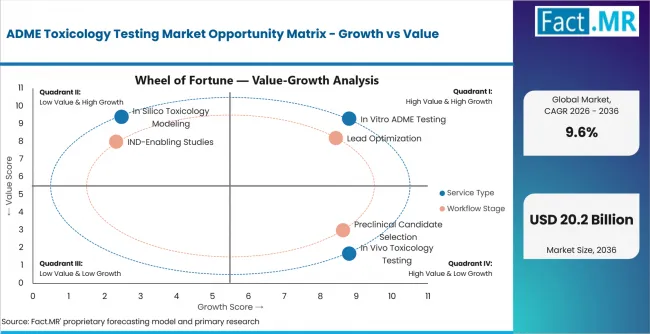
  • Demand is expected to increase from USD 8.1 billion in 2026 to USD 20.2 billion by 2036.
  • The market is forecast to record 9.6% CAGR from 2026 to 2036 as drug developers shift ADME and toxicity checks closer to lead optimization.
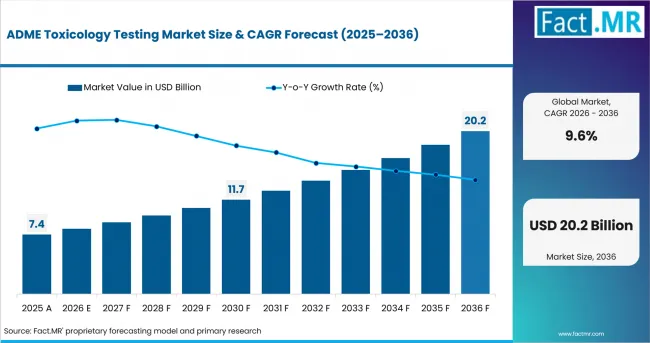
Adme Toxicology Testing Market Value Analysis

Metric Details
Industry Size 2026 USD 8.1 billion
Industry Value 2036 USD 20.2 billion
CAGR 2026 to 2036 9.6%

Summary of the ADME Toxicology Testing Market

  • Demand Drivers in the Market
    • DMPK scientists need early metabolism data before candidate nomination.
    • Toxicology directors use in vitro assays to reduce late-stage safety failure risk.
    • CRO program managers support pharma sponsors that need faster nonclinical data packages.
  • Key Segments Analyzed
    • By Service Type: In vitro ADME testing is expected to hold 44.0% share in 2026 because early assays help screen compounds before higher-cost studies.
    • By Workflow Stage: Lead optimization is likely to account for 36.0% share in 2026 as sponsors use ADME data to refine candidate selection.
    • By Technology Platform: Cell-based assays are projected to capture 33.0% share in 2026 since human-relevant models support early toxicity interpretation.
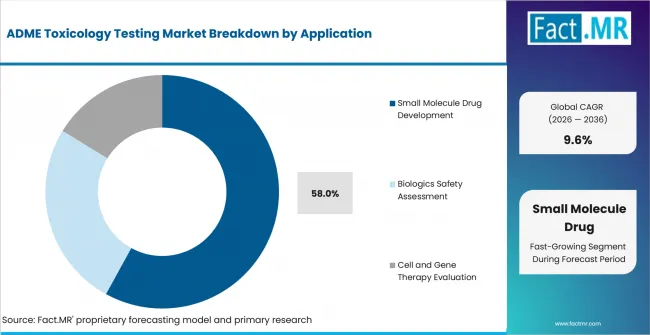
    • By Application: Small molecule drug development is anticipated to hold 58.0% share in 2026 because ADME profiling is central to oral drug programs.
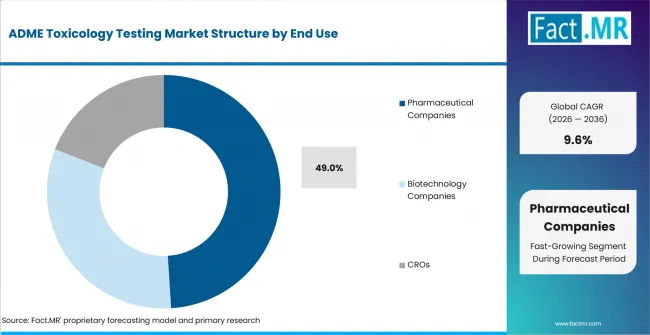
    • By End Use: Pharmaceutical companies are expected to account for 49.0% share in 2026 as large sponsors outsource selected DMPK and toxicology work.
    • By Geography: China is projected to record 12.2% CAGR through 2036 as domestic drug discovery and CRO capacity expand.
  • Analyst Opinion at Fact.MR
    • Shambhu Nath Jha, Principal Consultant at Fact.MR, notes, “ADME toxicology testing is no longer a back-end safety step. We see drug sponsors using these assays to decide which compounds deserve more investment. CROs that connect metabolism and toxicity data into a clear development decision will earn stronger repeat work.”
  • Strategic Implications
    • DMPK heads need integrated assay panels that shorten compound selection cycles.
    • CRO program managers should combine bioanalysis and toxicology interpretation to reduce sponsor handoff delays.
    • Drug discovery leaders need earlier toxicity screens before advancing weak compounds into costly studies.

ADME toxicology testing is becoming more decision-led. DMPK scientists need early metabolism and transporter data before expensive animal studies begin. Toxicology directors need human-relevant assays that can flag safety risk before IND planning. FDA’s M12 guidance covers enzyme and transporter-mediated pharmacokinetic drug interaction assessment for investigational drugs. [1]

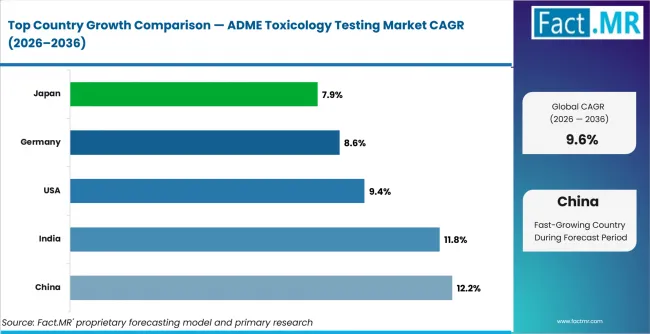
China is projected to record 12.2% CAGR by 2036 as CRO capacity and domestic drug discovery programs expand ADME testing demand. India is likely to post 11.8% CAGR through 2036 because contract research labs support global small molecule and biologics projects. The United States is expected to register 9.4% CAGR from 2026 to 2036 as FDA modernization supports NAM-based safety testing. Germany is forecast to advance at 8.6% CAGR by 2036 as pharma R&D and regulatory-quality testing sustain demand. Japan is set to record 7.9% CAGR through 2036 because drug sponsors require high-quality DMPK and toxicity data.

Segmental Analysis

ADME Toxicology Testing Market Analysis by Service Type

Adme Toxicology Testing Market Analysis By Service Type

In vitro ADME testing leads service type demand with 44.0% share in 2026 because early assays help drug sponsors screen permeability and transporter risk before costlier studies. In vivo toxicology testing supports regulatory packages. In silico modeling supports early ranking and compound triage.

  • In Vitro Screening: In vitro ADME testing helps DMPK scientists compare compounds before candidate selection.
  • In Vivo Support: In vivo toxicology testing supports later nonclinical evidence packages before human studies.
  • Model-Based Review: In silico toxicology modeling helps sponsors rank compounds earlier in discovery.

ADME Toxicology Testing Market Analysis by Workflow Stage
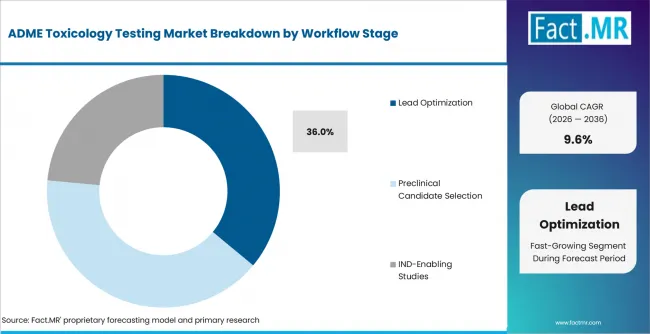
Adme Toxicology Testing Market Analysis By Workflow Stage

Lead optimization leads because sponsors need ADME and toxicity data before committing to a development candidate. Hit-to-lead work uses faster screens to remove weak compounds. The stage is likely to hold 36.0% share in 2026 because metabolism and safety signals shape compound refinement. IND-enabling studies require deeper regulatory documentation.

  • Lead Refinement: Lead optimization uses ADME data to improve compound quality before nomination.
  • Early Triage: Hit-to-lead screening helps researchers remove compounds with poor exposure signals.
  • IND Support: IND-enabling studies need GLP-ready safety data and validated bioanalytical methods.

ADME Toxicology Testing Market Analysis by Technology Platform
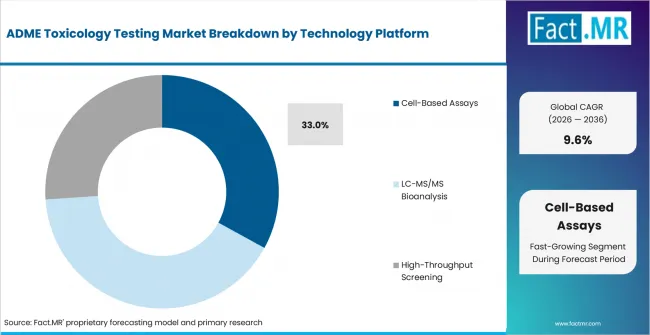
Adme Toxicology Testing Market Analysis By Technology Platform

Cell-based assays lead because they provide early human-relevant toxicity and metabolism signals. LC-MS/MS bioanalysis supports exposure measurement and metabolite identification. Cell-based assays are projected to capture 33.0% share in 2026 because drug sponsors need practical assays before advanced models scale. Organ-on-chip models support more complex tissue-level assessment.

  • Cell Models: Cell-based assays support early safety checks using human-relevant biological systems.
  • Bioanalysis Need: LC-MS/MS bioanalysis helps quantify drug exposure and metabolite profiles.
  • Advanced Systems: Organ-on-chip models support complex tissue response studies for selected programs.

ADME Toxicology Testing Market Analysis by Application
Adme Toxicology Testing Market Analysis By Application

Small molecule drug development is anticipated to hold 58.0% share in 2026 because ADME profiling is central to oral drug programs. Biologics safety assessment uses immune and exposure-focused testing. Cell and gene therapy evaluation requires specialized bioanalysis and safety models.

  • Small Molecule Programs: Small molecule developers need metabolism and transporter testing early in discovery.
  • Biologics Safety: Biologics programs need toxicity and exposure assessment suited to larger molecules.
  • Advanced Therapies: Cell and gene therapy sponsors require specialized nonclinical safety models.

ADME Toxicology Testing Market Analysis by End Use
Adme Toxicology Testing Market Analysis By End Use

Pharmaceutical companies lead because large sponsors manage broad discovery pipelines and outsource selected testing. Biotechnology companies use CROs for speed and specialist assay access. Pharmaceutical companies are expected to account for 49.0% share in 2026 as they balance internal DMPK capacity with external toxicology support. CROs serve both routine assays and integrated programs.

  • Pharma Demand: Pharmaceutical companies outsource selected ADME and toxicology studies to manage pipeline load.
  • Biotech Use: Biotechnology firms rely on CROs for specialized assays and regulatory-ready data.
  • CRO Role: CROs combine assay execution and study interpretation for sponsor programs.

ADME Toxicology Testing Market Drivers, Restraints, and Opportunities
Adme Toxicology Testing Market Opportunity Matrix Growth Vs Value

Drug attrition control is the main driver for ADME toxicology testing. Sponsors want earlier evidence on metabolism and toxicity before expensive development steps. FDA’s NAM roadmap supports broader use of human-relevant systems such as organ chips and computational models in preclinical safety studies. [2]

Data interpretation can slow adoption. Drug sponsors need confidence that in vitro and computational results can support development decisions. Assay variability can create repeat testing. Advanced platforms often need trained scientists and careful validation before routine regulatory use.

Opportunities in the ADME Toxicology Testing Market

  • NAM Validation: CROs can build stronger service lines around validated human-relevant assays.
  • Integrated DMPK Packages: Sponsors need combined metabolism and toxicology interpretation.
  • Bioanalysis Expansion: LC-MS/MS and biomarker services can support complex drug modalities.

Regional Analysis

Based on regional analysis, the ADME toxicology testing market is segmented into North America, Latin America, Europe, East Asia, South Asia and Pacific, and Middle East and Africa.

Top Country Growth Comparison Adme Toxicology Testing Market Cagr (2026 2036)

Country CAGR 2026 to 2036
China 12.2%
India 11.8%
United States 9.4%
Germany 8.6%
Japan 7.9%

Adme Toxicology Testing Market Cagr Analysis By Country

East Asia ADME Toxicology Testing Market Analysis

Adme Toxicology Testing Market Japan Market Share Analysis By Service Type

East Asia demand comes from CRO capacity and domestic drug discovery activity. China leads the region as integrated R&D service providers support discovery and development programs. Japan advances through high-quality DMPK work and established pharmaceutical research.

  • China: China is forecast to record 12.2% CAGR from 2026 to 2036 as domestic drug discovery and CRDMO capacity raise demand for ADME testing. WuXi AppTec stated in March 2026 that its DMPK team launched all-in-one compound identification software, improving metabolite identification efficiency for nucleic acids and peptides by 83% [3]. Local CRO scale supports faster study execution.
  • Japan: Japan is set to record 7.9% CAGR by 2036 as established pharma sponsors need high-quality DMPK and toxicology data. The market favors validated assays and documented study conduct. CROs with strong regulatory discipline can protect repeat sponsor work.

South Asia and Pacific ADME Toxicology Testing Market Analysis

South Asia demand is tied to contract research and expanding pharmaceutical development activity. India shows faster uptake as CROs serve global sponsors across discovery and early development. Cost control and scientific talent both support outsourced testing.

  • India: India is likely to post 11.8% CAGR through 2036 as CROs and pharmaceutical labs expand DMPK and safety testing work. Small molecule and biologics programs need faster assay turnaround. Service providers with GLP systems and bioanalysis depth can capture higher-value projects.

North America ADME Toxicology Testing Market Analysis
Adme Toxicology Testing Market Country Value Analysis

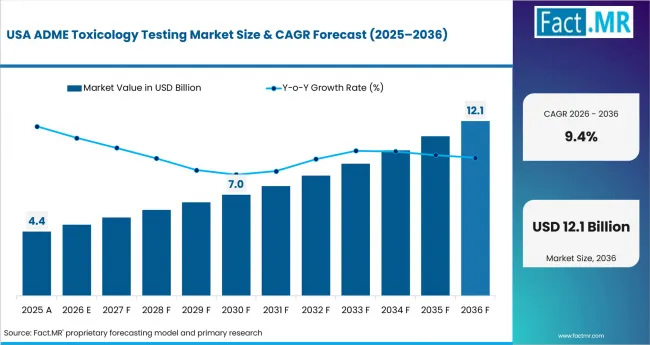
North America demand is led by the United States through regulatory modernization and large drug discovery pipelines. Sponsors use CROs to manage study volume and access specialist methods. NAM adoption is adding new service demand for validated human-relevant models.

  • United States: The United States is expected to register 9.4% CAGR from 2026 to 2036 as FDA guidance supports drug interaction testing and alternative safety methods. Charles River states that its Discovery and Safety Assessment services include in vitro and in vivo studies for potential new drugs. [4] Sponsor demand favors CROs with integrated nonclinical support.

Europe ADME Toxicology Testing Market Analysis

Adme Toxicology Testing Market Europe Country Market Share Analysis, 2026 & 2036

Europe demand comes from pharma R&D and safety assessment quality. Germany leads regional demand through pharmaceutical research and toxicology expertise. CROs with ADME-Tox platforms can support sponsors that need integrated discovery and preclinical packages.

Germany: Germany is forecast to advance at 8.6% CAGR by 2036 because pharma R&D and regulatory-quality testing support ADME toxicology services. Evotec and Cyprotex offer ADME and safety assessment services across discovery and preclinical development. [5] Local scientific depth supports higher-complexity studies.

Competitive Aligners for Market Suppliers
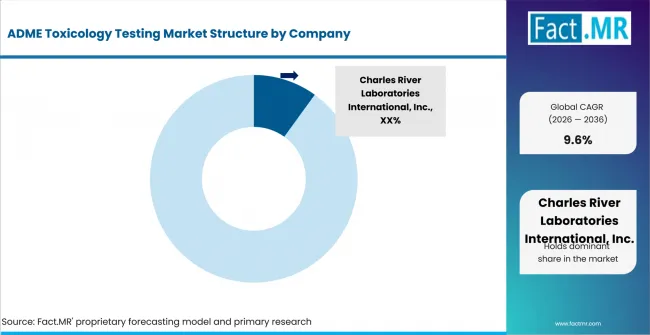
Adme Toxicology Testing Market Analysis By Company

The ADME toxicology testing market is served by CROs and drug discovery service providers. Charles River Laboratories International, Inc. supports discovery and safety assessment work. Eurofins Scientific SE serves drug sponsors through ADME and pharmacokinetic testing services. Evotec SE adds specialist strength through Cyprotex in ADME and safety assessment.

WuXi AppTec Co., Ltd. and Pharmaron Beijing Co., Ltd. compete through integrated drug discovery and development service platforms. Drug sponsors compare providers on assay range and data quality. Turnaround time matters because delays can slow candidate selection. Clear study design helps sponsors make stronger development decisions.

By 2036, supplier choice will depend on validation quality and reproducible data. CROs with cell-based assays and DDI testing can reduce handoff risk. Bioanalysis support will also help sponsors manage complex study needs. Providers with strong lab networks will be better placed for global development programs.

Key Companies in ADME Toxicology Testing Market

  • Charles River Laboratories International, Inc.
  • Eurofins Scientific SE
  • Evotec SE (Cyprotex)
  • WuXi AppTec Co., Ltd.
  • Pharmaron Beijing Co., Ltd.

Bibliography

  • [1] Nordson EFD. (2024, February 29). New PICO® Nexμs™ jetting system connects fluid dispensing to Industry 4.0 efficiency. Nordson Corporation.
  • [2] Dover. (2025, June 25). Techcon launches new side-by-side dispensing cartridge line. PR Newswire.
  • [3] Baumer hhs GmbH. (2025, August 12). Baumer hhs introduces its latest generation of melters: Xmelt fusion.
  • [4] Nordson EFD. (2024, October 7). Nordson EFD wins a 2024 EDGE Award for the PICO® Nexμs™ jetting system. Nordson Corporation.
  • [5] Big Dog Adhesives. (2026, January 19). Big Dog Adhesives introduces RELOAD reusable adhesive dispensing platform. Adhesive and Sealant Council.

This Report Addresses

  • Strategic intelligence on ADME toxicology testing demand across service type and workflow stage.
  • Forecast mapping from USD 8.1 billion in 2026 to USD 20.2 billion by 2036.
  • Segment analysis covering in vitro ADME testing, lead optimization, cell-based assays, small molecule drug development and pharmaceutical companies.
  • Regional outlook covering China, India, the United States, Germany and Japan.
  • Competitive analysis of Charles River Laboratories International, Inc., Eurofins Scientific SE, Evotec SE (Cyprotex), WuXi AppTec Co., Ltd., Pharmaron Beijing Co., Ltd.
  • Service assessment covering assay design, DMPK interpretation, toxicology evidence and regulatory readiness.
  • Primary interviews, CRO checks, official source review and regulatory guidance validation support the forecast.

ADME Toxicology Testing Market Definition

The ADME toxicology testing market covers services and platforms used to assess absorption and toxicity behavior of drug candidates. It includes in vitro assays, in vivo studies, in silico modeling, drug-drug interaction testing, metabolite identification, and bioanalytical testing. The scope differs from clinical testing because these studies support discovery and nonclinical development decisions.

ADME Toxicology Testing Market Inclusions

The scope includes ADME assays and drug-drug interaction testing. It covers toxicology screens used before IND-enabling studies. It includes cell-based models and organ-on-chip approaches used to improve human relevance.

ADME Toxicology Testing Market Exclusions

The scope excludes routine clinical diagnostics and patient testing. It excludes pharmacovigilance services after product launch. It excludes finished drug manufacturing quality control unless the work directly supports ADME or toxicology interpretation. It excludes general laboratory consumables sold without testing service or assay interpretation.

ADME Toxicology Testing Market Research Methodology

  • Primary Research
    • Primary research includes interviews with DMPK heads and toxicology study directors. It includes input from CRO program managers and bioanalysis lab directors. Drug discovery leaders are reviewed to assess assay outsourcing behavior.
  • Desk Research
    • Desk research reviews regulatory guidance and company filings. It covers ADME service portfolios and nonclinical safety documents. CRO capability disclosures are reviewed to assess assay breadth and regional service depth.
  • Market-Sizing and Forecasting
    • Forecasting uses drug discovery project volume and outsourced ADME testing activity as the baseline. It reviews demand by service type and workflow stage. Country-level CRO capacity and pharma R&D intensity help assess future direction.
  • Data Validation and Update Cycle
    • Forecasts are validated through CRO checks and sponsor-side testing feedback. Assay selection and study timing are reviewed. Regulatory guidance and official company disclosures help confirm the forecast path.

Scope of the Report

Adme Toxicology Testing Market Breakdown By Service Type, Workflow Stage, And Region

Attribute Details
Quantitative Units USD 8.1 billion in 2026 to USD 20.2 billion by 2036 at 9.6% CAGR
Market Definition ADME and toxicology testing services used to assess compound exposure, metabolism, clearance and safety risk
Service Type In Vitro ADME Testing, In Vivo Toxicology Testing, In Silico Toxicology Modeling, Drug-Drug Interaction Testing, Metabolite Identification
Workflow Stage Hit-to-Lead Screening, Lead Optimization, Preclinical Candidate Selection, IND-Enabling Studies, Clinical DMPK Support
Technology Platform Cell-Based Assays, LC-MS/MS Bioanalysis, High-Throughput Screening, Organ-on-Chip Models, Computational Models
Application Small Molecule Drug Development, Biologics Safety Assessment, Cell and Gene Therapy Evaluation, Cosmetic and Chemical Safety, Agrochemical Testing
End Use Pharmaceutical Companies, Biotechnology Companies, CROs, Academic Research Institutes, Regulatory and Government Laboratories
Regions Covered North America, Latin America, Europe, East Asia, South Asia and Pacific, Middle East and Africa
Countries Covered China, India, United States, Germany, Japan
Key Companies Profiled Charles River Laboratories International, Inc., Eurofins Scientific SE, Evotec SE (Cyprotex), WuXi AppTec Co., Ltd., Pharmaron Beijing Co., Ltd.
Forecast Period 2026 to 2036
Approach Hybrid top-down and bottom-up approach using drug discovery activity, assay service demand, CRO capacity, workflow stage use and regional validation

ADME Toxicology Testing Market Analysis by Segments

  • By Service Type:

    • In Vitro ADME Testing
    • In Vivo Toxicology Testing
    • In Silico Toxicology Modeling
    • Drug-Drug Interaction Testing
    • Metabolite Identification
  • By Workflow Stage:

    • Hit-to-Lead Screening
    • Lead Optimization
    • Preclinical Candidate Selection
    • IND-Enabling Studies
    • Clinical DMPK Support
  • By Technology Platform:

    • Cell-Based Assays
    • LC-MS/MS Bioanalysis
    • High-Throughput Screening
    • Organ-on-Chip Models
    • Computational Models
  • By Application:

    • Small Molecule Drug Development
    • Biologics Safety Assessment
    • Cell and Gene Therapy Evaluation
    • Cosmetic and Chemical Safety
    • Agrochemical Testing
  • By End Use:

    • Pharmaceutical Companies
    • Biotechnology Companies
    • CROs
    • Academic Research Institutes
    • Regulatory and Government Laboratories
  • By Region:

    • North America
      • United States
      • Canada
    • Europe
      • Germany
      • United Kingdom
      • France
      • Italy
      • Spain
    • East Asia
      • China
      • Japan
      • South Korea
    • South Asia and Pacific
      • India
      • ASEAN
      • Australia and New Zealand
    • Latin America
      • Brazil
      • Mexico
    • Middle East and Africa
      • GCC Countries
      • South Africa

- Frequently Asked Questions -

What is the ADME Toxicology Testing Market size in 2026?

The ADME toxicology testing market is estimated to reach USD 8.1 billion in 2026 as drug sponsors expand early safety screening.

What will the ADME Toxicology Testing Market be worth by 2036?

The ADME toxicology testing market is projected to reach USD 20.2 billion by 2036.

What CAGR is projected for the ADME Toxicology Testing Market?

The ADME toxicology testing market is forecast to record 9.6% CAGR from 2026 to 2036 through early-stage testing demand.

Which service type leads the ADME Toxicology Testing Market?

In vitro ADME testing leads with 44.0% share in 2026 because early assays help screen compounds before higher-cost studies.

Which country expands fastest in the ADME Toxicology Testing Market?

China is projected to record 12.2% CAGR through 2036 as domestic drug discovery and CRO capacity expand.

How does India perform in the ADME Toxicology Testing Market?

India is likely to post 11.8% CAGR through 2036 as CROs and pharmaceutical labs expand DMPK and safety testing work.

How does the United States perform in the ADME Toxicology Testing Market?

The United States is expected to register 9.4% CAGR from 2026 to 2036 as regulatory modernization supports alternative safety methods.

What is the main driver in the ADME Toxicology Testing Market?

The main driver is drug attrition control because sponsors need earlier evidence on exposure, metabolism and toxicity risk.

What is the main restraint in the ADME Toxicology Testing Market?

The main restraint is data interpretation because sponsors need confidence that assay results can support development decisions.

Why does in vitro ADME testing lead demand?

In vitro ADME testing leads because it helps DMPK scientists compare compounds earlier and reduce late-stage rework.

Why is lead optimization important in this market?

Lead optimization is important because ADME and toxicity signals guide which compounds move toward candidate nomination.

Why are cell-based assays important in ADME toxicology testing?

Cell-based assays are important because they provide early human-relevant toxicity and metabolism signals.

Why do pharmaceutical companies lead end use?

Pharmaceutical companies lead end use because large sponsors manage wide discovery pipelines and outsource specialist testing.

Table of Content

  1. Executive Summary
    • Global Market Outlook
    • Demand to side Trends
    • Supply to side Trends
    • Technology Roadmap Analysis
    • Analysis and Recommendations
  2. Market Overview
    • Market Coverage / Taxonomy
    • Market Definition / Scope / Limitations
  3. Research Methodology
    • Chapter Orientation
    • Analytical Lens and Working Hypotheses
      • Market Structure, Signals, and Trend Drivers
      • Benchmarking and Cross-market Comparability
      • Market Sizing, Forecasting, and Opportunity Mapping
    • Research Design and Evidence Framework
      • Desk Research Programme (Secondary Evidence)
        • Company Annual and Sustainability Reports
        • Peer-reviewed Journals and Academic Literature
        • Corporate Websites, Product Literature, and Technical Notes
        • Earnings Decks and Investor Briefings
        • Statutory Filings and Regulatory Disclosures
        • Technical White Papers and Standards Notes
        • Trade Journals, Industry Magazines, and Analyst Briefs
        • Conference Proceedings, Webinars, and Seminar Materials
        • Government Statistics Portals and Public Data Releases
        • Press Releases and Reputable Media Coverage
        • Specialist Newsletters and Curated Briefings
        • Sector Databases and Reference Repositories
        • Fact.MR Internal Proprietary Databases and Historical Market Datasets
        • Subscription Datasets and Paid Sources
        • Social Channels, Communities, and Digital Listening Inputs
        • Additional Desk Sources
      • Expert Input and Fieldwork (Primary Evidence)
        • Primary Modes
          • Qualitative Interviews and Expert Elicitation
          • Quantitative Surveys and Structured Data Capture
          • Blended Approach
        • Why Primary Evidence is Used
        • Field Techniques
          • Interviews
          • Surveys
          • Focus Groups
          • Observational and In-context Research
          • Social and Community Interactions
        • Stakeholder Universe Engaged
          • C-suite Leaders
          • Board Members
          • Presidents and Vice Presidents
          • R&D and Innovation Heads
          • Technical Specialists
          • Domain Subject-matter Experts
          • Scientists
          • Physicians and Other Healthcare Professionals
        • Governance, Ethics, and Data Stewardship
          • Research Ethics
          • Data Integrity and Handling
      • Tooling, Models, and Reference Databases
    • Data Engineering and Model Build
      • Data Acquisition and Ingestion
      • Cleaning, Normalisation, and Verification
      • Synthesis, Triangulation, and Analysis
    • Quality Assurance and Audit Trail
  4. Market Background
    • Market Dynamics
      • Drivers
      • Restraints
      • Opportunity
      • Trends
    • Scenario Forecast
      • Demand in Optimistic Scenario
      • Demand in Likely Scenario
      • Demand in Conservative Scenario
    • Opportunity Map Analysis
    • Product Life Cycle Analysis
    • Supply Chain Analysis
    • Investment Feasibility Matrix
    • Value Chain Analysis
    • PESTLE and Porter’s Analysis
    • Regulatory Landscape
    • Regional Parent Market Outlook
    • Production and Consumption Statistics
    • Import and Export Statistics
  5. Global Market Analysis 2021 to 2025 and Forecast, 2026 to 2036
    • Historical Market Size Value (USD Million) Analysis, 2021 to 2025
    • Current and Future Market Size Value (USD Million) Projections, 2026 to 2036
      • Y to o to Y Growth Trend Analysis
      • Absolute $ Opportunity Analysis
  6. Global Market Pricing Analysis 2021 to 2025 and Forecast 2026 to 2036
  7. Global Market Analysis 2021 to 2025 and Forecast 2026 to 2036, By Sealant Type
    • Introduction / Key Findings
    • Historical Market Size Value (USD Million) Analysis By Sealant Type , 2021 to 2025
    • Current and Future Market Size Value (USD Million) Analysis and Forecast By Sealant Type , 2026 to 2036
      • Non-synthetic
      • Collagen Based
      • Synthetic
    • Y to o to Y Growth Trend Analysis By Sealant Type , 2021 to 2025
    • Absolute $ Opportunity Analysis By Sealant Type , 2026 to 2036
  8. Global Market Analysis 2021 to 2025 and Forecast 2026 to 2036, By Wound Type
    • Introduction / Key Findings
    • Historical Market Size Value (USD Million) Analysis By Wound Type, 2021 to 2025
    • Current and Future Market Size Value (USD Million) Analysis and Forecast By Wound Type, 2026 to 2036
      • Acute Wounds
      • Chronic Wounds
    • Y to o to Y Growth Trend Analysis By Wound Type, 2021 to 2025
    • Absolute $ Opportunity Analysis By Wound Type, 2026 to 2036
  9. Global Market Analysis 2021 to 2025 and Forecast 2026 to 2036, By End Use
    • Introduction / Key Findings
    • Historical Market Size Value (USD Million) Analysis By End Use, 2021 to 2025
    • Current and Future Market Size Value (USD Million) Analysis and Forecast By End Use, 2026 to 2036
      • Acute Care Hospital
      • Ambulatory Surgery Center
      • Hospital Outpatient Wound Care Clinic
      • Home Healthcare
      • Skilled Nursing Facility
      • Physician Office
      • Burn Center
      • Inpatient Rehabilitation Facility
      • Long-term Acute Care Hospital
      • Long-term Care
    • Y to o to Y Growth Trend Analysis By End Use, 2021 to 2025
    • Absolute $ Opportunity Analysis By End Use, 2026 to 2036
  10. Global Market Analysis 2021 to 2025 and Forecast 2026 to 2036, By Distribution Channel
    • Introduction / Key Findings
    • Historical Market Size Value (USD Million) Analysis By Distribution Channel, 2021 to 2025
    • Current and Future Market Size Value (USD Million) Analysis and Forecast By Distribution Channel, 2026 to 2036
      • Institutional Sales
      • Retail Sales
    • Y to o to Y Growth Trend Analysis By Distribution Channel, 2021 to 2025
    • Absolute $ Opportunity Analysis By Distribution Channel, 2026 to 2036
  11. Global Market Analysis 2021 to 2025 and Forecast 2026 to 2036, By Surgical Application
    • Introduction / Key Findings
    • Historical Market Size Value (USD Million) Analysis By Surgical Application, 2021 to 2025
    • Current and Future Market Size Value (USD Million) Analysis and Forecast By Surgical Application, 2026 to 2036
      • Surgical Procedure
      • Obstetrics and Gynecology
      • Colorectal
      • Cardiovascular
      • Bariatric and Upper GI
      • Plastic and Reconstructive Surgery
      • Urology
      • Dermatology
    • Y to o to Y Growth Trend Analysis By Surgical Application, 2021 to 2025
    • Absolute $ Opportunity Analysis By Surgical Application, 2026 to 2036
  12. Global Market Analysis 2021 to 2025 and Forecast 2026 to 2036, By Chronic Wound Application
    • Introduction / Key Findings
    • Historical Market Size Value (USD Million) Analysis By Chronic Wound Application, 2021 to 2025
    • Current and Future Market Size Value (USD Million) Analysis and Forecast By Chronic Wound Application, 2026 to 2036
      • Diabetic Foot Ulcers
      • Pressure Ulcers
      • Venous Leg Ulcers
      • Other Chronic Wounds
    • Y to o to Y Growth Trend Analysis By Chronic Wound Application, 2021 to 2025
    • Absolute $ Opportunity Analysis By Chronic Wound Application, 2026 to 2036
  13. Global Market Analysis 2021 to 2025 and Forecast 2026 to 2036, By Region
    • Introduction
    • Historical Market Size Value (USD Million) Analysis By Region, 2021 to 2025
    • Current Market Size Value (USD Million) Analysis and Forecast By Region, 2026 to 2036
      • North America
      • Latin America
      • Western Europe
      • Eastern Europe
      • East Asia
      • South Asia and Pacific
      • Middle East & Africa
    • Market Attractiveness Analysis By Region
  14. North America Market Analysis 2021 to 2025 and Forecast 2026 to 2036, By Country
    • Historical Market Size Value (USD Million) Trend Analysis By Market Taxonomy, 2021 to 2025
    • Market Size Value (USD Million) Forecast By Market Taxonomy, 2026 to 2036
      • By Country
        • USA
        • Canada
        • Mexico
      • By Sealant Type
      • By Wound Type
      • By End Use
      • By Distribution Channel
      • By Surgical Application
      • By Chronic Wound Application
    • Market Attractiveness Analysis
      • By Country
      • By Sealant Type
      • By Wound Type
      • By End Use
      • By Distribution Channel
      • By Surgical Application
      • By Chronic Wound Application
    • Key Takeaways
  15. Latin America Market Analysis 2021 to 2025 and Forecast 2026 to 2036, By Country
    • Historical Market Size Value (USD Million) Trend Analysis By Market Taxonomy, 2021 to 2025
    • Market Size Value (USD Million) Forecast By Market Taxonomy, 2026 to 2036
      • By Country
        • Brazil
        • Chile
        • Rest of Latin America
      • By Sealant Type
      • By Wound Type
      • By End Use
      • By Distribution Channel
      • By Surgical Application
      • By Chronic Wound Application
    • Market Attractiveness Analysis
      • By Country
      • By Sealant Type
      • By Wound Type
      • By End Use
      • By Distribution Channel
      • By Surgical Application
      • By Chronic Wound Application
    • Key Takeaways
  16. Western Europe Market Analysis 2021 to 2025 and Forecast 2026 to 2036, By Country
    • Historical Market Size Value (USD Million) Trend Analysis By Market Taxonomy, 2021 to 2025
    • Market Size Value (USD Million) Forecast By Market Taxonomy, 2026 to 2036
      • By Country
        • Germany
        • UK
        • Italy
        • Spain
        • France
        • Nordic
        • BENELUX
        • Rest of Western Europe
      • By Sealant Type
      • By Wound Type
      • By End Use
      • By Distribution Channel
      • By Surgical Application
      • By Chronic Wound Application
    • Market Attractiveness Analysis
      • By Country
      • By Sealant Type
      • By Wound Type
      • By End Use
      • By Distribution Channel
      • By Surgical Application
      • By Chronic Wound Application
    • Key Takeaways
  17. Eastern Europe Market Analysis 2021 to 2025 and Forecast 2026 to 2036, By Country
    • Historical Market Size Value (USD Million) Trend Analysis By Market Taxonomy, 2021 to 2025
    • Market Size Value (USD Million) Forecast By Market Taxonomy, 2026 to 2036
      • By Country
        • Russia
        • Poland
        • Hungary
        • Balkan & Baltic
        • Rest of Eastern Europe
      • By Sealant Type
      • By Wound Type
      • By End Use
      • By Distribution Channel
      • By Surgical Application
      • By Chronic Wound Application
    • Market Attractiveness Analysis
      • By Country
      • By Sealant Type
      • By Wound Type
      • By End Use
      • By Distribution Channel
      • By Surgical Application
      • By Chronic Wound Application
    • Key Takeaways
  18. East Asia Market Analysis 2021 to 2025 and Forecast 2026 to 2036, By Country
    • Historical Market Size Value (USD Million) Trend Analysis By Market Taxonomy, 2021 to 2025
    • Market Size Value (USD Million) Forecast By Market Taxonomy, 2026 to 2036
      • By Country
        • China
        • Japan
        • South Korea
      • By Sealant Type
      • By Wound Type
      • By End Use
      • By Distribution Channel
      • By Surgical Application
      • By Chronic Wound Application
    • Market Attractiveness Analysis
      • By Country
      • By Sealant Type
      • By Wound Type
      • By End Use
      • By Distribution Channel
      • By Surgical Application
      • By Chronic Wound Application
    • Key Takeaways
  19. South Asia and Pacific Market Analysis 2021 to 2025 and Forecast 2026 to 2036, By Country
    • Historical Market Size Value (USD Million) Trend Analysis By Market Taxonomy, 2021 to 2025
    • Market Size Value (USD Million) Forecast By Market Taxonomy, 2026 to 2036
      • By Country
        • India
        • ASEAN
        • Australia & New Zealand
        • Rest of South Asia and Pacific
      • By Sealant Type
      • By Wound Type
      • By End Use
      • By Distribution Channel
      • By Surgical Application
      • By Chronic Wound Application
    • Market Attractiveness Analysis
      • By Country
      • By Sealant Type
      • By Wound Type
      • By End Use
      • By Distribution Channel
      • By Surgical Application
      • By Chronic Wound Application
    • Key Takeaways
  20. Middle East & Africa Market Analysis 2021 to 2025 and Forecast 2026 to 2036, By Country
    • Historical Market Size Value (USD Million) Trend Analysis By Market Taxonomy, 2021 to 2025
    • Market Size Value (USD Million) Forecast By Market Taxonomy, 2026 to 2036
      • By Country
        • Kingdom of Saudi Arabia
        • Other GCC Countries
        • Turkiye
        • South Africa
        • Other African Union
        • Rest of Middle East & Africa
      • By Sealant Type
      • By Wound Type
      • By End Use
      • By Distribution Channel
      • By Surgical Application
      • By Chronic Wound Application
    • Market Attractiveness Analysis
      • By Country
      • By Sealant Type
      • By Wound Type
      • By End Use
      • By Distribution Channel
      • By Surgical Application
      • By Chronic Wound Application
    • Key Takeaways
  21. Key Countries Market Analysis
    • USA
      • Pricing Analysis
      • Market Share Analysis, 2025
        • By Sealant Type
        • By Wound Type
        • By End Use
        • By Distribution Channel
        • By Surgical Application
        • By Chronic Wound Application
    • Canada
      • Pricing Analysis
      • Market Share Analysis, 2025
        • By Sealant Type
        • By Wound Type
        • By End Use
        • By Distribution Channel
        • By Surgical Application
        • By Chronic Wound Application
    • Mexico
      • Pricing Analysis
      • Market Share Analysis, 2025
        • By Sealant Type
        • By Wound Type
        • By End Use
        • By Distribution Channel
        • By Surgical Application
        • By Chronic Wound Application
    • Brazil
      • Pricing Analysis
      • Market Share Analysis, 2025
        • By Sealant Type
        • By Wound Type
        • By End Use
        • By Distribution Channel
        • By Surgical Application
        • By Chronic Wound Application
    • Chile
      • Pricing Analysis
      • Market Share Analysis, 2025
        • By Sealant Type
        • By Wound Type
        • By End Use
        • By Distribution Channel
        • By Surgical Application
        • By Chronic Wound Application
    • Germany
      • Pricing Analysis
      • Market Share Analysis, 2025
        • By Sealant Type
        • By Wound Type
        • By End Use
        • By Distribution Channel
        • By Surgical Application
        • By Chronic Wound Application
    • UK
      • Pricing Analysis
      • Market Share Analysis, 2025
        • By Sealant Type
        • By Wound Type
        • By End Use
        • By Distribution Channel
        • By Surgical Application
        • By Chronic Wound Application
    • Italy
      • Pricing Analysis
      • Market Share Analysis, 2025
        • By Sealant Type
        • By Wound Type
        • By End Use
        • By Distribution Channel
        • By Surgical Application
        • By Chronic Wound Application
    • Spain
      • Pricing Analysis
      • Market Share Analysis, 2025
        • By Sealant Type
        • By Wound Type
        • By End Use
        • By Distribution Channel
        • By Surgical Application
        • By Chronic Wound Application
    • France
      • Pricing Analysis
      • Market Share Analysis, 2025
        • By Sealant Type
        • By Wound Type
        • By End Use
        • By Distribution Channel
        • By Surgical Application
        • By Chronic Wound Application
    • India
      • Pricing Analysis
      • Market Share Analysis, 2025
        • By Sealant Type
        • By Wound Type
        • By End Use
        • By Distribution Channel
        • By Surgical Application
        • By Chronic Wound Application
    • ASEAN
      • Pricing Analysis
      • Market Share Analysis, 2025
        • By Sealant Type
        • By Wound Type
        • By End Use
        • By Distribution Channel
        • By Surgical Application
        • By Chronic Wound Application
    • Australia & New Zealand
      • Pricing Analysis
      • Market Share Analysis, 2025
        • By Sealant Type
        • By Wound Type
        • By End Use
        • By Distribution Channel
        • By Surgical Application
        • By Chronic Wound Application
    • China
      • Pricing Analysis
      • Market Share Analysis, 2025
        • By Sealant Type
        • By Wound Type
        • By End Use
        • By Distribution Channel
        • By Surgical Application
        • By Chronic Wound Application
    • Japan
      • Pricing Analysis
      • Market Share Analysis, 2025
        • By Sealant Type
        • By Wound Type
        • By End Use
        • By Distribution Channel
        • By Surgical Application
        • By Chronic Wound Application
    • South Korea
      • Pricing Analysis
      • Market Share Analysis, 2025
        • By Sealant Type
        • By Wound Type
        • By End Use
        • By Distribution Channel
        • By Surgical Application
        • By Chronic Wound Application
    • Russia
      • Pricing Analysis
      • Market Share Analysis, 2025
        • By Sealant Type
        • By Wound Type
        • By End Use
        • By Distribution Channel
        • By Surgical Application
        • By Chronic Wound Application
    • Poland
      • Pricing Analysis
      • Market Share Analysis, 2025
        • By Sealant Type
        • By Wound Type
        • By End Use
        • By Distribution Channel
        • By Surgical Application
        • By Chronic Wound Application
    • Hungary
      • Pricing Analysis
      • Market Share Analysis, 2025
        • By Sealant Type
        • By Wound Type
        • By End Use
        • By Distribution Channel
        • By Surgical Application
        • By Chronic Wound Application
    • Kingdom of Saudi Arabia
      • Pricing Analysis
      • Market Share Analysis, 2025
        • By Sealant Type
        • By Wound Type
        • By End Use
        • By Distribution Channel
        • By Surgical Application
        • By Chronic Wound Application
    • Turkiye
      • Pricing Analysis
      • Market Share Analysis, 2025
        • By Sealant Type
        • By Wound Type
        • By End Use
        • By Distribution Channel
        • By Surgical Application
        • By Chronic Wound Application
    • South Africa
      • Pricing Analysis
      • Market Share Analysis, 2025
        • By Sealant Type
        • By Wound Type
        • By End Use
        • By Distribution Channel
        • By Surgical Application
        • By Chronic Wound Application
  22. Market Structure Analysis
    • Competition Dashboard
    • Competition Benchmarking
    • Market Share Analysis of Top Players
      • By Regional
      • By Sealant Type
      • By Wound Type
      • By End Use
      • By Distribution Channel
      • By Surgical Application
      • By Chronic Wound Application
  23. Competition Analysis
    • Competition Deep Dive
      • Johnson & Johnson MedTech
        • Overview
        • Product Portfolio
        • Profitability by Market Segments (Product/Age /Sales Channel/Region)
        • Sales Footprint
        • Strategy Overview
          • Marketing Strategy
          • Product Strategy
          • Channel Strategy
      • Baxter International Inc.
      • Becton Dickinson and Company
      • Integra LifeSciences Holdings Corporation
      • Terumo Corporation
      • Artivion Inc.
      • B. Braun SE
      • Stryker Corporation
  24. Assumptions & Acronyms Used

List Of Table

  • Table 1: Global Market Value (USD Million) Forecast by Region, 2021 to 2036
  • Table 2: Global Market Value (USD Million) Forecast by Sealant Type, 2021 to 2036
  • Table 3: Global Market Value (USD Million) Forecast by Wound Type, 2021 to 2036
  • Table 4: Global Market Value (USD Million) Forecast by End Use, 2021 to 2036
  • Table 5: Global Market Value (USD Million) Forecast by Distribution Channel, 2021 to 2036
  • Table 6: Global Market Value (USD Million) Forecast by Surgical Application, 2021 to 2036
  • Table 7: Global Market Value (USD Million) Forecast by Chronic Wound Application, 2021 to 2036
  • Table 8: North America Market Value (USD Million) Forecast by Country, 2021 to 2036
  • Table 9: North America Market Value (USD Million) Forecast by Sealant Type, 2021 to 2036
  • Table 10: North America Market Value (USD Million) Forecast by Wound Type, 2021 to 2036
  • Table 11: North America Market Value (USD Million) Forecast by End Use, 2021 to 2036
  • Table 12: North America Market Value (USD Million) Forecast by Distribution Channel, 2021 to 2036
  • Table 13: North America Market Value (USD Million) Forecast by Surgical Application, 2021 to 2036
  • Table 14: North America Market Value (USD Million) Forecast by Chronic Wound Application, 2021 to 2036
  • Table 15: Latin America Market Value (USD Million) Forecast by Country, 2021 to 2036
  • Table 16: Latin America Market Value (USD Million) Forecast by Sealant Type, 2021 to 2036
  • Table 17: Latin America Market Value (USD Million) Forecast by Wound Type, 2021 to 2036
  • Table 18: Latin America Market Value (USD Million) Forecast by End Use, 2021 to 2036
  • Table 19: Latin America Market Value (USD Million) Forecast by Distribution Channel, 2021 to 2036
  • Table 20: Latin America Market Value (USD Million) Forecast by Surgical Application, 2021 to 2036
  • Table 21: Latin America Market Value (USD Million) Forecast by Chronic Wound Application, 2021 to 2036
  • Table 22: Western Europe Market Value (USD Million) Forecast by Country, 2021 to 2036
  • Table 23: Western Europe Market Value (USD Million) Forecast by Sealant Type, 2021 to 2036
  • Table 24: Western Europe Market Value (USD Million) Forecast by Wound Type, 2021 to 2036
  • Table 25: Western Europe Market Value (USD Million) Forecast by End Use, 2021 to 2036
  • Table 26: Western Europe Market Value (USD Million) Forecast by Distribution Channel, 2021 to 2036
  • Table 27: Western Europe Market Value (USD Million) Forecast by Surgical Application, 2021 to 2036
  • Table 28: Western Europe Market Value (USD Million) Forecast by Chronic Wound Application, 2021 to 2036
  • Table 29: Eastern Europe Market Value (USD Million) Forecast by Country, 2021 to 2036
  • Table 30: Eastern Europe Market Value (USD Million) Forecast by Sealant Type, 2021 to 2036
  • Table 31: Eastern Europe Market Value (USD Million) Forecast by Wound Type, 2021 to 2036
  • Table 32: Eastern Europe Market Value (USD Million) Forecast by End Use, 2021 to 2036
  • Table 33: Eastern Europe Market Value (USD Million) Forecast by Distribution Channel, 2021 to 2036
  • Table 34: Eastern Europe Market Value (USD Million) Forecast by Surgical Application, 2021 to 2036
  • Table 35: Eastern Europe Market Value (USD Million) Forecast by Chronic Wound Application, 2021 to 2036
  • Table 36: East Asia Market Value (USD Million) Forecast by Country, 2021 to 2036
  • Table 37: East Asia Market Value (USD Million) Forecast by Sealant Type, 2021 to 2036
  • Table 38: East Asia Market Value (USD Million) Forecast by Wound Type, 2021 to 2036
  • Table 39: East Asia Market Value (USD Million) Forecast by End Use, 2021 to 2036
  • Table 40: East Asia Market Value (USD Million) Forecast by Distribution Channel, 2021 to 2036
  • Table 41: East Asia Market Value (USD Million) Forecast by Surgical Application, 2021 to 2036
  • Table 42: East Asia Market Value (USD Million) Forecast by Chronic Wound Application, 2021 to 2036
  • Table 43: South Asia and Pacific Market Value (USD Million) Forecast by Country, 2021 to 2036
  • Table 44: South Asia and Pacific Market Value (USD Million) Forecast by Sealant Type, 2021 to 2036
  • Table 45: South Asia and Pacific Market Value (USD Million) Forecast by Wound Type, 2021 to 2036
  • Table 46: South Asia and Pacific Market Value (USD Million) Forecast by End Use, 2021 to 2036
  • Table 47: South Asia and Pacific Market Value (USD Million) Forecast by Distribution Channel, 2021 to 2036
  • Table 48: South Asia and Pacific Market Value (USD Million) Forecast by Surgical Application, 2021 to 2036
  • Table 49: South Asia and Pacific Market Value (USD Million) Forecast by Chronic Wound Application, 2021 to 2036
  • Table 50: Middle East & Africa Market Value (USD Million) Forecast by Country, 2021 to 2036
  • Table 51: Middle East & Africa Market Value (USD Million) Forecast by Sealant Type, 2021 to 2036
  • Table 52: Middle East & Africa Market Value (USD Million) Forecast by Wound Type, 2021 to 2036
  • Table 53: Middle East & Africa Market Value (USD Million) Forecast by End Use, 2021 to 2036
  • Table 54: Middle East & Africa Market Value (USD Million) Forecast by Distribution Channel, 2021 to 2036
  • Table 55: Middle East & Africa Market Value (USD Million) Forecast by Surgical Application, 2021 to 2036
  • Table 56: Middle East & Africa Market Value (USD Million) Forecast by Chronic Wound Application, 2021 to 2036

List Of Figures

  • Figure 1: Global Market Pricing Analysis
  • Figure 2: Global Market Value (USD Million) Forecast 2021-2036
  • Figure 3: Global Market Value Share and BPS Analysis by Sealant Type, 2026 and 2036
  • Figure 4: Global Market Y-o-Y Growth Comparison by Sealant Type, 2026 to 2036
  • Figure 5: Global Market Attractiveness Analysis by Sealant Type
  • Figure 6: Global Market Value Share and BPS Analysis by Wound Type, 2026 and 2036
  • Figure 7: Global Market Y-o-Y Growth Comparison by Wound Type, 2026 to 2036
  • Figure 8: Global Market Attractiveness Analysis by Wound Type
  • Figure 9: Global Market Value Share and BPS Analysis by End Use, 2026 and 2036
  • Figure 10: Global Market Y-o-Y Growth Comparison by End Use, 2026 to 2036
  • Figure 11: Global Market Attractiveness Analysis by End Use
  • Figure 12: Global Market Value Share and BPS Analysis by Distribution Channel, 2026 and 2036
  • Figure 13: Global Market Y-o-Y Growth Comparison by Distribution Channel, 2026 to 2036
  • Figure 14: Global Market Attractiveness Analysis by Distribution Channel
  • Figure 15: Global Market Value Share and BPS Analysis by Surgical Application, 2026 and 2036
  • Figure 16: Global Market Y-o-Y Growth Comparison by Surgical Application, 2026 to 2036
  • Figure 17: Global Market Attractiveness Analysis by Surgical Application
  • Figure 18: Global Market Value Share and BPS Analysis by Chronic Wound Application, 2026 and 2036
  • Figure 19: Global Market Y-o-Y Growth Comparison by Chronic Wound Application, 2026 to 2036
  • Figure 20: Global Market Attractiveness Analysis by Chronic Wound Application
  • Figure 21: Global Market Value (USD Million) Share and BPS Analysis by Region, 2026 and 2036
  • Figure 22: Global Market Y-o-Y Growth Comparison by Region, 2026 to 2036
  • Figure 23: Global Market Attractiveness Analysis by Region
  • Figure 24: North America Market Incremental Dollar Opportunity, 2026 to 2036
  • Figure 25: Latin America Market Incremental Dollar Opportunity, 2026 to 2036
  • Figure 26: Western Europe Market Incremental Dollar Opportunity, 2026 to 2036
  • Figure 27: Eastern Europe Market Incremental Dollar Opportunity, 2026 to 2036
  • Figure 28: East Asia Market Incremental Dollar Opportunity, 2026 to 2036
  • Figure 29: South Asia and Pacific Market Incremental Dollar Opportunity, 2026 to 2036
  • Figure 30: Middle East & Africa Market Incremental Dollar Opportunity, 2026 to 2036
  • Figure 31: North America Market Value Share and BPS Analysis by Country, 2026 and 2036
  • Figure 32: North America Market Value Share and BPS Analysis by Sealant Type, 2026 and 2036
  • Figure 33: North America Market Y-o-Y Growth Comparison by Sealant Type, 2026 to 2036
  • Figure 34: North America Market Attractiveness Analysis by Sealant Type
  • Figure 35: North America Market Value Share and BPS Analysis by Wound Type, 2026 and 2036
  • Figure 36: North America Market Y-o-Y Growth Comparison by Wound Type, 2026 to 2036
  • Figure 37: North America Market Attractiveness Analysis by Wound Type
  • Figure 38: North America Market Value Share and BPS Analysis by End Use, 2026 and 2036
  • Figure 39: North America Market Y-o-Y Growth Comparison by End Use, 2026 to 2036
  • Figure 40: North America Market Attractiveness Analysis by End Use
  • Figure 41: North America Market Value Share and BPS Analysis by Distribution Channel, 2026 and 2036
  • Figure 42: North America Market Y-o-Y Growth Comparison by Distribution Channel, 2026 to 2036
  • Figure 43: North America Market Attractiveness Analysis by Distribution Channel
  • Figure 44: North America Market Value Share and BPS Analysis by Surgical Application, 2026 and 2036
  • Figure 45: North America Market Y-o-Y Growth Comparison by Surgical Application, 2026 to 2036
  • Figure 46: North America Market Attractiveness Analysis by Surgical Application
  • Figure 47: North America Market Value Share and BPS Analysis by Chronic Wound Application, 2026 and 2036
  • Figure 48: North America Market Y-o-Y Growth Comparison by Chronic Wound Application, 2026 to 2036
  • Figure 49: North America Market Attractiveness Analysis by Chronic Wound Application
  • Figure 50: Latin America Market Value Share and BPS Analysis by Country, 2026 and 2036
  • Figure 51: Latin America Market Value Share and BPS Analysis by Sealant Type, 2026 and 2036
  • Figure 52: Latin America Market Y-o-Y Growth Comparison by Sealant Type, 2026 to 2036
  • Figure 53: Latin America Market Attractiveness Analysis by Sealant Type
  • Figure 54: Latin America Market Value Share and BPS Analysis by Wound Type, 2026 and 2036
  • Figure 55: Latin America Market Y-o-Y Growth Comparison by Wound Type, 2026 to 2036
  • Figure 56: Latin America Market Attractiveness Analysis by Wound Type
  • Figure 57: Latin America Market Value Share and BPS Analysis by End Use, 2026 and 2036
  • Figure 58: Latin America Market Y-o-Y Growth Comparison by End Use, 2026 to 2036
  • Figure 59: Latin America Market Attractiveness Analysis by End Use
  • Figure 60: Latin America Market Value Share and BPS Analysis by Distribution Channel, 2026 and 2036
  • Figure 61: Latin America Market Y-o-Y Growth Comparison by Distribution Channel, 2026 to 2036
  • Figure 62: Latin America Market Attractiveness Analysis by Distribution Channel
  • Figure 63: Latin America Market Value Share and BPS Analysis by Surgical Application, 2026 and 2036
  • Figure 64: Latin America Market Y-o-Y Growth Comparison by Surgical Application, 2026 to 2036
  • Figure 65: Latin America Market Attractiveness Analysis by Surgical Application
  • Figure 66: Latin America Market Value Share and BPS Analysis by Chronic Wound Application, 2026 and 2036
  • Figure 67: Latin America Market Y-o-Y Growth Comparison by Chronic Wound Application, 2026 to 2036
  • Figure 68: Latin America Market Attractiveness Analysis by Chronic Wound Application
  • Figure 69: Western Europe Market Value Share and BPS Analysis by Country, 2026 and 2036
  • Figure 70: Western Europe Market Value Share and BPS Analysis by Sealant Type, 2026 and 2036
  • Figure 71: Western Europe Market Y-o-Y Growth Comparison by Sealant Type, 2026 to 2036
  • Figure 72: Western Europe Market Attractiveness Analysis by Sealant Type
  • Figure 73: Western Europe Market Value Share and BPS Analysis by Wound Type, 2026 and 2036
  • Figure 74: Western Europe Market Y-o-Y Growth Comparison by Wound Type, 2026 to 2036
  • Figure 75: Western Europe Market Attractiveness Analysis by Wound Type
  • Figure 76: Western Europe Market Value Share and BPS Analysis by End Use, 2026 and 2036
  • Figure 77: Western Europe Market Y-o-Y Growth Comparison by End Use, 2026 to 2036
  • Figure 78: Western Europe Market Attractiveness Analysis by End Use
  • Figure 79: Western Europe Market Value Share and BPS Analysis by Distribution Channel, 2026 and 2036
  • Figure 80: Western Europe Market Y-o-Y Growth Comparison by Distribution Channel, 2026 to 2036
  • Figure 81: Western Europe Market Attractiveness Analysis by Distribution Channel
  • Figure 82: Western Europe Market Value Share and BPS Analysis by Surgical Application, 2026 and 2036
  • Figure 83: Western Europe Market Y-o-Y Growth Comparison by Surgical Application, 2026 to 2036
  • Figure 84: Western Europe Market Attractiveness Analysis by Surgical Application
  • Figure 85: Western Europe Market Value Share and BPS Analysis by Chronic Wound Application, 2026 and 2036
  • Figure 86: Western Europe Market Y-o-Y Growth Comparison by Chronic Wound Application, 2026 to 2036
  • Figure 87: Western Europe Market Attractiveness Analysis by Chronic Wound Application
  • Figure 88: Eastern Europe Market Value Share and BPS Analysis by Country, 2026 and 2036
  • Figure 89: Eastern Europe Market Value Share and BPS Analysis by Sealant Type, 2026 and 2036
  • Figure 90: Eastern Europe Market Y-o-Y Growth Comparison by Sealant Type, 2026 to 2036
  • Figure 91: Eastern Europe Market Attractiveness Analysis by Sealant Type
  • Figure 92: Eastern Europe Market Value Share and BPS Analysis by Wound Type, 2026 and 2036
  • Figure 93: Eastern Europe Market Y-o-Y Growth Comparison by Wound Type, 2026 to 2036
  • Figure 94: Eastern Europe Market Attractiveness Analysis by Wound Type
  • Figure 95: Eastern Europe Market Value Share and BPS Analysis by End Use, 2026 and 2036
  • Figure 96: Eastern Europe Market Y-o-Y Growth Comparison by End Use, 2026 to 2036
  • Figure 97: Eastern Europe Market Attractiveness Analysis by End Use
  • Figure 98: Eastern Europe Market Value Share and BPS Analysis by Distribution Channel, 2026 and 2036
  • Figure 99: Eastern Europe Market Y-o-Y Growth Comparison by Distribution Channel, 2026 to 2036
  • Figure 100: Eastern Europe Market Attractiveness Analysis by Distribution Channel
  • Figure 101: Eastern Europe Market Value Share and BPS Analysis by Surgical Application, 2026 and 2036
  • Figure 102: Eastern Europe Market Y-o-Y Growth Comparison by Surgical Application, 2026 to 2036
  • Figure 103: Eastern Europe Market Attractiveness Analysis by Surgical Application
  • Figure 104: Eastern Europe Market Value Share and BPS Analysis by Chronic Wound Application, 2026 and 2036
  • Figure 105: Eastern Europe Market Y-o-Y Growth Comparison by Chronic Wound Application, 2026 to 2036
  • Figure 106: Eastern Europe Market Attractiveness Analysis by Chronic Wound Application
  • Figure 107: East Asia Market Value Share and BPS Analysis by Country, 2026 and 2036
  • Figure 108: East Asia Market Value Share and BPS Analysis by Sealant Type, 2026 and 2036
  • Figure 109: East Asia Market Y-o-Y Growth Comparison by Sealant Type, 2026 to 2036
  • Figure 110: East Asia Market Attractiveness Analysis by Sealant Type
  • Figure 111: East Asia Market Value Share and BPS Analysis by Wound Type, 2026 and 2036
  • Figure 112: East Asia Market Y-o-Y Growth Comparison by Wound Type, 2026 to 2036
  • Figure 113: East Asia Market Attractiveness Analysis by Wound Type
  • Figure 114: East Asia Market Value Share and BPS Analysis by End Use, 2026 and 2036
  • Figure 115: East Asia Market Y-o-Y Growth Comparison by End Use, 2026 to 2036
  • Figure 116: East Asia Market Attractiveness Analysis by End Use
  • Figure 117: East Asia Market Value Share and BPS Analysis by Distribution Channel, 2026 and 2036
  • Figure 118: East Asia Market Y-o-Y Growth Comparison by Distribution Channel, 2026 to 2036
  • Figure 119: East Asia Market Attractiveness Analysis by Distribution Channel
  • Figure 120: East Asia Market Value Share and BPS Analysis by Surgical Application, 2026 and 2036
  • Figure 121: East Asia Market Y-o-Y Growth Comparison by Surgical Application, 2026 to 2036
  • Figure 122: East Asia Market Attractiveness Analysis by Surgical Application
  • Figure 123: East Asia Market Value Share and BPS Analysis by Chronic Wound Application, 2026 and 2036
  • Figure 124: East Asia Market Y-o-Y Growth Comparison by Chronic Wound Application, 2026 to 2036
  • Figure 125: East Asia Market Attractiveness Analysis by Chronic Wound Application
  • Figure 126: South Asia and Pacific Market Value Share and BPS Analysis by Country, 2026 and 2036
  • Figure 127: South Asia and Pacific Market Value Share and BPS Analysis by Sealant Type, 2026 and 2036
  • Figure 128: South Asia and Pacific Market Y-o-Y Growth Comparison by Sealant Type, 2026 to 2036
  • Figure 129: South Asia and Pacific Market Attractiveness Analysis by Sealant Type
  • Figure 130: South Asia and Pacific Market Value Share and BPS Analysis by Wound Type, 2026 and 2036
  • Figure 131: South Asia and Pacific Market Y-o-Y Growth Comparison by Wound Type, 2026 to 2036
  • Figure 132: South Asia and Pacific Market Attractiveness Analysis by Wound Type
  • Figure 133: South Asia and Pacific Market Value Share and BPS Analysis by End Use, 2026 and 2036
  • Figure 134: South Asia and Pacific Market Y-o-Y Growth Comparison by End Use, 2026 to 2036
  • Figure 135: South Asia and Pacific Market Attractiveness Analysis by End Use
  • Figure 136: South Asia and Pacific Market Value Share and BPS Analysis by Distribution Channel, 2026 and 2036
  • Figure 137: South Asia and Pacific Market Y-o-Y Growth Comparison by Distribution Channel, 2026 to 2036
  • Figure 138: South Asia and Pacific Market Attractiveness Analysis by Distribution Channel
  • Figure 139: South Asia and Pacific Market Value Share and BPS Analysis by Surgical Application, 2026 and 2036
  • Figure 140: South Asia and Pacific Market Y-o-Y Growth Comparison by Surgical Application, 2026 to 2036
  • Figure 141: South Asia and Pacific Market Attractiveness Analysis by Surgical Application
  • Figure 142: South Asia and Pacific Market Value Share and BPS Analysis by Chronic Wound Application, 2026 and 2036
  • Figure 143: South Asia and Pacific Market Y-o-Y Growth Comparison by Chronic Wound Application, 2026 to 2036
  • Figure 144: South Asia and Pacific Market Attractiveness Analysis by Chronic Wound Application
  • Figure 145: Middle East & Africa Market Value Share and BPS Analysis by Country, 2026 and 2036
  • Figure 146: Middle East & Africa Market Value Share and BPS Analysis by Sealant Type, 2026 and 2036
  • Figure 147: Middle East & Africa Market Y-o-Y Growth Comparison by Sealant Type, 2026 to 2036
  • Figure 148: Middle East & Africa Market Attractiveness Analysis by Sealant Type
  • Figure 149: Middle East & Africa Market Value Share and BPS Analysis by Wound Type, 2026 and 2036
  • Figure 150: Middle East & Africa Market Y-o-Y Growth Comparison by Wound Type, 2026 to 2036
  • Figure 151: Middle East & Africa Market Attractiveness Analysis by Wound Type
  • Figure 152: Middle East & Africa Market Value Share and BPS Analysis by End Use, 2026 and 2036
  • Figure 153: Middle East & Africa Market Y-o-Y Growth Comparison by End Use, 2026 to 2036
  • Figure 154: Middle East & Africa Market Attractiveness Analysis by End Use
  • Figure 155: Middle East & Africa Market Value Share and BPS Analysis by Distribution Channel, 2026 and 2036
  • Figure 156: Middle East & Africa Market Y-o-Y Growth Comparison by Distribution Channel, 2026 to 2036
  • Figure 157: Middle East & Africa Market Attractiveness Analysis by Distribution Channel
  • Figure 158: Middle East & Africa Market Value Share and BPS Analysis by Surgical Application, 2026 and 2036
  • Figure 159: Middle East & Africa Market Y-o-Y Growth Comparison by Surgical Application, 2026 to 2036
  • Figure 160: Middle East & Africa Market Attractiveness Analysis by Surgical Application
  • Figure 161: Middle East & Africa Market Value Share and BPS Analysis by Chronic Wound Application, 2026 and 2036
  • Figure 162: Middle East & Africa Market Y-o-Y Growth Comparison by Chronic Wound Application, 2026 to 2036
  • Figure 163: Middle East & Africa Market Attractiveness Analysis by Chronic Wound Application
  • Figure 164: Global Market - Tier Structure Analysis
  • Figure 165: Global Market - Company Share Analysis

ADME Toxicology Testing Market