Lipid Metabolism Modulators Market
Lipid Metabolism Modulators Market Size and Share Forecast Outlook 2026 to 2036
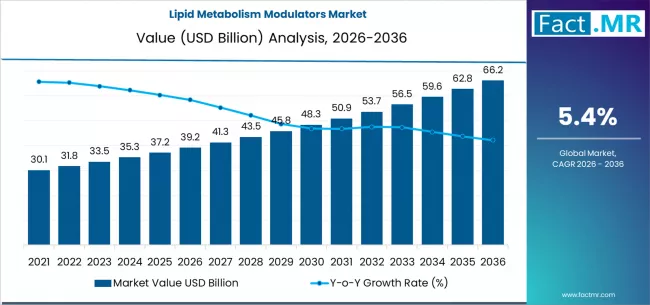
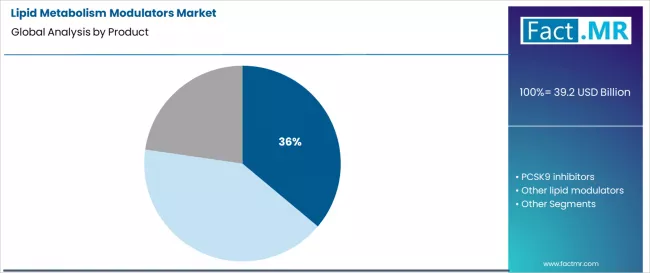
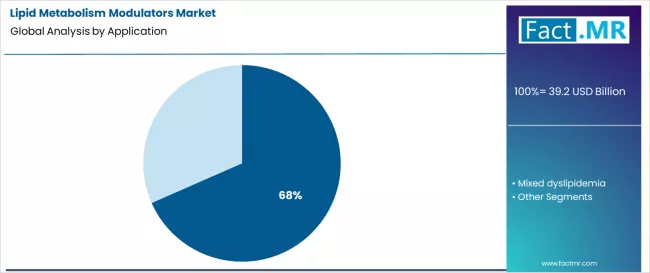
Lipid metabolism modulators market is projected to grow from USD 39.2 billion in 2026 to USD 66.2 billion by 2036, at a CAGR of 5.4%. Statins will dominate with a 36.1% market share, while hypercholesterolemia will lead the application segment with a 68.4% share.
Lipid Metabolism Modulators Market Forecast and Outlook 2026 to 2036
The global lipid metabolism modulators market is projected to reach USD 39.17 billion in 2026 and to USD 66.18 billion by 2036, progressing at a CAGR of 5.4%. This market operates within a mature yet dynamically evolving cardiovascular therapeutics landscape, where established therapies face continuous pressure from generics while novel agents seek to address residual risk.
Key Takeaways from the Lipid Metabolism Modulators Market
- Market Value for 2026: USD 39.17 Billion
- Market Value for 2036: USD 66.18 Billion
- Forecast CAGR 2026 to 2036: 5.4%
- Leading Product Segment (2026): Statins (36.1%)
- Leading Application Segment (2026): Hypercholesterolemia (68.4%)
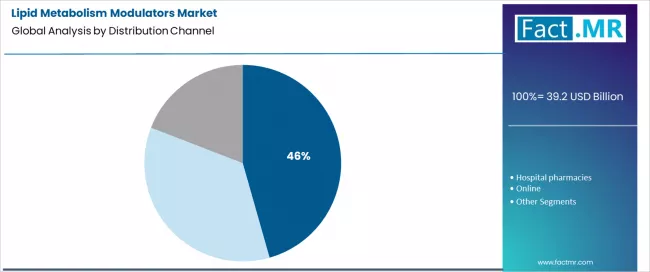
- Leading Distribution Channel Segment (2026): Retail Pharmacies (45.6%)
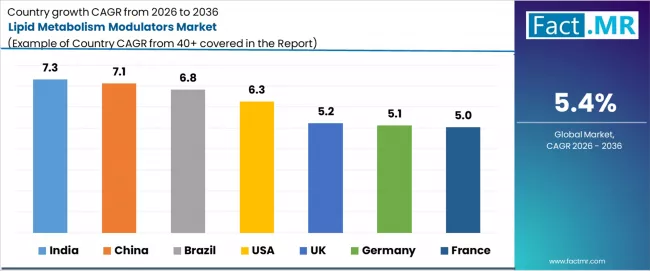
- Key Growth Countries: India (7.3% CAGR), China (7.1% CAGR), Brazil (6.8% CAGR), USA (6.3% CAGR), UK (5.2% CAGR), Germany (5.1% CAGR), France (5.0% CAGR)
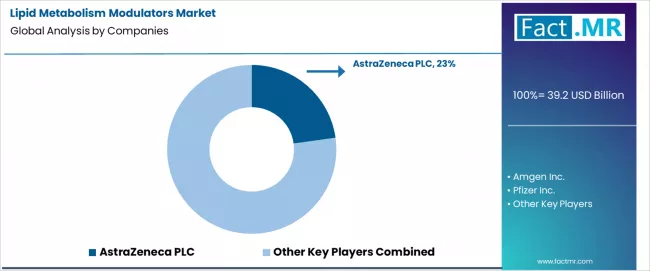
- Key Players in the Market: AstraZeneca PLC, Amgen Inc., Pfizer Inc., Novartis AG, Sanofi S.A.

Growth is sustained by the persistent global burden of dyslipidemia, a key modifiable risk factor for atherosclerotic cardiovascular disease. The increasing integration of novel agents into treatment guidelines and the strategic shift towards managing specific atherogenic lipoproteins beyond LDL-C are key market influencers.
The dominance of statins underscores their foundational role, but the market is characterized by a gradual product mix shift. The adoption of PCSK9 inhibitors and other advanced modulators is growing, particularly for high-risk and statin-intolerant populations.
This evolution is driven by compelling cardiovascular outcome trial data and a growing emphasis on achieving stringent lipid targets. The distribution network is adapting, with retail pharmacies maintaining a central role in dispensing chronic therapies while hospital and online channels gain relevance for newer, specialized treatments.
Metric
| Metric | Value |
|---|---|
| Market Value (2026) | USD 39.17 Billion |
| Market Forecast Value (2036) | USD 66.18 Billion |
| Forecast CAGR 2026 to 2036 | 5.4% |
Category
| Category | Segments |
|---|---|
| Product | Statins, PCSK9 Inhibitors, Other Lipid Modulators |
| Application | Hypercholesterolemia, Mixed Dyslipidemia |
| Distribution Channel | Retail Pharmacies, Hospital Pharmacies, Online |
| Region | North America, Latin America, Western Europe, Eastern Europe, East Asia, South Asia & Pacific, Middle East & Africa |
Segmental Analysis
By Product, Which Segment Retains Dominance Through Established Efficacy and Generic Availability?

Statins command a leading 36.1% share, a testament to their position as the first-line cornerstone of lipid management for decades. Their dominance is anchored in unparalleled evidence from cardiovascular outcome trials, widespread generic availability ensuring affordability, and their inclusion in global treatment guidelines. Despite the arrival of newer agents, statins remain the initial and often permanent foundation of therapy for millions of patients worldwide.
By Application, Which Condition Represents the Vast Majority of Treated Patients?

Hypercholesterolemia constitutes the overwhelming application segment at 68.4%. This reflects the primary clinical focus on reducing elevated low-density lipoprotein cholesterol (LDL-C), the most established and targeted lipid parameter for cardiovascular risk reduction. The high prevalence of elevated LDL-C in the global population ensures that its management forms the core volume driver for the entire lipid metabolism modulators market.
By Distribution Channel, Which Channel is Synonymous with Chronic Medication Management?

Retail pharmacies form the dominant distribution channel segment at 45.6%. This aligns with the chronic nature of dyslipidemia treatment, where patients require regular, long-term refills of oral medications like statins. The convenience, accessibility, and established supply chains of retail pharmacies make them the primary point of care for ongoing medication management in the outpatient setting.
What Drives, Constrains, and Influences Development Patterns in the Lipid Metabolism Modulators Landscape?
The principal driver is the unwavering global prevalence of atherosclerotic cardiovascular disease, which maintains a massive, stable patient population requiring lifelong lipid management. A major constraint is the intense price erosion and market saturation of generic statins, which limits revenue growth from the largest product segment and pressures overall market value.
A significant opportunity lies in the expansion of treatment paradigms to target other atherogenic lipids, such as lipoprotein (a) and triglycerides, with novel therapies in late-stage development. The dominant trend is the strategic shift towards combination therapies and fixed-dose combinations that pair statins with other agents like ezetimibe or bempedoic acid, aiming to improve efficacy, adherence, and convenience in a cost-effective manner.
Analysis of the Lipid Metabolism Modulators Market by Key Countries

| Country | CAGR 2026 to 2036 |
|---|---|
| India | 7.3% |
| China | 7.1% |
| Brazil | 6.8% |
| USA | 6.3% |
| UK | 5.2% |
| Germany | 5.1% |
| France | 5.0% |
Is the USA's Market Growth Driven by Innovation Uptake and a High-Risk Patient Burden?
The USA’s 6.3% CAGR is fueled by a high burden of cardiovascular disease, favorable reimbursement for novel therapies, and rapid incorporation of new clinical guidelines. Growth is characterized by the expanding use of PCSK9 inhibitors and newer oral agents in high-risk populations, despite strong generic statin penetration. The market dynamics are significantly influenced by payer formularies and tiered co-pay structures.
Can Brazil's Public Health System Balance Cost and Need for Advanced Therapies?
Brazil’s 6.8% CAGR is challenged by the need to manage a growing cardiovascular disease burden within a cost-constrained public health system (SUS). Growth is driven by the volume of generic statins, while access to advanced therapies like PCSK9 inhibitors is largely restricted to the private sector or exceptional cases, creating a two-tiered market structure.
Does China's Market Expansion Reflect Its Aging Population and Dietary Shifts?
China’s 7.1% CAGR is propelled by its rapidly aging population, urbanization, and associated rise in dyslipidemia prevalence. The market is experiencing growth in both generic statin volume and the gradual adoption of novel agents as they gain reimbursement status. Domestic pharmaceutical companies are also becoming active players in the biosimilar and generic segments.
Will India's Growth be Defined by Rising Preventive Care Awareness and Generic Dominance?
India’s leading 7.3% CAGR is driven by increasing awareness of preventive cardiology, a rising middle class, and the overwhelming dominance of low-cost generic statins. The market expansion is volume-led, with growth concentrated in the retail pharmacy channel. Access to patented novel lipid modulators remains limited to a very small private sector segment.
Is Germany's Mature Market Focused on Guideline-Adherent Treatment and Cost-Efficiency?
Germany’s 5.1% CAGR reflects a mature market with high treatment rates. Growth is steady, guided by strict clinical guidelines and a focus on cost-efficient prescribing. The market sees slow but steady uptake of new drug classes following positive assessments from the Institute for Quality and Efficiency in Health Care (IQWiG), with a strong emphasis on generic utilization.
Does France's Market Prioritize Long-Term Outcome Data and Hospital-Led Initiation?
France’s 5.0% CAGR is influenced by a healthcare system that values long-term real-world evidence. Newer agents often see initial use restricted to hospital specialists for complex cases, with broader community adoption occurring slowly. The market is stable, with growth tightly linked to demonstrable therapeutic added value as assessed by the Haute Autorité de Santé.
Do Cost-effectiveness Thresholds govern the UK’s Growth in a Centralized System?
The UK’s 5.2% CAGR is fundamentally shaped by the cost-effectiveness evaluations of the National Institute for Health and Care Excellence (NICE). The adoption of higher-cost lipid modulators is carefully controlled, often requiring patients to fail multiple generic options first. Market growth is moderate and follows a highly structured, budget-conscious pathway within the National Health Service (NHS).
Competitive Landscape of the Lipid Metabolism Modulators Market

The competitive landscape is bifurcated between companies competing in the high-volume, low-margin generic statin space and those competing in the premium, innovative biologic and novel oral therapy segment. Generics manufacturers compete on scale, cost, and supply chain efficiency. In the innovative segment, companies like Amgen and Novartis compete based on superior clinical trial data, dosing convenience, and outcomes in specific high-risk subpopulations.
Success for innovative players hinges on demonstrating clear advantages in reducing residual cardiovascular risk beyond maximal statin therapy. Key strategies include developing convenient long-acting formulations, pursuing indications for novel lipid targets like Lp(a), and creating fixed-dose combinations to improve adherence. Establishing strong partnerships with cardiology societies and payers to ensure favorable guideline positioning and reimbursement is equally critical.
Key Players in the Lipid Metabolism Modulators Market
- AstraZeneca PLC
- Amgen Inc.
- Pfizer Inc.
- Novartis AG
- Sanofi S.A.
- Others
Scope of Report
| Items | Metrics |
|---|---|
| Quantitative Units | USD Billion |
| Product | Statins, PCSK9 Inhibitors, Other Lipid Modulators |
| Application | Hypercholesterolemia, Mixed Dyslipidemia |
| Distribution Channel | Retail Pharmacies, Hospital Pharmacies, Online |
| Key Countries | India, China, Brazil, USA, Germany, France, UK |
| Key Companies | AstraZeneca, Amgen, Pfizer, Novartis, Sanofi S.A., Others |
| Additional Analysis | Impact of genericization on market value and access; cost-effectiveness analysis of novel lipid modulators; role of digital health and telehealth in dyslipidemia management; analysis of clinical guidelines and their influence on prescribing patterns across regions. |
Market by Segments
-
Product :
- Statins
- PCSK9 Inhibitors
- Other Lipid Modulators
-
Application :
- Hypercholesterolemia
- Mixed Dyslipidemia
-
Distribution Channel :
- Retail Pharmacies
- Hospital Pharmacies
- Online
-
Region :
-
North America
- USA
- Canada
-
Latin America
- Brazil
- Mexico
- Argentina
- Rest of Latin America
-
Western Europe
- Germany
- France
- UK
- Italy
- Spain
- BENELUX
- Rest of Western Europe
-
Eastern Europe
- Russia
- Poland
- Czech Republic
- Rest of Eastern Europe
-
East Asia
- China
- Japan
- South Korea
- Rest of East Asia
-
South Asia & Pacific
- India
- ASEAN
- Australia
- Rest of South Asia & Pacific
-
MEA
- GCC Countries
- South Africa
- Turkiye
- Rest of MEA
-
Bibliography
- American College of Cardiology (ACC)/American Heart Association (AHA). (2025). Guideline on the Management of Blood Cholesterol.
- European Society of Cardiology (ESC) / European Atherosclerosis Society (EAS). (2024). Guidelines for the Management of Dyslipidemias.
- International Atherosclerosis Society. (2025). Global Perspectives on Lipid Management and Residual Risk.
- The Lancet Diabetes & Endocrinology. (2024). Series on the Future of Cardiovascular Risk Reduction: Beyond LDL-C.
Table of Content
- Executive Summary
- Global Market Outlook
- Demand to side Trends
- Supply to side Trends
- Technology Roadmap Analysis
- Analysis and Recommendations
- Market Overview
- Market Coverage / Taxonomy
- Market Definition / Scope / Limitations
- Market Background
- Market Dynamics
- Drivers
- Restraints
- Opportunity
- Trends
- Scenario Forecast
- Demand in Optimistic Scenario
- Demand in Likely Scenario
- Demand in Conservative Scenario
- Opportunity Map Analysis
- Product Life Cycle Analysis
- Supply Chain Analysis
- Investment Feasibility Matrix
- Value Chain Analysis
- PESTLE and Porter’s Analysis
- Regulatory Landscape
- Regional Parent Market Outlook
- Production and Consumption Statistics
- Import and Export Statistics
- Market Dynamics
- Global Market Analysis 2021 to 2025 and Forecast, 2026 to 2036
- Historical Market Size Value (USD Million) Analysis, 2021 to 2025
- Current and Future Market Size Value (USD Million) Projections, 2026 to 2036
- Y to o to Y Growth Trend Analysis
- Absolute $ Opportunity Analysis
- Global Market Pricing Analysis 2021 to 2025 and Forecast 2026 to 2036
- Global Market Analysis 2021 to 2025 and Forecast 2026 to 2036, By Product
- Introduction / Key Findings
- Historical Market Size Value (USD Million) Analysis By Product, 2021 to 2025
- Current and Future Market Size Value (USD Million) Analysis and Forecast By Product, 2026 to 2036
- Statins
- PCSK9 inhibitors
- Other lipid modulators
- Statins
- Y to o to Y Growth Trend Analysis By Product, 2021 to 2025
- Absolute $ Opportunity Analysis By Product, 2026 to 2036
- Global Market Analysis 2021 to 2025 and Forecast 2026 to 2036, By Application
- Introduction / Key Findings
- Historical Market Size Value (USD Million) Analysis By Application, 2021 to 2025
- Current and Future Market Size Value (USD Million) Analysis and Forecast By Application, 2026 to 2036
- Hypercholesterolemia
- Mixed dyslipidemia
- Hypercholesterolemia
- Y to o to Y Growth Trend Analysis By Application, 2021 to 2025
- Absolute $ Opportunity Analysis By Application, 2026 to 2036
- Global Market Analysis 2021 to 2025 and Forecast 2026 to 2036, By Distribution Channel
- Introduction / Key Findings
- Historical Market Size Value (USD Million) Analysis By Distribution Channel, 2021 to 2025
- Current and Future Market Size Value (USD Million) Analysis and Forecast By Distribution Channel, 2026 to 2036
- Retail pharmacies
- Hospital pharmacies
- Online
- Retail pharmacies
- Y to o to Y Growth Trend Analysis By Distribution Channel, 2021 to 2025
- Absolute $ Opportunity Analysis By Distribution Channel, 2026 to 2036
- Global Market Analysis 2021 to 2025 and Forecast 2026 to 2036, By Region
- Introduction
- Historical Market Size Value (USD Million) Analysis By Region, 2021 to 2025
- Current Market Size Value (USD Million) Analysis and Forecast By Region, 2026 to 2036
- North America
- Latin America
- Western Europe
- Eastern Europe
- East Asia
- South Asia and Pacific
- Middle East & Africa
- Market Attractiveness Analysis By Region
- North America Market Analysis 2021 to 2025 and Forecast 2026 to 2036, By Country
- Historical Market Size Value (USD Million) Trend Analysis By Market Taxonomy, 2021 to 2025
- Market Size Value (USD Million) Forecast By Market Taxonomy, 2026 to 2036
- By Country
- USA
- Canada
- Mexico
- By Product
- By Application
- By Distribution Channel
- By Country
- Market Attractiveness Analysis
- By Country
- By Product
- By Application
- By Distribution Channel
- Key Takeaways
- Latin America Market Analysis 2021 to 2025 and Forecast 2026 to 2036, By Country
- Historical Market Size Value (USD Million) Trend Analysis By Market Taxonomy, 2021 to 2025
- Market Size Value (USD Million) Forecast By Market Taxonomy, 2026 to 2036
- By Country
- Brazil
- Chile
- Rest of Latin America
- By Product
- By Application
- By Distribution Channel
- By Country
- Market Attractiveness Analysis
- By Country
- By Product
- By Application
- By Distribution Channel
- Key Takeaways
- Western Europe Market Analysis 2021 to 2025 and Forecast 2026 to 2036, By Country
- Historical Market Size Value (USD Million) Trend Analysis By Market Taxonomy, 2021 to 2025
- Market Size Value (USD Million) Forecast By Market Taxonomy, 2026 to 2036
- By Country
- Germany
- UK
- Italy
- Spain
- France
- Nordic
- BENELUX
- Rest of Western Europe
- By Product
- By Application
- By Distribution Channel
- By Country
- Market Attractiveness Analysis
- By Country
- By Product
- By Application
- By Distribution Channel
- Key Takeaways
- Eastern Europe Market Analysis 2021 to 2025 and Forecast 2026 to 2036, By Country
- Historical Market Size Value (USD Million) Trend Analysis By Market Taxonomy, 2021 to 2025
- Market Size Value (USD Million) Forecast By Market Taxonomy, 2026 to 2036
- By Country
- Russia
- Poland
- Hungary
- Balkan & Baltic
- Rest of Eastern Europe
- By Product
- By Application
- By Distribution Channel
- By Country
- Market Attractiveness Analysis
- By Country
- By Product
- By Application
- By Distribution Channel
- Key Takeaways
- East Asia Market Analysis 2021 to 2025 and Forecast 2026 to 2036, By Country
- Historical Market Size Value (USD Million) Trend Analysis By Market Taxonomy, 2021 to 2025
- Market Size Value (USD Million) Forecast By Market Taxonomy, 2026 to 2036
- By Country
- China
- Japan
- South Korea
- By Product
- By Application
- By Distribution Channel
- By Country
- Market Attractiveness Analysis
- By Country
- By Product
- By Application
- By Distribution Channel
- Key Takeaways
- South Asia and Pacific Market Analysis 2021 to 2025 and Forecast 2026 to 2036, By Country
- Historical Market Size Value (USD Million) Trend Analysis By Market Taxonomy, 2021 to 2025
- Market Size Value (USD Million) Forecast By Market Taxonomy, 2026 to 2036
- By Country
- India
- ASEAN
- Australia & New Zealand
- Rest of South Asia and Pacific
- By Product
- By Application
- By Distribution Channel
- By Country
- Market Attractiveness Analysis
- By Country
- By Product
- By Application
- By Distribution Channel
- Key Takeaways
- Middle East & Africa Market Analysis 2021 to 2025 and Forecast 2026 to 2036, By Country
- Historical Market Size Value (USD Million) Trend Analysis By Market Taxonomy, 2021 to 2025
- Market Size Value (USD Million) Forecast By Market Taxonomy, 2026 to 2036
- By Country
- Kingdom of Saudi Arabia
- Other GCC Countries
- Turkiye
- South Africa
- Other African Union
- Rest of Middle East & Africa
- By Product
- By Application
- By Distribution Channel
- By Country
- Market Attractiveness Analysis
- By Country
- By Product
- By Application
- By Distribution Channel
- Key Takeaways
- Key Countries Market Analysis
- USA
- Pricing Analysis
- Market Share Analysis, 2025
- By Product
- By Application
- By Distribution Channel
- Canada
- Pricing Analysis
- Market Share Analysis, 2025
- By Product
- By Application
- By Distribution Channel
- Mexico
- Pricing Analysis
- Market Share Analysis, 2025
- By Product
- By Application
- By Distribution Channel
- Brazil
- Pricing Analysis
- Market Share Analysis, 2025
- By Product
- By Application
- By Distribution Channel
- Chile
- Pricing Analysis
- Market Share Analysis, 2025
- By Product
- By Application
- By Distribution Channel
- Germany
- Pricing Analysis
- Market Share Analysis, 2025
- By Product
- By Application
- By Distribution Channel
- UK
- Pricing Analysis
- Market Share Analysis, 2025
- By Product
- By Application
- By Distribution Channel
- Italy
- Pricing Analysis
- Market Share Analysis, 2025
- By Product
- By Application
- By Distribution Channel
- Spain
- Pricing Analysis
- Market Share Analysis, 2025
- By Product
- By Application
- By Distribution Channel
- France
- Pricing Analysis
- Market Share Analysis, 2025
- By Product
- By Application
- By Distribution Channel
- India
- Pricing Analysis
- Market Share Analysis, 2025
- By Product
- By Application
- By Distribution Channel
- ASEAN
- Pricing Analysis
- Market Share Analysis, 2025
- By Product
- By Application
- By Distribution Channel
- Australia & New Zealand
- Pricing Analysis
- Market Share Analysis, 2025
- By Product
- By Application
- By Distribution Channel
- China
- Pricing Analysis
- Market Share Analysis, 2025
- By Product
- By Application
- By Distribution Channel
- Japan
- Pricing Analysis
- Market Share Analysis, 2025
- By Product
- By Application
- By Distribution Channel
- South Korea
- Pricing Analysis
- Market Share Analysis, 2025
- By Product
- By Application
- By Distribution Channel
- Russia
- Pricing Analysis
- Market Share Analysis, 2025
- By Product
- By Application
- By Distribution Channel
- Poland
- Pricing Analysis
- Market Share Analysis, 2025
- By Product
- By Application
- By Distribution Channel
- Hungary
- Pricing Analysis
- Market Share Analysis, 2025
- By Product
- By Application
- By Distribution Channel
- Kingdom of Saudi Arabia
- Pricing Analysis
- Market Share Analysis, 2025
- By Product
- By Application
- By Distribution Channel
- Turkiye
- Pricing Analysis
- Market Share Analysis, 2025
- By Product
- By Application
- By Distribution Channel
- South Africa
- Pricing Analysis
- Market Share Analysis, 2025
- By Product
- By Application
- By Distribution Channel
- USA
- Market Structure Analysis
- Competition Dashboard
- Competition Benchmarking
- Market Share Analysis of Top Players
- By Regional
- By Product
- By Application
- By Distribution Channel
- Competition Analysis
- Competition Deep Dive
- AstraZeneca PLC
- Overview
- Product Portfolio
- Profitability by Market Segments (Product/Age /Sales Channel/Region)
- Sales Footprint
- Strategy Overview
- Marketing Strategy
- Product Strategy
- Channel Strategy
- Amgen Inc.
- Pfizer Inc.
- Novartis AG
- Sanofi S.A.
- Others
- AstraZeneca PLC
- Competition Deep Dive
- Assumptions & Acronyms Used
- Research Methodology
List Of Table
- Table 1: Global Market Value (USD Million) Forecast by Region, 2021 to 2036
- Table 2: Global Market Value (USD Million) Forecast by Product, 2021 to 2036
- Table 3: Global Market Value (USD Million) Forecast by Application, 2021 to 2036
- Table 4: Global Market Value (USD Million) Forecast by Distribution Channel, 2021 to 2036
- Table 5: North America Market Value (USD Million) Forecast by Country, 2021 to 2036
- Table 6: North America Market Value (USD Million) Forecast by Product, 2021 to 2036
- Table 7: North America Market Value (USD Million) Forecast by Application, 2021 to 2036
- Table 8: North America Market Value (USD Million) Forecast by Distribution Channel, 2021 to 2036
- Table 9: Latin America Market Value (USD Million) Forecast by Country, 2021 to 2036
- Table 10: Latin America Market Value (USD Million) Forecast by Product, 2021 to 2036
- Table 11: Latin America Market Value (USD Million) Forecast by Application, 2021 to 2036
- Table 12: Latin America Market Value (USD Million) Forecast by Distribution Channel, 2021 to 2036
- Table 13: Western Europe Market Value (USD Million) Forecast by Country, 2021 to 2036
- Table 14: Western Europe Market Value (USD Million) Forecast by Product, 2021 to 2036
- Table 15: Western Europe Market Value (USD Million) Forecast by Application, 2021 to 2036
- Table 16: Western Europe Market Value (USD Million) Forecast by Distribution Channel, 2021 to 2036
- Table 17: Eastern Europe Market Value (USD Million) Forecast by Country, 2021 to 2036
- Table 18: Eastern Europe Market Value (USD Million) Forecast by Product, 2021 to 2036
- Table 19: Eastern Europe Market Value (USD Million) Forecast by Application, 2021 to 2036
- Table 20: Eastern Europe Market Value (USD Million) Forecast by Distribution Channel, 2021 to 2036
- Table 21: East Asia Market Value (USD Million) Forecast by Country, 2021 to 2036
- Table 22: East Asia Market Value (USD Million) Forecast by Product, 2021 to 2036
- Table 23: East Asia Market Value (USD Million) Forecast by Application, 2021 to 2036
- Table 24: East Asia Market Value (USD Million) Forecast by Distribution Channel, 2021 to 2036
- Table 25: South Asia and Pacific Market Value (USD Million) Forecast by Country, 2021 to 2036
- Table 26: South Asia and Pacific Market Value (USD Million) Forecast by Product, 2021 to 2036
- Table 27: South Asia and Pacific Market Value (USD Million) Forecast by Application, 2021 to 2036
- Table 28: South Asia and Pacific Market Value (USD Million) Forecast by Distribution Channel, 2021 to 2036
- Table 29: Middle East & Africa Market Value (USD Million) Forecast by Country, 2021 to 2036
- Table 30: Middle East & Africa Market Value (USD Million) Forecast by Product, 2021 to 2036
- Table 31: Middle East & Africa Market Value (USD Million) Forecast by Application, 2021 to 2036
- Table 32: Middle East & Africa Market Value (USD Million) Forecast by Distribution Channel, 2021 to 2036
List Of Figures
- Figure 1: Global Market Pricing Analysis
- Figure 2: Global Market Value (USD Million) Forecast 2021 to 2036
- Figure 3: Global Market Value Share and BPS Analysis by Product, 2026 and 2036
- Figure 4: Global Market Y to o to Y Growth Comparison by Product, 2026 to 2036
- Figure 5: Global Market Attractiveness Analysis by Product
- Figure 6: Global Market Value Share and BPS Analysis by Application, 2026 and 2036
- Figure 7: Global Market Y to o to Y Growth Comparison by Application, 2026 to 2036
- Figure 8: Global Market Attractiveness Analysis by Application
- Figure 9: Global Market Value Share and BPS Analysis by Distribution Channel, 2026 and 2036
- Figure 10: Global Market Y to o to Y Growth Comparison by Distribution Channel, 2026 to 2036
- Figure 11: Global Market Attractiveness Analysis by Distribution Channel
- Figure 12: Global Market Value (USD Million) Share and BPS Analysis by Region, 2026 and 2036
- Figure 13: Global Market Y to o to Y Growth Comparison by Region, 2026 to 2036
- Figure 14: Global Market Attractiveness Analysis by Region
- Figure 15: North America Market Incremental Dollar Opportunity, 2026 to 2036
- Figure 16: Latin America Market Incremental Dollar Opportunity, 2026 to 2036
- Figure 17: Western Europe Market Incremental Dollar Opportunity, 2026 to 2036
- Figure 18: Eastern Europe Market Incremental Dollar Opportunity, 2026 to 2036
- Figure 19: East Asia Market Incremental Dollar Opportunity, 2026 to 2036
- Figure 20: South Asia and Pacific Market Incremental Dollar Opportunity, 2026 to 2036
- Figure 21: Middle East & Africa Market Incremental Dollar Opportunity, 2026 to 2036
- Figure 22: North America Market Value Share and BPS Analysis by Country, 2026 and 2036
- Figure 23: North America Market Value Share and BPS Analysis by Product, 2026 and 2036
- Figure 24: North America Market Y to o to Y Growth Comparison by Product, 2026 to 2036
- Figure 25: North America Market Attractiveness Analysis by Product
- Figure 26: North America Market Value Share and BPS Analysis by Application, 2026 and 2036
- Figure 27: North America Market Y to o to Y Growth Comparison by Application, 2026 to 2036
- Figure 28: North America Market Attractiveness Analysis by Application
- Figure 29: North America Market Value Share and BPS Analysis by Distribution Channel, 2026 and 2036
- Figure 30: North America Market Y to o to Y Growth Comparison by Distribution Channel, 2026 to 2036
- Figure 31: North America Market Attractiveness Analysis by Distribution Channel
- Figure 32: Latin America Market Value Share and BPS Analysis by Country, 2026 and 2036
- Figure 33: Latin America Market Value Share and BPS Analysis by Product, 2026 and 2036
- Figure 34: Latin America Market Y to o to Y Growth Comparison by Product, 2026 to 2036
- Figure 35: Latin America Market Attractiveness Analysis by Product
- Figure 36: Latin America Market Value Share and BPS Analysis by Application, 2026 and 2036
- Figure 37: Latin America Market Y to o to Y Growth Comparison by Application, 2026 to 2036
- Figure 38: Latin America Market Attractiveness Analysis by Application
- Figure 39: Latin America Market Value Share and BPS Analysis by Distribution Channel, 2026 and 2036
- Figure 40: Latin America Market Y to o to Y Growth Comparison by Distribution Channel, 2026 to 2036
- Figure 41: Latin America Market Attractiveness Analysis by Distribution Channel
- Figure 42: Western Europe Market Value Share and BPS Analysis by Country, 2026 and 2036
- Figure 43: Western Europe Market Value Share and BPS Analysis by Product, 2026 and 2036
- Figure 44: Western Europe Market Y to o to Y Growth Comparison by Product, 2026 to 2036
- Figure 45: Western Europe Market Attractiveness Analysis by Product
- Figure 46: Western Europe Market Value Share and BPS Analysis by Application, 2026 and 2036
- Figure 47: Western Europe Market Y to o to Y Growth Comparison by Application, 2026 to 2036
- Figure 48: Western Europe Market Attractiveness Analysis by Application
- Figure 49: Western Europe Market Value Share and BPS Analysis by Distribution Channel, 2026 and 2036
- Figure 50: Western Europe Market Y to o to Y Growth Comparison by Distribution Channel, 2026 to 2036
- Figure 51: Western Europe Market Attractiveness Analysis by Distribution Channel
- Figure 52: Eastern Europe Market Value Share and BPS Analysis by Country, 2026 and 2036
- Figure 53: Eastern Europe Market Value Share and BPS Analysis by Product, 2026 and 2036
- Figure 54: Eastern Europe Market Y to o to Y Growth Comparison by Product, 2026 to 2036
- Figure 55: Eastern Europe Market Attractiveness Analysis by Product
- Figure 56: Eastern Europe Market Value Share and BPS Analysis by Application, 2026 and 2036
- Figure 57: Eastern Europe Market Y to o to Y Growth Comparison by Application, 2026 to 2036
- Figure 58: Eastern Europe Market Attractiveness Analysis by Application
- Figure 59: Eastern Europe Market Value Share and BPS Analysis by Distribution Channel, 2026 and 2036
- Figure 60: Eastern Europe Market Y to o to Y Growth Comparison by Distribution Channel, 2026 to 2036
- Figure 61: Eastern Europe Market Attractiveness Analysis by Distribution Channel
- Figure 62: East Asia Market Value Share and BPS Analysis by Country, 2026 and 2036
- Figure 63: East Asia Market Value Share and BPS Analysis by Product, 2026 and 2036
- Figure 64: East Asia Market Y to o to Y Growth Comparison by Product, 2026 to 2036
- Figure 65: East Asia Market Attractiveness Analysis by Product
- Figure 66: East Asia Market Value Share and BPS Analysis by Application, 2026 and 2036
- Figure 67: East Asia Market Y to o to Y Growth Comparison by Application, 2026 to 2036
- Figure 68: East Asia Market Attractiveness Analysis by Application
- Figure 69: East Asia Market Value Share and BPS Analysis by Distribution Channel, 2026 and 2036
- Figure 70: East Asia Market Y to o to Y Growth Comparison by Distribution Channel, 2026 to 2036
- Figure 71: East Asia Market Attractiveness Analysis by Distribution Channel
- Figure 72: South Asia and Pacific Market Value Share and BPS Analysis by Country, 2026 and 2036
- Figure 73: South Asia and Pacific Market Value Share and BPS Analysis by Product, 2026 and 2036
- Figure 74: South Asia and Pacific Market Y to o to Y Growth Comparison by Product, 2026 to 2036
- Figure 75: South Asia and Pacific Market Attractiveness Analysis by Product
- Figure 76: South Asia and Pacific Market Value Share and BPS Analysis by Application, 2026 and 2036
- Figure 77: South Asia and Pacific Market Y to o to Y Growth Comparison by Application, 2026 to 2036
- Figure 78: South Asia and Pacific Market Attractiveness Analysis by Application
- Figure 79: South Asia and Pacific Market Value Share and BPS Analysis by Distribution Channel, 2026 and 2036
- Figure 80: South Asia and Pacific Market Y to o to Y Growth Comparison by Distribution Channel, 2026 to 2036
- Figure 81: South Asia and Pacific Market Attractiveness Analysis by Distribution Channel
- Figure 82: Middle East & Africa Market Value Share and BPS Analysis by Country, 2026 and 2036
- Figure 83: Middle East & Africa Market Value Share and BPS Analysis by Product, 2026 and 2036
- Figure 84: Middle East & Africa Market Y to o to Y Growth Comparison by Product, 2026 to 2036
- Figure 85: Middle East & Africa Market Attractiveness Analysis by Product
- Figure 86: Middle East & Africa Market Value Share and BPS Analysis by Application, 2026 and 2036
- Figure 87: Middle East & Africa Market Y to o to Y Growth Comparison by Application, 2026 to 2036
- Figure 88: Middle East & Africa Market Attractiveness Analysis by Application
- Figure 89: Middle East & Africa Market Value Share and BPS Analysis by Distribution Channel, 2026 and 2036
- Figure 90: Middle East & Africa Market Y to o to Y Growth Comparison by Distribution Channel, 2026 to 2036
- Figure 91: Middle East & Africa Market Attractiveness Analysis by Distribution Channel
- Figure 92: Global Market - Tier Structure Analysis
- Figure 93: Global Market - Company Share Analysis
- FAQs -
How big is the lipid metabolism modulators market in 2026?
The global lipid metabolism modulators market is estimated to be valued at USD 39.2 billion in 2026.
What will be the size of lipid metabolism modulators market in 2036?
The market size for the lipid metabolism modulators market is projected to reach USD 66.2 billion by 2036.
How much will be the lipid metabolism modulators market growth between 2026 and 2036?
The lipid metabolism modulators market is expected to grow at a 5.4% CAGR between 2026 and 2036.
What are the key product types in the lipid metabolism modulators market?
The key product types in lipid metabolism modulators market are statins, pcsk9 inhibitors and other lipid modulators.
Which application segment to contribute significant share in the lipid metabolism modulators market in 2026?
In terms of application, hypercholesterolemia segment to command 68.4% share in the lipid metabolism modulators market in 2026.