Aesthetic Engineering of Imperfect PCR Packaging Market
The Aesthetic Engineering of Imperfect PCR Packaging Market is analyzed across its key product, application and end-use segments, with regional trends and demand outlook, forecast 2026 to 2036.
By Fact.MR Consumer Goods DeskLead analyst:
Ayush RajPublished :
Updated :
11 min read
Fact-checked under the Fact.MR editorial process
Aesthetic Engineering of Imperfect PCR Packaging Market Forecast and Outlook 2026 to 2036
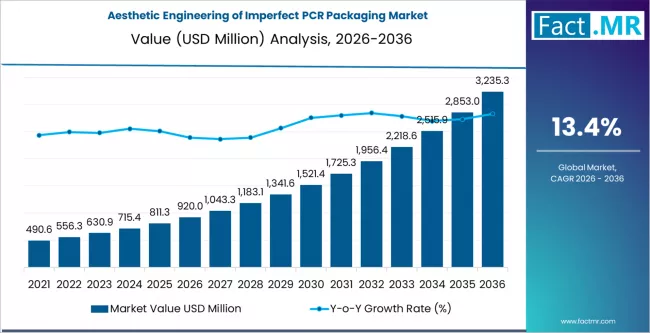
The aesthetic engineering of imperfect PCR packaging market is expected to reach USD 920 million in 2026, growing to USD 3,235.5 million by 2036, with a CAGR of 13.4%.
Aesthetic Engineering Of Imperfect Pcr Packaging Market Market Value Analysis | Source: Fact.MR
Summary of Aesthetic Engineering of Imperfect PCR Packaging Market
Market Snapshot
Global aesthetic engineering of imperfect PCR packaging market revenue stood atUSD 920 million in 2026and is forecast to reachUSD 3,235.5 million by 2036.
At a13.4% CAGR from 2026 to 2036, this market is set to expand~3.5x in value, addingUSD 2,315.5 million in absolute opportunity.
Growth is driven by increasing demand forvisually appealing sustainable packaging, where recycled material imperfections are intentionally engineered into premium design elements.
This market is evolving into aspecialized design and materials engineering domain, enabling brands to balance sustainability goals with high-end aesthetic expectations.
Demand and Growth Drivers
Rising pressure fromsustainability mandates and circular economy goalsis a primary growth driver.
Increasing demand frompremium FMCG and cosmetics brandsfor visually consistent PCR packaging is accelerating adoption.
Shift fromdefect minimization to aesthetic valorizationis transforming packaging design strategies.
Growing consumer acceptance of“engineered imperfection” as a sustainability signalis reinforcing demand.
Advancements insurface texturing, pigmentation control, and masterbatch technologiesare improvingdesign precision and scalability.
Product and Segment View
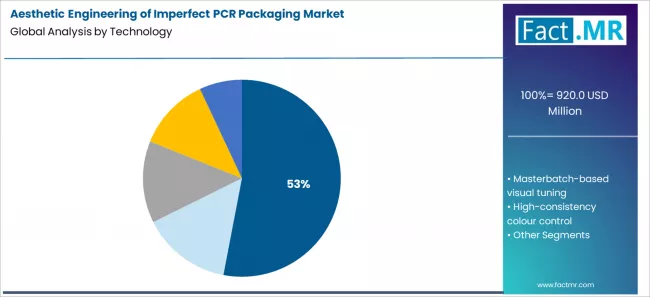
Surface texturing and controlled pigmentation holds 53% of technology share in 2026,emergingas the dominant segment due to its effectiveness in masking inconsistencies whilemaintainingpremium aesthetics.
Key aesthetic strategies include:
Texture andcolour-masking designs
Matte and speckled finishes
Visual defect masking
Minimalist aesthetics
Key material categories include:
PCR-PET or PCR-PE
PCR plastics
PCR-PET
PCR-PC or PCR-PET
Key end-use segments include:
Premium FMCG and cosmetics
Beauty and personal care
Mass cosmetics
High-end packaging
Emerging beauty brands
Geography and Competitive Outlook
Asia Pacific is the leading growth region, supported by expanding beauty, FMCG, and packaging industries.
Market expansion is closely tied topremium brand adoption, regulatory pressures, and innovation in sustainable packaging design.
North America, Latin America, Western Europe, Eastern Europe, EastAsia, South Asia & Pacific, MEA
Source: Fact.MR analysis. Updated May 6, 2026
Application concentration in this market is significant, with a few key sectors, such as premium FMCG and cosmetics, driving the demand for aesthetically engineered packaging. This concentration creates a high dependency on the preferences and purchasing power of these specific end-use industries. As these sectors continue to prioritize aesthetics alongside sustainability, growth is heavily reliant on maintaining consistent volume stability within these applications. Fluctuations in volume, driven by shifts in consumer behavior or regulatory changes, could impact the market’s growth quality. Furthermore, the dependency on end-users to adopt imperfect designs in exchange for sustainability-driven benefits requires manufacturers to balance visual appeal with functionality. This balance will play a crucial role in shaping market dynamics through 2036.
Category
Category
Segments
End-use
Premium FMCG and cosmetics; Beauty and personal care; Mass cosmetics; High-end packaging; Emerging beauty brands
Aesthetic Strategy
Texture and colour-masking designs; Matte and speckled finishes; Visual defect masking; Minimalist aesthetics; Others
Material
PCR-PET or PCR-PE; PCR plastics; PCR-PET; PCR-PC or PCR-PET; Others
North America; Europe; Asia Pacific; Latin America; Middle East & Africa
Source: Fact.MR analysis. Updated May 6, 2026
Segmental Analysis
What Is the Impact of Technology on the Aesthetic Engineering of Imperfect PCR Packaging Market?
Aesthetic Engineering Of Imperfect Pcr Packaging Market Analysis By Technology | Source: Fact.MR
In the aesthetic engineering of imperfect PCR packaging market, technology is key to improving the appearance and quality of recycled materials. Surface texturing and controlled pigmentation lead the market with a 53% share, as they offer effective solutions for creating visually appealing finishes while maintaining the functional integrity of the packaging. These technologies enable manufacturers to mask imperfections and enhance the aesthetic qualities of PCR packaging, making them suitable for premium consumer goods. As the demand for sustainable yet visually attractive packaging grows, the adoption of surface texturing and controlled pigmentation will remain a dominant force in shaping the market.
How Does Aesthetic Strategy Influence the Aesthetic Engineering of Imperfect PCR Packaging Market?
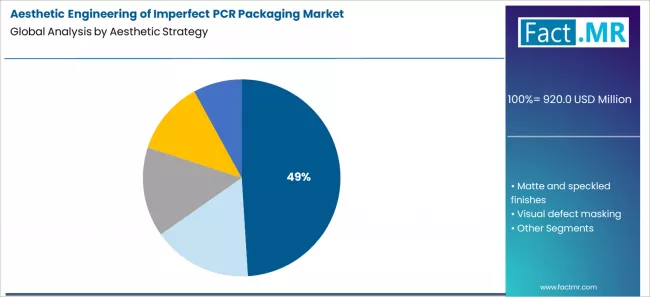
Aesthetic Engineering Of Imperfect Pcr Packaging Market Analysis By Aesthetic Strategy | Source: Fact.MR
Aesthetic strategy plays a vital role in enhancing the visual appeal of PCR packaging, with texture and colour-masking designs leading the market at a 49% share. This strategy allows manufacturers to create packaging that hides imperfections while maintaining an attractive, high-quality appearance. Texture and colour-masking designs are particularly popular in markets where the visual appeal of packaging is essential for consumer perception. As sustainability becomes increasingly important in packaging design, the use of aesthetic strategies that combine functionality with appealing designs will continue to drive growth in the imperfect PCR packaging market.
What are the Principal Drivers, Constraints, and Evolving Dynamics of the Aesthetic Engineering of Imperfect PCR Packaging Market?
Demand for aesthetic engineering of imperfect post consumer recycled (PCR) packaging has been shaped by efforts to incorporate visible recycled characteristics into product design. Brand owners and designers seek to celebrate material irregularities such as specks, color variance, and texture differences as intentional features. Consumer goods companies have specified imperfect PCR packaging to reflect transparency in material sourcing and reduce reliance on uniform virgin plastics.
Challenges include inconsistent appearance across production lots that complicates brand identity control. Some converters limit use of imperfect PCR grades where visual uniformity is required. Work to define appearance criteria and grading systems for imperfect PCR packaging is in progress. Collaboration between designers, resin suppliers, and brand teams is expanding acceptance and application in packaging portfolios.
Analysis of the Aesthetic Engineering of Imperfect PCR Packaging Market by Key Country
Aesthetic Engineering Of Imperfect Pcr Packaging Market Cagr Analysis By Country | Source: Fact.MR
Country
CAGR 2026 to 2036
Germany
12.2%
USA
12.6%
China
14.8%
Japan
10%
India
15.2%
Brazil
11.4%
Source: Fact.MR analysis. Updated May 6, 2026
The report covers an in-depth analysis of 40+ countries; top-performing countries are highlighted below.
What is the Growth Outlook for Aesthetic Engineering of Imperfect PCR Packaging in Germany?
Germany’s aesthetic engineering of imperfect PCR packaging market is projected to grow at a CAGR of 12.2% from 2026 to 2036. As the demand for sustainable packaging continues to rise, Germany’s packaging industry is increasingly adopting aesthetically engineered PCR packaging solutions. These solutions not only reduce environmental impact but also meet consumer demand for innovative and visually appealing packaging. With Germany’s strong regulatory framework and its emphasis on circular economy principles, the market for aesthetic engineering of imperfect PCR packaging is expected to expand steadily.
How is the Aesthetic Engineering of Imperfect PCR Packaging Market Performing in the USA?
The USA’s aesthetic engineering of imperfect PCR packaging market is expected to grow at a CAGR of 12.6% from 2026 to 2036. As sustainability becomes a greater priority, the USA’s packaging industry is focusing on the use of PCR materials in more attractive and functional forms. Aesthetic engineering technologies are helping overcome the challenges posed by imperfections in recycled materials, offering solutions that meet both environmental and aesthetic standards. With rising consumer demand for sustainable products and increasing industry innovation, the market for imperfect PCR packaging will see continued growth.
What is the Market Outlook for Aesthetic Engineering of Imperfect PCR Packaging in China?
China is projected to experience significant growth in the aesthetic engineering of imperfect PCR packaging market, with a projected CAGR of 14.8% from 2026 to 2036. The demand for sustainable packaging in China is increasing as environmental regulations tighten and consumer preferences shift toward eco-friendly products. Aesthetic engineering plays a key role in making recycled PCR packaging visually appealing while maintaining its performance. With the government’s focus on waste reduction and recycling, China is set to become a key player in the market for aesthetically engineered imperfect PCR packaging.
What is the Growth Potential for Aesthetic Engineering of Imperfect PCR Packaging in Japan?
Japan’s aesthetic engineering of imperfect PCR packaging market is forecast to grow at a CAGR of 10% from 2026 to 2036. Japan’s packaging industry has long been committed to high-quality design and sustainability, making aesthetic engineering of imperfect PCR packaging an attractive solution. As Japan seeks to reduce plastic waste and improve recycling efficiency, the adoption of sustainable, visually appealing packaging is increasing. While Japan’s growth rate may be more moderate compared to other regions, the country’s focus on innovation and sustainability will continue to drive steady demand for these solutions.
What is the Demand for Aesthetic Engineering of Imperfect PCR Packaging in India?
India’s aesthetic engineering of imperfect PCR packaging market is set to grow at a robust CAGR of 15.2% from 2026 to 2036. With rapid industrial growth and a focus on sustainability, India’s packaging sector is increasingly turning to recycled materials, including PCR packaging. Aesthetic engineering helps address the challenges of imperfections in recycled materials, ensuring they are both functional and visually appealing. As consumer demand for sustainable products rises and government regulations around waste management become stricter, the market for aesthetically engineered imperfect PCR packaging is expected to expand rapidly in India.
What is the Market Expansion Outlook for Aesthetic Engineering of Imperfect PCR Packaging in Brazil?
Brazil’s aesthetic engineering of imperfect PCR packaging market is projected to grow at a CAGR of 11.4% from 2026 to 2036. As Brazil’s packaging industry embraces sustainability and circular economy practices, the demand for aesthetically engineered PCR packaging is increasing. These packaging solutions offer a way to improve the visual appeal and functionality of recycled materials while reducing environmental impact. With a growing focus on eco-friendly practices and government initiatives to improve recycling, Brazil’s market for imperfect PCR packaging will continue to expand steadily.
How is Competition Structured in the Aesthetic Engineering of Imperfect PCR Packaging Market?
Competition in this market is defined by the ability to balance visual appeal with the inherent variability of high post consumer recycled (PCR) content. Quadpack and Aptar Beauty compete with design systems that conceal surface irregularities while maintaining premium finishes. Their offerings emphasize texture, colour consistency, and fit with brand aesthetics. Aptar and HCP Packaging focus on engineered components and closure systems that preserve functional performance despite visible material traits.
Zhejiang Sun Rain and Toyo Seikan position their products with cost competitive manufacturing capabilities and design flexibility that accommodates surface variation typical of imperfect PCR materials. Competitive differentiation arises from the depth of design support, prototyping services, and documented case histories of successful implementation in consumer goods. Buyers assess suppliers based on the ability to meet specific aesthetic briefs, maintain package integrity, and deliver consistent results across production volumes.
Key Players in the Aesthetic Engineering of Imperfect PCR Packaging Market
Quadpack
Aptar
Zhejiang SunRain
Toyo Seikan
Aptar Beauty
HCP Packaging
References
HCP Packaging. (2026). HCP: Innovative primary packaging for beauty and skincare including sustainable PCR options. HCP Packaging.
Meyers. (2024). PCR cosmetic packaging: Trends and examples in sustainable design. Meyers Packaging Blog.
Organisation for Economic Co-operation and Development. (2023).Consumer perception, product appearance, and acceptance of circular packaging. OECD Publishing.
European Commission. (2023).Design for recyclability and consumer acceptance of recycled plastics in packaging. Publications Office of the European Union.
European Commission, Joint Research Centre. (2024).Visual quality, material variability, and functional performance of post-consumer recycled plastics. JRC Technical Reports.
Market Breakdown
Segmentation
Scope of the Report
Items
Values
Quantitative Units (2026)
USD Million
End-use
Premium FMCG and cosmetics, Beauty and personal care, Mass cosmetics, High-end packaging, Emerging beauty brands
Aesthetic Strategy
Texture and colour-masking designs, Matte and speckled finishes, Visual defect masking, Minimalist aesthetics, Others
Material
PCR-PET or PCR-PE, PCR plastics, PCR-PET, PCR-PC or PCR-PET, Others
Dollar revenue by end-use, aesthetic strategy, material, and technology; regional demand trends, competitive landscape, technological advancements in aesthetic engineering for PCR packaging, and innovations in visual and structural enhancements
Source: Fact.MR analysis. Updated May 6, 2026
Aesthetic Engineering of Imperfect PCR Packaging Market Key Segments
End-use :
Premium FMCG and cosmetics
Beauty and personal care
Mass cosmetics
High-end packaging
Emerging beauty brands
Aesthetic Strategy :
Texture and color-masking designs
Matte and speckled finishes
Visual defect masking
Minimalist aesthetics
Others
Material :
PCR-PET or PCR-PE
PCR plastics
PCR-PET
PCR-PC or PCR-PET
Others
Technology :
Surface texturing and controlled pigmentation
Masterbatch-based visual tuning
High-consistency color control
Precision mould finish
Others
Region :
North America
USA
Canada
Mexico
Europe
Germany
UK
France
Italy
Spain
Nordic Countries
BENELUX
Rest of Europe
Asia Pacific
China
Japan
South Korea
India
Australia
Rest of Asia Pacific
Latin America
Brazil
Argentina
Rest of Latin America
Middle East and Africa
Kingdom of Saudi Arabia
United Arab Emirates
South Africa
Rest of Middle East and Africa
Other Regions
Oceania
Central Asia
Other Markets
Questions Answered
Frequently Asked Questions
How big is the aesthetic engineering of imperfect pcr packaging market in 2026?
The global aesthetic engineering of imperfect pcr packaging market is estimated to be valued at USD 920.0 million in 2026.
What will be the size of aesthetic engineering of imperfect pcr packaging market in 2036?
The market size for the aesthetic engineering of imperfect pcr packaging market is projected to reach USD 3,235.5 million by 2036.
How much will be the aesthetic engineering of imperfect pcr packaging market growth between 2026 and 2036?
The aesthetic engineering of imperfect pcr packaging market is expected to grow at a 13.4% CAGR between 2026 and 2036.
What are the key product types in the aesthetic engineering of imperfect pcr packaging market?
The key product types in aesthetic engineering of imperfect pcr packaging market are premium fmcg and cosmetics, beauty and personal care, mass cosmetics, high-end packaging and emerging beauty brands.
Which aesthetic strategy segment to contribute significant share in the aesthetic engineering of imperfect pcr packaging market in 2026?
In terms of aesthetic strategy, texture and colour-masking designs segment to command 49.0% share in the aesthetic engineering of imperfect pcr packaging market in 2026.