Agentic AI Cybersecurity Market Size, Share, Growth and Forecast (2026 - 2036)

The Agentic AI Cybersecurity Market is segmented by Component (Solutions, Services), by Deployment Mode (Cloud-Native, On-Premise, Hybrid), by Security Function, by Enterprise Size, by End Use, and Region. Forecast for 2026 to 2036.

Agentic AI Cybersecurity Market Size, Market Forecast and Outlook by Fact.MR

  • The agentic AI cybersecurity market was valued at USD 2.4 billion in 2025.
  • Demand is expected to increase from USD 3.0 billion in 2026 to USD 28.4 billion by 2036.
  • The market is forecast to record 25.2% CAGR during 2026 to 2036 as security teams shift from manual alert review to controlled autonomous investigation.
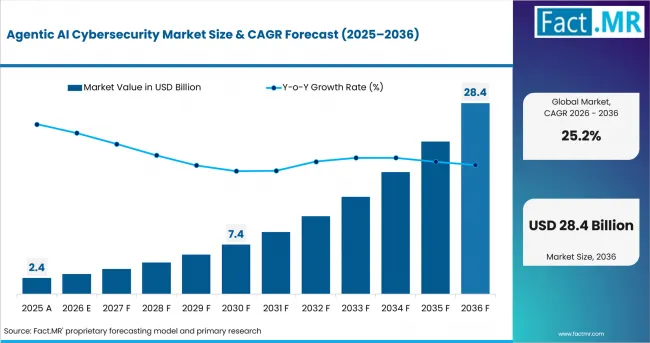
Agentic Ai Cybersecurity Market Value Analysis

Metric Details
Industry Size 2026 USD 3.0 billion
Industry Value 2036 USD 28.4 billion
CAGR 2026 to 2036 25.2%

Summary of Agentic AI Cybersecurity Market

  • Demand Drivers in the Market
    • SOC Workload Pressure: Security operations leaders use agentic AI to reduce repetitive alert triage and investigation work.
    • AI Agent Risk: Enterprise AI teams need inventory and runtime controls for autonomous agents that use tools and data.
    • Threat Speed: High daily security signal volumes and rapid password attack activity support demand for automated defense.
  • Key Segments Analyzed
    • By Component: Solutions are expected to hold 68.0% share in 2026 because enterprises first buy platforms before adding advisory services.
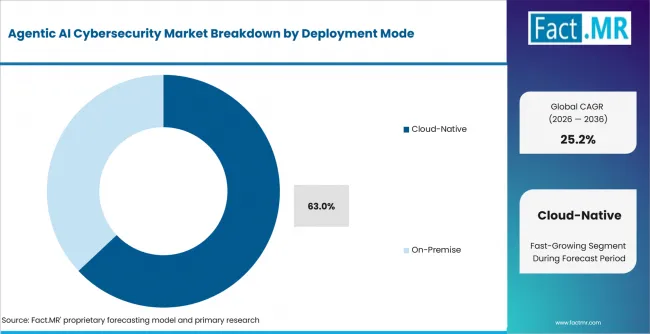
    • By Deployment Mode: Cloud-native deployment is likely to account for 63.0% share in 2026 as security agents need telemetry from cloud platforms.
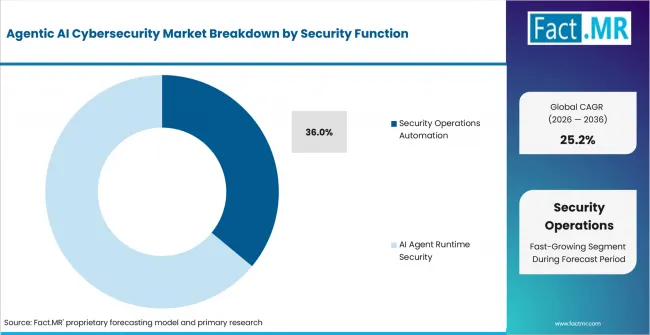
    • By Security Function: Security operations automation is projected to capture 36.0% share in 2026 because alert triage is the first repeatable agent use case.
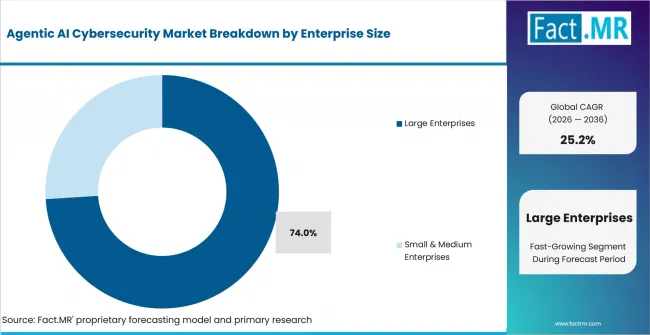
    • By Enterprise Size: Large enterprises are anticipated to hold 74.0% share in 2026 since complex telemetry environments need agent-assisted investigation.
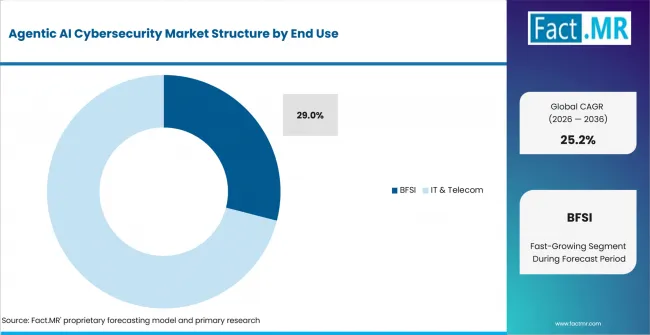
    • By End Use: BFSI is expected to represent 29.0% share in 2026 because financial firms need faster incident review and stronger audit trails.
    • By Geography: The United States is projected to grow at 27.0% CAGR through 2036 as cloud security vendors commercialize agent-led defense.
  • Analyst Opinion at Fact.MR
    • Shambhu Nath Jha, Senior Analyst at Fact.MR, states, “Agentic AI in cybersecurity will not be accepted just because it sounds autonomous. I expect adoption to grow fastest in teams that keep humans in control of high-impact actions. The winning platforms will show evidence trails and rollback paths.”
  • Strategic Implications
    • Evidence Trails: Security vendors need explainable investigation records because SOC teams must justify automated recommendations.
    • Access Control: AI platform teams should treat agents like privileged digital identities with clear permission limits.
    • Managed Services: MDR providers can use agentic AI to expand coverage without lowering analyst review quality.

Agentic AI cybersecurity demand is becoming governance-led. Security teams want agents that can investigate alerts and gather evidence without creating uncontrolled access risk. Microsoft stated on April 27, 2026 that its Security Alert Triage Agent analyzes alerts, highlights incriminating evidence, uses a dedicated identity with minimum required permissions, and records decisions and actions for analyst review and audit traceability [1]. These controls support agent security reviews before broad deployment.

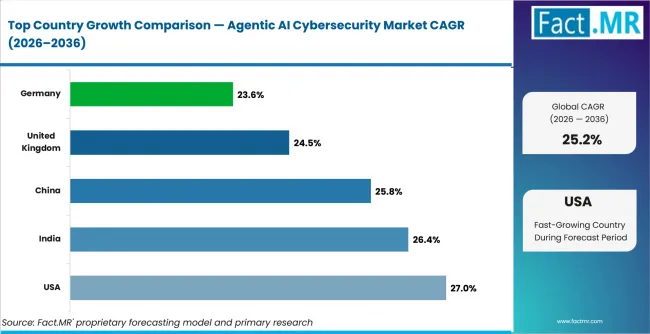
The United States is projected to record 27.0% CAGR through 2036 as large enterprises adopt security agents inside existing cloud security platforms. India is likely to post 26.4% CAGR as managed security services and digital enterprises expand agent-led SOC use. China is set to advance at 25.8% CAGR as cloud and AI software adoption supports local cybersecurity automation. The United Kingdom is forecast at 24.5% CAGR by 2036 because financial institutions test agent-assisted investigation. Germany is expected to register 23.6% CAGR as industrial firms demand stronger control over AI agent access.

Segmental Analysis

Agentic AI Cybersecurity Market Analysis by Component
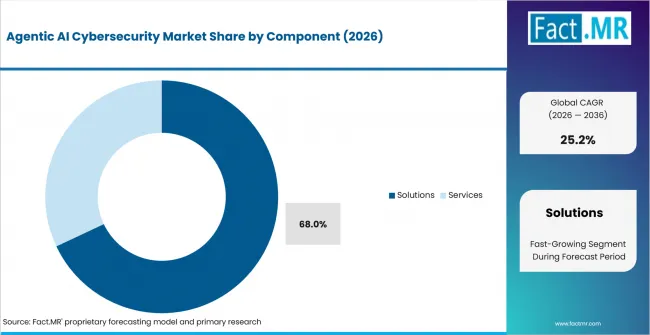
Agentic Ai Cybersecurity Market Analysis By Component

Solutions are expected to hold 68.0% share in 2026 because enterprises need software control before outsourcing agent workflows. Platforms handle investigation and agent inventory. Services support readiness assessments and policy design. Managed services gain use after organizations test agentic workflows. Solution demand leads because security teams first need visibility into telemetry and agent actions.

  • Platform Control: Solutions lead because enterprises need direct control over agent workflows and evidence records.
  • Advisory Support: Services help security leaders design guardrails before giving agents access to sensitive systems.
  • Managed Defense: MDR providers use agentic workflows to reduce manual triage while keeping analyst review.

Agentic AI Cybersecurity Market Analysis by Deployment Mode
Agentic Ai Cybersecurity Market Analysis By Deployment Mode

Cloud-native deployment leads because agentic AI security needs fast access to endpoint and application telemetry. Security vendors are embedding agents inside cloud-delivered platforms. Cloud-native deployment is likely to account for 63.0% share in 2026. On-premise systems continue to serve regulated sectors that restrict sensitive logs and investigation data. Hybrid deployment grows as enterprises connect private data stores with cloud security platforms.

  • Cloud-Native Use: Cloud-native deployment leads because agent workflows need fast telemetry access and frequent model updates.
  • On-Premise Control: On-premise systems serve organizations that restrict sensitive logs and investigation data.
  • Hybrid Adoption: Hybrid deployment supports firms that combine private data with cloud-based security analytics.

Agentic AI Cybersecurity Market Analysis by Security Function
Agentic Ai Cybersecurity Market Analysis By Security Function

Security operations automation is projected to capture 36.0% share in 2026 because alert triage is the clearest early use case. Agents can collect evidence and suggest next steps. AI agent runtime security is gaining demand as enterprises deploy business agents. Threat detection and investigation will deepen as products learn from analyst feedback. Identity governance is critical because agents can hold powerful access.

  • SOC Automation: Security operations automation leads because alert review creates heavy repetitive work for analysts.
  • Agent Runtime: Runtime security protects AI agents against prompt injection and unsafe tool use.
  • Identity Control: Identity governance limits agent permissions and reduces excessive access risk.

Agentic AI Cybersecurity Market Analysis by Enterprise Size
Agentic Ai Cybersecurity Market Analysis By Enterprise Size

Large enterprises are anticipated to hold 74.0% share in 2026 as complex security environments create stronger need for agent support. These firms manage multiple security tools and large alert volumes. Small and medium enterprises adopt through managed services because internal security teams are leaner. Large enterprises lead because they can test agents in controlled SOC workflows before expanding to response automation.

  • Large Enterprise Use: Large enterprises lead because complex telemetry environments require faster evidence collection.
  • SME Access: Smaller firms adopt through MDR providers that package agentic workflows into managed defense.
  • Governance Need: Large organizations need stricter approval layers before agents can perform response actions.

Agentic AI Cybersecurity Market Analysis by End Use
Agentic Ai Cybersecurity Market Analysis By End Use

BFSI is expected to represent 29.0% share in 2026 because banks and insurers need faster incident review with stronger audit records. Financial firms handle sensitive data and high transaction volumes. IT and telecom companies use agentic AI for cloud and identity security. Healthcare organizations need careful controls because patient data raises privacy risk. Government and defense use cases are slower due to validation requirements.

  • BFSI Demand: BFSI leads because financial institutions need fast investigation with clear audit records.
  • IT Security: IT and telecom firms use agentic AI to secure cloud systems and identity access.
  • Healthcare Control: Healthcare organizations need careful data controls before deploying autonomous investigation workflows.

Agentic AI Cybersecurity Market Drivers, Restraints, and Opportunities
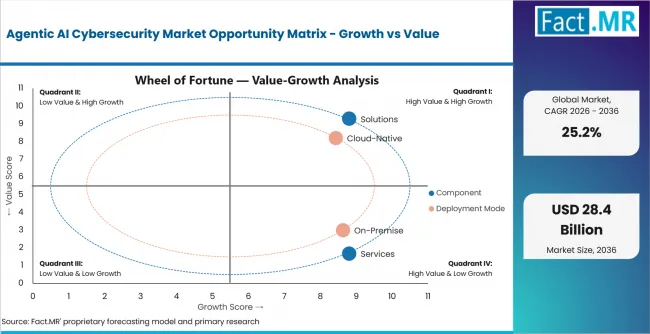
Agentic Ai Cybersecurity Market Opportunity Matrix Growth Vs Value

The main driver is the shift from assistant-style security AI to task-based agent workflows. IBM launched ATOM in 2025 for autonomous threat triage, investigation, and remediation support [2]. These launches show supplier movement from analysis support toward orchestrated security actions.

The main restraint is trust in autonomous action. Security leaders may reject agent-led response if the tool cannot show evidence and rollback paths. AI agents can access tools and data, so mistakes can create business disruption.

Opportunities in the Agentic AI Cybersecurity Market

  • Agent Runtime Protection: Vendors can protect business AI agents from prompt injection and unsafe tool use.
  • Autonomous SOC: Security platforms can reduce repetitive triage by letting agents collect evidence before analyst review.
  • Identity for Agents: IAM suppliers can create permission models designed for machine users and AI agents.

Regional Analysis

Based on regional analysis, the agentic AI cybersecurity market is segmented into North America, Western Europe, East Asia, South Asia and Pacific, and other regions.

Top Country Growth Comparison Agentic Ai Cybersecurity Market Cagr (2026 2036)

Country CAGR 2026 to 2036
United States 27.0%
India 26.4%
China 25.8%
United Kingdom 24.5%
Germany 23.6%

Agentic Ai Cybersecurity Market Cagr Analysis By Country

North America Agentic AI Cybersecurity Market Analysis
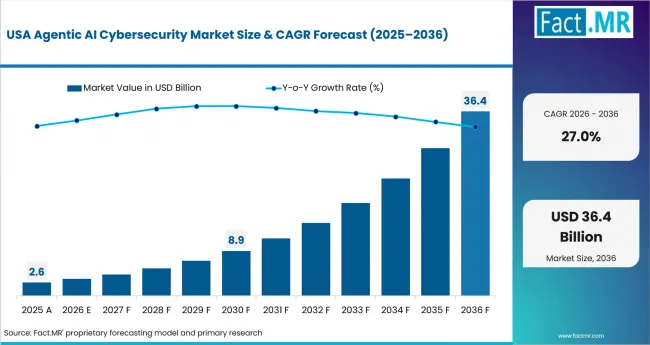
Agentic Ai Cybersecurity Market Country Value Analysis

North America demand is led by the United States. Security vendors are moving agentic functions into SOC and data protection workflows.

  • United States: The United States is projected to record 27.0% CAGR through 2036 as large enterprises add agentic security into existing Microsoft, Palo Alto Networks, CrowdStrike, and Cisco environments. SOC teams need faster investigation because alerts arrive from cloud and data systems. Microsoft introduced Security Copilot agents in 2025 for high-volume security tasks [3].

South Asia and Pacific Agentic AI Cybersecurity Market Analysis

South Asia and Pacific demand is led by India. Managed security providers and digital enterprises are likely to adopt agentic AI to improve analyst productivity. Cloud migration and fintech growth raise the need for faster investigation support.

  • India: India is likely to post 26.4% CAGR through 2036 as banks and large digital firms expand SOC automation. Security teams are under pressure to review more alerts without adding the same level of manual headcount. Agentic AI can support phishing triage and vulnerability prioritization. Adoption will start in managed detection and response services because many enterprises use service partners for security operations. Growth will favor tools with regional language support and clear human approval steps for high-risk actions.

India will favor service-led adoption. MSSPs can turn agentic AI into packaged security operations support for mid-sized enterprises.

East Asia Agentic AI Cybersecurity Market Analysis

East Asia demand is supported by AI software deployment and national focus on cyber resilience. China has a large cloud and enterprise software base. Security vendors will need local controls and domestic compliance alignment.

  • China: China is set to advance at 25.8% CAGR through 2036 as local cloud providers and cybersecurity firms build agent-assisted investigation tools. Large enterprises need automation because cloud environments and identity systems create heavier monitoring requirements. Agentic AI can help security teams triage alerts and summarize threat context. Data localization and domestic platform preference will shape vendor selection. Global vendors may face slower penetration unless they partner locally.

Western Europe Agentic AI Cybersecurity Market Analysis
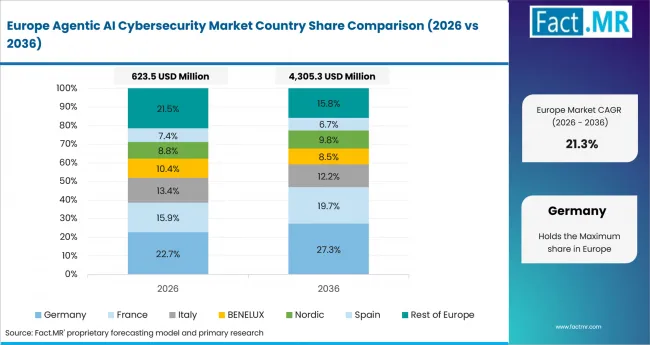
Agentic Ai Cybersecurity Market Europe Country Market Share Analysis, 2026 & 2036

Western Europe demand is led by the United Kingdom and Germany. Financial institutions and industrial firms will test agentic AI, but adoption will require strong evidence trails and data handling controls.

  • United Kingdom: The United Kingdom is forecast at 24.5% CAGR through 2036 as financial institutions and professional services firms test agent-assisted cyber investigation. SOC teams need faster triage across cloud, email, and identity systems. Agentic AI can help collect evidence and draft investigation summaries for analyst approval. CISA’s 2025 AI Cybersecurity Collaboration Playbook gives a useful incident-sharing model for AI-related security events [4]. UK adoption will favor platforms that support audit review, model governance, and controlled integration with existing SIEM and XDR systems.
  • Germany: Germany is expected to register 23.6% CAGR through 2036 as industrial firms and regulated enterprises evaluate agentic AI for controlled security operations. Manufacturers need protection across IT and operational technology-adjacent systems. Security teams will first use agents for investigation support before expanding into full remediation. Data handling discipline will be central because logs may include sensitive operational details. Vendors must show deployment control and evidence trails before broader use. Growth will be supported by industrial cybersecurity programs and demand for safer AI use in enterprise workflows.

Competitive Aligners for Market Suppliers
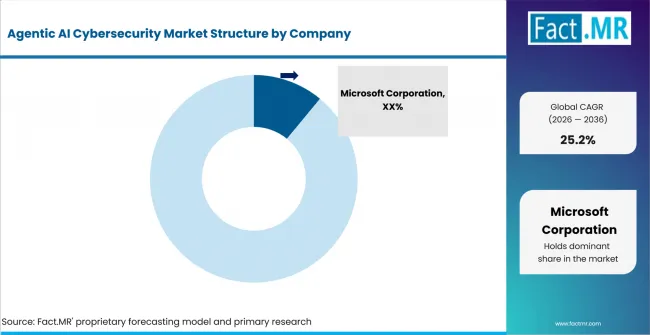
Agentic Ai Cybersecurity Market Analysis By Company

Vendors with deep access to enterprise security data are leading agentic AI cybersecurity. Microsoft Corporation brings Security Copilot agents into environments with connected identity, cloud, and endpoint signals. Palo Alto Networks, Inc. builds its position through Prisma AIRS and Cortex automation for AI security and SOC workflows. CrowdStrike Holdings, Inc. brings endpoint intelligence and threat investigation depth into agent-assisted defense. IBM Corporation adds autonomous security operations through ATOM. Cisco Systems, Inc. supports the market through AI Defense and policy control across enterprise security systems.

Competition is centered on telemetry access and enterprise trust. Vendors with strong endpoint and network signals can give security agents better context. Enterprise security teams will compare how clearly each platform explains alerts and limits risky automation. Cybersecurity teams need faster investigation support without losing analyst control over sensitive decisions.

By 2036, supplier strength will come from safe autonomy. Enterprises will not accept black-box response actions in core security systems. Leading vendors will need clear permission limits, strong evidence trails and analyst approval for high-impact actions. Runtime security for business agents will also become more important as enterprises deploy AI agents beyond the security operations center.

Key Companies in Agentic AI Cybersecurity Market

  • Microsoft Corporation
  • Palo Alto Networks, Inc.
  • CrowdStrike Holdings, Inc.
  • IBM Corporation
  • Cisco Systems, Inc.

Bibliography

  • [1] Microsoft. (2026, April 27). Microsoft Security Copilot Security Alert Triage Agent in Microsoft Defender (Preview). Microsoft Learn.
  • [2] IBM. (2025, April 28). IBM delivers autonomous security operations with cutting-edge agentic AI. IBM Newsroom.
  • [3] Jakkal, V. (2025, March 24). Microsoft unveils Microsoft Security Copilot agents and new protections for AI. Microsoft Security Blog.
  • [4] Cybersecurity and Infrastructure Security Agency. (2025, January 14). AI Cybersecurity Collaboration Playbook. CISA.

This Report Addresses

  • Strategic intelligence on agentic AI cybersecurity across component and deployment mode.
  • Forecast mapping from USD 3.0 billion in 2026 to USD 28.4 billion by 2036.
  • Segment analysis covering solutions, cloud-native deployment, SOC automation, large enterprises, and BFSI.
  • Regional outlook covering the United States, India, China, the United Kingdom, and Germany.
  • Competitive analysis of Microsoft Corporation, Palo Alto Networks, Inc., CrowdStrike Holdings, Inc., IBM Corporation, Cisco Systems, Inc.
  • Product assessment covering AI SOC agents, runtime security, identity governance, and vulnerability prioritization.
  • Channel assessment covering enterprise security platforms and managed security services.
  • Primary interviews, vendor release checks, AI risk guidance, and SOC workflow validation support the forecast.

Agentic AI Cybersecurity Market Definition

The agentic AI cybersecurity market covers cybersecurity platforms and services that use AI agents for investigation and runtime protection. It includes tools that secure enterprise AI agents and tools that use agents inside security operations. The market differs from basic AI security analytics because agentic systems can plan tasks and use connected tools.

Agentic AI Cybersecurity Market Inclusions

The scope includes AI SOC agents and managed services using agentic automation. Solutions embedded in XDR and identity platforms are included.

Agentic AI Cybersecurity Market Exclusions

The scope excludes generic AI chatbots with no cybersecurity workflow. It excludes basic malware scanners that do not use agentic planning. It excludes standalone AI governance software unless it protects agent activity or cybersecurity workflows. General IT automation tools are outside scope unless they support security use cases.

Agentic AI Cybersecurity Market Research Methodology

  • Primary Research: Primary research includes interviews with CISOs and SOC directors. AI governance leads and cloud security architects were reviewed separately.
  • Desk Research: Desk research reviews AI security frameworks and vendor product releases. Security platform documentation and official cybersecurity guidance support validation.
  • Market-Sizing and Forecasting: Forecasting uses security function demand and deployment mode movement. Enterprise adoption and managed service use support the 2026 to 2036 outlook.
  • Data Validation and Update Cycle: Forecasts are validated through SOC workflow checks and security vendor feedback. Regional assumptions are reviewed with AI adoption maturity and cybersecurity spending patterns.

Scope of the Report

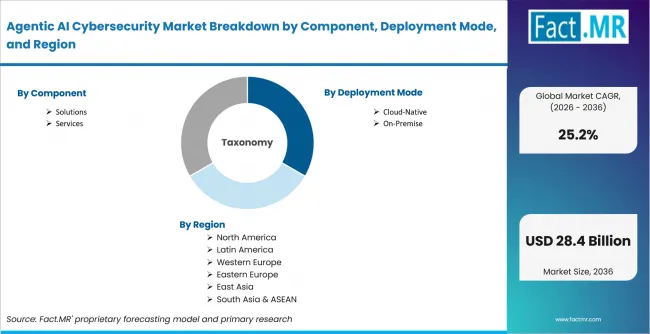
Agentic Ai Cybersecurity Market Breakdown By Component, Deployment Mode, And Region

Attribute Details
Quantitative Units USD 3.0 billion in 2026 to USD 28.4 billion by 2036 at 25.2% CAGR
Market Definition Cybersecurity platforms and services using AI agents for investigation, response support, runtime protection, and governance
Component Solutions / Services
Deployment Mode Cloud-Native, On-Premise, Hybrid
Security Function Security Operations Automation, AI Agent Runtime Security, Threat Detection & Investigation, Identity & Access Governance, Vulnerability & Exposure Management
Enterprise Size Large Enterprises, Small & Medium Enterprises
End Use BFSI, IT & Telecom, Healthcare, Government & Defense, Retail & E-commerce, Manufacturing
Regions Covered North America, Western Europe, East Asia, South Asia and Pacific, Other Regions
Countries Covered United States, India, China, United Kingdom, Germany
Key Companies Profiled Microsoft Corporation, Palo Alto Networks, Inc., CrowdStrike Holdings, Inc., IBM Corporation, Cisco Systems, Inc.
Forecast Period 2026 to 2036
Approach Hybrid top-down and bottom-up approach using security function demand, deployment mode, enterprise adoption, vendor releases, and SOC validation

Agentic AI Cybersecurity Market Analysis by Segments

  • By Component:

    • Solutions
    • Services
  • By Deployment Mode:

    • Cloud-Native
    • On-Premise
    • Hybrid
  • By Security Function:

    • Security Operations Automation
    • AI Agent Runtime Security
    • Threat Detection & Investigation
    • Identity & Access Governance
    • Vulnerability & Exposure Management
  • By Enterprise Size:

    • Large Enterprises
    • Small & Medium Enterprises
  • By End Use:

    • BFSI
    • IT & Telecom
    • Healthcare
    • Government & Defense
    • Retail & E-commerce
    • Manufacturing
  • By Region:

    • North America
      • United States
      • Canada
    • Western Europe
      • United Kingdom
      • Germany
      • France
      • Netherlands
      • Spain
    • East Asia
      • China
      • Japan
      • South Korea
    • South Asia and Pacific
      • India
      • ASEAN
      • Australia and New Zealand
    • Other Regions
      • Latin America
      • Middle East and Africa

- Frequently Asked Questions -

What is the Agentic AI Cybersecurity Market size in 2026?

The agentic AI cybersecurity market is estimated to reach USD 3.0 billion in 2026 as security teams adopt agent-assisted investigation.

What will the Agentic AI Cybersecurity Market be worth by 2036?

The agentic AI cybersecurity market is projected to reach USD 28.4 billion by 2036.

What CAGR is projected for the Agentic AI Cybersecurity Market?

The agentic AI cybersecurity market is forecast to record 25.2% CAGR during 2026 to 2036.

Which component leads the Agentic AI Cybersecurity Market?

Solutions lead with 68.0% share in 2026 because enterprises first buy platforms before adding advisory support.

Which country grows fastest in the Agentic AI Cybersecurity Market?

The United States grows fastest at 27.0% CAGR through 2036 as large enterprises adopt security agents.

How does India perform in the Agentic AI Cybersecurity Market?

India is projected to record 26.4% CAGR through 2036 as managed security services expand agent-led SOC use.

How does China perform in the Agentic AI Cybersecurity Market?

China is expected to grow at 25.8% CAGR through 2036 as local cloud and cybersecurity platforms adopt AI agents.

How does the United Kingdom perform in the Agentic AI Cybersecurity Market?

The United Kingdom is forecast at 24.5% CAGR through 2036 as financial firms test agent-assisted investigation.

How does Germany perform in the Agentic AI Cybersecurity Market?

Germany is projected to grow at 23.6% CAGR through 2036 as industrial firms demand controlled AI agent access.

Why do solutions lead this market?

Solutions lead because enterprises need software visibility and policy control before outsourcing agentic security tasks.

Why is cloud-native deployment important?

Cloud-native deployment is important because agentic AI tools need fast telemetry access and frequent updates.

What restrains the Agentic AI Cybersecurity Market?

Trust in autonomous action restrains the market because security teams need evidence and approval controls.

What is the main opportunity in this market?

The main opportunity is agent runtime security for enterprises deploying AI agents across business workflows.

How do AI agents support SOC teams?

AI agents collect evidence, prioritize alerts, and draft investigation steps before human analysts approve action.

Table of Content

  1. Executive Summary
    • Global Market Outlook
    • Demand to side Trends
    • Supply to side Trends
    • Technology Roadmap Analysis
    • Analysis and Recommendations
  2. Market Overview
    • Market Coverage / Taxonomy
    • Market Definition / Scope / Limitations
  3. Research Methodology
    • Chapter Orientation
    • Analytical Lens and Working Hypotheses
      • Market Structure, Signals, and Trend Drivers
      • Benchmarking and Cross-market Comparability
      • Market Sizing, Forecasting, and Opportunity Mapping
    • Research Design and Evidence Framework
      • Desk Research Programme (Secondary Evidence)
        • Company Annual and Sustainability Reports
        • Peer-reviewed Journals and Academic Literature
        • Corporate Websites, Product Literature, and Technical Notes
        • Earnings Decks and Investor Briefings
        • Statutory Filings and Regulatory Disclosures
        • Technical White Papers and Standards Notes
        • Trade Journals, Industry Magazines, and Analyst Briefs
        • Conference Proceedings, Webinars, and Seminar Materials
        • Government Statistics Portals and Public Data Releases
        • Press Releases and Reputable Media Coverage
        • Specialist Newsletters and Curated Briefings
        • Sector Databases and Reference Repositories
        • Fact.MR Internal Proprietary Databases and Historical Market Datasets
        • Subscription Datasets and Paid Sources
        • Social Channels, Communities, and Digital Listening Inputs
        • Additional Desk Sources
      • Expert Input and Fieldwork (Primary Evidence)
        • Primary Modes
          • Qualitative Interviews and Expert Elicitation
          • Quantitative Surveys and Structured Data Capture
          • Blended Approach
        • Why Primary Evidence is Used
        • Field Techniques
          • Interviews
          • Surveys
          • Focus Groups
          • Observational and In-context Research
          • Social and Community Interactions
        • Stakeholder Universe Engaged
          • C-suite Leaders
          • Board Members
          • Presidents and Vice Presidents
          • R&D and Innovation Heads
          • Technical Specialists
          • Domain Subject-matter Experts
          • Scientists
          • Physicians and Other Healthcare Professionals
        • Governance, Ethics, and Data Stewardship
          • Research Ethics
          • Data Integrity and Handling
      • Tooling, Models, and Reference Databases
    • Data Engineering and Model Build
      • Data Acquisition and Ingestion
      • Cleaning, Normalisation, and Verification
      • Synthesis, Triangulation, and Analysis
    • Quality Assurance and Audit Trail
  4. Market Background
    • Market Dynamics
      • Drivers
      • Restraints
      • Opportunity
      • Trends
    • Scenario Forecast
      • Demand in Optimistic Scenario
      • Demand in Likely Scenario
      • Demand in Conservative Scenario
    • Opportunity Map Analysis
    • Product Life Cycle Analysis
    • Supply Chain Analysis
    • Investment Feasibility Matrix
    • Value Chain Analysis
    • PESTLE and Porter’s Analysis
    • Regulatory Landscape
    • Regional Parent Market Outlook
    • Production and Consumption Statistics
    • Import and Export Statistics
  5. Global Market Analysis 2021 to 2025 and Forecast, 2026 to 2036
    • Historical Market Size Value (USD Million) Analysis, 2021 to 2025
    • Current and Future Market Size Value (USD Million) Projections, 2026 to 2036
      • Y to o to Y Growth Trend Analysis
      • Absolute $ Opportunity Analysis
  6. Global Market Pricing Analysis 2021 to 2025 and Forecast 2026 to 2036
  7. Global Market Analysis 2021 to 2025 and Forecast 2026 to 2036, By Component
    • Introduction / Key Findings
    • Historical Market Size Value (USD Million) Analysis By Component , 2021 to 2025
    • Current and Future Market Size Value (USD Million) Analysis and Forecast By Component , 2026 to 2036
      • Solutions
      • Services
    • Y to o to Y Growth Trend Analysis By Component , 2021 to 2025
    • Absolute $ Opportunity Analysis By Component , 2026 to 2036
  8. Global Market Analysis 2021 to 2025 and Forecast 2026 to 2036, By Deployment Mode
    • Introduction / Key Findings
    • Historical Market Size Value (USD Million) Analysis By Deployment Mode, 2021 to 2025
    • Current and Future Market Size Value (USD Million) Analysis and Forecast By Deployment Mode, 2026 to 2036
      • Cloud-Native
      • On-Premise
      • Hybrid
    • Y to o to Y Growth Trend Analysis By Deployment Mode, 2021 to 2025
    • Absolute $ Opportunity Analysis By Deployment Mode, 2026 to 2036
  9. Global Market Analysis 2021 to 2025 and Forecast 2026 to 2036, By Security Function
    • Introduction / Key Findings
    • Historical Market Size Value (USD Million) Analysis By Security Function, 2021 to 2025
    • Current and Future Market Size Value (USD Million) Analysis and Forecast By Security Function, 2026 to 2036
      • Security Operations Automation
      • AI Agent Runtime Security
      • Threat Detection & Investigation
    • Y to o to Y Growth Trend Analysis By Security Function, 2021 to 2025
    • Absolute $ Opportunity Analysis By Security Function, 2026 to 2036
  10. Global Market Analysis 2021 to 2025 and Forecast 2026 to 2036, By Enterprise Size
    • Introduction / Key Findings
    • Historical Market Size Value (USD Million) Analysis By Enterprise Size, 2021 to 2025
    • Current and Future Market Size Value (USD Million) Analysis and Forecast By Enterprise Size, 2026 to 2036
      • Large Enterprises
      • Small & Medium Enterprises
    • Y to o to Y Growth Trend Analysis By Enterprise Size, 2021 to 2025
    • Absolute $ Opportunity Analysis By Enterprise Size, 2026 to 2036
  11. Global Market Analysis 2021 to 2025 and Forecast 2026 to 2036, By End Use
    • Introduction / Key Findings
    • Historical Market Size Value (USD Million) Analysis By End Use, 2021 to 2025
    • Current and Future Market Size Value (USD Million) Analysis and Forecast By End Use, 2026 to 2036
      • BFSI
      • IT & Telecom
      • Healthcare
    • Y to o to Y Growth Trend Analysis By End Use, 2021 to 2025
    • Absolute $ Opportunity Analysis By End Use, 2026 to 2036
  12. Global Market Analysis 2021 to 2025 and Forecast 2026 to 2036, By Region
    • Introduction
    • Historical Market Size Value (USD Million) Analysis By Region, 2021 to 2025
    • Current Market Size Value (USD Million) Analysis and Forecast By Region, 2026 to 2036
      • North America
      • Latin America
      • Western Europe
      • Eastern Europe
      • East Asia
      • South Asia and Pacific
      • Middle East & Africa
    • Market Attractiveness Analysis By Region
  13. North America Market Analysis 2021 to 2025 and Forecast 2026 to 2036, By Country
    • Historical Market Size Value (USD Million) Trend Analysis By Market Taxonomy, 2021 to 2025
    • Market Size Value (USD Million) Forecast By Market Taxonomy, 2026 to 2036
      • By Country
        • USA
        • Canada
        • Mexico
      • By Component
      • By Deployment Mode
      • By Security Function
      • By Enterprise Size
      • By End Use
    • Market Attractiveness Analysis
      • By Country
      • By Component
      • By Deployment Mode
      • By Security Function
      • By Enterprise Size
      • By End Use
    • Key Takeaways
  14. Latin America Market Analysis 2021 to 2025 and Forecast 2026 to 2036, By Country
    • Historical Market Size Value (USD Million) Trend Analysis By Market Taxonomy, 2021 to 2025
    • Market Size Value (USD Million) Forecast By Market Taxonomy, 2026 to 2036
      • By Country
        • Brazil
        • Chile
        • Rest of Latin America
      • By Component
      • By Deployment Mode
      • By Security Function
      • By Enterprise Size
      • By End Use
    • Market Attractiveness Analysis
      • By Country
      • By Component
      • By Deployment Mode
      • By Security Function
      • By Enterprise Size
      • By End Use
    • Key Takeaways
  15. Western Europe Market Analysis 2021 to 2025 and Forecast 2026 to 2036, By Country
    • Historical Market Size Value (USD Million) Trend Analysis By Market Taxonomy, 2021 to 2025
    • Market Size Value (USD Million) Forecast By Market Taxonomy, 2026 to 2036
      • By Country
        • Germany
        • UK
        • Italy
        • Spain
        • France
        • Nordic
        • BENELUX
        • Rest of Western Europe
      • By Component
      • By Deployment Mode
      • By Security Function
      • By Enterprise Size
      • By End Use
    • Market Attractiveness Analysis
      • By Country
      • By Component
      • By Deployment Mode
      • By Security Function
      • By Enterprise Size
      • By End Use
    • Key Takeaways
  16. Eastern Europe Market Analysis 2021 to 2025 and Forecast 2026 to 2036, By Country
    • Historical Market Size Value (USD Million) Trend Analysis By Market Taxonomy, 2021 to 2025
    • Market Size Value (USD Million) Forecast By Market Taxonomy, 2026 to 2036
      • By Country
        • Russia
        • Poland
        • Hungary
        • Balkan & Baltic
        • Rest of Eastern Europe
      • By Component
      • By Deployment Mode
      • By Security Function
      • By Enterprise Size
      • By End Use
    • Market Attractiveness Analysis
      • By Country
      • By Component
      • By Deployment Mode
      • By Security Function
      • By Enterprise Size
      • By End Use
    • Key Takeaways
  17. East Asia Market Analysis 2021 to 2025 and Forecast 2026 to 2036, By Country
    • Historical Market Size Value (USD Million) Trend Analysis By Market Taxonomy, 2021 to 2025
    • Market Size Value (USD Million) Forecast By Market Taxonomy, 2026 to 2036
      • By Country
        • China
        • Japan
        • South Korea
      • By Component
      • By Deployment Mode
      • By Security Function
      • By Enterprise Size
      • By End Use
    • Market Attractiveness Analysis
      • By Country
      • By Component
      • By Deployment Mode
      • By Security Function
      • By Enterprise Size
      • By End Use
    • Key Takeaways
  18. South Asia and Pacific Market Analysis 2021 to 2025 and Forecast 2026 to 2036, By Country
    • Historical Market Size Value (USD Million) Trend Analysis By Market Taxonomy, 2021 to 2025
    • Market Size Value (USD Million) Forecast By Market Taxonomy, 2026 to 2036
      • By Country
        • India
        • ASEAN
        • Australia & New Zealand
        • Rest of South Asia and Pacific
      • By Component
      • By Deployment Mode
      • By Security Function
      • By Enterprise Size
      • By End Use
    • Market Attractiveness Analysis
      • By Country
      • By Component
      • By Deployment Mode
      • By Security Function
      • By Enterprise Size
      • By End Use
    • Key Takeaways
  19. Middle East & Africa Market Analysis 2021 to 2025 and Forecast 2026 to 2036, By Country
    • Historical Market Size Value (USD Million) Trend Analysis By Market Taxonomy, 2021 to 2025
    • Market Size Value (USD Million) Forecast By Market Taxonomy, 2026 to 2036
      • By Country
        • Kingdom of Saudi Arabia
        • Other GCC Countries
        • Turkiye
        • South Africa
        • Other African Union
        • Rest of Middle East & Africa
      • By Component
      • By Deployment Mode
      • By Security Function
      • By Enterprise Size
      • By End Use
    • Market Attractiveness Analysis
      • By Country
      • By Component
      • By Deployment Mode
      • By Security Function
      • By Enterprise Size
      • By End Use
    • Key Takeaways
  20. Key Countries Market Analysis
    • USA
      • Pricing Analysis
      • Market Share Analysis, 2025
        • By Component
        • By Deployment Mode
        • By Security Function
        • By Enterprise Size
        • By End Use
    • Canada
      • Pricing Analysis
      • Market Share Analysis, 2025
        • By Component
        • By Deployment Mode
        • By Security Function
        • By Enterprise Size
        • By End Use
    • Mexico
      • Pricing Analysis
      • Market Share Analysis, 2025
        • By Component
        • By Deployment Mode
        • By Security Function
        • By Enterprise Size
        • By End Use
    • Brazil
      • Pricing Analysis
      • Market Share Analysis, 2025
        • By Component
        • By Deployment Mode
        • By Security Function
        • By Enterprise Size
        • By End Use
    • Chile
      • Pricing Analysis
      • Market Share Analysis, 2025
        • By Component
        • By Deployment Mode
        • By Security Function
        • By Enterprise Size
        • By End Use
    • Germany
      • Pricing Analysis
      • Market Share Analysis, 2025
        • By Component
        • By Deployment Mode
        • By Security Function
        • By Enterprise Size
        • By End Use
    • UK
      • Pricing Analysis
      • Market Share Analysis, 2025
        • By Component
        • By Deployment Mode
        • By Security Function
        • By Enterprise Size
        • By End Use
    • Italy
      • Pricing Analysis
      • Market Share Analysis, 2025
        • By Component
        • By Deployment Mode
        • By Security Function
        • By Enterprise Size
        • By End Use
    • Spain
      • Pricing Analysis
      • Market Share Analysis, 2025
        • By Component
        • By Deployment Mode
        • By Security Function
        • By Enterprise Size
        • By End Use
    • France
      • Pricing Analysis
      • Market Share Analysis, 2025
        • By Component
        • By Deployment Mode
        • By Security Function
        • By Enterprise Size
        • By End Use
    • India
      • Pricing Analysis
      • Market Share Analysis, 2025
        • By Component
        • By Deployment Mode
        • By Security Function
        • By Enterprise Size
        • By End Use
    • ASEAN
      • Pricing Analysis
      • Market Share Analysis, 2025
        • By Component
        • By Deployment Mode
        • By Security Function
        • By Enterprise Size
        • By End Use
    • Australia & New Zealand
      • Pricing Analysis
      • Market Share Analysis, 2025
        • By Component
        • By Deployment Mode
        • By Security Function
        • By Enterprise Size
        • By End Use
    • China
      • Pricing Analysis
      • Market Share Analysis, 2025
        • By Component
        • By Deployment Mode
        • By Security Function
        • By Enterprise Size
        • By End Use
    • Japan
      • Pricing Analysis
      • Market Share Analysis, 2025
        • By Component
        • By Deployment Mode
        • By Security Function
        • By Enterprise Size
        • By End Use
    • South Korea
      • Pricing Analysis
      • Market Share Analysis, 2025
        • By Component
        • By Deployment Mode
        • By Security Function
        • By Enterprise Size
        • By End Use
    • Russia
      • Pricing Analysis
      • Market Share Analysis, 2025
        • By Component
        • By Deployment Mode
        • By Security Function
        • By Enterprise Size
        • By End Use
    • Poland
      • Pricing Analysis
      • Market Share Analysis, 2025
        • By Component
        • By Deployment Mode
        • By Security Function
        • By Enterprise Size
        • By End Use
    • Hungary
      • Pricing Analysis
      • Market Share Analysis, 2025
        • By Component
        • By Deployment Mode
        • By Security Function
        • By Enterprise Size
        • By End Use
    • Kingdom of Saudi Arabia
      • Pricing Analysis
      • Market Share Analysis, 2025
        • By Component
        • By Deployment Mode
        • By Security Function
        • By Enterprise Size
        • By End Use
    • Turkiye
      • Pricing Analysis
      • Market Share Analysis, 2025
        • By Component
        • By Deployment Mode
        • By Security Function
        • By Enterprise Size
        • By End Use
    • South Africa
      • Pricing Analysis
      • Market Share Analysis, 2025
        • By Component
        • By Deployment Mode
        • By Security Function
        • By Enterprise Size
        • By End Use
  21. Market Structure Analysis
    • Competition Dashboard
    • Competition Benchmarking
    • Market Share Analysis of Top Players
      • By Regional
      • By Component
      • By Deployment Mode
      • By Security Function
      • By Enterprise Size
      • By End Use
  22. Competition Analysis
    • Competition Deep Dive
      • Microsoft Corporation
        • Overview
        • Product Portfolio
        • Profitability by Market Segments (Product/Age /Sales Channel/Region)
        • Sales Footprint
        • Strategy Overview
          • Marketing Strategy
          • Product Strategy
          • Channel Strategy
      • Palo Alto Networks, Inc.
      • CrowdStrike Holdings, Inc.
      • IBM Corporation
      • Cisco Systems, Inc.
  23. Assumptions & Acronyms Used

List Of Table

  • Table 1: Global Market Value (USD Million) Forecast by Region, 2021 to 2036
  • Table 2: Global Market Value (USD Million) Forecast by Component, 2021 to 2036
  • Table 3: Global Market Value (USD Million) Forecast by Deployment Mode, 2021 to 2036
  • Table 4: Global Market Value (USD Million) Forecast by Security Function, 2021 to 2036
  • Table 5: Global Market Value (USD Million) Forecast by Enterprise Size, 2021 to 2036
  • Table 6: Global Market Value (USD Million) Forecast by End Use, 2021 to 2036
  • Table 7: North America Market Value (USD Million) Forecast by Country, 2021 to 2036
  • Table 8: North America Market Value (USD Million) Forecast by Component, 2021 to 2036
  • Table 9: North America Market Value (USD Million) Forecast by Deployment Mode, 2021 to 2036
  • Table 10: North America Market Value (USD Million) Forecast by Security Function, 2021 to 2036
  • Table 11: North America Market Value (USD Million) Forecast by Enterprise Size, 2021 to 2036
  • Table 12: North America Market Value (USD Million) Forecast by End Use, 2021 to 2036
  • Table 13: Latin America Market Value (USD Million) Forecast by Country, 2021 to 2036
  • Table 14: Latin America Market Value (USD Million) Forecast by Component, 2021 to 2036
  • Table 15: Latin America Market Value (USD Million) Forecast by Deployment Mode, 2021 to 2036
  • Table 16: Latin America Market Value (USD Million) Forecast by Security Function, 2021 to 2036
  • Table 17: Latin America Market Value (USD Million) Forecast by Enterprise Size, 2021 to 2036
  • Table 18: Latin America Market Value (USD Million) Forecast by End Use, 2021 to 2036
  • Table 19: Western Europe Market Value (USD Million) Forecast by Country, 2021 to 2036
  • Table 20: Western Europe Market Value (USD Million) Forecast by Component, 2021 to 2036
  • Table 21: Western Europe Market Value (USD Million) Forecast by Deployment Mode, 2021 to 2036
  • Table 22: Western Europe Market Value (USD Million) Forecast by Security Function, 2021 to 2036
  • Table 23: Western Europe Market Value (USD Million) Forecast by Enterprise Size, 2021 to 2036
  • Table 24: Western Europe Market Value (USD Million) Forecast by End Use, 2021 to 2036
  • Table 25: Eastern Europe Market Value (USD Million) Forecast by Country, 2021 to 2036
  • Table 26: Eastern Europe Market Value (USD Million) Forecast by Component, 2021 to 2036
  • Table 27: Eastern Europe Market Value (USD Million) Forecast by Deployment Mode, 2021 to 2036
  • Table 28: Eastern Europe Market Value (USD Million) Forecast by Security Function, 2021 to 2036
  • Table 29: Eastern Europe Market Value (USD Million) Forecast by Enterprise Size, 2021 to 2036
  • Table 30: Eastern Europe Market Value (USD Million) Forecast by End Use, 2021 to 2036
  • Table 31: East Asia Market Value (USD Million) Forecast by Country, 2021 to 2036
  • Table 32: East Asia Market Value (USD Million) Forecast by Component, 2021 to 2036
  • Table 33: East Asia Market Value (USD Million) Forecast by Deployment Mode, 2021 to 2036
  • Table 34: East Asia Market Value (USD Million) Forecast by Security Function, 2021 to 2036
  • Table 35: East Asia Market Value (USD Million) Forecast by Enterprise Size, 2021 to 2036
  • Table 36: East Asia Market Value (USD Million) Forecast by End Use, 2021 to 2036
  • Table 37: South Asia and Pacific Market Value (USD Million) Forecast by Country, 2021 to 2036
  • Table 38: South Asia and Pacific Market Value (USD Million) Forecast by Component, 2021 to 2036
  • Table 39: South Asia and Pacific Market Value (USD Million) Forecast by Deployment Mode, 2021 to 2036
  • Table 40: South Asia and Pacific Market Value (USD Million) Forecast by Security Function, 2021 to 2036
  • Table 41: South Asia and Pacific Market Value (USD Million) Forecast by Enterprise Size, 2021 to 2036
  • Table 42: South Asia and Pacific Market Value (USD Million) Forecast by End Use, 2021 to 2036
  • Table 43: Middle East & Africa Market Value (USD Million) Forecast by Country, 2021 to 2036
  • Table 44: Middle East & Africa Market Value (USD Million) Forecast by Component, 2021 to 2036
  • Table 45: Middle East & Africa Market Value (USD Million) Forecast by Deployment Mode, 2021 to 2036
  • Table 46: Middle East & Africa Market Value (USD Million) Forecast by Security Function, 2021 to 2036
  • Table 47: Middle East & Africa Market Value (USD Million) Forecast by Enterprise Size, 2021 to 2036
  • Table 48: Middle East & Africa Market Value (USD Million) Forecast by End Use, 2021 to 2036

List Of Figures

  • Figure 1: Global Market Pricing Analysis
  • Figure 2: Global Market Value (USD Million) Forecast 2021-2036
  • Figure 3: Global Market Value Share and BPS Analysis by Component, 2026 and 2036
  • Figure 4: Global Market Y-o-Y Growth Comparison by Component, 2026 to 2036
  • Figure 5: Global Market Attractiveness Analysis by Component
  • Figure 6: Global Market Value Share and BPS Analysis by Deployment Mode, 2026 and 2036
  • Figure 7: Global Market Y-o-Y Growth Comparison by Deployment Mode, 2026 to 2036
  • Figure 8: Global Market Attractiveness Analysis by Deployment Mode
  • Figure 9: Global Market Value Share and BPS Analysis by Security Function, 2026 and 2036
  • Figure 10: Global Market Y-o-Y Growth Comparison by Security Function, 2026 to 2036
  • Figure 11: Global Market Attractiveness Analysis by Security Function
  • Figure 12: Global Market Value Share and BPS Analysis by Enterprise Size, 2026 and 2036
  • Figure 13: Global Market Y-o-Y Growth Comparison by Enterprise Size, 2026 to 2036
  • Figure 14: Global Market Attractiveness Analysis by Enterprise Size
  • Figure 15: Global Market Value Share and BPS Analysis by End Use, 2026 and 2036
  • Figure 16: Global Market Y-o-Y Growth Comparison by End Use, 2026 to 2036
  • Figure 17: Global Market Attractiveness Analysis by End Use
  • Figure 18: Global Market Value (USD Million) Share and BPS Analysis by Region, 2026 and 2036
  • Figure 19: Global Market Y-o-Y Growth Comparison by Region, 2026 to 2036
  • Figure 20: Global Market Attractiveness Analysis by Region
  • Figure 21: North America Market Incremental Dollar Opportunity, 2026 to 2036
  • Figure 22: Latin America Market Incremental Dollar Opportunity, 2026 to 2036
  • Figure 23: Western Europe Market Incremental Dollar Opportunity, 2026 to 2036
  • Figure 24: Eastern Europe Market Incremental Dollar Opportunity, 2026 to 2036
  • Figure 25: East Asia Market Incremental Dollar Opportunity, 2026 to 2036
  • Figure 26: South Asia and Pacific Market Incremental Dollar Opportunity, 2026 to 2036
  • Figure 27: Middle East & Africa Market Incremental Dollar Opportunity, 2026 to 2036
  • Figure 28: North America Market Value Share and BPS Analysis by Country, 2026 and 2036
  • Figure 29: North America Market Value Share and BPS Analysis by Component, 2026 and 2036
  • Figure 30: North America Market Y-o-Y Growth Comparison by Component, 2026 to 2036
  • Figure 31: North America Market Attractiveness Analysis by Component
  • Figure 32: North America Market Value Share and BPS Analysis by Deployment Mode, 2026 and 2036
  • Figure 33: North America Market Y-o-Y Growth Comparison by Deployment Mode, 2026 to 2036
  • Figure 34: North America Market Attractiveness Analysis by Deployment Mode
  • Figure 35: North America Market Value Share and BPS Analysis by Security Function, 2026 and 2036
  • Figure 36: North America Market Y-o-Y Growth Comparison by Security Function, 2026 to 2036
  • Figure 37: North America Market Attractiveness Analysis by Security Function
  • Figure 38: North America Market Value Share and BPS Analysis by Enterprise Size, 2026 and 2036
  • Figure 39: North America Market Y-o-Y Growth Comparison by Enterprise Size, 2026 to 2036
  • Figure 40: North America Market Attractiveness Analysis by Enterprise Size
  • Figure 41: North America Market Value Share and BPS Analysis by End Use, 2026 and 2036
  • Figure 42: North America Market Y-o-Y Growth Comparison by End Use, 2026 to 2036
  • Figure 43: North America Market Attractiveness Analysis by End Use
  • Figure 44: Latin America Market Value Share and BPS Analysis by Country, 2026 and 2036
  • Figure 45: Latin America Market Value Share and BPS Analysis by Component, 2026 and 2036
  • Figure 46: Latin America Market Y-o-Y Growth Comparison by Component, 2026 to 2036
  • Figure 47: Latin America Market Attractiveness Analysis by Component
  • Figure 48: Latin America Market Value Share and BPS Analysis by Deployment Mode, 2026 and 2036
  • Figure 49: Latin America Market Y-o-Y Growth Comparison by Deployment Mode, 2026 to 2036
  • Figure 50: Latin America Market Attractiveness Analysis by Deployment Mode
  • Figure 51: Latin America Market Value Share and BPS Analysis by Security Function, 2026 and 2036
  • Figure 52: Latin America Market Y-o-Y Growth Comparison by Security Function, 2026 to 2036
  • Figure 53: Latin America Market Attractiveness Analysis by Security Function
  • Figure 54: Latin America Market Value Share and BPS Analysis by Enterprise Size, 2026 and 2036
  • Figure 55: Latin America Market Y-o-Y Growth Comparison by Enterprise Size, 2026 to 2036
  • Figure 56: Latin America Market Attractiveness Analysis by Enterprise Size
  • Figure 57: Latin America Market Value Share and BPS Analysis by End Use, 2026 and 2036
  • Figure 58: Latin America Market Y-o-Y Growth Comparison by End Use, 2026 to 2036
  • Figure 59: Latin America Market Attractiveness Analysis by End Use
  • Figure 60: Western Europe Market Value Share and BPS Analysis by Country, 2026 and 2036
  • Figure 61: Western Europe Market Value Share and BPS Analysis by Component, 2026 and 2036
  • Figure 62: Western Europe Market Y-o-Y Growth Comparison by Component, 2026 to 2036
  • Figure 63: Western Europe Market Attractiveness Analysis by Component
  • Figure 64: Western Europe Market Value Share and BPS Analysis by Deployment Mode, 2026 and 2036
  • Figure 65: Western Europe Market Y-o-Y Growth Comparison by Deployment Mode, 2026 to 2036
  • Figure 66: Western Europe Market Attractiveness Analysis by Deployment Mode
  • Figure 67: Western Europe Market Value Share and BPS Analysis by Security Function, 2026 and 2036
  • Figure 68: Western Europe Market Y-o-Y Growth Comparison by Security Function, 2026 to 2036
  • Figure 69: Western Europe Market Attractiveness Analysis by Security Function
  • Figure 70: Western Europe Market Value Share and BPS Analysis by Enterprise Size, 2026 and 2036
  • Figure 71: Western Europe Market Y-o-Y Growth Comparison by Enterprise Size, 2026 to 2036
  • Figure 72: Western Europe Market Attractiveness Analysis by Enterprise Size
  • Figure 73: Western Europe Market Value Share and BPS Analysis by End Use, 2026 and 2036
  • Figure 74: Western Europe Market Y-o-Y Growth Comparison by End Use, 2026 to 2036
  • Figure 75: Western Europe Market Attractiveness Analysis by End Use
  • Figure 76: Eastern Europe Market Value Share and BPS Analysis by Country, 2026 and 2036
  • Figure 77: Eastern Europe Market Value Share and BPS Analysis by Component, 2026 and 2036
  • Figure 78: Eastern Europe Market Y-o-Y Growth Comparison by Component, 2026 to 2036
  • Figure 79: Eastern Europe Market Attractiveness Analysis by Component
  • Figure 80: Eastern Europe Market Value Share and BPS Analysis by Deployment Mode, 2026 and 2036
  • Figure 81: Eastern Europe Market Y-o-Y Growth Comparison by Deployment Mode, 2026 to 2036
  • Figure 82: Eastern Europe Market Attractiveness Analysis by Deployment Mode
  • Figure 83: Eastern Europe Market Value Share and BPS Analysis by Security Function, 2026 and 2036
  • Figure 84: Eastern Europe Market Y-o-Y Growth Comparison by Security Function, 2026 to 2036
  • Figure 85: Eastern Europe Market Attractiveness Analysis by Security Function
  • Figure 86: Eastern Europe Market Value Share and BPS Analysis by Enterprise Size, 2026 and 2036
  • Figure 87: Eastern Europe Market Y-o-Y Growth Comparison by Enterprise Size, 2026 to 2036
  • Figure 88: Eastern Europe Market Attractiveness Analysis by Enterprise Size
  • Figure 89: Eastern Europe Market Value Share and BPS Analysis by End Use, 2026 and 2036
  • Figure 90: Eastern Europe Market Y-o-Y Growth Comparison by End Use, 2026 to 2036
  • Figure 91: Eastern Europe Market Attractiveness Analysis by End Use
  • Figure 92: East Asia Market Value Share and BPS Analysis by Country, 2026 and 2036
  • Figure 93: East Asia Market Value Share and BPS Analysis by Component, 2026 and 2036
  • Figure 94: East Asia Market Y-o-Y Growth Comparison by Component, 2026 to 2036
  • Figure 95: East Asia Market Attractiveness Analysis by Component
  • Figure 96: East Asia Market Value Share and BPS Analysis by Deployment Mode, 2026 and 2036
  • Figure 97: East Asia Market Y-o-Y Growth Comparison by Deployment Mode, 2026 to 2036
  • Figure 98: East Asia Market Attractiveness Analysis by Deployment Mode
  • Figure 99: East Asia Market Value Share and BPS Analysis by Security Function, 2026 and 2036
  • Figure 100: East Asia Market Y-o-Y Growth Comparison by Security Function, 2026 to 2036
  • Figure 101: East Asia Market Attractiveness Analysis by Security Function
  • Figure 102: East Asia Market Value Share and BPS Analysis by Enterprise Size, 2026 and 2036
  • Figure 103: East Asia Market Y-o-Y Growth Comparison by Enterprise Size, 2026 to 2036
  • Figure 104: East Asia Market Attractiveness Analysis by Enterprise Size
  • Figure 105: East Asia Market Value Share and BPS Analysis by End Use, 2026 and 2036
  • Figure 106: East Asia Market Y-o-Y Growth Comparison by End Use, 2026 to 2036
  • Figure 107: East Asia Market Attractiveness Analysis by End Use
  • Figure 108: South Asia and Pacific Market Value Share and BPS Analysis by Country, 2026 and 2036
  • Figure 109: South Asia and Pacific Market Value Share and BPS Analysis by Component, 2026 and 2036
  • Figure 110: South Asia and Pacific Market Y-o-Y Growth Comparison by Component, 2026 to 2036
  • Figure 111: South Asia and Pacific Market Attractiveness Analysis by Component
  • Figure 112: South Asia and Pacific Market Value Share and BPS Analysis by Deployment Mode, 2026 and 2036
  • Figure 113: South Asia and Pacific Market Y-o-Y Growth Comparison by Deployment Mode, 2026 to 2036
  • Figure 114: South Asia and Pacific Market Attractiveness Analysis by Deployment Mode
  • Figure 115: South Asia and Pacific Market Value Share and BPS Analysis by Security Function, 2026 and 2036
  • Figure 116: South Asia and Pacific Market Y-o-Y Growth Comparison by Security Function, 2026 to 2036
  • Figure 117: South Asia and Pacific Market Attractiveness Analysis by Security Function
  • Figure 118: South Asia and Pacific Market Value Share and BPS Analysis by Enterprise Size, 2026 and 2036
  • Figure 119: South Asia and Pacific Market Y-o-Y Growth Comparison by Enterprise Size, 2026 to 2036
  • Figure 120: South Asia and Pacific Market Attractiveness Analysis by Enterprise Size
  • Figure 121: South Asia and Pacific Market Value Share and BPS Analysis by End Use, 2026 and 2036
  • Figure 122: South Asia and Pacific Market Y-o-Y Growth Comparison by End Use, 2026 to 2036
  • Figure 123: South Asia and Pacific Market Attractiveness Analysis by End Use
  • Figure 124: Middle East & Africa Market Value Share and BPS Analysis by Country, 2026 and 2036
  • Figure 125: Middle East & Africa Market Value Share and BPS Analysis by Component, 2026 and 2036
  • Figure 126: Middle East & Africa Market Y-o-Y Growth Comparison by Component, 2026 to 2036
  • Figure 127: Middle East & Africa Market Attractiveness Analysis by Component
  • Figure 128: Middle East & Africa Market Value Share and BPS Analysis by Deployment Mode, 2026 and 2036
  • Figure 129: Middle East & Africa Market Y-o-Y Growth Comparison by Deployment Mode, 2026 to 2036
  • Figure 130: Middle East & Africa Market Attractiveness Analysis by Deployment Mode
  • Figure 131: Middle East & Africa Market Value Share and BPS Analysis by Security Function, 2026 and 2036
  • Figure 132: Middle East & Africa Market Y-o-Y Growth Comparison by Security Function, 2026 to 2036
  • Figure 133: Middle East & Africa Market Attractiveness Analysis by Security Function
  • Figure 134: Middle East & Africa Market Value Share and BPS Analysis by Enterprise Size, 2026 and 2036
  • Figure 135: Middle East & Africa Market Y-o-Y Growth Comparison by Enterprise Size, 2026 to 2036
  • Figure 136: Middle East & Africa Market Attractiveness Analysis by Enterprise Size
  • Figure 137: Middle East & Africa Market Value Share and BPS Analysis by End Use, 2026 and 2036
  • Figure 138: Middle East & Africa Market Y-o-Y Growth Comparison by End Use, 2026 to 2036
  • Figure 139: Middle East & Africa Market Attractiveness Analysis by End Use
  • Figure 140: Global Market - Tier Structure Analysis
  • Figure 141: Global Market - Company Share Analysis

Agentic AI Cybersecurity Market

Buy Report Now