Antineoplastic Combinations Market
Antineoplastic Combinations Market Size and Share Forecast Outlook 2026 to 2036
Antineoplastic combinations market is projected to grow from USD 41.6 billion in 2026 to USD 71.4 billion by 2036, at a CAGR of 5.6%. Chemo + targeted will dominate with a 39.9% market share, while solid tumors will lead the application segment with a 60.8% share.
Antineoplastic Combinations Market Forecast and Outlook 2026 to 2036
The global antineoplastic combinations market is projected to grow from USD 41.57 billion in 2026 to USD 71.43 billion by 2036, progressing at a CAGR of 5.6%. The market is defined by the strategic integration of treatment modalities to improve oncology outcomes.
Combinations of chemotherapy with targeted therapy form the largest product segment, holding a 39.9 % share. Solid tumors represent the dominant application, accounting for 60.8 % of use, with treatment primarily delivered through hospital oncology centers at 58.9 %.
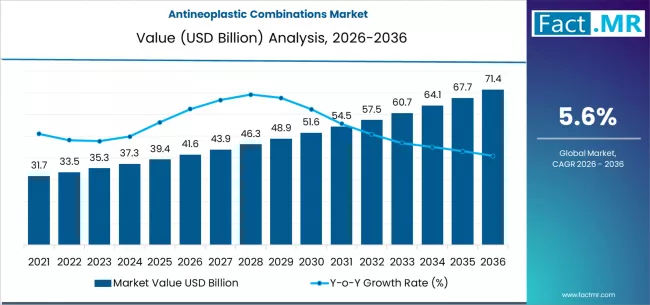
Key Takeaways from the Antineoplastic Combinations Market
- Market Value for 2026: USD 41.57 Billion
- Market Value for 2036: USD 71.43 Billion
- Forecast CAGR 2026 to 2036: 5.6%
- Leading Product Segment (2026): Chemo + Targeted Therapy (39.9%)
- Leading Application Segment (2026): Solid Tumors (60.8%)
- Leading End-User Segment (2026): Hospital Oncology Centers (58.9%)
- Key Growth Countries: India (7.5% CAGR), China (7.3% CAGR), Brazil (7.0% CAGR), USA (6.5% CAGR), UK (5.4% CAGR), Germany (5.3% CAGR), France (5.2% CAGR)
- Key Players in the Market: F. Hoffmann-La Roche Ltd, Merck & Co., Inc., Bristol-Myers Squibb Company, AstraZeneca PLC, Pfizer Inc.

Geographic growth is led by India at a 7.5% CAGR, followed by China at 7.3%, Brazil at 7.0%, and the USA at 6.5 %. Europe shows steady growth between 5.2% and 5.4%. The competitive landscape is consolidated with key players including Roche, Merck, Bristol-Myers Squibb, AstraZeneca, and Pfizer. The market's evolution is driven by the clinical imperative to overcome resistance, improve survival rates, and personalize cancer care through synergistic drug mechanisms.
Metric
| Metric | Value |
|---|---|
| Market Value (2026) | USD 41.57 Billion |
| Market Forecast Value (2036) | USD 71.43 Billion |
| Forecast CAGR 2026 to 2036 | 5.6% |
Category
| Category | Segments |
|---|---|
| Product | Chemo + Targeted, Chemo + Immunotherapy, Dual Targeted Combinations |
| Application | Solid Tumors, Hematological Malignancies |
| End User | Hospital Oncology Centers, Specialty Clinics, Academic Centers |
| Region | North America, Latin America, Western Europe, Eastern Europe, East Asia, South Asia & Pacific, Middle East & Africa |
Segmental Analysis
By Product, Which Combination Strategy Leverages Established and Novel Mechanisms?
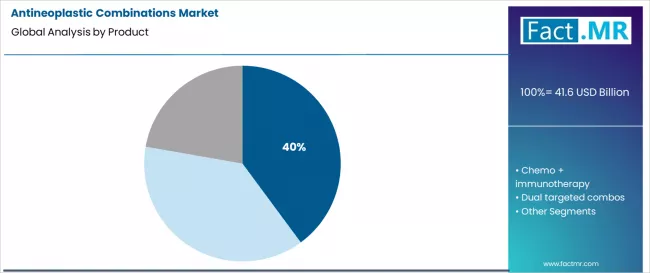
Combinations of chemotherapy with targeted therapy command a leading 39.9% share. This segment represents a cornerstone of modern oncology, rationally pairing cytotoxic agents that broadly kill dividing cells with drugs that inhibit specific molecular pathways in cancer.
This approach aims to enhance efficacy, overcome resistance, and often allows for reduced chemotherapy doses. Its widespread adoption in first-line protocols for major solid tumors like breast, lung, and colorectal cancer secures its dominant position.
By Application, Which Broad Disease Category Offers the Largest Arena for Combination Therapy?
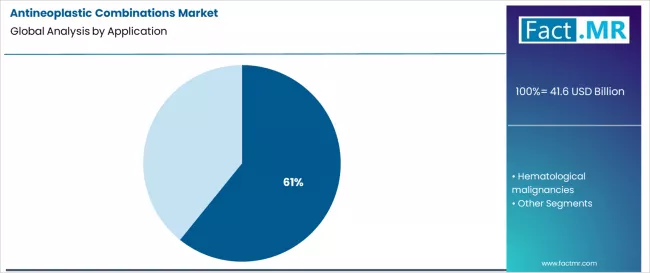
Solid tumors constitute the overwhelming application segment at 60.8%. The heterogeneity, high prevalence, and complex biology of carcinomas provide numerous targets and rationales for multi-drug regimens.
Combination therapies are fundamental across the treatment continuum for solid tumors, from curative-intent adjuvant therapy to life-extending metastatic care, driving sustained and voluminous demand within the antineoplastic combinations market.
By End User, Which Setting Provides the Infrastructure for Complex Regimen Administration?
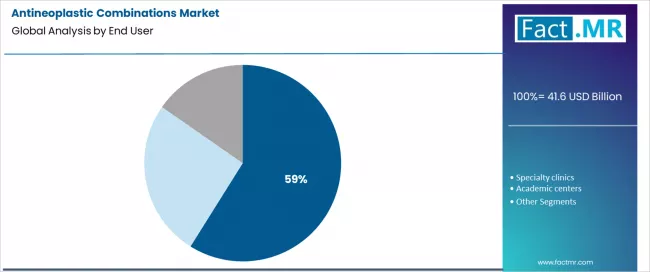
Hospital oncology centers form the dominant end-user segment at 58.9%. These facilities possess the necessary multidisciplinary teams, pharmacy compounding services, and acute care infrastructure to safely administer and monitor patients on complex combination regimens, which often involve intravenous chemotherapies with significant toxicity profiles. They are the central hubs for protocol-driven care and clinical trial execution.
What Dynamics Influence the Growth Trajectory of the Antineoplastic Combinations Market?
The primary driver is the proven clinical superiority of combination therapies in improving patient survival and overcoming drug resistance, which solidifies their role as standard of care. A major constraint is the amplified toxicity and complex management required for multi-drug regimens, increasing treatment burden and healthcare costs.
A significant opportunity exists in expanding the use of successful combinations into earlier lines of therapy and adjuvant settings, substantially widening the treatable patient pool. The dominant market trend is the shift towards biomarker-defined, chemo-free combinations of targeted therapies and immunotherapies, which promise greater efficacy with improved tolerability, representing the next frontier in precision oncology despite higher upfront costs.
Analysis of the Antineoplastic Combinations Market by Key Countries
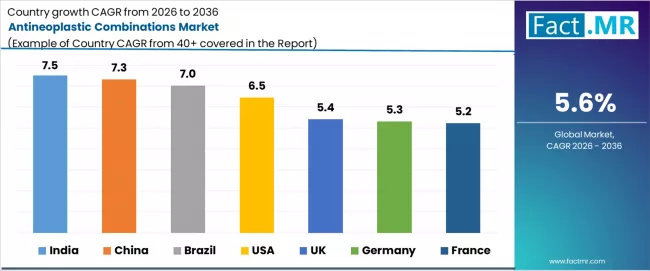
| Country | CAGR 2026 to 2036 |
|---|---|
| India | 7.5% |
| China | 7.3% |
| Brazil | 7.0% |
| USA | 6.5% |
| UK | 5.4% |
| Germany | 5.3% |
| France | 5.2% |
Does the USA's Market Reflect a Precision-Driven Shift Within Combination Paradigms?
The USA’s 6.5% CAGR is characterized by a rapid evolution within combination therapy itself. Biomarker-defined combinations increasingly drive growth, such as immunotherapy paired with targeted agents, rather than traditional chemo-based regimens. Reimbursement and clinical guidelines strongly favor these more effective, though costly, protocols, shaping both R&D and clinical practice in the hospital oncology center setting.
Can Brazil's Public Health System Incorporate High-Cost Novel Combinations?
Brazil’s 7.0% CAGR faces the central challenge of incorporating expensive novel combinations into its public health system (SUS). Growth is contingent on government negotiation for favorable pricing and the gradual inclusion of key regimens in public formularies. The market may see a lagged adoption of global standards, with a focus on the most cost-effective or essential combinations for high-burden cancers.
Is China's Dual Focus on Domestic Innovation and Global Protocols Shaping Its Trajectory?
Simultaneous embrace of global standard-of-care combinations and a push for domestically developed novel pairings power China’s 7.3% CAGR. Domestic pharmaceutical companies are aggressively developing combinations involving their own PD-1 inhibitors and targeted therapies. This creates a dynamic, fast-following market where global and local regimens compete within major hospital centers.
Will Genericization and Improving Diagnostic Access fuel India’s Growth?
India’s leading 7.5% CAGR is propelled by the increasing availability of generic chemotherapies and biosimilar targeted therapies, making combination regimens more accessible. Growth is further enabled by expanding molecular diagnostic capabilities in urban centers, allowing for appropriate patient selection for targeted combination therapies, moving treatment beyond empirical chemo-combos.
Is Adoption of Antineoplastic Combinations in UK Governed by Stringent Value-Based Assessments?
The UK’s 5.4% CAGR is strictly governed by value-based assessments from the National Institute for Health and Care Excellence (NICE). Growth for new antineoplastic combinations depends on demonstrating significant survival benefits at a cost deemed acceptable to the NHS.
This environment fosters a market focused on combinations with the strongest overall survival data and clear cost-effectiveness, often leading to delayed or restricted access for premium-priced therapies.
Does Germany's Guideline-Driven System Prioritize Consensus-Based Combination Protocols?
Germany’s 5.3% CAGR operates within a structured, guideline-driven healthcare system. The adoption of new antineoplastic combinations relies heavily on inclusion in treatment guidelines set by oncology societies and positive assessments from the Institute for Quality and Efficiency in Health Care (IQWiG). The market prioritizes therapies that achieve broad clinical consensus, with growth steady but measured as new data is incorporated into standardized treatment pathways.
Is France's Market Adaptation Slowed by Rigorous Early Health Technology Assessment?
France’s 5.2% CAGR, while steady, can be tempered by the country’s stringent early health technology assessment process. The requirement to demonstrate the added clinical value of a new combination therapy compared to existing standards before pricing negotiation can delay market access, creating a more measured and selective adoption environment for new antineoplastic combinations.
Competitive Landscape of the Antineoplastic Combinations Market
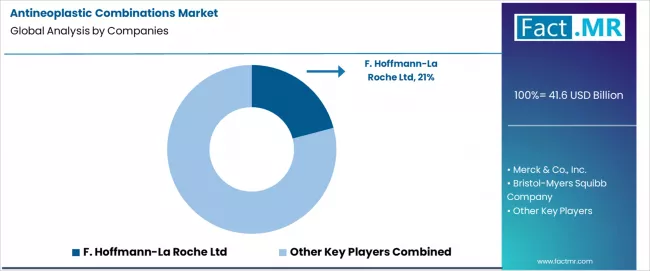
A few global pharmaceutical giants with deep oncology portfolios define the competitive landscape. These companies compete by leveraging their own proprietary assets to create in-house combinations, such as pairing their checkpoint inhibitor with their targeted therapy. Success depends on robust internal R&D to identify synergistic pairings and the execution of large, practice-changing clinical trials that establish new standard-of-care regimens.
Strategic collaborations are equally critical. Companies lacking a full portfolio often engage in complex co-development and co-commercialization agreements to create best-in-class combinations. The competitive edge is gained through companion diagnostic development to identify responsive patient subsets, ensuring targeted adoption and supporting premium pricing in a crowded therapeutic space.
Key Players in the Antineoplastic Combinations Market
- F. Hoffmann-La Roche Ltd
- Merck & Co., Inc.
- Bristol-Myers Squibb Company
- AstraZeneca PLC
- Pfizer Inc.
- Others
Scope of Report
| Items | Metrics |
|---|---|
| Quantitative Units | USD Billion |
| Product | Chemo + Targeted, Chemo + Immunotherapy, Dual Targeted Combinations |
| Application | Solid Tumors, Hematological Malignancies |
| End User | Hospital Oncology Centers, Specialty Clinics, Academic Centers |
| Key Countries | India, China, Brazil, USA, Germany, France, UK |
| Key Companies | Roche, Merck, Bristol-Myers Squibb, AstraZeneca, Pfizer, Others |
| Additional Analysis | Clinical trial design trends for combination therapies; analysis of sequencing and cycling strategies post-combination therapy; economic burden of managing combination-related toxicities; impact of real-world evidence on combination therapy adoption and label expansions. |
Market by Segments
-
Product :
- Chemo + Targeted Therapy
- Chemo + Immunotherapy
- Dual Targeted Combinations
-
Application :
- Solid Tumors
- Hematological Malignancies
-
End User :
- Hospital Oncology Centers
- Specialty Clinics
- Academic Centers
-
Region :
-
North America
- USA
- Canada
-
Latin America
- Brazil
- Mexico
- Argentina
- Rest of Latin America
-
Western Europe
- Germany
- France
- UK
- Italy
- Spain
- BENELUX
- Rest of Western Europe
-
Eastern Europe
- Russia
- Poland
- Czech Republic
- Rest of Eastern Europe
-
East Asia
- China
- Japan
- South Korea
- Rest of East Asia
-
South Asia & Pacific
- India
- ASEAN
- Australia
- Rest of South Asia & Pacific
-
MEA
- GCC Countries
- South Africa
- Turkiye
- Rest of MEA
-
Bibliography
- American Society of Clinical Oncology (ASCO) (2025). Annual Report on Combination Therapies in Clinical Practice (ASCO).
- European Society for Medical Oncology (ESMO) (2024). Guidelines on the Use of Combined Antineoplastic Modalities.
- National Comprehensive Cancer Network (NCCN) (2025). NCCN Clinical Practice Guidelines in Oncology.
- The Lancet Oncology (2024). Series on the Future of Cancer Combination Therapy.
Table of Content
- Executive Summary
- Global Market Outlook
- Demand to side Trends
- Supply to side Trends
- Technology Roadmap Analysis
- Analysis and Recommendations
- Market Overview
- Market Coverage / Taxonomy
- Market Definition / Scope / Limitations
- Market Background
- Market Dynamics
- Drivers
- Restraints
- Opportunity
- Trends
- Scenario Forecast
- Demand in Optimistic Scenario
- Demand in Likely Scenario
- Demand in Conservative Scenario
- Opportunity Map Analysis
- Product Life Cycle Analysis
- Supply Chain Analysis
- Investment Feasibility Matrix
- Value Chain Analysis
- PESTLE and Porter’s Analysis
- Regulatory Landscape
- Regional Parent Market Outlook
- Production and Consumption Statistics
- Import and Export Statistics
- Market Dynamics
- Global Market Analysis 2021 to 2025 and Forecast, 2026 to 2036
- Historical Market Size Value (USD Million) Analysis, 2021 to 2025
- Current and Future Market Size Value (USD Million) Projections, 2026 to 2036
- Y to o to Y Growth Trend Analysis
- Absolute $ Opportunity Analysis
- Global Market Pricing Analysis 2021 to 2025 and Forecast 2026 to 2036
- Global Market Analysis 2021 to 2025 and Forecast 2026 to 2036, By Product
- Introduction / Key Findings
- Historical Market Size Value (USD Million) Analysis By Product, 2021 to 2025
- Current and Future Market Size Value (USD Million) Analysis and Forecast By Product, 2026 to 2036
- Chemo + targeted
- Chemo + immunotherapy
- Dual targeted combos
- Chemo + targeted
- Y to o to Y Growth Trend Analysis By Product, 2021 to 2025
- Absolute $ Opportunity Analysis By Product, 2026 to 2036
- Global Market Analysis 2021 to 2025 and Forecast 2026 to 2036, By Application
- Introduction / Key Findings
- Historical Market Size Value (USD Million) Analysis By Application, 2021 to 2025
- Current and Future Market Size Value (USD Million) Analysis and Forecast By Application, 2026 to 2036
- Solid tumors
- Hematological malignancies
- Solid tumors
- Y to o to Y Growth Trend Analysis By Application, 2021 to 2025
- Absolute $ Opportunity Analysis By Application, 2026 to 2036
- Global Market Analysis 2021 to 2025 and Forecast 2026 to 2036, By End User
- Introduction / Key Findings
- Historical Market Size Value (USD Million) Analysis By End User, 2021 to 2025
- Current and Future Market Size Value (USD Million) Analysis and Forecast By End User, 2026 to 2036
- Hospital oncology centers
- Specialty clinics
- Academic centers
- Hospital oncology centers
- Y to o to Y Growth Trend Analysis By End User, 2021 to 2025
- Absolute $ Opportunity Analysis By End User, 2026 to 2036
- Global Market Analysis 2021 to 2025 and Forecast 2026 to 2036, By Region
- Introduction
- Historical Market Size Value (USD Million) Analysis By Region, 2021 to 2025
- Current Market Size Value (USD Million) Analysis and Forecast By Region, 2026 to 2036
- North America
- Latin America
- Western Europe
- Eastern Europe
- East Asia
- South Asia and Pacific
- Middle East & Africa
- Market Attractiveness Analysis By Region
- North America Market Analysis 2021 to 2025 and Forecast 2026 to 2036, By Country
- Historical Market Size Value (USD Million) Trend Analysis By Market Taxonomy, 2021 to 2025
- Market Size Value (USD Million) Forecast By Market Taxonomy, 2026 to 2036
- By Country
- USA
- Canada
- Mexico
- By Product
- By Application
- By End User
- By Country
- Market Attractiveness Analysis
- By Country
- By Product
- By Application
- By End User
- Key Takeaways
- Latin America Market Analysis 2021 to 2025 and Forecast 2026 to 2036, By Country
- Historical Market Size Value (USD Million) Trend Analysis By Market Taxonomy, 2021 to 2025
- Market Size Value (USD Million) Forecast By Market Taxonomy, 2026 to 2036
- By Country
- Brazil
- Chile
- Rest of Latin America
- By Product
- By Application
- By End User
- By Country
- Market Attractiveness Analysis
- By Country
- By Product
- By Application
- By End User
- Key Takeaways
- Western Europe Market Analysis 2021 to 2025 and Forecast 2026 to 2036, By Country
- Historical Market Size Value (USD Million) Trend Analysis By Market Taxonomy, 2021 to 2025
- Market Size Value (USD Million) Forecast By Market Taxonomy, 2026 to 2036
- By Country
- Germany
- UK
- Italy
- Spain
- France
- Nordic
- BENELUX
- Rest of Western Europe
- By Product
- By Application
- By End User
- By Country
- Market Attractiveness Analysis
- By Country
- By Product
- By Application
- By End User
- Key Takeaways
- Eastern Europe Market Analysis 2021 to 2025 and Forecast 2026 to 2036, By Country
- Historical Market Size Value (USD Million) Trend Analysis By Market Taxonomy, 2021 to 2025
- Market Size Value (USD Million) Forecast By Market Taxonomy, 2026 to 2036
- By Country
- Russia
- Poland
- Hungary
- Balkan & Baltic
- Rest of Eastern Europe
- By Product
- By Application
- By End User
- By Country
- Market Attractiveness Analysis
- By Country
- By Product
- By Application
- By End User
- Key Takeaways
- East Asia Market Analysis 2021 to 2025 and Forecast 2026 to 2036, By Country
- Historical Market Size Value (USD Million) Trend Analysis By Market Taxonomy, 2021 to 2025
- Market Size Value (USD Million) Forecast By Market Taxonomy, 2026 to 2036
- By Country
- China
- Japan
- South Korea
- By Product
- By Application
- By End User
- By Country
- Market Attractiveness Analysis
- By Country
- By Product
- By Application
- By End User
- Key Takeaways
- South Asia and Pacific Market Analysis 2021 to 2025 and Forecast 2026 to 2036, By Country
- Historical Market Size Value (USD Million) Trend Analysis By Market Taxonomy, 2021 to 2025
- Market Size Value (USD Million) Forecast By Market Taxonomy, 2026 to 2036
- By Country
- India
- ASEAN
- Australia & New Zealand
- Rest of South Asia and Pacific
- By Product
- By Application
- By End User
- By Country
- Market Attractiveness Analysis
- By Country
- By Product
- By Application
- By End User
- Key Takeaways
- Middle East & Africa Market Analysis 2021 to 2025 and Forecast 2026 to 2036, By Country
- Historical Market Size Value (USD Million) Trend Analysis By Market Taxonomy, 2021 to 2025
- Market Size Value (USD Million) Forecast By Market Taxonomy, 2026 to 2036
- By Country
- Kingdom of Saudi Arabia
- Other GCC Countries
- Turkiye
- South Africa
- Other African Union
- Rest of Middle East & Africa
- By Product
- By Application
- By End User
- By Country
- Market Attractiveness Analysis
- By Country
- By Product
- By Application
- By End User
- Key Takeaways
- Key Countries Market Analysis
- USA
- Pricing Analysis
- Market Share Analysis, 2025
- By Product
- By Application
- By End User
- Canada
- Pricing Analysis
- Market Share Analysis, 2025
- By Product
- By Application
- By End User
- Mexico
- Pricing Analysis
- Market Share Analysis, 2025
- By Product
- By Application
- By End User
- Brazil
- Pricing Analysis
- Market Share Analysis, 2025
- By Product
- By Application
- By End User
- Chile
- Pricing Analysis
- Market Share Analysis, 2025
- By Product
- By Application
- By End User
- Germany
- Pricing Analysis
- Market Share Analysis, 2025
- By Product
- By Application
- By End User
- UK
- Pricing Analysis
- Market Share Analysis, 2025
- By Product
- By Application
- By End User
- Italy
- Pricing Analysis
- Market Share Analysis, 2025
- By Product
- By Application
- By End User
- Spain
- Pricing Analysis
- Market Share Analysis, 2025
- By Product
- By Application
- By End User
- France
- Pricing Analysis
- Market Share Analysis, 2025
- By Product
- By Application
- By End User
- India
- Pricing Analysis
- Market Share Analysis, 2025
- By Product
- By Application
- By End User
- ASEAN
- Pricing Analysis
- Market Share Analysis, 2025
- By Product
- By Application
- By End User
- Australia & New Zealand
- Pricing Analysis
- Market Share Analysis, 2025
- By Product
- By Application
- By End User
- China
- Pricing Analysis
- Market Share Analysis, 2025
- By Product
- By Application
- By End User
- Japan
- Pricing Analysis
- Market Share Analysis, 2025
- By Product
- By Application
- By End User
- South Korea
- Pricing Analysis
- Market Share Analysis, 2025
- By Product
- By Application
- By End User
- Russia
- Pricing Analysis
- Market Share Analysis, 2025
- By Product
- By Application
- By End User
- Poland
- Pricing Analysis
- Market Share Analysis, 2025
- By Product
- By Application
- By End User
- Hungary
- Pricing Analysis
- Market Share Analysis, 2025
- By Product
- By Application
- By End User
- Kingdom of Saudi Arabia
- Pricing Analysis
- Market Share Analysis, 2025
- By Product
- By Application
- By End User
- Turkiye
- Pricing Analysis
- Market Share Analysis, 2025
- By Product
- By Application
- By End User
- South Africa
- Pricing Analysis
- Market Share Analysis, 2025
- By Product
- By Application
- By End User
- USA
- Market Structure Analysis
- Competition Dashboard
- Competition Benchmarking
- Market Share Analysis of Top Players
- By Regional
- By Product
- By Application
- By End User
- Competition Analysis
- Competition Deep Dive
- F. Hoffmann-La Roche Ltd
- Overview
- Product Portfolio
- Profitability by Market Segments (Product/Age /Sales Channel/Region)
- Sales Footprint
- Strategy Overview
- Marketing Strategy
- Product Strategy
- Channel Strategy
- Merck & Co., Inc.
- Bristol-Myers Squibb Company
- AstraZeneca PLC
- Pfizer Inc.
- Others
- F. Hoffmann-La Roche Ltd
- Competition Deep Dive
- Assumptions & Acronyms Used
- Research Methodology
List Of Table
- Table 1: Global Market Value (USD Million) Forecast by Region, 2021 to 2036
- Table 2: Global Market Value (USD Million) Forecast by Product, 2021 to 2036
- Table 3: Global Market Value (USD Million) Forecast by Application, 2021 to 2036
- Table 4: Global Market Value (USD Million) Forecast by End User, 2021 to 2036
- Table 5: North America Market Value (USD Million) Forecast by Country, 2021 to 2036
- Table 6: North America Market Value (USD Million) Forecast by Product, 2021 to 2036
- Table 7: North America Market Value (USD Million) Forecast by Application, 2021 to 2036
- Table 8: North America Market Value (USD Million) Forecast by End User, 2021 to 2036
- Table 9: Latin America Market Value (USD Million) Forecast by Country, 2021 to 2036
- Table 10: Latin America Market Value (USD Million) Forecast by Product, 2021 to 2036
- Table 11: Latin America Market Value (USD Million) Forecast by Application, 2021 to 2036
- Table 12: Latin America Market Value (USD Million) Forecast by End User, 2021 to 2036
- Table 13: Western Europe Market Value (USD Million) Forecast by Country, 2021 to 2036
- Table 14: Western Europe Market Value (USD Million) Forecast by Product, 2021 to 2036
- Table 15: Western Europe Market Value (USD Million) Forecast by Application, 2021 to 2036
- Table 16: Western Europe Market Value (USD Million) Forecast by End User, 2021 to 2036
- Table 17: Eastern Europe Market Value (USD Million) Forecast by Country, 2021 to 2036
- Table 18: Eastern Europe Market Value (USD Million) Forecast by Product, 2021 to 2036
- Table 19: Eastern Europe Market Value (USD Million) Forecast by Application, 2021 to 2036
- Table 20: Eastern Europe Market Value (USD Million) Forecast by End User, 2021 to 2036
- Table 21: East Asia Market Value (USD Million) Forecast by Country, 2021 to 2036
- Table 22: East Asia Market Value (USD Million) Forecast by Product, 2021 to 2036
- Table 23: East Asia Market Value (USD Million) Forecast by Application, 2021 to 2036
- Table 24: East Asia Market Value (USD Million) Forecast by End User, 2021 to 2036
- Table 25: South Asia and Pacific Market Value (USD Million) Forecast by Country, 2021 to 2036
- Table 26: South Asia and Pacific Market Value (USD Million) Forecast by Product, 2021 to 2036
- Table 27: South Asia and Pacific Market Value (USD Million) Forecast by Application, 2021 to 2036
- Table 28: South Asia and Pacific Market Value (USD Million) Forecast by End User, 2021 to 2036
- Table 29: Middle East & Africa Market Value (USD Million) Forecast by Country, 2021 to 2036
- Table 30: Middle East & Africa Market Value (USD Million) Forecast by Product, 2021 to 2036
- Table 31: Middle East & Africa Market Value (USD Million) Forecast by Application, 2021 to 2036
- Table 32: Middle East & Africa Market Value (USD Million) Forecast by End User, 2021 to 2036
List Of Figures
- Figure 1: Global Market Pricing Analysis
- Figure 2: Global Market Value (USD Million) Forecast 2021 to 2036
- Figure 3: Global Market Value Share and BPS Analysis by Product, 2026 and 2036
- Figure 4: Global Market Y to o to Y Growth Comparison by Product, 2026 to 2036
- Figure 5: Global Market Attractiveness Analysis by Product
- Figure 6: Global Market Value Share and BPS Analysis by Application, 2026 and 2036
- Figure 7: Global Market Y to o to Y Growth Comparison by Application, 2026 to 2036
- Figure 8: Global Market Attractiveness Analysis by Application
- Figure 9: Global Market Value Share and BPS Analysis by End User, 2026 and 2036
- Figure 10: Global Market Y to o to Y Growth Comparison by End User, 2026 to 2036
- Figure 11: Global Market Attractiveness Analysis by End User
- Figure 12: Global Market Value (USD Million) Share and BPS Analysis by Region, 2026 and 2036
- Figure 13: Global Market Y to o to Y Growth Comparison by Region, 2026 to 2036
- Figure 14: Global Market Attractiveness Analysis by Region
- Figure 15: North America Market Incremental Dollar Opportunity, 2026 to 2036
- Figure 16: Latin America Market Incremental Dollar Opportunity, 2026 to 2036
- Figure 17: Western Europe Market Incremental Dollar Opportunity, 2026 to 2036
- Figure 18: Eastern Europe Market Incremental Dollar Opportunity, 2026 to 2036
- Figure 19: East Asia Market Incremental Dollar Opportunity, 2026 to 2036
- Figure 20: South Asia and Pacific Market Incremental Dollar Opportunity, 2026 to 2036
- Figure 21: Middle East & Africa Market Incremental Dollar Opportunity, 2026 to 2036
- Figure 22: North America Market Value Share and BPS Analysis by Country, 2026 and 2036
- Figure 23: North America Market Value Share and BPS Analysis by Product, 2026 and 2036
- Figure 24: North America Market Y to o to Y Growth Comparison by Product, 2026 to 2036
- Figure 25: North America Market Attractiveness Analysis by Product
- Figure 26: North America Market Value Share and BPS Analysis by Application, 2026 and 2036
- Figure 27: North America Market Y to o to Y Growth Comparison by Application, 2026 to 2036
- Figure 28: North America Market Attractiveness Analysis by Application
- Figure 29: North America Market Value Share and BPS Analysis by End User, 2026 and 2036
- Figure 30: North America Market Y to o to Y Growth Comparison by End User, 2026 to 2036
- Figure 31: North America Market Attractiveness Analysis by End User
- Figure 32: Latin America Market Value Share and BPS Analysis by Country, 2026 and 2036
- Figure 33: Latin America Market Value Share and BPS Analysis by Product, 2026 and 2036
- Figure 34: Latin America Market Y to o to Y Growth Comparison by Product, 2026 to 2036
- Figure 35: Latin America Market Attractiveness Analysis by Product
- Figure 36: Latin America Market Value Share and BPS Analysis by Application, 2026 and 2036
- Figure 37: Latin America Market Y to o to Y Growth Comparison by Application, 2026 to 2036
- Figure 38: Latin America Market Attractiveness Analysis by Application
- Figure 39: Latin America Market Value Share and BPS Analysis by End User, 2026 and 2036
- Figure 40: Latin America Market Y to o to Y Growth Comparison by End User, 2026 to 2036
- Figure 41: Latin America Market Attractiveness Analysis by End User
- Figure 42: Western Europe Market Value Share and BPS Analysis by Country, 2026 and 2036
- Figure 43: Western Europe Market Value Share and BPS Analysis by Product, 2026 and 2036
- Figure 44: Western Europe Market Y to o to Y Growth Comparison by Product, 2026 to 2036
- Figure 45: Western Europe Market Attractiveness Analysis by Product
- Figure 46: Western Europe Market Value Share and BPS Analysis by Application, 2026 and 2036
- Figure 47: Western Europe Market Y to o to Y Growth Comparison by Application, 2026 to 2036
- Figure 48: Western Europe Market Attractiveness Analysis by Application
- Figure 49: Western Europe Market Value Share and BPS Analysis by End User, 2026 and 2036
- Figure 50: Western Europe Market Y to o to Y Growth Comparison by End User, 2026 to 2036
- Figure 51: Western Europe Market Attractiveness Analysis by End User
- Figure 52: Eastern Europe Market Value Share and BPS Analysis by Country, 2026 and 2036
- Figure 53: Eastern Europe Market Value Share and BPS Analysis by Product, 2026 and 2036
- Figure 54: Eastern Europe Market Y to o to Y Growth Comparison by Product, 2026 to 2036
- Figure 55: Eastern Europe Market Attractiveness Analysis by Product
- Figure 56: Eastern Europe Market Value Share and BPS Analysis by Application, 2026 and 2036
- Figure 57: Eastern Europe Market Y to o to Y Growth Comparison by Application, 2026 to 2036
- Figure 58: Eastern Europe Market Attractiveness Analysis by Application
- Figure 59: Eastern Europe Market Value Share and BPS Analysis by End User, 2026 and 2036
- Figure 60: Eastern Europe Market Y to o to Y Growth Comparison by End User, 2026 to 2036
- Figure 61: Eastern Europe Market Attractiveness Analysis by End User
- Figure 62: East Asia Market Value Share and BPS Analysis by Country, 2026 and 2036
- Figure 63: East Asia Market Value Share and BPS Analysis by Product, 2026 and 2036
- Figure 64: East Asia Market Y to o to Y Growth Comparison by Product, 2026 to 2036
- Figure 65: East Asia Market Attractiveness Analysis by Product
- Figure 66: East Asia Market Value Share and BPS Analysis by Application, 2026 and 2036
- Figure 67: East Asia Market Y to o to Y Growth Comparison by Application, 2026 to 2036
- Figure 68: East Asia Market Attractiveness Analysis by Application
- Figure 69: East Asia Market Value Share and BPS Analysis by End User, 2026 and 2036
- Figure 70: East Asia Market Y to o to Y Growth Comparison by End User, 2026 to 2036
- Figure 71: East Asia Market Attractiveness Analysis by End User
- Figure 72: South Asia and Pacific Market Value Share and BPS Analysis by Country, 2026 and 2036
- Figure 73: South Asia and Pacific Market Value Share and BPS Analysis by Product, 2026 and 2036
- Figure 74: South Asia and Pacific Market Y to o to Y Growth Comparison by Product, 2026 to 2036
- Figure 75: South Asia and Pacific Market Attractiveness Analysis by Product
- Figure 76: South Asia and Pacific Market Value Share and BPS Analysis by Application, 2026 and 2036
- Figure 77: South Asia and Pacific Market Y to o to Y Growth Comparison by Application, 2026 to 2036
- Figure 78: South Asia and Pacific Market Attractiveness Analysis by Application
- Figure 79: South Asia and Pacific Market Value Share and BPS Analysis by End User, 2026 and 2036
- Figure 80: South Asia and Pacific Market Y to o to Y Growth Comparison by End User, 2026 to 2036
- Figure 81: South Asia and Pacific Market Attractiveness Analysis by End User
- Figure 82: Middle East & Africa Market Value Share and BPS Analysis by Country, 2026 and 2036
- Figure 83: Middle East & Africa Market Value Share and BPS Analysis by Product, 2026 and 2036
- Figure 84: Middle East & Africa Market Y to o to Y Growth Comparison by Product, 2026 to 2036
- Figure 85: Middle East & Africa Market Attractiveness Analysis by Product
- Figure 86: Middle East & Africa Market Value Share and BPS Analysis by Application, 2026 and 2036
- Figure 87: Middle East & Africa Market Y to o to Y Growth Comparison by Application, 2026 to 2036
- Figure 88: Middle East & Africa Market Attractiveness Analysis by Application
- Figure 89: Middle East & Africa Market Value Share and BPS Analysis by End User, 2026 and 2036
- Figure 90: Middle East & Africa Market Y to o to Y Growth Comparison by End User, 2026 to 2036
- Figure 91: Middle East & Africa Market Attractiveness Analysis by End User
- Figure 92: Global Market - Tier Structure Analysis
- Figure 93: Global Market - Company Share Analysis
- FAQs -
How big is the antineoplastic combinations market in 2026?
The global antineoplastic combinations market is estimated to be valued at USD 41.6 billion in 2026.
What will be the size of antineoplastic combinations market in 2036?
The market size for the antineoplastic combinations market is projected to reach USD 71.4 billion by 2036.
How much will be the antineoplastic combinations market growth between 2026 and 2036?
The antineoplastic combinations market is expected to grow at a 5.6% CAGR between 2026 and 2036.
What are the key product types in the antineoplastic combinations market?
The key product types in antineoplastic combinations market are chemo + targeted, chemo + immunotherapy and dual targeted combos.
Which application segment to contribute significant share in the antineoplastic combinations market in 2026?
In terms of application, solid tumors segment to command 60.8% share in the antineoplastic combinations market in 2026.