Canine Heartworm Treatment Market
Canine Heartworm Treatment Market Size and Share Forecast Outlook 2026 to 2036
Canine heartworm treatment market is projected to grow from USD 4.7 billion in 2026 to USD 8.8 billion by 2036, at a CAGR of 6.5%. Macrocyclic lactone preventives will dominate with a 37.8% market share, while preventive therapy will lead the application segment with a 56.7% share.
Canine Heartworm Treatment Market Forecast and Outlook 2026 to 2036
The global market for canine heartworm treatment is projected to total USD 4.71 billion in 2026, advancing to USD 8.80 billion by 2036, progressing at a compound annual growth rate of 6.5%. Growth is underpinned by rising pet ownership and the expanding recognition of heartworm disease as a pervasive, year-round threat in both endemic and non-endemic regions.
Key Takeaways from the Canine Heartworm Treatment Market
- Market Value for 2026: USD 4.71 Billion
- Market Value for 2036: USD 8.80 Billion
- Forecast CAGR 2026 to 2036: 6.5%
- Leading Therapy Segment (2026): Macrocyclic Lactone Preventives (37.8%)
- Leading Application Segment (2026): Preventive Therapy (56.7%)
- Leading End User Segment (2026): Veterinary Clinics (67.2%)
- Key Growth Countries: India (9.0% CAGR), China (8.8% CAGR), Brazil (8.4% CAGR), USA (7.1% CAGR), Germany (7.2% CAGR), France (7.0% CAGR), UK (6.9% CAGR)
- Key Players: Zoetis Inc., Elanco Animal Health Incorporated, Boehringer Ingelheim International GmbH, Virbac S.A., Ceva Santé Animale S.A.
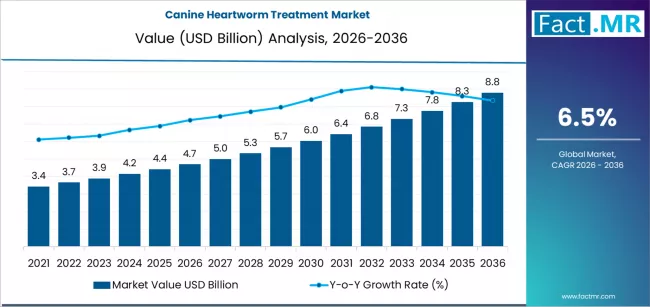
The market is segmented into a high-volume preventive care segment and a high-value curative treatment segment. Increasing veterinary emphasis on prophylactic care, driven by the high cost and risk of treating adult infections, is a primary growth driver. The development of safer adulticide protocols and integrated diagnostic bundles is improving outcomes for infected dogs, supporting market expansion through comprehensive disease management solutions.
Canine Heartworm Treatment Market
| Metric | Value |
|---|---|
| Market Value (2026) | USD 4.71 Billion |
| Market Forecast Value (2036) | USD 8.80 Billion |
| Forecast CAGR 2026 to 2036 | 6.5% |
Category
| Category | Segments |
|---|---|
| Therapy | Macrocyclic Lactone Preventives, Adulticide Therapies, Adjunct Anti-Inflammatory Drugs, Diagnostic-Treatment Bundles |
| Application | Preventive Therapy, Active Infection Treatment |
| End User | Veterinary Clinics, Veterinary Hospitals, Online Veterinary Pharmacies |
| Region | North America, Latin America, Western Europe, Eastern Europe, East Asia, South Asia & Pacific, Middle East & Africa |
How are Macro Trends in Pet Care reshaping Heartworm Disease Management in Canines?
The humanization of pets and rising expenditure on animal health are fundamental drivers, transforming preventive care from an option to a standard responsibility. This shift directly increases compliance with year-round preventive medication. The growth of veterinary telehealth and online pharmacies is altering distribution channels, creating both competition and new avenues for client education and product access.
Climate change is further expanding the geographic range and seasonal activity of mosquitoes, the disease vector, introducing heartworm risk to previously low-prevalence areas and compelling broader prophylactic use.
The consolidation of veterinary practices into larger corporate groups standardizes treatment protocols and increases purchasing power, influencing product selection and supporting the adoption of comprehensive diagnostic and treatment bundles.
Segmental Analysis
By Therapy, Which Product Class Forms the Commercial Backbone of the Market?
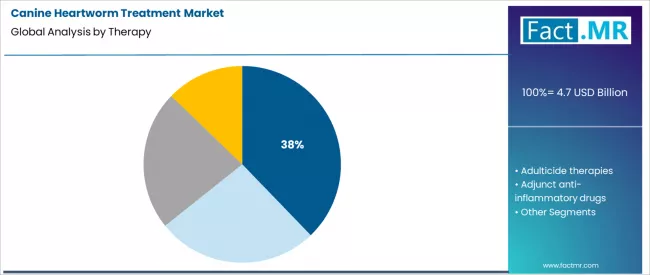
Macrocyclic lactone preventives command a leading 37.8% share. This segment's dominance is anchored in its essential role as the first line of defense in veterinary guidelines. These monthly preventatives, often combined with treatments for other parasites, represent a recurring revenue stream with high compliance rates in core markets.
Their efficacy, safety profile, and integration into routine wellness plans make them a non-negotiable expenditure for a growing base of pet owners, ensuring consistent volume-driven growth.
By Application, Where Does the Primary Revenue Concentration Lie?
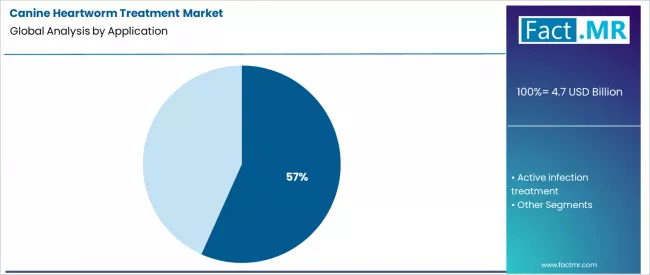
Preventive therapy constitutes the dominant application segment at 56.7%. This overwhelming share reflects the fundamental veterinary economic principle that prevention is vastly more cost-effective and safer than treating an established infection.
The large population of healthy dogs requiring regular prophylaxis dwarfs the number undergoing expensive and risky adulticide treatment. Expanding pet populations and successful veterinary-led client education campaigns emphasizing compliance fuel this segment’s growth.
By End User, Which Setting is the Central Hub for Prescription and Administration?
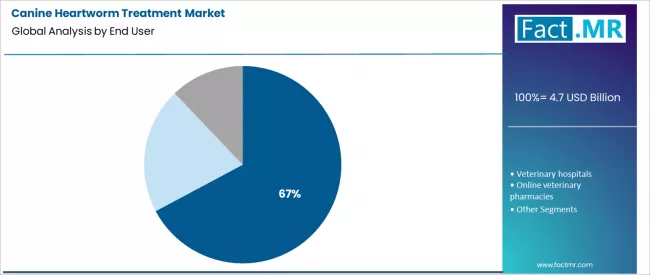
Veterinary clinics hold a 67.2% share. These facilities are the critical touchpoint for diagnosis, client education, and the prescription of both preventives and curative therapies. The veterinarian-client-patient relationship is legally required for dispensing most effective heartworm medications, ensuring clinics remain the primary channel. Their role in conducting annual heartworm tests further integrates product sales with essential diagnostic services.
What are the Dynamics influencing the Canine Heartworm Treatment Market?
The primary growth driver is the increasing global pet population coupled with rising owner willingness to invest in preventive healthcare. Veterinary advocacy for year-round prevention protocols has significantly improved compliance, turning preventives into a stable, recurring purchase.
A major restraint is the high cost and complex logistics of adulticide treatment for active infections. This often leads to economic euthanasia or abandonment in cost-sensitive regions, limiting the addressable market for curative products and highlighting the critical nature of prevention.
Significant opportunity exists in emerging markets with low current preventive coverage. Tailoring affordable, accessible preventive solutions and educating veterinarians and pet owners in these regions represents a substantial long-term growth frontier for market leaders.
The key trend is the bundling of diagnostics with treatment plans. This includes pairing heartworm tests with preventive prescriptions and creating standardized, staged protocols for adulticide treatment that include diagnostic imaging, melarsomine injections, and adjunctive anti-inflammatory and antibiotic support, improving outcomes and practice revenue.
Analysis of the Canine Heartworm Treatment Market by Key Countries
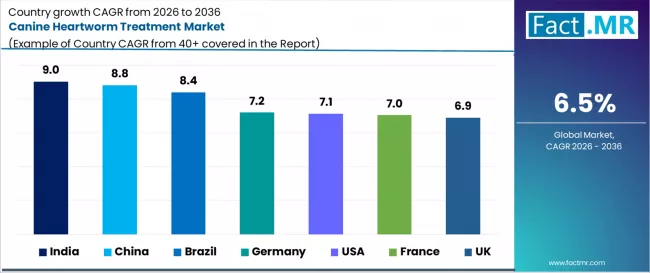
| Country | CAGR 2026 to 2036 |
|---|---|
| USA | 7.1% |
| Germany | 7.2% |
| China | 8.8% |
| India | 9.0% |
| Brazil | 8.4% |
| France | 7.0% |
| UK | 6.9% |
What underpins the USA's Mature yet Steady Market for Preventatives and Treatment?
A 7.1% CAGR is supported by high pet ownership rates, deeply entrenched veterinary care standards, and near-universal veterinary recommendation of year-round preventatives. The market is characterized by high brand loyalty for established preventive products.
Demand for adulticide treatment persists due to regional compliance gaps and imported rescue dogs, maintaining a need for advanced therapeutic protocols. The distribution network through veterinary clinics is highly efficient.
How does Germany's Regulatory and Pet Care Culture Shape Demand?
Germany's 7.2% CAGR reflects a structured pet ownership culture with strong emphasis on preventive veterinary medicine. Prescription-only status for effective preventives ensures veterinary channel control.
A well-informed pet owner base and a high density of veterinary practices drive demand. The market is receptive to premium, broad-spectrum parasiticides, and treatment protocols for active infections adhere to stringent clinical guidelines.
Which Factors Fuel China's Rapid Expansion in Pet Healthcare Expenditure?
China's 8.8% CAGR is propelled by an explosion in pet ownership among urban populations and rapidly increasing spending on pet health. Growing awareness of heartworm disease, previously under-diagnosed, is creating new demand for both diagnostics and preventatives. International animal health companies are actively expanding distribution and education in this high-potential market, focusing on veterinary practitioner training.
Why is India's Emerging Pet Market a Key Catalyst for Growth?
India's leading 9.0% CAGR is driven by a nascent but rapidly modernizing companion animal sector. Increasing adoption of pet dogs in cities and the growth of professional veterinary clinics are foundational drivers.
A large stray dog population presents a complex disease reservoir. Market entry and growth strategy focuses on educating veterinarians on heartworm prevalence and introducing cost-adapted preventive solutions to build the category.
How is Brazil's Endemic Challenge Influencing Market Priorities?
Brazil's 8.4% CAGR is linked to the high endemicity of heartworm in many regions, making it a core concern for veterinarians. The climate supports year-round mosquito activity. Demand is robust for both preventatives and adulticide treatments. The market sees competition between international brands and local producers, with a focus on value-based products that balance efficacy and cost for a diverse clientele.
What Specific Characteristics Define France's Organized Veterinary Market?
France's 7.0% CAGR benefits from a high level of pet care and strong veterinary association guidelines promoting prevention. The market is competitive among major international players. Preventive product sales are seasonal but shifting toward year-round protocols. There is a noted emphasis on combination products addressing multiple parasites, aligning with owner convenience and comprehensive care trends.
How does the UK's Unique Disease Status Influence the Market Landscape?
The UK’s 6.9% CAGR operates within a context where heartworm is not endemic, but cases are reported in imported dogs. The market is entirely focused on prevention for animals traveling to or arriving from endemic areas under the PETS travel scheme. This creates a specialized niche driven by veterinarian recommendations for travel prophylaxis and testing of imported animals, rather than mass annual prevention.
Competitive Landscape of the Canine Heartworm Treatment Market
A few global animal health giants with extensive portfolios dominate the competitive environment. Companies like Zoetis, Elanco, and Boehringer Ingelheim compete through strong brand recognition, direct veterinary sales forces, and combination products that offer convenience.
Success hinges on deep veterinary relationships, continuous investment in practitioner education, and navigating diverse international regulatory landscapes for pharmaceuticals. The market also features strong regional players like Virbac and Ceva that compete through targeted offerings and agility in specific markets.
What Key Strategies Will Define Success in the Coming Decade?
| Strategic Imperative | Description |
|---|---|
| Portfolio Diversification | Developing and marketing combination products that address heartworm alongside fleas, ticks, and intestinal parasites to drive compliance and value. |
| Geographic Expansion in Emerging Markets | Tailoring affordable preventive solutions and investing in veterinary education to build the foundational market in regions like Asia-Pacific and Latin America. |
| Digital Engagement & Compliance | Utilizing apps, reminders, and telehealth partnerships to improve owner adherence to monthly preventive regimens and post-treatment follow-up. |
| Differentiated Therapeutic Protocols | Advancing and branding safer, more efficient adulticide treatment bundles that improve outcomes and practice revenue from complex cases. |
Key Players in the Canine Heartworm Treatment Market
- Zoetis Inc.
- Elanco Animal Health Incorporated
- Boehringer Ingelheim International GmbH
- Virbac S.A.
- Ceva Santé Animale S.A.
- Others
Scope of Report
| Items | Metrics |
|---|---|
| Quantitative Units | USD Billion |
| Therapy | Macrocyclic Lactone Preventives, Adulticide Therapies, Adjunct Anti-Inflammatory Drugs, Diagnostic-Treatment Bundles |
| Application | Preventive Therapy, Active Infection Treatment |
| End User | Veterinary Clinics, Veterinary Hospitals, Online Veterinary Pharmacies |
| Key Countries | India, China, Brazil, USA, Germany, France, UK |
| Key Companies | Zoetis Inc., Elanco Animal Health Incorporated, Boehringer Ingelheim International GmbH, Virbac S.A., Ceva Santé Animale S.A. |
| Additional Analysis | Comparative efficacy and safety analysis of adulticide protocols; economic burden studies of heartworm disease; impact of climate change on disease prevalence maps; analysis of online pharmacy channel growth; regulatory pathway analysis for novel preventive formulations. |
Market by Segments
-
Therapy :
- Macrocyclic Lactone Preventives
- Adulticide Therapies
- Adjunct Anti-Inflammatory Drugs
- Diagnostic-Treatment Bundles
-
Application :
- Preventive Therapy
- Active Infection Treatment
-
End User :
- Veterinary Clinics
- Veterinary Hospitals
- Online Veterinary Pharmacies
-
Region :
-
North America
- USA
- Canada
-
Latin America
- Brazil
- Mexico
- Argentina
- Rest of Latin America
-
Western Europe
- Germany
- France
- UK
- Italy
- Spain
- BENELUX
- Rest of Western Europe
-
Eastern Europe
- Poland
- Russia
- Czech Republic
- Rest of Eastern Europe
-
East Asia
- China
- Japan
- South Korea
- Rest of East Asia
-
South Asia & Pacific
- India
- ASEAN
- Australia & New Zealand
- Rest of South Asia & Pacific
-
Middle East & Africa
- GCC Countries
- South Africa
- Turkiye
- Rest of MEA
-
Bibliography
- American Heartworm Society. (2025). Current canine guidelines for the prevention, diagnosis, and management of heartworm infection.
- Bowman, D. D., & Atkins, C. E. (2024). Heartworm Biology, Treatment, and Control. Veterinary Clinics of North America: Small Animal Practice.
- European Scientific Counsel Companion Animal Parasites. (2024). *ESCCAP Guideline 05: Control of Vector-Borne Diseases in Dogs and Cats*.
- Jones, S., & Graham, W. (2023). The Economic Impact of Canine Heartworm Disease. Journal of Veterinary Internal Medicine.
- World Small Animal Veterinary Association. (2024). Guidelines for the clinical management of canine heartworm disease.
- Zimmerman, J. (2025). Parasitology for Veterinarians. Elsevier.
Table of Content
- Executive Summary
- Global Market Outlook
- Demand to side Trends
- Supply to side Trends
- Technology Roadmap Analysis
- Analysis and Recommendations
- Market Overview
- Market Coverage / Taxonomy
- Market Definition / Scope / Limitations
- Market Background
- Market Dynamics
- Drivers
- Restraints
- Opportunity
- Trends
- Scenario Forecast
- Demand in Optimistic Scenario
- Demand in Likely Scenario
- Demand in Conservative Scenario
- Opportunity Map Analysis
- Product Life Cycle Analysis
- Supply Chain Analysis
- Investment Feasibility Matrix
- Value Chain Analysis
- PESTLE and Porter’s Analysis
- Regulatory Landscape
- Regional Parent Market Outlook
- Production and Consumption Statistics
- Import and Export Statistics
- Market Dynamics
- Global Market Analysis 2021 to 2025 and Forecast, 2026 to 2036
- Historical Market Size Value (USD Million) Analysis, 2021 to 2025
- Current and Future Market Size Value (USD Million) Projections, 2026 to 2036
- Y to o to Y Growth Trend Analysis
- Absolute $ Opportunity Analysis
- Global Market Pricing Analysis 2021 to 2025 and Forecast 2026 to 2036
- Global Market Analysis 2021 to 2025 and Forecast 2026 to 2036, By Therapy
- Introduction / Key Findings
- Historical Market Size Value (USD Million) Analysis By Therapy, 2021 to 2025
- Current and Future Market Size Value (USD Million) Analysis and Forecast By Therapy, 2026 to 2036
- Macrocyclic lactone preventives
- Adulticide therapies
- Adjunct anti-inflammatory drugs
- Diagnostic-treatment bundles
- Macrocyclic lactone preventives
- Y to o to Y Growth Trend Analysis By Therapy, 2021 to 2025
- Absolute $ Opportunity Analysis By Therapy, 2026 to 2036
- Global Market Analysis 2021 to 2025 and Forecast 2026 to 2036, By Application
- Introduction / Key Findings
- Historical Market Size Value (USD Million) Analysis By Application, 2021 to 2025
- Current and Future Market Size Value (USD Million) Analysis and Forecast By Application, 2026 to 2036
- Preventive therapy
- Active infection treatment
- Preventive therapy
- Y to o to Y Growth Trend Analysis By Application, 2021 to 2025
- Absolute $ Opportunity Analysis By Application, 2026 to 2036
- Global Market Analysis 2021 to 2025 and Forecast 2026 to 2036, By End User
- Introduction / Key Findings
- Historical Market Size Value (USD Million) Analysis By End User, 2021 to 2025
- Current and Future Market Size Value (USD Million) Analysis and Forecast By End User, 2026 to 2036
- Veterinary clinics
- Veterinary hospitals
- Online veterinary pharmacies
- Veterinary clinics
- Y to o to Y Growth Trend Analysis By End User, 2021 to 2025
- Absolute $ Opportunity Analysis By End User, 2026 to 2036
- Global Market Analysis 2021 to 2025 and Forecast 2026 to 2036, By Region
- Introduction
- Historical Market Size Value (USD Million) Analysis By Region, 2021 to 2025
- Current Market Size Value (USD Million) Analysis and Forecast By Region, 2026 to 2036
- North America
- Latin America
- Western Europe
- Eastern Europe
- East Asia
- South Asia and Pacific
- Middle East & Africa
- Market Attractiveness Analysis By Region
- North America Market Analysis 2021 to 2025 and Forecast 2026 to 2036, By Country
- Historical Market Size Value (USD Million) Trend Analysis By Market Taxonomy, 2021 to 2025
- Market Size Value (USD Million) Forecast By Market Taxonomy, 2026 to 2036
- By Country
- USA
- Canada
- Mexico
- By Therapy
- By Application
- By End User
- By Country
- Market Attractiveness Analysis
- By Country
- By Therapy
- By Application
- By End User
- Key Takeaways
- Latin America Market Analysis 2021 to 2025 and Forecast 2026 to 2036, By Country
- Historical Market Size Value (USD Million) Trend Analysis By Market Taxonomy, 2021 to 2025
- Market Size Value (USD Million) Forecast By Market Taxonomy, 2026 to 2036
- By Country
- Brazil
- Chile
- Rest of Latin America
- By Therapy
- By Application
- By End User
- By Country
- Market Attractiveness Analysis
- By Country
- By Therapy
- By Application
- By End User
- Key Takeaways
- Western Europe Market Analysis 2021 to 2025 and Forecast 2026 to 2036, By Country
- Historical Market Size Value (USD Million) Trend Analysis By Market Taxonomy, 2021 to 2025
- Market Size Value (USD Million) Forecast By Market Taxonomy, 2026 to 2036
- By Country
- Germany
- UK
- Italy
- Spain
- France
- Nordic
- BENELUX
- Rest of Western Europe
- By Therapy
- By Application
- By End User
- By Country
- Market Attractiveness Analysis
- By Country
- By Therapy
- By Application
- By End User
- Key Takeaways
- Eastern Europe Market Analysis 2021 to 2025 and Forecast 2026 to 2036, By Country
- Historical Market Size Value (USD Million) Trend Analysis By Market Taxonomy, 2021 to 2025
- Market Size Value (USD Million) Forecast By Market Taxonomy, 2026 to 2036
- By Country
- Russia
- Poland
- Hungary
- Balkan & Baltic
- Rest of Eastern Europe
- By Therapy
- By Application
- By End User
- By Country
- Market Attractiveness Analysis
- By Country
- By Therapy
- By Application
- By End User
- Key Takeaways
- East Asia Market Analysis 2021 to 2025 and Forecast 2026 to 2036, By Country
- Historical Market Size Value (USD Million) Trend Analysis By Market Taxonomy, 2021 to 2025
- Market Size Value (USD Million) Forecast By Market Taxonomy, 2026 to 2036
- By Country
- China
- Japan
- South Korea
- By Therapy
- By Application
- By End User
- By Country
- Market Attractiveness Analysis
- By Country
- By Therapy
- By Application
- By End User
- Key Takeaways
- South Asia and Pacific Market Analysis 2021 to 2025 and Forecast 2026 to 2036, By Country
- Historical Market Size Value (USD Million) Trend Analysis By Market Taxonomy, 2021 to 2025
- Market Size Value (USD Million) Forecast By Market Taxonomy, 2026 to 2036
- By Country
- India
- ASEAN
- Australia & New Zealand
- Rest of South Asia and Pacific
- By Therapy
- By Application
- By End User
- By Country
- Market Attractiveness Analysis
- By Country
- By Therapy
- By Application
- By End User
- Key Takeaways
- Middle East & Africa Market Analysis 2021 to 2025 and Forecast 2026 to 2036, By Country
- Historical Market Size Value (USD Million) Trend Analysis By Market Taxonomy, 2021 to 2025
- Market Size Value (USD Million) Forecast By Market Taxonomy, 2026 to 2036
- By Country
- Kingdom of Saudi Arabia
- Other GCC Countries
- Turkiye
- South Africa
- Other African Union
- Rest of Middle East & Africa
- By Therapy
- By Application
- By End User
- By Country
- Market Attractiveness Analysis
- By Country
- By Therapy
- By Application
- By End User
- Key Takeaways
- Key Countries Market Analysis
- USA
- Pricing Analysis
- Market Share Analysis, 2025
- By Therapy
- By Application
- By End User
- Canada
- Pricing Analysis
- Market Share Analysis, 2025
- By Therapy
- By Application
- By End User
- Mexico
- Pricing Analysis
- Market Share Analysis, 2025
- By Therapy
- By Application
- By End User
- Brazil
- Pricing Analysis
- Market Share Analysis, 2025
- By Therapy
- By Application
- By End User
- Chile
- Pricing Analysis
- Market Share Analysis, 2025
- By Therapy
- By Application
- By End User
- Germany
- Pricing Analysis
- Market Share Analysis, 2025
- By Therapy
- By Application
- By End User
- UK
- Pricing Analysis
- Market Share Analysis, 2025
- By Therapy
- By Application
- By End User
- Italy
- Pricing Analysis
- Market Share Analysis, 2025
- By Therapy
- By Application
- By End User
- Spain
- Pricing Analysis
- Market Share Analysis, 2025
- By Therapy
- By Application
- By End User
- France
- Pricing Analysis
- Market Share Analysis, 2025
- By Therapy
- By Application
- By End User
- India
- Pricing Analysis
- Market Share Analysis, 2025
- By Therapy
- By Application
- By End User
- ASEAN
- Pricing Analysis
- Market Share Analysis, 2025
- By Therapy
- By Application
- By End User
- Australia & New Zealand
- Pricing Analysis
- Market Share Analysis, 2025
- By Therapy
- By Application
- By End User
- China
- Pricing Analysis
- Market Share Analysis, 2025
- By Therapy
- By Application
- By End User
- Japan
- Pricing Analysis
- Market Share Analysis, 2025
- By Therapy
- By Application
- By End User
- South Korea
- Pricing Analysis
- Market Share Analysis, 2025
- By Therapy
- By Application
- By End User
- Russia
- Pricing Analysis
- Market Share Analysis, 2025
- By Therapy
- By Application
- By End User
- Poland
- Pricing Analysis
- Market Share Analysis, 2025
- By Therapy
- By Application
- By End User
- Hungary
- Pricing Analysis
- Market Share Analysis, 2025
- By Therapy
- By Application
- By End User
- Kingdom of Saudi Arabia
- Pricing Analysis
- Market Share Analysis, 2025
- By Therapy
- By Application
- By End User
- Turkiye
- Pricing Analysis
- Market Share Analysis, 2025
- By Therapy
- By Application
- By End User
- South Africa
- Pricing Analysis
- Market Share Analysis, 2025
- By Therapy
- By Application
- By End User
- USA
- Market Structure Analysis
- Competition Dashboard
- Competition Benchmarking
- Market Share Analysis of Top Players
- By Regional
- By Therapy
- By Application
- By End User
- Competition Analysis
- Competition Deep Dive
- Zoetis Inc.
- Overview
- Product Portfolio
- Profitability by Market Segments (Product/Age /Sales Channel/Region)
- Sales Footprint
- Strategy Overview
- Marketing Strategy
- Product Strategy
- Channel Strategy
- Elanco Animal Health Incorporated
- Boehringer Ingelheim International GmbH
- Virbac S.A.
- Ceva Santé Animale S.A.
- Others
- Zoetis Inc.
- Competition Deep Dive
- Assumptions & Acronyms Used
- Research Methodology
List Of Table
- Table 1: Global Market Value (USD Million) Forecast by Region, 2021 to 2036
- Table 2: Global Market Value (USD Million) Forecast by Therapy, 2021 to 2036
- Table 3: Global Market Value (USD Million) Forecast by Application, 2021 to 2036
- Table 4: Global Market Value (USD Million) Forecast by End User, 2021 to 2036
- Table 5: North America Market Value (USD Million) Forecast by Country, 2021 to 2036
- Table 6: North America Market Value (USD Million) Forecast by Therapy, 2021 to 2036
- Table 7: North America Market Value (USD Million) Forecast by Application, 2021 to 2036
- Table 8: North America Market Value (USD Million) Forecast by End User, 2021 to 2036
- Table 9: Latin America Market Value (USD Million) Forecast by Country, 2021 to 2036
- Table 10: Latin America Market Value (USD Million) Forecast by Therapy, 2021 to 2036
- Table 11: Latin America Market Value (USD Million) Forecast by Application, 2021 to 2036
- Table 12: Latin America Market Value (USD Million) Forecast by End User, 2021 to 2036
- Table 13: Western Europe Market Value (USD Million) Forecast by Country, 2021 to 2036
- Table 14: Western Europe Market Value (USD Million) Forecast by Therapy, 2021 to 2036
- Table 15: Western Europe Market Value (USD Million) Forecast by Application, 2021 to 2036
- Table 16: Western Europe Market Value (USD Million) Forecast by End User, 2021 to 2036
- Table 17: Eastern Europe Market Value (USD Million) Forecast by Country, 2021 to 2036
- Table 18: Eastern Europe Market Value (USD Million) Forecast by Therapy, 2021 to 2036
- Table 19: Eastern Europe Market Value (USD Million) Forecast by Application, 2021 to 2036
- Table 20: Eastern Europe Market Value (USD Million) Forecast by End User, 2021 to 2036
- Table 21: East Asia Market Value (USD Million) Forecast by Country, 2021 to 2036
- Table 22: East Asia Market Value (USD Million) Forecast by Therapy, 2021 to 2036
- Table 23: East Asia Market Value (USD Million) Forecast by Application, 2021 to 2036
- Table 24: East Asia Market Value (USD Million) Forecast by End User, 2021 to 2036
- Table 25: South Asia and Pacific Market Value (USD Million) Forecast by Country, 2021 to 2036
- Table 26: South Asia and Pacific Market Value (USD Million) Forecast by Therapy, 2021 to 2036
- Table 27: South Asia and Pacific Market Value (USD Million) Forecast by Application, 2021 to 2036
- Table 28: South Asia and Pacific Market Value (USD Million) Forecast by End User, 2021 to 2036
- Table 29: Middle East & Africa Market Value (USD Million) Forecast by Country, 2021 to 2036
- Table 30: Middle East & Africa Market Value (USD Million) Forecast by Therapy, 2021 to 2036
- Table 31: Middle East & Africa Market Value (USD Million) Forecast by Application, 2021 to 2036
- Table 32: Middle East & Africa Market Value (USD Million) Forecast by End User, 2021 to 2036
List Of Figures
- Figure 1: Global Market Pricing Analysis
- Figure 2: Global Market Value (USD Million) Forecast 2021 to 2036
- Figure 3: Global Market Value Share and BPS Analysis by Therapy, 2026 and 2036
- Figure 4: Global Market Y to o to Y Growth Comparison by Therapy, 2026 to 2036
- Figure 5: Global Market Attractiveness Analysis by Therapy
- Figure 6: Global Market Value Share and BPS Analysis by Application, 2026 and 2036
- Figure 7: Global Market Y to o to Y Growth Comparison by Application, 2026 to 2036
- Figure 8: Global Market Attractiveness Analysis by Application
- Figure 9: Global Market Value Share and BPS Analysis by End User, 2026 and 2036
- Figure 10: Global Market Y to o to Y Growth Comparison by End User, 2026 to 2036
- Figure 11: Global Market Attractiveness Analysis by End User
- Figure 12: Global Market Value (USD Million) Share and BPS Analysis by Region, 2026 and 2036
- Figure 13: Global Market Y to o to Y Growth Comparison by Region, 2026 to 2036
- Figure 14: Global Market Attractiveness Analysis by Region
- Figure 15: North America Market Incremental Dollar Opportunity, 2026 to 2036
- Figure 16: Latin America Market Incremental Dollar Opportunity, 2026 to 2036
- Figure 17: Western Europe Market Incremental Dollar Opportunity, 2026 to 2036
- Figure 18: Eastern Europe Market Incremental Dollar Opportunity, 2026 to 2036
- Figure 19: East Asia Market Incremental Dollar Opportunity, 2026 to 2036
- Figure 20: South Asia and Pacific Market Incremental Dollar Opportunity, 2026 to 2036
- Figure 21: Middle East & Africa Market Incremental Dollar Opportunity, 2026 to 2036
- Figure 22: North America Market Value Share and BPS Analysis by Country, 2026 and 2036
- Figure 23: North America Market Value Share and BPS Analysis by Therapy, 2026 and 2036
- Figure 24: North America Market Y to o to Y Growth Comparison by Therapy, 2026 to 2036
- Figure 25: North America Market Attractiveness Analysis by Therapy
- Figure 26: North America Market Value Share and BPS Analysis by Application, 2026 and 2036
- Figure 27: North America Market Y to o to Y Growth Comparison by Application, 2026 to 2036
- Figure 28: North America Market Attractiveness Analysis by Application
- Figure 29: North America Market Value Share and BPS Analysis by End User, 2026 and 2036
- Figure 30: North America Market Y to o to Y Growth Comparison by End User, 2026 to 2036
- Figure 31: North America Market Attractiveness Analysis by End User
- Figure 32: Latin America Market Value Share and BPS Analysis by Country, 2026 and 2036
- Figure 33: Latin America Market Value Share and BPS Analysis by Therapy, 2026 and 2036
- Figure 34: Latin America Market Y to o to Y Growth Comparison by Therapy, 2026 to 2036
- Figure 35: Latin America Market Attractiveness Analysis by Therapy
- Figure 36: Latin America Market Value Share and BPS Analysis by Application, 2026 and 2036
- Figure 37: Latin America Market Y to o to Y Growth Comparison by Application, 2026 to 2036
- Figure 38: Latin America Market Attractiveness Analysis by Application
- Figure 39: Latin America Market Value Share and BPS Analysis by End User, 2026 and 2036
- Figure 40: Latin America Market Y to o to Y Growth Comparison by End User, 2026 to 2036
- Figure 41: Latin America Market Attractiveness Analysis by End User
- Figure 42: Western Europe Market Value Share and BPS Analysis by Country, 2026 and 2036
- Figure 43: Western Europe Market Value Share and BPS Analysis by Therapy, 2026 and 2036
- Figure 44: Western Europe Market Y to o to Y Growth Comparison by Therapy, 2026 to 2036
- Figure 45: Western Europe Market Attractiveness Analysis by Therapy
- Figure 46: Western Europe Market Value Share and BPS Analysis by Application, 2026 and 2036
- Figure 47: Western Europe Market Y to o to Y Growth Comparison by Application, 2026 to 2036
- Figure 48: Western Europe Market Attractiveness Analysis by Application
- Figure 49: Western Europe Market Value Share and BPS Analysis by End User, 2026 and 2036
- Figure 50: Western Europe Market Y to o to Y Growth Comparison by End User, 2026 to 2036
- Figure 51: Western Europe Market Attractiveness Analysis by End User
- Figure 52: Eastern Europe Market Value Share and BPS Analysis by Country, 2026 and 2036
- Figure 53: Eastern Europe Market Value Share and BPS Analysis by Therapy, 2026 and 2036
- Figure 54: Eastern Europe Market Y to o to Y Growth Comparison by Therapy, 2026 to 2036
- Figure 55: Eastern Europe Market Attractiveness Analysis by Therapy
- Figure 56: Eastern Europe Market Value Share and BPS Analysis by Application, 2026 and 2036
- Figure 57: Eastern Europe Market Y to o to Y Growth Comparison by Application, 2026 to 2036
- Figure 58: Eastern Europe Market Attractiveness Analysis by Application
- Figure 59: Eastern Europe Market Value Share and BPS Analysis by End User, 2026 and 2036
- Figure 60: Eastern Europe Market Y to o to Y Growth Comparison by End User, 2026 to 2036
- Figure 61: Eastern Europe Market Attractiveness Analysis by End User
- Figure 62: East Asia Market Value Share and BPS Analysis by Country, 2026 and 2036
- Figure 63: East Asia Market Value Share and BPS Analysis by Therapy, 2026 and 2036
- Figure 64: East Asia Market Y to o to Y Growth Comparison by Therapy, 2026 to 2036
- Figure 65: East Asia Market Attractiveness Analysis by Therapy
- Figure 66: East Asia Market Value Share and BPS Analysis by Application, 2026 and 2036
- Figure 67: East Asia Market Y to o to Y Growth Comparison by Application, 2026 to 2036
- Figure 68: East Asia Market Attractiveness Analysis by Application
- Figure 69: East Asia Market Value Share and BPS Analysis by End User, 2026 and 2036
- Figure 70: East Asia Market Y to o to Y Growth Comparison by End User, 2026 to 2036
- Figure 71: East Asia Market Attractiveness Analysis by End User
- Figure 72: South Asia and Pacific Market Value Share and BPS Analysis by Country, 2026 and 2036
- Figure 73: South Asia and Pacific Market Value Share and BPS Analysis by Therapy, 2026 and 2036
- Figure 74: South Asia and Pacific Market Y to o to Y Growth Comparison by Therapy, 2026 to 2036
- Figure 75: South Asia and Pacific Market Attractiveness Analysis by Therapy
- Figure 76: South Asia and Pacific Market Value Share and BPS Analysis by Application, 2026 and 2036
- Figure 77: South Asia and Pacific Market Y to o to Y Growth Comparison by Application, 2026 to 2036
- Figure 78: South Asia and Pacific Market Attractiveness Analysis by Application
- Figure 79: South Asia and Pacific Market Value Share and BPS Analysis by End User, 2026 and 2036
- Figure 80: South Asia and Pacific Market Y to o to Y Growth Comparison by End User, 2026 to 2036
- Figure 81: South Asia and Pacific Market Attractiveness Analysis by End User
- Figure 82: Middle East & Africa Market Value Share and BPS Analysis by Country, 2026 and 2036
- Figure 83: Middle East & Africa Market Value Share and BPS Analysis by Therapy, 2026 and 2036
- Figure 84: Middle East & Africa Market Y to o to Y Growth Comparison by Therapy, 2026 to 2036
- Figure 85: Middle East & Africa Market Attractiveness Analysis by Therapy
- Figure 86: Middle East & Africa Market Value Share and BPS Analysis by Application, 2026 and 2036
- Figure 87: Middle East & Africa Market Y to o to Y Growth Comparison by Application, 2026 to 2036
- Figure 88: Middle East & Africa Market Attractiveness Analysis by Application
- Figure 89: Middle East & Africa Market Value Share and BPS Analysis by End User, 2026 and 2036
- Figure 90: Middle East & Africa Market Y to o to Y Growth Comparison by End User, 2026 to 2036
- Figure 91: Middle East & Africa Market Attractiveness Analysis by End User
- Figure 92: Global Market - Tier Structure Analysis
- Figure 93: Global Market - Company Share Analysis
- FAQs -
How big is the canine heartworm treatment market in 2026?
The global canine heartworm treatment market is estimated to be valued at USD 4.7 billion in 2026.
What will be the size of canine heartworm treatment market in 2036?
The market size for the canine heartworm treatment market is projected to reach USD 8.8 billion by 2036.
How much will be the canine heartworm treatment market growth between 2026 and 2036?
The canine heartworm treatment market is expected to grow at a 6.5% CAGR between 2026 and 2036.
What are the key product types in the canine heartworm treatment market?
The key product types in canine heartworm treatment market are macrocyclic lactone preventives, adulticide therapies, adjunct anti-inflammatory drugs and diagnostic-treatment bundles.
Which application segment to contribute significant share in the canine heartworm treatment market in 2026?
In terms of application, preventive therapy segment to command 56.7% share in the canine heartworm treatment market in 2026.