- Base Value(2026): 1.8 Bn
- Estimated Value(2026): 1.8 Bn
- Forecast Value (2036): 3.7 Bn
- CAGR (2026 - 2036): 7.2%
Canine Endocrine Testing Market Forecast and Outlook 2026 to 2036
The global market for canine endocrine testing is projected to total USD 1.84 billion in 2026, advancing to USD 3.67 billion by 2036, progressing at a 7.2% CAGR. This analysis identifies thyroid function tests as the dominant product segment with a 35.7% share, driven by the high prevalence of canine hypothyroidism which commands a 39.9% application share. Veterinary hospitals represent the primary end-user, holding 50.4% of the market.
Key Takeaways from the Canine Endocrine Testing Market
- Market Value for 2026: USD 1.84 Billion
- Market Value for 2036: USD 3.67 Billion
- Forecast CAGR 2026 to 2036: 7.2%
- Leading Test Type Segment (2026): Thyroid Function Tests (35.7%)
- Leading Application Segment (2026): Hypothyroidism (39.9%)
- Leading End User Segment (2026): Veterinary Hospitals (50.4%)
- Key Growth Countries: India (9.9% CAGR), China (9.7% CAGR), Brazil (9.2% CAGR), USA (8.0% CAGR), France (7.9% CAGR), Germany (7.8% CAGR), UK (7.6% CAGR)
- Key Players: IDEXX Laboratories, Zoetis Inc., Heska AG, Antech Diagnostics, Randox
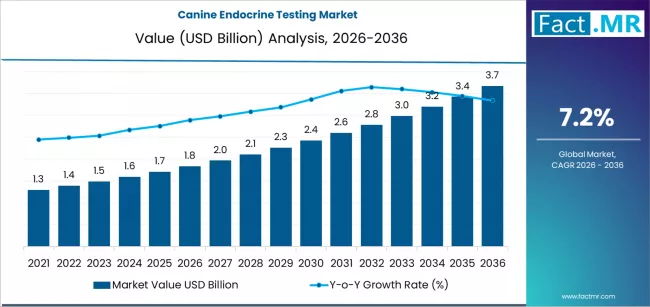
Canine Endocrine Testing Market Market Value Analysis | Source: Fact.MR
Growth is pronounced in India, China, and Brazil, with CAGRs of 9.9%, 9.7%, and 9.2% respectively, reflecting expanding access to advanced veterinary care. The competitive landscape is led by diagnostic specialists like IDEXX Laboratories and Zoetis Inc., focused on integrating testing into routine senior wellness protocols.
Canine Endocrine Testing Market
| Metric | Value |
|---|---|
| Market Value (2026) | USD 1.84 Billion |
| Market Forecast Value (2036) | USD 3.67 Billion |
| Forecast CAGR 2026 to 2036 | 7.2% |
Source: Fact.MR analysis. Updated Jan 14, 2026
Category
| Category | Segments |
|---|---|
| Test Type | Thyroid Function Tests, Adrenal Function Tests, Diabetes Monitoring Assays, Reproductive Hormone Tests |
| Application | Hypothyroidism, Hyperadrenocorticism, Diabetes Mellitus, Others |
| End User | Veterinary Hospitals, Veterinary Clinics, Diagnostic Laboratories |
| Region | North America, Latin America, Western Europe, Eastern Europe, East Asia, South Asia & Pacific, Middle East & Africa |
Source: Fact.MR analysis. Updated Jan 14, 2026
How are Evolving Pet Care Paradigms Reshaping Veterinary Diagnostics?
The humanization of pets and increased spending on animal health are elevating standards of care, making advanced diagnostic testing for chronic conditions a new norm. Growth in pet insurance coverage is reducing financial barriers for comprehensive diagnostic workups, including endocrine panels.
Technological advancements are enabling more accurate, species-specific assays and faster in-clinic results, improving clinical decision-making. The aging global pet population is directly increasing the prevalence of endocrine disorders like diabetes and Cushing’s disease, creating a sustained and growing patient base requiring monitoring and diagnosis.
Segmental Analysis
By Test Type, Which Assay Category is Most Frequently Integrated into Wellness Screening?
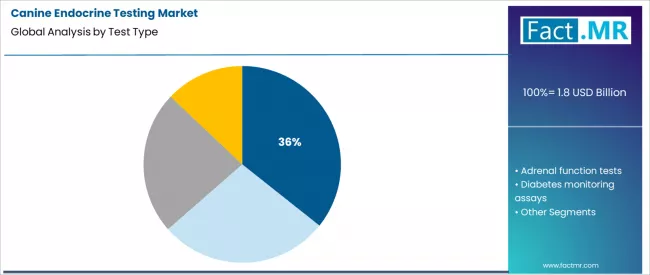
Canine Endocrine Testing Market Analysis By Test Type | Source: Fact.MR
Thyroid function tests command a leading 35.7% share. This segment’s dominance is anchored in the routine inclusion of thyroid panels, particularly T4 and TSH, in senior wellness profiles and diagnostic workups for vague clinical signs like weight gain or lethargy.
Hypothyroidism is a common diagnosis in middle-aged and older dogs, and its management requires periodic monitoring. The high volume of these tests, driven by both diagnosis and treatment monitoring, secures their substantial market position.
By Application, Which Prevalent Disorder Generates the Highest Test Volume?
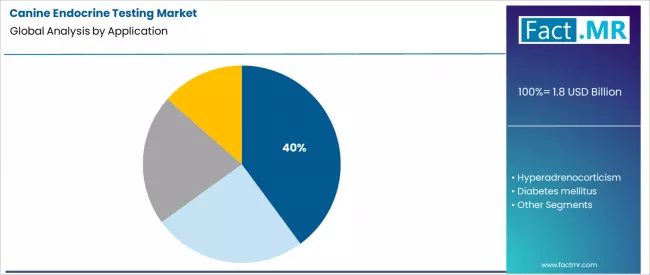
Canine Endocrine Testing Market Analysis By Application | Source: Fact.MR
Hypothyroidism constitutes the primary application segment at 39.9%. This endocrine disorder is frequently suspected in canine patients, leading to a high volume of screening tests.
Diagnosis requires a multi-parameter thyroid panel, and lifelong treatment with levothyroxine necessitates regular follow-up testing to adjust dosage. The combination of high incidence and the need for serial monitoring creates consistent, recurring demand for associated assays within veterinary practices.
By End User, Which Setting Handles Complex Diagnostics and Specialist Referrals?
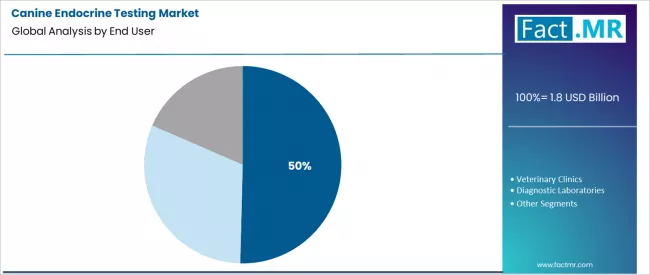
Canine Endocrine Testing Market Analysis By End User | Source: Fact.MR
Veterinary hospitals hold a dominant 50.4% share. These facilities, often equipped with in-house laboratories and specialist internists, perform the majority of complex diagnostic workups for endocrine diseases.
They manage cases of diabetes mellitus, hyperadrenocorticism, and complicated hypothyroidism that require advanced testing like ACTH stimulation or fructosamine assays. Their capacity for comprehensive care makes them the central hub for both initial diagnosis and ongoing monitoring of chronic endocrine conditions.
What are the Principal Drivers, Constraints, and Evolving Dynamics of this Market?
Rising pet longevity and the corresponding increase in age-related endocrine diseases like diabetes and Cushing's syndrome provide a fundamental demand driver. Veterinary emphasis on preventive senior care protocols now routinely incorporates baseline endocrine screening.
Market growth is restrained by the high cost of advanced diagnostic panels and imaging required for definitive diagnosis of conditions like atypical Cushing’s. Client affordability concerns can limit test utilization, especially for confirmatory or monitoring assays in general practice settings.
Significant opportunity exists in the development and marketing of bundled wellness profiles that integrate endocrine tests with other chemistry and hematology parameters. These bundles promote comprehensive screening and improve diagnostic yield for practitioners.
The key trend is the integration of diagnostic data management software with practice management systems. This allows for trending hormone levels over time, setting reminder alerts for monitoring tests, and providing client-friendly reports, thereby enhancing the value of testing and supporting personalized treatment plans.
Analysis of the Canine Endocrine Testing Market by Key Countries
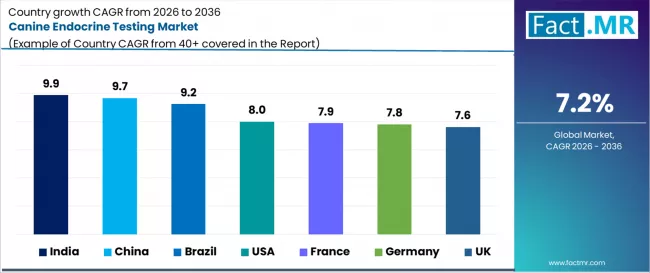
Canine Endocrine Testing Market Cagr Analysis By Country | Source: Fact.MR
| Country | CAGR 2026 to 2036 |
|---|---|
| USA | 8.0% |
| Germany | 7.8% |
| China | 9.7% |
| India | 9.9% |
| Brazil | 9.2% |
| France | 7.9% |
| UK | 7.6% |
Source: Fact.MR analysis. Updated Jan 14, 2026
What Supports Steady Adoption within the USA's Advanced Veterinary Care System?
An 8.0% CAGR is supported by high pet insurance penetration, well-established senior pet care protocols, and the widespread use of in-house laboratory analyzers in veterinary hospitals.
Client expectation for thorough diagnostic workups for chronic symptoms drives test volume. Specialist veterinary endocrinologists contribute to the adoption of advanced testing protocols for complex cases.
How does Germany's Emphasis on Preventative Care Influence Testing Volumes?
Germany's 7.8% CAGR reflects a structured approach to pet healthcare with strong preventative care norms. Regular health check-ups often include baseline bloodwork, creating opportunities for early endocrine disorder detection. The market is characterized by demand for high-quality, reliable assays and a willingness to invest in diagnostic clarity for chronic disease management.
Which Factors Fuel China's Rapid Market Expansion in Pet Diagnostics?
China's 9.7% CAGR is propelled by explosive growth in pet ownership and rapid modernization of veterinary services. New veterinary hospitals are investing in diagnostic laboratory equipment. Growing awareness of chronic canine diseases like diabetes among pet owners is creating demand for specific monitoring tests, moving beyond basic wellness panels.
Why is India's Emerging Veterinary Infrastructure a Primary Growth Catalyst?
The establishment of advanced multi-specialty veterinary hospitals in urban centers drives India’s leading 9.9% CAGR. These facilities introduce comprehensive diagnostic services, including endocrine testing, previously unavailable. The growing focus on breeding management also supports demand for reproductive hormone tests, contributing to overall segment growth.
How is Brazil's Growing Pet Care Market Shaping Diagnostic Adoption?
Brazil's 9.2% CAGR is linked to the expansion of the middle class and increased spending on pet health. Veterinary clinics are upgrading services to include more sophisticated diagnostics.
The high prevalence of certain breeds prone to endocrine disorders supports specific testing demand. Market growth focuses on accessible testing solutions for a broad range of practice types.
What Specific Characteristics Define France's Advanced Veterinary Sector?
France's 7.9% CAGR benefits from a high standard of veterinary care and a strong culture of pet health insurance. This environment supports thorough diagnostic investigations for chronic conditions like hyperadrenocorticism. Veterinarians have good access to regional reference laboratories for specialized endocrine panels, supporting a collaborative diagnostic approach.
How does the UK's Insurance and Referral Network Guide Testing Practices?
The UK’s 7.6% CAGR operates within a well-developed pet insurance market that facilitates diagnostic spending. Robust referral system channels complex endocrine cases to specialist hospitals, which perform the majority of advanced dynamic testing. General practitioners primarily initiate screening tests, creating a two-tiered demand structure based on case complexity.
Competitive Landscape of the Canine Endocrine Testing Market
The competitive environment is characterized by dominance from full-service veterinary diagnostic companies. IDEXX Laboratories and Antech Diagnostics compete through extensive reference laboratory networks and integrated in-clinic analyzers with validated endocrine panels. Pharmaceutical companies like Zoetis leverage their veterinary relationships to offer diagnostic solutions complementary to therapeutic portfolios.
Success depends on providing accurate, species-specific assays, seamless integration of results into digital practice management systems, and supporting veterinarians with diagnostic interpretation and clinical guidelines.
What Key Strategies will Define Success in the Future?
| Strategic Imperative | Description |
|---|---|
| Assay Portfolio Expansion | Developing and validating novel biomarkers for earlier detection and subtyping of endocrine diseases, moving beyond traditional tests. |
| Digital Integration & Telemedicine Support | Creating platforms that allow easy test ordering, digital result delivery, and virtual consultation tools for result interpretation. |
| Emerging Market Education & Access | Tailoring affordable testing profiles and investing in veterinary education on endocrine disorders in high-growth regions. |
| Point-of-Care Testing Solutions | Advancing reliable, in-clinic endocrine test devices that provide rapid results to guide immediate treatment decisions. |
Source: Fact.MR analysis. Updated Jan 14, 2026
Key Players in the Canine Endocrine Testing Market
- IDEXX Laboratories
- Zoetis Inc.
- Heska AG
- Antech Diagnostics
- Randox
Bibliography
- Feldman, E. C., & Nelson, R. W. (2024). Canine and Feline Endocrinology and Reproduction. Elsevier.
- International Society of Feline Medicine. (2025). ISFM Consensus Guidelines on the Diagnosis and Management of Feline Endocrine Diseases. Journal of Feline Medicine and Surgery.
- Panciera, D. L., & Behrend, E. N. (2023). Update on Diagnosis and Management of Canine Hypothyroidism. Veterinary Clinics of North America: Small Animal Practice.
- Rand, J. S., & Marshall, R. D. (2025). Diabetes Mellitus in Dogs and Cats. CABI.
- Veronin, M. A., & Schoeman, J. P. (2024). Challenges in the Diagnosis of Canine Hyperadrenocorticism. Journal of Veterinary Internal Medicine.
- World Small Animal Veterinary Association. (2024). WSAVA Global Guidelines for the Recognition, Diagnosis and Management of Chronic Disease in Dogs and Cats.
Segmentation
Scope of Report
| Items | Metrics |
|---|---|
| Quantitative Units | USD Billion |
| Test Type | Thyroid Function Tests, Adrenal Function Tests, Diabetes Monitoring Assays, Reproductive Hormone Tests |
| Application | Hypothyroidism, Hyperadrenocorticism, Diabetes Mellitus, Others |
| End User | Veterinary Hospitals, Veterinary Clinics, Diagnostic Laboratories |
| Key Countries | India, China, Brazil, USA, France, Germany, UK |
| Key Companies | IDEXX Laboratories, Zoetis Inc., Heska AG, Antech Diagnostics, Randox |
| Additional Analysis | Comparison of diagnostic accuracy for in-clinic vs. reference lab endocrine tests; economic impact of early endocrine disease detection; analysis of breed-specific predispositions driving test demand; impact of canine obesity on endocrine test results interpretation. |
Source: Fact.MR analysis. Updated Jan 14, 2026
Market by Segments
-
Test Type :
- Thyroid Function Tests
- Adrenal Function Tests
- Diabetes Monitoring Assays
- Reproductive Hormone Tests
-
Application :
- Hypothyroidism
- Hyperadrenocorticism
- Diabetes Mellitus
- Others
-
End User :
- Veterinary Hospitals
- Veterinary Clinics
- Diagnostic Laboratories
-
Region :
-
North America
- USA
- Canada
-
Latin America
- Brazil
- Mexico
- Argentina
- Rest of Latin America
-
Western Europe
- Germany
- France
- UK
- Italy
- Spain
- BENELUX
- Rest of Western Europe
-
Eastern Europe
- Poland
- Russia
- Czech Republic
- Rest of Eastern Europe
-
East Asia
- China
- Japan
- South Korea
- Rest of East Asia
-
South Asia & Pacific
- India
- ASEAN
- Australia & New Zealand
- Rest of South Asia & Pacific
-
MEA
- GCC Countries
- South Africa
- Turkiye
- Rest of MEA
-
Frequently Asked Questions
How big is the canine endocrine testing market in 2026?
What will be the size of canine endocrine testing market in 2036?
How much will be the canine endocrine testing market growth between 2026 and 2036?
What are the key product types in the canine endocrine testing market?
Which application segment to contribute significant share in the canine endocrine testing market in 2026?
Who worked on this report


Preview the report firsthand - request a free sample
Free SampleGet the brochure for pricing and purchase details
Download PDF