- Base Value(2026): 3.2 Bn
- Estimated Value(2026): 3.2 Bn
- Forecast Value (2036): 6.2 Bn
- CAGR (2026 - 2036): 6.7%
Canine Flea Allergy Dermatitis Drugs Market Forecast and Outlook 2026 to 2036
The global market for canine flea allergy dermatitis drugs is projected to total USD 3.22 billion in 2026, advancing to USD 6.17 billion by 2036, progressing at a 6.7% CAGR. Growth is driven by the high and persistent prevalence of flea infestations and the severe hypersensitivity reactions they trigger in susceptible dogs.
Key Takeaways from the Canine Flea Allergy Dermatitis Drugs Market
- Market Value for 2026: USD 3.22 Billion
- Market Value for 2036: USD 6.17 Billion
- Forecast CAGR 2026 to 2036: 6.7%
- Leading Drug Segment (2026): Isoxazoline Products (44.1%)
- Leading Application Segment (2026): Acute Flare Management (46.2%)
- Leading Sales Channel Segment (2026): Veterinary Clinics (65.1%)
- Key Growth Countries: India (9.4% CAGR), China (9.1% CAGR), Brazil (8.7% CAGR), USA (7.5% CAGR), France (7.4% CAGR), UK (7.2% CAGR), Germany (7.0% CAGR)
- Key Players: Zoetis Inc., Elanco Animal Health Incorporated, Boehringer Ingelheim International GmbH, Virbac S.A., Ceva Santé Animale S.A.
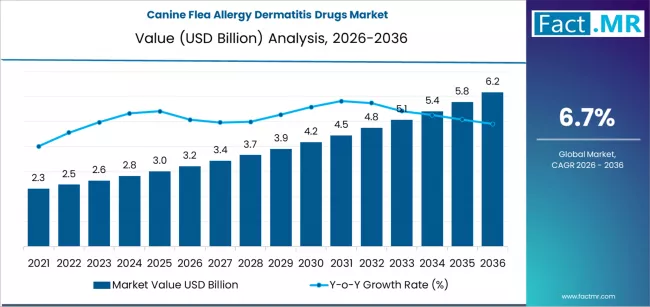
Canine Flea Allergy Dermatitis Drugs Market Market Value Analysis | Source: Fact.MR
The condition demands a dual approach combining rigorous flea control with therapeutic intervention to manage pruritus and skin lesions, creating a sustained market for both parasiticides and anti-inflammatory drugs. Increasing pet owner awareness of allergic skin disease and rising expenditure on veterinary dermatology are key factors supporting market expansion.
The evolution of highly effective, long-acting isoxazoline-class parasiticides has revolutionized preventive management, while ongoing innovation in immunotherapy offers promise for addressing the underlying hypersensitivity in affected animals.
Canine Flea Allergy Dermatitis Drugs Market
| Metric | Value |
|---|---|
| Market Value (2026) | USD 3.22 Billion |
| Market Forecast Value (2036) | USD 6.17 Billion |
| Forecast CAGR 2026 to 2036 | 6.7% |
Source: Fact.MR analysis. Updated Jan 14, 2026
Category
| Category | Segments |
|---|---|
| Drug | Isoxazoline Products, Topical Antiparasitics, Corticosteroids, Immunotherapy Products |
| Application | Acute Flare Management, Chronic Condition Control, Preventive Management |
| Sales Channel | Veterinary Clinics, Retail Veterinary Pharmacies, Online Channels |
| Region | North America, Latin America, Western Europe, Eastern Europe, East Asia, South Asia & Pacific, Middle East & Africa |
Source: Fact.MR analysis. Updated Jan 14, 2026
How are Shifting Pet Care Standards and Parasite Dynamics Influencing Treatment Demand?
| Industry Development | Impact |
|---|---|
| Climate Change and Extended Flea Seasons | Warmer temperatures in many regions prolong flea activity, increasing infestation risk and driving year-round demand for preventive and therapeutic products. |
| Rising Veterinary Dermatology Specialization | Growth in this specialty leads to more accurate diagnoses of flea allergy dermatitis and adoption of comprehensive, long-term management plans involving both flea control and immunomodulators. |
| Consumer Demand for Convenient Solutions | Drives preference for long-acting, systemic parasiticides like isoxazolines over traditional topical treatments, improving compliance and efficacy. |
| Integration of Telehealth in Pet Care | Facilitates follow-up consultations for chronic condition management and prescription renewals, supporting ongoing treatment adherence for allergic patients. |
Source: Fact.MR analysis. Updated Jan 14, 2026
Segmental Analysis
By Drug, Which Product Class Represents the Modern Standard of Care?
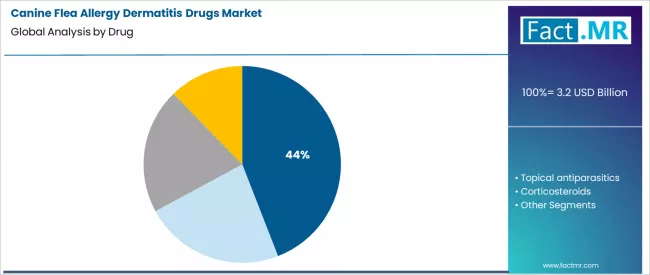
Canine Flea Allergy Dermatitis Drugs Market Analysis By Drug | Source: Fact.MR
Isoxazoline products command a 44.1% share. This segment’s leadership is rooted in its paradigm-shifting efficacy and convenience. These systemic, long-acting chewable tablets provide rapid and sustained flea kill, which is the absolute cornerstone of managing flea allergy dermatitis.
Their high efficacy breaks the flea life cycle effectively, directly addressing the source of the antigenic challenge. This superior performance profile has made them the first-line recommendation from veterinarians for both prevention and as part of therapeutic management in allergic patients.
By Application, Where is Clinical Intervention Most Intensive and Immediate?
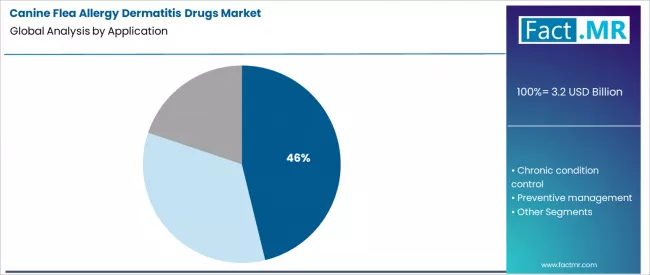
Canine Flea Allergy Dermatitis Drugs Market Analysis By Application | Source: Fact.MR
Acute flare management constitutes the primary application segment at 46.2%. During a severe hypersensitivity reaction, the immediate clinical priority is to stop the intense pruritus and inflammation to prevent self-trauma and secondary infection.
This drives urgent demand for fast-acting corticosteroids, often as an injectable intervention, alongside immediate administration of a potent insecticide. The high clinical urgency and welfare concern associated with acute flares justify significant therapeutic expenditure, securing this segment’s leading share.
By Sales Channel, Which Pathway is Critical for Prescription and Expert Guidance?
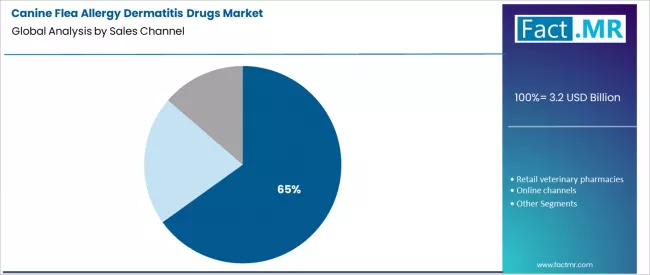
Canine Flea Allergy Dermatitis Drugs Market Analysis By Sales Channel | Source: Fact.MR
Veterinary clinics hold a decisive 65.1% share. Diagnosis of flea allergy dermatitis and differentiation from other allergic skin diseases requires veterinary expertise. Furthermore, the most effective therapeutic agents, including isoxazolines, potent corticosteroids, and allergen-specific immunotherapy, are predominantly prescription-only.
The veterinarian-client-patient relationship is essential for proper diagnosis, treatment planning, and client education on stringent environmental flea control, ensuring clinics remain the indispensable channel.
Attribute
| Attribute | Impact |
|---|---|
| Driver | High global prevalence of fleas and increasing diagnostic recognition of flea allergy dermatitis as a major cause of canine pruritus. |
| Restraint | Development of pet owner complacency with preventive medication once clinical signs subside, leading to non-compliance and disease recurrence. |
| Opportunity | Expansion of allergen-specific immunotherapy (ASIT) as a disease-modifying option for long-term management of the underlying hypersensitivity. |
| Trend | Growing use of combination products that offer both parasiticidal activity and anti-inflammatory effects for integrated management. |
Source: Fact.MR analysis. Updated Jan 14, 2026
Analysis of the Canine Flea Allergy Dermatitis Drugs Market by Key Countries
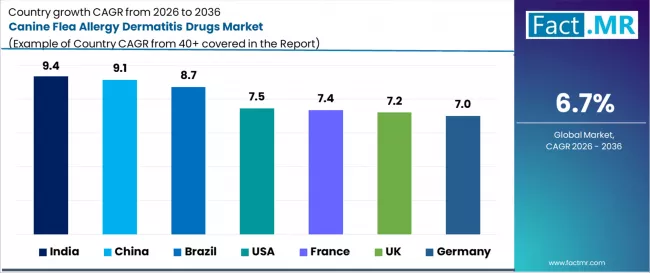
Canine Flea Allergy Dermatitis Drugs Market Cagr Analysis By Country | Source: Fact.MR
| Country | CAGR 2026 to 2036 |
|---|---|
| USA | 7.5% |
| Germany | 7.0% |
| China | 9.1% |
| India | 9.4% |
| Brazil | 8.7% |
| France | 7.4% |
| UK | 7.2% |
Source: Fact.MR analysis. Updated Jan 14, 2026
How is Canine Flea Allergy Dermatitis Drugs Demand sustained within the USA's Advanced Veterinary Dermatology Sector?
A 7.5% CAGR is supported by high pet ownership, year-round flea pressure in many regions, and advanced veterinary specialization. Client awareness of allergies is significant, driving compliance with veterinary-recommended premium parasiticides and treatment plans.
The presence of leading animal health companies ensures rapid adoption of new therapeutic innovations. Demand remains robust for both acute intervention drugs and long-term preventive management strategies.
How does Germany's Regulatory and Preventative Care Focus Shape the Market?
Germany's 7.0% CAGR reflects a strong culture of preventive veterinary care and strict prescription requirements for effective parasiticides. Veterinarians emphasize year-round flea control, directly supporting sustained sales of preventive products. The market is characterized by demand for high-efficacy, well-tolerated medications, with a notable client willingness to invest in managing chronic allergic conditions for pet welfare.
Which Factors Fuel China's Rapid Growth in Parasite Control Awareness?
Rapidly growing pet populations in urban centers and increasing awareness of parasitic diseases propel China’s 9.1% CAGR. Previously underdiagnosed, flea allergy dermatitis is gaining recognition as a key dermatologic issue. This drives new demand for both modern parasiticides for prevention and corticosteroids for managing acute clinical signs, with growth concentrated in first-tier city veterinary hospitals.
Why is India's Emerging Pet Care Market a Primary Growth Catalyst?
India's leading 9.4% CAGR is driven by expanding veterinary infrastructure and growing awareness of ectoparasite-borne diseases. The warm, humid climate in many areas creates ideal conditions for fleas, leading to high infestation rates. Growth is fueled by the introduction of effective systemic parasiticides and increasing diagnosis of allergy cases in newly established veterinary clinics.
How is Brazil's Endemic Flea Challenge Influencing Treatment Priorities?
Brazil's 8.7% CAGR is linked to high endemicity of fleas and other ectoparasites, making flea allergy dermatitis a common presentation. The climate supports continuous flea life cycles. Demand is strong for fast-acting products to control acute flares and highly effective preventives for long-term management. The market sees competition between international brands and local producers offering cost-adapted solutions.
What Characteristics Define France's Structured Veterinary Approach to Canine Flea Allergy Dermatitis Treatment?
France's 7.4% CAGR benefits from a well-developed veterinary sector with a focus on dermatology. There is high client compliance with prescribed preventive medications. The market supports a mix of topical and systemic parasiticides, with growing interest in the convenience of long-acting oral products. Treatment protocols often combine immediate anti-inflammatory therapy with aggressive flea eradication.
How does the UK's Pet Insurance and Climate Influence Market Dynamics?
The UK’s 7.2% CAGR operates within a context of high pet insurance penetration, which facilitates spending on both diagnostics and treatments for allergic conditions. Milder, wetter winters can sustain indoor flea populations year-round.
Veterinary emphasis is on client education regarding consistent, year-round flea prevention as the core strategy for managing susceptible dogs, supporting steady demand for preventive pharmaceuticals.
Competitive Landscape of the Canine Flea Allergy Dermatitis Drugs Market
The competitive environment is concentrated among global animal health pharmaceutical giants. Companies like Zoetis, Elanco, and Boehringer Ingelheim compete through extensive portfolios that include leading isoxazoline parasiticides, corticosteroids, and dedicated dermatology products.
Success hinges on strong veterinary relationships, continuous investment in practitioner education on dermatology management, and the ability to offer integrated solutions that address both the parasite and the allergic response. Niche players may compete with specific products like allergen-specific immunotherapy or topical formulations.
Key Players in the Canine Flea Allergy Dermatitis Drugs Market
- Zoetis Inc.
- Elanco Animal Health Incorporated
- Boehringer Ingelheim International GmbH
- Virbac S.A.
- Ceva Santé Animale S.A.
Bibliography
- Hillier, A., & Lloyd, D. H. (2024). Veterinary Dermatology: A Manual for Nurses and Technicians. Elsevier.
- International Committee on Allergic Diseases of Animals. (2025). ICADA guidelines for the diagnosis and treatment of flea allergy dermatitis in dogs.
- Miller, W. H., Griffin, C. E., & Campbell, K. L. (2023). Muller & Kirk's Small Animal Dermatology. Elsevier.
- Olivry, T., & DeBoer, D. J. (2025). The ACVD task force on canine atopic dermatitis: Foreword and lexicon. Veterinary Immunology and Immunopathology.
- World Association for Veterinary Dermatology. (2024). Consensus guidelines on ectoparasite control in dogs and cats.
- Zoetis Inc. (2025). Parasite prevalence maps and clinical insights report.
Segmentation
Scope of Report
| Items | Metrics |
|---|---|
| Quantitative Units | USD Billion |
| Drug | Isoxazoline Products, Topical Antiparasitics, Corticosteroids, Immunotherapy Products |
| Application | Acute Flare Management, Chronic Condition Control, Preventive Management |
| Sales Channel | Veterinary Clinics, Retail Veterinary Pharmacies, Online Channels |
| Key Countries | India, China, Brazil, USA, France, UK, Germany |
| Key Companies | Zoetis Inc., Elanco Animal Health Incorporated, Boehringer Ingelheim International GmbH, Virbac S.A., Ceva Santé Animale S.A. |
| Additional Analysis | Comparative efficacy and speed-of-action analysis of anti-pruritic drugs; study of compliance drivers for long-term flea control; economic burden of uncontrolled FAD; impact of vector-borne disease co-management on product selection; analysis of client communication strategies for allergy management. |
Source: Fact.MR analysis. Updated Jan 14, 2026
Market by Segments
-
Drug :
- Isoxazoline Products
- Topical Antiparasitics
- Corticosteroids
- Immunotherapy Products
-
Application :
- Acute Flare Management
- Chronic Condition Control
- Preventive Management
-
Sales Channel :
- Veterinary Clinics
- Retail Veterinary Pharmacies
- Online Channels
-
Region :
-
North America
- USA
- Canada
-
Latin America
- Brazil
- Mexico
- Argentina
- Rest of Latin America
-
Western Europe
- Germany
- France
- UK
- Italy
- Spain
- BENELUX
- Rest of Western Europe
-
Eastern Europe
- Poland
- Russia
- Czech Republic
- Rest of Eastern Europe
-
East Asia
- China
- Japan
- South Korea
- Rest of East Asia
-
South Asia & Pacific
- India
- ASEAN
- Australia & New Zealand
- Rest of South Asia & Pacific
-
MEA
- GCC Countries
- South Africa
- Turkiye
- Rest of MEA
-
Frequently Asked Questions
How big is the canine flea allergy dermatitis drugs market in 2026?
What will be the size of canine flea allergy dermatitis drugs market in 2036?
How much will be the canine flea allergy dermatitis drugs market growth between 2026 and 2036?
What are the key product types in the canine flea allergy dermatitis drugs market?
Which application segment to contribute significant share in the canine flea allergy dermatitis drugs market in 2026?
Who worked on this report


Preview the report firsthand - request a free sample
Free SampleGet the brochure for pricing and purchase details
Download PDF