Cell - Free Biologics Market (2026 - 2036)

The Cell - Free Biologics Market is segmented by Product Type (Cell-Free Lysate Systems, Reconstituted Component Systems, Kits & Reagents, Consumables, and others), Technology Platform (Prokaryotic Cell-Free Systems, Eukaryotic Cell-Free Systems, Mammalian Cell-Free Systems, and others), Application (Therapeutic Protein Discovery, Vaccine Antigen Development, Enzyme Engineering, and Others), Target Molecule Type (Simple Soluble Proteins, Complex Proteins, Membrane Proteins, and others), End-user, Scale of Operation, Distribution Channel, and Region. Forecast for 2026 to 2036.

Core Findings

    Cell - Free Biologics Market Forecast 2026 to 2036

    In 2025, the cell-free biologics market was valued at USD 0.49 billion. Based on Fact.MR' analysis, demand for cell-free biologics is estimated to grow to USD 0.53 billion in 2026 and USD 1.16 billion by 2036. Fact.MR projects a CAGR of 8.3% during the forecast period.

    The absolute dollar growth between 2026 and 2036 is USD 0.63 billion. This represents steady, incremental expansion rather than transformational scale-up, reflecting sustained adoption of cell-free biologics driven by innovation and localized manufacturing investments, but moderated by regulatory compliance costs, reimbursement price controls, and competitive pressure from conventional biologics and biosimilars.

    As Robert A. Bradway, Chairman and Chief Executive Officer of Amgen Inc., noted regarding U.S. drug pricing reforms, ‘We support efforts to make medicines more affordable and accessible while continuing to invest in innovation for patients’ [1].
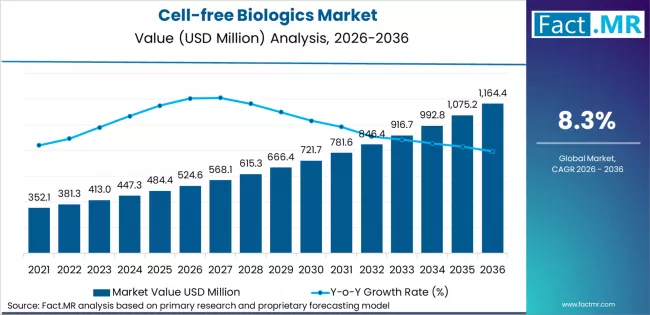
    Cell Free Biologics Market Market Value Analysis

    India (10.0%) leads growth, driven by manufacturing incentives and expanding biologics capacity, followed by China (8.7%) on the back of reimbursement expansion and hospital procurement scale, Saudi Arabia (8.4%) supported by localization under Vision 2030, the United Kingdom (8.1%) with structured NHS commissioning, and Japan (7.8%) under stable national insurance coverage; meanwhile, the United States (7.5%), France (7.6%), and Germany (6.7%) represent mature markets generating primarily replacement demand, structurally constrained by price negotiations, HTA scrutiny, and reimbursement-linked cost containment.

    Cell - Free Biologics Market Definition

    The cell-free biologics market refers to the production and commercialization of biologically derived therapeutic products manufactured without using living cells in the final production stage. Instead of relying on whole-cell systems, these biologics are synthesized using cell-free expression platforms that utilize extracted cellular machinery to produce proteins, enzymes, antibodies, or other therapeutic molecules. Their primary function is to enable faster, more controlled, and scalable production of complex biologic compounds used in medicine. The key end-use is in pharmaceuticals, particularly for developing vaccines, monoclonal antibodies, therapeutic proteins, and advanced biologic treatments where precision, purity, and rapid manufacturing are critical.

    Market Inclusions

    The report provides detailed global and regional market size estimates for the cell-free biologics market, covering the historical base year, current year estimates, and forecasts through 2036. It includes segment-wise analysis by product type, application, and end user, along with country-level breakdowns. The study also examines pricing trends, regulatory impact, competitive landscape, capacity expansion, and trade flow dynamics to deliver a comprehensive industry outlook.

    Market Exclusions

    The scope excludes conventional cell-based biologics manufacturing systems, live-cell therapies, gene therapies, and cell therapy products unless directly linked to cell-free expression platforms. It also omits downstream finished pharmaceutical formulations such as branded injectable drugs, prefilled syringes, and retail vaccine packs. The report does not cover contract clinical research services or biologics distribution logistics, focusing strictly on cell-free biologics production platforms and their immediate therapeutic and industrial applications.

    Research Methodology

    • Primary Research: In-depth interviews were conducted with senior executives from biologics manufacturers, cell-free platform developers, contract development and manufacturing organizations (CDMOs), regulatory consultants, and hospital procurement specialists across key regions.
    • Desk Research: The study draws on annual reports, earnings call transcripts, regulatory agency publications, reimbursement databases, government procurement records, and verified company press releases issued from 2023 onward.
    • Market‑Sizing and Forecasting: A hybrid model combining bottom-up revenue aggregation from company-level data and top-down validation against national biologics expenditure benchmarks was used to estimate market size and project growth through 2036.
    • Data Validation and Update Cycle: Findings were cross-verified through triangulation between primary interviews, financial disclosures, and regulatory data, with periodic updates aligned to major policy changes, earnings releases, and capacity expansion announcements.

    Drivers, Restraints, and Opportunities

    Fact.MR analysts observe that the cell-free biologics market is in a structural transition phase-moving from niche research-driven adoption toward early-stage commercial scale-rather than being fully mature. Its current valuation reflects the convergence of regulatory acceptance of advanced biologics, expanding reimbursement frameworks for high-value therapies, and strategic investments in localized biomanufacturing capacity. The market exists at its present size because healthcare systems are increasingly prioritizing rapid, flexible production platforms for complex biologics, while still balancing cost containment and stringent compliance requirements that moderate acceleration.

    The core shift in the cell-free biologics market is from traditional large-scale, cell-based production systems toward flexible, smaller-batch cell-free expression platforms designed for speed and precision. Demand is softening for standardized, high-volume biologics manufacturing infrastructure where biosimilar competition and centralized procurement are compressing margins. Growth is occurring in specialized applications such as rapid protein synthesis, personalized therapeutics, and advanced R&D pipelines where time-to-production is critical. Although these next-generation platforms command higher per-unit costs, they operate at lower volumes and serve niche indications; revenue growth therefore reflects a mix shift toward higher-value output rather than mass-market expansion, partially offset by pricing pressure in conventional segments.

    • Regulatory Acceleration: Expedited and adaptive regulatory pathways are reshaping commercialization timelines for advanced biologics. For example, the U.S. Food and Drug Administration’s Biosimilar Action Plan and evolving interchangeability guidance are lowering entry barriers for alternative biologics platforms while tightening evidentiary standards. This dual effect increases competitive intensity but also legitimizes newer production technologies such as cell-free systems.
    • Manufacturing Localization: Governments are actively incentivizing domestic biologics production to reduce supply chain dependence. In markets such as Saudi Arabia under Vision 2030 and India through production-linked incentive schemes, localization policies are driving capital investment into advanced biomanufacturing infrastructure, directly supporting adoption of flexible cell-free platforms.
    • Reimbursement Cost Pressure: Mature healthcare systems in the United States and Europe are reinforcing value-based pricing and health technology assessment scrutiny. Centralized negotiations and hospital tender systems compress margins for standardized biologics, pushing manufacturers toward differentiated, high-value applications where premium pricing can still be justified despite lower volumes.

    Segmental Analysis

    Cell- Free Biologics Market Analysis by Product Type
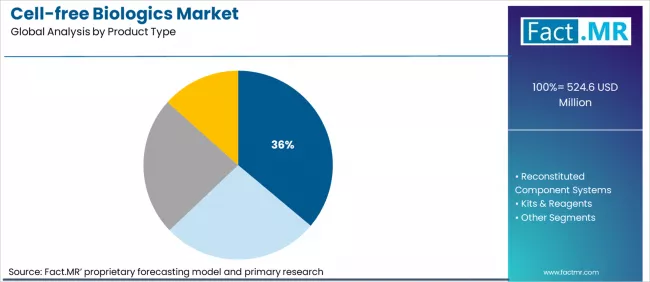
    Cell Free Biologics Market Analysis By Product Type

    • Market Overview: Based on Fact.MR's cell-free biologics market report, consumption of Cell-Free Lysate Systems is estimated to hold 34% share in 2025. This sub-segment dominates because lysate-based platforms offer a ready-to-use, scalable solution that reduces development time compared to fully reconstituted systems. For buyers, particularly biopharma R&D teams, they solve the problem of rapid protein expression with lower setup complexity and faster iteration cycles, enabling quicker transition from discovery to pilot-scale production.
    • Recent Advancements:
      • Capacity Expansion: In 2023, Amgen Inc. announced a USD 550 million expansion of its Ohio biologics manufacturing facility to increase domestic production capacity for advanced biologics [2]. This investment underscores the strategic push toward localized, high-efficiency manufacturing infrastructure capable of supporting flexible production platforms, including cell-free systems where rapid scale-up and modular deployment are critical.
      • Platform Innovation: In 2023, Sutro Biopharma, Inc. highlighted continued advancement of its cell-free protein synthesis platform in its annual report, emphasizing its ability to generate site-specific antibody-drug conjugates with improved precision [3]. This demonstrates how cell-free systems are enabling next-generation biologics with structural customization not easily achievable through traditional cell-based methods.
      • Supply Chain Resilience: In 2024, Thermo Fisher Scientific Inc. reported sustained demand for bioproduction consumables and single-use technologies, citing biomanufacturing capacity build-outs across North America and Asia [4]. This reflects an industry-wide shift toward flexible, modular production ecosystems that reduce logistics risk and support distributed manufacturing models aligned with cell-free technologies.

    Cell- Free Biologics Market Analysis by Application
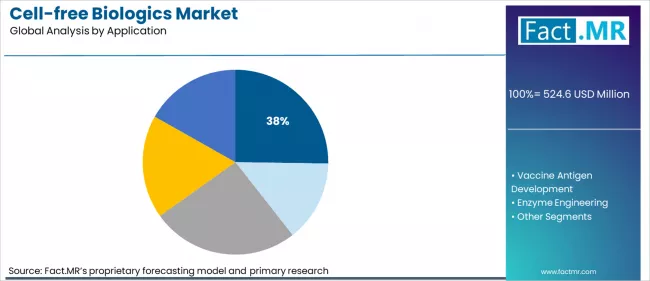
    Cell Free Biologics Market Analysis By Application

    • Market Overview: Based on Fact.MR's cell-free biologics market report, consumption of Therapeutic Protein Discovery is estimated to hold 38% share in 2025. This sub-segment dominates because cell-free platforms enable rapid screening and optimization of complex proteins without the time and variability associated with cell culture systems. For buyers, particularly biopharmaceutical R&D teams, this solves the critical problem of shortening early-stage discovery timelines while improving precision in protein expression and modification.
    • Demand Drivers:
      • Regulatory Support for Advanced Biologics: Accelerated approval pathways and clearer biosimilar guidance from agencies such as the U.S. FDA and EMA are improving market access for innovative biologics platforms, indirectly supporting adoption of faster, flexible production technologies like cell-free systems.
      • Biomanufacturing Localization Initiatives: National policies in markets such as India and Saudi Arabia promoting domestic biologics manufacturing capacity are driving capital investment into modular and scalable production platforms, creating structural demand for cell-free technologies.
      • R&D Acceleration Pressure: Biopharmaceutical companies face increasing pressure to shorten drug discovery and development timelines. Cell-free systems enable rapid protein expression and prototyping, reducing iteration cycles and supporting faster progression from research to clinical development.

    Regional Analysis

    The market analysis covers key global regions, including South Asia and Pacific, Middle East & Africa, North America, Latin America, Western Europe, and Eastern Europe. It is segmented geographically, with specific market dynamics for each region. The full report provides a detailed market attractiveness analysis.

    Country-Wise Insights
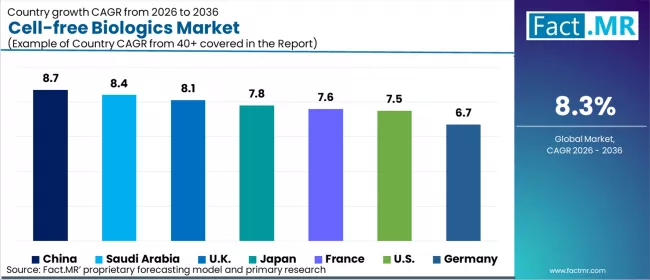
    Cell Free Biologics Market Cagr Analysis By Country

    Country CAGR (%)
    India 10.0%
    China 8.7%
    Japan 7.8%
    Saudi Arabia 8.4%
    U.K. 8.1%
    France 7.6%
    USA 7.5%
    Germany 6.7%

    Source: Fact.MR (FMR) analysis, based on proprietary forecasting model and primary research.

    India: Demand for cell-free biologics in India is projected to rise at 10.0% CAGR through 2036. Growth is underpinned by recent regulatory and industrial policy momentum focused on biomanufacturing scale-up. In August 2023, the Central Drugs Standard Control Organization (CDSCO) notified revised guidance aligning with updated Schedule M Good Manufacturing Practice (GMP) requirements for biologics manufacturing facilities, tightening quality compliance and encouraging modernization of biologics plants. In July 2023, the Government of India operationalized the Production Linked Incentive (PLI) Scheme for Pharmaceuticals (bulk drugs and complex generics including biologics segments), with disbursement-linked manufacturing commitments monitored by the Department of Pharmaceuticals.

    China: Demand for cell-free biologics in China is projected to rise at 8.7% CAGR through 2036. Market growth reflects reimbursement expansion combined with domestic manufacturing scale. In December 2023, the National Healthcare Security Administration (NHSA) completed the annual National Reimbursement Drug List (NRDL) update, adding multiple innovative biologics and expanding provincial hospital reimbursement coverage. In 2023–2024, centralized volume-based procurement (VBP) rounds were extended to selected biologics in several provinces, coordinated by the NHSA, driving price rationalization while expanding patient access through public hospitals. On the supply side, WuXi Biologics disclosed in its 2023 annual report continued expansion of large-scale biologics manufacturing capacity in Jiangsu and Guangdong, including facilities supporting recombinant and cell-free expression platforms. While VBP mechanisms pressure margins, China’s hospital-centric reimbursement expansion sustains volume-led growth.

    Japan: Demand for cell-free biologics in Japan is projected to rise at 7.8% CAGR through 2036. Uptake is shaped by reimbursement recalibration and industrial investment. In April 2024, the Ministry of Health, Labour and Welfare (MHLW) implemented its regular National Health Insurance (NHI) drug price revision, adjusting biologics pricing based on market expansion repricing rules and cost-effectiveness evaluations. In 2023, the MHLW updated cost-effectiveness assessment implementation guidance, reinforcing health economic evaluation for high-cost biologics seeking premium reimbursement. On the investment front, Takeda Pharmaceutical Company reported in 2023 securities filings expanded biologics manufacturing capacity in Japan, including advanced production lines for next-generation biologics.

    Saudi Arabia: Demand for cell-free biologics in Saudi Arabia is projected to rise at 8.4% CAGR through 2036. Growth is linked to regulatory modernization and centralized procurement under Vision 2030. In 2023, the Saudi Food and Drug Authority (SFDA) issued updated biosimilar evaluation and pharmacovigilance guidance aligning with international comparability standards, strengthening the approval pathway for advanced biologics. During 2023–2024 tender cycles, the National Unified Procurement Company (NUPCO) consolidated nationwide biologics procurement for Ministry of Health hospitals, leveraging aggregated purchasing to secure supply contracts. In November 2023, Lifera, a Public Investment Fund-backed biopharma platform, announced investments to localize biologics manufacturing within the Kingdom. While tender-driven pricing limits margins, domestic production incentives and expanding public hospital infrastructure drive sustained demand growth.

    United Kingdom: Demand for cell-free biologics in the United Kingdom is projected to rise at 8.1% CAGR through 2036. Market expansion reflects structured NHS reimbursement and life sciences investment policy. In 2023, NHS England updated commissioning frameworks promoting biosimilar and cost-effective biologics uptake across Integrated Care Systems, reinforcing centralized procurement leverage. In January 2024, the National Institute for Health and Care Excellence (NICE) implemented updates to its health technology evaluation manual, refining severity modifiers and cost-effectiveness thresholds affecting advanced biologics access decisions. Industrial capacity expansion remains active; AstraZeneca announced in November 2023 a major investment in UK manufacturing, including biologics production capabilities. While HTA scrutiny maintains budget discipline, stable NHS demand supports predictable long-term growth.

    United States: Demand for cell-free biologics in the United States is projected to rise at 7.5% CAGR through 2036. Growth is shaped by federal pricing reform and domestic manufacturing expansion. In September 2023, the U.S. Department of Health and Human Services (HHS) announced the first list of drugs subject to Medicare price negotiation under the Inflation Reduction Act, signaling long-term pricing oversight for selected high-expenditure biologics. In 2023, the Food and Drug Administration (FDA) continued implementation of updated biosimilar interchangeability guidance, facilitating market entry for cost-competitive biologics. On the supply side, Amgen announced in 2023 a multibillion-dollar expansion of its U.S. biologics manufacturing footprint, including advanced production facilities in Ohio and North Carolina. Although Medicare negotiation introduces pricing pressure, large-scale domestic investment and private payer coverage sustain volume growth.

    Germany: Demand for cell-free biologics in Germany is projected to rise at 6.7% CAGR through 2036. Market expansion remains tied to benefit assessment and statutory insurance dynamics. In 2023–2024, the Federal Joint Committee (G-BA) continued early benefit assessments under the AMNOG framework for newly approved biologics, determining negotiated reimbursement levels within the statutory health insurance (SHI) system. In 2023, Germany advanced hospital reform legislation discussions affecting funding structures for specialized therapies, indirectly influencing high-cost biologics deployment. On the industrial side, Boehringer Ingelheim reported in its 2023 annual disclosures ongoing investment in German biologics manufacturing infrastructure. While AMNOG price negotiations limit premium realization, Germany’s strong SHI coverage and domestic production base support steady demand through 2036.

    Fact.MR's analysis of the cell-free biologics market in Asia Pacific consists of country-wise assessment that includes India, China, Japan, and Saudi Arabia. Readers can find detailed insights on regulatory developments, reimbursement frameworks, procurement models, manufacturing investments, competitive landscape, and long-term growth projections through 2036.

    Competitive Landscape

    Is the Cell-Free Biologics Market Consolidated or Innovation-Driven?

    The Cell-Free Biologics Market demonstrates a moderately concentrated structure, dominated by a handful of global life sciences companies alongside a layer of specialized biotechnology tool providers. The leading multinational players collectively command an estimated 45–55% share of global revenues, particularly in kits, reagents, and advanced protein expression systems. While smaller firms compete in niche research applications, scale advantages and global distribution networks favor established suppliers. The primary competitive variable is technological performance-specifically protein yield, scalability, reaction efficiency, and reproducibility—followed by regulatory reliability and integration with downstream analytical workflows.

    Companies such as Thermo Fisher Scientific, Merck KGaA, and Danaher Corporation hold structural advantages due to vertical integration across reagents, instruments, and analytical platforms. Their proprietary chemistries, global manufacturing footprints, and established regulatory compliance systems create high entry barriers. Broad product portfolios enable bundled offerings that increase switching costs for customers. Additionally, long-term supply agreements with pharmaceutical firms and research institutions provide revenue stability and strengthen ecosystem lock-in, particularly in clinical and industrial biologics development.

    Buyer behavior is characterized by risk mitigation and technical validation. Large biopharmaceutical companies frequently dual-source critical reagents or maintain approved supplier lists to manage supply continuity and reduce dependency. Strategic procurement teams negotiate volume-based contracts and seek performance guarantees. However, given the sensitivity of biologics production to reagent quality and system reproducibility, switching suppliers can be costly and operationally disruptive. As a result, suppliers offering validated, high-performance platforms retain moderate pricing power, though large customers can exert leverage through scale and competitive bidding, keeping overall pricing dynamics balanced rather than supplier-dominant.

    Recent Industry Developments

    Key Players of the Cell- Free Biologics Market

    • Thermo Fisher Scientific
    • Takara Bio
    • Promega Corporation
    • New England Biolabs (NEB)
    • Merck KGaA
    • Sutro Biopharma
    • LenioBio

    Report Scope

    Metric Value
    Quantitative Units USD 524.6 million (2026) to USD 1,164.4 million (2036), at a CAGR of 8.3%
    Market Definition The Cell-Free Biologics Market comprises products and solutions enabling biologic production and protein synthesis without living cells, including kits, reagents, and systems used in research, diagnostics, and biopharmaceutical development applications.
    By Product Type Cell-Free Lysate Systems, Reconstituted Component Systems, Kits & Reagents, Consumables, Instruments & Automation Platforms, Services
    By Technology Platform Prokaryotic Cell-Free Systems, Eukaryotic Cell-Free Systems, Mammalian Cell-Free Systems, PURE Reconstituted Systems, Engineered or Enhanced Lysate Systems
    By Application Therapeutic Protein Discovery, Vaccine Antigen Development, Enzyme Engineering, Synthetic Biology and Pathway Prototyping, Diagnostic Reagent Development, mRNA Translation and Screening, High-Throughput Screening, Academic Research Applications, Industrial Biocatalysis
    By Target Molecule Type Simple Soluble Proteins, Complex Proteins, Membrane Proteins, Multi-Subunit Protein Complexes, Post-Translationally Modified Proteins
    By End User Biopharmaceutical Companies, Biotechnology Companies, Contract Research Organizations, Contract Development and Manufacturing Organizations, Diagnostic Companies, Academic and Research Institutes, Industrial Biotechnology Companies, Startups and Incubators
    By Scale of Operation Research and Discovery Scale, Preclinical and Process Development Scale, Pilot Scale Production, Commercial Scale Production
    By Distribution Channel Direct Sales, Distributors, Online Sales Platforms, Strategic Partnerships, Licensing Agreements
    By Quality Grade Research Grade, Preclinical Grade, Clinical Grade, GMP Grade
    Regions Covered North America, Latin America, Europe, East Asia, South Asia, Oceania, Middle East and Africa
    Countries Covered United States, Canada, Mexico, Brazil, Argentina, Germany, France, United Kingdom, Italy, Spain, China, India, Japan, South Korea, Indonesia, Australia, and 40+ countries
    Key Companies Profiled Thermo Fisher Scientific, Takara Bio, Promega Corporation, New England Biolabs (NEB), Merck KGaA, Sutro Biopharma, LenioBio, CellFree Sciences Co.,Ltd., Daicel Arbor Biosciences, biotechrabbit, Jena Bioscience GmbH, Cube Biotech, GeneCopoeia, Creative Biolabs, Bioneer
    Forecast Period 2026 to 2036
    Approach Hybrid top-down and bottom-up market modeling validated through primary interviews with manufacturers and supported by trade data benchmarking and market research.

    Cell- Free Biologics Market Key Segments

    • By Product Type :

      • Cell-Free Lysate Systems
      • Reconstituted Component Systems
      • Kits & Reagents
      • Consumables
      • Instruments & Automation Platforms
      • Services
    • By Technology Platform :

      • Prokaryotic Cell-Free Systems
      • Eukaryotic Cell-Free Systems
      • Mammalian Cell-Free Systems
      • PURE Reconstituted Systems
      • Engineered or Enhanced Lysate Systems
    • By Application :

      • Therapeutic Protein Discovery
      • Vaccine Antigen Development
      • Enzyme Engineering
      • Synthetic Biology and Pathway Prototyping
      • Diagnostic Reagent Development
      • mRNA Translation and Screening
      • High-Throughput Screening
      • Academic Research Applications
      • Industrial Biocatalysis
    • By Target Molecule Type :

      • Simple Soluble Proteins
      • Complex Proteins
      • Membrane Proteins
      • Multi-Subunit Protein Complexes
      • Post-Translationally Modified Proteins
    • By End User :

      • Biopharmaceutical Companies
      • Biotechnology Companies
      • Contract Research Organizations
      • Contract Development and Manufacturing Organizations
      • Diagnostic Companies
      • Academic and Research Institutes
      • Industrial Biotechnology Companies
      • Startups and Incubators
    • By Scale of Operation :

      • Research and Discovery Scale
      • Preclinical and Process Development Scale
      • Pilot Scale Production
      • Commercial Scale Production
    • By Distribution Channel :

      • Direct Sales
      • Distributors
      • Online Sales Platforms
      • Strategic Partnerships
      • Licensing Agreements
    • By Quality Grade :

      • Research Grade
      • Preclinical Grade
      • Clinical Grade
      • GMP Grade
    • Region :

      • North America
        • USA
        • Canada
        • Mexico
      • Europe
        • Germany
        • UK
        • France
        • Italy
        • Spain
        • Nordic Countries
        • BENELUX
        • Rest of Europe
      • Asia Pacific
        • China
        • Japan
        • South Korea
        • India
        • Australia
        • Rest of Asia Pacific
      • Latin America
        • Brazil
        • Argentina
        • Rest of Latin America
      • Middle East and Africa
        • Kingdom of Saudi Arabia
        • United Arab Emirates
        • South Africa
        • Rest of Middle East and Africa
      • Other Regions
        • Oceania
        • Central Asia
        • Other Markets

    Bibliographies

    • [1] Amgen Inc. – Statement on U.S. drug pricing reforms (public remarks / earnings communication)
    • [2] Amgen Inc. – Ohio biologics manufacturing expansion announcement (2023 company release)
    • [3] Sutro Biopharma, Inc. – 2023 Annual Report (Form 10-K)
    • [4] Thermo Fisher Scientific Inc. – 2024 bioproduction capacity expansion announcement
    • [5] Thermo Fisher Scientific Completes Olink Acquisition – Contract Pharma
    • [6] Thermo Fisher Scientific Opens Bioprocess & Design Centre in India – eHealth Elets Online
    • [7] Merck KGaA and BioNTech Strategic Partnership – Merck Official Press Release

    Table of Content

    1. Executive Summary
      • Global Market Outlook
      • Demand to side Trends
      • Supply to side Trends
      • Technology Roadmap Analysis
      • Analysis and Recommendations
    2. Market Overview
      • Market Coverage / Taxonomy
      • Market Definition / Scope / Limitations
    3. Market Background
      • Market Dynamics
        • Drivers
        • Restraints
        • Opportunity
        • Trends
      • Scenario Forecast
        • Demand in Optimistic Scenario
        • Demand in Likely Scenario
        • Demand in Conservative Scenario
      • Opportunity Map Analysis
      • Product Life Cycle Analysis
      • Supply Chain Analysis
      • Investment Feasibility Matrix
      • Value Chain Analysis
      • PESTLE and Porter’s Analysis
      • Regulatory Landscape
      • Regional Parent Market Outlook
      • Production and Consumption Statistics
      • Import and Export Statistics
    4. Global Market Analysis 2021 to 2025 and Forecast, 2026 to 2036
      • Historical Market Size Value (USD Million) Analysis, 2021 to 2025
      • Current and Future Market Size Value (USD Million) Projections, 2026 to 2036
        • Y to o to Y Growth Trend Analysis
        • Absolute $ Opportunity Analysis
    5. Global Market Pricing Analysis 2021 to 2025 and Forecast 2026 to 2036
    6. Global Market Analysis 2021 to 2025 and Forecast 2026 to 2036, By Product Type
      • Introduction / Key Findings
      • Historical Market Size Value (USD Million) Analysis By Product Type , 2021 to 2025
      • Current and Future Market Size Value (USD Million) Analysis and Forecast By Product Type , 2026 to 2036
      • Cell-Free Lysate Systems
      • Reconstituted Component Systems
      • Kits & Reagents
      • Consumables
      • Instruments & Automation Platforms
      • Services
    7. Y to o to Y Growth Trend Analysis By Product Type , 2021 to 2025
    8. Absolute $ Opportunity Analysis By Product Type , 2026 to 2036
    9. Global Market Analysis 2021 to 2025 and Forecast 2026 to 2036, By Technology Platform
      • Introduction / Key Findings
      • Historical Market Size Value (USD Million) Analysis By Technology Platform, 2021 to 2025
      • Current and Future Market Size Value (USD Million) Analysis and Forecast By Technology Platform, 2026 to 2036
      • Prokaryotic Cell-Free Systems
      • Eukaryotic Cell-Free Systems
      • Mammalian Cell-Free Systems
      • PURE Reconstituted Systems
      • Engineered or Enhanced Lysate Systems
    10. Y to o to Y Growth Trend Analysis By Technology Platform, 2021 to 2025
    11. Absolute $ Opportunity Analysis By Technology Platform, 2026 to 2036
    12. Global Market Analysis 2021 to 2025 and Forecast 2026 to 2036, By Application
      • Introduction / Key Findings
      • Historical Market Size Value (USD Million) Analysis By Application, 2021 to 2025
      • Current and Future Market Size Value (USD Million) Analysis and Forecast By Application, 2026 to 2036
      • Therapeutic Protein Discovery
      • Vaccine Antigen Development
      • Enzyme Engineering
      • Synthetic Biology and Pathway Prototyping
      • Diagnostic Reagent Development
      • mRNA Translation and Screening
      • High-Throughput Screening
      • Academic Research Applications
      • Industrial Biocatalysis
    13. Y to o to Y Growth Trend Analysis By Application, 2021 to 2025
    14. Absolute $ Opportunity Analysis By Application, 2026 to 2036
    15. Global Market Analysis 2021 to 2025 and Forecast 2026 to 2036, By Target Molecule Type
      • Introduction / Key Findings
      • Historical Market Size Value (USD Million) Analysis By Target Molecule Type, 2021 to 2025
      • Current and Future Market Size Value (USD Million) Analysis and Forecast By Target Molecule Type, 2026 to 2036
      • Simple Soluble Proteins
      • Complex Proteins
      • Membrane Proteins
      • Multi-Subunit Protein Complexes
      • Post-Translationally Modified Proteins
    16. Y to o to Y Growth Trend Analysis By Target Molecule Type, 2021 to 2025
    17. Absolute $ Opportunity Analysis By Target Molecule Type, 2026 to 2036
    18. Global Market Analysis 2021 to 2025 and Forecast 2026 to 2036, By End User
      • Introduction / Key Findings
      • Historical Market Size Value (USD Million) Analysis By End User, 2021 to 2025
      • Current and Future Market Size Value (USD Million) Analysis and Forecast By End User, 2026 to 2036
      • Biopharmaceutical Companies
      • Biotechnology Companies
      • Contract Research Organizations
      • Contract Development and Manufacturing Organizations
      • Diagnostic Companies
      • Academic and Research Institutes
      • Industrial Biotechnology Companies
      • Startups and Incubators
    19. Y to o to Y Growth Trend Analysis By End User, 2021 to 2025
    20. Absolute $ Opportunity Analysis By End User, 2026 to 2036
    21. Global Market Analysis 2021 to 2025 and Forecast 2026 to 2036, By Scale of Operation
      • Introduction / Key Findings
      • Historical Market Size Value (USD Million) Analysis By Scale of Operation, 2021 to 2025
      • Current and Future Market Size Value (USD Million) Analysis and Forecast By Scale of Operation, 2026 to 2036
      • Research and Discovery Scale
      • Preclinical and Process Development Scale
      • Pilot Scale Production
      • Commercial Scale Production
    22. Y to o to Y Growth Trend Analysis By Scale of Operation, 2021 to 2025
    23. Absolute $ Opportunity Analysis By Scale of Operation, 2026 to 2036
    24. Global Market Analysis 2021 to 2025 and Forecast 2026 to 2036, By Distribution Channel
      • Introduction / Key Findings
      • Historical Market Size Value (USD Million) Analysis By Distribution Channel, 2021 to 2025
      • Current and Future Market Size Value (USD Million) Analysis and Forecast By Distribution Channel, 2026 to 2036
      • Direct Sales
      • Distributors
      • Online Sales Platforms
      • Strategic Partnerships
      • Licensing Agreements
    25. Y to o to Y Growth Trend Analysis By Distribution Channel, 2021 to 2025
    26. Absolute $ Opportunity Analysis By Distribution Channel, 2026 to 2036
    27. Global Market Analysis 2021 to 2025 and Forecast 2026 to 2036, By Region
      • Introduction
      • Historical Market Size Value (USD Million) Analysis By Region, 2021 to 2025
      • Current Market Size Value (USD Million) Analysis and Forecast By Region, 2026 to 2036
        • North America
        • Latin America
        • Western Europe
        • Eastern Europe
        • East Asia
        • South Asia and Pacific
        • Middle East & Africa
      • Market Attractiveness Analysis By Region
    28. North America Market Analysis 2021 to 2025 and Forecast 2026 to 2036, By Country
      • Historical Market Size Value (USD Million) Trend Analysis By Market Taxonomy, 2021 to 2025
      • Market Size Value (USD Million) Forecast By Market Taxonomy, 2026 to 2036
        • By Country
          • USA
          • Canada
          • Mexico
        • By Product Type
        • By Technology Platform
        • By Application
        • By Target Molecule Type
        • By End User
        • By Scale of Operation
        • By Distribution Channel
      • Market Attractiveness Analysis
        • By Country
        • By Product Type
        • By Technology Platform
        • By Application
        • By Target Molecule Type
        • By End User
        • By Scale of Operation
        • By Distribution Channel
      • Key Takeaways
    29. Latin America Market Analysis 2021 to 2025 and Forecast 2026 to 2036, By Country
      • Historical Market Size Value (USD Million) Trend Analysis By Market Taxonomy, 2021 to 2025
      • Market Size Value (USD Million) Forecast By Market Taxonomy, 2026 to 2036
        • By Country
          • Brazil
          • Chile
          • Rest of Latin America
        • By Product Type
        • By Technology Platform
        • By Application
        • By Target Molecule Type
        • By End User
        • By Scale of Operation
        • By Distribution Channel
      • Market Attractiveness Analysis
        • By Country
        • By Product Type
        • By Technology Platform
        • By Application
        • By Target Molecule Type
        • By End User
        • By Scale of Operation
        • By Distribution Channel
      • Key Takeaways
    30. Western Europe Market Analysis 2021 to 2025 and Forecast 2026 to 2036, By Country
      • Historical Market Size Value (USD Million) Trend Analysis By Market Taxonomy, 2021 to 2025
      • Market Size Value (USD Million) Forecast By Market Taxonomy, 2026 to 2036
        • By Country
          • Germany
          • UK
          • Italy
          • Spain
          • France
          • Nordic
          • BENELUX
          • Rest of Western Europe
        • By Product Type
        • By Technology Platform
        • By Application
        • By Target Molecule Type
        • By End User
        • By Scale of Operation
        • By Distribution Channel
      • Market Attractiveness Analysis
        • By Country
        • By Product Type
        • By Technology Platform
        • By Application
        • By Target Molecule Type
        • By End User
        • By Scale of Operation
        • By Distribution Channel
      • Key Takeaways
    31. Eastern Europe Market Analysis 2021 to 2025 and Forecast 2026 to 2036, By Country
      • Historical Market Size Value (USD Million) Trend Analysis By Market Taxonomy, 2021 to 2025
      • Market Size Value (USD Million) Forecast By Market Taxonomy, 2026 to 2036
        • By Country
          • Russia
          • Poland
          • Hungary
          • Balkan & Baltic
          • Rest of Eastern Europe
        • By Product Type
        • By Technology Platform
        • By Application
        • By Target Molecule Type
        • By End User
        • By Scale of Operation
        • By Distribution Channel
      • Market Attractiveness Analysis
        • By Country
        • By Product Type
        • By Technology Platform
        • By Application
        • By Target Molecule Type
        • By End User
        • By Scale of Operation
        • By Distribution Channel
      • Key Takeaways
    32. East Asia Market Analysis 2021 to 2025 and Forecast 2026 to 2036, By Country
      • Historical Market Size Value (USD Million) Trend Analysis By Market Taxonomy, 2021 to 2025
      • Market Size Value (USD Million) Forecast By Market Taxonomy, 2026 to 2036
        • By Country
          • China
          • Japan
          • South Korea
        • By Product Type
        • By Technology Platform
        • By Application
        • By Target Molecule Type
        • By End User
        • By Scale of Operation
        • By Distribution Channel
      • Market Attractiveness Analysis
        • By Country
        • By Product Type
        • By Technology Platform
        • By Application
        • By Target Molecule Type
        • By End User
        • By Scale of Operation
        • By Distribution Channel
      • Key Takeaways
    33. South Asia and Pacific Market Analysis 2021 to 2025 and Forecast 2026 to 2036, By Country
      • Historical Market Size Value (USD Million) Trend Analysis By Market Taxonomy, 2021 to 2025
      • Market Size Value (USD Million) Forecast By Market Taxonomy, 2026 to 2036
        • By Country
          • India
          • ASEAN
          • Australia & New Zealand
          • Rest of South Asia and Pacific
        • By Product Type
        • By Technology Platform
        • By Application
        • By Target Molecule Type
        • By End User
        • By Scale of Operation
        • By Distribution Channel
      • Market Attractiveness Analysis
        • By Country
        • By Product Type
        • By Technology Platform
        • By Application
        • By Target Molecule Type
        • By End User
        • By Scale of Operation
        • By Distribution Channel
      • Key Takeaways
    34. Middle East & Africa Market Analysis 2021 to 2025 and Forecast 2026 to 2036, By Country
      • Historical Market Size Value (USD Million) Trend Analysis By Market Taxonomy, 2021 to 2025
      • Market Size Value (USD Million) Forecast By Market Taxonomy, 2026 to 2036
        • By Country
          • Kingdom of Saudi Arabia
          • Other GCC Countries
          • Turkiye
          • South Africa
          • Other African Union
          • Rest of Middle East & Africa
        • By Product Type
        • By Technology Platform
        • By Application
        • By Target Molecule Type
        • By End User
        • By Scale of Operation
        • By Distribution Channel
      • Market Attractiveness Analysis
        • By Country
        • By Product Type
        • By Technology Platform
        • By Application
        • By Target Molecule Type
        • By End User
        • By Scale of Operation
        • By Distribution Channel
      • Key Takeaways
    35. Key Countries Market Analysis
      • USA
        • Pricing Analysis
        • Market Share Analysis, 2025
          • By Product Type
          • By Technology Platform
          • By Application
          • By Target Molecule Type
          • By End User
          • By Scale of Operation
          • By Distribution Channel
      • Canada
        • Pricing Analysis
        • Market Share Analysis, 2025
          • By Product Type
          • By Technology Platform
          • By Application
          • By Target Molecule Type
          • By End User
          • By Scale of Operation
          • By Distribution Channel
      • Mexico
        • Pricing Analysis
        • Market Share Analysis, 2025
          • By Product Type
          • By Technology Platform
          • By Application
          • By Target Molecule Type
          • By End User
          • By Scale of Operation
          • By Distribution Channel
      • Brazil
        • Pricing Analysis
        • Market Share Analysis, 2025
          • By Product Type
          • By Technology Platform
          • By Application
          • By Target Molecule Type
          • By End User
          • By Scale of Operation
          • By Distribution Channel
      • Chile
        • Pricing Analysis
        • Market Share Analysis, 2025
          • By Product Type
          • By Technology Platform
          • By Application
          • By Target Molecule Type
          • By End User
          • By Scale of Operation
          • By Distribution Channel
      • Germany
        • Pricing Analysis
        • Market Share Analysis, 2025
          • By Product Type
          • By Technology Platform
          • By Application
          • By Target Molecule Type
          • By End User
          • By Scale of Operation
          • By Distribution Channel
      • UK
        • Pricing Analysis
        • Market Share Analysis, 2025
          • By Product Type
          • By Technology Platform
          • By Application
          • By Target Molecule Type
          • By End User
          • By Scale of Operation
          • By Distribution Channel
      • Italy
        • Pricing Analysis
        • Market Share Analysis, 2025
          • By Product Type
          • By Technology Platform
          • By Application
          • By Target Molecule Type
          • By End User
          • By Scale of Operation
          • By Distribution Channel
      • Spain
        • Pricing Analysis
        • Market Share Analysis, 2025
          • By Product Type
          • By Technology Platform
          • By Application
          • By Target Molecule Type
          • By End User
          • By Scale of Operation
          • By Distribution Channel
      • France
        • Pricing Analysis
        • Market Share Analysis, 2025
          • By Product Type
          • By Technology Platform
          • By Application
          • By Target Molecule Type
          • By End User
          • By Scale of Operation
          • By Distribution Channel
      • India
        • Pricing Analysis
        • Market Share Analysis, 2025
          • By Product Type
          • By Technology Platform
          • By Application
          • By Target Molecule Type
          • By End User
          • By Scale of Operation
          • By Distribution Channel
      • ASEAN
        • Pricing Analysis
        • Market Share Analysis, 2025
          • By Product Type
          • By Technology Platform
          • By Application
          • By Target Molecule Type
          • By End User
          • By Scale of Operation
          • By Distribution Channel
      • Australia & New Zealand
        • Pricing Analysis
        • Market Share Analysis, 2025
          • By Product Type
          • By Technology Platform
          • By Application
          • By Target Molecule Type
          • By End User
          • By Scale of Operation
          • By Distribution Channel
      • China
        • Pricing Analysis
        • Market Share Analysis, 2025
          • By Product Type
          • By Technology Platform
          • By Application
          • By Target Molecule Type
          • By End User
          • By Scale of Operation
          • By Distribution Channel
      • Japan
        • Pricing Analysis
        • Market Share Analysis, 2025
          • By Product Type
          • By Technology Platform
          • By Application
          • By Target Molecule Type
          • By End User
          • By Scale of Operation
          • By Distribution Channel
      • South Korea
        • Pricing Analysis
        • Market Share Analysis, 2025
          • By Product Type
          • By Technology Platform
          • By Application
          • By Target Molecule Type
          • By End User
          • By Scale of Operation
          • By Distribution Channel
      • Russia
        • Pricing Analysis
        • Market Share Analysis, 2025
          • By Product Type
          • By Technology Platform
          • By Application
          • By Target Molecule Type
          • By End User
          • By Scale of Operation
          • By Distribution Channel
      • Poland
        • Pricing Analysis
        • Market Share Analysis, 2025
          • By Product Type
          • By Technology Platform
          • By Application
          • By Target Molecule Type
          • By End User
          • By Scale of Operation
          • By Distribution Channel
      • Hungary
        • Pricing Analysis
        • Market Share Analysis, 2025
          • By Product Type
          • By Technology Platform
          • By Application
          • By Target Molecule Type
          • By End User
          • By Scale of Operation
          • By Distribution Channel
      • Kingdom of Saudi Arabia
        • Pricing Analysis
        • Market Share Analysis, 2025
          • By Product Type
          • By Technology Platform
          • By Application
          • By Target Molecule Type
          • By End User
          • By Scale of Operation
          • By Distribution Channel
      • Turkiye
        • Pricing Analysis
        • Market Share Analysis, 2025
          • By Product Type
          • By Technology Platform
          • By Application
          • By Target Molecule Type
          • By End User
          • By Scale of Operation
          • By Distribution Channel
      • South Africa
        • Pricing Analysis
        • Market Share Analysis, 2025
          • By Product Type
          • By Technology Platform
          • By Application
          • By Target Molecule Type
          • By End User
          • By Scale of Operation
          • By Distribution Channel
    36. Market Structure Analysis
      • Competition Dashboard
      • Competition Benchmarking
      • Market Share Analysis of Top Players
        • By Regional
        • By Product Type
        • By Technology Platform
        • By Application
        • By Target Molecule Type
        • By End User
        • By Scale of Operation
        • By Distribution Channel
    37. Competition Analysis
      • Competition Deep Dive
        • Thermo Fisher Scientific
          • Overview
          • Product Portfolio
          • Profitability by Market Segments (Product/Age /Sales Channel/Region)
          • Sales Footprint
          • Strategy Overview
            • Marketing Strategy
            • Product Strategy
            • Channel Strategy
        • Takara Bio
        • Promega Corporation
        • New England Biolabs (NEB)
        • Merck KGaA
        • Sutro Biopharma
        • LenioBio
        • CellFree Sciences Co.,Ltd.
        • Daicel Arbor Biosciences
        • biotechrabbit
        • Jena Bioscience GmbH
        • Cube Biotech
        • GeneCopoeia
        • Creative Biolabs
        • Bioneer
    38. Assumptions & Acronyms Used
    39. Research Methodology

    List Of Table

    • Table 1: Global Market Value (USD Mn) Forecast by Region, 2020 to 2035
    • Table 2: Global Market Value (USD Mn) Forecast by Product Type, 2020 to 2035
    • Table 3: Global Market Value (USD Mn) Forecast by Technology Platform, 2020 to 2035
    • Table 4: Global Market Value (USD Mn) Forecast by Application, 2020 to 2035
    • Table 5: Global Market Value (USD Mn) Forecast by Target Molecule Type, 2020 to 2035
    • Table 6: Global Market Value (USD Mn) Forecast by End User, 2020 to 2035
    • Table 7: Global Market Value (USD Mn) Forecast by Scale of Operation, 2020 to 2035
    • Table 8: Global Market Value (USD Mn) Forecast by Distribution Channel, 2020 to 2035
    • Table 9: North America Market Value (USD Mn) Forecast by Country, 2020 to 2035
    • Table 10: North America Market Value (USD Mn) Forecast by Product Type, 2020 to 2035
    • Table 11: North America Market Value (USD Mn) Forecast by Technology Platform, 2020 to 2035
    • Table 12: North America Market Value (USD Mn) Forecast by Application, 2020 to 2035
    • Table 13: North America Market Value (USD Mn) Forecast by Target Molecule Type, 2020 to 2035
    • Table 14: North America Market Value (USD Mn) Forecast by End User, 2020 to 2035
    • Table 15: North America Market Value (USD Mn) Forecast by Scale of Operation, 2020 to 2035
    • Table 16: North America Market Value (USD Mn) Forecast by Distribution Channel, 2020 to 2035
    • Table 17: Latin America Market Value (USD Mn) Forecast by Country, 2020 to 2035
    • Table 18: Latin America Market Value (USD Mn) Forecast by Product Type, 2020 to 2035
    • Table 19: Latin America Market Value (USD Mn) Forecast by Technology Platform, 2020 to 2035
    • Table 20: Latin America Market Value (USD Mn) Forecast by Application, 2020 to 2035
    • Table 21: Latin America Market Value (USD Mn) Forecast by Target Molecule Type, 2020 to 2035
    • Table 22: Latin America Market Value (USD Mn) Forecast by End User, 2020 to 2035
    • Table 23: Latin America Market Value (USD Mn) Forecast by Scale of Operation, 2020 to 2035
    • Table 24: Latin America Market Value (USD Mn) Forecast by Distribution Channel, 2020 to 2035
    • Table 25: Western Europe Market Value (USD Mn) Forecast by Country, 2020 to 2035
    • Table 26: Western Europe Market Value (USD Mn) Forecast by Product Type, 2020 to 2035
    • Table 27: Western Europe Market Value (USD Mn) Forecast by Technology Platform, 2020 to 2035
    • Table 28: Western Europe Market Value (USD Mn) Forecast by Application, 2020 to 2035
    • Table 29: Western Europe Market Value (USD Mn) Forecast by Target Molecule Type, 2020 to 2035
    • Table 30: Western Europe Market Value (USD Mn) Forecast by End User, 2020 to 2035
    • Table 31: Western Europe Market Value (USD Mn) Forecast by Scale of Operation, 2020 to 2035
    • Table 32: Western Europe Market Value (USD Mn) Forecast by Distribution Channel, 2020 to 2035
    • Table 33: Eastern Europe Market Value (USD Mn) Forecast by Country, 2020 to 2035
    • Table 34: Eastern Europe Market Value (USD Mn) Forecast by Product Type, 2020 to 2035
    • Table 35: Eastern Europe Market Value (USD Mn) Forecast by Technology Platform, 2020 to 2035
    • Table 36: Eastern Europe Market Value (USD Mn) Forecast by Application, 2020 to 2035
    • Table 37: Eastern Europe Market Value (USD Mn) Forecast by Target Molecule Type, 2020 to 2035
    • Table 38: Eastern Europe Market Value (USD Mn) Forecast by End User, 2020 to 2035
    • Table 39: Eastern Europe Market Value (USD Mn) Forecast by Scale of Operation, 2020 to 2035
    • Table 40: Eastern Europe Market Value (USD Mn) Forecast by Distribution Channel, 2020 to 2035
    • Table 41: East Asia Market Value (USD Mn) Forecast by Country, 2020 to 2035
    • Table 42: East Asia Market Value (USD Mn) Forecast by Product Type, 2020 to 2035
    • Table 43: East Asia Market Value (USD Mn) Forecast by Technology Platform, 2020 to 2035
    • Table 44: East Asia Market Value (USD Mn) Forecast by Application, 2020 to 2035
    • Table 45: East Asia Market Value (USD Mn) Forecast by Target Molecule Type, 2020 to 2035
    • Table 46: East Asia Market Value (USD Mn) Forecast by End User, 2020 to 2035
    • Table 47: East Asia Market Value (USD Mn) Forecast by Scale of Operation, 2020 to 2035
    • Table 48: East Asia Market Value (USD Mn) Forecast by Distribution Channel, 2020 to 2035
    • Table 49: South Asia and Pacific Market Value (USD Mn) Forecast by Country, 2020 to 2035
    • Table 50: South Asia and Pacific Market Value (USD Mn) Forecast by Product Type, 2020 to 2035
    • Table 51: South Asia and Pacific Market Value (USD Mn) Forecast by Technology Platform, 2020 to 2035
    • Table 52: South Asia and Pacific Market Value (USD Mn) Forecast by Application, 2020 to 2035
    • Table 53: South Asia and Pacific Market Value (USD Mn) Forecast by Target Molecule Type, 2020 to 2035
    • Table 54: South Asia and Pacific Market Value (USD Mn) Forecast by End User, 2020 to 2035
    • Table 55: South Asia and Pacific Market Value (USD Mn) Forecast by Scale of Operation, 2020 to 2035
    • Table 56: South Asia and Pacific Market Value (USD Mn) Forecast by Distribution Channel, 2020 to 2035
    • Table 57: Middle East & Africa Market Value (USD Mn) Forecast by Country, 2020 to 2035
    • Table 58: Middle East & Africa Market Value (USD Mn) Forecast by Product Type, 2020 to 2035
    • Table 59: Middle East & Africa Market Value (USD Mn) Forecast by Technology Platform, 2020 to 2035
    • Table 60: Middle East & Africa Market Value (USD Mn) Forecast by Application, 2020 to 2035
    • Table 61: Middle East & Africa Market Value (USD Mn) Forecast by Target Molecule Type, 2020 to 2035
    • Table 62: Middle East & Africa Market Value (USD Mn) Forecast by End User, 2020 to 2035
    • Table 63: Middle East & Africa Market Value (USD Mn) Forecast by Scale of Operation, 2020 to 2035
    • Table 64: Middle East & Africa Market Value (USD Mn) Forecast by Distribution Channel, 2020 to 2035

    List Of Figures

    • Figure 1: Global Market Pricing Analysis
    • Figure 2: Global Market Value (USD Mn) Forecast 2020–2035
    • Figure 3: Global Market Value Share and BPS Analysis by Product Type, 2025 and 2035
    • Figure 4: Global Market Y-o-Y Growth Comparison by Product Type, 2025 to 2035
    • Figure 5: Global Market Attractiveness Analysis by Product Type
    • Figure 6: Global Market Value Share and BPS Analysis by Technology Platform, 2025 and 2035
    • Figure 7: Global Market Y-o-Y Growth Comparison by Technology Platform, 2025 to 2035
    • Figure 8: Global Market Attractiveness Analysis by Technology Platform
    • Figure 9: Global Market Value Share and BPS Analysis by Application, 2025 and 2035
    • Figure 10: Global Market Y-o-Y Growth Comparison by Application, 2025 to 2035
    • Figure 11: Global Market Attractiveness Analysis by Application
    • Figure 12: Global Market Value Share and BPS Analysis by Target Molecule Type, 2025 and 2035
    • Figure 13: Global Market Y-o-Y Growth Comparison by Target Molecule Type, 2025 to 2035
    • Figure 14: Global Market Attractiveness Analysis by Target Molecule Type
    • Figure 15: Global Market Value Share and BPS Analysis by End User, 2025 and 2035
    • Figure 16: Global Market Y-o-Y Growth Comparison by End User, 2025 to 2035
    • Figure 17: Global Market Attractiveness Analysis by End User
    • Figure 18: Global Market Value Share and BPS Analysis by Scale of Operation, 2025 and 2035
    • Figure 19: Global Market Y-o-Y Growth Comparison by Scale of Operation, 2025 to 2035
    • Figure 20: Global Market Attractiveness Analysis by Scale of Operation
    • Figure 21: Global Market Value Share and BPS Analysis by Distribution Channel, 2025 and 2035
    • Figure 22: Global Market Y-o-Y Growth Comparison by Distribution Channel, 2025 to 2035
    • Figure 23: Global Market Attractiveness Analysis by Distribution Channel
    • Figure 24: Global Market Value (USD Mn) Share and BPS Analysis by Region, 2025 and 2035
    • Figure 25: Global Market Y-o-Y Growth Comparison by Region, 2025 to 2035
    • Figure 26: Global Market Attractiveness Analysis by Region
    • Figure 27: North America Market Incremental $ Opportunity, 2025 to 2035
    • Figure 28: Latin America Market Incremental $ Opportunity, 2025 to 2035
    • Figure 29: Western Europe Market Incremental $ Opportunity, 2025 to 2035
    • Figure 30: Eastern Europe Market Incremental $ Opportunity, 2025 to 2035
    • Figure 31: East Asia Market Incremental $ Opportunity, 2025 to 2035
    • Figure 32: South Asia and Pacific Market Incremental $ Opportunity, 2025 to 2035
    • Figure 33: Middle East & Africa Market Incremental $ Opportunity, 2025 to 2035
    • Figure 34: North America Market Value Share and BPS Analysis by Country, 2025 and 2035
    • Figure 35: North America Market Value Share and BPS Analysis by Product Type, 2025 and 2035
    • Figure 36: North America Market Y-o-Y Growth Comparison by Product Type, 2025 to 2035
    • Figure 37: North America Market Attractiveness Analysis by Product Type
    • Figure 38: North America Market Value Share and BPS Analysis by Technology Platform, 2025 and 2035
    • Figure 39: North America Market Y-o-Y Growth Comparison by Technology Platform, 2025 to 2035
    • Figure 40: North America Market Attractiveness Analysis by Technology Platform
    • Figure 41: North America Market Value Share and BPS Analysis by Application, 2025 and 2035
    • Figure 42: North America Market Y-o-Y Growth Comparison by Application, 2025 to 2035
    • Figure 43: North America Market Attractiveness Analysis by Application
    • Figure 44: North America Market Value Share and BPS Analysis by Target Molecule Type, 2025 and 2035
    • Figure 45: North America Market Y-o-Y Growth Comparison by Target Molecule Type, 2025 to 2035
    • Figure 46: North America Market Attractiveness Analysis by Target Molecule Type
    • Figure 47: North America Market Value Share and BPS Analysis by End User, 2025 and 2035
    • Figure 48: North America Market Y-o-Y Growth Comparison by End User, 2025 to 2035
    • Figure 49: North America Market Attractiveness Analysis by End User
    • Figure 50: North America Market Value Share and BPS Analysis by Scale of Operation, 2025 and 2035
    • Figure 51: North America Market Y-o-Y Growth Comparison by Scale of Operation, 2025 to 2035
    • Figure 52: North America Market Attractiveness Analysis by Scale of Operation
    • Figure 53: North America Market Value Share and BPS Analysis by Distribution Channel, 2025 and 2035
    • Figure 54: North America Market Y-o-Y Growth Comparison by Distribution Channel, 2025 to 2035
    • Figure 55: North America Market Attractiveness Analysis by Distribution Channel
    • Figure 56: Latin America Market Value Share and BPS Analysis by Country, 2025 and 2035
    • Figure 57: Latin America Market Value Share and BPS Analysis by Product Type, 2025 and 2035
    • Figure 58: Latin America Market Y-o-Y Growth Comparison by Product Type, 2025 to 2035
    • Figure 59: Latin America Market Attractiveness Analysis by Product Type
    • Figure 60: Latin America Market Value Share and BPS Analysis by Technology Platform, 2025 and 2035
    • Figure 61: Latin America Market Y-o-Y Growth Comparison by Technology Platform, 2025 to 2035
    • Figure 62: Latin America Market Attractiveness Analysis by Technology Platform
    • Figure 63: Latin America Market Value Share and BPS Analysis by Application, 2025 and 2035
    • Figure 64: Latin America Market Y-o-Y Growth Comparison by Application, 2025 to 2035
    • Figure 65: Latin America Market Attractiveness Analysis by Application
    • Figure 66: Latin America Market Value Share and BPS Analysis by Target Molecule Type, 2025 and 2035
    • Figure 67: Latin America Market Y-o-Y Growth Comparison by Target Molecule Type, 2025 to 2035
    • Figure 68: Latin America Market Attractiveness Analysis by Target Molecule Type
    • Figure 69: Latin America Market Value Share and BPS Analysis by End User, 2025 and 2035
    • Figure 70: Latin America Market Y-o-Y Growth Comparison by End User, 2025 to 2035
    • Figure 71: Latin America Market Attractiveness Analysis by End User
    • Figure 72: Latin America Market Value Share and BPS Analysis by Scale of Operation, 2025 and 2035
    • Figure 73: Latin America Market Y-o-Y Growth Comparison by Scale of Operation, 2025 to 2035
    • Figure 74: Latin America Market Attractiveness Analysis by Scale of Operation
    • Figure 75: Latin America Market Value Share and BPS Analysis by Distribution Channel, 2025 and 2035
    • Figure 76: Latin America Market Y-o-Y Growth Comparison by Distribution Channel, 2025 to 2035
    • Figure 77: Latin America Market Attractiveness Analysis by Distribution Channel
    • Figure 78: Western Europe Market Value Share and BPS Analysis by Country, 2025 and 2035
    • Figure 79: Western Europe Market Value Share and BPS Analysis by Product Type, 2025 and 2035
    • Figure 80: Western Europe Market Y-o-Y Growth Comparison by Product Type, 2025 to 2035
    • Figure 81: Western Europe Market Attractiveness Analysis by Product Type
    • Figure 82: Western Europe Market Value Share and BPS Analysis by Technology Platform, 2025 and 2035
    • Figure 83: Western Europe Market Y-o-Y Growth Comparison by Technology Platform, 2025 to 2035
    • Figure 84: Western Europe Market Attractiveness Analysis by Technology Platform
    • Figure 85: Western Europe Market Value Share and BPS Analysis by Application, 2025 and 2035
    • Figure 86: Western Europe Market Y-o-Y Growth Comparison by Application, 2025 to 2035
    • Figure 87: Western Europe Market Attractiveness Analysis by Application
    • Figure 88: Western Europe Market Value Share and BPS Analysis by Target Molecule Type, 2025 and 2035
    • Figure 89: Western Europe Market Y-o-Y Growth Comparison by Target Molecule Type, 2025 to 2035
    • Figure 90: Western Europe Market Attractiveness Analysis by Target Molecule Type
    • Figure 91: Western Europe Market Value Share and BPS Analysis by End User, 2025 and 2035
    • Figure 92: Western Europe Market Y-o-Y Growth Comparison by End User, 2025 to 2035
    • Figure 93: Western Europe Market Attractiveness Analysis by End User
    • Figure 94: Western Europe Market Value Share and BPS Analysis by Scale of Operation, 2025 and 2035
    • Figure 95: Western Europe Market Y-o-Y Growth Comparison by Scale of Operation, 2025 to 2035
    • Figure 96: Western Europe Market Attractiveness Analysis by Scale of Operation
    • Figure 97: Western Europe Market Value Share and BPS Analysis by Distribution Channel, 2025 and 2035
    • Figure 98: Western Europe Market Y-o-Y Growth Comparison by Distribution Channel, 2025 to 2035
    • Figure 99: Western Europe Market Attractiveness Analysis by Distribution Channel
    • Figure 100: Eastern Europe Market Value Share and BPS Analysis by Country, 2025 and 2035
    • Figure 101: Eastern Europe Market Value Share and BPS Analysis by Product Type, 2025 and 2035
    • Figure 102: Eastern Europe Market Y-o-Y Growth Comparison by Product Type, 2025 to 2035
    • Figure 103: Eastern Europe Market Attractiveness Analysis by Product Type
    • Figure 104: Eastern Europe Market Value Share and BPS Analysis by Technology Platform, 2025 and 2035
    • Figure 105: Eastern Europe Market Y-o-Y Growth Comparison by Technology Platform, 2025 to 2035
    • Figure 106: Eastern Europe Market Attractiveness Analysis by Technology Platform
    • Figure 107: Eastern Europe Market Value Share and BPS Analysis by Application, 2025 and 2035
    • Figure 108: Eastern Europe Market Y-o-Y Growth Comparison by Application, 2025 to 2035
    • Figure 109: Eastern Europe Market Attractiveness Analysis by Application
    • Figure 110: Eastern Europe Market Value Share and BPS Analysis by Target Molecule Type, 2025 and 2035
    • Figure 111: Eastern Europe Market Y-o-Y Growth Comparison by Target Molecule Type, 2025 to 2035
    • Figure 112: Eastern Europe Market Attractiveness Analysis by Target Molecule Type
    • Figure 113: Eastern Europe Market Value Share and BPS Analysis by End User, 2025 and 2035
    • Figure 114: Eastern Europe Market Y-o-Y Growth Comparison by End User, 2025 to 2035
    • Figure 115: Eastern Europe Market Attractiveness Analysis by End User
    • Figure 116: Eastern Europe Market Value Share and BPS Analysis by Scale of Operation, 2025 and 2035
    • Figure 117: Eastern Europe Market Y-o-Y Growth Comparison by Scale of Operation, 2025 to 2035
    • Figure 118: Eastern Europe Market Attractiveness Analysis by Scale of Operation
    • Figure 119: Eastern Europe Market Value Share and BPS Analysis by Distribution Channel, 2025 and 2035
    • Figure 120: Eastern Europe Market Y-o-Y Growth Comparison by Distribution Channel, 2025 to 2035
    • Figure 121: Eastern Europe Market Attractiveness Analysis by Distribution Channel
    • Figure 122: East Asia Market Value Share and BPS Analysis by Country, 2025 and 2035
    • Figure 123: East Asia Market Value Share and BPS Analysis by Product Type, 2025 and 2035
    • Figure 124: East Asia Market Y-o-Y Growth Comparison by Product Type, 2025 to 2035
    • Figure 125: East Asia Market Attractiveness Analysis by Product Type
    • Figure 126: East Asia Market Value Share and BPS Analysis by Technology Platform, 2025 and 2035
    • Figure 127: East Asia Market Y-o-Y Growth Comparison by Technology Platform, 2025 to 2035
    • Figure 128: East Asia Market Attractiveness Analysis by Technology Platform
    • Figure 129: East Asia Market Value Share and BPS Analysis by Application, 2025 and 2035
    • Figure 130: East Asia Market Y-o-Y Growth Comparison by Application, 2025 to 2035
    • Figure 131: East Asia Market Attractiveness Analysis by Application
    • Figure 132: East Asia Market Value Share and BPS Analysis by Target Molecule Type, 2025 and 2035
    • Figure 133: East Asia Market Y-o-Y Growth Comparison by Target Molecule Type, 2025 to 2035
    • Figure 134: East Asia Market Attractiveness Analysis by Target Molecule Type
    • Figure 135: East Asia Market Value Share and BPS Analysis by End User, 2025 and 2035
    • Figure 136: East Asia Market Y-o-Y Growth Comparison by End User, 2025 to 2035
    • Figure 137: East Asia Market Attractiveness Analysis by End User
    • Figure 138: East Asia Market Value Share and BPS Analysis by Scale of Operation, 2025 and 2035
    • Figure 139: East Asia Market Y-o-Y Growth Comparison by Scale of Operation, 2025 to 2035
    • Figure 140: East Asia Market Attractiveness Analysis by Scale of Operation
    • Figure 141: East Asia Market Value Share and BPS Analysis by Distribution Channel, 2025 and 2035
    • Figure 142: East Asia Market Y-o-Y Growth Comparison by Distribution Channel, 2025 to 2035
    • Figure 143: East Asia Market Attractiveness Analysis by Distribution Channel
    • Figure 144: South Asia and Pacific Market Value Share and BPS Analysis by Country, 2025 and 2035
    • Figure 145: South Asia and Pacific Market Value Share and BPS Analysis by Product Type, 2025 and 2035
    • Figure 146: South Asia and Pacific Market Y-o-Y Growth Comparison by Product Type, 2025 to 2035
    • Figure 147: South Asia and Pacific Market Attractiveness Analysis by Product Type
    • Figure 148: South Asia and Pacific Market Value Share and BPS Analysis by Technology Platform, 2025 and 2035
    • Figure 149: South Asia and Pacific Market Y-o-Y Growth Comparison by Technology Platform, 2025 to 2035
    • Figure 150: South Asia and Pacific Market Attractiveness Analysis by Technology Platform
    • Figure 151: South Asia and Pacific Market Value Share and BPS Analysis by Application, 2025 and 2035
    • Figure 152: South Asia and Pacific Market Y-o-Y Growth Comparison by Application, 2025 to 2035
    • Figure 153: South Asia and Pacific Market Attractiveness Analysis by Application
    • Figure 154: South Asia and Pacific Market Value Share and BPS Analysis by Target Molecule Type, 2025 and 2035
    • Figure 155: South Asia and Pacific Market Y-o-Y Growth Comparison by Target Molecule Type, 2025 to 2035
    • Figure 156: South Asia and Pacific Market Attractiveness Analysis by Target Molecule Type
    • Figure 157: South Asia and Pacific Market Value Share and BPS Analysis by End User, 2025 and 2035
    • Figure 158: South Asia and Pacific Market Y-o-Y Growth Comparison by End User, 2025 to 2035
    • Figure 159: South Asia and Pacific Market Attractiveness Analysis by End User
    • Figure 160: South Asia and Pacific Market Value Share and BPS Analysis by Scale of Operation, 2025 and 2035
    • Figure 161: South Asia and Pacific Market Y-o-Y Growth Comparison by Scale of Operation, 2025 to 2035
    • Figure 162: South Asia and Pacific Market Attractiveness Analysis by Scale of Operation
    • Figure 163: South Asia and Pacific Market Value Share and BPS Analysis by Distribution Channel, 2025 and 2035
    • Figure 164: South Asia and Pacific Market Y-o-Y Growth Comparison by Distribution Channel, 2025 to 2035
    • Figure 165: South Asia and Pacific Market Attractiveness Analysis by Distribution Channel
    • Figure 166: Middle East & Africa Market Value Share and BPS Analysis by Country, 2025 and 2035
    • Figure 167: Middle East & Africa Market Value Share and BPS Analysis by Product Type, 2025 and 2035
    • Figure 168: Middle East & Africa Market Y-o-Y Growth Comparison by Product Type, 2025 to 2035
    • Figure 169: Middle East & Africa Market Attractiveness Analysis by Product Type
    • Figure 170: Middle East & Africa Market Value Share and BPS Analysis by Technology Platform, 2025 and 2035
    • Figure 171: Middle East & Africa Market Y-o-Y Growth Comparison by Technology Platform, 2025 to 2035
    • Figure 172: Middle East & Africa Market Attractiveness Analysis by Technology Platform
    • Figure 173: Middle East & Africa Market Value Share and BPS Analysis by Application, 2025 and 2035
    • Figure 174: Middle East & Africa Market Y-o-Y Growth Comparison by Application, 2025 to 2035
    • Figure 175: Middle East & Africa Market Attractiveness Analysis by Application
    • Figure 176: Middle East & Africa Market Value Share and BPS Analysis by Target Molecule Type, 2025 and 2035
    • Figure 177: Middle East & Africa Market Y-o-Y Growth Comparison by Target Molecule Type, 2025 to 2035
    • Figure 178: Middle East & Africa Market Attractiveness Analysis by Target Molecule Type
    • Figure 179: Middle East & Africa Market Value Share and BPS Analysis by End User, 2025 and 2035
    • Figure 180: Middle East & Africa Market Y-o-Y Growth Comparison by End User, 2025 to 2035
    • Figure 181: Middle East & Africa Market Attractiveness Analysis by End User
    • Figure 182: Middle East & Africa Market Value Share and BPS Analysis by Scale of Operation, 2025 and 2035
    • Figure 183: Middle East & Africa Market Y-o-Y Growth Comparison by Scale of Operation, 2025 to 2035
    • Figure 184: Middle East & Africa Market Attractiveness Analysis by Scale of Operation
    • Figure 185: Middle East & Africa Market Value Share and BPS Analysis by Distribution Channel, 2025 and 2035
    • Figure 186: Middle East & Africa Market Y-o-Y Growth Comparison by Distribution Channel, 2025 to 2035
    • Figure 187: Middle East & Africa Market Attractiveness Analysis by Distribution Channel
    • Figure 188: Global Market – Tier Structure Analysis
    • Figure 189: Global Market – Company Share Analysis

    - FAQs -

    How large is the demand for Cell-Free Biologics in the global market in 2026?

    Demand for Cell-Free Biologics in the global market is estimated to be valued at USD 524.6 million in 2026.

    What will be the market size of Cell-Free Biologics by 2036?

    The global market is projected to reach USD 1,164.4 million by 2036.

    What is the expected demand growth between 2026 and 2036?

    The Cell-Free Biologics Market is expected to expand at a CAGR of 8.3% during 2026–2036.

    Which product type is expected to dominate the market?

    Kits & Reagents are projected to lead the market, accounting for 35% of total market share in 2026, driven by increasing adoption in research laboratories, biopharmaceutical production, and diagnostic applications.

    Which company is identified as a leading player in this market?

    Thermo Fisher Scientific is recognized as a leading participant in the Cell-Free Biologics Market, supported by its strong portfolio of reagents, kits, and advanced life sciences solutions.

    Which country is expected to grow the fastest in this market?

    China is projected to grow at the highest CAGR of 8.6%, driven by expanding biotechnology research infrastructure and increasing investment in biologics development.

    How does the United Kingdom perform in this market?

    The United Kingdom is expected to grow at a CAGR of 8.1%, supported by strong academic research and biotech innovation ecosystems.

    What is the growth outlook for Japan?

    Japan is projected to expand at a CAGR of 7.8%, reflecting steady growth in pharmaceutical R&D and advanced therapeutic research.

    What is the growth forecast for the United States?

    The United States market is anticipated to grow at a CAGR of 7.5%, driven by strong biotechnology funding and established life sciences infrastructure.

    What is the growth outlook for Germany?

    Germany is expected to grow at a CAGR of 6.7%, supported by ongoing investments in biologics manufacturing and research institutions.

    Cell - Free Biologics Market