Closed-Loop Centesis Systems Market
Closed-Loop Centesis Systems Market Size and Share Forecast Outlook 2026 to 2036
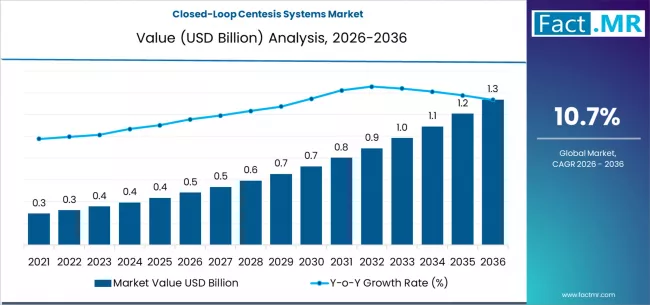
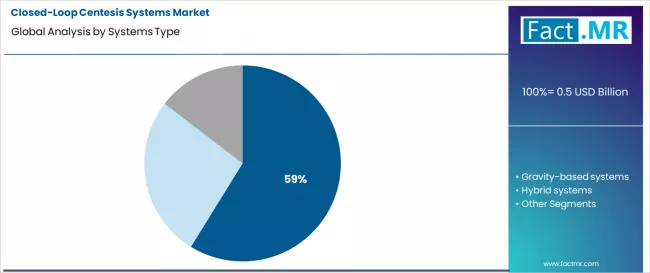
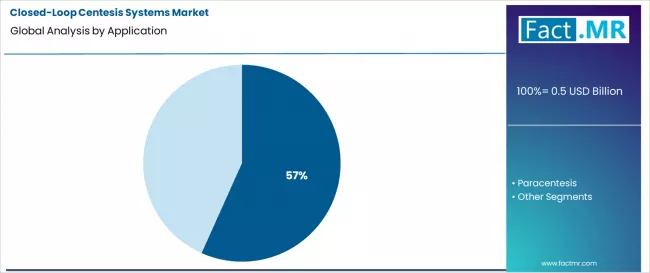
Closed-loop centesis systems market is projected to grow from USD 0.5 billion in 2026 to USD 1.3 billion by 2036, at a CAGR of 10.7%. Vacuum-assisted systems will dominate with a 58.8% market share, while thoracentesis will lead the application segment with a 56.7% share.
Closed-Loop Centesis Systems Market Forecast and Outlook 2026 to 2036
The global closed-loop centesis systems market is projected to total USD 0.48 billion in 2026, advancing to USD 1.34 billion by 2036, achieving a high compound annual growth rate of 10.7%. This expansion is driven by the critical need to improve the safety, efficiency, and patient comfort of routine fluid drainage procedures for conditions like malignant effusions and decompensated cirrhosis.
Key Takeaways from the Closed-Loop Centesis Systems Market
- Market Value for 2026: USD 0.48 Billion
- Market Value for 2036: USD 1.34 Billion
- Forecast CAGR 2026 to 2036: 10.7%
- Leading Systems Type Segment (2026): Vacuum-assisted Systems (58.8%)
- Leading Application Segment (2026): Thoracentesis (56.7%)
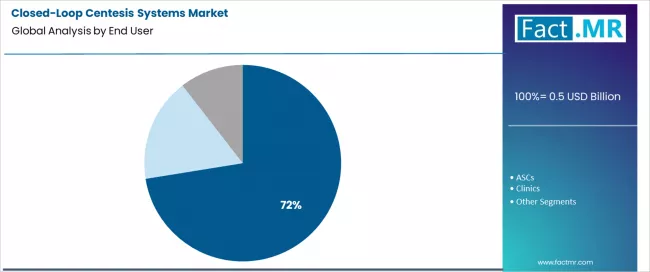
- Leading End User Segment (2026): Hospitals (72.5%)
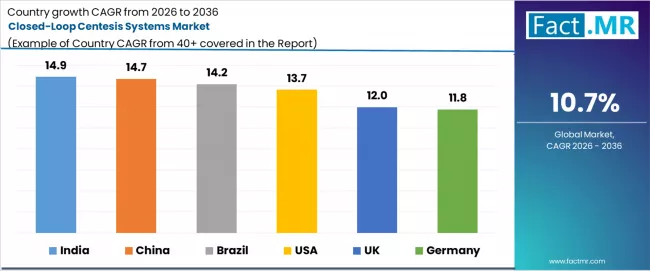
- Key Growth Countries: India (14.9% CAGR), China (14.7% CAGR), Brazil (14.2% CAGR), USA (13.7% CAGR), UK (12.0% CAGR), Germany (11.8% CAGR)
- Key Players in the Market: Merit Medical, AngioDynamics, Cook Medical, Becton, Dickinson and Company (BD), Argon Medical, Others

The market is defined by the dominance of vacuum-assisted systems, which hold a 58.8% share due to their controlled fluid removal capabilities, primarily used in thoracentesis applications that constitute 56.7 % of the market. Hospitals are the central end-user, accounting for 72.5% of demand.
Geographically, the highest growth is concentrated in rapidly developing healthcare systems, with India leading at a projected 14.9 % CAGR, followed by China at 14.7 %, Brazil at 14.2%, and the USA at 13.7%.
Germany and the UK show strong growth at 11.8% and 12.0% respectively. This market evolution signifies a shift from traditional manual techniques to integrated, safety-engineered systems that minimize infection risk, optimize clinician workflow, and support the increasing volume of these procedures in both inpatient and outpatient settings.
Metric
| Metric | Value |
|---|---|
| Market Value (2026) | USD 0.48 Billion |
| Market Forecast Value (2036) | USD 1.34 Billion |
| Forecast CAGR 2026 to 2036 | 10.7% |
Category
| Category | Segments |
|---|---|
| Systems Type | Vacuum-assisted Systems, Gravity-based Systems, Hybrid Systems |
| Application | Thoracentesis, Paracentesis |
| End User | Hospitals, ASCs, Clinics |
| Region | North America, Latin America, Western Europe, Eastern Europe, East Asia, South Asia & Pacific, MEA |
Segmental Analysis
By Systems Type, Which Technology Offers the Greatest Procedural Control?

Vacuum-assisted systems command a dominant 58.8 % share. This preference is due to their ability to provide consistent, physician-controlled negative pressure, enabling predictable and efficient fluid removal while minimizing the risk of complications such as re-expansion pulmonary edema in thoracentesis or hypotension in paracentesis. Their controlled environment is considered the standard for safety in higher-acuity settings.
By Application, Which Procedure is the Most Common for Effusion Management?

Thoracentesis is the leading application with a 56.7 % share. The drainage of pleural effusions, often related to cancer, heart failure, or infection, represents a high-volume interventional procedure.
The immediate symptomatic relief it provides and the need for diagnostic fluid analysis create consistent, recurrent demand, establishing it as the primary driver for closed-loop system utilization.
By End User, Where are the Majority of Complex Drainage Procedures Performed?

Hospitals constitute the primary end-user segment at 72.5 %. These facilities manage the most complex patients, those with large-volume effusions, co-morbidities, or requiring concurrent care.
The concentration of interventional radiologists and pulmonologists, along with the need for stringent sterile technique, centralizes the adoption and use of these systems within hospital procedure units and emergency departments.
What are the Principal Drivers, Constraints, and Evolving Dynamics of this Market?
| Attribute | Analysis |
|---|---|
| Rising Prevalence of Chronic Conditions Causing Effusions | The driver, including cancer and advanced heart failure, creates sustained procedural volume, making efficiency and safety improvements from closed-loop systems highly valuable. |
| High Cost of Disposable System Components | This restraint can limit adoption in cost-sensitive environments, as the per-procedure expense is significantly higher than basic needle and syringe methods. |
| Expansion of Ambulatory Procedure Centers | This opportunity drives demand for compact, user-friendly systems designed for high-throughput outpatient settings, favoring workflow-integrated solutions. |
| Integration with Ultrasound Guidance & Smart Monitoring | The trend is toward systems that connect to imaging for real-time needle tracking and include sensors for monitoring fluid characteristics and volume. |
Analysis of the Closed-Loop Centesis Systems Market by Key Countries

| Country | CAGR 2026 to 2036 |
|---|---|
| India | 14.9% |
| China | 14.7% |
| Brazil | 14.2% |
| USA | 13.7% |
| UK | 12.0% |
| Germany | 11.8% |
How does the USA's Advanced Interventional Radiology Practice Drive Adoption?

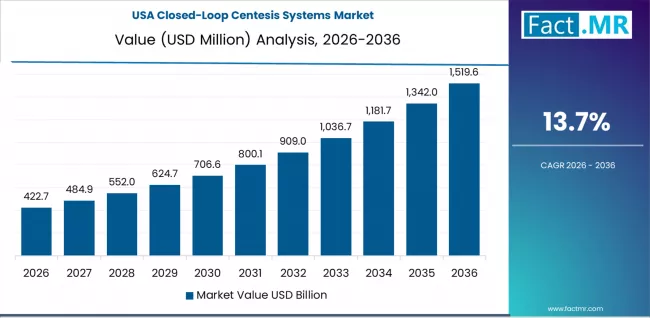
The USA's 13.7% CAGR is fueled by the high standardization of care in interventional radiology and pulmonary departments, where closed-loop systems are embedded in clinical guidelines for safe thoracentesis and paracentesis.
The volume of oncology-related effusions, strong reimbursement, and a focus drives growth on reducing procedure-related complications and hospital readmissions, making these systems a cost-effective standard.
What Factors Underpin China's Rapid Uptake of Standardized Procedural Kits?
China's 14.7% CAGR is driven by the rapid modernization of its hospital interventional departments and a growing emphasis on procedural safety and standardization. As cancer care expands, the demand for efficient effusion management grows.
The market is characterized by the adoption of vacuum-assisted systems in major urban hospitals, with domestic manufacturers also developing competitive offerings to serve this need.
How is India's Healthcare Infrastructure Growth Influencing Market Expansion?
India's leading 14.9% CAGR is propelled by the significant expansion of its tertiary care hospital network and the growing specialization in interventional pulmonology and radiology.
Increasing diagnosis rates of tuberculosis, cancer, and cardiac diseases that cause effusions are generating procedural demand. Growth is focused on introducing safer, more efficient technology to improve outcomes in high-volume, often resource-constrained settings.
Why does Brazil's Unified Health System Focus Create Specific Demand?
Brazil's 14.2% CAGR is linked to the focus of its public health system on standardizing and improving the quality of high-volume procedures like thoracentesis. Efforts to reduce post-procedure complications and length of stay in crowded hospitals make closed-loop systems an attractive investment. The high burden of diseases such as tuberculosis and congestive heart failure further underpins consistent procedural volume.
What Characterizes Adoption in the Protocol-Driven Markets of Germany and the UK?
Germany's 11.8% and the UK's 12.0% CAGRs reflect growth in markets where adoption is driven by clinical evidence and protocol. These health systems prioritize technologies that demonstrably reduce risks like pneumothorax or infection.
Growth is steady, fueled by replacement cycles and the integration of these systems into national and hospital-level clinical guidelines for effusion management, ensuring their use becomes a routine standard of care.
Competitive Landscape of the Closed-Loop Centesis Systems Market

The competitive landscape features established interventional and diagnostic device companies competing on system innovation, clinical evidence, and distribution strength. Competition centers on developing integrated solutions that offer clear workflow advantages, enhanced safety features, and cost-effectiveness.
Success depends on securing key opinion leader endorsements, demonstrating superior clinical outcomes in reducing complications, and forming strong partnerships with hospital procurement groups. The market sees ongoing innovation in system ergonomics, safety needle designs, and the development of specialized kits for different clinical applications.
Key Players in the Closed-Loop Centesis Systems Market
| Company | Core Focus in Closed-Loop Centesis |
|---|---|
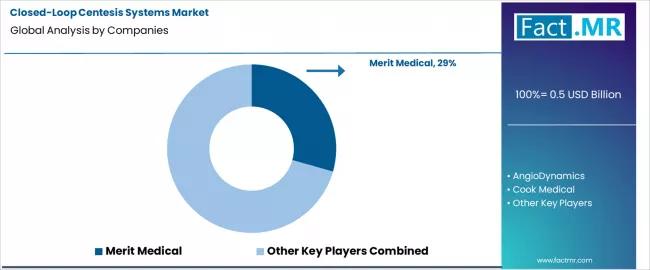
| Merit Medical | Leading provider of vacuum-assisted thoracentesis and paracentesis systems with a broad portfolio of procedural kits. |
| AngioDynamics | Developer of integrated fluid management systems, often combining drainage with biopsy capabilities. |
| Cook Medical | Focus on specialized access needles and catheters designed for use within closed-loop drainage procedures. |
| Becton, Dickinson and Company (BD) | Leverages its scale in vascular access and procedure kits to offer comprehensive closed-loop solutions. |
| Argon Medical | Provides a range of vacuum-assisted drainage systems and safety needle devices for fluid evacuation. |
| Others | Includes niche developers and regional manufacturers offering alternative or cost-competitive systems. |
Scope of Report
| Items | Values |
|---|---|
| Quantitative Units | USD Billion |
| Systems Type | Vacuum-assisted Systems, Gravity-based Systems, Hybrid Systems |
| Application | Thoracentesis, Paracentesis |
| End User | Hospitals, ASCs, Clinics |
| Key Countries | India, China, Brazil, USA, UK, Germany |
| Key Companies | Merit Medical, AngioDynamics, Cook Medical, Becton, Dickinson and Company (BD), Argon Medical, Others |
| Additional Analysis | Comparative analysis of complication rates (e.g., pneumothorax, infection) vs. manual methods; study of procedure time and staff resource utilization; total cost analysis per procedure including complications; impact on patient comfort and length of stay; assessment of training requirements and learning curve for new systems. |
Market by Segments
-
Systems Type :
- Vacuum-assisted Systems
- Gravity-based Systems
- Hybrid Systems
-
Application :
- Thoracentesis
- Paracentesis
-
End User :
- Hospitals
- ASCs
- Clinics
-
Region :
-
North America
- USA
- Canada
-
Latin America
- Brazil
- Mexico
- Argentina
- Rest of Latin America
-
Western Europe
- Germany
- France
- Italy
- Spain
- UK
- BENELUX
- Rest of Western Europe
-
Eastern Europe
- Russia
- Poland
- Czech Republic
- Rest of Eastern Europe
-
East Asia
- China
- Japan
- South Korea
- Rest of East Asia
-
South Asia & Pacific
- India
- ASEAN
- Australia
- Rest of South Asia & Pacific
-
MEA
- GCC Countries
- South Africa
- Turkiye
- Rest of MEA
-
References
- British Thoracic Society. (2025). BTS Guideline for Pleural Procedures. Thorax.
- Feller-Kopman, D., & Light, R. (2024). Pleural Disease: A Clinical Guide. Springer.
- National Comprehensive Cancer Network. (2024). NCCN Clinical Practice Guidelines in Oncology: Palliative Care. NCCN.
- Rahman, N. M., & Maskell, N. A. (2024). Advances in the management of pleural disease. The Lancet Respiratory Medicine, 12(5), 401-415.
- Society of Interventional Radiology. (2025). Quality Improvement Guidelines for Image-Guided Percutaneous Drainage/Aspiration of Abscesses and Fluid Collections. Journal of Vascular and Interventional Radiology.
Table of Content
- Executive Summary
- Global Market Outlook
- Demand to side Trends
- Supply to side Trends
- Technology Roadmap Analysis
- Analysis and Recommendations
- Market Overview
- Market Coverage / Taxonomy
- Market Definition / Scope / Limitations
- Market Background
- Market Dynamics
- Drivers
- Restraints
- Opportunity
- Trends
- Scenario Forecast
- Demand in Optimistic Scenario
- Demand in Likely Scenario
- Demand in Conservative Scenario
- Opportunity Map Analysis
- Product Life Cycle Analysis
- Supply Chain Analysis
- Investment Feasibility Matrix
- Value Chain Analysis
- PESTLE and Porter’s Analysis
- Regulatory Landscape
- Regional Parent Market Outlook
- Production and Consumption Statistics
- Import and Export Statistics
- Market Dynamics
- Global Market Analysis 2021 to 2025 and Forecast, 2026 to 2036
- Historical Market Size Value (USD Million) Analysis, 2021 to 2025
- Current and Future Market Size Value (USD Million) Projections, 2026 to 2036
- Y to o to Y Growth Trend Analysis
- Absolute $ Opportunity Analysis
- Global Market Pricing Analysis 2021 to 2025 and Forecast 2026 to 2036
- Global Market Analysis 2021 to 2025 and Forecast 2026 to 2036, By Systems Type
- Introduction / Key Findings
- Historical Market Size Value (USD Million) Analysis By Systems Type, 2021 to 2025
- Current and Future Market Size Value (USD Million) Analysis and Forecast By Systems Type, 2026 to 2036
- Vacuum-assisted systems
- Gravity-based systems
- Hybrid systems
- Vacuum-assisted systems
- Y to o to Y Growth Trend Analysis By Systems Type, 2021 to 2025
- Absolute $ Opportunity Analysis By Systems Type, 2026 to 2036
- Global Market Analysis 2021 to 2025 and Forecast 2026 to 2036, By Application
- Introduction / Key Findings
- Historical Market Size Value (USD Million) Analysis By Application, 2021 to 2025
- Current and Future Market Size Value (USD Million) Analysis and Forecast By Application, 2026 to 2036
- Thoracentesis
- Paracentesis
- Thoracentesis
- Y to o to Y Growth Trend Analysis By Application, 2021 to 2025
- Absolute $ Opportunity Analysis By Application, 2026 to 2036
- Global Market Analysis 2021 to 2025 and Forecast 2026 to 2036, By End User
- Introduction / Key Findings
- Historical Market Size Value (USD Million) Analysis By End User, 2021 to 2025
- Current and Future Market Size Value (USD Million) Analysis and Forecast By End User, 2026 to 2036
- Hospitals
- ASCs
- Clinics
- Hospitals
- Y to o to Y Growth Trend Analysis By End User, 2021 to 2025
- Absolute $ Opportunity Analysis By End User, 2026 to 2036
- Global Market Analysis 2021 to 2025 and Forecast 2026 to 2036, By Region
- Introduction
- Historical Market Size Value (USD Million) Analysis By Region, 2021 to 2025
- Current Market Size Value (USD Million) Analysis and Forecast By Region, 2026 to 2036
- North America
- Latin America
- Western Europe
- Eastern Europe
- East Asia
- South Asia and Pacific
- Middle East & Africa
- Market Attractiveness Analysis By Region
- North America Market Analysis 2021 to 2025 and Forecast 2026 to 2036, By Country
- Historical Market Size Value (USD Million) Trend Analysis By Market Taxonomy, 2021 to 2025
- Market Size Value (USD Million) Forecast By Market Taxonomy, 2026 to 2036
- By Country
- USA
- Canada
- Mexico
- By Systems Type
- By Application
- By End User
- By Country
- Market Attractiveness Analysis
- By Country
- By Systems Type
- By Application
- By End User
- Key Takeaways
- Latin America Market Analysis 2021 to 2025 and Forecast 2026 to 2036, By Country
- Historical Market Size Value (USD Million) Trend Analysis By Market Taxonomy, 2021 to 2025
- Market Size Value (USD Million) Forecast By Market Taxonomy, 2026 to 2036
- By Country
- Brazil
- Chile
- Rest of Latin America
- By Systems Type
- By Application
- By End User
- By Country
- Market Attractiveness Analysis
- By Country
- By Systems Type
- By Application
- By End User
- Key Takeaways
- Western Europe Market Analysis 2021 to 2025 and Forecast 2026 to 2036, By Country
- Historical Market Size Value (USD Million) Trend Analysis By Market Taxonomy, 2021 to 2025
- Market Size Value (USD Million) Forecast By Market Taxonomy, 2026 to 2036
- By Country
- Germany
- UK
- Italy
- Spain
- France
- Nordic
- BENELUX
- Rest of Western Europe
- By Systems Type
- By Application
- By End User
- By Country
- Market Attractiveness Analysis
- By Country
- By Systems Type
- By Application
- By End User
- Key Takeaways
- Eastern Europe Market Analysis 2021 to 2025 and Forecast 2026 to 2036, By Country
- Historical Market Size Value (USD Million) Trend Analysis By Market Taxonomy, 2021 to 2025
- Market Size Value (USD Million) Forecast By Market Taxonomy, 2026 to 2036
- By Country
- Russia
- Poland
- Hungary
- Balkan & Baltic
- Rest of Eastern Europe
- By Systems Type
- By Application
- By End User
- By Country
- Market Attractiveness Analysis
- By Country
- By Systems Type
- By Application
- By End User
- Key Takeaways
- East Asia Market Analysis 2021 to 2025 and Forecast 2026 to 2036, By Country
- Historical Market Size Value (USD Million) Trend Analysis By Market Taxonomy, 2021 to 2025
- Market Size Value (USD Million) Forecast By Market Taxonomy, 2026 to 2036
- By Country
- China
- Japan
- South Korea
- By Systems Type
- By Application
- By End User
- By Country
- Market Attractiveness Analysis
- By Country
- By Systems Type
- By Application
- By End User
- Key Takeaways
- South Asia and Pacific Market Analysis 2021 to 2025 and Forecast 2026 to 2036, By Country
- Historical Market Size Value (USD Million) Trend Analysis By Market Taxonomy, 2021 to 2025
- Market Size Value (USD Million) Forecast By Market Taxonomy, 2026 to 2036
- By Country
- India
- ASEAN
- Australia & New Zealand
- Rest of South Asia and Pacific
- By Systems Type
- By Application
- By End User
- By Country
- Market Attractiveness Analysis
- By Country
- By Systems Type
- By Application
- By End User
- Key Takeaways
- Middle East & Africa Market Analysis 2021 to 2025 and Forecast 2026 to 2036, By Country
- Historical Market Size Value (USD Million) Trend Analysis By Market Taxonomy, 2021 to 2025
- Market Size Value (USD Million) Forecast By Market Taxonomy, 2026 to 2036
- By Country
- Kingdom of Saudi Arabia
- Other GCC Countries
- Turkiye
- South Africa
- Other African Union
- Rest of Middle East & Africa
- By Systems Type
- By Application
- By End User
- By Country
- Market Attractiveness Analysis
- By Country
- By Systems Type
- By Application
- By End User
- Key Takeaways
- Key Countries Market Analysis
- USA
- Pricing Analysis
- Market Share Analysis, 2025
- By Systems Type
- By Application
- By End User
- Canada
- Pricing Analysis
- Market Share Analysis, 2025
- By Systems Type
- By Application
- By End User
- Mexico
- Pricing Analysis
- Market Share Analysis, 2025
- By Systems Type
- By Application
- By End User
- Brazil
- Pricing Analysis
- Market Share Analysis, 2025
- By Systems Type
- By Application
- By End User
- Chile
- Pricing Analysis
- Market Share Analysis, 2025
- By Systems Type
- By Application
- By End User
- Germany
- Pricing Analysis
- Market Share Analysis, 2025
- By Systems Type
- By Application
- By End User
- UK
- Pricing Analysis
- Market Share Analysis, 2025
- By Systems Type
- By Application
- By End User
- Italy
- Pricing Analysis
- Market Share Analysis, 2025
- By Systems Type
- By Application
- By End User
- Spain
- Pricing Analysis
- Market Share Analysis, 2025
- By Systems Type
- By Application
- By End User
- France
- Pricing Analysis
- Market Share Analysis, 2025
- By Systems Type
- By Application
- By End User
- India
- Pricing Analysis
- Market Share Analysis, 2025
- By Systems Type
- By Application
- By End User
- ASEAN
- Pricing Analysis
- Market Share Analysis, 2025
- By Systems Type
- By Application
- By End User
- Australia & New Zealand
- Pricing Analysis
- Market Share Analysis, 2025
- By Systems Type
- By Application
- By End User
- China
- Pricing Analysis
- Market Share Analysis, 2025
- By Systems Type
- By Application
- By End User
- Japan
- Pricing Analysis
- Market Share Analysis, 2025
- By Systems Type
- By Application
- By End User
- South Korea
- Pricing Analysis
- Market Share Analysis, 2025
- By Systems Type
- By Application
- By End User
- Russia
- Pricing Analysis
- Market Share Analysis, 2025
- By Systems Type
- By Application
- By End User
- Poland
- Pricing Analysis
- Market Share Analysis, 2025
- By Systems Type
- By Application
- By End User
- Hungary
- Pricing Analysis
- Market Share Analysis, 2025
- By Systems Type
- By Application
- By End User
- Kingdom of Saudi Arabia
- Pricing Analysis
- Market Share Analysis, 2025
- By Systems Type
- By Application
- By End User
- Turkiye
- Pricing Analysis
- Market Share Analysis, 2025
- By Systems Type
- By Application
- By End User
- South Africa
- Pricing Analysis
- Market Share Analysis, 2025
- By Systems Type
- By Application
- By End User
- USA
- Market Structure Analysis
- Competition Dashboard
- Competition Benchmarking
- Market Share Analysis of Top Players
- By Regional
- By Systems Type
- By Application
- By End User
- Competition Analysis
- Competition Deep Dive
- Merit Medical
- Overview
- Product Portfolio
- Profitability by Market Segments (Product/Age /Sales Channel/Region)
- Sales Footprint
- Strategy Overview
- Marketing Strategy
- Product Strategy
- Channel Strategy
- AngioDynamics
- Cook Medical
- Becton, Dickinson and Company (BD)
- Argon Medical
- Others
- Merit Medical
- Competition Deep Dive
- Assumptions & Acronyms Used
- Research Methodology
List Of Table
- Table 1: Global Market Value (USD Million) Forecast by Region, 2021 to 2036
- Table 2: Global Market Value (USD Million) Forecast by Systems Type, 2021 to 2036
- Table 3: Global Market Value (USD Million) Forecast by Application, 2021 to 2036
- Table 4: Global Market Value (USD Million) Forecast by End User, 2021 to 2036
- Table 5: North America Market Value (USD Million) Forecast by Country, 2021 to 2036
- Table 6: North America Market Value (USD Million) Forecast by Systems Type, 2021 to 2036
- Table 7: North America Market Value (USD Million) Forecast by Application, 2021 to 2036
- Table 8: North America Market Value (USD Million) Forecast by End User, 2021 to 2036
- Table 9: Latin America Market Value (USD Million) Forecast by Country, 2021 to 2036
- Table 10: Latin America Market Value (USD Million) Forecast by Systems Type, 2021 to 2036
- Table 11: Latin America Market Value (USD Million) Forecast by Application, 2021 to 2036
- Table 12: Latin America Market Value (USD Million) Forecast by End User, 2021 to 2036
- Table 13: Western Europe Market Value (USD Million) Forecast by Country, 2021 to 2036
- Table 14: Western Europe Market Value (USD Million) Forecast by Systems Type, 2021 to 2036
- Table 15: Western Europe Market Value (USD Million) Forecast by Application, 2021 to 2036
- Table 16: Western Europe Market Value (USD Million) Forecast by End User, 2021 to 2036
- Table 17: Eastern Europe Market Value (USD Million) Forecast by Country, 2021 to 2036
- Table 18: Eastern Europe Market Value (USD Million) Forecast by Systems Type, 2021 to 2036
- Table 19: Eastern Europe Market Value (USD Million) Forecast by Application, 2021 to 2036
- Table 20: Eastern Europe Market Value (USD Million) Forecast by End User, 2021 to 2036
- Table 21: East Asia Market Value (USD Million) Forecast by Country, 2021 to 2036
- Table 22: East Asia Market Value (USD Million) Forecast by Systems Type, 2021 to 2036
- Table 23: East Asia Market Value (USD Million) Forecast by Application, 2021 to 2036
- Table 24: East Asia Market Value (USD Million) Forecast by End User, 2021 to 2036
- Table 25: South Asia and Pacific Market Value (USD Million) Forecast by Country, 2021 to 2036
- Table 26: South Asia and Pacific Market Value (USD Million) Forecast by Systems Type, 2021 to 2036
- Table 27: South Asia and Pacific Market Value (USD Million) Forecast by Application, 2021 to 2036
- Table 28: South Asia and Pacific Market Value (USD Million) Forecast by End User, 2021 to 2036
- Table 29: Middle East & Africa Market Value (USD Million) Forecast by Country, 2021 to 2036
- Table 30: Middle East & Africa Market Value (USD Million) Forecast by Systems Type, 2021 to 2036
- Table 31: Middle East & Africa Market Value (USD Million) Forecast by Application, 2021 to 2036
- Table 32: Middle East & Africa Market Value (USD Million) Forecast by End User, 2021 to 2036
List Of Figures
- Figure 1: Global Market Pricing Analysis
- Figure 2: Global Market Value (USD Million) Forecast 2021 to 2036
- Figure 3: Global Market Value Share and BPS Analysis by Systems Type, 2026 and 2036
- Figure 4: Global Market Y to o to Y Growth Comparison by Systems Type, 2026 to 2036
- Figure 5: Global Market Attractiveness Analysis by Systems Type
- Figure 6: Global Market Value Share and BPS Analysis by Application, 2026 and 2036
- Figure 7: Global Market Y to o to Y Growth Comparison by Application, 2026 to 2036
- Figure 8: Global Market Attractiveness Analysis by Application
- Figure 9: Global Market Value Share and BPS Analysis by End User, 2026 and 2036
- Figure 10: Global Market Y to o to Y Growth Comparison by End User, 2026 to 2036
- Figure 11: Global Market Attractiveness Analysis by End User
- Figure 12: Global Market Value (USD Million) Share and BPS Analysis by Region, 2026 and 2036
- Figure 13: Global Market Y to o to Y Growth Comparison by Region, 2026 to 2036
- Figure 14: Global Market Attractiveness Analysis by Region
- Figure 15: North America Market Incremental Dollar Opportunity, 2026 to 2036
- Figure 16: Latin America Market Incremental Dollar Opportunity, 2026 to 2036
- Figure 17: Western Europe Market Incremental Dollar Opportunity, 2026 to 2036
- Figure 18: Eastern Europe Market Incremental Dollar Opportunity, 2026 to 2036
- Figure 19: East Asia Market Incremental Dollar Opportunity, 2026 to 2036
- Figure 20: South Asia and Pacific Market Incremental Dollar Opportunity, 2026 to 2036
- Figure 21: Middle East & Africa Market Incremental Dollar Opportunity, 2026 to 2036
- Figure 22: North America Market Value Share and BPS Analysis by Country, 2026 and 2036
- Figure 23: North America Market Value Share and BPS Analysis by Systems Type, 2026 and 2036
- Figure 24: North America Market Y to o to Y Growth Comparison by Systems Type, 2026 to 2036
- Figure 25: North America Market Attractiveness Analysis by Systems Type
- Figure 26: North America Market Value Share and BPS Analysis by Application, 2026 and 2036
- Figure 27: North America Market Y to o to Y Growth Comparison by Application, 2026 to 2036
- Figure 28: North America Market Attractiveness Analysis by Application
- Figure 29: North America Market Value Share and BPS Analysis by End User, 2026 and 2036
- Figure 30: North America Market Y to o to Y Growth Comparison by End User, 2026 to 2036
- Figure 31: North America Market Attractiveness Analysis by End User
- Figure 32: Latin America Market Value Share and BPS Analysis by Country, 2026 and 2036
- Figure 33: Latin America Market Value Share and BPS Analysis by Systems Type, 2026 and 2036
- Figure 34: Latin America Market Y to o to Y Growth Comparison by Systems Type, 2026 to 2036
- Figure 35: Latin America Market Attractiveness Analysis by Systems Type
- Figure 36: Latin America Market Value Share and BPS Analysis by Application, 2026 and 2036
- Figure 37: Latin America Market Y to o to Y Growth Comparison by Application, 2026 to 2036
- Figure 38: Latin America Market Attractiveness Analysis by Application
- Figure 39: Latin America Market Value Share and BPS Analysis by End User, 2026 and 2036
- Figure 40: Latin America Market Y to o to Y Growth Comparison by End User, 2026 to 2036
- Figure 41: Latin America Market Attractiveness Analysis by End User
- Figure 42: Western Europe Market Value Share and BPS Analysis by Country, 2026 and 2036
- Figure 43: Western Europe Market Value Share and BPS Analysis by Systems Type, 2026 and 2036
- Figure 44: Western Europe Market Y to o to Y Growth Comparison by Systems Type, 2026 to 2036
- Figure 45: Western Europe Market Attractiveness Analysis by Systems Type
- Figure 46: Western Europe Market Value Share and BPS Analysis by Application, 2026 and 2036
- Figure 47: Western Europe Market Y to o to Y Growth Comparison by Application, 2026 to 2036
- Figure 48: Western Europe Market Attractiveness Analysis by Application
- Figure 49: Western Europe Market Value Share and BPS Analysis by End User, 2026 and 2036
- Figure 50: Western Europe Market Y to o to Y Growth Comparison by End User, 2026 to 2036
- Figure 51: Western Europe Market Attractiveness Analysis by End User
- Figure 52: Eastern Europe Market Value Share and BPS Analysis by Country, 2026 and 2036
- Figure 53: Eastern Europe Market Value Share and BPS Analysis by Systems Type, 2026 and 2036
- Figure 54: Eastern Europe Market Y to o to Y Growth Comparison by Systems Type, 2026 to 2036
- Figure 55: Eastern Europe Market Attractiveness Analysis by Systems Type
- Figure 56: Eastern Europe Market Value Share and BPS Analysis by Application, 2026 and 2036
- Figure 57: Eastern Europe Market Y to o to Y Growth Comparison by Application, 2026 to 2036
- Figure 58: Eastern Europe Market Attractiveness Analysis by Application
- Figure 59: Eastern Europe Market Value Share and BPS Analysis by End User, 2026 and 2036
- Figure 60: Eastern Europe Market Y to o to Y Growth Comparison by End User, 2026 to 2036
- Figure 61: Eastern Europe Market Attractiveness Analysis by End User
- Figure 62: East Asia Market Value Share and BPS Analysis by Country, 2026 and 2036
- Figure 63: East Asia Market Value Share and BPS Analysis by Systems Type, 2026 and 2036
- Figure 64: East Asia Market Y to o to Y Growth Comparison by Systems Type, 2026 to 2036
- Figure 65: East Asia Market Attractiveness Analysis by Systems Type
- Figure 66: East Asia Market Value Share and BPS Analysis by Application, 2026 and 2036
- Figure 67: East Asia Market Y to o to Y Growth Comparison by Application, 2026 to 2036
- Figure 68: East Asia Market Attractiveness Analysis by Application
- Figure 69: East Asia Market Value Share and BPS Analysis by End User, 2026 and 2036
- Figure 70: East Asia Market Y to o to Y Growth Comparison by End User, 2026 to 2036
- Figure 71: East Asia Market Attractiveness Analysis by End User
- Figure 72: South Asia and Pacific Market Value Share and BPS Analysis by Country, 2026 and 2036
- Figure 73: South Asia and Pacific Market Value Share and BPS Analysis by Systems Type, 2026 and 2036
- Figure 74: South Asia and Pacific Market Y to o to Y Growth Comparison by Systems Type, 2026 to 2036
- Figure 75: South Asia and Pacific Market Attractiveness Analysis by Systems Type
- Figure 76: South Asia and Pacific Market Value Share and BPS Analysis by Application, 2026 and 2036
- Figure 77: South Asia and Pacific Market Y to o to Y Growth Comparison by Application, 2026 to 2036
- Figure 78: South Asia and Pacific Market Attractiveness Analysis by Application
- Figure 79: South Asia and Pacific Market Value Share and BPS Analysis by End User, 2026 and 2036
- Figure 80: South Asia and Pacific Market Y to o to Y Growth Comparison by End User, 2026 to 2036
- Figure 81: South Asia and Pacific Market Attractiveness Analysis by End User
- Figure 82: Middle East & Africa Market Value Share and BPS Analysis by Country, 2026 and 2036
- Figure 83: Middle East & Africa Market Value Share and BPS Analysis by Systems Type, 2026 and 2036
- Figure 84: Middle East & Africa Market Y to o to Y Growth Comparison by Systems Type, 2026 to 2036
- Figure 85: Middle East & Africa Market Attractiveness Analysis by Systems Type
- Figure 86: Middle East & Africa Market Value Share and BPS Analysis by Application, 2026 and 2036
- Figure 87: Middle East & Africa Market Y to o to Y Growth Comparison by Application, 2026 to 2036
- Figure 88: Middle East & Africa Market Attractiveness Analysis by Application
- Figure 89: Middle East & Africa Market Value Share and BPS Analysis by End User, 2026 and 2036
- Figure 90: Middle East & Africa Market Y to o to Y Growth Comparison by End User, 2026 to 2036
- Figure 91: Middle East & Africa Market Attractiveness Analysis by End User
- Figure 92: Global Market - Tier Structure Analysis
- Figure 93: Global Market - Company Share Analysis
- FAQs -
How big is the closed-loop centesis systems market in 2026?
The global closed-loop centesis systems market is estimated to be valued at USD 0.5 billion in 2026.
What will be the size of closed-loop centesis systems market in 2036?
The market size for the closed-loop centesis systems market is projected to reach USD 1.3 billion by 2036.
How much will be the closed-loop centesis systems market growth between 2026 and 2036?
The closed-loop centesis systems market is expected to grow at a 10.7% CAGR between 2026 and 2036.
What are the key product types in the closed-loop centesis systems market?
The key product types in closed-loop centesis systems market are vacuum-assisted systems, gravity-based systems and hybrid systems.
Which application segment to contribute significant share in the closed-loop centesis systems market in 2026?
In terms of application, thoracentesis segment to command 56.7% share in the closed-loop centesis systems market in 2026.