Coffee Creamer Market

Coffee Creamer Market Size and Share Forecast Outlook 2025 to 2035

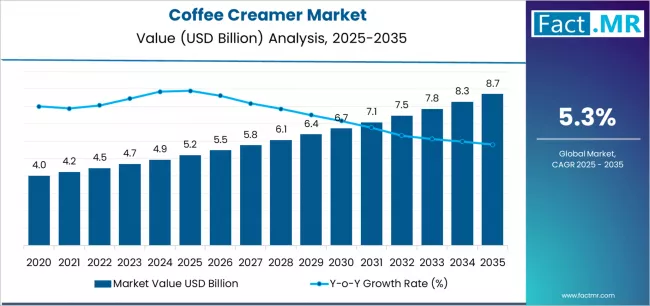
Coffee creamer market is projected to grow from USD 5.2 billion in 2025 to USD 8.7 billion by 2035, at a CAGR of 5.3%. Non-dairy will dominate with a 55.2% market share, while high-fat will lead the type segment with a 64.7% share.

Coffee Creamer Market Forecast and Outlook 2025 to 2035

The global coffee creamer market is projected to reach USD 8.7 billion by 2035, recording an absolute increase of USD 3.5 billion over the forecast period. The market is valued at USD 5.2 billion in 2025 and is set to rise at a CAGR of 5.3% during the assessment period. The overall market size is expected to grow by 1.7 times during the same period, supported by expanding coffee consumption patterns and increasing demand for convenient beverage enhancement solutions across both foodservice and retail distribution channels.

Growing consumer preference for plant-based dairy alternatives, expanding flavor variety innovations, and rising adoption of specialty coffee preparations creates expanding opportunities for coffee creamer product development and premiumization strategies. Rising coffee consumption volumes globally, coupled with expanding café culture penetration through specialty coffee shops and modern retail infrastructure, further accelerate market penetration across diverse consumer segments.

Quick Stats for Coffee Creamer Market

  • Coffee Creamer Market Value (2025): USD 5.2 billion
  • Coffee Creamer Market Forecast Value (2035): USD 8.7 billion
  • Coffee Creamer Market Forecast CAGR: 5.3%
  • Leading Product Segment in Coffee Creamer Market: Non-dairy (55.2%)
  • Key Growth Regions in Coffee Creamer Market: Asia Pacific, North America, and Europe
  • Top Players in Coffee Creamer Market: Nestlé, Danone, Chobani LLC, DreamPak LLC, Viceroy Holland BV, PT. Santos Premium Krimer, Kerry Group plc., FrieslandCampina, Land O'Lakes Inc., Fujian Jumbo Grand Food Co. Ltd.

Coffee Creamer Market Market Value Analysis

The growing beverage industry demand for versatile creamer solutions, particularly in ready-to-drink coffee applications and at-home coffee preparation routines, generates requirements for convenient flavor enhancement products and texture modification ingredients.

Technical advancements in non-dairy formulation technologies demonstrating measurable improvements in taste profiles, nutritional characteristics, and functional properties reinforce manufacturer confidence in coffee creamer product economics, while health and wellness trends toward plant-based nutrition expand addressable market opportunities beyond traditional dairy-based applications into alternative protein and functional ingredient categories.

Foodservice operators and retail consumers increasingly incorporate coffee creamers into daily beverage consumption, brewing rituals, and hospitality service offerings, creating mainstream adoption channels that extend beyond specialty coffee applications into conventional beverage preparation environments.

However, health concerns regarding artificial ingredients and high sugar content in certain formulations may pose challenges to market expansion. Price sensitivity considerations for premium non-dairy alternatives and supply chain complexity for specialty ingredients in certain regions also influence product accessibility, requiring manufacturers to develop balanced formulation strategies catering to specific consumer preferences across different market segments.

Regulatory requirements during labeling compliance and the technical demands for clean label formulations and allergen management may limit product innovation among smaller manufacturers in developing regions with limited infrastructure for advanced ingredient sourcing and quality assurance systems.

Coffee Creamer Market Year-over-Year Forecast 2025 to 2035

Between 2025 and 2030, the coffee creamer market is projected to expand from USD 5.2 billion to USD 6.8 billion, resulting in a value increase of USD 1.5 billion, which represents 44.1% of the total forecast growth for the decade. This phase of development will be shaped by rising demand for plant-based creamer alternatives and specialty coffee consumption growth, product innovation in flavor variety expansion and functional ingredient integration, as well as expanding penetration through e-commerce channels and foodservice establishment partnerships. Companies are establishing competitive positions through investment in non-dairy formulation development, sustainable sourcing capabilities, and strategic market expansion across retail distribution networks, café partnerships, and ready-to-drink coffee segments.

From 2030 to 2035, the market is forecast to grow from USD 6.8 billion to USD 8.7 billion, adding another USD 1.9 billion, which constitutes 55.9% of the overall ten-year expansion. This period is expected to be characterized by the expansion of specialized creamer formulations, including barista-grade products and functional wellness-enhanced varieties tailored for specific beverage applications, strategic collaborations between creamer manufacturers and coffee brands, and an enhanced focus on sustainability initiatives and plant-based ingredient transparency. The growing emphasis on personalized nutrition and premium coffee experiences will drive demand for innovative coffee creamer solutions across diverse consumption occasions.

Coffee Creamer Market Key Takeaways

Metric Value
Market Value (2025) USD 5.2 billion
Market Forecast Value (2035) USD 8.7 billion
Forecast CAGR (2025-2035) 5.3%

Why is the Coffee Creamer Market Experiencing Consistent Growth?

The coffee creamer market grows by enabling coffee consumers, foodservice operators, and beverage manufacturers to access convenient flavor enhancement solutions that support taste preferences while meeting consumer demand for beverage customization and texture modification.

Food and beverage brands and hospitality establishments face mounting pressure to develop appealing coffee offerings with proven consumer acceptance and sensory characteristics, with coffee creamer products typically providing instant dissolution capabilities, consistent flavor delivery, and extended shelf stability, making these solutions essential for competitive positioning in retail consumer, foodservice, and ready-to-drink coffee categories.

The beverage industry's need for versatile ingredient solutions and convenient preparation methods creates demand for diverse creamer formulations that can provide superior taste enhancement, maintain product stability across different storage conditions, and ensure quality consistency without compromising nutritional profiles or manufacturing economics.

Consumer trends promoting plant-based diets and lactose-free alternatives drive adoption in retail grocery channels, specialty coffee establishments, and workplace refreshment programs, where creamer selection has a direct impact on beverage satisfaction outcomes and repeat purchase behavior.

The coffee industry's growing focus on premium beverage experiences and artisanal preparation methods further expands market opportunities, with consumer research demonstrating measurable preference advantages from specialty creamer varieties, including enhanced mouthfeel characteristics and sophisticated flavor profiles.

Ingredient sourcing complexity during specialty component procurement and the formulation requirements for clean label compliance and allergen-free production may limit product development among smaller food manufacturers and developing regions with limited infrastructure for advanced dairy alternative processing and quality validation systems.

Segmental Analysis

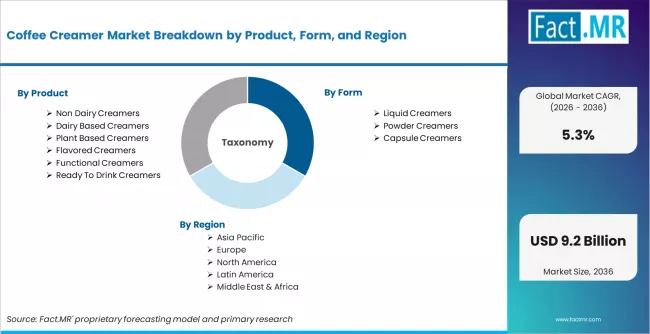
The market is segmented by product, type, form, nature, flavor, packaging type, distribution channel, and region. By product, the market is divided into non-dairy and dairy-based. By type, the market is divided into high-fat and low-fat. By form, the market is divided into liquid and powder. By nature, the market is divided into conventional and organic.

By flavor, the market is divided into flavored and regular/unflavored. By packaging type, the market is divided into PET bottles and tetra packs. By distribution channel, the market is divided into B2B and B2C. Regionally, the market is divided into Asia Pacific, North America, Europe, Latin America, and Middle East & Africa.

Which Product Type is Preferred in the Coffee Creamer Market?

Coffee Creamer Market Analysis By Product

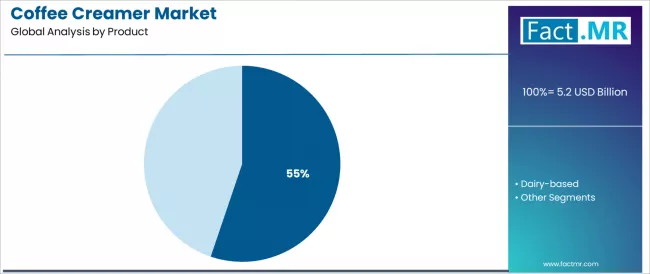
The non-dairy segment represents the dominant force in the coffee creamer market, capturing 55.2% of total market share in 2025. This established product category encompasses solutions featuring plant-based formulations from soy, almond, coconut, and oat sources, including lactose-free alternatives that enable dietary accommodation, ethical consumption alignment, and functional nutrition positioning across all consumer applications.

The non-dairy segment's market leadership stems from its essential role in addressing lactose intolerance concerns and supporting vegan lifestyle preferences, with these products capable of meeting diverse dietary requirements while maintaining competitive taste profiles and operational convenience across all coffee preparation environments.

Within the non-dairy segment, almond-based and coconut-based formulations account for substantial consumption shares, driven by consumer preferences for natural ingredients and clean label positioning across global retail markets. The segment demonstrates accelerated growth momentum with a projected CAGR of 7.1% through 2035.

The dairy-based segment maintains a substantial 44.8% market share, serving traditional coffee consumers who require authentic dairy taste profiles for beverage enhancement, familiar product formats, and conventional creamer applications. These products offer established taste characteristics for classic coffee preparation, commercial foodservice reliability, and consumer acceptance while providing sufficient functional performance to meet beverage quality demands and preparation requirements. The dairy-based segment grows at a 4.3% CAGR through 2035.

Key advantages driving the non-dairy segment include:

  • Expanding health consciousness infrastructure with growing lactose-free product demand that reduces dietary restrictions and ensures broader consumer accessibility
  • Critical dietary accommodation functionality allowing inclusive product offerings across different consumer groups without significant taste compromise
  • Proven sustainability positioning, delivering environmental benefits while maintaining competitiveness against conventional dairy alternatives
  • Broad retail acceptance enabling straightforward product merchandising and category expansion across multiple distribution formats

How does High-fat Type Lead Formulation Preferences?

Coffee Creamer Market Analysis By Type

The high-fat type segment demonstrates commanding market leadership with a 64.7% share in 2025, driven by superior taste delivery and rich mouthfeel characteristics that enhance coffee drinking experiences. This type category encompasses creamer formulations that prioritize indulgent sensory properties, authentic dairy taste replication, and premium beverage enhancement, with consumers valuing texture richness and flavor intensity over caloric considerations in discretionary coffee consumption occasions.

The high-fat segment's market dominance reflects consumer preference patterns toward satisfying coffee experiences, with retail buyers and foodservice operators selecting full-fat creamers to achieve optimal taste profiles and beverage quality standards. The segment maintains steady growth with a 5.6% CAGR through 2035.

The low-fat segment retains 28.3% market share, serving health-conscious consumers who require reduced calorie alternatives while maintaining acceptable taste characteristics for daily coffee consumption routines. The fat-free segment captures 7.0% market share, addressing specialized dietary requirements and weight management programs that demand minimal fat content formulations, growing at 6.2% CAGR through 2035.

Key factors supporting high-fat type dominance include:

  • Taste preference priorities driving consumer selection toward richer flavor experiences and authentic creamer characteristics
  • Premiumization trends enabling higher price points through superior sensory delivery and indulgent product positioning
  • Foodservice requirements supporting consistent taste quality through traditional formulation approaches and proven performance
  • Consumer perception advantages maintaining competitive positioning through authentic taste delivery and satisfying beverage enhancement

Why does Liquid Form Maintain Strong Market Position?

Coffee Creamer Market Analysis By Form

Liquid coffee creamers maintain 60.4% of the market share in 2025, reflecting consumer preferences for convenient ready-to-use formats and consistent dosing capabilities across home and workplace consumption occasions. This form category encompasses refrigerated liquid creamers, ambient stable formulations, and single-serve portion packs that prioritize ease of use, immediate dissolution, and no-mess application, creating consistent demand for liquid creamer technologies that enhance preparation convenience while ensuring taste consistency.

The liquid segment's strong market position stems from its direct-pour convenience and optimal flavor dispersion characteristics that eliminate mixing requirements and enable precise portion control across diverse coffee preparation methods. The segment grows at 5.3% CAGR through 2035.

The powder segment accounts for 39.6% market share, serving applications where extended shelf stability, bulk purchasing economics, and concentrated formulations support cost-effective consumption patterns and industrial foodservice operations, growing at 5.6% CAGR through 2035.

What are the Drivers, Restraints, and Key Trends of the Coffee Creamer Market?

The market is driven by three concrete demand factors tied to consumption pattern evolution and lifestyle changes. First, increasing coffee consumption and specialty coffee adoption creates growing demand for premium creamer solutions, with global coffee consumption expanding by 3-5% annually in major markets worldwide, requiring comprehensive creamer product availability. Second, expanding plant-based diet adoption and lactose intolerance awareness drives increased demand for non-dairy creamer alternatives, with many food manufacturers implementing dairy-free product development programs and alternative protein innovation initiatives by 2030. Third, technological advancements in flavor encapsulation and formulation stability enable more effective and appealing product experiences that enhance taste delivery while improving shelf life characteristics and functional performance.

Market restraints include health concerns regarding artificial additives and high sugar content that can deter health-conscious consumers from regular creamer consumption, particularly in wellness-focused market segments where natural ingredient preferences create resistance to conventional formulations. Price premiums for organic and specialty non-dairy alternatives pose another significant challenge, as plant-based creamers typically command 20-40% higher retail prices compared to conventional dairy options, potentially limiting adoption among price-sensitive consumer groups. Supply chain complexity for specialty ingredients and fluctuating commodity costs for dairy and plant-based proteins create additional market challenges for margin management, demanding ongoing investment in procurement strategies and formulation optimization.

Key trends indicate accelerated development of functional creamers incorporating protein fortification, collagen supplementation, and MCT oil additions that position products beyond basic flavor enhancement into wellness-supporting beverage ingredients. Innovation momentum toward sustainable packaging solutions with recyclable materials, reduced plastic content, and concentrated formats enables environmental responsibility approaches that appeal to eco-conscious consumers while reducing transportation costs. However, the market thesis could face disruption if significant regulatory changes restrict certain ingredient categories or major consumer preference shifts toward black coffee consumption reduce overall creamer demand.

Analysis of the Coffee Creamer Market by Key Countries

Coffee Creamer Market Cagr Analysis By Country

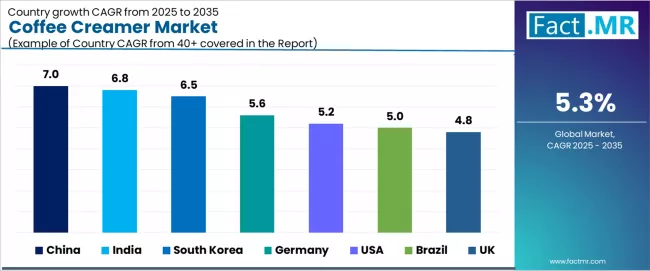
Country CAGR (2025 to 2035)
China 7.0%
India 6.8%
South Korea 6.5%
Germany 5.6%
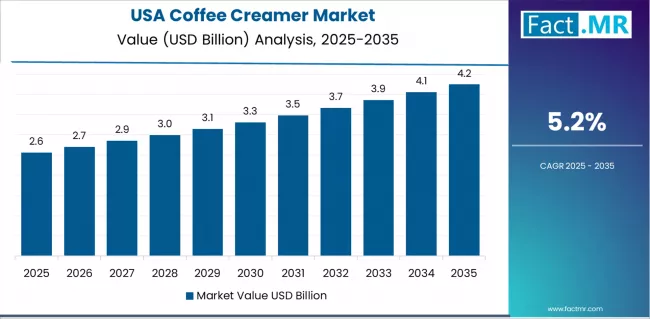
USA 5.2%
Brazil 5.0%
UK 4.8%

The coffee creamer market is expanding steadily, with China leading at a 7.0% CAGR through 2035, driven by rapid urbanization patterns, expanding café culture penetration, and growing middle-class coffee consumption adoption. India follows at 6.8%, supported by rising disposable income levels, Western coffee culture integration, and expanding modern retail infrastructure. South Korea records 6.5%, reflecting high per capita coffee consumption rates alongside premium product preferences and specialty coffee establishment growth.

Germany posts 5.6%, anchored by mature coffee market presence and accelerating plant-based product adoption. USA grows at 5.2%, with established specialty coffee culture and expanding e-commerce distribution channels. Brazil advances at 5.0%, emphasizing urban middle-class expansion and powdered creamer demand growth, while UK grows steadily at 4.8%, focusing on specialty coffee trends and organic product preferences.

China Leads Global Market Expansion

China demonstrates the strongest growth potential in the coffee creamer market with a CAGR of 7.0% through 2035. The country's leadership position stems from rapid urbanization driving coffee culture adoption, expanding middle-class population with disposable income growth, and increasing café establishment penetration enabling mainstream creamer consumption.

Growth is concentrated in major metropolitan regions, including Shanghai, Beijing, Guangzhou, and Shenzhen, where coffee shop proliferation and expanding modern retail infrastructure are implementing diverse creamer product offerings for enhanced beverage customization and consumer convenience.

Distribution channels through integrated retail networks, e-commerce platforms, and foodservice partnerships expand deployment across convenience stores, supermarket chains, and specialty coffee establishments. The country's evolving beverage consumption patterns provide market opportunities for product innovation, including localized flavor development and premium positioning strategies.

Key market factors:

  • Coffee consumption growth concentrated in urban centers and young professional demographics with comprehensive retail distribution networks
  • Infrastructure development through modern retail expansion and cold chain logistics improvements
  • Comprehensive café ecosystem, including established international coffee chains with proven consumer engagement capabilities
  • Product innovation featuring Asian-inspired flavors, functional ingredients, and premium non-dairy formulations

India Emerges as High-Growth Market

In major metropolitan areas including Mumbai, Delhi, Bangalore, and Hyderabad, the adoption and consumption of coffee creamers is accelerating across retail channels and emerging café segments, driven by Western lifestyle adoption and expanding coffee culture influence. The market demonstrates strong growth momentum with a CAGR of 6.8% through 2035, linked to rising disposable income levels, increasing urbanization patterns, and sustained adoption of Western beverage preferences.

Indian consumers are implementing coffee consumption rituals and specialty beverage preparation methods to embrace modern lifestyles while meeting growing preferences for convenient flavor enhancement solutions in expanding coffee sectors and hospitality industries. The country's demographic dividend and youth population create persistent demand for innovative beverage products, while increasing exposure to global coffee brands drives adoption of creamer usage patterns and preparation techniques.

Key development areas:

  • Urban consumer segments and young professional demographics leading coffee creamer adoption with growing purchasing power
  • Retail infrastructure expansion providing improved product availability with modern format store development
  • International brand partnerships between global coffee companies and local distributors are expanding market reach
  • Integration of traditional chai culture with coffee consumption creating hybrid beverage opportunities

South Korea Shows Premium Market Development

Coffee Creamer Market South Korea Market Share Analysis By Type

The South Korea market expansion is driven by exceptional coffee consumption rates, including specialty café density in Seoul and major cities, and expanding premium product preferences across sophisticated consumer segments. The country demonstrates promising growth potential with a CAGR of 6.5% through 2035, supported by highest per capita coffee consumption in Asia, strong café culture establishment, and growing integration of coffee consumption into daily routines.

South Korean consumers face product selection abundance related to extensive café market saturation and competitive retail environments, requiring manufacturers to differentiate through premium positioning and innovation focus with support from advanced food technology capabilities. However, growing coffee consumption occasions and sophisticated consumer tastes create compelling opportunities for specialty creamer adoption, particularly in urban markets where café-quality home preparation has a direct impact on consumer satisfaction and brand loyalty.

Key market characteristics:

  • Specialty coffee and premium beverage segments showing fastest growth with substantial innovation in creamer formulations
  • Regional consumption patterns focused on metropolitan café districts and residential neighborhood coffee shops
  • Future projections indicate continued premiumization trends and functional ingredient integration programs
  • Growing emphasis on convenience formats and single-serve packaging innovations

Germany Demonstrates Plant-Based Leadership

The German market leads in non-dairy creamer applications based on integration with sustainability values and established plant-based diet adoption for environmental consciousness. The country shows steady potential with a CAGR of 5.6% through 2035, driven by mature coffee consumption culture, strong organic product preferences, and the expansion of plant-based alternatives in major retail centers, including Berlin, Munich, Hamburg, and Frankfurt.

German consumers are adopting advanced non-dairy formulations for ethical consumption alignment and health optimization, particularly in regions with sophisticated food awareness and specialized dietary requirements demanding comprehensive ingredient transparency. Technology deployment channels through established retail grocery networks and specialty organic stores expand coverage across health-conscious consumers and environmentally aware demographics.

Leading market segments:

  • Organic and plant-based product categories in major retail operations implementing comprehensive sustainability positioning
  • Strategic partnerships with ethical sourcing programs, achieving certified organic specifications and fair trade standards
  • Collaborative development between ingredient suppliers and brand manufacturers are expanding innovation capabilities
  • Focus on clean label initiatives and transparent ingredient declaration methodologies

USA Emphasizes Specialty Coffee Integration

Coffee Creamer Market Country Value Analysis

In major metropolitan regions including New York, Los Angeles, Seattle, and Portland, coffee enthusiasts and daily consumers are implementing diverse creamer usage patterns to optimize home brewing experiences and workplace coffee preparation, with documented trends showing significant growth in specialty creamer varieties and premium product adoption. The market shows steady growth potential with a CAGR of 5.2% through 2035, linked to established specialty coffee culture, diversified retail distribution infrastructure, and ongoing innovation in flavor varieties and functional formulations.

American consumers are adopting extensive creamer portfolios and seasonal flavor experimentation to enhance coffee experiences while maintaining consumption convenience demanded by busy lifestyles and on-the-go beverage occasions. The country's mature coffee market infrastructure creates persistent demand for product variety and innovation solutions that integrate with evolving taste preferences.

Market development factors:

  • Specialty coffee consumers and daily coffee drinkers leading creamer consumption across USA
  • E-commerce growth and subscription models providing convenient purchasing pathways for brand loyalty development
  • Strategic relationships between coffee brands and creamer manufacturers are expanding co-branding opportunities
  • Emphasis on flavor innovation and limited-edition releases across seasonal consumption occasions

Brazil Shows Emerging Market Potential

Brazil's coffee creamer market demonstrates growth positioning focused on urban middle-class expansion and powdered creamer format preferences, with documented adoption of convenient preparation solutions in household coffee consumption, achieving improved beverage experiences through accessible product offerings in São Paulo and Rio de Janeiro metropolitan regions.

The country maintains steady growth momentum with a CAGR of 5.0% through 2035, driven by expanding urban population, growing middle-class purchasing power, and traditional coffee consumption culture adaptation to modern convenience products. Major retail operations, including supermarket chains in major cities, showcase deployment of diverse creamer options where affordability considerations support volume consumption and comprehensive household penetration programs.

Key market characteristics:

  • Urban households and workplace consumption driving creamer adoption with emphasis on value positioning and convenient preparation
  • Retail expansion partnerships enabling broader distribution reach with modern trade channel development
  • Product adaptation strategies between international brands and local consumer preferences are expanding market capabilities
  • Emphasis on powdered formats and cost-effective packaging solutions for mass market accessibility

UK Emphasizes Specialty and Organic Trends

The UK coffee creamer market demonstrates progressive landscape, characterized by specialty coffee establishment growth and expanding organic product preferences across health-conscious consumer segments. The country shows steady growth momentum with a CAGR of 4.8% through 2035, driven by established coffee shop culture, increasing plant-based diet adoption, and strategic emphasis on ethical consumption values in retail purchasing decisions.

The UK's focus on sustainability credentials and ingredient transparency creates requirements for premium creamer formulations that support comprehensive wellness positioning and environmental responsibility programs. The market benefits from strong distribution networks between specialty retailers and conscious consumer communities, creating comprehensive supply ecosystems that prioritize quality assurance and ethical sourcing verification.

Key market characteristics:

  • Specialty coffee consumers and health-conscious demographics driving premium creamer interest with emphasis on organic certification and clean ingredients
  • Retail partnerships enabling specialty product placement with independent café channels and premium grocery formats
  • Innovation collaboration between UK brands and plant-based ingredient suppliers is expanding formulation capabilities
  • Emphasis on sustainability packaging and carbon footprint reduction methodologies

Europe Market Split by Country

Coffee Creamer Market Europe Country Market Share Analysis, 2025 & 2035

The coffee creamer market in Europe is projected to grow from USD 1.4 billion in 2025 to USD 2.3 billion by 2035, registering a CAGR of 5.1% over the forecast period. Germany is expected to maintain its leadership position with a 26.3% market share in 2025, supported by its advanced organic food infrastructure, comprehensive plant-based product availability, and strong specialty coffee culture across major urban centers.

France follows with a 21.8% share in 2025, driven by established café culture and integrated retail food distribution sectors. UK holds a 19.4% share in 2025 through its specialty coffee market development and expanding organic product preferences. Italy commands a 16.9% share, while Rest of Europe accounts for 15.6% in 2025.

By 2035, Germany is projected to hold 26.7% share, France 21.5%, UK 19.6%, Italy 16.8%, and Rest of Europe 15.4%, reflecting sustained growth momentum across all major European markets and increasing coffee creamer adoption in diversified consumption occasions implementing premium product strategies.

Competitive Landscape of the Coffee Creamer Market

Coffee Creamer Market Analysis By Company

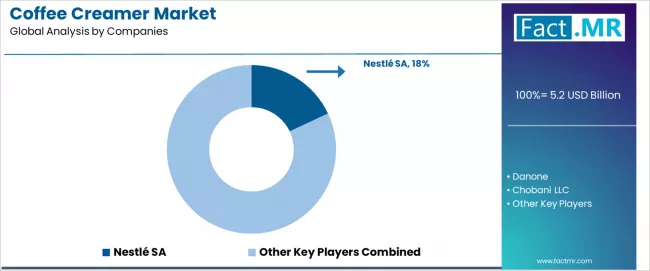
The coffee creamer market features approximately 25-35 meaningful players with moderate concentration, where the top three companies control roughly 35-40% of global market share through established brand recognition and extensive distribution relationships across retail and foodservice channels.

Market leaders include Nestlé, Danone, and FrieslandCampina, which maintain competitive advantages through comprehensive creamer product portfolios, global manufacturing networks, and deep expertise in the dairy processing and plant-based formulation sectors, creating strong customer relationships among retailers, foodservice operators, and beverage manufacturers.

These companies leverage established distribution infrastructure and ongoing innovation initiatives to defend market positions while expanding into adjacent functional beverage categories and premium product segments. Nestlé SA commands an 18.0% market share through diversified brand portfolio including Coffee-mate and strategic positioning in global retail markets.

Challengers encompass Kerry Group plc., Land O'Lakes Inc., and Chobani LLC, which compete through specialized product offerings and strong regional presence in key consumer markets. Specialty producers, including DreamPak LLC, Viceroy Holland BV, and PT. Santos Premium Krimer, focus on specific geographical regions or distribution channels, offering differentiated capabilities in private label manufacturing, foodservice solutions, and regional flavor preferences.

Regional players and emerging brands create competitive pressure through innovative formulation approaches and niche positioning strategies, particularly in high-growth markets including China and India, where local taste preferences provide advantages in product development and consumer acceptance.

Market dynamics favor companies that combine ingredient innovation capabilities with comprehensive distribution networks that address the complete value chain from formulation development through retail merchandising and consumer education. Strategic investments in plant-based technology platforms and sustainability initiatives enable competitive differentiation and brand positioning across coffee creamer operations.

Global Coffee Creamer Market - Stakeholder Contribution Framework

Coffee creamer products represent an essential beverage enhancement solution that enables coffee consumers, foodservice establishments, and beverage manufacturers to achieve desired taste profiles and texture characteristics without extensive preparation complexity, typically providing instant flavor delivery, convenient portion control, and extended shelf stability while supporting diverse coffee consumption occasions.

With the market projected to grow from USD 5.2 billion in 2025 to USD 8.7 billion by 2035 at a 5.3% CAGR, these products offer compelling advantages - convenient preparation, diverse flavor options, and dietary accommodation capabilities - making them essential for retail consumer applications (expanding segment), foodservice operations (established channels), and ready-to-drink coffee manufacturing (growing opportunities). Scaling production capacity and market development requires coordinated action across agricultural policy, industry standards, ingredient suppliers, brand manufacturers, and retail distributors.

How Governments Could Spur Local Production and Adoption?

  • Agricultural Development Programs: Include plant-based ingredient production capabilities in national agricultural strategies, providing targeted support for oat, almond, and soy cultivation in regions with suitable growing conditions and supporting local ingredient suppliers through development incentives and infrastructure investment.
  • Food Safety Standards & Labeling Requirements: Implement comprehensive product standards that ensure ingredient transparency, provide clear allergen information requirements, and establish quality benchmarks that support consumer confidence and informed purchasing decisions.
  • Trade Policy & Market Access: Create balanced import-export frameworks across dairy and plant-based ingredients, establish fair trade practices for specialty component sourcing, and develop international cooperation protocols that facilitate ingredient supply chain development.
  • Nutrition Education & Consumer Awareness: Fund public health initiatives that promote informed beverage choices, provide dietary guidance regarding creamer selection, and support consumer understanding of ingredient labels and nutritional profiles.

How Industry Bodies Could Support Market Development?

  • Quality Standards & Product Specifications: Define standardized composition guidelines for coffee creamer categories across dairy and non-dairy formulations, establish universal testing protocols for shelf stability and sensory characteristics, and create certification programs for organic and plant-based claims that manufacturers can implement.
  • Consumer Education & Category Development: Lead communication initiatives that demonstrate appropriate creamer usage, emphasizing preparation convenience, flavor variety benefits, and dietary accommodation options compared to traditional dairy cream and alternative enhancement methods.
  • Sustainability Guidelines: Develop environmental performance standards for ingredient sourcing, comprehensive packaging recyclability criteria, and carbon footprint reduction methodologies, ensuring responsible production across different manufacturing scales and distribution models.

How Manufacturers and Technology Players Could Strengthen the Ecosystem?

  • Formulation Technology Development: Develop next-generation creamer formulations with enhanced taste profiles, improved nutritional characteristics, and clean label ingredients that enhance consumer appeal while improving functional performance and production economics.
  • Distribution Network Optimization: Provide flexible supply arrangements for retail partners and foodservice operators, including inventory management support, merchandising assistance, and promotional programs that keep product availability consistent with consumer demand patterns.
  • Innovation Platforms: Offer comprehensive flavor development capabilities that integrate consumer trend analysis, sensory testing programs, limited edition releases, and seasonal variety development, enabling continuous category excitement and consumer engagement enhancement.

Key Players in the Coffee Creamer Market

  • Nestlé SA
  • Danone
  • Chobani LLC
  • DreamPak LLC
  • Viceroy Holland BV
  • PT. Santos Premium Krimer
  • Kerry Group plc.
  • FrieslandCampina
  • Land O'Lakes, Inc.
  • Fujian Jumbo Grand Food Co., Ltd.

Scope of the Report

Items Values
Quantitative Units USD 5.2 Billion
Product Dairy-based, Non-dairy
Type High-fat, Low-fat (<3 grams), Fat-free (<0.5 grams)
Form Liquid, Powder
Nature Organic, Conventional
Flavor Regular/Unflavored, Flavored
Packaging Type Plastic Jars, Tetra packs, PET Bottles, Others (pouches)
Distribution Channel B2B, B2C (Supermarkets and Hypermarkets, Convenience Stores, Online, Others)
Regions Covered Asia Pacific, North America, Europe, Latin America, Middle East & Africa
Country Covered China, India, South Korea, Germany, USA, Brazil, UK, and 40+ countries
Key Companies Profiled Nestlé, Danone, Chobani LLC, DreamPak LLC, Viceroy Holland BV, PT. Santos Premium Krimer, Kerry Group plc., FrieslandCampina, Land O'Lakes Inc., Fujian Jumbo Grand Food Co. Ltd.
Additional Attributes Dollar sales by product categories, type and form analysis across liquid and powder formats, nature segmentation trends across organic and conventional products, flavor variety developments, packaging type innovations across retail and foodservice channels, distribution channel dynamics covering B2B and B2C operations, competitive landscape with dairy processors and plant-based ingredient specialists, formulation specifications and sensory requirements, integration with specialty coffee establishments and retail grocery operations.

Coffee Creamer Market by Segments

  • Product :

    • Dairy-based
    • Non-dairy
  • Type :

    • High-fat
    • Low-fat (<3 grams)
    • Fat-free (<0.5 grams)
  • Form :

    • Liquid
    • Powder
  • Nature :

    • Organic
    • Conventional
  • Flavor :

    • Regular/Unflavored
    • Flavored
  • Packaging Type :

    • Plastic Jars
    • Tetra packs
    • PET Bottles
    • Others (pouches)
  • Distribution Channel :

    • B2B
    • B2C
      • Supermarkets and Hypermarkets
      • Convenience Stores
      • Online
      • Others
  • Region :

    • Asia Pacific
      • China
      • Japan
      • South Korea
      • India
      • Australia & New Zealand
      • ASEAN
      • Rest of Asia Pacific
    • North America
      • USA
      • Canada
      • Mexico
    • Europe
      • Germany
      • France
      • UK
      • Italy
      • Rest of Europe
    • Latin America
      • Brazil
      • Rest of Latin America
    • Middle East & Africa
      • Kingdom of Saudi Arabia
      • Other GCC Countries
      • Turkey
      • South Africa
      • Rest of Middle East & Africa

Table of Content

  1. Executive Summary
    • Global Market Outlook
    • Demand to side Trends
    • Supply to side Trends
    • Technology Roadmap Analysis
    • Analysis and Recommendations
  2. Market Overview
    • Market Coverage / Taxonomy
    • Market Definition / Scope / Limitations
  3. Market Background
    • Market Dynamics
      • Drivers
      • Restraints
      • Opportunity
      • Trends
    • Scenario Forecast
      • Demand in Optimistic Scenario
      • Demand in Likely Scenario
      • Demand in Conservative Scenario
    • Opportunity Map Analysis
    • Product Life Cycle Analysis
    • Supply Chain Analysis
    • Investment Feasibility Matrix
    • Value Chain Analysis
    • PESTLE and Porter’s Analysis
    • Regulatory Landscape
    • Regional Parent Market Outlook
    • Production and Consumption Statistics
    • Import and Export Statistics
  4. Global Market Analysis 2020 to 2024 and Forecast, 2025 to 2035
    • Historical Market Size Value (USD Million) Analysis, 2020 to 2024
    • Current and Future Market Size Value (USD Million) Projections, 2025 to 2035
      • Y to o to Y Growth Trend Analysis
      • Absolute $ Opportunity Analysis
  5. Global Market Pricing Analysis 2020 to 2024 and Forecast 2025 to 2035
  6. Global Market Analysis 2020 to 2024 and Forecast 2025 to 2035, By Product
    • Introduction / Key Findings
    • Historical Market Size Value (USD Million) Analysis By Product, 2020 to 2024
    • Current and Future Market Size Value (USD Million) Analysis and Forecast By Product, 2025 to 2035
      • Non-dairy
      • Dairy-based
    • Y to o to Y Growth Trend Analysis By Product, 2020 to 2024
    • Absolute $ Opportunity Analysis By Product, 2025 to 2035
  7. Global Market Analysis 2020 to 2024 and Forecast 2025 to 2035, By Type
    • Introduction / Key Findings
    • Historical Market Size Value (USD Million) Analysis By Type, 2020 to 2024
    • Current and Future Market Size Value (USD Million) Analysis and Forecast By Type, 2025 to 2035
      • High-fat
      • Low-fat (<3 grams)
      • Fat-free (<0.5 grams)
    • Y to o to Y Growth Trend Analysis By Type, 2020 to 2024
    • Absolute $ Opportunity Analysis By Type, 2025 to 2035
  8. Global Market Analysis 2020 to 2024 and Forecast 2025 to 2035, By Form
    • Introduction / Key Findings
    • Historical Market Size Value (USD Million) Analysis By Form, 2020 to 2024
    • Current and Future Market Size Value (USD Million) Analysis and Forecast By Form, 2025 to 2035
      • Liquid
      • Powder
    • Y to o to Y Growth Trend Analysis By Form, 2020 to 2024
    • Absolute $ Opportunity Analysis By Form, 2025 to 2035
  9. Global Market Analysis 2020 to 2024 and Forecast 2025 to 2035, By Region
    • Introduction
    • Historical Market Size Value (USD Million) Analysis By Region, 2020 to 2024
    • Current Market Size Value (USD Million) Analysis and Forecast By Region, 2025 to 2035
      • North America
      • Latin America
      • Western Europe
      • Eastern Europe
      • East Asia
      • South Asia and Pacific
      • Middle East & Africa
    • Market Attractiveness Analysis By Region
  10. North America Market Analysis 2020 to 2024 and Forecast 2025 to 2035, By Country
    • Historical Market Size Value (USD Million) Trend Analysis By Market Taxonomy, 2020 to 2024
    • Market Size Value (USD Million) Forecast By Market Taxonomy, 2025 to 2035
      • By Country
        • USA
        • Canada
        • Mexico
      • By Product
      • By Type
      • By Form
    • Market Attractiveness Analysis
      • By Country
      • By Product
      • By Type
      • By Form
    • Key Takeaways
  11. Latin America Market Analysis 2020 to 2024 and Forecast 2025 to 2035, By Country
    • Historical Market Size Value (USD Million) Trend Analysis By Market Taxonomy, 2020 to 2024
    • Market Size Value (USD Million) Forecast By Market Taxonomy, 2025 to 2035
      • By Country
        • Brazil
        • Chile
        • Rest of Latin America
      • By Product
      • By Type
      • By Form
    • Market Attractiveness Analysis
      • By Country
      • By Product
      • By Type
      • By Form
    • Key Takeaways
  12. Western Europe Market Analysis 2020 to 2024 and Forecast 2025 to 2035, By Country
    • Historical Market Size Value (USD Million) Trend Analysis By Market Taxonomy, 2020 to 2024
    • Market Size Value (USD Million) Forecast By Market Taxonomy, 2025 to 2035
      • By Country
        • Germany
        • UK
        • Italy
        • Spain
        • France
        • Nordic
        • BENELUX
        • Rest of Western Europe
      • By Product
      • By Type
      • By Form
    • Market Attractiveness Analysis
      • By Country
      • By Product
      • By Type
      • By Form
    • Key Takeaways
  13. Eastern Europe Market Analysis 2020 to 2024 and Forecast 2025 to 2035, By Country
    • Historical Market Size Value (USD Million) Trend Analysis By Market Taxonomy, 2020 to 2024
    • Market Size Value (USD Million) Forecast By Market Taxonomy, 2025 to 2035
      • By Country
        • Russia
        • Poland
        • Hungary
        • Balkan & Baltic
        • Rest of Eastern Europe
      • By Product
      • By Type
      • By Form
    • Market Attractiveness Analysis
      • By Country
      • By Product
      • By Type
      • By Form
    • Key Takeaways
  14. East Asia Market Analysis 2020 to 2024 and Forecast 2025 to 2035, By Country
    • Historical Market Size Value (USD Million) Trend Analysis By Market Taxonomy, 2020 to 2024
    • Market Size Value (USD Million) Forecast By Market Taxonomy, 2025 to 2035
      • By Country
        • China
        • Japan
        • South Korea
      • By Product
      • By Type
      • By Form
    • Market Attractiveness Analysis
      • By Country
      • By Product
      • By Type
      • By Form
    • Key Takeaways
  15. South Asia and Pacific Market Analysis 2020 to 2024 and Forecast 2025 to 2035, By Country
    • Historical Market Size Value (USD Million) Trend Analysis By Market Taxonomy, 2020 to 2024
    • Market Size Value (USD Million) Forecast By Market Taxonomy, 2025 to 2035
      • By Country
        • India
        • ASEAN
        • Australia & New Zealand
        • Rest of South Asia and Pacific
      • By Product
      • By Type
      • By Form
    • Market Attractiveness Analysis
      • By Country
      • By Product
      • By Type
      • By Form
    • Key Takeaways
  16. Middle East & Africa Market Analysis 2020 to 2024 and Forecast 2025 to 2035, By Country
    • Historical Market Size Value (USD Million) Trend Analysis By Market Taxonomy, 2020 to 2024
    • Market Size Value (USD Million) Forecast By Market Taxonomy, 2025 to 2035
      • By Country
        • Kingdom of Saudi Arabia
        • Other GCC Countries
        • Turkiye
        • South Africa
        • Other African Union
        • Rest of Middle East & Africa
      • By Product
      • By Type
      • By Form
    • Market Attractiveness Analysis
      • By Country
      • By Product
      • By Type
      • By Form
    • Key Takeaways
  17. Key Countries Market Analysis
    • USA
      • Pricing Analysis
      • Market Share Analysis, 2024
        • By Product
        • By Type
        • By Form
    • Canada
      • Pricing Analysis
      • Market Share Analysis, 2024
        • By Product
        • By Type
        • By Form
    • Mexico
      • Pricing Analysis
      • Market Share Analysis, 2024
        • By Product
        • By Type
        • By Form
    • Brazil
      • Pricing Analysis
      • Market Share Analysis, 2024
        • By Product
        • By Type
        • By Form
    • Chile
      • Pricing Analysis
      • Market Share Analysis, 2024
        • By Product
        • By Type
        • By Form
    • Germany
      • Pricing Analysis
      • Market Share Analysis, 2024
        • By Product
        • By Type
        • By Form
    • UK
      • Pricing Analysis
      • Market Share Analysis, 2024
        • By Product
        • By Type
        • By Form
    • Italy
      • Pricing Analysis
      • Market Share Analysis, 2024
        • By Product
        • By Type
        • By Form
    • Spain
      • Pricing Analysis
      • Market Share Analysis, 2024
        • By Product
        • By Type
        • By Form
    • France
      • Pricing Analysis
      • Market Share Analysis, 2024
        • By Product
        • By Type
        • By Form
    • India
      • Pricing Analysis
      • Market Share Analysis, 2024
        • By Product
        • By Type
        • By Form
    • ASEAN
      • Pricing Analysis
      • Market Share Analysis, 2024
        • By Product
        • By Type
        • By Form
    • Australia & New Zealand
      • Pricing Analysis
      • Market Share Analysis, 2024
        • By Product
        • By Type
        • By Form
    • China
      • Pricing Analysis
      • Market Share Analysis, 2024
        • By Product
        • By Type
        • By Form
    • Japan
      • Pricing Analysis
      • Market Share Analysis, 2024
        • By Product
        • By Type
        • By Form
    • South Korea
      • Pricing Analysis
      • Market Share Analysis, 2024
        • By Product
        • By Type
        • By Form
    • Russia
      • Pricing Analysis
      • Market Share Analysis, 2024
        • By Product
        • By Type
        • By Form
    • Poland
      • Pricing Analysis
      • Market Share Analysis, 2024
        • By Product
        • By Type
        • By Form
    • Hungary
      • Pricing Analysis
      • Market Share Analysis, 2024
        • By Product
        • By Type
        • By Form
    • Kingdom of Saudi Arabia
      • Pricing Analysis
      • Market Share Analysis, 2024
        • By Product
        • By Type
        • By Form
    • Turkiye
      • Pricing Analysis
      • Market Share Analysis, 2024
        • By Product
        • By Type
        • By Form
    • South Africa
      • Pricing Analysis
      • Market Share Analysis, 2024
        • By Product
        • By Type
        • By Form
  18. Market Structure Analysis
    • Competition Dashboard
    • Competition Benchmarking
    • Market Share Analysis of Top Players
      • By Regional
      • By Product
      • By Type
      • By Form
  19. Competition Analysis
    • Competition Deep Dive
      • Nestlé SA
        • Overview
        • Product Portfolio
        • Profitability by Market Segments (Product/Age /Sales Channel/Region)
        • Sales Footprint
        • Strategy Overview
          • Marketing Strategy
          • Product Strategy
          • Channel Strategy
      • Danone
      • Chobani LLC
      • DreamPak LLC
      • Viceroy Holland BV
      • PT. Santos Premium Krimer
      • Kerry Group plc.
      • FrieslandCampina
      • Land O'Lakes, Inc.
      • Fujian Jumbo Grand Food Co., Ltd.
  20. Assumptions & Acronyms Used
  21. Research Methodology

List Of Table

  • Table 1: Global Market Value (USD Million) Forecast by Region, 2020 to 2035
  • Table 2: Global Market Value (USD Million) Forecast by Product, 2020 to 2035
  • Table 3: Global Market Value (USD Million) Forecast by Type, 2020 to 2035
  • Table 4: Global Market Value (USD Million) Forecast by Form, 2020 to 2035
  • Table 5: North America Market Value (USD Million) Forecast by Country, 2020 to 2035
  • Table 6: North America Market Value (USD Million) Forecast by Product, 2020 to 2035
  • Table 7: North America Market Value (USD Million) Forecast by Type, 2020 to 2035
  • Table 8: North America Market Value (USD Million) Forecast by Form, 2020 to 2035
  • Table 9: Latin America Market Value (USD Million) Forecast by Country, 2020 to 2035
  • Table 10: Latin America Market Value (USD Million) Forecast by Product, 2020 to 2035
  • Table 11: Latin America Market Value (USD Million) Forecast by Type, 2020 to 2035
  • Table 12: Latin America Market Value (USD Million) Forecast by Form, 2020 to 2035
  • Table 13: Western Europe Market Value (USD Million) Forecast by Country, 2020 to 2035
  • Table 14: Western Europe Market Value (USD Million) Forecast by Product, 2020 to 2035
  • Table 15: Western Europe Market Value (USD Million) Forecast by Type, 2020 to 2035
  • Table 16: Western Europe Market Value (USD Million) Forecast by Form, 2020 to 2035
  • Table 17: Eastern Europe Market Value (USD Million) Forecast by Country, 2020 to 2035
  • Table 18: Eastern Europe Market Value (USD Million) Forecast by Product, 2020 to 2035
  • Table 19: Eastern Europe Market Value (USD Million) Forecast by Type, 2020 to 2035
  • Table 20: Eastern Europe Market Value (USD Million) Forecast by Form, 2020 to 2035
  • Table 21: East Asia Market Value (USD Million) Forecast by Country, 2020 to 2035
  • Table 22: East Asia Market Value (USD Million) Forecast by Product, 2020 to 2035
  • Table 23: East Asia Market Value (USD Million) Forecast by Type, 2020 to 2035
  • Table 24: East Asia Market Value (USD Million) Forecast by Form, 2020 to 2035
  • Table 25: South Asia and Pacific Market Value (USD Million) Forecast by Country, 2020 to 2035
  • Table 26: South Asia and Pacific Market Value (USD Million) Forecast by Product, 2020 to 2035
  • Table 27: South Asia and Pacific Market Value (USD Million) Forecast by Type, 2020 to 2035
  • Table 28: South Asia and Pacific Market Value (USD Million) Forecast by Form, 2020 to 2035
  • Table 29: Middle East & Africa Market Value (USD Million) Forecast by Country, 2020 to 2035
  • Table 30: Middle East & Africa Market Value (USD Million) Forecast by Product, 2020 to 2035
  • Table 31: Middle East & Africa Market Value (USD Million) Forecast by Type, 2020 to 2035
  • Table 32: Middle East & Africa Market Value (USD Million) Forecast by Form, 2020 to 2035

List Of Figures

  • Figure 1: Global Market Pricing Analysis
  • Figure 2: Global Market Value (USD Million) Forecast 2020 to 2035
  • Figure 3: Global Market Value Share and BPS Analysis by Product, 2025 and 2035
  • Figure 4: Global Market Y to o to Y Growth Comparison by Product, 2025 to 2035
  • Figure 5: Global Market Attractiveness Analysis by Product
  • Figure 6: Global Market Value Share and BPS Analysis by Type, 2025 and 2035
  • Figure 7: Global Market Y to o to Y Growth Comparison by Type, 2025 to 2035
  • Figure 8: Global Market Attractiveness Analysis by Type
  • Figure 9: Global Market Value Share and BPS Analysis by Form, 2025 and 2035
  • Figure 10: Global Market Y to o to Y Growth Comparison by Form, 2025 to 2035
  • Figure 11: Global Market Attractiveness Analysis by Form
  • Figure 12: Global Market Value (USD Million) Share and BPS Analysis by Region, 2025 and 2035
  • Figure 13: Global Market Y to o to Y Growth Comparison by Region, 2025 to 2035
  • Figure 14: Global Market Attractiveness Analysis by Region
  • Figure 15: North America Market Incremental Dollar Opportunity, 2025 to 2035
  • Figure 16: Latin America Market Incremental Dollar Opportunity, 2025 to 2035
  • Figure 17: Western Europe Market Incremental Dollar Opportunity, 2025 to 2035
  • Figure 18: Eastern Europe Market Incremental Dollar Opportunity, 2025 to 2035
  • Figure 19: East Asia Market Incremental Dollar Opportunity, 2025 to 2035
  • Figure 20: South Asia and Pacific Market Incremental Dollar Opportunity, 2025 to 2035
  • Figure 21: Middle East & Africa Market Incremental Dollar Opportunity, 2025 to 2035
  • Figure 22: North America Market Value Share and BPS Analysis by Country, 2025 and 2035
  • Figure 23: North America Market Value Share and BPS Analysis by Product, 2025 and 2035
  • Figure 24: North America Market Y to o to Y Growth Comparison by Product, 2025 to 2035
  • Figure 25: North America Market Attractiveness Analysis by Product
  • Figure 26: North America Market Value Share and BPS Analysis by Type, 2025 and 2035
  • Figure 27: North America Market Y to o to Y Growth Comparison by Type, 2025 to 2035
  • Figure 28: North America Market Attractiveness Analysis by Type
  • Figure 29: North America Market Value Share and BPS Analysis by Form, 2025 and 2035
  • Figure 30: North America Market Y to o to Y Growth Comparison by Form, 2025 to 2035
  • Figure 31: North America Market Attractiveness Analysis by Form
  • Figure 32: Latin America Market Value Share and BPS Analysis by Country, 2025 and 2035
  • Figure 33: Latin America Market Value Share and BPS Analysis by Product, 2025 and 2035
  • Figure 34: Latin America Market Y to o to Y Growth Comparison by Product, 2025 to 2035
  • Figure 35: Latin America Market Attractiveness Analysis by Product
  • Figure 36: Latin America Market Value Share and BPS Analysis by Type, 2025 and 2035
  • Figure 37: Latin America Market Y to o to Y Growth Comparison by Type, 2025 to 2035
  • Figure 38: Latin America Market Attractiveness Analysis by Type
  • Figure 39: Latin America Market Value Share and BPS Analysis by Form, 2025 and 2035
  • Figure 40: Latin America Market Y to o to Y Growth Comparison by Form, 2025 to 2035
  • Figure 41: Latin America Market Attractiveness Analysis by Form
  • Figure 42: Western Europe Market Value Share and BPS Analysis by Country, 2025 and 2035
  • Figure 43: Western Europe Market Value Share and BPS Analysis by Product, 2025 and 2035
  • Figure 44: Western Europe Market Y to o to Y Growth Comparison by Product, 2025 to 2035
  • Figure 45: Western Europe Market Attractiveness Analysis by Product
  • Figure 46: Western Europe Market Value Share and BPS Analysis by Type, 2025 and 2035
  • Figure 47: Western Europe Market Y to o to Y Growth Comparison by Type, 2025 to 2035
  • Figure 48: Western Europe Market Attractiveness Analysis by Type
  • Figure 49: Western Europe Market Value Share and BPS Analysis by Form, 2025 and 2035
  • Figure 50: Western Europe Market Y to o to Y Growth Comparison by Form, 2025 to 2035
  • Figure 51: Western Europe Market Attractiveness Analysis by Form
  • Figure 52: Eastern Europe Market Value Share and BPS Analysis by Country, 2025 and 2035
  • Figure 53: Eastern Europe Market Value Share and BPS Analysis by Product, 2025 and 2035
  • Figure 54: Eastern Europe Market Y to o to Y Growth Comparison by Product, 2025 to 2035
  • Figure 55: Eastern Europe Market Attractiveness Analysis by Product
  • Figure 56: Eastern Europe Market Value Share and BPS Analysis by Type, 2025 and 2035
  • Figure 57: Eastern Europe Market Y to o to Y Growth Comparison by Type, 2025 to 2035
  • Figure 58: Eastern Europe Market Attractiveness Analysis by Type
  • Figure 59: Eastern Europe Market Value Share and BPS Analysis by Form, 2025 and 2035
  • Figure 60: Eastern Europe Market Y to o to Y Growth Comparison by Form, 2025 to 2035
  • Figure 61: Eastern Europe Market Attractiveness Analysis by Form
  • Figure 62: East Asia Market Value Share and BPS Analysis by Country, 2025 and 2035
  • Figure 63: East Asia Market Value Share and BPS Analysis by Product, 2025 and 2035
  • Figure 64: East Asia Market Y to o to Y Growth Comparison by Product, 2025 to 2035
  • Figure 65: East Asia Market Attractiveness Analysis by Product
  • Figure 66: East Asia Market Value Share and BPS Analysis by Type, 2025 and 2035
  • Figure 67: East Asia Market Y to o to Y Growth Comparison by Type, 2025 to 2035
  • Figure 68: East Asia Market Attractiveness Analysis by Type
  • Figure 69: East Asia Market Value Share and BPS Analysis by Form, 2025 and 2035
  • Figure 70: East Asia Market Y to o to Y Growth Comparison by Form, 2025 to 2035
  • Figure 71: East Asia Market Attractiveness Analysis by Form
  • Figure 72: South Asia and Pacific Market Value Share and BPS Analysis by Country, 2025 and 2035
  • Figure 73: South Asia and Pacific Market Value Share and BPS Analysis by Product, 2025 and 2035
  • Figure 74: South Asia and Pacific Market Y to o to Y Growth Comparison by Product, 2025 to 2035
  • Figure 75: South Asia and Pacific Market Attractiveness Analysis by Product
  • Figure 76: South Asia and Pacific Market Value Share and BPS Analysis by Type, 2025 and 2035
  • Figure 77: South Asia and Pacific Market Y to o to Y Growth Comparison by Type, 2025 to 2035
  • Figure 78: South Asia and Pacific Market Attractiveness Analysis by Type
  • Figure 79: South Asia and Pacific Market Value Share and BPS Analysis by Form, 2025 and 2035
  • Figure 80: South Asia and Pacific Market Y to o to Y Growth Comparison by Form, 2025 to 2035
  • Figure 81: South Asia and Pacific Market Attractiveness Analysis by Form
  • Figure 82: Middle East & Africa Market Value Share and BPS Analysis by Country, 2025 and 2035
  • Figure 83: Middle East & Africa Market Value Share and BPS Analysis by Product, 2025 and 2035
  • Figure 84: Middle East & Africa Market Y to o to Y Growth Comparison by Product, 2025 to 2035
  • Figure 85: Middle East & Africa Market Attractiveness Analysis by Product
  • Figure 86: Middle East & Africa Market Value Share and BPS Analysis by Type, 2025 and 2035
  • Figure 87: Middle East & Africa Market Y to o to Y Growth Comparison by Type, 2025 to 2035
  • Figure 88: Middle East & Africa Market Attractiveness Analysis by Type
  • Figure 89: Middle East & Africa Market Value Share and BPS Analysis by Form, 2025 and 2035
  • Figure 90: Middle East & Africa Market Y to o to Y Growth Comparison by Form, 2025 to 2035
  • Figure 91: Middle East & Africa Market Attractiveness Analysis by Form
  • Figure 92: Global Market - Tier Structure Analysis
  • Figure 93: Global Market - Company Share Analysis

- FAQs -

How big is the coffee creamer market in 2025?

The global coffee creamer market is estimated to be valued at USD 5.2 billion in 2025.

What will be the size of coffee creamer market in 2035?

The market size for the coffee creamer market is projected to reach USD 8.7 billion by 2035.

How much will be the coffee creamer market growth between 2025 and 2035?

The coffee creamer market is expected to grow at a 5.3% CAGR between 2025 and 2035.

What are the key product types in the coffee creamer market?

The key product types in coffee creamer market are non-dairy and dairy-based.

Which type segment to contribute significant share in the coffee creamer market in 2025?

In terms of type, high-fat segment to command 64.7% share in the coffee creamer market in 2025.

Coffee Creamer Market