- Market Value (2025): USD 1.4 Bn
- Estimated Value (2026): USD 1.5 Bn
- Forecast Value (2036): USD 3.0 Bn
- CAGR (2026-2036): 7.2%
What is the Cold Press Juice Market forecast to be worth by 2036?
USD 1.5 billion in 2026 to USD 3.0 billion by 2036 at 7.2% CAGR.
- The cold press juice market reached USD 1.4 billion in 2025 as premium chilled beverages gained space across retail and direct-to-consumer channels.
- Demand is projected to increase from USD 1.5 billion in 2026 to USD 3.0 billion by 2036.
- The market is forecast to record 7.2% CAGR from 2026 to 2036 owing to repeat-use nutrition occasions and wider chilled distribution.
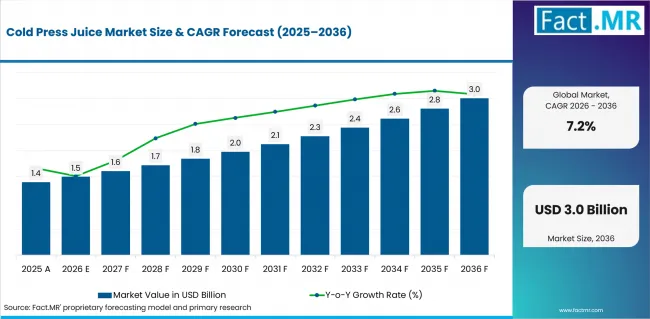
Cold Press Juice Market Value Analysis | Source: Fact.MR
What are the defining numbers behind Cold Press Juice Market growth?
USD 9.4 billion absolute opportunity by 2036, led by Fruit Juices and Daily Nutrition alongside Individual Consumers and Supermarkets & Hypermarkets.
- Demand Drivers in the Market
- Fruit juice formats give brands the simplest entry point since shoppers already understand flavor choice and daily use.
- Daily nutrition use is expected to support repeat buying when the product fits breakfast or workday routines.
- Retailers benefit from cold-press products that show clear processing discipline before wider shelf placement.
- Individual consumers are likely to compare price and freshness before shifting from standard juices to premium cold-press options.
- Key Segments Analyzed
- By Product Type: Fruit Juices are expected to hold 36.9% share in 2026 because familiar flavors make trial easier than niche vegetable blends.
- By Application: Daily Nutrition is projected to account for 31.7% share in 2026 as routine use gives brands a larger repeat-purchase base.
- By End User: Individual Consumers are anticipated to capture 31.2% share in 2026 since household purchases carry the largest direct consumption base.
- By Distribution Channel: Supermarkets & Hypermarkets are estimated to represent 31.9% share in 2026 due to chilled shelf visibility and shopper comparison.
- By Packaging Type: Plastic Bottles are forecast to hold 37.6% share in 2026 as they support portability and chilled display handling.
- Analyst Opinion at Fact.MR
- Shambhu Nath Jha, Senior Analyst at Fact.MR, states, “Cold press juice suppliers need to prove more than freshness claims. Retail acceptance is expected to depend on safe processing. Flavor consistency and chilled handling must protect the product until consumption.”
- Strategic Implications
- Retailers can use Fruit Juices as the first cold-press test case before expanding into blends. The format makes it easier to compare shopper response and shelf turnover.
- Brands need to connect cold-press positioning with processing proof and refrigerated handling. Pack integrity affects leakage, shelf appeal and delivery confidence.
- Investors may separate premium juice brands from standard chilled beverages by checking repeat orders and distribution discipline. Food safety testing remains relevant when suppliers use freshness claims to secure retailer approval.
The USA is expected to record a 9.4% CAGR from 2026 to 2036 with channel depth and premium refrigerated beverage placement. Germany is projected to record a 8.7% CAGR as buyers place more weight on processing proof and daily nutrition positioning. The UK is anticipated to grow at 7.9% through online retail and health-led convenience formats. Japan is estimated to post a 7.2% CAGR through quality expectations and compact retail placement. Canada is forecast at 6.5% with premium grocery channels. Australia is projected to reach 5.8% and Brazil 5.0% through selective distribution expansion.
How does the Cold Press Juice Market break down by segment?
Fruit Juices are expected to lead Product Type at 36.9% share in 2026. Daily Nutrition is projected to lead Application at 31.7% share in 2026.
Why does Fruit Juices lead Product Type?
Fruit Juices are projected to account for 36.9% share in 2026.
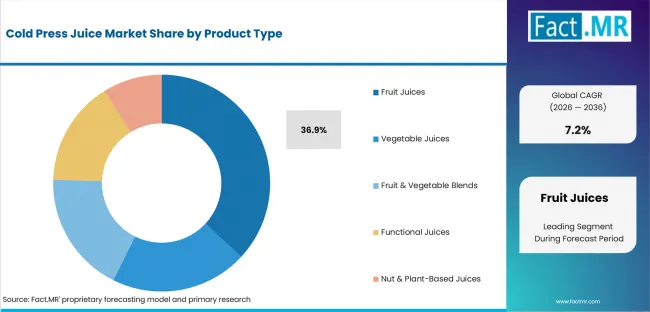
Cold Press Juice Market Analysis By Product Type | Source: Fact.MR
Fruit Juices hold the strongest product position as they are easy for shoppers to understand at first purchase. The format fits daily taste preferences and works well across family use. Citrus Juice adds sharper flavor appeal. Berry Juice supports premium shelf positioning. Vegetable Juices attract buyers looking for a more functional drink.
What leads the Application segment?
Daily Nutrition is expected to hold 31.7% share in 2026.
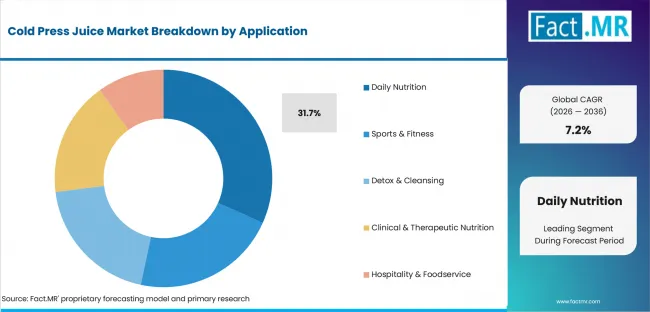
Cold Press Juice Market Analysis By Application | Source: Fact.MR
Daily Nutrition takes priority when cold-press juice becomes part of a normal consumption routine. The segment benefits from morning use and repeat weekly buying. Meal Replacement stays more limited since it must replace food occasions. Daily Wellness works for health-led shoppers. Sports & Fitness depends on clear recovery or hydration positioning.
How does End User shape demand?
Individual Consumers are anticipated to lead with 31.2% share in 2026.
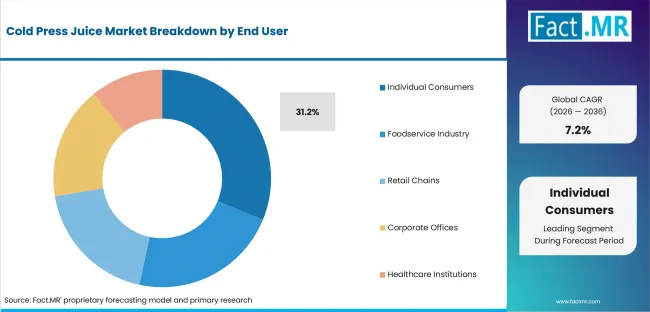
Cold Press Juice Market Analysis By End User | Source: Fact.MR
Individual Consumers form the main demand base through household purchases and chilled beverage habits. Their buying pattern gives brands more repeat sales than occasional institutional orders. Health-Conscious Consumers support premium pricing when ingredient claims are clear. Fitness Enthusiasts add selective demand around active routines. Foodservice users create smaller volume through cafes and wellness outlets.
What supports Supermarkets & Hypermarkets within Distribution Channel?
Supermarkets & Hypermarkets are estimated to represent 31.9% share in 2026.
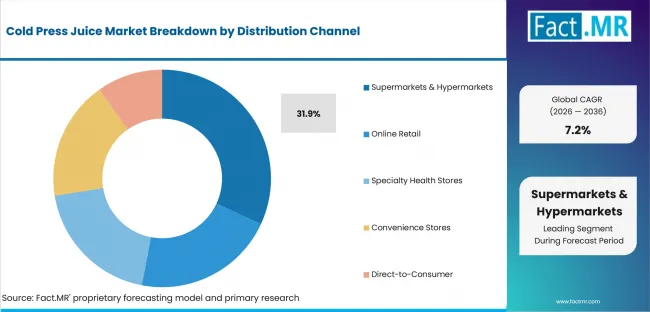
Cold Press Juice Market Analysis By Distribution Channel | Source: Fact.MR
Supermarkets & Hypermarkets give cold-press juice the best chance of trial near fresh and chilled products. Shoppers can compare price, pack size and flavor before buying. Online Retail works better after the first purchase. Brand Websites support repeat delivery. Specialty health stores serve buyers who ask more questions about ingredients.
What supports Plastic Bottles within Packaging Type?
Plastic Bottles are forecast to hold 37.6% share in 2026.
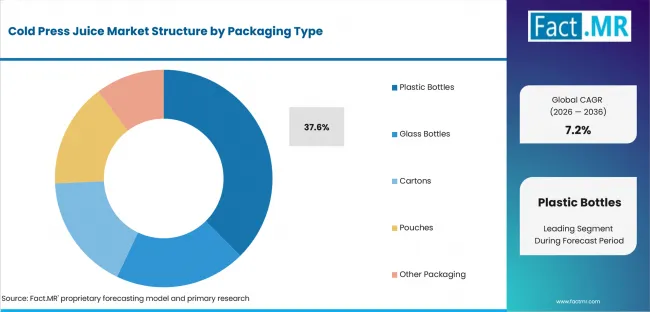
Cold Press Juice Market Analysis By Packaging Type | Source: Fact.MR
Plastic Bottles stay ahead in Packaging Type due to easy carrying and practical chilled shelf handling. Retailers can manage them with lower breakage risk during stocking. PET Bottles serve similar convenience needs. Recycled Plastic Bottles support sustainability-led positioning. Glass Bottles fit premium products but add weight during transport.
What is accelerating Cold Press Juice Market adoption, and what is holding it back?
Demand will grow as consumers choose familiar fruit juices for daily nutrition. Private-label competition and short shelf life may limit adoption.
Drivers Impact Analysis
| DRIVER | QUALITATIVE RELEVANCE | GEOGRAPHIC RELEVANCE | IMPACT TIMELINE |
|---|---|---|---|
| Fruit juice repeat-use pull | High | USA, Germany | Short term (<= 2 years) |
| Daily nutrition positioning | High | USA, UK | Short term (<= 2 years) |
| Retail shelf visibility | Moderate | Germany, Japan | Medium term (2-4 years) |
| Cold-chain and processing control | Moderate | Canada, Australia | Medium term (2-4 years) |
| Household wellness occasions | Selective | Brazil and online channels | Long term (>= 4 years) |
Source: Fact.MR analysis. Updated Jul 28, 2026
- Fruit juice repeat-use pull: Fruit juice remains the easiest cold-press format for shoppers to understand. Retailers can use familiar flavors to test price tolerance before adding blends.
- Daily nutrition positioning: Daily use cases are expected to convert better than one-time cleanse offers. Brands that connect juices with breakfast or mid-day routines can protect repeat purchases.
- Retail shelf visibility: Supermarkets and hypermarkets are expected to remain central because buyers can compare freshness and pack size in-store. Chilled display discipline matters during replenishment.
- Cold-chain and processing control: Cold-pressed juice needs processing proof and dependable refrigeration. Suppliers with validated batches and stable shelf-life handling are better placed for retail listings.
- Household wellness occasions: Home consumption is likely to shape demand where shoppers want convenient beverage options. Smaller packs can reduce purchase hesitation for first-time buyers.
Opportunity Impact Analysis
| OPPORTUNITY | QUALITATIVE RELEVANCE | GEOGRAPHIC RELEVANCE | IMPACT TIMELINE |
|---|---|---|---|
| Daily nutrition occasion-led assortments | High | USA | Medium term (2-4 years) |
| Private-label partnerships | Moderate | Germany, UK | Medium term (2-4 years) |
| Fruit juice bundle formats | Selective | Japan, Canada | Medium term (2-4 years) |
| Chilled direct-to-consumer subscriptions | Selective | Australia, Brazil | Long term (>= 4 years) |
Source: Fact.MR analysis. Updated Jul 28, 2026
- Daily nutrition occasion-led assortments: Retailers can build assortments around morning use and lunch pairing. The opening improves when pack size and flavor choice match a routine.
- Private-label partnerships: Store brands can widen trial when they apply clear quality checks. Suppliers need to protect taste consistency so private-label expansion does not weaken premium positioning.
- Fruit juice bundle formats: Mixed packs are expected to help brands sell variety without asking shoppers to commit to one flavor. Bundles can support gifting and subscription testing.
- Chilled direct-to-consumer subscriptions: Subscription routes can support repeat orders when delivery timing is dependable. Operators still need packaging that protects temperature and limits leakage during transport.
Restraints Impact Analysis
| RESTRAINT | QUALITATIVE RELEVANCE | GEOGRAPHIC RELEVANCE | IMPACT TIMELINE |
|---|---|---|---|
| Private-label competition and changing discretionary spending for fruit juices | High | USA | Short term (<= 2 years) |
| Price sensitivity around daily nutrition | Moderate | Germany | Medium term (2-4 years) |
| Slow conversion where fruit juices lack buyer-side validation | Selective | UK | Medium term (2-4 years) |
| Cold-chain losses and short shelf life | Moderate | Canada, Australia, Brazil | Medium term (2-4 years) |
Source: Fact.MR analysis. Updated Jul 28, 2026
- Private-label competition and changing discretionary spending for fruit juices: Cheaper shelf alternatives can pressure branded cold-press juice. The barrier is sharper when shoppers do not see clear processing proof.
- Price sensitivity around daily nutrition: Daily nutrition positioning needs repeat spending. Consumers may trade down when single-serve pricing rises faster than the perceived freshness benefit.
- Slow conversion where fruit juices lack buyer-side validation: New listings are harder to approve when buyers cannot compare spoilage risk and replenishment support. Evidence around processing and returns can shorten approval time.
- Cold-chain losses and short shelf life: Chilled handling raises waste risk during transport and store display. Smaller brands may lose margin when unsold inventory expires before replenishment cycles stabilize.
Which countries are scaling Cold Press Juice Market fastest?
The country comparison is shaped more by the narrow top spread than by the full CAGR range. The USA and Germany form the upper pair. The UK follows closely through health-led convenience channels. Japan and Canada hold a middle position where mature retail systems shape slower but dependable uptake. Australia and Brazil record lower rates as distance and affordability affect expansion timing.
- The USA holds the highest listed rate because supermarkets and brand websites give cold-press suppliers more selling routes.
- Germany remains close to the USA as retail buyers place weight on processing evidence and daily nutrition use cases.
- The UK follows the upper group through online retail and health-focused convenience formats.
- Japan maintains a measured position where compact retail formats influence pack size and store-level replenishment.
- Canada tracks below Japan where wide service geographies make chilled distribution coverage more important.
- Australia shows slower growth where long delivery distances raise the value of packaging integrity.
- Brazil remains below the main cluster as affordability and chilled storage access shape premium juice expansion.
Comparable CAGRs can therefore reflect different market entry conditions across these countries. Deployment timing depends on retailer acceptance and pack economics. Commercial readiness reflects whether suppliers can repeat flavor quality across channels.
The full report provides country-level CAGR analysis across North America and Latin America. Europe and East Asia are covered in the same regional view. South Asia and Oceania and the Middle East and Africa complete the coverage.
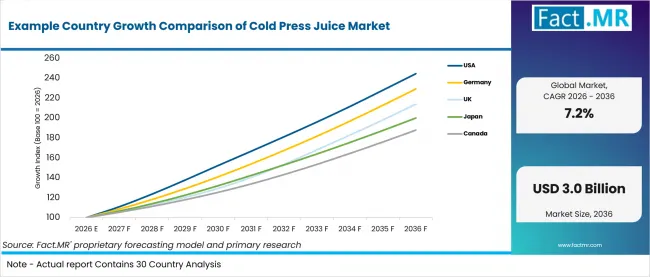
Example Country Growth Comparison Of Cold Press Juice Market | Source: Fact.MR
| Country | CAGR (2026-2036) |
|---|---|
| USA | 9.4% |
| Germany | 8.7% |
| UK | 7.9% |
| Japan | 7.2% |
| Canada | 6.5% |
| Australia | 5.8% |
| Brazil | 5.0% |
Source: Fact.MR analysis. Updated Jul 28, 2026
What gives the USA an adoption edge?
9.4% CAGR, with channel depth and premium refrigerated beverage placement.
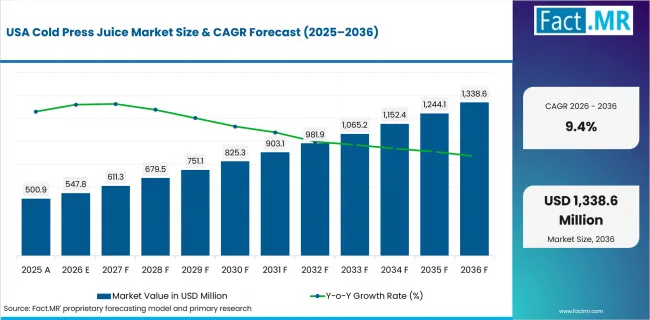
Cold Press Juice Market Country Value Analysis | Source: Fact.MR
The USA has a wider sales path for cold-press juice through supermarkets, direct delivery and wellness-focused retail accounts. Fruit Juices work well as the entry product since shoppers already understand the flavors. Brands can gain stronger listings when they prove safety handling and keep chilled replenishment steady.
How is Germany building repeat demand?
8.7% CAGR, shaped by daily nutrition positioning and processing proof.
Germany depends more on trust in quality than on fast product trials. Retail buyers are likely to expand chilled juice ranges when brands show clean labeling, consistent taste and dependable processing. Daily Nutrition performs better when freshness is presented as part of a normal routine.
What is moving the UK market forward?
7.9% CAGR, helped by online retail and health-led convenience formats.
The UK gives cold-press juice brands room to test premium products through digital channels and smaller retail cycles. Individual Consumers matter most when the product fits workday use or at-home consumption. Packaging quality becomes important when chilled delivery must protect both freshness and shelf appeal.
Why is Japan following a measured path?
7.2% CAGR, shaped by quality expectations and compact retail placement.
Japan’s route to adoption is more selective. Buyers focus on freshness, pack size and store-level handling before giving more shelf space to cold-press juice. Supermarkets and hypermarkets remain useful when products fit compact displays and keep flavor quality stable.
How does Canada’s geography affect demand?
6.5% CAGR, with premium grocery channels and service coverage.
Canada’s market depends on how well brands serve large distances without raising spoilage risk. Plastic Bottles remain practical since they help with portability, handling and price control. Suppliers can improve acceptance by focusing first on major urban stores with reliable chilled logistics.
What shapes Australia’s slower expansion?
5.8% CAGR, influenced by wellness retail and controlled chilled distribution.
Australia places more pressure on delivery timing due to the distance between production sites and retail shelves. Fruit Juices can attract buyers when flavor quality survives chilled transport. Suppliers that manage pack integrity and refrigerated movement are better placed than brands relying only on a premium image.
Where is Brazil’s opportunity limited?
5.0% CAGR, affected by affordability and distributor reach.
Brazil’s cold-press juice market is likely to broaden only when products move beyond premium urban buyers. Daily Nutrition can support repeat purchasing if prices stay close to competing chilled drinks. Wider adoption depends on distributor coverage and reliable store refrigeration.
Who leads the Cold Press Juice Market?
Suja Life, Inc. and Evolution Fresh are leading providers in the market. Pressed Juicery competes through strong retail and online sales.
Suja Life, Inc. focuses on organic and functional cold-pressed juices. Evolution Fresh has wide visibility through established retail stores. Pressed Juicery supports demand through subscriptions and juice cleanses. Juice Generation, and Plenish also expand the market with chilled and plant-based beverages.
From 2026 to 2036, companies are expected to compete on product freshness, flavor quality, and reliable cold storage. Retailers will compare spoilage levels, packaging strength, and processing standards before placing larger orders. Providers with clear quality controls may gain stronger demand from supermarkets and online sellers.
Which companies are the key providers?
Key companies include Suja Life, Inc.; Evolution Fresh; Pressed Juicery; Juice Generation; and Plenish.
- Suja Life, Inc.
- Evolution Fresh
- Pressed Juicery
- Juice Generation
- Plenish
How is the market segmented?
-
By Product Type:
- Fruit Juices
- Citrus Juice
- Berry Juice
- Vegetable Juices
- Green Vegetable Juice
- Root Vegetable Juice
- Fruit & Vegetable Blends
- Green Blends
- Antioxidant Blends
- Functional Juices
- Protein-Enriched Juice
- Probiotic Juice
- Nut & Plant-Based Juices
- Almond-Based Juice
- Coconut-Based Juice
-
By Application:
- Daily Nutrition
- Meal Replacement
- Daily Wellness
- Sports & Fitness
- Pre-Workout Nutrition
- Post-Workout Recovery
- Detox & Cleansing
- Detox Programs
- Cleansing Diets
- Clinical & Therapeutic Nutrition
- Dietary Management
- Recovery Nutrition
- Hospitality & Foodservice
- Cafes
- Hotels & Restaurants
-
By End User:
- Individual Consumers
- Health-Conscious Consumers
- Fitness Enthusiasts
- Foodservice Industry
- Cafes
- Restaurants
- Retail Chains
- Supermarkets
- Convenience Stores
- Corporate Offices
- Employee Wellness Programs
- Corporate Cafeterias
- Healthcare Institutions
- Hospitals
- Wellness Centers
-
By Distribution Channel:
- Supermarkets & Hypermarkets
- Hypermarkets
- Supermarkets
- Online Retail
- Brand Websites
- E-Commerce Platforms
- Specialty Health Stores
- Organic Food Stores
- Health & Wellness Stores
- Convenience Stores
- Gas Station Stores
- Local Convenience Stores
- Direct-to-Consumer
- Subscription Services
- Brand-Owned Outlets
-
By Packaging Type:
- Plastic Bottles
- PET Bottles
- Recycled Plastic Bottles
- Glass Bottles
- Clear Glass Bottles
- Amber Glass Bottles
- Cartons
- Aseptic Cartons
- Recyclable Cartons
- Pouches
- Stand-Up Pouches
- Single-Serve Pouches
- Other Packaging
- Aluminum Cans
- Biodegradable Containers
-
By Region:
- North America
- Latin America
- Europe
- East Asia
- South Asia and Oceania
- Middle East and Africa
Bibliography
- U.S. Food and Drug Administration. (2025, April 1). Walker’s Wine Juice LLC recalls product due to possible health risk.
- U.S. Department of Agriculture, Economic Research Service. (2026, February 10). Fruit and tree nuts yearbook tables.
- U.S. Department of Agriculture, National Agricultural Statistics Service. (2025, May). Noncitrus fruits and nuts: 2024 summary.
- Plenish. (2025, July 10). Inside our Ginger Energy Shot—Nutritionist deep dive.
This Report Answers
- The report provides strategic intelligence on the Cold Press Juice Market across Product Type and Application choices that shape retail and daily-use buying.
- Segment analysis covers Fruit Juices and Daily Nutrition as the share leaders within the 2026 market structure.
- Country outlook evaluates the USA and Germany alongside the UK and Japan. Canada, Australia and Brazil complete the growth comparison.
- Competitive analysis profiles Suja Life, Inc. and Evolution Fresh alongside Pressed Juicery. Juice Generation is included with Plenish.
- Channel assessment covers Supermarkets & Hypermarkets and online routes. Specialty health stores and direct-to-consumer formats complete the distribution view.
What does the Cold Press Juice Market cover?
Cold press juice refers to beverages made through low-heat extraction where freshness and refrigerated handling shape commercial value.
The Cold Press Juice Market covers fruit juices and vegetable juices. It includes blends, functional juices and related chilled beverage formats. Coverage extends to retail and online channels. Specialty health and foodservice channels are included when the product is sold as cold-pressed juice. It includes packaging formats used to protect freshness during chilled display and delivery.
The market differs from standard shelf-stable juice because commercial value depends on cold-chain handling and processing proof. General soft drinks, powdered drink mixes and unrelated beverage concentrates remain outside the boundary. Standard packaged juices are excluded unless they are sold as cold-pressed products.
What is included in the scope?
Cold press juice products are used by individual consumers and health-conscious buyers. Fitness users and foodservice operators are included when products are sold for routine beverage use.
The scope includes Product Type and Application alongside End User and Distribution Channel. Packaging Type is included for pack formats used in chilled display. Coverage spans Fruit Juices and Citrus Juice through functional juices and plant-based formats. It covers major retail channels and regional demand across the listed countries.
What is excluded from the scope?
Unrelated beverages and products without a cold-press processing claim remain outside the scope of this market.
The scope excludes carbonated soft drinks and alcohol products. Powdered drink mixes and unrelated packaged beverages are outside the scope. Juice manufacturing equipment is excluded unless demand is directly tied to cold-press product commercialization. Company revenue without a clear connection to cold press juice is excluded.
How Was the Analysis Built?
The analysis draws on 120+ sources, 35+ company portfolios, 25+ countries, and more than 20 industry interviews.
- Primary Research: Primary research includes discussions with manufacturers, service providers, technology developers, distributors, end users, procurement teams, and subject-matter experts. These conversations examine purchasing priorities, product adoption, operational challenges, approval requirements, competitive positioning, and the factors that influence wider market acceptance.
- Desk Research: Desk research covers government statistics, regulatory publications, company filings, trade data, technical studies, industry associations, standards, public policy, and other authoritative sources. Every source used in the analysis is documented in the bibliography.
- Market Sizing and Forecasting: Market estimates combine historical performance, demand indicators, pricing and volume trends, segment shares, company participation, country-level growth, adoption patterns, investment activity, and barriers to market expansion.
- Data Validation and Update Cycle: Findings are validated by comparing primary interviews with public data, company activity, regulatory changes, trade patterns, and industry developments. Regular updates review new product launches, capacity changes, partnerships, approvals, procurement trends, and shifts in commercial adoption.
Segmentation
What is the report’s scope and coverage?
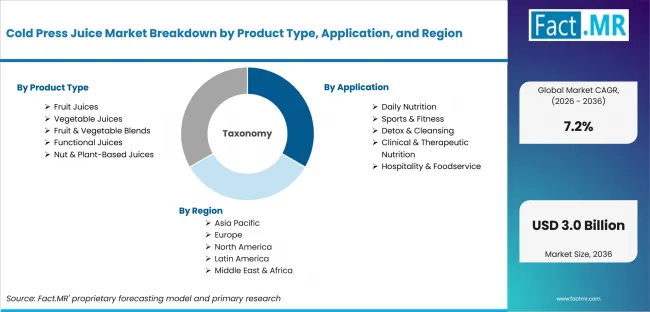
Cold Press Juice Market Breakdown By Product Type, Application, And Region | Source: Fact.MR
| Attribute | Details |
|---|---|
| Quantitative Units | USD billion in 2026 to USD billion by 2036 at CAGR |
| Market Definition | Cold press juice products made through low-heat extraction and sold through retail, online and foodservice channels where freshness, safe processing, packaging and refrigerated distribution shape commercial value |
| Product Type | Fruit Juices; Citrus Juice; Berry Juice; Vegetable Juices; Green Vegetable Juice; Root Vegetable Juice; Fruit & Vegetable Blends; Green Blends; Antioxidant Blends; Functional Juices; Protein-Enriched Juice; Probiotic Juice; Nut & Plant-Based Juices; Almond-Based Juice; Coconut-Based Juice |
| Application | Daily Nutrition; Meal Replacement; Daily Wellness; Sports & Fitness; Pre-Workout Nutrition; Post-Workout Recovery; Detox & Cleansing; Detox Programs; Cleansing Diets; Clinical & Therapeutic Nutrition; Dietary Management; Recovery Nutrition; Hospitality & Foodservice; Cafes; Hotels & Restaurants |
| End User | Individual Consumers; Health-Conscious Consumers; Fitness Enthusiasts; Foodservice Industry; Cafes; Restaurants; Retail Chains; Supermarkets; Convenience Stores; Corporate Offices; Employee Wellness Programs; Corporate Cafeterias; Healthcare Institutions; Hospitals; Wellness Centers |
| Distribution Channel | Supermarkets & Hypermarkets; Hypermarkets; Supermarkets; Online Retail; Brand Websites; E-Commerce Platforms; Specialty Health Stores; Organic Food Stores; Health & Wellness Stores; Convenience Stores; Gas Station Stores; Local Convenience Stores; Direct-to-Consumer; Subscription Services; Brand-Owned Outlets |
| Packaging Type | Plastic Bottles; PET Bottles; Recycled Plastic Bottles; Glass Bottles; Clear Glass Bottles; Amber Glass Bottles; Cartons; Aseptic Cartons; Recyclable Cartons; Pouches; Stand-Up Pouches; Single-Serve Pouches; Other Packaging; Aluminum Cans; Biodegradable Containers |
| Regions Covered | North America; Latin America; Europe; East Asia; South Asia and Oceania; Middle East and Africa |
| Countries Covered | USA; Germany; UK; Japan; Canada; Australia; Brazil |
| Key Companies Profiled | Suja Life, Inc.; Evolution Fresh; Pressed Juicery; Juice Generation; Plenish |
| Forecast Period | 2026 to 2036 |
| Approach | Hybrid top-down and bottom-up approach using retail channel demand; cold-chain handling; product type mix; application use cases; country growth; company participation; packaging suitability; and public evidence relevant to the category |
Source: Fact.MR analysis. Updated Jul 28, 2026
Frequently Asked Questions
Which Product Type leads the market?
Which Application leads the market?
Which End User leads the market?
Which Distribution Channel leads the market?
Which Packaging Type leads the market?
Which country records the highest listed CAGR?
What is the primary driver in this market?
What is the main restraint?
Why do individual consumers lead demand?
Who worked on this report


Preview the report firsthand - request a free sample
Free SampleGet the brochure for pricing and purchase details
Download PDF