- Base Value(2025): 94.1 Bn
- Estimated Value(2026): 103.3 Bn
- Forecast Value (2036): 261.5 Bn
- CAGR (2026 - 2036): 9.7%
Cosmetic Surgery Market Forecast and Outlook by Fact.MR
- In 2025, the cosmetic surgery market was valued at USD 94.1 billion.
- Based on Fact.MR analysis, demand for cosmetic surgery procedures and devices is estimated to grow to USD 103.3 billion in 2026 and USD 261.5 billion by 2036.
- FACT.MR projects a CAGR of 9.7% during the forecast period.
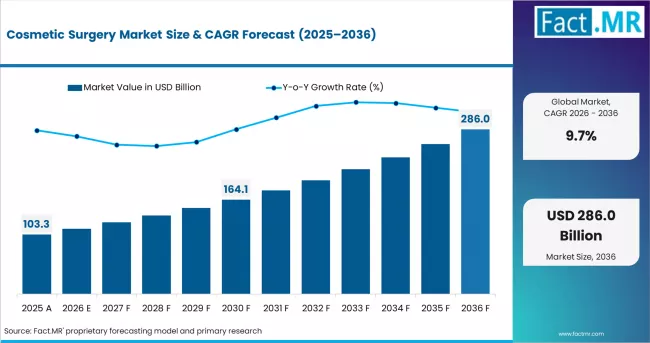
Cosmetic Surgery Market Value Analysis | Source: Fact.MR
| Metric | Value |
|---|---|
| Estimated Value in 2026 | USD 103.3 billion |
| Forecast Value in 2036 | USD 261.5 billion |
| Forecast CAGR (2026 to 2036) | 9.7% |
Source: Fact.MR analysis. Updated May 16, 2026
Summary of the Cosmetic Surgery Market
- Market Definition
- The market covers elective surgical and non-surgical aesthetic procedures delivered through clinics, hospitals, and ambulatory centers, spanning injectables, energy devices, surgical contouring, breast, facial, and hair restoration categories.
- Demand Drivers
- Social media influence is expanding the addressable patient base among 18-to-34-year-old consumers, directly increasing first-visit non-invasive procedure volumes at specialty cosmetic clinics in North America and Europe.
- Medical tourism infrastructure in South Korea and Turkey is channelling international patient volumes into high-margin surgical procedures, sustaining above-average revenue per facility relative to domestic-only markets.
- Instalment-based financing offered by aesthetic clinic chains is reducing effective cost barriers for millennial consumers, accelerating repeat visits for neuromodulator and filler maintenance cycles.
- Key Segments Analyzed
- By Procedure: Non-invasive procedures hold approximately 62% share in 2026, as injectable and energy-based treatments drive repeat-visit volume across cosmetic clinics globally.
- By Gender: Female patients account for approximately 85% share in 2026, reflecting long-established demand patterns across both surgical and non-surgical aesthetic categories.
- By Age Group: The 30–54 age group holds approximately 50% share in 2026, representing the primary consumer segment for surgical and premium injectable procedures.
- By Procedure Type: Facial procedures lead with approximately 40% share in 2026, including rhinoplasty, facelifts, and eyelid surgery across surgical and non-surgical formats.
- By End-Use Setting: Specialty cosmetic clinics account for approximately 50% share in 2026, driven by their concentration of non-invasive and minimally invasive procedure delivery.
- By Geography: The United States leads at 14.7% CAGR, anchored by the world's largest injectable market and continuous FDA device innovation clearances.
- Analyst Opinion at FACT.MR
- Shambhu Nath Jha, Principal Consultant at Fact.MR, opines, CXOs should recognize that the non-invasive segment is no longer a secondary revenue stream. It is emerging as the primary driver of patient acquisition and retention.
- Strategic Implications
- Invest in multi-modality non-invasive device platforms at specialty cosmetic clinics to capture the growing 18–34 age cohort entering the aesthetic procedure market for the first time.
- Build medical tourism partnerships with hospitality and travel intermediaries in South Korea and Turkey to access international surgical volume at premium procedure pricing.
- Develop financing and membership models within cosmetic clinic networks to convert single-visit patients into repeat injectable customers with predictable revenue cycles.
- Methodology
- Market sizing uses ISAPS procedure volume data and average revenue per procedure benchmarks, validated against manufacturer revenue disclosures from 2024 to 2025.
- Analysis incorporates FDA 510(k) and PMA records, CE marking approvals, ISAPS annual global statistics, and national aesthetic society annual data.
- Forecasts account for procedure volume trends by age group, financing adoption rates at clinic chains, and medical tourism flow estimates by country.
The market is projected to generate USD 158.2 billion in incremental revenue over the forecast period. Growth reflects expansion in procedure volumes and rising average treatment values. Minimally invasive technologies are improving outcomes and reducing recovery time. This is increasing patient willingness to undergo procedures.
Constraints remain present across segments. Cost sensitivity is high in lower-income groups. Most procedures are paid out-of-pocket. Regulatory variability across countries slows device and injectable approvals. This affects market entry timelines.
Non-invasive procedures are expanding rapidly in North America and Europe. Injectable treatments such as neuromodulators and dermal fillers are driving repeat visits. Established markets continue to show strong retention rates. Surgical procedures are growing faster in select regions. South Korea and the United States benefit from medical tourism and specialized clinic networks. Financing models are also evolving. Instalment-based payment options are reducing upfront cost barriers. Younger consumers are increasingly participating.
The United States leads growth at 14.7% CAGR through 2036. This is supported by strong injectable demand and ongoing approvals by the U.S. Food and Drug Administration. South Korea follows at 13.8%, driven by advanced surgical expertise and tourism inflows. The United Kingdom grows at 12.1%, supported by regulated non-surgical demand. France records 11.5%, driven by strong aesthetic medicine adoption. Germany reaches 11.2%, supported by regulated infrastructure. Italy grows at 10.4%, driven by specialization and cosmetic tourism.
Segmental Analysis
Cosmetic Surgery Market Analysis by Procedure
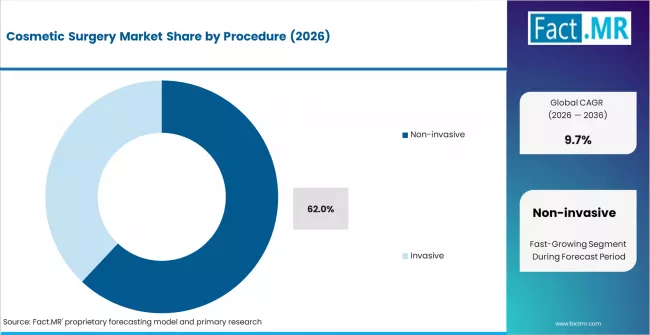
Cosmetic Surgery Market Analysis By Procedure | Source: Fact.MR
Based on FACT.MR’s analysis, non-invasive procedures are estimated to account for approximately 62% of the market in 2026. This dominance reflects a structural shift toward injectable neuromodulators, dermal fillers, and energy-based treatments.
- AbbVie Allergan Aesthetics Injectable Growth: AbbVie reported in its Q3 2024 earnings that its Allergan Aesthetics division, which includes Botox Cosmetic and Juvéderm fillers, generated strong revenue growth, with facial injectable demand rising across North America and international markets. The company disclosed increased investment in practitioner training networks to sustain volume. [1]
- Evolus Jeuveau Expansion: Evolus Inc. disclosed in its fiscal year 2024 results that Jeuveau neuromodulator sales grew year-on-year, supported by its direct-to-practice commercial model targeting aesthetic-focused plastic surgery and dermatology offices in the United States. The company expanded its European market access programme in 2025. [2]
- Surgical Volume Recovery: The International Society of Aesthetic Plastic Surgery (ISAPS) reported in its 2024 annual global survey that surgical procedure volumes globally continued to recover and grow beyond pre-pandemic baselines, with rhinoplasty and liposuction recording the highest absolute volumes among surgical categories. [3]
Cosmetic Surgery Market Analysis by Gender
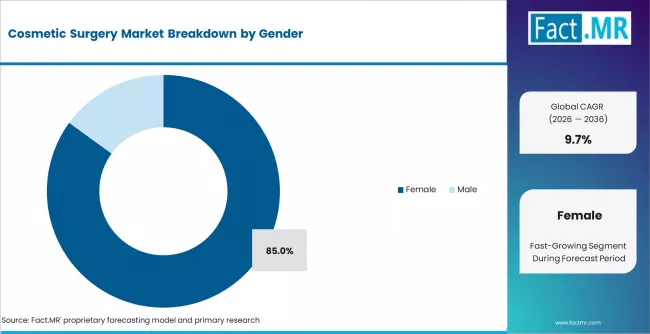
Cosmetic Surgery Market Analysis By Gender | Source: Fact.MR
Based on FACT.MR's report, female patients account for approximately 85% share in 2026. Female dominance reflects long-standing demand patterns across both surgical and non-surgical aesthetic procedures. Treatments such as breast procedures, facial surgery, and injectables have historically been concentrated within female patient populations.
- Male Aesthetic Growth Trend: The American Society of Plastic Surgeons (ASPS) reported in its 2024 annual statistics that male cosmetic procedure volumes increased for the fourth consecutive year, with non-surgical treatments including neuromodulators, hair restoration, and gynecomastia surgery recording the highest male patient growth rates. [4]
- Galderma Filler Innovation: Galderma disclosed in its 2024 annual report that its Restylane filler portfolio continued to expand across markets, with new formulations targeting specific anatomical indications including jawline and mid-face volume restoration that appeal to both male and female patient demographics. [5]
- Revance Male Market Entry: Revance Therapeutics reported in its 2024 investor communications that RHA Collection filler adoption was expanding among male aesthetic patients at multi-specialty clinics in the United States, reflecting broader engagement of male consumers with dermal filler treatments beyond neuromodulators. [6]
Cosmetic Surgery Market Analysis by Age Group
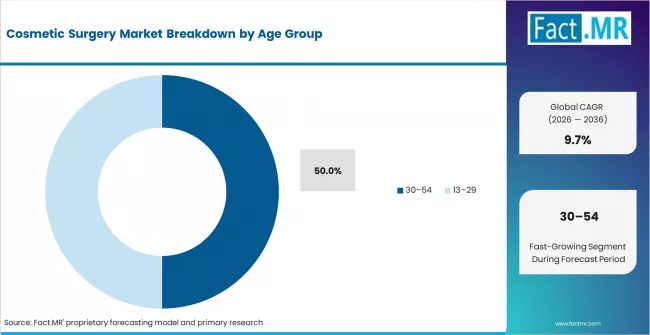
Cosmetic Surgery Market Analysis By Age Group | Source: Fact.MR
Based on FACT.MR's report, the 30–54 age group holds approximately 50% share in 2026.
- Gen Z Non-Invasive Entry: The American Academy of Facial Plastic and Reconstructive Surgery (AAFPRS) reported in its 2024 annual survey that practitioners across the United States observed a significant increase in patients aged 18 to 30 requesting preventive injectable treatments, particularly neuromodulators used before visible lines appear. [7]
- Cutera Energy Device Adoption: Cutera Inc. reported in its fiscal year 2024 results that its energy-based device platforms, including Enlighten and Excel V+, saw strong adoption at dermatology and cosmetic clinics serving the 25–45 age demographic, with body contouring and skin resurfacing representing the fastest-growing procedure categories. [8]
- 55-Plus Surgical Volume: ISAPS 2024 global data confirmed that patients aged 55 and above represent a structurally significant surgical segment, with facelift and eyelid surgery procedures concentrated in this cohort across North America and Western Europe. [3]
Cosmetic Surgery Market Analysis by Procedure Type
Cosmetic Surgery Market Analysis By Procedure | Source: Fact.MR
Based on FACT.MR's report, facial procedures lead with approximately 40% share in 2026. Their dominance reflects the breadth of both surgical and non-surgical treatments targeting the face, including rhinoplasty, facelifts, eyelid surgery, injectable neuromodulators.
- Solta Medical Device Launch: Solta Medical, a subsidiary of Bausch Health Companies, launched updated Thermage FLX and Fraxel platforms in 2024 targeting the facial skin tightening and resurfacing segment. The company cited continued practitioner demand for non-ablative facial treatment options at cosmetic clinics in the United States and Asia Pacific. [9]
- Body Contouring Technology: Cynosure disclosed in its 2024 marketing communications that its SculpSure non-invasive body contouring platform continued to gain clinic placements across North America and Europe, positioning it as a complement to surgical liposuction for patients seeking non-surgical fat reduction. [10]
- Hair Restoration Market Expansion: The International Society of Hair Restoration Surgery (ISHRS) reported in its 2024 practice census that hair transplant procedure volumes globally grew year-on-year, with follicular unit extraction (FUE) representing the dominant technique across all age groups seeking hair restoration treatment. [11]
Cosmetic Surgery Market Analysis by End-Use Setting
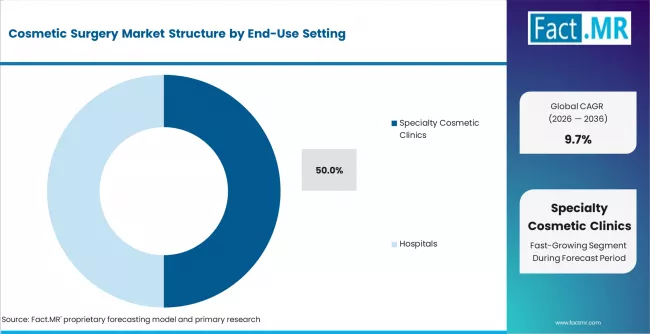
Cosmetic Surgery Market Analysis By End Use Setting | Source: Fact.MR
Based on FACT.MR's report, specialty cosmetic clinics account for approximately 50% share in 2026. Their dominance reflects the concentration of non-invasive and minimally invasive procedure delivery in dedicated aesthetic environments.
- Alma Laser Clinic Expansion: Alma Lasers disclosed in its 2024 commercial updates that its multi-platform aesthetic device portfolio, including Soprano ICE and Accent Prime, continued to see new clinic placements across cosmetic and dermatology clinic networks in Europe, the Middle East, and Asia, reinforcing the specialty clinic channel as the primary device deployment setting. [12]
- Ambulatory Surgical Center Growth: The Ambulatory Surgery Center Association reported in its 2024 membership data that cosmetic and plastic surgery procedures represent a growing share of ASC procedure volumes in the United States, as lower facility costs and faster patient throughput attract both surgeons and patients away from hospital outpatient settings. [13]
- Hospital Cosmetic Department Trend: NHS England’s 2024 guidance on cosmetic interventions reinforced the requirement that surgical cosmetic procedures carried out under general anaesthesia be performed in registered hospital settings, sustaining the hospital channel’s relevance for high-complexity surgical procedures in the United Kingdom. [14]
Drivers, Restraints, and Opportunities
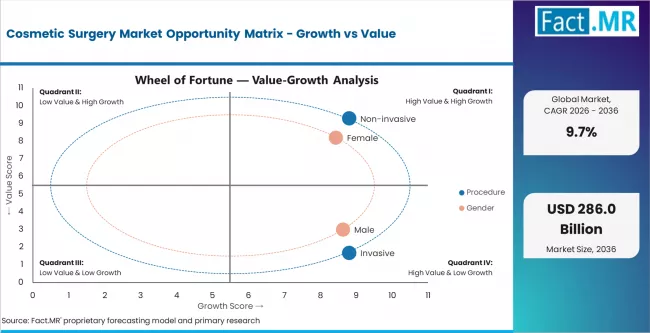
Cosmetic Surgery Market Opportunity Matrix Growth Vs Value | Source: Fact.MR
FACT.MR analysts observe the cosmetic surgery market is in a structural growth phase anchored by demographic expansion of the aesthetic-engaged consumer base and technology-driven reduction in procedure barriers.
Surgical procedure volumes are recovering and growing in high-income markets, while non-invasive procedure rates are expanding fastest among younger consumers. Injectable neuromodulators and dermal fillers are sustaining high gross margins for aesthetic clinics, as the repeat-visit model generates predictable recurring revenue.
- FDA Aesthetic Device Clearances: The FDA cleared multiple aesthetic device applications under its 510(k) pathway in 2024, including body contouring and skin resurfacing systems. Each clearance expands the commercially available non-invasive procedure menu at U.S. aesthetic clinics, directly increasing the addressable patient volume for participating clinic networks. [15]
- Social Media Procedure Demand: The American Society of Plastic Surgeons noted in its 2024 annual statistics that a growing share of new patients cited social media as their primary source of awareness for both surgical and non-surgical procedures, particularly among the 18–34 demographic. This is expanding first-visit patient volumes at cosmetic clinics in North America and the United Kingdom. [4]
- South Korea Medical Tourism Policy: The Korea Health Industry Development Institute (KHIDI) reported in 2024 that international medical tourists seeking cosmetic surgery in South Korea exceeded 500,000 visits for the first time, supported by government promotional programmes under the Korean Medical Tourism Initiative. This positions South Korea as the dominant surgical cosmetic tourism destination in Asia Pacific. [16]
Regional Analysis
The cosmetic surgery market is assessed across North America, Europe, Asia Pacific, Latin America, and Middle East and Africa, covering 40+ major countries with demand shaped by procedure adoption rates, regulatory frameworks, disposable income levels, and medical tourism infrastructure. The full report provides market attractiveness analysis by region and country.
.webp "Top Country Growth Comparison Cosmetic Surgery Market Cagr (2026 2036)")
Top Country Growth Comparison Cosmetic Surgery Market Cagr (2026 2036) | Source: Fact.MR
| Country | CAGR (2026 to 2036) |
|---|---|
| United States | 14.7% |
| South Korea | 13.8% |
| United Kingdom | 12.1% |
| France | 11.5% |
| Germany | 11.2% |
| Italy | 10.4% |
Source: Fact.MR analysis. Updated May 16, 2026
Source: Fact.MR (FACT.MR) analysis, based on proprietary forecasting model and primary research
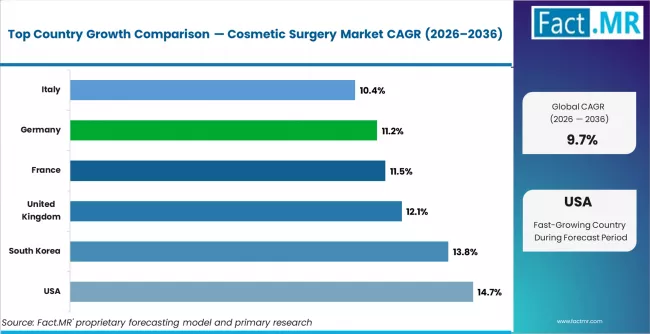
Cosmetic Surgery Market Cagr Analysis By Country | Source: Fact.MR
North America Cosmetic Surgery Market Analysis
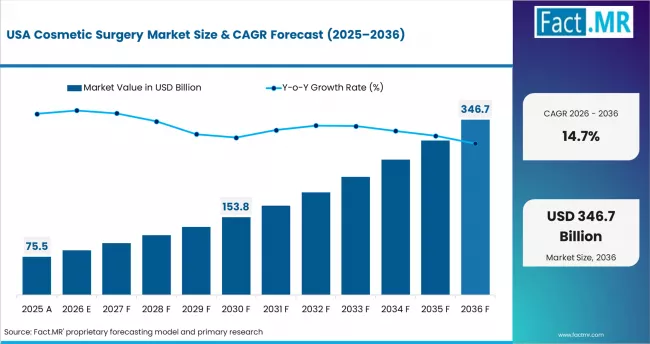
Cosmetic Surgery Market Country Value Analysis | Source: Fact.MR
North America is the global revenue epicentre of the cosmetic surgery market, driven by the world’s largest injectable market, a broad FDA-cleared aesthetic device ecosystem, and a mature specialty clinic infrastructure.
- United States: Scale and innovation define the U.S. market. Growth reaches 14.7% CAGR through 2036. The country leads in both procedure volume and revenue. The U.S. Food and Drug Administration cleared new aesthetic devices in 2024. This expanded non-invasive treatment options. The American Society of Plastic Surgeons reported over 9 million neuromodulator procedures in 2024. Botox Cosmetic remains the leading injectable. Multi-site operators like Ideal Image are expanding. Procurement is becoming centralized across networks.
FACT.MR’s analysis of the cosmetic surgery market in North America highlights strong injectable demand, expanding aesthetic device approvals, and increasing consolidation across multi-site clinic operators in the United States and Canada.
Asia Pacific Cosmetic Surgery Market Analysis
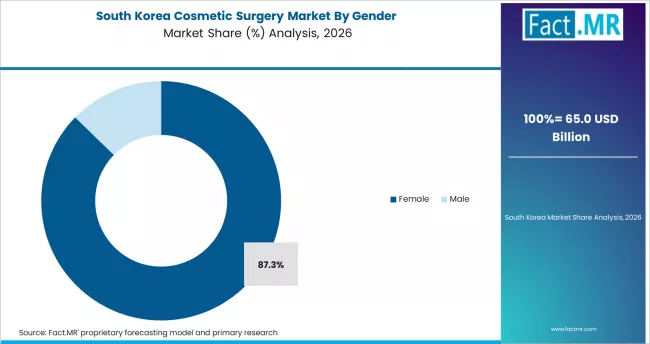
Cosmetic Surgery Market South Korea Market Share Analysis By Gender | Source: Fact.MR
Asia Pacific is the fastest-growing region by procedure volume, led by South Korea’s surgical expertise and medical tourism draw, China’s expanding aesthetic clinic market, and Japan’s growing non-invasive procedure adoption. Aesthetic clinic chains in South Korea and China are competing on surgical technique differentiation and technology platform breadth to attract domestic and international patients.
- South Korea: Expertise and medical tourism define the South Korea market. Demand rises at 13.8% CAGR through 2036. The country has one of the highest concentrations of board-certified plastic surgeons globally. Seoul’s Gangnam District serves as an international cosmetic surgery hub. The Korea Health Industry Development Institute reported over 500,000 international cosmetic procedure visits in 2024.
FACT.MR’s analysis of the cosmetic surgery market in Asia Pacific highlights rapid procedure volume growth, strong medical tourism inflows, and increasing competition among clinic chains on surgical specialization and device portfolios across South Korea, China, and Japan.
Europe Cosmetic Surgery Market Analysis
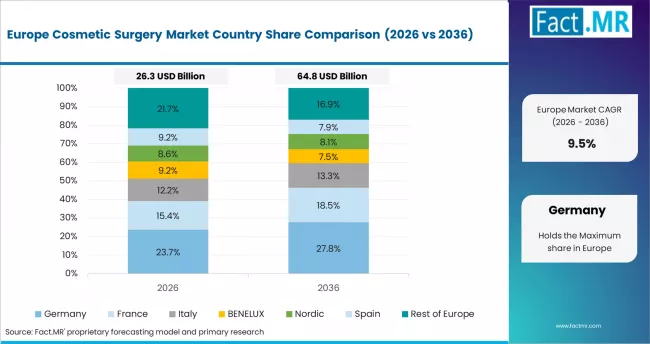
Cosmetic Surgery Market Europe Country Market Share Analysis, 2026 & 2036 | Source: Fact.MR
Europe is a compliance-structured market shaped by EU MDR regulations governing aesthetic medical devices and national regulatory frameworks controlling practitioner qualifications for injectable and surgical procedures. Germany and France host mature surgical aesthetic markets, while the United Kingdom leads non-surgical injectable procedure volumes outside the EU.
- United Kingdom: Regulation and injectables define the UK market. Demand rises at 12.1% CAGR through 2036. The market is undergoing regulatory transformation under the Health and Care Act 2022. This introduced mandatory licensing for non-surgical cosmetic procedures. The Joint Council for Cosmetic Practitioners finalised qualification frameworks in 2024. This raised practitioner competency standards. AbbVie (Allergan Aesthetics) continues investing in practitioner training.
- France: Clinical regulation defines the France market. Demand rises at 11.5% CAGR through 2036. The physician-only injectable model is enforced under the Code de la Santé Publique. This restricts procedures to licensed medical practitioners. The French Society of Aesthetic Medicine (SOFCEP) updated clinical guidelines in 2024. This strengthened safety standard. Galderma expanded Restylane and Sculptra availability across clinics. Physician training aligns with updated protocols.
- Germany: Compliance and device adoption define the Germany market. Demand rises at 11.2% CAGR through 2036. The market operates under the Heilpraktikergesetz and EU MDR regulation. This creates a structured compliance environment. The German Society of Plastic, Reconstructive and Aesthetic Surgeons updated surgical standards in 2024. This includes rhinoplasty and breast augmentation. Lumenis expanded distribution of energy-based devices. Demand for non-ablative treatments is rising.
- Italy: Surgical heritage and tourism define the Italy market. Demand rises at 10.4% CAGR through 2036. The market is anchored in academic centres in Milan, Rome, and Bologna. The International Society of Aesthetic Plastic Surgery reported steady growth in 2024. Facial procedures and body contouring dominate volumes. Cosmetic tourism from North Africa and the Middle East is increasing. Syneron Candela expanded device placements across clinics.
FACT.MR’s analysis of the cosmetic surgery market in Europe consists of country-wise assessment that includes the United Kingdom, France, Germany, Italy, Spain, and Nordic countries. Readers can find regulatory compliance trends, practitioner qualification frameworks, injectable market dynamics, and device adoption data by country.
Competitive Aligners for Market Players
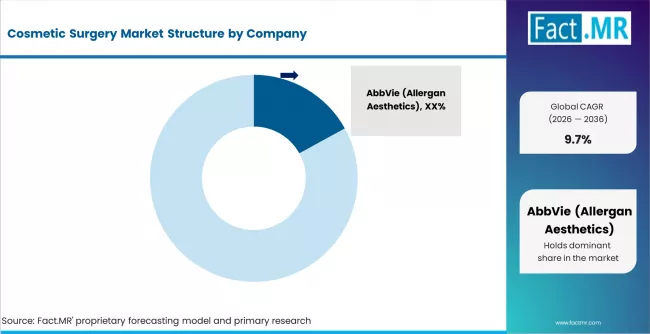
Cosmetic Surgery Market Analysis By Company | Source: Fact.MR
The competitive landscape of the cosmetic surgery market is defined by strong competition across injectable products, energy-based devices, and specialized clinic networks. The market is moderately consolidated, with a few global leaders holding significant share in neuromodulators and dermal fillers, while a broader group of device manufacturers and regional players compete in non-invasive technologies. Companies differentiate through product innovation, safety profiles, and clinical outcomes, particularly in high-demand procedures such as facial injectables, body contouring, and skin rejuvenation.
Competition is increasingly shaped by the expansion of non-surgical procedures, where faster treatment times and lower recovery periods attract a wider patient base. This has intensified investment in laser, radiofrequency, and ultrasound-based technologies. At the same time, practitioner training and certification ecosystems are becoming critical, as regulatory frameworks tighten and emphasize qualified delivery of aesthetic procedures.
Multi-site clinic operators and aesthetic chains are also influencing competition by scaling service delivery, standardizing treatment protocols, and centralizing procurement. This improves cost efficiency and strengthens supplier partnerships. Regional markets add another layer of competition, with Asia Pacific players focusing on affordability and medical tourism, while North America and Europe emphasize premium treatments and regulatory compliance. Thus, competition in the cosmetic surgery market is driven by a balance between innovation, pricing strategies, clinical credibility, and the ability to expand across both surgical and non-surgical treatment segments.
Key Players
- AbbVie (Allergan Aesthetics)
- Cynosure
- Lumenis
- Alma Lasers
- Solta Medical
- Cutera
- Evolus Inc.
- Revance Therapeutics
- Galderma
- Syneron Candela
Bibliography
- [1] AbbVie Inc. Q3 2024 Earnings Call Transcript: Allergan Aesthetics division injectable revenue growth and international market performance; October 2024. Available from: abbvie.com/investors
- [2] Evolus Inc. Fiscal Year 2024 Annual Report and Q4 2024 Earnings Release: Jeuveau neuromodulator sales performance and European market expansion programme; 2024. Available from: evolus.com/investors
- [3] International Society of Aesthetic Plastic Surgery (ISAPS). Global Survey on Aesthetic and Cosmetic Procedures Performed in 2024: procedure volume by category and country; 2024. Available from: isaps.org/news/isaps-global-statistics
- [4] American Society of Plastic Surgeons (ASPS). 2024 ASPS Plastic Surgery Statistics Report: injectable neuromodulator and surgical procedure volumes, male patient trends, and social media influence on patient decision-making; 2024. Available from: plasticsurgery.org/news/plastic-surgery-statistics
- [5] Galderma S.A. Annual Report 2024: Restylane and Sculptra filler portfolio expansion, new anatomical indication launches, and European aesthetic clinic market performance; 2024. Available from: galderma.com/investors
- [6] Revance Therapeutics Inc. 2024 Investor Communications and Annual Report: RHA Collection filler adoption trends and male aesthetic patient market penetration in the United States; 2024. Available from: revance.com/investors
- [7] American Academy of Facial Plastic and Reconstructive Surgery (AAFPRS). 2024 Annual Survey: practitioner observations on Gen Z and millennial preventive injectable demand and first-visit patient age trends; 2024. Available from: aafprs.org
- [8] Cutera Inc. Fiscal Year 2024 Annual Report and Earnings Release: energy-based device platform adoption at dermatology and cosmetic clinic networks and procedure volume trends by demographic; 2024. Available from: cutera.com/investors
- [9] Solta Medical. 2024 Product and Commercial Update: Thermage FLX and Fraxel platform launches and practitioner adoption at cosmetic clinics in the United States and Asia Pacific; 2024. Available from: solta.com
- [10] Cynosure LLC. 2024 Commercial Communications: SculpSure non-invasive body contouring device clinic placement data and North America and Europe market expansion; 2024. Available from: cynosure.com
This Report Addresses
- Strategic demand intelligence across the United States, South Korea, United Kingdom, France, Germany, and Italy covering procedure volume trends, injectable market dynamics, and energy-based device adoption by country.
- Market size forecast from USD 103.3 billion in 2026 to USD 261.5 billion by 2036, at 9.7% CAGR, with absolute dollar opportunity of USD 158.2 billion.
- Growth opportunity mapping across U.S. FDA injectable and device expansion, South Korea’s medical tourism programme, UK practitioner regulation consolidation, and Europe’s MDR compliance-driven clinic restructuring.
- Segment forecasts by procedure, gender, age group, procedure type, and end-use setting, covering invasive, non-invasive, facial, body, breast, and hair categories across clinic and hospital channels.
- Competitive analysis of AbbVie Allergan Aesthetics, Galderma, Evolus, Cynosure, Cutera, Lumenis, Alma Lasers, Solta Medical, Revance Therapeutics, and Syneron Candela.
- Technology tracking on neuromodulator and filler innovation, energy-based body contouring platform development, and non-invasive skin tightening device clearances across key regulatory markets.
- Regulatory impact analysis covering FDA 510(k) aesthetic device clearances, EU MDR compliance requirements for aesthetic devices, UK Health and Care Act practitioner licensing, and national practitioner qualification frameworks.
- Report delivery in PDF, Excel, and presentation formats with validated data from primary interviews, ISAPS statistics, and manufacturer revenue disclosures.
Cosmetic Surgery Market Definition
The cosmetic surgery market covers surgical and non-surgical procedures performed to alter, enhance, or restore physical appearance. It includes injectable neuromodulators and fillers, energy-based device treatments, surgical body contouring, facial reconstruction, breast procedures, and hair restoration.
Cosmetic Surgery Market Inclusions
Covers global and regional forecasts from 2026 to 2036, segmented by procedure type, gender, age group, and end-use setting. Includes invasive surgical procedures and non-invasive device-based and injectable treatments. Covers facial, body, breast, and hair categories across hospitals, clinics, and ambulatory centers.
Cosmetic Surgery Market Exclusions
Excludes reconstructive surgery performed for post-trauma or post-oncology clinical indications. Omits dermatological pharmaceutical products such as topical retinoids and prescription skincare unless delivered as part of aesthetic clinic treatment protocols. Excludes cosmetic dental procedures and orthodontics.
Cosmetic Surgery Market Research Methodology
- Primary Research
- Interviews with plastic surgeons, aesthetic medicine practitioners, clinic group operators, and medical device procurement managers across key markets.
- Desk Research
- Uses ISAPS annual surgical statistics, FDA 510(k) and PMA clearances, CE marking records, national aesthetic society procedure volume data, and company annual reports from 2024 to 2025.
- Market Sizing and Forecasting
- Hybrid top-down and bottom-up model using procedure volume data by type, average revenue per procedure by geography, and device and injectable sales reported by key manufacturers.
- Data Validation and Update Cycle
- Validated against manufacturer revenue disclosures and ISAPS annual global survey data. Updated using regulatory clearance databases and primary inputs from aesthetic society registries.
Segmentation
Scope of Report
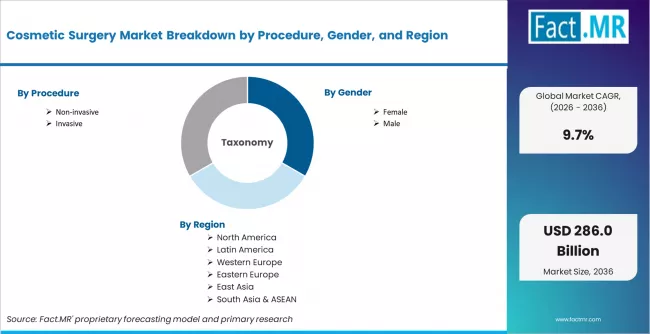
Cosmetic Surgery Market Breakdown By Procedure, Gender, And Region | Source: Fact.MR
| Attribute | Details |
|---|---|
| Quantitative Units | USD 103.3 billion (2026) to USD 261.5 billion (2036), at a CAGR of 9.7% |
| Market Definition | Surgical and non-surgical aesthetic procedures including injectables, energy-based device treatments, surgical contouring, facial procedures, breast surgery, and hair restoration across hospitals, specialty clinics, dermatology offices, and ambulatory surgical centers. |
| Procedure Segmentation | Invasive, Non-invasive |
| Gender Segmentation | Male, Female |
| Age Group Segmentation | 13–29, 30–54, 55 and above |
| Procedure Type Segmentation | Facial Procedures (Rhinoplasty, Facelift, Eyelid Surgery), Body Contouring (Liposuction, Tummy Tuck), Breast Procedures (Augmentation, Reduction, Lift), Hair Restoration, Others |
| End-Use Setting Segmentation | Hospitals, Specialty Cosmetic Clinics, Dermatology Clinics, Ambulatory Surgical Centers |
| Regions Covered | North America, Europe, Asia Pacific, Latin America, Middle East and Africa |
| Countries Covered | USA, Canada, Mexico, Germany, UK, France, Italy, Spain, Nordic, BENELUX, China, Japan, South Korea, India, ASEAN, Australia and New Zealand, Brazil, Argentina, Saudi Arabia, GCC, Turkey, South Africa, Rest of MEA |
| Key Companies Profiled | AbbVie (Allergan Aesthetics), Cynosure, Lumenis, Alma Lasers, Solta Medical, Cutera, Evolus Inc., Revance Therapeutics, Galderma, Syneron Candela |
| Forecast Period | 2026 to 2036 |
| Approach | Hybrid top-down and bottom-up model using ISAPS procedure volume data, average revenue per procedure by geography, device and injectable manufacturer revenue, and primary interviews with plastic surgeons and aesthetic clinic operators. |
Source: Fact.MR analysis. Updated May 16, 2026
Cosmetic Surgery Market By Segment
-
By Procedure
- Invasive
- Non-invasive
-
By Gender
- Male
- Female
-
By Age Group
- 13–29
- 30–54
- 55 and above
-
By Procedure Type
- Facial Procedures (Rhinoplasty, Facelift, and Eyelid Surgery)
- Body Contouring (Liposuction and Tummy Tuck)
- Breast Procedures (Augmentation, Reduction, and Lift)
- Hair Restoration
- Others
-
By End-Use Setting
- Hospitals
- Specialty Cosmetic Clinics
- Dermatology Clinics
- Ambulatory Surgical Centers
-
By Region
- North America
- United States
- Canada
- Mexico
- Latin America
- Brazil
- Argentina
- Rest of Latin America
- Western Europe
- Germany
- United Kingdom
- France
- Italy
- Spain
- Nordic Countries
- BENELUX
- Rest of Western Europe
- Eastern Europe
- Russia
- Poland
- Rest of Eastern Europe
- East Asia
- China
- Japan
- South Korea
- South Asia and Pacific
- India
- ASEAN
- Australia and New Zealand
- Rest of South Asia and Pacific
- Middle East and Africa
- Kingdom of Saudi Arabia
- Other GCC Countries
- Turkey
- South Africa
- Rest of Middle East and Africa
- North America
Frequently Asked Questions
How large is the global cosmetic surgery market in 2025?
What will the market size be in 2026?
How large is the chicory root oligofructose for low-sugar dairy market in 2025?
What is the expected CAGR from 2026 to 2036?
Which procedure type is poised to lead the market?
Which gender segment holds the larger share?
Which age group drives the most demand?
Which end-use setting leads the market?
Which country shows the fastest growth?
Who are the key market players?
Who worked on this report


Preview the report firsthand - request a free sample
Free SampleGet the brochure for pricing and purchase details
Download PDF