- Base Value(2026): 2.7 Bn
- Estimated Value(2026): 2.7 Bn
- Forecast Value (2036): 8.3 Bn
- CAGR (2026 - 2036): 11.9%
Marine Olive Collagen Hybrid Nutricosmetic Systems Market Forecast and Outlook 2026 to 2036
In 2026, the marine olive collagen hybrid nutricosmetic systems market stands at USD 2.70 billion and moves toward USD 8.31 billion by 2036 at an 11.9% CAGR.
Marine Olive Collagen Hybrid Nutricosmetic Systems Market Key Takeaways
- Marine Olive Collagen Hybrid Nutricosmetic Systems Market Value (2026): USD 2.7 billion
- Marine Olive Collagen Hybrid Nutricosmetic Systems Market Forecast Value (2036): USD 8.31 billion
- Marine Olive Collagen Hybrid Nutricosmetic Systems Market Forecast CAGR (2026-2036): 11.9%
- Leading Product Type in Marine Olive Collagen Hybrid Nutricosmetic Systems Market: Marine collagen peptides
- Key Growth Regions in Marine Olive Collagen Hybrid Nutricosmetic Systems Market: Asia Pacific, Europe, North America, Latin America
- Top Players in Marine Olive Collagen Hybrid Nutricosmetic Systems Market: Gelita, Weishardt, Nitta Gelatin, Ashland, Darling Ingredients, Seagarden, Vital Proteins, Copalis
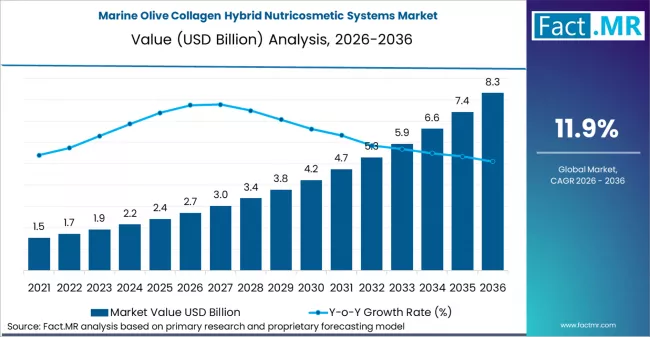
Marine Olive Collagen Hybrid Nutricosmetic Systems Market Market Value Analysis | Source: Fact.MR
Development work centers on matching collagen peptide ranges with olive fractions that stay stable across powders, sticks, and drink mixes. Formulation teams lock source species, hydrolysis profile, and taste limits before supplier approval begins. Once a system enters a core product line, later changes trigger renewed stability work and claim file updates. Supplier choice depends on traceability records, batch repeatability, and sensory thresholds. Buyers test interaction with vitamins, minerals, and lipid carriers. Volume growth follows range extensions and geographic rollouts rather than short cycle promotions.
Work inside the marine olive collagen hybrid nutricosmetic systems market follows audit schedules, release testing, and shelf life controls. Contracts define identity checks, purity limits, and acceptance ranges. Processing runs through toll partners or in house plants, which changes inventory exposure. Capacity comes online in blocks tied to hydrolysis, blending, and drying lines. Output planning follows harvest cycles, packaging schedules, and launch timing.
Marine Olive Collagen Hybrid Nutricosmetic Systems Market
| Metric | Value |
|---|---|
| Market Value (2026) | USD 2.7 billion |
| Forecast Value (2036) | USD 8.31 billion |
| Forecast CAGR (2026-2036) | 11.9% |
Source: Fact.MR analysis. Updated Jan 22, 2026
Category
| Category | Segments |
|---|---|
| Product Type | Marine collagen peptides; Olive polyphenol enriched collagen complexes; Hybrid marine olive collagen systems; Other bioactive integrated formulations |
| End Use | Dietary supplements and nutricosmetics; Functional beauty beverages and drinks; Skin health and anti-aging products; Sports and active wellness nutrition |
| Region | North America; Europe; Asia Pacific; Latin America; Middle East & Africa |
Source: Fact.MR analysis. Updated Jan 22, 2026
Segmental Analysis
Why Do Marine Collagen Peptides Continue to Set the Formulation Baseline in This Segment?
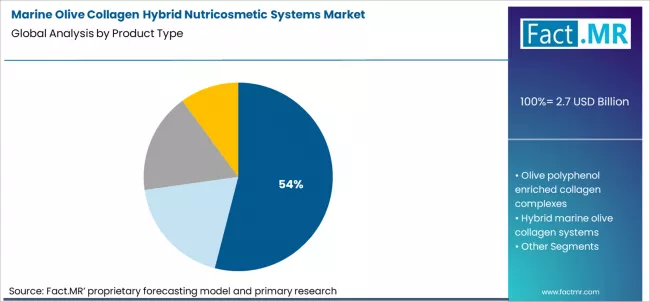
Marine Olive Collagen Hybrid Nutricosmetic Systems Market Analysis By Product Type | Source: Fact.MR
In formulation planning, marine collagen peptides account for 54% of product type usage within the Marine Olive Collagen Hybrid Nutricosmetic Systems Market. Their role is defined by process reliability rather than positioning language. These inputs offer predictable solubility, controlled molecular weight ranges, and stable behavior during blending and drying operations. Production lines designed for powders and stick packs already accommodate this format without changes in equipment or handling rules.
- Sourcing contracts often lock specifications for several product cycles, which limits frequent substitution.
- Product developers use these peptides as a reference material when building combination systems with olive derived components. More complex hybrids and integrated blends usually enter portfolios as differentiated lines, not as volume foundations.
What Drives the Concentration of Demand in Dietary Supplements and Nutricosmetics?
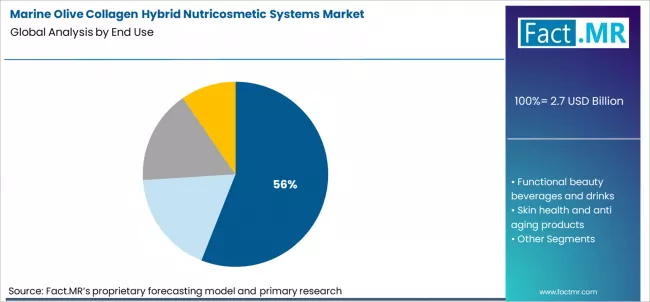
Marine Olive Collagen Hybrid Nutricosmetic Systems Market Analysis By End Use | Source: Fact.MR
Usage patterns place dietary supplements and nutricosmetics at 56% of end use consumption in the Marine Olive Collagen Hybrid Nutricosmetic Systems Market. This structure reflects regulatory pathways and portfolio planning more than formulation constraints. Brands in this segment operate around defined intake routines, measured servings, and repeat purchase schedules, which simplifies production forecasting.
- Manufacturing systems are already organized around supplement grade inputs, reducing the need to adapt processes for beverage or food matrices.
- Distribution channels also align with this model because stock rotation follows predictable cycles. Functional drinks, skin specific products, and sports formats contribute incremental volumes, yet they usually remain secondary to the supplement led core of demand.
What are the Drivers, Restraints, and Key Trends of the Marine Olive Collagen Hybrid Nutricosmetic Systems Market?
- Drivers: Rising demand for dual-function beauty supplements combining marine collagen with olive phenolics to support skin elasticity, hydration, and antioxidant protection is encouraging broader product adoption across functional food and supplement categories.
- Restraint: Differences in source quality of marine collagen and olive extracts, paired with regulatory limits on cosmetic and health claims, restrict clear product positioning and consumer confidence in efficacy.
- Trend 1: Expansion of hybrid formulas that balance collagen peptides with specific olive polyphenol concentrations to target age-related skin concerns.
- Trend 2: Increased use of easy-to-consume formats such as ready-to-drink shots, sachets, and tablets for daily beauty support.
Analysis of the Marine Olive Collagen Hybrid Nutricosmetic Systems Market by Key Country
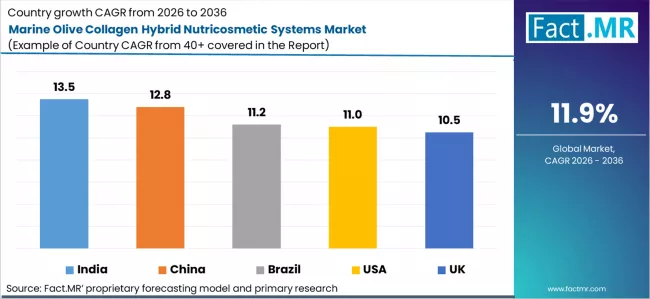
Marine Olive Collagen Hybrid Nutricosmetic Systems Market Cagr Analysis By Country | Source: Fact.MR
| Country | CAGR (2026-2036) |
|---|---|
| USA | 11.0% |
| UK | 10.5% |
| China | 12.8% |
| India | 13.5% |
| Brazil | 11.2% |
Source: Fact.MR analysis. Updated Jan 22, 2026
The report covers an in-depth analysis of 40+ countries; top-performing countries are highlighted below.
How Are Clinical Positioning Strategies in USA Shaping Marine Olive Collagen Hybrid Systems?
Product planners in USA place marine olive collagen hybrid systems inside joint skin and firmness programs within ingestible beauty ranges. The category follows a growth path equal to about 11% per year through 2036. Ingredient selection depends on peptide profile data and polyphenol stability testing. Contract manufacturers integrate these systems into capsules powders and liquid shots. Distribution moves through specialty nutrition chains and controlled online platforms. Claims review passes through internal compliance teams. Supply agreements specify batch consistency and traceability records. Importers maintain origin files covering marine and olive sources. Demand follows launch schedules. Procurement volumes reflect shelf allocation decisions. Reorder timing depends on sell through reviews conducted during category performance meetings.
Why Do Product Architecture Choices in UK Matter for Marine Olive Collagen Hybrid Systems?
Formulation structure inside UK brands guides the use of collagen polyphenol hybrid systems across beauty from within portfolios. The segment advances on a track near 10.5% per year through 2036. Development teams review inputs using molecular weight distribution and stability screens. Regulatory review focuses on labeling language and ingredient status. Contract packers blend these systems into gummies capsules and drinkable formats. Pharmacy chains and specialist wellness retailers define listing access. Buyers require consistent supply supported by lot documentation. Import procedures include marine source and botanical processing records. Inventory planning follows promotion schedules. Brand refresh cycles create demand peaks. Long term supply contracts link to portfolio planning decisions approved by category management committees.
What Is Driving Multi Channel Uptake of Marine Olive Collagen Hybrid Systems in China?
Beauty nutrition platforms in China shape adoption of collagen olive hybrid systems across ingestible skin support products. The category moves on a trajectory close to 12.8% annual expansion through 2036. Registration files require detailed composition and safety data. Local manufacturers incorporate these systems into sachets tablets and liquid concentrates. Platform operators request proof of origin and quality testing. Importers maintain traceability covering marine and olive sources. Production schedules align with major campaign calendars. Inventory buffers rise before peak promotion periods. Brand owners prioritize suppliers with reliable delivery records. Pricing discussions follow volume commitments. Market access depends on listing reviews and compliance checks completed during scheduled audits.
How Are Portfolio Extensions in India Reshaping Use of Marine Olive Collagen Hybrid Systems?
Range expansion inside India increases adoption of collagen olive hybrid systems within skin and hair nutrition products. The segment progresses at a rate close to 13.5% per year through 2036. Development teams test compatibility with local flavor systems and dosage formats. Regulatory review centers on ingredient approval status and claim wording. Contract manufacturers handle blending and filling under audited conditions. Distribution focuses on online platforms and specialty nutrition outlets. Import documentation covers marine source and botanical processing steps. Brands request consistent active levels across shipments. Launch calendars set short term procurement volumes. Marketing budgets influence reorder timing. Suppliers holding local inventory gain preference during portfolio expansion cycles.
What Factors Are Setting the Commercial Pace for Marine Olive Collagen Hybrid Systems in Brazil?
Category planning inside Brazil defines how collagen olive hybrid systems enter ingestible beauty product lines. The segment records growth near 11.2% per year through 2036. Formulators screen inputs using peptide content data and sensory profiles. Regulatory checks focus on ingredient registration and permitted claims. Contract packers produce capsules and drinkable formats for domestic brands. Distribution runs through pharmacy chains and wellness retailers. Import files include marine source certificates and quality test reports. Currency movement affects pricing discussions. Inventory planning follows retail promotion calendars. Brand owners prefer partners offering predictable lead times. New launches drive trial orders. Repeat volumes depend on sales performance reviews during seasonal range planning meetings.
How Is Supplier Competition Organized in the Marine Olive Collagen Hybrid Nutricosmetic Systems Market?
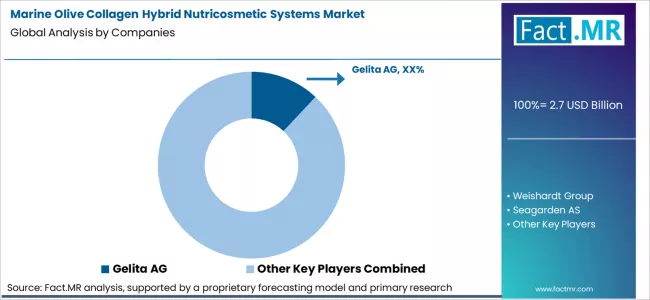
Marine Olive Collagen Hybrid Nutricosmetic Systems Market Analysis By Company | Source: Fact.MR
Product developers in the marine olive collagen hybrid nutricosmetic systems market define protein source, peptide profile, and sensory limits before commercial negotiations begin. Gelita, Weishardt, Nitta Gelatin, Ashland, and Darling Ingredients usually enter accounts through multi product development programs, which secures longer specification control. Seagarden and Copalis compete through marine origin positioning and tighter traceability frameworks. Vital Proteins participates where brand alignment and finished product visibility matter more than bulk supply scale. Buyers compare suppliers using hydrolysis consistency, solubility behavior, documentation depth, and batch reproducibility. Once a system is qualified, volumes track line extensions rather than short term price movements. Supplier replacement tends to occur during formula redesign or source rationalization exercises.
Key Players in the Marine Olive Collagen Hybrid Nutricosmetic Systems Market
- Gelita AG
- Weishardt Group
- Seagarden AS
- Ashland Inc.
- Darling Ingredients Inc.
- Nitta Gelatin Inc.
- Vital Proteins LLC
- Copalis (marine ingredients supplier)
References
- European Food Safety Authority. (2024). Guidance on the characterization and quality assessment of proteins and protein hydrolysates used in food and food supplements. EFSA Journal, 22(3).
- European Food Safety Authority. (2023). Safety of collagen hydrolysates as a novel food ingredient pursuant to Regulation (EU) 2015/2283. EFSA Journal, 21(4).
- European Food Safety Authority. (2023). Scientific opinion on the substantiation of health claims related to olive oil polyphenols and protection of blood lipids from oxidative stress pursuant to Article 13(5) of Regulation (EC) No 1924/2006. EFSA Journal, 21(7).
- International Organization for Standardization. (2024). ISO 20433:2024 - Proteins and peptides in food - General requirements for characterization and quality control. ISO.
Segmentation
Scope of the Report
| Items | Values |
|---|---|
| Quantitative Units (2026) | USD billion |
| Product Type | Marine collagen peptides, olive polyphenol enriched collagen complexes, hybrid marine olive collagen systems, other bioactive integrated formulations |
| End Use | Dietary supplements and nutricosmetics, functional beauty beverages and drinks, skin health and anti-aging products, sports and active wellness nutrition |
| Regions Covered | Asia Pacific, Europe, North America, Latin America, Middle East & Africa |
| Countries Covered | United States, Canada, Mexico, Germany, United Kingdom, France, Italy, Spain, Nordics, BENELUX, China, Japan, South Korea, India, Australia & New Zealand, ASEAN, Brazil, Chile, Saudi Arabia, Turkey, South Africa, and other regional markets |
| Key Companies Profiled | Gelita, Weishardt, Seagarden, Ashland, Darling Ingredients, Nitta Gelatin, Vital Proteins, Copalis |
| Additional Attributes | Dollar sales by product type and end use; peptide profile and polyphenol stability specifications, batch repeatability and traceability controls; shelf life validation, interaction testing with vitamins and minerals, and harvest-linked capacity planning |
Source: Fact.MR analysis. Updated Jan 22, 2026
Marine Olive Collagen Hybrid Nutricosmetic Systems Market Segmentation
-
Product Type :
- Marine collagen peptides
- Olive polyphenol enriched collagen complexes
- Hybrid marine olive collagen systems
- Other bioactive integrated formulations
-
End Use :
- Dietary supplements and nutricosmetics
- Functional beauty beverages and drinks
- Skin health and anti-aging products
- Sports and active wellness nutrition
-
Region :
- Asia Pacific
- China
- Japan
- South Korea
- India
- Australia & New Zealand
- ASEAN
- Rest of Asia Pacific
- Europe
- Germany
- United Kingdom
- France
- Italy
- Spain
- Nordic
- BENELUX
- Rest of Europe
- North America
- United States
- Canada
- Mexico
- Latin America
- Brazil
- Chile
- Rest of Latin America
- Middle East & Africa
- Kingdom of Saudi Arabia
- Other GCC Countries
- Turkey
- South Africa
- Other African Union
- Rest of Middle East & Africa
- Asia Pacific
Frequently Asked Questions
How big is the marine olive collagen hybrid nutricosmetic systems market in 2026?
What will be the size of marine olive collagen hybrid nutricosmetic systems market in 2036?
How much will be the marine olive collagen hybrid nutricosmetic systems market growth between 2026 and 2036?
What are the key product types in the marine olive collagen hybrid nutricosmetic systems market?
Which end use segment to contribute significant share in the marine olive collagen hybrid nutricosmetic systems market in 2026?
Who worked on this report


Preview the report firsthand - request a free sample
Free SampleGet the brochure for pricing and purchase details
Download PDF