Craft Spirit Market Size, Share, Growth and Forecast (2026 - 2036)
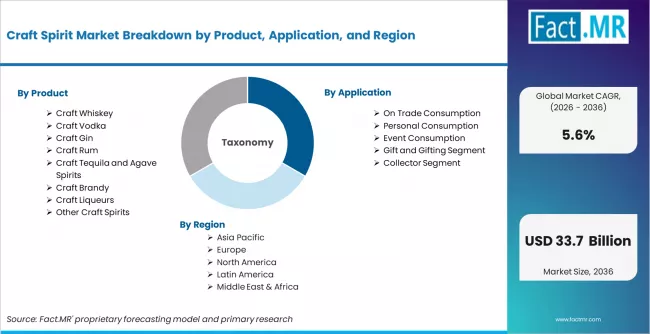
Craft Spirit Market is segmented by Product (Craft Whiskey, Craft Vodka, Craft Gin, Craft Rum, Craft Tequila and Agave Spirits, Craft Brandy, Craft Liqueurs, Other Craft Spirits), Application (On Trade Consumption, Personal Consumption, Event Consumption, Gift and Gifting Segment, Collector Segment), End Use (Premium Lifestyle Consumers, Millennial Consumers, Craft Enthusiasts, Social Drinkers, High Income Consumers), and Region, with forecasts covering the period from 2026 to 2036.
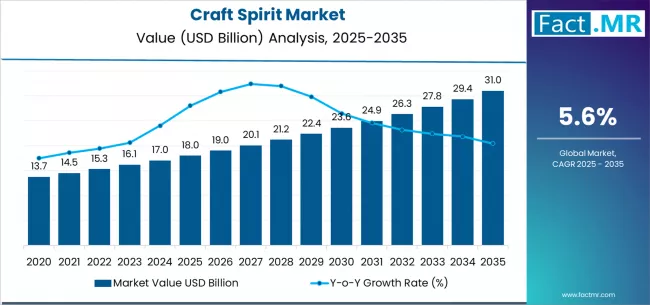
According to Fact.MR estimates, the global craft spirit market market was valued at USD 18.5 billion in 2025. The market is projected to reach USD 19.5 billion in 2026 and is expected to grow to USD 33.7 billion by 2036, expanding at a CAGR of 5.6%. Craft Whiskey is anticipated to account for 29.8% of the product segment in 2026, while On Trade Consumption is expected to remain the leading application with around 34.5% share.
Craft Spirit Market Analysis and Forecast by Fact.MR
The craft spirit market, valued at USD 18.5 billion in 2025, is expanding at a 5.6% CAGR to reach USD 33.688 billion by 2036. Craft spirits are small-batch distilled alcoholic beverages produced by independent or artisanal distilleries, including whiskey, vodka, gin, rum, tequila, brandy, and liqueurs distinguished by production scale, ingredient sourcing, and distillation methods. Growth is shaped by consumer premiumisation trends, provenance and authenticity storytelling, cocktail culture expansion, and the proliferation of craft distillery tourism as an experiential marketing channel.
Summary of Craft Spirit Market
- Market Snapshot
- The craft spirit market is valued at USD 18.5 billion in 2025.
- Estimated market value for 2026 is USD 19.536 billion, projected to reach USD 33.688 billion by 2036.
- A CAGR of 5.6% is forecast for the 2026 to 2036 assessment period.
- Incremental opportunity of USD 14.152 billion between 2026 and 2036.
- Craft whiskey holds 29.8% of the product segment, with aged spirits at 41.7% of aging type demand.
- India and China are the fastest-growing markets for craft spirit consumption.
- Demand and Growth Drivers
- Premiumisation is the structural driver, with consumers trading up from standard spirits to craft alternatives. Per-capita premium spirit spending is growing 2 to 3 times faster than total spirit spending in developed markets, per IWSR data, with craft positioning as the primary vehicle for premiumisation in the spirits category.
- Cocktail culture expansion is creating demand for distinctive, locally-produced spirits that bartenders can use to differentiate their menus. Craft spirits offer unique flavour profiles that enable cocktail innovation, and bar programmes featuring local craft distilleries generate consumer interest and trial.
- Distillery tourism and tasting room experiences are creating direct consumer relationships that bypass traditional distribution, with over 2,700 craft distilleries operating in the USA and 700+ in the UK, per Distilled Spirits Council and UK Spirits Alliance data respectively.
- Provenance and storytelling are competitive differentiators, as consumers pay premiums for spirits with documented grain-to-glass production narratives, named ingredient sources, and founder stories that large-scale industrial spirit brands cannot replicate authentically.
- Product and Segment View
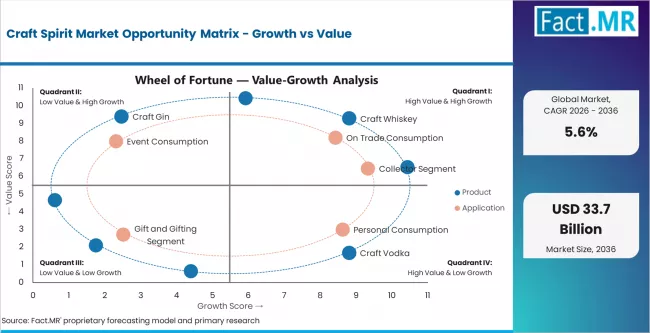
- Craft whiskey holds 29.8% of the product segment, reflecting the premiumisation and heritage-driven demand for craft bourbon, rye, and single malt whiskey.
- On-trade consumption captures 34.5% of application demand, driven by bar, restaurant, and hotel consumption where craft spirit positioning supports premium pricing.
- Off-trade distribution accounts for 38.6% of channel demand, reflecting retail purchase through liquor stores, specialty retailers, and online channels.
- Key segmentation includes:
- Product: Craft Whiskey, Craft Vodka, Craft Gin, Craft Rum, Craft Tequila and Agave Spirits, Craft Brandy, Craft Liqueurs, Other Craft Spirits
- Application: On Trade Consumption, Personal Consumption, Event Consumption, Gift and Gifting Segment, Collector Segment
- End Use: Premium Lifestyle Consumers, Millennial Consumers, Craft Enthusiasts, Social Drinkers, High Income Consumers
- Distribution Channel: Off Trade, On Trade, Online Retail, Specialty Stores, Export Channels
- Production Scale: Craft Distilleries, Micro Distilleries, Emerging Brands, Established Craft Producers
- Ingredient Base: Grain Based Spirits, Fruit Based Spirits, Sugarcane Based Spirits, Botanical Based Spirits
- Aging Type: Aged Spirits, Unaged Spirits, Long Aged Spirits
- Geography and Competitive Outlook
- North America accounts for the largest share, with the USA generating USD 7.129 billion in 2025.
- East Asia is expanding, with Japan contributing USD 0.936 billion and South Korea contributing USD 0.597 billion.
- Diageo plc holds approximately 18.0% of global market share through its portfolio of craft-positioned and premium spirit brands.
- Pernod Ricard, Brown-Forman, and Bacardi compete with acquired craft brands and internal craft-style product development.
- Analyst Opinion
- The craft spirit market is evolving from a cottage industry of independent micro-distilleries into a commercially significant premium segment attracting major spirit company investment. The commercial challenge is definitional: as large companies acquire craft brands or launch craft-positioned products, the boundary between craft and premium industrial production blurs. Companies that maintain authentic craft credentials while achieving commercial scale, through controlled distribution expansion rather than mass-market volume strategies, will sustain the price premiums that define the craft category.
Key Growth Drivers, Constraints, and Opportunities
Key Factors Driving Growth
- The US craft distillery count exceeded 2,700 in 2024, per Distilled Spirits Council data, with new distillery openings averaging 250 to 300 annually. Each distillery creates local employment, tourism revenue, and agricultural supply chain demand. US craft spirit sales exceeded USD 7 billion, representing approximately 7% of total US spirit sales by value but growing at 3 times the rate of the total spirit market.
- Japanese craft whisky has achieved global premium positioning, with brands such as Nikka, Suntory (Yamazaki, Hakushu), and emerging producers commanding prices comparable to or exceeding Scottish single malt. Japanese craft whisky exports grew 15% annually between 2020 and 2024, per Japan Spirits and Liqueurs Makers Association data, demonstrating that craft spirit premiumisation is a global phenomenon.
- Indian craft spirit production is accelerating, with over 50 craft distilleries operating by 2024. Indian craft spirits, particularly single malt whisky (Amrut, Paul John, Rampur) and craft gin (Greater Than, Hapusa), are gaining international recognition and export distribution, creating a new origin story for premium Indian spirits.
Key Market Constraints
- Distribution access remains the primary growth barrier for independent craft distillers. The US three-tier distribution system (producer to distributor to retailer) creates gatekeeping by distributors who prioritise high-volume brands. Craft distillers must invest in distributor relationship management or develop direct-to-consumer channels that bypass traditional distribution.
- Production economics limit craft spirit competitiveness on price. Small-batch distillation, artisanal ingredient sourcing, and barrel ageing create cost structures 30 to 60% above industrial spirit production. Craft spirits must command price premiums to maintain viability, making them vulnerable to consumer price sensitivity during economic downturns.
- Definition ambiguity around what constitutes a craft spirit allows large companies to position industrial products as craft through marketing rather than production methods. This blurring of the craft definition risks consumer scepticism and category credibility erosion if perceived craft brands are revealed to be large-company products.
Key Opportunity Areas
- Craft spirit tourism is a high-margin direct revenue channel. Distillery tasting rooms generate retail margins (no distributor or retailer margin share) while creating brand advocates who drive subsequent retail and online purchases. US craft distillery tasting rooms generate an estimated 20 to 35% of total revenue for independent producers.
- Craft gin is the fastest-growing craft spirit category globally, with new gin distillery openings accelerating in the UK, USA, Australia, and India. The gin category's lower barrel-ageing requirement (compared to whiskey) enables faster cash flow for new distilleries, and the botanical ingredient flexibility supports regional differentiation and flavour innovation.
- Direct-to-consumer e-commerce sales are expanding as post-pandemic alcohol shipping regulations relax in multiple US states and European countries. Online channels enable craft distillers to reach consumers nationally without distributor intermediaries, improving margins and customer data collection.
Segment-wise Analysis of the Craft Spirit Market
- Craft whiskey holds 29.8% of the product segment, reflecting heritage and premiumisation demand.
- On-trade consumption captures 34.5% of application demand, driven by bar and restaurant premium positioning.
- Grain-based spirits account for 36.4% of ingredient base demand, reflecting the dominance of whiskey and vodka within craft production.
Which product type dominates the Craft Spirit Market?
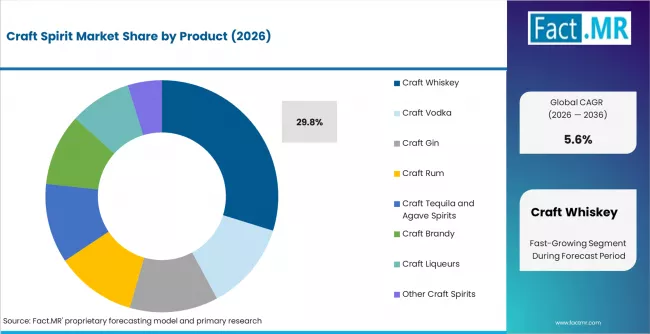
Craft whiskey controls 29.8% of the product segment. Craft bourbon, rye whiskey, and single malt whisky are the premium positioning leaders, with ageing requirements (2 to 25+ years) creating natural scarcity and price premiums. American craft bourbon and rye producers are growing rapidly, while Scottish, Japanese, and Indian single malt producers are expanding global distribution.
Craft gin holds the second-largest share and is the fastest-growing category, driven by the global gin renaissance and the lower capital requirements (no barrel ageing) that enable rapid market entry. Craft vodka, rum, and tequila/agave spirits serve established consumption occasions with craft differentiation.
Which application drives demand in the Craft Spirit Market?
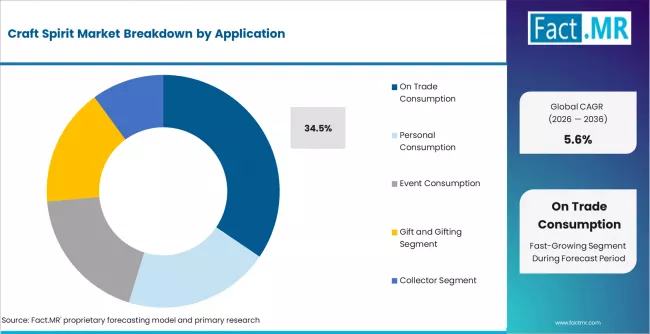
On-trade consumption accounts for 34.5% of application demand. Bars, restaurants, and hotels are the primary discovery channel for craft spirits, where bartender recommendations, cocktail menu featuring, and back-bar visibility create consumer awareness and trial. On-trade pricing for craft spirits typically applies 40 to 60% margins above standard spirit pricing.
Personal consumption holds the second-largest share, driven by retail purchase for home consumption and entertaining. Gift and gifting is a significant application, with craft spirits positioned as premium gifting options through distinctive packaging and limited-edition releases.
Which aging type captures the largest share in the Craft Spirit Market?
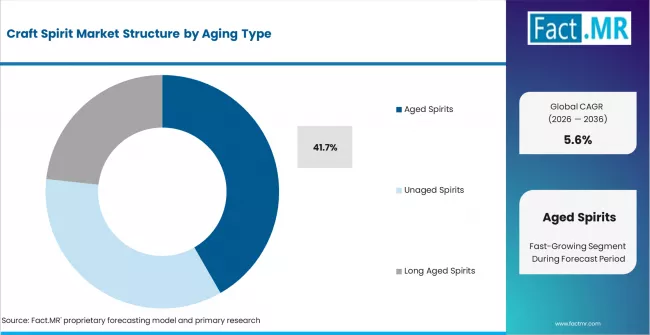
Aged spirits account for 41.7% of aging type demand. Barrel-aged whiskey, rum, and brandy command the highest price premiums within the craft category, with ageing duration directly correlating with retail pricing. Craft producers are experimenting with accelerated ageing techniques (smaller barrels, temperature cycling) to reduce the cash flow burden of extended barrel ageing.
Unaged spirits hold the second-largest share, led by craft gin, vodka, and white rum that can be produced and sold immediately after distillation. Long-aged spirits (10+ years) serve the ultra-premium and collector segments.
Which Product Trend is Shaping the Next Phase of Growth in the Craft Spirit Market?
The fastest-growing product trend in the craft spirit market is the emergence of terroir-driven spirits that apply wine industry provenance concepts to distilled beverages. Traditional spirit marketing focuses on brand heritage, production method, and ageing duration. The emerging trend emphasises specific agricultural origin: single-estate bourbon using corn from a named farm, Scottish single malt using barley from a specific region, or Japanese whisky using water from a named mountain source.
The commercial significance is that terroir positioning creates differentiation that is difficult for competitors to replicate. A distillery using grain from a specific farm has a unique sourcing story that no other producer can claim. This provenance specificity commands retail premiums of 30 to 80% above comparable craft spirits without terroir claims. The trend also creates agricultural partnerships that secure raw material supply and generate collaborative marketing content. Companies that invest in traceable, single-source ingredient supply chains and communicate the influence of terroir on flavour profile will capture the highest-value segment of the craft spirit market.
Regional Outlook Across Key Markets
.webp)
- North America is the largest market, with the USA contributing USD 7.129 billion in 2025.
- East Asia is expanding, with Japan at USD 0.936 billion and South Korea at USD 0.597 billion.
- South Asia and Pacific is the fastest-growing region, driven by India's craft distillery proliferation.
- Europe is a mature market with established craft gin and whisky production traditions.
CAGR Table
| Country | CAGR (%) |
|---|---|
| India | 7.5% |
| China | 6.5% |
| Mexico | 4.6% |
| USA | 4.5% |
| South Korea | 4.2% |
| Germany | 4.0% |
| Japan | 3.2% |
Source: Fact.MR analysis, based on proprietary forecasting model and primary research.
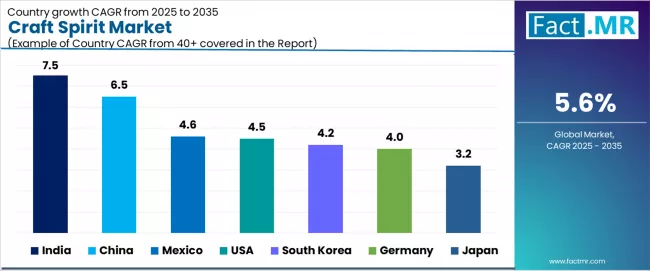
India: Craft distillery proliferation and premium spirit demand drive leadership
India leads country-level growth. Over 50 craft distilleries were operating in India by 2024, producing single malt whisky, craft gin, rum, and vodka. Indian craft whisky brands (Amrut, Paul John, Rampur) have won international awards, establishing India as a credible craft whisky origin. Regulatory reforms in multiple Indian states are reducing licensing barriers for small-scale distilleries.
- India's premium spirit segment grew 12% in 2024, per CIABC data, with craft and single malt categories growing at 2 to 3 times the rate of standard spirit categories.
China: Baijiu craft revival and Western spirit adoption drive growth
China records strong growth driven by both a craft baijiu revival movement and expanding Western craft spirit consumption. Chinese craft distillers are applying artisanal production methods to traditional baijiu, while imported craft gin, whiskey, and rum are gaining distribution in Shanghai, Beijing, and Shenzhen bar and retail channels.
- China's premium imported spirit market grew 10% in 2024, per China Alcoholic Drinks Association data, with craft-positioned brands gaining share.
Mexico: Mezcal and tequila craft heritage create premium growth
Mexico's growth is driven by the premiumisation of mezcal and artisanal tequila, where traditional small-batch production methods are inherently craft-positioned. Mezcal production, regulated under DO certification, is growing at 15 to 20% annually as international demand for authentic, small-batch agave spirits accelerates.
- Mexico's mezcal exports grew 18% in 2024, per CRM data, with artisanal and ancestral production categories commanding the highest export prices.
USA: Craft distillery ecosystem and premiumisation sustain market leadership
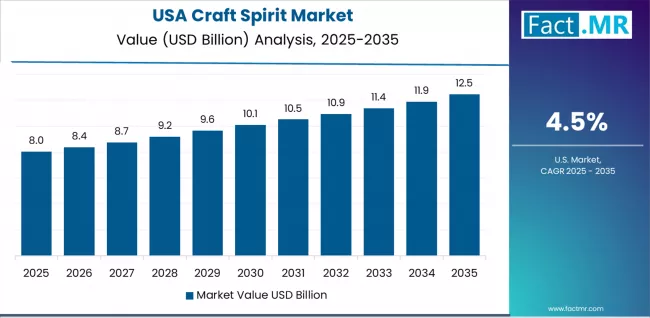
The USA generates USD 7.129 billion in 2025 revenue. The US craft spirit market is the world's largest and most developed, with over 2,700 distilleries, established distribution channels, and growing consumer familiarity with craft spirit brands. Growth is driven by premiumisation, cocktail culture, and distillery tourism.
- US craft spirit sales grew 6% in 2024, per DISCUS data, with craft whiskey and craft gin as the leading growth categories.
South Korea: Soju craft evolution and imported spirit demand drive adoption
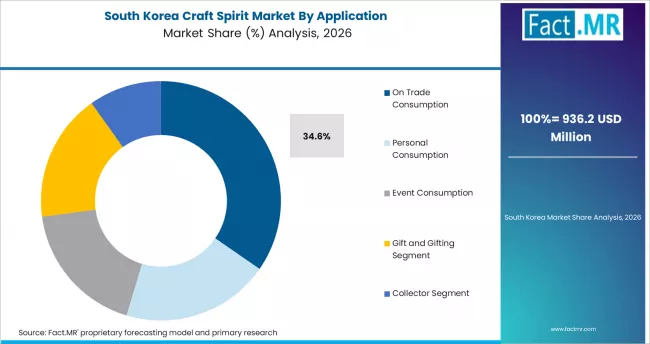
South Korea's growth reflects both the craft evolution of traditional soju production and expanding imported craft spirit consumption. Korean craft soju producers are applying premium positioning to the country's most consumed spirit, while Korean bar culture is embracing imported craft gin and whiskey.
- South Korea's premium spirit market grew 8% in 2024, per Korea Alcohol and Liquor Industry Association data.
Germany: Craft gin boom and distillery tradition support growth
Germany's growth is driven by the craft gin boom, with over 200 German gin distilleries operating by 2024. German craft distillers benefit from the country's strong distilling heritage (Obstbrand, Korn) and consumer willingness to pay premiums for locally produced spirits.
- Germany's craft gin market grew 12% in 2024, per BSI data, with new German gin brands entering the market monthly.
Japan: Craft whisky premium positioning and export growth define the market
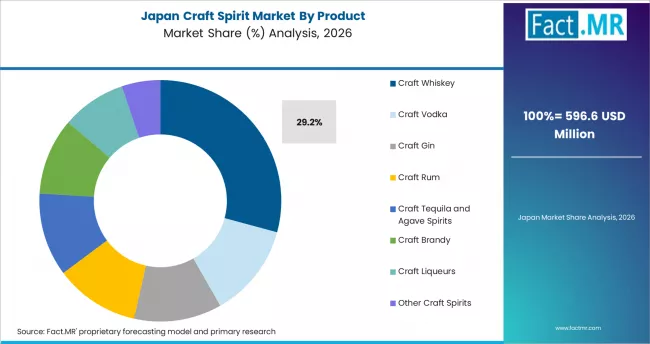
Japan contributes USD 0.936 billion in 2025. Japanese craft whisky has achieved ultra-premium global positioning, with allocation-limited releases from Suntory, Nikka, and emerging producers commanding collector-level prices. Japan's craft spirit market extends beyond whisky to include craft gin (Roku, Ki No Bi) and craft shochu.
- Japan's whisky exports exceeded JPY 50 billion in 2024, per Ministry of Finance trade data, with craft and single malt expressions driving export value growth.
Competitive Benchmarking and Company Positioning
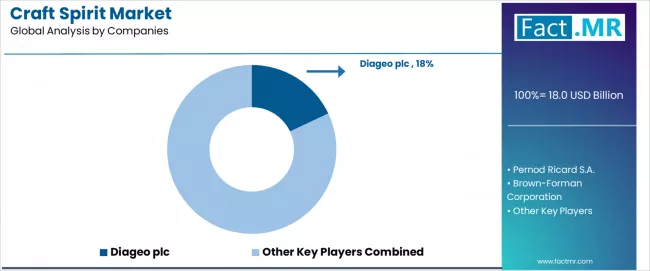
Craft Spirit Market Analysis By Company
- Diageo plc holds approximately 18.0% of global market share through its portfolio spanning acquired craft brands and premium spirit positions including Bulleit bourbon, Ketel One vodka, and its strategic craft distillery investments.
- Pernod Ricard and Brown-Forman compete with both acquired craft brands and organic craft-positioned product development within their premium spirit portfolios.
- Independent craft distilleries collectively hold significant share, with the top 50 independent US craft distillers generating over USD 2 billion in combined revenue.
The competitive structure is moderately concentrated, with Diageo holding the largest share at 18.0%. Diageo's position reflects its strategy of acquiring craft brands that maintain independent brand identity while gaining access to Diageo's global distribution infrastructure. This approach allows Diageo to participate in the craft premium without the authenticity risks of launching new craft brands from a multinational platform.
Competition is stratified by production scale. Large companies (Diageo, Pernod Ricard, Bacardi) compete through acquired craft brands and craft-positioned product lines. Established independent craft producers compete through regional distribution strength and brand loyalty. Micro-distillery start-ups compete through tasting room direct sales and local market positioning. The competitive tension between scale and authenticity defines the market dynamic.
Key Companies in the Craft Spirit Market
The craft spirit competitive field includes Diageo plc, Pernod Ricard S.A., Brown-Forman Corporation, Bacardi Limited, Campari Group, Edrington Group, William Grant and Sons Ltd., Beam Suntory Inc., Remy Cointreau, Constellation Brands Inc., Heaven Hill Brands Inc., Jose Cuervo (Proximo Spirits Inc.), AB InBev (Distell Group Limited), Moet Hennessy (LVMH Group), and Sazerac Company Inc.
Recent Industry Developments
- Diageo: craft brand portfolio expansion (2025)
- Diageo acquired two independent US craft distilleries, adding regional bourbon and rye whiskey brands to its craft portfolio while committing to maintain independent production and brand identity.
- Pernod Ricard: craft gin international expansion (2025)
- Pernod Ricard expanded international distribution of its Monkey 47 craft gin brand into 15 new markets, building on the brand's success in Germany and Western Europe.
- Brown-Forman: Woodford Reserve craft positioning (2026)
- Brown-Forman strengthened Woodford Reserve's craft positioning with a new Master's Collection limited release programme featuring single-barrel and experimental cask finish expressions.
- Beam Suntory: Japanese craft whisky capacity expansion (2025)
- Beam Suntory announced expansion of whisky production capacity at its Yamazaki and Hakushu distilleries in Japan, investing in additional pot stills and warehouse space to meet growing global demand for Japanese craft whisky.
Leading Companies Shaping the Craft Spirit Market
-
Global Players
- Diageo plc
- Pernod Ricard S.A.
- Brown-Forman Corporation
- Bacardi Limited
- Beam Suntory Inc.
-
Regional Players
- Campari Group
- Edrington Group
- William Grant and Sons Ltd.
- Remy Cointreau
- Heaven Hill Brands, Inc.
-
Emerging / Start-up Players
- Constellation Brands Inc.
- Jose Cuervo (Proximo Spirits Inc.)
- Sazerac Company Inc.
- Moet Hennessy (LVMH Group)
- AB InBev (Distell Group Limited)
Sources and Research References
- Company annual reports from Diageo, Pernod Ricard, Brown-Forman, and Beam Suntory.
- DISCUS (Distilled Spirits Council of the United States) craft spirit market data.
- IWSR Drinks Market Analysis premium spirit consumption data references.
- Japan Spirits and Liqueurs Makers Association export statistics.
- CIABC (Confederation of Indian Alcoholic Beverage Companies) market data.
- CRM (Consejo Regulador del Mezcal) mezcal production and export data.
All cited sources are first-party company filings, industry associations, regulatory bodies, or trade organisations. No syndicated market research reports were used.
Key Questions This Report Addresses
- What is the projected market value for craft spirits by 2036?
- Which product type holds the largest share?
- What CAGR is forecast from 2026 to 2036?
- How is terroir-driven positioning changing craft spirit marketing?
- Which countries are growing fastest?
- What is the competitive structure?
- How do large companies participate in the craft spirit market?
- What role does distillery tourism play in craft spirit revenue?
- How is craft gin reshaping the global gin category?
Craft Spirit Market Definition
The craft spirit market encompasses small-batch distilled alcoholic beverages produced by independent, artisanal, or craft-positioned distilleries. Products span whiskey, vodka, gin, rum, tequila, brandy, and liqueur categories, distinguished by production scale, ingredient provenance, and artisanal distillation methods.
Craft Spirit Market Inclusions
- Spirits produced by independent craft and micro-distilleries across all spirit categories.
- Craft-positioned spirit brands owned by larger companies but maintaining craft production methods and brand positioning.
- Aged and unaged craft spirits across all ingredient bases.
- Craft spirit products sold through off-trade, on-trade, online, and direct-to-consumer channels.
Craft Spirit Market Exclusions
- Mass-market industrial spirits produced at large-scale distilleries without craft positioning.
- Craft beer and craft wine products.
- Non-alcoholic spirit alternatives.
- Distillery equipment and supplies sold to craft spirit producers.
Craft Spirit Market Research Methodology
- Primary research with craft distillery owners, spirit distributors, bar operators, and retail buyers across 12 countries.
- Revenue modelling based on distillery production volumes, excise duty records, and distribution data.
- Pricing analysis using retail shelf pricing surveys, on-premise menu pricing data, and wholesale distributor records.
- Competitive share estimation through company annual reports, distillery registration databases, and distribution audit data.
- Demand validation through spirit consumption statistics, premiumisation trend data, and distillery tourism visitor counts.
Scope of Analysis

| Parameter | Details |
|---|---|
| Report Currency | USD Billion |
| Market Value (2025) | USD 18.5 Billion |
| Forecast Value (2036) | USD 33.688 Billion |
| CAGR (2026 to 2036) | 5.6% |
| Product | Craft Whiskey, Craft Vodka, Craft Gin, Craft Rum, Craft Tequila and Agave Spirits, Craft Brandy, Craft Liqueurs, Other Craft Spirits |
| Application | On Trade Consumption, Personal Consumption, Event Consumption, Gift and Gifting Segment, Collector Segment |
| End Use | Premium Lifestyle Consumers, Millennial Consumers, Craft Enthusiasts, Social Drinkers, High Income Consumers |
| Distribution Channel | Off Trade, On Trade, Online Retail, Specialty Stores, Export Channels |
| Production Scale | Craft Distilleries, Micro Distilleries, Emerging Brands, Established Craft Producers |
| Ingredient Base | Grain Based Spirits, Fruit Based Spirits, Sugarcane Based Spirits, Botanical Based Spirits |
| Aging Type | Aged Spirits, Unaged Spirits, Long Aged Spirits |
| Regions | North America, Latin America, Europe, East Asia, South Asia and Pacific, Middle East and Africa |
| Countries | India, China, Mexico, USA, South Korea, Germany, Japan, and 40+ countries |
| Companies | Diageo plc, Pernod Ricard, Brown-Forman, Bacardi, Campari Group, Edrington Group, William Grant and Sons, Beam Suntory, Remy Cointreau, Constellation Brands, Heaven Hill, Jose Cuervo, AB InBev, Moet Hennessy, Sazerac |
| Forecast Period | 2026 to 2036 |
| Approach | Top-down and bottom-up with primary and secondary research |
Market Segmentation Analysis
-
Craft Spirit Market Market Segmented by Product:
- Craft Whiskey
- Single Malt Craft Whiskey
- Bourbon Craft Whiskey
- Rye Craft Whiskey
- Craft Vodka
- Premium Grain Vodka
- Flavored Craft Vodka
- Craft Gin
- Botanical Gin
- Contemporary Gin
- Old Tom Gin Variants
- Craft Rum
- White Craft Rum
- Dark Craft Rum
- Spiced Craft Rum
- Craft Tequila and Agave Spirits
- Blanco Craft Tequila
- Reposado Craft Tequila
- Añejo Craft Tequila
- Craft Brandy
- Fruit Brandy
- Wine Brandy
- Craft Liqueurs
- Herbal Liqueurs
- Fruit Based Liqueurs
- Cream Liqueurs
- Other Craft Spirits
- Absinthe Variants
- Bitters and Aperitifs
- Craft Whiskey
-
Craft Spirit Market Market Segmented by Application:
- On Trade Consumption
- Bars and Pubs
- Cocktail Lounges
- Restaurants
- Hotels and Resorts
- Personal Consumption
- Home Consumption
- Premium Home Bars
- Event Consumption
- Weddings
- Corporate Events
- Festivals
- Gift and Gifting Segment
- Premium Gifting
- Corporate Gifting
- Collector Segment
- Limited Edition Collections
- Exclusive Releases
- On Trade Consumption
-
Craft Spirit Market Market Segmented by End Use:
- Premium Lifestyle Consumers
- Luxury Alcohol Consumers
- Connoisseur Consumers
- Millennial Consumers
- Urban Young Adults
- Experience Driven Drinkers
- Craft Enthusiasts
- Small Batch Drink Collectors
- Bar Culture Consumers
- Social Drinkers
- Casual Premium Drinkers
- Weekend Consumers
- High Income Consumers
- Ultra Premium Buyers
- Collector Buyers
- Premium Lifestyle Consumers
-
Craft Spirit Market Market Segmented by Distribution Channel:
- Off Trade
- Liquor Stores
- Supermarkets
- Premium Retail Chains
- On Trade
- Bars
- Cocktail Lounges
- High End Restaurants
- Online Retail
- E Commerce Alcohol Platforms
- Direct To Consumer Brands
- Specialty Stores
- Craft Alcohol Stores
- Duty Free Retail
- Export Channels
- International Craft Spirit Trade
- Global Distribution Partners
- Off Trade
-
Craft Spirit Market Market Segmented by Production Scale:
- Craft Distilleries
- Regional Craft Brands
- Semi Industrial Craft Units
- Micro Distilleries
- Small Batch Producers
- Family Owned Distilleries
- Emerging Brands
- Start Up Distilleries
- Boutique Alcohol Brands
- Established Craft Producers
- Large Scale Craft Distillers
- Hybrid Craft Industrial Producers
- Craft Distilleries
-
Craft Spirit Market Market Segmented by Ingredient Base:
- Grain Based Spirits
- Corn Based Spirits
- Barley Based Spirits
- Rye Based Spirits
- Fruit Based Spirits
- Grape Based Brandy
- Apple Based Spirits
- Sugarcane Based Spirits
- Molasses Based Rum
- Agave Based Spirits
- Botanical Based Spirits
- Herbal Infusions
- Citrus Infusions
- Grain Based Spirits
-
Craft Spirit Market Market Segmented by Aging Type:
- Aged Spirits
- Oak Barrel Aging
- Stainless Steel Aging
- Short Term Aging
- Unaged Spirits
- Clear Spirits
- Fresh Distilled Products
- Long Aged Spirits
- Premium Barrel Aging
- Limited Edition Reserve Spirits
- Aged Spirits
-
Craft Spirit Market Market by Region:
- North America
- USA
- Canada
- Mexico
- Latin America
- Brazil
- Chile
- Rest of Latin America
- Western Europe
- Germany
- UK
- Italy
- Spain
- France
- Nordic
- BENELUX
- Rest of Western Europe
- Eastern Europe
- Russia
- Poland
- Hungary
- Balkan & Baltic
- Rest of Eastern Europe
- East Asia
- China
- Japan
- South Korea
- South Asia and Pacific
- India
- ASEAN
- Australia & New Zealand
- Rest of South Asia and Pacific
- Middle East & Africa
- Kingdom of Saudi Arabia
- Other GCC Countries
- Turkiye
- South Africa
- Other African Union
- Rest of Middle East & Africa
- North America
- Frequently Asked Questions -
What is the current market size?
The market is valued at USD 18.5 billion in 2025.
What growth rate is expected?
A 5.6% CAGR from 2026 to 2036.
Which product type leads?
Craft whiskey holds 29.8% of the product segment.
Which application is largest?
On-trade consumption captures 34.5% of application demand.
Which country is growing fastest?
India leads at 7.5% CAGR.
What is the incremental opportunity?
USD 14.152 billion between 2026 and 2036.
Which company holds the largest share?
Diageo plc holds approximately 18.0%.
Table of Content
- Executive Summary
- Global Market Outlook
- Demand to side Trends
- Supply to side Trends
- Technology Roadmap Analysis
- Analysis and Recommendations
- Market Overview
- Market Coverage / Taxonomy
- Market Definition / Scope / Limitations
- Research Methodology
- Chapter Orientation
- Analytical Lens and Working Hypotheses
- Market Structure, Signals, and Trend Drivers
- Benchmarking and Cross-market Comparability
- Market Sizing, Forecasting, and Opportunity Mapping
- Research Design and Evidence Framework
- Desk Research Programme (Secondary Evidence)
- Company Annual and Sustainability Reports
- Peer-reviewed Journals and Academic Literature
- Corporate Websites, Product Literature, and Technical Notes
- Earnings Decks and Investor Briefings
- Statutory Filings and Regulatory Disclosures
- Technical White Papers and Standards Notes
- Trade Journals, Industry Magazines, and Analyst Briefs
- Conference Proceedings, Webinars, and Seminar Materials
- Government Statistics Portals and Public Data Releases
- Press Releases and Reputable Media Coverage
- Specialist Newsletters and Curated Briefings
- Sector Databases and Reference Repositories
- Fact.MR Internal Proprietary Databases and Historical Market Datasets
- Subscription Datasets and Paid Sources
- Social Channels, Communities, and Digital Listening Inputs
- Additional Desk Sources
- Expert Input and Fieldwork (Primary Evidence)
- Primary Modes
- Qualitative Interviews and Expert Elicitation
- Quantitative Surveys and Structured Data Capture
- Blended Approach
- Why Primary Evidence is Used
- Field Techniques
- Interviews
- Surveys
- Focus Groups
- Observational and In-context Research
- Social and Community Interactions
- Stakeholder Universe Engaged
- C-suite Leaders
- Board Members
- Presidents and Vice Presidents
- R&D and Innovation Heads
- Technical Specialists
- Domain Subject-matter Experts
- Scientists
- Physicians and Other Healthcare Professionals
- Governance, Ethics, and Data Stewardship
- Research Ethics
- Data Integrity and Handling
- Primary Modes
- Tooling, Models, and Reference Databases
- Desk Research Programme (Secondary Evidence)
- Data Engineering and Model Build
- Data Acquisition and Ingestion
- Cleaning, Normalisation, and Verification
- Synthesis, Triangulation, and Analysis
- Quality Assurance and Audit Trail
- Market Background
- Market Dynamics
- Drivers
- Restraints
- Opportunity
- Trends
- Scenario Forecast
- Demand in Optimistic Scenario
- Demand in Likely Scenario
- Demand in Conservative Scenario
- Opportunity Map Analysis
- Product Life Cycle Analysis
- Supply Chain Analysis
- Investment Feasibility Matrix
- Value Chain Analysis
- PESTLE and Porter’s Analysis
- Regulatory Landscape
- Regional Parent Market Outlook
- Production and Consumption Statistics
- Import and Export Statistics
- Market Dynamics
- Global Market Analysis 2021 to 2025 and Forecast, 2026 to 2036
- Historical Market Size Value (USD Million) Analysis, 2021 to 2025
- Current and Future Market Size Value (USD Million) Projections, 2026 to 2036
- Y to o to Y Growth Trend Analysis
- Absolute $ Opportunity Analysis
- Global Market Pricing Analysis 2021 to 2025 and Forecast 2026 to 2036
- Global Market Analysis 2021 to 2025 and Forecast 2026 to 2036, By Product
- Introduction / Key Findings
- Historical Market Size Value (USD Million) Analysis By Product , 2021 to 2025
- Current and Future Market Size Value (USD Million) Analysis and Forecast By Product , 2026 to 2036
- Craft Whiskey
- Single Malt Craft Whiskey
- Bourbon Craft Whiskey
- Rye Craft Whiskey
- Craft Vodka
- Premium Grain Vodka
- Flavored Craft Vodka
- Craft Gin
- Botanical Gin
- Contemporary Gin
- Old Tom Gin Variants
- Craft Rum
- White Craft Rum
- Dark Craft Rum
- Spiced Craft Rum
- Craft Tequila and Agave Spirits
- Blanco Craft Tequila
- Reposado Craft Tequila
- Añejo Craft Tequila
- Craft Brandy
- Fruit Brandy
- Wine Brandy
- Craft Liqueurs
- Herbal Liqueurs
- Fruit Based Liqueurs
- Cream Liqueurs
- Other Craft Spirits
- Absinthe Variants
- Bitters and Aperitifs
- Craft Whiskey
- Y to o to Y Growth Trend Analysis By Product , 2021 to 2025
- Absolute $ Opportunity Analysis By Product , 2026 to 2036
- Global Market Analysis 2021 to 2025 and Forecast 2026 to 2036, By Application
- Introduction / Key Findings
- Historical Market Size Value (USD Million) Analysis By Application, 2021 to 2025
- Current and Future Market Size Value (USD Million) Analysis and Forecast By Application, 2026 to 2036
- On Trade Consumption
- Bars and Pubs
- Cocktail Lounges
- Restaurants
- Hotels and Resorts
- Personal Consumption
- Home Consumption
- Premium Home Bars
- Event Consumption
- Weddings
- Corporate Events
- Festivals
- Gift and Gifting Segment
- Premium Gifting
- Corporate Gifting
- Collector Segment
- Limited Edition Collections
- Exclusive Releases
- On Trade Consumption
- Y to o to Y Growth Trend Analysis By Application, 2021 to 2025
- Absolute $ Opportunity Analysis By Application, 2026 to 2036
- Global Market Analysis 2021 to 2025 and Forecast 2026 to 2036, By End Use
- Introduction / Key Findings
- Historical Market Size Value (USD Million) Analysis By End Use, 2021 to 2025
- Current and Future Market Size Value (USD Million) Analysis and Forecast By End Use, 2026 to 2036
- Premium Lifestyle Consumers
- Luxury Alcohol Consumers
- Connoisseur Consumers
- Millennial Consumers
- Urban Young Adults
- Experience Driven Drinkers
- Craft Enthusiasts
- Small Batch Drink Collectors
- Bar Culture Consumers
- Social Drinkers
- Casual Premium Drinkers
- Weekend Consumers
- High Income Consumers
- Ultra Premium Buyers
- Collector Buyers
- Premium Lifestyle Consumers
- Y to o to Y Growth Trend Analysis By End Use, 2021 to 2025
- Absolute $ Opportunity Analysis By End Use, 2026 to 2036
- Global Market Analysis 2021 to 2025 and Forecast 2026 to 2036, By Distribution Channel
- Introduction / Key Findings
- Historical Market Size Value (USD Million) Analysis By Distribution Channel, 2021 to 2025
- Current and Future Market Size Value (USD Million) Analysis and Forecast By Distribution Channel, 2026 to 2036
- Off Trade
- Liquor Stores
- Supermarkets
- Premium Retail Chains
- On Trade
- Bars
- Cocktail Lounges
- High End Restaurants
- Online Retail
- E Commerce Alcohol Platforms
- Direct To Consumer Brands
- Specialty Stores
- Craft Alcohol Stores
- Duty Free Retail
- Export Channels
- International Craft Spirit Trade
- Global Distribution Partners
- Off Trade
- Y to o to Y Growth Trend Analysis By Distribution Channel, 2021 to 2025
- Absolute $ Opportunity Analysis By Distribution Channel, 2026 to 2036
- Global Market Analysis 2021 to 2025 and Forecast 2026 to 2036, By Production Scale
- Introduction / Key Findings
- Historical Market Size Value (USD Million) Analysis By Production Scale, 2021 to 2025
- Current and Future Market Size Value (USD Million) Analysis and Forecast By Production Scale, 2026 to 2036
- Craft Distilleries
- Regional Craft Brands
- Semi Industrial Craft Value (USD Million)s
- Micro Distilleries
- Small Batch Producers
- Family Owned Distilleries
- Emerging Brands
- Start Up Distilleries
- Boutique Alcohol Brands
- Established Craft Producers
- Large Scale Craft Distillers
- Hybrid Craft Industrial Producers
- Craft Distilleries
- Y to o to Y Growth Trend Analysis By Production Scale, 2021 to 2025
- Absolute $ Opportunity Analysis By Production Scale, 2026 to 2036
- Global Market Analysis 2021 to 2025 and Forecast 2026 to 2036, By Ingredient Base
- Introduction / Key Findings
- Historical Market Size Value (USD Million) Analysis By Ingredient Base, 2021 to 2025
- Current and Future Market Size Value (USD Million) Analysis and Forecast By Ingredient Base, 2026 to 2036
- Grain Based Spirits
- Corn Based Spirits
- Barley Based Spirits
- Rye Based Spirits
- Fruit Based Spirits
- Grape Based Brandy
- Apple Based Spirits
- Sugarcane Based Spirits
- Molasses Based Rum
- Agave Based Spirits
- Botanical Based Spirits
- Herbal Infusions
- Citrus Infusions
- Grain Based Spirits
- Y to o to Y Growth Trend Analysis By Ingredient Base, 2021 to 2025
- Absolute $ Opportunity Analysis By Ingredient Base, 2026 to 2036
- Global Market Analysis 2021 to 2025 and Forecast 2026 to 2036, By Aging Type
- Introduction / Key Findings
- Historical Market Size Value (USD Million) Analysis By Aging Type, 2021 to 2025
- Current and Future Market Size Value (USD Million) Analysis and Forecast By Aging Type, 2026 to 2036
- Aged Spirits
- Oak Barrel Aging
- Stainless Steel Aging
- Short Term Aging
- Unaged Spirits
- Clear Spirits
- Fresh Distilled Products
- Long Aged Spirits
- Premium Barrel Aging
- Limited Edition Reserve Spirits
- Aged Spirits
- Y to o to Y Growth Trend Analysis By Aging Type, 2021 to 2025
- Absolute $ Opportunity Analysis By Aging Type, 2026 to 2036
- Global Market Analysis 2021 to 2025 and Forecast 2026 to 2036, By Region
- Introduction
- Historical Market Size Value (USD Million) Analysis By Region, 2021 to 2025
- Current Market Size Value (USD Million) Analysis and Forecast By Region, 2026 to 2036
- North America
- Latin America
- Western Europe
- Eastern Europe
- East Asia
- South Asia and Pacific
- Middle East & Africa
- Market Attractiveness Analysis By Region
- North America Market Analysis 2021 to 2025 and Forecast 2026 to 2036, By Country
- Historical Market Size Value (USD Million) Trend Analysis By Market Taxonomy, 2021 to 2025
- Market Size Value (USD Million) Forecast By Market Taxonomy, 2026 to 2036
- By Country
- USA
- Canada
- Mexico
- By Product
- By Application
- By End Use
- By Distribution Channel
- By Production Scale
- By Ingredient Base
- By Aging Type
- By Country
- Market Attractiveness Analysis
- By Country
- By Product
- By Application
- By End Use
- By Distribution Channel
- By Production Scale
- By Ingredient Base
- By Aging Type
- Key Takeaways
- Latin America Market Analysis 2021 to 2025 and Forecast 2026 to 2036, By Country
- Historical Market Size Value (USD Million) Trend Analysis By Market Taxonomy, 2021 to 2025
- Market Size Value (USD Million) Forecast By Market Taxonomy, 2026 to 2036
- By Country
- Brazil
- Chile
- Rest of Latin America
- By Product
- By Application
- By End Use
- By Distribution Channel
- By Production Scale
- By Ingredient Base
- By Aging Type
- By Country
- Market Attractiveness Analysis
- By Country
- By Product
- By Application
- By End Use
- By Distribution Channel
- By Production Scale
- By Ingredient Base
- By Aging Type
- Key Takeaways
- Western Europe Market Analysis 2021 to 2025 and Forecast 2026 to 2036, By Country
- Historical Market Size Value (USD Million) Trend Analysis By Market Taxonomy, 2021 to 2025
- Market Size Value (USD Million) Forecast By Market Taxonomy, 2026 to 2036
- By Country
- Germany
- UK
- Italy
- Spain
- France
- Nordic
- BENELUX
- Rest of Western Europe
- By Product
- By Application
- By End Use
- By Distribution Channel
- By Production Scale
- By Ingredient Base
- By Aging Type
- By Country
- Market Attractiveness Analysis
- By Country
- By Product
- By Application
- By End Use
- By Distribution Channel
- By Production Scale
- By Ingredient Base
- By Aging Type
- Key Takeaways
- Eastern Europe Market Analysis 2021 to 2025 and Forecast 2026 to 2036, By Country
- Historical Market Size Value (USD Million) Trend Analysis By Market Taxonomy, 2021 to 2025
- Market Size Value (USD Million) Forecast By Market Taxonomy, 2026 to 2036
- By Country
- Russia
- Poland
- Hungary
- Balkan & Baltic
- Rest of Eastern Europe
- By Product
- By Application
- By End Use
- By Distribution Channel
- By Production Scale
- By Ingredient Base
- By Aging Type
- By Country
- Market Attractiveness Analysis
- By Country
- By Product
- By Application
- By End Use
- By Distribution Channel
- By Production Scale
- By Ingredient Base
- By Aging Type
- Key Takeaways
- East Asia Market Analysis 2021 to 2025 and Forecast 2026 to 2036, By Country
- Historical Market Size Value (USD Million) Trend Analysis By Market Taxonomy, 2021 to 2025
- Market Size Value (USD Million) Forecast By Market Taxonomy, 2026 to 2036
- By Country
- China
- Japan
- South Korea
- By Product
- By Application
- By End Use
- By Distribution Channel
- By Production Scale
- By Ingredient Base
- By Aging Type
- By Country
- Market Attractiveness Analysis
- By Country
- By Product
- By Application
- By End Use
- By Distribution Channel
- By Production Scale
- By Ingredient Base
- By Aging Type
- Key Takeaways
- South Asia and Pacific Market Analysis 2021 to 2025 and Forecast 2026 to 2036, By Country
- Historical Market Size Value (USD Million) Trend Analysis By Market Taxonomy, 2021 to 2025
- Market Size Value (USD Million) Forecast By Market Taxonomy, 2026 to 2036
- By Country
- India
- ASEAN
- Australia & New Zealand
- Rest of South Asia and Pacific
- By Product
- By Application
- By End Use
- By Distribution Channel
- By Production Scale
- By Ingredient Base
- By Aging Type
- By Country
- Market Attractiveness Analysis
- By Country
- By Product
- By Application
- By End Use
- By Distribution Channel
- By Production Scale
- By Ingredient Base
- By Aging Type
- Key Takeaways
- Middle East & Africa Market Analysis 2021 to 2025 and Forecast 2026 to 2036, By Country
- Historical Market Size Value (USD Million) Trend Analysis By Market Taxonomy, 2021 to 2025
- Market Size Value (USD Million) Forecast By Market Taxonomy, 2026 to 2036
- By Country
- Kingdom of Saudi Arabia
- Other GCC Countries
- Turkiye
- South Africa
- Other African Union
- Rest of Middle East & Africa
- By Product
- By Application
- By End Use
- By Distribution Channel
- By Production Scale
- By Ingredient Base
- By Aging Type
- By Country
- Market Attractiveness Analysis
- By Country
- By Product
- By Application
- By End Use
- By Distribution Channel
- By Production Scale
- By Ingredient Base
- By Aging Type
- Key Takeaways
- Key Countries Market Analysis
- USA
- Pricing Analysis
- Market Share Analysis, 2025
- By Product
- By Application
- By End Use
- By Distribution Channel
- By Production Scale
- By Ingredient Base
- By Aging Type
- Canada
- Pricing Analysis
- Market Share Analysis, 2025
- By Product
- By Application
- By End Use
- By Distribution Channel
- By Production Scale
- By Ingredient Base
- By Aging Type
- Mexico
- Pricing Analysis
- Market Share Analysis, 2025
- By Product
- By Application
- By End Use
- By Distribution Channel
- By Production Scale
- By Ingredient Base
- By Aging Type
- Brazil
- Pricing Analysis
- Market Share Analysis, 2025
- By Product
- By Application
- By End Use
- By Distribution Channel
- By Production Scale
- By Ingredient Base
- By Aging Type
- Chile
- Pricing Analysis
- Market Share Analysis, 2025
- By Product
- By Application
- By End Use
- By Distribution Channel
- By Production Scale
- By Ingredient Base
- By Aging Type
- Germany
- Pricing Analysis
- Market Share Analysis, 2025
- By Product
- By Application
- By End Use
- By Distribution Channel
- By Production Scale
- By Ingredient Base
- By Aging Type
- UK
- Pricing Analysis
- Market Share Analysis, 2025
- By Product
- By Application
- By End Use
- By Distribution Channel
- By Production Scale
- By Ingredient Base
- By Aging Type
- Italy
- Pricing Analysis
- Market Share Analysis, 2025
- By Product
- By Application
- By End Use
- By Distribution Channel
- By Production Scale
- By Ingredient Base
- By Aging Type
- Spain
- Pricing Analysis
- Market Share Analysis, 2025
- By Product
- By Application
- By End Use
- By Distribution Channel
- By Production Scale
- By Ingredient Base
- By Aging Type
- France
- Pricing Analysis
- Market Share Analysis, 2025
- By Product
- By Application
- By End Use
- By Distribution Channel
- By Production Scale
- By Ingredient Base
- By Aging Type
- India
- Pricing Analysis
- Market Share Analysis, 2025
- By Product
- By Application
- By End Use
- By Distribution Channel
- By Production Scale
- By Ingredient Base
- By Aging Type
- ASEAN
- Pricing Analysis
- Market Share Analysis, 2025
- By Product
- By Application
- By End Use
- By Distribution Channel
- By Production Scale
- By Ingredient Base
- By Aging Type
- Australia & New Zealand
- Pricing Analysis
- Market Share Analysis, 2025
- By Product
- By Application
- By End Use
- By Distribution Channel
- By Production Scale
- By Ingredient Base
- By Aging Type
- China
- Pricing Analysis
- Market Share Analysis, 2025
- By Product
- By Application
- By End Use
- By Distribution Channel
- By Production Scale
- By Ingredient Base
- By Aging Type
- Japan
- Pricing Analysis
- Market Share Analysis, 2025
- By Product
- By Application
- By End Use
- By Distribution Channel
- By Production Scale
- By Ingredient Base
- By Aging Type
- South Korea
- Pricing Analysis
- Market Share Analysis, 2025
- By Product
- By Application
- By End Use
- By Distribution Channel
- By Production Scale
- By Ingredient Base
- By Aging Type
- Russia
- Pricing Analysis
- Market Share Analysis, 2025
- By Product
- By Application
- By End Use
- By Distribution Channel
- By Production Scale
- By Ingredient Base
- By Aging Type
- Poland
- Pricing Analysis
- Market Share Analysis, 2025
- By Product
- By Application
- By End Use
- By Distribution Channel
- By Production Scale
- By Ingredient Base
- By Aging Type
- Hungary
- Pricing Analysis
- Market Share Analysis, 2025
- By Product
- By Application
- By End Use
- By Distribution Channel
- By Production Scale
- By Ingredient Base
- By Aging Type
- Kingdom of Saudi Arabia
- Pricing Analysis
- Market Share Analysis, 2025
- By Product
- By Application
- By End Use
- By Distribution Channel
- By Production Scale
- By Ingredient Base
- By Aging Type
- Turkiye
- Pricing Analysis
- Market Share Analysis, 2025
- By Product
- By Application
- By End Use
- By Distribution Channel
- By Production Scale
- By Ingredient Base
- By Aging Type
- South Africa
- Pricing Analysis
- Market Share Analysis, 2025
- By Product
- By Application
- By End Use
- By Distribution Channel
- By Production Scale
- By Ingredient Base
- By Aging Type
- USA
- Market Structure Analysis
- Competition Dashboard
- Competition Benchmarking
- Market Share Analysis of Top Players
- By Regional
- By Product
- By Application
- By End Use
- By Distribution Channel
- By Production Scale
- By Ingredient Base
- By Aging Type
- Competition Analysis
- Competition Deep Dive
- Diageo plc
- Overview
- Product Portfolio
- Profitability by Market Segments (Product/Age /Sales Channel/Region)
- Sales Footprint
- Strategy Overview
- Marketing Strategy
- Product Strategy
- Channel Strategy
- Pernod Ricard S.A.
- Brown-Forman Corporation
- Bacardi Limited
- Campari Group
- Edrington Group
- William Grant & Sons Ltd.
- Beam Suntory Inc.
- Rémy Cointreau
- Constellation Brands Inc.
- Heaven Hill Brands, Inc.
- Jose Cuervo (Proximo Spirits Inc.)
- AB InBev (Distell Group Limited)
- Moët Hennessy (LVMH Group)
- Sazerac Company Inc.
- Diageo plc
- Competition Deep Dive
- Assumptions & Acronyms Used
List Of Table
- Table 1: Global Market Value (USD Million) Forecast by Region, 2021 to 2036
- Table 2: Global Market Value (USD Million) Forecast by Product , 2021 to 2036
- Table 3: Global Market Value (USD Million) Forecast by Application, 2021 to 2036
- Table 4: Global Market Value (USD Million) Forecast by End Use, 2021 to 2036
- Table 5: Global Market Value (USD Million) Forecast by Distribution Channel, 2021 to 2036
- Table 6: Global Market Value (USD Million) Forecast by Production Scale, 2021 to 2036
- Table 7: Global Market Value (USD Million) Forecast by Ingredient Base, 2021 to 2036
- Table 8: Global Market Value (USD Million) Forecast by Aging Type, 2021 to 2036
- Table 9: North America Market Value (USD Million) Forecast by Country, 2021 to 2036
- Table 10: North America Market Value (USD Million) Forecast by Product , 2021 to 2036
- Table 11: North America Market Value (USD Million) Forecast by Application, 2021 to 2036
- Table 12: North America Market Value (USD Million) Forecast by End Use, 2021 to 2036
- Table 13: North America Market Value (USD Million) Forecast by Distribution Channel, 2021 to 2036
- Table 14: North America Market Value (USD Million) Forecast by Production Scale, 2021 to 2036
- Table 15: North America Market Value (USD Million) Forecast by Ingredient Base, 2021 to 2036
- Table 16: North America Market Value (USD Million) Forecast by Aging Type, 2021 to 2036
- Table 17: Latin America Market Value (USD Million) Forecast by Country, 2021 to 2036
- Table 18: Latin America Market Value (USD Million) Forecast by Product , 2021 to 2036
- Table 19: Latin America Market Value (USD Million) Forecast by Application, 2021 to 2036
- Table 20: Latin America Market Value (USD Million) Forecast by End Use, 2021 to 2036
- Table 21: Latin America Market Value (USD Million) Forecast by Distribution Channel, 2021 to 2036
- Table 22: Latin America Market Value (USD Million) Forecast by Production Scale, 2021 to 2036
- Table 23: Latin America Market Value (USD Million) Forecast by Ingredient Base, 2021 to 2036
- Table 24: Latin America Market Value (USD Million) Forecast by Aging Type, 2021 to 2036
- Table 25: Western Europe Market Value (USD Million) Forecast by Country, 2021 to 2036
- Table 26: Western Europe Market Value (USD Million) Forecast by Product , 2021 to 2036
- Table 27: Western Europe Market Value (USD Million) Forecast by Application, 2021 to 2036
- Table 28: Western Europe Market Value (USD Million) Forecast by End Use, 2021 to 2036
- Table 29: Western Europe Market Value (USD Million) Forecast by Distribution Channel, 2021 to 2036
- Table 30: Western Europe Market Value (USD Million) Forecast by Production Scale, 2021 to 2036
- Table 31: Western Europe Market Value (USD Million) Forecast by Ingredient Base, 2021 to 2036
- Table 32: Western Europe Market Value (USD Million) Forecast by Aging Type, 2021 to 2036
- Table 33: Eastern Europe Market Value (USD Million) Forecast by Country, 2021 to 2036
- Table 34: Eastern Europe Market Value (USD Million) Forecast by Product , 2021 to 2036
- Table 35: Eastern Europe Market Value (USD Million) Forecast by Application, 2021 to 2036
- Table 36: Eastern Europe Market Value (USD Million) Forecast by End Use, 2021 to 2036
- Table 37: Eastern Europe Market Value (USD Million) Forecast by Distribution Channel, 2021 to 2036
- Table 38: Eastern Europe Market Value (USD Million) Forecast by Production Scale, 2021 to 2036
- Table 39: Eastern Europe Market Value (USD Million) Forecast by Ingredient Base, 2021 to 2036
- Table 40: Eastern Europe Market Value (USD Million) Forecast by Aging Type, 2021 to 2036
- Table 41: East Asia Market Value (USD Million) Forecast by Country, 2021 to 2036
- Table 42: East Asia Market Value (USD Million) Forecast by Product , 2021 to 2036
- Table 43: East Asia Market Value (USD Million) Forecast by Application, 2021 to 2036
- Table 44: East Asia Market Value (USD Million) Forecast by End Use, 2021 to 2036
- Table 45: East Asia Market Value (USD Million) Forecast by Distribution Channel, 2021 to 2036
- Table 46: East Asia Market Value (USD Million) Forecast by Production Scale, 2021 to 2036
- Table 47: East Asia Market Value (USD Million) Forecast by Ingredient Base, 2021 to 2036
- Table 48: East Asia Market Value (USD Million) Forecast by Aging Type, 2021 to 2036
- Table 49: South Asia and Pacific Market Value (USD Million) Forecast by Country, 2021 to 2036
- Table 50: South Asia and Pacific Market Value (USD Million) Forecast by Product , 2021 to 2036
- Table 51: South Asia and Pacific Market Value (USD Million) Forecast by Application, 2021 to 2036
- Table 52: South Asia and Pacific Market Value (USD Million) Forecast by End Use, 2021 to 2036
- Table 53: South Asia and Pacific Market Value (USD Million) Forecast by Distribution Channel, 2021 to 2036
- Table 54: South Asia and Pacific Market Value (USD Million) Forecast by Production Scale, 2021 to 2036
- Table 55: South Asia and Pacific Market Value (USD Million) Forecast by Ingredient Base, 2021 to 2036
- Table 56: South Asia and Pacific Market Value (USD Million) Forecast by Aging Type, 2021 to 2036
- Table 57: Middle East & Africa Market Value (USD Million) Forecast by Country, 2021 to 2036
- Table 58: Middle East & Africa Market Value (USD Million) Forecast by Product , 2021 to 2036
- Table 59: Middle East & Africa Market Value (USD Million) Forecast by Application, 2021 to 2036
- Table 60: Middle East & Africa Market Value (USD Million) Forecast by End Use, 2021 to 2036
- Table 61: Middle East & Africa Market Value (USD Million) Forecast by Distribution Channel, 2021 to 2036
- Table 62: Middle East & Africa Market Value (USD Million) Forecast by Production Scale, 2021 to 2036
- Table 63: Middle East & Africa Market Value (USD Million) Forecast by Ingredient Base, 2021 to 2036
- Table 64: Middle East & Africa Market Value (USD Million) Forecast by Aging Type, 2021 to 2036
List Of Figures
- Figure 1: Global Market Pricing Analysis
- Figure 2: Global Market Value (USD Million) Forecast 2021-2036
- Figure 3: Global Market Value Share and BPS Analysis by Product, 2026 and 2036
- Figure 4: Global Market Y-o-Y Growth Comparison by Product,2026 to 2036
- Figure 5: Global Market Attractiveness Analysis by Product
- Figure 6: Global Market Value Share and BPS Analysis by Application, 2026 and 2036
- Figure 7: Global Market Y-o-Y Growth Comparison by Application,2026 to 2036
- Figure 8: Global Market Attractiveness Analysis by Application
- Figure 9: Global Market Value Share and BPS Analysis by End Use, 2026 and 2036
- Figure 10: Global Market Y-o-Y Growth Comparison by End Use,2026 to 2036
- Figure 11: Global Market Attractiveness Analysis by End Use
- Figure 12: Global Market Value Share and BPS Analysis by Distribution Channel, 2026 and 2036
- Figure 13: Global Market Y-o-Y Growth Comparison by Distribution Channel,2026 to 2036
- Figure 14: Global Market Attractiveness Analysis by Distribution Channel
- Figure 15: Global Market Value Share and BPS Analysis by Production Scale, 2026 and 2036
- Figure 16: Global Market Y-o-Y Growth Comparison by Production Scale,2026 to 2036
- Figure 17: Global Market Attractiveness Analysis by Production Scale
- Figure 18: Global Market Value Share and BPS Analysis by Ingredient Base, 2026 and 2036
- Figure 19: Global Market Y-o-Y Growth Comparison by Ingredient Base,2026 to 2036
- Figure 20: Global Market Attractiveness Analysis by Ingredient Base
- Figure 21: Global Market Value Share and BPS Analysis by Aging Type, 2026 and 2036
- Figure 22: Global Market Y-o-Y Growth Comparison by Aging Type,2026 to 2036
- Figure 23: Global Market Attractiveness Analysis by Aging Type
- Figure 24: Global Market Value (USD Million) Share and BPS Analysis by Region, 2026 and 2036
- Figure 25: Global Market Y-o-Y Growth Comparison by Region,2026 to 2036
- Figure 26: Global Market Attractiveness Analysis by Region
- Figure 27: North America Market Incremental Dollar Opportunity,2026 to 2036
- Figure 28: Latin America Market Incremental Dollar Opportunity,2026 to 2036
- Figure 29: Western Europe Market Incremental Dollar Opportunity,2026 to 2036
- Figure 30: Eastern Europe Market Incremental Dollar Opportunity,2026 to 2036
- Figure 31: East Asia Market Incremental Dollar Opportunity,2026 to 2036
- Figure 32: South Asia and Pacific Market Incremental Dollar Opportunity,2026 to 2036
- Figure 33: Middle East & Africa Market Incremental Dollar Opportunity,2026 to 2036
- Figure 34: North America Market Value Share and BPS Analysis by Country, 2026 and 2036
- Figure 35: North America Market Value Share and BPS Analysis by Product, 2026 and 2036
- Figure 36: North America Market Y-o-Y Growth Comparison by Product,2026 to 2036
- Figure 37: North America Market Attractiveness Analysis by Product
- Figure 38: North America Market Value Share and BPS Analysis by Application, 2026 and 2036
- Figure 39: North America Market Y-o-Y Growth Comparison by Application,2026 to 2036
- Figure 40: North America Market Attractiveness Analysis by Application
- Figure 41: North America Market Value Share and BPS Analysis by End Use, 2026 and 2036
- Figure 42: North America Market Y-o-Y Growth Comparison by End Use,2026 to 2036
- Figure 43: North America Market Attractiveness Analysis by End Use
- Figure 44: North America Market Value Share and BPS Analysis by Distribution Channel, 2026 and 2036
- Figure 45: North America Market Y-o-Y Growth Comparison by Distribution Channel,2026 to 2036
- Figure 46: North America Market Attractiveness Analysis by Distribution Channel
- Figure 47: North America Market Value Share and BPS Analysis by Production Scale, 2026 and 2036
- Figure 48: North America Market Y-o-Y Growth Comparison by Production Scale,2026 to 2036
- Figure 49: North America Market Attractiveness Analysis by Production Scale
- Figure 50: North America Market Value Share and BPS Analysis by Ingredient Base, 2026 and 2036
- Figure 51: North America Market Y-o-Y Growth Comparison by Ingredient Base,2026 to 2036
- Figure 52: North America Market Attractiveness Analysis by Ingredient Base
- Figure 53: North America Market Value Share and BPS Analysis by Aging Type, 2026 and 2036
- Figure 54: North America Market Y-o-Y Growth Comparison by Aging Type,2026 to 2036
- Figure 55: North America Market Attractiveness Analysis by Aging Type
- Figure 56: Latin America Market Value Share and BPS Analysis by Country, 2026 and 2036
- Figure 57: Latin America Market Value Share and BPS Analysis by Product, 2026 and 2036
- Figure 58: Latin America Market Y-o-Y Growth Comparison by Product,2026 to 2036
- Figure 59: Latin America Market Attractiveness Analysis by Product
- Figure 60: Latin America Market Value Share and BPS Analysis by Application, 2026 and 2036
- Figure 61: Latin America Market Y-o-Y Growth Comparison by Application,2026 to 2036
- Figure 62: Latin America Market Attractiveness Analysis by Application
- Figure 63: Latin America Market Value Share and BPS Analysis by End Use, 2026 and 2036
- Figure 64: Latin America Market Y-o-Y Growth Comparison by End Use,2026 to 2036
- Figure 65: Latin America Market Attractiveness Analysis by End Use
- Figure 66: Latin America Market Value Share and BPS Analysis by Distribution Channel, 2026 and 2036
- Figure 67: Latin America Market Y-o-Y Growth Comparison by Distribution Channel,2026 to 2036
- Figure 68: Latin America Market Attractiveness Analysis by Distribution Channel
- Figure 69: Latin America Market Value Share and BPS Analysis by Production Scale, 2026 and 2036
- Figure 70: Latin America Market Y-o-Y Growth Comparison by Production Scale,2026 to 2036
- Figure 71: Latin America Market Attractiveness Analysis by Production Scale
- Figure 72: Latin America Market Value Share and BPS Analysis by Ingredient Base, 2026 and 2036
- Figure 73: Latin America Market Y-o-Y Growth Comparison by Ingredient Base,2026 to 2036
- Figure 74: Latin America Market Attractiveness Analysis by Ingredient Base
- Figure 75: Latin America Market Value Share and BPS Analysis by Aging Type, 2026 and 2036
- Figure 76: Latin America Market Y-o-Y Growth Comparison by Aging Type,2026 to 2036
- Figure 77: Latin America Market Attractiveness Analysis by Aging Type
- Figure 78: Western Europe Market Value Share and BPS Analysis by Country, 2026 and 2036
- Figure 79: Western Europe Market Value Share and BPS Analysis by Product, 2026 and 2036
- Figure 80: Western Europe Market Y-o-Y Growth Comparison by Product,2026 to 2036
- Figure 81: Western Europe Market Attractiveness Analysis by Product
- Figure 82: Western Europe Market Value Share and BPS Analysis by Application, 2026 and 2036
- Figure 83: Western Europe Market Y-o-Y Growth Comparison by Application,2026 to 2036
- Figure 84: Western Europe Market Attractiveness Analysis by Application
- Figure 85: Western Europe Market Value Share and BPS Analysis by End Use, 2026 and 2036
- Figure 86: Western Europe Market Y-o-Y Growth Comparison by End Use,2026 to 2036
- Figure 87: Western Europe Market Attractiveness Analysis by End Use
- Figure 88: Western Europe Market Value Share and BPS Analysis by Distribution Channel, 2026 and 2036
- Figure 89: Western Europe Market Y-o-Y Growth Comparison by Distribution Channel,2026 to 2036
- Figure 90: Western Europe Market Attractiveness Analysis by Distribution Channel
- Figure 91: Western Europe Market Value Share and BPS Analysis by Production Scale, 2026 and 2036
- Figure 92: Western Europe Market Y-o-Y Growth Comparison by Production Scale,2026 to 2036
- Figure 93: Western Europe Market Attractiveness Analysis by Production Scale
- Figure 94: Western Europe Market Value Share and BPS Analysis by Ingredient Base, 2026 and 2036
- Figure 95: Western Europe Market Y-o-Y Growth Comparison by Ingredient Base,2026 to 2036
- Figure 96: Western Europe Market Attractiveness Analysis by Ingredient Base
- Figure 97: Western Europe Market Value Share and BPS Analysis by Aging Type, 2026 and 2036
- Figure 98: Western Europe Market Y-o-Y Growth Comparison by Aging Type,2026 to 2036
- Figure 99: Western Europe Market Attractiveness Analysis by Aging Type
- Figure 100: Eastern Europe Market Value Share and BPS Analysis by Country, 2026 and 2036
- Figure 101: Eastern Europe Market Value Share and BPS Analysis by Product, 2026 and 2036
- Figure 102: Eastern Europe Market Y-o-Y Growth Comparison by Product,2026 to 2036
- Figure 103: Eastern Europe Market Attractiveness Analysis by Product
- Figure 104: Eastern Europe Market Value Share and BPS Analysis by Application, 2026 and 2036
- Figure 105: Eastern Europe Market Y-o-Y Growth Comparison by Application,2026 to 2036
- Figure 106: Eastern Europe Market Attractiveness Analysis by Application
- Figure 107: Eastern Europe Market Value Share and BPS Analysis by End Use, 2026 and 2036
- Figure 108: Eastern Europe Market Y-o-Y Growth Comparison by End Use,2026 to 2036
- Figure 109: Eastern Europe Market Attractiveness Analysis by End Use
- Figure 110: Eastern Europe Market Value Share and BPS Analysis by Distribution Channel, 2026 and 2036
- Figure 111: Eastern Europe Market Y-o-Y Growth Comparison by Distribution Channel,2026 to 2036
- Figure 112: Eastern Europe Market Attractiveness Analysis by Distribution Channel
- Figure 113: Eastern Europe Market Value Share and BPS Analysis by Production Scale, 2026 and 2036
- Figure 114: Eastern Europe Market Y-o-Y Growth Comparison by Production Scale,2026 to 2036
- Figure 115: Eastern Europe Market Attractiveness Analysis by Production Scale
- Figure 116: Eastern Europe Market Value Share and BPS Analysis by Ingredient Base, 2026 and 2036
- Figure 117: Eastern Europe Market Y-o-Y Growth Comparison by Ingredient Base,2026 to 2036
- Figure 118: Eastern Europe Market Attractiveness Analysis by Ingredient Base
- Figure 119: Eastern Europe Market Value Share and BPS Analysis by Aging Type, 2026 and 2036
- Figure 120: Eastern Europe Market Y-o-Y Growth Comparison by Aging Type,2026 to 2036
- Figure 121: Eastern Europe Market Attractiveness Analysis by Aging Type
- Figure 122: East Asia Market Value Share and BPS Analysis by Country, 2026 and 2036
- Figure 123: East Asia Market Value Share and BPS Analysis by Product, 2026 and 2036
- Figure 124: East Asia Market Y-o-Y Growth Comparison by Product,2026 to 2036
- Figure 125: East Asia Market Attractiveness Analysis by Product
- Figure 126: East Asia Market Value Share and BPS Analysis by Application, 2026 and 2036
- Figure 127: East Asia Market Y-o-Y Growth Comparison by Application,2026 to 2036
- Figure 128: East Asia Market Attractiveness Analysis by Application
- Figure 129: East Asia Market Value Share and BPS Analysis by End Use, 2026 and 2036
- Figure 130: East Asia Market Y-o-Y Growth Comparison by End Use,2026 to 2036
- Figure 131: East Asia Market Attractiveness Analysis by End Use
- Figure 132: East Asia Market Value Share and BPS Analysis by Distribution Channel, 2026 and 2036
- Figure 133: East Asia Market Y-o-Y Growth Comparison by Distribution Channel,2026 to 2036
- Figure 134: East Asia Market Attractiveness Analysis by Distribution Channel
- Figure 135: East Asia Market Value Share and BPS Analysis by Production Scale, 2026 and 2036
- Figure 136: East Asia Market Y-o-Y Growth Comparison by Production Scale,2026 to 2036
- Figure 137: East Asia Market Attractiveness Analysis by Production Scale
- Figure 138: East Asia Market Value Share and BPS Analysis by Ingredient Base, 2026 and 2036
- Figure 139: East Asia Market Y-o-Y Growth Comparison by Ingredient Base,2026 to 2036
- Figure 140: East Asia Market Attractiveness Analysis by Ingredient Base
- Figure 141: East Asia Market Value Share and BPS Analysis by Aging Type, 2026 and 2036
- Figure 142: East Asia Market Y-o-Y Growth Comparison by Aging Type,2026 to 2036
- Figure 143: East Asia Market Attractiveness Analysis by Aging Type
- Figure 144: South Asia and Pacific Market Value Share and BPS Analysis by Country, 2026 and 2036
- Figure 145: South Asia and Pacific Market Value Share and BPS Analysis by Product, 2026 and 2036
- Figure 146: South Asia and Pacific Market Y-o-Y Growth Comparison by Product,2026 to 2036
- Figure 147: South Asia and Pacific Market Attractiveness Analysis by Product
- Figure 148: South Asia and Pacific Market Value Share and BPS Analysis by Application, 2026 and 2036
- Figure 149: South Asia and Pacific Market Y-o-Y Growth Comparison by Application,2026 to 2036
- Figure 150: South Asia and Pacific Market Attractiveness Analysis by Application
- Figure 151: South Asia and Pacific Market Value Share and BPS Analysis by End Use, 2026 and 2036
- Figure 152: South Asia and Pacific Market Y-o-Y Growth Comparison by End Use,2026 to 2036
- Figure 153: South Asia and Pacific Market Attractiveness Analysis by End Use
- Figure 154: South Asia and Pacific Market Value Share and BPS Analysis by Distribution Channel, 2026 and 2036
- Figure 155: South Asia and Pacific Market Y-o-Y Growth Comparison by Distribution Channel,2026 to 2036
- Figure 156: South Asia and Pacific Market Attractiveness Analysis by Distribution Channel
- Figure 157: South Asia and Pacific Market Value Share and BPS Analysis by Production Scale, 2026 and 2036
- Figure 158: South Asia and Pacific Market Y-o-Y Growth Comparison by Production Scale,2026 to 2036
- Figure 159: South Asia and Pacific Market Attractiveness Analysis by Production Scale
- Figure 160: South Asia and Pacific Market Value Share and BPS Analysis by Ingredient Base, 2026 and 2036
- Figure 161: South Asia and Pacific Market Y-o-Y Growth Comparison by Ingredient Base,2026 to 2036
- Figure 162: South Asia and Pacific Market Attractiveness Analysis by Ingredient Base
- Figure 163: South Asia and Pacific Market Value Share and BPS Analysis by Aging Type, 2026 and 2036
- Figure 164: South Asia and Pacific Market Y-o-Y Growth Comparison by Aging Type,2026 to 2036
- Figure 165: South Asia and Pacific Market Attractiveness Analysis by Aging Type
- Figure 166: Middle East & Africa Market Value Share and BPS Analysis by Country, 2026 and 2036
- Figure 167: Middle East & Africa Market Value Share and BPS Analysis by Product, 2026 and 2036
- Figure 168: Middle East & Africa Market Y-o-Y Growth Comparison by Product,2026 to 2036
- Figure 169: Middle East & Africa Market Attractiveness Analysis by Product
- Figure 170: Middle East & Africa Market Value Share and BPS Analysis by Application, 2026 and 2036
- Figure 171: Middle East & Africa Market Y-o-Y Growth Comparison by Application,2026 to 2036
- Figure 172: Middle East & Africa Market Attractiveness Analysis by Application
- Figure 173: Middle East & Africa Market Value Share and BPS Analysis by End Use, 2026 and 2036
- Figure 174: Middle East & Africa Market Y-o-Y Growth Comparison by End Use,2026 to 2036
- Figure 175: Middle East & Africa Market Attractiveness Analysis by End Use
- Figure 176: Middle East & Africa Market Value Share and BPS Analysis by Distribution Channel, 2026 and 2036
- Figure 177: Middle East & Africa Market Y-o-Y Growth Comparison by Distribution Channel,2026 to 2036
- Figure 178: Middle East & Africa Market Attractiveness Analysis by Distribution Channel
- Figure 179: Middle East & Africa Market Value Share and BPS Analysis by Production Scale, 2026 and 2036
- Figure 180: Middle East & Africa Market Y-o-Y Growth Comparison by Production Scale,2026 to 2036
- Figure 181: Middle East & Africa Market Attractiveness Analysis by Production Scale
- Figure 182: Middle East & Africa Market Value Share and BPS Analysis by Ingredient Base, 2026 and 2036
- Figure 183: Middle East & Africa Market Y-o-Y Growth Comparison by Ingredient Base,2026 to 2036
- Figure 184: Middle East & Africa Market Attractiveness Analysis by Ingredient Base
- Figure 185: Middle East & Africa Market Value Share and BPS Analysis by Aging Type, 2026 and 2036
- Figure 186: Middle East & Africa Market Y-o-Y Growth Comparison by Aging Type,2026 to 2036
- Figure 187: Middle East & Africa Market Attractiveness Analysis by Aging Type
- Figure 188: Global Market - Tier Structure Analysis
- Figure 189: Global Market - Company Share Analysis