Dust Suppression Chemicals for Mining and Construction Market
Dust Suppression Chemicals for Mining and Construction Market Size and Share Forecast Outlook 2026 to 2036
Dust suppression chemicals for mining and construction market is projected to grow from USD 0.9 billion in 2026 to USD 2.0 billion by 2036, at a CAGR of 8.1%. Surfactant-Based Dust Suppressants will dominate with a 28.0% market share, while mining haul roads & pits will lead the application area segment with a 34.0% share.
Dust Suppression Chemicals for Mining and Construction Market Forecast and Outlook 2026 to 2036
The global market for dust suppression chemicals is projected to grow from USD 0.94 billion in 2026 to USD 2.05 billion by 2036, registering a CAGR of 8.1%. This steady growth is anchored in the non-negotiable need to control particulate matter across heavy industrial operations, driven by worker health mandates, environmental compliance, and operational efficiency goals.
Key Takeaways from the Dust Suppression Chemicals for Mining and Construction Market
- Market Value for 2026: USD 0.94 Billion
- Market Value for 2036: USD 2.05 Billion
- Forecast CAGR (2026-2036): 8.1%
- Leading Chemical Type Share (2026): Surfactant-Based Dust Suppressants (28%)
- Leading Application Area Share (2026): Mining Haul Roads & Pits (34%)
- Leading End-User Industry Share (2026): Mining (36%)
- Key Players in the Market: Soilworks, Benetech Inc., Quaker Houghton, Ecolab, BASF SE
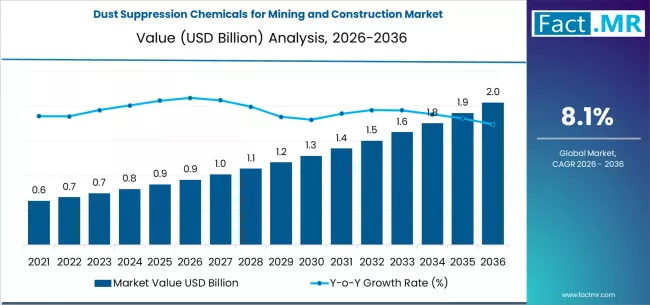
Effective dust management transitions from a best practice to a critical operational component, directly impacting license to operate and community relations for extractive and construction industries. Surfactant-based dust suppressants form the leading chemical category, holding a 28% market share, valued for their ability to reduce water's surface tension for deeper soil penetration and longer-lasting dust control.
Application is most intensive on mining haul roads and within active pits, which account for 34% of demand, given their role as constant dust generation points. The mining industry itself is the predominant end-user, representing 36% of the market, due to the scale of its earth-moving activities and the severe regulatory scrutiny it faces regarding airborne particulates.
Expansion is fueled by increasingly stringent global and local air quality standards targeting PM10 and PM2.5 emissions. Beyond regulatory pressure, the economic argument for dust control strengthens through reduced equipment wear, lower water consumption for dust management, improved visibility for safety, and minimized product loss from stockpiles.
The market's development focuses on creating smarter, longer-lasting chemical solutions that perform under diverse climatic conditions, from arid mines to humid construction sites, while addressing concerns about soil and water impact.
Metric
| Metric | Value |
|---|---|
| Market Value (2026) | USD 0.94 Billion |
| Market Forecast Value (2036) | USD 2.05 Billion |
| Forecast CAGR (2026-2036) | 8.1% |
Category
| Category | Segments |
|---|---|
| Chemical Type | Surfactant-Based Dust Suppressants, Lignosulfonate & Bio-Binders, Polymer Emulsions & Acrylic Copolymers, Salt-Based (MgCl₂, CaCl₂) Suppressants, Other Specialty Dust Control Additives |
| Application Area | Mining Haul Roads & Pits, Construction Sites & Earthworks, Quarry & Aggregate Operations, Material Handling & Stockpiles, Unpaved Roads & Infrastructure Projects |
| End-User Industry | Mining, Construction & Civil Engineering, Cement & Aggregates, Oil & Gas, Public Infrastructure & Municipal |
| Region | North America, Latin America, Western Europe, Eastern Europe, East Asia, South Asia & Pacific, MEA |
Segmental Analysis
By Chemical Type, Which Formulation Offers Versatile Performance?
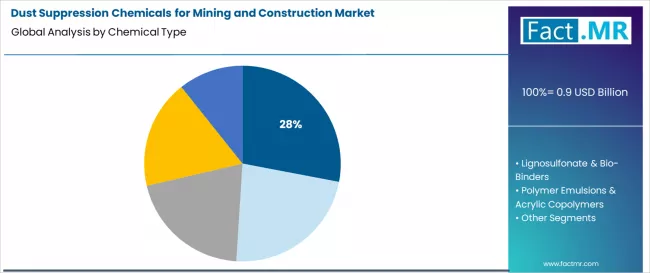
Surfactant-based dust suppressants lead with a 28% share. Their primary advantage lies in enhancing the efficiency of water, the most common dust control agent. By reducing water's surface tension, these chemicals allow moisture to penetrate deeper into the soil matrix, creating a more cohesive surface crust that resists erosion from wind and vehicle traffic for longer periods. This leads to significant reductions in water truck usage and frequency of application, offering both performance and resource efficiency benefits across varied soil types.
By Application Area, Where are Dust Challenges Most Persistent?
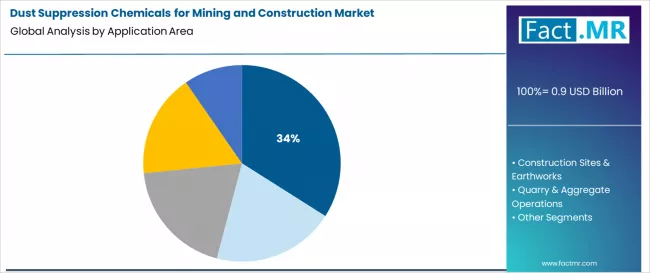
Mining haul roads and active pits constitute the largest application area, commanding a 34% share. Haul roads experience continuous, heavy vehicle traffic that pulverizes surface material, generating constant dust plumes.
Within pits, drilling, blasting, and loading operations release significant particulate matter. Controlling dust in these areas is critical for on-site visibility, vehicle maintenance, and limiting the drift of particulates beyond the mine boundary, making them a perpetual focus for chemical suppression strategies.
By End-User Industry, Which Sector Faces the Greatest Pressure?
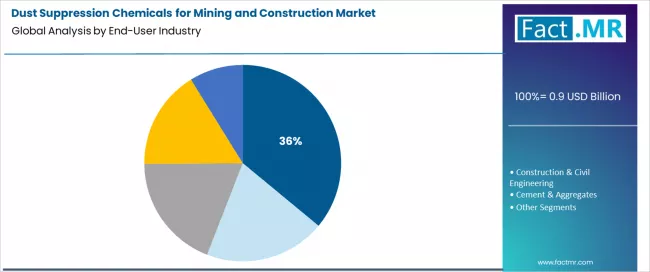
The mining industry is the foremost end-user, accounting for 36% of demand. Mining operations are often located in sensitive environments and are major point sources of dust. They face stringent occupational health standards to protect workers from silicosis and other respiratory diseases, coupled with environmental permits that limit particulate emissions.
The sector's high-value machinery also suffers accelerated wear from dust ingress, creating a powerful economic incentive for effective, large-scale dust control solutions beyond simple watering.
What are the Drivers, Restraints, and Key Trends of the Market?
The enforcement of particulate matter emission regulations by environmental agencies worldwide acts as the primary market driver. Stricter occupational health and safety standards, particularly around silica dust, mandate proactive control measures at source.
Operational drivers include the need to improve worksite visibility for safety, reduce downstream water treatment costs for runoff, and minimize the loss of valuable fine materials from stockpiles. Community and stakeholder pressure on industries to be better neighbors also promotes investment in advanced dust management.
A key restraint is the variable performance of chemicals across different soil compositions and climatic conditions. A product effective on clay may fail on sandy loam; a solution for arid climates might wash away in high rainfall. This necessitates site-specific testing, increasing complexity.
The perennial competition from free water and the perception of chemicals as an unnecessary cost can hinder adoption, especially among smaller contractors. Concerns about the long-term impact of certain salts or polymers on soil health and groundwater also require careful product selection and environmental management.
Significant trends include the rise of hybrid and tailored chemical blends that combine surfactants, polymers, and binders for targeted performance. There is growing interest in bio-based and biodegradable binders, such as lignosulfonates and plant-derived polymers, which offer effective dust control with a reduced environmental footprint.
The market is also moving towards integration with monitoring technologies, using IoT sensors to measure dust levels and trigger automated chemical application systems, optimizing usage and ensuring compliance.
Analysis of the Dust Suppression Chemicals Market by Key Countries
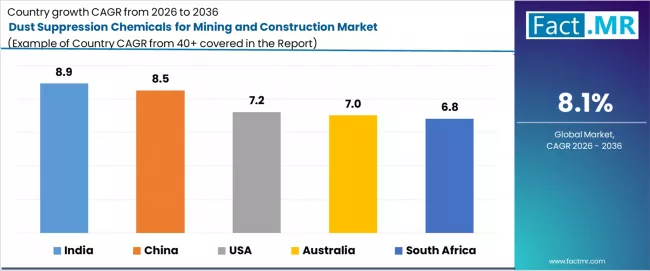
| Country | CAGR (2026-2036) |
|---|---|
| India | 8.90% |
| China | 8.50% |
| USA | 7.20% |
| Australia | 7.00% |
| South Africa | 6.80% |
What Factors Underpin India's High Growth Trajectory?
India's leading CAGR of 8.90% is propelled by its massive, ongoing infrastructure development and mining sector expansion. Government initiatives like Smart Cities and new highway projects generate countless construction sites, while coal and mineral mining activities intensify.
Growing enforcement of environmental norms by pollution control boards and increasing awareness of worker health are shifting practices from reactive water spraying to the adoption of more efficient chemical suppressants to manage dust at scale.
How is China's Industrial and Regulatory Environment Shaping Demand?
China's 8.50% growth is driven by its Blue Sky campaign and stringent air quality targets. As a global leader in mining, steel, and construction, the country faces immense pressure to reduce industrial particulate emissions.
This has led to mandated dust control measures on all major industrial sites, including quarries, ports, and construction zones. The scale of these operations creates a vast market for chemical solutions that can deliver consistent performance and help enterprises avoid heavy fines for non-compliance.
Why does the USA Represent a Mature yet Innovating Market?
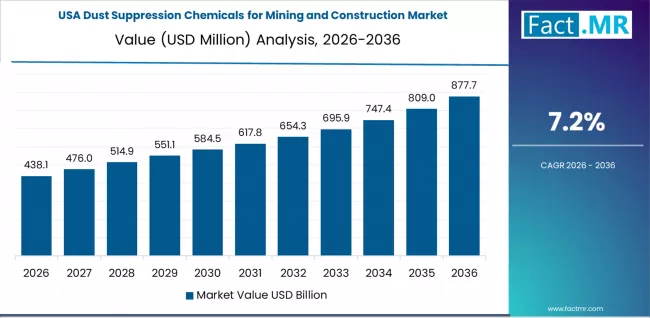
The USA's 7.20% CAGR reflects a mature market where growth is driven by regulatory updates and technological upgrades. Strict MSHA regulations on respirable silica and EPA rules on particulate matter compel continuous investment in best-available control technologies.
The presence of large mining, oil & gas, and construction firms with corporate sustainability goals fosters demand for advanced, environmentally considered products that go beyond basic compliance.
What Role does Australia's Mining-Centric Economy Play?
Australia's 7.00% growth is intrinsically linked to its dominant mining sector, particularly iron ore and coal operations in often arid regions. Dust is a critical operational, health, and community relations issue.
Australian mining companies are global leaders in adopting innovative dust control technologies to protect workers, minimize site water usage, and maintain social license to operate near communities. This drives demand for high-performance, durable polymer emulsions and surfactants suited to challenging, dry conditions.
How are South Africa's Key Industries Addressing Dust Challenges?
South Africa's 6.80% growth stems from its significant mining industry, especially platinum, gold, and coal, and major infrastructure projects. The high prevalence of silicosis in mining history has led to rigorous health and safety regulations.
Managing dust from coal piles at export terminals and on vast unpaved roads in mining regions is a persistent challenge. This environment favors robust, cost-effective chemical strategies that can be deployed across extensive areas to protect worker health and meet environmental standards.
Competitive Landscape of the Dust Suppression Chemicals Market
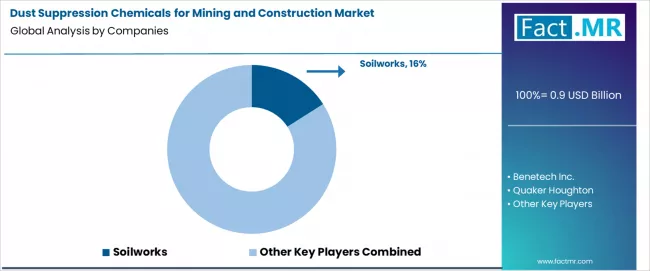
The competitive field consists of specialized dust control companies and broad-based industrial chemical suppliers. Competition is based on formulation efficacy, demonstrated through independent testing and case studies, and the ability to provide comprehensive site assessment and application support.
Key differentiators include product longevity under specific conditions, environmental safety profiles, and the provision of application equipment or service contracts. Developing strong relationships with large mining houses, construction conglomerates, and government road authorities is essential for securing large-scale, recurring contracts.
Key Players in the Dust Suppression Chemicals for Mining and Construction Market
- Soilworks
- Benetech Inc.
- Quaker Houghton
- Ecolab
- BASF SE
Scope of Report
| Items | Values |
|---|---|
| Quantitative Units | USD Billion |
| Chemical Type | Surfactant-Based, Lignosulfonate/Bio-Binders, Polymer Emulsions, Salt-Based, Other Specialty Additives |
| Application Area | Mining Haul Roads & Pits, Construction Sites, Quarry Operations, Stockpiles, Unpaved Roads |
| End-User Industry | Mining, Construction, Cement & Aggregates, Oil & Gas, Public Infrastructure |
| Key Countries | India, China, USA, Australia, South Africa |
| Key Companies | Soilworks, Benetech Inc., Quaker Houghton, Ecolab, BASF SE |
| Additional Analysis | Mechanisms of dust generation and suppression (wetting, cohesion, crust formation); comparative analysis of chemical vs. mechanical dust control methods; impact of suppressants on soil hydrology and health; occupational health regulations for silica dust; cost-benefit analysis of long-term chemical programs versus frequent watering. |
Market by Segments
-
Chemical Type :
- Surfactant-Based Dust Suppressants
- Lignosulfonate & Bio-Binders
- Polymer Emulsions & Acrylic Copolymers
- Salt-Based (MgCl₂, CaCl₂) Suppressants
- Other Specialty Dust Control Additives
-
Application Area :
- Mining Haul Roads & Pits
- Construction Sites & Earthworks
- Quarry & Aggregate Operations
- Material Handling & Stockpiles
- Unpaved Roads & Infrastructure Projects
-
End-User Industry :
- Mining
- Construction & Civil Engineering
- Cement & Aggregates
- Oil & Gas
- Public Infrastructure & Municipal
-
Region :
-
North America
- USA
- Canada
-
Latin America
- Brazil
- Mexico
- Argentina
- Rest of Latin America
-
Western Europe
- Germany
- UK
- France
- Spain
- Italy
- BENELUX
- Rest of Western Europe
-
Eastern Europe
- Russia
- Poland
- Czech Republic
- Rest of Eastern Europe
-
East Asia
- China
- Japan
- South Korea
- Rest of East Asia
-
South Asia & Pacific
- India
- ASEAN
- Australia
- Rest of South Asia & Pacific
-
MEA
- South Africa
- Saudi Arabia
- UAE
- Turkiye
- Rest of MEA
-
Table of Content
- Executive Summary
- Global Market Outlook
- Demand to side Trends
- Supply to side Trends
- Technology Roadmap Analysis
- Analysis and Recommendations
- Market Overview
- Market Coverage / Taxonomy
- Market Definition / Scope / Limitations
- Market Background
- Market Dynamics
- Drivers
- Restraints
- Opportunity
- Trends
- Scenario Forecast
- Demand in Optimistic Scenario
- Demand in Likely Scenario
- Demand in Conservative Scenario
- Opportunity Map Analysis
- Product Life Cycle Analysis
- Supply Chain Analysis
- Investment Feasibility Matrix
- Value Chain Analysis
- PESTLE and Porter’s Analysis
- Regulatory Landscape
- Regional Parent Market Outlook
- Production and Consumption Statistics
- Import and Export Statistics
- Market Dynamics
- Global Market Analysis 2021 to 2025 and Forecast, 2026 to 2036
- Historical Market Size Value (USD Million) Analysis, 2021 to 2025
- Current and Future Market Size Value (USD Million) Projections, 2026 to 2036
- Y to o to Y Growth Trend Analysis
- Absolute $ Opportunity Analysis
- Global Market Pricing Analysis 2021 to 2025 and Forecast 2026 to 2036
- Global Market Analysis 2021 to 2025 and Forecast 2026 to 2036, By Chemical Type
- Introduction / Key Findings
- Historical Market Size Value (USD Million) Analysis By Chemical Type, 2021 to 2025
- Current and Future Market Size Value (USD Million) Analysis and Forecast By Chemical Type, 2026 to 2036
- Surfactant-Based Dust Suppressants
- Lignosulfonate & Bio-Binders
- Polymer Emulsions & Acrylic Copolymers
- Salt-Based (MgCl₂, CaCl₂) Suppressants
- Other Specialty Dust Control Additives
- Surfactant-Based Dust Suppressants
- Y to o to Y Growth Trend Analysis By Chemical Type, 2021 to 2025
- Absolute $ Opportunity Analysis By Chemical Type, 2026 to 2036
- Global Market Analysis 2021 to 2025 and Forecast 2026 to 2036, By Application Area
- Introduction / Key Findings
- Historical Market Size Value (USD Million) Analysis By Application Area, 2021 to 2025
- Current and Future Market Size Value (USD Million) Analysis and Forecast By Application Area, 2026 to 2036
- Mining Haul Roads & Pits
- Construction Sites & Earthworks
- Quarry & Aggregate Operations
- Material Handling & Stockpiles
- Unpaved Roads & Infrastructure Projects
- Mining Haul Roads & Pits
- Y to o to Y Growth Trend Analysis By Application Area, 2021 to 2025
- Absolute $ Opportunity Analysis By Application Area, 2026 to 2036
- Global Market Analysis 2021 to 2025 and Forecast 2026 to 2036, By End-User Industry
- Introduction / Key Findings
- Historical Market Size Value (USD Million) Analysis By End-User Industry, 2021 to 2025
- Current and Future Market Size Value (USD Million) Analysis and Forecast By End-User Industry, 2026 to 2036
- Mining
- Construction & Civil Engineering
- Cement & Aggregates
- Oil & Gas
- Public Infrastructure & Municipal
- Mining
- Y to o to Y Growth Trend Analysis By End-User Industry, 2021 to 2025
- Absolute $ Opportunity Analysis By End-User Industry, 2026 to 2036
- Global Market Analysis 2021 to 2025 and Forecast 2026 to 2036, By Region
- Introduction
- Historical Market Size Value (USD Million) Analysis By Region, 2021 to 2025
- Current Market Size Value (USD Million) Analysis and Forecast By Region, 2026 to 2036
- North America
- Latin America
- Western Europe
- Eastern Europe
- East Asia
- South Asia and Pacific
- Middle East & Africa
- Market Attractiveness Analysis By Region
- North America Market Analysis 2021 to 2025 and Forecast 2026 to 2036, By Country
- Historical Market Size Value (USD Million) Trend Analysis By Market Taxonomy, 2021 to 2025
- Market Size Value (USD Million) Forecast By Market Taxonomy, 2026 to 2036
- By Country
- USA
- Canada
- Mexico
- By Chemical Type
- By Application Area
- By End-User Industry
- By Country
- Market Attractiveness Analysis
- By Country
- By Chemical Type
- By Application Area
- By End-User Industry
- Key Takeaways
- Latin America Market Analysis 2021 to 2025 and Forecast 2026 to 2036, By Country
- Historical Market Size Value (USD Million) Trend Analysis By Market Taxonomy, 2021 to 2025
- Market Size Value (USD Million) Forecast By Market Taxonomy, 2026 to 2036
- By Country
- Brazil
- Chile
- Rest of Latin America
- By Chemical Type
- By Application Area
- By End-User Industry
- By Country
- Market Attractiveness Analysis
- By Country
- By Chemical Type
- By Application Area
- By End-User Industry
- Key Takeaways
- Western Europe Market Analysis 2021 to 2025 and Forecast 2026 to 2036, By Country
- Historical Market Size Value (USD Million) Trend Analysis By Market Taxonomy, 2021 to 2025
- Market Size Value (USD Million) Forecast By Market Taxonomy, 2026 to 2036
- By Country
- Germany
- UK
- Italy
- Spain
- France
- Nordic
- BENELUX
- Rest of Western Europe
- By Chemical Type
- By Application Area
- By End-User Industry
- By Country
- Market Attractiveness Analysis
- By Country
- By Chemical Type
- By Application Area
- By End-User Industry
- Key Takeaways
- Eastern Europe Market Analysis 2021 to 2025 and Forecast 2026 to 2036, By Country
- Historical Market Size Value (USD Million) Trend Analysis By Market Taxonomy, 2021 to 2025
- Market Size Value (USD Million) Forecast By Market Taxonomy, 2026 to 2036
- By Country
- Russia
- Poland
- Hungary
- Balkan & Baltic
- Rest of Eastern Europe
- By Chemical Type
- By Application Area
- By End-User Industry
- By Country
- Market Attractiveness Analysis
- By Country
- By Chemical Type
- By Application Area
- By End-User Industry
- Key Takeaways
- East Asia Market Analysis 2021 to 2025 and Forecast 2026 to 2036, By Country
- Historical Market Size Value (USD Million) Trend Analysis By Market Taxonomy, 2021 to 2025
- Market Size Value (USD Million) Forecast By Market Taxonomy, 2026 to 2036
- By Country
- China
- Japan
- South Korea
- By Chemical Type
- By Application Area
- By End-User Industry
- By Country
- Market Attractiveness Analysis
- By Country
- By Chemical Type
- By Application Area
- By End-User Industry
- Key Takeaways
- South Asia and Pacific Market Analysis 2021 to 2025 and Forecast 2026 to 2036, By Country
- Historical Market Size Value (USD Million) Trend Analysis By Market Taxonomy, 2021 to 2025
- Market Size Value (USD Million) Forecast By Market Taxonomy, 2026 to 2036
- By Country
- India
- ASEAN
- Australia & New Zealand
- Rest of South Asia and Pacific
- By Chemical Type
- By Application Area
- By End-User Industry
- By Country
- Market Attractiveness Analysis
- By Country
- By Chemical Type
- By Application Area
- By End-User Industry
- Key Takeaways
- Middle East & Africa Market Analysis 2021 to 2025 and Forecast 2026 to 2036, By Country
- Historical Market Size Value (USD Million) Trend Analysis By Market Taxonomy, 2021 to 2025
- Market Size Value (USD Million) Forecast By Market Taxonomy, 2026 to 2036
- By Country
- Kingdom of Saudi Arabia
- Other GCC Countries
- Turkiye
- South Africa
- Other African Union
- Rest of Middle East & Africa
- By Chemical Type
- By Application Area
- By End-User Industry
- By Country
- Market Attractiveness Analysis
- By Country
- By Chemical Type
- By Application Area
- By End-User Industry
- Key Takeaways
- Key Countries Market Analysis
- USA
- Pricing Analysis
- Market Share Analysis, 2025
- By Chemical Type
- By Application Area
- By End-User Industry
- Canada
- Pricing Analysis
- Market Share Analysis, 2025
- By Chemical Type
- By Application Area
- By End-User Industry
- Mexico
- Pricing Analysis
- Market Share Analysis, 2025
- By Chemical Type
- By Application Area
- By End-User Industry
- Brazil
- Pricing Analysis
- Market Share Analysis, 2025
- By Chemical Type
- By Application Area
- By End-User Industry
- Chile
- Pricing Analysis
- Market Share Analysis, 2025
- By Chemical Type
- By Application Area
- By End-User Industry
- Germany
- Pricing Analysis
- Market Share Analysis, 2025
- By Chemical Type
- By Application Area
- By End-User Industry
- UK
- Pricing Analysis
- Market Share Analysis, 2025
- By Chemical Type
- By Application Area
- By End-User Industry
- Italy
- Pricing Analysis
- Market Share Analysis, 2025
- By Chemical Type
- By Application Area
- By End-User Industry
- Spain
- Pricing Analysis
- Market Share Analysis, 2025
- By Chemical Type
- By Application Area
- By End-User Industry
- France
- Pricing Analysis
- Market Share Analysis, 2025
- By Chemical Type
- By Application Area
- By End-User Industry
- India
- Pricing Analysis
- Market Share Analysis, 2025
- By Chemical Type
- By Application Area
- By End-User Industry
- ASEAN
- Pricing Analysis
- Market Share Analysis, 2025
- By Chemical Type
- By Application Area
- By End-User Industry
- Australia & New Zealand
- Pricing Analysis
- Market Share Analysis, 2025
- By Chemical Type
- By Application Area
- By End-User Industry
- China
- Pricing Analysis
- Market Share Analysis, 2025
- By Chemical Type
- By Application Area
- By End-User Industry
- Japan
- Pricing Analysis
- Market Share Analysis, 2025
- By Chemical Type
- By Application Area
- By End-User Industry
- South Korea
- Pricing Analysis
- Market Share Analysis, 2025
- By Chemical Type
- By Application Area
- By End-User Industry
- Russia
- Pricing Analysis
- Market Share Analysis, 2025
- By Chemical Type
- By Application Area
- By End-User Industry
- Poland
- Pricing Analysis
- Market Share Analysis, 2025
- By Chemical Type
- By Application Area
- By End-User Industry
- Hungary
- Pricing Analysis
- Market Share Analysis, 2025
- By Chemical Type
- By Application Area
- By End-User Industry
- Kingdom of Saudi Arabia
- Pricing Analysis
- Market Share Analysis, 2025
- By Chemical Type
- By Application Area
- By End-User Industry
- Turkiye
- Pricing Analysis
- Market Share Analysis, 2025
- By Chemical Type
- By Application Area
- By End-User Industry
- South Africa
- Pricing Analysis
- Market Share Analysis, 2025
- By Chemical Type
- By Application Area
- By End-User Industry
- USA
- Market Structure Analysis
- Competition Dashboard
- Competition Benchmarking
- Market Share Analysis of Top Players
- By Regional
- By Chemical Type
- By Application Area
- By End-User Industry
- Competition Analysis
- Competition Deep Dive
- Soilworks
- Overview
- Product Portfolio
- Profitability by Market Segments (Product/Age /Sales Channel/Region)
- Sales Footprint
- Strategy Overview
- Marketing Strategy
- Product Strategy
- Channel Strategy
- Benetech Inc.
- Quaker Houghton
- Ecolab
- BASF SE
- Soilworks
- Competition Deep Dive
- Assumptions & Acronyms Used
- Research Methodology
List Of Table
- Table 1: Global Market Value (USD Million) Forecast by Region, 2021 to 2036
- Table 2: Global Market Value (USD Million) Forecast by Chemical Type, 2021 to 2036
- Table 3: Global Market Value (USD Million) Forecast by Application Area, 2021 to 2036
- Table 4: Global Market Value (USD Million) Forecast by End-User Industry, 2021 to 2036
- Table 5: North America Market Value (USD Million) Forecast by Country, 2021 to 2036
- Table 6: North America Market Value (USD Million) Forecast by Chemical Type, 2021 to 2036
- Table 7: North America Market Value (USD Million) Forecast by Application Area, 2021 to 2036
- Table 8: North America Market Value (USD Million) Forecast by End-User Industry, 2021 to 2036
- Table 9: Latin America Market Value (USD Million) Forecast by Country, 2021 to 2036
- Table 10: Latin America Market Value (USD Million) Forecast by Chemical Type, 2021 to 2036
- Table 11: Latin America Market Value (USD Million) Forecast by Application Area, 2021 to 2036
- Table 12: Latin America Market Value (USD Million) Forecast by End-User Industry, 2021 to 2036
- Table 13: Western Europe Market Value (USD Million) Forecast by Country, 2021 to 2036
- Table 14: Western Europe Market Value (USD Million) Forecast by Chemical Type, 2021 to 2036
- Table 15: Western Europe Market Value (USD Million) Forecast by Application Area, 2021 to 2036
- Table 16: Western Europe Market Value (USD Million) Forecast by End-User Industry, 2021 to 2036
- Table 17: Eastern Europe Market Value (USD Million) Forecast by Country, 2021 to 2036
- Table 18: Eastern Europe Market Value (USD Million) Forecast by Chemical Type, 2021 to 2036
- Table 19: Eastern Europe Market Value (USD Million) Forecast by Application Area, 2021 to 2036
- Table 20: Eastern Europe Market Value (USD Million) Forecast by End-User Industry, 2021 to 2036
- Table 21: East Asia Market Value (USD Million) Forecast by Country, 2021 to 2036
- Table 22: East Asia Market Value (USD Million) Forecast by Chemical Type, 2021 to 2036
- Table 23: East Asia Market Value (USD Million) Forecast by Application Area, 2021 to 2036
- Table 24: East Asia Market Value (USD Million) Forecast by End-User Industry, 2021 to 2036
- Table 25: South Asia and Pacific Market Value (USD Million) Forecast by Country, 2021 to 2036
- Table 26: South Asia and Pacific Market Value (USD Million) Forecast by Chemical Type, 2021 to 2036
- Table 27: South Asia and Pacific Market Value (USD Million) Forecast by Application Area, 2021 to 2036
- Table 28: South Asia and Pacific Market Value (USD Million) Forecast by End-User Industry, 2021 to 2036
- Table 29: Middle East & Africa Market Value (USD Million) Forecast by Country, 2021 to 2036
- Table 30: Middle East & Africa Market Value (USD Million) Forecast by Chemical Type, 2021 to 2036
- Table 31: Middle East & Africa Market Value (USD Million) Forecast by Application Area, 2021 to 2036
- Table 32: Middle East & Africa Market Value (USD Million) Forecast by End-User Industry, 2021 to 2036
List Of Figures
- Figure 1: Global Market Pricing Analysis
- Figure 2: Global Market Value (USD Million) Forecast 2021 to 2036
- Figure 3: Global Market Value Share and BPS Analysis by Chemical Type, 2026 and 2036
- Figure 4: Global Market Y to o to Y Growth Comparison by Chemical Type, 2026 to 2036
- Figure 5: Global Market Attractiveness Analysis by Chemical Type
- Figure 6: Global Market Value Share and BPS Analysis by Application Area, 2026 and 2036
- Figure 7: Global Market Y to o to Y Growth Comparison by Application Area, 2026 to 2036
- Figure 8: Global Market Attractiveness Analysis by Application Area
- Figure 9: Global Market Value Share and BPS Analysis by End-User Industry, 2026 and 2036
- Figure 10: Global Market Y to o to Y Growth Comparison by End-User Industry, 2026 to 2036
- Figure 11: Global Market Attractiveness Analysis by End-User Industry
- Figure 12: Global Market Value (USD Million) Share and BPS Analysis by Region, 2026 and 2036
- Figure 13: Global Market Y to o to Y Growth Comparison by Region, 2026 to 2036
- Figure 14: Global Market Attractiveness Analysis by Region
- Figure 15: North America Market Incremental Dollar Opportunity, 2026 to 2036
- Figure 16: Latin America Market Incremental Dollar Opportunity, 2026 to 2036
- Figure 17: Western Europe Market Incremental Dollar Opportunity, 2026 to 2036
- Figure 18: Eastern Europe Market Incremental Dollar Opportunity, 2026 to 2036
- Figure 19: East Asia Market Incremental Dollar Opportunity, 2026 to 2036
- Figure 20: South Asia and Pacific Market Incremental Dollar Opportunity, 2026 to 2036
- Figure 21: Middle East & Africa Market Incremental Dollar Opportunity, 2026 to 2036
- Figure 22: North America Market Value Share and BPS Analysis by Country, 2026 and 2036
- Figure 23: North America Market Value Share and BPS Analysis by Chemical Type, 2026 and 2036
- Figure 24: North America Market Y to o to Y Growth Comparison by Chemical Type, 2026 to 2036
- Figure 25: North America Market Attractiveness Analysis by Chemical Type
- Figure 26: North America Market Value Share and BPS Analysis by Application Area, 2026 and 2036
- Figure 27: North America Market Y to o to Y Growth Comparison by Application Area, 2026 to 2036
- Figure 28: North America Market Attractiveness Analysis by Application Area
- Figure 29: North America Market Value Share and BPS Analysis by End-User Industry, 2026 and 2036
- Figure 30: North America Market Y to o to Y Growth Comparison by End-User Industry, 2026 to 2036
- Figure 31: North America Market Attractiveness Analysis by End-User Industry
- Figure 32: Latin America Market Value Share and BPS Analysis by Country, 2026 and 2036
- Figure 33: Latin America Market Value Share and BPS Analysis by Chemical Type, 2026 and 2036
- Figure 34: Latin America Market Y to o to Y Growth Comparison by Chemical Type, 2026 to 2036
- Figure 35: Latin America Market Attractiveness Analysis by Chemical Type
- Figure 36: Latin America Market Value Share and BPS Analysis by Application Area, 2026 and 2036
- Figure 37: Latin America Market Y to o to Y Growth Comparison by Application Area, 2026 to 2036
- Figure 38: Latin America Market Attractiveness Analysis by Application Area
- Figure 39: Latin America Market Value Share and BPS Analysis by End-User Industry, 2026 and 2036
- Figure 40: Latin America Market Y to o to Y Growth Comparison by End-User Industry, 2026 to 2036
- Figure 41: Latin America Market Attractiveness Analysis by End-User Industry
- Figure 42: Western Europe Market Value Share and BPS Analysis by Country, 2026 and 2036
- Figure 43: Western Europe Market Value Share and BPS Analysis by Chemical Type, 2026 and 2036
- Figure 44: Western Europe Market Y to o to Y Growth Comparison by Chemical Type, 2026 to 2036
- Figure 45: Western Europe Market Attractiveness Analysis by Chemical Type
- Figure 46: Western Europe Market Value Share and BPS Analysis by Application Area, 2026 and 2036
- Figure 47: Western Europe Market Y to o to Y Growth Comparison by Application Area, 2026 to 2036
- Figure 48: Western Europe Market Attractiveness Analysis by Application Area
- Figure 49: Western Europe Market Value Share and BPS Analysis by End-User Industry, 2026 and 2036
- Figure 50: Western Europe Market Y to o to Y Growth Comparison by End-User Industry, 2026 to 2036
- Figure 51: Western Europe Market Attractiveness Analysis by End-User Industry
- Figure 52: Eastern Europe Market Value Share and BPS Analysis by Country, 2026 and 2036
- Figure 53: Eastern Europe Market Value Share and BPS Analysis by Chemical Type, 2026 and 2036
- Figure 54: Eastern Europe Market Y to o to Y Growth Comparison by Chemical Type, 2026 to 2036
- Figure 55: Eastern Europe Market Attractiveness Analysis by Chemical Type
- Figure 56: Eastern Europe Market Value Share and BPS Analysis by Application Area, 2026 and 2036
- Figure 57: Eastern Europe Market Y to o to Y Growth Comparison by Application Area, 2026 to 2036
- Figure 58: Eastern Europe Market Attractiveness Analysis by Application Area
- Figure 59: Eastern Europe Market Value Share and BPS Analysis by End-User Industry, 2026 and 2036
- Figure 60: Eastern Europe Market Y to o to Y Growth Comparison by End-User Industry, 2026 to 2036
- Figure 61: Eastern Europe Market Attractiveness Analysis by End-User Industry
- Figure 62: East Asia Market Value Share and BPS Analysis by Country, 2026 and 2036
- Figure 63: East Asia Market Value Share and BPS Analysis by Chemical Type, 2026 and 2036
- Figure 64: East Asia Market Y to o to Y Growth Comparison by Chemical Type, 2026 to 2036
- Figure 65: East Asia Market Attractiveness Analysis by Chemical Type
- Figure 66: East Asia Market Value Share and BPS Analysis by Application Area, 2026 and 2036
- Figure 67: East Asia Market Y to o to Y Growth Comparison by Application Area, 2026 to 2036
- Figure 68: East Asia Market Attractiveness Analysis by Application Area
- Figure 69: East Asia Market Value Share and BPS Analysis by End-User Industry, 2026 and 2036
- Figure 70: East Asia Market Y to o to Y Growth Comparison by End-User Industry, 2026 to 2036
- Figure 71: East Asia Market Attractiveness Analysis by End-User Industry
- Figure 72: South Asia and Pacific Market Value Share and BPS Analysis by Country, 2026 and 2036
- Figure 73: South Asia and Pacific Market Value Share and BPS Analysis by Chemical Type, 2026 and 2036
- Figure 74: South Asia and Pacific Market Y to o to Y Growth Comparison by Chemical Type, 2026 to 2036
- Figure 75: South Asia and Pacific Market Attractiveness Analysis by Chemical Type
- Figure 76: South Asia and Pacific Market Value Share and BPS Analysis by Application Area, 2026 and 2036
- Figure 77: South Asia and Pacific Market Y to o to Y Growth Comparison by Application Area, 2026 to 2036
- Figure 78: South Asia and Pacific Market Attractiveness Analysis by Application Area
- Figure 79: South Asia and Pacific Market Value Share and BPS Analysis by End-User Industry, 2026 and 2036
- Figure 80: South Asia and Pacific Market Y to o to Y Growth Comparison by End-User Industry, 2026 to 2036
- Figure 81: South Asia and Pacific Market Attractiveness Analysis by End-User Industry
- Figure 82: Middle East & Africa Market Value Share and BPS Analysis by Country, 2026 and 2036
- Figure 83: Middle East & Africa Market Value Share and BPS Analysis by Chemical Type, 2026 and 2036
- Figure 84: Middle East & Africa Market Y to o to Y Growth Comparison by Chemical Type, 2026 to 2036
- Figure 85: Middle East & Africa Market Attractiveness Analysis by Chemical Type
- Figure 86: Middle East & Africa Market Value Share and BPS Analysis by Application Area, 2026 and 2036
- Figure 87: Middle East & Africa Market Y to o to Y Growth Comparison by Application Area, 2026 to 2036
- Figure 88: Middle East & Africa Market Attractiveness Analysis by Application Area
- Figure 89: Middle East & Africa Market Value Share and BPS Analysis by End-User Industry, 2026 and 2036
- Figure 90: Middle East & Africa Market Y to o to Y Growth Comparison by End-User Industry, 2026 to 2036
- Figure 91: Middle East & Africa Market Attractiveness Analysis by End-User Industry
- Figure 92: Global Market - Tier Structure Analysis
- Figure 93: Global Market - Company Share Analysis
- FAQs -
How big is the dust suppression chemicals for mining and construction market in 2026?
The global dust suppression chemicals for mining and construction market is estimated to be valued at USD 0.9 billion in 2026.
What will be the size of dust suppression chemicals for mining and construction market in 2036?
The market size for the dust suppression chemicals for mining and construction market is projected to reach USD 2.0 billion by 2036.
How much will be the dust suppression chemicals for mining and construction market growth between 2026 and 2036?
The dust suppression chemicals for mining and construction market is expected to grow at a 8.1% CAGR between 2026 and 2036.
What are the key product types in the dust suppression chemicals for mining and construction market?
The key product types in dust suppression chemicals for mining and construction market are surfactant-based dust suppressants, lignosulfonate & bio-binders, polymer emulsions & acrylic copolymers, salt-based (mgcl₂, cacl₂) suppressants and other specialty dust control additives.
Which application area segment to contribute significant share in the dust suppression chemicals for mining and construction market in 2026?
In terms of application area, mining haul roads & pits segment to command 34.0% share in the dust suppression chemicals for mining and construction market in 2026.