EV Conductive Tire Recycled Carbon Black Market
EV Conductive Tire Recycled Carbon Black Market Size and Share Forecast Outlook 2026 to 2036
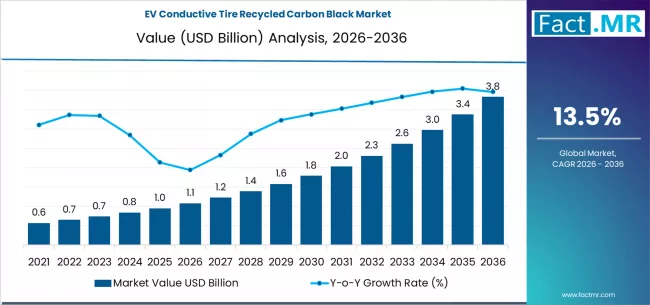
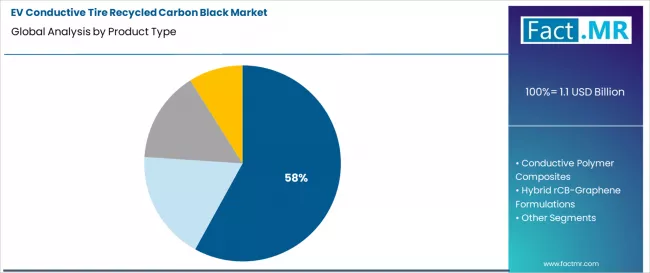
EV conductive tire recycled carbon black market is projected to grow from USD 1.1 billion in 2026 to USD 3.8 billion by 2036, at a CAGR of 13.5%. Recycled Carbon Black (rCB) will dominate with a 58.0% market share, while ev passenger vehicle tires will lead the application segment with a 44.0% share.
EV Conductive Tire Recycled Carbon Black Market Forecast and Outlook 2026 to 2036
The global market for EV conductive tire recycled carbon black is projected to accelerate from USD 1.08 billion in 2026 to USD 3.83 billion by 2036, expanding at a 13.5% CAGR. This robust growth is propelled by the dual imperatives of electrification and circularity within the automotive industry, creating a unique demand for sustainable, high-performance materials.
Key Takeaways from the EV Conductive Tire Recycled Carbon Black Market
- Market Value for 2026: USD 1.08 Billion
- Market Value for 2036: USD 3.83 Billion
- Forecast CAGR (2026-2036): 13.5%
- Leading Product Type Segment (2026): Recycled Carbon Black (rCB) (58%)
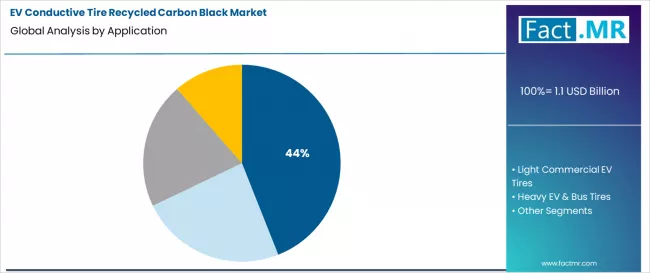
- Leading Application Segment (2026): EV Passenger Vehicle Tires (44%)
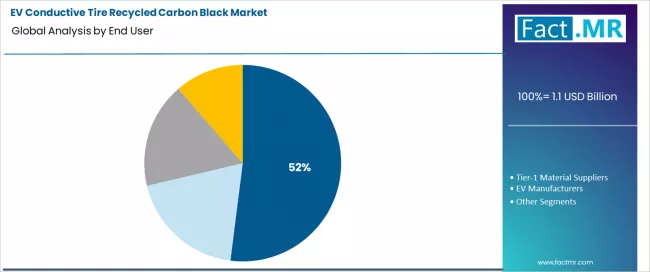
- Leading End User Segment (2026): Tire OEMs (52%)
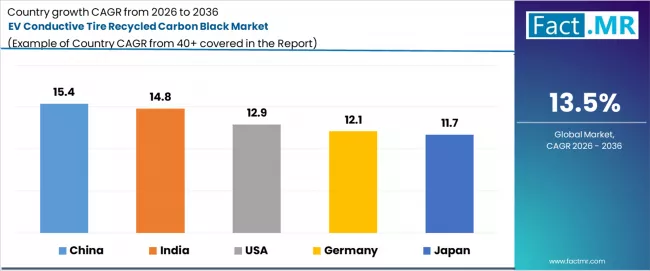
- Key Growth Countries: China (15.40% CAGR), India (14.80% CAGR), USA (12.90% CAGR), Germany (12.10% CAGR), Japan (11.70% CAGR)
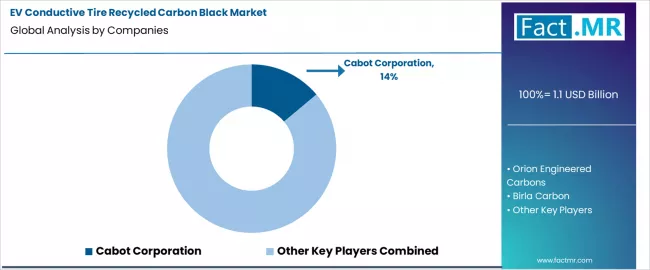
- Key Players in the Market: Cabot Corporation, Orion Engineered Carbons, Birla Carbon, Continental Material Tech, Black Bear Carbon

Recycled carbon black, produced from end-of-life tire pyrolysis, is emerging as a critical alternative to virgin furnace carbon black, significantly reducing CO2 emissions and dependency on fossil feedstocks. In electric vehicles, its application is specialized; rCB must be engineered to provide the necessary electrical conductivity to dissipate static charge from the vehicle while maintaining the reinforcement, durability, and rolling resistance required for EV efficiency.
The market’s evolution is marked by the development of advanced rCB grades and hybrid composites that match or exceed the performance of virgin materials. China’s 15.40% CAGR reflects its dominance in both EV production and tire manufacturing, coupled with aggressive circular economy policies that incentivize recycled material use.
This market represents the convergence of sustainable material innovation and the specific technical demands of electric mobility, where every component is re-evaluated for its environmental and functional impact.
Metric
| Metric | Value |
|---|---|
| Market Value (2026) | USD 1.08 Billion |
| Market Forecast Value (2036) | USD 3.83 Billion |
| Forecast CAGR (2026-2036) | 13.5% |
Category
| Category | Segments |
|---|---|
| Product Type | Recycled Carbon Black (rCB), Conductive Polymer Composites, Hybrid rCB-Graphene Formulations, Others |
| Application | EV Passenger Vehicle Tires, Light Commercial EV Tires, Heavy EV & Bus Tires, Specialty High-Performance EV Tires |
| End User | Tire OEMs, Tier-1 Material Suppliers, EV Manufacturers, Aftermarket Tire Producers |
| Region | North America, Latin America, Western Europe, Eastern Europe, East Asia, South Asia & Pacific, Middle East & Africa (MEA) |
Segmental Analysis
By Product Type, Which Material is the Core Sustainable Reinforcing Agent?

Recycled carbon black holds a dominant 58% share, establishing itself as the foundational sustainable filler. Its leadership is based on its direct one-to-one replacement potential for virgin carbon black in many compound formulations, providing the essential reinforcement, UV protection, and conductivity.
The rapid scaling of tire pyrolysis infrastructure is improving the quality and consistency of rCB, allowing it to meet the stringent specifications of tire manufacturers. Its role is central to reducing the tire industry's Scope 3 emissions and achieving sustainability targets, making it the primary growth vector in the market.
By Application, Where is Volume Demand and Performance Standardization Highest?

EV passenger vehicle tires constitute the largest application segment at 44%. This segment drives volume due to the sheer scale of global EV adoption. The tires require a precise balance of low rolling resistance for range, high wear resistance for longevity, and guaranteed conductivity for safety.
The development of standardized rCB-based compounds that reliably meet these requirements for mass-market EV models is the key technical and commercial focus, creating a high-stakes arena for material qualification and supply agreements.
By End User, Who Integrates the Material into Final Product Specifications?

Tire OEMs are the leading end-users, accounting for 52% of demand. They are the ultimate arbiters of material acceptance, conducting extensive testing and validation to ensure new rCB grades meet all performance, safety, and durability benchmarks.
Their decisions directly shape the supply chain, as qualifying a new rCB source for a tire platform can lead to multi-year, high-volume contracts. Their push to incorporate sustainable materials into their products for marketing and compliance reasons is the primary pull for the entire market.
What are the Drivers, Restraints, and Key Trends of the EV Conductive Tire Recycled Carbon Black Market?
Strict ESG regulations, such as the EU's Extended Producer Responsibility rules, and corporate carbon neutrality goals are mandating the use of recycled content. For EV makers, using rCB is a key strategy to lower the vehicle's lifecycle carbon footprint. Simultaneously, a growing tire pyrolysis industry is improving the supply and cost-competitiveness of rCB.
A major challenge is the performance inconsistency of rCB compared to uniform virgin carbon black, caused by variations in tire feedstock and pyrolysis processes. High capital costs for large-scale pyrolysis plants also limit rapid supply expansion. Furthermore, competition from low-cost virgin carbon black remains a persistent economic barrier.
The market is moving towards engineered rCB grades tailored for specific conductive applications. There is significant development of hybrid composites, like rCB-graphene blends, to enhance performance. Vertically integrated supply chains, where tire makers invest in pyrolysis, are emerging to secure supply. Additionally, digital platforms for tracing recycled content and carbon savings are gaining importance for brand and compliance value.
Analysis of the EV Conductive Tire Recycled Carbon Black Market by Key Countries

| Country | CAGR (2026-2036) |
|---|---|
| China | 15.40% |
| India | 14.80% |
| USA | 12.90% |
| Germany | 12.10% |
| Japan | 11.70% |
How is China's Integrated EV-Tire Industry and Circular Economy Policy Driving Scale?
China's leading 15.40% CAGR is fueled by its unparalleled vertical integration in EV and tire manufacturing, combined with top-down circular economy directives. National policy actively promotes the construction of tire pyrolysis plants and mandates the use of recycled materials in new products.
Chinese tire giants are investing in or partnering with rCB producers to create closed-loop systems, ensuring a captive supply for the world's largest EV market and aiming to set global cost benchmarks.
What is the Impact of India's Fledgling EV Market and Focus on End-of-Life Tire Management?
India's 14.80% growth is driven by its rapidly emerging EV industry and a pressing national need to address end-of-life tire waste. Government policies are encouraging domestic pyrolysis and rCB production to manage waste and reduce import reliance on virgin carbon black.
The market focuses on developing cost-optimized rCB solutions that meet the performance needs of India's price-sensitive yet growing EV segment, positioning the country as a major future producer and consumer.
Why is the USA's Regulatory Push and Focus on Domestic Supply Chains a Key Factor?

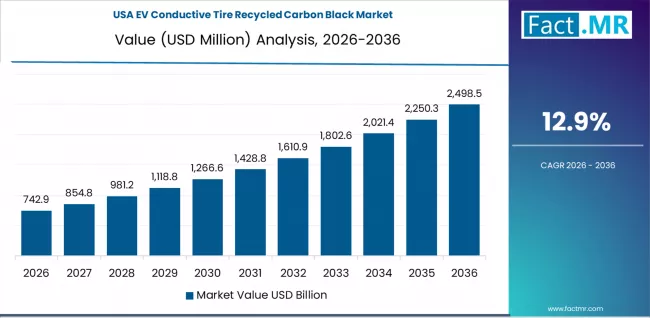
The USA's 12.90% growth is supported by federal and state policies promoting domestic recycling and sustainable manufacturing, alongside the Inflation Reduction Act's emphasis on localized supply chains.
The presence of major tire and carbon black producers investing in advanced recycling technologies is accelerating the commercialization of high-quality rCB. Demand is further strengthened by the sustainability commitments of U.S.-based EV and tire manufacturers seeking to reduce their Scope 3 emissions.
How is Germany's Automotive Leadership and Stringent Sustainability Demands Shaping the Market?
Germany's 12.10% CAGR is anchored in the technical and environmental demands of its premium automotive industry. German EV and tire manufacturers demand rCB with verified, superior consistency and comprehensive sustainability certification.
The market is characterized by a focus on high-value, engineered rCB grades for performance EV tires and a strong emphasis on lifecycle assessment data to prove the environmental benefit over virgin materials.
What Role does Japan's Advanced Material Science and Efficiency Focus Play?
Japan's 11.70% growth leverages its strength in advanced material engineering and its relentless focus on efficiency. Japanese companies are pioneering the development of hybrid rCB composites to maximize performance at minimal loading, directly supporting the goal of improving EV range. The focus is on creating high-technology, high-value material solutions that offer a clear performance advantage alongside sustainability benefits.
Competitive Landscape of the EV Conductive Tire Recycled Carbon Black Market

The competitive landscape is a dynamic mix of established virgin carbon black giants diversifying into recycling and pure-play rCB technology startups. The incumbents leverage their vast customer relationships and technical know-how but face the challenge of integrating a lower-margin recycled product into their portfolio.
Startups compete on the basis of innovative pyrolysis technology that yields higher-quality rCB and strategic partnerships directly with tire makers or EV OEMs. Success hinges on securing long-term offtake agreements, achieving consistent quality at scale, and building a verifiable track record of performance in demanding EV tire applications.
Recommendations for Key Market Players
| Strategic Recommendation | Rationale & Target Player |
|---|---|
| Invest in Advanced Pyrolysis & Purification Tech | To overcome the quality variability restraint and produce consistent, high-purity rCB that can command a premium and gain OEM acceptance (for rCB Startups & Producers). |
| Develop Tier-1 Ready, Pre-Compounded Masterbatches | Simplify adoption for tire manufacturers by offering easy-to-use, performance-guaranteed conductive compounds that blend rCB with polymers and other additives (for Material Suppliers & Carbon Black Majors). |
| Secure Strategic Feedstock Partnerships | Form long-term agreements with tire collectors and recyclers to ensure a stable, cost-effective supply of end-of-life tire feedstock, which is critical for scaling production (for All Producers). |
| Co-Develop and Validate with a Lead Tire OEM | Partner closely with a major tire company to tailor and qualify an rCB solution for a specific EV tire platform, creating a powerful reference case to drive broader market adoption (for Technology Startups). |
Key Players in the EV Conductive Tire Recycled Carbon Black Market
- Cabot Corporation
- Orion Engineered Carbons
- Birla Carbon
- Continental Material Tech
- Black Bear Carbon
Scope of Report
| Items | Values |
|---|---|
| Quantitative Units | USD Billion |
| Product Type | Recycled Carbon Black (rCB), Conductive Polymer Composites, Hybrid rCB-Graphene Formulations, Others |
| Application | EV Passenger Vehicle Tires, Light Commercial EV Tires, Heavy EV & Bus Tires, Specialty High-Performance EV Tires |
| End User | Tire OEMs, Tier-1 Material Suppliers, EV Manufacturers, Aftermarket Tire Producers |
| Key Countries | China, India, USA, Germany, Japan |
| Key Companies | Cabot Corporation, Orion Engineered Carbons, Birla Carbon, Continental Material Tech, Black Bear Carbon |
| Additional Analysis | Comparative lifecycle assessment of rCB vs. virgin carbon black in EV tires; detailed analysis of conductivity mechanisms and performance in various tire compounds; impact of pyrolysis process parameters on rCB structure and properties; cost structure analysis and roadmaps for price parity with virgin carbon black; analysis of end-of-life tire collection and logistics networks; regulatory impact analysis of evolving recycled content mandates on material demand. |
Market by Segments
-
Product Type :
- Recycled Carbon Black (rCB)
- Conductive Polymer Composites
- Hybrid rCB-Graphene Formulations
- Others
-
Application :
- EV Passenger Vehicle Tires
- Light Commercial EV Tires
- Heavy EV & Bus Tires
- Specialty High-Performance EV Tires
-
End User :
- Tire OEMs
- Tier-1 Material Suppliers
- EV Manufacturers
- Aftermarket Tire Producers
-
Region :
- North America
- USA
- Canada
- Latin America
- Brazil
- Mexico
- Argentina
- Rest of Latin America
- Western Europe
- Germany
- France
- UK
- Italy
- Spain
- BENELUX
- Rest of Western Europe
- Eastern Europe
- Russia
- Poland
- Czech Republic
- Rest of Eastern Europe
- East Asia
- China
- Japan
- South Korea
- Rest of East Asia
- South Asia & Pacific
- India
- ASEAN
- Australia
- Rest of South Asia & Pacific
- MEA
- GCC Countries
- South Africa
- Turkiye
- Rest of MEA
- North America
Table of Content
- Executive Summary
- Global Market Outlook
- Demand to side Trends
- Supply to side Trends
- Technology Roadmap Analysis
- Analysis and Recommendations
- Market Overview
- Market Coverage / Taxonomy
- Market Definition / Scope / Limitations
- Market Background
- Market Dynamics
- Drivers
- Restraints
- Opportunity
- Trends
- Scenario Forecast
- Demand in Optimistic Scenario
- Demand in Likely Scenario
- Demand in Conservative Scenario
- Opportunity Map Analysis
- Product Life Cycle Analysis
- Supply Chain Analysis
- Investment Feasibility Matrix
- Value Chain Analysis
- PESTLE and Porter’s Analysis
- Regulatory Landscape
- Regional Parent Market Outlook
- Production and Consumption Statistics
- Import and Export Statistics
- Market Dynamics
- Global Market Analysis 2021 to 2025 and Forecast, 2026 to 2036
- Historical Market Size Value (USD Million) Analysis, 2021 to 2025
- Current and Future Market Size Value (USD Million) Projections, 2026 to 2036
- Y to o to Y Growth Trend Analysis
- Absolute $ Opportunity Analysis
- Global Market Pricing Analysis 2021 to 2025 and Forecast 2026 to 2036
- Global Market Analysis 2021 to 2025 and Forecast 2026 to 2036, By Product Type
- Introduction / Key Findings
- Historical Market Size Value (USD Million) Analysis By Product Type, 2021 to 2025
- Current and Future Market Size Value (USD Million) Analysis and Forecast By Product Type, 2026 to 2036
- Recycled Carbon Black (rCB)
- Conductive Polymer Composites
- Hybrid rCB-Graphene Formulations
- Others
- Recycled Carbon Black (rCB)
- Y to o to Y Growth Trend Analysis By Product Type, 2021 to 2025
- Absolute $ Opportunity Analysis By Product Type, 2026 to 2036
- Global Market Analysis 2021 to 2025 and Forecast 2026 to 2036, By Application
- Introduction / Key Findings
- Historical Market Size Value (USD Million) Analysis By Application, 2021 to 2025
- Current and Future Market Size Value (USD Million) Analysis and Forecast By Application, 2026 to 2036
- EV Passenger Vehicle Tires
- Light Commercial EV Tires
- Heavy EV & Bus Tires
- Specialty High-Performance EV Tires
- EV Passenger Vehicle Tires
- Y to o to Y Growth Trend Analysis By Application, 2021 to 2025
- Absolute $ Opportunity Analysis By Application, 2026 to 2036
- Global Market Analysis 2021 to 2025 and Forecast 2026 to 2036, By End User
- Introduction / Key Findings
- Historical Market Size Value (USD Million) Analysis By End User, 2021 to 2025
- Current and Future Market Size Value (USD Million) Analysis and Forecast By End User, 2026 to 2036
- Tire OEMs
- Tier-1 Material Suppliers
- EV Manufacturers
- Aftermarket Tire Producers
- Tire OEMs
- Y to o to Y Growth Trend Analysis By End User, 2021 to 2025
- Absolute $ Opportunity Analysis By End User, 2026 to 2036
- Global Market Analysis 2021 to 2025 and Forecast 2026 to 2036, By Region
- Introduction
- Historical Market Size Value (USD Million) Analysis By Region, 2021 to 2025
- Current Market Size Value (USD Million) Analysis and Forecast By Region, 2026 to 2036
- North America
- Latin America
- Western Europe
- Eastern Europe
- East Asia
- South Asia and Pacific
- Middle East & Africa
- Market Attractiveness Analysis By Region
- North America Market Analysis 2021 to 2025 and Forecast 2026 to 2036, By Country
- Historical Market Size Value (USD Million) Trend Analysis By Market Taxonomy, 2021 to 2025
- Market Size Value (USD Million) Forecast By Market Taxonomy, 2026 to 2036
- By Country
- USA
- Canada
- Mexico
- By Product Type
- By Application
- By End User
- By Country
- Market Attractiveness Analysis
- By Country
- By Product Type
- By Application
- By End User
- Key Takeaways
- Latin America Market Analysis 2021 to 2025 and Forecast 2026 to 2036, By Country
- Historical Market Size Value (USD Million) Trend Analysis By Market Taxonomy, 2021 to 2025
- Market Size Value (USD Million) Forecast By Market Taxonomy, 2026 to 2036
- By Country
- Brazil
- Chile
- Rest of Latin America
- By Product Type
- By Application
- By End User
- By Country
- Market Attractiveness Analysis
- By Country
- By Product Type
- By Application
- By End User
- Key Takeaways
- Western Europe Market Analysis 2021 to 2025 and Forecast 2026 to 2036, By Country
- Historical Market Size Value (USD Million) Trend Analysis By Market Taxonomy, 2021 to 2025
- Market Size Value (USD Million) Forecast By Market Taxonomy, 2026 to 2036
- By Country
- Germany
- UK
- Italy
- Spain
- France
- Nordic
- BENELUX
- Rest of Western Europe
- By Product Type
- By Application
- By End User
- By Country
- Market Attractiveness Analysis
- By Country
- By Product Type
- By Application
- By End User
- Key Takeaways
- Eastern Europe Market Analysis 2021 to 2025 and Forecast 2026 to 2036, By Country
- Historical Market Size Value (USD Million) Trend Analysis By Market Taxonomy, 2021 to 2025
- Market Size Value (USD Million) Forecast By Market Taxonomy, 2026 to 2036
- By Country
- Russia
- Poland
- Hungary
- Balkan & Baltic
- Rest of Eastern Europe
- By Product Type
- By Application
- By End User
- By Country
- Market Attractiveness Analysis
- By Country
- By Product Type
- By Application
- By End User
- Key Takeaways
- East Asia Market Analysis 2021 to 2025 and Forecast 2026 to 2036, By Country
- Historical Market Size Value (USD Million) Trend Analysis By Market Taxonomy, 2021 to 2025
- Market Size Value (USD Million) Forecast By Market Taxonomy, 2026 to 2036
- By Country
- China
- Japan
- South Korea
- By Product Type
- By Application
- By End User
- By Country
- Market Attractiveness Analysis
- By Country
- By Product Type
- By Application
- By End User
- Key Takeaways
- South Asia and Pacific Market Analysis 2021 to 2025 and Forecast 2026 to 2036, By Country
- Historical Market Size Value (USD Million) Trend Analysis By Market Taxonomy, 2021 to 2025
- Market Size Value (USD Million) Forecast By Market Taxonomy, 2026 to 2036
- By Country
- India
- ASEAN
- Australia & New Zealand
- Rest of South Asia and Pacific
- By Product Type
- By Application
- By End User
- By Country
- Market Attractiveness Analysis
- By Country
- By Product Type
- By Application
- By End User
- Key Takeaways
- Middle East & Africa Market Analysis 2021 to 2025 and Forecast 2026 to 2036, By Country
- Historical Market Size Value (USD Million) Trend Analysis By Market Taxonomy, 2021 to 2025
- Market Size Value (USD Million) Forecast By Market Taxonomy, 2026 to 2036
- By Country
- Kingdom of Saudi Arabia
- Other GCC Countries
- Turkiye
- South Africa
- Other African Union
- Rest of Middle East & Africa
- By Product Type
- By Application
- By End User
- By Country
- Market Attractiveness Analysis
- By Country
- By Product Type
- By Application
- By End User
- Key Takeaways
- Key Countries Market Analysis
- USA
- Pricing Analysis
- Market Share Analysis, 2025
- By Product Type
- By Application
- By End User
- Canada
- Pricing Analysis
- Market Share Analysis, 2025
- By Product Type
- By Application
- By End User
- Mexico
- Pricing Analysis
- Market Share Analysis, 2025
- By Product Type
- By Application
- By End User
- Brazil
- Pricing Analysis
- Market Share Analysis, 2025
- By Product Type
- By Application
- By End User
- Chile
- Pricing Analysis
- Market Share Analysis, 2025
- By Product Type
- By Application
- By End User
- Germany
- Pricing Analysis
- Market Share Analysis, 2025
- By Product Type
- By Application
- By End User
- UK
- Pricing Analysis
- Market Share Analysis, 2025
- By Product Type
- By Application
- By End User
- Italy
- Pricing Analysis
- Market Share Analysis, 2025
- By Product Type
- By Application
- By End User
- Spain
- Pricing Analysis
- Market Share Analysis, 2025
- By Product Type
- By Application
- By End User
- France
- Pricing Analysis
- Market Share Analysis, 2025
- By Product Type
- By Application
- By End User
- India
- Pricing Analysis
- Market Share Analysis, 2025
- By Product Type
- By Application
- By End User
- ASEAN
- Pricing Analysis
- Market Share Analysis, 2025
- By Product Type
- By Application
- By End User
- Australia & New Zealand
- Pricing Analysis
- Market Share Analysis, 2025
- By Product Type
- By Application
- By End User
- China
- Pricing Analysis
- Market Share Analysis, 2025
- By Product Type
- By Application
- By End User
- Japan
- Pricing Analysis
- Market Share Analysis, 2025
- By Product Type
- By Application
- By End User
- South Korea
- Pricing Analysis
- Market Share Analysis, 2025
- By Product Type
- By Application
- By End User
- Russia
- Pricing Analysis
- Market Share Analysis, 2025
- By Product Type
- By Application
- By End User
- Poland
- Pricing Analysis
- Market Share Analysis, 2025
- By Product Type
- By Application
- By End User
- Hungary
- Pricing Analysis
- Market Share Analysis, 2025
- By Product Type
- By Application
- By End User
- Kingdom of Saudi Arabia
- Pricing Analysis
- Market Share Analysis, 2025
- By Product Type
- By Application
- By End User
- Turkiye
- Pricing Analysis
- Market Share Analysis, 2025
- By Product Type
- By Application
- By End User
- South Africa
- Pricing Analysis
- Market Share Analysis, 2025
- By Product Type
- By Application
- By End User
- USA
- Market Structure Analysis
- Competition Dashboard
- Competition Benchmarking
- Market Share Analysis of Top Players
- By Regional
- By Product Type
- By Application
- By End User
- Competition Analysis
- Competition Deep Dive
- Cabot Corporation
- Overview
- Product Portfolio
- Profitability by Market Segments (Product/Age /Sales Channel/Region)
- Sales Footprint
- Strategy Overview
- Marketing Strategy
- Product Strategy
- Channel Strategy
- Orion Engineered Carbons
- Birla Carbon
- Continental Material Tech
- Black Bear Carbon
- Others
- Cabot Corporation
- Competition Deep Dive
- Assumptions & Acronyms Used
- Research Methodology
List Of Table
- Table 1: Global Market Value (USD Million) Forecast by Region, 2021 to 2036
- Table 2: Global Market Value (USD Million) Forecast by Product Type, 2021 to 2036
- Table 3: Global Market Value (USD Million) Forecast by Application, 2021 to 2036
- Table 4: Global Market Value (USD Million) Forecast by End User, 2021 to 2036
- Table 5: North America Market Value (USD Million) Forecast by Country, 2021 to 2036
- Table 6: North America Market Value (USD Million) Forecast by Product Type, 2021 to 2036
- Table 7: North America Market Value (USD Million) Forecast by Application, 2021 to 2036
- Table 8: North America Market Value (USD Million) Forecast by End User, 2021 to 2036
- Table 9: Latin America Market Value (USD Million) Forecast by Country, 2021 to 2036
- Table 10: Latin America Market Value (USD Million) Forecast by Product Type, 2021 to 2036
- Table 11: Latin America Market Value (USD Million) Forecast by Application, 2021 to 2036
- Table 12: Latin America Market Value (USD Million) Forecast by End User, 2021 to 2036
- Table 13: Western Europe Market Value (USD Million) Forecast by Country, 2021 to 2036
- Table 14: Western Europe Market Value (USD Million) Forecast by Product Type, 2021 to 2036
- Table 15: Western Europe Market Value (USD Million) Forecast by Application, 2021 to 2036
- Table 16: Western Europe Market Value (USD Million) Forecast by End User, 2021 to 2036
- Table 17: Eastern Europe Market Value (USD Million) Forecast by Country, 2021 to 2036
- Table 18: Eastern Europe Market Value (USD Million) Forecast by Product Type, 2021 to 2036
- Table 19: Eastern Europe Market Value (USD Million) Forecast by Application, 2021 to 2036
- Table 20: Eastern Europe Market Value (USD Million) Forecast by End User, 2021 to 2036
- Table 21: East Asia Market Value (USD Million) Forecast by Country, 2021 to 2036
- Table 22: East Asia Market Value (USD Million) Forecast by Product Type, 2021 to 2036
- Table 23: East Asia Market Value (USD Million) Forecast by Application, 2021 to 2036
- Table 24: East Asia Market Value (USD Million) Forecast by End User, 2021 to 2036
- Table 25: South Asia and Pacific Market Value (USD Million) Forecast by Country, 2021 to 2036
- Table 26: South Asia and Pacific Market Value (USD Million) Forecast by Product Type, 2021 to 2036
- Table 27: South Asia and Pacific Market Value (USD Million) Forecast by Application, 2021 to 2036
- Table 28: South Asia and Pacific Market Value (USD Million) Forecast by End User, 2021 to 2036
- Table 29: Middle East & Africa Market Value (USD Million) Forecast by Country, 2021 to 2036
- Table 30: Middle East & Africa Market Value (USD Million) Forecast by Product Type, 2021 to 2036
- Table 31: Middle East & Africa Market Value (USD Million) Forecast by Application, 2021 to 2036
- Table 32: Middle East & Africa Market Value (USD Million) Forecast by End User, 2021 to 2036
List Of Figures
- Figure 1: Global Market Pricing Analysis
- Figure 2: Global Market Value (USD Million) Forecast 2021 to 2036
- Figure 3: Global Market Value Share and BPS Analysis by Product Type, 2026 and 2036
- Figure 4: Global Market Y to o to Y Growth Comparison by Product Type, 2026 to 2036
- Figure 5: Global Market Attractiveness Analysis by Product Type
- Figure 6: Global Market Value Share and BPS Analysis by Application, 2026 and 2036
- Figure 7: Global Market Y to o to Y Growth Comparison by Application, 2026 to 2036
- Figure 8: Global Market Attractiveness Analysis by Application
- Figure 9: Global Market Value Share and BPS Analysis by End User, 2026 and 2036
- Figure 10: Global Market Y to o to Y Growth Comparison by End User, 2026 to 2036
- Figure 11: Global Market Attractiveness Analysis by End User
- Figure 12: Global Market Value (USD Million) Share and BPS Analysis by Region, 2026 and 2036
- Figure 13: Global Market Y to o to Y Growth Comparison by Region, 2026 to 2036
- Figure 14: Global Market Attractiveness Analysis by Region
- Figure 15: North America Market Incremental Dollar Opportunity, 2026 to 2036
- Figure 16: Latin America Market Incremental Dollar Opportunity, 2026 to 2036
- Figure 17: Western Europe Market Incremental Dollar Opportunity, 2026 to 2036
- Figure 18: Eastern Europe Market Incremental Dollar Opportunity, 2026 to 2036
- Figure 19: East Asia Market Incremental Dollar Opportunity, 2026 to 2036
- Figure 20: South Asia and Pacific Market Incremental Dollar Opportunity, 2026 to 2036
- Figure 21: Middle East & Africa Market Incremental Dollar Opportunity, 2026 to 2036
- Figure 22: North America Market Value Share and BPS Analysis by Country, 2026 and 2036
- Figure 23: North America Market Value Share and BPS Analysis by Product Type, 2026 and 2036
- Figure 24: North America Market Y to o to Y Growth Comparison by Product Type, 2026 to 2036
- Figure 25: North America Market Attractiveness Analysis by Product Type
- Figure 26: North America Market Value Share and BPS Analysis by Application, 2026 and 2036
- Figure 27: North America Market Y to o to Y Growth Comparison by Application, 2026 to 2036
- Figure 28: North America Market Attractiveness Analysis by Application
- Figure 29: North America Market Value Share and BPS Analysis by End User, 2026 and 2036
- Figure 30: North America Market Y to o to Y Growth Comparison by End User, 2026 to 2036
- Figure 31: North America Market Attractiveness Analysis by End User
- Figure 32: Latin America Market Value Share and BPS Analysis by Country, 2026 and 2036
- Figure 33: Latin America Market Value Share and BPS Analysis by Product Type, 2026 and 2036
- Figure 34: Latin America Market Y to o to Y Growth Comparison by Product Type, 2026 to 2036
- Figure 35: Latin America Market Attractiveness Analysis by Product Type
- Figure 36: Latin America Market Value Share and BPS Analysis by Application, 2026 and 2036
- Figure 37: Latin America Market Y to o to Y Growth Comparison by Application, 2026 to 2036
- Figure 38: Latin America Market Attractiveness Analysis by Application
- Figure 39: Latin America Market Value Share and BPS Analysis by End User, 2026 and 2036
- Figure 40: Latin America Market Y to o to Y Growth Comparison by End User, 2026 to 2036
- Figure 41: Latin America Market Attractiveness Analysis by End User
- Figure 42: Western Europe Market Value Share and BPS Analysis by Country, 2026 and 2036
- Figure 43: Western Europe Market Value Share and BPS Analysis by Product Type, 2026 and 2036
- Figure 44: Western Europe Market Y to o to Y Growth Comparison by Product Type, 2026 to 2036
- Figure 45: Western Europe Market Attractiveness Analysis by Product Type
- Figure 46: Western Europe Market Value Share and BPS Analysis by Application, 2026 and 2036
- Figure 47: Western Europe Market Y to o to Y Growth Comparison by Application, 2026 to 2036
- Figure 48: Western Europe Market Attractiveness Analysis by Application
- Figure 49: Western Europe Market Value Share and BPS Analysis by End User, 2026 and 2036
- Figure 50: Western Europe Market Y to o to Y Growth Comparison by End User, 2026 to 2036
- Figure 51: Western Europe Market Attractiveness Analysis by End User
- Figure 52: Eastern Europe Market Value Share and BPS Analysis by Country, 2026 and 2036
- Figure 53: Eastern Europe Market Value Share and BPS Analysis by Product Type, 2026 and 2036
- Figure 54: Eastern Europe Market Y to o to Y Growth Comparison by Product Type, 2026 to 2036
- Figure 55: Eastern Europe Market Attractiveness Analysis by Product Type
- Figure 56: Eastern Europe Market Value Share and BPS Analysis by Application, 2026 and 2036
- Figure 57: Eastern Europe Market Y to o to Y Growth Comparison by Application, 2026 to 2036
- Figure 58: Eastern Europe Market Attractiveness Analysis by Application
- Figure 59: Eastern Europe Market Value Share and BPS Analysis by End User, 2026 and 2036
- Figure 60: Eastern Europe Market Y to o to Y Growth Comparison by End User, 2026 to 2036
- Figure 61: Eastern Europe Market Attractiveness Analysis by End User
- Figure 62: East Asia Market Value Share and BPS Analysis by Country, 2026 and 2036
- Figure 63: East Asia Market Value Share and BPS Analysis by Product Type, 2026 and 2036
- Figure 64: East Asia Market Y to o to Y Growth Comparison by Product Type, 2026 to 2036
- Figure 65: East Asia Market Attractiveness Analysis by Product Type
- Figure 66: East Asia Market Value Share and BPS Analysis by Application, 2026 and 2036
- Figure 67: East Asia Market Y to o to Y Growth Comparison by Application, 2026 to 2036
- Figure 68: East Asia Market Attractiveness Analysis by Application
- Figure 69: East Asia Market Value Share and BPS Analysis by End User, 2026 and 2036
- Figure 70: East Asia Market Y to o to Y Growth Comparison by End User, 2026 to 2036
- Figure 71: East Asia Market Attractiveness Analysis by End User
- Figure 72: South Asia and Pacific Market Value Share and BPS Analysis by Country, 2026 and 2036
- Figure 73: South Asia and Pacific Market Value Share and BPS Analysis by Product Type, 2026 and 2036
- Figure 74: South Asia and Pacific Market Y to o to Y Growth Comparison by Product Type, 2026 to 2036
- Figure 75: South Asia and Pacific Market Attractiveness Analysis by Product Type
- Figure 76: South Asia and Pacific Market Value Share and BPS Analysis by Application, 2026 and 2036
- Figure 77: South Asia and Pacific Market Y to o to Y Growth Comparison by Application, 2026 to 2036
- Figure 78: South Asia and Pacific Market Attractiveness Analysis by Application
- Figure 79: South Asia and Pacific Market Value Share and BPS Analysis by End User, 2026 and 2036
- Figure 80: South Asia and Pacific Market Y to o to Y Growth Comparison by End User, 2026 to 2036
- Figure 81: South Asia and Pacific Market Attractiveness Analysis by End User
- Figure 82: Middle East & Africa Market Value Share and BPS Analysis by Country, 2026 and 2036
- Figure 83: Middle East & Africa Market Value Share and BPS Analysis by Product Type, 2026 and 2036
- Figure 84: Middle East & Africa Market Y to o to Y Growth Comparison by Product Type, 2026 to 2036
- Figure 85: Middle East & Africa Market Attractiveness Analysis by Product Type
- Figure 86: Middle East & Africa Market Value Share and BPS Analysis by Application, 2026 and 2036
- Figure 87: Middle East & Africa Market Y to o to Y Growth Comparison by Application, 2026 to 2036
- Figure 88: Middle East & Africa Market Attractiveness Analysis by Application
- Figure 89: Middle East & Africa Market Value Share and BPS Analysis by End User, 2026 and 2036
- Figure 90: Middle East & Africa Market Y to o to Y Growth Comparison by End User, 2026 to 2036
- Figure 91: Middle East & Africa Market Attractiveness Analysis by End User
- Figure 92: Global Market - Tier Structure Analysis
- Figure 93: Global Market - Company Share Analysis
- FAQs -
How big is the ev conductive tire recycled carbon black market in 2026?
The global ev conductive tire recycled carbon black market is estimated to be valued at USD 1.1 billion in 2026.
What will be the size of ev conductive tire recycled carbon black market in 2036?
The market size for the ev conductive tire recycled carbon black market is projected to reach USD 3.8 billion by 2036.
How much will be the ev conductive tire recycled carbon black market growth between 2026 and 2036?
The ev conductive tire recycled carbon black market is expected to grow at a 13.5% CAGR between 2026 and 2036.
What are the key product types in the ev conductive tire recycled carbon black market?
The key product types in ev conductive tire recycled carbon black market are recycled carbon black (rcb), conductive polymer composites, hybrid rcb-graphene formulations and others.
Which application segment to contribute significant share in the ev conductive tire recycled carbon black market in 2026?
In terms of application, ev passenger vehicle tires segment to command 44.0% share in the ev conductive tire recycled carbon black market in 2026.