EV Control Unit Flame Retardant Compounds Market
EV Control Unit Flame Retardant Compounds Market Size and Share Forecast Outlook 2026 to 2036
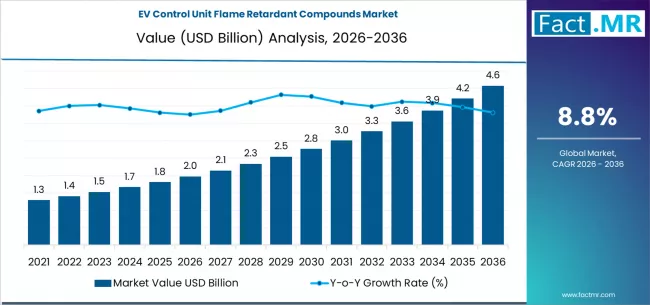
EV control unit flame retardant compounds market is projected to grow from USD 2.0 billion in 2026 to USD 4.6 billion by 2036, at a CAGR of 8.8%. Halogen‑Free Flame Retardant (HFFR) will dominate with a 38.4% market share, while polyamide (pa) will lead the polymer matrix segment with a 36.2% share.
EV Control Unit Flame-Retardant Compounds Market Forecast and Outlook (2026-2036
This global market for flame-retardant compounds in electric vehicle control units forecast to expand from USD 1.97 billion in 2026 to USD 4.58 billion by 2036, registering a CAGR of 8.8%. The market is experiencing a critical surge, propelled by the automotive industry's rapid electrification and escalating safety standards. Growth is driven by the non-negotiable demand for high-performance, lightweight materials that can ensure component integrity and prevent thermal runaway events in high-voltage EV environments.
Key Takeaways from the EV Control Unit Flame-Retardant Compounds Market
- Market Value for 2026: USD 1.97 Billion
- Market Value for 2036: USD 4.58 Billion
- Forecast CAGR (2026-2036): 8.8%
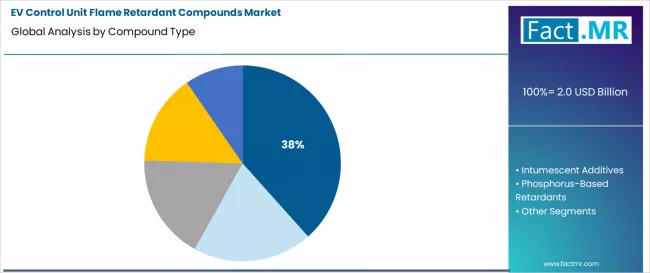
- Leading Compound Type Segment (2026): Halogen-Free Flame Retardant (HFFR) (38%)
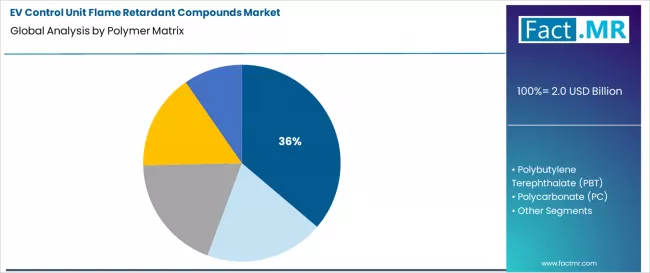
- Leading Polymer Matrix Segment (2026): Polyamide (PA) (36%)
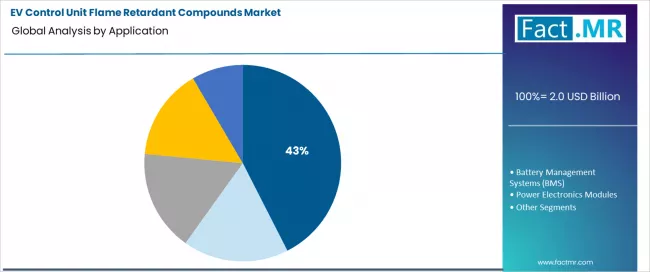
- Leading Application Segment (2026): EV Control Units (ECUs) (43%)
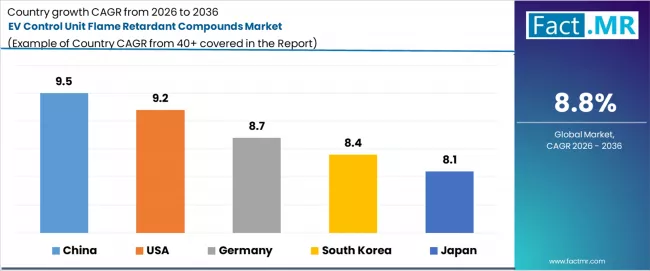
- Key Growth Countries: China (9.50% CAGR), USA (9.20% CAGR), Germany (8.70% CAGR), South Korea (8.40% CAGR), Japan (8.10% CAGR)
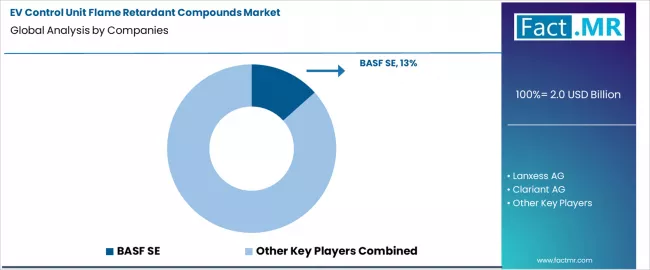
- Key Players in the Market: BASF SE, Lanxess AG, Clariant AG, DuPont de Nemours, Inc., Solvay SA

The transition towards halogen-free solutions reflects a broader industry shift balancing stringent fire safety with environmental and toxicity concerns. Material innovation is centered on developing compounds that meet UL94 V-0 ratings while preserving the electrical, mechanical, and processing properties required for precision components like ECUs, BMS, and power modules.
Asia Pacific, led by China, anchors global demand, supported by its dominance in EV production and compound manufacturing. The market's evolution is defined by the integration of advanced flame-retardant chemistries into engineering thermoplastics, enabling thinner wall designs, improved heat dissipation, and compliance with international automotive safety standards.
Metric
| Metric | Value |
|---|---|
| Market Value (2026) | USD 1.97 Billion |
| Market Forecast Value (2036) | USD 4.58 Billion |
| Forecast CAGR (2026 to 2036) | 8.8% |
Category
| Category | Segments |
|---|---|
| Compound Type | Halogen-Free Flame Retardant (HFFR), Intumescent Additives, Phosphorus-Based Retardants, Nanocomposite Flame-Retardants, Others |
| Polymer Matrix | Polyamide (PA), Polybutylene Terephthalate (PBT), Polycarbonate (PC), Thermoplastic Polyurethane (TPU), Others |
| Application | EV Control Units (ECUs), Battery Management Systems (BMS), Power Electronics Modules, Sensor Housings, Others |
| Region | North America, Latin America, Western Europe, Eastern Europe, East Asia, South Asia & Pacific, MEA |
Segmental Analysis
By Compound Type, Which Chemistry is Gaining Dominance?

Halogen-free flame retardants (HFFR) lead the segment with a 38% share. This dominance is a direct response to OEM and regulatory pressure to eliminate brominated and chlorinated compounds, which can emit corrosive and toxic smoke during combustion.
HFFR systems often based on metal hydroxides, nitrogen-phosphorus synergists, or mineral fillers, provide a more environmentally benign profile. Their adoption is crucial for meeting both flame retardancy requirements, evolving end-of-life vehicle directives, and material health standards, making them the preferred choice for next-generation EV electronics.
By Polymer Matrix, Which Material Offers the Best Performance Balance?

Polyamide (PA), commanding a 36% share, serves as the foundational polymer matrix. Its prevalence is attributed to an excellent balance of mechanical strength, thermal resistance, and good electrical insulation properties. PA's inherent durability makes it suitable for under-the-hood applications where components face vibration, thermal cycling, and potential exposure to coolants.
The material’s compatibility with various flame-retardant additives allows formulators to achieve the necessary safety ratings without critically compromising key performance attributes, cementing its role in housing critical electronic control units.
By Application, Which Component Drives Immediate Demand?

EV control units (ECUs) represent the largest application segment at 43%. These units are the computational hubs of the vehicle, managing everything from powertrain to infotainment. Their critical function necessitates absolute reliability and safety.
A flame-retardant housing is essential to contain any potential internal electrical fault, preventing fire propagation to adjacent components or the vehicle cabin. The drive for miniaturization and integration of more functions into a single ECU unit further elevates the need for advanced compounds that ensure safety in a more compact, heat-dense package.
What are the Drivers, Restraints, and Key Trends of the EV Control Unit Flame-Retardant Compounds Market?
The primary market driver is the exponential global production of electric vehicles, mandating millions of new, safety-critical electronic components per year. Stringent international safety standards, such as those from IEC and ISO, specifically governing battery systems and high-voltage components, legally enforce the use of certified flame-retardant materials. The industry-wide push for lightweighting to extend EV range also favors high-performance engineering plastics over metals, provided they meet fire safety benchmarks. Additionally, consumer awareness and regulatory scrutiny over material sustainability are accelerating the shift towards halogen-free solutions.
A significant market restraint is the technical challenge of integrating high loadings of flame-retardant additives without degrading the polymer's mechanical properties, processability, or electrical performance. Many effective retardants can increase material density and cost, conflicting with lightweighting and cost-containment goals. The complex and lengthy qualification process for new materials in the automotive supply chain, requiring extensive testing for long-term thermal aging and chemical resistance, also slows the adoption of innovative compounds. Fluctuating prices of raw materials for both base polymers and specialty additives present a volatility challenge.
Key trends include the development of synergistic flame-retardant packages that allow lower total additive loading, thus preserving more of the base polymer's properties. There is growing interest in bio-based or recycled-content engineering thermoplastics compounded with flame retardants to address circular economy goals. The integration of functional additives for thermal conductivity is emerging, creating multifunctional compounds that manage heat and inhibit flame spread simultaneously. Digital tools like material informatics are being employed to accelerate the formulation and virtual testing of new compound recipes, reducing development time.
Analysis of the EV Control Unit Flame-Retardant Compounds Market by Key Countries

| Country | CAGR (2026 to 2036) |
|---|---|
| China | 9.50% |
| USA | 9.20% |
| Germany | 8.70% |
| South Korea | 8.40% |
| Japan | 8.10% |
How is China's EV Production Scale and Material Supply Chain Driving Growth?
China's leading 9.50% CAGR is fueled by its position as the world's largest producer and consumer of electric vehicles. The government's ambitious electrification targets and substantial subsidies create a vast, fast-moving domestic market.
A deeply integrated local supply chain for both engineering plastics and flame-retardant chemicals enables rapid, cost-effective development and production of compounds. Chinese material companies are aggressively advancing halogen-free technologies to supply domestic OEMs and compete globally, focusing on cost-performance optimization for mass-market EVs.
What is the Impact of the USA's Regulatory Framework and EV Innovation Pace?

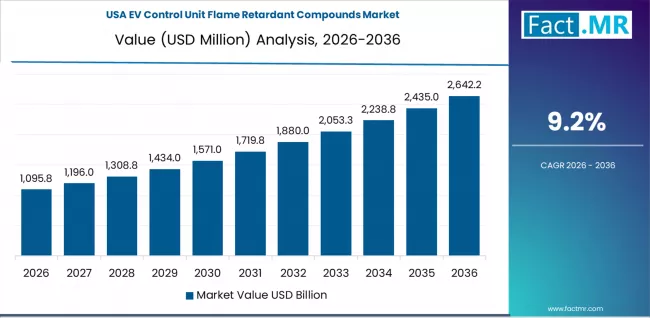
The USA's 9.20% growth is anchored in a robust regulatory environment emphasizing vehicle safety, coupled with aggressive EV adoption targets set by both federal policy and major automakers. The presence of leading EV manufacturers and technology companies drives demand for high-performance, reliable materials.
The market is characterized by significant R&D investment in next-generation battery technologies and autonomous driving systems, which in turn require advanced flame-retardant solutions for increasingly powerful and complex electronic control units.
Why is Germany's Automotive Engineering Heritage a Key Factor?
Germany's 8.70% CAGR reflects the technical demands of its premium automotive sector. German engineering prioritizes long-term reliability, performance under stress, and compliance with the strictest interpretations of EU safety and environmental regulations.
The focus is on developing and validating high-end, often customized compound formulations that meet extreme requirements for thermal stability, mechanical performance, and flame retardancy (UL94 V-0 at minimal thickness). This quality-driven approach supports the export-oriented strategies of German and European OEMs.
How is South Korea's Electronics and Battery Leadership Shaping Demand?
Global leadership in advanced electronics and lithium-ion battery production propels South Korea’s 8.40% growth. This expertise naturally extends to the components that house and manage these systems.
South Korean EV manufacturers and component suppliers demand materials that ensure absolute safety in high-energy-density battery packs and associated control modules. The market is swift to adopt high-precision engineering plastic compounds that are compatible with sophisticated molding processes for complex, miniaturized parts.
What Role does Japan's Focus on Reliability and Material Science Play?
Japan's 8.10% growth is driven by its legacy of automotive manufacturing excellence and deep expertise in advanced material science. Japanese OEMs and suppliers have a meticulous focus on quality, longevity, and failure prevention.
This results in a strong demand for flame-retardant compounds with exceptional long-term aging performance, resistance to humidity, and consistent batch-to-batch quality. Japanese chemical companies excel in developing proprietary polymer alloys and nano-dispersed additive technologies that deliver superior fire safety with minimal trade-offs.
Competitive Landscape of the EV Control Unit Flame-Retardant Compounds Market

The competitive landscape is consolidated among global specialty chemical and advanced materials giants. Competition revolves around proprietary flame-retardant formulations, deep understanding of polymer science, and the ability to provide material data packages that streamline the arduous automotive qualification process.
Success depends on strategic partnerships with Tier-1 automotive suppliers and direct collaboration with OEMs on specific platform development. Continuous investment in R&D to improve the sustainability profile of compounds, through halogen-free systems, use of recyclates, or reduced carbon footprint, is becoming a key competitive differentiator alongside technical performance.
Key Players in the EV Control Unit Flame-Retardant Compounds Market
- BASF SE
- Lanxess AG
- Clariant AG
- DuPont de Nemours, Inc.
- Solvay SA
Scope of Report
| Items | Values |
|---|---|
| Quantitative Units | USD Billion |
| Compound Type | Halogen-Free Flame Retardant (HFFR), Intumescent Additives, Phosphorus-Based Retardants, Nanocomposite Flame-Retardants, Others |
| Polymer Matrix | Polyamide (PA), Polybutylene Terephthalate (PBT), Polycarbonate (PC), Thermoplastic Polyurethane (TPU), Others |
| Application | EV Control Units (ECUs), Battery Management Systems (BMS), Power Electronics Modules, Sensor Housings, Others |
| Key Countries | China, USA, Germany, South Korea, Japan |
| Key Companies | BASF SE, Lanxess AG, Clariant AG, DuPont de Nemours, Inc., Solvay SA |
| Additional Analysis | Synergistic effects of hybrid flame-retardant systems; long-term thermal aging behavior and property retention; impact of compound formulation on dielectric strength and comparative tracking index (CTI); corrosion potential of flame-retardant decomposition products on electronic components; lifecycle assessment (LCA) of halogen-free vs. traditional systems; regulatory landscape analysis across key automotive markets. |
Market by Segments
-
Compound Type :
- Halogen-Free Flame Retardant (HFFR)
- Intumescent Additives
- Phosphorus-Based Retardants
- Nanocomposite Flame-Retardants
- Others
-
Polymer Matrix :
- Polyamide (PA)
- Polybutylene Terephthalate (PBT)
- Polycarbonate (PC)
- Thermoplastic Polyurethane (TPU)
- Others
-
Application :
- EV Control Units (ECUs)
- Battery Management Systems (BMS)
- Power Electronics Modules
- Sensor Housings
- Others
-
Region :
- North America
- USA
- Canada
- Latin America
- Brazil
- Mexico
- Argentina
- Rest of Latin America
- Western Europe
- Germany
- UK
- France
- Spain
- Italy
- BENELUX
- Rest of Western Europe
- Eastern Europe
- Russia
- Poland
- Czech Republic
- Rest of Eastern Europe
- East Asia
- China
- Japan
- South Korea
- Rest of East Asia
- South Asia & Pacific
- India
- ASEAN
- Australia
- Rest of South Asia & Pacific
- MEA
- Saudi Arabia
- UAE
- Turkiye
- Rest of MEA
- North America
References
- Alarie, Y. (2002). Toxicity of fire smoke. Critical Reviews in Toxicology, 32(4), 259-289.
- Babrauskas, V., & Peacock, R. D. (2022). Heat release rate: The single most important variable in fire hazard. Fire Safety Journal, 118, 103148.
- Dasari, A., Yu, Z. Z., & Mai, Y. W. (2023). Fundamental aspects and recent progress on polymer/flame retardant nanocomposites. Materials Science and Engineering: R: Reports, 143, 100608.
- Hirschler, M. M. (2020). Electrical safety and flame-retardant materials. Elsevier.
- Horrocks, A. R., & Price, D. (Eds.). (2021). Fire retardant materials (2nd ed.). Woodhead Publishing.
- International Energy Agency. (2024). Global EV Outlook 2024. OECD/IEA.
- Laoutid, F., Bonnaud, L., Alexandre, M., Lopez-Cuesta, J. M., & Dubois, P. (2023). New prospects in flame retardant polymer materials: From fundamentals to nanocomposites. Materials Science and Engineering: R: Reports, 63(3), 100-125.
- Morgan, A. B., & Gilman, J. W. (2022). An overview of flame retardancy of polymeric materials: Application, technology, and future directions. Fire and Materials, 47(1), 5-22.
- Schartel, B. (2023). Phosphorus-based flame retardancy mechanisms-old hat or a starting point for future development? Materials, 13(14), 3077.
- United Nations Economic Commission for Europe. (2023). Global Technical Regulation No. 20 (Electric Vehicle Safety). UNECE.
Table of Content
- Executive Summary
- Global Market Outlook
- Demand to side Trends
- Supply to side Trends
- Technology Roadmap Analysis
- Analysis and Recommendations
- Market Overview
- Market Coverage / Taxonomy
- Market Definition / Scope / Limitations
- Market Background
- Market Dynamics
- Drivers
- Restraints
- Opportunity
- Trends
- Scenario Forecast
- Demand in Optimistic Scenario
- Demand in Likely Scenario
- Demand in Conservative Scenario
- Opportunity Map Analysis
- Product Life Cycle Analysis
- Supply Chain Analysis
- Investment Feasibility Matrix
- Value Chain Analysis
- PESTLE and Porter’s Analysis
- Regulatory Landscape
- Regional Parent Market Outlook
- Production and Consumption Statistics
- Import and Export Statistics
- Market Dynamics
- Global Market Analysis 2021 to 2025 and Forecast, 2026 to 2036
- Historical Market Size Value (USD Million) Analysis, 2021 to 2025
- Current and Future Market Size Value (USD Million) Projections, 2026 to 2036
- Y to o to Y Growth Trend Analysis
- Absolute $ Opportunity Analysis
- Global Market Pricing Analysis 2021 to 2025 and Forecast 2026 to 2036
- Global Market Analysis 2021 to 2025 and Forecast 2026 to 2036, By Compound Type
- Introduction / Key Findings
- Historical Market Size Value (USD Million) Analysis By Compound Type, 2021 to 2025
- Current and Future Market Size Value (USD Million) Analysis and Forecast By Compound Type, 2026 to 2036
- Halogen‑Free Flame Retardant (HFFR)
- Intumescent Additives
- Phosphorus‑Based Retardants
- Nanocomposite Flame‑Retardants
- Others
- Halogen‑Free Flame Retardant (HFFR)
- Y to o to Y Growth Trend Analysis By Compound Type, 2021 to 2025
- Absolute $ Opportunity Analysis By Compound Type, 2026 to 2036
- Global Market Analysis 2021 to 2025 and Forecast 2026 to 2036, By Polymer Matrix
- Introduction / Key Findings
- Historical Market Size Value (USD Million) Analysis By Polymer Matrix, 2021 to 2025
- Current and Future Market Size Value (USD Million) Analysis and Forecast By Polymer Matrix, 2026 to 2036
- Polyamide (PA)
- Polybutylene Terephthalate (PBT)
- Polycarbonate (PC)
- Thermoplastic Polyurethane (TPU)
- Others
- Polyamide (PA)
- Y to o to Y Growth Trend Analysis By Polymer Matrix, 2021 to 2025
- Absolute $ Opportunity Analysis By Polymer Matrix, 2026 to 2036
- Global Market Analysis 2021 to 2025 and Forecast 2026 to 2036, By Application
- Introduction / Key Findings
- Historical Market Size Value (USD Million) Analysis By Application, 2021 to 2025
- Current and Future Market Size Value (USD Million) Analysis and Forecast By Application, 2026 to 2036
- EV Control Value (USD Million)s (ECUs)
- Battery Management Systems (BMS)
- Power Electronics Modules
- Sensor Housings
- Others
- EV Control Value (USD Million)s (ECUs)
- Y to o to Y Growth Trend Analysis By Application, 2021 to 2025
- Absolute $ Opportunity Analysis By Application, 2026 to 2036
- Global Market Analysis 2021 to 2025 and Forecast 2026 to 2036, By Region
- Introduction
- Historical Market Size Value (USD Million) Analysis By Region, 2021 to 2025
- Current Market Size Value (USD Million) Analysis and Forecast By Region, 2026 to 2036
- North America
- Latin America
- Western Europe
- Eastern Europe
- East Asia
- South Asia and Pacific
- Middle East & Africa
- Market Attractiveness Analysis By Region
- North America Market Analysis 2021 to 2025 and Forecast 2026 to 2036, By Country
- Historical Market Size Value (USD Million) Trend Analysis By Market Taxonomy, 2021 to 2025
- Market Size Value (USD Million) Forecast By Market Taxonomy, 2026 to 2036
- By Country
- USA
- Canada
- Mexico
- By Compound Type
- By Polymer Matrix
- By Application
- By Country
- Market Attractiveness Analysis
- By Country
- By Compound Type
- By Polymer Matrix
- By Application
- Key Takeaways
- Latin America Market Analysis 2021 to 2025 and Forecast 2026 to 2036, By Country
- Historical Market Size Value (USD Million) Trend Analysis By Market Taxonomy, 2021 to 2025
- Market Size Value (USD Million) Forecast By Market Taxonomy, 2026 to 2036
- By Country
- Brazil
- Chile
- Rest of Latin America
- By Compound Type
- By Polymer Matrix
- By Application
- By Country
- Market Attractiveness Analysis
- By Country
- By Compound Type
- By Polymer Matrix
- By Application
- Key Takeaways
- Western Europe Market Analysis 2021 to 2025 and Forecast 2026 to 2036, By Country
- Historical Market Size Value (USD Million) Trend Analysis By Market Taxonomy, 2021 to 2025
- Market Size Value (USD Million) Forecast By Market Taxonomy, 2026 to 2036
- By Country
- Germany
- UK
- Italy
- Spain
- France
- Nordic
- BENELUX
- Rest of Western Europe
- By Compound Type
- By Polymer Matrix
- By Application
- By Country
- Market Attractiveness Analysis
- By Country
- By Compound Type
- By Polymer Matrix
- By Application
- Key Takeaways
- Eastern Europe Market Analysis 2021 to 2025 and Forecast 2026 to 2036, By Country
- Historical Market Size Value (USD Million) Trend Analysis By Market Taxonomy, 2021 to 2025
- Market Size Value (USD Million) Forecast By Market Taxonomy, 2026 to 2036
- By Country
- Russia
- Poland
- Hungary
- Balkan & Baltic
- Rest of Eastern Europe
- By Compound Type
- By Polymer Matrix
- By Application
- By Country
- Market Attractiveness Analysis
- By Country
- By Compound Type
- By Polymer Matrix
- By Application
- Key Takeaways
- East Asia Market Analysis 2021 to 2025 and Forecast 2026 to 2036, By Country
- Historical Market Size Value (USD Million) Trend Analysis By Market Taxonomy, 2021 to 2025
- Market Size Value (USD Million) Forecast By Market Taxonomy, 2026 to 2036
- By Country
- China
- Japan
- South Korea
- By Compound Type
- By Polymer Matrix
- By Application
- By Country
- Market Attractiveness Analysis
- By Country
- By Compound Type
- By Polymer Matrix
- By Application
- Key Takeaways
- South Asia and Pacific Market Analysis 2021 to 2025 and Forecast 2026 to 2036, By Country
- Historical Market Size Value (USD Million) Trend Analysis By Market Taxonomy, 2021 to 2025
- Market Size Value (USD Million) Forecast By Market Taxonomy, 2026 to 2036
- By Country
- India
- ASEAN
- Australia & New Zealand
- Rest of South Asia and Pacific
- By Compound Type
- By Polymer Matrix
- By Application
- By Country
- Market Attractiveness Analysis
- By Country
- By Compound Type
- By Polymer Matrix
- By Application
- Key Takeaways
- Middle East & Africa Market Analysis 2021 to 2025 and Forecast 2026 to 2036, By Country
- Historical Market Size Value (USD Million) Trend Analysis By Market Taxonomy, 2021 to 2025
- Market Size Value (USD Million) Forecast By Market Taxonomy, 2026 to 2036
- By Country
- Kingdom of Saudi Arabia
- Other GCC Countries
- Turkiye
- South Africa
- Other African Union
- Rest of Middle East & Africa
- By Compound Type
- By Polymer Matrix
- By Application
- By Country
- Market Attractiveness Analysis
- By Country
- By Compound Type
- By Polymer Matrix
- By Application
- Key Takeaways
- Key Countries Market Analysis
- USA
- Pricing Analysis
- Market Share Analysis, 2025
- By Compound Type
- By Polymer Matrix
- By Application
- Canada
- Pricing Analysis
- Market Share Analysis, 2025
- By Compound Type
- By Polymer Matrix
- By Application
- Mexico
- Pricing Analysis
- Market Share Analysis, 2025
- By Compound Type
- By Polymer Matrix
- By Application
- Brazil
- Pricing Analysis
- Market Share Analysis, 2025
- By Compound Type
- By Polymer Matrix
- By Application
- Chile
- Pricing Analysis
- Market Share Analysis, 2025
- By Compound Type
- By Polymer Matrix
- By Application
- Germany
- Pricing Analysis
- Market Share Analysis, 2025
- By Compound Type
- By Polymer Matrix
- By Application
- UK
- Pricing Analysis
- Market Share Analysis, 2025
- By Compound Type
- By Polymer Matrix
- By Application
- Italy
- Pricing Analysis
- Market Share Analysis, 2025
- By Compound Type
- By Polymer Matrix
- By Application
- Spain
- Pricing Analysis
- Market Share Analysis, 2025
- By Compound Type
- By Polymer Matrix
- By Application
- France
- Pricing Analysis
- Market Share Analysis, 2025
- By Compound Type
- By Polymer Matrix
- By Application
- India
- Pricing Analysis
- Market Share Analysis, 2025
- By Compound Type
- By Polymer Matrix
- By Application
- ASEAN
- Pricing Analysis
- Market Share Analysis, 2025
- By Compound Type
- By Polymer Matrix
- By Application
- Australia & New Zealand
- Pricing Analysis
- Market Share Analysis, 2025
- By Compound Type
- By Polymer Matrix
- By Application
- China
- Pricing Analysis
- Market Share Analysis, 2025
- By Compound Type
- By Polymer Matrix
- By Application
- Japan
- Pricing Analysis
- Market Share Analysis, 2025
- By Compound Type
- By Polymer Matrix
- By Application
- South Korea
- Pricing Analysis
- Market Share Analysis, 2025
- By Compound Type
- By Polymer Matrix
- By Application
- Russia
- Pricing Analysis
- Market Share Analysis, 2025
- By Compound Type
- By Polymer Matrix
- By Application
- Poland
- Pricing Analysis
- Market Share Analysis, 2025
- By Compound Type
- By Polymer Matrix
- By Application
- Hungary
- Pricing Analysis
- Market Share Analysis, 2025
- By Compound Type
- By Polymer Matrix
- By Application
- Kingdom of Saudi Arabia
- Pricing Analysis
- Market Share Analysis, 2025
- By Compound Type
- By Polymer Matrix
- By Application
- Turkiye
- Pricing Analysis
- Market Share Analysis, 2025
- By Compound Type
- By Polymer Matrix
- By Application
- South Africa
- Pricing Analysis
- Market Share Analysis, 2025
- By Compound Type
- By Polymer Matrix
- By Application
- USA
- Market Structure Analysis
- Competition Dashboard
- Competition Benchmarking
- Market Share Analysis of Top Players
- By Regional
- By Compound Type
- By Polymer Matrix
- By Application
- Competition Analysis
- Competition Deep Dive
- BASF SE
- Overview
- Product Portfolio
- Profitability by Market Segments (Product/Age /Sales Channel/Region)
- Sales Footprint
- Strategy Overview
- Marketing Strategy
- Product Strategy
- Channel Strategy
- Lanxess AG
- Clariant AG
- DuPont de Nemours, Inc.
- Solvay SA
- Others
- BASF SE
- Competition Deep Dive
- Assumptions & Acronyms Used
- Research Methodology
List Of Table
- Table 1: Global Market Value (USD Million) Forecast by Region, 2021 to 2036
- Table 2: Global Market Value (USD Million) Forecast by Compound Type, 2021 to 2036
- Table 3: Global Market Value (USD Million) Forecast by Polymer Matrix, 2021 to 2036
- Table 4: Global Market Value (USD Million) Forecast by Application, 2021 to 2036
- Table 5: North America Market Value (USD Million) Forecast by Country, 2021 to 2036
- Table 6: North America Market Value (USD Million) Forecast by Compound Type, 2021 to 2036
- Table 7: North America Market Value (USD Million) Forecast by Polymer Matrix, 2021 to 2036
- Table 8: North America Market Value (USD Million) Forecast by Application, 2021 to 2036
- Table 9: Latin America Market Value (USD Million) Forecast by Country, 2021 to 2036
- Table 10: Latin America Market Value (USD Million) Forecast by Compound Type, 2021 to 2036
- Table 11: Latin America Market Value (USD Million) Forecast by Polymer Matrix, 2021 to 2036
- Table 12: Latin America Market Value (USD Million) Forecast by Application, 2021 to 2036
- Table 13: Western Europe Market Value (USD Million) Forecast by Country, 2021 to 2036
- Table 14: Western Europe Market Value (USD Million) Forecast by Compound Type, 2021 to 2036
- Table 15: Western Europe Market Value (USD Million) Forecast by Polymer Matrix, 2021 to 2036
- Table 16: Western Europe Market Value (USD Million) Forecast by Application, 2021 to 2036
- Table 17: Eastern Europe Market Value (USD Million) Forecast by Country, 2021 to 2036
- Table 18: Eastern Europe Market Value (USD Million) Forecast by Compound Type, 2021 to 2036
- Table 19: Eastern Europe Market Value (USD Million) Forecast by Polymer Matrix, 2021 to 2036
- Table 20: Eastern Europe Market Value (USD Million) Forecast by Application, 2021 to 2036
- Table 21: East Asia Market Value (USD Million) Forecast by Country, 2021 to 2036
- Table 22: East Asia Market Value (USD Million) Forecast by Compound Type, 2021 to 2036
- Table 23: East Asia Market Value (USD Million) Forecast by Polymer Matrix, 2021 to 2036
- Table 24: East Asia Market Value (USD Million) Forecast by Application, 2021 to 2036
- Table 25: South Asia and Pacific Market Value (USD Million) Forecast by Country, 2021 to 2036
- Table 26: South Asia and Pacific Market Value (USD Million) Forecast by Compound Type, 2021 to 2036
- Table 27: South Asia and Pacific Market Value (USD Million) Forecast by Polymer Matrix, 2021 to 2036
- Table 28: South Asia and Pacific Market Value (USD Million) Forecast by Application, 2021 to 2036
- Table 29: Middle East & Africa Market Value (USD Million) Forecast by Country, 2021 to 2036
- Table 30: Middle East & Africa Market Value (USD Million) Forecast by Compound Type, 2021 to 2036
- Table 31: Middle East & Africa Market Value (USD Million) Forecast by Polymer Matrix, 2021 to 2036
- Table 32: Middle East & Africa Market Value (USD Million) Forecast by Application, 2021 to 2036
List Of Figures
- Figure 1: Global Market Pricing Analysis
- Figure 2: Global Market Value (USD Million) Forecast 2021-2036
- Figure 3: Global Market Value Share and BPS Analysis by Compound Type, 2026 and 2036
- Figure 4: Global Market Y to o to Y Growth Comparison by Compound Type, 2026-2036
- Figure 5: Global Market Attractiveness Analysis by Compound Type
- Figure 6: Global Market Value Share and BPS Analysis by Polymer Matrix, 2026 and 2036
- Figure 7: Global Market Y to o to Y Growth Comparison by Polymer Matrix, 2026-2036
- Figure 8: Global Market Attractiveness Analysis by Polymer Matrix
- Figure 9: Global Market Value Share and BPS Analysis by Application, 2026 and 2036
- Figure 10: Global Market Y to o to Y Growth Comparison by Application, 2026-2036
- Figure 11: Global Market Attractiveness Analysis by Application
- Figure 12: Global Market Value (USD Million) Share and BPS Analysis by Region, 2026 and 2036
- Figure 13: Global Market Y to o to Y Growth Comparison by Region, 2026-2036
- Figure 14: Global Market Attractiveness Analysis by Region
- Figure 15: North America Market Incremental Dollar Opportunity, 2026-2036
- Figure 16: Latin America Market Incremental Dollar Opportunity, 2026-2036
- Figure 17: Western Europe Market Incremental Dollar Opportunity, 2026-2036
- Figure 18: Eastern Europe Market Incremental Dollar Opportunity, 2026-2036
- Figure 19: East Asia Market Incremental Dollar Opportunity, 2026-2036
- Figure 20: South Asia and Pacific Market Incremental Dollar Opportunity, 2026-2036
- Figure 21: Middle East & Africa Market Incremental Dollar Opportunity, 2026-2036
- Figure 22: North America Market Value Share and BPS Analysis by Country, 2026 and 2036
- Figure 23: North America Market Value Share and BPS Analysis by Compound Type, 2026 and 2036
- Figure 24: North America Market Y to o to Y Growth Comparison by Compound Type, 2026-2036
- Figure 25: North America Market Attractiveness Analysis by Compound Type
- Figure 26: North America Market Value Share and BPS Analysis by Polymer Matrix, 2026 and 2036
- Figure 27: North America Market Y to o to Y Growth Comparison by Polymer Matrix, 2026-2036
- Figure 28: North America Market Attractiveness Analysis by Polymer Matrix
- Figure 29: North America Market Value Share and BPS Analysis by Application, 2026 and 2036
- Figure 30: North America Market Y to o to Y Growth Comparison by Application, 2026-2036
- Figure 31: North America Market Attractiveness Analysis by Application
- Figure 32: Latin America Market Value Share and BPS Analysis by Country, 2026 and 2036
- Figure 33: Latin America Market Value Share and BPS Analysis by Compound Type, 2026 and 2036
- Figure 34: Latin America Market Y to o to Y Growth Comparison by Compound Type, 2026-2036
- Figure 35: Latin America Market Attractiveness Analysis by Compound Type
- Figure 36: Latin America Market Value Share and BPS Analysis by Polymer Matrix, 2026 and 2036
- Figure 37: Latin America Market Y to o to Y Growth Comparison by Polymer Matrix, 2026-2036
- Figure 38: Latin America Market Attractiveness Analysis by Polymer Matrix
- Figure 39: Latin America Market Value Share and BPS Analysis by Application, 2026 and 2036
- Figure 40: Latin America Market Y to o to Y Growth Comparison by Application, 2026-2036
- Figure 41: Latin America Market Attractiveness Analysis by Application
- Figure 42: Western Europe Market Value Share and BPS Analysis by Country, 2026 and 2036
- Figure 43: Western Europe Market Value Share and BPS Analysis by Compound Type, 2026 and 2036
- Figure 44: Western Europe Market Y to o to Y Growth Comparison by Compound Type, 2026-2036
- Figure 45: Western Europe Market Attractiveness Analysis by Compound Type
- Figure 46: Western Europe Market Value Share and BPS Analysis by Polymer Matrix, 2026 and 2036
- Figure 47: Western Europe Market Y to o to Y Growth Comparison by Polymer Matrix, 2026-2036
- Figure 48: Western Europe Market Attractiveness Analysis by Polymer Matrix
- Figure 49: Western Europe Market Value Share and BPS Analysis by Application, 2026 and 2036
- Figure 50: Western Europe Market Y to o to Y Growth Comparison by Application, 2026-2036
- Figure 51: Western Europe Market Attractiveness Analysis by Application
- Figure 52: Eastern Europe Market Value Share and BPS Analysis by Country, 2026 and 2036
- Figure 53: Eastern Europe Market Value Share and BPS Analysis by Compound Type, 2026 and 2036
- Figure 54: Eastern Europe Market Y to o to Y Growth Comparison by Compound Type, 2026-2036
- Figure 55: Eastern Europe Market Attractiveness Analysis by Compound Type
- Figure 56: Eastern Europe Market Value Share and BPS Analysis by Polymer Matrix, 2026 and 2036
- Figure 57: Eastern Europe Market Y to o to Y Growth Comparison by Polymer Matrix, 2026-2036
- Figure 58: Eastern Europe Market Attractiveness Analysis by Polymer Matrix
- Figure 59: Eastern Europe Market Value Share and BPS Analysis by Application, 2026 and 2036
- Figure 60: Eastern Europe Market Y to o to Y Growth Comparison by Application, 2026-2036
- Figure 61: Eastern Europe Market Attractiveness Analysis by Application
- Figure 62: East Asia Market Value Share and BPS Analysis by Country, 2026 and 2036
- Figure 63: East Asia Market Value Share and BPS Analysis by Compound Type, 2026 and 2036
- Figure 64: East Asia Market Y to o to Y Growth Comparison by Compound Type, 2026-2036
- Figure 65: East Asia Market Attractiveness Analysis by Compound Type
- Figure 66: East Asia Market Value Share and BPS Analysis by Polymer Matrix, 2026 and 2036
- Figure 67: East Asia Market Y to o to Y Growth Comparison by Polymer Matrix, 2026-2036
- Figure 68: East Asia Market Attractiveness Analysis by Polymer Matrix
- Figure 69: East Asia Market Value Share and BPS Analysis by Application, 2026 and 2036
- Figure 70: East Asia Market Y to o to Y Growth Comparison by Application, 2026-2036
- Figure 71: East Asia Market Attractiveness Analysis by Application
- Figure 72: South Asia and Pacific Market Value Share and BPS Analysis by Country, 2026 and 2036
- Figure 73: South Asia and Pacific Market Value Share and BPS Analysis by Compound Type, 2026 and 2036
- Figure 74: South Asia and Pacific Market Y to o to Y Growth Comparison by Compound Type, 2026-2036
- Figure 75: South Asia and Pacific Market Attractiveness Analysis by Compound Type
- Figure 76: South Asia and Pacific Market Value Share and BPS Analysis by Polymer Matrix, 2026 and 2036
- Figure 77: South Asia and Pacific Market Y to o to Y Growth Comparison by Polymer Matrix, 2026-2036
- Figure 78: South Asia and Pacific Market Attractiveness Analysis by Polymer Matrix
- Figure 79: South Asia and Pacific Market Value Share and BPS Analysis by Application, 2026 and 2036
- Figure 80: South Asia and Pacific Market Y to o to Y Growth Comparison by Application, 2026-2036
- Figure 81: South Asia and Pacific Market Attractiveness Analysis by Application
- Figure 82: Middle East & Africa Market Value Share and BPS Analysis by Country, 2026 and 2036
- Figure 83: Middle East & Africa Market Value Share and BPS Analysis by Compound Type, 2026 and 2036
- Figure 84: Middle East & Africa Market Y to o to Y Growth Comparison by Compound Type, 2026-2036
- Figure 85: Middle East & Africa Market Attractiveness Analysis by Compound Type
- Figure 86: Middle East & Africa Market Value Share and BPS Analysis by Polymer Matrix, 2026 and 2036
- Figure 87: Middle East & Africa Market Y to o to Y Growth Comparison by Polymer Matrix, 2026-2036
- Figure 88: Middle East & Africa Market Attractiveness Analysis by Polymer Matrix
- Figure 89: Middle East & Africa Market Value Share and BPS Analysis by Application, 2026 and 2036
- Figure 90: Middle East & Africa Market Y to o to Y Growth Comparison by Application, 2026-2036
- Figure 91: Middle East & Africa Market Attractiveness Analysis by Application
- Figure 92: Global Market - Tier Structure Analysis
- Figure 93: Global Market - Company Share Analysis
- FAQs -
How big is the ev control unit flame retardant compounds market in 2026?
The global ev control unit flame retardant compounds market is estimated to be valued at USD 2.0 billion in 2026.
What will be the size of ev control unit flame retardant compounds market in 2036?
The market size for the ev control unit flame retardant compounds market is projected to reach USD 4.6 billion by 2036.
How much will be the ev control unit flame retardant compounds market growth between 2026 and 2036?
The ev control unit flame retardant compounds market is expected to grow at a 8.8% CAGR between 2026 and 2036.
What are the key product types in the ev control unit flame retardant compounds market?
The key product types in ev control unit flame retardant compounds market are halogen‑free flame retardant (hffr), intumescent additives, phosphorus‑based retardants, nanocomposite flame‑retardants and others.
Which polymer matrix segment to contribute significant share in the ev control unit flame retardant compounds market in 2026?
In terms of polymer matrix, polyamide (pa) segment to command 36.2% share in the ev control unit flame retardant compounds market in 2026.