Gluten-Free Food Market (2026 - 2036)

Gluten-Free Food Market is segmented by Product Type (Bakery Products, Infant Formula, Pasta, Dairy Products, Ready Meals, and Other Product Types), Form (Solid Form, Liquid Form), Source (Plant Sources, Animal Sources), and Region. Forecast for 2026 to 2036.

Core Findings

    Gluten-Free Food Market Forecast 2026 to 2036

    In 2025, the gluten-free food market was valued at USD 6.1 billion. Based on Fact MR's analysis, demand for gluten-free food is estimated to grow to USD 6.5 billion in 2026 and USD 13 billion by 2036. FMR projects a CAGR of 7% during the forecast period.

    The absolute dollar growth from 2026 to 2036 is USD 6.5 billion. This growth is driven by the increasing awareness of gluten intolerance and celiac disease, as well as the rising demand for gluten-free products among health-conscious consumers. The market benefits from the expanding availability of gluten-free alternatives across various food categories, including snacks, beverages, and baked goods. However, challenges such as high product costs and limited availability in some regions could hinder faster adoption.

    As Brian Rudolph, Chief Executive Officer and Co-Founder of Banza, noted regarding the expansion and consumer demand for gluten-free food products, “Our new brown rice pasta holds up the next day, even in soup.”

    India leads with a CAGR of 8.4%, driven by growing health awareness and increasing demand for gluten-free products in both urban and rural areas. China follows with a 7.1% CAGR, supported by rising health consciousness and the expanding availability of gluten-free options. Germany grows at 6.6%, benefiting from strong consumer interest in gluten-free foods and increasing demand from people with dietary restrictions. Japan grows at 6.4%, fueled by rising awareness of gluten-free diets and a strong food innovation culture. The USA shows growth at 5.2%, reflecting a mature market but consistent demand for gluten-free food products.
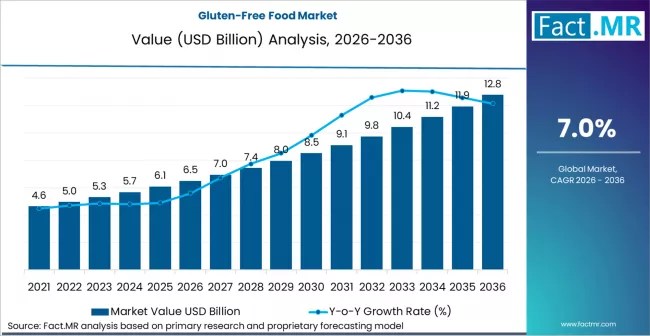
    Gluten Free Food Market Market Value Analysis

    Gluten-Free Food Market

    Metric Value
    Estimated Value in (2026E) USD 6.5 billion
    Forecast Value in (2036F) USD 13 billion
    Forecast CAGR (2026 to 2036) 7%

    Gluten-Free Food Market Definition

    The gluten-free food market involves the production and sale of foods made without gluten‑containing ingredients (such as wheat, barley, rye) to meet dietary needs and preferences related to health conditions or lifestyle choices.

    Market Inclusions

    This report covers global and regional market sizes for gluten-free food products across a defined forecast period, including key categories (bakery, snacks, pasta, cereals), distribution channels (supermarkets, online, specialty stores), and consumer segments.

    Market Exclusions

    The scope excludes gluten‑containing foods and ingredients, related dietary supplements not formulated as food products, and products marketed for other dietary restrictions (e.g., dairy‑free) unless also certified gluten-free.

    Research Methodology

    • Primary Research: Interviews were conducted with food manufacturers, nutrition experts, and retail buyers.
    • Desk Research: Data was sourced from industry reports, consumer surveys, and trade association publications.
    • Market‑Sizing and Forecasting: A hybrid model combining top‑down food consumption trends with bottom‑up product and sales data was used.
    • Data Validation and Update Cycle: Findings were validated through expert review and aligned with recent production and trade figures.

    Summary of the Gluten-Free Food Market

    • Market Definition
      • The gluten-free food market involves the production and sale of foods made without gluten-containing ingredients (such as wheat, barley, and rye) to meet dietary needs and preferences related to health conditions like celiac disease or lifestyle choices.
    • Demand Drivers
      • Increased Awareness of Gluten Sensitivity and Celiac Disease: Rising awareness of gluten intolerance and celiac disease has led to a growing demand for gluten-free food products among affected consumers.
      • Health and Wellness Trends: As more people adopt gluten-free diets for health or lifestyle reasons, the demand for gluten-free alternatives continues to rise.
      • Wider Product Availability: The expanding availability of gluten-free options across various food categories, including snacks, pasta, and bakery products, has further supported the market growth.
    • Key Segments Analyzed
      • Form: Solid form products are expected to capture 80% of the market share by 2026, driven by the popularity of gluten-free bread, snacks, pasta, and baked goods.
      • Source: Plant-based sources are projected to dominate, accounting for 75% of the market share by 2026, as plant-based ingredients like rice, corn, and quinoa are cost-effective and versatile for gluten-free products.
    • Analyst Opinion at Fact MR
      • “The gluten-free food market is on a strong growth trajectory, driven by rising awareness of gluten-related disorders and increasing consumer interest in healthier diets. The growing availability of gluten-free products in mainstream retail outlets and foodservice channels is expected to support this continued growth.” - Shambhu Nath Jha, Principal Consultant at Fact MR.
    • Strategic Implications/Executive Takeaways
      • Focus on Product Innovation: Companies should prioritize innovations in gluten-free products that meet evolving consumer preferences for taste, texture, and nutritional value.
      • Increase Retail Distribution: Expanding the availability of gluten-free options in supermarkets and online channels will help tap into growing demand, particularly in emerging markets.
      • Target Health-Conscious Consumers: As more consumers embrace gluten-free lifestyles, targeting health-conscious demographics with clean-label, gluten-free products will offer significant growth opportunities.
    • Methodology
      • Primary Research: Interviews with food manufacturers, nutrition experts, and retail buyers.
      • Desk Research: Data sourced from industry reports, consumer surveys, and trade association publications.

    Segmental Analysis

    Gluten-Free Food Market Analysis by Form
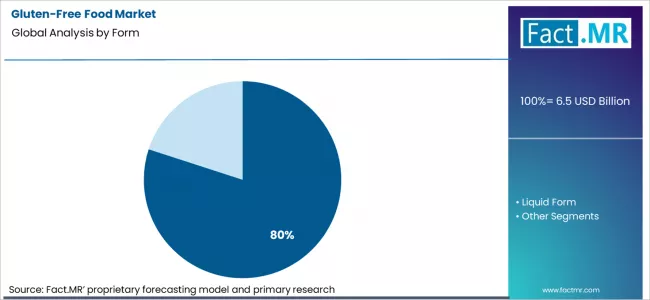
    Gluten Free Food Market Analysis By Form

    • Market Overview: Solid form gluten-free foods are projected to capture 80% of the market share by 2026. Solid foods, such as bread, pasta, snacks, and baked goods, dominate the gluten-free food market due to their wide consumer appeal and convenience. This form includes both pre-packaged and freshly prepared gluten-free products.
    • Demand Drivers:
      • Convenience and Familiarity: Solid form gluten-free foods, particularly snacks, bread, and baked goods, are in high demand due to their convenience, taste, and ease of integration into daily diets. Consumers with gluten sensitivities or those choosing gluten-free lifestyles prefer these ready-to-eat options.
      • Increased Awareness of Celiac Disease and Gluten Sensitivity: The rising awareness of celiac disease and gluten intolerance has led to an increase in the demand for solid gluten-free foods that are both healthy and widely available in supermarkets and restaurants.
      • Variety of Options Available: The broad range of solid food options available in gluten-free formulations, including popular items such as pizza, crackers, and cakes, drives growth in the solid form segment.

    Gluten-Free Food Market Analysis by Source
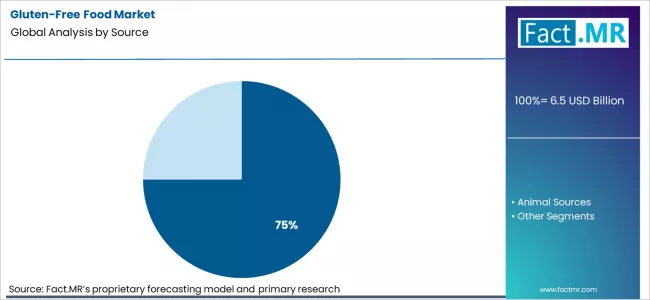
    Gluten Free Food Market Analysis By Source

    • Market Overview: Plant sources are expected to account for 75% of the market share by 2026. Plant-based ingredients, such as rice, corn, quinoa, and oats, are the primary sources for gluten-free products, making them essential in the formulation of gluten-free food options across multiple categories.
    • Demand Drivers:
      • High Availability and Versatility: Plant-based ingredients are abundant, cost-effective, and versatile, making them the preferred choice for gluten-free food manufacturers. These ingredients can be used in a wide range of food products, including baked goods, cereals, snacks, and pasta.
      • Health and Sustainability Trends: As more consumers adopt plant-based diets for health or environmental reasons, the demand for plant-sourced gluten-free foods is growing. Plant-based gluten-free ingredients are also seen as more sustainable compared to animal-derived options.
      • Nutritional Benefits: Many plant sources used in gluten-free foods offer added health benefits, such as higher fiber content, protein, and essential vitamins, which increases their appeal to health-conscious consumers, particularly in the growing gluten-free market.

    Gluten-Free Food Market Drivers, Restraints, and Opportunities

    FMR analysts observe that the gluten-free food market is a growth‑aligned segment driven by rising clinical diagnosis of celiac disease, non‑celiac gluten sensitivity, and broader consumer perceptions of health benefits. Historically confined to specialty health‑food channels, gluten-free products are now mainstream across retail and foodservice, reflecting structural demand from both medically‑required and lifestyle consumers. The 2026 valuation reflects expanding distribution, innovation in product quality and taste, and ongoing reformulation of staples like bread, pasta, and snacks to meet clean‑label expectations.

    While demand for basic gluten-free alternatives remains large, premium and fortified offerings with improved texture, nutrition, and sensory appeal are gaining share. These higher‑value products command elevated prices, contributing to net market value growth even as overall uptake becomes normative across demographic segments.

    • Health‑Driven Demand: Rising diagnosis of celiac disease and gluten sensitivity increases demand for certified gluten-free foods that replace traditional wheat‑based products.
    • Dietary and Lifestyle Trends: Broader consumer interest in digestive health and perceived wellness benefits drives adoption beyond clinical necessity.
    • Regional Consumption Patterns: North America and Europe exhibit stronger gluten-free penetration due to awareness and labeling regulations, while growth in Asia‑Pacific is fueled by expanding retail and health education.

    Regional Analysis

    The market analysis covers key global regions, including South Asia, East Asia, Western Europe, North America, and India. It is segmented geographically, with specific market dynamics for each region. The full report provides a detailed market attractiveness analysis.
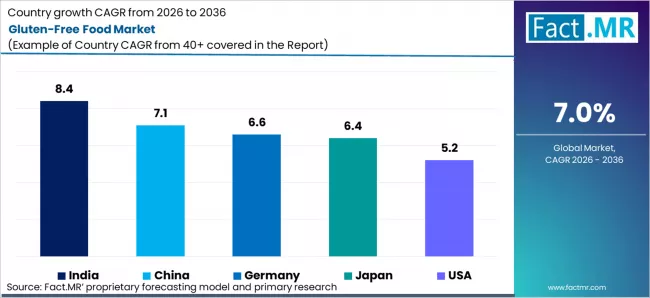
    Gluten Free Food Market Cagr Analysis By Country

    Country CAGR (%)
    India 8.4%
    China 7.1%
    Germany 6.6%
    Japan 6.4%
    USA 5.2%

    Source: Fact MR (FMR) analysis, based on proprietary forecasting model and primary research.

    South Asia:

    In South Asia, India leads the demand for gluten-free food, driven by increasing awareness of gluten intolerance and rising disposable incomes.

    • India: Demand for gluten-free food in India is projected to rise at 8.4% CAGR through 2036. India’s growing awareness about gluten sensitivity and increasing demand for specialized food products contribute to market growth in this segment.

    East Asia:

    In East Asia, both China and Japan are experiencing strong demand for gluten-free food, supported by rising health consciousness and the growing availability of gluten-free options.

    • China: Demand for gluten-free food in China is projected to rise at 7.1% CAGR through 2036. China’s increasing focus on healthy eating and expanding range of gluten-free products contribute to steady growth in the market.
    • Japan: Demand for gluten-free food in Japan is projected to rise at 6.4% CAGR through 2036. Japan’s awareness of food allergies and growing interest in health-conscious food choices continue to fuel market growth.

    Western Europe:

    In Western Europe, Germany is a key market for gluten-free food, driven by the increasing demand for healthier, allergy-free food products and an expanding retail sector for gluten-free items.

    • Germany: Demand for gluten-free food in Germany is projected to rise at 6.6% CAGR through 2036. Germany’s well-established health and wellness trends and growing consumer preference for gluten-free products continue to drive demand.

    North America:
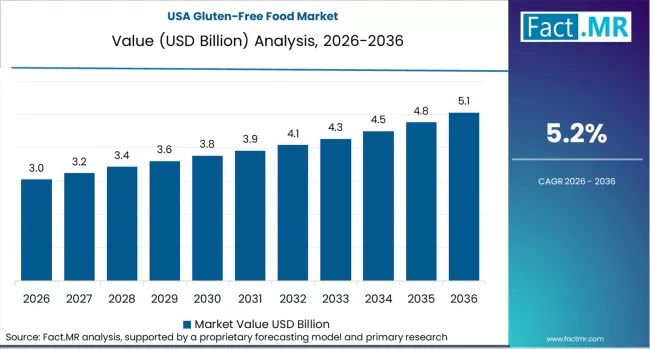
    Gluten Free Food Market Country Value Analysis

    In North America, the USA remains a dominant market for gluten-free food, driven by the large consumer base with gluten intolerance and rising popularity of gluten-free diets.

    • USA: Demand for gluten-free food in the U.S. is projected to rise at 5.2% CAGR through 2036. The USA’s high prevalence of gluten sensitivity and increased availability of gluten-free food products contribute to steady market growth.

    Fact MR's analysis of the gluten-free food market in South Asia, East Asia, Western Europe, North America, and India consists of country-wise assessments that include India, China, Germany, Japan, and the USA. Readers can find detailed trends, regulatory updates, and company-specific investments shaping the market’s growth in these countries.

    How Are Key Players Competing in the Gluten-Free Food Market?
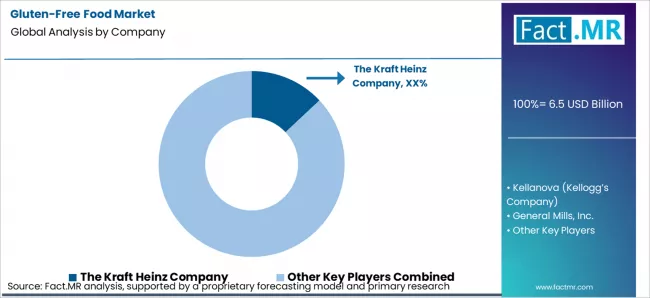
    Gluten Free Food Market Analysis By Company

    In the gluten-free food market, The Kraft Heinz Company and General Mills, Inc. are prominent players, offering a wide variety of gluten-free products across categories. Kellanova (formerly Kellogg’s) and Conagra Brands, Inc. are increasing their market share by expanding gluten-free offerings, targeting health-conscious consumers. The Hain Celestial Group, Inc. and Hero AG focus on organic and health-driven gluten-free options, capitalizing on the trend of clean-label foods. Barilla G.E. Fratelli S.p.A. is strengthening its presence with gluten-free pasta options, while Freedom Foods Group Limited and Raisio PLC are focusing on niche gluten-free products for specific dietary needs. Enjoy Life Foods, now under Mondelēz International, is leveraging its allergen-free and gluten-free positioning to capture a growing segment of consumers.

    Recent Industry Developments

    • FDA Request for Information on Gluten Labeling: On January 21, 2026, the U.S. FDA issued a formal Request for Information (RFI) to evaluate whether to require mandatory disclosure of barley, rye, and oats on packaged food labels, moving beyond the current voluntary "gluten-free" claim system.
    • Nestlé Integration of Health Science and Nutrition: In February 2026, Nestlé announced the integration of its Nestlé Health Science unit and its core Nutrition business into a single global powerhouse to drive synergies in specialized dietary categories, including gluten-free products.
    • Dr. Schär $28 Million North American Expansion: In 2025, Dr. Schär completed a $28 million expansion of its Swedesboro, New Jersey, plant to increase domestic production of gluten-free baked goods and consolidate its R&D, regulatory, and logistics operations into a single U.S. hub.

    Key Players of the Gluten-Free Food Market

    • The Kraft Heinz Company
    • Kellanova (Kellogg’s Company)
    • General Mills, Inc.
    • The Hain Celestial Group, Inc.
    • Conagra Brands, Inc.
    • Hero AG
    • Barilla G.E. Fratelli S.p.A.
    • Freedom Foods Group Limited
    • Raisio PLC
    • Enjoy Life Foods (part of Mondelēz International)

    Report Scope

    Metric Value
    Quantitative Units USD 6.5 billion (2026) to USD 13 billion (2036), at a CAGR of 7%
    Market Definition The gluten-free food market includes products that are free from gluten, catering to consumers with celiac disease, gluten sensitivities, and those opting for a gluten-free lifestyle.
    By Product Type Bakery Products, Infant Formula, Pasta, Dairy Products, Ready Meals, Other Product Types
    By Form Solid Form, Liquid Form
    By Source Plant Sources, Animal Sources
    Regions Covered North America, Latin America, Europe, East Asia, South Asia, Oceania, Middle East and Africa
    Countries Covered United States, Canada, Mexico, Brazil, Argentina, Germany, France, United Kingdom, Italy, Spain, China, India, Japan, South Korea, Indonesia, Australia, and 40+ countries
    Key Companies Profiled The Kraft Heinz Company, Kellanova (Kellogg’s Company), General Mills, Inc., The Hain Celestial Group, Inc., Conagra Brands, Inc., Hero AG, Barilla G.E. Fratelli S.p.A., Freedom Foods Group Limited, Raisio PLC, Enjoy Life Foods (part of Mondelēz International)
    Forecast Period 2026 to 2036
    Approach Hybrid top-down and bottom-up market modeling validated through primary interviews with manufacturers and supported by trade data benchmarking and market research.

    Gluten-Free Food Market Key Segments

    • Product Type :

      • Bakery Products
      • Infant Formula
      • Pasta
      • Dairy Products
      • Ready Meals
      • Other Product Types
    • Form :

      • Solid Form
      • Liquid Form
    • Source :

      • Plant Sources
      • Animal Sources
    • Region :

      • North America
        • USA
        • Canada
        • Mexico
      • Europe
        • Germany
        • UK
        • France
        • Italy
        • Spain
        • Nordic Countries
        • BENELUX
        • Rest of Europe
      • Asia Pacific
        • China
        • Japan
        • South Korea
        • India
        • Australia
        • Rest of Asia Pacific
      • Latin America
        • Brazil
        • Argentina
        • Rest of Latin America
      • Middle East and Africa
        • Kingdom of Saudi Arabia
        • United Arab Emirates
        • South Africa
        • Rest of Middle East and Africa
      • Other Regions
        • Oceania
        • Central Asia
        • Other Markets

    Bibliographies

    • Conagra Brands, Inc. (2024). Gluten-free product portfolio and innovation initiatives. Conagra Brands, Inc.
    • General Mills, Inc. (2024). Gluten-free product offerings across branded food categories. General Mills, Inc.
    • Kellanova. (2024). Expansion of gluten-free product lines across cereal and snack brands. Kellanova.
    • Kraft Heinz Company. (2024). Gluten-free food innovations and portfolio developments. Kraft Heinz Company.
    • The Hain Celestial Group, Inc. (2024). Gluten-free and organic product portfolio developments. The Hain Celestial Group, Inc.
    • Dr. Schär USA, Inc. (2025). Expansion of North American gluten-free production capacity in Swedesboro, New Jersey [Press release]. Dr. Schär USA, Inc.
    • Nestlé S.A. (2026, February). Integration of Health Science and Nutrition businesses to strengthen consumer health portfolio [Corporate announcement]. Nestlé S.A.
    • U.S. Food and Drug Administration. (2026, January 21). Request for information regarding gluten ingredient disclosure and labeling compliance in food products [Federal Register notice]. U.S. Food and Drug Administration.
    • European Commission. (2023). Commission Implementing Regulation (EU) No 828/2014 on the requirements for the provision of information to consumers on the absence or reduced presence of gluten in food. Official Journal of the European Union.

    This report addresses:

    • Market Intelligence enabling comprehensive assessment of leading countries and service segments across the Gluten-Free Food Market globally.
    • Market Volume (Sales Units) estimates and 10-year revenue forecasts from 2026 to 2036, validated through manufacturer shipment data, channel partner surveys, and country-level demand modeling.
    • Growth Opportunity Mapping across product types (Bakery Products, Infant Formula, Pasta, Dairy Products, Ready Meals, Other Product Types), form (Solid Form, Liquid Form), sources (Plant Sources, Animal Sources), and regions.
    • Segment and Regional Revenue Forecasts by product, form, source, and geography across 40+ countries.
    • Competition Strategy Analysis covering dealer network structure, recent developments, product portfolio, USPs, and market share analysis.
    • Product and Regulatory Compliance Tracking aligned with food safety regulations and labeling guidelines for gluten-free food products.
    • Regulatory Impact Analysis addressing global food regulations, market access, and evolving standards for gluten-free food production and distribution.
    • Report Delivery in PDF, Excel, PowerPoint, and interactive dashboard formats for executive, procurement, and operational planning use.

    Table of Content

    1. Executive Summary
      • Global Market Outlook
      • Demand to side Trends
      • Supply to side Trends
      • Technology Roadmap Analysis
      • Analysis and Recommendations
    2. Market Overview
      • Market Coverage / Taxonomy
      • Market Definition / Scope / Limitations
    3. Research Methodology
      • Chapter Orientation
      • Analytical Lens and Working Hypotheses
        • Market Structure, Signals, and Trend Drivers
        • Benchmarking and Cross-market Comparability
        • Market Sizing, Forecasting, and Opportunity Mapping
      • Research Design and Evidence Framework
        • Desk Research Programme (Secondary Evidence)
          • Company Annual and Sustainability Reports
          • Peer-reviewed Journals and Academic Literature
          • Corporate Websites, Product Literature, and Technical Notes
          • Earnings Decks and Investor Briefings
          • Statutory Filings and Regulatory Disclosures
          • Technical White Papers and Standards Notes
          • Trade Journals, Industry Magazines, and Analyst Briefs
          • Conference Proceedings, Webinars, and Seminar Materials
          • Government Statistics Portals and Public Data Releases
          • Press Releases and Reputable Media Coverage
          • Specialist Newsletters and Curated Briefings
          • Sector Databases and Reference Repositories
          • FMR Internal Proprietary Databases and Historical Market Datasets
          • Subscription Datasets and Paid Sources
          • Social Channels, Communities, and Digital Listening Inputs
          • Additional Desk Sources
        • Expert Input and Fieldwork (Primary Evidence)
          • Primary Modes
            • Qualitative Interviews and Expert Elicitation
            • Quantitative Surveys and Structured Data Capture
            • Blended Approach
          • Why Primary Evidence is Used
          • Field Techniques
            • Interviews
            • Surveys
            • Focus Groups
            • Observational and In-context Research
            • Social and Community Interactions
          • Stakeholder Universe Engaged
            • C-suite Leaders
            • Board Members
            • Presidents and Vice Presidents
            • R&D and Innovation Heads
            • Technical Specialists
            • Domain Subject-matter Experts
            • Scientists
            • Physicians and Other Healthcare Professionals
          • Governance, Ethics, and Data Stewardship
            • Research Ethics
            • Data Integrity and Handling
        • Tooling, Models, and Reference Databases
      • Data Engineering and Model Build
        • Data Acquisition and Ingestion
        • Cleaning, Normalisation, and Verification
        • Synthesis, Triangulation, and Analysis
      • Quality Assurance and Audit Trail
    4. Market Background
      • Market Dynamics
        • Drivers
        • Restraints
        • Opportunity
        • Trends
      • Scenario Forecast
        • Demand in Optimistic Scenario
        • Demand in Likely Scenario
        • Demand in Conservative Scenario
      • Opportunity Map Analysis
      • Product Life Cycle Analysis
      • Supply Chain Analysis
      • Investment Feasibility Matrix
      • Value Chain Analysis
      • PESTLE and Porter’s Analysis
      • Regulatory Landscape
      • Regional Parent Market Outlook
      • Production and Consumption Statistics
      • Import and Export Statistics
    5. Global Market Analysis 2021 to 2025 and Forecast, 2026 to 2036
      • Historical Market Size Value (USD Million) Analysis, 2021 to 2025
      • Current and Future Market Size Value (USD Million) Projections, 2026 to 2036
        • Y to o to Y Growth Trend Analysis
        • Absolute $ Opportunity Analysis
    6. Global Market Pricing Analysis 2021 to 2025 and Forecast 2026 to 2036
    7. Global Market Analysis 2021 to 2025 and Forecast 2026 to 2036, By Form
      • Introduction / Key Findings
      • Historical Market Size Value (USD Million) Analysis By Form , 2021 to 2025
      • Current and Future Market Size Value (USD Million) Analysis and Forecast By Form , 2026 to 2036
        • Solid Form
        • Liquid Form
      • Y to o to Y Growth Trend Analysis By Form , 2021 to 2025
      • Absolute $ Opportunity Analysis By Form , 2026 to 2036
    8. Global Market Analysis 2021 to 2025 and Forecast 2026 to 2036, By Source
      • Introduction / Key Findings
      • Historical Market Size Value (USD Million) Analysis By Source, 2021 to 2025
      • Current and Future Market Size Value (USD Million) Analysis and Forecast By Source, 2026 to 2036
        • Plant Sources
        • Animal Sources
      • Y to o to Y Growth Trend Analysis By Source, 2021 to 2025
      • Absolute $ Opportunity Analysis By Source, 2026 to 2036
    9. Global Market Analysis 2021 to 2025 and Forecast 2026 to 2036, By Region
      • Introduction
      • Historical Market Size Value (USD Million) Analysis By Region, 2021 to 2025
      • Current Market Size Value (USD Million) Analysis and Forecast By Region, 2026 to 2036
        • North America
        • Latin America
        • Western Europe
        • Eastern Europe
        • East Asia
        • South Asia and Pacific
        • Middle East & Africa
      • Market Attractiveness Analysis By Region
    10. North America Market Analysis 2021 to 2025 and Forecast 2026 to 2036, By Country
      • Historical Market Size Value (USD Million) Trend Analysis By Market Taxonomy, 2021 to 2025
      • Market Size Value (USD Million) Forecast By Market Taxonomy, 2026 to 2036
        • By Country
          • USA
          • Canada
          • Mexico
        • By Form
        • By Source
      • Market Attractiveness Analysis
        • By Country
        • By Form
        • By Source
      • Key Takeaways
    11. Latin America Market Analysis 2021 to 2025 and Forecast 2026 to 2036, By Country
      • Historical Market Size Value (USD Million) Trend Analysis By Market Taxonomy, 2021 to 2025
      • Market Size Value (USD Million) Forecast By Market Taxonomy, 2026 to 2036
        • By Country
          • Brazil
          • Chile
          • Rest of Latin America
        • By Form
        • By Source
      • Market Attractiveness Analysis
        • By Country
        • By Form
        • By Source
      • Key Takeaways
    12. Western Europe Market Analysis 2021 to 2025 and Forecast 2026 to 2036, By Country
      • Historical Market Size Value (USD Million) Trend Analysis By Market Taxonomy, 2021 to 2025
      • Market Size Value (USD Million) Forecast By Market Taxonomy, 2026 to 2036
        • By Country
          • Germany
          • UK
          • Italy
          • Spain
          • France
          • Nordic
          • BENELUX
          • Rest of Western Europe
        • By Form
        • By Source
      • Market Attractiveness Analysis
        • By Country
        • By Form
        • By Source
      • Key Takeaways
    13. Eastern Europe Market Analysis 2021 to 2025 and Forecast 2026 to 2036, By Country
      • Historical Market Size Value (USD Million) Trend Analysis By Market Taxonomy, 2021 to 2025
      • Market Size Value (USD Million) Forecast By Market Taxonomy, 2026 to 2036
        • By Country
          • Russia
          • Poland
          • Hungary
          • Balkan & Baltic
          • Rest of Eastern Europe
        • By Form
        • By Source
      • Market Attractiveness Analysis
        • By Country
        • By Form
        • By Source
      • Key Takeaways
    14. East Asia Market Analysis 2021 to 2025 and Forecast 2026 to 2036, By Country
      • Historical Market Size Value (USD Million) Trend Analysis By Market Taxonomy, 2021 to 2025
      • Market Size Value (USD Million) Forecast By Market Taxonomy, 2026 to 2036
        • By Country
          • China
          • Japan
          • South Korea
        • By Form
        • By Source
      • Market Attractiveness Analysis
        • By Country
        • By Form
        • By Source
      • Key Takeaways
    15. South Asia and Pacific Market Analysis 2021 to 2025 and Forecast 2026 to 2036, By Country
      • Historical Market Size Value (USD Million) Trend Analysis By Market Taxonomy, 2021 to 2025
      • Market Size Value (USD Million) Forecast By Market Taxonomy, 2026 to 2036
        • By Country
          • India
          • ASEAN
          • Australia & New Zealand
          • Rest of South Asia and Pacific
        • By Form
        • By Source
      • Market Attractiveness Analysis
        • By Country
        • By Form
        • By Source
      • Key Takeaways
    16. Middle East & Africa Market Analysis 2021 to 2025 and Forecast 2026 to 2036, By Country
      • Historical Market Size Value (USD Million) Trend Analysis By Market Taxonomy, 2021 to 2025
      • Market Size Value (USD Million) Forecast By Market Taxonomy, 2026 to 2036
        • By Country
          • Kingdom of Saudi Arabia
          • Other GCC Countries
          • Turkiye
          • South Africa
          • Other African Union
          • Rest of Middle East & Africa
        • By Form
        • By Source
      • Market Attractiveness Analysis
        • By Country
        • By Form
        • By Source
      • Key Takeaways
    17. Key Countries Market Analysis
      • USA
        • Pricing Analysis
        • Market Share Analysis, 2025
          • By Form
          • By Source
      • Canada
        • Pricing Analysis
        • Market Share Analysis, 2025
          • By Form
          • By Source
      • Mexico
        • Pricing Analysis
        • Market Share Analysis, 2025
          • By Form
          • By Source
      • Brazil
        • Pricing Analysis
        • Market Share Analysis, 2025
          • By Form
          • By Source
      • Chile
        • Pricing Analysis
        • Market Share Analysis, 2025
          • By Form
          • By Source
      • Germany
        • Pricing Analysis
        • Market Share Analysis, 2025
          • By Form
          • By Source
      • UK
        • Pricing Analysis
        • Market Share Analysis, 2025
          • By Form
          • By Source
      • Italy
        • Pricing Analysis
        • Market Share Analysis, 2025
          • By Form
          • By Source
      • Spain
        • Pricing Analysis
        • Market Share Analysis, 2025
          • By Form
          • By Source
      • France
        • Pricing Analysis
        • Market Share Analysis, 2025
          • By Form
          • By Source
      • India
        • Pricing Analysis
        • Market Share Analysis, 2025
          • By Form
          • By Source
      • ASEAN
        • Pricing Analysis
        • Market Share Analysis, 2025
          • By Form
          • By Source
      • Australia & New Zealand
        • Pricing Analysis
        • Market Share Analysis, 2025
          • By Form
          • By Source
      • China
        • Pricing Analysis
        • Market Share Analysis, 2025
          • By Form
          • By Source
      • Japan
        • Pricing Analysis
        • Market Share Analysis, 2025
          • By Form
          • By Source
      • South Korea
        • Pricing Analysis
        • Market Share Analysis, 2025
          • By Form
          • By Source
      • Russia
        • Pricing Analysis
        • Market Share Analysis, 2025
          • By Form
          • By Source
      • Poland
        • Pricing Analysis
        • Market Share Analysis, 2025
          • By Form
          • By Source
      • Hungary
        • Pricing Analysis
        • Market Share Analysis, 2025
          • By Form
          • By Source
      • Kingdom of Saudi Arabia
        • Pricing Analysis
        • Market Share Analysis, 2025
          • By Form
          • By Source
      • Turkiye
        • Pricing Analysis
        • Market Share Analysis, 2025
          • By Form
          • By Source
      • South Africa
        • Pricing Analysis
        • Market Share Analysis, 2025
          • By Form
          • By Source
    18. Market Structure Analysis
      • Competition Dashboard
      • Competition Benchmarking
      • Market Share Analysis of Top Players
        • By Regional
        • By Form
        • By Source
    19. Competition Analysis
      • Competition Deep Dive
        • The Kraft Heinz Company
          • Overview
          • Product Portfolio
          • Profitability by Market Segments (Product/Age /Sales Channel/Region)
          • Sales Footprint
          • Strategy Overview
            • Marketing Strategy
            • Product Strategy
            • Channel Strategy
        • Kellanova (Kellogg’s Company)
        • General Mills, Inc.
        • The Hain Celestial Group, Inc.
        • Conagra Brands, Inc.
        • Hero AG
        • Barilla G.E. Fratelli S.p.A.
        • Freedom Foods Group Limited
        • Raisio PLC
    20. Assumptions & Acronyms Used

    List Of Table

    • Table 1: Global Market Value (USD Million) Forecast by Region, 2021 to 2036
    • Table 2: Global Market Value (USD Million) Forecast by Form, 2021 to 2036
    • Table 3: Global Market Value (USD Million) Forecast by Source, 2021 to 2036
    • Table 4: North America Market Value (USD Million) Forecast by Country, 2021 to 2036
    • Table 5: North America Market Value (USD Million) Forecast by Form, 2021 to 2036
    • Table 6: North America Market Value (USD Million) Forecast by Source, 2021 to 2036
    • Table 7: Latin America Market Value (USD Million) Forecast by Country, 2021 to 2036
    • Table 8: Latin America Market Value (USD Million) Forecast by Form, 2021 to 2036
    • Table 9: Latin America Market Value (USD Million) Forecast by Source, 2021 to 2036
    • Table 10: Western Europe Market Value (USD Million) Forecast by Country, 2021 to 2036
    • Table 11: Western Europe Market Value (USD Million) Forecast by Form, 2021 to 2036
    • Table 12: Western Europe Market Value (USD Million) Forecast by Source, 2021 to 2036
    • Table 13: Eastern Europe Market Value (USD Million) Forecast by Country, 2021 to 2036
    • Table 14: Eastern Europe Market Value (USD Million) Forecast by Form, 2021 to 2036
    • Table 15: Eastern Europe Market Value (USD Million) Forecast by Source, 2021 to 2036
    • Table 16: East Asia Market Value (USD Million) Forecast by Country, 2021 to 2036
    • Table 17: East Asia Market Value (USD Million) Forecast by Form, 2021 to 2036
    • Table 18: East Asia Market Value (USD Million) Forecast by Source, 2021 to 2036
    • Table 19: South Asia and Pacific Market Value (USD Million) Forecast by Country, 2021 to 2036
    • Table 20: South Asia and Pacific Market Value (USD Million) Forecast by Form, 2021 to 2036
    • Table 21: South Asia and Pacific Market Value (USD Million) Forecast by Source, 2021 to 2036
    • Table 22: Middle East & Africa Market Value (USD Million) Forecast by Country, 2021 to 2036
    • Table 23: Middle East & Africa Market Value (USD Million) Forecast by Form, 2021 to 2036
    • Table 24: Middle East & Africa Market Value (USD Million) Forecast by Source, 2021 to 2036

    List Of Figures

    • Figure 1: Global Market Pricing Analysis
    • Figure 2: Global Market Value (USD Million) Forecast 2021 to 2036
    • Figure 3: Global Market Value Share and BPS Analysis by Form, 2026 and 2036
    • Figure 4: Global Market Y to o to Y Growth Comparison by Form, 2026 to 2036
    • Figure 5: Global Market Attractiveness Analysis by Form
    • Figure 6: Global Market Value Share and BPS Analysis by Source, 2026 and 2036
    • Figure 7: Global Market Y to o to Y Growth Comparison by Source, 2026 to 2036
    • Figure 8: Global Market Attractiveness Analysis by Source
    • Figure 9: Global Market Value (USD Million) Share and BPS Analysis by Region, 2026 and 2036
    • Figure 10: Global Market Y to o to Y Growth Comparison by Region, 2026 to 2036
    • Figure 11: Global Market Attractiveness Analysis by Region
    • Figure 12: North America Market Incremental Dollar Opportunity, 2026 to 2036
    • Figure 13: Latin America Market Incremental Dollar Opportunity, 2026 to 2036
    • Figure 14: Western Europe Market Incremental Dollar Opportunity, 2026 to 2036
    • Figure 15: Eastern Europe Market Incremental Dollar Opportunity, 2026 to 2036
    • Figure 16: East Asia Market Incremental Dollar Opportunity, 2026 to 2036
    • Figure 17: South Asia and Pacific Market Incremental Dollar Opportunity, 2026 to 2036
    • Figure 18: Middle East & Africa Market Incremental Dollar Opportunity, 2026 to 2036
    • Figure 19: North America Market Value Share and BPS Analysis by Country, 2026 and 2036
    • Figure 20: North America Market Value Share and BPS Analysis by Form, 2026 and 2036
    • Figure 21: North America Market Y to o to Y Growth Comparison by Form, 2026 to 2036
    • Figure 22: North America Market Attractiveness Analysis by Form
    • Figure 23: North America Market Value Share and BPS Analysis by Source, 2026 and 2036
    • Figure 24: North America Market Y to o to Y Growth Comparison by Source, 2026 to 2036
    • Figure 25: North America Market Attractiveness Analysis by Source
    • Figure 26: Latin America Market Value Share and BPS Analysis by Country, 2026 and 2036
    • Figure 27: Latin America Market Value Share and BPS Analysis by Form, 2026 and 2036
    • Figure 28: Latin America Market Y to o to Y Growth Comparison by Form, 2026 to 2036
    • Figure 29: Latin America Market Attractiveness Analysis by Form
    • Figure 30: Latin America Market Value Share and BPS Analysis by Source, 2026 and 2036
    • Figure 31: Latin America Market Y to o to Y Growth Comparison by Source, 2026 to 2036
    • Figure 32: Latin America Market Attractiveness Analysis by Source
    • Figure 33: Western Europe Market Value Share and BPS Analysis by Country, 2026 and 2036
    • Figure 34: Western Europe Market Value Share and BPS Analysis by Form, 2026 and 2036
    • Figure 35: Western Europe Market Y to o to Y Growth Comparison by Form, 2026 to 2036
    • Figure 36: Western Europe Market Attractiveness Analysis by Form
    • Figure 37: Western Europe Market Value Share and BPS Analysis by Source, 2026 and 2036
    • Figure 38: Western Europe Market Y to o to Y Growth Comparison by Source, 2026 to 2036
    • Figure 39: Western Europe Market Attractiveness Analysis by Source
    • Figure 40: Eastern Europe Market Value Share and BPS Analysis by Country, 2026 and 2036
    • Figure 41: Eastern Europe Market Value Share and BPS Analysis by Form, 2026 and 2036
    • Figure 42: Eastern Europe Market Y to o to Y Growth Comparison by Form, 2026 to 2036
    • Figure 43: Eastern Europe Market Attractiveness Analysis by Form
    • Figure 44: Eastern Europe Market Value Share and BPS Analysis by Source, 2026 and 2036
    • Figure 45: Eastern Europe Market Y to o to Y Growth Comparison by Source, 2026 to 2036
    • Figure 46: Eastern Europe Market Attractiveness Analysis by Source
    • Figure 47: East Asia Market Value Share and BPS Analysis by Country, 2026 and 2036
    • Figure 48: East Asia Market Value Share and BPS Analysis by Form, 2026 and 2036
    • Figure 49: East Asia Market Y to o to Y Growth Comparison by Form, 2026 to 2036
    • Figure 50: East Asia Market Attractiveness Analysis by Form
    • Figure 51: East Asia Market Value Share and BPS Analysis by Source, 2026 and 2036
    • Figure 52: East Asia Market Y to o to Y Growth Comparison by Source, 2026 to 2036
    • Figure 53: East Asia Market Attractiveness Analysis by Source
    • Figure 54: South Asia and Pacific Market Value Share and BPS Analysis by Country, 2026 and 2036
    • Figure 55: South Asia and Pacific Market Value Share and BPS Analysis by Form, 2026 and 2036
    • Figure 56: South Asia and Pacific Market Y to o to Y Growth Comparison by Form, 2026 to 2036
    • Figure 57: South Asia and Pacific Market Attractiveness Analysis by Form
    • Figure 58: South Asia and Pacific Market Value Share and BPS Analysis by Source, 2026 and 2036
    • Figure 59: South Asia and Pacific Market Y to o to Y Growth Comparison by Source, 2026 to 2036
    • Figure 60: South Asia and Pacific Market Attractiveness Analysis by Source
    • Figure 61: Middle East & Africa Market Value Share and BPS Analysis by Country, 2026 and 2036
    • Figure 62: Middle East & Africa Market Value Share and BPS Analysis by Form, 2026 and 2036
    • Figure 63: Middle East & Africa Market Y to o to Y Growth Comparison by Form, 2026 to 2036
    • Figure 64: Middle East & Africa Market Attractiveness Analysis by Form
    • Figure 65: Middle East & Africa Market Value Share and BPS Analysis by Source, 2026 and 2036
    • Figure 66: Middle East & Africa Market Y to o to Y Growth Comparison by Source, 2026 to 2036
    • Figure 67: Middle East & Africa Market Attractiveness Analysis by Source
    • Figure 68: Global Market - Tier Structure Analysis
    • Figure 69: Global Market - Company Share Analysis

    - FAQs -

    How large is the demand for Gluten-Free Food in the global market in 2026?

    Demand for Gluten Free Food in the global market is estimated to be valued at USD 6.5 billion in 2026.

    What will be the market size of Gluten Free Food in the global market by 2036?

    The market size for Gluten Free Food is projected to reach USD 13 billion by 2036.

    What is the expected demand growth for Gluten Free Food in the global market between 2026 and 2036?

    Demand for Gluten Free Food in the global market is expected to grow at a CAGR of 7% between 2026 and 2036.

    Which form is expected to dominate the market?

    Solid Form gluten-free foods are expected to dominate the market, accounting for 80% of the market share in 2026, as they include a wide range of products such as gluten-free bread, snacks, and baked goods.

    Which region is expected to show the highest growth rate for Gluten Free Food?

    India is projected to show the highest regional CAGR at 8.4% during the forecast period, driven by the growing health-conscious consumer base and increasing awareness of gluten-related disorders in the country.

    How significant is the growth outlook for China in this market?

    China is expected to grow at a CAGR of 7.1%, supported by the country’s increasing adoption of gluten-free diets, rising disposable incomes, and the growing availability of gluten-free products in both urban and rural areas.

    What is the growth outlook for Germany in the Gluten Free Food market?

    Germany is expected to grow at a CAGR of 6.6%, driven by strong demand for gluten-free food options in the country’s health-conscious population and rising awareness about gluten sensitivities and celiac disease.

    What is the growth forecast for Japan in the Gluten Free Food market?

    Japan is expected to grow at a CAGR of 6.4%, reflecting the increasing demand for gluten-free alternatives in both traditional and modern Japanese cuisines, as well as the rise in consumer awareness about gluten-related health issues.

    What is the growth forecast for the United States in the Gluten Free Food market?

    The United States is projected to grow at a CAGR of 5.2% from 2026 to 2036, supported by the steady demand for gluten-free products driven by health trends, dietary preferences, and a growing consumer base of individuals with gluten sensitivities.

    Which company is identified as a leading player in the Gluten Free Food market?

    The Kraft Heinz Company is recognized as a leading player in this market, offering a variety of gluten-free products designed to cater to the increasing demand for gluten-free options in consumer diets.

    What are Gluten Free Foods used for?

    Gluten Free Foods are used as an alternative for individuals with celiac disease, gluten intolerance, or those following a gluten-free diet for health reasons. These products are made without wheat, barley, rye, and other gluten-containing ingredients.

    What does the Gluten Free Food market include in this report?

    The market scope includes gluten-free products in solid form, such as bread, pasta, snacks, baked goods, and ready-to-eat meals, which are the most common types of gluten-free products consumed globally.

    How is the market forecast developed in this report?

    The forecast is developed using historical data on gluten-free food consumption trends, the increasing prevalence of gluten sensitivities, rising health-consciousness, and insights from key industry players involved in the production and distribution of gluten-free foods.

    What is meant by the Gluten Free Food market in this report?

    The market refers to the global production, trade, and consumption of gluten-free foods, particularly those in solid form, designed for consumers seeking to avoid gluten for health reasons or dietary preferences.

    Gluten-Free Food Market