Green Cleaning Chemicals for Industrial Maintenance Market
Green Cleaning Chemicals for Industrial Maintenance Market Size and Share Forecast Outlook 2026 to 2036
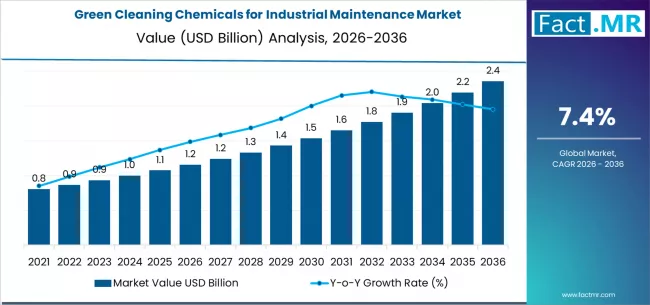
Green cleaning chemicals for industrial maintenance market is projected to grow from USD 1.2 billion in 2026 to USD 2.4 billion by 2036, at a CAGR of 7.4%. Alkaline & Heavy-Duty Degreasers will dominate with a 28.0% market share, while heavy manufacturing (metals, machinery) will lead the end-use industry segment with a 26.0% share.
Green Cleaning Chemicals for Industrial Maintenance Market Forecast and Outlook 2026 to 2036
The global green cleaning chemicals for industrial maintenance market is projected to reach USD 2.35 billion by 2036. The market is valued at USD 1.15 billion in 2026 and is set to rise at a CAGR of 7.4% during the assessment period.
By product type, Alkaline & Heavy-Duty Degreasers hold a leading 28% share. Heavy Manufacturing (metals, machinery) represents the dominant end-use industry at 26%, while Liquid concentrated (bulk) is the primary formulation & format at 46.0%. Industrial distributors & wholesalers is the leading sales & supply channel at 38.0%.
Key Takeaways from the Green Cleaning Chemicals for Industrial Maintenance Market
- Market Value for 2026: USD 1.15 Billion
- Market Value for 2036: USD 2.35 Billion
- Forecast CAGR (2026-2036): 7.4%
- Leading Product Type Share (2026): Alkaline & Heavy-Duty Degreasers (28%)
- Leading End-Use Industry Share (2026): Heavy Manufacturing (metals, machinery) (26%)
- Leading Formulation & Format Share (2026): Liquid concentrated (bulk) (46.0%)
- Leading Sales & Supply Channel Share (2026): Industrial distributors & wholesalers (38.0%)
- Key Players in the Market: Ecolab, Diversey, 3M, Clariant AG, Reckitt Benckiser, Zep, Fulton Companies
Defining trends involve the development of high-performance, bio-based concentrates designed to replace solvent-based formulations without compromising on power. Innovation is focused on creating multifunctional products that clean, disinfect, and protect surfaces while ensuring material compatibility. Integration of these chemicals into closed-loop dispensing and refill systems to reduce plastic waste is becoming a key competitive strategy.
Stringent global regulations on VOC emissions, workplace safety, and environmental discharge drive market growth. Corporate sustainability mandates and the demand for safer facilities that protect worker health act as significant catalysts, creating sustained demand for certified, high-performance green cleaning solutions across all industrial sectors.
Green Cleaning Chemicals for Industrial Maintenance Market
| Metric | Value |
|---|---|
| Market Value (2026) | USD 1.15 Billion |
| Market Forecast Value (2036) | USD 2.35 Billion |
| Forecast CAGR (2026-2036) | 7.4% |
Category
| Category | Segments |
|---|---|
| Product Type | Alkaline & Heavy-Duty Degreasers, Neutral General-Purpose Cleaners, Acid Descalers & Rust Removers, Solvent-free & Bio-based Degreasers, Disinfectants & Sanitizers (green-certified), Specialty (electronic-safe, AFFF alternatives), Additives & Formulation Blends |
| End-Use Industry | Heavy Manufacturing (metals, machinery), Food & Beverage Processing, Pharmaceuticals & Life Sciences, Oil & Gas & Petrochemical, Power & Utilities, Automotive & Transportation OEMs, Other Industrial (textiles, printing, etc.) |
| Formulation & Format | Liquid concentrated (bulk), Ready-to-use liquids, Wipes & impregnated cloths, Powder & solid formulations, Foams, gels & aerosol alternatives, Specialty dispensers & cartridge systems |
| Sales & Supply Channel | Industrial distributors & wholesalers, Direct sales (major accounts & OEM contracts), Contract cleaning service providers, Online & e-commerce (industrial platforms), Manufacturer-managed refill & cartridge programs, Local chemical formulators & tollers |
| Region | North America, Latin America, Western Europe, Eastern Europe, East Asia, South Asia & Pacific, MEA |
Segmental Analysis
By Product Type, Which Chemistry is Fundamental for Core Industrial Grime Removal?
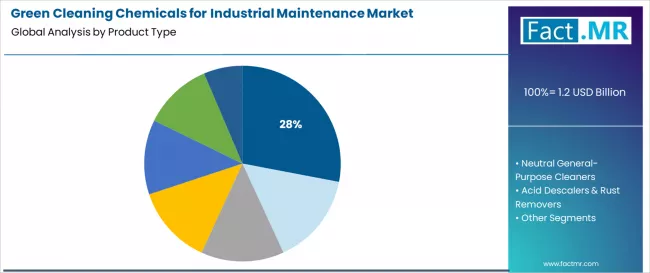
Alkaline & Heavy-Duty Degreasers lead the segment with a 28% share. This dominance is due to their critical role in removing fats, oils, greases, and particulate soils from machinery, floors, and parts in the most challenging industrial environments. Green formulations in this category use bio-solvents, potent plant-based surfactants, and enhanced builders to deliver the required cleaning power while meeting stringent environmental and safety standards.
By End-Use Industry, Which Sector Demands Robust and Compliant Cleaning Regimens?
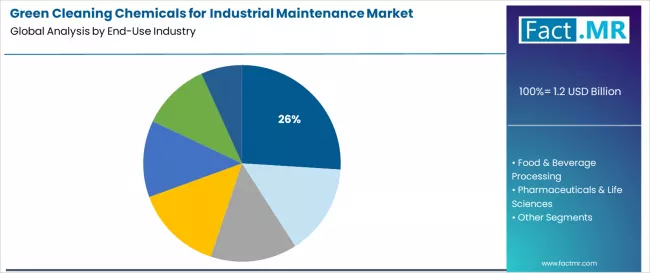
Heavy Manufacturing (metals, machinery) commands the largest end-use industry share at 26%. This sector generates significant oil, grease, and metalworking fluid residue, requiring powerful, high-volume cleaning solutions. The shift towards green chemicals is driven by the need to improve indoor air quality for workers, simplify wastewater treatment, and meet the sustainability benchmarks of downstream customers and corporate policies.
By Formulation & Format, Which Delivery System Optimizes Cost and Waste Reduction?
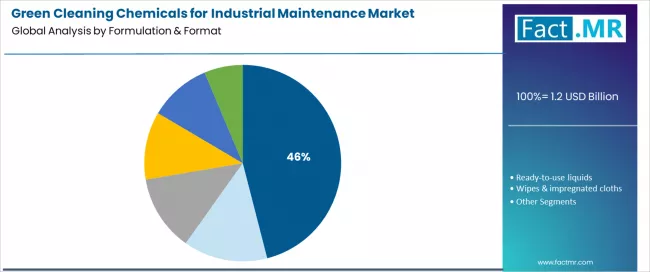
Liquid concentrated (bulk) represents the leading formulation & format at 46.0%. Concentrates offer the lowest cost-per-use, minimize packaging waste and transportation emissions, and provide flexibility for end-users to dilute according to specific soil loads. This format is the backbone of industrial cleaning programs, favored for its economic and environmental efficiency when paired with proper dispensing equipment.
By Sales & Supply Channel, Which Route Provides Critical Market Access and Expertise?
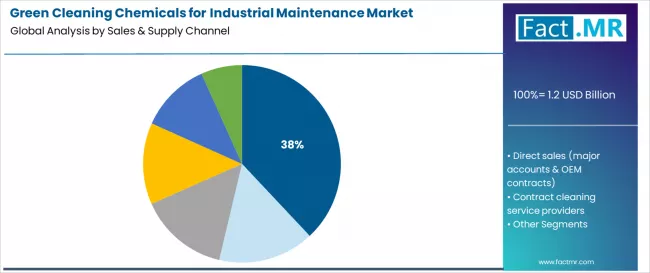
Industrial distributors & wholesalers is the leading sales & supply channel at 38.0%. This channel provides essential technical sales support, local inventory, and just-in-time delivery for a vast network of medium and small-sized industrial facilities. Distributors' expertise in matching the right green chemical to specific maintenance problems is crucial for driving adoption beyond large, direct-serve enterprise accounts.
What are the Drivers, Restraints, and Key Trends of the Green Cleaning Chemicals for Industrial Maintenance Market?
Globally tightening regulations on VOC emissions, chemical reporting (TSCA, REACH), and occupational exposure limits drive market growth. The strong focus on ESG (Environmental, Social, and Governance) metrics in corporate reporting compels facilities to adopt greener maintenance practices. The growth of industries with ultra-high hygiene standards, like pharmaceuticals and food processing, underpin demand for certified products.
A significant restraint is the perception of higher upfront cost per gallon compared to conventional chemicals, though total cost-in-use is often lower. Performance benchmarking against established solvent-based degreasers in extreme soil conditions requires continuous product development and education. The fragmentation of the supply chain and variability in distributor training can slow consistent messaging and adoption.
Key trends include the formulation of chemistry for specific industrial microbial challenges, such as biofilm removal in food processing. There is a growing integration of Internet of Things (IoT) enabled dispensers that monitor chemical usage, concentration, and automate reordering. The market is also seeing a rise in green certification standards specific to industrial use, moving beyond general eco-labels to validate performance claims.
Analysis of the Green Cleaning Chemicals for Industrial Maintenance Market by Key Countries
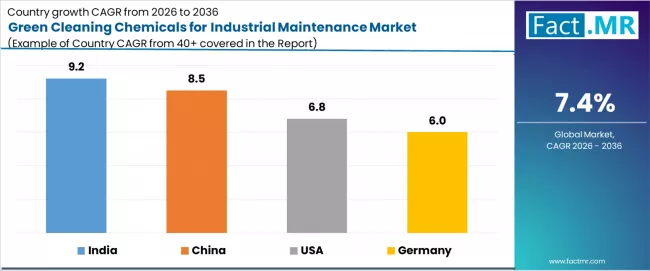
| Country | CAGR (2026-2036) |
|---|---|
| India | 9.20% |
| China | 8.50% |
| USA | 6.80% |
| Germany | 6.00% |
How does India's Industrial Growth and Heightened Regulatory Focus Drive Expansion?
India leads with a 9.20% CAGR, driven by the rapid expansion of its manufacturing base and stricter enforcement of environmental and worker safety laws. The growth of sectors like automotive, pharmaceuticals, and food processing, combined with the modernization of facility management practices, creates robust demand for effective, safer, and compliant green cleaning chemical solutions.
Why is China's Manufacturing Scale and Environmental Policy a Key Demand Driver?
China’s 8.50% growth is fueled by its vast industrial landscape and national policies promoting "green manufacturing" and pollution reduction. Mandates to improve workplace conditions and reduce the environmental impact of industrial operations are pushing facilities across heavy industry, electronics, and textiles to transition from traditional solvents to high-performance, environmentally preferable alternatives.
What Role does the USA's Mature Regulatory Framework and ESG Focus Play?
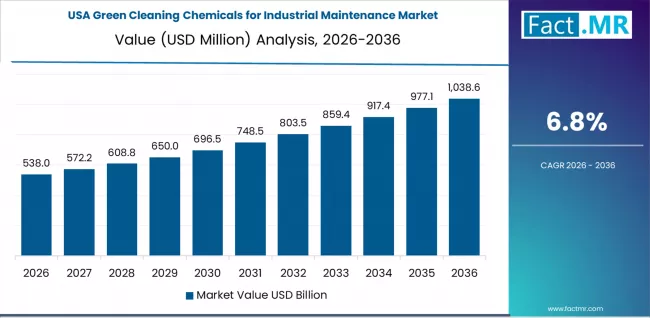
A well-established regulatory environment (EPA, OSHA) and a strong corporate focus on ESG underpin the USA’s 6.80% growth. Demand is driven by retrofits in existing manufacturing plants, stringent hygiene protocols in food and pharma, and the requirements of large OEMs who mandate green supply chain practices from their component suppliers.
How does Germany's Stringent Regulations and High-Tech Industry Influence the Market?
Germany’s 6.00% growth reflects its leadership in chemical regulations such as REACH and other VOC directives and advanced manufacturing sectors like automotive and machinery. The market demands premium, technically advanced green chemicals that deliver uncompromising performance for critical cleaning tasks while fully aligning with the world's most rigorous environmental and toxicological standards.
Competitive Landscape of the Green Cleaning Chemicals for Industrial Maintenance Market
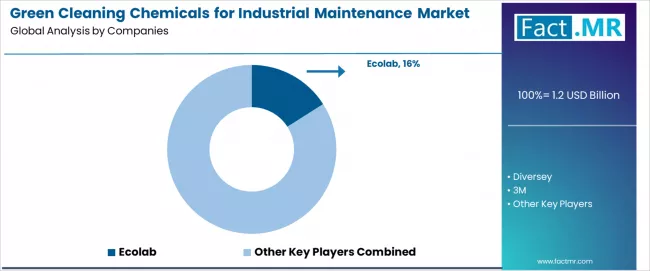
Global institutional and industrial cleaning specialists competing with diversified chemical giants characterize the competitive landscape. Integrated hygiene and service providers like Ecolab and Diversey compete on the strength of their comprehensive service models, which combine chemical supply, dispensing equipment, and data-driven management services for large multi-site customers.
Specialty material science companies like 3M and Clariant AG compete through innovative formulation technology and specialized products for niche applications. Consumer-focused giants like Reckitt Benckiser leverage brand trust in disinfection for industrial extensions. Regional and national players like Zep and Fulton Companies compete through strong distributor relationships and tailored solutions for local industry challenges. Competition centers on total value delivery, proven efficacy data, sustainability certification credibility, and the ability to provide complete chemical management solutions.
Key Players in the Green Cleaning Chemicals for Industrial Maintenance Market
- Ecolab
- Diversey
- 3M
- Clariant AG
- Reckitt Benckiser
- Zep
- Fulton Companies
Scope of Report
| Items | Values |
|---|---|
| Quantitative Units | USD Billion |
| Product Type | Alkaline & Heavy-Duty Degreasers, Neutral General-Purpose Cleaners, Acid Descalers & Rust Removers, Solvent-free & Bio-based Degreasers, Disinfectants & Sanitizers (green-certified), Specialty (electronic-safe, AFFF alternatives), Additives & Formulation Blends |
| End-Use Industry | Heavy Manufacturing (metals, machinery), Food & Beverage Processing, Pharmaceuticals & Life Sciences, Oil & Gas & Petrochemical, Power & Utilities, Automotive & Transportation OEMs, Other Industrial (textiles, printing, etc.) |
| Formulation & Format | Liquid concentrated (bulk), Ready-to-use liquids, Wipes & impregnated cloths, Powder & solid formulations, Foams, gels & aerosol alternatives, Specialty dispensers & cartridge systems |
| Sales & Supply Channel | Industrial distributors & wholesalers, Direct sales (major accounts & OEM contracts), Contract cleaning service providers, Online & e-commerce (industrial platforms), Manufacturer-managed refill & cartridge programs, Local chemical formulators & tollers |
| Key Countries | India, China, USA, Germany |
| Key Companies | Ecolab, Diversey, 3M, Clariant AG, Reckitt Benckiser, Zep, Fulton Companies |
| Additional Analysis | Analysis of dilution ratios and cost-in-use models, material compatibility and surface safety testing, regulatory certification pathways (EPA Safer Choice, EU Ecolabel, etc.), competitive assessment versus traditional solvent & acid-based products, and impact of automated dispensing systems on adoption rates. |
Green Cleaning Chemicals for Industrial Maintenance Market by Segments
-
Product Type :
- Alkaline & Heavy-Duty Degreasers
- Neutral General-Purpose Cleaners
- Acid Descalers & Rust Removers
- Solvent-free & Bio-based Degreasers
- Disinfectants & Sanitizers (green-certified)
- Specialty (electronic-safe, AFFF alternatives)
- Additives & Formulation Blends
-
End-Use Industry :
- Heavy Manufacturing (metals, machinery)
- Food & Beverage Processing
- Pharmaceuticals & Life Sciences
- Oil & Gas & Petrochemical
- Power & Utilities
- Automotive & Transportation OEMs
- Other Industrial (textiles, printing, etc.)
-
Formulation & Format :
- Liquid concentrated (bulk)
- Ready-to-use liquids
- Wipes & impregnated cloths
- Powder & solid formulations
- Foams, gels & aerosol alternatives
- Specialty dispensers & cartridge systems
-
Sales & Supply Channel :
- Industrial distributors & wholesalers
- Direct sales (major accounts & OEM contracts)
- Contract cleaning service providers
- Online & e-commerce (industrial platforms)
- Manufacturer-managed refill & cartridge programs
- Local chemical formulators & tollers
-
Region :
-
North America
- USA
- Canada
-
Latin America
- Brazil
- Mexico
- Argentina
- Rest of Latin America
-
Western Europe
- Germany
- UK
- France
- Spain
- Italy
- BENELUX
- Rest of Western Europe
-
Eastern Europe
- Russia
- Poland
- Czech Republic
- Rest of Eastern Europe
-
East Asia
- China
- Japan
- South Korea
- Rest of East Asia
-
South Asia & Pacific
- India
- ASEAN
- Australia
- Rest of South Asia & Pacific
-
MEA
- Saudi Arabia
- UAE
- Turkiye
- Rest of MEA
-
Table of Content
- Executive Summary
- Global Market Outlook
- Demand to side Trends
- Supply to side Trends
- Technology Roadmap Analysis
- Analysis and Recommendations
- Market Overview
- Market Coverage / Taxonomy
- Market Definition / Scope / Limitations
- Market Background
- Market Dynamics
- Drivers
- Restraints
- Opportunity
- Trends
- Scenario Forecast
- Demand in Optimistic Scenario
- Demand in Likely Scenario
- Demand in Conservative Scenario
- Opportunity Map Analysis
- Product Life Cycle Analysis
- Supply Chain Analysis
- Investment Feasibility Matrix
- Value Chain Analysis
- PESTLE and Porter’s Analysis
- Regulatory Landscape
- Regional Parent Market Outlook
- Production and Consumption Statistics
- Import and Export Statistics
- Market Dynamics
- Global Market Analysis 2021 to 2025 and Forecast, 2026 to 2036
- Historical Market Size Value (USD Million) Analysis, 2021 to 2025
- Current and Future Market Size Value (USD Million) Projections, 2026 to 2036
- Y to o to Y Growth Trend Analysis
- Absolute $ Opportunity Analysis
- Global Market Pricing Analysis 2021 to 2025 and Forecast 2026 to 2036
- Global Market Analysis 2021 to 2025 and Forecast 2026 to 2036, By Product Type
- Introduction / Key Findings
- Historical Market Size Value (USD Million) Analysis By Product Type, 2021 to 2025
- Current and Future Market Size Value (USD Million) Analysis and Forecast By Product Type, 2026 to 2036
- Alkaline & Heavy-Duty Degreasers
- Neutral General-Purpose Cleaners
- Acid Descalers & Rust Removers
- Solvent-free & Bio-based Degreasers
- Disinfectants & Sanitizers (green-certified)
- Specialty (electronic-safe, AFFF alternatives)
- Additives & Formulation Blends
- Alkaline & Heavy-Duty Degreasers
- Y to o to Y Growth Trend Analysis By Product Type, 2021 to 2025
- Absolute $ Opportunity Analysis By Product Type, 2026 to 2036
- Global Market Analysis 2021 to 2025 and Forecast 2026 to 2036, By End-Use Industry
- Introduction / Key Findings
- Historical Market Size Value (USD Million) Analysis By End-Use Industry, 2021 to 2025
- Current and Future Market Size Value (USD Million) Analysis and Forecast By End-Use Industry, 2026 to 2036
- Heavy Manufacturing (metals, machinery)
- Food & Beverage Processing
- Pharmaceuticals & Life Sciences
- Oil & Gas & Petrochemical
- Power & Utilities
- Automotive & Transportation OEMs
- Other Industrial (textiles, printing, etc.)
- Heavy Manufacturing (metals, machinery)
- Y to o to Y Growth Trend Analysis By End-Use Industry, 2021 to 2025
- Absolute $ Opportunity Analysis By End-Use Industry, 2026 to 2036
- Global Market Analysis 2021 to 2025 and Forecast 2026 to 2036, By Formulation & Format
- Introduction / Key Findings
- Historical Market Size Value (USD Million) Analysis By Formulation & Format, 2021 to 2025
- Current and Future Market Size Value (USD Million) Analysis and Forecast By Formulation & Format, 2026 to 2036
- Liquid concentrated (bulk)
- Ready-to-use liquids
- Wipes & impregnated cloths
- Powder & solid formulations
- Foams, gels & aerosol alternatives
- Specialty dispensers&cartridge systems
- Liquid concentrated (bulk)
- Y to o to Y Growth Trend Analysis By Formulation & Format, 2021 to 2025
- Absolute $ Opportunity Analysis By Formulation & Format, 2026 to 2036
- Global Market Analysis 2021 to 2025 and Forecast 2026 to 2036, By Sales & Supply Channel
- Introduction / Key Findings
- Historical Market Size Value (USD Million) Analysis By Sales & Supply Channel, 2021 to 2025
- Current and Future Market Size Value (USD Million) Analysis and Forecast By Sales & Supply Channel, 2026 to 2036
- Industrial distributors & wholesalers
- Direct sales (major accounts & OEM contracts)
- Contract cleaning service providers
- Online & e-commerce (industrial platforms)
- Manufacturer-managed refill&cartridge programs
- Local chemical formulators & tollers
- Industrial distributors & wholesalers
- Y to o to Y Growth Trend Analysis By Sales & Supply Channel, 2021 to 2025
- Absolute $ Opportunity Analysis By Sales & Supply Channel, 2026 to 2036
- Global Market Analysis 2021 to 2025 and Forecast 2026 to 2036, By Region
- Introduction
- Historical Market Size Value (USD Million) Analysis By Region, 2021 to 2025
- Current Market Size Value (USD Million) Analysis and Forecast By Region, 2026 to 2036
- North America
- Latin America
- Western Europe
- Eastern Europe
- East Asia
- South Asia and Pacific
- Middle East & Africa
- Market Attractiveness Analysis By Region
- North America Market Analysis 2021 to 2025 and Forecast 2026 to 2036, By Country
- Historical Market Size Value (USD Million) Trend Analysis By Market Taxonomy, 2021 to 2025
- Market Size Value (USD Million) Forecast By Market Taxonomy, 2026 to 2036
- By Country
- USA
- Canada
- Mexico
- By Product Type
- By End-Use Industry
- By Formulation & Format
- By Sales & Supply Channel
- By Country
- Market Attractiveness Analysis
- By Country
- By Product Type
- By End-Use Industry
- By Formulation & Format
- By Sales & Supply Channel
- Key Takeaways
- Latin America Market Analysis 2021 to 2025 and Forecast 2026 to 2036, By Country
- Historical Market Size Value (USD Million) Trend Analysis By Market Taxonomy, 2021 to 2025
- Market Size Value (USD Million) Forecast By Market Taxonomy, 2026 to 2036
- By Country
- Brazil
- Chile
- Rest of Latin America
- By Product Type
- By End-Use Industry
- By Formulation & Format
- By Sales & Supply Channel
- By Country
- Market Attractiveness Analysis
- By Country
- By Product Type
- By End-Use Industry
- By Formulation & Format
- By Sales & Supply Channel
- Key Takeaways
- Western Europe Market Analysis 2021 to 2025 and Forecast 2026 to 2036, By Country
- Historical Market Size Value (USD Million) Trend Analysis By Market Taxonomy, 2021 to 2025
- Market Size Value (USD Million) Forecast By Market Taxonomy, 2026 to 2036
- By Country
- Germany
- UK
- Italy
- Spain
- France
- Nordic
- BENELUX
- Rest of Western Europe
- By Product Type
- By End-Use Industry
- By Formulation & Format
- By Sales & Supply Channel
- By Country
- Market Attractiveness Analysis
- By Country
- By Product Type
- By End-Use Industry
- By Formulation & Format
- By Sales & Supply Channel
- Key Takeaways
- Eastern Europe Market Analysis 2021 to 2025 and Forecast 2026 to 2036, By Country
- Historical Market Size Value (USD Million) Trend Analysis By Market Taxonomy, 2021 to 2025
- Market Size Value (USD Million) Forecast By Market Taxonomy, 2026 to 2036
- By Country
- Russia
- Poland
- Hungary
- Balkan & Baltic
- Rest of Eastern Europe
- By Product Type
- By End-Use Industry
- By Formulation & Format
- By Sales & Supply Channel
- By Country
- Market Attractiveness Analysis
- By Country
- By Product Type
- By End-Use Industry
- By Formulation & Format
- By Sales & Supply Channel
- Key Takeaways
- East Asia Market Analysis 2021 to 2025 and Forecast 2026 to 2036, By Country
- Historical Market Size Value (USD Million) Trend Analysis By Market Taxonomy, 2021 to 2025
- Market Size Value (USD Million) Forecast By Market Taxonomy, 2026 to 2036
- By Country
- China
- Japan
- South Korea
- By Product Type
- By End-Use Industry
- By Formulation & Format
- By Sales & Supply Channel
- By Country
- Market Attractiveness Analysis
- By Country
- By Product Type
- By End-Use Industry
- By Formulation & Format
- By Sales & Supply Channel
- Key Takeaways
- South Asia and Pacific Market Analysis 2021 to 2025 and Forecast 2026 to 2036, By Country
- Historical Market Size Value (USD Million) Trend Analysis By Market Taxonomy, 2021 to 2025
- Market Size Value (USD Million) Forecast By Market Taxonomy, 2026 to 2036
- By Country
- India
- ASEAN
- Australia & New Zealand
- Rest of South Asia and Pacific
- By Product Type
- By End-Use Industry
- By Formulation & Format
- By Sales & Supply Channel
- By Country
- Market Attractiveness Analysis
- By Country
- By Product Type
- By End-Use Industry
- By Formulation & Format
- By Sales & Supply Channel
- Key Takeaways
- Middle East & Africa Market Analysis 2021 to 2025 and Forecast 2026 to 2036, By Country
- Historical Market Size Value (USD Million) Trend Analysis By Market Taxonomy, 2021 to 2025
- Market Size Value (USD Million) Forecast By Market Taxonomy, 2026 to 2036
- By Country
- Kingdom of Saudi Arabia
- Other GCC Countries
- Turkiye
- South Africa
- Other African Union
- Rest of Middle East & Africa
- By Product Type
- By End-Use Industry
- By Formulation & Format
- By Sales & Supply Channel
- By Country
- Market Attractiveness Analysis
- By Country
- By Product Type
- By End-Use Industry
- By Formulation & Format
- By Sales & Supply Channel
- Key Takeaways
- Key Countries Market Analysis
- USA
- Pricing Analysis
- Market Share Analysis, 2025
- By Product Type
- By End-Use Industry
- By Formulation & Format
- By Sales & Supply Channel
- Canada
- Pricing Analysis
- Market Share Analysis, 2025
- By Product Type
- By End-Use Industry
- By Formulation & Format
- By Sales & Supply Channel
- Mexico
- Pricing Analysis
- Market Share Analysis, 2025
- By Product Type
- By End-Use Industry
- By Formulation & Format
- By Sales & Supply Channel
- Brazil
- Pricing Analysis
- Market Share Analysis, 2025
- By Product Type
- By End-Use Industry
- By Formulation & Format
- By Sales & Supply Channel
- Chile
- Pricing Analysis
- Market Share Analysis, 2025
- By Product Type
- By End-Use Industry
- By Formulation & Format
- By Sales & Supply Channel
- Germany
- Pricing Analysis
- Market Share Analysis, 2025
- By Product Type
- By End-Use Industry
- By Formulation & Format
- By Sales & Supply Channel
- UK
- Pricing Analysis
- Market Share Analysis, 2025
- By Product Type
- By End-Use Industry
- By Formulation & Format
- By Sales & Supply Channel
- Italy
- Pricing Analysis
- Market Share Analysis, 2025
- By Product Type
- By End-Use Industry
- By Formulation & Format
- By Sales & Supply Channel
- Spain
- Pricing Analysis
- Market Share Analysis, 2025
- By Product Type
- By End-Use Industry
- By Formulation & Format
- By Sales & Supply Channel
- France
- Pricing Analysis
- Market Share Analysis, 2025
- By Product Type
- By End-Use Industry
- By Formulation & Format
- By Sales & Supply Channel
- India
- Pricing Analysis
- Market Share Analysis, 2025
- By Product Type
- By End-Use Industry
- By Formulation & Format
- By Sales & Supply Channel
- ASEAN
- Pricing Analysis
- Market Share Analysis, 2025
- By Product Type
- By End-Use Industry
- By Formulation & Format
- By Sales & Supply Channel
- Australia & New Zealand
- Pricing Analysis
- Market Share Analysis, 2025
- By Product Type
- By End-Use Industry
- By Formulation & Format
- By Sales & Supply Channel
- China
- Pricing Analysis
- Market Share Analysis, 2025
- By Product Type
- By End-Use Industry
- By Formulation & Format
- By Sales & Supply Channel
- Japan
- Pricing Analysis
- Market Share Analysis, 2025
- By Product Type
- By End-Use Industry
- By Formulation & Format
- By Sales & Supply Channel
- South Korea
- Pricing Analysis
- Market Share Analysis, 2025
- By Product Type
- By End-Use Industry
- By Formulation & Format
- By Sales & Supply Channel
- Russia
- Pricing Analysis
- Market Share Analysis, 2025
- By Product Type
- By End-Use Industry
- By Formulation & Format
- By Sales & Supply Channel
- Poland
- Pricing Analysis
- Market Share Analysis, 2025
- By Product Type
- By End-Use Industry
- By Formulation & Format
- By Sales & Supply Channel
- Hungary
- Pricing Analysis
- Market Share Analysis, 2025
- By Product Type
- By End-Use Industry
- By Formulation & Format
- By Sales & Supply Channel
- Kingdom of Saudi Arabia
- Pricing Analysis
- Market Share Analysis, 2025
- By Product Type
- By End-Use Industry
- By Formulation & Format
- By Sales & Supply Channel
- Turkiye
- Pricing Analysis
- Market Share Analysis, 2025
- By Product Type
- By End-Use Industry
- By Formulation & Format
- By Sales & Supply Channel
- South Africa
- Pricing Analysis
- Market Share Analysis, 2025
- By Product Type
- By End-Use Industry
- By Formulation & Format
- By Sales & Supply Channel
- USA
- Market Structure Analysis
- Competition Dashboard
- Competition Benchmarking
- Market Share Analysis of Top Players
- By Regional
- By Product Type
- By End-Use Industry
- By Formulation & Format
- By Sales & Supply Channel
- Competition Analysis
- Competition Deep Dive
- Ecolab
- Overview
- Product Portfolio
- Profitability by Market Segments (Product/Age /Sales Channel/Region)
- Sales Footprint
- Strategy Overview
- Marketing Strategy
- Product Strategy
- Channel Strategy
- Diversey
- 3M
- Clariant AG
- Reckitt Benckiser
- Zep
- Fulton Companies
- Ecolab
- Competition Deep Dive
- Assumptions & Acronyms Used
- Research Methodology
List Of Table
- Table 1: Global Market Value (USD Million) Forecast by Region, 2021 to 2036
- Table 2: Global Market Value (USD Million) Forecast by Product Type, 2021 to 2036
- Table 3: Global Market Value (USD Million) Forecast by End-Use Industry, 2021 to 2036
- Table 4: Global Market Value (USD Million) Forecast by Formulation & Format, 2021 to 2036
- Table 5: Global Market Value (USD Million) Forecast by Sales & Supply Channel, 2021 to 2036
- Table 6: North America Market Value (USD Million) Forecast by Country, 2021 to 2036
- Table 7: North America Market Value (USD Million) Forecast by Product Type, 2021 to 2036
- Table 8: North America Market Value (USD Million) Forecast by End-Use Industry, 2021 to 2036
- Table 9: North America Market Value (USD Million) Forecast by Formulation & Format, 2021 to 2036
- Table 10: North America Market Value (USD Million) Forecast by Sales & Supply Channel, 2021 to 2036
- Table 11: Latin America Market Value (USD Million) Forecast by Country, 2021 to 2036
- Table 12: Latin America Market Value (USD Million) Forecast by Product Type, 2021 to 2036
- Table 13: Latin America Market Value (USD Million) Forecast by End-Use Industry, 2021 to 2036
- Table 14: Latin America Market Value (USD Million) Forecast by Formulation & Format, 2021 to 2036
- Table 15: Latin America Market Value (USD Million) Forecast by Sales & Supply Channel, 2021 to 2036
- Table 16: Western Europe Market Value (USD Million) Forecast by Country, 2021 to 2036
- Table 17: Western Europe Market Value (USD Million) Forecast by Product Type, 2021 to 2036
- Table 18: Western Europe Market Value (USD Million) Forecast by End-Use Industry, 2021 to 2036
- Table 19: Western Europe Market Value (USD Million) Forecast by Formulation & Format, 2021 to 2036
- Table 20: Western Europe Market Value (USD Million) Forecast by Sales & Supply Channel, 2021 to 2036
- Table 21: Eastern Europe Market Value (USD Million) Forecast by Country, 2021 to 2036
- Table 22: Eastern Europe Market Value (USD Million) Forecast by Product Type, 2021 to 2036
- Table 23: Eastern Europe Market Value (USD Million) Forecast by End-Use Industry, 2021 to 2036
- Table 24: Eastern Europe Market Value (USD Million) Forecast by Formulation & Format, 2021 to 2036
- Table 25: Eastern Europe Market Value (USD Million) Forecast by Sales & Supply Channel, 2021 to 2036
- Table 26: East Asia Market Value (USD Million) Forecast by Country, 2021 to 2036
- Table 27: East Asia Market Value (USD Million) Forecast by Product Type, 2021 to 2036
- Table 28: East Asia Market Value (USD Million) Forecast by End-Use Industry, 2021 to 2036
- Table 29: East Asia Market Value (USD Million) Forecast by Formulation & Format, 2021 to 2036
- Table 30: East Asia Market Value (USD Million) Forecast by Sales & Supply Channel, 2021 to 2036
- Table 31: South Asia and Pacific Market Value (USD Million) Forecast by Country, 2021 to 2036
- Table 32: South Asia and Pacific Market Value (USD Million) Forecast by Product Type, 2021 to 2036
- Table 33: South Asia and Pacific Market Value (USD Million) Forecast by End-Use Industry, 2021 to 2036
- Table 34: South Asia and Pacific Market Value (USD Million) Forecast by Formulation & Format, 2021 to 2036
- Table 35: South Asia and Pacific Market Value (USD Million) Forecast by Sales & Supply Channel, 2021 to 2036
- Table 36: Middle East & Africa Market Value (USD Million) Forecast by Country, 2021 to 2036
- Table 37: Middle East & Africa Market Value (USD Million) Forecast by Product Type, 2021 to 2036
- Table 38: Middle East & Africa Market Value (USD Million) Forecast by End-Use Industry, 2021 to 2036
- Table 39: Middle East & Africa Market Value (USD Million) Forecast by Formulation & Format, 2021 to 2036
- Table 40: Middle East & Africa Market Value (USD Million) Forecast by Sales & Supply Channel, 2021 to 2036
List Of Figures
- Figure 1: Global Market Pricing Analysis
- Figure 2: Global Market Value (USD Million) Forecast 2021 to 2036
- Figure 3: Global Market Value Share and BPS Analysis by Product Type, 2026 and 2036
- Figure 4: Global Market Y to o to Y Growth Comparison by Product Type, 2026 to 2036
- Figure 5: Global Market Attractiveness Analysis by Product Type
- Figure 6: Global Market Value Share and BPS Analysis by End-Use Industry, 2026 and 2036
- Figure 7: Global Market Y to o to Y Growth Comparison by End-Use Industry, 2026 to 2036
- Figure 8: Global Market Attractiveness Analysis by End-Use Industry
- Figure 9: Global Market Value Share and BPS Analysis by Formulation & Format, 2026 and 2036
- Figure 10: Global Market Y to o to Y Growth Comparison by Formulation & Format, 2026 to 2036
- Figure 11: Global Market Attractiveness Analysis by Formulation & Format
- Figure 12: Global Market Value Share and BPS Analysis by Sales & Supply Channel, 2026 and 2036
- Figure 13: Global Market Y to o to Y Growth Comparison by Sales & Supply Channel, 2026 to 2036
- Figure 14: Global Market Attractiveness Analysis by Sales & Supply Channel
- Figure 15: Global Market Value (USD Million) Share and BPS Analysis by Region, 2026 and 2036
- Figure 16: Global Market Y to o to Y Growth Comparison by Region, 2026 to 2036
- Figure 17: Global Market Attractiveness Analysis by Region
- Figure 18: North America Market Incremental Dollar Opportunity, 2026 to 2036
- Figure 19: Latin America Market Incremental Dollar Opportunity, 2026 to 2036
- Figure 20: Western Europe Market Incremental Dollar Opportunity, 2026 to 2036
- Figure 21: Eastern Europe Market Incremental Dollar Opportunity, 2026 to 2036
- Figure 22: East Asia Market Incremental Dollar Opportunity, 2026 to 2036
- Figure 23: South Asia and Pacific Market Incremental Dollar Opportunity, 2026 to 2036
- Figure 24: Middle East & Africa Market Incremental Dollar Opportunity, 2026 to 2036
- Figure 25: North America Market Value Share and BPS Analysis by Country, 2026 and 2036
- Figure 26: North America Market Value Share and BPS Analysis by Product Type, 2026 and 2036
- Figure 27: North America Market Y to o to Y Growth Comparison by Product Type, 2026 to 2036
- Figure 28: North America Market Attractiveness Analysis by Product Type
- Figure 29: North America Market Value Share and BPS Analysis by End-Use Industry, 2026 and 2036
- Figure 30: North America Market Y to o to Y Growth Comparison by End-Use Industry, 2026 to 2036
- Figure 31: North America Market Attractiveness Analysis by End-Use Industry
- Figure 32: North America Market Value Share and BPS Analysis by Formulation & Format, 2026 and 2036
- Figure 33: North America Market Y to o to Y Growth Comparison by Formulation & Format, 2026 to 2036
- Figure 34: North America Market Attractiveness Analysis by Formulation & Format
- Figure 35: North America Market Value Share and BPS Analysis by Sales & Supply Channel, 2026 and 2036
- Figure 36: North America Market Y to o to Y Growth Comparison by Sales & Supply Channel, 2026 to 2036
- Figure 37: North America Market Attractiveness Analysis by Sales & Supply Channel
- Figure 38: Latin America Market Value Share and BPS Analysis by Country, 2026 and 2036
- Figure 39: Latin America Market Value Share and BPS Analysis by Product Type, 2026 and 2036
- Figure 40: Latin America Market Y to o to Y Growth Comparison by Product Type, 2026 to 2036
- Figure 41: Latin America Market Attractiveness Analysis by Product Type
- Figure 42: Latin America Market Value Share and BPS Analysis by End-Use Industry, 2026 and 2036
- Figure 43: Latin America Market Y to o to Y Growth Comparison by End-Use Industry, 2026 to 2036
- Figure 44: Latin America Market Attractiveness Analysis by End-Use Industry
- Figure 45: Latin America Market Value Share and BPS Analysis by Formulation & Format, 2026 and 2036
- Figure 46: Latin America Market Y to o to Y Growth Comparison by Formulation & Format, 2026 to 2036
- Figure 47: Latin America Market Attractiveness Analysis by Formulation & Format
- Figure 48: Latin America Market Value Share and BPS Analysis by Sales & Supply Channel, 2026 and 2036
- Figure 49: Latin America Market Y to o to Y Growth Comparison by Sales & Supply Channel, 2026 to 2036
- Figure 50: Latin America Market Attractiveness Analysis by Sales & Supply Channel
- Figure 51: Western Europe Market Value Share and BPS Analysis by Country, 2026 and 2036
- Figure 52: Western Europe Market Value Share and BPS Analysis by Product Type, 2026 and 2036
- Figure 53: Western Europe Market Y to o to Y Growth Comparison by Product Type, 2026 to 2036
- Figure 54: Western Europe Market Attractiveness Analysis by Product Type
- Figure 55: Western Europe Market Value Share and BPS Analysis by End-Use Industry, 2026 and 2036
- Figure 56: Western Europe Market Y to o to Y Growth Comparison by End-Use Industry, 2026 to 2036
- Figure 57: Western Europe Market Attractiveness Analysis by End-Use Industry
- Figure 58: Western Europe Market Value Share and BPS Analysis by Formulation & Format, 2026 and 2036
- Figure 59: Western Europe Market Y to o to Y Growth Comparison by Formulation & Format, 2026 to 2036
- Figure 60: Western Europe Market Attractiveness Analysis by Formulation & Format
- Figure 61: Western Europe Market Value Share and BPS Analysis by Sales & Supply Channel, 2026 and 2036
- Figure 62: Western Europe Market Y to o to Y Growth Comparison by Sales & Supply Channel, 2026 to 2036
- Figure 63: Western Europe Market Attractiveness Analysis by Sales & Supply Channel
- Figure 64: Eastern Europe Market Value Share and BPS Analysis by Country, 2026 and 2036
- Figure 65: Eastern Europe Market Value Share and BPS Analysis by Product Type, 2026 and 2036
- Figure 66: Eastern Europe Market Y to o to Y Growth Comparison by Product Type, 2026 to 2036
- Figure 67: Eastern Europe Market Attractiveness Analysis by Product Type
- Figure 68: Eastern Europe Market Value Share and BPS Analysis by End-Use Industry, 2026 and 2036
- Figure 69: Eastern Europe Market Y to o to Y Growth Comparison by End-Use Industry, 2026 to 2036
- Figure 70: Eastern Europe Market Attractiveness Analysis by End-Use Industry
- Figure 71: Eastern Europe Market Value Share and BPS Analysis by Formulation & Format, 2026 and 2036
- Figure 72: Eastern Europe Market Y to o to Y Growth Comparison by Formulation & Format, 2026 to 2036
- Figure 73: Eastern Europe Market Attractiveness Analysis by Formulation & Format
- Figure 74: Eastern Europe Market Value Share and BPS Analysis by Sales & Supply Channel, 2026 and 2036
- Figure 75: Eastern Europe Market Y to o to Y Growth Comparison by Sales & Supply Channel, 2026 to 2036
- Figure 76: Eastern Europe Market Attractiveness Analysis by Sales & Supply Channel
- Figure 77: East Asia Market Value Share and BPS Analysis by Country, 2026 and 2036
- Figure 78: East Asia Market Value Share and BPS Analysis by Product Type, 2026 and 2036
- Figure 79: East Asia Market Y to o to Y Growth Comparison by Product Type, 2026 to 2036
- Figure 80: East Asia Market Attractiveness Analysis by Product Type
- Figure 81: East Asia Market Value Share and BPS Analysis by End-Use Industry, 2026 and 2036
- Figure 82: East Asia Market Y to o to Y Growth Comparison by End-Use Industry, 2026 to 2036
- Figure 83: East Asia Market Attractiveness Analysis by End-Use Industry
- Figure 84: East Asia Market Value Share and BPS Analysis by Formulation & Format, 2026 and 2036
- Figure 85: East Asia Market Y to o to Y Growth Comparison by Formulation & Format, 2026 to 2036
- Figure 86: East Asia Market Attractiveness Analysis by Formulation & Format
- Figure 87: East Asia Market Value Share and BPS Analysis by Sales & Supply Channel, 2026 and 2036
- Figure 88: East Asia Market Y to o to Y Growth Comparison by Sales & Supply Channel, 2026 to 2036
- Figure 89: East Asia Market Attractiveness Analysis by Sales & Supply Channel
- Figure 90: South Asia and Pacific Market Value Share and BPS Analysis by Country, 2026 and 2036
- Figure 91: South Asia and Pacific Market Value Share and BPS Analysis by Product Type, 2026 and 2036
- Figure 92: South Asia and Pacific Market Y to o to Y Growth Comparison by Product Type, 2026 to 2036
- Figure 93: South Asia and Pacific Market Attractiveness Analysis by Product Type
- Figure 94: South Asia and Pacific Market Value Share and BPS Analysis by End-Use Industry, 2026 and 2036
- Figure 95: South Asia and Pacific Market Y to o to Y Growth Comparison by End-Use Industry, 2026 to 2036
- Figure 96: South Asia and Pacific Market Attractiveness Analysis by End-Use Industry
- Figure 97: South Asia and Pacific Market Value Share and BPS Analysis by Formulation & Format, 2026 and 2036
- Figure 98: South Asia and Pacific Market Y to o to Y Growth Comparison by Formulation & Format, 2026 to 2036
- Figure 99: South Asia and Pacific Market Attractiveness Analysis by Formulation & Format
- Figure 100: South Asia and Pacific Market Value Share and BPS Analysis by Sales & Supply Channel, 2026 and 2036
- Figure 101: South Asia and Pacific Market Y to o to Y Growth Comparison by Sales & Supply Channel, 2026 to 2036
- Figure 102: South Asia and Pacific Market Attractiveness Analysis by Sales & Supply Channel
- Figure 103: Middle East & Africa Market Value Share and BPS Analysis by Country, 2026 and 2036
- Figure 104: Middle East & Africa Market Value Share and BPS Analysis by Product Type, 2026 and 2036
- Figure 105: Middle East & Africa Market Y to o to Y Growth Comparison by Product Type, 2026 to 2036
- Figure 106: Middle East & Africa Market Attractiveness Analysis by Product Type
- Figure 107: Middle East & Africa Market Value Share and BPS Analysis by End-Use Industry, 2026 and 2036
- Figure 108: Middle East & Africa Market Y to o to Y Growth Comparison by End-Use Industry, 2026 to 2036
- Figure 109: Middle East & Africa Market Attractiveness Analysis by End-Use Industry
- Figure 110: Middle East & Africa Market Value Share and BPS Analysis by Formulation & Format, 2026 and 2036
- Figure 111: Middle East & Africa Market Y to o to Y Growth Comparison by Formulation & Format, 2026 to 2036
- Figure 112: Middle East & Africa Market Attractiveness Analysis by Formulation & Format
- Figure 113: Middle East & Africa Market Value Share and BPS Analysis by Sales & Supply Channel, 2026 and 2036
- Figure 114: Middle East & Africa Market Y to o to Y Growth Comparison by Sales & Supply Channel, 2026 to 2036
- Figure 115: Middle East & Africa Market Attractiveness Analysis by Sales & Supply Channel
- Figure 116: Global Market - Tier Structure Analysis
- Figure 117: Global Market - Company Share Analysis
- FAQs -
How big is the green cleaning chemicals for industrial maintenance market in 2026?
The market size for the green corrosion inhibitors for district heating systems market is projected to reach USD 557.2 million by 2036.
What will be the size of green cleaning chemicals for industrial maintenance market in 2036?
The green corrosion inhibitors for district heating systems market is expected to grow at a 7.2% CAGR between 2026 and 2036.
How much will be the green cleaning chemicals for industrial maintenance market growth between 2026 and 2036?
The key product types in green corrosion inhibitors for district heating systems market are organic film-forming inhibitors , bio-based & plant-derived inhibitors, phosphate-free polymeric inhibitors, volatile corrosion inhibitors , multifunctional inhibitors and microbiologically influenced corrosion (mic) inhibitors.
What are the key product types in the green cleaning chemicals for industrial maintenance market?
In terms of application point, central boiler plants segment to command 32.0% share in the green corrosion inhibitors for district heating systems market in 2026.
Which end-use industry segment to contribute significant share in the green cleaning chemicals for industrial maintenance market in 2026?
The global sustainable anti-foam agents for wastewater and biogas plants market is estimated to be valued at USD 389.0 million in 2026.