Green Steel Market
Green Steel Market Size and Share Forecast Outlook 2026 to 2036
Green steel market is projected to grow from USD 572.9 billion in 2026 to USD 1,044.7 billion by 2036, at a CAGR of 6.2%. Electric Arc Furnace will dominate with a 54.0% market share, while automotive & transportation will lead the end-use segment with a 38.0% share.
Green Steel Market Forecast and Outlook 2026 to 2036
The global green steel market is projected to reach USD 1,044.7 billion by 2036. The market is valued at USD 572.97 billion in 2026 and is set to rise at a CAGR of 6.2%. Demand for green steel is expected to grow 1.8x during the same period, supported by increasing demand for low-carbon steel production technologies and stringent emission reduction mandates worldwide, driving adoption of clean steelmaking processes with minimal carbon footprints across construction and automotive manufacturing sectors globally.
Key Takeaways from the Green Steel Market
- Green Steel Market Value (2026): USD 572.97 billion
- Green Steel Market Forecast Value (2036): USD 1,044.7 billion
- Green Steel Market Forecast CAGR: 6.2%
- Leading Production Technology in Green Steel Market: Electric Arc Furnace (54.0%)
- Key Growth Regions in Green Steel Market: Asia Pacific, North America, and Europe
- Top Players in Green Steel Market: ArcelorMittal, SSAB, thyssenkrupp AG, Nucor Corporation, Tata Steel, China BaoWu Steel Group, Emirates Steel Arkan, Outokumpu, voestalpine AG, Salzgitter AG
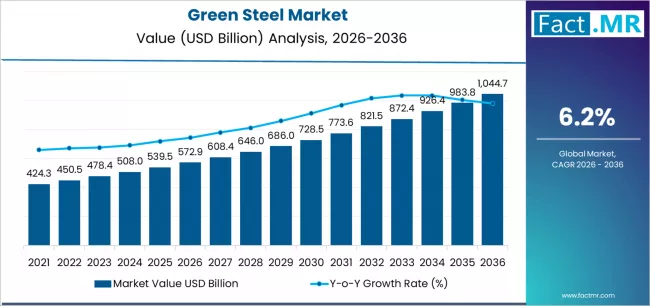
Steel producers and industrial manufacturers face mounting pressure to decarbonize production operations and achieve net-zero emission targets while maintaining product quality and cost competitiveness, with modern green steel technologies providing documented benefits including significant carbon emission reductions, renewable energy integration capabilities, and superior environmental credentials compared to conventional blast furnace steelmaking alone.
The electric arc furnace segment dominates market activity, driven by established scrap-based steelmaking capabilities and electricity-powered production processes enabling integration with renewable energy sources worldwide. Steel manufacturers increasingly recognize the environmental advantages of electric arc furnace technology, with typical installations providing efficient steel recycling and lower carbon intensity at competitive operational costs through modern power supply systems.
Green Steel Market
| Metric | Value |
|---|---|
| Market Value (2026) | USD 572.97 billion |
| Market Forecast Value (2036) | USD 1,044.7 billion |
| Forecast CAGR (2026-2036) | 6.2% |
Category
| Category | Segments |
|---|---|
| Production Technology | Electric Arc Furnace; Hydrogen-Based Direct Reduction; Natural Gas Direct Reduction |
| End-Use | Automotive and Transportation; Building and Construction; Electronics; Others |
| Region | Asia Pacific; North America; Europe; Latin America; Middle East & Africa |
Segmental Analysis
By Production Technology, Which Segment Accounts for the Dominant Market Share?
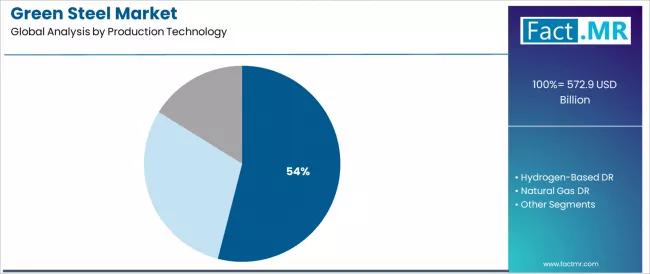
Electric arc furnace production represents the dominant force in the green steel market, capturing 54.0% of total market share in 2026. This technology encompasses solutions featuring electricity-powered steelmaking from scrap metal feedstock, including advanced ultra-high-power furnace designs and renewable energy integration capabilities that enable low-carbon steel production through recycling-based circular economy approaches worldwide.
By End-Use, Which Segment Accounts for the Largest Market Share?
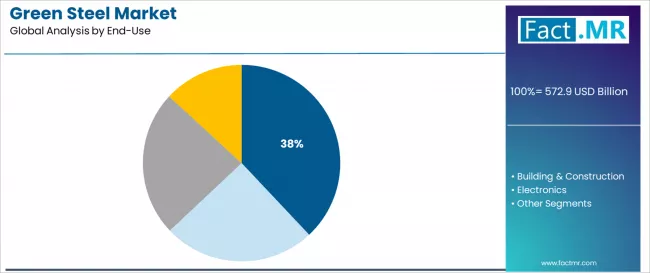
Automotive & transportation dominates the green steel end-use landscape with a 38.0% market share in 2026, reflecting the critical role of low-carbon materials in supporting automotive industry decarbonization strategies and electric vehicle manufacturing sustainability objectives worldwide.
The automotive & transportation segment's market leadership is reinforced by automaker sustainability commitments, supply chain emission reduction mandates, and consumer demand for environmentally responsible vehicle production driving green steel specifications.
What are the Drivers, Restraints, and Key Trends of the Green Steel Market?
The green steel market is driven by rising corporate net-zero commitments and scope 3 emission reduction targets, increasing demand for low-carbon steel across automotive and construction value chains. Strengthening carbon pricing mechanisms and emissions trading systems are further improving the economic case for green steel under carbon-constrained regulatory environments. Growing investor scrutiny and sustainable finance requirements are also encouraging steel producers to integrate environmental performance into capital access and competitive positioning.
Market restraints include high capital investment requirements for green steel facilities, particularly hydrogen-based direct reduction plants with significant infrastructure and renewable power costs. Limited availability of green hydrogen and supporting infrastructure constrains production scalability and operational reliability. Variations in technology maturity and limited operational experience further slow adoption, requiring extended commissioning and validation periods.
Key trends include accelerating hydrogen-based steelmaking projects in Europe and North America, supported by government funding and policy incentives. Expansion of high-capacity electric arc furnace infrastructure is also improving efficiency and lowering production costs, although alternative decarbonization pathways could influence long-term adoption dynamics.
Analysis of the Green Steel Market by Key Countries
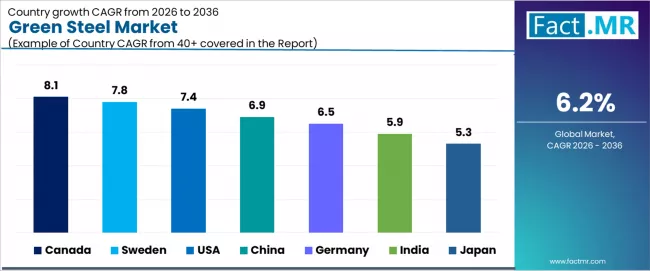
| Country | CAGR (2026-2036) |
|---|---|
| Canada | 8.1% |
| Sweden | 7.8% |
| USA | 7.4% |
| China | 6.9% |
| Germany | 6.5% |
| India | 5.9% |
| Japan | 5.3% |
How is Canada Leading Global Market Expansion in Green Steel?
Canada demonstrates the strongest growth potential in the green steel market, recording a CAGR of 8.1% through 2036. Leadership is driven by large-scale hydrogen direct reduction investments, abundant hydroelectric power enabling cost-effective green hydrogen production, and strategic positioning as a clean steel supplier to North America. Growth is concentrated in Quebec, Ontario, and Alberta, where renewable energy availability aligns with existing steel infrastructure.
Steel producers are advancing hydrogen-based steelmaking and electric arc furnace modernization, while automotive and construction supply chains support downstream demand. Government-backed clean technology funding, carbon pricing mechanisms, and critical mineral development continue to reinforce Canada’s green steel expansion.
Why is Sweden Emerging as a Technology Leadership Market in Green Steel?
Sweden grows at a 7.8% CAGR, driven by early commercialization of hydrogen-based steelmaking through initiatives such as HYBRIT. Industrial centers and northern mining regions are advancing fossil-free steel production supported by renewable electricity and integrated collaboration between steelmakers, miners, and energy providers.
Successful pilot operations and initial deliveries to automotive customers have validated technology readiness. Strong policy alignment and international demand for certified fossil-free steel continue to position Sweden as a global technology leader.
What is Driving Green Steel Market Growth in the USA?
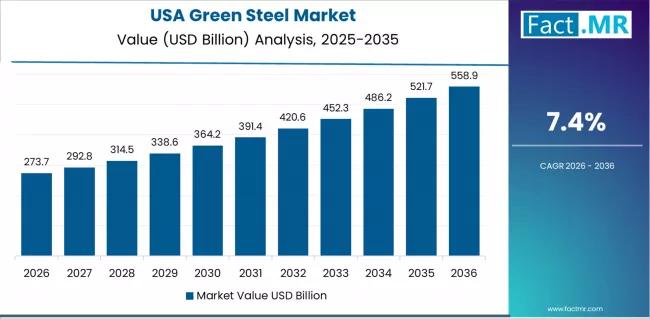
The USA records a 7.4% CAGR, supported by electric vehicle manufacturing growth, sustainable infrastructure development, and federal incentives under clean manufacturing programs. Automotive decarbonization commitments and Buy Clean initiatives are encouraging adoption of low-carbon steel.
Established electric arc furnace infrastructure and growing scrap availability provide favorable conditions for green steel production. Regional variation reflects both EAF-led expansion and emerging hydrogen-based projects in renewable energy zones.
How does China Demonstrate Production Scale Leadership in Green Steel?
China grows at a 6.9% CAGR, driven by electric arc furnace expansion, scrap recycling integration, and industrial emission reduction mandates. Steel production hubs in Hebei, Jiangsu, Shandong, and Liaoning are transitioning capacity through EAF adoption and consolidation programs.
Renewable grid integration and environmental compliance requirements support reduced carbon intensity. Demand remains strong across construction, automotive, and infrastructure projects aligned with national carbon neutrality goals.
What positions Germany for Automotive Integration Leadership in Green Steel?
Germany expands at a 6.5% CAGR, driven by EU Green Deal requirements and automotive supply chain decarbonization. Steel producers in North Rhine-Westphalia, Bavaria, and Lower Saxony are investing in hydrogen direct reduction and facility conversion programs.
Close collaboration with automotive OEMs supports long-term supply agreements and carbon-certified steel adoption. Hydrogen infrastructure development and regulatory alignment continue to support Germany’s green steel positioning.
How is India Showing Infrastructure-Driven Growth in Green Steel Adoption?
India records a 5.9% CAGR, supported by infrastructure expansion, urban construction demand, and growing renewable energy capacity. Adoption is concentrated in industrial regions such as Maharashtra, Gujarat, Tamil Nadu, and Karnataka.
Steel producers are expanding electric arc furnace capacity and exploring cleaner production pathways to meet domestic demand. Renewable energy policies and tightening emission standards continue to encourage low-carbon steel adoption.
What Characterizes Japan’s Technology Collaboration Approach in Green Steel?
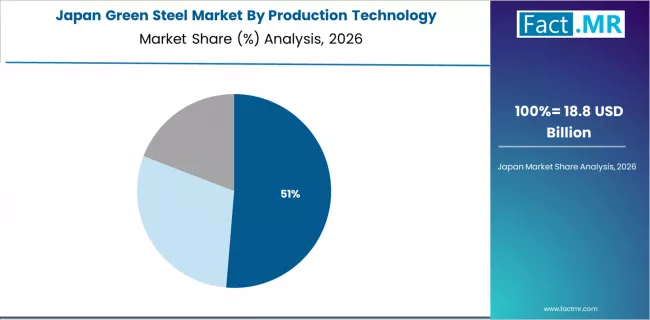
Japan grows at a 5.3% CAGR, driven by coordinated technology development with automotive manufacturers and a focus on incremental decarbonization. Steel producers collaborate with OEMs, trading houses, and technology partners to advance hydrogen steelmaking and carbon capture research. Emphasis remains on feasibility validation, application testing, and long-term transition planning aligned with Japanese industrial standards.
Competitive Landscape of the Green Steel Market
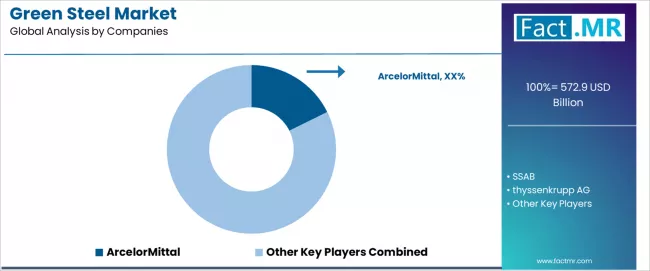
The green steel market is moderately concentrated, with around 10–15 meaningful participants competing across low-carbon steel production pathways. Competitive positioning is driven by decarbonization credibility, technology readiness, and long-term partnerships with automotive and construction customers rather than price-led dynamics.
ArcelorMittal, SSAB, and thyssenkrupp AG hold leading positions through large-scale production assets, advanced decarbonization programs, and active collaboration with automotive manufacturers seeking certified low-emission steel. These companies are investing heavily in hydrogen-based steelmaking, direct reduced iron technologies, and pilot projects to transition from conventional blast furnace operations.
Challengers such as Nucor Corporation, Tata Steel, and China BaoWu Steel Group compete through electric arc furnace expansion, scrap-based production, and renewable energy integration in key regional markets. Other producers including Emirates Steel Arkan, Outokumpu, and voestalpine AG focus on specific technologies or product segments, such as stainless and specialty steels.
Emerging entrants add competitive pressure through hydrogen-based facilities in regions with strong renewable energy access. Overall competitiveness favors producers combining scale, technology maturity, and end-user certification capabilities.
Key Players in the Green Steel Market
- ArcelorMittal
- SSAB
- thyssenkrupp AG
- Nucor Corporation
- Tata Steel
- China BaoWu Steel Group
- Emirates Steel Arkan
- Outokumpu
- voestalpine AG
- Salzgitter AG
Scope of the Report
| Items | Values |
|---|---|
| Quantitative Units | USD 572.97 Billion |
| Production Technology | Electric Arc Furnace, Hydrogen-Based DR, Natural Gas DR |
| End-Use | Automotive & Transportation, Building & Construction, Electronics, Others |
| Regions Covered | Asia Pacific, North America, Europe, Latin America, MEA |
| Country Covered | Canada, Sweden, USA, China, Germany, India, Japan, and 40+ countries |
| Key Companies Profiled | ArcelorMittal, SSAB, thyssenkrupp AG, Nucor Corporation, Tata Steel, China BaoWu Steel Group, Emirates Steel Arkan, Outokumpu, voestalpine AG, Salzgitter AG |
| Additional Attributes | Dollar sales by production technology and end-use categories, regional adoption trends across Asia Pacific, North America, and Europe, competitive landscape with integrated steel producers and clean technology developers, production specifications and emission intensity requirements, integration with automotive OEM supply chains and construction material specifications, innovations in hydrogen-based steelmaking and renewable energy integration, and development of specialized applications with carbon certification and lifecycle assessment capabilities. |
Green Steel Market by Segments
-
Production Technology :
- Electric Arc Furnace
- Hydrogen-Based DR
- Natural Gas DR
-
End-Use :
- Automotive & Transportation
- Building & Construction
- Electronics
- Others
-
Region :
- Asia Pacific
- China
- Japan
- South Korea
- India
- Australia
- Thailand
- Rest of Asia Pacific
- North America
- USA
- Canada
- Mexico
- Europe
- Germany
- UK
- France
- Italy
- Spain
- Denmark
- Sweden
- Norway
- Rest of Europe
- Latin America
- Brazil
- Argentina
- Rest of Latin America
- MEA
- South Africa
- Saudi Arabia
- UAE
- Kuwait
- Rest of MEA
- Asia Pacific
Table of Content
- Executive Summary
- Global Market Outlook
- Demand to side Trends
- Supply to side Trends
- Technology Roadmap Analysis
- Analysis and Recommendations
- Market Overview
- Market Coverage / Taxonomy
- Market Definition / Scope / Limitations
- Market Background
- Market Dynamics
- Drivers
- Restraints
- Opportunity
- Trends
- Scenario Forecast
- Demand in Optimistic Scenario
- Demand in Likely Scenario
- Demand in Conservative Scenario
- Opportunity Map Analysis
- Product Life Cycle Analysis
- Supply Chain Analysis
- Investment Feasibility Matrix
- Value Chain Analysis
- PESTLE and Porter’s Analysis
- Regulatory Landscape
- Regional Parent Market Outlook
- Production and Consumption Statistics
- Import and Export Statistics
- Market Dynamics
- Global Market Analysis 2021 to 2025 and Forecast, 2026 to 2036
- Historical Market Size Value (USD Million) Analysis, 2021 to 2025
- Current and Future Market Size Value (USD Million) Projections, 2026 to 2036
- Y to o to Y Growth Trend Analysis
- Absolute $ Opportunity Analysis
- Global Market Pricing Analysis 2021 to 2025 and Forecast 2026 to 2036
- Global Market Analysis 2021 to 2025 and Forecast 2026 to 2036, By Production Technology
- Introduction / Key Findings
- Historical Market Size Value (USD Million) Analysis By Production Technology, 2021 to 2025
- Current and Future Market Size Value (USD Million) Analysis and Forecast By Production Technology, 2026 to 2036
- Electric Arc Furnace
- Hydrogen-Based DR
- Natural Gas DR
- Y to o to Y Growth Trend Analysis By Production Technology, 2021 to 2025
- Absolute $ Opportunity Analysis By Production Technology, 2026 to 2036
- Global Market Analysis 2021 to 2025 and Forecast 2026 to 2036, By End-Use
- Introduction / Key Findings
- Historical Market Size Value (USD Million) Analysis By End-Use, 2021 to 2025
- Current and Future Market Size Value (USD Million) Analysis and Forecast By End-Use, 2026 to 2036
- Automotive & Transportation
- Building & Construction
- Electronics
- Others
- Y to o to Y Growth Trend Analysis By End-Use, 2021 to 2025
- Absolute $ Opportunity Analysis By End-Use, 2026 to 2036
- Global Market Analysis 2021 to 2025 and Forecast 2026 to 2036, By Region
- Introduction
- Historical Market Size Value (USD Million) Analysis By Region, 2021 to 2025
- Current Market Size Value (USD Million) Analysis and Forecast By Region, 2026 to 2036
- North America
- Latin America
- Western Europe
- Eastern Europe
- East Asia
- South Asia and Pacific
- Middle East & Africa
- Market Attractiveness Analysis By Region
- North America Market Analysis 2021 to 2025 and Forecast 2026 to 2036, By Country
- Historical Market Size Value (USD Million) Trend Analysis By Market Taxonomy, 2021 to 2025
- Market Size Value (USD Million) Forecast By Market Taxonomy, 2026 to 2036
- By Country
- USA
- Canada
- Mexico
- By Production Technology
- By End-Use
- By Country
- Market Attractiveness Analysis
- By Country
- By Production Technology
- By End-Use
- Key Takeaways
- Latin America Market Analysis 2021 to 2025 and Forecast 2026 to 2036, By Country
- Historical Market Size Value (USD Million) Trend Analysis By Market Taxonomy, 2021 to 2025
- Market Size Value (USD Million) Forecast By Market Taxonomy, 2026 to 2036
- By Country
- Brazil
- Chile
- Rest of Latin America
- By Production Technology
- By End-Use
- By Country
- Market Attractiveness Analysis
- By Country
- By Production Technology
- By End-Use
- Key Takeaways
- Western Europe Market Analysis 2021 to 2025 and Forecast 2026 to 2036, By Country
- Historical Market Size Value (USD Million) Trend Analysis By Market Taxonomy, 2021 to 2025
- Market Size Value (USD Million) Forecast By Market Taxonomy, 2026 to 2036
- By Country
- Germany
- UK
- Italy
- Spain
- France
- Nordic
- BENELUX
- Rest of Western Europe
- By Production Technology
- By End-Use
- By Country
- Market Attractiveness Analysis
- By Country
- By Production Technology
- By End-Use
- Key Takeaways
- Eastern Europe Market Analysis 2021 to 2025 and Forecast 2026 to 2036, By Country
- Historical Market Size Value (USD Million) Trend Analysis By Market Taxonomy, 2021 to 2025
- Market Size Value (USD Million) Forecast By Market Taxonomy, 2026 to 2036
- By Country
- Russia
- Poland
- Hungary
- Balkan & Baltic
- Rest of Eastern Europe
- By Production Technology
- By End-Use
- By Country
- Market Attractiveness Analysis
- By Country
- By Production Technology
- By End-Use
- Key Takeaways
- East Asia Market Analysis 2021 to 2025 and Forecast 2026 to 2036, By Country
- Historical Market Size Value (USD Million) Trend Analysis By Market Taxonomy, 2021 to 2025
- Market Size Value (USD Million) Forecast By Market Taxonomy, 2026 to 2036
- By Country
- China
- Japan
- South Korea
- By Production Technology
- By End-Use
- By Country
- Market Attractiveness Analysis
- By Country
- By Production Technology
- By End-Use
- Key Takeaways
- South Asia and Pacific Market Analysis 2021 to 2025 and Forecast 2026 to 2036, By Country
- Historical Market Size Value (USD Million) Trend Analysis By Market Taxonomy, 2021 to 2025
- Market Size Value (USD Million) Forecast By Market Taxonomy, 2026 to 2036
- By Country
- India
- ASEAN
- Australia & New Zealand
- Rest of South Asia and Pacific
- By Production Technology
- By End-Use
- By Country
- Market Attractiveness Analysis
- By Country
- By Production Technology
- By End-Use
- Key Takeaways
- Middle East & Africa Market Analysis 2021 to 2025 and Forecast 2026 to 2036, By Country
- Historical Market Size Value (USD Million) Trend Analysis By Market Taxonomy, 2021 to 2025
- Market Size Value (USD Million) Forecast By Market Taxonomy, 2026 to 2036
- By Country
- Kingdom of Saudi Arabia
- Other GCC Countries
- Turkiye
- South Africa
- Other African Union
- Rest of Middle East & Africa
- By Production Technology
- By End-Use
- By Country
- Market Attractiveness Analysis
- By Country
- By Production Technology
- By End-Use
- Key Takeaways
- Key Countries Market Analysis
- USA
- Pricing Analysis
- Market Share Analysis, 2025
- By Production Technology
- By End-Use
- Canada
- Pricing Analysis
- Market Share Analysis, 2025
- By Production Technology
- By End-Use
- Mexico
- Pricing Analysis
- Market Share Analysis, 2025
- By Production Technology
- By End-Use
- Brazil
- Pricing Analysis
- Market Share Analysis, 2025
- By Production Technology
- By End-Use
- Chile
- Pricing Analysis
- Market Share Analysis, 2025
- By Production Technology
- By End-Use
- Germany
- Pricing Analysis
- Market Share Analysis, 2025
- By Production Technology
- By End-Use
- UK
- Pricing Analysis
- Market Share Analysis, 2025
- By Production Technology
- By End-Use
- Italy
- Pricing Analysis
- Market Share Analysis, 2025
- By Production Technology
- By End-Use
- Spain
- Pricing Analysis
- Market Share Analysis, 2025
- By Production Technology
- By End-Use
- France
- Pricing Analysis
- Market Share Analysis, 2025
- By Production Technology
- By End-Use
- India
- Pricing Analysis
- Market Share Analysis, 2025
- By Production Technology
- By End-Use
- ASEAN
- Pricing Analysis
- Market Share Analysis, 2025
- By Production Technology
- By End-Use
- Australia & New Zealand
- Pricing Analysis
- Market Share Analysis, 2025
- By Production Technology
- By End-Use
- China
- Pricing Analysis
- Market Share Analysis, 2025
- By Production Technology
- By End-Use
- Japan
- Pricing Analysis
- Market Share Analysis, 2025
- By Production Technology
- By End-Use
- South Korea
- Pricing Analysis
- Market Share Analysis, 2025
- By Production Technology
- By End-Use
- Russia
- Pricing Analysis
- Market Share Analysis, 2025
- By Production Technology
- By End-Use
- Poland
- Pricing Analysis
- Market Share Analysis, 2025
- By Production Technology
- By End-Use
- Hungary
- Pricing Analysis
- Market Share Analysis, 2025
- By Production Technology
- By End-Use
- Kingdom of Saudi Arabia
- Pricing Analysis
- Market Share Analysis, 2025
- By Production Technology
- By End-Use
- Turkiye
- Pricing Analysis
- Market Share Analysis, 2025
- By Production Technology
- By End-Use
- South Africa
- Pricing Analysis
- Market Share Analysis, 2025
- By Production Technology
- By End-Use
- USA
- Market Structure Analysis
- Competition Dashboard
- Competition Benchmarking
- Market Share Analysis of Top Players
- By Regional
- By Production Technology
- By End-Use
- Competition Analysis
- Competition Deep Dive
- ArcelorMittal
- Overview
- Product Portfolio
- Profitability by Market Segments (Product/Age /Sales Channel/Region)
- Sales Footprint
- Strategy Overview
- Marketing Strategy
- Product Strategy
- Channel Strategy
- SSAB
- thyssenkrupp AG
- Nucor Corporation
- Tata Steel
- China BaoWu Steel Group
- Emirates Steel Arkan
- Outokumpu
- voestalpine AG
- Salzgitter AG
- ArcelorMittal
- Competition Deep Dive
- Assumptions & Acronyms Used
- Research Methodology
List Of Table
- Table 1: Global Market Value (USD Million) Forecast by Region, 2021 to 2036
- Table 2: Global Market Value (USD Million) Forecast by Production Technology, 2021 to 2036
- Table 3: Global Market Value (USD Million) Forecast by End-Use, 2021 to 2036
- Table 4: North America Market Value (USD Million) Forecast by Country, 2021 to 2036
- Table 5: North America Market Value (USD Million) Forecast by Production Technology, 2021 to 2036
- Table 6: North America Market Value (USD Million) Forecast by End-Use, 2021 to 2036
- Table 7: Latin America Market Value (USD Million) Forecast by Country, 2021 to 2036
- Table 8: Latin America Market Value (USD Million) Forecast by Production Technology, 2021 to 2036
- Table 9: Latin America Market Value (USD Million) Forecast by End-Use, 2021 to 2036
- Table 10: Western Europe Market Value (USD Million) Forecast by Country, 2021 to 2036
- Table 11: Western Europe Market Value (USD Million) Forecast by Production Technology, 2021 to 2036
- Table 12: Western Europe Market Value (USD Million) Forecast by End-Use, 2021 to 2036
- Table 13: Eastern Europe Market Value (USD Million) Forecast by Country, 2021 to 2036
- Table 14: Eastern Europe Market Value (USD Million) Forecast by Production Technology, 2021 to 2036
- Table 15: Eastern Europe Market Value (USD Million) Forecast by End-Use, 2021 to 2036
- Table 16: East Asia Market Value (USD Million) Forecast by Country, 2021 to 2036
- Table 17: East Asia Market Value (USD Million) Forecast by Production Technology, 2021 to 2036
- Table 18: East Asia Market Value (USD Million) Forecast by End-Use, 2021 to 2036
- Table 19: South Asia and Pacific Market Value (USD Million) Forecast by Country, 2021 to 2036
- Table 20: South Asia and Pacific Market Value (USD Million) Forecast by Production Technology, 2021 to 2036
- Table 21: South Asia and Pacific Market Value (USD Million) Forecast by End-Use, 2021 to 2036
- Table 22: Middle East & Africa Market Value (USD Million) Forecast by Country, 2021 to 2036
- Table 23: Middle East & Africa Market Value (USD Million) Forecast by Production Technology, 2021 to 2036
- Table 24: Middle East & Africa Market Value (USD Million) Forecast by End-Use, 2021 to 2036
List Of Figures
- Figure 1: Global Market Pricing Analysis
- Figure 2: Global Market Value (USD Million) Forecast 2021 to 2036
- Figure 3: Global Market Value Share and BPS Analysis by Production Technology, 2026 and 2036
- Figure 4: Global Market Y to o to Y Growth Comparison by Production Technology, 2026 to 2036
- Figure 5: Global Market Attractiveness Analysis by Production Technology
- Figure 6: Global Market Value Share and BPS Analysis by End-Use, 2026 and 2036
- Figure 7: Global Market Y to o to Y Growth Comparison by End-Use, 2026 to 2036
- Figure 8: Global Market Attractiveness Analysis by End-Use
- Figure 9: Global Market Value (USD Million) Share and BPS Analysis by Region, 2026 and 2036
- Figure 10: Global Market Y to o to Y Growth Comparison by Region, 2026 to 2036
- Figure 11: Global Market Attractiveness Analysis by Region
- Figure 12: North America Market Incremental Dollar Opportunity, 2026 to 2036
- Figure 13: Latin America Market Incremental Dollar Opportunity, 2026 to 2036
- Figure 14: Western Europe Market Incremental Dollar Opportunity, 2026 to 2036
- Figure 15: Eastern Europe Market Incremental Dollar Opportunity, 2026 to 2036
- Figure 16: East Asia Market Incremental Dollar Opportunity, 2026 to 2036
- Figure 17: South Asia and Pacific Market Incremental Dollar Opportunity, 2026 to 2036
- Figure 18: Middle East & Africa Market Incremental Dollar Opportunity, 2026 to 2036
- Figure 19: North America Market Value Share and BPS Analysis by Country, 2026 and 2036
- Figure 20: North America Market Value Share and BPS Analysis by Production Technology, 2026 and 2036
- Figure 21: North America Market Y to o to Y Growth Comparison by Production Technology, 2026 to 2036
- Figure 22: North America Market Attractiveness Analysis by Production Technology
- Figure 23: North America Market Value Share and BPS Analysis by End-Use, 2026 and 2036
- Figure 24: North America Market Y to o to Y Growth Comparison by End-Use, 2026 to 2036
- Figure 25: North America Market Attractiveness Analysis by End-Use
- Figure 26: Latin America Market Value Share and BPS Analysis by Country, 2026 and 2036
- Figure 27: Latin America Market Value Share and BPS Analysis by Production Technology, 2026 and 2036
- Figure 28: Latin America Market Y to o to Y Growth Comparison by Production Technology, 2026 to 2036
- Figure 29: Latin America Market Attractiveness Analysis by Production Technology
- Figure 30: Latin America Market Value Share and BPS Analysis by End-Use, 2026 and 2036
- Figure 31: Latin America Market Y to o to Y Growth Comparison by End-Use, 2026 to 2036
- Figure 32: Latin America Market Attractiveness Analysis by End-Use
- Figure 33: Western Europe Market Value Share and BPS Analysis by Country, 2026 and 2036
- Figure 34: Western Europe Market Value Share and BPS Analysis by Production Technology, 2026 and 2036
- Figure 35: Western Europe Market Y to o to Y Growth Comparison by Production Technology, 2026 to 2036
- Figure 36: Western Europe Market Attractiveness Analysis by Production Technology
- Figure 37: Western Europe Market Value Share and BPS Analysis by End-Use, 2026 and 2036
- Figure 38: Western Europe Market Y to o to Y Growth Comparison by End-Use, 2026 to 2036
- Figure 39: Western Europe Market Attractiveness Analysis by End-Use
- Figure 40: Eastern Europe Market Value Share and BPS Analysis by Country, 2026 and 2036
- Figure 41: Eastern Europe Market Value Share and BPS Analysis by Production Technology, 2026 and 2036
- Figure 42: Eastern Europe Market Y to o to Y Growth Comparison by Production Technology, 2026 to 2036
- Figure 43: Eastern Europe Market Attractiveness Analysis by Production Technology
- Figure 44: Eastern Europe Market Value Share and BPS Analysis by End-Use, 2026 and 2036
- Figure 45: Eastern Europe Market Y to o to Y Growth Comparison by End-Use, 2026 to 2036
- Figure 46: Eastern Europe Market Attractiveness Analysis by End-Use
- Figure 47: East Asia Market Value Share and BPS Analysis by Country, 2026 and 2036
- Figure 48: East Asia Market Value Share and BPS Analysis by Production Technology, 2026 and 2036
- Figure 49: East Asia Market Y to o to Y Growth Comparison by Production Technology, 2026 to 2036
- Figure 50: East Asia Market Attractiveness Analysis by Production Technology
- Figure 51: East Asia Market Value Share and BPS Analysis by End-Use, 2026 and 2036
- Figure 52: East Asia Market Y to o to Y Growth Comparison by End-Use, 2026 to 2036
- Figure 53: East Asia Market Attractiveness Analysis by End-Use
- Figure 54: South Asia and Pacific Market Value Share and BPS Analysis by Country, 2026 and 2036
- Figure 55: South Asia and Pacific Market Value Share and BPS Analysis by Production Technology, 2026 and 2036
- Figure 56: South Asia and Pacific Market Y to o to Y Growth Comparison by Production Technology, 2026 to 2036
- Figure 57: South Asia and Pacific Market Attractiveness Analysis by Production Technology
- Figure 58: South Asia and Pacific Market Value Share and BPS Analysis by End-Use, 2026 and 2036
- Figure 59: South Asia and Pacific Market Y to o to Y Growth Comparison by End-Use, 2026 to 2036
- Figure 60: South Asia and Pacific Market Attractiveness Analysis by End-Use
- Figure 61: Middle East & Africa Market Value Share and BPS Analysis by Country, 2026 and 2036
- Figure 62: Middle East & Africa Market Value Share and BPS Analysis by Production Technology, 2026 and 2036
- Figure 63: Middle East & Africa Market Y to o to Y Growth Comparison by Production Technology, 2026 to 2036
- Figure 64: Middle East & Africa Market Attractiveness Analysis by Production Technology
- Figure 65: Middle East & Africa Market Value Share and BPS Analysis by End-Use, 2026 and 2036
- Figure 66: Middle East & Africa Market Y to o to Y Growth Comparison by End-Use, 2026 to 2036
- Figure 67: Middle East & Africa Market Attractiveness Analysis by End-Use
- Figure 68: Global Market - Tier Structure Analysis
- Figure 69: Global Market - Company Share Analysis
- FAQs -
How big is the green steel market in 2026?
The global green steel market is estimated to be valued at USD 572.9 billion in 2026.
What will be the size of green steel market in 2036?
The market size for the green steel market is projected to reach USD 1,044.7 billion by 2036.
How much will be the green steel market growth between 2026 and 2036?
The green steel market is expected to grow at a 6.2% CAGR between 2026 and 2036.
What are the key product types in the green steel market?
The key product types in green steel market are electric arc furnace, hydrogen-based dr and natural gas dr.
Which end-use segment to contribute significant share in the green steel market in 2026?
In terms of end-use, automotive & transportation segment to command 38.0% share in the green steel market in 2026.