Heat Shrink Fitting Machines Market (2026 - 2036)
Heat Shrink Fitting Machines Market Size and Share Forecast Outlook 2026 to 2036
Core Findings
Heat Shrink Fitting Machines Market Forecast and Outlook 2026 to 2036
The global heat shrink fitting machines market is expected to grow from USD 562 million in 2026 to approximately USD 872.8 million by 2036, reflecting a CAGR of 4.5%. Induction shrink fitting dominates due to its precision and efficiency in mounting gears, bearings, and other components with minimal thermal stress. Hot oil bath, electric or IR heaters, and gas/flame systems are also used depending on component size, material, and industry requirements.
Key Takeaways from Heat Shrink Fitting Machines Market
- Heat Shrink Fitting Machines Market Value 2026: USD 562 million
- Heat Shrink Fitting Machines Market Forecast Value 2036: USD 872.8 million
- Heat Shrink Fitting Machines Market Forecast CAGR: 4.5%
- Leading Heating Method Segment: Induction shrink fitting 54%
- Key Growth Regions: U.S., Japan, Germany, South Korea, Europe, China
- Prominent Players: EFD Induction, SKF, Schenck Heimatec Shrink, HAIMER, Bilz Werkzeugfabrik, Röhm
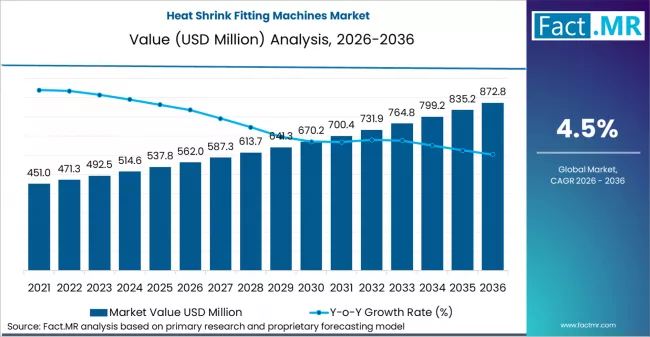
Gears and bearings represent the largest component segment, followed by couplings, sleeves, rotors, shafts, and other hubs. Machine tools account for the leading end-industry segment, supported by automotive/EV, aerospace, and industrial equipment applications. Semi-automatic systems are most widely adopted, while fully automatic or robotic and manual systems serve high-volume or specialized operations. North America, particularly the U.S., leads adoption, followed by Asia-Pacific regions including Japan, South Korea, and China. Suppliers focus on process accuracy, repeatability, and energy efficiency to support precise shrink fitting across varied components.
Heat Shrink Fitting Machines Market
| Metric | Value |
|---|---|
| Estimated Value in (2026E) | USD 562.0 million |
| Forecast Value in (2036F) | USD 872.8 million |
| Forecast CAGR (2026 to 2036) | 4.5% |
Category
| Category | Segments |
|---|---|
| Heating Method | Induction Shrink Fitting; Hot Oil Bath; Electric or IR Heaters; Gas or Flame; Other |
| Component | Gears or Bearings; Couplings or Sleeves; Rotors or Shafts; Other Hubs; Other |
| End Industry | Machine Tools; Automotive or EV; Aerospace; Industrial Equipment; Other |
| Automation | Semi-Automatic; Fully Automatic or Robotic; Manual; Other |
| Region | North America; Europe; Asia Pacific; Latin America; Middle East & Africa |
Segmental Analysis
By Heating Method, Which Segment Holds the Dominant Share in the Heat Shrink Fitting Machines Market?
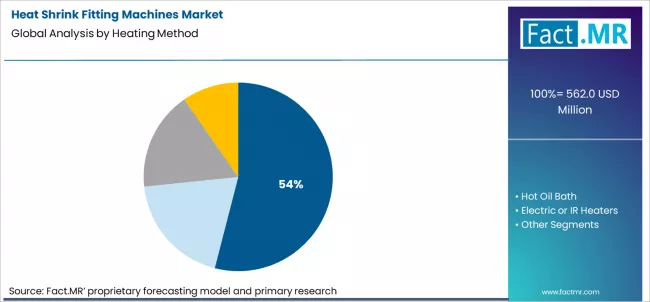
In terms of heating method, induction shrink fitting holds a 54.0% share, establishing it as the leading segment in the heat shrink fitting machines market. Manufacturers prefer induction based systems due to controlled heating performance and reduced thermal impact on surrounding components.
- Induction shrink fitting machines enable precise and repeatable heating cycles for interference fit applications.
- Consistent process control supports adoption across high accuracy assembly environments.
By Component, Which Segment Accounts for the Largest Share in the Heat Shrink Fitting Machines Market?
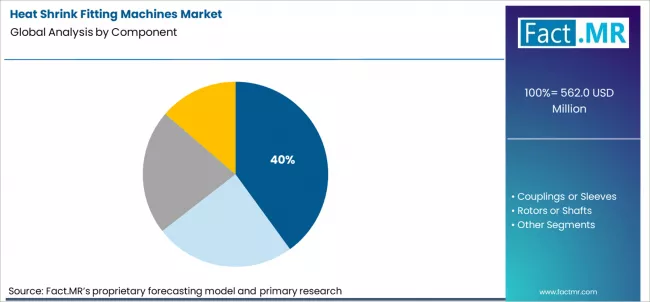
Gears and bearings represent the largest component segment with a 40.0% share. These components require accurate thermal expansion control to ensure proper fit and long term operational stability.
- Shrink fitting machines are widely used to mount gears and bearings without mechanical stress.
- Application demand reflects requirements for alignment accuracy and load bearing reliability.
By End Industry, Which Segment Leads Demand in the Heat Shrink Fitting Machines Market?
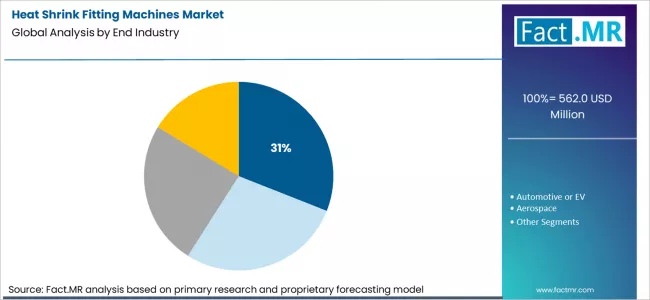
Machine tools account for a 31.0% share, positioning this industry as the primary end use segment. Shrink fitting remains a standard process within tool holding and spindle assembly operations.
- Heat shrink fitting machines support precision tool mounting and changeover efficiency.
- Usage aligns with production environments focused on dimensional accuracy and repeatability.
By Automation, Which Segment Maintains the Highest Share in the Heat Shrink Fitting Machines Market?
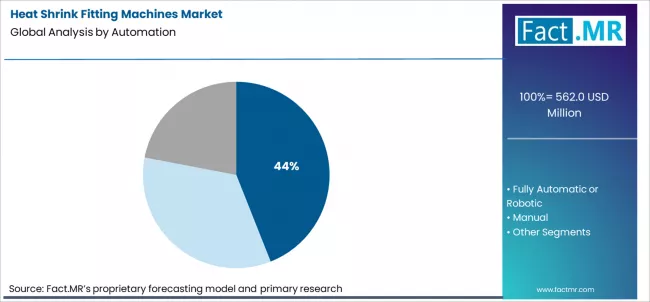
Semi-automatic systems hold a 44.0% share, making them the most widely adopted automation level. Manufacturers select this configuration to balance operator control with process consistency.
- Semi-automatic machines support flexible integration within existing assembly workflows.
- Adoption reflects operational preference for moderate automation without full system complexity.
What are the Drivers, Restraints, and Key Trends of the Heat Shrink Fitting Machines Market?
- Drivers: Manufacturers are turning to heat shrink fitting to assemble gears, bearings, shafts, and tool holders with high positional accuracy and zero backlash, making these machines essential in machine tool, automotive, EV, and aerospace environments where precision and joint reliability directly affect performance.
- Restraint: Heat shrink fitting requires tight control of heating temperature and cycle time, and mistakes can damage components or alter material properties, increasing reliance on trained operators and slowing adoption in facilities with limited process expertise.
- Trend 1: Induction based shrink fitting machines are increasingly preferred as they offer faster, more uniform heating with lower energy loss, improving repeatability and reducing thermal stress on critical components.
- Trend 2: Automation is gaining momentum, with semi-automatic and fully robotic shrink fitting systems being adopted in high volume production lines to improve safety, reduce operator variability, and support consistent assembly of precision components.
Analysis of the Heat Shrink Fitting Machines Market by Key Country
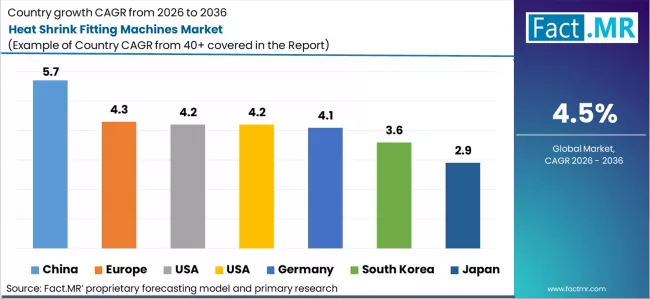
| Country | CAGR |
|---|---|
| China | 5.7% |
| Brazil | 5.3% |
| Europe | 4.3% |
| U.S. | 4.2% |
| U.K. | 4.2% |
| Germany | 4.1% |
| South Korea | 3.6% |
| Japan | 2.9% |
The report covers an in depth analysis of 8 countries; higher growth markets are highlighted below.
What Is Driving Growth of Heat Shrink Fitting Machines in China?
China shows the strongest growth at 5.7%, supported by expanding production of machine tools, motors, and industrial assemblies. Heat shrink fitting machines are widely used for mounting bearings, gears, and shafts with tight tolerances. Buyers increasingly prefer induction based systems that deliver controlled heating and consistent joint quality in high throughput environments.
- Expansion of industrial equipment manufacturing supports machine demand.
- Induction systems improve repeatability and cycle control.
How Is Brazil Emerging as a High-Growth Market for Heat Shrink Fitting Equipment?
Brazil is projected to grow at 5.3%, driven by steady demand from automotive suppliers and general industrial workshops. Shrink fitting machines are commonly used for coupling and sleeve assembly. Purchasing decisions emphasize durability and operational simplicity, with semi-automatic systems fitting well into mixed production setups.
- Automotive and industrial activity sustains equipment demand.
- Semi-automatic systems suit varied production conditions.
What Is Supporting Market Expansion Across Europe?
Europe is expected to expand at 4.3%, supported by aerospace, tooling, and precision manufacturing applications. Electric and induction based shrink fitting machines are favored for controlled heating of rotors and shafts. Buyers focus on accuracy, safety, and compatibility with existing toolholding systems.
- Aerospace and tooling demand supports steady adoption.
- Controlled heating improves assembly precision.
What Defines Market Conditions in the U.S.?
The U.S. market is forecast to grow at 4.2%, shaped by use of shrink fitting machines in machine tool shops and industrial maintenance operations. Induction and electric heating methods are commonly used for gear and bearing installation. Reliability and service support strongly influence purchasing decisions.
- Machine tool activity sustains baseline demand.
- Serviceability influences equipment selection.
How Is the U.K. Positioned in the Heat Shrink Fitting Machines Market?
The U.K. is projected to grow at 4.2%, supported by steady demand from general engineering and aerospace component suppliers. Shrink fitting machines are used to ensure precise component mounting without mechanical stress. Compact systems that integrate easily into existing workflows are preferred.
- Aerospace supply chains support equipment usage.
- Compact designs suit space constrained workshops.
What Role Does Germany Play in Market Development?
Germany is expected to grow at 4.1%, reflecting strong emphasis on precision assembly and process reliability. Heat shrink fitting machines are widely used in toolholding and industrial equipment manufacturing. Demand aligns with capital investment cycles and upgrades in high accuracy production facilities.
- Precision engineering sustains demand for advanced systems.
- Investment cycles shape purchasing activity.
How Is South Korea Contributing to Market Growth?
South Korea is forecast to grow at 3.6%, driven by automotive and EV component manufacturing. Fully automatic and robotic shrink fitting systems are increasingly adopted to support consistent assembly quality. Buyers prioritize automation compatibility and repeatable thermal control.
- EV and automotive production supports equipment demand.
- Automation improves consistency and throughput.
What Factors Shape Market Development in Japan?
Japan is expected to register a CAGR of 2.9%, reflecting mature manufacturing operations and long equipment service life. Heat shrink fitting machines remain in use across machine tool and industrial equipment sectors. Demand remains steady as assembly processes are already optimized for precision and reliability.
- Mature manufacturing sustains stable demand.
- Long equipment lifecycles limit rapid expansion.
Competitive Landscape of the Heat Shrink Fitting Machines Market
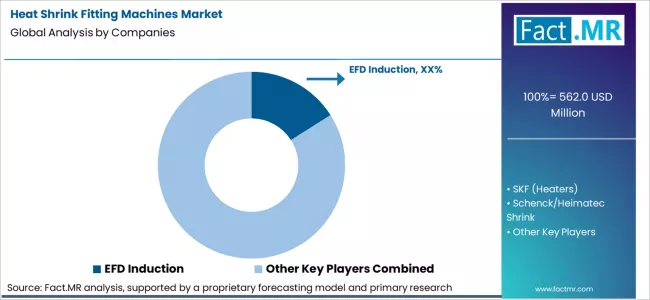
The heat shrink fitting machines market supports precision assembly processes where tight, backlash-free joints are critical. These machines are used to expand metal components such as gears, bearings, couplings, sleeves, rotors, and tool holders so they can be mounted accurately onto shafts and hubs. Buyers in this market care about uniform heating, cycle repeatability, safety, and how smoothly the process fits into daily shop-floor operations. Competition is shaped by heating efficiency, temperature control accuracy, and the ability to handle different component sizes without distortion.
Manufacturers differentiate through heating methods and automation levels. Induction shrink fitting leads adoption because it delivers fast, localized heating with minimal energy loss, making it ideal for machine tool and automotive applications. Electric and infrared systems appeal to workshops seeking cleaner operation and precise control, while hot oil and gas-based methods remain in use for legacy or lower-cost setups. Automation is increasingly important, with semi-automatic systems dominating today and fully automated or robotic solutions gaining traction in high-volume EV, aerospace, and industrial equipment production.
Market players include EFD Induction, SKF, Schenck Heimatec, HAIMER, Bilz Werkzeugfabrik, Röhm, Nachi-Fujikoshi, Nabertherm, DMG MORI, and IZAR Tooling. Established machine tool brands lead in precision and integration, while heating specialists compete through efficiency, safety features, and application-focused system design.
Key Players in the Heat Shrink Fitting Machines Market
- EFD Induction
- SKF
- Schenck Heimatec
- HAIMER
- Bilz Werkzeugfabrik
- Röhm
- Nachi-Fujikoshi
- Nabertherm
- DMG MORI
- IZAR Tooling
Scope of the Report
| Items | Values |
|---|---|
| Quantitative Units 2026 | USD 562 Million |
| Heating Method | Induction shrink fitting, Hot oil bath heating, Electric or IR heating, Gas or flame heating |
| Component | Gears or bearings, Couplings or sleeves, Rotors or shafts, Hub components |
| End Industry | Machine tools, Automotive and EV manufacturing, Aerospace, Industrial equipment |
| Automation | Semi-automatic systems, Fully automatic or robotic systems, Manual systems |
| Regions Covered | North America, Europe, Asia Pacific, Latin America, Middle East & Africa |
| Countries Covered | U.S., Japan, South Korea, Germany, China, U.K., Brazil |
| Key Companies Profiled | EFD Induction, SKF, HAIMER, Bilz Werkzeugfabrik, Röhm, Nachi-Fujikoshi, Nabertherm, DMG MORI, IZAR Tooling |
| Additional Attributes | Dollar revenue by heat shrink fitting heating method, component type, end industry, and automation level; regional demand trends; precision requirements for interference fits; adoption of induction-based heating for speed and control; integration with automated machining cells; emphasis on repeatability and thermal process safety |
Heat Shrink Fitting Machines Market Segments
-
Heating Method:
- Induction Shrink Fitting
- Hot Oil Bath
- Electric or IR Heaters
- Gas or Flame
-
Component:
- Gears or Bearings
- Couplings or Sleeves
- Rotors or Shafts
- Other Hubs
-
End Industry:
- Machine Tools
- Automotive or EV
- Aerospace
- Industrial Equipment
-
Automation:
- Semi Automatic
- Fully Automatic or Robotic
- Manual
-
Region:
- North America
- U.S.
- Canada
- Mexico
- Europe
- Germany
- Italy
- UK
- France
- Spain
- Netherlands
- Switzerland
- Rest of Europe
- Asia Pacific
- Japan
- Australia
- South Korea
- China
- India
- Rest of Asia Pacific
- Latin America
- Brazil
- Argentina
- Rest of Latin America
- Middle East and Africa
- United Arab Emirates
- South Africa
- Rest of Middle East and Africa
- North America
Bibliography
- United Nations Industrial Development Organization. (2024). Precision assembly, interference fitting, and thermal joining technologies in industrial manufacturing. Vienna, Austria: UNIDO.
- Organisation for Economic Co-operation and Development. (2024). Advanced manufacturing equipment, automation, and energy-efficient industrial processes. Paris, France: OECD.
- International Trade Centre. (2024). Global trade and demand trends for industrial heating and assembly equipment. Geneva, Switzerland: ITC.
- U.S. Department of Commerce, International Trade Administration. (2024). Machine tools, industrial heating systems, and precision assembly equipment overview. Washington, DC: ITA.
- World Intellectual Property Organization. (2025). Technological developments in thermal assembly, induction heating, and precision fitting systems. Geneva, Switzerland: WIPO.
Table of Content
- Executive Summary
- Global Market Outlook
- Demand to side Trends
- Supply to side Trends
- Technology Roadmap Analysis
- Analysis and Recommendations
- Market Overview
- Market Coverage / Taxonomy
- Market Definition / Scope / Limitations
- Market Background
- Market Dynamics
- Drivers
- Restraints
- Opportunity
- Trends
- Scenario Forecast
- Demand in Optimistic Scenario
- Demand in Likely Scenario
- Demand in Conservative Scenario
- Opportunity Map Analysis
- Product Life Cycle Analysis
- Supply Chain Analysis
- Investment Feasibility Matrix
- Value Chain Analysis
- PESTLE and Porter’s Analysis
- Regulatory Landscape
- Regional Parent Market Outlook
- Production and Consumption Statistics
- Import and Export Statistics
- Market Dynamics
- Global Market Analysis 2021 to 2025 and Forecast, 2026 to 2036
- Historical Market Size Value (USD Million) Analysis, 2021 to 2025
- Current and Future Market Size Value (USD Million) Projections, 2026 to 2036
- Y to o to Y Growth Trend Analysis
- Absolute $ Opportunity Analysis
- Global Market Pricing Analysis 2021 to 2025 and Forecast 2026 to 2036
- Global Market Analysis 2021 to 2025 and Forecast 2026 to 2036, By Heating Method
- Introduction / Key Findings
- Historical Market Size Value (USD Million) Analysis By Heating Method, 2021 to 2025
- Current and Future Market Size Value (USD Million) Analysis and Forecast By Heating Method, 2026 to 2036
- Induction Shrink Fitting
- Hot Oil Bath
- Electric or IR Heaters
- Gas or Flame
- Induction Shrink Fitting
- Y to o to Y Growth Trend Analysis By Heating Method, 2021 to 2025
- Absolute $ Opportunity Analysis By Heating Method, 2026 to 2036
- Global Market Analysis 2021 to 2025 and Forecast 2026 to 2036, By Component
- Introduction / Key Findings
- Historical Market Size Value (USD Million) Analysis By Component, 2021 to 2025
- Current and Future Market Size Value (USD Million) Analysis and Forecast By Component, 2026 to 2036
- Gears or Bearings
- Couplings or Sleeves
- Rotors or Shafts
- Other Hubs
- Gears or Bearings
- Y to o to Y Growth Trend Analysis By Component, 2021 to 2025
- Absolute $ Opportunity Analysis By Component, 2026 to 2036
- Global Market Analysis 2021 to 2025 and Forecast 2026 to 2036, By End Industry
- Introduction / Key Findings
- Historical Market Size Value (USD Million) Analysis By End Industry, 2021 to 2025
- Current and Future Market Size Value (USD Million) Analysis and Forecast By End Industry, 2026 to 2036
- Machine Tools
- Automotive or EV
- Aerospace
- Industrial Equipment
- Machine Tools
- Y to o to Y Growth Trend Analysis By End Industry, 2021 to 2025
- Absolute $ Opportunity Analysis By End Industry, 2026 to 2036
- Global Market Analysis 2021 to 2025 and Forecast 2026 to 2036, By Automation
- Introduction / Key Findings
- Historical Market Size Value (USD Million) Analysis By Automation, 2021 to 2025
- Current and Future Market Size Value (USD Million) Analysis and Forecast By Automation, 2026 to 2036
- Semi-Automatic
- Fully Automatic or Robotic
- Manual
- Semi-Automatic
- Y to o to Y Growth Trend Analysis By Automation, 2021 to 2025
- Absolute $ Opportunity Analysis By Automation, 2026 to 2036
- Global Market Analysis 2021 to 2025 and Forecast 2026 to 2036, By Region
- Introduction
- Historical Market Size Value (USD Million) Analysis By Region, 2021 to 2025
- Current Market Size Value (USD Million) Analysis and Forecast By Region, 2026 to 2036
- North America
- Latin America
- Western Europe
- Eastern Europe
- East Asia
- South Asia and Pacific
- Middle East & Africa
- Market Attractiveness Analysis By Region
- North America Market Analysis 2021 to 2025 and Forecast 2026 to 2036, By Country
- Historical Market Size Value (USD Million) Trend Analysis By Market Taxonomy, 2021 to 2025
- Market Size Value (USD Million) Forecast By Market Taxonomy, 2026 to 2036
- By Country
- USA
- Canada
- Mexico
- By Heating Method
- By Component
- By End Industry
- By Automation
- By Country
- Market Attractiveness Analysis
- By Country
- By Heating Method
- By Component
- By End Industry
- By Automation
- Key Takeaways
- Latin America Market Analysis 2021 to 2025 and Forecast 2026 to 2036, By Country
- Historical Market Size Value (USD Million) Trend Analysis By Market Taxonomy, 2021 to 2025
- Market Size Value (USD Million) Forecast By Market Taxonomy, 2026 to 2036
- By Country
- Brazil
- Chile
- Rest of Latin America
- By Heating Method
- By Component
- By End Industry
- By Automation
- By Country
- Market Attractiveness Analysis
- By Country
- By Heating Method
- By Component
- By End Industry
- By Automation
- Key Takeaways
- Western Europe Market Analysis 2021 to 2025 and Forecast 2026 to 2036, By Country
- Historical Market Size Value (USD Million) Trend Analysis By Market Taxonomy, 2021 to 2025
- Market Size Value (USD Million) Forecast By Market Taxonomy, 2026 to 2036
- By Country
- Germany
- UK
- Italy
- Spain
- France
- Nordic
- BENELUX
- Rest of Western Europe
- By Heating Method
- By Component
- By End Industry
- By Automation
- By Country
- Market Attractiveness Analysis
- By Country
- By Heating Method
- By Component
- By End Industry
- By Automation
- Key Takeaways
- Eastern Europe Market Analysis 2021 to 2025 and Forecast 2026 to 2036, By Country
- Historical Market Size Value (USD Million) Trend Analysis By Market Taxonomy, 2021 to 2025
- Market Size Value (USD Million) Forecast By Market Taxonomy, 2026 to 2036
- By Country
- Russia
- Poland
- Hungary
- Balkan & Baltic
- Rest of Eastern Europe
- By Heating Method
- By Component
- By End Industry
- By Automation
- By Country
- Market Attractiveness Analysis
- By Country
- By Heating Method
- By Component
- By End Industry
- By Automation
- Key Takeaways
- East Asia Market Analysis 2021 to 2025 and Forecast 2026 to 2036, By Country
- Historical Market Size Value (USD Million) Trend Analysis By Market Taxonomy, 2021 to 2025
- Market Size Value (USD Million) Forecast By Market Taxonomy, 2026 to 2036
- By Country
- China
- Japan
- South Korea
- By Heating Method
- By Component
- By End Industry
- By Automation
- By Country
- Market Attractiveness Analysis
- By Country
- By Heating Method
- By Component
- By End Industry
- By Automation
- Key Takeaways
- South Asia and Pacific Market Analysis 2021 to 2025 and Forecast 2026 to 2036, By Country
- Historical Market Size Value (USD Million) Trend Analysis By Market Taxonomy, 2021 to 2025
- Market Size Value (USD Million) Forecast By Market Taxonomy, 2026 to 2036
- By Country
- India
- ASEAN
- Australia & New Zealand
- Rest of South Asia and Pacific
- By Heating Method
- By Component
- By End Industry
- By Automation
- By Country
- Market Attractiveness Analysis
- By Country
- By Heating Method
- By Component
- By End Industry
- By Automation
- Key Takeaways
- Middle East & Africa Market Analysis 2021 to 2025 and Forecast 2026 to 2036, By Country
- Historical Market Size Value (USD Million) Trend Analysis By Market Taxonomy, 2021 to 2025
- Market Size Value (USD Million) Forecast By Market Taxonomy, 2026 to 2036
- By Country
- Kingdom of Saudi Arabia
- Other GCC Countries
- Turkiye
- South Africa
- Other African Union
- Rest of Middle East & Africa
- By Heating Method
- By Component
- By End Industry
- By Automation
- By Country
- Market Attractiveness Analysis
- By Country
- By Heating Method
- By Component
- By End Industry
- By Automation
- Key Takeaways
- Key Countries Market Analysis
- USA
- Pricing Analysis
- Market Share Analysis, 2025
- By Heating Method
- By Component
- By End Industry
- By Automation
- Canada
- Pricing Analysis
- Market Share Analysis, 2025
- By Heating Method
- By Component
- By End Industry
- By Automation
- Mexico
- Pricing Analysis
- Market Share Analysis, 2025
- By Heating Method
- By Component
- By End Industry
- By Automation
- Brazil
- Pricing Analysis
- Market Share Analysis, 2025
- By Heating Method
- By Component
- By End Industry
- By Automation
- Chile
- Pricing Analysis
- Market Share Analysis, 2025
- By Heating Method
- By Component
- By End Industry
- By Automation
- Germany
- Pricing Analysis
- Market Share Analysis, 2025
- By Heating Method
- By Component
- By End Industry
- By Automation
- UK
- Pricing Analysis
- Market Share Analysis, 2025
- By Heating Method
- By Component
- By End Industry
- By Automation
- Italy
- Pricing Analysis
- Market Share Analysis, 2025
- By Heating Method
- By Component
- By End Industry
- By Automation
- Spain
- Pricing Analysis
- Market Share Analysis, 2025
- By Heating Method
- By Component
- By End Industry
- By Automation
- France
- Pricing Analysis
- Market Share Analysis, 2025
- By Heating Method
- By Component
- By End Industry
- By Automation
- India
- Pricing Analysis
- Market Share Analysis, 2025
- By Heating Method
- By Component
- By End Industry
- By Automation
- ASEAN
- Pricing Analysis
- Market Share Analysis, 2025
- By Heating Method
- By Component
- By End Industry
- By Automation
- Australia & New Zealand
- Pricing Analysis
- Market Share Analysis, 2025
- By Heating Method
- By Component
- By End Industry
- By Automation
- China
- Pricing Analysis
- Market Share Analysis, 2025
- By Heating Method
- By Component
- By End Industry
- By Automation
- Japan
- Pricing Analysis
- Market Share Analysis, 2025
- By Heating Method
- By Component
- By End Industry
- By Automation
- South Korea
- Pricing Analysis
- Market Share Analysis, 2025
- By Heating Method
- By Component
- By End Industry
- By Automation
- Russia
- Pricing Analysis
- Market Share Analysis, 2025
- By Heating Method
- By Component
- By End Industry
- By Automation
- Poland
- Pricing Analysis
- Market Share Analysis, 2025
- By Heating Method
- By Component
- By End Industry
- By Automation
- Hungary
- Pricing Analysis
- Market Share Analysis, 2025
- By Heating Method
- By Component
- By End Industry
- By Automation
- Kingdom of Saudi Arabia
- Pricing Analysis
- Market Share Analysis, 2025
- By Heating Method
- By Component
- By End Industry
- By Automation
- Turkiye
- Pricing Analysis
- Market Share Analysis, 2025
- By Heating Method
- By Component
- By End Industry
- By Automation
- South Africa
- Pricing Analysis
- Market Share Analysis, 2025
- By Heating Method
- By Component
- By End Industry
- By Automation
- USA
- Market Structure Analysis
- Competition Dashboard
- Competition Benchmarking
- Market Share Analysis of Top Players
- By Regional
- By Heating Method
- By Component
- By End Industry
- By Automation
- Competition Analysis
- Competition Deep Dive
- EFD Induction
- Overview
- Product Portfolio
- Profitability by Market Segments (Product/Age /Sales Channel/Region)
- Sales Footprint
- Strategy Overview
- Marketing Strategy
- Product Strategy
- Channel Strategy
- SKF (Heaters)
- Schenck/Heimatec Shrink
- HAIMER
- Bilz Werkzeugfabrik
- Röhm
- Nachi-Fujikoshi
- Nabertherm
- DMG MORI (Shrink Fit)
- IZAR Tooling
- EFD Induction
- Competition Deep Dive
- Assumptions & Acronyms Used
- Research Methodology
List Of Table
- Table 1: Global Market Value (USD Million) Forecast by Region, 2021 to 2036
- Table 2: Global Market Value (USD Million) Forecast by Heating Method, 2021 to 2036
- Table 3: Global Market Value (USD Million) Forecast by Component, 2021 to 2036
- Table 4: Global Market Value (USD Million) Forecast by End Industry, 2021 to 2036
- Table 5: Global Market Value (USD Million) Forecast by Automation, 2021 to 2036
- Table 6: North America Market Value (USD Million) Forecast by Country, 2021 to 2036
- Table 7: North America Market Value (USD Million) Forecast by Heating Method, 2021 to 2036
- Table 8: North America Market Value (USD Million) Forecast by Component, 2021 to 2036
- Table 9: North America Market Value (USD Million) Forecast by End Industry, 2021 to 2036
- Table 10: North America Market Value (USD Million) Forecast by Automation, 2021 to 2036
- Table 11: Latin America Market Value (USD Million) Forecast by Country, 2021 to 2036
- Table 12: Latin America Market Value (USD Million) Forecast by Heating Method, 2021 to 2036
- Table 13: Latin America Market Value (USD Million) Forecast by Component, 2021 to 2036
- Table 14: Latin America Market Value (USD Million) Forecast by End Industry, 2021 to 2036
- Table 15: Latin America Market Value (USD Million) Forecast by Automation, 2021 to 2036
- Table 16: Western Europe Market Value (USD Million) Forecast by Country, 2021 to 2036
- Table 17: Western Europe Market Value (USD Million) Forecast by Heating Method, 2021 to 2036
- Table 18: Western Europe Market Value (USD Million) Forecast by Component, 2021 to 2036
- Table 19: Western Europe Market Value (USD Million) Forecast by End Industry, 2021 to 2036
- Table 20: Western Europe Market Value (USD Million) Forecast by Automation, 2021 to 2036
- Table 21: Eastern Europe Market Value (USD Million) Forecast by Country, 2021 to 2036
- Table 22: Eastern Europe Market Value (USD Million) Forecast by Heating Method, 2021 to 2036
- Table 23: Eastern Europe Market Value (USD Million) Forecast by Component, 2021 to 2036
- Table 24: Eastern Europe Market Value (USD Million) Forecast by End Industry, 2021 to 2036
- Table 25: Eastern Europe Market Value (USD Million) Forecast by Automation, 2021 to 2036
- Table 26: East Asia Market Value (USD Million) Forecast by Country, 2021 to 2036
- Table 27: East Asia Market Value (USD Million) Forecast by Heating Method, 2021 to 2036
- Table 28: East Asia Market Value (USD Million) Forecast by Component, 2021 to 2036
- Table 29: East Asia Market Value (USD Million) Forecast by End Industry, 2021 to 2036
- Table 30: East Asia Market Value (USD Million) Forecast by Automation, 2021 to 2036
- Table 31: South Asia and Pacific Market Value (USD Million) Forecast by Country, 2021 to 2036
- Table 32: South Asia and Pacific Market Value (USD Million) Forecast by Heating Method, 2021 to 2036
- Table 33: South Asia and Pacific Market Value (USD Million) Forecast by Component, 2021 to 2036
- Table 34: South Asia and Pacific Market Value (USD Million) Forecast by End Industry, 2021 to 2036
- Table 35: South Asia and Pacific Market Value (USD Million) Forecast by Automation, 2021 to 2036
- Table 36: Middle East & Africa Market Value (USD Million) Forecast by Country, 2021 to 2036
- Table 37: Middle East & Africa Market Value (USD Million) Forecast by Heating Method, 2021 to 2036
- Table 38: Middle East & Africa Market Value (USD Million) Forecast by Component, 2021 to 2036
- Table 39: Middle East & Africa Market Value (USD Million) Forecast by End Industry, 2021 to 2036
- Table 40: Middle East & Africa Market Value (USD Million) Forecast by Automation, 2021 to 2036
List Of Figures
- Figure 1: Global Market Pricing Analysis
- Figure 2: Global Market Value (USD Million) Forecast 2021 to 2036
- Figure 3: Global Market Value Share and BPS Analysis by Heating Method, 2026 and 2036
- Figure 4: Global Market Y to o to Y Growth Comparison by Heating Method, 2026 to 2036
- Figure 5: Global Market Attractiveness Analysis by Heating Method
- Figure 6: Global Market Value Share and BPS Analysis by Component, 2026 and 2036
- Figure 7: Global Market Y to o to Y Growth Comparison by Component, 2026 to 2036
- Figure 8: Global Market Attractiveness Analysis by Component
- Figure 9: Global Market Value Share and BPS Analysis by End Industry, 2026 and 2036
- Figure 10: Global Market Y to o to Y Growth Comparison by End Industry, 2026 to 2036
- Figure 11: Global Market Attractiveness Analysis by End Industry
- Figure 12: Global Market Value Share and BPS Analysis by Automation, 2026 and 2036
- Figure 13: Global Market Y to o to Y Growth Comparison by Automation, 2026 to 2036
- Figure 14: Global Market Attractiveness Analysis by Automation
- Figure 15: Global Market Value (USD Million) Share and BPS Analysis by Region, 2026 and 2036
- Figure 16: Global Market Y to o to Y Growth Comparison by Region, 2026 to 2036
- Figure 17: Global Market Attractiveness Analysis by Region
- Figure 18: North America Market Incremental Dollar Opportunity, 2026 to 2036
- Figure 19: Latin America Market Incremental Dollar Opportunity, 2026 to 2036
- Figure 20: Western Europe Market Incremental Dollar Opportunity, 2026 to 2036
- Figure 21: Eastern Europe Market Incremental Dollar Opportunity, 2026 to 2036
- Figure 22: East Asia Market Incremental Dollar Opportunity, 2026 to 2036
- Figure 23: South Asia and Pacific Market Incremental Dollar Opportunity, 2026 to 2036
- Figure 24: Middle East & Africa Market Incremental Dollar Opportunity, 2026 to 2036
- Figure 25: North America Market Value Share and BPS Analysis by Country, 2026 and 2036
- Figure 26: North America Market Value Share and BPS Analysis by Heating Method, 2026 and 2036
- Figure 27: North America Market Y to o to Y Growth Comparison by Heating Method, 2026 to 2036
- Figure 28: North America Market Attractiveness Analysis by Heating Method
- Figure 29: North America Market Value Share and BPS Analysis by Component, 2026 and 2036
- Figure 30: North America Market Y to o to Y Growth Comparison by Component, 2026 to 2036
- Figure 31: North America Market Attractiveness Analysis by Component
- Figure 32: North America Market Value Share and BPS Analysis by End Industry, 2026 and 2036
- Figure 33: North America Market Y to o to Y Growth Comparison by End Industry, 2026 to 2036
- Figure 34: North America Market Attractiveness Analysis by End Industry
- Figure 35: North America Market Value Share and BPS Analysis by Automation, 2026 and 2036
- Figure 36: North America Market Y to o to Y Growth Comparison by Automation, 2026 to 2036
- Figure 37: North America Market Attractiveness Analysis by Automation
- Figure 38: Latin America Market Value Share and BPS Analysis by Country, 2026 and 2036
- Figure 39: Latin America Market Value Share and BPS Analysis by Heating Method, 2026 and 2036
- Figure 40: Latin America Market Y to o to Y Growth Comparison by Heating Method, 2026 to 2036
- Figure 41: Latin America Market Attractiveness Analysis by Heating Method
- Figure 42: Latin America Market Value Share and BPS Analysis by Component, 2026 and 2036
- Figure 43: Latin America Market Y to o to Y Growth Comparison by Component, 2026 to 2036
- Figure 44: Latin America Market Attractiveness Analysis by Component
- Figure 45: Latin America Market Value Share and BPS Analysis by End Industry, 2026 and 2036
- Figure 46: Latin America Market Y to o to Y Growth Comparison by End Industry, 2026 to 2036
- Figure 47: Latin America Market Attractiveness Analysis by End Industry
- Figure 48: Latin America Market Value Share and BPS Analysis by Automation, 2026 and 2036
- Figure 49: Latin America Market Y to o to Y Growth Comparison by Automation, 2026 to 2036
- Figure 50: Latin America Market Attractiveness Analysis by Automation
- Figure 51: Western Europe Market Value Share and BPS Analysis by Country, 2026 and 2036
- Figure 52: Western Europe Market Value Share and BPS Analysis by Heating Method, 2026 and 2036
- Figure 53: Western Europe Market Y to o to Y Growth Comparison by Heating Method, 2026 to 2036
- Figure 54: Western Europe Market Attractiveness Analysis by Heating Method
- Figure 55: Western Europe Market Value Share and BPS Analysis by Component, 2026 and 2036
- Figure 56: Western Europe Market Y to o to Y Growth Comparison by Component, 2026 to 2036
- Figure 57: Western Europe Market Attractiveness Analysis by Component
- Figure 58: Western Europe Market Value Share and BPS Analysis by End Industry, 2026 and 2036
- Figure 59: Western Europe Market Y to o to Y Growth Comparison by End Industry, 2026 to 2036
- Figure 60: Western Europe Market Attractiveness Analysis by End Industry
- Figure 61: Western Europe Market Value Share and BPS Analysis by Automation, 2026 and 2036
- Figure 62: Western Europe Market Y to o to Y Growth Comparison by Automation, 2026 to 2036
- Figure 63: Western Europe Market Attractiveness Analysis by Automation
- Figure 64: Eastern Europe Market Value Share and BPS Analysis by Country, 2026 and 2036
- Figure 65: Eastern Europe Market Value Share and BPS Analysis by Heating Method, 2026 and 2036
- Figure 66: Eastern Europe Market Y to o to Y Growth Comparison by Heating Method, 2026 to 2036
- Figure 67: Eastern Europe Market Attractiveness Analysis by Heating Method
- Figure 68: Eastern Europe Market Value Share and BPS Analysis by Component, 2026 and 2036
- Figure 69: Eastern Europe Market Y to o to Y Growth Comparison by Component, 2026 to 2036
- Figure 70: Eastern Europe Market Attractiveness Analysis by Component
- Figure 71: Eastern Europe Market Value Share and BPS Analysis by End Industry, 2026 and 2036
- Figure 72: Eastern Europe Market Y to o to Y Growth Comparison by End Industry, 2026 to 2036
- Figure 73: Eastern Europe Market Attractiveness Analysis by End Industry
- Figure 74: Eastern Europe Market Value Share and BPS Analysis by Automation, 2026 and 2036
- Figure 75: Eastern Europe Market Y to o to Y Growth Comparison by Automation, 2026 to 2036
- Figure 76: Eastern Europe Market Attractiveness Analysis by Automation
- Figure 77: East Asia Market Value Share and BPS Analysis by Country, 2026 and 2036
- Figure 78: East Asia Market Value Share and BPS Analysis by Heating Method, 2026 and 2036
- Figure 79: East Asia Market Y to o to Y Growth Comparison by Heating Method, 2026 to 2036
- Figure 80: East Asia Market Attractiveness Analysis by Heating Method
- Figure 81: East Asia Market Value Share and BPS Analysis by Component, 2026 and 2036
- Figure 82: East Asia Market Y to o to Y Growth Comparison by Component, 2026 to 2036
- Figure 83: East Asia Market Attractiveness Analysis by Component
- Figure 84: East Asia Market Value Share and BPS Analysis by End Industry, 2026 and 2036
- Figure 85: East Asia Market Y to o to Y Growth Comparison by End Industry, 2026 to 2036
- Figure 86: East Asia Market Attractiveness Analysis by End Industry
- Figure 87: East Asia Market Value Share and BPS Analysis by Automation, 2026 and 2036
- Figure 88: East Asia Market Y to o to Y Growth Comparison by Automation, 2026 to 2036
- Figure 89: East Asia Market Attractiveness Analysis by Automation
- Figure 90: South Asia and Pacific Market Value Share and BPS Analysis by Country, 2026 and 2036
- Figure 91: South Asia and Pacific Market Value Share and BPS Analysis by Heating Method, 2026 and 2036
- Figure 92: South Asia and Pacific Market Y to o to Y Growth Comparison by Heating Method, 2026 to 2036
- Figure 93: South Asia and Pacific Market Attractiveness Analysis by Heating Method
- Figure 94: South Asia and Pacific Market Value Share and BPS Analysis by Component, 2026 and 2036
- Figure 95: South Asia and Pacific Market Y to o to Y Growth Comparison by Component, 2026 to 2036
- Figure 96: South Asia and Pacific Market Attractiveness Analysis by Component
- Figure 97: South Asia and Pacific Market Value Share and BPS Analysis by End Industry, 2026 and 2036
- Figure 98: South Asia and Pacific Market Y to o to Y Growth Comparison by End Industry, 2026 to 2036
- Figure 99: South Asia and Pacific Market Attractiveness Analysis by End Industry
- Figure 100: South Asia and Pacific Market Value Share and BPS Analysis by Automation, 2026 and 2036
- Figure 101: South Asia and Pacific Market Y to o to Y Growth Comparison by Automation, 2026 to 2036
- Figure 102: South Asia and Pacific Market Attractiveness Analysis by Automation
- Figure 103: Middle East & Africa Market Value Share and BPS Analysis by Country, 2026 and 2036
- Figure 104: Middle East & Africa Market Value Share and BPS Analysis by Heating Method, 2026 and 2036
- Figure 105: Middle East & Africa Market Y to o to Y Growth Comparison by Heating Method, 2026 to 2036
- Figure 106: Middle East & Africa Market Attractiveness Analysis by Heating Method
- Figure 107: Middle East & Africa Market Value Share and BPS Analysis by Component, 2026 and 2036
- Figure 108: Middle East & Africa Market Y to o to Y Growth Comparison by Component, 2026 to 2036
- Figure 109: Middle East & Africa Market Attractiveness Analysis by Component
- Figure 110: Middle East & Africa Market Value Share and BPS Analysis by End Industry, 2026 and 2036
- Figure 111: Middle East & Africa Market Y to o to Y Growth Comparison by End Industry, 2026 to 2036
- Figure 112: Middle East & Africa Market Attractiveness Analysis by End Industry
- Figure 113: Middle East & Africa Market Value Share and BPS Analysis by Automation, 2026 and 2036
- Figure 114: Middle East & Africa Market Y to o to Y Growth Comparison by Automation, 2026 to 2036
- Figure 115: Middle East & Africa Market Attractiveness Analysis by Automation
- Figure 116: Global Market - Tier Structure Analysis
- Figure 117: Global Market - Company Share Analysis
- FAQs -
How big is the heat shrink fitting machines market in 2026?
The global heat shrink fitting machines market is estimated to be valued at USD 562.0 million in 2026.
What will be the size of heat shrink fitting machines market in 2036?
The market size for the heat shrink fitting machines market is projected to reach USD 872.8 million by 2036.
How much will be the heat shrink fitting machines market growth between 2026 and 2036?
The heat shrink fitting machines market is expected to grow at a 4.5% CAGR between 2026 and 2036.
What are the key product types in the heat shrink fitting machines market?
The key product types in heat shrink fitting machines market are induction shrink fitting, hot oil bath, electric or ir heaters and gas or flame.
Which component segment to contribute significant share in the heat shrink fitting machines market in 2026?
In terms of component, gears or bearings segment to command 40.0% share in the heat shrink fitting machines market in 2026.