- Base Value(2025): 4.8 Bn
- Estimated Value(2025): 4.8 Bn
- Forecast Value (2035): 9.3 Bn
- CAGR (2025 - 2035): 6.8%
High Protein Bakery Products Market Forecast and Outlook 2025 to 2035
The global high protein bakery products market is set to grow from USD 4.8 billion in 2025 to USD 9.3 billion by 2035, adding USD 4.5 billion in new revenue and advancing at a CAGR of 6.8%. Growth is driven by escalating demand for functional food solutions, expanding fitness-conscious consumer base across regulated markets, and accelerating clean-label product requirements among health-oriented consumers seeking nutritious convenience capabilities.
Quick Stats for High Protein Bakery Products Market
- High Protein Bakery Products Market Value (2025): USD 4.8 billion
- High Protein Bakery Products Market Forecast Value (2035): USD 9.3 billion
- High Protein Bakery Products Market Forecast CAGR: 6.8%
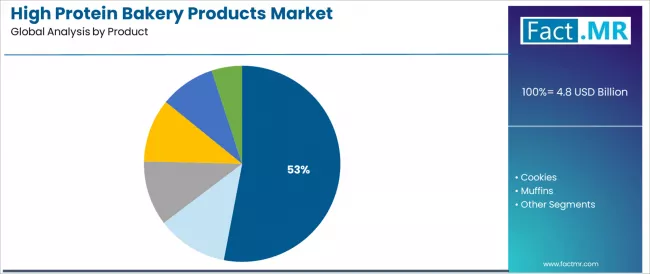
- Leading Product in High Protein Bakery Products Market: Bread (53.0%)
- Key Growth Regions in High Protein Bakery Products Market: Asia Pacific, North America, and Europe
- Top Players in High Protein Bakery Products Market: Mondelēz International, Grupo Bimbo S.A.B. de C.V., Kellanova, Quest Nutrition LLC, ARYZTA AG
- Where revenue comes from - Now Vs Next (Industry-level view)
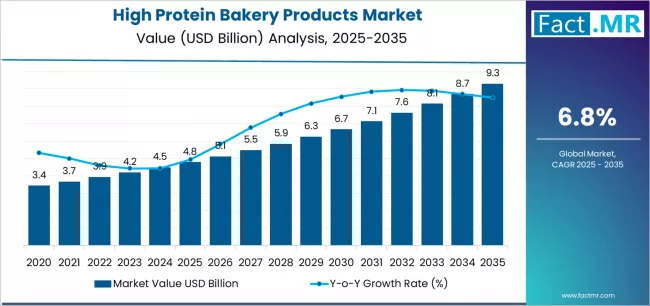
High Protein Bakery Products Market Market Value Analysis | Source: Fact.MR
High protein bakery technologies are recognized as essential tools for wellness-focused nutrition practitioners, offering precise protein fortification capabilities, satiety enhancement assurance, and comprehensive nutritional value characteristics compared to traditional bakery product approaches.
High protein bread dominates the market with 53.0% share, favored in daily consumption and meal replacement environments for their established versatility properties, providing convenient protein delivery mechanisms, familiar format capabilities, and accessibility across diverse dietary applications and consumer demographics.
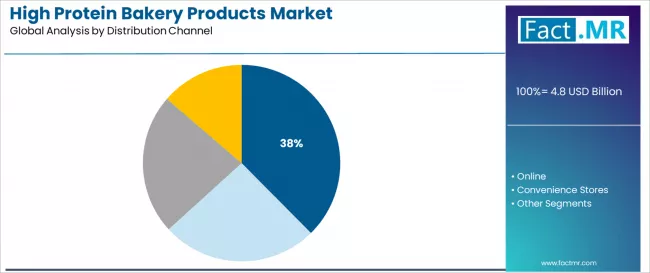
Hypermarkets & Supermarkets remain fundamental in distribution protocols where wide product assortment and consumer shopping convenience operations match retail requirements and accessibility confidence standards. Convenience Stores are advancing among distribution categories as specialized on-the-go consumption networks expand and impulse purchase infrastructure increases accessibility in snacking-convenient locations with immediate consumption structures.
Geographic concentration demonstrates dynamic growth patterns with India and China leading expansion, supported by rising fitness culture adoption, protein awareness consciousness expansion among urban populations, and functional bakery establishment programs in metropolitan centers.
USA, Australia, Germany, United Kingdom, and Brazil demonstrate robust development through established health food ecosystems, regulatory framework maturity for functional foods, and standardized acceptance of protein fortification procedures. Competitive advantage is consolidating around protein quality profiles, taste optimization documentation, clean-label formulation compatibility, and integrated nutritional portfolios rather than standalone protein enrichment formulations alone.
The first half of the decade will witness the market climbing from USD 4.8 billion to approximately USD 6.6 billion, adding USD 1.8 billion in value, which constitutes 40.0% of the total forecast growth period. This phase will be characterized by the continued dominance of bread methodologies in protein bakery settings, combined with accelerating adoption of cookie technologies in snacking applications where indulgence-meets-nutrition positioning and convenience format create favorable consumer outcomes.
The latter half will witness sustained expansion from USD 6.6 billion to USD 9.3 billion, representing an addition of USD 2.7 billion or 60.0% of the decade's growth, defined by broadening acceptance of plant-based protein protocols and integration of personalized nutrition platforms across mainstream functional bakery facilities.
| Period | Primary Revenue Buckets | Share | Notes |
|---|---|---|---|
| Today | Bread | 53.0% | Daily staple dominance |
| Cookies | 18.0% | Snacking leadership | |
| Hypermarkets & Supermarkets | 37.6% | Retail channel leader | |
| Convenience Stores | 25.0% | On-the-go segment | |
| Muffins | 12.0% | Breakfast category | |
| Future (3-5 yrs) | Plant-based Protein | 38-44% | Alternative proteins |
| Keto-friendly Formulations | 32-38% | Low-carb demand | |
| Personalized Nutrition | 30-36% | Customized products | |
| Meal Replacement | 35-41% | Complete nutrition | |
| Subscription Models | 28-34% | Direct-to-consumer | |
| Vegan Certification | 25-31% | Plant-forward trend | |
| Collagen-infused | 28-34% | Beauty-nutrition crossover |
Source: Fact.MR analysis. Updated Dec 11, 2025
High Protein Bakery Products Market Key Takeaways
At-a-Glance Metrics
| Metric | Value |
|---|---|
| Market Value (2025) → | USD 4.8 billion |
| Market Forecast (2035) ↑ | USD 9.3 billion |
| Growth Rate ★ | 6.8% CAGR |
| Leading Product → | Bread |
| Primary Channel → | Hypermarkets & Supermarkets |
Source: Fact.MR analysis. Updated Dec 11, 2025
The market demonstrates exceptional fundamentals with Bread capturing a commanding 53.0% share through superior daily consumption characteristics, established meal integration advantages, and proven versatility profiles across protein bakery applications. Hypermarkets & Supermarkets drives primary distribution demand at 37.6% share, supported by established product variety infrastructure and one-stop shopping requirements that maintain consumer convenience across diverse product segments.
Geographic concentration remains anchored in Asia Pacific and North America with emerging market leadership through fitness culture expansion and functional food development, while developed markets show accelerated adoption rates driven by health-conscious consumer demographics and clean-label product procedure preferences.
Imperatives for Stakeholders in High Protein Bakery Products Market
Design for taste and nutrition balance, not just protein content
- Offer complete functional bakery solutions: advanced protein blends + taste optimization technologies + clean-label ingredients + texture enhancement systems + nutritional transparency platforms.
- Preconfigured product packages: meal replacement specifications, post-workout recovery configurations, weight management programs, and combination snacking protocols for diverse consumer requirements.
Quality readiness for functional food applications
- Comprehensive nutritional validation documentation, clean-label compliance systems, and ingredient infrastructure (non-GMO verification, organic certification, allergen-free protocols).
Affordability-by-design approach
- Cost-optimized protein portfolios, flexible pack-size models, loyalty programs, and transparent nutritional value documentation.
Retailer education-focused market penetration
- Established product positioning workshops + comprehensive certification programs (nutritional benefits, target audience, merchandising strategies); direct retailer engagement for relationship development and category confidence building.
Segmental Analysis
Primary Classification: The market segments by product into bread, cookies, muffins, waffles, pancakes, and other products, representing the evolution from traditional bakery toward sophisticated protein-fortified formats with functional capabilities, comprehensive nutritional enhancement, and integrated wellness characteristics.
Secondary Classification: The distribution channel segmentation divides the market into hypermarkets & supermarkets (37.6%), convenience stores, online, and other distribution channels, reflecting distinct shopping objectives for weekly grocery procurement and product discovery versus on-the-go purchasing implementation and digital convenience optimization.
The segmentation structure reveals high protein bakery evolution from basic protein addition technology toward comprehensive functional food platforms with enhanced nutritional characteristics and multi-dimensional wellness compliance capabilities, while product diversity spans from staple bread formats to indulgent cookie varieties requiring specialized formulation expertise.
Which Category of High Protein Bakery Product is Most Widely Consumed?
High Protein Bakery Products Market Analysis By Product | Source: Fact.MR
Market Position: High protein bread commands a leading position in the high protein bakery products market with a 53.0% share through superior daily consumption characteristics, including established meal staple presence, extensive versatility capabilities, and standardized dietary integration pathways that enable consumers to achieve predictable protein intake outcomes across varied eating occasions and diverse lifestyle demographics.
Value Drivers: The segment benefits from consumption frequency advantages through breakfast, lunch, and dinner integration, protein fortification without taste compromise, and established familiar format frameworks without requiring extensive dietary modifications. Advanced bread technology enables whole grain optimization, ancient grain incorporation, and seed blend customization, where protein density and texture maintenance represent critical consumer acceptance requirements. Sandwich bread holds significant share within the bread segment, appealing to consumers seeking convenient meal-building capabilities for daily protein consumption.
Competitive Advantages: Bread solutions differentiate through proven meal integration profiles, universal consumer familiarity advantages, and alignment with established eating habits that enhance dietary confidence while maintaining compliant nutritional outcomes for diverse protein supplementation applications.
Key market characteristics:
- Advanced protein fortification properties with 15-20g per serving and maintained texture for consumer satisfaction
- Superior meal versatility, enabling sandwich applications and toast consumption for dietary integration
- Comprehensive daily frequency, including multiple eating occasions and consistent consumption for protein delivery optimization
Why is Consumption of High Protein Cookies Increasing?
Cookies maintain specialized market position at 18.0% with 8.2% CAGR through guilt-free indulgence capabilities and portable snacking characteristics. These products appeal to consumers seeking sweet treat satisfaction with nutritional benefits, offering convenient portion control and on-the-go consumption through individually wrapped formats. Consumption is driven by post-workout snacking applications, emphasizing complete taste satisfaction evaluation and protein recovery progression through enjoyable consumption mechanisms.
Which Distribution Channel accounts for the Largest Share of High Protein Bakery Products Sales?
High Protein Bakery Products Market Analysis By Distribution Channel | Source: Fact.MR
Market Context: Hypermarkets & supermarkets demonstrate distribution leadership in the high protein bakery products market with a 37.6% share due to widespread shopping destination prevalence and established focus on product variety, promotional visibility, and category browsing that maximizes consumer exposure while maintaining consistent shopping convenience standards.
Appeal Factors: Retailers and consumers prioritize hypermarket channels for comprehensive brand selection, promotional pricing opportunities, and integration with established weekly shopping routines that enables coordinated purchase experiences across multiple product categories. The segment benefits from substantial shelf space availability and in-store sampling campaigns that emphasize visibility-based discovery for functional bakery across diverse shopper demographics. Dedicated health food sections capture significant foot traffic within the hypermarket segment, demonstrating retailer preference for category clustering formats.
Growth Drivers: Health food section expansion incorporates high protein bakery as essential category protocols for wellness positioning, while promotional activity growth increases trial conversion that meets consumer awareness requirements and ensures brand consideration capabilities.
What is the Outlook for High Protein Bakery Products Demand via Convenience Stores?
Convenience stores capture substantial distribution share at 25.0% through comprehensive requirements in immediate consumption frameworks, impulse purchase capabilities, and integrated snacking protocols.
Convenience stores demand individual packaging formats capable of achieving grab-and-go convenience while providing ambient storage stability and portion control messaging, appealing to busy consumers and active lifestyles seeking evidence-based nutrition advantages beyond traditional convenience store offerings.
What are the Drivers, Restraints, and Key Trends of the High Protein Bakery Products Market?
| Category | Factor | Impact | Why It Matters |
|---|---|---|---|
| Driver | Rising fitness consciousness & active lifestyle adoption (gym membership, wellness trends) | ★★★★★ | Protein requirements enable functional bakery demand for convenient nutrition; increasing health awareness drives fortified product adoption across consumer markets and diverse demographic segments. |
| Driver | Growth in clean-label preferences and ingredient transparency (natural ingredients, no artificial additives) | ★★★★★ | Drives demand for recognizable ingredient systems and transparent labeling protocols; brands providing authentic wellness outcomes gain competitive advantage in health-conscious consumer segments. |
| Driver | Convenience factor and on-the-go consumption needs (busy lifestyles, meal replacement) | ★★★★☆ | Consumers seek portable nutrition and time-saving solutions; convenience positioning expanding addressable segments beyond traditional meal demographics and home consumption clientele. |
| Restraint | High product costs & price sensitivity (premium ingredients, specialized formulations) | ★★★★☆ | Cost-conscious consumers face affordability concerns and value perception challenges, restricting product adoption and affecting functional bakery penetration in price-sensitive markets and mass consumer segments. |
| Restraint | Taste and texture challenges in protein fortification (grittiness, dryness) | ★★★☆☆ | Consumers face palatability concerns and sensory limitations; increases trial barriers and affects repeat purchase penetration in quality-focused consumer groups and traditional bakery preferences. |
| Trend | Plant-based protein sources & vegan formulations (pea protein, rice protein) | ★★★★★ | Growing consumer demand for sustainable nutrition and ethical protein preferences beyond animal-derived ingredients; plant proteins become core differentiation strategy for environmentally-conscious positioning. |
| Trend | Personalized nutrition & functional ingredients (collagen, probiotics, adaptogens) | ★★★★☆ | Functional bakery evolving beyond basic protein toward comprehensive wellness protocols; ingredient innovation positioning drives enhanced health benefit credibility and multi-functional appeal in sophisticated consumer environments. |
Source: Fact.MR analysis. Updated Dec 11, 2025
Analysis of the High Protein Bakery Products Market by Key Countries
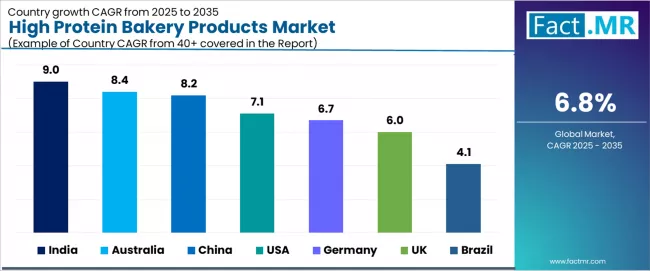
The high protein bakery products market demonstrates robust regional growth dynamics with emerging leaders including India (9.0% CAGR) and China (8.2% CAGR) driving expansion through fitness culture programs and urban lifestyle development. Strong performers encompass Australia (8.4% CAGR), the USA (7.1% CAGR), and Germany (6.7% CAGR), benefiting from established health food infrastructure and wellness-conscious demographics. Developed markets feature United Kingdom (6.0% CAGR) and Brazil (4.1% CAGR), where functional food adoption normalization and protein awareness support consistent growth patterns.
Regional synthesis reveals Asian markets leading adoption through comprehensive urbanization positioning and lifestyle disease prevention expansion, while Western countries demonstrate measured growth potential supported by clean-label preferences and fitness culture influence. Global markets show solid development driven by wellness trend integration and functional food innovation infrastructure.
High Protein Bakery Products Market Cagr Analysis By Country | Source: Fact.MR
| Region/Country | 2025-2035 Growth | How to win | What to watch out |
|---|---|---|---|
| India | 9.0% | Focus on affordable protein portfolios | Distribution challenges; taste preferences |
| China | 8.2% | Lead with urbanization positioning | Regulatory complexity; local competition |
| Australia | 8.4% | Provide premium functional offerings | Limited population; market saturation |
| USA | 7.1% | Deliver clean-label innovations | Market maturity; competitive intensity |
| Germany | 6.7% | Maintain quality-focused positioning | Traditional preferences; price sensitivity |
| UK | 6.0% | Push convenience solutions | Economic pressures; Brexit impacts |
| Brazil | 4.1% | Offer value-oriented products | Economic volatility; purchasing power |
Source: Fact.MR analysis. Updated Dec 11, 2025
India drives Fitness Culture Expansion
India establishes fitness culture expansion through progressive gym proliferation and comprehensive wellness awareness programs, positioning high protein bakery technologies as essential nutrition solutions in modern trade channels and emerging e-commerce platforms. The country's 9.0% growth rate reflects rising disposable income levels supporting premium product adoption and growing protein awareness that encourages the deployment of functional bakery solutions in diverse urban settings.
Growth concentrates in major metropolitan areas, including Mumbai, Delhi, and Bangalore, where retail facilities showcase increasing capacity for international health food adoption that appeal to millennial consumers demanding validated nutritional benefits and convenient protein delivery outcomes.
Indian consumers are developing standardized protein supplementation protocols that combine imported premium brands with domestic functional food options, including modern retail expansion and online grocery growth. Distribution channels through organized retail chains and direct-to-consumer platforms expand market access, while fitness influencer education initiatives support adoption across diverse socioeconomic types and wellness awareness levels.
China Emerges as Urbanization-driven Growth Leader
In Beijing, Shanghai, and Guangzhou regions, modern retailers and convenience store chains are adopting advanced high protein bakery technologies as essential wellness tools for urban lifestyle operations, driven by increasing middle-class expansion alignment with Western fitness trends and elevation of nutritional awareness expectations that emphasize the importance of validated protein fortification. The market holds an 8.2% growth rate, supported by urbanization acceleration and dietary modernization investment that promote functional bakery adoption for on-the-go nutrition applications.
Chinese consumers are favoring convenient protein platforms that provide comprehensive nutritional capabilities and taste appeal evidence, particularly appealing in tier-1 cities where time-pressed lifestyles and gym culture represent critical wellness factors.
Market expansion benefits from substantial e-commerce infrastructure investment and fitness industry development that enable widespread adoption of evidence-based functional food methodologies for diverse protein applications. Industry adoption follows patterns established in supplement market excellence, where convenience advantages and scientific positioning documentation drive consumer confidence and lifestyle integration achievement.
USA Shows Clean-label Leadership
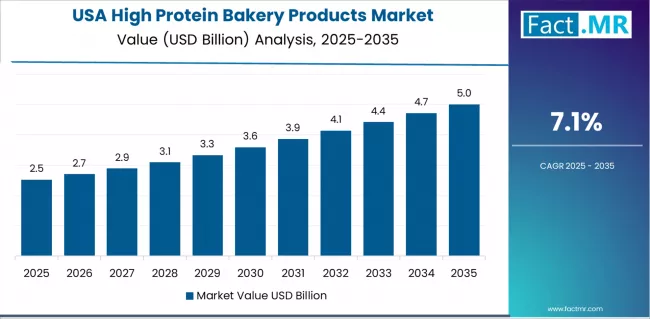
High Protein Bakery Products Market Country Value Analysis | Source: Fact.MR
USA establishes clean-label leadership through comprehensive ingredient transparency movement and established functional food ecosystem, integrating high protein bakery solutions across natural food retailers, mainstream supermarkets, and online channels. The country's 7.1% growth rate reflects established health consciousness maturity and sophisticated clean-eating consumer levels that support widespread deployment of validated natural ingredient solutions in retail and direct-to-consumer applications.
Growth concentrates in established wellness regions, including California, Northeast, and Pacific Northwest, where retailers showcase advanced functional food adoption that appeals to ingredient-conscious consumers seeking predictable nutritional outcomes and comprehensive label transparency.
American consumers leverage established nutrition label literacy and comprehensive certification verification frameworks, including non-GMO project acceptance and organic standard programs that create wellness confidence and quality assurance. The market benefits from substantial meal replacement culture development and protein-focused diet campaigns that encourage premium product purchases while supporting continuous formulation innovation investments and taste technology funding.
Australia Demonstrates Functional Nutrition Preference
Australia's sophisticated wellness market demonstrates established high protein bakery integration with documented functional food emphasis in active lifestyle support and nutritional optimization through specialized health food stores and established supermarket chains. The country maintains an 8.4% growth rate, leveraging high sports participation rates with outdoor lifestyle culture and preventive health frameworks.
Premium retail regions, including Sydney, Melbourne, and Brisbane, showcase functional nutrition approaches where high protein bakery integrates with established fitness cultures and comprehensive wellness systems to optimize performance support and ensure appropriate nutritional supplementation.
Australian consumers prioritize product efficacy and comprehensive ingredient quality in functional food adoption, creating demand for science-backed solutions with extensive nutritional characteristics, including clinical studies, clean ingredient lists, and comprehensive protein density. The market benefits from established active lifestyle segments and sports nutrition crossover culture that provide quality positioning opportunities and comply with Food Standards Australia New Zealand regulations.
Germany Shows Per-capita Consumption Excellence
Germany's mature bakery market demonstrates sophisticated high protein product integration with documented quality emphasis in bread consumption traditions and nutritional enhancement through specialized bakery chains and established supermarket facilities. The country maintains a 6.7% growth rate, leveraging strong bread culture heritage with functional food innovation frameworks.
Premium consumer regions, including Bavaria, North Rhine-Westphalia, and Baden-Württemberg, showcase quality-driven approaches where high protein bakery integrates with established artisanal cultures and comprehensive ingredient transparency practices to optimize nutritional value and ensure appropriate taste preservation.
German consumers prioritize ingredient authenticity and comprehensive quality validation in functional bakery selection, creating demand for clean-label solutions with extensive natural characteristics, including organic certification, whole grain emphasis, and comprehensive nutritional profiling. The market benefits from established health food specialty segments and functional nutrition expertise that provide differentiation opportunities and compliance with strict German food regulations.
United Kingdom Shows Fast Functional Adoption
United Kingdom's evolving wellness market demonstrates progressive high protein bakery adoption with documented functional food emphasis in convenience consumption and health trend integration through specialized retailers and established supermarket organizations. The country maintains a 6.0% growth rate, leveraging growing fitness culture with preventive health awareness and on-the-go nutrition investment.
Major consumer regions, including England and Scotland, showcase fast adoption approaches where high protein bakery integrates with established convenience cultures and comprehensive label-reading systems to optimize nutritional intake and maintain lifestyle compatibility under FSA nutritional guidelines.
UK consumers prioritize convenience access and comprehensive nutritional information in functional bakery purchasing, creating demand for portable solutions with extensive wellness characteristics, including protein content claims, satiety benefits, and comprehensive usage occasions. The market benefits from established meal replacement sectors and clean-eating influencer culture that provide positioning opportunities and maintain alignment with UK food labeling regulations.
Brazil Shows Emerging Protein Interest
Brazil's developing wellness market demonstrates progressive high protein bakery adoption with documented fitness trend emphasis in urban centers and middle-class expansion through supermarket chains and specialized health food organizations. The country maintains a 4.1% growth rate, leveraging growing gym culture with nutritional awareness and premium product accessibility investment.
Major urban regions, including São Paulo, Rio de Janeiro, and Brasília, showcase emerging wellness approaches where high protein bakery integrates with established snacking cultures and comprehensive health aspiration systems to optimize protein intake and maintain dietary modernization under economic constraints.
Brazilian consumers prioritize value perception and comprehensive taste appeal in functional bakery selection, creating demand for affordable solutions with extensive palatability characteristics, including familiar flavors, portion sizing, and comprehensive mainstream appeal. The market benefits from established bakery consumption tradition sectors and fitness industry growth that provide category extension opportunities and maintain alignment with Brazilian food regulations.
Europe Market Split by Country
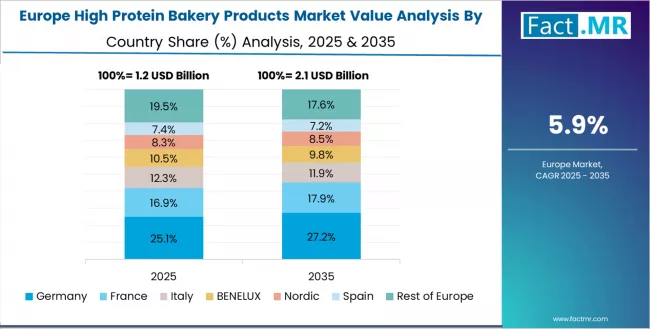
High Protein Bakery Products Market Europe Country Market Share Analysis, 2025 & 2035 | Source: Fact.MR
The European high protein bakery products market is projected to grow from USD 1.3 billion in 2025 to USD 2.5 billion by 2035, registering a CAGR of 6.7% over the forecast period. Germany is expected to maintain its leadership position with a 26.8% market share in 2025, declining slightly to 25.4% by 2035, supported by its advanced bakery consumption culture and major health food retailers including organic supermarket chains.
France follows with a 18.9% share in 2025, projected to reach 19.2% by 2035, driven by comprehensive artisanal bakery traditions and Paris wellness market concentration. The United Kingdom holds a 17.3% share in 2025, expected to decrease to 16.8% by 2035 due to economic headwinds.
Italy commands a 14.2% share, while Spain accounts for 11.6% in 2025. The rest of Europe region is anticipated to gain momentum, expanding its collective share from 11.2% to 12.4% by 2035, attributed to increasing functional food adoption in Nordic countries and emerging Eastern European wellness facilities implementing health-conscious consumption programs.
Competitive Landscape of the High Protein Bakery Products Market
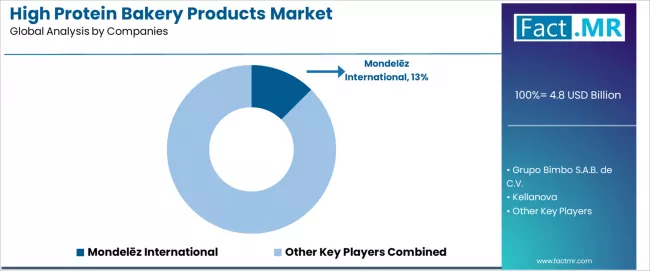
High Protein Bakery Products Market Analysis By Company | Source: Fact.MR
The high protein bakery products market exhibits a moderately fragmented competitive structure with approximately 100-150 active players operating across global functional food networks and regional specialty bakery portfolios. Mondelēz International maintains market leadership at a 12.5% share, reflecting strong brand portfolio positioning across diverse product segments with sophisticated innovation strategies.
This competitive landscape demonstrates the maturation of protein bakery technology, where established players leverage brand equity advantages, extensive distribution relationship programs, and formulation expertise to maintain dominant positions, while emerging specialty brands and startup innovators create niche opportunities through clean-label offerings and direct-to-consumer strategies.
Market leadership is maintained through several critical competitive advantages extending beyond manufacturing capabilities and product portfolios. Global distribution networks enable leading players to navigate diverse regulatory requirements and access varied consumer segments including fitness enthusiasts, health-conscious families, and busy professionals.
Formulation expertise and taste optimization program availability represent crucial differentiators in high protein bakery categories, where years of food science research, protein masking protocols, and sensory evaluation frameworks create consumer preference among quality-focused buyers.
Manufacturing efficiency in specialized protein bakery facilities, ingredient sourcing operations, and supply chain protein procurement separate major brands from smaller competitors, while comprehensive nutritional documentation addressing protein quality, amino acid profiles, and clinical validation strengthen market position and consumer confidence.
The market demonstrates emerging differentiation opportunities in plant-based protein categories and personalized nutrition technologies, where traditional whey-based methodologies face competition from innovation-focused entrants offering sustainability advantages.
Significant competitive advantages persist in established bread categories through comprehensive retail presence portfolios and brand recognition depth. Premium positioning strategies with organic certification integration and functional ingredient enhancement capabilities command margin premiums through superior wellness credentials and clean-label alignment.
Specialized product portfolios combining multiple protein sources with condition-targeted formulations create comprehensive positioning that justifies higher price points beyond commodity bakery competition. Integrated solution offerings emphasizing complementary nutritional guidance, unified wellness platforms, and cross-category protein programs generate consumer loyalty and brand preferences beyond transactional product purchases.
| Stakeholder | What they actually control | Typical strengths | Typical blind spots |
|---|---|---|---|
| Established food corporations | Comprehensive distribution; brand equity; manufacturing scale | Market access; consumer trust; innovation resources; marketing power | Startup agility; niche targeting; direct relationships; authentic positioning |
| Specialty protein brands | Product innovation; health positioning; target audience expertise | Differentiation; functional credibility; consumer engagement; premium positioning | Mass distribution; cost competitiveness; mainstream appeal; retail negotiation |
| Bakery incumbents | Production facilities; bakery expertise; retail relationships; category knowledge | Manufacturing capability; traditional consumer base; distribution access; operational efficiency | Functional innovation; health credibility; millennial appeal; digital marketing |
| Direct-to-consumer startups | Customer data; subscription models; brand storytelling; digital expertise | Consumer insights; margin control; rapid iteration; authentic messaging | Retail expansion; manufacturing scale; traditional channels; mainstream awareness |
| Retail private labels | Shelf space; pricing control; customer traffic; value positioning | Affordability; retailer commitment; margin optimization; consumer loyalty | Brand building; innovation leadership; marketing investment; premium positioning |
Source: Fact.MR analysis. Updated Dec 11, 2025
Key Players in the High Protein Bakery Products Market
- Mondelēz International
- Grupo Bimbo S.A.B. de C.V.
- Kellanova
- Quest Nutrition LLC
- ARYZTA AG
- Kodiak Cakes LLC
- Simple Mills
- Naturell India Pvt. Ltd.
- Modern Bakery LLC
- The Protein Bakery
Segmentation
Scope of the Report
| Items | Values |
|---|---|
| Quantitative Units (2025) | USD 4.8 billion |
| Product | Bread, Cookies, Muffins, Waffles, Pancakes, Others |
| Distribution Channel | Hypermarkets & Supermarkets, Online, Convenience Stores, Others |
| Regions Covered | North America, Europe, Asia Pacific, Latin America, Middle East & Africa |
| Countries Covered | USA, China, India, Germany, United Kingdom, Australia, Brazil, and 15+ additional countries |
| Key Companies Profiled | Mondelēz International, Grupo Bimbo S.A.B. de C.V., Kellanova, Quest Nutrition LLC, ARYZTA AG, Kodiak Cakes LLC, Simple Mills |
| Additional Attributes | Dollar sales by product and distribution channel categories, regional adoption trends across North America, Asia Pacific, and Europe, competitive landscape with established food corporations and specialty protein brands, consumer preferences for bread methodologies and clean-label validation, integration with fitness culture facilities and wellness retail platforms, innovations in plant-based protein formulations and functional ingredient technologies, and development of sophisticated taste optimization systems with enhanced sensory profiles and comprehensive nutritional documentation frameworks. |
Source: Fact.MR analysis. Updated Dec 11, 2025
High Protein Bakery Products Market by Segments
-
Product :
- Bread
- Cookies
- Muffins
- Waffles
- Pancakes
- Others
-
Distribution Channel :
- Hypermarkets & Supermarkets
- Online
- Convenience Stores
- Others
-
Region :
- North America
- USA
- Canada
- Mexico
- Europe
- Germany
- France
- UK
- Italy
- Spain
- Rest of Europe
- Asia Pacific
- India
- China
- Japan
- South Korea
- Australia & New Zealand
- ASEAN
- Rest of Asia Pacific
- Latin America
- Brazil
- Rest of Latin America
- Middle East & Africa
- GCC Countries
- South Africa
- Rest of Middle East & Africa
- North America
Frequently Asked Questions
How big is the high protein bakery products market in 2025?
What will be the size of high protein bakery products market in 2035?
How much will be the high protein bakery products market growth between 2025 and 2035?
What are the key product types in the high protein bakery products market?
Which distribution channel segment to contribute significant share in the high protein bakery products market in 2025?
Who worked on this report


Preview the report firsthand - request a free sample
Free SampleGet the brochure for pricing and purchase details
Download PDF