Hydraulic Workover Unit Market
Hydraulic Workover Unit Market Size and Share Forecast Outlook 2025 to 2035
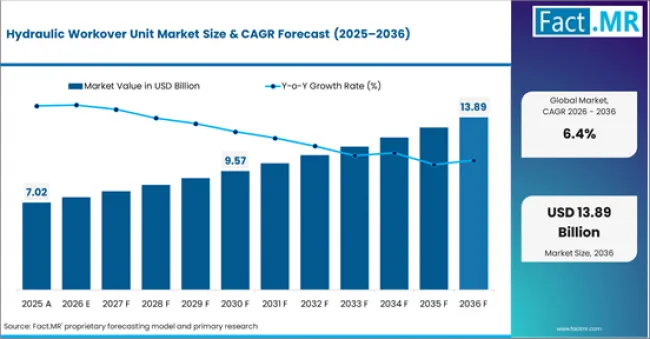
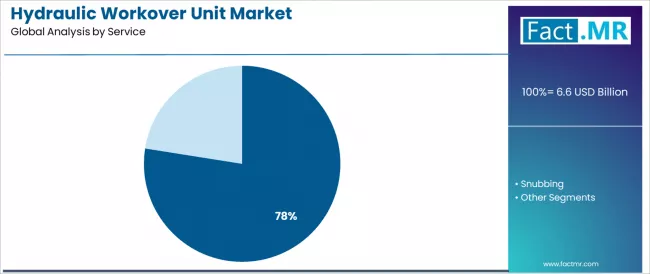
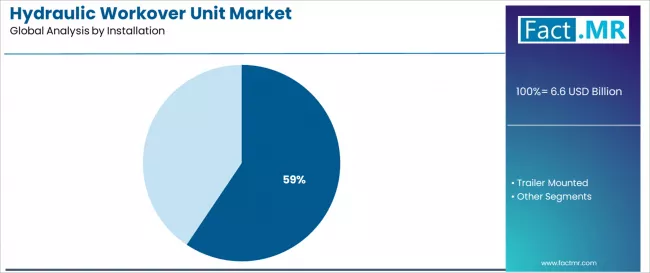
Hydraulic workover unit market is projected to grow from USD 6.6 billion in 2025 to USD 12.3 billion by 2035, at a CAGR of 6.4%. Workover will dominate with a 77.5% market share, while skid mounted will lead the installation segment with a 59.4% share.
Hydraulic Workover Unit Market Forecast and Outlook 2025 to 2035
The global hydraulic workover unit market is projected to reach USD 12.3 billion by 2035, recording an absolute increase of USD 5.7 billion over the forecast period. The market is valued at USD 6.6 billion in 2025 and is set to rise at a CAGR of 6.4% during the assessment period.
Quick Stats for Hydraulic Workover Unit Market
- Hydraulic Workover Unit Market Value (2025): USD 6.6 billion
- Hydraulic Workover Unit Market Forecast Value (2035): USD 12.3 billion
- Hydraulic Workover Unit Market Forecast CAGR: 6.4%
- Leading Service Type in Hydraulic Workover Unit Market: Workover (77.5%)
- Leading Installation Type in Hydraulic Workover Unit Market: Skid Mounted (59.4%)
- Leading Capacity in Hydraulic Workover Unit Market: Above 200 Tons (58.3%)
- Key Growth Regions in Hydraulic Workover Unit Market: North America, Middle East, and Asia Pacific
- Top Players in Hydraulic Workover Unit Market: Halliburton, National Oilwell Varco, Cudd Energy Services, Archer, Precision Drilling Corporation, High Arctic Energy Services, Basic Energy Services, Superior Energy Services, Velesto Energy, Uzma Berhad

The overall market size is expected to grow by approximately 1.9 times during the same period, supported by expanding well intervention activities across mature oil and gas fields worldwide, driving demand for cost-effective workover solutions in production optimization and well maintenance operations, and increasing investments in enhanced oil recovery technologies with superior operational efficiency across conventional and unconventional hydrocarbon extraction applications globally.
Oil and gas operators face mounting pressure to maximize production from existing wells and extend asset life cycles while managing operational costs and minimizing downtime, with modern hydraulic workover units providing documented performance advantages including rapid rig-up capabilities, enhanced safety features, and flexible deployment options compared to conventional workover rigs alone.
Rising demand for efficient well servicing operations and expanding offshore drilling activities enabling complex intervention procedures create substantial opportunities for service providers and equipment manufacturers. However, volatile crude oil prices and fluctuating drilling activity levels may pose obstacles to sustained capital investment patterns.
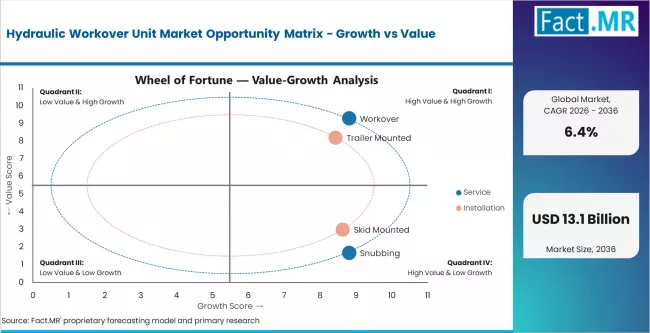
The workover service segment dominates market activity with 77.5% market share, driven by extensive demand for routine well maintenance operations and production enhancement procedures requiring hydraulic intervention systems across mature field developments worldwide. Operators increasingly recognize the operational benefits of workover services, with typical applications providing effective completion repairs, tubing replacements, and zonal isolation operations at competitive service rates through established oilfield service networks.
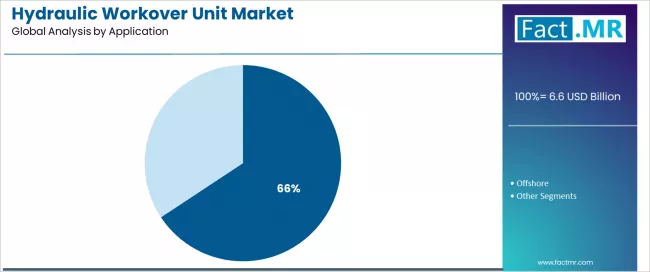
The skid mounted installation segment demonstrates substantial market presence with 59.4% share, supported by operational flexibility requirements and deployment versatility enabling rapid mobilization across multiple well sites in onshore and offshore environments. The above 200 tons capacity segment emerges as the dominant category with 58.3% market share, reflecting industry demand for heavy-duty intervention capabilities and high-pressure well operations in deepwater and high-temperature reservoir applications. Onshore applications represent the leading deployment environment with 65.7% market share, driven by extensive well populations in conventional oil and gas basins and unconventional shale formations requiring ongoing intervention services.
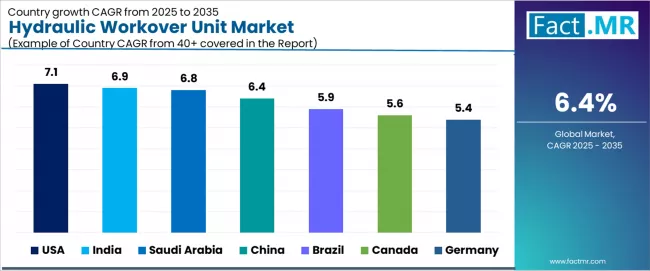
Regional dynamics show North America maintaining market leadership, supported by mature oil and gas infrastructure and extensive hydraulic fracturing operations across unconventional resource plays. Middle East demonstrates strong growth potential driven by aging conventional fields and enhanced oil recovery initiatives, while Asia Pacific shows expanding activity through growing offshore developments and production optimization programs. USA leads country-level growth with 7.1% CAGR through advanced shale production activities and well intervention technologies, followed by India with 6.9% CAGR supported by expanding offshore exploration and domestic production targets.
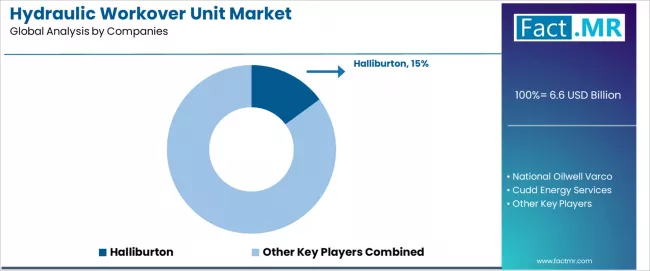
The competitive landscape features moderate concentration with Halliburton maintaining 14.9% market leadership position, while established oilfield service companies including National Oilwell Varco, Cudd Energy Services, Archer, and Precision Drilling Corporation compete through technological innovation, geographic expansion strategies, and specialized intervention expertise across workover, snubbing, and pressure control applications.
Hydraulic Workover Unit Market Year-over-Year Forecast 2025 to 2035
Between 2025 and 2029, the hydraulic workover unit market is projected to expand from USD 6.6 billion to USD 8.5 billion, resulting in a value increase of USD 1.9 billion, which represents 33.3% of the total forecast growth for the period. This phase of development will be shaped by rising demand for well intervention services in mature oil and gas fields, equipment innovation in automated control systems with enhanced safety protocols and operational efficiency, as well as expanding integration with digital monitoring technologies and real-time performance optimization platforms. Companies are establishing competitive positions through investment in advanced hydraulic systems, modular equipment designs, and strategic market expansion across independent operators, national oil companies, and integrated energy majors.
From 2029 to 2035, the market is forecast to grow from USD 8.5 billion to USD 12.3 billion, adding another USD 3.8 billion, which constitutes 66.7% of the overall expansion. This period is expected to be characterized by the expansion of specialized intervention applications, including high-pressure high-temperature well operations and deepwater subsea workover systems tailored for challenging reservoir conditions, strategic collaborations between equipment manufacturers and oilfield service providers, and an enhanced focus on operational safety standards and environmental compliance requirements. The growing emphasis on production optimization strategies and rising adoption of hybrid power systems will drive demand for advanced workover units across diverse well configurations and operational environments.
Hydraulic Workover Unit Market Key Takeaways
| Metric | Value |
|---|---|
| Market Value (2025) | USD 6.6 billion |
| Market Forecast Value (2035) | USD 12.3 billion |
| Forecast CAGR (2025-2035) | 6.4% |
Why is the Hydraulic Workover Unit Market Growing?
The hydraulic workover unit market grows by enabling oil and gas operators to perform essential well intervention operations and production optimization activities while maintaining continuous hydrocarbon extraction without the extensive mobilization costs and operational complexities associated with conventional drilling rigs.
Operators face mounting pressure to maximize recovery from existing well inventories and extend field life cycles while managing capital expenditure constraints, safety requirements, and environmental compliance standards, with modern hydraulic workover units typically providing targeted intervention capabilities including completion repairs, tubing replacements, and artificial lift installations through compact equipment designs, rapid deployment characteristics, and lower operational footprints compared to traditional workover rigs alone, making hydraulic systems essential for efficient well servicing operations.
The oil and gas industry's need for cost-effective and operationally flexible intervention solutions creates demand for specialized hydraulic workover equipment that can deliver reliable performance, reduce non-productive time, and support diverse well configurations without compromising safety standards or operational efficiency. Oilfield service provider adoption and expanding well intervention requirements drive utilization in mature basin developments, unconventional resource plays, and offshore production environments, where equipment performance has direct impact on production uptime and field economics.
The growing global inventory of aging wells requiring maintenance interventions, particularly across North American shale formations and Middle Eastern conventional fields, creates expanding opportunities for hydraulic workover service providers. Rising operator emphasis on production optimization and efficient capital deployment enables informed equipment selection and operational planning for complex intervention programs. However, commodity price volatility and cyclical drilling activity patterns may limit investment cycles among operators facing budget constraints and uncertain revenue projections across different market conditions.
Segmental Analysis
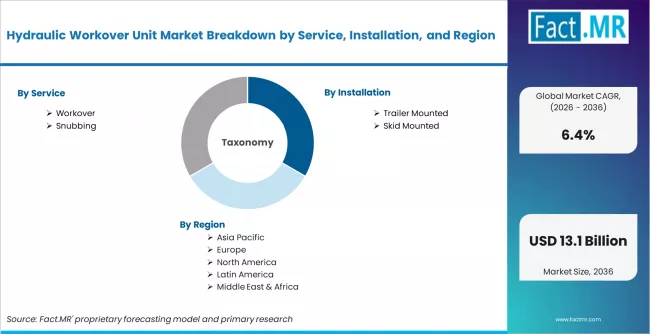
The market is segmented by service, installation, application, capacity, and region. By service, the market is divided into workover and snubbing. Based on installation, the market is categorized into skid mounted and trailer mounted.
By application, the market includes onshore and offshore. Based on capacity, the market is divided into below 150 tons, 151-200 tons, and above 200 tons. Regionally, the market is divided into Asia Pacific, Europe, North America, Latin America, and Middle East & Africa.
By Service, Which Segment Accounts for the Dominant Market Share?

Workover service represents the dominant force in the hydraulic workover unit market, capturing 77.5% of the total market share in 2025. This established service category encompasses solutions featuring routine well maintenance operations and production enhancement procedures, including advanced intervention capabilities combining completion repairs, tubing replacements, zonal isolation, and artificial lift installations that enable superior operational efficiency and production optimization across conventional and unconventional well configurations worldwide.
The workover segment's market leadership stems from its comprehensive applicability across diverse well intervention requirements, with service solutions capable of addressing critical production challenges including declining reservoir pressure, completion integrity issues, and production string failures while maintaining excellent safety records and operational flexibility standards across mature field developments.
The snubbing segment maintains meaningful market presence in the 22-23% range, serving specialized high-pressure well intervention applications requiring live well operations and pressure control capabilities for wells that cannot be safely killed through conventional methods.
These solutions offer critical intervention capabilities for operators managing high-pressure reservoirs while providing sufficient operational flexibility to support complex completion procedures. The snubbing segment demonstrates steady growth potential, driven by expanding high-pressure well populations and increasing emphasis on production continuity during intervention operations.
Within the service category, workover operations demonstrate diverse application scope driven by well maintenance requirements ranging from routine tubing replacements to complex completion repairs and zonal isolation procedures. This segment benefits from established service provider networks and comprehensive technical expertise supporting consistent operational delivery.
Key operational advantages driving the workover segment include:
- Advanced intervention capabilities with documented success rates exceeding 90% across routine maintenance operations and complex completion repairs in diverse well configurations
- Established operational efficiency allowing reduced non-productive time and minimized production deferrals without extensive mobilization complexities
- Enhanced deployment flexibility features enabling rapid rig-up procedures and equipment mobilization while maintaining service quality and operational consistency
- Superior cost-effectiveness providing optimal economic returns for operators across various well intervention scenarios and field development stages
By Installation, Which Segment Accounts for the Largest Market Share?

Skid mounted installations dominate the hydraulic workover unit configuration landscape with a 59.4% market share in 2025, reflecting the critical role of modular equipment designs in supporting operational versatility, offshore deployment capabilities, and multi-well site operations across diverse geographical environments worldwide.
The skid mounted segment's market leadership is reinforced by operator preferences for equipment configurations that enable helicopter transportation to offshore platforms, rapid inter-well moves in pad drilling environments, and standardized maintenance protocols that characterize efficient field operations.
Within this segment, offshore platform applications represent a significant deployment category, driven by jackup rig workover requirements and fixed platform intervention operations requiring compact equipment footprints. This sub-segment benefits from established operational protocols and stringent safety certification standards supporting consistent performance delivery.
The trailer mounted segment represents substantial market presence through specialized requirements for onshore well intervention operations and road-transportable equipment configurations where conventional truck-mounted mobility enables efficient deployment across distributed well populations. This segment benefits from lower mobilization costs and simplified logistics for operations in accessible onshore environments.
Key market dynamics supporting installation growth include:
- Skid mounted format expansion driven by offshore operational requirements and modular deployment flexibility, requiring advanced load distribution engineering and transportation optimization
- Trailer mounted configuration adaptation trends requiring specialized chassis designs and road transport compliance capabilities
- Integration of automated control systems enabling consistent operational performance and reduced manual intervention across equipment configurations
- Growing emphasis on compact equipment designs and reduced environmental footprints driving engineering innovations without operational capability limitations
By Application, Which Segment Accounts for a Significant Market Share?

Onshore applications represent the leading deployment environment in the hydraulic workover unit market with a 65.7% market share in 2025, reflecting the extensive well populations in conventional oil and gas basins and unconventional shale formations requiring ongoing intervention services across land-based production operations. The onshore segment demonstrates consistent demand driven by mature field workover requirements, horizontal well maintenance programs, and production optimization activities across diverse geological formations and operational environments.
The offshore segment emerges as an important application category with substantial market presence, driven by jackup rig operations, fixed platform interventions, and floating production system maintenance requiring specialized hydraulic workover capabilities. Operators managing offshore assets require equipment configurations capable of supporting platform-based operations, helicopter transportation logistics, and stringent marine environment certification standards.
Within application environments, onshore operations demonstrate diverse well intervention requirements spanning vertical well workovers, horizontal well maintenance, and multilateral completion repairs. Offshore applications address platform-based intervention procedures, subsea well access operations, and production system maintenance activities.
Key application dynamics include:
- Onshore deployment requirements accelerating across shale basin developments with emphasis on horizontal well intervention and multi-stage completion repairs
- Offshore application growth driving demand for compact skid-mounted configurations and marine-certified equipment specifications
- Environmental considerations prioritizing reduced surface footprints and emissions control capabilities across operational locations
- Safety standard evolution emphasizing pressure control systems and automated shutdown capabilities for high-risk intervention scenarios
By Capacity, Which Segment Accounts for the Dominant Market Share?

Above 200 tons capacity units dominate the hydraulic workover unit market with a 58.3% market share in 2025, reflecting the critical role of heavy-duty intervention capabilities in supporting deep well operations, high-pressure reservoir management, and complex completion procedures across challenging operational environments worldwide. The above 200 tons segment's market leadership is reinforced by operator requirements for equipment capable of handling extended tubing strings, heavy completion assemblies, and high-load intervention operations that characterize deepwater wells and high-pressure conventional reservoirs.
Within this segment, deepwater offshore applications represent significant deployment scenarios, driven by subsea well intervention requirements and floating production system maintenance demanding maximum lifting capacity. This sub-segment benefits from established operational protocols and comprehensive engineering support services.
The below 150 tons segment represents meaningful market presence with 23.6% share through specialized applications in shallow well operations, light intervention procedures, and low-pressure reservoir workover activities. The 151-200 tons category maintains 18.1% share serving mid-range operational requirements and conventional onshore well applications.
Key market dynamics supporting capacity segmentation include:
- Heavy-duty capacity expansion driven by deepwater development programs and high-pressure reservoir exploitation, requiring advanced hydraulic system engineering
- Mid-range capacity optimization trends addressing conventional onshore well populations with balanced performance specifications
- Integration of advanced load monitoring systems enabling precise weight control and operational safety enhancements
- Growing emphasis on modular capacity configurations allowing equipment customization without complete system redesign
What are the Drivers, Restraints, and Key Trends of the Hydraulic Workover Unit Market?
The market is driven by three concrete demand factors tied to upstream production economics. First, rising well intervention requirements across mature oil and gas fields create expanding service demand, with hydraulic workover units representing a critical solution for production optimization and asset life extension, requiring widespread equipment deployment. Second, growing operational efficiency imperatives and cost reduction pressures drive adoption of hydraulic systems over conventional drilling rigs, with numerous operators demonstrating significant savings of 40-60% in well intervention costs through hydraulic workover utilization by 2030. Third, increasing offshore drilling activities and deepwater field developments enable more complex intervention programs that improve production rates while reducing operational downtime and associated revenue losses.
Market restraints include volatile crude oil prices and cyclical investment patterns that can challenge sustained capital expenditure commitments and service activity levels, particularly during periods where commodity prices decline below economic thresholds and operators curtail discretionary intervention programs. Equipment utilization volatility across different market cycles poses another significant obstacle, as hydraulic workover service economics depend on consistent day rate realization and high equipment utilization rates, potentially affecting service provider profitability and fleet investment decisions. Skilled workforce availability and operational safety concerns create additional barriers for service delivery, demanding extensive technical training programs and comprehensive safety management systems.
Key trends indicate accelerated automation adoption in developed markets, particularly North America and Middle East, where operators demonstrate willingness to invest in remotely operated systems, automated pipe handling technologies, and digital monitoring platforms. Sustainability integration trends toward hybrid power systems with reduced emissions profiles and energy-efficient hydraulic designs enable responsible operations that optimize environmental performance and regulatory compliance. However, the market thesis could face disruption if significant advances in permanent well monitoring technologies or major shifts toward renewable energy investments reduce long-term demand for conventional hydrocarbon well intervention services.
Analysis of the Hydraulic Workover Unit Market by Key Countries

| Country | CAGR (2025-2035) |
|---|---|
| USA | 7.1% |
| India | 6.9% |
| Saudi Arabia | 6.8% |
| China | 6.4% |
| Brazil | 5.9% |
| Canada | 5.6% |
| Germany | 5.4% |
The global hydraulic workover unit market is expanding robustly, with USA leading at a 7.1% CAGR through 2035, driven by extensive shale production activities, mature well intervention requirements, and continuous technological advancement supporting unconventional resource development.
India follows at 6.9%, supported by expanding offshore exploration, domestic production targets, and growing service infrastructure. Saudi Arabia records 6.8%, reflecting sustained field development programs with enhanced oil recovery initiatives and production optimization strategies.
China advances at 6.4%, leveraging onshore basin maturation and increasing well intervention activities. Brazil posts 5.9%, focusing on deepwater pre-salt developments and offshore production enhancement, while Canada grows steadily at 5.6%, emphasizing oil sands operations and conventional field maintenance. Germany demonstrates 5.4% growth, anchored by specialized service capabilities and technology innovation.
How is USA Leading Global Market Expansion?

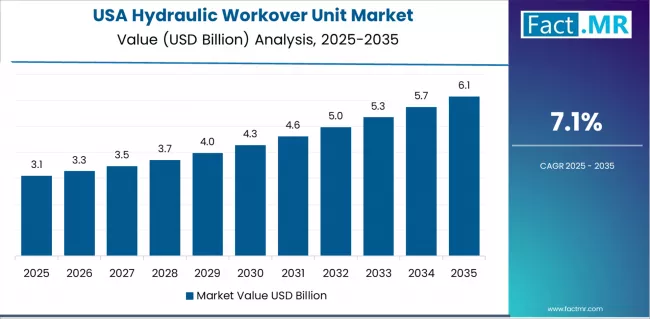
USA demonstrates the strongest growth potential in the hydraulic workover unit market with a CAGR of 7.1% through 2035. The country's leadership position stems from extensive unconventional resource production, mature well populations requiring ongoing intervention services, and continuous technological innovation driving operational efficiency improvements. Growth is concentrated in major shale basins and production regions, including Permian Basin, Eagle Ford, Bakken, and SCOOP/STACK, where operators are increasingly deploying hydraulic workover units for horizontal well maintenance, completion repairs, and production optimization across multi-well pad developments.
Service delivery through established oilfield service providers, independent workover contractors, and integrated energy service companies expands market penetration across diverse operator segments and well intervention applications. The country's advanced hydraulic fracturing industry integration with workover services provides strong momentum for operational synergies, including comprehensive adoption across independent exploration and production companies seeking cost-effective intervention solutions.
Key market factors:
- Unconventional resource production concentrated in Texas, Oklahoma, North Dakota, and Colorado regions with rising well intervention requirements
- Mature well inventory expansion through aging shale wells requiring maintenance interventions and production enhancement operations
- Comprehensive oilfield service ecosystem development, including specialized workover contractors offering proven operational capabilities
- Technology leadership featuring companies like Halliburton and National Oilwell Varco offering advanced hydraulic workover systems with digital integration
Why is India Emerging as a High-Growth Market?
In major production regions including Mumbai High offshore fields, Krishna-Godavari Basin, Rajasthan onshore blocks, and Cambay Basin, the adoption of hydraulic workover unit solutions is accelerating across national oil companies, independent operators, and joint venture partnerships, driven by production decline management and reservoir optimization requirements.
The market demonstrates strong growth momentum with a CAGR of 6.9% through 2035, linked to comprehensive offshore development programs and increasing focus on domestic production self-sufficiency targets. Indian operators are implementing modern well intervention technologies and service delivery models to enhance operational efficiency while meeting growing energy demand expectations and reducing import dependency. The country's expanding offshore exploration creates ongoing demand for specialized workover capabilities, while increasing emphasis on production optimization drives adoption of advanced intervention techniques and equipment.
Key development areas:
- Offshore production platforms leading workover service adoption with emphasis on platform-based intervention operations and subsea well access
- National oil company modernization enabling technology investments and service provider partnerships for enhanced operational capabilities
- Domestic manufacturing initiatives supporting equipment localization and competitive service economics
- Growing integration between upstream operators and specialized service providers expanding intervention capacity across onshore and offshore environments
What Drives USA Market Resilience?
USA market expansion is driven by diverse operational requirements, including horizontal shale well interventions in unconventional plays and conventional vertical well maintenance across traditional production basins. The country demonstrates leading growth potential with a CAGR of 7.1% through 2035, supported by continuous innovation from established service providers and specialized workover contractors.
American operators face operational challenges related to commodity price volatility and drilling activity fluctuations, requiring service companies to demonstrate clear value propositions and operational efficiency advantages. Established well intervention infrastructure and extensive equipment fleets create stable baseline demand for hydraulic workover services, particularly among independent operators and private equity-backed exploration companies where cost-effective intervention solutions drive operational decisions and production economics.
Market characteristics:
- Shale basin operators and conventional producers showing robust demand with substantial annual workover activity across diverse geological formations
- Regional service concentrations varying between Permian Basin workover intensity and Mid-Continent conventional well maintenance operations
- Future projections indicate continued technology adoption with emphasis on automated systems and real-time monitoring capabilities
- Growing emphasis on production optimization and enhanced recovery techniques supporting sustained intervention activity levels
How does Saudi Arabia Demonstrate Production Enhancement Leadership?
The market in Saudi Arabia leads in conventional field development based on integration with enhanced oil recovery programs and systematic production optimization strategies for sustained hydrocarbon extraction. The country shows strong potential with a CAGR of 6.8% through 2035, driven by mature field management excellence and comprehensive well intervention planning in major production regions, including Ghawar Field, Safaniyah, Khurais, and Shaybah developments.
Operators are adopting advanced workover technologies and service delivery methodologies for production maintenance, artificial lift installations, and completion optimization, particularly in large-scale field developments demanding systematic intervention programs and production assurance protocols. Service deployment through national oil company frameworks and international service provider partnerships expands coverage across conventional oil fields and emerging unconventional resource exploration programs.
Leading market segments:
- Conventional field operations in major production centers implementing comprehensive well intervention programs and production enhancement strategies
- Enhanced oil recovery integration with workover operations achieving sustained production plateau maintenance
- Strategic collaborations between Saudi Aramco and international service companies expanding technological capabilities and operational efficiency
- Focus on long-term field development planning and systematic intervention scheduling addressing production optimization requirements
What Positions China for Onshore Development Leadership?
In major production basins including Daqing, Shengli, Changqing, and Tarim fields, operators are implementing hydraulic workover solutions through systematic well maintenance programs and production optimization initiatives, with documented capabilities showing substantial intervention efficiency through modern service delivery methodologies. The market shows steady growth potential with a CAGR of 6.4% through 2035, linked to ongoing onshore field maturation, aging well populations, and emerging unconventional resource development in major hydrocarbon provinces.
Operators are adopting standardized workover procedures and equipment specifications to enhance operational consistency while maintaining production targets demanded by domestic energy security objectives. The country's extensive onshore well inventory creates ongoing opportunities for workover service expansion that differentiates through operational efficiency and cost competitiveness.
Market development factors:
- State-owned oil companies leading workover activity adoption with emphasis on mature field maintenance and production stability
- Domestic equipment manufacturing supporting competitive service economics and equipment availability
- Strategic focus on unconventional resource development including shale gas and tight oil requiring specialized intervention capabilities
- Integration of digital technologies and automated systems enhancing operational efficiency across large-scale field operations
How does Brazil Show Deepwater Excellence Leadership?
Brazil's hydraulic workover unit market demonstrates sophisticated operational requirements focused on deepwater pre-salt developments and offshore production system maintenance, with documented integration of advanced marine equipment achieving substantial operational reliability improvements across challenging subsea environments.
The country maintains solid growth momentum with a CAGR of 5.9% through 2035, driven by extensive offshore development programs emphasizing complex intervention procedures and specialized equipment configurations that align with Brazilian subsea production characteristics.
Major offshore production regions, including Santos Basin, Campos Basin, Espírito Santo Basin, and emerging pre-salt discoveries, showcase advanced workover operations where specialized marine equipment integrates seamlessly with floating production systems and comprehensive subsea infrastructure programs.
Key market characteristics:
- Deepwater operators driving demand for specialized workover capabilities with emphasis on subsea well access and marine environment operations
- Technology partnerships enabling advanced equipment specifications with comprehensive safety certification and marine classification requirements
- Collaboration between Petrobras and international service providers expanding deepwater intervention expertise and operational capabilities
- Emphasis on local content requirements and domestic service capacity development addressing regulatory compliance and economic development objectives
What Characterizes Canada's Market Development?
In major production regions including Alberta oil sands operations, Saskatchewan conventional fields, British Columbia unconventional plays, and offshore Atlantic developments, the adoption of hydraulic workover solutions is expanding across diverse operator segments and well configurations, driven by mature field maintenance requirements and production optimization imperatives.
The market demonstrates steady growth potential with a CAGR of 5.6% through 2035, linked to comprehensive oil sands operations and increasing focus on thermal recovery well interventions in heavy oil applications. Canadian operators are implementing specialized workover technologies and service delivery approaches to enhance operational efficiency while meeting regulatory standards and environmental compliance requirements. The country's established oilfield service infrastructure creates ongoing demand for workover capabilities, while thermal recovery operations drive specialized intervention techniques and equipment configurations.
Key development areas:
- Oil sands thermal recovery operations leading specialized workover adoption with emphasis on steam-assisted gravity drainage well maintenance
- Conventional basin maturation supporting sustained intervention activity across Western Canadian Sedimentary Basin
- Regulatory compliance initiatives driving service quality standards and environmental performance requirements
- Integration with USA service providers enabling cross-border equipment deployment and operational synergies
Europe Market Split by Country

The hydraulic workover unit market in Europe is projected to grow from USD 0.8 billion in 2025 to USD 1.5 billion by 2035, registering a CAGR of 6.4% over the forecast period. Germany is expected to maintain its leadership position with a 32.4% market share in 2025, adjusting to 31.8% by 2035, supported by its specialized service capabilities, technology innovation leadership, and comprehensive equipment manufacturing expertise serving European and international markets.
UK follows with a 28.6% share in 2025, projected to reach 29.1% by 2035, driven by comprehensive North Sea operations and mature offshore field workover requirements in major production regions. Norway holds a 22.3% share in 2025, expected to maintain 22.6% by 2035 through ongoing offshore production activities and advanced intervention technologies.
The Netherlands commands a 10.2% share, while Italy accounts for 4.8% in 2025. The Rest of Europe region is anticipated to gain momentum, expanding its collective share from 1.7% to 2.1% by 2035, attributed to increasing workover activity in emerging Eastern European production areas and Mediterranean offshore developments implementing modern intervention technologies.
Competitive Landscape of the Hydraulic Workover Unit Market

The hydraulic workover unit market features approximately 15-20 meaningful players with moderate concentration, where the top company, Haliburton, controls 14.9% of the global market share through established service delivery networks, comprehensive equipment fleets, and multi-basin operational presence. Competition centers on technological capabilities, operational safety records, and service reliability rather than price competition alone.
Market leaders include Halliburton, which maintains competitive advantages through comprehensive well intervention expertise, global service infrastructure, and deep integration with upstream operators across conventional and unconventional basins, creating high customer confidence among national oil companies and independent operators seeking reliable workover solutions. This company leverages advanced equipment technologies and digital integration capabilities to defend market positions while expanding into emerging production regions and specialized intervention applications.
Challengers encompass established oilfield service providers including National Oilwell Varco, Cudd Energy Services, and Archer, which compete through specialized equipment configurations and strong regional presence in major production basins through operational excellence and technical expertise.
Regional specialists, including Precision Drilling Corporation, High Arctic Energy Services, and Basic Energy Services, focus on specific geographical markets or service applications, offering differentiated capabilities in Canadian operations, Arctic environments, and specialized pressure control services.
Emerging service providers and technology-focused intervention companies create competitive pressure through innovative equipment designs and operational efficiency approaches, particularly in high-growth markets including USA shale basins and Middle Eastern conventional fields, where operational flexibility provides advantages in serving diverse operator requirements and complex well configurations.
Market dynamics favor companies that combine technical excellence with safety performance and customer collaboration capabilities that address complete intervention programs from planning through execution. Strategic emphasis on equipment reliability, operational efficiency, and digital technology integration enables differentiation in increasingly demanding well intervention segments across developed and emerging markets.
Global Hydraulic Workover Unit Market — Stakeholder Contribution Framework
Hydraulic workover units represent a critical well intervention technology that enables oil and gas operators to perform essential maintenance operations and production optimization activities while maintaining continuous hydrocarbon extraction without extensive mobilization costs and operational complexities, typically providing targeted advantages including rapid deployment capabilities, compact equipment footprints, and operational flexibility across diverse well configurations compared to conventional drilling rigs alone while ensuring optimal production uptime and cost-effective intervention delivery.
With the market projected to grow from USD 6.6 billion in 2025 to USD 12.3 billion by 2035 at a 6.4% CAGR, these solutions offer compelling advantages for mature field development, offshore operations, and diverse well intervention programs across global hydrocarbon basins. Scaling market penetration and technological advancement requires coordinated action across government energy policies, industry safety standards, service providers, equipment manufacturers, and operational excellence initiatives.
How Could Governments Spur Local Development and Adoption?
- Upstream Development Programs: Include well intervention infrastructure in national energy strategies, providing targeted support for domestic service capacity development and supporting research institutions through technology advancement grants and technical training programs.
- Tax Policy & Investment Support: Implement favorable tax treatment for workover service investments, provide tax incentives for companies adopting advanced safety systems and environmental technologies, and establish depreciation structures that encourage equipment fleet modernization and technology adoption.
- Regulatory Framework Development: Create balanced safety standards for well intervention operations across onshore and offshore environments, establish clear guidelines for equipment certification and operational protocols, and develop international harmonization initiatives that facilitate cross-border service deployment.
- Workforce & Infrastructure Development: Fund technical training programs for workover personnel and intervention specialists, invest in safety research facilities supporting operational excellence, and establish apprenticeship programs that bridge skills gaps in specialized intervention operations.
- Technology & Innovation Support: Establish public-private partnerships for advanced intervention research, support academic-industry collaborations investigating automation technologies and digital monitoring systems, and create regulatory environments that encourage operational innovation and safety enhancement.
How Could Industry Bodies Support Market Development?
- Technical Standards & Safety: Define standardized operational protocols for hydraulic workover operations across different well configurations and environments, establish universal safety requirements and equipment certification standards, and create performance databases that operators can rely on for intervention planning.
- Market Education & Best Practices: Lead messaging that demonstrates hydraulic workover capabilities, emphasizing operational efficiency, cost advantages, and safety performance compared to conventional drilling rigs and realistic operational expectations.
- Safety & Environmental Standards: Develop guidelines for pressure control systems, emergency response procedures, emissions management, and environmental protection, ensuring responsible operations across service delivery activities.
- Professional Development: Run certification programs for workover supervisors, equipment operators, and intervention engineers on optimizing operational procedures, safety protocols, and advanced technologies in diverse operational environments.
How Could Service Providers and Equipment Manufacturers Strengthen the Ecosystem?
- Advanced Equipment Development: Develop next-generation hydraulic workover systems with enhanced automation, improved safety features, and application-specific characteristics that enhance operational performance while reducing costs and improving reliability.
- Safety Management Programs: Provide comprehensive operational protocols, risk assessment methodologies, and safety training services that support customer confidence and regulatory compliance across intervention operations.
- Technical Support Initiatives: Offer comprehensive engineering services about intervention planning, equipment selection guidance, and operational optimization strategies that help operators make informed decisions aligned with production objectives.
- Research & Development Networks: Build comprehensive R&D capabilities, collaborative engineering programs, and equipment testing systems that ensure workover units maintain high performance standards and technological advancement across diverse applications.
How Could Operators and Asset Managers Navigate the Market?
- Intervention Planning Integration: Incorporate systematic workover programs into field development plans, with particular focus on production optimization schedules, equipment mobilization logistics, and operational efficiency targets for asset value maximization.
- Service Provider Partnership Excellence: Establish comprehensive collaboration frameworks with workover contractors addressing early involvement in intervention planning, performance monitoring protocols, and continuous improvement initiatives through optimized communication systems.
- Safety & Performance Management: Implement rigorous operational oversight programs, safety compliance monitoring, and service quality assessments that ensure consistent intervention delivery across well populations and operational environments.
- Technology Adoption Strategies: Develop digitalization roadmaps, automation investment plans, and performance optimization initiatives that enable competitive advantages through technology-enabled intervention capabilities.
How Could Investors and Financial Enablers Unlock Value?
- Service Company Investment: Provide growth capital for established providers like Halliburton and emerging contractors to fund equipment fleet expansion, technology investments, and geographical diversification programs.
- Technology Innovation Financing: Back companies developing automation systems, digital monitoring platforms, and advanced hydraulic technologies that enhance service delivery efficiency and operational safety.
- Market Expansion Funding: Finance service infrastructure development and equipment deployment in high-growth regions including Middle East and Asia Pacific, supporting localization initiatives that address regional market requirements.
- Sustainability Investment: Support companies implementing hybrid power systems, emissions reduction technologies, and environmental management practices that enhance operational performance through technology-enabled service delivery.
Key Players in the Hydraulic Workover Unit Market
- Halliburton
- National Oilwell Varco
- Cudd Energy Services
- Archer
- Precision Drilling Corporation
- High Arctic Energy Services
- Basic Energy Services
- Superior Energy Services
- Velesto Energy
- Uzma Berhad
Scope of the Report
| Items | Values |
|---|---|
| Quantitative Units | USD 6.6 Billion |
| Service | Workover, Snubbing |
| Installation | Skid Mounted, Trailer Mounted |
| Application | Onshore, Offshore |
| Capacity | Below 150 Tons, 151-200 Tons, Above 200 Tons |
| Regions Covered | Asia Pacific, Europe, North America, Latin America, Middle East & Africa |
| Country Covered | USA, India, Saudi Arabia, China, Brazil, Canada, Germany, and 40+ countries |
| Key Companies Profiled | Halliburton, National Oilwell Varco, Cudd Energy Services, Archer, Precision Drilling Corporation, High Arctic Energy Services, Basic Energy Services, Superior Energy Services, Velesto Energy, Uzma Berhad |
| Additional Attributes | Dollar sales by service and installation categories, regional adoption trends across North America, Middle East, and Asia Pacific, competitive landscape with oilfield service providers and equipment manufacturers, operational specifications and safety requirements, integration with upstream production systems and field development programs, innovations in automation technologies and digital monitoring capabilities, and development of specialized applications with engineering collaboration and operational excellence delivery. |
Hydraulic Workover Unit Market by Segments
-
Service :
- Workover
- Snubbing
-
Installation :
- Skid Mounted
- Trailer Mounted
-
Application :
- Onshore
- Offshore
-
Capacity :
- Below 150 Tons
- 151-200 Tons
- Above 200 Tons
-
Region :
- Asia Pacific
- China
- Japan
- India
- South Korea
- Australia
- Thailand
- Rest of Asia Pacific
- Europe
- Germany
- UK
- France
- Italy
- Spain
- Denmark
- Sweden
- Norway
- Rest of Europe
- North America
- USA
- Canada
- Mexico
- Latin America
- Brazil
- Argentina
- Rest of Latin America
- Middle East & Africa
- South Africa
- Saudi Arabia
- UAE
- Kuwait
- Rest of Middle East & Africa
- Asia Pacific
Table of Content
- Executive Summary
- Global Market Outlook
- Demand to side Trends
- Supply to side Trends
- Technology Roadmap Analysis
- Analysis and Recommendations
- Market Overview
- Market Coverage / Taxonomy
- Market Definition / Scope / Limitations
- Market Background
- Market Dynamics
- Drivers
- Restraints
- Opportunity
- Trends
- Scenario Forecast
- Demand in Optimistic Scenario
- Demand in Likely Scenario
- Demand in Conservative Scenario
- Opportunity Map Analysis
- Product Life Cycle Analysis
- Supply Chain Analysis
- Investment Feasibility Matrix
- Value Chain Analysis
- PESTLE and Porter’s Analysis
- Regulatory Landscape
- Regional Parent Market Outlook
- Production and Consumption Statistics
- Import and Export Statistics
- Market Dynamics
- Global Market Analysis 2020 to 2024 and Forecast, 2025 to 2035
- Historical Market Size Value (USD Million) Analysis, 2020 to 2024
- Current and Future Market Size Value (USD Million) Projections, 2025 to 2035
- Y to o to Y Growth Trend Analysis
- Absolute $ Opportunity Analysis
- Global Market Pricing Analysis 2020 to 2024 and Forecast 2025 to 2035
- Global Market Analysis 2020 to 2024 and Forecast 2025 to 2035, By Service
- Introduction / Key Findings
- Historical Market Size Value (USD Million) Analysis By Service, 2020 to 2024
- Current and Future Market Size Value (USD Million) Analysis and Forecast By Service, 2025 to 2035
- Workover
- Snubbing
- Y to o to Y Growth Trend Analysis By Service, 2020 to 2024
- Absolute $ Opportunity Analysis By Service, 2025 to 2035
- Global Market Analysis 2020 to 2024 and Forecast 2025 to 2035, By Installation
- Introduction / Key Findings
- Historical Market Size Value (USD Million) Analysis By Installation, 2020 to 2024
- Current and Future Market Size Value (USD Million) Analysis and Forecast By Installation, 2025 to 2035
- Skid Mounted
- Trailer Mounted
- Y to o to Y Growth Trend Analysis By Installation, 2020 to 2024
- Absolute $ Opportunity Analysis By Installation, 2025 to 2035
- Global Market Analysis 2020 to 2024 and Forecast 2025 to 2035, By Application
- Introduction / Key Findings
- Historical Market Size Value (USD Million) Analysis By Application, 2020 to 2024
- Current and Future Market Size Value (USD Million) Analysis and Forecast By Application, 2025 to 2035
- Onshore
- Offshore
- Y to o to Y Growth Trend Analysis By Application, 2020 to 2024
- Absolute $ Opportunity Analysis By Application, 2025 to 2035
- Global Market Analysis 2020 to 2024 and Forecast 2025 to 2035, By Capacity
- Introduction / Key Findings
- Historical Market Size Value (USD Million) Analysis By Capacity, 2020 to 2024
- Current and Future Market Size Value (USD Million) Analysis and Forecast By Capacity, 2025 to 2035
- Above 200 Tons
- 151-200 Tons
- Below 150 Tons
- Y to o to Y Growth Trend Analysis By Capacity, 2020 to 2024
- Absolute $ Opportunity Analysis By Capacity, 2025 to 2035
- Global Market Analysis 2020 to 2024 and Forecast 2025 to 2035, By Region
- Introduction
- Historical Market Size Value (USD Million) Analysis By Region, 2020 to 2024
- Current Market Size Value (USD Million) Analysis and Forecast By Region, 2025 to 2035
- North America
- Latin America
- Western Europe
- Eastern Europe
- East Asia
- South Asia and Pacific
- Middle East & Africa
- Market Attractiveness Analysis By Region
- North America Market Analysis 2020 to 2024 and Forecast 2025 to 2035, By Country
- Historical Market Size Value (USD Million) Trend Analysis By Market Taxonomy, 2020 to 2024
- Market Size Value (USD Million) Forecast By Market Taxonomy, 2025 to 2035
- By Country
- USA
- Canada
- Mexico
- By Service
- By Installation
- By Application
- By Capacity
- By Country
- Market Attractiveness Analysis
- By Country
- By Service
- By Installation
- By Application
- By Capacity
- Key Takeaways
- Latin America Market Analysis 2020 to 2024 and Forecast 2025 to 2035, By Country
- Historical Market Size Value (USD Million) Trend Analysis By Market Taxonomy, 2020 to 2024
- Market Size Value (USD Million) Forecast By Market Taxonomy, 2025 to 2035
- By Country
- Brazil
- Chile
- Rest of Latin America
- By Service
- By Installation
- By Application
- By Capacity
- By Country
- Market Attractiveness Analysis
- By Country
- By Service
- By Installation
- By Application
- By Capacity
- Key Takeaways
- Western Europe Market Analysis 2020 to 2024 and Forecast 2025 to 2035, By Country
- Historical Market Size Value (USD Million) Trend Analysis By Market Taxonomy, 2020 to 2024
- Market Size Value (USD Million) Forecast By Market Taxonomy, 2025 to 2035
- By Country
- Germany
- UK
- Italy
- Spain
- France
- Nordic
- BENELUX
- Rest of Western Europe
- By Service
- By Installation
- By Application
- By Capacity
- By Country
- Market Attractiveness Analysis
- By Country
- By Service
- By Installation
- By Application
- By Capacity
- Key Takeaways
- Eastern Europe Market Analysis 2020 to 2024 and Forecast 2025 to 2035, By Country
- Historical Market Size Value (USD Million) Trend Analysis By Market Taxonomy, 2020 to 2024
- Market Size Value (USD Million) Forecast By Market Taxonomy, 2025 to 2035
- By Country
- Russia
- Poland
- Hungary
- Balkan & Baltic
- Rest of Eastern Europe
- By Service
- By Installation
- By Application
- By Capacity
- By Country
- Market Attractiveness Analysis
- By Country
- By Service
- By Installation
- By Application
- By Capacity
- Key Takeaways
- East Asia Market Analysis 2020 to 2024 and Forecast 2025 to 2035, By Country
- Historical Market Size Value (USD Million) Trend Analysis By Market Taxonomy, 2020 to 2024
- Market Size Value (USD Million) Forecast By Market Taxonomy, 2025 to 2035
- By Country
- China
- Japan
- South Korea
- By Service
- By Installation
- By Application
- By Capacity
- By Country
- Market Attractiveness Analysis
- By Country
- By Service
- By Installation
- By Application
- By Capacity
- Key Takeaways
- South Asia and Pacific Market Analysis 2020 to 2024 and Forecast 2025 to 2035, By Country
- Historical Market Size Value (USD Million) Trend Analysis By Market Taxonomy, 2020 to 2024
- Market Size Value (USD Million) Forecast By Market Taxonomy, 2025 to 2035
- By Country
- India
- ASEAN
- Australia & New Zealand
- Rest of South Asia and Pacific
- By Service
- By Installation
- By Application
- By Capacity
- By Country
- Market Attractiveness Analysis
- By Country
- By Service
- By Installation
- By Application
- By Capacity
- Key Takeaways
- Middle East & Africa Market Analysis 2020 to 2024 and Forecast 2025 to 2035, By Country
- Historical Market Size Value (USD Million) Trend Analysis By Market Taxonomy, 2020 to 2024
- Market Size Value (USD Million) Forecast By Market Taxonomy, 2025 to 2035
- By Country
- Kingdom of Saudi Arabia
- Other GCC Countries
- Turkiye
- South Africa
- Other African Union
- Rest of Middle East & Africa
- By Service
- By Installation
- By Application
- By Capacity
- By Country
- Market Attractiveness Analysis
- By Country
- By Service
- By Installation
- By Application
- By Capacity
- Key Takeaways
- Key Countries Market Analysis
- USA
- Pricing Analysis
- Market Share Analysis, 2024
- By Service
- By Installation
- By Application
- By Capacity
- Canada
- Pricing Analysis
- Market Share Analysis, 2024
- By Service
- By Installation
- By Application
- By Capacity
- Mexico
- Pricing Analysis
- Market Share Analysis, 2024
- By Service
- By Installation
- By Application
- By Capacity
- Brazil
- Pricing Analysis
- Market Share Analysis, 2024
- By Service
- By Installation
- By Application
- By Capacity
- Chile
- Pricing Analysis
- Market Share Analysis, 2024
- By Service
- By Installation
- By Application
- By Capacity
- Germany
- Pricing Analysis
- Market Share Analysis, 2024
- By Service
- By Installation
- By Application
- By Capacity
- UK
- Pricing Analysis
- Market Share Analysis, 2024
- By Service
- By Installation
- By Application
- By Capacity
- Italy
- Pricing Analysis
- Market Share Analysis, 2024
- By Service
- By Installation
- By Application
- By Capacity
- Spain
- Pricing Analysis
- Market Share Analysis, 2024
- By Service
- By Installation
- By Application
- By Capacity
- France
- Pricing Analysis
- Market Share Analysis, 2024
- By Service
- By Installation
- By Application
- By Capacity
- India
- Pricing Analysis
- Market Share Analysis, 2024
- By Service
- By Installation
- By Application
- By Capacity
- ASEAN
- Pricing Analysis
- Market Share Analysis, 2024
- By Service
- By Installation
- By Application
- By Capacity
- Australia & New Zealand
- Pricing Analysis
- Market Share Analysis, 2024
- By Service
- By Installation
- By Application
- By Capacity
- China
- Pricing Analysis
- Market Share Analysis, 2024
- By Service
- By Installation
- By Application
- By Capacity
- Japan
- Pricing Analysis
- Market Share Analysis, 2024
- By Service
- By Installation
- By Application
- By Capacity
- South Korea
- Pricing Analysis
- Market Share Analysis, 2024
- By Service
- By Installation
- By Application
- By Capacity
- Russia
- Pricing Analysis
- Market Share Analysis, 2024
- By Service
- By Installation
- By Application
- By Capacity
- Poland
- Pricing Analysis
- Market Share Analysis, 2024
- By Service
- By Installation
- By Application
- By Capacity
- Hungary
- Pricing Analysis
- Market Share Analysis, 2024
- By Service
- By Installation
- By Application
- By Capacity
- Kingdom of Saudi Arabia
- Pricing Analysis
- Market Share Analysis, 2024
- By Service
- By Installation
- By Application
- By Capacity
- Turkiye
- Pricing Analysis
- Market Share Analysis, 2024
- By Service
- By Installation
- By Application
- By Capacity
- South Africa
- Pricing Analysis
- Market Share Analysis, 2024
- By Service
- By Installation
- By Application
- By Capacity
- USA
- Market Structure Analysis
- Competition Dashboard
- Competition Benchmarking
- Market Share Analysis of Top Players
- By Regional
- By Service
- By Installation
- By Application
- By Capacity
- Competition Analysis
- Competition Deep Dive
- Halliburton
- Overview
- Product Portfolio
- Profitability by Market Segments (Product/Age /Sales Channel/Region)
- Sales Footprint
- Strategy Overview
- Marketing Strategy
- Product Strategy
- Channel Strategy
- National Oilwell Varco
- Cudd Energy Services
- Archer
- Precision Drilling Corporation
- High Arctic Energy Services
- Basic Energy Services
- Superior Energy Services
- Velesto Energy
- Uzma Berhad
- Halliburton
- Competition Deep Dive
- Assumptions & Acronyms Used
- Research Methodology
List Of Table
- Table 1: Global Market Value (USD Million) Forecast by Region, 2020 to 2035
- Table 2: Global Market Value (USD Million) Forecast by Service, 2020 to 2035
- Table 3: Global Market Value (USD Million) Forecast by Installation, 2020 to 2035
- Table 4: Global Market Value (USD Million) Forecast by Application, 2020 to 2035
- Table 5: Global Market Value (USD Million) Forecast by Capacity, 2020 to 2035
- Table 6: North America Market Value (USD Million) Forecast by Country, 2020 to 2035
- Table 7: North America Market Value (USD Million) Forecast by Service, 2020 to 2035
- Table 8: North America Market Value (USD Million) Forecast by Installation, 2020 to 2035
- Table 9: North America Market Value (USD Million) Forecast by Application, 2020 to 2035
- Table 10: North America Market Value (USD Million) Forecast by Capacity, 2020 to 2035
- Table 11: Latin America Market Value (USD Million) Forecast by Country, 2020 to 2035
- Table 12: Latin America Market Value (USD Million) Forecast by Service, 2020 to 2035
- Table 13: Latin America Market Value (USD Million) Forecast by Installation, 2020 to 2035
- Table 14: Latin America Market Value (USD Million) Forecast by Application, 2020 to 2035
- Table 15: Latin America Market Value (USD Million) Forecast by Capacity, 2020 to 2035
- Table 16: Western Europe Market Value (USD Million) Forecast by Country, 2020 to 2035
- Table 17: Western Europe Market Value (USD Million) Forecast by Service, 2020 to 2035
- Table 18: Western Europe Market Value (USD Million) Forecast by Installation, 2020 to 2035
- Table 19: Western Europe Market Value (USD Million) Forecast by Application, 2020 to 2035
- Table 20: Western Europe Market Value (USD Million) Forecast by Capacity, 2020 to 2035
- Table 21: Eastern Europe Market Value (USD Million) Forecast by Country, 2020 to 2035
- Table 22: Eastern Europe Market Value (USD Million) Forecast by Service, 2020 to 2035
- Table 23: Eastern Europe Market Value (USD Million) Forecast by Installation, 2020 to 2035
- Table 24: Eastern Europe Market Value (USD Million) Forecast by Application, 2020 to 2035
- Table 25: Eastern Europe Market Value (USD Million) Forecast by Capacity, 2020 to 2035
- Table 26: East Asia Market Value (USD Million) Forecast by Country, 2020 to 2035
- Table 27: East Asia Market Value (USD Million) Forecast by Service, 2020 to 2035
- Table 28: East Asia Market Value (USD Million) Forecast by Installation, 2020 to 2035
- Table 29: East Asia Market Value (USD Million) Forecast by Application, 2020 to 2035
- Table 30: East Asia Market Value (USD Million) Forecast by Capacity, 2020 to 2035
- Table 31: South Asia and Pacific Market Value (USD Million) Forecast by Country, 2020 to 2035
- Table 32: South Asia and Pacific Market Value (USD Million) Forecast by Service, 2020 to 2035
- Table 33: South Asia and Pacific Market Value (USD Million) Forecast by Installation, 2020 to 2035
- Table 34: South Asia and Pacific Market Value (USD Million) Forecast by Application, 2020 to 2035
- Table 35: South Asia and Pacific Market Value (USD Million) Forecast by Capacity, 2020 to 2035
- Table 36: Middle East & Africa Market Value (USD Million) Forecast by Country, 2020 to 2035
- Table 37: Middle East & Africa Market Value (USD Million) Forecast by Service, 2020 to 2035
- Table 38: Middle East & Africa Market Value (USD Million) Forecast by Installation, 2020 to 2035
- Table 39: Middle East & Africa Market Value (USD Million) Forecast by Application, 2020 to 2035
- Table 40: Middle East & Africa Market Value (USD Million) Forecast by Capacity, 2020 to 2035
List Of Figures
- Figure 1: Global Market Pricing Analysis
- Figure 2: Global Market Value (USD Million) Forecast 2020 to 2035
- Figure 3: Global Market Value Share and BPS Analysis by Service, 2025 and 2035
- Figure 4: Global Market Y to o to Y Growth Comparison by Service, 2025 to 2035
- Figure 5: Global Market Attractiveness Analysis by Service
- Figure 6: Global Market Value Share and BPS Analysis by Installation, 2025 and 2035
- Figure 7: Global Market Y to o to Y Growth Comparison by Installation, 2025 to 2035
- Figure 8: Global Market Attractiveness Analysis by Installation
- Figure 9: Global Market Value Share and BPS Analysis by Application, 2025 and 2035
- Figure 10: Global Market Y to o to Y Growth Comparison by Application, 2025 to 2035
- Figure 11: Global Market Attractiveness Analysis by Application
- Figure 12: Global Market Value Share and BPS Analysis by Capacity, 2025 and 2035
- Figure 13: Global Market Y to o to Y Growth Comparison by Capacity, 2025 to 2035
- Figure 14: Global Market Attractiveness Analysis by Capacity
- Figure 15: Global Market Value (USD Million) Share and BPS Analysis by Region, 2025 and 2035
- Figure 16: Global Market Y to o to Y Growth Comparison by Region, 2025 to 2035
- Figure 17: Global Market Attractiveness Analysis by Region
- Figure 18: North America Market Incremental Dollar Opportunity, 2025 to 2035
- Figure 19: Latin America Market Incremental Dollar Opportunity, 2025 to 2035
- Figure 20: Western Europe Market Incremental Dollar Opportunity, 2025 to 2035
- Figure 21: Eastern Europe Market Incremental Dollar Opportunity, 2025 to 2035
- Figure 22: East Asia Market Incremental Dollar Opportunity, 2025 to 2035
- Figure 23: South Asia and Pacific Market Incremental Dollar Opportunity, 2025 to 2035
- Figure 24: Middle East & Africa Market Incremental Dollar Opportunity, 2025 to 2035
- Figure 25: North America Market Value Share and BPS Analysis by Country, 2025 and 2035
- Figure 26: North America Market Value Share and BPS Analysis by Service, 2025 and 2035
- Figure 27: North America Market Y to o to Y Growth Comparison by Service, 2025 to 2035
- Figure 28: North America Market Attractiveness Analysis by Service
- Figure 29: North America Market Value Share and BPS Analysis by Installation, 2025 and 2035
- Figure 30: North America Market Y to o to Y Growth Comparison by Installation, 2025 to 2035
- Figure 31: North America Market Attractiveness Analysis by Installation
- Figure 32: North America Market Value Share and BPS Analysis by Application, 2025 and 2035
- Figure 33: North America Market Y to o to Y Growth Comparison by Application, 2025 to 2035
- Figure 34: North America Market Attractiveness Analysis by Application
- Figure 35: North America Market Value Share and BPS Analysis by Capacity, 2025 and 2035
- Figure 36: North America Market Y to o to Y Growth Comparison by Capacity, 2025 to 2035
- Figure 37: North America Market Attractiveness Analysis by Capacity
- Figure 38: Latin America Market Value Share and BPS Analysis by Country, 2025 and 2035
- Figure 39: Latin America Market Value Share and BPS Analysis by Service, 2025 and 2035
- Figure 40: Latin America Market Y to o to Y Growth Comparison by Service, 2025 to 2035
- Figure 41: Latin America Market Attractiveness Analysis by Service
- Figure 42: Latin America Market Value Share and BPS Analysis by Installation, 2025 and 2035
- Figure 43: Latin America Market Y to o to Y Growth Comparison by Installation, 2025 to 2035
- Figure 44: Latin America Market Attractiveness Analysis by Installation
- Figure 45: Latin America Market Value Share and BPS Analysis by Application, 2025 and 2035
- Figure 46: Latin America Market Y to o to Y Growth Comparison by Application, 2025 to 2035
- Figure 47: Latin America Market Attractiveness Analysis by Application
- Figure 48: Latin America Market Value Share and BPS Analysis by Capacity, 2025 and 2035
- Figure 49: Latin America Market Y to o to Y Growth Comparison by Capacity, 2025 to 2035
- Figure 50: Latin America Market Attractiveness Analysis by Capacity
- Figure 51: Western Europe Market Value Share and BPS Analysis by Country, 2025 and 2035
- Figure 52: Western Europe Market Value Share and BPS Analysis by Service, 2025 and 2035
- Figure 53: Western Europe Market Y to o to Y Growth Comparison by Service, 2025 to 2035
- Figure 54: Western Europe Market Attractiveness Analysis by Service
- Figure 55: Western Europe Market Value Share and BPS Analysis by Installation, 2025 and 2035
- Figure 56: Western Europe Market Y to o to Y Growth Comparison by Installation, 2025 to 2035
- Figure 57: Western Europe Market Attractiveness Analysis by Installation
- Figure 58: Western Europe Market Value Share and BPS Analysis by Application, 2025 and 2035
- Figure 59: Western Europe Market Y to o to Y Growth Comparison by Application, 2025 to 2035
- Figure 60: Western Europe Market Attractiveness Analysis by Application
- Figure 61: Western Europe Market Value Share and BPS Analysis by Capacity, 2025 and 2035
- Figure 62: Western Europe Market Y to o to Y Growth Comparison by Capacity, 2025 to 2035
- Figure 63: Western Europe Market Attractiveness Analysis by Capacity
- Figure 64: Eastern Europe Market Value Share and BPS Analysis by Country, 2025 and 2035
- Figure 65: Eastern Europe Market Value Share and BPS Analysis by Service, 2025 and 2035
- Figure 66: Eastern Europe Market Y to o to Y Growth Comparison by Service, 2025 to 2035
- Figure 67: Eastern Europe Market Attractiveness Analysis by Service
- Figure 68: Eastern Europe Market Value Share and BPS Analysis by Installation, 2025 and 2035
- Figure 69: Eastern Europe Market Y to o to Y Growth Comparison by Installation, 2025 to 2035
- Figure 70: Eastern Europe Market Attractiveness Analysis by Installation
- Figure 71: Eastern Europe Market Value Share and BPS Analysis by Application, 2025 and 2035
- Figure 72: Eastern Europe Market Y to o to Y Growth Comparison by Application, 2025 to 2035
- Figure 73: Eastern Europe Market Attractiveness Analysis by Application
- Figure 74: Eastern Europe Market Value Share and BPS Analysis by Capacity, 2025 and 2035
- Figure 75: Eastern Europe Market Y to o to Y Growth Comparison by Capacity, 2025 to 2035
- Figure 76: Eastern Europe Market Attractiveness Analysis by Capacity
- Figure 77: East Asia Market Value Share and BPS Analysis by Country, 2025 and 2035
- Figure 78: East Asia Market Value Share and BPS Analysis by Service, 2025 and 2035
- Figure 79: East Asia Market Y to o to Y Growth Comparison by Service, 2025 to 2035
- Figure 80: East Asia Market Attractiveness Analysis by Service
- Figure 81: East Asia Market Value Share and BPS Analysis by Installation, 2025 and 2035
- Figure 82: East Asia Market Y to o to Y Growth Comparison by Installation, 2025 to 2035
- Figure 83: East Asia Market Attractiveness Analysis by Installation
- Figure 84: East Asia Market Value Share and BPS Analysis by Application, 2025 and 2035
- Figure 85: East Asia Market Y to o to Y Growth Comparison by Application, 2025 to 2035
- Figure 86: East Asia Market Attractiveness Analysis by Application
- Figure 87: East Asia Market Value Share and BPS Analysis by Capacity, 2025 and 2035
- Figure 88: East Asia Market Y to o to Y Growth Comparison by Capacity, 2025 to 2035
- Figure 89: East Asia Market Attractiveness Analysis by Capacity
- Figure 90: South Asia and Pacific Market Value Share and BPS Analysis by Country, 2025 and 2035
- Figure 91: South Asia and Pacific Market Value Share and BPS Analysis by Service, 2025 and 2035
- Figure 92: South Asia and Pacific Market Y to o to Y Growth Comparison by Service, 2025 to 2035
- Figure 93: South Asia and Pacific Market Attractiveness Analysis by Service
- Figure 94: South Asia and Pacific Market Value Share and BPS Analysis by Installation, 2025 and 2035
- Figure 95: South Asia and Pacific Market Y to o to Y Growth Comparison by Installation, 2025 to 2035
- Figure 96: South Asia and Pacific Market Attractiveness Analysis by Installation
- Figure 97: South Asia and Pacific Market Value Share and BPS Analysis by Application, 2025 and 2035
- Figure 98: South Asia and Pacific Market Y to o to Y Growth Comparison by Application, 2025 to 2035
- Figure 99: South Asia and Pacific Market Attractiveness Analysis by Application
- Figure 100: South Asia and Pacific Market Value Share and BPS Analysis by Capacity, 2025 and 2035
- Figure 101: South Asia and Pacific Market Y to o to Y Growth Comparison by Capacity, 2025 to 2035
- Figure 102: South Asia and Pacific Market Attractiveness Analysis by Capacity
- Figure 103: Middle East & Africa Market Value Share and BPS Analysis by Country, 2025 and 2035
- Figure 104: Middle East & Africa Market Value Share and BPS Analysis by Service, 2025 and 2035
- Figure 105: Middle East & Africa Market Y to o to Y Growth Comparison by Service, 2025 to 2035
- Figure 106: Middle East & Africa Market Attractiveness Analysis by Service
- Figure 107: Middle East & Africa Market Value Share and BPS Analysis by Installation, 2025 and 2035
- Figure 108: Middle East & Africa Market Y to o to Y Growth Comparison by Installation, 2025 to 2035
- Figure 109: Middle East & Africa Market Attractiveness Analysis by Installation
- Figure 110: Middle East & Africa Market Value Share and BPS Analysis by Application, 2025 and 2035
- Figure 111: Middle East & Africa Market Y to o to Y Growth Comparison by Application, 2025 to 2035
- Figure 112: Middle East & Africa Market Attractiveness Analysis by Application
- Figure 113: Middle East & Africa Market Value Share and BPS Analysis by Capacity, 2025 and 2035
- Figure 114: Middle East & Africa Market Y to o to Y Growth Comparison by Capacity, 2025 to 2035
- Figure 115: Middle East & Africa Market Attractiveness Analysis by Capacity
- Figure 116: Global Market - Tier Structure Analysis
- Figure 117: Global Market - Company Share Analysis
- FAQs -
How big is the hydraulic workover unit market in 2025?
The global hydraulic workover unit market is estimated to be valued at USD 6.6 billion in 2025.
What will be the size of hydraulic workover unit market in 2035?
The market size for the hydraulic workover unit market is projected to reach USD 12.3 billion by 2035.
How much will be the hydraulic workover unit market growth between 2025 and 2035?
The hydraulic workover unit market is expected to grow at a 6.4% CAGR between 2025 and 2035.
What are the key product types in the hydraulic workover unit market?
The key product types in hydraulic workover unit market are workover and snubbing.
Which installation segment to contribute significant share in the hydraulic workover unit market in 2025?
In terms of installation, skid mounted segment to command 59.4% share in the hydraulic workover unit market in 2025.