Intravenous Hydration Therapy Market

Intravenous Hydration Therapy Market Size and Share Forecast Outlook 2026 to 2036

Intravenous hydration therapy market is projected to grow from USD 2.8 billion in 2026 to USD 7.0 billion by 2036, at a CAGR of 9.4%. Energy Boosters will dominate with a 25.0% market share, while medicated will lead the component segment with a 67.0% share.

Intravenous Hydration Therapy Market Forecast and Outlook 2026 to 2036

The global intravenous hydration therapy market is projected to reach USD 6.95 billion by 2036. The market is valued at USD 2.83 billion in 2026 and is set to rise at a CAGR of 9.4% during the assessment period. Growing by 2.5x, the scope for intravenous hydration therapy will be supported by increasing demand from wellness centers and expanding applications in beauty and aesthetic enhancement programs across both developed and emerging healthcare markets.

Quick Stats for Intravenous Hydration Therapy Market

  • Intravenous Hydration Therapy Market Value (2026): USD 2.83 billion
  • Intravenous Hydration Therapy Market Forecast Value (2036): USD 6.95 billion
  • Intravenous Hydration Therapy Market Forecast CAGR: 9.4%
  • Leading Service in Intravenous Hydration Therapy Market: Energy Boosters (25.0%)
  • Key Growth Regions in Intravenous Hydration Therapy Market: North America, Asia Pacific, and Europe
  • Top Players in Intravenous Hydration Therapy Market: Baxter, B. Braun SE, Otsuka Pharmaceutical Co., Ltd., Grifols S.A., Vifor Pharma Management Ltd., JW Life Science Corporation, Amanta Healthcare, NexGen Health, Core IV Therapy, LLC, Cryojuvenate UK Ltd., Drip Hydration, REVIV
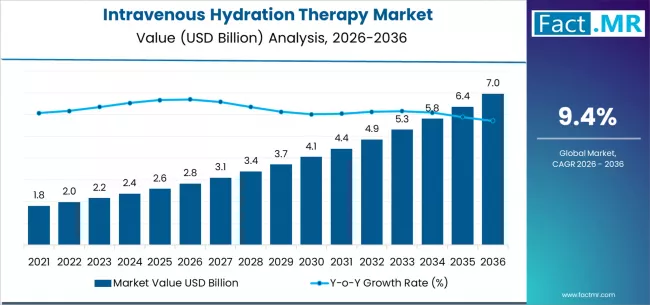
Intravenous Hydration Therapy Market Market Value Analysis

Rising application diversity in energy optimization therapies, immune system support formulations, and specialized performance enhancement protocols creates expanding opportunities for IV hydration therapy innovations and specialized treatment developments. Burgeoning health consciousness in urban populations globally, coupled with expanding mobile IV therapy infrastructure through on-demand wellness services and modern delivery platforms, further accelerate market penetration across diverse consumer segments.

The growing global emphasis on preventive healthcare and wellness optimization, particularly in developed economies and affluent consumer populations, generates sustained requirements for intravenous nutrient delivery and therapeutic hydration services.

Advancements in IV formulation development demonstrating measurable improvements in bioavailability, customized nutrient combinations, and therapeutic efficacy reinforce provider confidence in IV therapy service economics, while wellness industry trends toward personalized health interventions and rapid recovery solutions expand addressable market opportunities beyond traditional hospital-based hydration into elective wellness and lifestyle optimization services.

Intravenous Hydration Therapy Market Key Takeaways

Metric Value
Market Value (2026) USD 2.83 billion
Market Forecast Value (2036) USD 6.95 billion
Forecast CAGR (2026-2036) 9.4%

Category

Category Segments
Service Immune Boosters; Energy Boosters; Hydration; Beauty and Aesthetics; Detoxification; Longevity and Antiaging; Performance and Athletics; Migraine and Pain Relief; Stress, Sleep, and Mood Support; Flu and Stomach; Others
Component Medicated; Non-medicated
Provider Type Mobile Providers; Physical Providers
End-Use Hospitals and Clinics; Wellness Centers and Spas; Home Healthcare; Others
Region North America; Europe; Asia Pacific; Latin America; MEA

Segmental Analysis

Which Service Category comprises the Majority of Intravenous Hydration Therapy Administration?
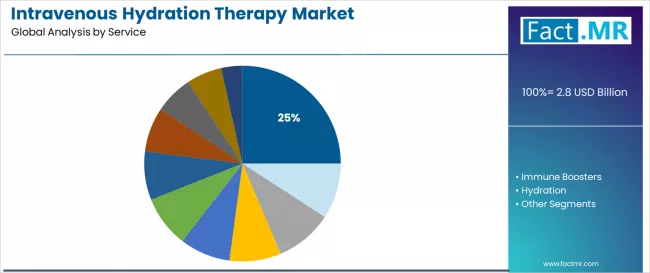
Intravenous Hydration Therapy Market Analysis By Service

Energy boosters represents the dominant force, capturing 25.0% of total market share in 2026. This category encompasses formulations featuring critical performance enhancement functionality for fatigue management, productivity optimization, and vitality restoration, including B-vitamin complexes, amino acid formulations, and metabolic cofactors that enable rapid energy restoration, mental clarity improvement, and sustained vitality enhancement across all wellness applications.

The energy boosters segment's market leadership stems from its essential role in modern lifestyle management, with energy-focused IV formulations capable of meeting diverse wellness requirements while maintaining convenient administration and immediate perceived benefits across all consumer demographics.

Which Component Category leads in the Intravenous Hydration Therapy Market?
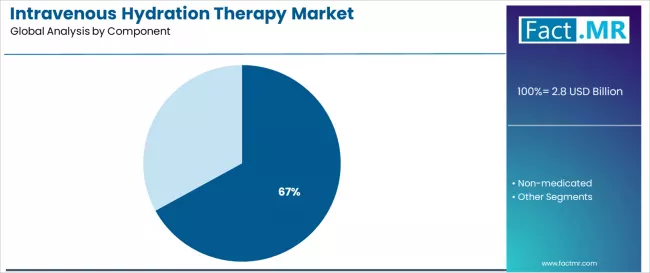
Intravenous Hydration Therapy Market Analysis By Component

Medicated therapy represents the dominant component category, expected to generate 67.0% of total revenue in 2026. Medicated therapy encompasses pharmaceutical-grade ingredients, prescription medications, and regulated therapeutic compounds requiring medical oversight for administration and therapeutic effect delivery.

Medicated intravenous hydration therapies offer superior therapeutic efficacy, with medicated IV formulations providing targeted symptom relief and clinical-grade interventions across diverse medical and wellness applications. The segment dominates consumption in hospital-based services and medically supervised wellness centers where prescription medications address specific health conditions and therapeutic objectives.

Which Provider Type Category Dominates in the Intravenous Hydration Therapy Market?
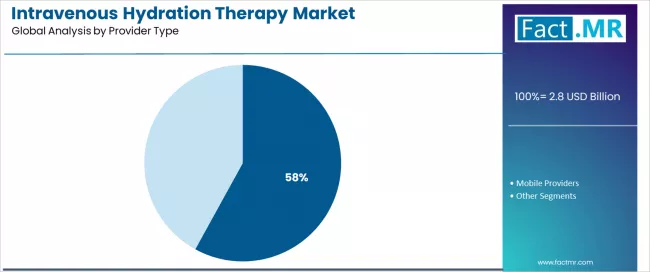
Intravenous Hydration Therapy Market Analysis By Provider Type

Physical providers are likely to account for 58.0% of all intravenous hydrogen therapy approaches in 2026. This leading provider category encompasses fixed-location wellness centers, hospital outpatient departments, medical spas, and dedicated IV therapy lounges providing services in established facility environments with comprehensive medical equipment and support infrastructure.

Why do Hospitals account for the Highest Share of Intravenous Hydration Therapy Procedures?
Intravenous Hydration Therapy Market Analysis By End Use

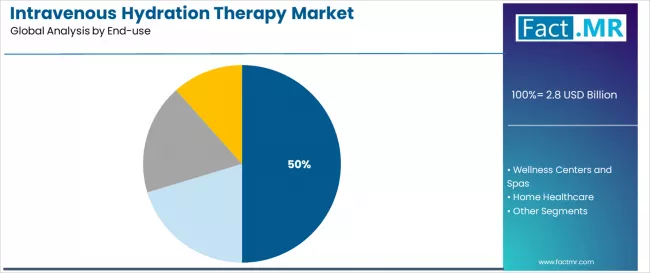
The hospitals & clinics segment represents the leading end-use category in the intravenous hydration therapy market, capturing 50.0% of total market share in 2026. This dominant end-use encompasses hospital emergency departments, outpatient infusion centers, urgent care clinics, and medical facilities providing IV hydration for acute medical conditions, post-operative recovery, and clinically indicated therapeutic interventions.

What are the Drivers, Restraints, and Key Trends of the Intravenous Hydration Therapy Market?

The intravenous hydration therapy market is driven by rising consumer focus on preventive healthcare and wellness optimization, supported by rapid growth in the global wellness industry. Demand is further strengthened by the expansion of mobile and on-demand IV therapy services, which improve accessibility through at-home delivery and corporate wellness programs. Advances in IV formulation and customized nutrient protocols are also supporting adoption by enabling targeted wellness and recovery solutions.

Market restraints include regulatory uncertainty and varying medical practice regulations that affect licensing, service models, and geographic expansion. Safety concerns related to IV administration, including infection risks and adverse reactions, can limit consumer confidence and invite regulatory scrutiny. Limited clinical evidence supporting wellness-focused IV therapies and lack of insurance coverage further constrain mainstream acceptance.

Key trends include increasing adoption of mobile IV therapy services in urban markets, particularly in North America and the Middle East. Digital integration through online booking, telehealth consultations, and personalized treatment selection platforms is enhancing service efficiency and customer experience, though tighter regulations could influence long-term growth.

Analysis of the Intravenous Hydration Therapy Market by Key Countries
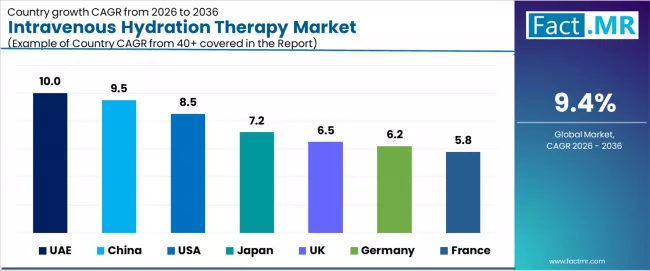
Intravenous Hydration Therapy Market Cagr Analysis By Country

Country CAGR (2026-2036)
UAE 10.0%
China 9.5%
USA 8.5%
Japan 7.2%
UK 6.5%
Germany 6.2%
France 5.8%

What Stimulates the UAE’s Embrace of IV Hydration Therapy?

The UAE is the fastest-growing IV hydration therapy market, expanding at a CAGR of 10.0% through 2036, as wellness, luxury, and healthcare increasingly overlap. Demand is strongest in Dubai and Abu Dhabi, where affluent residents, expatriates, and medical tourists readily adopt premium, convenience-driven health services. IV therapy is positioned less as a medical intervention and more as a lifestyle enhancer, supported by luxury wellness clinics, hotel partnerships, and mobile providers catering to time-constrained, high-spending clients.

Why is China Becoming One of the Fastest-Growing IV Wellness Markets?

China is recording strong momentum, with the IV hydration therapy market growing at a 9.5% CAGR, driven by rising urban affluence and a rapidly commercialising wellness industry. In major metropolitan areas, IV therapy appeals to consumers seeking energy, recovery, and aesthetic benefits. Private clinics and medical spas are expanding offerings that blend modern IV formulations with holistic wellness concepts, allowing IV therapy to integrate smoothly into broader anti-aging and self-care routines.

How has IV Therapy Moved into the Wellness Mainstream in the USA?
Intravenous Hydration Therapy Market Country Value Analysis

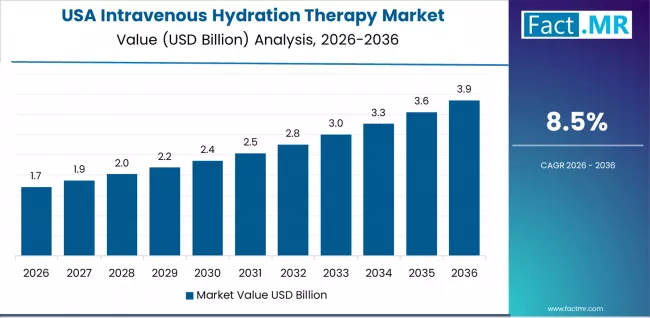
The USA’s market is expanding at a CAGR of 8.5%, reflecting the transition of IV hydration from niche service to mainstream wellness option. Dedicated IV lounges and mobile providers have normalised access across major cities, while lifestyle branding and celebrity influence continue to shape demand. Growth is now driven by convenience, repeat usage, and personalised protocols, with increasing emphasis on medical supervision and evidence-based service standards.

Why does Preventive Health Shape Japan’s IV Therapy Adoption?

Japan’s IV hydration therapy market is growing at a 7.2% CAGR, shaped by an aging population and a strong preventive healthcare mindset. Adoption is concentrated among middle-aged and older consumers who view IV therapy as a medically supervised wellness service rather than a lifestyle indulgence. Clinics emphasize safety, efficacy, and long-term health maintenance, aligning IV therapy with Japan’s broader focus on longevity and quality of life.

How is Mobility Redefining IV Hydration Services in the UK?

The UK market is expanding steadily at a 6.5% CAGR, driven largely by the rise of mobile IV hydration services. Urban professionals increasingly favor at-home treatments that fit demanding schedules, while providers compete on convenience and personalization. Growth is supported by preventive health awareness and corporate wellness tie-ups, with medical oversight remaining a key factor in consumer acceptance.

Why does Clinical Oversight Define Germany’s Market Structure?

Germany’s IV hydration therapy market is advancing at a 6.2% CAGR, reflecting cautious but steady adoption rooted in clinical integration. Demand is concentrated in medically supervised settings such as hospitals, outpatient clinics, and regulated wellness centers. IV therapy is positioned as a supportive therapeutic service, with growth anchored in documentation, safety protocols, and alignment with Germany’s evidence-driven healthcare culture.

How is Aesthetic Wellness Driving France’s IV Therapy Demand?

France is seeing moderate but consistent growth at a 5.8% CAGR, with IV hydration therapy closely tied to aesthetic and beauty-focused wellness services. Demand is strongest in urban medical spas, where IV formulations are marketed for skin health, fatigue reduction, and cosmetic support. Adoption is supported by established luxury wellness infrastructure and medical supervision that aligns treatments with regulatory expectations and consumer trust.

Competitive Landscape of the Intravenous Hydration Therapy Market
Intravenous Hydration Therapy Market Analysis By Company

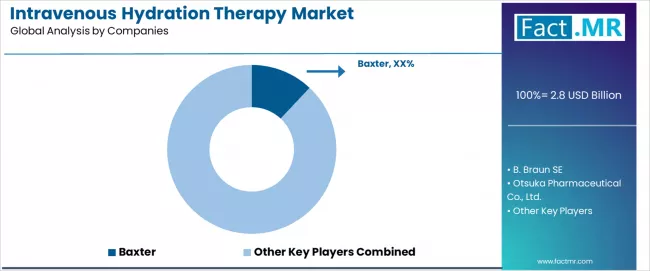
The intravenous hydration therapy market is relatively fragmented, with an estimated 100-150 active participants and low overall concentration. Competition spans pharmaceutical manufacturers, clinical infusion providers, and wellness-focused service operators. Formulation quality, safety protocols, brand trust, and service delivery models rather than price competition drive market positioning alone.

Baxter, B. Braun SE, and Otsuka Pharmaceutical Co., Ltd. hold leading positions through pharmaceutical-grade IV solution portfolios, large-scale manufacturing capabilities, and established relationships with hospitals and healthcare providers. These companies benefit from regulatory expertise, quality assurance systems, and global distribution networks, while gradually extending into wellness-oriented IV therapy applications.

Challengers such as Grifols S.A., Vifor Pharma Management Ltd., and JW Life Science Corporation compete through specialized formulations and strong regional penetration. In parallel, wellness-focused providers including Drip Hydration, REVIV, and Core IV Therapy emphasize direct-to-consumer and mobile service models, differentiating through convenience, lifestyle branding, and personalized infusion menus.

Regional operators and emerging wellness entrepreneurs intensify competition in urban markets through flexible delivery models. The degree of competitiveness in the present scenario favors providers combining pharmaceutical-grade products, standardized safety protocols, and scalable service delivery infrastructure.

Key Players in the Intravenous Hydration Therapy Market

  • Baxter
  • B. Braun SE
  • Otsuka Pharmaceutical Co., Ltd.
  • Grifols S.A.
  • Vifor Pharma Management Ltd.
  • JW Life Science Corporation
  • Amanta Healthcare
  • NexGen Health
  • Core IV Therapy, LLC
  • Cryojuvenate UK Ltd.
  • Drip Hydration
  • REVIV

Scope of the Report

Items Values
Quantitative Units USD 2.83 Billion
Service Immune Boosters, Energy Boosters, Hydration, Beauty/Aesthetics, Detoxification, Longevity/Antiaging, Performance/Athletics, Migraine & Pain Relief, Stress/Sleep/Mood Support, Flu/Stomach, Others
Component Medicated, Non-medicated
Provider Type Mobile Providers, Physical Providers
End-use Hospitals & Clinics, Wellness Centers and Spas, Home Healthcare, Others
Regions Covered North America, Europe, Asia Pacific, Latin America, MEA
Country Covered UAE, China, USA, Japan, UK, Germany, France, and 40+ countries
Key Companies Profiled Baxter, B. Braun SE, Otsuka Pharmaceutical Co., Ltd., Grifols S.A., Vifor Pharma Management Ltd., JW Life Science Corporation, Amanta Healthcare, NexGen Health, Core IV Therapy, LLC, Cryojuvenate UK Ltd., Drip Hydration, REVIV
Additional Attributes Dollar sales by service, component, provider type, and end-use categories, regional adoption trends across North America, Asia Pacific, and Europe, competitive landscape with pharmaceutical companies and wellness service providers, formulation specifications and safety requirements, integration with wellness center operations and mobile service delivery systems.

Intravenous Hydration Therapy Market by Segments

  • Service :

    • Immune Boosters
    • Energy Boosters
    • Hydration
    • Beauty/Aesthetics
    • Detoxification
    • Longevity/Antiaging
    • Performance/Athletics
    • Migraine & Pain Relief
    • Stress/Sleep/Mood Support
    • Flu/Stomach
    • Others
  • Component :

    • Medicated
    • Non-medicated
  • Provider Type :

    • Mobile Providers
    • Physical Providers
  • End-use :

    • Hospitals & Clinics
    • Wellness Centers and Spas
    • Home Healthcare
    • Others
  • Region :

    • North America
      • USA
      • Canada
      • Mexico
    • Europe
      • UK
      • Germany
      • France
      • Spain
      • Italy
      • Rest of Europe
    • Asia Pacific
      • China
      • Japan
      • South Korea
      • India
      • Australia & New Zealand
      • ASEAN
      • Rest of Asia Pacific
    • Latin America
      • Brazil
      • Rest of Latin America
    • MEA
      • UAE
      • Saudi Arabia
      • Other GCC Countries
      • Turkey
      • South Africa
      • Rest of MEA

Table of Content

  1. Executive Summary
    • Global Market Outlook
    • Demand to side Trends
    • Supply to side Trends
    • Technology Roadmap Analysis
    • Analysis and Recommendations
  2. Market Overview
    • Market Coverage / Taxonomy
    • Market Definition / Scope / Limitations
  3. Market Background
    • Market Dynamics
      • Drivers
      • Restraints
      • Opportunity
      • Trends
    • Scenario Forecast
      • Demand in Optimistic Scenario
      • Demand in Likely Scenario
      • Demand in Conservative Scenario
    • Opportunity Map Analysis
    • Product Life Cycle Analysis
    • Supply Chain Analysis
    • Investment Feasibility Matrix
    • Value Chain Analysis
    • PESTLE and Porter’s Analysis
    • Regulatory Landscape
    • Regional Parent Market Outlook
    • Production and Consumption Statistics
    • Import and Export Statistics
  4. Global Market Analysis 2021 to 2025 and Forecast, 2026 to 2036
    • Historical Market Size Value (USD Million) Analysis, 2021 to 2025
    • Current and Future Market Size Value (USD Million) Projections, 2026 to 2036
      • Y to o to Y Growth Trend Analysis
      • Absolute $ Opportunity Analysis
  5. Global Market Pricing Analysis 2021 to 2025 and Forecast 2026 to 2036
  6. Global Market Analysis 2021 to 2025 and Forecast 2026 to 2036, By Service
    • Introduction / Key Findings
    • Historical Market Size Value (USD Million) Analysis By Service, 2021 to 2025
    • Current and Future Market Size Value (USD Million) Analysis and Forecast By Service, 2026 to 2036
      • Energy Boosters
      • Immune Boosters
      • Hydration
      • Beauty/Aesthetics
      • Detoxification
      • Longevity/Antiaging
      • Performance/Athletics
      • Migraine & Pain Relief
      • Stress/Sleep/Mood Support
      • Flu/Stomach
      • Others
    • Y to o to Y Growth Trend Analysis By Service, 2021 to 2025
    • Absolute $ Opportunity Analysis By Service, 2026 to 2036
  7. Global Market Analysis 2021 to 2025 and Forecast 2026 to 2036, By Component
    • Introduction / Key Findings
    • Historical Market Size Value (USD Million) Analysis By Component, 2021 to 2025
    • Current and Future Market Size Value (USD Million) Analysis and Forecast By Component, 2026 to 2036
      • Medicated
      • Non-medicated
    • Y to o to Y Growth Trend Analysis By Component, 2021 to 2025
    • Absolute $ Opportunity Analysis By Component, 2026 to 2036
  8. Global Market Analysis 2021 to 2025 and Forecast 2026 to 2036, By Provider Type
    • Introduction / Key Findings
    • Historical Market Size Value (USD Million) Analysis By Provider Type, 2021 to 2025
    • Current and Future Market Size Value (USD Million) Analysis and Forecast By Provider Type, 2026 to 2036
      • Physical Providers
      • Mobile Providers
    • Y to o to Y Growth Trend Analysis By Provider Type, 2021 to 2025
    • Absolute $ Opportunity Analysis By Provider Type, 2026 to 2036
  9. Global Market Analysis 2021 to 2025 and Forecast 2026 to 2036, By End-use
    • Introduction / Key Findings
    • Historical Market Size Value (USD Million) Analysis By End-use, 2021 to 2025
    • Current and Future Market Size Value (USD Million) Analysis and Forecast By End-use, 2026 to 2036
      • Hospitals & Clinics
      • Wellness Centers and Spas
      • Home Healthcare
      • Others
    • Y to o to Y Growth Trend Analysis By End-use, 2021 to 2025
    • Absolute $ Opportunity Analysis By End-use, 2026 to 2036
  10. Global Market Analysis 2021 to 2025 and Forecast 2026 to 2036, By Region
    • Introduction
    • Historical Market Size Value (USD Million) Analysis By Region, 2021 to 2025
    • Current Market Size Value (USD Million) Analysis and Forecast By Region, 2026 to 2036
      • North America
      • Latin America
      • Western Europe
      • Eastern Europe
      • East Asia
      • South Asia and Pacific
      • Middle East & Africa
    • Market Attractiveness Analysis By Region
  11. North America Market Analysis 2021 to 2025 and Forecast 2026 to 2036, By Country
    • Historical Market Size Value (USD Million) Trend Analysis By Market Taxonomy, 2021 to 2025
    • Market Size Value (USD Million) Forecast By Market Taxonomy, 2026 to 2036
      • By Country
        • USA
        • Canada
        • Mexico
      • By Service
      • By Component
      • By Provider Type
      • By End-use
    • Market Attractiveness Analysis
      • By Country
      • By Service
      • By Component
      • By Provider Type
      • By End-use
    • Key Takeaways
  12. Latin America Market Analysis 2021 to 2025 and Forecast 2026 to 2036, By Country
    • Historical Market Size Value (USD Million) Trend Analysis By Market Taxonomy, 2021 to 2025
    • Market Size Value (USD Million) Forecast By Market Taxonomy, 2026 to 2036
      • By Country
        • Brazil
        • Chile
        • Rest of Latin America
      • By Service
      • By Component
      • By Provider Type
      • By End-use
    • Market Attractiveness Analysis
      • By Country
      • By Service
      • By Component
      • By Provider Type
      • By End-use
    • Key Takeaways
  13. Western Europe Market Analysis 2021 to 2025 and Forecast 2026 to 2036, By Country
    • Historical Market Size Value (USD Million) Trend Analysis By Market Taxonomy, 2021 to 2025
    • Market Size Value (USD Million) Forecast By Market Taxonomy, 2026 to 2036
      • By Country
        • Germany
        • UK
        • Italy
        • Spain
        • France
        • Nordic
        • BENELUX
        • Rest of Western Europe
      • By Service
      • By Component
      • By Provider Type
      • By End-use
    • Market Attractiveness Analysis
      • By Country
      • By Service
      • By Component
      • By Provider Type
      • By End-use
    • Key Takeaways
  14. Eastern Europe Market Analysis 2021 to 2025 and Forecast 2026 to 2036, By Country
    • Historical Market Size Value (USD Million) Trend Analysis By Market Taxonomy, 2021 to 2025
    • Market Size Value (USD Million) Forecast By Market Taxonomy, 2026 to 2036
      • By Country
        • Russia
        • Poland
        • Hungary
        • Balkan & Baltic
        • Rest of Eastern Europe
      • By Service
      • By Component
      • By Provider Type
      • By End-use
    • Market Attractiveness Analysis
      • By Country
      • By Service
      • By Component
      • By Provider Type
      • By End-use
    • Key Takeaways
  15. East Asia Market Analysis 2021 to 2025 and Forecast 2026 to 2036, By Country
    • Historical Market Size Value (USD Million) Trend Analysis By Market Taxonomy, 2021 to 2025
    • Market Size Value (USD Million) Forecast By Market Taxonomy, 2026 to 2036
      • By Country
        • China
        • Japan
        • South Korea
      • By Service
      • By Component
      • By Provider Type
      • By End-use
    • Market Attractiveness Analysis
      • By Country
      • By Service
      • By Component
      • By Provider Type
      • By End-use
    • Key Takeaways
  16. South Asia and Pacific Market Analysis 2021 to 2025 and Forecast 2026 to 2036, By Country
    • Historical Market Size Value (USD Million) Trend Analysis By Market Taxonomy, 2021 to 2025
    • Market Size Value (USD Million) Forecast By Market Taxonomy, 2026 to 2036
      • By Country
        • India
        • ASEAN
        • Australia & New Zealand
        • Rest of South Asia and Pacific
      • By Service
      • By Component
      • By Provider Type
      • By End-use
    • Market Attractiveness Analysis
      • By Country
      • By Service
      • By Component
      • By Provider Type
      • By End-use
    • Key Takeaways
  17. Middle East & Africa Market Analysis 2021 to 2025 and Forecast 2026 to 2036, By Country
    • Historical Market Size Value (USD Million) Trend Analysis By Market Taxonomy, 2021 to 2025
    • Market Size Value (USD Million) Forecast By Market Taxonomy, 2026 to 2036
      • By Country
        • Kingdom of Saudi Arabia
        • Other GCC Countries
        • Turkiye
        • South Africa
        • Other African Union
        • Rest of Middle East & Africa
      • By Service
      • By Component
      • By Provider Type
      • By End-use
    • Market Attractiveness Analysis
      • By Country
      • By Service
      • By Component
      • By Provider Type
      • By End-use
    • Key Takeaways
  18. Key Countries Market Analysis
    • USA
      • Pricing Analysis
      • Market Share Analysis, 2025
        • By Service
        • By Component
        • By Provider Type
        • By End-use
    • Canada
      • Pricing Analysis
      • Market Share Analysis, 2025
        • By Service
        • By Component
        • By Provider Type
        • By End-use
    • Mexico
      • Pricing Analysis
      • Market Share Analysis, 2025
        • By Service
        • By Component
        • By Provider Type
        • By End-use
    • Brazil
      • Pricing Analysis
      • Market Share Analysis, 2025
        • By Service
        • By Component
        • By Provider Type
        • By End-use
    • Chile
      • Pricing Analysis
      • Market Share Analysis, 2025
        • By Service
        • By Component
        • By Provider Type
        • By End-use
    • Germany
      • Pricing Analysis
      • Market Share Analysis, 2025
        • By Service
        • By Component
        • By Provider Type
        • By End-use
    • UK
      • Pricing Analysis
      • Market Share Analysis, 2025
        • By Service
        • By Component
        • By Provider Type
        • By End-use
    • Italy
      • Pricing Analysis
      • Market Share Analysis, 2025
        • By Service
        • By Component
        • By Provider Type
        • By End-use
    • Spain
      • Pricing Analysis
      • Market Share Analysis, 2025
        • By Service
        • By Component
        • By Provider Type
        • By End-use
    • France
      • Pricing Analysis
      • Market Share Analysis, 2025
        • By Service
        • By Component
        • By Provider Type
        • By End-use
    • India
      • Pricing Analysis
      • Market Share Analysis, 2025
        • By Service
        • By Component
        • By Provider Type
        • By End-use
    • ASEAN
      • Pricing Analysis
      • Market Share Analysis, 2025
        • By Service
        • By Component
        • By Provider Type
        • By End-use
    • Australia & New Zealand
      • Pricing Analysis
      • Market Share Analysis, 2025
        • By Service
        • By Component
        • By Provider Type
        • By End-use
    • China
      • Pricing Analysis
      • Market Share Analysis, 2025
        • By Service
        • By Component
        • By Provider Type
        • By End-use
    • Japan
      • Pricing Analysis
      • Market Share Analysis, 2025
        • By Service
        • By Component
        • By Provider Type
        • By End-use
    • South Korea
      • Pricing Analysis
      • Market Share Analysis, 2025
        • By Service
        • By Component
        • By Provider Type
        • By End-use
    • Russia
      • Pricing Analysis
      • Market Share Analysis, 2025
        • By Service
        • By Component
        • By Provider Type
        • By End-use
    • Poland
      • Pricing Analysis
      • Market Share Analysis, 2025
        • By Service
        • By Component
        • By Provider Type
        • By End-use
    • Hungary
      • Pricing Analysis
      • Market Share Analysis, 2025
        • By Service
        • By Component
        • By Provider Type
        • By End-use
    • Kingdom of Saudi Arabia
      • Pricing Analysis
      • Market Share Analysis, 2025
        • By Service
        • By Component
        • By Provider Type
        • By End-use
    • Turkiye
      • Pricing Analysis
      • Market Share Analysis, 2025
        • By Service
        • By Component
        • By Provider Type
        • By End-use
    • South Africa
      • Pricing Analysis
      • Market Share Analysis, 2025
        • By Service
        • By Component
        • By Provider Type
        • By End-use
  19. Market Structure Analysis
    • Competition Dashboard
    • Competition Benchmarking
    • Market Share Analysis of Top Players
      • By Regional
      • By Service
      • By Component
      • By Provider Type
      • By End-use
  20. Competition Analysis
    • Competition Deep Dive
      • Baxter
        • Overview
        • Product Portfolio
        • Profitability by Market Segments (Product/Age /Sales Channel/Region)
        • Sales Footprint
        • Strategy Overview
          • Marketing Strategy
          • Product Strategy
          • Channel Strategy
      • B. Braun SE
      • Otsuka Pharmaceutical Co., Ltd.
      • Grifols S.A.
      • Vifor Pharma Management Ltd.
      • JW Life Science Corporation
      • Amanta Healthcare
      • NexGen Health
      • Core IV Therapy, LLC
      • Cryojuvenate UK Ltd.
      • Drip Hydration
      • REVIV
  21. Assumptions & Acronyms Used
  22. Research Methodology

List Of Table

  • Table 1: Global Market Value (USD Million) Forecast by Region, 2021 to 2036
  • Table 2: Global Market Value (USD Million) Forecast by Service, 2021 to 2036
  • Table 3: Global Market Value (USD Million) Forecast by Component, 2021 to 2036
  • Table 4: Global Market Value (USD Million) Forecast by Provider Type, 2021 to 2036
  • Table 5: Global Market Value (USD Million) Forecast by End-use, 2021 to 2036
  • Table 6: North America Market Value (USD Million) Forecast by Country, 2021 to 2036
  • Table 7: North America Market Value (USD Million) Forecast by Service, 2021 to 2036
  • Table 8: North America Market Value (USD Million) Forecast by Component, 2021 to 2036
  • Table 9: North America Market Value (USD Million) Forecast by Provider Type, 2021 to 2036
  • Table 10: North America Market Value (USD Million) Forecast by End-use, 2021 to 2036
  • Table 11: Latin America Market Value (USD Million) Forecast by Country, 2021 to 2036
  • Table 12: Latin America Market Value (USD Million) Forecast by Service, 2021 to 2036
  • Table 13: Latin America Market Value (USD Million) Forecast by Component, 2021 to 2036
  • Table 14: Latin America Market Value (USD Million) Forecast by Provider Type, 2021 to 2036
  • Table 15: Latin America Market Value (USD Million) Forecast by End-use, 2021 to 2036
  • Table 16: Western Europe Market Value (USD Million) Forecast by Country, 2021 to 2036
  • Table 17: Western Europe Market Value (USD Million) Forecast by Service, 2021 to 2036
  • Table 18: Western Europe Market Value (USD Million) Forecast by Component, 2021 to 2036
  • Table 19: Western Europe Market Value (USD Million) Forecast by Provider Type, 2021 to 2036
  • Table 20: Western Europe Market Value (USD Million) Forecast by End-use, 2021 to 2036
  • Table 21: Eastern Europe Market Value (USD Million) Forecast by Country, 2021 to 2036
  • Table 22: Eastern Europe Market Value (USD Million) Forecast by Service, 2021 to 2036
  • Table 23: Eastern Europe Market Value (USD Million) Forecast by Component, 2021 to 2036
  • Table 24: Eastern Europe Market Value (USD Million) Forecast by Provider Type, 2021 to 2036
  • Table 25: Eastern Europe Market Value (USD Million) Forecast by End-use, 2021 to 2036
  • Table 26: East Asia Market Value (USD Million) Forecast by Country, 2021 to 2036
  • Table 27: East Asia Market Value (USD Million) Forecast by Service, 2021 to 2036
  • Table 28: East Asia Market Value (USD Million) Forecast by Component, 2021 to 2036
  • Table 29: East Asia Market Value (USD Million) Forecast by Provider Type, 2021 to 2036
  • Table 30: East Asia Market Value (USD Million) Forecast by End-use, 2021 to 2036
  • Table 31: South Asia and Pacific Market Value (USD Million) Forecast by Country, 2021 to 2036
  • Table 32: South Asia and Pacific Market Value (USD Million) Forecast by Service, 2021 to 2036
  • Table 33: South Asia and Pacific Market Value (USD Million) Forecast by Component, 2021 to 2036
  • Table 34: South Asia and Pacific Market Value (USD Million) Forecast by Provider Type, 2021 to 2036
  • Table 35: South Asia and Pacific Market Value (USD Million) Forecast by End-use, 2021 to 2036
  • Table 36: Middle East & Africa Market Value (USD Million) Forecast by Country, 2021 to 2036
  • Table 37: Middle East & Africa Market Value (USD Million) Forecast by Service, 2021 to 2036
  • Table 38: Middle East & Africa Market Value (USD Million) Forecast by Component, 2021 to 2036
  • Table 39: Middle East & Africa Market Value (USD Million) Forecast by Provider Type, 2021 to 2036
  • Table 40: Middle East & Africa Market Value (USD Million) Forecast by End-use, 2021 to 2036

List Of Figures

  • Figure 1: Global Market Pricing Analysis
  • Figure 2: Global Market Value (USD Million) Forecast 2021 to 2036
  • Figure 3: Global Market Value Share and BPS Analysis by Service, 2026 and 2036
  • Figure 4: Global Market Y to o to Y Growth Comparison by Service, 2026 to 2036
  • Figure 5: Global Market Attractiveness Analysis by Service
  • Figure 6: Global Market Value Share and BPS Analysis by Component, 2026 and 2036
  • Figure 7: Global Market Y to o to Y Growth Comparison by Component, 2026 to 2036
  • Figure 8: Global Market Attractiveness Analysis by Component
  • Figure 9: Global Market Value Share and BPS Analysis by Provider Type, 2026 and 2036
  • Figure 10: Global Market Y to o to Y Growth Comparison by Provider Type, 2026 to 2036
  • Figure 11: Global Market Attractiveness Analysis by Provider Type
  • Figure 12: Global Market Value Share and BPS Analysis by End-use, 2026 and 2036
  • Figure 13: Global Market Y to o to Y Growth Comparison by End-use, 2026 to 2036
  • Figure 14: Global Market Attractiveness Analysis by End-use
  • Figure 15: Global Market Value (USD Million) Share and BPS Analysis by Region, 2026 and 2036
  • Figure 16: Global Market Y to o to Y Growth Comparison by Region, 2026 to 2036
  • Figure 17: Global Market Attractiveness Analysis by Region
  • Figure 18: North America Market Incremental Dollar Opportunity, 2026 to 2036
  • Figure 19: Latin America Market Incremental Dollar Opportunity, 2026 to 2036
  • Figure 20: Western Europe Market Incremental Dollar Opportunity, 2026 to 2036
  • Figure 21: Eastern Europe Market Incremental Dollar Opportunity, 2026 to 2036
  • Figure 22: East Asia Market Incremental Dollar Opportunity, 2026 to 2036
  • Figure 23: South Asia and Pacific Market Incremental Dollar Opportunity, 2026 to 2036
  • Figure 24: Middle East & Africa Market Incremental Dollar Opportunity, 2026 to 2036
  • Figure 25: North America Market Value Share and BPS Analysis by Country, 2026 and 2036
  • Figure 26: North America Market Value Share and BPS Analysis by Service, 2026 and 2036
  • Figure 27: North America Market Y to o to Y Growth Comparison by Service, 2026 to 2036
  • Figure 28: North America Market Attractiveness Analysis by Service
  • Figure 29: North America Market Value Share and BPS Analysis by Component, 2026 and 2036
  • Figure 30: North America Market Y to o to Y Growth Comparison by Component, 2026 to 2036
  • Figure 31: North America Market Attractiveness Analysis by Component
  • Figure 32: North America Market Value Share and BPS Analysis by Provider Type, 2026 and 2036
  • Figure 33: North America Market Y to o to Y Growth Comparison by Provider Type, 2026 to 2036
  • Figure 34: North America Market Attractiveness Analysis by Provider Type
  • Figure 35: North America Market Value Share and BPS Analysis by End-use, 2026 and 2036
  • Figure 36: North America Market Y to o to Y Growth Comparison by End-use, 2026 to 2036
  • Figure 37: North America Market Attractiveness Analysis by End-use
  • Figure 38: Latin America Market Value Share and BPS Analysis by Country, 2026 and 2036
  • Figure 39: Latin America Market Value Share and BPS Analysis by Service, 2026 and 2036
  • Figure 40: Latin America Market Y to o to Y Growth Comparison by Service, 2026 to 2036
  • Figure 41: Latin America Market Attractiveness Analysis by Service
  • Figure 42: Latin America Market Value Share and BPS Analysis by Component, 2026 and 2036
  • Figure 43: Latin America Market Y to o to Y Growth Comparison by Component, 2026 to 2036
  • Figure 44: Latin America Market Attractiveness Analysis by Component
  • Figure 45: Latin America Market Value Share and BPS Analysis by Provider Type, 2026 and 2036
  • Figure 46: Latin America Market Y to o to Y Growth Comparison by Provider Type, 2026 to 2036
  • Figure 47: Latin America Market Attractiveness Analysis by Provider Type
  • Figure 48: Latin America Market Value Share and BPS Analysis by End-use, 2026 and 2036
  • Figure 49: Latin America Market Y to o to Y Growth Comparison by End-use, 2026 to 2036
  • Figure 50: Latin America Market Attractiveness Analysis by End-use
  • Figure 51: Western Europe Market Value Share and BPS Analysis by Country, 2026 and 2036
  • Figure 52: Western Europe Market Value Share and BPS Analysis by Service, 2026 and 2036
  • Figure 53: Western Europe Market Y to o to Y Growth Comparison by Service, 2026 to 2036
  • Figure 54: Western Europe Market Attractiveness Analysis by Service
  • Figure 55: Western Europe Market Value Share and BPS Analysis by Component, 2026 and 2036
  • Figure 56: Western Europe Market Y to o to Y Growth Comparison by Component, 2026 to 2036
  • Figure 57: Western Europe Market Attractiveness Analysis by Component
  • Figure 58: Western Europe Market Value Share and BPS Analysis by Provider Type, 2026 and 2036
  • Figure 59: Western Europe Market Y to o to Y Growth Comparison by Provider Type, 2026 to 2036
  • Figure 60: Western Europe Market Attractiveness Analysis by Provider Type
  • Figure 61: Western Europe Market Value Share and BPS Analysis by End-use, 2026 and 2036
  • Figure 62: Western Europe Market Y to o to Y Growth Comparison by End-use, 2026 to 2036
  • Figure 63: Western Europe Market Attractiveness Analysis by End-use
  • Figure 64: Eastern Europe Market Value Share and BPS Analysis by Country, 2026 and 2036
  • Figure 65: Eastern Europe Market Value Share and BPS Analysis by Service, 2026 and 2036
  • Figure 66: Eastern Europe Market Y to o to Y Growth Comparison by Service, 2026 to 2036
  • Figure 67: Eastern Europe Market Attractiveness Analysis by Service
  • Figure 68: Eastern Europe Market Value Share and BPS Analysis by Component, 2026 and 2036
  • Figure 69: Eastern Europe Market Y to o to Y Growth Comparison by Component, 2026 to 2036
  • Figure 70: Eastern Europe Market Attractiveness Analysis by Component
  • Figure 71: Eastern Europe Market Value Share and BPS Analysis by Provider Type, 2026 and 2036
  • Figure 72: Eastern Europe Market Y to o to Y Growth Comparison by Provider Type, 2026 to 2036
  • Figure 73: Eastern Europe Market Attractiveness Analysis by Provider Type
  • Figure 74: Eastern Europe Market Value Share and BPS Analysis by End-use, 2026 and 2036
  • Figure 75: Eastern Europe Market Y to o to Y Growth Comparison by End-use, 2026 to 2036
  • Figure 76: Eastern Europe Market Attractiveness Analysis by End-use
  • Figure 77: East Asia Market Value Share and BPS Analysis by Country, 2026 and 2036
  • Figure 78: East Asia Market Value Share and BPS Analysis by Service, 2026 and 2036
  • Figure 79: East Asia Market Y to o to Y Growth Comparison by Service, 2026 to 2036
  • Figure 80: East Asia Market Attractiveness Analysis by Service
  • Figure 81: East Asia Market Value Share and BPS Analysis by Component, 2026 and 2036
  • Figure 82: East Asia Market Y to o to Y Growth Comparison by Component, 2026 to 2036
  • Figure 83: East Asia Market Attractiveness Analysis by Component
  • Figure 84: East Asia Market Value Share and BPS Analysis by Provider Type, 2026 and 2036
  • Figure 85: East Asia Market Y to o to Y Growth Comparison by Provider Type, 2026 to 2036
  • Figure 86: East Asia Market Attractiveness Analysis by Provider Type
  • Figure 87: East Asia Market Value Share and BPS Analysis by End-use, 2026 and 2036
  • Figure 88: East Asia Market Y to o to Y Growth Comparison by End-use, 2026 to 2036
  • Figure 89: East Asia Market Attractiveness Analysis by End-use
  • Figure 90: South Asia and Pacific Market Value Share and BPS Analysis by Country, 2026 and 2036
  • Figure 91: South Asia and Pacific Market Value Share and BPS Analysis by Service, 2026 and 2036
  • Figure 92: South Asia and Pacific Market Y to o to Y Growth Comparison by Service, 2026 to 2036
  • Figure 93: South Asia and Pacific Market Attractiveness Analysis by Service
  • Figure 94: South Asia and Pacific Market Value Share and BPS Analysis by Component, 2026 and 2036
  • Figure 95: South Asia and Pacific Market Y to o to Y Growth Comparison by Component, 2026 to 2036
  • Figure 96: South Asia and Pacific Market Attractiveness Analysis by Component
  • Figure 97: South Asia and Pacific Market Value Share and BPS Analysis by Provider Type, 2026 and 2036
  • Figure 98: South Asia and Pacific Market Y to o to Y Growth Comparison by Provider Type, 2026 to 2036
  • Figure 99: South Asia and Pacific Market Attractiveness Analysis by Provider Type
  • Figure 100: South Asia and Pacific Market Value Share and BPS Analysis by End-use, 2026 and 2036
  • Figure 101: South Asia and Pacific Market Y to o to Y Growth Comparison by End-use, 2026 to 2036
  • Figure 102: South Asia and Pacific Market Attractiveness Analysis by End-use
  • Figure 103: Middle East & Africa Market Value Share and BPS Analysis by Country, 2026 and 2036
  • Figure 104: Middle East & Africa Market Value Share and BPS Analysis by Service, 2026 and 2036
  • Figure 105: Middle East & Africa Market Y to o to Y Growth Comparison by Service, 2026 to 2036
  • Figure 106: Middle East & Africa Market Attractiveness Analysis by Service
  • Figure 107: Middle East & Africa Market Value Share and BPS Analysis by Component, 2026 and 2036
  • Figure 108: Middle East & Africa Market Y to o to Y Growth Comparison by Component, 2026 to 2036
  • Figure 109: Middle East & Africa Market Attractiveness Analysis by Component
  • Figure 110: Middle East & Africa Market Value Share and BPS Analysis by Provider Type, 2026 and 2036
  • Figure 111: Middle East & Africa Market Y to o to Y Growth Comparison by Provider Type, 2026 to 2036
  • Figure 112: Middle East & Africa Market Attractiveness Analysis by Provider Type
  • Figure 113: Middle East & Africa Market Value Share and BPS Analysis by End-use, 2026 and 2036
  • Figure 114: Middle East & Africa Market Y to o to Y Growth Comparison by End-use, 2026 to 2036
  • Figure 115: Middle East & Africa Market Attractiveness Analysis by End-use
  • Figure 116: Global Market - Tier Structure Analysis
  • Figure 117: Global Market - Company Share Analysis

- FAQs -

How big is the intravenous hydration therapy market in 2026?

The global intravenous hydration therapy market is estimated to be valued at USD 2.8 billion in 2026.

What will be the size of intravenous hydration therapy market in 2036?

The market size for the intravenous hydration therapy market is projected to reach USD 7.0 billion by 2036.

How much will be the intravenous hydration therapy market growth between 2026 and 2036?

The intravenous hydration therapy market is expected to grow at a 9.4% CAGR between 2026 and 2036.

What are the key product types in the intravenous hydration therapy market?

The key product types in intravenous hydration therapy market are energy boosters, immune boosters, hydration, beauty/aesthetics, detoxification, longevity/antiaging, performance/athletics, migraine & pain relief, stress/sleep/mood support, flu/stomach and others.

Which component segment to contribute significant share in the intravenous hydration therapy market in 2026?

In terms of component, medicated segment to command 67.0% share in the intravenous hydration therapy market in 2026.

Intravenous Hydration Therapy Market