Liquid Desiccant HVAC Systems Market

Liquid Desiccant HVAC Systems Market Size and Share Forecast Outlook 2025 to 2035

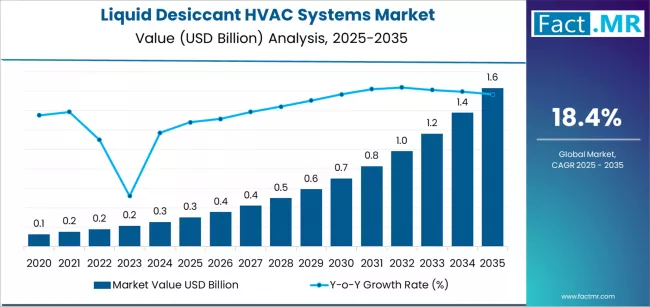
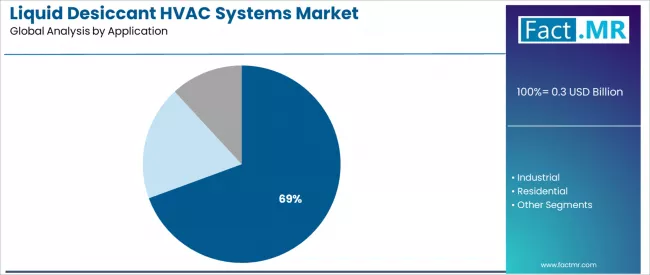
Liquid desiccant HVAC systems market is projected to grow from USD 0.3 billion in 2025 to USD 1.6 billion by 2035, at a CAGR of 18.4%. Liquid Desiccant Heat Pump AC Systems will dominate with a 54.2% market share, while commercial will lead the application segment with a 69.4% share.

Liquid Desiccant HVAC Systems Market Forecast and Outlook 2025 to 2035

The global liquid desiccant HVAC systems market is projected to reach USD 1.63 billion by 2035, recording an absolute increase of USD 1.33 billion over the forecast period. The market is valued at USD 0.3 billion in 2025 and is set to rise at a CAGR of 18.4% during the assessment period.

Quick Stats for Liquid Desiccant HVAC Systems Market

  • Liquid Desiccant HVAC Systems Market Value (2025): USD 0.3 billion
  • Liquid Desiccant HVAC Systems Market Forecast Value (2035): USD 1.63 billion
  • Liquid Desiccant HVAC Systems Market Forecast CAGR: 18.4%
  • Leading Equipment in Liquid Desiccant HVAC Systems Market: Liquid Desiccant Heat Pump AC Systems
  • Key Growth Regions in Liquid Desiccant HVAC Systems Market: Asia Pacific, North America, and Europe
  • Top Players in Liquid Desiccant HVAC Systems Market: Mojave Energy Systems, Alfa Laval, Copeland LP, Blue Frontier, 5AC Technologies, Inc. (Emerson Electric Co.), AirGreen, Inc., Ventilex, AOLAN, Thermair, Munters AB

Liquid Desiccant Hvac Systems Market Market Value Analysis

The overall market size is expected to grow by approximately 5.4 times during the same period, supported by increasing energy efficiency requirements in building management systems and rising demand for sustainable humidity control solutions across commercial facilities worldwide, driving adoption for advanced dehumidification technologies, energy-efficient climate control systems, and integrated HVAC innovations across both developed and emerging markets. Additionally, growing application diversity in data centers, healthcare facilities, food processing plants, and pharmaceutical manufacturing creates expanding opportunities for specialized liquid desiccant formulations and customized system configurations.

Rising energy costs in North America and Asia Pacific regions, coupled with expanding green building certification programs through LEED standards and BREEAM frameworks, further accelerate market penetration across diverse commercial segments. The growing global emphasis on indoor air quality and thermal comfort optimization, particularly in developed regions, generates sustained demand for advanced humidity control solutions and energy-efficient HVAC technologies containing liquid desiccant regeneration systems and low-temperature cooling capabilities.

Engineering research demonstrating measurable improvements in energy consumption reduction, operational cost savings, and superior humidity control reinforces facility manager confidence in liquid desiccant HVAC adoption, while commercial building trends toward net-zero energy targets expand addressable market opportunities beyond traditional HVAC approaches into comprehensive building energy management strategies.

Building owners and facility management companies increasingly incorporate liquid desiccant systems into data centers, office buildings, and industrial facilities, creating established deployment channels that extend beyond pilot installations into mainstream commercial implementations.

However, high initial capital costs associated with system installation and specialized equipment requirements and limited technical expertise among HVAC contractors for system commissioning and maintenance may pose challenges to market expansion.

Traditional vapor-compression system familiarity in certain regions also influences technology adoption rates, requiring manufacturers to develop comprehensive education programs demonstrating long-term value propositions across different geographical markets.

System complexity during integration with existing HVAC infrastructure and the specialized requirements for liquid desiccant solution management and regeneration processes may limit accessibility among smaller facilities in developing regions with limited infrastructure for advanced building automation and energy management systems.

Liquid Desiccant HVAC Systems Market Year-over-Year Forecast 2025 to 2035

Between 2025 and 2030, the liquid desiccant HVAC systems market is projected to expand from USD 0.3 billion to USD 0.7 billion, resulting in a value increase of USD 0.4 billion, which represents 30.0% of the total forecast growth for the decade. This phase of development will be shaped by rising demand for energy-efficient dehumidification solutions and commercial building climate control applications, technological innovation in heat pump integration and regeneration efficiency improvements, as well as expanding adoption in data center cooling platforms and healthcare facility environmental control systems. Companies are establishing competitive positions through investment in liquid desiccant formulation development, high-efficiency heat exchanger capabilities, and strategic expansion across commercial real estate projects, industrial facility upgrades, and green building certification programs.

From 2030 to 2035, the market is forecast to grow from USD 0.7 billion to USD 1.63 billion, adding another USD 0.93 billion, which constitutes 70.0% of the overall ten-year expansion. This period is expected to be characterized by the expansion of specialized liquid desiccant system derivatives, including smart building-integrated configurations and IoT-enabled monitoring systems tailored for specific humidity control applications, strategic collaborations between equipment manufacturers and building automation providers, and an enhanced focus on renewable energy integration and carbon footprint reduction certifications. The growing emphasis on net-zero energy buildings and evidence-based energy performance optimization will drive demand for validated liquid desiccant HVAC solutions across diverse commercial and industrial applications.

Liquid Desiccant HVAC Systems Market Key Takeaways

Metric Value
Market Value (2025) USD 0.3 billion
Market Forecast Value (2035) USD 1.63 billion
Forecast CAGR (2025-2035) 18.4%

Why is the Liquid Desiccant HVAC Systems Market Experiencing Rapid Growth?

The liquid desiccant HVAC systems market grows by enabling building owners, facility managers, and commercial developers to access energy-efficient climate control technologies that support operational cost reduction while meeting stringent humidity control requirements. Commercial building operators face mounting pressure to implement sustainable solutions with proven energy savings and indoor air quality benefits, with liquid desiccant systems typically reducing HVAC energy consumption by 30-50% compared to conventional vapor-compression approaches, making these technologies essential for competitive positioning in green building categories and energy management excellence. The HVAC industry's need for versatile humidity control capabilities and system integration compatibility creates demand for advanced technologies that can provide superior dehumidification performance, maintain consistent indoor environmental quality across varying ambient conditions, and ensure operational reliability without compromising thermal comfort standards or building automation requirements.

Government energy efficiency mandates promoting sustainable building practices and carbon emission reduction targets drive adoption in commercial office buildings, data center facilities, and industrial manufacturing operations, where liquid desiccant HVAC systems have a direct impact on energy consumption profiles and operational cost structures. The commercial real estate sector's growing focus on energy performance optimization and total cost of ownership reduction further expands market opportunities, with engineering assessments demonstrating measurable return on investment through energy savings, reduced peak demand charges, and enhanced equipment longevity compared to conventional systems. However, high upfront investment requirements during initial installation and the technical expertise needed for proper system sizing and commissioning may limit adoption among smaller facilities and developing regions with constrained capital budgets for advanced HVAC technology implementation and building energy management infrastructure.

Segmental Analysis

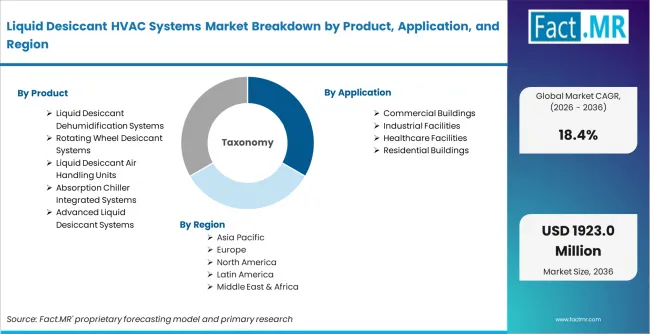
The market is segmented by equipment, application, and region. By equipment, the market is divided into liquid desiccant heat pump AC systems, liquid desiccant dehumidifier, and liquid desiccant chiller-integrated systems. Based on application, the market is categorized into commercial, industrial, and residential. Regionally, the market is divided into Europe, North America, Asia Pacific, Latin America, and Middle East & Africa.

What Makes Liquid Desiccant Heat Pump AC Systems the Dominant Equipment Segment in the Liquid Desiccant HVAC Systems Market?
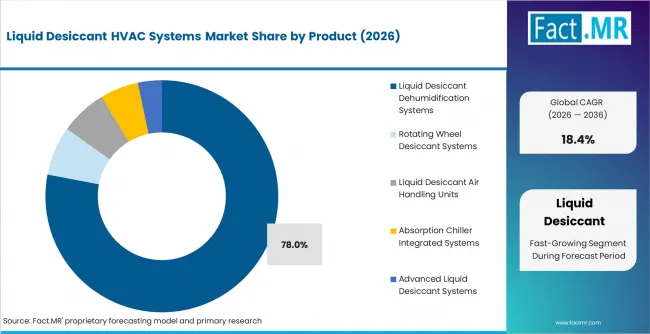
Liquid Desiccant Hvac Systems Market Analysis By Equipment

The liquid desiccant heat pump AC systems segment represents the dominant force in the liquid desiccant HVAC systems market, capturing approximately 54.2% of total market share in 2025. This established equipment category encompasses solutions featuring integrated cooling and dehumidification capabilities through advanced heat pump technology, including industrial-grade configurations and commercial-scale installations that enable comprehensive climate control and energy optimization across all building applications. The liquid desiccant heat pump AC systems segment's market leadership stems from its superior functional versatility, with products capable of meeting simultaneous cooling and humidity control requirements while maintaining high energy efficiency performance and operational flexibility across all commercial environments. Within the liquid desiccant heat pump AC systems segment, industrial-grade configurations account for approximately 59.0% share, driven by superior capacity capabilities and robust performance characteristics for demanding applications.

The liquid desiccant dehumidifier segment maintains a substantial 33.8% market share, serving facilities that require dedicated humidity control with precise moisture removal capabilities for specialized environmental control applications and clean room operations. These systems offer targeted dehumidification solutions for pharmaceutical manufacturing, food processing, and electronics production facilities while providing sufficient flexibility to meet specific indoor air quality demands and process control requirements. The liquid desiccant chiller-integrated systems segment accounts for approximately 12.0% of the market, serving large-scale commercial applications requiring comprehensive central plant integration and district cooling capabilities.

Key advantages driving the liquid desiccant heat pump AC systems segment include:

  • Comprehensive climate control capabilities with simultaneous cooling and dehumidification functions that maximize system utility and installation value
  • High energy efficiency performance delivering 30-50% energy savings compared to conventional HVAC approaches through regeneration optimization
  • Proven operational reliability delivering consistent performance while maintaining superior indoor environmental quality standards
  • Wide application compatibility enabling deployment across diverse commercial, industrial, and institutional facility types

How Does the Commercial Segment Lead Application Market Share?

Liquid Desiccant Hvac Systems Market Analysis By Application

Commercial dominates the application segment with approximately 69.4% market share in 2025, reflecting the critical role of office buildings, retail facilities, and hospitality establishments in supporting liquid desiccant HVAC system deployment and energy efficiency initiatives worldwide. The commercial segment's market leadership is reinforced by stringent building codes, comprehensive green building certification requirements, and rising operational cost pressures in central business districts, shopping centers, and mixed-use developments across developed and emerging markets. Within the commercial segment, data centers and large office buildings account for approximately 48.0% share, driven by intensive cooling loads and strict humidity control requirements for mission-critical operations.

The industrial segment represents the second-largest application category, capturing 21.6% market share through manufacturing facilities, food processing plants, and pharmaceutical production operations. This segment benefits from growing process control requirements and product quality standards that demand specific environmental conditions, contamination prevention protocols, and regulatory compliance in specialized production environments. The residential segment accounts for 9.0% market share, serving high-end residential applications and luxury apartment complexes requiring premium indoor air quality solutions.

Key market dynamics supporting application growth include:

  • Commercial building expansion driven by green building certification adoption and energy performance requirements, necessitating advanced HVAC technologies in urban developments
  • Industrial facility modernization trends require precise humidity control for product quality assurance and process optimization
  • Integration of smart building technologies enabling comprehensive environmental monitoring and automated system optimization
  • Growing emphasis on application diversification driving demand for tailored, sector-specific humidity control solutions

What are the Drivers, Restraints, and Key Trends of the Liquid Desiccant HVAC Systems Market?
The market is driven by three concrete demand factors tied to energy efficiency and environmental sustainability. First, increasing energy costs and utility expense pressures create growing demand for high-efficiency HVAC alternatives, with commercial building energy consumption rising by 12-15% annually in major metropolitan areas worldwide, requiring comprehensive efficiency improvement infrastructure. Second, government building energy codes and green building certification requirements drive increased adoption of advanced dehumidification technologies, with many jurisdictions implementing mandatory energy performance standards and net-zero ready building codes by 2030. Third, technological advancements in liquid desiccant regeneration processes and heat pump integration enable more effective and economically viable systems that reduce operational costs while improving humidity control capabilities and thermal comfort performance.

Market restraints include high initial capital investment requirements for equipment and installation that can deter building owners from adoption, particularly in developing regions where budget allocations for HVAC system upgrades remain constrained by competing infrastructure priorities. Limited contractor familiarity and technical expertise pose another significant challenge, as liquid desiccant systems demand specialized commissioning procedures and maintenance protocols, potentially causing implementation hesitation and service quality concerns. System complexity and integration requirements with existing building automation infrastructure create additional adoption barriers, demanding ongoing investment in control system optimization and facility staff training programs.

Key trends indicate accelerated adoption in Asia Pacific markets, particularly India and China, where rapid commercial real estate development and data center expansion drive comprehensive advanced HVAC technology deployment. Technology integration trends toward IoT-enabled monitoring systems with real-time performance analytics, predictive maintenance algorithms, and building management system integration enable proactive optimization approaches that maximize energy savings and minimize operational disruptions. However, the market thesis could face disruption if significant advances in alternative dehumidification technologies or major breakthroughs in conventional HVAC efficiency reduce the comparative advantages of liquid desiccant approaches.

Analysis of the Liquid Desiccant HVAC Systems Market by Key Countries

Liquid Desiccant Hvac Systems Market Cagr Analysis By Country

Country CAGR (2025-2035)
India 19.1%
China 18.7%
Saudi Arabia 18.3%
USA 17.8%
Germany 17.4%
Spain 17.2%
Japan 16.8%

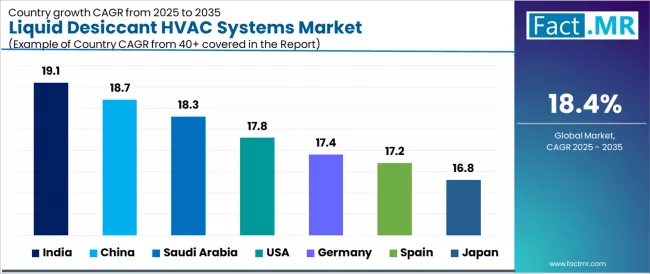
The liquid desiccant HVAC systems market is expanding rapidly, with India leading at a 19.1% CAGR through 2035, driven by explosive data center construction, government smart city infrastructure programs, and growing commercial real estate sector demanding energy-efficient solutions. China follows at 18.7%, supported by national carbon neutrality commitments, extensive green building policy implementation, and accelerated industrial facility modernization.

Saudi Arabia records 18.3%, reflecting aggressive diversification strategies through Vision 2030 programs and massive commercial development projects. USA posts 17.8%, anchored by stringent building energy codes and extensive data center infrastructure expansion. Germany grows at 17.4%, with comprehensive energy efficiency regulations and advanced building technology adoption. Spain advances at 17.2%, emphasizing renewable energy integration and sustainable building renovation programs, while Japan grows steadily at 16.8%, focusing on energy security priorities and advanced building automation deployment.

India Leads Global Market Expansion

India demonstrates the strongest growth potential in the liquid desiccant HVAC systems market with a CAGR of 19.1% through 2035. The country's leadership position stems from explosive data center construction supporting digital economy growth, government smart city infrastructure programs requiring energy-efficient building systems, and expanding commercial real estate sector in tier-1 and tier-2 cities. Growth is concentrated in major metropolitan centers, including Mumbai, Bangalore, Hyderabad, and Delhi NCR, where commercial developers and facility owners are implementing comprehensive energy management strategies and green building certifications for office complexes, IT parks, and hospitality facilities. Implementation channels through commercial construction projects, industrial facility upgrades, and government infrastructure initiatives expand deployment across HVAC contractors, mechanical engineering firms, and building automation specialists. The country's developing energy efficiency framework provides policy support for advanced HVAC technology adoption and sustainable building practices.

Key market factors:

  • Commercial demand concentrated in technology hubs and financial centers with comprehensive data center and office building development
  • Government policy support through smart city missions, energy conservation building codes, and green building incentive programs
  • Comprehensive HVAC industry ecosystem, including established mechanical contractors with growing technical capabilities
  • Technology integration featuring building automation systems, energy management platforms, and IoT-enabled monitoring technologies

China Emerges as High-Growth Market

In Beijing, Shanghai, Shenzhen, and Guangzhou, the implementation of liquid desiccant HVAC systems is accelerating across commercial office towers and industrial facilities, driven by national carbon neutrality commitments and comprehensive green building policy frameworks. The market demonstrates strong growth momentum with a CAGR of 18.7% through 2035, linked to carbon neutrality targets requiring building sector decarbonization, extensive green building certification program expansion, and accelerated commercial facility energy efficiency improvements following national climate action strategies. Chinese building owners are implementing advanced HVAC technologies and integrated energy management systems to reduce operational costs while meeting mandatory energy performance standards in rapidly expanding urban centers and industrial development zones. The country's 14th Five-Year Plan initiatives create persistent demand for energy-efficient building technologies, while increasing emphasis on air quality improvement drives adoption of advanced humidity control systems.

Key development areas:

  • Commercial developers and industrial facility operators leading advanced HVAC adoption with comprehensive sustainability programs
  • Urban construction projects providing integrated deployment with 70% tier-1 city market coverage targets
  • Technology partnerships between Chinese manufacturers and international HVAC companies are expanding local production capabilities
  • Integration of renewable energy systems and comprehensive building energy management platforms

Saudi Arabia Shows Strong Regional Leadership

Saudi Arabia's market expansion is driven by comprehensive economic diversification initiatives, including megaproject developments in Riyadh, NEOM, and Jeddah, and sustainable building requirements for extreme climate conditions. The country demonstrates promising growth potential with a CAGR of 18.3% through 2035, supported by Vision 2030 diversification programs driving massive commercial construction, extreme humidity challenges in coastal regions requiring advanced dehumidification solutions, and growing emphasis on energy efficiency amid domestic energy consumption concerns. Saudi developers face implementation opportunities related to world-class commercial developments requiring cutting-edge building technologies, enabling showcase projects that demonstrate advanced HVAC capabilities and sustainability leadership. However, extreme ambient conditions and traditional construction practices require technology adaptation and comprehensive training programs, particularly in regions where innovative HVAC solutions have direct impact on building performance and occupant comfort in challenging desert climates.

Market characteristics:

  • Megaproject developments and commercial construction showing strongest growth with 40% annual investment increases
  • Government sustainability mandates providing regulatory framework and performance standards
  • Future projections indicate expansion across hospitality, commercial, and mixed-use development applications
  • Growing emphasis on renewable energy integration and net-zero building initiatives

USA Demonstrates Market Maturity

Liquid Desiccant Hvac Systems Market Country Value Analysis

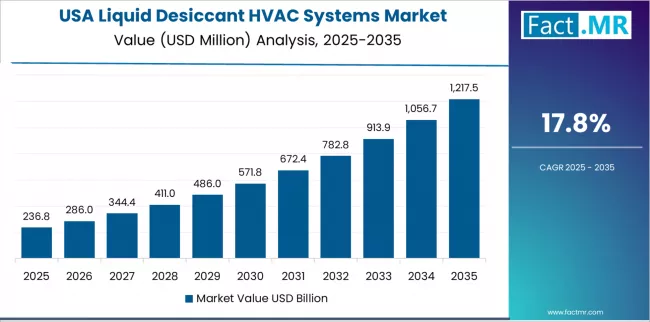
The USA market leads in liquid desiccant HVAC technology deployment based on integration with established green building programs and comprehensive building energy code frameworks for enhanced energy performance. The country shows strong potential with a CAGR of 17.8% through 2035, driven by stringent building energy codes in leading states, extensive data center infrastructure expansion supporting cloud computing growth, and comprehensive building retrofit programs in major metropolitan regions, including New York, San Francisco, Chicago, and Atlanta. American building owners are adopting evidence-based HVAC solutions and integrated energy management approaches for maximizing operational efficiency and achieving LEED certification requirements, particularly in commercial properties with sophisticated facility management capabilities demanding measurable performance outcomes. Technology deployment channels through mechanical contractors, energy service companies, and building automation integrators expand coverage across new construction projects and retrofit applications.

Leading market segments:

  • Data centers and commercial office buildings implementing advanced HVAC technologies with comprehensive energy monitoring
  • Energy service companies with building owners, achieving 25-35% energy reduction targets through performance contracting
  • Strategic collaborations between American HVAC manufacturers and commercial developers are expanding market presence
  • Focus on utility incentive program participation and energy performance verification requirements

Germany Emphasizes Energy Transition Leadership

In major commercial centers including Frankfurt, Munich, Berlin, and Hamburg, building owners are implementing comprehensive energy efficiency upgrades to achieve climate neutrality targets and comply with stringent building energy regulations, with documented case studies showing 40% HVAC energy reduction through liquid desiccant technology deployment. The market shows solid growth potential with a CAGR of 17.4% through 2035, linked to comprehensive energy efficiency regulations under building energy act (GEG), renewable energy integration mandates requiring flexible HVAC solutions, and established energy service company market providing implementation expertise. German building operators are adopting integrated building system approaches and performance-based contracting models to enhance energy efficiency while maintaining indoor environmental quality standards demanded by occupant comfort requirements and workplace regulations. The country's advanced building technology sector creates persistent demand for innovative HVAC solutions and comprehensive energy management systems that integrate with renewable energy infrastructure.

Market development factors:

  • Commercial building owners and industrial facility managers leading energy efficiency implementation across Germany
  • Government policy frameworks providing regulatory requirements and financial incentive programs through KfW funding
  • Strategic partnerships between German engineering firms and international technology providers are expanding implementation capabilities
  • Emphasis on lifecycle cost analysis and carbon footprint reduction throughout building operations

Spain Shows Southern European Market Potential

Spain's liquid desiccant HVAC systems market demonstrates growing momentum focused on renewable energy integration and building renovation programs, with documented increases in energy efficiency project activity, achieving 30% year-over-year growth in green building investments across major urban centers. The country maintains promising growth momentum with a CAGR of 17.2% through 2035, driven by renewable energy integration opportunities leveraging abundant solar resources, comprehensive building renovation wave programs under EU directives, and growing commercial real estate development in Barcelona, Madrid, Valencia, and Seville. Major commercial markets showcase emerging deployment of advanced HVAC technologies where building owners pursue energy performance optimization and green building certifications for competitive positioning and regulatory compliance.

Key market characteristics:

  • Commercial building owners and hotel operators driving technology adoption with emphasis on operational cost reduction
  • EU funding programs enabling building renovation investments with comprehensive energy efficiency requirements
  • International collaboration between Spanish developers and European technology providers is enhancing market capabilities
  • Emphasis on solar thermal integration and renewable energy coupling for desiccant regeneration

Japan Emphasizes Technology Innovation

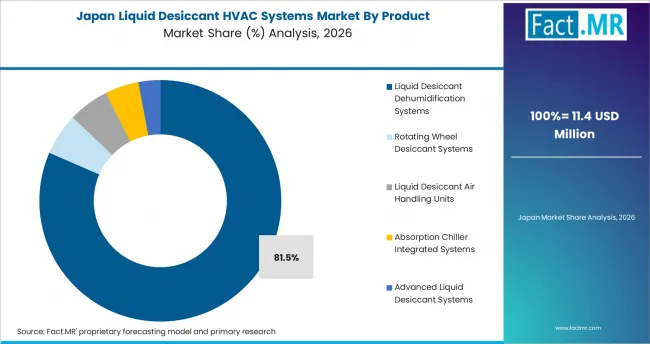
Liquid Desiccant Hvac Systems Market Japan Market Share Analysis By Equipment

Japan's liquid desiccant HVAC systems market demonstrates mature and technology-focused landscape, characterized by sophisticated integration of energy management systems with building automation platforms across commercial facilities, manufacturing plants, and institutional buildings. The country shows steady growth momentum with a CAGR of 16.8% through 2035, driven by energy security priorities following nuclear capacity reductions, advanced building automation deployment in Tokyo, Osaka, and Nagoya metropolitan areas, and comprehensive facility management practices emphasizing total cost of ownership optimization. Japan's emphasis on technological excellence and quality assurance creates requirements for premium HVAC solutions that support comprehensive building performance and regulatory compliance requirements in commercial operations. The market benefits from strong relationships between equipment manufacturers and engineering consultants, creating comprehensive solution ecosystems that prioritize reliability and long-term performance validation programs. Commercial facilities in major urban regions showcase advanced HVAC implementations where liquid desiccant systems achieve documented energy savings through integrated control strategies.

Key market characteristics:

  • Commercial building owners and facility management companies driving technology adoption with emphasis on reliability and energy security
  • Engineering excellence standards enabling high performance outcomes with comprehensive commissioning protocols
  • Technology collaboration between Japanese manufacturers and international engineering firms is expanding capabilities
  • Emphasis on continuous improvement methodologies and comprehensive performance monitoring systems

China and India: Rapid Infrastructure Development Drivers

China's liquid desiccant HVAC systems market demonstrates accelerated deployment driven by national carbon reduction commitments requiring building sector transformation. Major urban centers implement district-level energy efficiency programs that incentivize advanced HVAC technology adoption across commercial developments, with provincial governments providing subsidies and preferential policies for green building projects. The country's massive data center expansion supporting digital economy growth creates substantial demand for energy-efficient cooling solutions, with hyperscale facilities increasingly specifying liquid desiccant systems for humidity control and energy optimization. Industrial manufacturing sectors including pharmaceuticals, electronics, and food processing adopt specialized dehumidification solutions to meet quality control requirements and reduce energy consumption. Growing technical expertise among Chinese HVAC manufacturers enables local production of liquid desiccant components, reducing system costs and accelerating market penetration.

India's market evolution emphasizes commercial real estate and data center applications, with metropolitan areas experiencing acute electricity supply constraints that drive interest in energy-efficient building technologies. The country's booming IT sector creates concentrated demand in technology hubs like Bangalore, Hyderabad, and Pune, where data center operators pursue advanced cooling solutions to manage operational costs and ensure reliability. Growing awareness among architects, MEP consultants, and developers about liquid desiccant benefits drives specification inclusion in high-profile commercial projects. Government initiatives including Energy Conservation Building Code (ECBC) compliance requirements and green building rating systems create regulatory pull for advanced HVAC technologies. However, limited contractor familiarity and higher upfront costs compared to conventional systems require ongoing market education and demonstration project development.

Saudi Arabia and Middle East: Climate-Driven Adoption

Saudi Arabia's liquid desiccant HVAC systems market demonstrates unique growth dynamics driven by extreme humidity conditions in coastal regions and ambitious sustainability targets under Vision 2030 programs. Megaproject developments including NEOM, Red Sea Project, and Qiddiya incorporate advanced building technologies as showcase implementations, creating high-visibility demonstrations of liquid desiccant capabilities. The kingdom's focus on domestic energy consumption reduction to free hydrocarbon resources for export creates policy support for building efficiency technologies. Growing hospitality sector development along Red Sea coastline demands sophisticated humidity control solutions to maintain guest comfort in challenging environmental conditions. Availability of low-cost thermal energy from industrial processes and potential solar thermal integration for desiccant regeneration enhances economic feasibility in regional context.

Broader Middle East market demonstrates similar climate-driven adoption patterns, with UAE, Qatar, and Kuwait pursuing green building initiatives and advanced HVAC technologies. Regional emphasis on iconic architectural projects and world-class commercial developments creates opportunities for premium building systems that demonstrate sustainability leadership and technological sophistication.

Europe Market Split by Country

Liquid Desiccant Hvac Systems Market Europe Country Market Share Analysis, 2025 & 2035

The liquid desiccant HVAC systems market in Europe is projected to grow from USD 87.1 million in 2025 to USD 473.6 million by 2035, registering a CAGR of 18.5% over the forecast period. Germany is expected to maintain its leadership position with a 28.5% market share in 2025, supported by its advanced building technology sector, comprehensive energy efficiency regulatory framework, and strong mechanical engineering capabilities across major commercial centers.

UK follows with a 24.0% share in 2025, driven by comprehensive building decarbonization programs in major metropolitan regions implementing advanced HVAC technologies and renewable energy integration. France holds a 19.5% share through the ongoing development of building renovation initiatives and commercial real estate sustainability requirements. Italy commands a 13.0% share, while Spain accounts for 9.0% in 2025. The Rest of Europe region maintains a 6.0% collective share, attributed to increasing liquid desiccant system adoption in Nordic countries and emerging Eastern European commercial markets implementing advanced building energy management programs. By 2035, Germany is projected to hold 27.8% share, UK 24.5%, France 20.0%, Italy 13.2%, Spain 9.5%, and Rest of Europe 5.0%, reflecting sustained growth momentum across all major European building technology markets.

Competitive Landscape of the Liquid Desiccant HVAC Systems Market

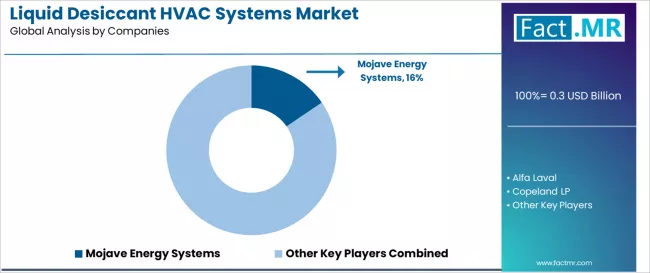
Liquid Desiccant Hvac Systems Market Analysis By Company

The liquid desiccant HVAC systems market features approximately 15-20 meaningful players with moderate concentration, where the top three companies control roughly 40-45% of global market share through established technology portfolios and extensive relationships with commercial building developers and mechanical contractors.

Market leaders include Mojave Energy Systems, Alfa Laval, and Copeland LP, which maintain competitive advantages through comprehensive liquid desiccant HVAC solution portfolios, proven installation track records, and deep expertise in the building climate control and energy efficiency sectors, creating established credibility among specifying engineers.

These companies leverage proprietary technology platforms and ongoing performance validation programs to defend market positions while expanding into adjacent building automation and energy management applications. Mojave Energy Systems commands a 15.5% market share through strategic focus on commercial-scale implementations and comprehensive system integration capabilities.

Challengers encompass Blue Frontier and 5AC Technologies, Inc. (Emerson Electric Co.), which compete through innovative technology approaches and strong corporate backing with established HVAC market presence. Specialized manufacturers, including AirGreen, Inc., Ventilex, and AOLAN, focus on specific equipment categories or regional markets, offering differentiated capabilities in modular system designs, custom configurations, and application-specific solutions.

Regional players and emerging technology companies create competitive pressure through innovative liquid desiccant formulations and cost-optimized system architectures, particularly in high-growth markets including India and China, where local manufacturing presence provides advantages in pricing competitiveness and technical support accessibility.

Market dynamics favor companies that combine advanced engineering capabilities with comprehensive project support services that address the complete implementation journey from system design through commissioning and performance verification.

Strategic collaborations between equipment manufacturers and building automation providers accelerate technology integration, while partnerships with mechanical contractors enable market reach expansion and installation quality assurance across diverse project applications.

Global Liquid Desiccant HVAC Systems Market - Stakeholder Contribution Framework

Liquid desiccant HVAC systems represent a critical energy efficiency technology that enables building owners, facility managers, and commercial developers to achieve substantial operational cost reduction and sustainability objectives, typically delivering 30-50% HVAC energy savings compared to conventional vapor-compression systems while providing superior humidity control and indoor air quality performance.

With the market projected to grow from USD 0.3 billion in 2025 to USD 1.63 billion by 2035 at an 18.4% CAGR, these systems offer compelling advantages - significant energy cost reduction, enhanced environmental performance, and improved occupant comfort - making them essential for commercial building operations (dominant application), data center cooling requirements (high-growth segment), and diverse industrial applications requiring proven energy-efficient climate control solutions. Scaling market adoption and technology deployment requires coordinated action across building energy policy, industry standards organizations, equipment manufacturers, mechanical contractors, and building research institutions.

How Governments Could Spur Technology Adoption and Market Development?

  • Energy Code Enhancement: Include liquid desiccant HVAC systems in building energy code provisions, providing performance-based compliance pathways that recognize humidity control benefits and supporting technology adoption through prescriptive options in national and regional building standards.
  • Financial Incentive Programs: Implement tax credits for energy-efficient HVAC equipment installations, provide utility rebate programs for advanced dehumidification technologies, and establish favorable financing mechanisms through government-backed energy efficiency loan programs that reduce upfront cost barriers.
  • Research & Development Funding: Create dedicated funding for liquid desiccant technology advancement, establish demonstration project programs showcasing performance capabilities, and develop knowledge dissemination initiatives that communicate verified energy savings and operational benefits to building industry stakeholders.
  • Technical Training Support: Fund vocational programs for HVAC contractors and mechanical engineers, support certification programs for liquid desiccant system installation and maintenance, and invest in continuing education initiatives that build technical capacity throughout the building services industry.

How Industry Bodies Could Support Market Development?

  • Performance Standards Development: Define standardized testing protocols for liquid desiccant HVAC systems across commercial, industrial, and institutional applications, establish universal performance metrics including energy efficiency ratings, and create certification programs that ensure product quality and performance claims verification.
  • Market Education Initiatives: Lead communication campaigns demonstrating liquid desiccant system advantages, emphasizing documented energy savings, operational cost benefits, and indoor environmental quality improvements compared to conventional HVAC approaches through case studies and performance data dissemination.
  • Design Guidance Development: Develop comprehensive design guidelines for engineers and architects, create integration standards for building automation systems, and establish best practice recommendations for system sizing, installation, and commissioning that ensure optimal performance outcomes.

How Equipment Manufacturers and HVAC Contractors Could Strengthen the Ecosystem?

  • Technology Innovation Advancement: Develop next-generation liquid desiccant systems with enhanced regeneration efficiency, improved control algorithms, and modular configurations that enhance installation flexibility while reducing system costs and complexity.
  • Comprehensive Support Services: Provide integrated project support including performance modeling, system design assistance, commissioning guidance, and ongoing monitoring services, enabling customers to maximize energy savings and operational reliability throughout system lifecycles.
  • Market Partnership Development: Offer collaborative programs for building owners and mechanical contractors, including training workshops, technical documentation, and performance guarantee options that build market confidence and accelerate technology adoption across diverse building applications.

Key Players in the Liquid Desiccant HVAC Systems Market

  • Mojave Energy Systems
  • Alfa Laval
  • Copeland LP
  • Blue Frontier
  • 5AC Technologies, Inc. (Emerson Electric Co.)
  • AirGreen, Inc.
  • Ventilex
  • AOLAN
  • Thermair
  • Munters AB

Scope of the Report

Items Values
Quantitative Units USD 0.3 billion
Equipment Liquid Desiccant Heat Pump AC Systems, Liquid Desiccant Dehumidifier, Liquid Desiccant Chiller-Integrated Systems
Application Commercial, Industrial, Residential
Regions Covered Europe, North America, Asia Pacific, Latin America, Middle East & Africa
Country Covered USA, China, India, Germany, Spain, Japan, Saudi Arabia, and 40+ countries
Key Companies Profiled Mojave Energy Systems, Alfa Laval, Copeland LP, Blue Frontier, 5AC Technologies, Inc. (Emerson Electric Co.), AirGreen, Inc., Ventilex, AOLAN, Thermair, Munters AB
Additional Attributes Revenue analysis by equipment type and application categories, regional deployment trends across North America, Asia Pacific, and Europe, competitive landscape with HVAC equipment manufacturers and building technology providers, system specifications and performance requirements, integration with building automation platforms and energy management systems.

Liquid Desiccant HVAC Systems Market by Segments

  • Equipment :

    • Liquid Desiccant Heat Pump AC Systems
    • Liquid Desiccant Dehumidifier
    • Liquid Desiccant Chiller-Integrated Systems
  • Application :

    • Commercial
    • Industrial
    • Residential
  • Region :

    • Europe
      • Germany
      • UK
      • France
      • Italy
      • Spain
      • Nordic
      • Rest of Europe
    • North America
      • USA
      • Canada
      • Mexico
    • Asia Pacific
      • China
      • Japan
      • South Korea
      • India
      • Australia & New Zealand
      • ASEAN
      • Rest of Asia Pacific
    • Latin America
      • Brazil
      • Argentina
      • Rest of Latin America
    • Middle East & Africa
      • Kingdom of Saudi Arabia
      • Other GCC Countries
      • Turkey
      • South Africa
      • Rest of Middle East & Africa

Table of Content

  1. Executive Summary
    • Global Market Outlook
    • Demand to side Trends
    • Supply to side Trends
    • Technology Roadmap Analysis
    • Analysis and Recommendations
  2. Market Overview
    • Market Coverage / Taxonomy
    • Market Definition / Scope / Limitations
  3. Market Background
    • Market Dynamics
      • Drivers
      • Restraints
      • Opportunity
      • Trends
    • Scenario Forecast
      • Demand in Optimistic Scenario
      • Demand in Likely Scenario
      • Demand in Conservative Scenario
    • Opportunity Map Analysis
    • Product Life Cycle Analysis
    • Supply Chain Analysis
    • Investment Feasibility Matrix
    • Value Chain Analysis
    • PESTLE and Porter’s Analysis
    • Regulatory Landscape
    • Regional Parent Market Outlook
    • Production and Consumption Statistics
    • Import and Export Statistics
  4. Global Market Analysis 2020 to 2024 and Forecast, 2025 to 2035
    • Historical Market Size Value (USD Million) Analysis, 2020 to 2024
    • Current and Future Market Size Value (USD Million) Projections, 2025 to 2035
      • Y to o to Y Growth Trend Analysis
      • Absolute $ Opportunity Analysis
  5. Global Market Pricing Analysis 2020 to 2024 and Forecast 2025 to 2035
  6. Global Market Analysis 2020 to 2024 and Forecast 2025 to 2035, By Equipment
    • Introduction / Key Findings
    • Historical Market Size Value (USD Million) Analysis By Equipment, 2020 to 2024
    • Current and Future Market Size Value (USD Million) Analysis and Forecast By Equipment, 2025 to 2035
      • Liquid Desiccant Heat Pump AC Systems
      • Liquid Desiccant Dehumidifier
      • Liquid Desiccant Chiller-Integrated Systems
    • Y to o to Y Growth Trend Analysis By Equipment, 2020 to 2024
    • Absolute $ Opportunity Analysis By Equipment, 2025 to 2035
  7. Global Market Analysis 2020 to 2024 and Forecast 2025 to 2035, By Application
    • Introduction / Key Findings
    • Historical Market Size Value (USD Million) Analysis By Application, 2020 to 2024
    • Current and Future Market Size Value (USD Million) Analysis and Forecast By Application, 2025 to 2035
      • Commercial
      • Industrial
      • Residential
    • Y to o to Y Growth Trend Analysis By Application, 2020 to 2024
    • Absolute $ Opportunity Analysis By Application, 2025 to 2035
  8. Global Market Analysis 2020 to 2024 and Forecast 2025 to 2035, By Region
    • Introduction
    • Historical Market Size Value (USD Million) Analysis By Region, 2020 to 2024
    • Current Market Size Value (USD Million) Analysis and Forecast By Region, 2025 to 2035
      • North America
      • Latin America
      • Western Europe
      • Eastern Europe
      • East Asia
      • South Asia and Pacific
      • Middle East & Africa
    • Market Attractiveness Analysis By Region
  9. North America Market Analysis 2020 to 2024 and Forecast 2025 to 2035, By Country
    • Historical Market Size Value (USD Million) Trend Analysis By Market Taxonomy, 2020 to 2024
    • Market Size Value (USD Million) Forecast By Market Taxonomy, 2025 to 2035
      • By Country
        • USA
        • Canada
        • Mexico
      • By Equipment
      • By Application
    • Market Attractiveness Analysis
      • By Country
      • By Equipment
      • By Application
    • Key Takeaways
  10. Latin America Market Analysis 2020 to 2024 and Forecast 2025 to 2035, By Country
    • Historical Market Size Value (USD Million) Trend Analysis By Market Taxonomy, 2020 to 2024
    • Market Size Value (USD Million) Forecast By Market Taxonomy, 2025 to 2035
      • By Country
        • Brazil
        • Chile
        • Rest of Latin America
      • By Equipment
      • By Application
    • Market Attractiveness Analysis
      • By Country
      • By Equipment
      • By Application
    • Key Takeaways
  11. Western Europe Market Analysis 2020 to 2024 and Forecast 2025 to 2035, By Country
    • Historical Market Size Value (USD Million) Trend Analysis By Market Taxonomy, 2020 to 2024
    • Market Size Value (USD Million) Forecast By Market Taxonomy, 2025 to 2035
      • By Country
        • Germany
        • UK
        • Italy
        • Spain
        • France
        • Nordic
        • BENELUX
        • Rest of Western Europe
      • By Equipment
      • By Application
    • Market Attractiveness Analysis
      • By Country
      • By Equipment
      • By Application
    • Key Takeaways
  12. Eastern Europe Market Analysis 2020 to 2024 and Forecast 2025 to 2035, By Country
    • Historical Market Size Value (USD Million) Trend Analysis By Market Taxonomy, 2020 to 2024
    • Market Size Value (USD Million) Forecast By Market Taxonomy, 2025 to 2035
      • By Country
        • Russia
        • Poland
        • Hungary
        • Balkan & Baltic
        • Rest of Eastern Europe
      • By Equipment
      • By Application
    • Market Attractiveness Analysis
      • By Country
      • By Equipment
      • By Application
    • Key Takeaways
  13. East Asia Market Analysis 2020 to 2024 and Forecast 2025 to 2035, By Country
    • Historical Market Size Value (USD Million) Trend Analysis By Market Taxonomy, 2020 to 2024
    • Market Size Value (USD Million) Forecast By Market Taxonomy, 2025 to 2035
      • By Country
        • China
        • Japan
        • South Korea
      • By Equipment
      • By Application
    • Market Attractiveness Analysis
      • By Country
      • By Equipment
      • By Application
    • Key Takeaways
  14. South Asia and Pacific Market Analysis 2020 to 2024 and Forecast 2025 to 2035, By Country
    • Historical Market Size Value (USD Million) Trend Analysis By Market Taxonomy, 2020 to 2024
    • Market Size Value (USD Million) Forecast By Market Taxonomy, 2025 to 2035
      • By Country
        • India
        • ASEAN
        • Australia & New Zealand
        • Rest of South Asia and Pacific
      • By Equipment
      • By Application
    • Market Attractiveness Analysis
      • By Country
      • By Equipment
      • By Application
    • Key Takeaways
  15. Middle East & Africa Market Analysis 2020 to 2024 and Forecast 2025 to 2035, By Country
    • Historical Market Size Value (USD Million) Trend Analysis By Market Taxonomy, 2020 to 2024
    • Market Size Value (USD Million) Forecast By Market Taxonomy, 2025 to 2035
      • By Country
        • Kingdom of Saudi Arabia
        • Other GCC Countries
        • Turkiye
        • South Africa
        • Other African Union
        • Rest of Middle East & Africa
      • By Equipment
      • By Application
    • Market Attractiveness Analysis
      • By Country
      • By Equipment
      • By Application
    • Key Takeaways
  16. Key Countries Market Analysis
    • USA
      • Pricing Analysis
      • Market Share Analysis, 2024
        • By Equipment
        • By Application
    • Canada
      • Pricing Analysis
      • Market Share Analysis, 2024
        • By Equipment
        • By Application
    • Mexico
      • Pricing Analysis
      • Market Share Analysis, 2024
        • By Equipment
        • By Application
    • Brazil
      • Pricing Analysis
      • Market Share Analysis, 2024
        • By Equipment
        • By Application
    • Chile
      • Pricing Analysis
      • Market Share Analysis, 2024
        • By Equipment
        • By Application
    • Germany
      • Pricing Analysis
      • Market Share Analysis, 2024
        • By Equipment
        • By Application
    • UK
      • Pricing Analysis
      • Market Share Analysis, 2024
        • By Equipment
        • By Application
    • Italy
      • Pricing Analysis
      • Market Share Analysis, 2024
        • By Equipment
        • By Application
    • Spain
      • Pricing Analysis
      • Market Share Analysis, 2024
        • By Equipment
        • By Application
    • France
      • Pricing Analysis
      • Market Share Analysis, 2024
        • By Equipment
        • By Application
    • India
      • Pricing Analysis
      • Market Share Analysis, 2024
        • By Equipment
        • By Application
    • ASEAN
      • Pricing Analysis
      • Market Share Analysis, 2024
        • By Equipment
        • By Application
    • Australia & New Zealand
      • Pricing Analysis
      • Market Share Analysis, 2024
        • By Equipment
        • By Application
    • China
      • Pricing Analysis
      • Market Share Analysis, 2024
        • By Equipment
        • By Application
    • Japan
      • Pricing Analysis
      • Market Share Analysis, 2024
        • By Equipment
        • By Application
    • South Korea
      • Pricing Analysis
      • Market Share Analysis, 2024
        • By Equipment
        • By Application
    • Russia
      • Pricing Analysis
      • Market Share Analysis, 2024
        • By Equipment
        • By Application
    • Poland
      • Pricing Analysis
      • Market Share Analysis, 2024
        • By Equipment
        • By Application
    • Hungary
      • Pricing Analysis
      • Market Share Analysis, 2024
        • By Equipment
        • By Application
    • Kingdom of Saudi Arabia
      • Pricing Analysis
      • Market Share Analysis, 2024
        • By Equipment
        • By Application
    • Turkiye
      • Pricing Analysis
      • Market Share Analysis, 2024
        • By Equipment
        • By Application
    • South Africa
      • Pricing Analysis
      • Market Share Analysis, 2024
        • By Equipment
        • By Application
  17. Market Structure Analysis
    • Competition Dashboard
    • Competition Benchmarking
    • Market Share Analysis of Top Players
      • By Regional
      • By Equipment
      • By Application
  18. Competition Analysis
    • Competition Deep Dive
      • Mojave Energy Systems
        • Overview
        • Product Portfolio
        • Profitability by Market Segments (Product/Age /Sales Channel/Region)
        • Sales Footprint
        • Strategy Overview
          • Marketing Strategy
          • Product Strategy
          • Channel Strategy
      • Alfa Laval
      • Copeland LP
      • Blue Frontier
      • 5AC Technologies, Inc. (Emerson Electric Co.)
      • AirGreen, Inc.
      • Ventilex
      • AOLAN
      • Thermair
      • Munters AB
  19. Assumptions & Acronyms Used
  20. Research Methodology

List Of Table

  • Table 1: Global Market Value (USD Million) Forecast by Region, 2020 to 2035
  • Table 2: Global Market Value (USD Million) Forecast by Equipment, 2020 to 2035
  • Table 3: Global Market Value (USD Million) Forecast by Application, 2020 to 2035
  • Table 4: North America Market Value (USD Million) Forecast by Country, 2020 to 2035
  • Table 5: North America Market Value (USD Million) Forecast by Equipment, 2020 to 2035
  • Table 6: North America Market Value (USD Million) Forecast by Application, 2020 to 2035
  • Table 7: Latin America Market Value (USD Million) Forecast by Country, 2020 to 2035
  • Table 8: Latin America Market Value (USD Million) Forecast by Equipment, 2020 to 2035
  • Table 9: Latin America Market Value (USD Million) Forecast by Application, 2020 to 2035
  • Table 10: Western Europe Market Value (USD Million) Forecast by Country, 2020 to 2035
  • Table 11: Western Europe Market Value (USD Million) Forecast by Equipment, 2020 to 2035
  • Table 12: Western Europe Market Value (USD Million) Forecast by Application, 2020 to 2035
  • Table 13: Eastern Europe Market Value (USD Million) Forecast by Country, 2020 to 2035
  • Table 14: Eastern Europe Market Value (USD Million) Forecast by Equipment, 2020 to 2035
  • Table 15: Eastern Europe Market Value (USD Million) Forecast by Application, 2020 to 2035
  • Table 16: East Asia Market Value (USD Million) Forecast by Country, 2020 to 2035
  • Table 17: East Asia Market Value (USD Million) Forecast by Equipment, 2020 to 2035
  • Table 18: East Asia Market Value (USD Million) Forecast by Application, 2020 to 2035
  • Table 19: South Asia and Pacific Market Value (USD Million) Forecast by Country, 2020 to 2035
  • Table 20: South Asia and Pacific Market Value (USD Million) Forecast by Equipment, 2020 to 2035
  • Table 21: South Asia and Pacific Market Value (USD Million) Forecast by Application, 2020 to 2035
  • Table 22: Middle East & Africa Market Value (USD Million) Forecast by Country, 2020 to 2035
  • Table 23: Middle East & Africa Market Value (USD Million) Forecast by Equipment, 2020 to 2035
  • Table 24: Middle East & Africa Market Value (USD Million) Forecast by Application, 2020 to 2035

List Of Figures

  • Figure 1: Global Market Pricing Analysis
  • Figure 2: Global Market Value (USD Million) Forecast 2020 to 2035
  • Figure 3: Global Market Value Share and BPS Analysis by Equipment, 2025 and 2035
  • Figure 4: Global Market Y to o to Y Growth Comparison by Equipment, 2025 to 2035
  • Figure 5: Global Market Attractiveness Analysis by Equipment
  • Figure 6: Global Market Value Share and BPS Analysis by Application, 2025 and 2035
  • Figure 7: Global Market Y to o to Y Growth Comparison by Application, 2025 to 2035
  • Figure 8: Global Market Attractiveness Analysis by Application
  • Figure 9: Global Market Value (USD Million) Share and BPS Analysis by Region, 2025 and 2035
  • Figure 10: Global Market Y to o to Y Growth Comparison by Region, 2025 to 2035
  • Figure 11: Global Market Attractiveness Analysis by Region
  • Figure 12: North America Market Incremental Dollar Opportunity, 2025 to 2035
  • Figure 13: Latin America Market Incremental Dollar Opportunity, 2025 to 2035
  • Figure 14: Western Europe Market Incremental Dollar Opportunity, 2025 to 2035
  • Figure 15: Eastern Europe Market Incremental Dollar Opportunity, 2025 to 2035
  • Figure 16: East Asia Market Incremental Dollar Opportunity, 2025 to 2035
  • Figure 17: South Asia and Pacific Market Incremental Dollar Opportunity, 2025 to 2035
  • Figure 18: Middle East & Africa Market Incremental Dollar Opportunity, 2025 to 2035
  • Figure 19: North America Market Value Share and BPS Analysis by Country, 2025 and 2035
  • Figure 20: North America Market Value Share and BPS Analysis by Equipment, 2025 and 2035
  • Figure 21: North America Market Y to o to Y Growth Comparison by Equipment, 2025 to 2035
  • Figure 22: North America Market Attractiveness Analysis by Equipment
  • Figure 23: North America Market Value Share and BPS Analysis by Application, 2025 and 2035
  • Figure 24: North America Market Y to o to Y Growth Comparison by Application, 2025 to 2035
  • Figure 25: North America Market Attractiveness Analysis by Application
  • Figure 26: Latin America Market Value Share and BPS Analysis by Country, 2025 and 2035
  • Figure 27: Latin America Market Value Share and BPS Analysis by Equipment, 2025 and 2035
  • Figure 28: Latin America Market Y to o to Y Growth Comparison by Equipment, 2025 to 2035
  • Figure 29: Latin America Market Attractiveness Analysis by Equipment
  • Figure 30: Latin America Market Value Share and BPS Analysis by Application, 2025 and 2035
  • Figure 31: Latin America Market Y to o to Y Growth Comparison by Application, 2025 to 2035
  • Figure 32: Latin America Market Attractiveness Analysis by Application
  • Figure 33: Western Europe Market Value Share and BPS Analysis by Country, 2025 and 2035
  • Figure 34: Western Europe Market Value Share and BPS Analysis by Equipment, 2025 and 2035
  • Figure 35: Western Europe Market Y to o to Y Growth Comparison by Equipment, 2025 to 2035
  • Figure 36: Western Europe Market Attractiveness Analysis by Equipment
  • Figure 37: Western Europe Market Value Share and BPS Analysis by Application, 2025 and 2035
  • Figure 38: Western Europe Market Y to o to Y Growth Comparison by Application, 2025 to 2035
  • Figure 39: Western Europe Market Attractiveness Analysis by Application
  • Figure 40: Eastern Europe Market Value Share and BPS Analysis by Country, 2025 and 2035
  • Figure 41: Eastern Europe Market Value Share and BPS Analysis by Equipment, 2025 and 2035
  • Figure 42: Eastern Europe Market Y to o to Y Growth Comparison by Equipment, 2025 to 2035
  • Figure 43: Eastern Europe Market Attractiveness Analysis by Equipment
  • Figure 44: Eastern Europe Market Value Share and BPS Analysis by Application, 2025 and 2035
  • Figure 45: Eastern Europe Market Y to o to Y Growth Comparison by Application, 2025 to 2035
  • Figure 46: Eastern Europe Market Attractiveness Analysis by Application
  • Figure 47: East Asia Market Value Share and BPS Analysis by Country, 2025 and 2035
  • Figure 48: East Asia Market Value Share and BPS Analysis by Equipment, 2025 and 2035
  • Figure 49: East Asia Market Y to o to Y Growth Comparison by Equipment, 2025 to 2035
  • Figure 50: East Asia Market Attractiveness Analysis by Equipment
  • Figure 51: East Asia Market Value Share and BPS Analysis by Application, 2025 and 2035
  • Figure 52: East Asia Market Y to o to Y Growth Comparison by Application, 2025 to 2035
  • Figure 53: East Asia Market Attractiveness Analysis by Application
  • Figure 54: South Asia and Pacific Market Value Share and BPS Analysis by Country, 2025 and 2035
  • Figure 55: South Asia and Pacific Market Value Share and BPS Analysis by Equipment, 2025 and 2035
  • Figure 56: South Asia and Pacific Market Y to o to Y Growth Comparison by Equipment, 2025 to 2035
  • Figure 57: South Asia and Pacific Market Attractiveness Analysis by Equipment
  • Figure 58: South Asia and Pacific Market Value Share and BPS Analysis by Application, 2025 and 2035
  • Figure 59: South Asia and Pacific Market Y to o to Y Growth Comparison by Application, 2025 to 2035
  • Figure 60: South Asia and Pacific Market Attractiveness Analysis by Application
  • Figure 61: Middle East & Africa Market Value Share and BPS Analysis by Country, 2025 and 2035
  • Figure 62: Middle East & Africa Market Value Share and BPS Analysis by Equipment, 2025 and 2035
  • Figure 63: Middle East & Africa Market Y to o to Y Growth Comparison by Equipment, 2025 to 2035
  • Figure 64: Middle East & Africa Market Attractiveness Analysis by Equipment
  • Figure 65: Middle East & Africa Market Value Share and BPS Analysis by Application, 2025 and 2035
  • Figure 66: Middle East & Africa Market Y to o to Y Growth Comparison by Application, 2025 to 2035
  • Figure 67: Middle East & Africa Market Attractiveness Analysis by Application
  • Figure 68: Global Market - Tier Structure Analysis
  • Figure 69: Global Market - Company Share Analysis

- FAQs -

How big is the liquid desiccant HVAC systems market in 2025?

The global liquid desiccant HVAC systems market is estimated to be valued at USD 0.3 billion in 2025.

What will be the size of liquid desiccant HVAC systems market in 2035?

The market size for the liquid desiccant HVAC systems market is projected to reach USD 1.6 billion by 2035.

How much will be the liquid desiccant HVAC systems market growth between 2025 and 2035?

The liquid desiccant HVAC systems market is expected to grow at a 18.4% CAGR between 2025 and 2035.

What are the key product types in the liquid desiccant HVAC systems market?

The key product types in liquid desiccant HVAC systems market are liquid desiccant heat pump ac systems, liquid desiccant dehumidifier and liquid desiccant chiller-integrated systems.

Which application segment to contribute significant share in the liquid desiccant HVAC systems market in 2025?

In terms of application, commercial segment to command 69.4% share in the liquid desiccant HVAC systems market in 2025.

Liquid Desiccant HVAC Systems Market