Low-Toxicity Lubricant Additives for Food-Grade Applications Market

Low-Toxicity Lubricant Additives for Food-Grade Applications Market Size and Share Forecast Outlook 2026 to 2036

Market for low-toxicity lubricant additives for food-grade applications will total USD 132.00 million in 2026, and reach USD 298.45 million by 2036, at an 8.5% CAGR. Anti-wear & extreme-pressure packages will capture 28% of total demand by additive function, while food & beverage processing will account for 38% of all end-use applications.

Low-Toxicity Lubricant Additives for Food-Grade Applications Market Forecast and Outlook 2026 to 2036

The global low-toxicity lubricant additives for food-grade applications market is projected to reach USD 298.45 million by 2036. The market is valued at USD 132.00 million in 2026 and is set to rise at a CAGR of 8.5% during the assessment period.

By additive function, anti-wear & extreme-pressure packages hold a leading 28% share. Ester-based additive systems represent the dominant chemistry at 34%, while food & beverage processing is the primary end-use at 38.0%.

Key Takeaways from the Low-Toxicity Lubricant Additives for Food-Grade Applications Market

  • Market Value for 2026: USD 132.00 Million
  • Market Value for 2036: USD 298.45 Million
  • Forecast CAGR (2026-2036): 8.5%
  • Leading Additive Function Share (2026): Anti-wear & extreme-pressure packages (28%)
  • Leading Chemistry Share (2026): Ester-based additive systems (34%)
  • Leading End-Use Application Share (2026): Food & beverage Processing (38.0%)
  • Key Players in the Market: FUCHS, TotalEnergies SE, Afton Chemical Corporation, Interflon, Illinois Tool Works Inc. (ITW), Klüber Lubrication, Anderol (LANXESS AG), Lubrizol Corporation, Shell plc.
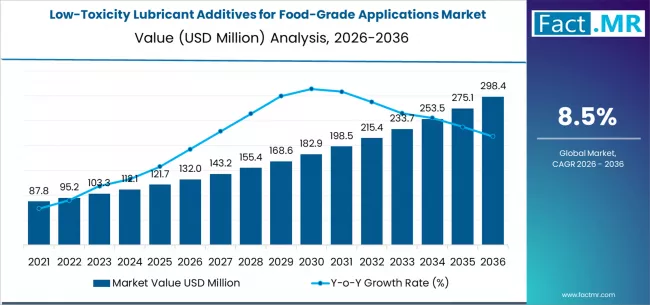
Low Toxicity Lubricant Additives For Food Grade Applications Market Market Value Analysis

Defining trends involve the development of high-performance, fully biodegradable additive packages derived from vegetable oils. Innovation is focused on enhancing lubricant performance while ensuring compliance with stringent global food safety standards like NSF H1. Integration of these advanced additive systems into multi-functional, low-residual formulations is becoming a key competitive strategy.

Regulatory frameworks enforcing strict food safety (FDA, EFSA) and hygiene standards are the primary market drivers. The global food industry’s focus on preventative maintenance, operational efficiency, and reducing contamination risk acts as a significant catalyst, creating sustained demand for high-performance, certified food-grade lubricant additives.

Low-Toxicity Lubricant Additives for Food-Grade Applications Market

Metric Value
Market Value (2026) USD 132.00 Million
Market Forecast Value (2036) USD 298.45 Million
Forecast CAGR (2026-2036) 8.5%

Category

Category Segments
Additive Function Anti-wear & extreme-pressure packages, Oxidation inhibitors & antioxidants, Corrosion & rust inhibitors, Tackifiers & anti-drip, anti-spatter agents, Anti-foam, defoamers & friction modifiers, Biobased & biodegradable performance additives
Chemistry Ester-based additive systems, Polyol & PAE co-additives & low-amine packages, Vegetable-oil derived modifiers & biobased concentrates, Low-residual organo-metallic additives, Solid anti-wear & dispersion concentrates
End-Use Food & beverage Processing, Packaging Machinery, Food-industry Compressors & Vacuum Systems, Greases for Bearings & Chains (NSF H1 greases), Specialty End-Uses
Region North America, Latin America, Western Europe, Eastern Europe, East Asia, South Asia & Pacific, MEA

Segmental Analysis

By Additive Function, Which Package is Critical for Protecting Machinery Under High Load?
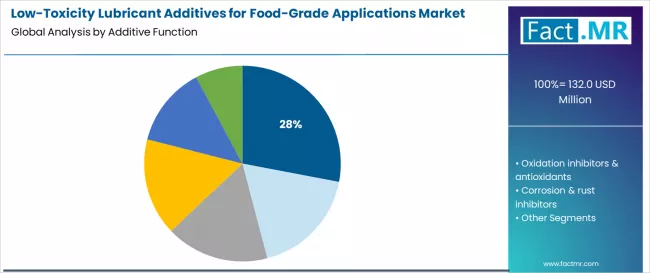
Low Toxicity Lubricant Additives For Food Grade Applications Market Analysis By Additive Function

Anti-wear & extreme-pressure packages lead the segment with a 28% share. This dominance is due to their critical role in protecting gears, bearings, and chains in food processing and packaging machinery from wear and failure under high mechanical stress. These additives must provide robust performance while meeting strict non-toxicity criteria, making them essential for reliable, safe operation in food contact zones.

By Chemistry, Which System Offers Optimal Performance and Regulatory Acceptance?
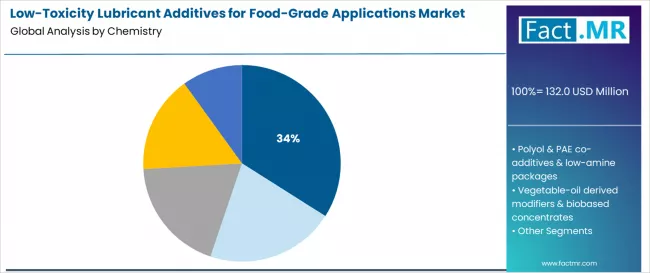
Low Toxicity Lubricant Additives For Food Grade Applications Market Analysis By Chemistry

Ester-based additive systems command the largest chemistry share at 34%. Their dominance is attributed to their excellent lubricity, high thermal stability, and inherent biodegradability. Esters provide a high-performance synthetic base that is readily compatible with stringent food-grade certification requirements, offering formulators a versatile and trusted platform for developing advanced low-toxicity additive packages.

By End-Use, Which Sector Drives Core Volume Demand?
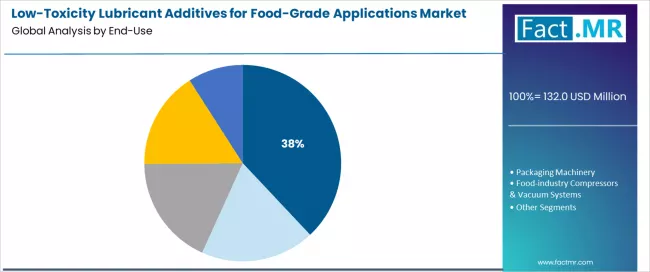
Low Toxicity Lubricant Additives For Food Grade Applications Market Analysis By End Use

Food & beverage processing represents the leading end-use at 38.0%. This sector encompasses a vast range of machinery—from mixers and conveyors to bottling lines—where incidental food contact is possible. The scale of operations, continuous production cycles, and zero-tolerance for contamination drive significant, recurring demand for certified, high-performance additive packages that ensure both equipment reliability and product safety.

What are the Drivers, Restraints, and Key Trends of the Low-Toxicity Lubricant Additives for Food-Grade Applications Market?

Globally harmonizing food safety standards and stringent hygiene regulations drive market growth. The expansion of packaged food production and automation in food processing increases machinery density and lubrication points. Rising consumer awareness and brand protection mandates push manufacturers to adopt certified H1 lubricants to eliminate contamination risk.

A significant restraint is the higher formulation cost of advanced synthetic and bio-based additives compared to conventional industrial lubricant chemistries. Performance trade-offs in extreme conditions for some low-toxicity alternatives can limit adoption in certain demanding applications. The complexity of obtaining and maintaining certifications across different regions adds cost and time for additive suppliers.

Key trends include the development of multi-functional additive packages that combine wear protection, corrosion inhibition, and oxidation stability in a single, low-residual formulation. There is a growing focus on bio-based and readily biodegradable additives to meet corporate sustainability goals. The market is also seeing increased integration of solid additive concentrates and low-amine packages to enhance performance while meeting evolving regulatory standards.

Analysis of the Low-Toxicity Lubricant Additives for Food-Grade Applications Market by Key Countries
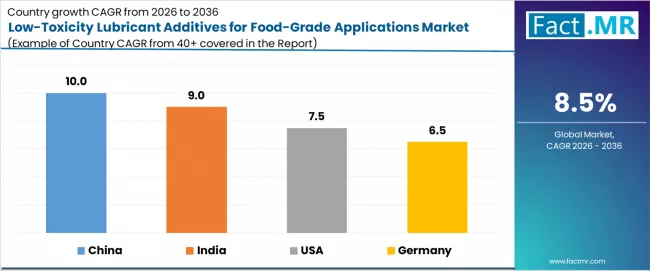
Low Toxicity Lubricant Additives For Food Grade Applications Market Cagr Analysis By Country

Country CAGR (2026-2036)
India 9.00%
China 10.00%
USA 7.50%
Germany 6.50%

How does China's Massive Food Processing Sector and Regulatory Upgrades Drive Demand?

China leads with a 10.00% CAGR, driven by its world-leading food manufacturing industry and ongoing upgrades to food safety regulations. The rapid automation of processing and packaging lines, combined with a focus on export compliance, creates robust demand for high-quality, certified food-grade lubricant additives from both domestic and international suppliers.

Why is India's Rapid Market Growth and Evolving Food Safety Landscape a Key Driver?

India’s 9.00% growth is fueled by the rapid expansion of its organized food processing sector and the implementation of stricter food safety standards. Growth in dairy, beverage, and packaged food production, along with increasing mechanization, drives demand for reliable H1 lubricant additives to protect expensive machinery, ensure compliance in both domestic, and export markets.

What Role does the USA's Mature but Stringent Regulatory Environment Play?
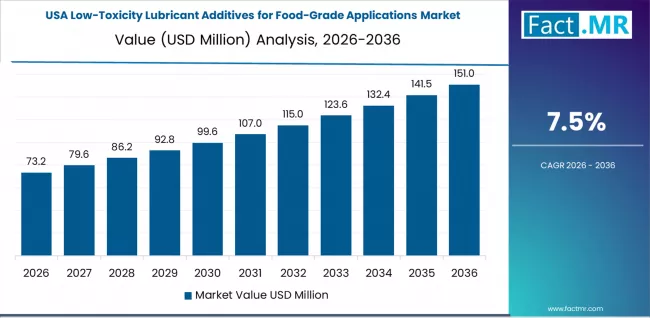
Low Toxicity Lubricant Additives For Food Grade Applications Market Country Value Analysis

The USA's 7.50% growth is underpinned by its well-established FDA regulations and a strong culture of preventative maintenance in food production. Demand is driven by the replacement of older additive chemistries with newer, higher-performance, and more environmentally acceptable options, particularly in sectors like meat processing and dairy where hygiene is critical.

How does Germany's Engineering Leadership and High Hygiene Standards Influence the Market?

Germany’s 6.50% growth reflects its leadership in high-end food processing and packaging machinery manufacturing. Stringent EU and German food safety and environmental regulations create a sophisticated market for advanced, often bio-based, additive systems that deliver superior performance in sensitive applications while meeting the highest standards of toxicological safety.

Competitive Landscape of the Low-Toxicity Lubricant Additives for Food-Grade Applications Market
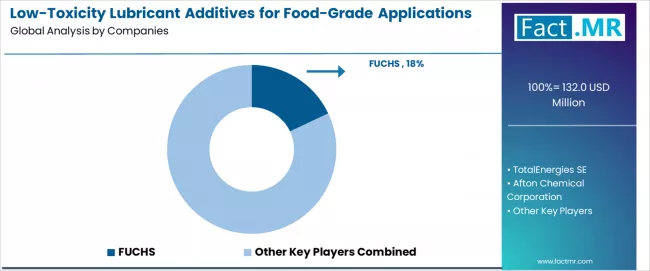
Low Toxicity Lubricant Additives For Food Grade Applications Market Analysis By Company

The competitive landscape features global lubricant majors, specialty chemical companies, and niche food-grade specialists. Integrated oil companies like Shell plc. and TotalEnergies SE compete on the strength of their broad base oil and additive supply chains, serving large global food producers.

Specialty additive developers like Afton Chemical Corporation and Lubrizol Corporation compete through advanced R&D in ester and synthetic chemistries. Dedicated food-grade specialists like FUCHS, Klüber Lubrication, and Anderol (LANXESS AG) leverage deep application expertise and a focus on NSF-certified product portfolios. Competition revolves around technical service, the ability to formulate for specific equipment and process challenges, and providing full regulatory documentation and support.

Key Players in the Low-Toxicity Lubricant Additives for Food-Grade Applications Market

  • FUCHS
  • TotalEnergies SE
  • Afton Chemical Corporation
  • Interflon
  • Illinois Tool Works Inc. (ITW)
  • Klüber Lubrication
  • Anderol (LANXESS AG)
  • Lubrizol Corporation
  • Shell plc.

Scope of Report

Items Values
Quantitative Units USD Million
Additive Function Anti-wear & extreme-pressure packages, Oxidation inhibitors & antioxidants, Corrosion & rust inhibitors, Tackifiers & anti-drip, anti-spatter agents, Anti-foam, defoamers & friction modifiers, Biobased & biodegradable performance additives
Chemistry Ester-based additive systems, Polyol & PAE co-additives & low-amine packages, Vegetable-oil derived modifiers & biobased concentrates, Low-residual organo-metallic additives, Solid anti-wear & dispersion concentrates
End-Use Food & beverage Processing, Packaging Machinery, Food-industry Compressors & Vacuum Systems, Greases for Bearings & Chains (NSF H1 greases), Specialty End-Uses
Key Countries China, India, USA, Germany
Key Companies FUCHS, TotalEnergies SE, Afton Chemical Corporation, Interflon, Illinois Tool Works Inc. (ITW), Klüber Lubrication, Anderol (LANXESS AG), Lubrizol Corporation, Shell plc.
Additional Analysis Analysis of additive treat rates and synergy effects, performance testing under simulated food processing conditions, regulatory certification pathways and costs, competitive assessment versus conventional industrial additives, and total cost of ownership models for food production facilities.

Low-Toxicity Lubricant Additives for Food-Grade Applications Market by Segments

  • Additive Function :

    • Anti-wear & extreme-pressure packages
    • Oxidation inhibitors & antioxidants
    • Corrosion & rust inhibitors
    • Tackifiers & anti-drip, anti-spatter agents
    • Anti-foam, defoamers & friction modifiers
    • Biobased & biodegradable performance additives
  • Chemistry :

    • Ester-based additive systems
    • Polyol & PAE co-additives & low-amine packages
    • Vegetable-oil derived modifiers & biobased concentrates
    • Low-residual organo-metallic additives
    • Solid anti-wear & dispersion concentrates
  • End-Use :

    • Food & beverage Processing
    • Packaging Machinery
    • Food-industry Compressors & Vacuum Systems
    • Greases for Bearings & Chains (NSF H1 greases)
    • Specialty End-Uses
  • Region :

    • North America
      • USA
      • Canada
    • Latin America
      • Brazil
      • Mexico
      • Argentina
      • Rest of Latin America
    • Western Europe
      • Germany
      • UK
      • France
      • Spain
      • Italy
      • BENELUX
      • Rest of Western Europe
    • Eastern Europe
      • Russia
      • Poland
      • Czech Republic
      • Rest of Eastern Europe
    • East Asia
      • China
      • Japan
      • South Korea
      • Rest of East Asia
    • South Asia & Pacific
      • India
      • ASEAN
      • Australia
      • Rest of South Asia & Pacific
    • MEA
      • Saudi Arabia
      • UAE
      • Turkiye
      • Rest of MEA

Table of Content

  1. Executive Summary
    • Global Market Outlook
    • Demand to side Trends
    • Supply to side Trends
    • Technology Roadmap Analysis
    • Analysis and Recommendations
  2. Market Overview
    • Market Coverage / Taxonomy
    • Market Definition / Scope / Limitations
  3. Market Background
    • Market Dynamics
      • Drivers
      • Restraints
      • Opportunity
      • Trends
    • Scenario Forecast
      • Demand in Optimistic Scenario
      • Demand in Likely Scenario
      • Demand in Conservative Scenario
    • Opportunity Map Analysis
    • Product Life Cycle Analysis
    • Supply Chain Analysis
    • Investment Feasibility Matrix
    • Value Chain Analysis
    • PESTLE and Porter’s Analysis
    • Regulatory Landscape
    • Regional Parent Market Outlook
    • Production and Consumption Statistics
    • Import and Export Statistics
  4. Global Market Analysis 2021 to 2025 and Forecast, 2026 to 2036
    • Historical Market Size Value (USD Million) Analysis, 2021 to 2025
    • Current and Future Market Size Value (USD Million) Projections, 2026 to 2036
      • Y to o to Y Growth Trend Analysis
      • Absolute $ Opportunity Analysis
  5. Global Market Pricing Analysis 2021 to 2025 and Forecast 2026 to 2036
  6. Global Market Analysis 2021 to 2025 and Forecast 2026 to 2036, By Additive Function
    • Introduction / Key Findings
    • Historical Market Size Value (USD Million) Analysis By Additive Function, 2021 to 2025
    • Current and Future Market Size Value (USD Million) Analysis and Forecast By Additive Function, 2026 to 2036
      • Anti-wear & extreme-pressure packages
      • Oxidation inhibitors & antioxidants
      • Corrosion & rust inhibitors
      • Tackifiers & anti-drip, anti-spatter agents
      • Anti-foam, defoamers & friction modifiers
      • Biobased & biodegradable performance additives
    • Y to o to Y Growth Trend Analysis By Additive Function, 2021 to 2025
    • Absolute $ Opportunity Analysis By Additive Function, 2026 to 2036
  7. Global Market Analysis 2021 to 2025 and Forecast 2026 to 2036, By Chemistry
    • Introduction / Key Findings
    • Historical Market Size Value (USD Million) Analysis By Chemistry, 2021 to 2025
    • Current and Future Market Size Value (USD Million) Analysis and Forecast By Chemistry, 2026 to 2036
      • Ester-based additive systems
      • Polyol & PAE co-additives & low-amine packages
      • Vegetable-oil derived modifiers & biobased concentrates
      • Low-residual organo-metallic additives
      • Solid anti-wear&dispersion concentrates
    • Y to o to Y Growth Trend Analysis By Chemistry, 2021 to 2025
    • Absolute $ Opportunity Analysis By Chemistry, 2026 to 2036
  8. Global Market Analysis 2021 to 2025 and Forecast 2026 to 2036, By End-Use
    • Introduction / Key Findings
    • Historical Market Size Value (USD Million) Analysis By End-Use, 2021 to 2025
    • Current and Future Market Size Value (USD Million) Analysis and Forecast By End-Use, 2026 to 2036
      • Food & beverage Processing
      • Packaging Machinery
      • Food-industry Compressors & Vacuum Systems
      • Greases for Bearings & Chains (NSF H1 greases)
      • Specialty End-Uses
    • Y to o to Y Growth Trend Analysis By End-Use, 2021 to 2025
    • Absolute $ Opportunity Analysis By End-Use, 2026 to 2036
  9. Global Market Analysis 2021 to 2025 and Forecast 2026 to 2036, By Region
    • Introduction
    • Historical Market Size Value (USD Million) Analysis By Region, 2021 to 2025
    • Current Market Size Value (USD Million) Analysis and Forecast By Region, 2026 to 2036
      • North America
      • Latin America
      • Western Europe
      • Eastern Europe
      • East Asia
      • South Asia and Pacific
      • Middle East & Africa
    • Market Attractiveness Analysis By Region
  10. North America Market Analysis 2021 to 2025 and Forecast 2026 to 2036, By Country
    • Historical Market Size Value (USD Million) Trend Analysis By Market Taxonomy, 2021 to 2025
    • Market Size Value (USD Million) Forecast By Market Taxonomy, 2026 to 2036
      • By Country
        • USA
        • Canada
        • Mexico
      • By Additive Function
      • By Chemistry
      • By End-Use
    • Market Attractiveness Analysis
      • By Country
      • By Additive Function
      • By Chemistry
      • By End-Use
    • Key Takeaways
  11. Latin America Market Analysis 2021 to 2025 and Forecast 2026 to 2036, By Country
    • Historical Market Size Value (USD Million) Trend Analysis By Market Taxonomy, 2021 to 2025
    • Market Size Value (USD Million) Forecast By Market Taxonomy, 2026 to 2036
      • By Country
        • Brazil
        • Chile
        • Rest of Latin America
      • By Additive Function
      • By Chemistry
      • By End-Use
    • Market Attractiveness Analysis
      • By Country
      • By Additive Function
      • By Chemistry
      • By End-Use
    • Key Takeaways
  12. Western Europe Market Analysis 2021 to 2025 and Forecast 2026 to 2036, By Country
    • Historical Market Size Value (USD Million) Trend Analysis By Market Taxonomy, 2021 to 2025
    • Market Size Value (USD Million) Forecast By Market Taxonomy, 2026 to 2036
      • By Country
        • Germany
        • UK
        • Italy
        • Spain
        • France
        • Nordic
        • BENELUX
        • Rest of Western Europe
      • By Additive Function
      • By Chemistry
      • By End-Use
    • Market Attractiveness Analysis
      • By Country
      • By Additive Function
      • By Chemistry
      • By End-Use
    • Key Takeaways
  13. Eastern Europe Market Analysis 2021 to 2025 and Forecast 2026 to 2036, By Country
    • Historical Market Size Value (USD Million) Trend Analysis By Market Taxonomy, 2021 to 2025
    • Market Size Value (USD Million) Forecast By Market Taxonomy, 2026 to 2036
      • By Country
        • Russia
        • Poland
        • Hungary
        • Balkan & Baltic
        • Rest of Eastern Europe
      • By Additive Function
      • By Chemistry
      • By End-Use
    • Market Attractiveness Analysis
      • By Country
      • By Additive Function
      • By Chemistry
      • By End-Use
    • Key Takeaways
  14. East Asia Market Analysis 2021 to 2025 and Forecast 2026 to 2036, By Country
    • Historical Market Size Value (USD Million) Trend Analysis By Market Taxonomy, 2021 to 2025
    • Market Size Value (USD Million) Forecast By Market Taxonomy, 2026 to 2036
      • By Country
        • China
        • Japan
        • South Korea
      • By Additive Function
      • By Chemistry
      • By End-Use
    • Market Attractiveness Analysis
      • By Country
      • By Additive Function
      • By Chemistry
      • By End-Use
    • Key Takeaways
  15. South Asia and Pacific Market Analysis 2021 to 2025 and Forecast 2026 to 2036, By Country
    • Historical Market Size Value (USD Million) Trend Analysis By Market Taxonomy, 2021 to 2025
    • Market Size Value (USD Million) Forecast By Market Taxonomy, 2026 to 2036
      • By Country
        • India
        • ASEAN
        • Australia & New Zealand
        • Rest of South Asia and Pacific
      • By Additive Function
      • By Chemistry
      • By End-Use
    • Market Attractiveness Analysis
      • By Country
      • By Additive Function
      • By Chemistry
      • By End-Use
    • Key Takeaways
  16. Middle East & Africa Market Analysis 2021 to 2025 and Forecast 2026 to 2036, By Country
    • Historical Market Size Value (USD Million) Trend Analysis By Market Taxonomy, 2021 to 2025
    • Market Size Value (USD Million) Forecast By Market Taxonomy, 2026 to 2036
      • By Country
        • Kingdom of Saudi Arabia
        • Other GCC Countries
        • Turkiye
        • South Africa
        • Other African Union
        • Rest of Middle East & Africa
      • By Additive Function
      • By Chemistry
      • By End-Use
    • Market Attractiveness Analysis
      • By Country
      • By Additive Function
      • By Chemistry
      • By End-Use
    • Key Takeaways
  17. Key Countries Market Analysis
    • USA
      • Pricing Analysis
      • Market Share Analysis, 2025
        • By Additive Function
        • By Chemistry
        • By End-Use
    • Canada
      • Pricing Analysis
      • Market Share Analysis, 2025
        • By Additive Function
        • By Chemistry
        • By End-Use
    • Mexico
      • Pricing Analysis
      • Market Share Analysis, 2025
        • By Additive Function
        • By Chemistry
        • By End-Use
    • Brazil
      • Pricing Analysis
      • Market Share Analysis, 2025
        • By Additive Function
        • By Chemistry
        • By End-Use
    • Chile
      • Pricing Analysis
      • Market Share Analysis, 2025
        • By Additive Function
        • By Chemistry
        • By End-Use
    • Germany
      • Pricing Analysis
      • Market Share Analysis, 2025
        • By Additive Function
        • By Chemistry
        • By End-Use
    • UK
      • Pricing Analysis
      • Market Share Analysis, 2025
        • By Additive Function
        • By Chemistry
        • By End-Use
    • Italy
      • Pricing Analysis
      • Market Share Analysis, 2025
        • By Additive Function
        • By Chemistry
        • By End-Use
    • Spain
      • Pricing Analysis
      • Market Share Analysis, 2025
        • By Additive Function
        • By Chemistry
        • By End-Use
    • France
      • Pricing Analysis
      • Market Share Analysis, 2025
        • By Additive Function
        • By Chemistry
        • By End-Use
    • India
      • Pricing Analysis
      • Market Share Analysis, 2025
        • By Additive Function
        • By Chemistry
        • By End-Use
    • ASEAN
      • Pricing Analysis
      • Market Share Analysis, 2025
        • By Additive Function
        • By Chemistry
        • By End-Use
    • Australia & New Zealand
      • Pricing Analysis
      • Market Share Analysis, 2025
        • By Additive Function
        • By Chemistry
        • By End-Use
    • China
      • Pricing Analysis
      • Market Share Analysis, 2025
        • By Additive Function
        • By Chemistry
        • By End-Use
    • Japan
      • Pricing Analysis
      • Market Share Analysis, 2025
        • By Additive Function
        • By Chemistry
        • By End-Use
    • South Korea
      • Pricing Analysis
      • Market Share Analysis, 2025
        • By Additive Function
        • By Chemistry
        • By End-Use
    • Russia
      • Pricing Analysis
      • Market Share Analysis, 2025
        • By Additive Function
        • By Chemistry
        • By End-Use
    • Poland
      • Pricing Analysis
      • Market Share Analysis, 2025
        • By Additive Function
        • By Chemistry
        • By End-Use
    • Hungary
      • Pricing Analysis
      • Market Share Analysis, 2025
        • By Additive Function
        • By Chemistry
        • By End-Use
    • Kingdom of Saudi Arabia
      • Pricing Analysis
      • Market Share Analysis, 2025
        • By Additive Function
        • By Chemistry
        • By End-Use
    • Turkiye
      • Pricing Analysis
      • Market Share Analysis, 2025
        • By Additive Function
        • By Chemistry
        • By End-Use
    • South Africa
      • Pricing Analysis
      • Market Share Analysis, 2025
        • By Additive Function
        • By Chemistry
        • By End-Use
  18. Market Structure Analysis
    • Competition Dashboard
    • Competition Benchmarking
    • Market Share Analysis of Top Players
      • By Regional
      • By Additive Function
      • By Chemistry
      • By End-Use
  19. Competition Analysis
    • Competition Deep Dive
      • FUCHS
        • Overview
        • Product Portfolio
        • Profitability by Market Segments (Product/Age /Sales Channel/Region)
        • Sales Footprint
        • Strategy Overview
          • Marketing Strategy
          • Product Strategy
          • Channel Strategy
      • TotalEnergies SE
      • Afton Chemical Corporation
      • Interflon
      • Iillionis Tool Works Inc. (ITW)
      • Klüber Lubrication
      • Kaspersky Lab
      • Anderol (LANXESS AG)
      • Lubrizol Corporation
      • Shell plc.
  20. Assumptions & Acronyms Used
  21. Research Methodology

List Of Table

  • Table 1: Global Market Value (USD Million) Forecast by Region, 2021 to 2036
  • Table 2: Global Market Value (USD Million) Forecast by Additive Function, 2021 to 2036
  • Table 3: Global Market Value (USD Million) Forecast by Chemistry, 2021 to 2036
  • Table 4: Global Market Value (USD Million) Forecast by End-Use, 2021 to 2036
  • Table 5: North America Market Value (USD Million) Forecast by Country, 2021 to 2036
  • Table 6: North America Market Value (USD Million) Forecast by Additive Function, 2021 to 2036
  • Table 7: North America Market Value (USD Million) Forecast by Chemistry, 2021 to 2036
  • Table 8: North America Market Value (USD Million) Forecast by End-Use, 2021 to 2036
  • Table 9: Latin America Market Value (USD Million) Forecast by Country, 2021 to 2036
  • Table 10: Latin America Market Value (USD Million) Forecast by Additive Function, 2021 to 2036
  • Table 11: Latin America Market Value (USD Million) Forecast by Chemistry, 2021 to 2036
  • Table 12: Latin America Market Value (USD Million) Forecast by End-Use, 2021 to 2036
  • Table 13: Western Europe Market Value (USD Million) Forecast by Country, 2021 to 2036
  • Table 14: Western Europe Market Value (USD Million) Forecast by Additive Function, 2021 to 2036
  • Table 15: Western Europe Market Value (USD Million) Forecast by Chemistry, 2021 to 2036
  • Table 16: Western Europe Market Value (USD Million) Forecast by End-Use, 2021 to 2036
  • Table 17: Eastern Europe Market Value (USD Million) Forecast by Country, 2021 to 2036
  • Table 18: Eastern Europe Market Value (USD Million) Forecast by Additive Function, 2021 to 2036
  • Table 19: Eastern Europe Market Value (USD Million) Forecast by Chemistry, 2021 to 2036
  • Table 20: Eastern Europe Market Value (USD Million) Forecast by End-Use, 2021 to 2036
  • Table 21: East Asia Market Value (USD Million) Forecast by Country, 2021 to 2036
  • Table 22: East Asia Market Value (USD Million) Forecast by Additive Function, 2021 to 2036
  • Table 23: East Asia Market Value (USD Million) Forecast by Chemistry, 2021 to 2036
  • Table 24: East Asia Market Value (USD Million) Forecast by End-Use, 2021 to 2036
  • Table 25: South Asia and Pacific Market Value (USD Million) Forecast by Country, 2021 to 2036
  • Table 26: South Asia and Pacific Market Value (USD Million) Forecast by Additive Function, 2021 to 2036
  • Table 27: South Asia and Pacific Market Value (USD Million) Forecast by Chemistry, 2021 to 2036
  • Table 28: South Asia and Pacific Market Value (USD Million) Forecast by End-Use, 2021 to 2036
  • Table 29: Middle East & Africa Market Value (USD Million) Forecast by Country, 2021 to 2036
  • Table 30: Middle East & Africa Market Value (USD Million) Forecast by Additive Function, 2021 to 2036
  • Table 31: Middle East & Africa Market Value (USD Million) Forecast by Chemistry, 2021 to 2036
  • Table 32: Middle East & Africa Market Value (USD Million) Forecast by End-Use, 2021 to 2036

List Of Figures

  • Figure 1: Global Market Pricing Analysis
  • Figure 2: Global Market Value (USD Million) Forecast 2021 to 2036
  • Figure 3: Global Market Value Share and BPS Analysis by Additive Function, 2026 and 2036
  • Figure 4: Global Market Y to o to Y Growth Comparison by Additive Function, 2026 to 2036
  • Figure 5: Global Market Attractiveness Analysis by Additive Function
  • Figure 6: Global Market Value Share and BPS Analysis by Chemistry, 2026 and 2036
  • Figure 7: Global Market Y to o to Y Growth Comparison by Chemistry, 2026 to 2036
  • Figure 8: Global Market Attractiveness Analysis by Chemistry
  • Figure 9: Global Market Value Share and BPS Analysis by End-Use, 2026 and 2036
  • Figure 10: Global Market Y to o to Y Growth Comparison by End-Use, 2026 to 2036
  • Figure 11: Global Market Attractiveness Analysis by End-Use
  • Figure 12: Global Market Value (USD Million) Share and BPS Analysis by Region, 2026 and 2036
  • Figure 13: Global Market Y to o to Y Growth Comparison by Region, 2026 to 2036
  • Figure 14: Global Market Attractiveness Analysis by Region
  • Figure 15: North America Market Incremental Dollar Opportunity, 2026 to 2036
  • Figure 16: Latin America Market Incremental Dollar Opportunity, 2026 to 2036
  • Figure 17: Western Europe Market Incremental Dollar Opportunity, 2026 to 2036
  • Figure 18: Eastern Europe Market Incremental Dollar Opportunity, 2026 to 2036
  • Figure 19: East Asia Market Incremental Dollar Opportunity, 2026 to 2036
  • Figure 20: South Asia and Pacific Market Incremental Dollar Opportunity, 2026 to 2036
  • Figure 21: Middle East & Africa Market Incremental Dollar Opportunity, 2026 to 2036
  • Figure 22: North America Market Value Share and BPS Analysis by Country, 2026 and 2036
  • Figure 23: North America Market Value Share and BPS Analysis by Additive Function, 2026 and 2036
  • Figure 24: North America Market Y to o to Y Growth Comparison by Additive Function, 2026 to 2036
  • Figure 25: North America Market Attractiveness Analysis by Additive Function
  • Figure 26: North America Market Value Share and BPS Analysis by Chemistry, 2026 and 2036
  • Figure 27: North America Market Y to o to Y Growth Comparison by Chemistry, 2026 to 2036
  • Figure 28: North America Market Attractiveness Analysis by Chemistry
  • Figure 29: North America Market Value Share and BPS Analysis by End-Use, 2026 and 2036
  • Figure 30: North America Market Y to o to Y Growth Comparison by End-Use, 2026 to 2036
  • Figure 31: North America Market Attractiveness Analysis by End-Use
  • Figure 32: Latin America Market Value Share and BPS Analysis by Country, 2026 and 2036
  • Figure 33: Latin America Market Value Share and BPS Analysis by Additive Function, 2026 and 2036
  • Figure 34: Latin America Market Y to o to Y Growth Comparison by Additive Function, 2026 to 2036
  • Figure 35: Latin America Market Attractiveness Analysis by Additive Function
  • Figure 36: Latin America Market Value Share and BPS Analysis by Chemistry, 2026 and 2036
  • Figure 37: Latin America Market Y to o to Y Growth Comparison by Chemistry, 2026 to 2036
  • Figure 38: Latin America Market Attractiveness Analysis by Chemistry
  • Figure 39: Latin America Market Value Share and BPS Analysis by End-Use, 2026 and 2036
  • Figure 40: Latin America Market Y to o to Y Growth Comparison by End-Use, 2026 to 2036
  • Figure 41: Latin America Market Attractiveness Analysis by End-Use
  • Figure 42: Western Europe Market Value Share and BPS Analysis by Country, 2026 and 2036
  • Figure 43: Western Europe Market Value Share and BPS Analysis by Additive Function, 2026 and 2036
  • Figure 44: Western Europe Market Y to o to Y Growth Comparison by Additive Function, 2026 to 2036
  • Figure 45: Western Europe Market Attractiveness Analysis by Additive Function
  • Figure 46: Western Europe Market Value Share and BPS Analysis by Chemistry, 2026 and 2036
  • Figure 47: Western Europe Market Y to o to Y Growth Comparison by Chemistry, 2026 to 2036
  • Figure 48: Western Europe Market Attractiveness Analysis by Chemistry
  • Figure 49: Western Europe Market Value Share and BPS Analysis by End-Use, 2026 and 2036
  • Figure 50: Western Europe Market Y to o to Y Growth Comparison by End-Use, 2026 to 2036
  • Figure 51: Western Europe Market Attractiveness Analysis by End-Use
  • Figure 52: Eastern Europe Market Value Share and BPS Analysis by Country, 2026 and 2036
  • Figure 53: Eastern Europe Market Value Share and BPS Analysis by Additive Function, 2026 and 2036
  • Figure 54: Eastern Europe Market Y to o to Y Growth Comparison by Additive Function, 2026 to 2036
  • Figure 55: Eastern Europe Market Attractiveness Analysis by Additive Function
  • Figure 56: Eastern Europe Market Value Share and BPS Analysis by Chemistry, 2026 and 2036
  • Figure 57: Eastern Europe Market Y to o to Y Growth Comparison by Chemistry, 2026 to 2036
  • Figure 58: Eastern Europe Market Attractiveness Analysis by Chemistry
  • Figure 59: Eastern Europe Market Value Share and BPS Analysis by End-Use, 2026 and 2036
  • Figure 60: Eastern Europe Market Y to o to Y Growth Comparison by End-Use, 2026 to 2036
  • Figure 61: Eastern Europe Market Attractiveness Analysis by End-Use
  • Figure 62: East Asia Market Value Share and BPS Analysis by Country, 2026 and 2036
  • Figure 63: East Asia Market Value Share and BPS Analysis by Additive Function, 2026 and 2036
  • Figure 64: East Asia Market Y to o to Y Growth Comparison by Additive Function, 2026 to 2036
  • Figure 65: East Asia Market Attractiveness Analysis by Additive Function
  • Figure 66: East Asia Market Value Share and BPS Analysis by Chemistry, 2026 and 2036
  • Figure 67: East Asia Market Y to o to Y Growth Comparison by Chemistry, 2026 to 2036
  • Figure 68: East Asia Market Attractiveness Analysis by Chemistry
  • Figure 69: East Asia Market Value Share and BPS Analysis by End-Use, 2026 and 2036
  • Figure 70: East Asia Market Y to o to Y Growth Comparison by End-Use, 2026 to 2036
  • Figure 71: East Asia Market Attractiveness Analysis by End-Use
  • Figure 72: South Asia and Pacific Market Value Share and BPS Analysis by Country, 2026 and 2036
  • Figure 73: South Asia and Pacific Market Value Share and BPS Analysis by Additive Function, 2026 and 2036
  • Figure 74: South Asia and Pacific Market Y to o to Y Growth Comparison by Additive Function, 2026 to 2036
  • Figure 75: South Asia and Pacific Market Attractiveness Analysis by Additive Function
  • Figure 76: South Asia and Pacific Market Value Share and BPS Analysis by Chemistry, 2026 and 2036
  • Figure 77: South Asia and Pacific Market Y to o to Y Growth Comparison by Chemistry, 2026 to 2036
  • Figure 78: South Asia and Pacific Market Attractiveness Analysis by Chemistry
  • Figure 79: South Asia and Pacific Market Value Share and BPS Analysis by End-Use, 2026 and 2036
  • Figure 80: South Asia and Pacific Market Y to o to Y Growth Comparison by End-Use, 2026 to 2036
  • Figure 81: South Asia and Pacific Market Attractiveness Analysis by End-Use
  • Figure 82: Middle East & Africa Market Value Share and BPS Analysis by Country, 2026 and 2036
  • Figure 83: Middle East & Africa Market Value Share and BPS Analysis by Additive Function, 2026 and 2036
  • Figure 84: Middle East & Africa Market Y to o to Y Growth Comparison by Additive Function, 2026 to 2036
  • Figure 85: Middle East & Africa Market Attractiveness Analysis by Additive Function
  • Figure 86: Middle East & Africa Market Value Share and BPS Analysis by Chemistry, 2026 and 2036
  • Figure 87: Middle East & Africa Market Y to o to Y Growth Comparison by Chemistry, 2026 to 2036
  • Figure 88: Middle East & Africa Market Attractiveness Analysis by Chemistry
  • Figure 89: Middle East & Africa Market Value Share and BPS Analysis by End-Use, 2026 and 2036
  • Figure 90: Middle East & Africa Market Y to o to Y Growth Comparison by End-Use, 2026 to 2036
  • Figure 91: Middle East & Africa Market Attractiveness Analysis by End-Use
  • Figure 92: Global Market - Tier Structure Analysis
  • Figure 93: Global Market - Company Share Analysis

- FAQs -

What is the value of the Low-Toxicity Lubricant Additives for Food-Grade Applications Market in 2026?

The low-toxicity lubricant additives for food-grade applications will total USD 132.00 million in 2036.

What is the forecasted value for the Low-Toxicity Lubricant Additives for Food-Grade Applications Market for 2036?

The low-toxicity lubricant additives for food-grade applications market is likely to reach USD 298.45 million in 2036.

What is the projected growth rate of the Low-Toxicity Lubricant Additives for Food-Grade Applications Market from 2026 to 2036?

The market is expected to advance at a forecast CAGR of 8.5% from 2026 to 2036.

Which segment leads by Additive Function in the Market?

Anti-wear & extreme-pressure packages leads by additive function, capturing 28% of the total market share in 2026.

By end-use, which category of Low-Toxicity Lubricant Additives for Food-Grade Applications will dominate?

Food & beverage applications will remain the preferred end-use segment, accounting for 38% of the total market share in 2026.

Low-Toxicity Lubricant Additives for Food-Grade Applications Market