Marine Collagen Peptide Supplements Market (2026 - 2036)
Marine Collagen Peptide Supplements Market Size and Share Forecast Outlook 2026 to 2036
Core Findings
Marine Collagen Peptide Supplements Market Forecast and Outlook 2026 to 2036
The marine collagen peptide supplements market is expected to grow from USD 820 million in 2026 to USD 1,959.1 million in 2036 at a CAGR of 9.1%.
Key Takeaways from Marine Collagen Peptide Supplements Market
- Market Value (2026): USD 820 million
- Market Forecast Value (2036): USD 1,959.1 million
- Market Forecast CAGR: 9.1%
- Leading Source: Fish Skin (46.8%)
- Leading Form: Powder (52.3%)
- Key Growth Regions: China, India, Brazil, Germany, USA, UK, Japan
- Key Players: Vital Proteins, Nestlé Health Science, Rousselot, Nitta Gelatin Inc., Weishardt, Seagarden AS, GELITA AG, Hunter Gatherer
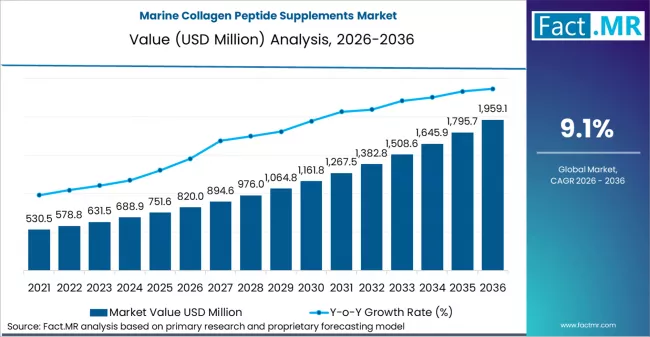
Fish skin remains the primary source, followed by fish scales, fish bones, and other marine sources, while powder dominates the product form segment, complemented by capsules, tablets, and liquid formulations. Rising consumer demand for beauty and skin health solutions is driving adoption, with applications extending into joint and bone health, sports nutrition, and general wellness.
Distribution is led by online retail, supported by pharmacies, drug stores, health and nutrition stores, and supermarkets. Growth is fueled by increasing awareness of collagen’s functional benefits, preference for natural and marine-derived ingredients, and the expansion of e-commerce channels. China and India are leading adoption in high-growth regions, while mature markets such as the United States, Germany, and Japan sustain demand through premium products and innovation. Companies providing high-quality, traceable marine collagen with demonstrated efficacy are expected to secure a dominant position over the forecast period.
Marine Collagen Peptide Supplements Market
| Metric | Value |
|---|---|
| Estimated Value in (2026E) | USD 820 million |
| Forecast Value in (2036F) | USD 1,959.1 million |
| Forecast CAGR (2026 to 2036) | 9.1% |
Category
| Category | Segments |
|---|---|
| Source | Fish Skin; Fish Scales; Fish Bones; Other Marine Sources; Other |
| Form | Powder; Capsules; Tablets; Liquid; Other |
| Distribution Channel | Online Retail; Pharmacies and Drug Stores; Health and Nutrition Stores; Supermarkets and Hypermarkets; Other |
| End User | Men; Women; Unisex; Other |
| Region | North America; Europe; Asia Pacific; Latin America; Middle East & Africa |
Segmental Analysis
Which Source Holds the Largest Share in the Marine Collagen Peptide Supplements Market?
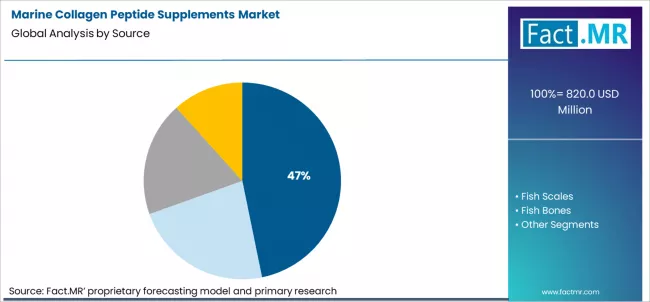
Fish skin leads the market with a 46.8% share. It is preferred for its high bioavailability and functional benefits, particularly in supporting skin elasticity, hydration, and overall dermal health. Fish skin-derived collagen peptides are widely incorporated in both beauty-focused and wellness-oriented supplement formulations.
- Manufacturers are refining extraction processes to maximize peptide concentration and purity.
- Consumer demand for effective, science-backed collagen ensures fish skin remains the dominant source in the market.
Which Form Drives the Highest Adoption in the Marine Collagen Peptide Supplements Market?
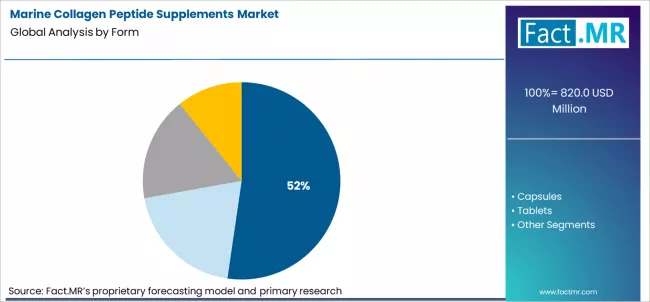
Powdered formulations hold the largest share at 52.3% in the Marine Collagen Peptide Supplements market. These powders provide versatility, allowing consumers to easily mix them into beverages, smoothies, or various food preparations. They enable precise, controlled dosing and are convenient for daily at-home use, supporting consistent intake. Their ease of storage, portability, and adaptability for different consumption preferences further enhance their appeal among both individual users and health-conscious consumers.
- Brands are enhancing solubility, flavor, and texture to improve user experience and adherence.
- The convenience and functional flexibility of powder forms reinforce their position as the leading format in the market.
What are the Drivers, Restraints, and Key Trends in the Marine Collagen Peptide Supplements Market?
- Drivers: Growing consumer focus on beauty, skin health, and overall wellness is increasing demand for marine collagen peptide supplements sourced from fish skin, scales, bones, and other marine materials. Companies such as Vital Proteins, Nestlé Health Science, and Nitta Gelatin Inc. are launching powders, capsules, tablets, and liquids to cater to diverse consumption preferences. Rising awareness of natural protein supplementation and expansion of online retail channels are driving adoption in China, India, the U.S., and Europe, encouraging new product launches and brand expansions.
- Restraints: High raw material and production costs, along with challenges in ensuring sustainable sourcing, limit adoption in smaller or price-sensitive markets. Stability, taste, and bioavailability issues in different supplement forms can slow product rollouts and reduce uptake in emerging regions.
- Trend 1: Development of multifunctional marine collagen products that combine skin, joint, and wellness benefits within a single formulation.
- Trend 2: Expansion of digital and health-focused retail channels to improve accessibility, encourage repeat purchases, and enhance consumer engagement.
Analysis of the Marine Collagen Peptide Supplements Market by Key Country
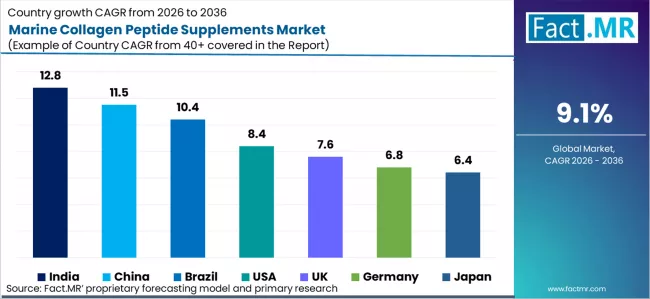
| Country | CAGR |
|---|---|
| China | 11.5% |
| India | 12.8% |
| Brazil | 10.4% |
| Germany | 6.8% |
| USA | 8.4% |
| UK | 7.6% |
| Japan | 6.4% |
How Is Functional Nutrition Driving Marine Collagen Peptide Supplements in China?
China’s Marine Collagen Peptide Supplements market is projected to grow at a CAGR of 11.5% from 2026 to 2036. Urban consumers are increasingly adopting marine-sourced powders and capsules for beauty and wellness applications. E-commerce platforms and specialty retailers enhance access to premium offerings, while growing interest in skin health, anti-aging benefits, and daily nutrition fuels adoption among metropolitan consumers seeking multifunctional formulations.
Why Is India Experiencing Rapid Growth in Marine Collagen Peptide Supplements?
India’s market is expected to expand at a CAGR of 12.8% from 2026 to 2036. Fish skin-derived powders dominate adoption for beauty and skin health purposes. Online retail and specialty outlets provide broad accessibility, while rising awareness of collagen efficacy and increasing disposable incomes in urban areas encourage steady uptake. Premium and multifunctional formulations are increasingly integrated into daily wellness routines.
What Factors Are Shaping Marine Collagen Peptide Supplements Demand in Brazil?
Brazil’s Marine Collagen Peptide Supplements market is projected to grow at a CAGR of 10.4% from 2026 to 2036. Fish scale-derived capsules are gaining traction for general wellness, joint, and skin applications. Pharmacies, health stores, and online platforms facilitate access. Growing awareness of functional nutrition and preventive health measures among urban consumers is driving adoption, particularly for premium, clinically backed collagen offerings.
How Are Functional Applications Supporting Marine Collagen Peptide Supplements Growth in Germany?
Germany’s market is expected to expand at a CAGR of 6.8% from 2026 to 2036. Fish bones-derived tablets are increasingly used for sports nutrition, general wellness, and skin health. Health and nutrition stores play a key role in product accessibility. Urban consumers emphasize scientifically validated formulations, multifunctionality, and high-quality ingredients, supporting steady adoption in metropolitan regions.
Why Does the USA Remain a Key Market for Marine Collagen Peptide Supplements?
The USA Marine Collagen Peptide Supplements market is projected to grow at a CAGR of 8.4% from 2026 to 2036. Liquid formulations derived from various marine sources are increasingly adopted for skin, hair, and joint wellness. Specialty retailers, supermarkets, and e-commerce platforms enhance accessibility. Urban and suburban consumers integrate collagen products into daily nutrition and beauty routines, supporting consistent market expansion.
What Is Supporting Marine Collagen Peptide Supplements Adoption in the UK?
The UK market is projected to expand at a CAGR of 7.6% from 2026 to 2036. Consumers are adopting marine collagen products for skin health, anti-aging, and general wellness. Retailers and online channels improve product visibility and accessibility. Awareness of premium formulations and multifunctional benefits continues to drive adoption in metropolitan regions, while urban consumers prioritize efficacy and ingredient quality.
How Is Market Maturity Affecting Marine Collagen Peptide Supplements Demand in Japan?
Japan’s Marine Collagen Peptide Supplements market is projected to grow at a CAGR of 6.4% from 2026 to 2036. Consumers favor high-quality collagen powders, tablets, and liquid formulations derived from marine sources. Mature retail and specialty channels support consistent availability, while urban consumers focus on multifunctional and clinically validated products. Domestic and international brands compete on efficacy and premium positioning, sustaining steady adoption in metropolitan areas.
How is Competition Structured in the Marine Collagen Peptide Supplements Market?
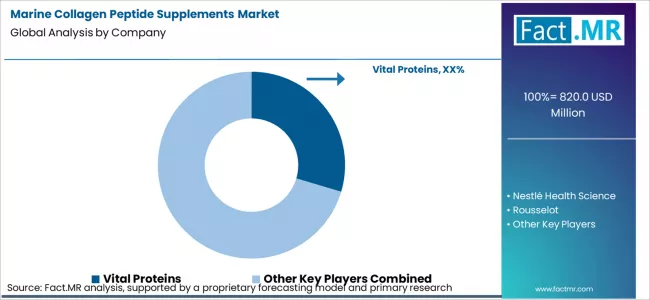
Competition in the Marine Collagen Peptide Supplements Market is centered on source quality, formulation type, and product versatility. Vital Proteins leads with fish skin-derived powders, emphasizing bioavailability and convenience for consumers seeking beauty and wellness benefits. Nestlé Health Science targets fish scale-based capsules, providing structured delivery for joint and bone health. Rousselot offers fish bone-based tablets, while Nitta Gelatin Inc. develops liquid supplements from other marine sources, addressing general wellness needs.
Weishardt, Seagarden AS, GELITA AG, and Hunter Gatherer differentiate through proprietary marine collagen sources, formulation diversity, and global supply networks. Competitive advantage arises from source traceability, stability of formulations, and multi-format availability. Buyers evaluate companies based on ingredient quality, product consistency, and distribution reach across online and offline channels. From 2026 onward, strategies are expected to focus on personalized formulations, combination with complementary bioactives, and integration with digital health tools, reinforcing adoption in beauty, wellness, and nutraceutical applications.
Key Players in the Marine Collagen Peptide Supplements Market
- Vital Proteins
- Nestlé Health Science
- Rousselot
- Nitta Gelatin Inc.
- Weishardt
- Seagarden AS
- GELITA AG
- Hunter Gatherer
Scope of the Report
| Items | Values |
|---|---|
| Quantitative Units (2026) | USD 820 Million |
| Source | Fish Skin, Fish Scales, Fish Bones, Other Marine Sources, Other |
| Form | Powder, Capsules, Tablets, Liquid, Other |
| Regions Covered | Asia Pacific, North America, Europe, Latin America, and Middle East & Africa |
| Countries Covered | China, India, Brazil, Germany, USA, UK, Japan, and other countries |
| Key Companies Profiled | Vital Proteins, Nestlé Health Science, Rousselot, Nitta Gelatin Inc., Weishardt, Seagarden AS, GELITA AG, Hunter Gatherer, and other leading marine collagen supplement manufacturers |
| Additional Attributes | Dollar revenue by source, form, and region; regional demand trends, competitive landscape, innovations in marine collagen extraction and formulation, bioavailability and efficacy studies, and brand positioning analysis |
Marine Collagen Peptide Supplements Market by Segments
-
Source :
- Fish Skin
- Fish Scales
- Fish Bones
- Other Marine Sources
-
Form :
- Powder
- Capsules
- Tablets
- Liquid
-
Region :
- North America
- U.S.
- Canada
- Mexico
- Europe
- Germany
- Italy
- UK
- France
- Spain
- Netherlands
- Switzerland
- Rest of Europe
- Asia Pacific
- Japan
- Australia
- South Korea
- China
- India
- Rest of Asia Pacific
- Latin America
- Brazil
- Argentina
- Rest of Latin America
- Middle East and Africa
- United Arab Emirates
- South Africa
- Rest of Middle East and Africa
- North America
Bibliography
- European Food Safety Authority. (2023). Safety and bioavailability of collagen and collagen-derived peptides in food supplements. EFSA Journal.
- National Institutes of Health. (2024). Marine collagen peptides: extraction, bioactivity, and applications in human health. National Library of Medicine.
- U.S. Food and Drug Administration. (2023). Dietary supplement labeling and ingredient requirements. U.S. Food and Drug Administration.
- World Health Organization. (2023). Protein intake, nutrition, and health across the life course. World Health Organization.
- Organisation for Economic Co-operation and Development. (2023). Consumer trends in functional foods and dietary supplements. OECD.
Table of Content
- Executive Summary
- Global Market Outlook
- Demand to side Trends
- Supply to side Trends
- Technology Roadmap Analysis
- Analysis and Recommendations
- Market Overview
- Market Coverage / Taxonomy
- Market Definition / Scope / Limitations
- Research Methodology
- Chapter Orientation
- Analytical Lens and Working Hypotheses
- Market Structure, Signals, and Trend Drivers
- Benchmarking and Cross-market Comparability
- Market Sizing, Forecasting, and Opportunity Mapping
- Research Design and Evidence Framework
- Desk Research Programme (Secondary Evidence)
- Company Annual and Sustainability Reports
- Peer-reviewed Journals and Academic Literature
- Corporate Websites, Product Literature, and Technical Notes
- Earnings Decks and Investor Briefings
- Statutory Filings and Regulatory Disclosures
- Technical White Papers and Standards Notes
- Trade Journals, Industry Magazines, and Analyst Briefs
- Conference Proceedings, Webinars, and Seminar Materials
- Government Statistics Portals and Public Data Releases
- Press Releases and Reputable Media Coverage
- Specialist Newsletters and Curated Briefings
- Sector Databases and Reference Repositories
- FMR Internal Proprietary Databases and Historical Market Datasets
- Subscription Datasets and Paid Sources
- Social Channels, Communities, and Digital Listening Inputs
- Additional Desk Sources
- Expert Input and Fieldwork (Primary Evidence)
- Primary Modes
- Qualitative Interviews and Expert Elicitation
- Quantitative Surveys and Structured Data Capture
- Blended Approach
- Why Primary Evidence is Used
- Field Techniques
- Interviews
- Surveys
- Focus Groups
- Observational and In-context Research
- Social and Community Interactions
- Stakeholder Universe Engaged
- C-suite Leaders
- Board Members
- Presidents and Vice Presidents
- R&D and Innovation Heads
- Technical Specialists
- Domain Subject-matter Experts
- Scientists
- Physicians and Other Healthcare Professionals
- Governance, Ethics, and Data Stewardship
- Research Ethics
- Data Integrity and Handling
- Primary Modes
- Tooling, Models, and Reference Databases
- Desk Research Programme (Secondary Evidence)
- Data Engineering and Model Build
- Data Acquisition and Ingestion
- Cleaning, Normalisation, and Verification
- Synthesis, Triangulation, and Analysis
- Quality Assurance and Audit Trail
- Market Background
- Market Dynamics
- Drivers
- Restraints
- Opportunity
- Trends
- Scenario Forecast
- Demand in Optimistic Scenario
- Demand in Likely Scenario
- Demand in Conservative Scenario
- Opportunity Map Analysis
- Product Life Cycle Analysis
- Supply Chain Analysis
- Investment Feasibility Matrix
- Value Chain Analysis
- PESTLE and Porter’s Analysis
- Regulatory Landscape
- Regional Parent Market Outlook
- Production and Consumption Statistics
- Import and Export Statistics
- Market Dynamics
- Global Market Analysis 2021 to 2025 and Forecast, 2026 to 2036
- Historical Market Size Value (USD Million) Analysis, 2021 to 2025
- Current and Future Market Size Value (USD Million) Projections, 2026 to 2036
- Y to o to Y Growth Trend Analysis
- Absolute $ Opportunity Analysis
- Global Market Pricing Analysis 2021 to 2025 and Forecast 2026 to 2036
- Global Market Analysis 2021 to 2025 and Forecast 2026 to 2036, By Source
- Introduction / Key Findings
- Historical Market Size Value (USD Million) Analysis By Source, 2021 to 2025
- Current and Future Market Size Value (USD Million) Analysis and Forecast By Source, 2026 to 2036
- Fish Skin
- Fish Scales
- Fish Bones
- Other Marine Sources
- Fish Skin
- Y to o to Y Growth Trend Analysis By Source, 2021 to 2025
- Absolute $ Opportunity Analysis By Source, 2026 to 2036
- Global Market Analysis 2021 to 2025 and Forecast 2026 to 2036, By Form
- Introduction / Key Findings
- Historical Market Size Value (USD Million) Analysis By Form, 2021 to 2025
- Current and Future Market Size Value (USD Million) Analysis and Forecast By Form, 2026 to 2036
- Powder
- Capsules
- Tablets
- Liquid
- Powder
- Y to o to Y Growth Trend Analysis By Form, 2021 to 2025
- Absolute $ Opportunity Analysis By Form, 2026 to 2036
- Global Market Analysis 2021 to 2025 and Forecast 2026 to 2036, By Application
- Introduction / Key Findings
- Historical Market Size Value (USD Million) Analysis By Application, 2021 to 2025
- Current and Future Market Size Value (USD Million) Analysis and Forecast By Application, 2026 to 2036
- Beauty and Skin Health
- Joint and Bone Health
- Sports Nutrition
- General Wellness
- Beauty and Skin Health
- Y to o to Y Growth Trend Analysis By Application, 2021 to 2025
- Absolute $ Opportunity Analysis By Application, 2026 to 2036
- Global Market Analysis 2021 to 2025 and Forecast 2026 to 2036, By Distribution channel
- Introduction / Key Findings
- Historical Market Size Value (USD Million) Analysis By Distribution channel, 2021 to 2025
- Current and Future Market Size Value (USD Million) Analysis and Forecast By Distribution channel, 2026 to 2036
- Online Retail
- Pharmacies and Drug Stores
- Health and Nutrition Stores
- Supermarkets and Hypermarkets
- Online Retail
- Y to o to Y Growth Trend Analysis By Distribution channel, 2021 to 2025
- Absolute $ Opportunity Analysis By Distribution channel, 2026 to 2036
- Global Market Analysis 2021 to 2025 and Forecast 2026 to 2036, By Region
- Introduction
- Historical Market Size Value (USD Million) Analysis By Region, 2021 to 2025
- Current Market Size Value (USD Million) Analysis and Forecast By Region, 2026 to 2036
- North America
- Latin America
- Western Europe
- Eastern Europe
- East Asia
- South Asia and Pacific
- Middle East & Africa
- Market Attractiveness Analysis By Region
- North America Market Analysis 2021 to 2025 and Forecast 2026 to 2036, By Country
- Historical Market Size Value (USD Million) Trend Analysis By Market Taxonomy, 2021 to 2025
- Market Size Value (USD Million) Forecast By Market Taxonomy, 2026 to 2036
- By Country
- USA
- Canada
- Mexico
- By Source
- By Form
- By Application
- By Distribution channel
- By Country
- Market Attractiveness Analysis
- By Country
- By Source
- By Form
- By Application
- By Distribution channel
- Key Takeaways
- Latin America Market Analysis 2021 to 2025 and Forecast 2026 to 2036, By Country
- Historical Market Size Value (USD Million) Trend Analysis By Market Taxonomy, 2021 to 2025
- Market Size Value (USD Million) Forecast By Market Taxonomy, 2026 to 2036
- By Country
- Brazil
- Chile
- Rest of Latin America
- By Source
- By Form
- By Application
- By Distribution channel
- By Country
- Market Attractiveness Analysis
- By Country
- By Source
- By Form
- By Application
- By Distribution channel
- Key Takeaways
- Western Europe Market Analysis 2021 to 2025 and Forecast 2026 to 2036, By Country
- Historical Market Size Value (USD Million) Trend Analysis By Market Taxonomy, 2021 to 2025
- Market Size Value (USD Million) Forecast By Market Taxonomy, 2026 to 2036
- By Country
- Germany
- UK
- Italy
- Spain
- France
- Nordic
- BENELUX
- Rest of Western Europe
- By Source
- By Form
- By Application
- By Distribution channel
- By Country
- Market Attractiveness Analysis
- By Country
- By Source
- By Form
- By Application
- By Distribution channel
- Key Takeaways
- Eastern Europe Market Analysis 2021 to 2025 and Forecast 2026 to 2036, By Country
- Historical Market Size Value (USD Million) Trend Analysis By Market Taxonomy, 2021 to 2025
- Market Size Value (USD Million) Forecast By Market Taxonomy, 2026 to 2036
- By Country
- Russia
- Poland
- Hungary
- Balkan & Baltic
- Rest of Eastern Europe
- By Source
- By Form
- By Application
- By Distribution channel
- By Country
- Market Attractiveness Analysis
- By Country
- By Source
- By Form
- By Application
- By Distribution channel
- Key Takeaways
- East Asia Market Analysis 2021 to 2025 and Forecast 2026 to 2036, By Country
- Historical Market Size Value (USD Million) Trend Analysis By Market Taxonomy, 2021 to 2025
- Market Size Value (USD Million) Forecast By Market Taxonomy, 2026 to 2036
- By Country
- China
- Japan
- South Korea
- By Source
- By Form
- By Application
- By Distribution channel
- By Country
- Market Attractiveness Analysis
- By Country
- By Source
- By Form
- By Application
- By Distribution channel
- Key Takeaways
- South Asia and Pacific Market Analysis 2021 to 2025 and Forecast 2026 to 2036, By Country
- Historical Market Size Value (USD Million) Trend Analysis By Market Taxonomy, 2021 to 2025
- Market Size Value (USD Million) Forecast By Market Taxonomy, 2026 to 2036
- By Country
- India
- ASEAN
- Australia & New Zealand
- Rest of South Asia and Pacific
- By Source
- By Form
- By Application
- By Distribution channel
- By Country
- Market Attractiveness Analysis
- By Country
- By Source
- By Form
- By Application
- By Distribution channel
- Key Takeaways
- Middle East & Africa Market Analysis 2021 to 2025 and Forecast 2026 to 2036, By Country
- Historical Market Size Value (USD Million) Trend Analysis By Market Taxonomy, 2021 to 2025
- Market Size Value (USD Million) Forecast By Market Taxonomy, 2026 to 2036
- By Country
- Kingdom of Saudi Arabia
- Other GCC Countries
- Turkiye
- South Africa
- Other African Union
- Rest of Middle East & Africa
- By Source
- By Form
- By Application
- By Distribution channel
- By Country
- Market Attractiveness Analysis
- By Country
- By Source
- By Form
- By Application
- By Distribution channel
- Key Takeaways
- Key Countries Market Analysis
- USA
- Pricing Analysis
- Market Share Analysis, 2025
- By Source
- By Form
- By Application
- By Distribution channel
- Canada
- Pricing Analysis
- Market Share Analysis, 2025
- By Source
- By Form
- By Application
- By Distribution channel
- Mexico
- Pricing Analysis
- Market Share Analysis, 2025
- By Source
- By Form
- By Application
- By Distribution channel
- Brazil
- Pricing Analysis
- Market Share Analysis, 2025
- By Source
- By Form
- By Application
- By Distribution channel
- Chile
- Pricing Analysis
- Market Share Analysis, 2025
- By Source
- By Form
- By Application
- By Distribution channel
- Germany
- Pricing Analysis
- Market Share Analysis, 2025
- By Source
- By Form
- By Application
- By Distribution channel
- UK
- Pricing Analysis
- Market Share Analysis, 2025
- By Source
- By Form
- By Application
- By Distribution channel
- Italy
- Pricing Analysis
- Market Share Analysis, 2025
- By Source
- By Form
- By Application
- By Distribution channel
- Spain
- Pricing Analysis
- Market Share Analysis, 2025
- By Source
- By Form
- By Application
- By Distribution channel
- France
- Pricing Analysis
- Market Share Analysis, 2025
- By Source
- By Form
- By Application
- By Distribution channel
- India
- Pricing Analysis
- Market Share Analysis, 2025
- By Source
- By Form
- By Application
- By Distribution channel
- ASEAN
- Pricing Analysis
- Market Share Analysis, 2025
- By Source
- By Form
- By Application
- By Distribution channel
- Australia & New Zealand
- Pricing Analysis
- Market Share Analysis, 2025
- By Source
- By Form
- By Application
- By Distribution channel
- China
- Pricing Analysis
- Market Share Analysis, 2025
- By Source
- By Form
- By Application
- By Distribution channel
- Japan
- Pricing Analysis
- Market Share Analysis, 2025
- By Source
- By Form
- By Application
- By Distribution channel
- South Korea
- Pricing Analysis
- Market Share Analysis, 2025
- By Source
- By Form
- By Application
- By Distribution channel
- Russia
- Pricing Analysis
- Market Share Analysis, 2025
- By Source
- By Form
- By Application
- By Distribution channel
- Poland
- Pricing Analysis
- Market Share Analysis, 2025
- By Source
- By Form
- By Application
- By Distribution channel
- Hungary
- Pricing Analysis
- Market Share Analysis, 2025
- By Source
- By Form
- By Application
- By Distribution channel
- Kingdom of Saudi Arabia
- Pricing Analysis
- Market Share Analysis, 2025
- By Source
- By Form
- By Application
- By Distribution channel
- Turkiye
- Pricing Analysis
- Market Share Analysis, 2025
- By Source
- By Form
- By Application
- By Distribution channel
- South Africa
- Pricing Analysis
- Market Share Analysis, 2025
- By Source
- By Form
- By Application
- By Distribution channel
- USA
- Market Structure Analysis
- Competition Dashboard
- Competition Benchmarking
- Market Share Analysis of Top Players
- By Regional
- By Source
- By Form
- By Application
- By Distribution channel
- Competition Analysis
- Competition Deep Dive
- Vital Proteins
- Overview
- Product Portfolio
- Profitability by Market Segments (Product/Age /Sales Channel/Region)
- Sales Footprint
- Strategy Overview
- Marketing Strategy
- Product Strategy
- Channel Strategy
- Nestlé Health Science
- Rousselot
- Nitta Gelatin Inc.
- Weishardt
- Seagarden AS
- GELITA AG
- Hunter Gatherer
- Vital Proteins
- Competition Deep Dive
- Assumptions & Acronyms Used
List Of Table
- Table 1: Global Market Value (USD Million) Forecast by Region, 2021 to 2036
- Table 2: Global Market Value (USD Million) Forecast by Source, 2021 to 2036
- Table 3: Global Market Value (USD Million) Forecast by Form, 2021 to 2036
- Table 4: Global Market Value (USD Million) Forecast by Application, 2021 to 2036
- Table 5: Global Market Value (USD Million) Forecast by Distribution channel, 2021 to 2036
- Table 6: North America Market Value (USD Million) Forecast by Country, 2021 to 2036
- Table 7: North America Market Value (USD Million) Forecast by Source, 2021 to 2036
- Table 8: North America Market Value (USD Million) Forecast by Form, 2021 to 2036
- Table 9: North America Market Value (USD Million) Forecast by Application, 2021 to 2036
- Table 10: North America Market Value (USD Million) Forecast by Distribution channel, 2021 to 2036
- Table 11: Latin America Market Value (USD Million) Forecast by Country, 2021 to 2036
- Table 12: Latin America Market Value (USD Million) Forecast by Source, 2021 to 2036
- Table 13: Latin America Market Value (USD Million) Forecast by Form, 2021 to 2036
- Table 14: Latin America Market Value (USD Million) Forecast by Application, 2021 to 2036
- Table 15: Latin America Market Value (USD Million) Forecast by Distribution channel, 2021 to 2036
- Table 16: Western Europe Market Value (USD Million) Forecast by Country, 2021 to 2036
- Table 17: Western Europe Market Value (USD Million) Forecast by Source, 2021 to 2036
- Table 18: Western Europe Market Value (USD Million) Forecast by Form, 2021 to 2036
- Table 19: Western Europe Market Value (USD Million) Forecast by Application, 2021 to 2036
- Table 20: Western Europe Market Value (USD Million) Forecast by Distribution channel, 2021 to 2036
- Table 21: Eastern Europe Market Value (USD Million) Forecast by Country, 2021 to 2036
- Table 22: Eastern Europe Market Value (USD Million) Forecast by Source, 2021 to 2036
- Table 23: Eastern Europe Market Value (USD Million) Forecast by Form, 2021 to 2036
- Table 24: Eastern Europe Market Value (USD Million) Forecast by Application, 2021 to 2036
- Table 25: Eastern Europe Market Value (USD Million) Forecast by Distribution channel, 2021 to 2036
- Table 26: East Asia Market Value (USD Million) Forecast by Country, 2021 to 2036
- Table 27: East Asia Market Value (USD Million) Forecast by Source, 2021 to 2036
- Table 28: East Asia Market Value (USD Million) Forecast by Form, 2021 to 2036
- Table 29: East Asia Market Value (USD Million) Forecast by Application, 2021 to 2036
- Table 30: East Asia Market Value (USD Million) Forecast by Distribution channel, 2021 to 2036
- Table 31: South Asia and Pacific Market Value (USD Million) Forecast by Country, 2021 to 2036
- Table 32: South Asia and Pacific Market Value (USD Million) Forecast by Source, 2021 to 2036
- Table 33: South Asia and Pacific Market Value (USD Million) Forecast by Form, 2021 to 2036
- Table 34: South Asia and Pacific Market Value (USD Million) Forecast by Application, 2021 to 2036
- Table 35: South Asia and Pacific Market Value (USD Million) Forecast by Distribution channel, 2021 to 2036
- Table 36: Middle East & Africa Market Value (USD Million) Forecast by Country, 2021 to 2036
- Table 37: Middle East & Africa Market Value (USD Million) Forecast by Source, 2021 to 2036
- Table 38: Middle East & Africa Market Value (USD Million) Forecast by Form, 2021 to 2036
- Table 39: Middle East & Africa Market Value (USD Million) Forecast by Application, 2021 to 2036
- Table 40: Middle East & Africa Market Value (USD Million) Forecast by Distribution channel, 2021 to 2036
List Of Figures
- Figure 1: Global Market Pricing Analysis
- Figure 2: Global Market Value (USD Million) Forecast 2021 to 2036
- Figure 3: Global Market Value Share and BPS Analysis by Source, 2026 and 2036
- Figure 4: Global Market Y to o to Y Growth Comparison by Source, 2026 to 2036
- Figure 5: Global Market Attractiveness Analysis by Source
- Figure 6: Global Market Value Share and BPS Analysis by Form, 2026 and 2036
- Figure 7: Global Market Y to o to Y Growth Comparison by Form, 2026 to 2036
- Figure 8: Global Market Attractiveness Analysis by Form
- Figure 9: Global Market Value Share and BPS Analysis by Application, 2026 and 2036
- Figure 10: Global Market Y to o to Y Growth Comparison by Application, 2026 to 2036
- Figure 11: Global Market Attractiveness Analysis by Application
- Figure 12: Global Market Value Share and BPS Analysis by Distribution channel, 2026 and 2036
- Figure 13: Global Market Y to o to Y Growth Comparison by Distribution channel, 2026 to 2036
- Figure 14: Global Market Attractiveness Analysis by Distribution channel
- Figure 15: Global Market Value (USD Million) Share and BPS Analysis by Region, 2026 and 2036
- Figure 16: Global Market Y to o to Y Growth Comparison by Region, 2026 to 2036
- Figure 17: Global Market Attractiveness Analysis by Region
- Figure 18: North America Market Incremental Dollar Opportunity, 2026 to 2036
- Figure 19: Latin America Market Incremental Dollar Opportunity, 2026 to 2036
- Figure 20: Western Europe Market Incremental Dollar Opportunity, 2026 to 2036
- Figure 21: Eastern Europe Market Incremental Dollar Opportunity, 2026 to 2036
- Figure 22: East Asia Market Incremental Dollar Opportunity, 2026 to 2036
- Figure 23: South Asia and Pacific Market Incremental Dollar Opportunity, 2026 to 2036
- Figure 24: Middle East & Africa Market Incremental Dollar Opportunity, 2026 to 2036
- Figure 25: North America Market Value Share and BPS Analysis by Country, 2026 and 2036
- Figure 26: North America Market Value Share and BPS Analysis by Source, 2026 and 2036
- Figure 27: North America Market Y to o to Y Growth Comparison by Source, 2026 to 2036
- Figure 28: North America Market Attractiveness Analysis by Source
- Figure 29: North America Market Value Share and BPS Analysis by Form, 2026 and 2036
- Figure 30: North America Market Y to o to Y Growth Comparison by Form, 2026 to 2036
- Figure 31: North America Market Attractiveness Analysis by Form
- Figure 32: North America Market Value Share and BPS Analysis by Application, 2026 and 2036
- Figure 33: North America Market Y to o to Y Growth Comparison by Application, 2026 to 2036
- Figure 34: North America Market Attractiveness Analysis by Application
- Figure 35: North America Market Value Share and BPS Analysis by Distribution channel, 2026 and 2036
- Figure 36: North America Market Y to o to Y Growth Comparison by Distribution channel, 2026 to 2036
- Figure 37: North America Market Attractiveness Analysis by Distribution channel
- Figure 38: Latin America Market Value Share and BPS Analysis by Country, 2026 and 2036
- Figure 39: Latin America Market Value Share and BPS Analysis by Source, 2026 and 2036
- Figure 40: Latin America Market Y to o to Y Growth Comparison by Source, 2026 to 2036
- Figure 41: Latin America Market Attractiveness Analysis by Source
- Figure 42: Latin America Market Value Share and BPS Analysis by Form, 2026 and 2036
- Figure 43: Latin America Market Y to o to Y Growth Comparison by Form, 2026 to 2036
- Figure 44: Latin America Market Attractiveness Analysis by Form
- Figure 45: Latin America Market Value Share and BPS Analysis by Application, 2026 and 2036
- Figure 46: Latin America Market Y to o to Y Growth Comparison by Application, 2026 to 2036
- Figure 47: Latin America Market Attractiveness Analysis by Application
- Figure 48: Latin America Market Value Share and BPS Analysis by Distribution channel, 2026 and 2036
- Figure 49: Latin America Market Y to o to Y Growth Comparison by Distribution channel, 2026 to 2036
- Figure 50: Latin America Market Attractiveness Analysis by Distribution channel
- Figure 51: Western Europe Market Value Share and BPS Analysis by Country, 2026 and 2036
- Figure 52: Western Europe Market Value Share and BPS Analysis by Source, 2026 and 2036
- Figure 53: Western Europe Market Y to o to Y Growth Comparison by Source, 2026 to 2036
- Figure 54: Western Europe Market Attractiveness Analysis by Source
- Figure 55: Western Europe Market Value Share and BPS Analysis by Form, 2026 and 2036
- Figure 56: Western Europe Market Y to o to Y Growth Comparison by Form, 2026 to 2036
- Figure 57: Western Europe Market Attractiveness Analysis by Form
- Figure 58: Western Europe Market Value Share and BPS Analysis by Application, 2026 and 2036
- Figure 59: Western Europe Market Y to o to Y Growth Comparison by Application, 2026 to 2036
- Figure 60: Western Europe Market Attractiveness Analysis by Application
- Figure 61: Western Europe Market Value Share and BPS Analysis by Distribution channel, 2026 and 2036
- Figure 62: Western Europe Market Y to o to Y Growth Comparison by Distribution channel, 2026 to 2036
- Figure 63: Western Europe Market Attractiveness Analysis by Distribution channel
- Figure 64: Eastern Europe Market Value Share and BPS Analysis by Country, 2026 and 2036
- Figure 65: Eastern Europe Market Value Share and BPS Analysis by Source, 2026 and 2036
- Figure 66: Eastern Europe Market Y to o to Y Growth Comparison by Source, 2026 to 2036
- Figure 67: Eastern Europe Market Attractiveness Analysis by Source
- Figure 68: Eastern Europe Market Value Share and BPS Analysis by Form, 2026 and 2036
- Figure 69: Eastern Europe Market Y to o to Y Growth Comparison by Form, 2026 to 2036
- Figure 70: Eastern Europe Market Attractiveness Analysis by Form
- Figure 71: Eastern Europe Market Value Share and BPS Analysis by Application, 2026 and 2036
- Figure 72: Eastern Europe Market Y to o to Y Growth Comparison by Application, 2026 to 2036
- Figure 73: Eastern Europe Market Attractiveness Analysis by Application
- Figure 74: Eastern Europe Market Value Share and BPS Analysis by Distribution channel, 2026 and 2036
- Figure 75: Eastern Europe Market Y to o to Y Growth Comparison by Distribution channel, 2026 to 2036
- Figure 76: Eastern Europe Market Attractiveness Analysis by Distribution channel
- Figure 77: East Asia Market Value Share and BPS Analysis by Country, 2026 and 2036
- Figure 78: East Asia Market Value Share and BPS Analysis by Source, 2026 and 2036
- Figure 79: East Asia Market Y to o to Y Growth Comparison by Source, 2026 to 2036
- Figure 80: East Asia Market Attractiveness Analysis by Source
- Figure 81: East Asia Market Value Share and BPS Analysis by Form, 2026 and 2036
- Figure 82: East Asia Market Y to o to Y Growth Comparison by Form, 2026 to 2036
- Figure 83: East Asia Market Attractiveness Analysis by Form
- Figure 84: East Asia Market Value Share and BPS Analysis by Application, 2026 and 2036
- Figure 85: East Asia Market Y to o to Y Growth Comparison by Application, 2026 to 2036
- Figure 86: East Asia Market Attractiveness Analysis by Application
- Figure 87: East Asia Market Value Share and BPS Analysis by Distribution channel, 2026 and 2036
- Figure 88: East Asia Market Y to o to Y Growth Comparison by Distribution channel, 2026 to 2036
- Figure 89: East Asia Market Attractiveness Analysis by Distribution channel
- Figure 90: South Asia and Pacific Market Value Share and BPS Analysis by Country, 2026 and 2036
- Figure 91: South Asia and Pacific Market Value Share and BPS Analysis by Source, 2026 and 2036
- Figure 92: South Asia and Pacific Market Y to o to Y Growth Comparison by Source, 2026 to 2036
- Figure 93: South Asia and Pacific Market Attractiveness Analysis by Source
- Figure 94: South Asia and Pacific Market Value Share and BPS Analysis by Form, 2026 and 2036
- Figure 95: South Asia and Pacific Market Y to o to Y Growth Comparison by Form, 2026 to 2036
- Figure 96: South Asia and Pacific Market Attractiveness Analysis by Form
- Figure 97: South Asia and Pacific Market Value Share and BPS Analysis by Application, 2026 and 2036
- Figure 98: South Asia and Pacific Market Y to o to Y Growth Comparison by Application, 2026 to 2036
- Figure 99: South Asia and Pacific Market Attractiveness Analysis by Application
- Figure 100: South Asia and Pacific Market Value Share and BPS Analysis by Distribution channel, 2026 and 2036
- Figure 101: South Asia and Pacific Market Y to o to Y Growth Comparison by Distribution channel, 2026 to 2036
- Figure 102: South Asia and Pacific Market Attractiveness Analysis by Distribution channel
- Figure 103: Middle East & Africa Market Value Share and BPS Analysis by Country, 2026 and 2036
- Figure 104: Middle East & Africa Market Value Share and BPS Analysis by Source, 2026 and 2036
- Figure 105: Middle East & Africa Market Y to o to Y Growth Comparison by Source, 2026 to 2036
- Figure 106: Middle East & Africa Market Attractiveness Analysis by Source
- Figure 107: Middle East & Africa Market Value Share and BPS Analysis by Form, 2026 and 2036
- Figure 108: Middle East & Africa Market Y to o to Y Growth Comparison by Form, 2026 to 2036
- Figure 109: Middle East & Africa Market Attractiveness Analysis by Form
- Figure 110: Middle East & Africa Market Value Share and BPS Analysis by Application, 2026 and 2036
- Figure 111: Middle East & Africa Market Y to o to Y Growth Comparison by Application, 2026 to 2036
- Figure 112: Middle East & Africa Market Attractiveness Analysis by Application
- Figure 113: Middle East & Africa Market Value Share and BPS Analysis by Distribution channel, 2026 and 2036
- Figure 114: Middle East & Africa Market Y to o to Y Growth Comparison by Distribution channel, 2026 to 2036
- Figure 115: Middle East & Africa Market Attractiveness Analysis by Distribution channel
- Figure 116: Global Market - Tier Structure Analysis
- Figure 117: Global Market - Company Share Analysis
- FAQs -
How big is the marine collagen peptide supplements market in 2026?
The global marine collagen peptide supplements market is estimated to be valued at USD 820.0 million in 2026.
What will be the size of marine collagen peptide supplements market in 2036?
The market size for the marine collagen peptide supplements market is projected to reach USD 1,959.1 million by 2036.
How much will be the marine collagen peptide supplements market growth between 2026 and 2036?
The marine collagen peptide supplements market is expected to grow at a 9.1?GR between 2026 and 2036.
What are the key product types in the marine collagen peptide supplements market?
The key product types in marine collagen peptide supplements market are fish skin, fish scales, fish bones and other marine sources.
Which form segment to contribute significant share in the marine collagen peptide supplements market in 2026?
In terms of form, powder segment to command 52.3% share in the marine collagen peptide supplements market in 2026.